




Abstract
Although STEM is an essential feature of 21st-century education and learning, there is a lack of awareness about it in Pakistan, especially at the K-12 and tertiary levels. Recently many initiatives have been launched across Pakistan to create more interest in STEM education. In order to assist in raising the level of STEM awareness in Pakistan, this study sought to examine the current state of research and identify recent contributions and gaps in the literature. A systematic literature review was conducted using 22 research papers from five renowned databases. Results produced limited research in this area, with the majority being descriptive and only four being interventional studies. Regrettably, no research explored the engineering component of STEM education. Trends indicate that STEM education research has experienced a downward trend in Pakistan. The observed decline may have occurred due to a lack of understanding among Pakistani researchers regarding the importance of STEM education. Additionally, we identified the current gaps in research on STEM education and subsequently provided recommendations for future research.
Introduction
Education in science, technology, engineering, and mathematics (STEM) is attracting more attention across the globe in all areas of education, including preK-12 through tertiary environments (Kennedy & Tunnicliffe, 2022; Takeuchi et al., 2020). It has become an international priority to improve academic skills in STEM disciplines to ensure students are adequately prepared for careers in the field of STEM (Thibaut et al., 2018). In recent years, the implementation of STEM in K-12 education in the United States has been focused on interdisciplinary or integrated instruction (Kennedy & Odell, 2014), commonly referred to as “integrated STEM education.” (Roehrig et al., 2021). “The approach to teaching the STEM content of two or more STEM domains, bound by STEM practices within an authentic context to connect these subjects to enhance student learning” (Kelley & Knowles, 2016, p. 3), has become an integral component of 21st-century learning environments (Kennedy & Sundberg, 20203). Different stakeholders have different interpretations of STEM education, and it can be challenging to regulate, especially for the emergence of worthwhile STEM pedagogies that could help achieve this goal (Leung, 2020). When one attempts to cross from one STEM disciplinary knowledge domain to another, one encounters an epistemic obstacle that is difficult to conceptualize when trying to conceptualize STEM pedagogy (Leung, 2020). There is no one-size-fits-all approach (Figure 1) to STEM integration (Vasquez et al., 2013).

STEM integration’s different levels.
Students in STEM fields develop advanced skills and abilities, and are more likely to participate in daily problem-solving and decision-making (Morrison, 2006), as well as have better job prospects (Zollman, 2012). STEM education seeks to meet students’ social and personal needs, become truly satisfied, active people, and better work in the environment made from human beings (Zollman, 2012). The institutions should focus their efforts on becoming economically competitive without compromising sustainability (Abad-Segura & González-Zamar, 2021). With international awareness of the growing importance of STEM education, the study and research of STEM education have become more critical than ever before (Li, 2018). According to a quick search on Google, more than 4,540,000,000 (0.55 seconds) products were identified using the words “STEM,” “STEM education,” or “STEM education research.” This ample evidence highlights the rapidly progressing STEM field and underscores the extensive research conducted in STEM education.
Why a Review Study Related to STEM Education in Pakistan?
Pakistan has more young people (64% of the country’s population is under 30) than it has ever had in its history, and this age group is expected to continue to grow until at least 2050. Around 4 million Pakistanis enter the workforce each year. In 5 years, it is expected that 0.9 million new jobs will be created each year if job participation rates and unemployment levels remain unchanged. Thus, creating an additional 1.3 million jobs annually is necessary to increase labor force participation rates (Ahmad, 2018). Ideally, graduates should be able to earn a living to support themselves and the general welfare of the community (Ashraf & Hafiza, 2016). A conducive environment is necessary to take risks, innovate, and be productive. Therefore adequate policy interventions must be put in place to promote schooling, employment, and participation (Ahmad, 2018). In order to support an efficient and effective workforce in Pakistan, STEM tertiary education is essential to thoroughly understand current teaching theories and practices (Hack, 2017).
Previous literature reviews have described various factors relating to the STEM field, primarily from the United States (Lee et al., 2019). These reviews provide a context for researchers, but they are limited in Pakistan. It is common practice in educational research to conduct systematic reviews of status and developments within particular fields (Li et al., 2020). For example, it has been determined that STEM education and career pathway diversification are vital to the US’s status as a global leader in STEM (Coleman, 2020). It is just as important to carry out further research to adapt STEM education to the conditions of Asian countries (Lee et al., 2019). It is vital to understand if STEM education is an essential solution component (Wahono et al., 2020). Some parts of Asia, including West Asia, East Asia, and South Asia, are increasingly introducing and developing STEM education (Chen & Chang, 2018; Choi & Hong, 2015; Karahan et al., 2015; Park & Yoo, 2013). STEM/ STEAM education is an integral part of Korea, Thailand, China, and Malaysia (Cho, 2013; Hong, 2017; Hsiao et al., 2017; Kang et al., 2013; Shahali et al., 2017). However, STEM education has not been a standard part of education systems in some Asian countries, although many teachers and researchers have adopted it.
Several studies and reports have shown that STEM education research developments in Asia began in 2013, and STEM is now an enticing investigation phenomenon for many (Jayarajah et al., 2014; Lee et al., 2019). It is not easy to find published papers on STEM from South and Central Asia, especially those written in English (Wahono et al., 2020). Therefore, it is imperative to examine how STEM actions in Asia have impacted Pakistan during this prosperous period from 2000–2020. Despite the growing importance of STEM education in Pakistan, no literature review has been conducted on the topic. Research activities focused on STEM Education in Pakistan are not likely to change without understanding their problems.
This study focused on the following research questions: Which empirical studies have examined STEM education at the K-12 and tertiary levels in Pakistan over the last two decades? How robust is the research base on STEM education at the K-12 and tertiary levels in Pakistan over the last two decades? What are the gaps in the literature that require further investigation in STEM education at the K-12 and tertiary levels in Pakistan? Consequently, this research would significantly impact and contribute to the body of literature documenting STEM education in Pakistan and worldwide.
Methods
We conducted a systematic literature review following the preferred reporting items for systematic review and meta-analysis protocols (PRISMA) protocol (see Figure 2) to address the research questions raised in this study (Liberati et al., 2009; Moher et al., 2009). PRISMA guidelines include a 27-item checklist and a 4-phase flow diagram detailing critical elements for clarity in literature reviews (Liberati et al., 2009). The PRISMA statement, published by the Cochrane Collaboration in 2009, attempts to enhance transparency in systematic reviews by explaining why the review was conducted, what the authors did, and the results they obtained (Page et al., 2021). It is apparent from observational studies that systematic reviews are more likely to be reported in full compliance with the PRISMA 2009 statement when it is implemented (Agha et al., 2016; Page et al., 2016). Complete reporting enables the reader to judge whether the methods used were appropriate and, thus, whether the results were credible (Page et al., 2021; Shamseer et al., 2015). To answer the research questions, PRISMA was used in a four-step process: (1) identification of related keywords, (2) screening, (3) eligibility, and (4) data abstraction and analysis. While PRISMA guidelines are frequently used in medical research, they are also regularly used in social science research (Ajit et al., 2021; Askari et al., 2018; Lai & Bower, 2019)

PRISMA flow diagram.
TimeLine
The US National Science Foundation coined the acronym “STEM” in the early 1990s (Perez & Kumar, 2018). Based on developments in the STEM fields and our review objectives, a reasonable starting point would therefore be the year 2000, as accepted by others (Li et al., 2020). The study explored how STEM education research has evolved in Pakistan from 2000 to 2020 over a limited period. In the early 2000s, the STEM acronym was recognized in the education field. We used the descriptor “STEM” as our focus and subsequently used the STEM acronym as an identifier to locate research papers in this area (Li et al., 2020).
Search Strategy
Data for the current study was managed using Zotero version 5.0.89 citation management software. Researchers use it as one of the most popular and widely used reference management tools. Researchers can easily customize the styles of citations they desire with this tool, which is easy to use, free to download, easy to install, and saves time (Rangaswamy & Babu, 2021).
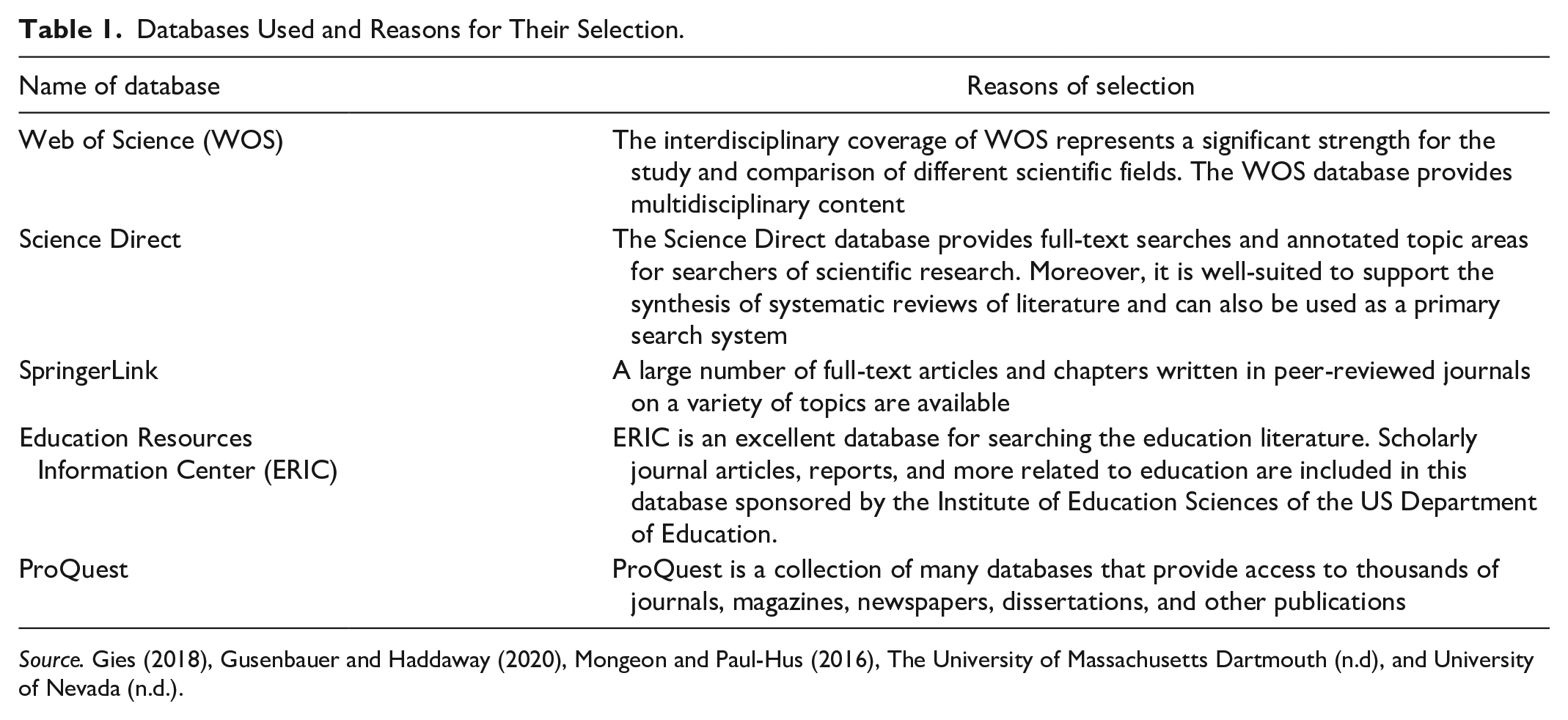
It is difficult to say precisely how many electronic databases should be searched at this time based on empirical evidence. Multiple databases are generally recommended for researchers to find all literature related to their topic of interest (Lawrence, 2008; Levay et al., 2015; Rathore et al., 2022). Five Multidisciplinary databases (Table 1) were used to search for comprehensive research; a distinguishing feature of these databases is that they include all article types, every author, institutional addresses, and every bibliographic reference possible for each article.
Databases Used and Reasons for Their Selection.
Our search was specific to studies published either in English or available in English translation in peer-reviewed journals since the use of multiple language databases has some disadvantages. Many languages must be translated into one critical language, and searchers may have erroneous results. The publication year range was restricted to publications between the years 2000 to 2020. We entered the phrase “STEM*” inside the keyword area with numerous variations of the words, “STEM education,” STEM instructions,” STEM, biolog*, chemist*, math*, comput*, tech*, engineer*, OR physic*. In order to limit the results to a Pakistani setting, Pakistani locations were used as keywords or refinement choices on databases, limiting the results to a Pakistani setting, e.g. (Pakistan*, Islamabad, Karachi*, Lahore, Peshawar).
Inclusion and Exclusion Criteria
The screening method was performed according to the PRISMA Protocol (refer to Figure 2) and two authors since it is advised (Fisher et al., 2020) to have two different reviewers work systematically. The publications had to meet the following criteria.
Studies published between the years 2000 and 2020
Peer-reviewed academic research papers
All types of studies (e.g., observational, case studies)
Studies that targeted at least one aspect of STEM education (e.g., science, technology); and
Research containing data aligned with the focus of the current study and research questions.
Although all publications used in this review were peer-reviewed, a small number of studies (n = 43) in this area were found in the Pakistani context. Therefore, the quality of the papers was not exclusively evaluated. Review articles, conference papers, dissertations, and books were excluded from the search because they require many resources, may lack adequate information, and provide unreliable information. . After the screening process occurred, 22 papers were retained.
Data Extraction
Articles have been grouped in the STEM emphasis fields (science, technology, engineering, mathematics). The area of focus of a study was described as the STEM area. Additionally, all 22 studies were summarized (see Table 5) in terms (see Figure 3) of:
(a) STEM-related discipline: This information was collected from each study’s title and abstract.
(b) Study design: The design (e.g., experimental, mixed-method, and qualitative) of the study reflected both the overall research framework and the particular research design. This data was obtained by analyzing the method section of each research paper.
(c) Participants’ characteristics: Information on gender and grade was derived from each study’s method section, text, and tables.
(d) Study settings: The level of the institute was coded as primary (K-5th), middle (6th–8th), secondary school (9th–10th), higher secondary (11–12), and beyond as university (tertiary).
(e) Intervention/conduction process: This information was derived from the method section of the paper.
(f) Study results: The result section of each paper was analyzed to obtain the required information.
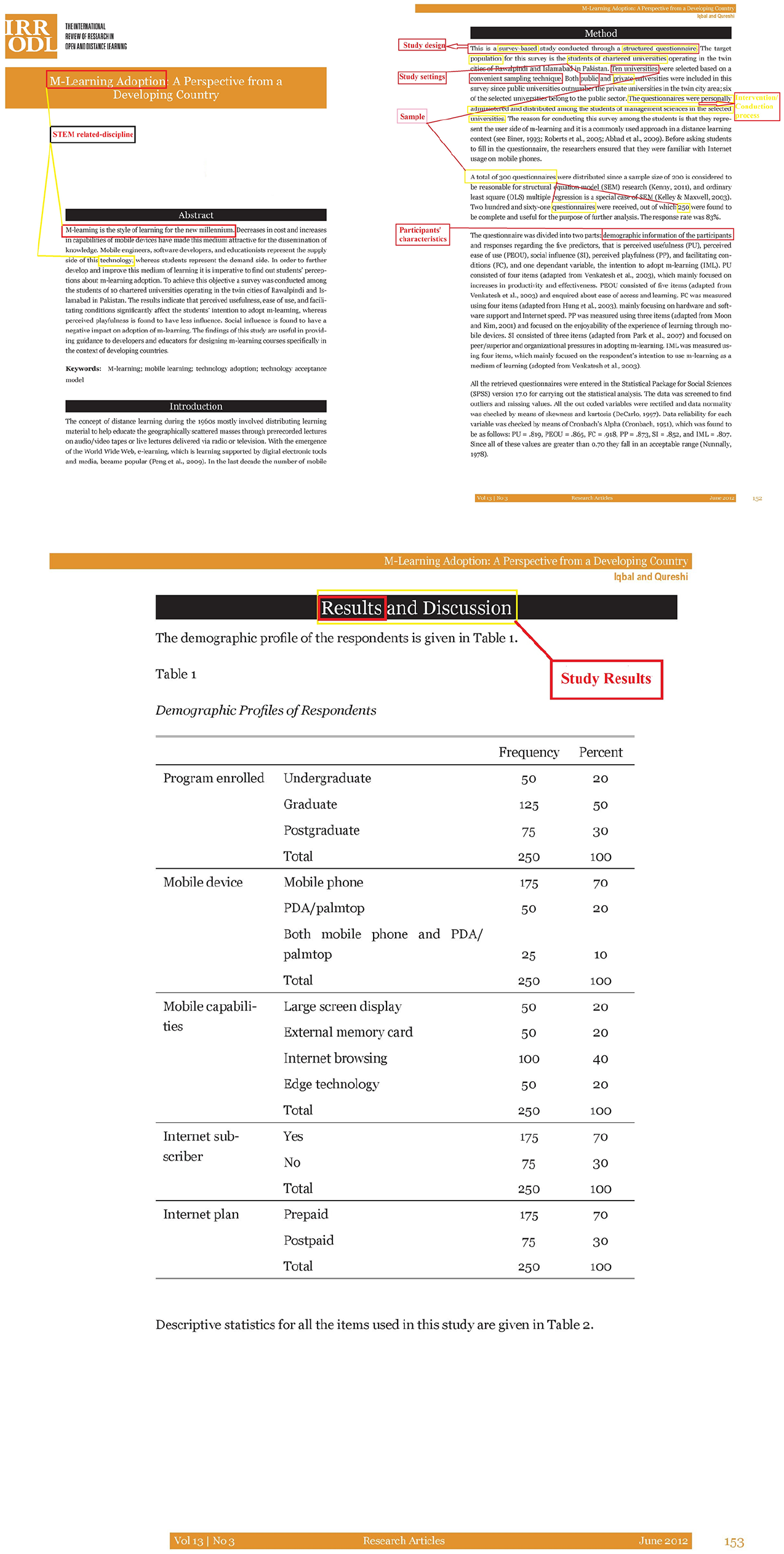
Example of data extraction.
Analysis
To investigate the theoretical assumptions, scientific concerns, methods, core results, and disciplinary fields of each of the analytical studies included in our study (n = 22), the first phase of our review included emergent coding and descriptive statistical analysis. This process resulted in an outline of the evolving direction of the studies. We used seven coding variables in each study in which disagreement or agreement could be observed (i.e., Aim of study, STEM-related discipline, Method, participant details (sample size, gender), Institution of study, Theme, and Results).
At least two researchers reviewed each article. About 20% of the cases were then selected to determine inter-ratter reliability. Two researchers coded these cases independently, and we developed a 93.5% contract score, which suggested good agreement with Krippendorff’s alpha at .85 (Takeuchi et al., 2020). The high agreement of inter-rater reliability described above revealed that strong consistency and impartial inclusion judgments occurred (Bidlake et al., 2020).
Results
Research on STEM-Related Topics in Pakistan
The final 22 studies (refer to Table 5) were chosen for review after screening using the inclusion criterion. Four (see Figure 4) of the studies were qualitative. Four studies used mixed methods, including qualitative with quasi-experimental, while two used only quasi-experimental methods (Ally et al., 2017; Khan et al., 2017). Only one study (Baig & Halai, 2006) was based on classroom observation. The remaining 11 studies used quantitative methods. Twelve studies were based at single institutions, with the most extensive cross-institutional studies investigating 1,088 secondary schools and 51 Pakistani universities (Khurshid et al., 2016; Zamir & Thomas, 2019). Study cohorts were predominantly secondary school students, and university students, with only two studies investigating technical college students and medical educators, respectively (Hussain & Akhter, 2016; Iqbal, Ahmad, & & Willis, 2017).
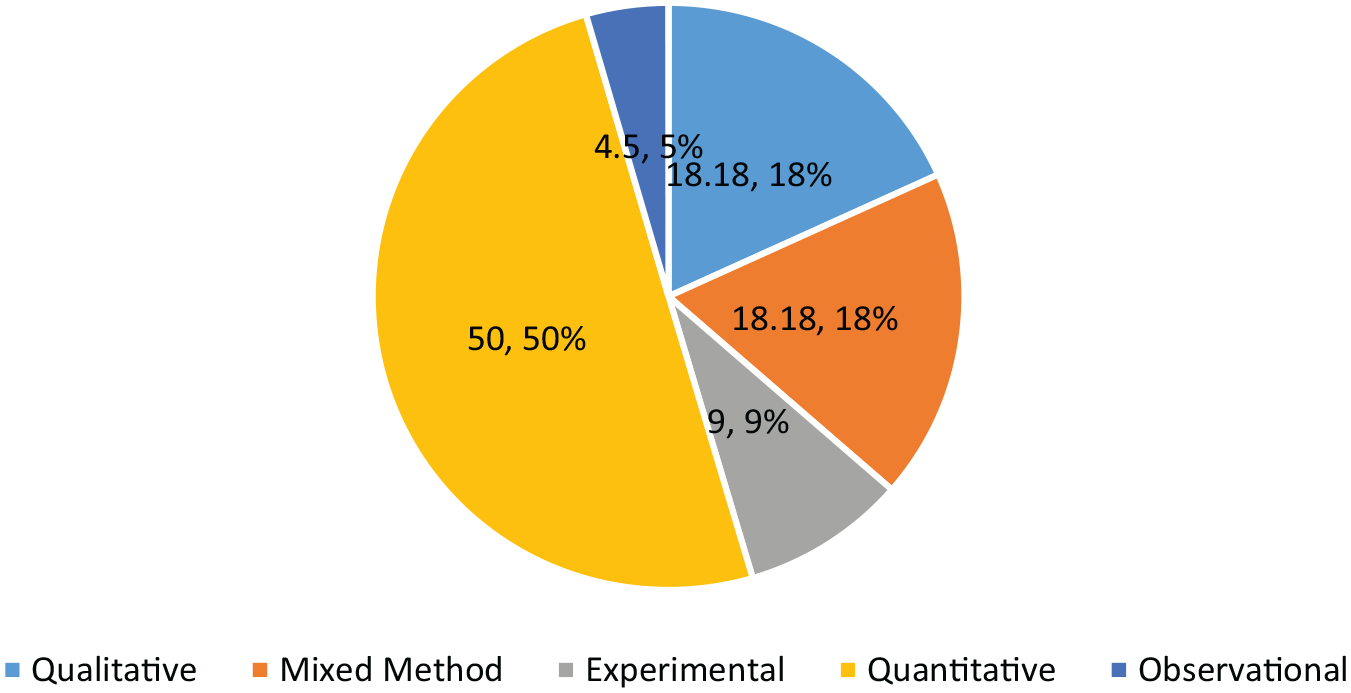
Type of studies.
There were only 4 intervention studies (Ally et al., 2017; Jabeen & Afzal, 2020; Khan et al., 2017; Pell et al., 2010), and 11 studies were quantitative, with most studies being descriptive. The discipline focus of the studies varied, with seven of the studies investigating technology, six focusing on ICT, three on math, two on physics, two on chemistry, one on science and technology, and one investigated biology (Tables 2–5).
Studies Published by Year.

Descriptive Statistics by Levels of the Institute (Total 22).

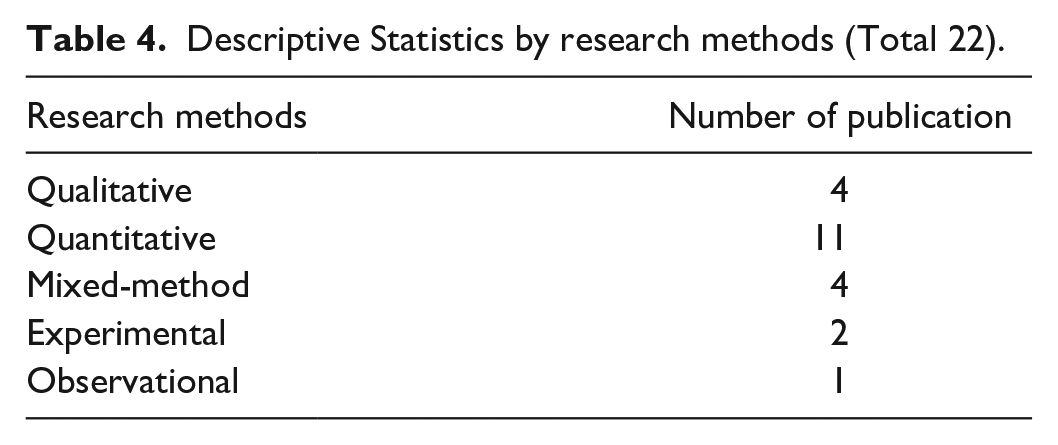
Descriptive Statistics by research methods (Total 22).
Summary of Studies (n = 22).

Research Contributions to STEM Education in Pakistan
This section summarizes the contribution of selected STEM-related studies concerning the acronym STEM and the following subsections: (a) STEM-related outcomes; (b) study design; (c) participants; (d) settings; (e) intervention and procedure; and (f) results.
Science
STEM related contribution
Six studies (n = 06) included in this review targeted the science area of STEM. One study (Ilyas et al., 2009) focused on science and technology investigation, while others targeted a single subject. Two studies targeted chemistry, whereas one (Bhutto et al., 2018) focused on the effect of existing teaching of Chemistry on students’ achievement, and the other (Jabeen & Afzal, 2020) targeted the effect of simulated Chemistry practical’s on students’ performance; one study (Zareen et al., 2014) targeted the Biology instruction in Constructivist perspectives, and two studies targeted the area of Physics, whereas the study by Khurshid et al. (2016) focused on ICT in learning Physics and Pell et al. (2010) compared the science experiments to rote-learning classes.
Study design
Three studies utilized a mixed-method research design; two implied an experiment and interviews (Jabeen & Afzal, 2020; Pell et al., 2010), while one (Khurshid et al., 2016) used a survey and interviews. The remaining three studies utilized a quantitative research design (Bhutto et al., 2018; Ilyas et al., 2009; Zareen et al., 2014).
Participants
Four studies (Ilyas et al., 2009; Jabeen & Afzal, 2020; Khurshid et al., 2016; Zareen et al., 2014) utilized multiple samples, including university and school students and teachers. In contrast, the remaining two studies utilized only the students’ sample. A total of 384 seventh grade students, 53% boys and 47% girls, participated in one intervention study (Pell et al., 2010), and 350 secondary school students (59%) were male and (41%) were female participated in the study conducted by Bhutto et al. (2018). Four studies mentioned earlier included 136 universities and 1,537 secondary students. Furthermore, their sample also consisted of 32 university teachers and 562 secondary school teachers.
Setting of studies
Only two studies provided information about the intervention setting. One study (Jabeen & Afzal, 2020) was implemented at the school laboratory, while another study (Pell et al., 2010) was implemented within eight classrooms in a private school; teachers and assistants served as the interventionists in these studies. In contrast, the other four studies did not provide any intervention. Only one study was conducted in a university/tertiary setting (Ilyas et al., 2009), and the remaining studies were conducted in secondary schools.
Intervention procedures
Only two studies provided the intervention, while one study (Jabeen & Afzal, 2020) compared the performance of students working in a chemistry laboratory with and without simulations at the secondary school level, and another study (Pell et al., 2010) investigated the effect of teacher science demonstrations in physics classes.
Study results
Four studies out of six were descriptive and did not provide any intervention; however, two studies provided interventions. Students improved chemistry using simulated software learning (Jabeen & Afzal, 2020), and teacher science demonstrations in physics positively affected student learning (Pell et al., 2010).
Technology Related Studies
STEM related contribution
Twelve studies (n = 12) investigated technology-related topics in this review. Of those, four focused on technology-related topics only. At the same time, one study (Khan et al., 2017) identified the impact of game-based learning application on school students, one study (Waseem et al., 2017) focused on the inclusion of 3D-printing technology, and one study (Hussain & Akhter, 2016) focused on vocational and technical colleges’ student attitude toward technology. One study (Afridi & Chaudhry, 2019) focused on technology adoption and integration at the university level. Three studies (Ally et al., 2017; Iqbal, Khan, & Malik, 2017; Iqbal & Qureshi, 2012) focused their investigation on mobile learning (M-learning). Five studies targeted information and communications technology (ICT) related topics, one study (Zamir & Thomas, 2019) focused on the integration of ICT in classroom teaching, Adopting technology-enhanced learning was the focus of (Iqbal, Ahmad, & Willis, 2017), with one study (Jan, 2018) that targeted the relationship between students’ digital literacy and their attitude toward using ICT. In addition, one study (Shaikh & Khoja, 2011) investigated the role of ICT in the future of higher education, and another study (Hassan & Sajid, 2013) focused on the integration of ICT at the secondary school level.
Study design
Only one study (Hassan & Sajid, 2013) utilized a mixed-method research design. Two implied an experimental research design (Ally et al., 2017; Khan et al., 2017), two studies (Iqbal, Ahmad, & Willis, 2017; Waseem et al., 2017) utilized only qualitative research design and the remaining seven studies utilized only quantitative research design.
Participants
Four studies (Ally et al., 2017; Hassan & Sajid, 2013; Jan, 2018; Khan et al., 2017) utilized school students and teachers for their study sample. Seven studies (Afridi & Chaudhry, 2019; Iqbal, Ahmad, & Willis, 2017; Iqbal, Khan, & Malik, 2017; Iqbal & Qureshi, 2012; Shaikh & Khoja, 2011; Waseem et al., 2017; Zamir & Thomas, 2019) utilized only samples consisting of university students and teachers. One study (Hussain & Akhter, 2016) utilized a sample of 3,338 students from 11 public and 33 private technical colleges.
Setting of studies
Only two studies provided information about the intervention setting, and both were implemented in secondary school settings. One of the studies (Khan et al., 2017) was implemented in a low-cost private school’s science classrooms with a sample of 72 eighth-grade participants, and the other one (Ally et al., 2017) was implemented with a total of 74 Grade 8, 9, and 10 students. Furthermore, only one study (Hussain & Akhter, 2016) was conducted with technical college students. The remaining nine studies were conducted in universities and secondary schools. These studies included a mixed sample of students and teachers.
Intervention procedures
As mentioned earlier, only two studies provided the intervention setting; one study (Khan et al., 2017) examined the impact of Digital Game-Based Learning (DGBL) and gamification on the engagement of eighth-grade students in a science subject utilizing a non-equivalent quasi-experimental design. Another study (Ally et al., 2017) investigated the Aptus system’s impact in learning on 8th, 9th, and 10th-grade students using mobile learning to increase access to education.
Study results
The majority of the reviewed studies focused on technology use and adoption in education settings. Ten studies were descriptive and did not provide any interventions, and instead provided recommendations based on interviews and survey results. However, only two studies provided intervention-based results. For example a positive impact on students and learning as a result of their participation in the mobile learning project revealed that students were better able to use mobile technology for learning (Ally et al., 2017), suggesting that DGBL applications positively influenced student engagement while also noting that the DGBL application was not equally beneficial for all students (Khan et al., 2017).
Engineering Related Studies
There were no articles identified that focused on subjects specific to engineering.
Mathematics Related Studies
STEM related contribution
We found that only three studies (n = 03) targeted mathematics. One study (Abbasi & Iqbal, 2009) focused on how learning and teaching mathematics can be interesting. Another study (Baig & Halai, 2006) targeted learning mathematical rules with reasoning, whereas (Mujtaba & Reiss, 2015) focused on girls’ social mobility in Mathematics and Science-related higher education courses in universities.
Study design
One study (Baig & Halai, 2006) utilized an observation research design, while one study (Abbasi & Iqbal, 2009) utilized quantitative and Mujtaba and Reiss (2015) utilized a qualitative research design.
Participants
Two studies (Abbasi & Iqbal, 2009; Mujtaba & Reiss, 2015) utilized a sample of university students. In contrast, the one remaining study (Baig & Halai, 2006) utilized a sample consisting of secondary school students. A total of four students age 11–12 years comprised of all male students, participated in one observational study (Baig & Halai, 2006). Two studies mentioned earlier research that included 106 university students.
Setting of studies
Only one study (Baig & Halai, 2006) provided information about the intervention settings. The study was implemented in the school math classroom, while the other two studies did not provide any intervention and were conducted with university students.
Intervention procedures
As mentioned earlier, only one study (Baig & Halai, 2006) provided an intervention to a small group of students (age 11–12 years.) from one math classroom after the regular school time ended. The teacher designed her lessons on four fractions rules and closely observed the students during the process.
Study results
Two studies out of six were descriptive and did not provide any intervention; however, as previously noted, one study (Baig & Halai, 2006) provided an intervention. The study provided valuable insights into the sequence of teaching the fraction rules and raises implications for mathematics teaching and teacher education. Students showed improvement in mathematical learning as a result.
Discussion
Research on STEM-Related Topics in Pakistan
The results showed that technology is the STEM field most often investigated in Pakistan, followed by science and mathematics.
Science Related Studies
STEM education emphasizes science education as an important component, teaching students what it means to be critical, testing theories, and evaluating evidence. This review included six studies focused specifically on science, the second most highly researched area in Pakistan. Two studies used experimental designs and only two studies provided information regarding the intervention setting, while four used multiple samples, including university and school students, teachers, and parents. In scientific investigation, two sets of skills are required: theoretical skills and methodological skills (Bhattacherjee, 2012). Jafarey (2020) argued that in Pakistan there is a culture that discourages independent and critical thought, and it is to blame for the low scientific research level. Academic institutions also discuss funding and facilities often since these issues are necessary. Lack of funding and inadequate facilities are most often cited as to why the country has not conducted scientific research on a large enough scale.
Technology Related Studies
Technology as a field is often investigated since digital technologies can positively impact student learning, and technology is a field of study that is widely examined; digital technologies are a critical component of classroom instruction; and technology use encourages students to engage in more constructive and active activities than when they do not use it (Wekerle et al., 2022). This review included 12 studies focused on STEM technology, Pakistan’s most highly researched area. Two studies used experimental designs while only two studies provided information regarding the intervention setting, seven used universities and four used school students and teachers as samples. Technology is also an important factor in bringing about outstanding innovations in a global economy (Su & Moaniba, 2017). Technology continues to advance rapidly, which requires industries to recruit innovative and technology-literate individuals(Brophy et al., 2008).
Engineering Related Studies
There was no research found that explored the engineering component of STEM. Engineering education is a relatively new field of study; over 80% to 90% of the research on engineering education has been conducted in the United States, and there is significantly less coherence in engineering education research outside of the United States (Graham, 2012).
Mathematics Related Studies
Pakistan’s third priority research area is STEM education in mathematics. Mathematics has been overlooked in many integrated STEM programs despite its importance and contributions (Fitzallen, 2015), and the same has occurred in Pakistan. This review included three studies focused on STEM mathematics. No study used an experimental design; however, one study provided information regarding the intervention setting, and two used university students as samples.
Integrated STEM experiences exhibit a weakening of mathematics (English, 2016). STEM has a disproportionately low representation of disciplines in many programs; since it is mostly viewed as a science-oriented field, in order for mathematics education researchers to engage in integrated STEM learning activities to maximize students’ mathematics learning, it is incumbent upon them to continue advocating for the importance of mathematics as the foundation of STEM learning activities (Anderson et al., 2020).
STEM education overall is a neglected study field in Pakistan, and many factors may account for this finding. This decline may be due to a lack of understanding of the significance of STEM education by Pakistani researchers. Furthermore, it could be since STEM education in Pakistan faces several challenges, including a lack of educational competencies among STEM teachers, a poor curriculum, and not enough student activities; as well a dearth of laboratories, equipment, and other resources are needed to impart STEM education(Hali et al., 2020).
The data presented in Table 5 showed a persistent downward trend in STEM education research over the past decade (2000–2020). Nonetheless, the Pakistani government has announced the formation of new STEM schools; however, their program has not yet been implemented. This study correlates well with the literature on STEM education research, and the trends examined, highlighting a decline in STEM research in Asia (Takeuchi et al., 2020). More research and adaptation of STEM education to Asian countries are needed since two-thirds of STEM publications originate from the United States (Lee et al., 2019). Neither the English versions of the publications from South and Central Asia nor those related to research-focused topics in STEM education could be found (Wahono et al., 2020). The Pakistani STEM education system is insufficiently prepared and geared, and the government must play a leading role in promoting the efforts of all stakeholders, including the public and private sectors (Hali et al., 2020). Government can assist in reversing this trend by prioritizing STEM research via multiple initiatives. Researchers should be provided incentives to conduct high-quality STEM research that addresses a range of interventional and industrial needs and adheres only to scientific logic by combining institutional and external funding. In addition, it is important to acknowledge that some constraints inhibit the development of this education due to unfavorable economic conditions and industrial structure in the country (Hali et al., 2020).
A limited number of studies in this review involved interventions (n=4), and the rest were descriptive studies. Very few studies dealt with mathematics and furthermore this analysis revealed that Pakistani researchers are under-exposed to mathematics. Consequently, this area of research merits further study, as it includes a wide variety of scientific topics; including the outcomes mathematics learning can produce in regard to STEM education, and how these goals can be met by implementing a developmental approach. The importance of engaging learners in STEM studies cannot be overstated, the application of the engineering design process, in-service STEM teacher education, pre-service STEM teacher education, and the challenges of working across the STEM disciplines are central to STEM activities.
Limitations and Future Research Directions
The search method of this systematic analysis has some limitations. We attempted to collect all Pakistani literature, but it is understood that not all written publications could have been found on the databases utilized due to availability constraints. During the identification process, papers not using Pakistan or any Pakistani location as a keyword or inside their abstract would have been skipped since we searched only for English-written articles.
The systematic review revealed a shortage of STEM education literature in Pakistan.
The disparities in STEM education discovered as a result of this study are alarming. In addition, studies documenting STEM education policy in Pakistan are non-existent.
Recommendations include:
Firstly, in contrast to foreign studies, Pakistani studies were limited in their methods, and comprehensive analysis in this field of research is required to make Pakistani results more generalizable.
Researchers must examine Pakistani teachers’ views and existing awareness of STEM education.
Future research in this area is vital to understanding the challenges confronting researchers in Pakistan and establishing approaches that can permit their research careers to become more persistent.
An intriguing area for future research is the absence of engineering-related studies.
Finally, most Pakistani studies were descriptive, and only four studies focused on an intervention program indicating that researchers need to conduct more intervention studies in the future.
Conclusion
Implementing STEM initiatives is a challenging endeavor (McDonald, 2016). The present study identified, categorized, and reviews empirical studies, the robustness of the research base on STEM education, and gaps in the literature that require further investigation in STEM education at the K-12 and tertiary levels in Pakistan from 2000 to 2020. Based on this review of 22 research papers, the most important finding is that no systematic review of STEM education has been conducted in Pakistan, and the field is not well studied. In the last 20 years, STEM education research has differed from scholar to scholar; no articles mention STEM, STEAM, or related words in titles or keywords. Further, technology is the STEM priority field most often researched, followed by science and mathematics. However, no research topics have been explored for engineering. There were limited interventions in the reviewed articles. Specifically, there were two intervention studies identified. A gap in mathematics and engineering research offers an intriguing area for future studies. The review identified some noteworthy findings, including the apparent lack of awareness surrounding STEM programs in Pakistan focused on K-12 to universities indicating that more work needs to be done in this area. Pakistani research in the STEM area is relatively sparse compared to international research.
Footnotes
Acknowledgements
The authors would like to thank Dr. Muhammad Shafiq, Associate Professor, School of Information Engineering, Qujing Normal University, Yunnan, China, for his technical support and expert opinion for the study.
Declaration of Conflicting Interests
The author(s) declared no potential conflicts of interest with respect to the research, authorship, and/or publication of this article.
Funding
The author(s) received no financial support for the research, authorship, and/or publication of this article.
