




Abstract
This study examines representations of athletes with impairments who competed at the 2012 London and 2016 Rio Paralympic Games. Discourse analysis from a linguistic perspective was employed to investigate gendered descriptions of disabled persons and the emotional expressions of Paralympic athletes, as printed in verbal and visual texts found in Malaysian English Language newspapers. Emotional expressions displayed in visual texts were analyzed through visual semiotics. Additionally, corpus assisted analysis was employed to triangulate the findings where necessary. Findings indicated that disability sport had little in common with non-disability sport in terms of coverage volume. Written depictions of perceived impairment most frequently used medical terms to describe both female and male athletes and were concentrated in the lead paragraphs. There were more pictures of athletes that focused on faces rather than on impairments. Finally, analyses prominently revealed that emotional elements were an integral part of the Paralympic sports news narrative, with all positive emotion words for males, and facial affect for both females and males also positive. Many pictures depicted smiles and happy expressions at medal award ceremonies.
Introduction
Since Malaysia debuted at the 1972 Paralympic Games, no athlete achieved a gold medal for the country until the 2016 Rio Games (Grez, 2016). Unique history was created in September 2016 in Rio de Janeiro when not one, but three Malaysian para-athletes (Ziyad Zolkepli, Mohamad Ridzuan Mohamad Puzi, and Abdul Latif Romly) won gold medals in their respective track and field events. Furthermore, Ziyad Zolkepli also set a new F20 Shot Putt world record of 16.84 m in the men’s event (Lee, 2016).
The Malaysian media scene was inundated with headlines and stories about the Paralympic Games and immediately the three gold medallists were in the spotlight, becoming a symbol of pride for many Malaysians. A sense of unity and nationalism appeared to bloom as a result of these Malaysian sporting successes (Bruce, 2014). The previous bland coverage of Paralympic sports prior to the unexpected medal haul stood in comparison to the frenzied coverage which ensued after the three men’s historic feats.
As Brooke (2018) previously suggested, public attention is drawn to the nature of coverage and stories published about athletes and negative representations of them might indirectly suggest they share a “generalised identity characteristic” (p. 447). Because of this, there is a need to construe representations of Paralympians in order to highlight the ways that stereotypical representations of impaired athletes may impact our understanding of them.
Additionally, very few studies have undertaken examinations of female and male Paralympians in general news discourse. Taking into consideration that most previous studies were Western-based, Pappous and Marcellini (2011) proposed that researching in different cultural contexts would add to empirical knowledge of the topic. This call has been answered in the undertaking of a study employing linguistic analysis to investigate representations of Paralympic athletes. It includes the examination of potential power and hegemonic gender representations (drawing on Gramsci, 1971), in the context of Malaysian sports news discourse.
Disability Sport and Media
Globally, there appeared to be heightened interest in athletes with perceived impairments and consequently, media coverage of them had also increased in recent years. Previous studies involving athletes with an impairment have centered on the individuals who were represented, that is, the subject of coverage (athletes, non-athletes, or others), and also in terms of their gender or nationality (Rees et al., 2019). There was also a focus on the manner in which athletes were represented, for example, whether coverage perspective was positive, negative, or neutral. Much of the current literature on disability that involves sport appears to center on representations of athletes with an impairment. There was particular attention paid to how the media had portrayed them, such as in the highlighting of issues related to: (i) medicalized body, (ii) sexualized or asexualized depiction, (iii) active or passive pose, (iv) tragedy, and (v) hero narratives (Brooke, 2018; Kim et al., 2018; Misener, 2013; Pullen & Silk, 2019; Shirazipour et al., 2017; Tamari, 2017; Thomas & Smith, 2003; Weaving & Samson, 2018). Studies from various countries have shown that unlike non-disabled athletes, those with an impairment were more exposed to stereotypical or biased depictions. Their representations in news media were often portrayed stereotypically as people overcoming disability (Beacom et al., 2016) or as supercrips (Cherney et al., 2015).
Additionally, representation of female athletes with an impairment have also received special attention. Some studies have suggested that female para-athletes endure double discrimination, firstly as a disabled person and secondly as a female competing in a male-dominated field (Hargreaves & Hardin, 2009). Female Paralympians have often been stereotypically represented as weak, emotional, or sexually appealing (Thomas & Smith, 2003). However, there is little literature about the power and hegemonic gender representation within Malaysian sports news discourse. Hegemony in this context relates to how one social group can be the dominant influence in a particular social discourse (van Dijk, 1993). One example of hegemonic power within sport discourse, was the association of male athletes with social domination and power over women (Baker & Levon, 2015; Elueze & Jones, 1998; Messner, 1990).
Within the Malaysian context, two studies have focused on general media depictions of disabled persons and how they were under-represented or represented prejudicially (e.g., Ang & Yeo, 2018; Baskaran, 2004). The focus of these studies were on verbal (Baskaran, 2004) and visual depictions (Ang & Yeo, 2018). In another study, article content analysis was used as the main analytical tool. For example, a study about Malaysian newspaper coverage of the 2012 London Paralympic Games showed that most of the articles contained positive references to athletes and featured more male than female athletes (Cheong et al., 2016). Furthermore, research using a linguistics framework had been used to examine disability and disabled persons of non-sporting nature in Malaysia (Ang & Knox, 2020; Ang & Yeo, 2018). Despite these existing studies, there is still limited research about disability representation in the media in Malaysia. There are only a handful of articles published which are related to newspaper coverage of Paralympic sport and there is very little insight from a linguistics perspective. The focus on disability sport in Malaysian media is relevant as it informs the form and function of language that is being utilized to project certain depictions of “impaired” athletes.
Critical Discourse Analysis With Corpus Linguistics
Framework from existing linguistics works on representation of non-disabled athletes in sports news discourse were applied in this study. Additionally, the framework from (Ismail, 2017) using Critical Discourse Analysis (CDA) was drawn upon according to the social-semiotics inspired approach for visual texts (Caple, 2013; Kress & van Leeuwen, 2006) and combined with a corpus linguistics approach for verbal texts.
Methods of conducting CDA have been widely discussed (Machin & Mayr, 2012; Wodak & Meyer, 2009). The most commonly used approach are those following three frameworks proposed by the main proponents of CDA. These include Wodak who used a discourse-historical approach, Fairclough who employed a dialectical relational approach and Van Djik who utilized a socio cognitive approach. Analyses following any one of these three frameworks are said to be using CDA with a capital C, whilst those not following them are said to be using CDA with a small c (Gee, 2011). For the purposes of this study, CDA with a small c was used (Bednarek & Caple, 2012), where it was assumed that language that was used in discourse as a reflection of the target social actors would affect their perceived depiction in the short term, while also effecting the real manifestation of their depiction in the long term. Where needed, computer assisted discourse analysis of the texts was used, especially when adopting and extending the corpus assisted multimodal discourse analysis (CAMDA) framework proposed by Bednarek and Caple (2014, 2017). The use of corpus assisted analysis has been shown to be effective in complementing findings of smaller data sets (generated by CDA or discourse analysis), by triangulating findings within a larger data set (see Baker et al., 2008; also Nartey & Mwinlaaru, 2019). Details of this process are laid out in the analytical approach section.
The purpose of this paper was to investigate representations of athletes of the 2012 and 2016 Paralympic Games in Malaysian news coverage, using the approaches mentioned above. Specifically, whether athletes were depicted according to generalized or stereotyped constructions, and whether there were differences in representation of female and male athletes, were determined. Emphasis was placed particularly on how verbal and visual resources were used, and on how linguistic forms and patterns celebrating or trivializing athlete performance were depicted. Celebration or trivialization are often carried out through focusing the narrative on tragedy, body medicalization, or emotional display through facial expressions.
Method and Data Collection
One of the goals of the International Paralympic Committee is to “touch the heart of all people for a more equitable society” by exposing people to adaptive sports, with the goal of improving the public perception of disabled persons (Suggs & Guthrie, 2017, p. 258). Suggs and Guthrie (2017) added that “. . .viewing images of athletes with disabilities can influence the emotional component of attitude development and thus weaken in-group/out-group distinctions made between able-bodied individuals and those with disabilities” (p. 270). As such, with respect to newspaper texts, analysis in this study combined verbal and visual texts that centered on impairment description and emotion (emotion words that describe intense feelings or portrayal of facial expressions, i.e., facial affect).
Analytical Approach
Verbal text containing headlines, lead paragraphs, and captions were investigated through the lens of word and language patterns in 47 news articles. Similarly, visual text were investigated in the same articles, focusing on expressions of emotion and illustrations of impairments. The steps or procedures used in examining verbal and visual texts are presented in Figure 1.

Procedures in examining verbal and visual texts.
The study commenced with searching for descriptions of impairments in the verbal and visual texts of the articles. For example, words and phrases such as “a victim of cerebral palsy” and “ravages of spina bifida” indicate a medicalized body (Thomas & Smith, 2003). Additionally, findings of data from a larger corpus of 75 articles were used in triangulation to support the findings of the original 47 articles. Details about how these sets of 47 and 75 articles were selected are explained in the following section. Next, impairment was analyzed in sports photographs within the 47 article set, to identify whether pictures focused on body parts (Goggin & Newell, 2000), or on assistive devices such as wheelchairs, that could emphasize the impairment rather than the athletic performance. For example, in a picture of an athlete showing their wheelchair in the frame, the person is shown to be in an active pose, therefore the emphasis is clearly placed on considering performance. However, if the same athlete was merely shown sitting and smiling to the camera with the wheelchair in the frame, the emphasis is placed on the impairment rather than performance. The frequency of evocative words and/or photographs accompanying news stories about Paralympians was also determined so as to augment analysis and provide richer detail.
Second, in analyzing emotion, words indicating feelings such as happy or sad were identified. These feeling words were also categorized as positive or negative (Lumby et al., 2010). For example, the word happy indicated a positive feeling while the word sad indicated a negative feeling. Similar steps were undertaken where findings of both article sets were triangulated. Sports photographs were examined by adapting a social semiotics inspired framework of facial affect (Caple, 2013). Examination of facial affect in sports photographs closely followed the work by Caple (2013, 2016), who drew her framework from Martin (2001) and Kress and van Leeuwen’s (2006) system networks for interactive meanings, underscoring how meanings are visually encoded in images. Positive and negative affect categories can be examined by analyzing athlete facial expressions and in some cases body language. The distinctions between positive and negative facial expressions or affect were differentiated according to Caple (2009): “Simplified somewhat here, positive facial affect is realized by raised/curved eyebrows and curved up-turned lips, sometimes with teeth showing. Negative facial affect is generally realized by downward curving lips and inwardly downward pointing eyebrows” (Caple, 2009, p. 152). Several categories introduced by previous studies were refined and used in this study (Caple 2013, 2016; Ismail, 2017; Lumby et al., 2010). These include (i) positive or negative facial affect categories (emotions), (ii) ambiguous category (expressionless), (iii) resolve category (depicts determination and persistence facial expressions), and (iv) none category (unclear or blurry facial expressions).
In order to identify the elements previously mentioned for verbal text analysis, a computer application called UAM corpus tool (O’Donnell, 2007a) was utilized. The procedure for using this tool was initiated by the tagging of all identified words using predetermined categories such as: medicalized descriptions (for descriptions of impairments), suffering, bravery/heroism, and positive or negative emotions. For analysis of verbal texts in the bigger data set, WordSmith tool (Scott, 2014) was used for generating word lists and concordances. Then, UAM image tool (O’Donnell, 2007b) was used to identify elements in photographs that illustrated certain meanings, for example happiness or sadness (facial affect) or emphasis on impairment. The steps and tools used are shown in Figure 1. Analysis results were then verified by two experienced raters, whereby all findings were unanimously agreed upon.
As noted, this study loosely adopted corpus assisted multimodal discourse analysis, while the CDA approach with the small c was used for discourse analysis. Critical discourse analysis is especially useful when determining whether or not certain words, constructions, or language patterns contribute toward stereotypical or fair representations both as impaired or gendered athletes (hegemonic gendered representation), which is evinced by the adoption of CDA in several studies (e.g., Fuller, 2018; McGillivray et al., 2021). CDA is often criticized for unfairly focusing on noticing negative discourse comments or bias, however that is not the focus here, rather it hoped to highlight both negative and positive instances, including when representation and measures depict fairly, or conform to stereotype. As much as was possible, arguments have been supported by taking into account contexts within and beyond the texts and by including wider discourses and ideologies related to disabled persons.
The Data
Newspaper articles were collected as the main modals of this study considering that newspapers have long been the main tool to disseminate “trustworthy” and “credible” news. Even though AstroAwani (a televised media that uses mainly Malay alongside English) is the number one most trusted media in Malaysia, Reuters Institute Digital News Report 2020 also listed The Star, New Straits Times, Malaysiakini and The Malaysian Insight in the top 10 list of most trusted news sources, all of which are English language papers. If newspaper publications are considered exclusively (and not televised news), Malaysian English language newspapers dominate. In the long term, whether positive or negative ideologies are being promulgated by these newspapers, it may reasonably be expected that these ideologies will be consistently fed to the public, ultimately resulting in shaping readers’ own ideologies. This is known as the incremental effect of news media (Baker, 2011). Since this is likely the case, it is believed that an investigation into representations of impaired athletes in Malaysian English newspapers is justifiably warranted.
Three Malaysian English newspapers were selected, based primarily on their circulation size. A newspaper’s daily/weekly numbers are important when selecting them as a corpus (Lewter, 2016). In 2018 The Star, The New Straits Times, and Malay Mail each had circulations of 125,014, 116,719, and 100,000, respectively (Audit Bureau of Circulation Malaysia 2018 Report, 2018). These three are the highest circulated printed English Language newspapers sold in Malaysia. The magnitude of these numbers suggests that these newspapers can generate a fair degree of power in consistently promulgating certain images of athletes in the Paralympic Games (Teo, 2000). By focusing on how Paralympians are portrayed in newspapers, their representations can be “embedded in a much larger, but less transparent structure of ‘discourse’ that disguises dominance” (Teo, 2000). If the wider discourse is considered, disabled persons in Malaysia still face “physical barriers, social barriers and the inadequate role of the state” in terms of employment opportunities (Khoo et al., 2013, p. 52). Despite the implementation of policies to protect and support disabled persons, a recent survey having 145 respondents nonetheless found that disabled persons continue to face problems in terms of income, insurance, and housing ownership (Abdul Nasir, 2020).
Using discourse analysis and linguistics perspectives, newspaper text were selected for an investigation into the manner in which Paralympians were characterized, and how these articles could generate socio-political inequality and injustice toward impaired athletes. In relation to the number of articles, 55 were published about athletes during the 2012 London Paralympic Games and 57 during the 2016 Rio Paralympic Games, as shown in Table 1.
Distribution According to Articles About Female/Male Athletes and Newspapers.
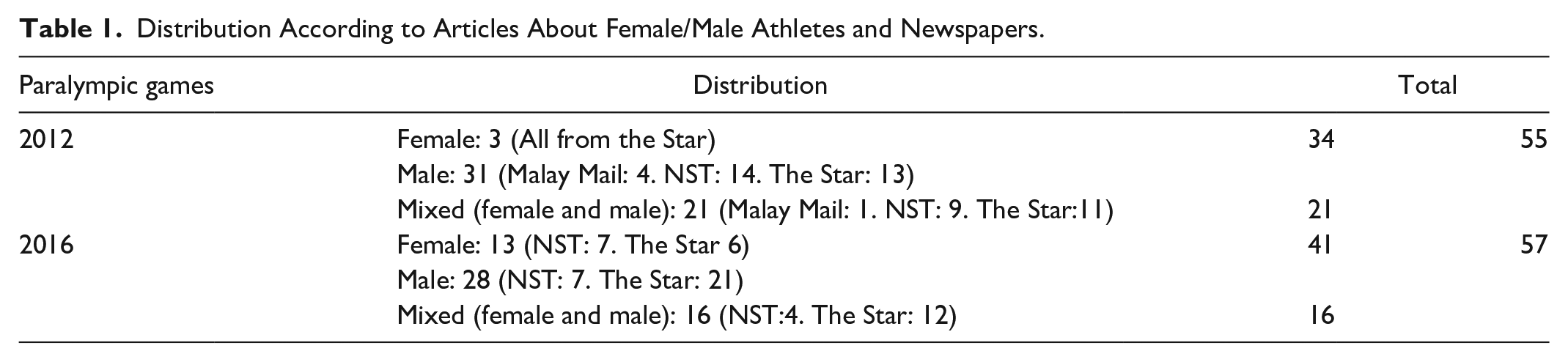
In this study, newspaper text were chosen by selecting newspaper headlines, lead paragraphs, and captions, that visibly accentuated femaleness and maleness in athletes at the Paralympic Games. Visual text containing sports photograph contents were also extracted. Only articles accompanied by sports photographs were taken into account for the first level of analysis (see Figure 1), thus, the total number of articles selected for analysis was 47 (21 in 2012 and 26 in 2016). Findings from verbal data found here were triangulated with findings from analysis of a bigger data set (75 articles, 16 of which covered female athletes and 59 covering males, all contained in the body of article published about the 2012 and 2016 Paralympic Games). News photographs with captions, amounting to 47 photographs, provided the main source for visual data. It is argued that captioned photographs are truer in meaning with the verbal data while conversely, uncaptioned photographs may be imbued with wider meaning beyond the texts through the meaning making process. It is noted that “Newspaper photographs are the most salient hooks which draw the reader into a story; their captions anchor these photographs in relation to the story” (Engel, 2008, p. 13). Unlike stand-alone pictures where meanings are open to interpretation, captions turn photographs into news by anchoring their meaning in the picture and underpinning this meaning through verbal text.
In terms of gender, there were approximately three times more news reports about male athletes compared to females (36 for males and 11 for females). It is noteworthy that in 2012, despite Malaysia sending 6 female and 15 male athletes to the Games, there was just one verbal and visual text representing all 6 females. The alarming presence of a singular verbal and visual text representing female athletes demonstrates continuing absence of “objectivity,” along with the suggestion of “suspicion” and “prejudice” (Teo, 2000). Further, if articles not accompanied by visual text were also counted, there would only be three articles in total for female athletes for 2012. This finding may reasonably be viewed as revealing unfair coverage. However, it is acknowledged that in 2012, Malaysia was represented by 15 males and 6 females and that in 2016, there were 15 males and just 1 female. Thus, an alternative explanation might be that the coverage ratio was representative of the actual distribution of athletes by gender. Regardless of either explanation, this study established the manner in which male and female athletes were depicted in the news and whether or not there was bias in their representations. A gender-based discussion on the portrayal of Paralympians can be found in the next section of this article. Even though the total number of selected articles might appear to be limited, the words and visually assistive elaborations employed by newspapers are rarely neutral, often containing within them a prejudicial “socio-political framework” (Teo, 2000).
Results and Discussion
Using a linguistic-inspired framework, a multimodal critical discourse analysis was carried out on all 47 articles of the 2012 and 2016 Paralympic Games. Verbal text were analyzed separately from visual text. The aim was to investigate the representation of athletes in Malaysian news coverage of the 2012 and 2016 Paralympic Games, specifically whether they were depicted according to generalized or stereotyped constructions, and whether there were differences in representation of females and males.
From a quantitative point of view, it is important to note that in terms of coverage volume, there were very limited amounts of data available for collection in this study. The number of selected articles for analysis was merely 47 (articles with news photographs), from a total of 55 articles published during the 2012 Paralympic Games and 57 during the 2016 Games. However, these numbers are consistent with coverage of past Paralympic Games involving other countries: for example there were 68 articles in four German newspapers and 36 articles in four French newspapers during the 1996 Paralympic Games (Schantz & Gilbert, 2001), 62 articles in four British newspapers during the 2000 Sydney Paralympic Games (Thomas & Smith, 2003), and 70 articles in a Singaporean newspaper depicting Paralympic athletes collected over the span of 2 years, that is, with a mean of 35 articles collected per year (Brooke, 2018). Even though these are just raw figures across different cultural media contexts, they are comparable because all of them are newspaper articles reporting about Paralympic Games and athletes. Limited coverage volume of the Paralympic Games appeared to be consistent globally. This affected the sample size used in the study, especially when analysis only included articles that were accompanied by news photographs. Limited coverage is an important finding, revealing the nature of Paralympic reporting in Malaysian newspapers.
Impairment Description
Verbal Text
Meanings extracted from verbal analysis were obtained. Analysis of verbal text focused on the different elements of the articles with particular focus on the examination of headlines, captions, and lead paragraphs. Table 2 presents the findings based on an analysis of 11 articles related to female athletes.
Impairment Descriptions for Female Paralympic Athletes.

From Table 2, it may be seen that there were eight instances of medicalized description, suffering, and bravery/heroism. With regard to medicalized description, phrases such as intellectual disability and wheelchair racer were used. The idea of suffering is realized through combinations of words and phrases such as she can decide when to end her own life and unbroken pain. Some instances of gender marking were noticed when descriptions of impairment were analyzed, for example, in the
Impairment Descriptions for Male Paralympic Athletes.

Table 3 shows the findings from the analysis of impairment description in verbal text about male athletes. Eleven instances of verbal resources were found, indicating medicalized description (five instances), suffering (two instances), and heroism (four instances). Medicalized description included words that indicated a type of neurological disorder (cerebral palsy), a type of clinical impairment (armless, blinded, and cognitive disability), and category of event (wheelchair). As for suffering, direct phrases were found indicating challenges such as extreme hardships and pain and struggles. From Tables 2 and 3, it can be seen that medicalized description of impairment (e.g., blind or armless) were the most frequently used term to describe both female and male Paralympians. As for phrases that indicate suffering, the number of instances was the same (two instances in each group), but they only appeared in lead paragraphs.
Since there were fewer news stories of female athletes compared to males, more instances of descriptions about impairments were found for male athletes: eight instances for females compared to 11 for males. However, these 8 instances for females were extracted from 10 news articles, whereas the 11 instances for males were extracted from 36 (normalized frequency: 3 instances out of 10 articles). Based on the normalized frequency it may be said that for every 10 articles, female athletes were described according to their impairment (medicalized description, suffering, and heroism) twice as much as their male counterparts.
When the verbal text of male athletes were compared to those of females, instances of similarity in terms of distribution and concentration were found. There were many instances of medicalized description and suffering being concentrated in the lead paragraphs. The results also revealed that a small percentage of phrases and words indicating bravery and heroism had appeared in captions (e.g., words/phrases including hero, heroic, brave, and determined). Returning to the discussion on gender marking, three instances of women’s were found in Table 2 and only one instance of gender marking was found in Table 3. This could possibly be an example of gender stereotyping, where men’s sports events are considered the norm while women’s sports events are not, thus inclining them to be marked for gender. It is possible to confirm this through examination of a bigger corpus.
Verbal text: Comparison with bigger data set using computer assisted discourse analysis
In order to determine whether or not these findings were consistent with a bigger data set, a simple analysis of word types and phrases was carried out on all verbal text, that is, articles with and without visual text accompanying them. For this analysis, the body of the article was used instead of headings and captions.
For the verbal data, there were 59 articles for male athletes (28 from 2016 and 31 from 2012) and 16 articles for female athletes (13 from 2016 and 3 from 2012). Since the number of running words in the news stories about female athletes was 6, 239, a close analysis of the text could have been performed quite easily, but in order to compare with a bigger corpus (23,140 words in the news stories about male athletes), it was necessary to use the same analytical approach for both data sets, namely, using word list function in a corpus tool. By going through the word list, words related to medical terms, suffering, bravery, and heroism were identified. Through cross checking with concordances (a function that allows word context to be seen), some surrounding words were also extracted, that is, clauses that would help demonstrate how certain combinations of words might be of interest. Clauses in a sentence may often be grouped into different categories. For example, in the sentence “Long was born in Siberia with fibular hemimelia, a birth defect that left her without her fibulas, ankles, heels,” the phrase fibular hemimelia is categorized as a medicalized description, while birth defect falls under suffering. The findings on descriptions of impairment for both female and male Paralympic athletes are presented in Table 4.
Impairment Descriptions for Female and Male Paralympic Athletes.

As shown in Table 4, 42 instances of descriptions of impairment in the news reports about female athletes and 99 instances about males were found. By normalizing the instances over 100 articles, it is estimated that 263 instances of impairments occurred in news reports about female athletes and 168 instances about males. There were approximately 100 more instances of impairments in news reports about female athletes. This estimation is made cautiously on the basis that both words and clause constructions as instances of impairments were taken into account, rather than focusing on a measurable unit (e.g., only word count). However, after analysis of both data sets (findings from 47 articles and findings from 75 articles), results appeared to be consistent, with more descriptions about impairments in news reports about female athletes compared to males.
The term wheelchair was found many times and appeared in different categories. Take for example the term wheelchair in news reports about female athletes: out of the nine instances, six of them used wheelchair as premodification of people (wheelchair racer: five instances) or group of people (wheelchair track teams: one instance), while two instances fell into the event category (wheelchair marathon and wheelchair race). For descriptions of impairment, it was noticed that the word wheelchair-bound (see Table 4) was being used (e.g., wheelchair-bound archer). This descriptor was described by Hermeston (2017, p. 13) as a type of premodification that carries “unquestioned assumptions about the restrictive nature of wheelchairs,” and that such an assumption is objected to by disability campaigners. Such linguistic structures, that is, modifier (wheelchair-bound) + noun (person), propagate disempowering assumptions in news stories about Paralympic athletes.
When intellectual disability or cerebral palsy were attached to a category of event, for example, T20 (intellectual disability), these were considered as indicators of medicalized descriptions. No issue arised from the denomination of the sports category as T20, referring to a track and jump event for athletes with intellectual impairments. The International Paralympic Committee’s (IPC) classification is made up of a letter and number, and to identify the specific event and its impairment category, the public would need to check the classification. When the IPC publishes news in its portal, it only uses categorizations such as T20, T37, or F32 as identifiers for sport events contested by athletes (International Paralympic Committee, 2021). However, in the news reports found in our data, medicalized description were also attached to these IPC categorizations. It was possible that these additional medicalized descriptions were due to the impression that readers were unfamiliar with the classification system and would benefit from the added information.
Returning to the discussion on gender marking, the 75 articles in the larger corpus were examined for the terms women’s and men’s. There were 36 instances of women’s and 60 instances of men’s found. Of these, 35 instances (out of 36, or 97%) of women’s and 60 instances (out of 60, or 100%) of men’s were used to mark a sport type for gender. Comparing these findings with a study on representation of non-disabled athletes in sports news reports (Ismail, 2017), it was reported that 45% of the instances of women’s (139 out of 310) marked a sport type for gender, which was much higher compared to 25% of the instances of men’s (91 out of 357). In that study, when women’s or men’s were not used to mark a sport type for gender, they were used to mark sports associations (e.g., Women’s Tennis Association) or famous Malaysian competitions (e.g., a golf competition named IJM Land Penang Women’s Open). Of course, sports categories were not always marked for gender, as seen from the examination of both sets of articles, but when the terms women’s and men’s appeared, they were almost always used to mark a sport type for gender in news reports about Paralympians, as shown in Figure 2. Additionally, it was also noticed that in Paralympic sports, be it for female or male athletes, articles were more frequently marked by description of impairment and/or gender, rather than by having no markers (indicated by N/A). This is demonstrated in a sample analysis of all instances of T20 events in the 75 articles. Such markings might indicate stereotyping. To illustrate further, a study on non-disabled athletes (Ismail, 2017) concluded that stating the instances of gender marking suggested that women’s sport events were inferior, subordinate, or different to the norm/standard (men’s) events (Bruce, 2016; Kane, 1996; Wensing & Bruce, 2003). From the examination carried out in this study on Paralympic athletes, it was possible to infer the same. Instances of marking a sport type for gender and description of impairment also appear to imply that disabled athletes’ sports events (both women’s and men’s) were subordinate or different to the norm or standard when compared with non-disabled (men’s) events.

All instances of T20 events in the 75 articles with and without women’s/men’s.
Visual Text
In this section, images deemed to focus on impairments were those that seemed to fixate primarily on the limb or body part that emphasizes a perceived impairment (e.g., wheelchair) or mechanical assistive device (e.g., prosthetic limbs). For copyright reasons, images presented here have been altered, yet they preserved as much of the facial expressions of athletes as was possible. Of the articles having images of female athletes, a small picture was inserted into the bigger picture in one of the linked photographs, increasing the total identifiable pictures of female athletes to 12, instead of corresponding exactly with the 11 verbal texts. Of the 12 images featuring female Paralympians, 5 showed images of their impairment, whereas 7 did not. However, of the seven news photographs that did not show impairment, three were about Siti Noor Radhiah, an athlete with intellectual impairment who had won medals. A brief summary of the type of impairment featured in the photographs is presented in Table 5.
Impairment Features in Images of Female Athletes.
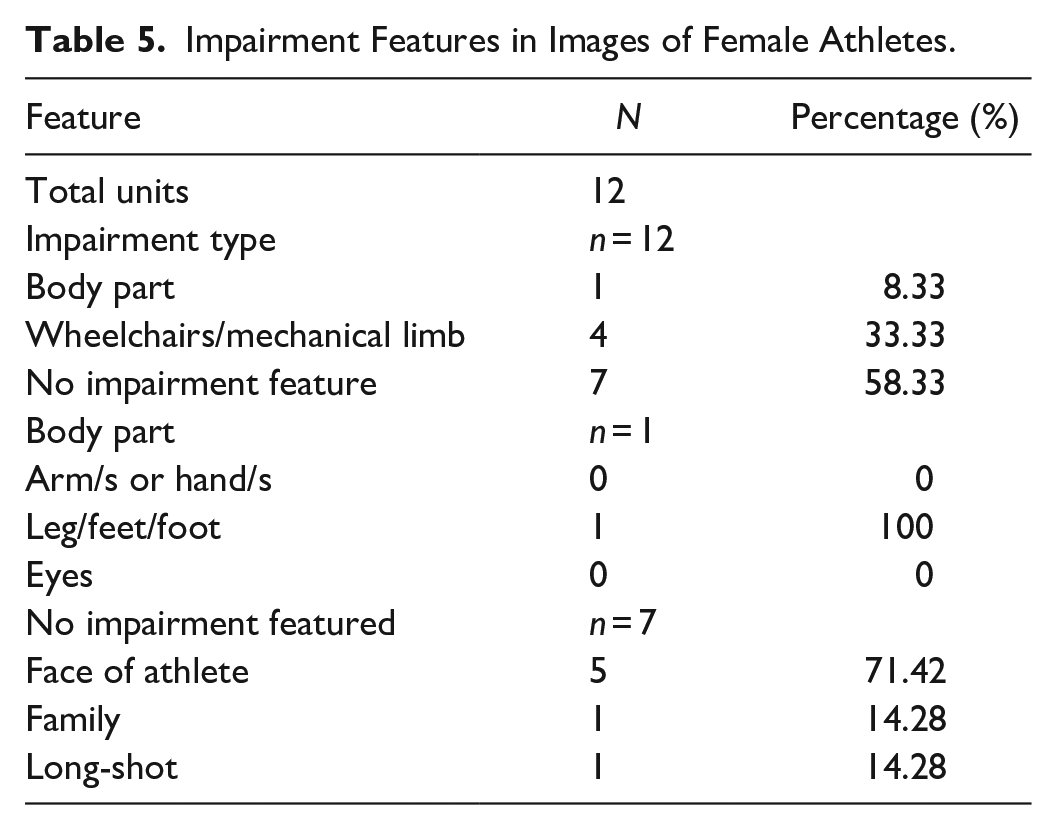
A close inspection of Table 5 revealed that in many instances there was no impairment featured in the images, as most images seemed to focus only on the athletes’ faces. When impairment was featured in the images, the wheelchair or mechanical limbs were displayed (e.g., prosthetic leg). Some examples are shown in Figure 3.

Left image shows an athlete holding her prosthetic leg and right image shows an athlete using a racing wheelchair.
In Figure 3, the athlete seen on the left was not at that moment in competition but was instead captured holding her prosthetic leg at some indefinite time around the event. This is an example of a picture focusing entirely on the athlete’s impairment rather than on her athletic achievement. In comparison, the picture on the right shows the athlete actively competing in a race using a racing wheelchair. In this case, the picture of the racing chair might be necessary to indicate the event that the athlete was competing in. There was also a smaller picture or an insert that may be seen on the top left side of the same picture. In it, the female athlete is shown smiling and showing off her medal. Such smiling pictures or poses were very common in photographs of female athletes. In general though, the findings showed that portrayals of athletes did not over emphasize their impairments.
Table 6 presents a breakdown of impairment descriptions based on an impairment being featured, type of impairment, and the alternative focus of images when no impairment was depicted in the story. Of the 36 articles written about male Paralympians, only 15 (approximately 42%) included visual representations of impairments while the remainder did not.
Impairment Features in Images of Male Athletes.

In many of the pictures not featuring impairments, the athletes had intellectual impairments, visual impairments, or cerebral palsy. In the photographs where athletes were wheelchair users, their chairs were not featured. Photographs were usually taken from the waist up or above the shoulders. There were also higher frequencies of impairments related to wheelchairs or prosthetics featured in the articles compared with body part related impairments, that is, nine instances of wheelchairs and prosthetics, usually artificial legs (see Table 6). For less obvious impairments, for example intellectual impairment or cerebral palsy, this visual/image type of analysis is not deemed the best method for impairment examination since some impairments are not immediately obvious (such as intellectual) and some can be obscured by accessories (opaque spectacles for eyes).
When the results for all athletes were compared, an emerging pattern can be seen, whereby most pictures had not featured the impairment (58%–60%). When impairments were not featured in images, most photographs showed athletes smiling or posing for the camera during a medal award ceremony, sometimes with their medal also in the picture. For athletes with physical impairments, pictures of wheelchairs were the most prominent indicator of impairment among both female and male athletes.
Emotion
For emotional expression in verbal text, emotion words (happy, sad), and expressions (down in the doldrums) were considered, while in visual text, positive, negative, and ambiguous facial affects were focused alongside the ambiguous and none categories. Findings about emotional expressions help to better understand the narrative about Paralympian athletes, especially when they were consistent with the depiction of impairment related to bravery/heroism. It was also important to uncover the kind of emotional tools which were used to complement or augment the identities attached to these athletes, as well as to what purpose.
Verbal Text
Findings based on examining the emotion lexis in the news stories were obtained using the UAM corpus tool, and the results are presented in Table 7. Examination of verbal text about female athletes showed no evidence of emotional expression used as description. However, there were quite a number of instances extracted from the corpus about males.
Emotion Words in New Stories About Male Athletes.

It was striking in Table 7 that all instances of emotion words were positive. Different types of expressions were used to express “happiness” such as the happiest, sheer joy, delighted, and golden feeling. The phrase (tears of joy) in the last line in Table 7 was quite unexpected. This was because images of teary male athletes are quite rare and descriptions which directly refer to the act of weeping (tears), even more so. Teary expressions of male athletes were considered acceptable in certain sports especially team sports such as football or and baseball, in which athletes were allowed to show intense emotional expressions (Wong et al., 2011). Looking at how this teary expression was captured during an individual sport, to some extent, goes against the stereotypical narrative that female athletes are more emotional than male athletes. For the purposes of triangulation, the bigger corpus was examined for instances of emotion words.
Verbal text: Comparison with larger data set using computer assisted discourse analysis
Table 8 presents the findings about emotion words in news stories about female and male athletes. Based on the total frequency in Table 8, 41 instances of emotion words were found in news stories about female athletes and 79 instances of emotion words and expressions in news stories about males. The normalized frequency was estimated over 100 news stories and it seems that emotion words in news stories about female athletes are likely to be almost double (256 instances compared to 134). It is noted that a higher frequency of positive emotions was found in news stories about female and male athletes, compared to negative emotions.
Emotion Words in News Stories about Female and Male Athletes.
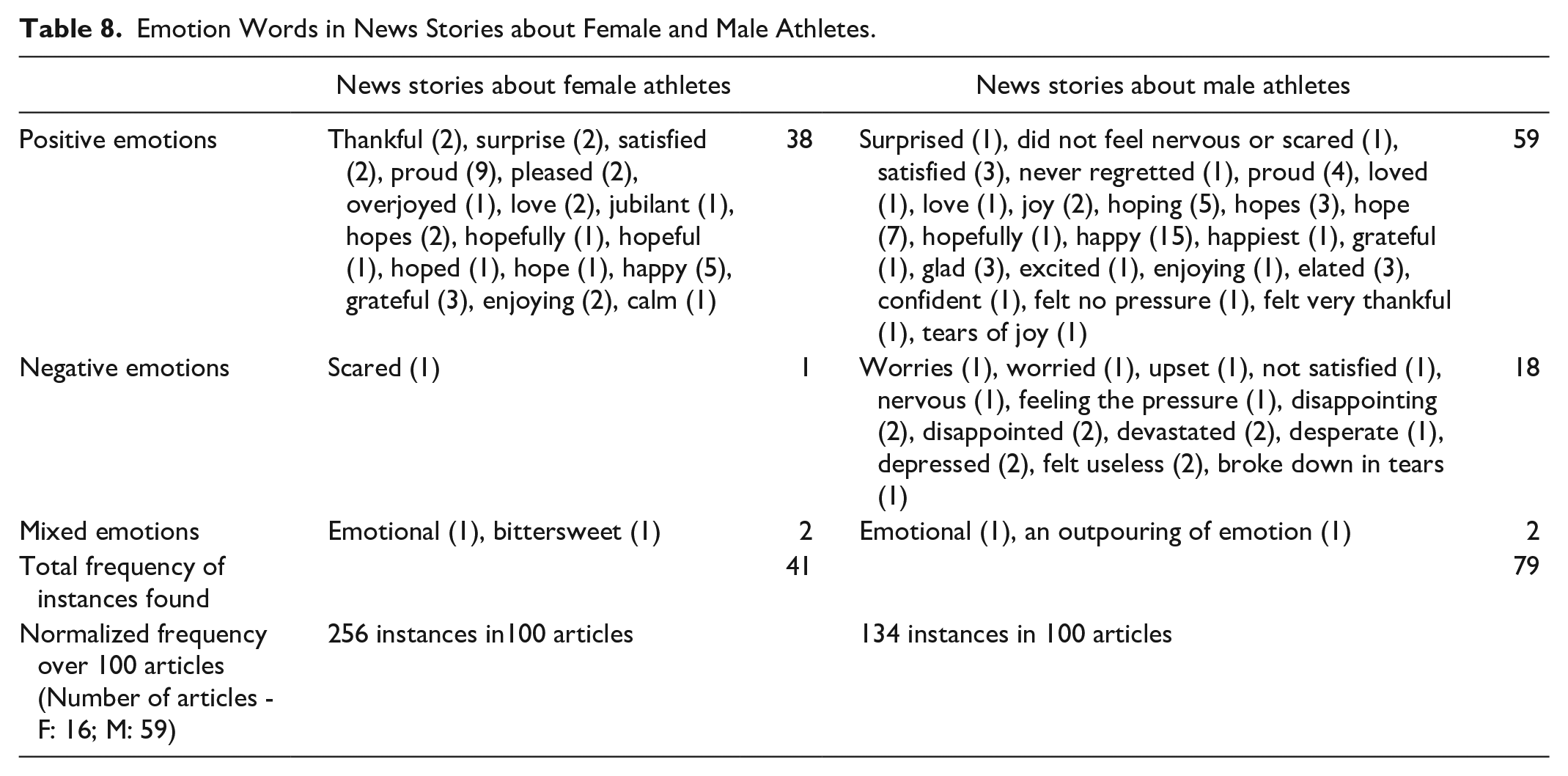
Additionally, even though no instance of emotion words related to female athletes were found in the analysis of the smaller corpus, many instances were found in the larger one. On further examination, it was found that female athletes were considered more emotional than males – consistent with the general stereotype (Bruce, 2016; Duncan, 1990; Liao & Markula, 2009; Thomas & Smith, 2003). In comparison of the findings in Table 8 with those of the smaller corpus, it was highlighted that emotion words were used infrequently in captions and headlines, as distinct from the body of the articles – a result which was also recorded in a previous study (Blinded). The function of a headline was to attract the reader’s attention by using newsworthy elements, including emotional words (Bednarek & Caple, 2012), so this was an unexpected finding. Thus, this discovery suggested that this was a pattern unique to sports news discourse. It would be interesting to observe if accompanying images were consistent with these findings.
Visual Text
When analyzing images of female athletes for facial affect, some problems emerged from the data. One of these problems was the difficulty discerning the athletes’ facial expressions. In one image, the athlete’s face was barely visible because the picture was taken from such a far distance. The image showed only the athlete’s silhouette in a crowd of other athletes, with the intention of capturing the location of the athlete during the last seconds of a running event. In such cases, the images are considered not to be displaying any facial affect.
Based on an analysis of 12 pictures from 11 articles (one picture was inserted inside a bigger picture of the same athlete), nearly 60% were female athletes pictured showing positive facial affect. No images with negative facial affect were found. The pictures in the corpus exhibiting positive facial affects, are mostly smiling female athletes photographed during the medal award ceremony as shown in Figure 4.
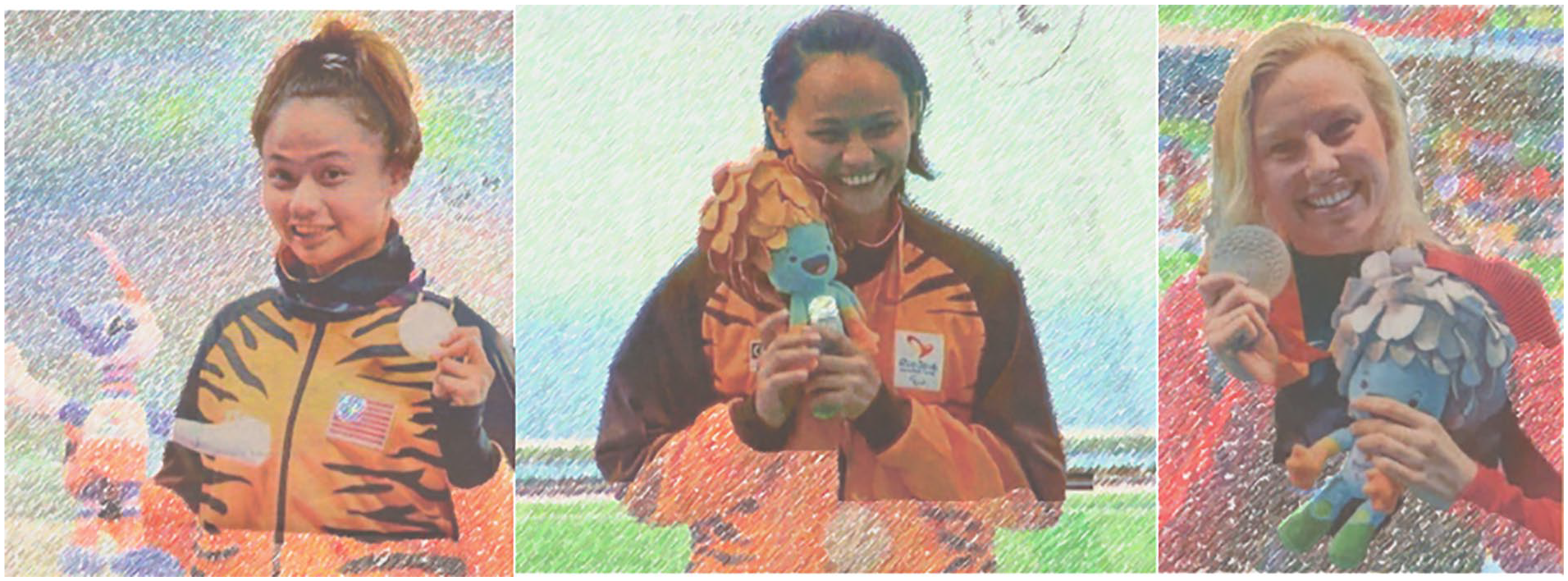
Samples of images with positive emotion.
In Figure 4, three pictures with all athletes exhibiting the same type of feeling may be seen, that is, happiness, through their act of smiling. By their facial expressions, it is possible to see their teeth clearly, their mouths are turned upwards, and their eyes are squinting a little. The athlete in the first picture on the left even has her eyebrows raised somewhat, her forehead wrinkling, probably an indication of happiness combined with disbelief at winning.
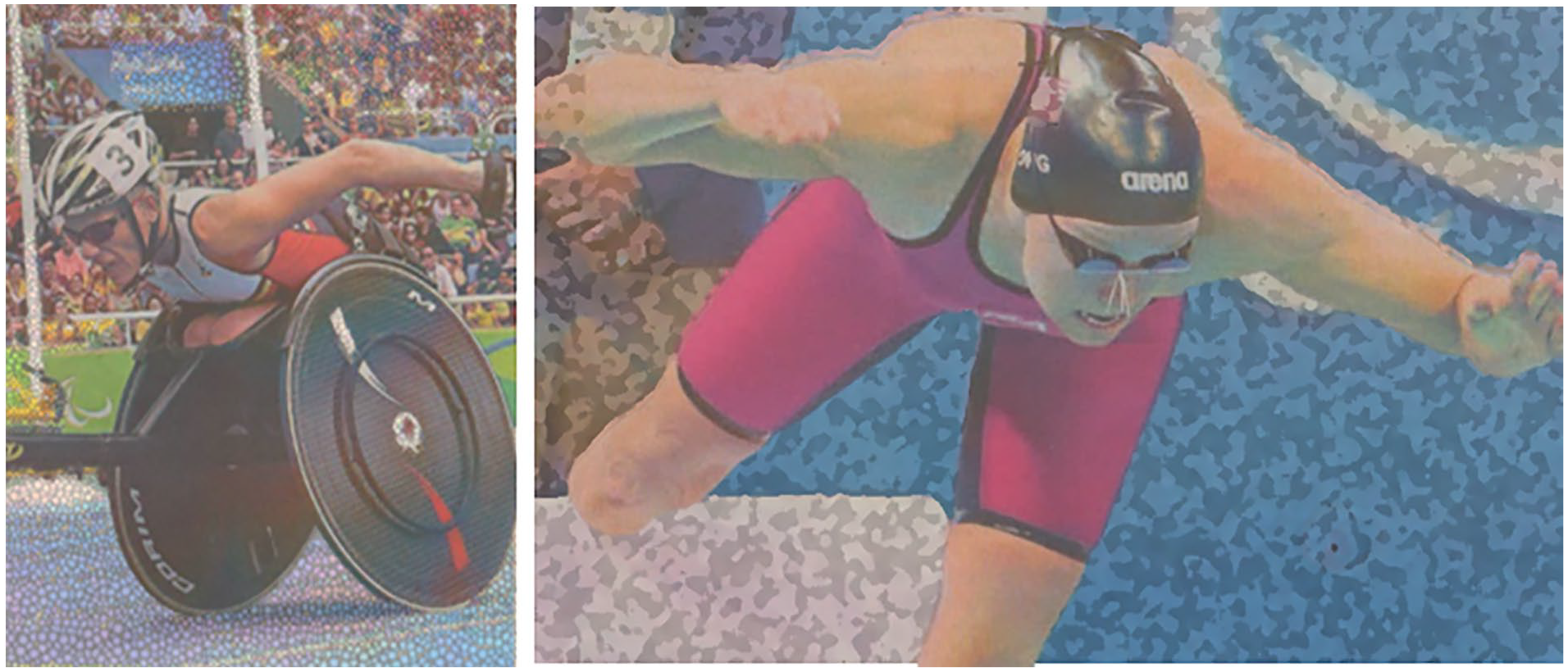
Of the 12 images identified in Table 9, only two images (or 17%) were pictures identified as resolve images, where athletes were depicted as showing facial tension during competition, for example, wheelchair racing. These images are presented in Figure 5.
Facial Affect in Images of Female and Male Athletes.

Images identified as resolve pictures.
In Figure 5, it was clear that even though both athletes’ eyes are obscured by either sunglasses or swimming goggles, facial patterns that show persistence and determination could be seen. In the left picture the athlete’s mouth was wide open, with visible facial lines forming on her chin and around her mouth. This facial tension could be due to a forceful intake of breath that the athlete needed to take while pushing the racing chair forwards. In the right picture, the athlete’s facial tension was clearly visible on her forehead, with wrinkles forming as she prepared to jump into the swimming pool.
Based on these findings about facial affect of female athletes, most of the expressions conveyed feelings, with positive affects accounting for approximately 58% (7 out of 12 images) of all data. To our knowledge, there is no known research about the facial affect (social-semiotics inspired approach for visual texts) of athletes at the Paralympic or Olympic Games. Thus, it was only possible to compare the findings of this study to that of the daily sports news. It was interesting to note that images depicting athletes expressing emotion (positive affects) were more prominent in news photographs of Paralympians compared to the daily news reports of only 37% of non-disabled athletes expressing emotion when performing at regular/non-Olympic championships (see Caple, 2013; Ismail, 2017). For daily sports news reports, more resolve images (non-emotional expressions) were found compared to positive facial affects (emotional).
Results about emotions in images of male athletes are presented in Table 10. It was revealed that positive facial affect accounted for 50% of the whole data set, while images of negative facial affect were not found. Resolve images made up 25% of the images, whereas ambiguous images (16%) and none categories (8%) were the least frequent. If a facial expression was indecipherable due to distance or picture angle, it was classified in the none category. Some of these findings were consistent with those found in images of female athletes, whereby male athletes were also represented as expressing positive facial affect, with many pictures showing them smiling during the medal award ceremony, and sometimes a very close up face shot with no indication of their surroundings. The images in Figure 6 show the different types of emotional expressions considered as positive facial affect.
Types of Emotion in Images of Male Athletes.


Images of male athletes expressing positive facial affects.
In the first two pictures, the whole body of both athletes could clearly be seen in the frames, holding a medal and flag, respectively. Their smiles were indicative of feelings of happiness which may have derived from winning their events. In such cases, expressions of positive emotion were easily identifiable. There were, however, some cases where the distinction between positive and negative emotions was less clear.
In the picture in Figure 7 of Mohd Ridzuan Mohd Puzi hugging a fellow runner, his face was partially obscured. Even if only his facial expression with his eyes closed was taken into consideration, along with the discernible frowns on his forehead, it would not be possible to infer whether his expression was positive or negative. But collectively considering his gestures and other symbolism, particularly his wrapping of the Malaysian national flag, around himself, it could be deduced that this emotional expression was more positive than negative.
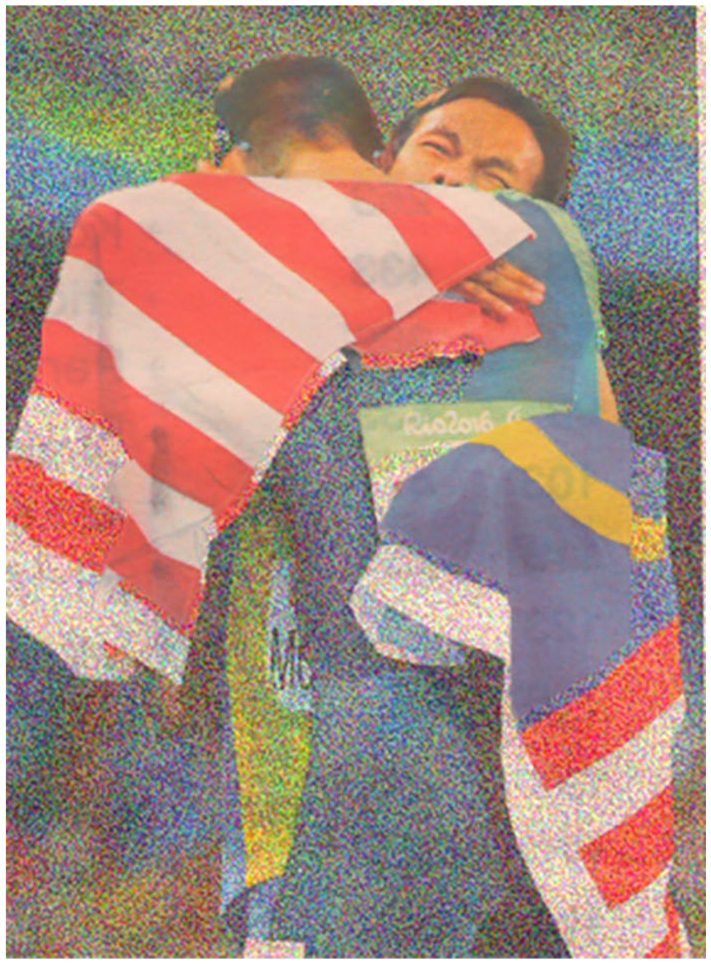
Image of a male athlete expressing positive facial affects.
Figure 7 was accompanied by the caption “Tears of joy: Ridzuan hugging bronze medal winner Rodrigo Parreira da Silva of Brazil after event.” From the caption (tears of joy), it was possible to understand further that Mohamad Ridzuan Mohamad Puzi was depicted as experiencing overwhelming joy. But he was not literally seen crying in the picture, that is, this image was insufficient to clearly verify whether or not he is crying.
Overall, the findings about facial affect were not stereotypical in cases where teary facial expression (positive or negative affects) was absent for female athletes. It is often stereotypical if present. Unusually it was only found in an image of a male athlete. Most of the results of facial affect focused on the positive. This suggested that positive emotion in sport was valued more rather than negative, and it applied to both athletes with or without impairments (Ismail, 2017; Caple, 2013). One possible reason for such frequent priming of emotion in news about athletes at the Paralympic Games might be due to the prevailing narrative of heroism. How these “heroes” overcame challenges and impairment by winning their events was the epitome of a news story arc. To some degree, depicting heroic acts may trigger nationalist sentiment. This defined Paralympic athletes, according to Brooke (2018), who highlighted the link with succeeding, overcoming hardship in a dramatic way, and intense emotional expression.
Regarding the topic of hegemonic (bias) or fair representation, the findings that depict fair representations of athletes were first considered. Based on the analysis of the smaller corpus, depictions were quite fair and did not suggest any significant gender bias. Nevertheless, based on frequency normalization, more instances of emotionality and descriptions of impairment were associated with female athletes in the larger corpus. Positive emotion words were frequently found (50%–58%) in the smaller corpus for news about both female and male athletes, consistent with findings by Caple (2013) and Blinded. In terms of impairment description, findings in this data (47 and 75 articles) showed that female athletes were more likely to be represented with an impairment description when compared with males. These findings could indicate residual gender stereotyping limited to the collection of articles and restricted to the verbal text. A true indication of persistence bias was definitely evident in terms of coverage. Visibility or coverage of Paralympic Games in newspapers was meager and coverage for female Paralympians found in this and several other studies even more so (e.g., Brooke, 2018; Pappous & Marcellini, 2011; Thomas & Smith, 2003). To some extent, it may be in agreement with Pappous and Marcellini (2011) that this disproportionate coverage might be due to the fact that there are fewer female Paralympians. However, in 2012, despite Malaysia sending six female athletes to the Paralympic Games, only three articles were written, and these were all about non-Malaysian female athletes who had won medals. The only Malaysian female athlete sent to the Games in 2016 won a bronze medal, and this was reported in 6 of the 13 articles that were written about female athletes in general. Based on this it can be argued that news reports about a female athlete depended on her winning an event, unlike her male counterparts. This stereotype was also found in studies on non-disabled female athletes (see Bruce, 2016; von der Lippe, 2002; Wensing & Bruce, 2003). According to Bernstein and Galily (2008, p. 187), lack of media interest in women’s sport, as evidenced by the lack of coverage, “distances both sponsors and potential audiences.” It could be argued that this would demotivate the younger generation of female athletes with perceived impairments from choosing sport as a career.
Finally, before presentation of the concluding section, the limitations of this study are laid out. One of these is the lack of inter-semiotic analysis with respect to the relations between each mode in each text. The focus here was on patterns across text, rather than patterns within text (for example, cohesive relations, discourse structure, multimodal genre structure). Analyses of different elements of news stories carried out separately, as undertaken in this paper, provided insight into the meanings expressed by these elements. However, they do not correspond to the actual experiences of readers who were more likely to read captions along with the images. It would be valuable if in the future a more detailed analysis was carried out regarding interaction and meaning constructions that could be drawn from both verbal and visual texts, such as images and captions. However, in view of the method adopted in this study (i.e., corpus-assisted multimodal discourse analysis), an excessive amount of manual work would be needed - a limitation that could only be rectified by the development of a “newer generation of corpus analysis software” allowing analysis of multimodal texts (Baker, 2018, p. 274).
With regards to the methodology and analysis of this study, there were some ambiguity with respect to how much the analysis of facial affect could be used to analyze sports discourse. The main limitation might be related to examining athletes with vision impairment. As most of their faces were covered with opaque spectacles, it was quite difficult to determine the facial expressions displayed in the pictures. Another challenge was in determining the exact emotion displayed by athletes with any type of muscle dysfunction or dystrophy. For example, in the case of Muhamad Ridzuan Mohamad Puzi, his surroundings and (some of) his bodily movements can help to determine if he was in a celebratory mood, that is, positive. However, to determine the type of facial affect based on his facial expressions alone can prove to be a challenge due to his impairment (cerebral palsy).
Conclusion
This study aimed to investigate gendered descriptions of disabled persons and emotional expressions of Malaysian Paralympic athletes. In particular, whether depictions were generalized or according to stereotyped constructions, and differences in representation of females and males were identified. In terms of impairment description, the results showed a focus on medicalized description, suffering, and bravery/heroism. Many photographs did not feature the impairment but focused more on faces. However, instances of verbal description of impairment were found more prominently in news reports about female athletes.
As for emotion, what was prominent in both analyses of verbal and visual texts were that emotional elements were an integral part of the sports news narrative in Paralympic stories. Many pictures depicted smiles and generally happy expressions, and powerful emotional pictures of Paralympic athletes were also found. These displays of emotion were also similar for both males and females where instances of positive emotion exceeded those of negative emotion.
Footnotes
Acknowledgements
We thank Vinnie Hall for editing and proofreading the manuscript.
Declaration of Conflicting Interests
The author(s) declared no potential conflicts of interest with respect to the research, authorship, and/or publication of this article.
Funding
The author(s) disclosed receipt of the following financial support for the research, authorship, and/or publication of this article: This work was supported by the Universiti Malaya BKP Grant (BK012-2017).
