



Abstract
It is significant to immerse tech-savvy English language learners in interactive learning environments in order to maximize their comprehension and verbal communication. This quasi-experimental study set out to elucidate the effect of a learning management system (LMS) on speaking fluency and listening skill development among intermediate students. A total of 50 Turkish-speaking students from two intact classes were assigned into a control and an experimental group that utilized an interactive platform for learning English in 8 weeks. The study adopted a pre and posttest design. The mean listening and speaking posttest scores of both groups were compared according to effect size, analysis of covariance, paired sample t-test, and independent samples t-test. In addition, students’ perceptions regarding the impact of LMS on these two skills were investigated with a questionnaire and an interview. The results showed that there was a significant difference between the two groups as the experimental group surpassed the control group in both speaking fluency and listening posttest. Participants also reported from the questionnaire and the interviews that they held positive evaluations of LMS as a result of elevating both language skills. The contribution of the study lies in providing an innovative solution to promote learners’ speaking fluency and listening skill.
Introduction
Mobile devices such as smart phones, tablets, and laptops made language activities project learning beyond classroom walls. This so-called ubiquitous access was due to the use of multimedia via wireless internet connectivity. Hence, online learning improved the quality of materials, self-reflection, and peer-interaction (Owston et al., 2019; Zhang & Zou, 2020). Thus, teachers implement Learning Management Systems (LMSs) into their lessons as online platforms for delivering the content, sending reminders to students, tracking their progress, facilitating collaborative learning, and enhancing language skills (Palfreyman, 2019). LMS acts as an open-source platform (Moodle), a commercial portal (Blackboard), or free learning environment (Edmodo).
The last 3 years witnessed a rapid rise in the application of LMSs in education because of the COVID-19 outbreak throughout the world. Earlier empirical studies overwhelmingly focused on students’ preferences for desktop computers over mobile phones (Stockwell, 2008, 2010; Thornton & Houser, 2001, 2002). Researchers currently examine the greatest potential of mobile devices aiding students in personalized practice for listening skill and advanced communication through blended mode (Ataeifar et al., 2019; Burston, 2021; Kafes & Caner, 2020). Face-to-face learning can be supported by incorporating LMSs in order to overcome the deficiency of classroom hours.
Blended learning is an approach that aligns the delivery of content through computer assisted language learning (CALL) and mobile assisted language learning (MALL) tools and combines face-to-face learning with online activities. The term was used by Metcalf (2003) to refer to the implementation of digital tools applied just-in-time in lessons to maintain different learning styles. Garrison and Kanuka (2004) used the term, blended instruction, to denominate a careful consideration of face-to-face and online learning for the flow of information and communication. McCarthy and Murphy (2010) put forward a new definition of blended learning, in which the focus is on reducing time spent on courses. Poon (2013) identified blended mode as a way to supplement in-class time with digital tools.
Yunita (2020) stated that traditional classroom can be complemented by LMS so that students use the English language actively beyond the classroom. In addition, shy students can overcome their fear to interact with peers in English. Besides, more exposure to input opens up the doors for more output. Moreover, if podcasts are integrated into online lessons, students will not only get meaningful and authentic input but also increase their self-confidence and self-esteem (Korucu-Kis & Sanal, 2020).
Web 2.0 tools can be described as the second generation of internet-based applications which pave the way for content creation, collaboration, communication, and interaction (Perks & Warchulski, 2019). Web 2.0 tools are also well-aligned for the Input Hypothesis which states that language items, a bit above students’ existing knowledge, can be dovetailed to become intake. According to Krashen (1985), input+1 theory supports that any language input which is slightly above students’ current level of competence can be retained. So, students can receive rich online input to augment listening and speaking skills. Listening tasks can be integrated by video-logs so that bite-size chunks of language can be used to promote enthusiasm for learning English (Aldukhayel, 2021).
Web 2.0 tools serve as infinite opportunities for input, empower interaction through collaboration and facilitate traditional and online learning. For this reason, this paper argues that an LMS is not a magic bullet for teaching listening and speaking, alone. Therefore, the purpose of this study is to extend the functionality of Edmodo with Web 2.0 tools for fostering these two language skills.
It is indisputable that learner’s perception toward LMS is a great artifact in language learning. Realizing benefits such as an increase in learners’ level of academic achievement, some researchers noted their positive perceptions toward online tools for learning English (Chen, 2015; Kuimova et al., 2018). The missing piece of the puzzle in literature is exploiting LMSs to complement students’ in-class development of speaking fluency and listening skill. Developers of LMSs often ignore students’ specific language needs and only provide an online resource-center for language practice and automatic feedback (Pegrum, 2019).
Listening and speaking skills are valued highly in English language education since both skills deal with involving students in real-time reflection and discourse. The former focuses on decoding spoken language whereas the latter encodes the message to the speakers. Speaking is crucial for communication. According to Chambers (1997), fluency can be defined as the speech rate. The number of pauses and the linguistic repertoire affect it. Teaching oral production skill encompasses using the background information (conceptualization) and selecting the correct lexical and grammatical structures (verbalization). Teaching these two language skills is a major concern in North Cyprus because Turkish Cypriot teenagers still lag behind their development in listening and speaking skills.
The Ministry of Education (2021) emphasizes modern language teaching methods to be used for increasing learner autonomy. Thus, the self-assessment descriptor scale standards for the Common European Framework of Reference for Languages (CEFR) were adapted to be used in their commission decisions report in North Cyprus.
Notwithstanding the research on improving reading and writing skills through blended mode (Ali & Sofa, 2018; Deveci & Tavil, 2021), our study is committed to investigate the impact of Edmodo as an LMS on the 10th grade high school students’ speaking fluency and listening skill in North Cyprus. To the best of our knowledge, this is the first study that was conducted on the effectiveness of Edmodo and Web 2.0 tools on listening and speaking skills. The results of the study will attract the attention of teachers, school principals, and policy-makers in the Ministry of Education in order to implement LMS to foster speaking fluency and listening skill.
The present study addresses the following questions:
What effect does LMS have on the students’ speaking fluency and listening skill?
What are the students’ perceptions toward LMS?
Literature Review
The application of online learning into the language teaching curriculum has been the subject of extensive research (Burston & Arispe, 2022; Hsu et al., 2021; Saeedakhtar et al., 2021). Ninety-five percent of the quantitative MALL studies, published in the last three decades, report that English is the most frequently researched language (Burston & Giannakou, 2021). Moreover, the results revealed that the development of learners’ listening (N = 7, 95%) and speaking skills (N = 9, 95%) was less frequently explored than their improvement of vocabulary (N = 32, 95%) and reading (N = 19, 95%).
The emergence of blended learning in numerous studies is fueled by the accumulation of evidence to transform the learning environment and introduce constructive reforms in education systems (Botero et al., 2019; Chang & Windeatt, 2021; Deiniatur, 2019; Karaaslan & Kılıc, 2019; Ngo & Ngadiman, 2019; Wichadee, 2017; Yeh & Lai, 2019). Results of the studies on blended instruction paint an overall positive picture of very high student motivation, high satisfaction, and learning outcomes (Ehsanifard et al., 2020; Sriwichai, 2020; Suwantarathip, 2019). To exemplify, Banditvilai (2016) conducted a case study on the impact of blended learning on undergraduate students in Thailand. The results revealed that language skills were reinforced since the participants were motivated and took responsibility of their learning. In another study Munawarah et al. (2018) underscored the effect of online videos and lecture clips on developing the 10th grade students’ speaking sub-skills (pronunciation, grammar, vocabulary, fluency, and comprehension) in Indonesia. The results indicated that the students in the experimental group improved their confidence in speaking and were also satisfied with building-up these sub-skills.
Mansy (2018) analyzed preparatory students’ listening skill in Egypt. The questionnaire results revealed their positive perceptions toward blended learning. Taysi and Basaran (2018) state from their study that students’ perceptions toward an LMS were positive and they fostered language skills by receiving multimedia. Participants were also satisfied with practicing the listening skill via an online platform. Angelina (2020) conducted a research on the effect of lyricstraining on listening skill. Participants reported that their listening skill progressed. Likewise, the majority of the sample was satisfied with their development of pronunciation. Gordeslioglu and Yuzer (2019) employed a case study to analyze students’ attitudes toward online tasks. The results indicated that students benefited from listening tasks.
Pramila and Thomas (2019) aimed to determine the impact of blended mode on students’ achievement level in speaking skill in Oman. The study reported a statistically significant difference between the two groups since the experimental group outclassed the control group.
Yesilbag and Korkmaz (2021) explored elementary students’ academic achievement and attitudes toward Voki. The results highlighted an incline in students’ level of achievement in speaking English. Hamouda (2020) carried out a research on the impact of Blackboard on the university students’ speaking skill. The posttest scores postulated that the experimental group obtained higher scores and more positive views than the control group instructed with the traditional method.
Some challenges such as insufficient language skills and lack of technological experience related with using LMS were revealed in a few studies (Deveci & Tavil, 2021; Hwang et al., 2016; Klimova & Polokova, 2020; Lakarnchua et al., 2020). Evidence on the effectiveness of LMS proved the validity of better language performance. Thus, this study scrutinizes the impact of Edmodo on students’ speaking fluency and listening skill with a quasi-experimental study in North Cyprus.
Methodology
Context of the Study
This study took place in a public high school where English is the medium of instruction. Students pass a central examination organized by the Ministry of Education in North Cyprus before they enrol the sixth grade. The students have 4 hours of compulsory English instruction each week.
Research Design
This study adopted a quasi-experimental design to investigate the effect of an LMS on the 10th grade students’ speaking fluency and listening skill. Table 1 indicates the quantitative and the qualitative design of the study.
Quasi-Experimental Design.

According to Creswell (2014), quantitative methods allow researchers to determine the relationship between variables which are affected as a result of intervention. On the other hand, qualitative methods provide the description of participants’ attitudes. The impact of LMS (independent variable) on listening and speaking skills (dependent variables) was measured by pretest and posttest pattern. Students’ perceptions (dependent variable) toward LMS were investigated through a questionnaire and interviews.
Interviews were employed to collect qualitative data from the students in the experimental group. Eight open-ended questions were designed and piloted to validate their comprehensibility. These questions were: (1) How did you feel about having online English lessons through Edmodo? (2) Do you think online activities help you to improve your listening and speaking skills in English? (3) Which online activities do you like the most on Edmodo? (4) Do extra online activities on Edmodo in addition to regular English class hours have effects on your listening and speaking skills? (5) Please explain the advantages of working as a group for your online portfolio. (6) Did you gain more or less confidence in listening and speaking skills when you had extra online materials to practice English? (7) What are the advantages or the disadvantages of Edmodo and Web 2.0 tools? (8) Were there any problems that you encountered on Edmodo?
Participants
The participants of this study were two intact classes taught by one of the researchers. Thus, the selection of the participants was due to convenience sampling. Fifty 10th grade English as a foreign language (EFL) students, aged 16 at CEFR B1 level, constitute the sample. The experimental group taught by the LMS consisted of 11 males and 14 females. About 13 males and 12 females were involved in the control group instructed by the traditional teaching.
Data Collection
After ethical clearance was received from the Scientific Research Ethics Committee of the researchers’ affiliated university, an official written permission was granted from the Ministry of Education and Culture, Department of General Secondary Education in North Cyprus to conduct the study. The present study was carried out in 2018 to 2019 academic year for 8 weeks of 30 online sessions and started by employing the pretest to measure the differences between the listening and the speaking skill scores of the two groups. The participants were allotted 35 minutes to complete the listening test and 10 to 12 minutes to answer the questions in the speaking part of the Preliminary English Test (PET) paper. The experimental group participated in the lessons through Edmodo in addition to the face-to-face classes. The control group only completed the activities in class. Both groups followed the same course book.
Measurement
Listening and speaking parts of the PET were conducted to examine if there was a significant difference between two the groups in the first week of the study (pretest) and the last week (posttest). There were 25 questions in the listening test. All participants were required to choose the correct option in part 1 which consisted of seven multiple-choice questions and part 2 that involved six questions. Furthermore, participants wrote one or more words in part 3 which contained six questions. In part 4, participants decided on whether the six statements were correct or incorrect. The listening part is worth 25 marks.
The speaking test included four parts with a total of 25 marks. Participants took the speaking test in pairs before the treatment. There were two examiners assessing the performance through a speaking rubric. Part 1 required each participant to interact with the examiners’ five questions. Participants gave their responses in part 2. Then, two photos of the people taking a break were given to the participants who described the situation and used appropriate vocabulary in part 3. The last part required the participants to talk about their likes or dislikes, habits, and preferences about spending time out. The dimensions of grammar, vocabulary, fluency, discourse management, pronunciation, and interactive communication were calculated to produce a band score between 0 and 5 marks.
Application Process of the Web 2.0 Tools on Edmodo
Table 2 illustrates the weekly blended lesson plan for the experimental group.The online activities and digital tools that were applied on LMS are as follows: Each student in the experimental group activated their Edmodo account by using the class code and posted their first greetings to the class.
Weekly Blended Lesson Plan.

The weekly lesson objectives and learning outcomes were shared with students on Edmodo. Students were guided to install Voki and presented their Voki characters by recording their voices and sharing the links on Edmodo on the first week of the study (see Figure 1).

Sample of a student’s Voki project.
Then students described their childhood memories to each other and recorded their voices through Vocaroo on week 2 (see Figure 2).
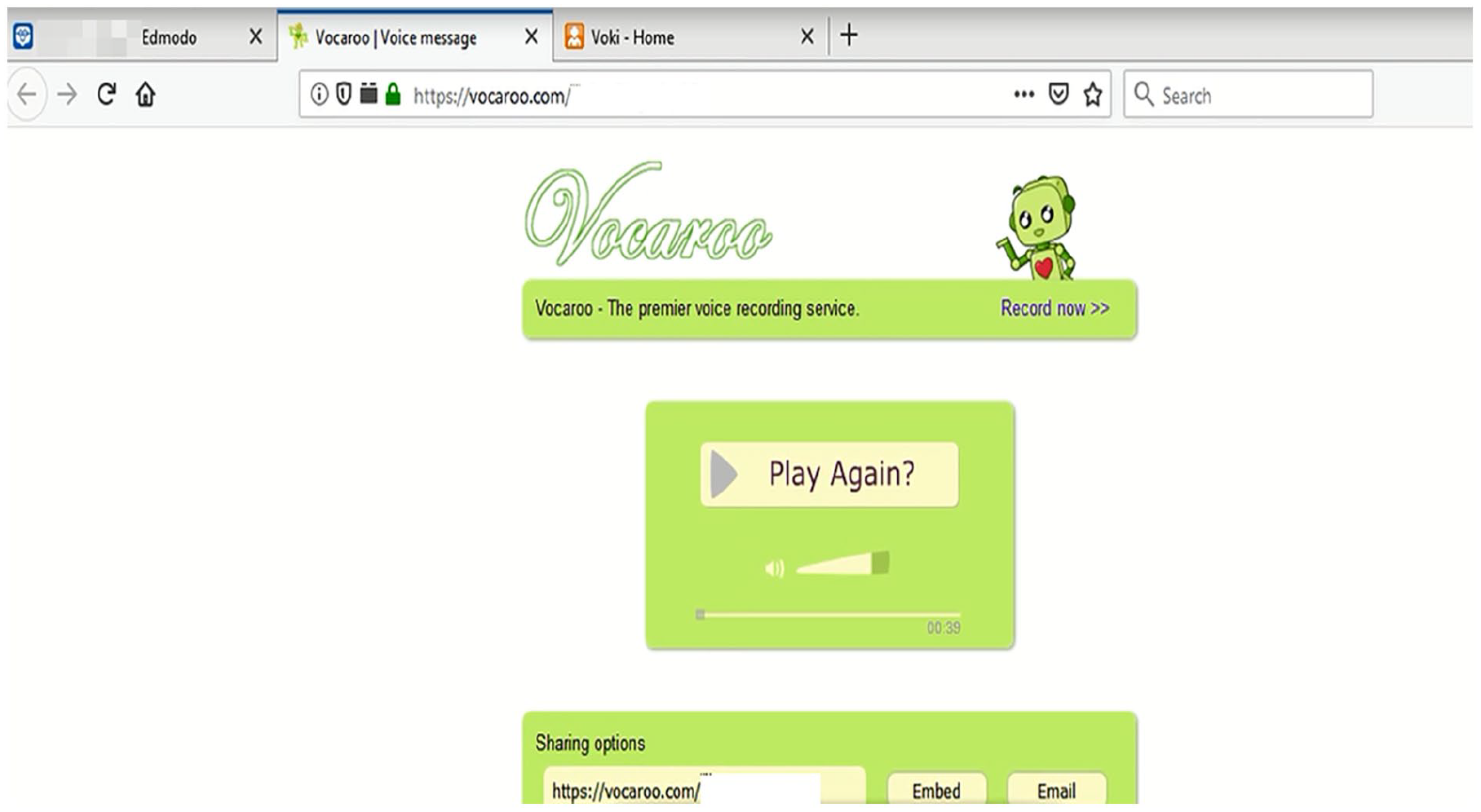
Sample of a student’s work on Vocaroo.
Students were asked to listen to the songs on lyricstraining.com, filled in the gaps and shared the links of their scores on Edmodo on week 3. They also listened to the BBC News videocasts (vodcasts) on Edmodo (see Figure 3).

A student’s score on lyricstraining.
Students practiced correcting themselves by using the phrases for hesitation on week 4. Moreover, synchronous lessons took place on Google Meet where the students participated in problem solving, information-gap, and role-play activities for developing speaking fluency and listening skill (see Figure 4).
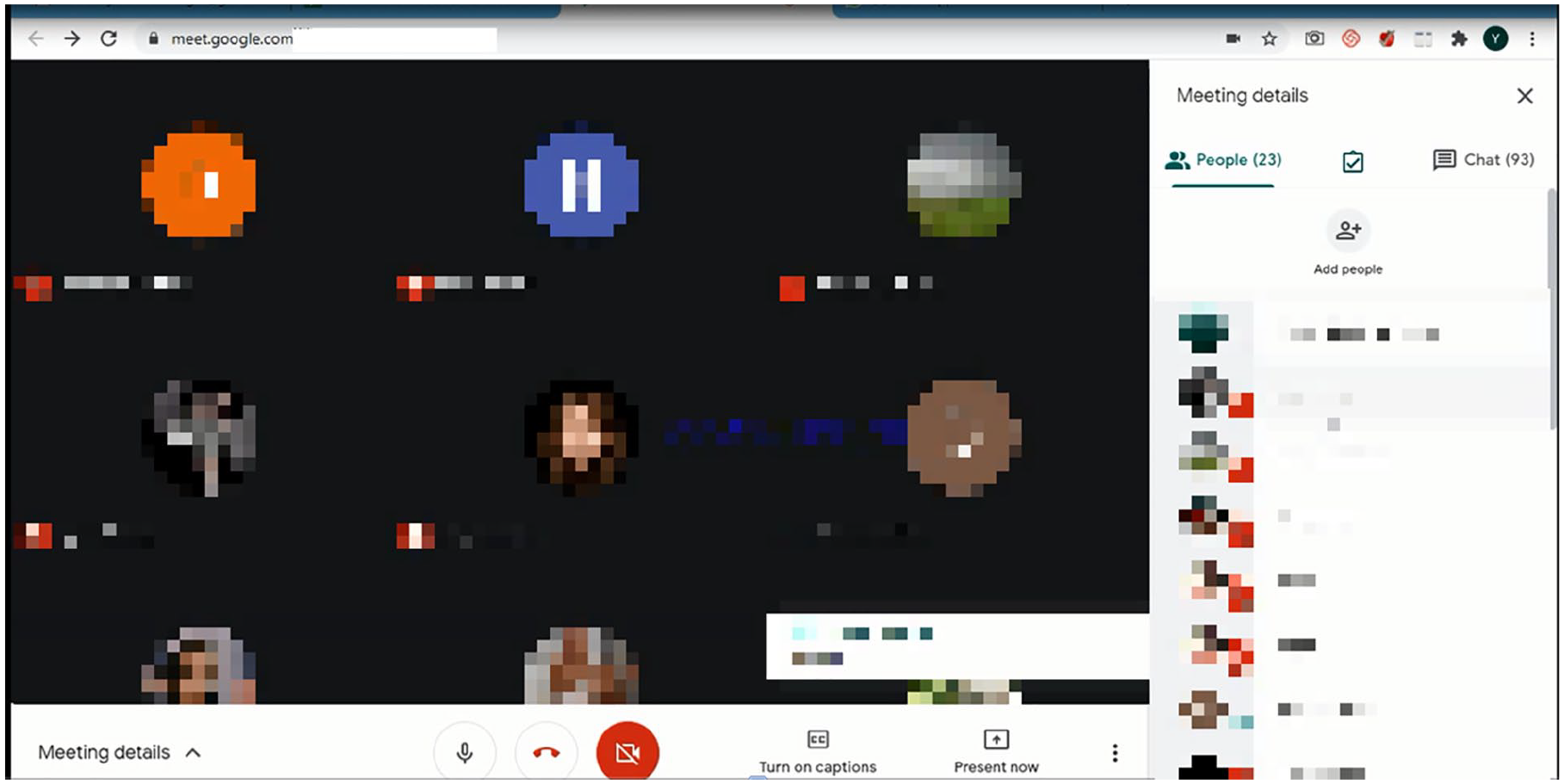
Group presentations on Google Meet.
As can be seen from Figure 5, students listened to a podcast about “working abroad” vocabulary and answered the questions on Kahoot on week 5. They also collected points, badges, and saw their achievement on the leaderboard.

Kahoot leaderboard.
Students described their houses, compared them with each other’s and applied chunks of language for hesitation through Google Meet on week 6. They also watched a Youtube video about a chef’s career and shared their favorite recipes on Google Meet on week 7. Students watched a vodcast in order to listen for the general idea and completed online quiz questions on Edmodo in the last week. Finally, the teacher assigned a total grade for each student on Edmodo.
Data Analysis
Listening and speaking pretests were conducted to determine the participants’ achievement level at the beginning of the study. The posttest was applied at the end of 8 weeks. Pretest and posttest of listening and speaking scores were analyzed and tabulated by using the SPSS version 25 software. The two raters’ high index of inter-reliability of the posttest speaking scores were marked consistently for the experimental group (r = .96) and the control group (r = .98).
The effect of the LMS on students’ listening and speaking skills was revealed through paired sample t-test, independent samples t-test, and effect size. Mean scores, standard deviations, frequencies, and percentages were accompanied by tables and figures. Each questionnaire item was analyzed according to the mean score and standard deviation. The high mean scores on questionnaire attributed to the positive perceptions toward LMS whereas the low scores meant negative attitudes.
Reliability
The items on the questionnaire and the interview form were presented to five experts in order to ascertain the validity of the tools. Some items on the questionnaire were rearranged according to their views. The questionnaire consists of 30 items according to 5 responses ranging from 1 (Strongly Disagree), 2 (Disagree), 3 (Neutral), 4 (Agree), and 5 (Strongly Agree) on a 5-point Likert scale. The reliability of the questionnaire was found, α = .979. Cronbach’s alpha of .80 or above is perceived as good reliability.
Written interview forms helped to clarify the findings in the questionnaire. When the qualitative and the quantitative research tools are merged in a research design, bias, and subjectivity can be eliminated from the results (Creswell, 2014). According to Creswell (2012), qualitative data gathered from interviews can be coded in terms of themes. All interview responses from the experimental group were marked for similar patterns and divided into positive and negative themes. Similar themes were identified.
Results
Participants’ Level of Achievement in Listening and Speaking Pretests
The mean scores of listening pretest for the experimental and the control groups were the same (Tables 3 and 4). Compared with the mean listening pretest of the control group (M = 17.76 and SD = 2.63) and the experimental group (M = 18.88 and SD = 2.57) that were similar in terms of level of achievement, the mean speaking pretest scores of both groups were also alike (control group; M = 17.64, experimental group; M = 18.96). An independent samples t-test was applied to find out if the control and the experimental groups were at the same level for listening and speaking skills before the experiment. The obtained p-values for listening (p = .135) and speaking skills (p = .075) are greater than the .005 significance level with respect to the pretest. The results of the independent samples t-test demonstrate no statistical difference in terms of the level of achievement in listening and speaking skills, respectively before the intervention, t(48) = −1.5, p > .05, t(48) = −1.48, p > .05. These results highlight that two groups were equivalent before the treatment.
Independent Samples t-Test between the Experimental and the Control Group on Listening Pretest Scores.

Independent Samples t-Test Between the Experimental and the Control Group on Average Speaking Prettest Scores.

Participants’ Level of Achievement in Listening and Speaking Posttests
Our first objective was to investigate the impact of LMS on students’ development of listening and speaking skills. A notable increase in both listening and speaking posttest scores of the experimental group was obtained in this study (see Figure 6). With respect to the mean listening posttest scores, the experimental group (M = 22.68 and SD = 2.25) scored higher than the control group (M = 18.20 and SD = 2.31). When the data on the mean speaking posttest scores were analyzed, there was a significant difference between the mean speaking posttest scores of the control (M = 17.76) and the experimental group (M = 22.96).
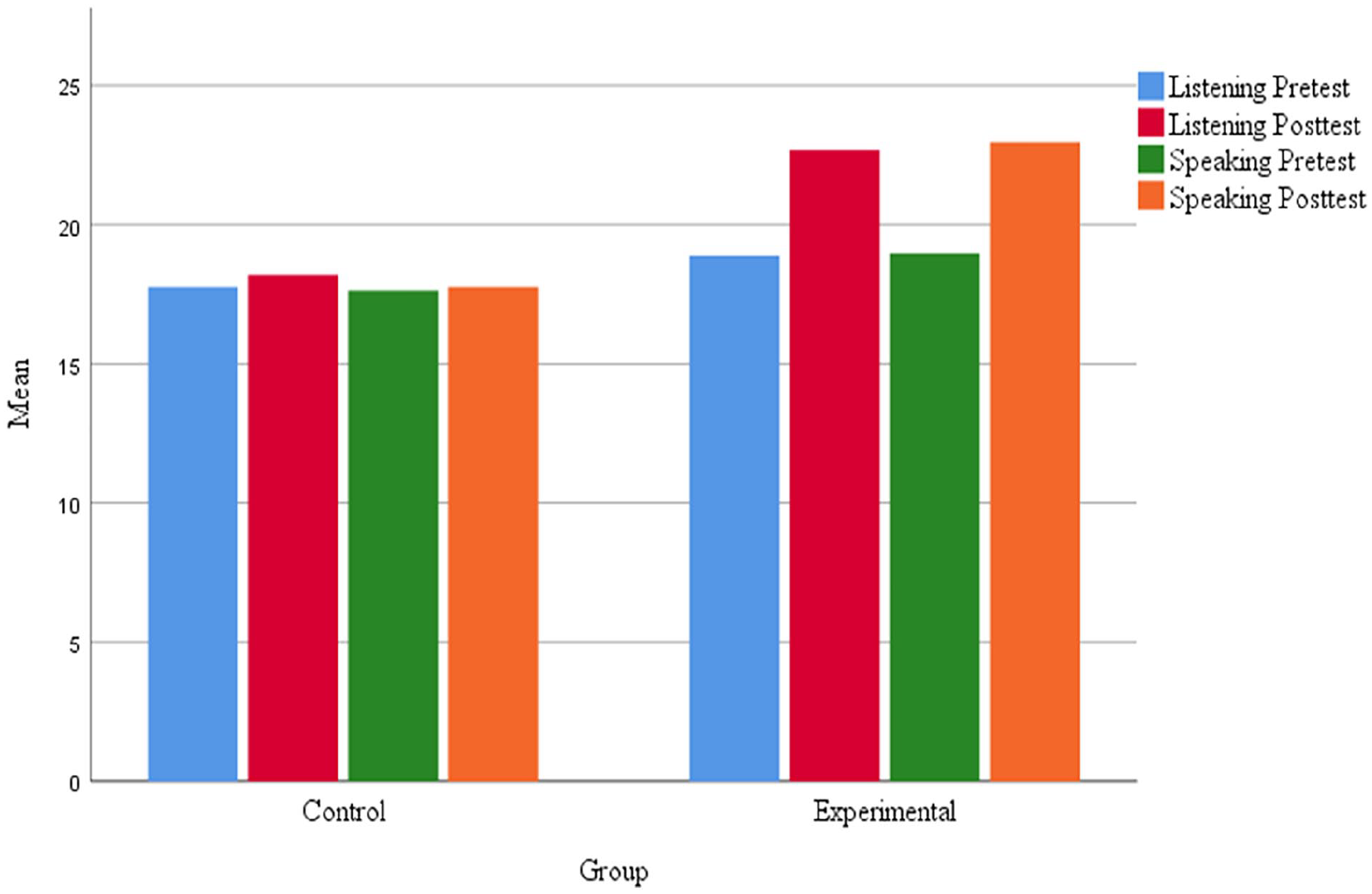
Comparison of the mean pretest and posttest listening and speaking scores for the two groups.
Tables 5 and 6 portray that the groups do differ in the listening posttest as t(48) = −6.948, p = .000, for the speaking posttest, t(48) = −7.785, p = .000. A significant difference was obtained between the two groups on the posttest results in both listening and speaking skills according to the independent samples t-test (p < .05, t(48) = 0.000).
Independent Samples t-Test Between the Experimental and the Control Group on Listening Posttest Scores.

Independent Samples t-Test Between the Experimental and the Control Group on Average Speaking Posttest Scores.

This study proved that LMS had a significant impact on listening and speaking skills, respectively, F(1, 48) = 48.27, p < .01, F(1, 48) = 62.15, p < .01. Results so far have been promising that the experimental group taught with LMS managed to have higher scores than the control group instructed with the traditional teaching.
The paired-sample correlations on listening and speaking pretests and posttests are r = .670 and .760 for the experimental group and r = .926 and .918 for the control group. These two results reveal a positive correlation and display a good support for test-retest reliability. So, the students in the experimental group who achieved high scores in listening and speaking skills are likely to get the same scores in the retest. The students in the control group who scored low are likely to get the low scores in the retest.
The Effect of LMS on Listening, Speaking, and Fluency Levels
According to Aryadoust and Raquel (2019), effect size (Cohen’s d) analysis, indicating the means of standard deviations of two groups, can be calculated by the mean posttest scores divided by the standard deviation. The effect size can be categorized as small effect if d = 0.2, a moderate effect if d = 0.5, and a large effect if d = 0.8 or more. Given that Cohen’s d for the experimental group in listening posttest (d = 1.96), and in speaking posttest (d = 2.23), the findings can be interpreted as huge effect. However, the effect size for the control group in listening posttest is d = 0.70 and for speaking posttest is d = 0.74 which indicate less effect than those for the experimental group. As can be noticed from Table 7, the partial effect size for the listening posttest was obtained through the analysis of covariance (ANCOVA); F(1, 48) = 5.197, p = .000). The effect size for the speaking posttest was also analyzed (see Table 8); F(1, 48) = 5.438, p = .000, meaning that there is a significant difference between the two groups. The partial eta square (ƞp2) shows a large effect of variance across dependent variables for listening ƞp2 = .501 and speaking ƞp2 = .564.
Repeated Measure of the Experimental and the Control Group: Listening Posttest Scores.

R2 = .501 (adjusted R2 = .491).
Repeated Measure of the Experimental and the Control Group: Average Speaking Posttest Scores.

R2 = .564 (adjusted R2 = .555).
Graph 1 shows that the mean speaking posttest scores on the dimension of fluency drop as you go down from the experimental group (M = 4.16) to the control group (M = 3.44). As can be seen in Table 9 which indicates the paired sample t-test on fluency, the p-value for fluency is t(24) = 3.273, p = .003. This value represents a significant difference regarding the fluency in favor of the experimental group.
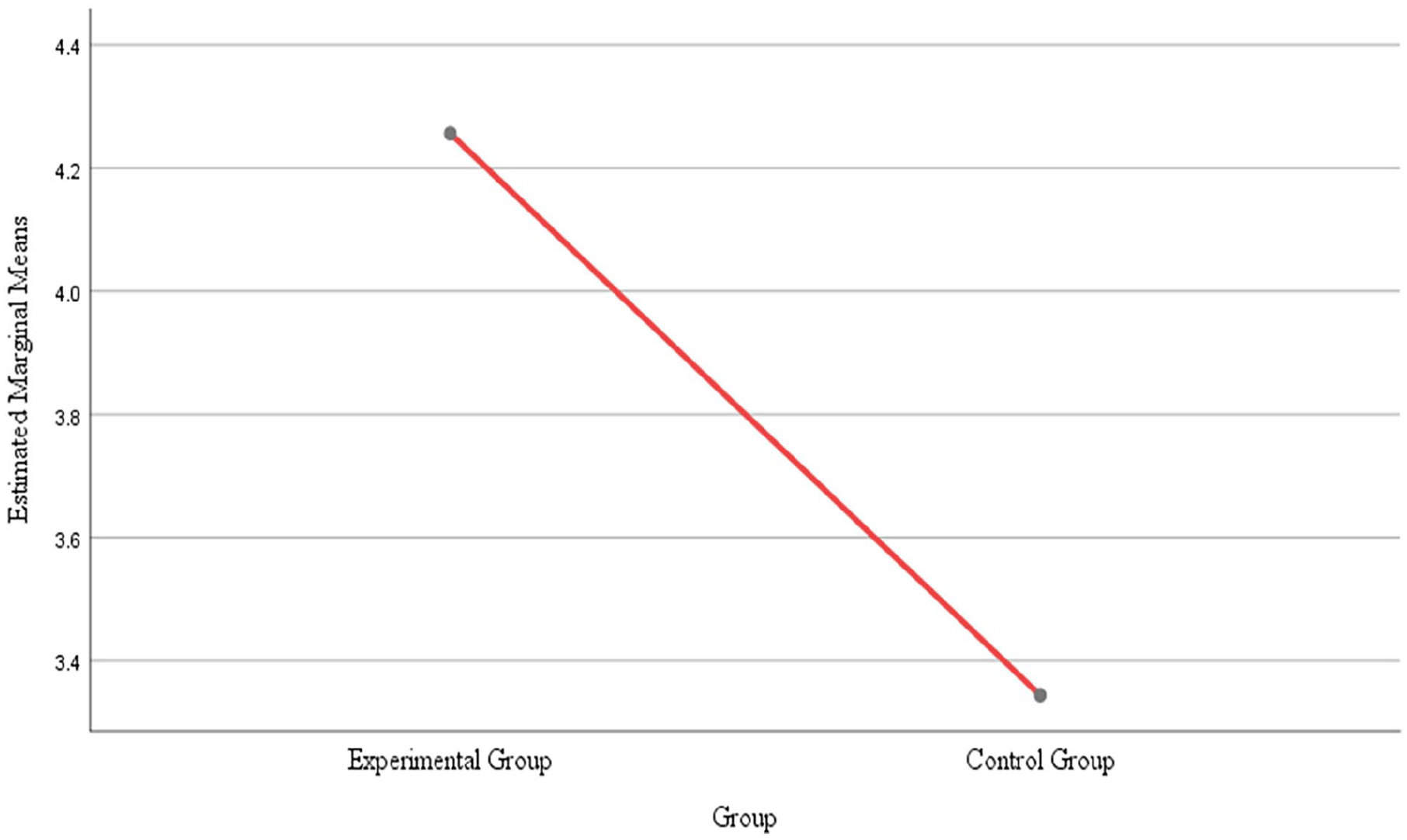
The mean posttest scores of the two groups on fluency.
Paired Samples t-Test on Fluency.

Students’ Perceptions Regarding the Effect of LMS: Questionnaire Results
Figure 7 presents the items in the questionnaire and their distribution in terms of the percentages of the 5-point Likert scale. Items which belong to the first group are above the mean of 4.40. These items (3, 6, 12, 18, and 25) were obtained with a very high mean of 4.84. In contrast, items 9, 15, 20, and 26 which were categorized into the second group were not rated as high as items in the first group as they were below the mean of 4.40. Thus, items in the first group and the second group can be categorized as very high and high mean scores, respectively, meaning that the experimental group indicated positive perceptions toward the effect of LMS on listening and speaking skills.

Frequency of items in the questionnaire.
The third item is related with developing listening skill through watching vodcasts on LMS. The findings highlighted that 23 students (92%) strongly agreed with the item. Item 6 is about developing speaking skill through tasks on Edmodo. Almost all students (N = 24, 96%) strongly agreed that online speaking tasks were effective. Nearly all participants (N = 23, 92%) asserted positively that they organized their thoughts as they spoke freely online (item 12). As for the item 18, participants (92%) strongly highlighted the positive impact of Edmodo on listening skill.
The findings about the item 20 demonstrate that 22 students (88%) strongly agreed on taking the ownership of their learning process. In particular, nearly all (N = 23, 92%) respondents strongly agreed on the statement 25 which surveyed the relationship between students and the teacher. This means that their interaction was strengthened by the application of LMS.
The results from the participants’ questionnaires revealed their positive perceptions toward the implementation of LMS. Students strongly agreed that their listening and speaking fluency were developed by watching videos online. The findings point to the experimental group students’ positive perceptions about the implementation of BBC News, podcasts, and video clips because they received rich input for listening to the different accents in English.
Students’ Perceptions Regarding the Effect of LMS: Interview Results
Five main themes emerged from the written interview forms. These were categorized into learning beyond classroom, self-confidence in listening and speaking skills, motivation, interaction, and challenges of using LMS.
Learning beyond classroom
Despite the fact that the participants have never experienced LMS, they (N = 25, 19%) found online activities interesting. Students also commented that they could access the online materials easily (N = 10, 8%). It was also time-saving to send homework through Edmodo (N = 15, 11%). Other responses indicated the feeling of independency whilst completing the tasks (N = 19, 14%) and getting immediate feedback (N = 18, 13%). The rest of the participants’ (P) comments can be read as follows:
P5: “I Received Immediate Feedback on Edmodo”
Participant 5 remarked that she was able to get feedback more promptly through LMS because her answers were automatically graded on Edmodo through varied types of questions such as true or false, multiple choice, and matching. Therefore, students’ answers were evaluated in a timely manner.
P12: “It saves time when we send our homework on Edmodo and I can study for the next week’s topic beforehand.”
P21: “I enjoyed completing those interesting online activities. They helped me prepare for the face-to-face lessons in English at school.”
P20: “I haven’t tried these Web 2.0 tools. Now, I believe that they are very useful for our betterment in English.”
Participant 12 stated that it is quicker to send online homework to the teacher. It is also possible that the student could get prepared for the next lesson in the face-to-face classroom learning (participant 21). The LMS gives the students the opportunity to use their time to study more efficiently. Another student (P20) found the Web 2.0 tools helpful for improving his language skills.
P25: “I sometimes forget to do my homework and that makes my teacher upset but the online calendar on Edmodo reminds me the deadlines for submitting my homework. So, I will never forget to turn in my homework.”
Participant 25 asserted that the online calendar kept reminding her homework so she was happy to satisfy the teacher by turning her assignment in before the due date.
Self-confidence in listening and speaking skills
Students (N = 25, 31%) mentioned that their listening skill was enhanced due to online activities. Participants (N = 23, 66%) felt that they were more motivated to speak English freely and 26% of the students (N = 21) were able to comprehend the native speakers. The following comments support that students had positive attitudes toward the effectiveness of LMS on their level of self-confidence in listening and speaking skills. Students’ remarks are given below:
P10: “At first, I was a bit shy to record my voice with Voki and Vocaroo and share it with my teacher and peers. Afterwards, it became an easy task for me because we could practice how to speak fluently on Google Meet with the help of our English teacher.”
P6: “I felt that my self-confidence in speaking has increased through a variety of online activities.”
Participant 10 confessed that despite sharing his voice recordings with both the teacher and peers worried him, he gained confidence later by speaking freely. Another student (P6) expressed that online activities had positive effects on her speaking skill.
P12: “. . . I listened to a variety of English accents while I was watching the vodcasts on BBC news.”
P14: “I can understand what native speakers say in English. I’m proud of myself.”
P17: “Thanks to the online sessions on Google Meet and Web 2.0 tools, I can now speak fluently.”
Participant 12 added that listening to different accents in English provided him a repeated listening practice. In the same vein, participant 14 realized that she had no difficulty in comprehending the native speakers. Another participant (P17) appreciated the LMS that she became a fluent speaker.
Motivation
The results of the question on the most motivating online activities can be observed in Figure 8. The top four tools that were rated as prominent during the incorporation of blended mode were Kahoot (N = 25, 14%), Google Meet live interaction (N = 24, 13%), BBC podcasts (N = 25, 13%), and lyricstraining (N = 22, 12%). It can be noted from the students’ comments (N = 25, 31%) that Edmodo encouraged them to complete online listening tasks.
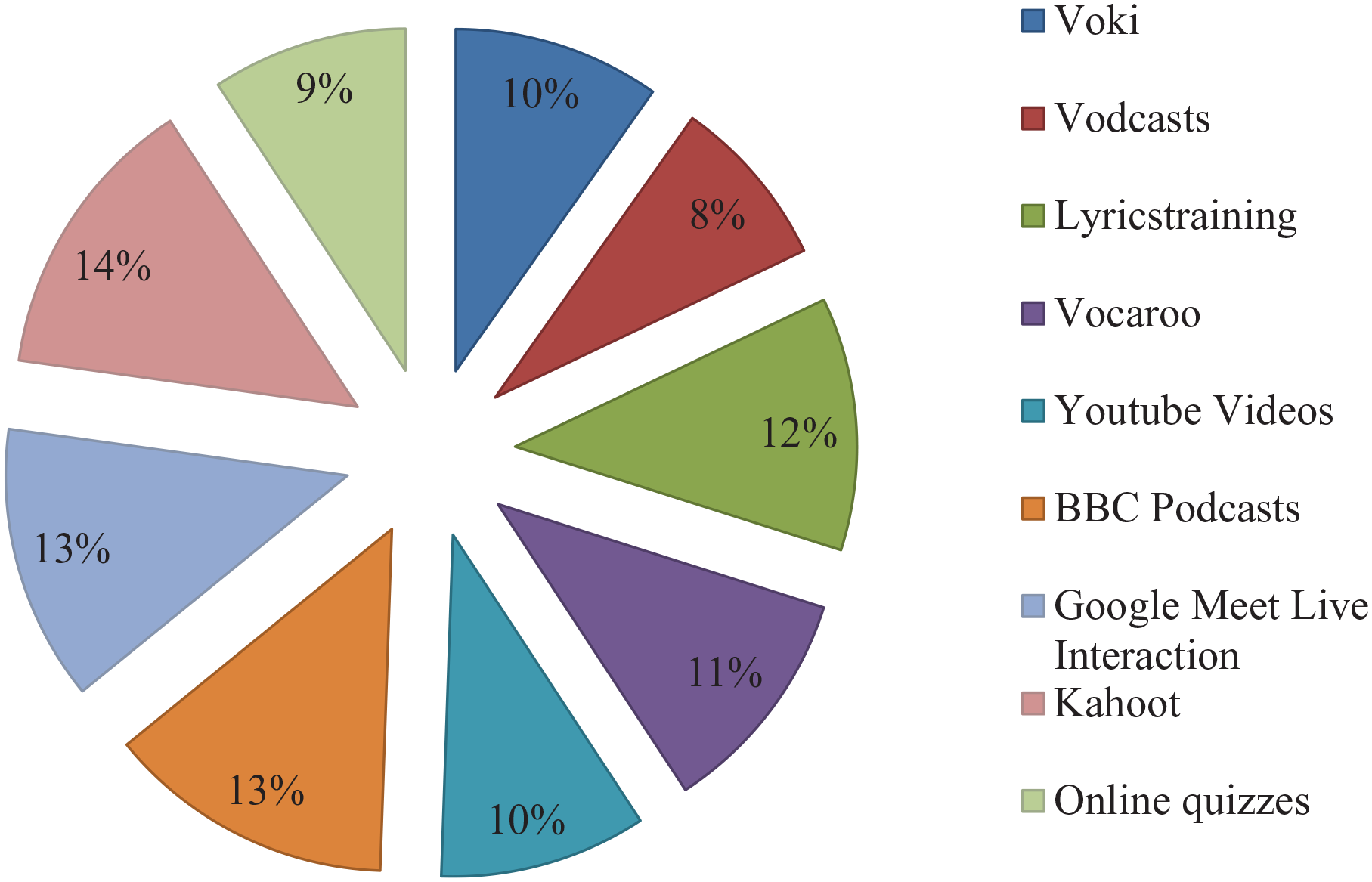
The most motivating online activities.
P11: “. . .Answering Kahoot quiz questions under the given time limit created a fun and a competitive atmosphere. Everyone in the class wanted to be on the leaderboard.”
P3: “We can now practice listening at home. I couldn’t imagine that there were so many opportunities for doing online listening activities.”
According to P11, Kahoot was perceived as an engaging learning tool. She recalled that competing with peers online motivated her to learn more and exhibit her language skills by gaining points. This means that Kahoot acts as an incentive to master learning English. Participant (3) perceived online listening exercises as an add-on to complement traditional learning.
Interaction
Participants (8) mentioned the establishment of rapport between the teacher and the students. Students felt less stressful to take risks by using the language skills in groups (N = 11, 12%). The top three frequent responses are helping each other (N = 21, 44%), decreasing the workload (N = 10, 20%), and cooperating with the teacher (N = 15, 16%). Participants also stated the following comments:
P7: “Each student had a responsibility in our group and I enjoyed working with my peers.”
P19: “Even though we live in remote cities, I had the chance to discuss the instructions in English online with my classmates without any difficulty.”
Participant (7) brought forward the pleasure of learning together. Similarly, students overcame the physical barrier by speaking to each other online (P19).
P23: “We could come up with more ideas in a shorter time when we brainstormed together and worked like a great team. I also felt close with the teacher. I was able to ask questions to the teacher via Edmodo messages and received replies that helped me complete the task.”
Furthermore, participant 23 remarked on students working in online teams to complete the tasks given. It is possible that the participant had the opportunity to get in touch with the teacher and communicate her ideas online.
Challenges of blended mode
It can be depicted from the students’ responses below that there were certain barriers including technical difficulties (N = 6, 7%), disruptive notifications (N = 6, 7%), and limited memory space of the smart phones (N = 3, 4%):
P8: “My English teacher helped me install the Edmodo application on my mobile phone. I did not have enough memory space on my device.”
P15: “I was distracted at times when the mobile notifications came from other applications so I had to turn off the sound.”
Discussion
According to the most striking result to emerge from the quantitative data is that students taught with LMS tended to have higher scores in listening and speaking posttests than those instructed with the traditional method. This result is in line with Angelina (2020), Pramila and Thomas (2019), and Yesilbag and Korkmaz (2021). Using a variety of Web 2.0 tools through LMS could have improved students’ listening comprehension and increased their confidence in listening as they focused on authentic and enriched input. This result throws light on Krashen’s (1985) input hypothesis. It can be argued that more exposure to the language that is a bit above students’ current level of competence reinforced them to comprehend and enhance their language production. Statistically speaking, LMS played an important role on improving these two language skills. Similar findings were highlighted in a study in Turkey (Kafes & Caner, 2020).
The finding about the participants’ perceptions about the effect of LMS on listening and speaking skills in the questionnaire is in complete agreement with Gordeslioglu and Yuzer (2019). However, the result of the current study is in contrast with Klimova and Polokova’s (2020) research.
It could be said that the implementation of LMS was effective on students’ performance in listening, speaking skills, and especially the speaking fluency in the present study. The components that provided an upgrade in the posttest scores of the experimental group could be attributed to the opportunity to take responsibility and extend learning beyond the classroom. Replaying and fast-forwarding the podcasts and the vodcasts and rehearsing speaking online with peers and the teacher could have developed a springboard to improve students’ language skills. For this end, learners should be immersed in interactive environments to practice and improve their language skills (Cuesta-Medina, 2018).
Based on the quantitative findings from the questionnaires, the students affirmed that Edmodo provided varied online learning materials. Findings from the study also showed that students felt motivated and increased their confidence when they spoke English due to more chances of online practice. These results fit well with Mansy (2018) and Taysi & Basaran (2018). To be more precise, students acted as receivers of linguistic input during out-of-class tasks on Edmodo which facilitated extensive practice on listening and speaking skills.
The findings from the participants’ responses to the interview questions highlighted that they showed positive attitudes toward the implementation of Edmodo to practice listening and speaking skills beyond the classroom. The participants realized that using Web 2.0 tools via LMS served as a mental road map to get ready for their in-class learning. Participants also commented that recording their voices using Web 2.0 tools and sharing the links with the teacher and the peers on Edmodo increased their self-confidence in speaking English. This finding points to the value of getting online feedback from the teacher on accuracy and fluency. In addition, synchronous Google Meet discussions helped the students negotiate meaning in groups. Thus, participants reported that they felt proud of themselves because of comprehending what was said in English.
Similar studies have also indicated that blended instruction yields to more student-teacher interaction (Ehsanifard et al., 2020; Owston et al., 2019). This implies that Edmodo provides a common place for students to coordinate their effort to communicate with each other. Therefore, the participants appreciated completing tasks with peers rather than studying alone. From this perspective, students’ digital competence and attitudes toward LMSs affect their development of speaking fluency and listening skill. Extra time should be devoted in the classroom to train students to use these online tools in order to generate a fine-blend with the affordances of technology.
Conclusion
This study has shed some light on fusing Edmodo and Web 2.0 tools in order to encourage language teachers to bring an innovative solution and conduct English lessons beyond the classroom walls. The findings represent an excellent initial step toward recognizing the benefits of enhancing the quality of language learning and teaching listening and speaking skills via LMS.
The findings in this study have a number of important implications for the developers of LMSs, syllabus designers, and teachers. Students’ diverse needs, interests, and learning styles can be catered to steer the way for smooth and engaging learning experience. Students’ level of anxiety in speaking can be decreased by the infusion of Web 2.0 tools on Edmodo. Thus, students can speak freely and learn from their mistakes eagerly. Students are no longer passive recipients of information in the 21st century. They became the organizers of learning by being reflective and staying alert about their learning preferences and needs. Teachers of English should be flexible enough to provide better conditions for learning by the application of Web 2.0 tools on Edmodo.
LMSs and Web 2.0 tools have nowadays become extremely indispensable and eminent in language education. It is mandatory to meet students’ diverse needs and extend learning beyond the classroom. The transformational effects of digital tools need to be combined with sound pedagogical underpinnings in teaching English. It is also equally crucial to cultivate a student-centered classroom with blended approach to create an optimum atmosphere to establish rapport with students. This research illustrated that blended instruction could complement the traditional classroom. Students were immersed in rich input and given chances of producing output online by collaborating with each other. It was also determined that students’ attitudes toward LMS were positive. We can draw the conclusion to the extent that the future of online learning lies in the hands of teachers who will use the cutting edge technology, accessible content, clear instructions, and appropriate online assessment tools in order to offer their students the best customized blended-learning experience.
The present study has only investigated the impact of Edmodo and some Web 2.0 tools on the achievement level in listening and speaking skills of the 10th grade students at CEFR B1 level at a public high school in North Cyprus. Therefore, the findings might not be a representative of the students at the same level studying at other public or private high schools. Further studies could be undertaken to explore the effects of LMSs on different CEFR levels in other contexts. The results are promising and should be validated by a larger sample size. Future work on the current topic could target at enhancing all four language skills through collecting data from various technological tools.
Footnotes
Acknowledgements
We are grateful to the participants in this study.
Declaration of Conflicting Interests
The author(s) declared no potential conflicts of interest with respect to the research, authorship, and/or publication of this article.
Funding
The author(s) received no financial support for the research, authorship, and/or publication of this article.
Ethical Approval
I would like to declare on behalf of my co-author that the work described was original research that has not been published previously, and not under consideration for publication elsewhere, in whole or in part. Ethical clearance was received from the Scientific Research Ethics Committee of the authors’ affiliated university with the application number YDÜ/EB/2018/208 on the 19th December, 2018, and an official written permission (GOÖ.0.00-174/06-18-E.8073) was granted from the Ministry of Education and Culture in North Cyprus to conduct the study.
