



Abstract
The increased usage of social media forced the brands to integrate social media in their marketing communication channel, as it becomes the need of the hour, as it determines overall brand identity, brand image, and company performance in the present marketing competition. This research aimed to track the evolution and advancement of the IMC concept, and how it reformed the way of marketing communications. Moreover, the study highlights the importance of social media, as how it can influence consumer behavior in a substantial way. The study developed a theoretical framework through systematic review in the context that serve to integrate the existing conceptual framework of IMC with social media (SM) that is also called consumer generated media (CGM) and offer implications for understanding the manifestation as a tool of augmentation for marketing practice. The present study reviews and explains the liaison between social media/consumer generated media and IMC through enhanced IMC outcomes in the modern-day marketing communication approach. The findings of the study serve as a springboard for future research and applications in the field of marketing mix, in order to build strong foundations of the brand physically as well as virtually in the mind of customers.
Introduction
In recent years, integrated marketing communication (IMC) is dominating and influencing the companies’ communications and marketing strategies. It has been successful for companies in terms of the brand appeal (Gurău, 2008), the brand equity (Šerić, 2017) and the brand performance (Luxton et al., 2015, 2017). However, the availability of social media has reshaped IMC as it offers new channels and methods of communication with consumers (Gordon-Isasi et al., 2021), and it allows consumers to fully utilize this medium, therefore it is also named as consumer-generated media (CGM). Companies are now actively engaged with customers through social media platforms (Aslam & de Luna, 2021) as they allow two-way communication (Hudson et al., 2016). Social media allow customer interactions, collaboration, knowledge, and information sharing related to their preference to support brands (Carlson et al., 2018). Hence, social media has revolutionized and reinvented the modern IMC methods and strategies.
The present study relates SM and IMC, as modern-day IMC seems incomplete without SM promotion. SM has reshaped the traditional IMC and has helped to develop a trilateral relationship between company and consumers; company to consumer, consumer to consumer, and consumer to the company. It is a win-win situation for both the company and the consumers as it removes confusion and clarifies the market offerings in the form of products and services. But sometimes opposite as consumer can give negative ratings and remarks to the brand.
The emergence of SM or so called CGM, in the virtual and real-world has changed the tools and strategies for communication and approach toward the consumer. Marketing managers have included social media when developing and executing IMC strategies in the promotion mix for a customer focused promotional message. This shift in the control over information is radically persuading the perception people develop over a brand or company (Aslam et al., 2020). Consumers prefer to network and create groups on various online media platforms that share common preferences, interests, and desires. Hence, the SM has paved a new way to augment and amplify the IMC strategies to include all forms of SM as an inclusive and potential tool in designing modern-day marketing communications. The internet-enabled mobile phone revolution, commonly known as the wireless world, has made communications easy to access and waits for the rotation and movement of fingers (Arif et al., 2016).
Consequently, the present study aims to integrate concepts from the promotion mix, psychology, consumer behavior, business management, and marketing practices. The authors established a conceptual framework to facilitate the understanding IMC development through SM, and subsequently provide a set of opinions. As Hulland (2020), Jaakkola (2020) and Mokhtarian and Cao (2008) advocated “that non-empirical studies suffer from the lack of commonly accepted samples, so the authors followed the approach suggested for conceptual papers in the marketing domain by considering conceptual papers not just as a means to take stock but to break the new ground on which to build a new and enhanced conceptualization” (Becker & Jaakkola, 2020; Jaakkola, 2020). With reference to marketing communication and promotion, the study is designed in three parts: the first part presents IMC and its main contributions to marketing promotion, the second part presents SM and its main contributions to marketing promotions, and the third part involves fusing the literature on IMC and SM into an integration approach to explore directions for future research that can contribute to more effective marketing promotions.
Objective of the Study
The aim of the present study is to find the integration impact of SM with IMC and this becomes significant to our investigation. Examining and connecting distinct ideas of marketing communication/promotion offered by various scholars in the area to assess the consensus and consistency of marketing communication/promotion strategies. Justifying their contribution and the interaction style of SM/CGM with IMC by offering relevant examples with a focus on the fourth P of marketing in general and IMC in particular.
Methodology
To assess the importance of IMC and SM in the marketing domain, the present research aims to explore the existing research related to the field of marketing communications, and to integrate the marketing communication mix toward achieving better marketing strategies for the companies, in promoting their products and services efficiently. For this, systematic review was conducted. In first, the process of systematic collection, assessment, and integration of existing work forms the core of review papers (Bem, 1995; MacInnis, 2011; Yadav, 2010). Review papers or conceptual reviews or theory focused articles (Barczak, 2017; Hulland & Houston, 2020; Kozlenkova et al., 2014; Palmatier et al., 2018; Rindfleisch & Heide, 1997; Short, 2009; Stewart & Zinkhan, 2006) do not provide and analyze first-hand data, instead provide integration of literature (Gilson & Goldberg, 2015; Goodwin et al., 2004; Nicolaisen & Driscoll, 2014). Articles were initially identified using a key word search in prominent literature databases such as WoS, Scopus, Google Scholar, EBSCO, and ProQuest (Archambault et al., 2009; Bartol et al., 2014; Donthu et al., 2020; Norris & Oppenheim, 2007). Two main search strings were used initially with combination of key words in order to cover the related themes. First search sting for IMC with key words used was; (1) integrated marketing communication = ((“integrated marketing communication/s) OR (“IMC/s”) OR (“marketing promotion/s”) OR (“promotion mix”) OR (“marketing communication/s”) OR (“communication mix”) (“product promotion/s”) OR (“brand promotion/s”)) and (2) social media/consumer generated media = ((“social media”) OR (“social media marketing”) (“social media promotion”) OR (“consumer media”) OR (consumer generated media”)). In the inclusion criteria, we have considered only peer reviewed articles appearing in leading journals and published in English language only. The second step sorts the papers according to the relevancy of topic, and in the third step we critically analyzed the papers, and put forward their key findings in a systematic and integrated manner (Apriliyanti & Alon, 2017; Archambault et al., 2009; Byington et al., 2019; Donthu et al., 2020; Dzikowski, 2018; Markoulli et al., 2017; Martínez-López et al., 2018; Parker et al., 2017). Besides some articles related to bibliometric analysis, systematic literature review/structured literature review articles were also refereed. A total of 3,517 articles appeared initially and were examined by reading the title, abstract, and keywords. Papers limited to business management and marketing communication, communication/promotion mix, social media marketing and document of type article, review, and in press articles were selected. A total of 523 papers were selected in second round. Exclusion criteria included papers not related directly to the theme (IMC & SM) were removed by extensive reading and reviewing. Finally, based on the inclusion criteria to the related themes, only 300 articles from about 130 different journals were adopted for further investigation. The present study aims to address the gap through robust reviewing, observation and highlighting the key marketing outcomes/themes and further developing inclinations achieved through improving IMC with SM/CGM in the realization of modern communication/promotion approach.
Review of IMC Interactions
Marketing philosophers have initially referred to IMC as one of the four P’s (promotion) of the marketing mix (Kotler, 2000; Kotler et al., 2001; Kotler, 2003; Ogden, 1998). Despite its ongoing growth and relevance in both academia and professional circles (Muñoz-Leiva et al., 2015; Pisicchio & Toaldo, 2021), IMC has never been more important than now in this fast-paced, dynamic, and ever-increasing environment of marketing and communication (Taylor, 2010; Vernuccio & Ceccotti, 2015). Consequently, the IMC community has thus pushed for more rigorous empirical research to enhance its theoretical development. As Porcu et al. (2019) defines IMC as “the stakeholder-centred interactive process of cross-functional planning and alignment of organizational, analytical and communication processes that permit continuous discussion by conveying transparent and consistent messages via all media in order to foster long-term profitable relations that create value.” Academics and professionals are pointing out that IMC has evolved from a narrow, marketing-centric approach to a broader organizational view in which the customer is the central focus. So, the IMC research area has always been considered a vibrant academic debate and most existent research.
In early theoretical approaches (Raman & Naik, 2004; Schultz, 1992, 1996) IMC is evidently confined to mixes and planning of marketing communications, whereas recent research suggests otherwise (Kliatchko & Schultz, 2014; Luxton et al., 2017; Porcu et al., 2017; Tafesse & Kitchen, 2017; Vernuccio & Ceccotti, 2015) argued that a firm-wide approach should be initiated to involve the whole organization into IMC as a market deployment mechanism, enabling optimization and achieving superior communication effectiveness (Luxton et al., 2017). As Kliatchko (2005) argued, though the conceptualization of the IMC paradigms had developed substantially, at that time it did not adequately capture the epitome of IMC’s essential characteristics. Moreover, the authors agree that the commonalities and key components of IMC are concerned with managing and selling communication in an exceedingly holistic and strategic manner. In an exceedingly practical nous, to offset the weaknesses of others, it tries to combine, integrate, and synergize elements of the communication mix as one and to create a unified message that should not be developed in isolation (Kitchen et al., 2004; Kliatchko, 2005). Some authors (Duncan & Moriarty, 1998; Schultz, 1996) care for IMC from a workplace perspective and speak of managing the standard promoting communication combination (advertising, sales promotions, public relations, sales promotion, etc.) to possess generalized data with all communication tools for marketers in an integrated fashion instead of separate practices.
Developing Brand and Challenges Ahead
The perception of relationship among customers is holistic and cumulative, the exchange or transfer of merchandise managed in an exceedingly terribly, trustworthy, and timely manner is a part of this relationship (Grönroos, 2004). The link yields an interaction method wherever numerous varieties of contacts amongst the provider or agency and the client occur over time. These contacts could also be very completely different in terms of the selling situation. Among them, there are contacts between folks, some between people and machines and systems, and a few between merchant and customer systems. As a result, implementing IMC necessitates the engagement of the whole company and its agents. It requires attention at all levels of the organization, from the highest corporate strategic level to the day-to-day implementation of individual tactical actions (Reid et al., 2005). To enhance customer connectivity and responsiveness of the organization in putting the customer first, IMC requires the approval of an “outside-in” approach (Kitchen & Schultz, 2001; Kitchen et al., 2004; Low, 2000; Schultz et al., 2004). The marketing information system that is designed by IMC planners and strategists to foster a clear understanding of brand opinions, foster timely dialog with consumers, and facilitate insights and understanding of competitive brand activity as vital, especially for those who are responsible for setting marketing policies and strategies. The strategic consistency dimension acknowledges that all communications linked to the brand entity provide consistent message to customers and other stakeholders. The coordination of brand messages, from IMC sources and other social media sources and other aspects of the marketing mix, coordination of staff facing a customer, and, more generally, contact with the organization, must be consistent to protect and enhance the image of the brand. To safeguard and promote the brand’s image, the coordination of brand messaging from IMC sources and other social media sources, as well as other components of the marketing mix, coordination of personnel addressing a customer, and, more broadly, interaction with the organization, must be consistent. In the assessment of Keller and Lehmann (2003), Ambler et al. (2002), Reid (2005), by linking effectiveness in marketing communication management and campaigns with customer and brand equity outcomes, a “chain of IMC productivity” is likely to exist, mirroring the brand value chain concept.
Besides distinguishing strengths, weaknesses, threats, and opportunities within the professional setting it might be necessary to attain the right positioning of the corporate as well as the organization of the like profile, identity, and image. Further Anantachart (2005) suggests that efforts in marketing communications should be made in order to build a strong and comprehensive brand. A star in the BGC matrix, through consumer communication, the brand develops extra exposure and preference, and it must eventually become a powerful brand. In association with the marketing context, a significant aspect of marketing communication is the attempt to establish a two-way or, even better, a multi-way communication process. While not all communication efforts are effective, their overall impact should lead to a response that enables the relationship to be maintained and enhanced (Grönroos, 2000). Any given effort, like a sales meeting, unsolicited mail letter, or a package of information, should be integrated into a planned continuing process (Grönroos, 2004). Within the client’s mind the goal of marketing communications is to provide a mental representation of the service product that simplifies the analysis of the service provided. In addition, it’s fascinating to make advertisements that evoke responses that aid in the development of customer information (Carlson et al., 2003; Nowak & Phelps, 1994). Ads that possess advertisement devices, company contact information, and promotion elements, likewise as whole advertising, are capable of generating responses that add concreteness to the service offering and evoke audience actions that may build a database of information (Schultz, 1993; Yarbrough, 1996). Moreover Keller (2001) suggests that marketing communications could play a dual role as it is one of the keys to the success of the many brands and one amongst the causes resulting in the failure of many brands.
In terms of brand and channel equity, to maintain stakeholder relationships and leverage them, marketing communication is essential (Dawar, 2004; Duncan & Moriarty, 1998; Lannon & Cooper, 1983; Srivastava et al., 2000; White, 1999). Moreover, brands play a central role in firms’ responses to competitive moves, the brand manages and measures its marketing efforts and results, as brand advertising and promotion attract audiences and augment brand sales volume. Today, brands have become the focus of a company’s marketing efforts and are seen as a basis of market command, competitive advantage, and better returns (Dawar, 2004). As Reid et al. (2005) argue that brand communication is directly linked to brand functionality, in the sense that a brand’s distinctiveness to customers is not a property of the product itself, but an outcome of the brand communication. Building and sustaining brand equity requires well-designed and implemented marketing communication strategies., however, there is enormous complexity in the task of IMC. Keller (2001) attempted to provide some current perspectives on how to understand marketing communications and how integrated marketing communication programs would be designed to help with the issues and challenges.
Developing Consensus and Consistency
There is a great deal of diversity and disagreement in the IMC (Torp, 2009), Gradually, IMC has been developed and elaborated over the years, resulting in both a greater level of precision and a broader scope. Finally, the ideal of normative consistency is challenged by the notion and understanding of integration. In this review, practitioners and theorists, as well as those who fall between the theorists and practitioners, are discussed (Torp, 2009). As demonstrated by Porcu et al. (2019) hospitality business are likely to perform better in the market when their communication efforts are effectively integrated. IMC has been shown by Kliatchko and Schultz (2014), Luxton et al. (2015, 2017), Porcu et al. (2019), and Taylor (2010), to have an immediate and positive effect on market performance, when IMC is implemented as an end-to-end sales and customer satisfaction system, customers are better served and their brand is more valuable. It has provided a substantial and significant response to calls for more rigorous empirical research to establish the impact of IMC on sales, customer satisfaction and brand advantage. Moreover, the management staff should strive to improve the organization’s flexibility, speed of response, and outreach which could be achieved by actively listening to the voices of internal and external stakeholders. It is vital to foster a healthy collaboration environment within the organization as well as between the organization and its partners or outsourced functions by effectively communicating in the work environment (Porcu et al., 2019).
As an integration model communication consistency permits marketer to coordinate numerous structured sources of messages accordingly, so that an even insight and identity regarding the organization and its brand may be shaped. Communication consistency is more often chased either in an exceedingly cross-media context, wherever synergistic and cooperative execution parts and cues are simultaneously multiple media platforms are used or in a successive media context in a longitudinal media campaign (Dewhirst & Davis, 2005; Grove et al., 2007; Mcgrath, 2005; Naik & Raman, 2003; Reid et al., 2005; Tafesse & Korneliussen, 2013; Voorveld et al., 2011). Through IMC, organizations could produce synergies between and among exclusive conveyance mechanisms amplify performance, and the probability of reaching communicative goals is increasing. Achieving such organizational goals necessitates devoted design to align verbal and visual manifestations to certain targeted representational processes and audience appeals. Institutions ought to take into account the associated pursuits of IMC as a priority strategy, as more advantages are derived from integrated marketing communications.
IMC programs that are effective are mostly implemented on a functional level. This involves coming up with supported multiple media channels, implementing marketing campaigns and wider scope for integration of communications. Functional integration has a client-centered focus and takes advantage of outside-in planning and customer databases (Peltier et al., 2003; Swain, 2004; Zahay et al., 2004). As Rowley (1998) states that promotion is a vital element of the marketing mix. Various types of promotional approaches include advertising, direct marketing, sales promotion, public relations and publicity, and personal selling and sponsorship. A plan for using reliable and appropriate communication methods involves multiple considerations, including the target audience, communication objectives, and marketing communication messages. Next, factors relating to the “how” also deserve attention; this includes selecting the appropriate communication channel, establishing the budget, and formulating the promotional campaign. Finally, a careful arrangement of the results of promotional endeavors is required to assess if the investment in marketing was beneficial (Rowley, 1998). While theoretical ideas of IMC are imprecise and irresolute (Kliatchko, 2005), around its theoretical framework it necessitates agreement and clarity. It is crucial for the progress and development of research in any area to adopt a paradigm, which is a set of rules that members of a community agree upon as fundamentals. As paradigms contribute to the development of theoretical generalizations, shape knowledge gathering, and influence the selection of analysis techniques, a future discussion on IMC should take a broader and more comprehensive approach.
Further Kitchen and Schultz (2003, 2009), found that most companies have remained on grade primarily managing plans of action coordination of promotional components which terribly few, a few in today’s world, have affected money and strategic integration. The principal goal of IMC is to effect on the perception of significance and behavior through engaged communication. The event and diffusion of IMC are closely related to swift technological progression and rapidly globalizing, deregulations of markets and discrimination of consumption patterns. This has stressed the requirement to regulate objectives and methods for dynamic promoting and communication realities. From this perspective, communication has got to move from techniques to strategy. Within the rapidly changing and extremely competitive world of the 21st century solely strategically directed IMC will facilitate business to maneuver forward (Holm, 2006). In order to integrate their communications, organizations have to embrace diversity and selection and balance the knowledge of its several voices with the determination to ensure that its overall expression is clear and consistent (Thøger Christensen et al., 2008).
Dimensions and Philosophy of IMC Development
Communication is the method of convincing thoughts and sharing their meanings among people or organizations. It may be represented as an adhesive that keeps a distribution channel collective and unique. Control of communication in a marketing channel is an essential concern from the opinion of theoretical and social control purposes. Communication in the marketing channel can function as the process by which transmission and dissemination of information is clear (Frazier & Summers, 1984). The term integrated marketing communication (IMC) first appeared as the concept of applying consistent brand messaging across diverse media channels and platforms in the late 20th century. Primarily the IMC model was created to address the need for businesses to provide consumers with reasonably standard advertising and makes the recommendation that marketers should pay close attention to the client, his or her preferences, shopping patterns, media exposure, and other factors, so the consumer is exposed to merchandise that matches his or her needs in many ways, as well as the combination of communication methods that the consumer may find more engaging and credible. To push their products or services, businesses use totally different tools like brochures, telemarketing, websites, ads, and so on. Integrated marketing communications represent the build-up of all elements that endorse connections in a very brand’s marketing mix by building shared meanings with the stakeholders of the brand. The goals of the marketing communication are to provide info to focus on the audience, make an impact, and to spice up the sales.
IMC is being considered as the commercial strategy that is used to get the most superb effect at the commercial level. Usually, it is the blend of various promotions mix that is utilized in an identical manner to provide the smooth message to make the most effect at the purchaser or consumer end. Its effects on the organizational overall performance and emblem fairness are thrust regions that can stimulate can be stimulated with the aid of using the IMC process. Usually, consistency of message, media, layout consistency, reinforcement, and budget alignment remain the additives of IMC. Boosting the income, constructing a robust brand image, and gaining aggressive benefits are a range of the dreams of IMC primarily. IMC is getting used to form an excellent image of the organization in purchaser reminiscence that purchaser stocks superb phrases of mouth to others. IMC specializes in customers that however extra values may be transferred to him with the help of using the company that is supported with the aid of using IMC, it enables the company to make a near relationship with customers with the aid of using aggressive scale of structure to gain overall performance.
A major development in communications over the last few decades has been IMC as company and its brands stand to benefit from it in the form of competitive advantage. The influence of IMC is said to pave the way for an array of changes in the communications of the company toward various stakeholders having an impact on the ability and potential of businesses to gain, maintain, and influence customers (Kitchen et al., 2004; Reid et al., 2005; Stewart, 1996). Additionally, the authors argue that IMC has passed through, and is still passing through, the fundamental debate about its meaning, purpose, and the right to appear and have its own identity that can stand out from other marketing concepts, such as integrated marketing, customer relationship management, brand awareness, and market orientation. Integrated marketing communication must be viewed as a new paradigm for managing marketing campaigns (Kitchen et al., 2004). According to Baker and Mitchell (2000) IMC specializes in constructing and leveraging clients and their pursuits and relationships with the organization and brands. In addition to tying IMC into one-to-one marketing and CRM, this orientation to relationships challenges marketers to integrate, coordinate, measure, and be responsible for both traditional and new interactive marketing methods (Baker & Mitchell, 2000). IMC can also be a market driver in certain instances, and it may be driven by the market in others so as to extend the idea of customer-centered communication, if it gives the organization a superior market advantage (Carrillat et al., 2004; Eagle & Kitchen, 2000; Ewing & Napoli, 2005; Jaworski et al., 2000; Low, 2000). By monitoring, controlling, and influencing messages sent to individuals and boosting determined dialog with them, IMC is the process of creating, establishing, and nurturing commercial relationships with customers and other stakeholders.
The approach of IMC measures the performance of the integrated program by estimating the financial gains (outcomes-driven), retrieves market values and measures the returns of investments on the markets (Kliatchko, 2005). Once markets have been identified, the most powerful points of contact or channels of communication (channel-focused) can be helpful in establishing connections with each market. Understanding the prohibited markets, as well as the essential means via which they may be reached, as a result, marketing communication campaign will be more focused and strategic. The philosophy of IMC shows that an enterprise may also make contributions to the idea of integrating communication in which there may be a prominence on elevating recognition in the direction of the benefits, and consequently anticipated, to combine messages. Developing a mindful and optimistic mindset toward integrating messages builds a common essence with a flow-on effect on organizational objectives and values (Duncan & Everett, 1993; Harris, 1998; Stewart, 1996). There may be a need to guide internal workers as well as external service providers such as advertising agencies to ensure that the positioning strategy and messaging are consistent. In this capacity the significance of IMC is recognized in the guiding concept of promotions, legitimizes the context used, and sees the desired outcome through coordinated and integrated communication processes (Reid, 2005). Without the physical integration of management functions responsible for developing and delivering the message, this may not be possible. As a result, IMC has articulated a new philosophical and physical philosophy that is very different from its previous philosophy. A field-specific communication praxis through communication and rhetorical studies provides an alternative perspective for theory and curricular innovation in the IMC discipline (Groom, 2011; Houman Andersen, 2001). Using a communication praxis, one acknowledges what field researchers and market participants have created in terms of the interrelationship between marketing communications and marketing disciplines (Farmer & Patterson, 2003; Ihlen, 2002; Schultz & Schultz, 2004; Thøger Christensen et al., 2009; Torp, 2009; Toth, 1999).
According to Cornelissen (2001), Duncan and Moriarty (1998), IMC is seen as a management philosophy that needs to be embedded in the business process to achieve a business outcome, while others see it primarily as a campaign development process linked to a broader brand strategy (Baker & Mitchell, 2000; Kohli & Jaworski, 1990; Lings, 2004; Nowak & Phelps, 1994). The idea of IMC as a philosophy or concept was evident as early as 1991 in the widely cited definition by the American Association of Advertising Agencies (Duncan & Everett, 1993). Reid (2005) quotes Duncan and Everett, and suggests, an organization with an IMC philosophy might or might not physically integrate individuals into one department. While strategic IMC focuses on influencing the overall brand positioning strategy, tactical IMC focuses on the planning and implementation of individual inclusive campaigns that work to build and reinforce brand positioning over time and contribute incrementally to the development of strong customer-based brand equity as advocated by Reid (2005). This should reflect best practices in developing and implementing individual campaigns in practice. As the marketplace has become additional competitive and consolidated, Organizations are increasingly recognizing the value and advantage of open, transparent, and interactive communication that is holistically interwoven across their operations.
Because of the increased distinctiveness, “one of the most desirable results of effective IMC is the creation of more monopolistic brands making the brand less inclined toward competition” (Rust et al., 2004). From an IMC viewpoint, Rust et al. (2004) found that marketing strategy and techniques (including marketing communication) had an influence on consumer attitudes, loyalty, satisfaction, turnover, and retention, among other things. Enhanced IMC strategies will likely improve brand awareness, positive brand attitudes and preferences, brand action intentions, and purchase acceleration over time if they are incorporated. Price premiums and price elasticity reductions, as well as increased market share and profitability, and other factors, will result in greater customer and brand equity and other related factors (Keller & Lehmann, 2003). IMC philosophy does not dismiss the IMC toolbox (one look and one sound) nor does it abandon or diminish the looking glass. This approach embraces complexity and opacity, assigning communication resources in such a way that it enables businesses to meet the complexity of a situation (catastrophic oil spill of BP in the Gulf of Mexico in 2010).
Incorporated into commercial operations as well as everyday processes of operation and strategy development, IMC becomes more than just a tool for executing functional and consistent messaging. It becomes a necessary mode of engagement for companies seeking to remain nimble, agile, and responsive during crises (Groom, 2011; Thøger Christensen et al., 2008). Further increasingly productive discussions of branding, corporate citizenship, and social concerns, and sustainability (Cone et al., 2003; Lee, 2012), however, broaden the field of IMC by pursuing philosophical and morally demanding themes of study. In IMC development, these domains demand the application of language, ethics, and praxis-based decision making. Discussions in these areas have turned IMC into a philosophically pompous discipline, one that emphasizes a greater need for communication in all marketing disciplines (Kent & Taylor, 2002; Kitchen & Schultz, 2003). The Marketing Communication Tetrahedron (MCT) proposed by Keller (2001) are characterized by interactions between and among themselves, highlighting four sets of factors by which marketing communications can be characterized as: “(1) Consumer factors (e.g., knowledge and processing goals); (2) Communication factors (e.g., modality information, brand-related information, executional information); (3) Response factors (e.g., cognitive and affective processing; memory, judgment, and behavioral outcomes); and (4) Situation factors (e.g., place and time).”
Because of the latest technological development, the Using an IMC approach will enable you to accurately capture empirical behavioral data about consumers, to use valuation tools and techniques, and to differentiate customers based on economic criteria as well. In addition, technological advancements have aided IMC significantly (Calder & Malthouse, 2003; Kitchen & Schultz, 1999; Schultz & Schultz, 1998). The advent of technology has not only increased innovative communication channels, but has also made databases as one of the most valuable tools for managing customers today. An essential benefit of IMC is that it allows the company to specialize in more specific and well-defined targets (Schultz & Schultz, 1998). The development manager, internal marketer, and company profile who has a marketing background and qualification are often appointed in today’s skill services, so they should be provided with information outside the standard marketing concepts. Additionally, sports, political, and commercial enterprise marketers should consider the simultaneous use of multiple technologies and communication strategies by their stakeholders, clients, constituents, and customers. Technology advancements and economic growth have significantly contributed to the growth of communication, such as via the Internet, mobile phones, wireless handlers, rich media, and linked code from graphic programs to CRM support, among other things, resulting in career options that didn’t exist few decades ago. Concurrently, it has extended the scope of marketing applications beyond the normal consumers/products and advertising/promotion bias. Therefore, marketing communications are a means of establishing a dialog with consumers and represent the voice of a brand (Keller, 2001).
Contextual Setting of the Study
Likewise several researchers have related IMC with performance to name a few like; sales volume, sales growth, market share (Low, 2000; Luxton et al., 2015, 2017; Reid, 2005), the maximization of the communication budgets and feasible outcome (Naik & Raman, 2003), higher customer share of wallet and customer life time value (Zahay et al., 2004), economic and financial outcomes (Porcu et al., 2012; Reid, 2005; Zahay et al., 2004), shareholder value and cash flow (Rust et al., 2004), ROA and ROI (Luxton et al., 2015, 2017), brand performance/image/awareness (Einwiller & Boenigk, 2012; Keller, 2009; Navarro-Bailón, 2012; Navarro et al., 2009), premium prices and channel cooperation (Luxton et al., 2015, 2017; Reid, 2005), more sales revenue (Eagle et al., 1999; Phelps & Johnson, 1996; Reid, 2005; Zahay et al., 2004), enhanced brand equity (Keller, 2009; Madhavaram et al., 2005), brand advantage (Low, 2000; Luxton et al., 2015, 2017; Reid, 2005), customer Loyalty (Šerić et al., 2013), market performance (Campo et al., 2014), company’s brand and customer relations, operational practice (Kliatchko, 2005), increased market share (Dewhirst & Davis, 2005), consumer responses involving positive cognitive and affective processing (Keller, 2001, 2009), to counter the negative consequences of comprehensive structural and functional differentiation (Caemmerer, 2009), enhanced marketing communication and brand performance (Luxton et al., 2015; Porcu et al., 2012; Reid et al., 2005), organizational responsiveness (Thøger Christensen et al., 2008), technological shifts (Schultz, 1996), customer centricity and interactivity (Duncan & Moriarty, 1998; Hartley & Pickton, 1999), return on customer investments (Kliatchko, 2005; Zahay et al., 2004), improved customer satisfaction (Reid, 2005), total corporate value (Einwiller & Boenigk, 2012; Lee, 2012), customer information, customer knowledge and customer satisfaction (Luxton et al., 2015; Zahay et al., 2004), brand value, brand equity, brand market performance, market share and profitability/ROI (Einwiller & Boenigk, 2012; Luxton et al., 2015), positive impact on sales of brands (Baidya & Maity, 2010), sponsorship (Keller, 2001) etc., and other researchers have related SM/CGM with augmented performance over IMC to name a few like; social influence (Fen Crystal Yap & Kwai Choi Lee, 2014; Pitt et al., 2011); interactivity and co-creation (Filo et al., 2015); interactivity and securement (Leeflang et al., 2014); trustworthy supply of info (Foux, 2006); empowering dialogic communication (Dwivedi et al., 2015; Kietzmann et al., 2011); immediacy and information collection (Valos et al., 2016); Scocial enhancement values (Prohaska, 2011; Yavuz & Toker, 2014); return on investment (Alhabash et al., 2015; Hoffman et al., 2014; Hong, 2012; Kumar & Mirchandani, 2012), etc.
Every marketer is aware of the terms word of click, word of mouse, word of web, B2C, C2B, C2C, and buzz marketing communications through the internet-enabled computer or mobile-based simulated environment of the virtual world, often used to mention communication of the modern business era and which have structured the contemporary organizational marketing communications to a new dimension of the digital age. Consequently, viral marketing is the initiation of the strategy used by marketers to encourage the masses to propagate a message to provide coverage, exposure, and influence of the communication mix by an organization. With the access of digital media to a large audience, consumers have been handled the creative and distributive power of the marketing message. So there is a dominating role of social media in contemporary marketing communications and performance of an organization in terms of co-creation of brand identity, brand meaning, brand image, and value. As individuals construct their personal narratives mixed in their cultural and social expectations, so consumers are viewed as equity partners of the brand today. Hence IMC further stimulated and integrated by social media, works as a dominant platform in framing, execution, and developing marketing communications to a high level of organizational expectations among customers.
Conceptual papers in the field of marketing can link the work across discipline, bridge existing theories, provide multiple-level insights, enable theorizing and theory building, theory synthesis, theory adaptation, typology, modeling, concept integration, summarizing, increasing understanding, build coherence, and broaden the scope of our thinking and above all warrant publication (Alvesson & Sandberg, 2011; Corley & Gioia, 2011; Cornelissen, 2017; Gilson & Goldberg, 2015; Jaakkola, 2020; Lemon & Verhoef, 2016; MacInnis, 2011; Vargo & Lusch, 2004). In this perspective, the purpose of this study is to review the effectiveness of social media/consumer-generated media as an associate in the appraisal of integrated marketing communications by using online media as a platform and generating content and dispersion of instant messages regarding various products and services. As an effective and appraising promotional tool, the paper aims to review and explain the role of and liaison between social media/consumer-generated media and IMC in developing modern-day marketing communications and relationships with the consumers.
Table 1 shows the list of journals in the domain whose articles were referenced four or more times and contributed to more than half of the total references in the present study. The “Journal of Marketing” is the highest contributor to the literature with 18 references followed by the “International Journal of Advertising” and the Journal of Marketing Communications” with 17 references each and so on.
Main Contributing Journals.

Table 2 lists the primary writers in the domain who have been cited more than twice and contribute to more than 25% of the literature in this study. With a contribution of 11 articles to our investigation, Schultz, D. E. attains the top position in the list followed by Keller, K. L. and Kitchen, P. J. with 5 articles each and Cornelissen, J. P. and Seric, M. with 4 articles each.
Primary Contributing Authors.

IMC Approach and Key Marketing Outcomes
IMC could be a more advanced issue than coordination and performance in the pursuit of a variety of activities. It is rather the art of uniting a sender’s meanings and goals with the meticulously designated receiver’s conditions of pre-understanding and interpretation, to develop an optimal strategy wherever content and variety of the messages are congruent and to optimize the choice of channels. Therefore, IMC is now considered a strategic issue, which requires an approach based on the characteristics of strategy and strategic choices. Strategy thinks about the long direction of a company as strategic selections are possible, getting ready to gain some competitive advantage over competitors in the market. Also, strategic decisions are interwoven with the will of the actions an organization performs. It is to try and do with what stakeholders and the management wish the organization to be like and to be regarding. This might and may embody necessary decisions about vision, mission, objectives, product range, pricing, withdrawal from or getting into new markets. The strategy will be seen because of the matching of resources and activities or an organization to the setting within which it operates, generally referred to as “the seek for strategic fit.”
As proposed by Dekimpe and Deleersnyder (2018), Lamberton and Stephen (2016), MacInnis (2011), Palmatier (2016), Palmatier et al. (2018), Samiee (1994), Steinhoff et al. (2019), and Wade and Hulland (2004) that conceptual studies may need to summarize the review outcomes in the form of tables. The present research (see Table 3 below) also efforts to summarize the review of various research studies with reference to marketing promotions in the arrangement of making IMC more result-oriented. The researcher here attempts to collaborate various studies related to IMC and their marketing outcomes as leading conclusions in the form of factors contributing to the performance of the organization.
A Review of Liaison between IMC and Outcome Measures.

Source: Authors’ compilation.
Review of Stimulation and Synergy through SM/CGM
Defining Social Media
According to Dwivedi et al. (2015), essentially social media marketing is a dialog between consumers, or audiences, or businesses, products, or services which funnels into a positive dialog between the explicit parties for the purpose of learning from one another’s opinions and experience, ultimately benefiting both. Similarly, Filo et al. (2015) defined social media as “new media technologies that enable interactivity and co-creation that allow for the development and sharing of user-generated content among and between organizations.” The utilization of social media technologies, channels, and software systems is to create, link, provide, and interchange offerings that are worth to an organization’s stakeholders. People deliberate social networking because with the use of social media one can directly contact and engage with others. How ample social media may do a contribution to the position of organizations, the majority of companies worldwide anticipate taking advantage of such applications in their business to achieve new customers or enhance the customer experience of their current customers, therefore generating more profits and sales revenues (Ananda et al., 2016; Gulbahar & Yildirim, 2015; Movsisyan, 2016; Wu, 2016; Yadav et al., 2015). A social media platform would certainly provide a novel and inexpensive way of communication, improved interactivity, and greater security for customer interaction (Leeflang et al., 2014). This, in turn, assists firms in attempting to carry out their marketing efforts with greater efficiency and success in comparison to traditional methods of promotion like as victimization (i.e., newspaper, radio, TV.).
Traditionally, strategic integrated marketing communications relies on classic promotional mixtures to craft IMC strategies. This model should be replaced by one that includes all types of social media platforms in the planning and implementation of IMC strategies. Modern marketers cannot ignore the development of social media because it has quickly become the actual routine for shoppers who are spreading data on merchandise and services (Mangold & Faulds, 2009). Social media enables a three-way communication platform, company to customers, customer to company, and customer to customer. Now in the SM/CGM platform like Facebook, YouTube, Watsapp, Google+, and blogs, etc., a globally educated, historically prosperous, and demanding consumer, with heightened skepticism and greater access to information, facilitates its acceptance in the marketplace, since consumers are in control and have greater control over media consumption.
Social Media Marketing Examples
Most Popular social media sites as of 2019 in terms of Monthly Active Users (MAUs) “Facebook - 2.23 billion, YouTube - 1.9 billion, WhatsApp - 1.5 billion, Messenger - 1.3 billion, WeChat -1.06 billion, Instagram - 1 billion, QQ - 861 million, Tumblr - 642 million, Qzone - 632 million, Tik Tok - 500 million, Twitter - 335 million, Reddit - 330 million, Baidu Tieba - 300 million, LinkedIn - 294 million, Viber - 260 million, Snapchat - 255 million, Pinterest - 250 million, Line - 203 million, Telegram - 200 million.”
Common examples of content for social media advertising campaigns include: whitepapers, discounts, ebooks, product coupons, sitewide limited-time offers, free shipping, giveaways etc. Some of the social media platforms to serve ads are: SOCIAL networking (Facebook, LinkedIn, Google+), photo sharing (Snapchat, Instagram, Pinterest), microblogging (Tumblr, Twitter), video sharing (Facebook Live, YouTube, Vimeo, Periscope) etc.
So the Social media/consumer-generated media include social networking, creative work sharing websites, photo sharing sites and apps, musing sharing sites and apps, content sharing sites, intellectual property sharing sits, user sponsored blogs, company sponsored websites and blogs/weblogs, business networking sites and apps, e commerce communities, podcasts, news delivery sites and apps, information and education delivery sites and apps, social bookmarking sites, virtual worlds, etc., like “Airbnb(150m+), Amazon (150m+ followers), HBO (134m+ subscribers), Houseparty-Fortnite Trivia challenge(9m+ followers), BuzzFeed Tasty-Saturday Night Sedar (20m+), Netflix-wanna Talk about it (182m+ subscribers), Zoom(200k+ subscribers), HBR(300K+ subscribers), Starbucks (18m+ subscribers), Daniel Wellington (12k+ subscribers), Ipsy (2.5m Followers), Loot Crate (737k Followers), Desigual (922k Followers), Birchbox (601k Followers), CLUSE (899k Followers), LuLaRoe (276k Followers), Beardbrand (157k Followers), Death Wish Coffee (227k Followers), Zappos (374k Followers), oVertone (506k Followers), Dollar Shave Club (225k Followers), Northweek (130k Followers), Milly (142k Followers), Staples (9k Followers), HearMeOut, Sparkfun (79k Followers) and others like Friendster, Hi5, Technorati, Reddit, Digg, and Delicious” etc.
Social Media Interaction
Several studies attempted to investigate the function of social media in business organizations from customers perspective. Likewise, Yap and Lee (2014), Pitt et al. (2011), found that customers loyalty to social media networks (Facebook page of a company/brand) is associated with social influence, compatibility, enjoyment, and usage behavior associated with the company’s offerings and intentions to use the brand’s social media platform for online shopping (Annie Jin, 2012; Treem & Leonardi, 2013). In a study of “location-based social network sites” Prohaska (2011), Yavuz and Toker (2014), found that customers’ registration behavior is primarily driven by their desire to promote their desired self-image, and by the fun of connecting with others, while few studies have examined how firms themselves can benefit from social media. Despite the increasing importance of social media in business organizations, most studies so far have concentrated on consumers’ attitudes toward it, while limited research has examined how businesses can benefit from it (Porcu et al., 2012; Tsimonis & Dimitriadis, 2014). The conclusions of Kietzmann et al. (2011) reveal that organizations, communities, and people all experience significant and pervasive changes as a result of social media. For organizations seven functional building blocks of social media proposed by Kietzmann et al. (2011) are “identity, conversations, sharing, presence, relationships, reputation, and groups” for monitoring and understanding the varying functions and influences of social media, so as to develop a social media approach based on a combined set of building blocks for online communities (Kietzmann et al., 2011).
Consumers often turn additional time to mixed varieties of social media to conduct their information searches and to form their selections (Lempert, 2006; Mayzlin, 2006). Compared with corporate-sponsored communication via the usual components of the promotion mix, social media communication is perceived by consumers as a more reliable source of product and service information (Foux, 2006). The present research argues that social media is a component of the promotion mix because it associates characteristics of traditional IMC tools (companies talking to customers) with a highly enlarged form of word-of-mouth to the word of web/word of app/word of CGM (customers talking to one another) whereby marketing managers cannot control the content and frequency of such information. As an innovative stage, social media leverages a rich mix of technology and media trends enabling immediate, immediate communication, employing multimedia formats (audio and visual presentations) and several platforms of delivery (Muñiz & Schau, 2007). Social media or consumer-generated media is a must to accept, include and integrate into the promotion mix. Coordinating all the promotional activities including social media must provide a customer-centric unified promotional message. Consumers have been urged to contribute images or video of the product in action by several firms. Customers are more likely to talk about companies and products after they feel they have learnt a lot about them. By allowing shoppers to observe other customers using the product, they are able to entertain and interact with them. So, to encourage word-of-mouth and social-media-based conversations, products and services should be built with talking points in mind (Mangold & Faulds, 2009).
As media fragmentation increases, and stakeholders are able to share information about organizations and co-create content, social media can be expected to be incorporated into IMC. Social media could be a very important communication tool for organizations. Nevertheless, its full potential and assortment appear to be unknown by the companies. Social media platforms are merely seen as channels that enable disseminating a message and empowering dialogic communication, instead of tools that give a chance to succeed in an audience further ahead (Kietzmann et al., 2011). According to Schultz and Kitchen (2000), social media platforms are well suited to the third stage of the IMC pyramid, which focuses on fostering and ideally achieving economic and strategic integration of IMC through the use of information technology. Social media offers a chance for IMC because it is meant to augment the two-way communication method between the organization and its stakeholders by having the ability to facilitate discussions, provide feedback and suggestions, and build general comments. Further, Social media, on the other hand, is more cost-effective than more traditional marketing channels, such as print media, and thus is of great value to these organizations. As a result, social media has become part of a new marketing setting that has changed the appearance of IMC.
Integration of social media into commercial communication frameworks is still a long way off (Zarkada & Polydorou, 2014). Social media is likely to fail to deliver the benefits offered by IMC if organizations view it as an auxiliary activity rather than an integral part of it. This should be the initial stage in developing both a marketing and communication strategy. It has been suggested that due to the infancy and nature of social media, it is more ambiguous than traditional media (Kunz & Hackworth, 2011; Mangold & Faulds, 2009). The findings of Valos et al. (2016) reveal unique characteristics of social media (such as interactivity and individualization, incorporation of communication and distribution channels, immediacy, and information collection) affect traditional marketing communications contexts. Several research findings reveal that employees must also be skilled in using and executing social media strategies (Alves et al., 2016; Frazier & Summers, 1984; Hinz et al., 2011; Latiff & Safiee, 2015; Tsimonis & Dimitriadis, 2014). The proficiency of employees in utilizing and managing various social media networks must be a determining factor when an organization chooses a particular social media network to focus on. With limited social media capabilities, other organizations may decide to rely solely on one or two social media networks to achieve their organizational goals. Additionally, organizations with highly skilled employees can afford to use a comprehensive mix of social media networks to achieve a wide variety of social media objectives. The results of the study conducted by Alves et al. (2016) convey that many studies are devoted to understanding the behaviors of shoppers in social media, and a great deal of research devoted to understanding the behaviors of companies, their varied aspects, particularly barriers to social media usage, ROI measurements, and ways to optimize strategies, among others, could lead to future research directions.
SM/CGM Approach and Enhanced IMC Outcomes
As proposed by Dekimpe and Deleersnyder (2018), Lamberton and Stephen (2016), MacInnis (2011), Palmatier (2016), Palmatier et al. (2018), Samiee (1994), Steinhoff et al. (2019), Wade and Hulland (2004), that conceptual studies may need to summarize the review outcomes in the form of tables. Hence the researcher in Table 4 below summarizes the review of various research inferences with reference to SM/CGM and marketing promotions in the arrangement of making SM/CGM-enabled IMC more result-oriented. The researcher has attempted to collaborate various studies related to social media and the marketing outcomes as leading conclusions in the form of factors contributing to the performance of the organization.
A Review of Liaison between IMC-SM/CGM and Outcome Measures.

Source: Authors’ compilation.
Conceptual Modeling
Based on the above reviews, the author developed a conceptual model (Figure 1) to highlight the synergistic approach of IMC and SM/CGM (Dowling et al., 2020; Hulland, 2020; Khamitov et al., 2020; Palmatier, 2016; Samiee, 1994; Sample et al., 2020; Sutton & Staw, 1995). It is evident that the coordination of IMC and SM/CGM has effectively promoted, transformed and developed modern-day communications as observed in different research studies. With all the information in hand and all the accessibility with us, organizations could plan and develop a marketing communication mix structure rooted in both IMC and SM which should be reliable and responsive for generating + e-WOM/+WOW in relation to brand identity and company image. SM/CGM is an opportunistic augmentation with IMC but should be handled with care because it breeds a lot of uncontrolled messages (user-generated content) that organizations must address in a proper and tactical way. With all the technological patronage, SM/CGM had made IMC more dynamic and synergistic having reach and access to a large audience.
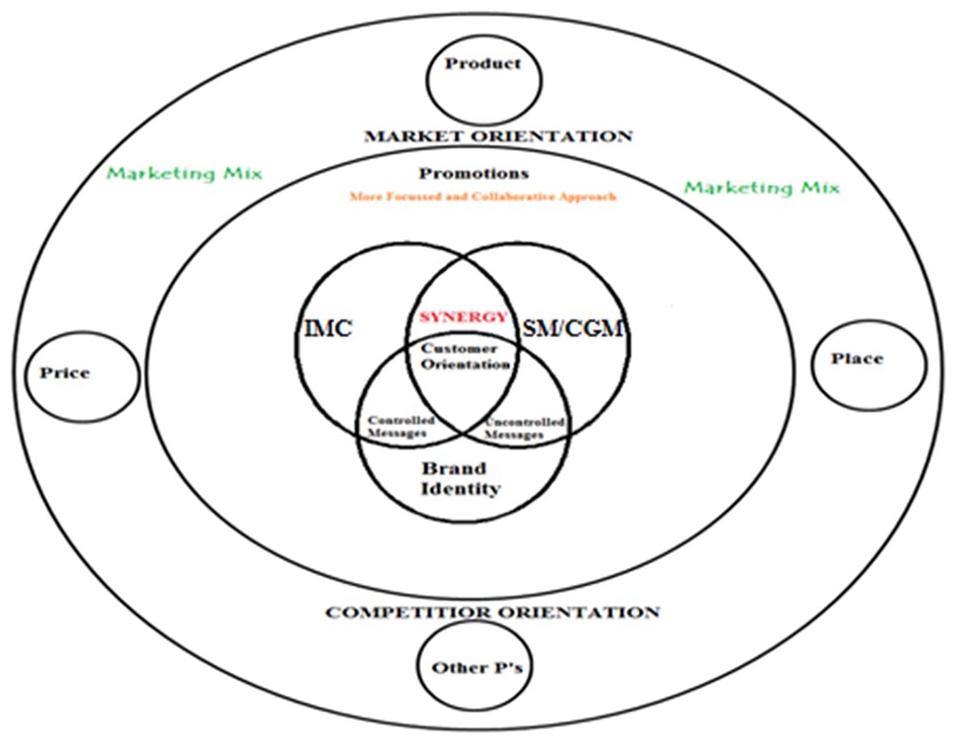
IMC-SM/CGM synergy.
Performance Measures
The overall objective of the social media-enabled communication mix is to increase the performance of an organization tangibly and intangibly. These performance measures can be evaluated differently by different organizations through key performance indicators (KPIs). Common KPIs of Social Media marketing metrics are: 1. Likes, 2. Engagement, 3. Followers growth, 4. Traffic conversions, 5. Social interactions, 6. The social sentiment, 7. Social visitor goals, 8. Social shares, 9. Web visitors from social channel, 10. Social visitors conversion rates, etc. These could essentially enhance the communication performance and in turn marketing results. Moreover, social media augmented IMC could make improvements the potential areas of business like; increasing customer loyalty, retention rate/churn, share of wallet, average order value, frequency of purchase, customer satisfaction score (CSS), advertising rates (CPM/cost per 1,000 views) and (click-through rates/CTRs). Similarly, there are many other market measures and metrics at micro and macro level which are used to evaluate the performance of an organization like penetration percentage, brand receivable turnover rate, net promoter scores, offer redemption rate, customer retention rate, repeat order rate, customer lifetime value, etc.
Conclusion
Although a great opportunity for marketers, there are concerns about data privacy and trust in brands on social media. There must be a clear resolution from both the company and the customer side to maintain data honesty, credibility, transparency, and confidentiality. So, it is a moral duty of every stakeholder to support these standards. Moreover, there is a need for a regulatory mechanism to address any issues. People active on social media have become micro-influencers with followers ranging from a few hundred to a thousand at the most, but their links are far-reaching owing to web 2.0. Digitally enabled social interaction through social media greatly influences and intersects most aspects of the lives of people like travel, health, education, recreation, hospitality, fitness, diet, clothing, home, children, family, relations, office, entertainment, music, and films, media, news, politics, economy, society and development, environment, science and technology, competition and what not? In the digital era of virtual reality (VR) and augmented reality (AR), the era of the internet of things (IoT), algorithms and artificial intelligence (AI), Virtual influencers (VI) and robotics, the era of stern competition, the era of misperception and uncertainty, the era of possible opportunities and challenges indeed, marketers must prioritize giving meaning and impressions to brands.
Organizations must not leave the whole mechanism up to consumers if they must be recognized in the virtual and physical world rather, they must synergize their whole communications in a way to be responsive and thoughtful to the customers and to address the demands of the consumers most efficiently. Throughout the research analysis, the author has presented and tried to fill the gap and show the connotation and development between SM and IMC with respect to building the strong foundations of the brand virtually as well as physically in the minds of customers. Therefore, organizations must have an orientation toward accepting the truth that if they want to prosper and flourish in the market, they should systematically design their communication mix strategy to impress a large audience. They should also be committed to accepting social media as a major initiator, influencer, and developer of more attention to the audience. Hence as a mother of online communications, social media breeds a lot of brand messages, in turn, brand communication must be the centripetal force that could attract customers from all around.
Research Insights and Future Scope
At present the development of SM/CGM-assisted IMC has widespread influence and accessibility, customers can now send a direct message to company easily, order products and services online, ask them questions, which is aided by virtual assistants or virtual influencers or AI robots or Chatbots most often. It provides faster, personalized, and even instantaneous customer service and is, in turn, economical for organizations. By reviewing the social media environment and considering where it is heading in the context of consumers and marketing practice, the study concludes that social media is a real stimulation provider to IMC. Modern IMC would be rather incomplete without the presence of an online platform and active consumer involvement as consumers are real advocates of brand presence. Although a lot of filtrations need to be done at the company side, the influence and future of SM/CGM on the augmentation IMC is exciting, amazing, and convincing. With reference to message consistency, the goal is to shift away from a limited concentration on marketing communications and toward a broader corporate viewpoint that involves the whole organization and customers for interactivity and establishing and nourishing relationships.
Organizations must understand the presence of social media in their IMC as reality as it has now become relevant to our society and culture. It must not be downsizing or upsizing communications rather it must be rightsizing communications accordingly. Although this study comprehensively examined and highlighted the main themes and outcomes addressed in the IMC and SM covered by the prior literature of marketing communications, it does not include all the factors and how they interact (antecedences and consequences). This could be the future direction of the research and would help to establish a stronger theoretical foundation to examine the emerging area of integration of marketing communication mix. The research is in the hope that the thoughts discussed, related to SM/CGM-augmented IMC and respectively, here stimulate many new concepts and research in the future to further strengthen the interdependence and relationship between SM/CGM and IMC. Eventually, the expectation is to see IMC more vibrant and sustainable when aided by social media platforms.
Footnotes
Acknowledgements
Authors would like to acknowledge and thank Deanship of Graduate and Research Studies of Dar Al Uloom University (DAU), Saudi Arabia Riyadh for financial support. Authors are exceptionally indebted to Professor Abdulrahman Alsultan, Dean of the College of Business Dar Al Uloom University (DAU) for his motivation, enthusiasm and support for this research.
Declaration of Conflicting Interests
The author(s) declared no potential conflicts of interest with respect to the research, authorship, and/or publication of this article.
Funding
The author(s) received no financial support for the research, authorship, and/or publication of this article.
