




Abstract
The purpose of this study was to investigate the components of consumer’ social capital which are social participation, social networking, and reciprocity and also analyzed how the social capitals possessed by consumers affect ethical consumption behaviors, and examine how ethical consumption behaviors affect consumer happiness. The samples were randomly extracted from a list of consumer panels registered with a multinational survey institute. Within the budget limit of this study, 2,000 persons were extracted considering the sample size. The main page of the questionnaire requested the subjects to answer to the question asking whether they had any experience in using ethical products or brands. Those who answered no were requested to quit answering the questionnaire. The total number of valid samples was 1,509. Social trust, social participation, and reciprocity, which are the components of social capitals, were found to have positive effects on eco-friendly ethical consumption behaviors, and social-economic-oriented ethical consumption behaviors. Eco-friendly and social-economic-oriented ethical consumption behaviors were found to affect consumer happiness. In additional analyses too, social capitals were found to affect the determination of consumer happiness to some extent. The findings of this study provide valuable information for the investigation of the causal relationships between the system of organization of the ethical consumption behaviors of consumers and the predisposing factors or outcomes of consumer happiness.
Introduction
Over the past 30 years, the rapid economic development has not only increased consumers’ satisfaction with material culture but also given consumers opportunities to pay attention to sustainable development, the environment, consumer interest, and social cost (Becker, 2021; Li et al., 2021; Toti et al., 2021; Wooliscroft et al., 2014). As argued by some scholars, the field of ethical consumption still reflects one of the greatest gaps between attitude and behavior, consumer ethical consumption plays an important role in shopping habits, and an understanding of the drivers of ethical consumption behavior is fundamental to marketing researchers and practitioners (Toti et al., 2021, p. 168).
Ethical consumption is a consumer behavior that fulfills social responsibility according to consumers’ individual and ethical consciousness. Social responsibility encompasses economic responsibility, legal responsibility, sustainable consumption responsibility, and responsibility for contemporary humanity (Carrigan et al., 2004). Consumers who are aware of the existence of sweatshops, for example, may avoid purchasing goods from companies that use them (Wooliscroft et al., 2014). Ethical consumption can have negative effects on the economic environment to some extent, and it can promote the development of ethical consumption industries. The scope of consumption behavior includes the allocation, purchase, use, and disposal of resources. By considering environmental impacts and consumer rights, ethical consumption can reduce the negative effects of economic activities and increase consumers’ happiness and subjective well-being to some extent (Ganglmair-Wooliscroft & Wooliscroft, 2019).
As society becomes increasingly complex, consumption consciousness encourages consumers to cooperate closely to solve economic, social, and community problems. Some scholars have asserted that consumers’ characteristics and personal values can affect their ethical consumption behaviors (Ganglmair-Wooliscroft & Wooliscroft, 2019). Therefore, we treat consumers’ social capital as one of their personal traits in this study as it is necessary to understand the constructs of the social capital of consumers, including their social participation and social behaviors that affect their overall behaviors.
Regional governance should engage in mediation and cooperation to expand the capacity of civil society (Potapchuk et al., 1997). The participation of citizens is necessary to develop the common good and establish a healthy consumption culture for consumers, who are the subjects of the economy. The concept of social capital has been explored in diverse fields, such as economics, administration, management, and journalism (Dana & Light, 2012; Fukuyama, 1995; Jin, 2015; Lee et al., 2018; Luo et al., 2004; Putnam, 1993; Van Den Bulte et al., 2018; Xiong & Bharadwaj, 2011). Many scholars have argued that the constructs of social capital play important roles in economic growth and in solving diverse social problems in communities. Social capital focuses on the social constitutive property or relations inherent in social actions (e.g., an individual’s participation in groups) and not on the study of entities, which are divided into individuals or groups (Coleman, 1988; Lin, 2001; Putnam, 1993).
From the perspective of social capital, understanding the ethical consumption of consumers, who are the principal agents of consumption, through sociological approaches is essential to establishing a healthy consumer culture. Consumers’ social capital is closely connected to the formation of a value system, which is a pattern of behaviors shared by consumers. The values held by the members of a society are the fundamental beliefs they share, which indicate how members should act and feel, and an aggregate of judgment criteria that lead individuals’ thoughts and actions (Rokeach, 1973; Vinson et al., 1977; Wells & Prensky, 1996). The objectives of this study are (1) to explore the components of consumers’ social capital, namely, social participation, social networking, and reciprocity; (2) to analyze how the social capital possessed by consumers affects their ethical consumption behaviors; and (3) to examine causal relationships by setting consumer happiness as the final outcome variable. Given the importance of ethical consumption to societies, industries, and consumers over the past 30 years, an understanding of the phenomena can aid marketers and academic fields in improving the relationship between ethical consumption and antecedents.
Theoretical and Empirical Background
Social Capital
Social capital theory has long been studied in various academic areas, including management, economics, sociology, and political science (Bourdieu, 1986; Coleman, 1988; Ferlander, 2007; Fukuyama, 1995; Jin, 2015; Putnam, 1993), and the concept has been defined in various ways. Social capital theory has evolved with a focus on elements such as norms of trust, reciprocity, social networking (e.g., social participation), social behaviors, and social interactions (Ferlander, 2007; Jin, 2015). Putnam (1993) described social capital as related to the characteristics of social organizations (e.g., trust, norms, and networks) and able to improve the efficiency of society (i.e., political and economic efficiency) by enabling mediation and cooperation for the mutual benefit of society members. As such, social capital is conceptualized differently according to the subjects, scope, and contents of studies to fit the foci of diverse researchers in diverse fields. On the basis of the discussion of social capital, this study considers a social capital organization system that comprises social trust, social participation, and reciprocity.
According to social capital theory, the social structures or networks of human relations play an important role in explaining various social phenomena. Social capital theory has received considerable attention from diverse fields because it brings tangible and intangible benefits to individuals and organizations by helping atomized individuals interact through social networks and it promotes citizens’ social participation, decision making, cooperation in the public good, and abilities for achievements. The theory has been developed in the organizational context of business performance and individual decision making, and it has been adapted to consumer behavior (Jin, 2015; Kemper et al., 2011; Marigold et al., 2015).
Social trust and social participation (networking)
Trust is a representative type of social capital (Coleman, 1988; Ferlander, 2007; Fukuyama, 1995; Jin, 2015; Marigold et al., 2015; Putnam, 1993). Some scholars have argued that norms of trust and reciprocity arising from these social relations can improve a community’s efficiency by facilitating coordinated actions (Marigold et al., 2015). Social capital is treated as the attributes of social organizations such as trust, networks, and norms that can promote social efficiency by promoting collaborative behavior. Trust has become an important concept that can explain social capital (Ferlander, 2007; Fukuyama, 1995; Jin, 2015; Putnam, 2009). Trust refers to the acceptance of vulnerability, which is the risk subjectively recognized by those who trust and comes from the expectation or belief that they will not be used by others in interpersonal relationships (Meyerson et al., 1996). As social capital is accumulated, positive results such as the formation of trust and maintenance of cooperation can be expected in the case of groups, and results such as the securing of information and social support can be obtained in the case of individuals through social relations in which the individuals participate (Jin, 2015).
Some scholars have advised that since social capital takes various forms and structural properties, individuals or groups in the social structure secure benefits between actors using social capital. Social capital has been characterized as an asset that can be provided by members based on trust, and that its usefulness as capital is maintained and strengthened when continuous investments are made in social relationships (Coleman, 1988; Fukuyama, 1995; Jin, 2015; Putnam, 2009).
Generally speaking, social capital is obtained by trust, faith, or networks existing in relationships with others. Most scholars assert that social capital is a resource embodied in social relationships and structures (Bourdieu, 1986; Coleman, 1988; Ferlander, 2007; Putnam, 1993). Social relations and the norms governing these networks of social ties have positive effects on a community’s overall productivity (Ferlander, 2007). In the formation of social capital, information about others becomes the basis for the formation of trust by enabling the prediction and anticipation of others’ behaviors (Bimber, 1998; Coleman, 1988; Lin, 2001; Norris, 2002; Putnam, 2009). Social Trust and Social Participation (Networking) among members in society leads to greater sharing of information about facts, procedures, or threats to the community, which are critical in the face of extreme events (Aldrich, 2010; Coleman, 1988; Makridis & Wu, 2021).
Reciprocity
Although many researchers have discussed norms as social capital, they tended to address norms at an overly rhetorical or general level (Schuller et al., 2000). Scholars who triggered the debate about norms as social capital have stated that norms are an important social feature because they not only show the structural elements inherent in individuals’ actions, they also become a key element in the reproduction of social structures. Social norms (e.g., reciprocity) thus refer to forms of social support, helping behaviors, and collective efficacy (Coleman, 1988; Makridis & Wu, 2021).
Some scholars have asserted that norms limit people’s behaviors and force them to participate in behaviors that benefit the group (Narayan & Cassidy, 2001; Putnam, 2009). In this sense, norms refer to the standardization of reciprocity or trustworthiness. The trust and social norm of social capital elements are often found to be more consistent in producing positive forces than structural social capital in forms of networks or group memberships. While trust and civic norms are the building blocks of a good and prosperous society, social ties, and network relationships can be used for good, bad, or neutral purposes (Aldrich, 2010; Coleman, 1988; Makridis & Wu, 2021). Putnam (2009) found that the norm of general reciprocity constitutes the basis of civil life. In particular, social capital promotes cooperation and coordination for mutual benefits and emphasizes citizens’ participation. The connection networks of citizens’ participation reinforce the norm of general reciprocity based on trust and facilitate cooperation and communication so that information can be easily spread (Narayan & Cassidy, 2001; Putnam, 2009).
Ethical Consumption Behavior
As the economy progresses, wealth increases, and excessive consumption behaviors become common. Recently, ethical consumption behaviors have emerged because of the growing interest in environmental deterioration, the dominant social paradigm, and sustainable business models; such topic has also become a major issue in various academic areas (Alsaad, 2021; Becker, 2021; Toti et al., 2021; Wooliscroft et al., 2014).
The concepts of ethical consumption behavior have been widely discussed and defined from various perspectives. Several academicians have recommended that ethical consumption behavior should include political, social, and environmental dimensions; individual interest and motivation; and a social–economic dimension (Becker, 2021; Li et al., 2021; Toti et al., 2021). Moreover, some scholars have argued that consumers’ ethical consumption is a way to acquire and use products and brands in accordance with their moral principles and values (Toti et al., 2021, p. 171). Specifically, ethical consumption refers to positive behaviors in individuals’ consumption practices that respect and consider the self, others, society, and the natural environment; and fulfill social responsibility according to consumers’ ethical beliefs and concerns (Clark & Unterberger, 2007; Li et al., 2021; Toti et al., 2021; Wesley et al., 2012; Zollo et al., 2017).
Many studies have categorized ethical consumption into various areas, including increased and reduced consumption, fair trade consumption, boycott of unethical products and businesses, selective shopping to exclusively purchase ethical products, and purchasing of local products and services (Becker, 2021; Clark & Unterberger, 2007; Li et al., 2021; Oh & Yoon, 2014; Toti et al., 2021). Meanwhile, other researchers have divided ethical consumption into three aspects, namely, environment, humans, and animals; the environment aspect includes eco-friendliness (e.g., green consumption) while human-related ethical consumption includes sustainable society, fair trade, local purchasing, labor human rights, consumption control, social responsibility for social contribution, and legal responsibility for copyright protection, intellectual property rights, and ethical management (Clark & Unterberger, 2007; Freestone & McGoldrick, 2008; Mitchell et al., 2010; Oh & Yoon, 2014). Ethical consumption is the application of ethical consciousness to consumption practices, and ethical consciousness is based on a teleology that argues that whether actions are right or wrong is basically determined by the results of the actions and on a deontology emphasizing that the motive and will behind one’s actions is more important than the results of actions and that there are absolute principles that are not affected by conditions or situations (Li et al., 2021; Oh & Yoon, 2014; Toti et al., 2021; Wesley et al., 2012).
Consumption activities are the main activities in which humans engage. Humans aim to satisfy their needs through consumption. Motives for consumption explain why consumption-related behaviors begin, persist, and stop (Solomon, 2006). Although recent advanced studies have focused on the personal characteristics of ethical consumption behaviors and have linked actions with their consequences (Freestone & McGoldrick, 2008; Jung et al., 2016), there is still a lack of theoretical understanding of the principles that guide the antecedent factors of ethical consumption behavior or decision making. This is because diverse personal characteristics are associated with ethical consumption behavior and consumer happiness behavior is closely related to the level of engagement in ethical consumption.
Consumer Happiness
What is consumer happiness? People put significant effort into obtaining happiness, and strive to do so even through the purchase of products and services. Many people have come to think that spending money to experience joy and happiness is an important part of life (Van Boven, 2005). Following this trend, the concept of happiness has begun to appear in the field of consumer behavior. In a study that defined and measured the positive state of experiencing joy and pleasure as consumer happiness, consumer happiness was measured with the positive emotional state after consumption (Nicolao et al., 2009). Further, in a study that conceptualized and measured consumer happiness through a cognitive evaluation, the degree of satisfaction after consumption is regarded as an important factor in determining consumer happiness (Sara & Surendra, 2010). However, most scholars emphasize that happiness should be measured compositely, reflecting emotional states and cognitive evaluation (Andrews & Withey, 1976; Diener et al., 2000). Diener et al. (2000) states that happiness is a subjective assessment of an individual’s life and includes both emotional and cognitive assessments. In particular, he stated that happiness refers not only to an individual’s subjective experience but also the positive aspects of their life, and does not mean the absence of negative aspects (Diener, 1984).
People put much effort into becoming happy, but the concept of happiness is very subjective and thus differs from person to person (Argyle, 2001; Cherrier & Munoz, 2007; Nicolao et al., 2009). Recently, instead of subjective well-being, the word happiness has begun to be applied and used in research (Brülde, 2007; Layard, 2005). Happiness can be viewed as a subjective emotion and evaluation of an individual’s entire life (Diener & Oishi, 2000; Dolan, 2007). Ryan and Deci (2000) stated that consumption, which is an important economic activity, is an important factor in bringing happiness to consumers. Negative product or brand experiences often create anger and disappointment in consumers. On the contrary, consumers’ positive experiences sometimes create joy. People want to have a pleasant and enjoyable experience by consuming, and therefore, consuming can be associated with happiness. Happiness appearing in this area related to consumption can be seen as consumer happiness (Desmeules, 2002). In this study, consumer happiness was set as a research unit rather than consumption happiness in order to measure the positive mood or emotions caused by ethical consumption.
On reviewing factors that affect consumer happiness, it can be seen that consumption-related psychological responses have greater effects on consumer happiness than on consumption activities (Desmeules, 2002). Happiness was measured using three elements—positive emotion, negative emotion, and satisfaction with life (Diener, 1984)—which are the most widely used measurement items for happiness. These three elements are characterized by the understanding of the concept of happiness as a complex of emotions, and the cognitive evaluation of happiness is measured at an overall level.
Hypotheses and Theoretical Model
Hypotheses
This study aims to determine the effect of consumers’ social capital on their pursuit of ethical consumption values and to investigate the causal relationship between consumers’ pursuit of ethical consumption values and consumer happiness. Concretely, we aim to identify the degree to which social trust, social participation, and reciprocity, which are the components of consumers’ social capital, affect the pursuit of eco-friendly and socioeconomic-oriented consumption values.
Thus far, an increasing number of studies have explored social capital. The importance of understanding the relationship between consumers’ social capital and diverse outcome variables, such as performance and individual decision making, has been confirmed by many empirical studies (Jin, 2014, 2015; Kemper et al., 2011; Lin, 2001; Newton, 2001; Putnam, 1993). As social capital is based on trust, it exists in individuals’ social relationships and sometimes plays an important role in determining an individual’s economic or consumption behaviors. Social capital also exists in communities in which individuals, such as family members and close friends, are closely connected and provide others with emotional support (DiMaggio & Louch, 1998).
The effects of internal and external social capital have been widely studied in various academic areas, such as management, economics, sociology, political science, marketing, communication, and psychology. Research works on the effects of social capital have emphasized that the subcomponents of social capital, namely, norms of trust, reciprocity, social networking (e.g., social participation), social behaviors, and social interactions, improve corporate performance, marketing capability, and product innovation and influence prosocial behavior (Jin, 2014, 2015; Kemper et al., 2011). From the perspective of the social capital literature, social capital enables individuals to carry out new activities and improve their personal performance in the workplace.
Ethical consumption behaviors in this study consist of the two sub-components of eco-friendly ethical consumption and social economic-oriented consumption behaviors. Eco-friendly ethical consumption behaviors are presented based on contents related to eco-friendly local products and fair-trade and local consumption movements (Becker, 2021; Li et al., 2021; Toti et al., 2021; Wooliscroft et al., 2014). Social economic-oriented consumption behaviors include presenting one’s personal will for or perception of ethical consumption, the will to boycott ethically problematic companies and products, and the will to purchase and consume products based on ethical consciousness (Clark & Unterberger, 2007; Oh & Yoon, 2014; Wesley et al., 2012). Consumers’ ethical consumption and behaviors as examined in this study can be treated as social behaviors because ethical consumption includes the consideration of oneself, others, society, and the natural environment (Clark & Unterberger, 2007; Oh & Yoon, 2014; Wesley et al., 2012).
Some scholars have argued that ethical consumption can reduce the negative effects of economic activities to some extent and that it is closely related to consumers’ subjective well-being (Ganglmair-Wooliscroft & Wooliscroft, 2019). Although previous studies related to ethical consumption behaviors have investigated the antecedents of ethical behaviors, we must consider how social capital theory affects ethical consumption behaviors. Considering the effects of social capital, this study assumes that the elements of social capital, such as norms of trust, reciprocity, social networking (e.g., social participation), social behaviors, and social interactions, are closely related to various individual performance and consumer prosocial behavior (e.g., ethical consumption behavior), environmental protection activities, and various social activities. Moreover, this study supposes that social capital theory influences ethical consumer decision making and ethical consumption behavior.
H1. The components of social capital (social trust: H1-1; social participation: H1-2; reciprocity: H1-3) will affect eco-friendly oriented ethical consumption.
H2. The components of social capital (social trust: H2-1; social participation: H2-2; reciprocity: H2-3) will affect social-economic-oriented ethical consumption.
H3. The eco-friendly oriented (H3-1) and social-economic-oriented ethical consumption (H3-2) will affect consumer happiness.
As explained above, social capital can lead to diverse forms of consumer behaviors. Therefore, this study predicts that ethical consumption behaviors will vary according to consumers’ levels of social capital. The following hypothesis can be set to examine how social capital affects consumers’ ethical consumption behaviors. Perspectives from social capital theory indicate that social capital can develop and nurture consumers environmental attitudes. The social norms and ethical standards shared by individuals in the same social network can be influential in shaping individual beliefs, values, and attitudes (Ferlander, 2007; Jin, 2015; Marigold et al., 2015).
Van Boven and Gilovich (2003) are the most actively studying the relationship between consumption and happiness, and they have conducted many studies to compare the happiness felt by consumers in the consumption of goods and in the consumption of experience. They reported that experiential consumption contributed more to happiness than commodity consumption (Van Boven, 2005; Van Boven & Gilovich, 2003). Van Boven and Gilovich (2003) reminded of the memory of consumption of a recently purchased product or experience, and then surveyed how happy they were with the purchase. Based on the results, these researchers reported that the happiness level of consumers who purchased experiences was shown to be higher than that of those who purchased products. In a study conducted by Howell and Hill (2009), it was reported that the consumption of experience contributed positively to people’s relationships, while at the same time reducing social comparisons thereby affecting consumer happiness more significantly than the consumption of goods. DeLeire and Kalil (2010) also indicated that whereas health-related consumption, car and house purchases, and durable goods purchases did not show any significant effect on happiness, leisure-related consumption significantly affected consumer happiness and explained that the reason was that leisure activities contribute to the maintenance of social relationships of consumers. Ethical consumers are characterized by pursuit of health, satisfaction with their lives, regarding interpersonal relationships as important, attitudes not affected by prices, ethical consciousness, and behavioral level, interest in social and environmental issues, perception of consumer effectiveness, trust, regarding value and justification as important, the formation of a bond of sympathy, sense of guilt when not purchasing ethical products, and the existence or non-existence of religion (Clark & Unterberger, 2007; Freestone & McGoldrick, 2008; Solomon, 2006).
Consumer euphoria is recognized as an important concept that can be distinguished from subjective happiness. Consumer happiness is how to experience more satisfaction in the consumption process. Consumer happiness was measured more frequently in the consumption of traditional products and sufficient attention was not paid to measuring consumer happiness in the context of ethical consumption (Sirgy, 2010). Based on the contents discussed above, the level of ethical consumption is expected to be closely related to euphoria, which is a positive feeling of consumption. Consumers experience positive emotions, and ultimately feel euphoria through ethical consumption. Based on the previous studies as such, it was judged that ethical consumption behaviors would have positive effects on consumer happiness. Therefore, the following study hypothesis was set.
H4. The components of social capital (social trust: H4-1; social participation: H4-2; reciprocity: H4-3) will affect consumer happiness through the mediating effects of eco-friendly oriented ethical consumption.
H5. The components of social capital (social trust: H5-1; social participation: H5-2; reciprocity: H5-3) will affect consumer happiness through the mediating effects of social-economic-oriented ethical consumption.
Research Model
The purpose of this study is to understand how the social capitals possessed by consumers affect ethical consumption behavior. The social capitals of consumers were composed of social trust, social participation, and reciprocity. Consumers’ ethical consumption behaviors were divided into eco-friendly consumption behaviors and consumer behaviors seeking personal and social values. The relationship between the components of the social capitals of consumers as such and consumers’ pursuit of two ethical consumption values will be figured out. In addition, how ethical consumption behaviors affect consumer happiness will be examined. In order to grasp the purpose of this study as such, a study model was presented as shown in the Figure 1 below.

Suggested research model.
Research Methodology
Variables Measurement
Many scholars have identified social trust, social participation, and reciprocity as components of social capital. As shown in Appendix 1, the questionnaire for the components of social capital comprised eight questions about social trust, five questions about social participation, and five questions about reciprocity. These questions from previous research were combined to serve as the social capital measurement tools in the current study (Bourdieu, 1986; Coleman, 1988; Ferlander, 2007; Jin, 2014, 2015; Lin, 2001; Nahapiet & Ghoshal, 1998; Newton, 2001; Putnam, 1993, 2009).
Previous studies have classified ethical consumption behaviors into eco-friendly, fair trade, boycott, and local consumption movements. Herein, the questions about ethical consumption behaviors were developed by combining the 26 items used in previous studies (Alsaad, 2021; Li et al., 2021; Oh & Yoon, 2014; Toti et al., 2021; Wesley et al., 2012). The questionnaire for consumer happiness was composed of the following five items from previous research that were modified and supplemented to fit this study: “I am happy to consume the product,” “Buying the product makes me happy,” “I’m happier than I was before consuming the product,” “I think that the purchase of the product makes other people happy,” and “I think that my money was well-spent on purchasing the product.” The measurement was conducted using a 5-point Likert scale ranging from 1 (strongly disagree) to 5 (strongly agree), with the higher scores indicating more positive answers. It also involved questions about the respondents’ gender, age, educational background, and income.
Survey Procedure and Data Collection
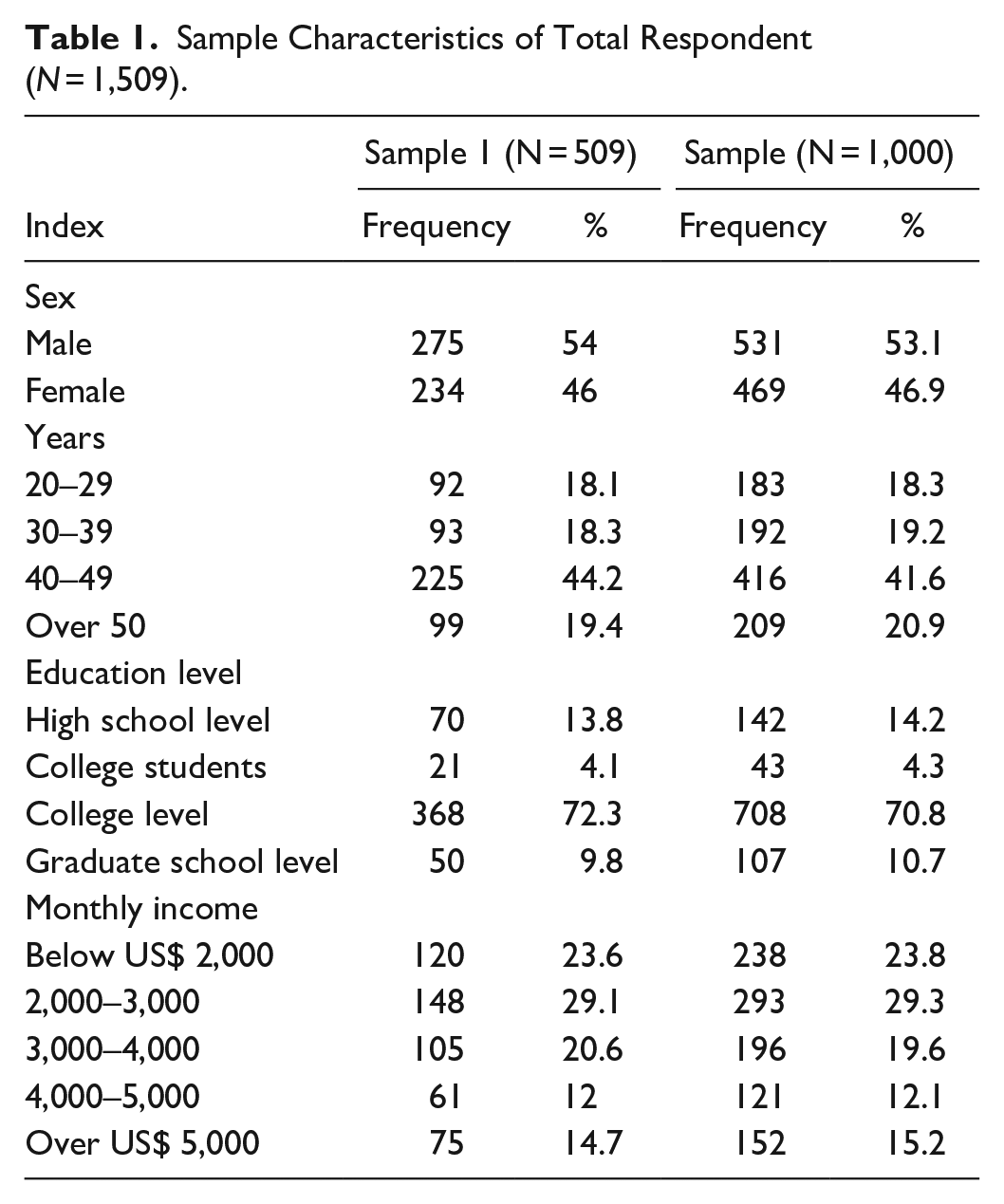
Validity was carefully considered in order to conduct the questionnaire surveys with general consumers. Studies in social sciences extract samples considering the relative frequencies, size, and distribution of the population of interest that will enable quantitative descriptions of the social, psychological, and physiological attributes of the population or the accuracy, validity, and the representativeness of the samples necessary to identify the relationships between variables. To clearly define the population in our work, we sought to clearly determine the elements such as the study’s subjects, sample unit, scope, and period. The samples were randomly extracted from a list of consumer panels registered with a global research company. Set within the budget limit of this study, 2,000 persons were extracted with consideration of the sample size. The main page of the questionnaire requested the subjects to answer questions about whether they had any experience in using ethical products or brands. Those who answered “no” were requested to refrain from answering the questionnaire. The questionnaire period spanned 3 months from January 15 to March 15, 2019. The total number of valid samples was 1,509; the first round of data collection involved 509 questionnaires for the analysis of the exploratory factors while the second data collection involved 1,000 questionnaires for analysis. The sample was deemed adequate for structural equation modeling analysis. The respondents’ average monthly income was about $3,000, and exactly 81.7% of the respondents had college-level degrees. The respondents in their 40 seconds comprised 42.5% of the participants. This is the threshold of the demographic distribution in the survey. Table 1 details the demographic profiles.
Sample Characteristics of Total Respondent (N = 1,509).
Before conducting the main questionnaire survey, the authors and professional marketers in this field checked whether there were any conceptual abnormalities in the questionnaire items and whether there was a problem in the understanding or concept of the questionnaire items. A preliminary survey was conducted with 50 students of the department of business administration who were taking a marketing theory course. After checking their degree of understanding of the questionnaire, typos, and composition and content validity, a survey was conducted for this study. The SPSS statistical package was used for data analysis, and a structural equation statistical program was used for hypothesis testing.
Results
Measurement Model and Validity
We tested the scales for dimensionality, reliability, and validity using exploratory factor analysis (EFA) before assessing the hypothesized relationships shown in Figure 1. The study first performed principal components factor analysis with varimax rotation in SPSS (n = 509) on the initial items, employing a factor weight of 0.50 as the minimum cutoff value Cronbach’s alpha exceeded the standard acceptance norm of .70 for all variables. The exploratory stage satisfies the requirement of for research hypothesis model verification.
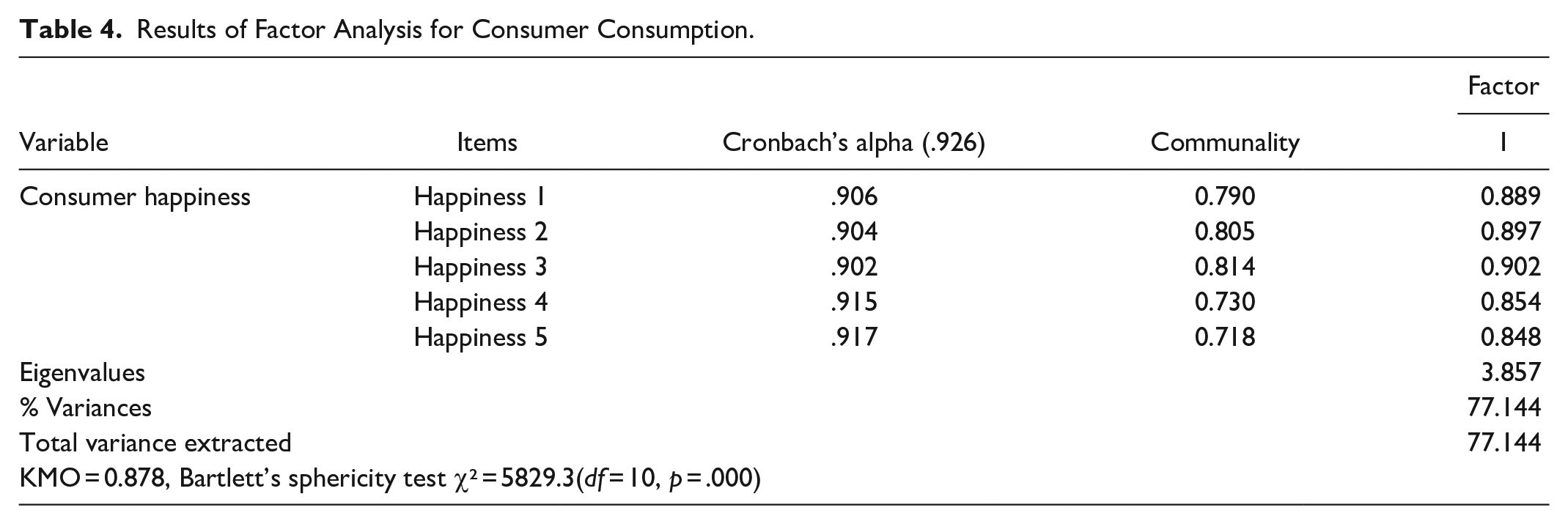
The confirmatory factor analysis in EQS revealed the final structure of measurement model (n = 1,000) suitable the standard for the structural model testing. After checking the model fit, we found it CFA, where x² is 983.3 (df = 220), p = .000, CFI = 0.93, GFI = 0.89, AGFI = 0.85, NFI = 0.91, NNFI = 0.91, and RMSEA = 0.060. The final indicator of convergent validity is AVE, which measures the amount of variance captured by a construct in relation to the amount of variance that is attributable to measurement error. AVE also satisfies the standard of 0.5, which means that the measurement indexes exhibit convergent validity. AVE falls between 0.675 and 0.813, and the means of the squares of the correlation coefficients fall between .087 and .551, which indicates that AVE is higher than the means of the squares of the correlation coefficients (r²). As shown in Tables 2 to 5, the factor loadings of the items in the measures range from 0.522 to 0.902, demonstrating convergent validity at the item level.
Results of Factor Analysis for Social Capital.

Note. FL = factor loadings.
Results of Factor Analysis for Ethical Consumption.

Note. FL = factor loadings; EFO = eco-friendly-oriented ethical consumption; SEO = social-economic oriented ethical consumption.
Results of Factor Analysis for Consumer Consumption.
Discriminant and Convergent Validity.

Note. AVE = average variance extracted; r² = correction coefficient; CV = convergent validity: AVE > 0.50; DV = discriminant validity: (AVE/r² > 1).
In this study, reliability was checked by implementing exploratory factor analysis (EFA) using the measured items, which is known as common method variance. The extent of spurious covariance was shared among the variables because of the common method used in collecting data. Thus, this study checked for possible common method variance using Harman’s single-factor test (Jin, 2014; Liang et al., 2007; Podsakoff et al., 2003) for (in)dependent variables. According to this approach, common method variance is present if a single factor accounts for most of the covariance in the dependent and independent variables. This study found no dominant factor emerging from factor analysis, implying that common method variance was not a serious problem. After collecting and cleaning the data, verification tests were conducted to determine the measurement model’s validity. EFA revealed three factors with eigenvalues greater than 1.00. This analysis suggested that the data sample used in this study was unlikely to have been contaminated by common method bias (Podsakoff et al., 2003).
Especially, the results of the factor analysis for the entire sample of ethical consumption are shown in Table 3. Two items (e.g., I intend to try making a loud voice or saying that you don’t like it if you want to exchange the product or get a refund, I prefer to buy fake products that mimic the designs or trademarks of famous brands) were removed because they yielded a commonality value of less than 0.50. The reliability coefficient for the 24 items was a satisfactory 0.958. The results of the factor analysis show that the 24 items of ethical consumption fall into two dimensions: Factor 1 was named “eco-friendly-oriented ethical consumption,” and Factor 2 was named “social-economic-oriented ethical consumption.” Two factors were extracted for ethical consumption was shown to explain 61.5% of the total variance. This also satisfies the requirement of discriminant and convergent validity for research hypothesis model verification.
Hypothesis Testing
Structural Equation Modeling
After checking the model fit, we found it suitable or close to the standard in the confirmatory factor analysis (CFA), where x² is 10,012.3 (df = 270), p = .000, CFI = 0.942, GFI = 0.887, AGFI = 0.857, NFI = 0.908, NNFI = 0.907, and RMSEA = 0.065. To test the structural relationships in the model, the hypothesized causal paths were estimated. Four major hypotheses were supported. The results are shown in Table 6, and they indicate that the components of social capital have positive effects on eco-friendly-driven ethical consumption (γ = .360, p < .001 for social trust, γ = .278, p < .001 for social participant, γ = .307, p < .001 for reciprocity). Thus, H1-1, 1 to 2, and 1 to 3 were supported. Also, the components of social capital have positive effects on social economic-oriented ethical consumption (γ = .328, p < .001 for social trust, γ = .201, p < .001 for social participant, γ = .255, p < .001 for reciprocity). Thus, H2-1, 2-2, and 2 to 3 were supported. Eco-friendly-driven and social economic-oriented ethical consumption have positive effects on consumer happiness (γ = .487, p < .001 for Eco-friendly, γ = .219, p < .001 for social economic). Thus H3-1 and H3-2 were supported.
Results of Total, Direct, and Indirect Effects.

p < .05. ***p < .001.
Table 6 shows the results of the mediating effect test. The test confirmed the significance of the mediating effects on the overall, direct, and indirect eco-friendly ethical consumption. If the z value was greater than 1.96 or less than −1.96, then the mediating effect was regarded as statistically significant. The z values of the effect of social trust, social participation, and reciprocity on the path between eco-friendly ethical consumption and consumer happiness were z = 8.745 (p < .001), z = 8.303 (p < .001), and z = 7.078 (p < .001), respectively; they all indicated a significant mediating effect. The test also confirmed the significance of the mediating effects on the overall, direct, and indirect socioeconomic-oriented ethical consumption. The z values of the effect of social trust, social participation, and reciprocity on the path between socioeconomic-oriented ethical consumption and consumer happiness were z = 5.385 (p < .001), z = 4.670 (p < .001), and z = 4.542 (p < .001), respectively; these values indicated a significant mediating effect. Given these results, we found no issue in the hypotheses of this study as we confirmed the existence of statistically significant mediating effects on the path among variables.
As shown in Table 7, we added the result of the effect of the control variables, namely, age, gender, education level, and income, on the outcome variables. In understanding various statistical impact relationships, a hierarchical regression analysis that can sequentially grasp the effects of variable groups on dependent variables is useful (Hair et al., 1998). In addition, it is important to determine the amount of change in the changed or increased R-square of the regression model resulting from the input of control variables (Hair et al., 1998). Herein, the control variables of age, gender, educational level, and income exerted a positive effect on the dependent variables.
Result of Control Variables on Consumer Happiness.

p < .06. ***p < .001.
Conclusions and Discussion
The purpose of this study was to understand how consumers’ social capital affects their ethical consumption behaviors and to examine how ethical consumption behaviors affect consumers’ happiness. A summary of the results of the hypothesis analysis is presented as follows.
Social trust, social participation, and reciprocity, which are the components of social capital, were found to have positive effects on eco-friendly- and socioeconomic-oriented ethical consumption behaviors. These behaviors were found to affect consumer happiness. In addition, social capital was found to affect the determination of consumer happiness to some extent.
The findings of this study present an opportunity to advance theoretical discussions in the field of consumer behavior by presenting the intrinsic factor of modern consumers, that is, social capital, and determining its relationship with outcome variables. The results revealed that consumers with high social trust usually trust organizations consisting of the people around them, members of the social community, and public officials. Moreover, consumers with high social trust have high tendencies to engage in eco-friendly and socioeconomic-oriented ethical consumption behaviors.
In this study, the overall, direct, and indirect effects and the mediating effects of the components of social capital on consumers’ ethical consumption behaviors were also checked. We found that when consumers purchase and consume ethical products, they engage in eco-friendly and socioeconomic-oriented ethical consumption behaviors. In addition, the degree of consumer happiness varies with the types of the ethical consumption behaviors of consumers. Eco-friendly and socioeconomic-based ethical consumption positively affect consumer happiness. Comparing the two standardized coefficients showed that the standardized coefficient of eco-friendly ethical consumption is statistically large. Thus, we can conclude that consumers’ happiness is higher when they pursue eco-friendly ethical consumption rather than socioeconomic-oriented ethical consumption. In this study, the system of the components of eco-friendly ethical consumption behaviors was presented on the basis of the contents related to eco-friendly local products and fair trade. In the analysis of the mediating effects of the paths adopted in the hypothesis testing, we identified statistically significant mediating effects. Social trust, social participation, and reciprocity were found to be closely related to the level of consumer happiness through eco-friendly and socioeconomic-oriented ethical consumption behaviors.
Managerial Implications
The results of this study have diverse academic and practical implications. First, the study is significant as it determined the validity of the components of consumers’ social capital, namely, social trust, social participation, and reciprocity. Second, this study classified consumers’ ethical consumption behaviors into eco-friendly and socioeconomic-oriented behaviors through exploratory factor analysis by deriving questionnaire items on the basis of the literature on ethical consumption behaviors. The findings of this study provide valuable information regarding the causal relationships between the system of organization of consumers’ ethical consumption behaviors and the predisposing factors or outcomes of consumer happiness.
The implications of this study can be divided into two areas. Academic implications include the evaluation of social capital. Studies that have applied social capital in the fields of business administration, sociology, and communication have mainly addressed either the relationship between managers’ qualities and business performance or the relationship between social capital and the use of or satisfaction with new media. Thus, the current study is meaningful as it divided the system of organization of consumers’ ethical consumption behaviors into eco-friendly and socioeconomic-oriented ethical consumption behaviors.
Consumers who trust members of society; possess a great sense of fellowship, solidarity, comradeship, and civic consciousness; show keen interest in social issues; or strive to maintain intimate relationships with members of society can be said to have a high tendency to prioritize eco-friendly and socioeconomic-oriented ethical consumption. The way in which this study set consumer happiness as an outcome variable can also be considered significant. As discussed previously, beyond the common notion of customer satisfaction, academia and businesses are currently examining consumer behaviors with an emphasis on the concept of consumer happiness. When consumers consume ethical products, we can assume that they have a strong tendency to consider eco-friendly products, contribute to their community, and engage in fair trade. In addition, this study identified the components of socioeconomic-oriented consumption behaviors, including personal will for or perception of ethical consumption, the will to boycott ethically problematic companies and products, and the will to purchase and consume products based on ethical consciousness. The results also revealed that socioeconomic-oriented ethical consumption behaviors and consumers’ will or awareness when purchasing and consuming products without ethical problems and their willingness to boycott socially problematic products are important elements of ethical consumption behaviors. As indicated in the results of this study, the effects on ethical consumption on consumer happiness are diverse. Although eco-friendly and socioeconomic-based ethical consumption positively affect consumer happiness, consumers feel happier when they engage in eco-friendly ethical consumption.
The significance of this study lies in its discovery that consumers can obtain happiness from ethical product consumption. The results indicated that eco-friendly and socioeconomic-oriented ethical consumption are critical factors to increase consumer happiness. These results are expected to serve as valuable information for studies on the factors that contribute to consumer happiness. From the perspective of social capital, we can use a sociological lens to understand consumers’ ethical consumption behaviors. Among the aspects of social capital, trust, participation, and reciprocity are the foundation for the exchange and sharing of knowledge and information and participation in learning activities. In cases in which mutual relationships are not based on trust, knowledge cannot be properly exchanged and delivered. Trust forms the basis for motivating participation in the exchange of knowledge and information, expectations for the exchange and creation of knowledge, and participation in knowledge creation. Social participation motivates participation in the exchange of knowledge and social interaction by affecting the formation of trust and norms. The formation of networks in organizations plays a positive role in promoting the transfer and sharing of information and knowledge and facilitating the access and participation of members in the creation of new knowledge.
Given the main issues of ethical consumption across modern societies and industries and among consumers, understanding the relationship between social capital theory and ethical consumption can empower researchers and marketers to devise pertinent notional ideas and practical applications for industries and the academe. The results of this study provide a theoretical foundation that can present a systemic approach to analyzing consumers’ ethical consumption practices by applying social capital theory as an antecedent variable to predict consumers’ ethical consumption behaviors.
Given the social function and role of social capital, the results of this study are logical. Consumers with social capital place greater emphasis on eco-friendly consumption behaviors when they consume ethical products. Thus, we can assume that consumers determine the level of their happiness through these eco-friendly consumption behaviors. The findings of this study seem to present various indicators in practice. Our findings offer valuable data for marketing analysis by defining consumers’ intrinsic factors from a sociological perspective through social capital. Our examination of reconstructed concepts and the relationship between ethical consumption behaviors and happiness can help identify the predisposing factors for consumer happiness when establishing marketing strategies.
The findings presented in this study are also meaningful in practice as they highlighted consumers’ ethical consumption behaviors, such as social trust, participation, and mature citizenship. Although it is necessary to develop products and services according to the personal characteristics of consumers, the identification of the relationship between the sociality of consumers who constitute society and ethical consumption behaviors from a sociological perspective presents guidelines for changing companies’ marketing and consumer strategies. Companies should focus on developing products and services that encourage eco-friendly and socioeconomic-oriented ethical consumption behaviors based on consumers’ sociality in order to realize consumer happiness. As consumers’ demands for and interests in ethical products are increasing, the findings of this study are important. The social capital consumers possess plays a significant role as a leading variable in ethical consumption behaviors. Consumers’ social capital is an essential variable in predicting and explaining their ethical consumption behaviors and provides important academic implications for studies that attempt to explain consumers’ rational, emotional, and reasonable consumption behaviors or evaluate the relationships between ethical consumption, which is a sociocultural trend, and civil society.
Recommendations for Future Research
Subsequent studies should also consider variables such as consumer citizenship, as such variables that reflect the tendency of the social value of consumers can affect not only subjective norms but also their motivations and attitude toward ethical consumption behaviors. It is also necessary to consider variables such as the authenticity of ethical companies. Corporate authenticity is expected to play an important role in actual purchasing behaviors as an assessment of a company’s credibility and authenticity. Therefore, future studies should attempt to understand the effect of corporate authenticity on ethical purchasing behaviors. Providing ethical products and services to customers based on a practical understanding of ethical consumers will not only fulfill a company’s ethical responsibilities, it will also bring significant profit to the company. This will help develop ethical products and establish effective marketing strategies. In addition, since demographic, social, and psychological characteristics had a limited effect on ethical purchasing behaviors, it is hoped that this study will help understand the behavior of ethical consumers in the definition of ethical consumption.
Although this study provides useful information on the causes of and responses to ethical consumption behaviors, the following limitations exist regarding the generalization of the research, and future research should attempt to overcome these limitations. The subjects of surveys for the empirical analysis of this study were extracted by convenience sampling centering on consumers in a certain area. In addition, the fact that the consumers were people from a single country remains a limitation of the study. Future studies need to be conducted to compare the classes of consumers living in various culturally diverse areas. In order to generalize the results of future studies, it is necessary to expand the scope and subjects of surveys.
The necessity of conducting research to identify the causal relationship structure presented in this study in consideration of demographic factors also comes to the fore. Although studies that compare consumers’ psychological and personal characteristics are also important, it the explanation of such causal relationships may appear differently due to demographic factors. Finally, the formation of concepts related to social capital, ethical consumption behaviors, and consumer happiness is said to be the same worldwide. In order to generalize and diversify the study findings with this study’s model and causal relationship structure, cross-cultural comparison studies should also be conducted in subsequent research because the result values of the model presented in this study may appear differently, since consumers from different cultures exhibit diverse sociality and such studies can be a cornerstone for understanding consumers in various cultures.
Footnotes
Appendix
Statistics of the Construct Items for Ethical Consumption.

| Construct | Survey measures (items from previous studies) |
|---|---|
| Eco-friendly-oriented ethical consumption (12 items) | I try to keep the things that I have right now and use them for a long time |
| In order not to generate waste, I write down the necessary items and purchase only what I need | |
| Garbage is collected separately | |
| I prefer to share things I don’t need with others | |
| I prefer to walk or ride a bike instead of using a car for close distances | |
| I prefer to use a shopping cart rather than a disposable plastic bag when purchasing a product | |
| I prefer to eat simply with a healthy diet rather than buying a lot of food | |
| I tend to choose products that are sold by companies or institutions for fair trade | |
| I prefer to take walking tours that do not harm the environment when I travel | |
| I prefer to eat vegetables rather than meat to prevent global warming | |
| I don’t buy cosmetics from a company that has tested its products on animals | |
| I eat side dishes, bread, and drinks at discount stores and markets | |
| Social-economic oriented ethical consumption (12 items) | I prefer fair travel, so even if I go on a trip, my money goes back to the area |
| I buy fair-trade products, such as chocolate or coffee, so that producers can get fair compensation for their work | |
| I do not use products from companies that have caused environmental or social problems | |
| I don’t buy unfair business products | |
| I prefer to first purchase small- and medium-sized products produced locally if their functions are the same | |
| I use traditional markets rather than large distribution stores to help the local economy | |
| I don’t buy as much of a company’s product as I think would impose excessive marketing costs on the product price | |
| I do not purchase products from companies that do not guarantee the human rights of children or workers | |
| I don’t drink coffee from companies that buy and sell beans from local peasants for a low price | |
| I buy vegetables or fruits that are produced in the local area even for the same food | |
| I tend to criticize brands or companies that I do not like, or post it on the Internet a | |
| I prefer to choose and buy different products without pretending to know the fruit or product is damaged a | |
| Deleted items with a commonality value of less than 0.50. | |
| I complain when I want to exchange a product or obtain a refund a | |
| I prefer to buy fake products that mimic the designs or trademarks of famous brands a | |
Reversed coded items.
Declaration of Conflicting Interests
The author(s) declared no potential conflicts of interest with respect to the research, authorship, and/or publication of this article.
Funding
The author(s) received no financial support for the research, authorship, and/or publication of this article.
