




Abstract
The environment of uncertainty created by the COVID-19 pandemic period has caused difficulties especially for healthcare professionals in their work activities. The purpose of this research is to find out which variables might affect the commitment of healthcare professionals to their works during this COVID-19 period. Based on the data announced by the Ministry of Health during the pandemic in the first quarter of 2021, it was decided to conduct a research on doctors, nurses, caregivers, and medical secretaries working in hospitals in the cities of the Eastern Black Sea Region of Turkey which generally show high risk. In the developed research model, satisfactory conditions (SC), emotional commitment to change (ECC), and psychological ownership (PO) as variables that may directly or indirectly affect the commitment of healthcare professionals to their works (CW) were used. The Smart PLS program was used in the analysis of the research model and hypothesis. It was seen that the ECC of healthcare professionals has a positive and significant (.694; p < .000) effect on SC. It was understood that the PO of healthcare professionals has positive and significant effects on their CW (.394; p < .000). It was also observed that the presence of SC has positive and significant effects on the PO of the healthcare professionals in the current situation (.796; p < .000). It was observed that only the effect of ECC of healthcare professionals on their CW is insignificant (.097; p > .086). Looking at the indirect (intermediary) effects obtained as a result of the research, it was seen that all of the hypotheses consist of positive coefficients. This situation reveals that the mediating variables have complementary effects on the obtained results.
Keywords
Introduction
Commitment to work (CW) focuses on self-disciplined behaviors such as obeying the rules in the organization, working hard, and taking the initiative to solve a problem (Scotter & Motowidlo, 1996, p. 526). CW helps the employee to stand up to the difficulties or volunteer for additional work beyond the duties specified in the job description. When evaluated in terms of job performance, compelling stress factors can motivate employees to devote more to their jobs and make an extra effort in their jobs (Liu et al., 2013, p. 340). During the COVID-19 pandemic, the risky and stressful work environment faced by healthcare professionals may motivate them to exhibit more devotional behavior with the perception of obligation. When this situation is evaluated in terms of commitment, it can be considered as a requirement of the healthcare professional’s commitment to his duty. This sense of duty can also shape the employee’s emotions about the commitment to change. Changes in human emotions during the epidemic period can make the employee more committed to his work. In addition, it may also be an important factor that the employee acts with the discipline of duty by accepting the current situation and embracing it psychologically. Working conditions such as subordinate-superior relationships in healthcare professionals’ work environments can also play a role in their CW. In this respect, it is important to determine the factors that may affect the commitment of healthcare professionals to their works during the pandemic process. In this context, determining the effects of variables such as “emotional commitment to change (ECC),” “satisfactory conditions (SC),” and “psychological ownership (PO)” can make important contributions both in terms of the relevant literature and in terms of optimizing the activities of health organizations under extraordinary conditions.
In general, changes in organizations present many challenges. The change affects emotions and behaviors depending on emotions can react differently to change. The increase in the level of commitment of the employees to the changes made by the management toward the workplace working regime affects the behavior patterns of the employees (Asnawi et al., 2014, p. 9). On the subject of commitment to change or success in change, knowledge, and emotion are the main factors that motivate individuals (Mazmanian & Mazmanian, 1999, p. 205). In this new period, the knowledge and feelings that healthcare professionals have about the dimensions or effects of the epidemic and their activities will also determine their ECC. In addition, the possible resistance factor that healthcare professionals may show to change may also affect their ECC.
Organizational change can also trigger emotions (Smollan & Sayers, 2009, p. 436). In this respect, while employees’ expectations of a positive result in their works that related to certain organizational activities will increase their ECC, the expectation of negative outcomes will also decrease their ECC (Ning & Jing, 2012, p. 465). When this situation is evaluated in terms of pandemic period conditions, taking important measures for healthcare professionals, such as giving priority to healthcare professionals in vaccination processes all over the world, may enable them to approach positively to the results related to change in the workplace. On the other hand, considering the high probability of healthcare professionals getting the disease during this period, unfortunately, this situation appears as a factor that can affect the emotional side of the change. In this new period, whether they are satisfied with their working conditions as well as the work plans implemented for healthcare professionals or not, they may have important consequences in terms of both their CW and their PO behavior toward their jobs.
The existence of SC in the workplace and its continuity may lead to the employee’s emotional commitment to the workplace (Powell & Meyer, 2004, p. 164). Employees’ ECC can reflect positively on SC. For this reason, adapting to changes in the organization and making it emotionally functional will be able to prepare the employee for working conditions. Of course, the necessary reasons created by the change in the organization will have positive reflections on the existence of SC. Hence, the necessary changes that occur in the pandemic lead to other changes in the habits and activities of the employees. The effort made to adapt to the new situation creates commitment in terms of the emotional aspect of the change. This situation may be a source for the employee to adapt to the conditions in which he/she operates.
The existence of SC in organizations may have positive contributions to the PO of the employees. The word ownership can be defined as the fact of taking responsibility for an idea or problem. Employees will likely develop a greater sense of ownership toward the organization that meets their expectations, and they may reflect this psychologically into the work environment. The existence of SC during the pandemic period can also strengthen the commitment of the employees to the organization. Therefore, it will have positive reflections on the psychological sense of ownership. Here, the positive reflections of employees’ emotions and emotional commitment, as well as the conditions they are satisfied with and the stages of PO, on their commitment behaviors are addressed.
Individuals experience special feelings toward the objects they own and develop strong attitudes toward the relationships they establish with the items they have (Asatryan & Oh, 2008, p. 1). Organization employees may own certain objects in their workplaces and behaviors that develop toward these feelings of ownership can create important organizational consequences (Brown et al., 2014, p. 480). Employees’ dialogues with their colleagues, working conditions, and predictions about their managers can be effective in the formation of their sense of ownership. In this respect, embracing the conditions related to the new period in the workplace psychologically can positively contribute to the level of commitment of the employee to the job.
The environment of uncertainty created by the pandemic period has caused difficulties for healthcare professionals in their activities. The fact that the pandemic affects all individuals can help healthcare professionals to adapt emotionally and psychologically to these conditions, which they cannot bear in the normal period. In addition, these compelling reasons may cause healthcare professionals to act more self-sacrificing in their activities, both emotionally and psychologically. In that case, the PO of the healthcare professionals can contribute significantly to their level of CW.
With this research, answers to the following questions will be sought;
Do healthcare professionals show CW under the changing conditions during the COVID-19 pandemic?
Which mediator variables might affect the CW for healthcare professionals during this period?
How does the ECC, SC, and PO behavior of healthcare professionals during the pandemic period affect their CW?
Literature and Hypotheses
Commitment to Work
Commitment can be defined as an employee’s enthusiasm for the job, despite all the difficulties of his job (Gera et al., 2019, p. 70). In other words, CW means the strong participation of the employee in his/her work accompanied by enthusiasm and importance, with a sense of pride and inspiration (Maslach et al., 2001, p. 417). In that case, CW also includes demanding new and challenging tasks. In this respect, CW is expected to be related to courage, curiosity, and love of learning (Harzer & Ruch, 2014, p. 188). In this context, health services provided under pandemic conditions are defined as “very dangerous and dangerous work” in Turkey according to the “Occupational Health and Safety Law.” The fact that healthcare professionals fulfil difficult tasks at the cost of their health during the pandemic period can be perceived as an indicator of their CW. Healthcare professionals’ CW has a great impact on their ability to adapt emotionally and psychologically to these challenging working conditions.
Commitment can also be about demonstrating positive feelings toward other employees operating in organizations. For this reason, commitment is also highly related to the social relations of the employee in his/her job (Makela et al., 2021, p. 77). Among the indicators of the employee’s CW, dynamism and vigor may also be included. Here, vigor means positive, energetic, and full of new ideas in attitude and behavior. The commitment and vigor of a healthcare professional are also related to how satisfied he/she is with his/her job position and also how high the quality of his/her work environment is. Such working environments will ensure that healthcare professionals work with less stress in their activities and lower social dysfunctions (Jenaro et al., 2011, p. 872). As a result, any dedicated employee will understand and support business values and will be able to make an extra effort to maintain the corporate image of the workplace and facilitate engagement (Roseline & Konya, 2019, p. 21). It can be said that healthcare professionals’ CW in terms of fighting disease reaches the highest level during pandemic periods. The presence of an extraordinary situation may cause other problems in the work environment to remain in the background. Despite this pandemic period, healthcare professionals’ CW in terms of fighting disease has reached the highest level.
When the literature on the commitment of employees to their jobs is examined, it is seen that, in general, high-level commitment appears more as age and seniority increases (Molina et al., 2014, p. 999). Researchers state that a sense of commitment is needed to achieve the goals of the organization and that this concept differs from terms such as loyalty and belonging. In addition, researchers state that commitment is a concept closely related to employee identification with the organization, taking care of the reputation of the workplace, protecting and embracing the interests of the workplace, establishing good relations with employees, and actively striving to achieve the goals of the organization. Some studies show that CW produces more productive results in the workplace; They express that it includes commitment, enthusiasm, energy, and focusing on purpose. In addition to all these, commitment is expressed together in a model that includes psychology and behavior simultaneously (El Shobaky et al., 2020, p. 45).
When the earlier studies about the commitment of employees to their works are examined; Scotter and Motowidlo (1996, p. 528) found that employees’ CW has a strong relationship with their overall performance. Jenaro et al. (2011, p. 872) stated in their study on nurses that personal and organizational variables were effective on nurses’ work commitment. In their research, they found that the main factor that explains the vigor and commitment of the employee is satisfaction with the work position, while nurses who express more satisfaction show higher commitment to the organization. Liu et al. (2013, p. 357) found in their research that employees who are highly emotional in terms of conscience generally exhibit more work performance and more commitment to their work. In addition, Liu and Liu (2015, pp. 103, 104) stated in their research on private-sector employees that having certain shares in workplaces increases employees’ CW. They also found that empowering the employee increased the CW.
On the other hand, Johnson et al. (2017, p. 7) stated in their research on private-sector employees that managers should adopt quality leadership practices and prefer employees who are emotionally stable to increase employees’ CW. Oguegbe et al. (2019, p. 35) revealed in their study on bank employees that job security and employee empowerment are important determinants of CW. Szondi and Heder-Rima (2020, p. 129) emphasized in their research that the presence of satisfaction in the organization is a prerequisite for employee commitment. In addition, they claim that just as dissatisfied employees will not make a special contribution to the functioning of the organization, not all satisfied employees will be committed to the organization.
Emotional Commitment to Change
Commitment to change is defined as the power that binds the employee to the action plan required for the successful implementation of a change initiative in a workplace (Herscovitch & Meyer, 2002, p. 475). The feeling of obligation to participate in activities in the presence of compulsory situations also plays an important role in the commitment of the employee to this change (Olafsen et al., 2020, p. 182). This also explains the commitment of employees to changes in epidemic situations such as COVID-19. Therefore, the existence of compulsory reasons in the activities of healthcare professionals may have created a feeling of acceptance of this change.
Being ready for a change in organizations is a complex, multidimensional situation that includes psychological and structural factors that occur both at individual and organizational levels (Holt et al., 2010, p. 54). In addition, it is very important to know the past change experiences of the employees and also to be able to determine how well and fair the employees perceive these procedures in determining employees’ ECC (Faupel & Helpap, 2020, p. 3). On the other hand, it will be very difficult to predict the change experiences of healthcare professionals who have not had any previous experience regarding this pandemic.
It is seen that the personal support and encouragement of individuals who are taken as an example for change by employees in an organization can also increase the ECC of other employees (Michaelis et al., 2009, p. 403). This situation makes it easier for employees to be more willing to contribute to their organizations and to be committed to the changes proposed to them (None et al., 2013, p. 380). It should not be forgotten that the person who is the role model is also important in this situation. That is why it is the most important thing that the employee who will be a role model acts under the pandemic rules in environments where the risk of getting the disease is high.
The organizational culture that encourages excessive internal competition has a negative effect on the overall loyalty of employees (Shum et al., 2008, p. 1360). On the other hand, increasing the job satisfaction of the employees, creating a suitable working environment, and allowing the training and development of the employee can increase the employee’s commitment (Fabiene & Kachchhap, 2016, pp. 49, 50). However, the ability of healthcare professionals to manage their own emotions and thoughts, and also their ability to get away from problems and express their feelings in an assertive manner can be a real resource for them (Nastasa & Farcaş, 2015, p. 81). This situation reveals the importance of emotional and psychological support of managers to their employees.
In addition, in the literature on employees’ ECC, Herscovitch and Meyer (2002, p. 485), in their research on nurses, stated that the feeling of having to act together with a change initiative is likely to be stronger or more pronounced than the feeling of having to continue work. Michaelis et al. (2009, p. 410), in their research on employees in R&D, revealed that charismatic leadership and trust in senior management are effective on ECC and the behavior of implementing innovations. Subsequently, they emphasized that ECC has a mediating effect on this relationship and that it is very important to examine this variable in different change situations. Neves and Caetano (2009, p. 636) concluded that ECC is positively associated with the feeling of trust in the supervisor. In their research, they also stated that the more support the employees are given, the more they will trust their supervisors. Foster (2010, p. 28), on the other hand, revealed that organizational justice has a positive and great effect on ECC. On the other hand, None et al. (2013, p. 385) found that leaders’ behaviors that encourage change in the organization have a positive reflection on team performances, and the employees’ charismatic leadership perceptions make them more dependent on this change.
Battistelli et al. (2014, p. 970), in their research on hospital staff, state that if there is no specific training in major organizational changes, it becomes difficult for employees to adapt to change. It is emphasized that this situation causes increasing concerns of employees about not being able to provide a high-quality service to patients, and feeling that the obligation to change is reduced. Bouckenooghe et al. (2014, pp. 527, 528) stated that creating a positive attitude toward change in the organization by reducing conflict between employees and treating them fairly may increase commitment to change. Jing et al. (2014, p. 1110) state in their research on communication company employees that external and internal reasons in organizations can create different framing effects on employees, and also external reasons positively affect the emotional and normal commitment to change. They also stated that external reasons of change have more validity than internal reasons because external reasons are cognitively framed as “inevitable” or “common threat,” while internal reasons are perceived as actions performed by a certain group (such as administrators).
Bakari et al. (2019, p. 398) emphasize that authentic leadership positively affects employees’ emotional commitment as a result of their research on healthcare professionals. They also state that healthcare professionals who have a low level of cynicism about change will show more commitment to change. Charoensukmongkol and Phungsoonthorn (2021, pp. 446, 447) in their research on university staff during the COVID-19 crisis revealed that supporting all employees and reducing their concerns by their managers may reduce their uncertainty and emotional burnout levels. Similarly, Rangachari and Woods (2020, p. 9) emphasized that support to be given to healthcare professionals for their emotional problems will make them feel safe psychologically and therefore, may lead to a decrease in safety concerns about change.
Satisfactory Conditions
The concept of SC can be perceived by employees through conditions such as work security, working type, working hours, working environment, the distance of traveling for work, etc. that have a direct impact on the satisfaction level. SC contribute positively to the productivity level of the employee by providing an employee with less absenteeism in the organization and making more effort for his/her work (Poggi, 2007, pp. 713, 714). It should not be forgotten that this concept, which is expressed for normal working periods, may differ during the pandemic period.
During pandemic periods, healthcare professionals’ fears and their occupational stress cause them to wear out emotionally and feel exhausted (Adelhafiz et al., 2020, p. 7) and therefore, burnout syndrome may develop over time. Conflicts in organizations, problems and disagreements between managers or employees, dissatisfaction with salary, or insufficient working conditions are some of the factors that cause this situation (Boyle, 2011, p. 3). If the pandemic period is taken into account, the precautions taken regarding the health of healthcare professionals can be understood as the most SC. Therefore, the psycho-social effects of this process increase the importance of psychological support that can be provided to healthcare professionals. In this process, organizations should get external support for this, if necessary, to make employees more satisfied.
Experiences related to the conditions in the COVID-19 period can provide more inclusive, more experienced new results for the future by creating a balance between employees and organizational needs (Ancillo et al., 2020, p. 6). This situation helps to create new precautions and possibilities for the future by necessitating changes in the old, usual practices of employees and organizations. This is because changes in the habits of healthcare professionals regarding their activities shape their re-adaptation to working conditions. In this context, new environments should be satisfactory to healthcare professionals where employees and patients are at a distance from each other and where all necessary precautions are taken. Being forced to work in risky environments will cause dissatisfaction in healthcare professionals and cause negative consequences. For example, in a study conducted on teachers, it was observed that teachers’ workplace conditions affect their commitment to the workplace (Rosenholtz & Simpson, 1990, p. 253). On the other hand, Yuill (2009, p. 250) evaluated the perceptions of good or bad about working conditions in the workplace within the framework of structural relationships in the organization. He emphasized that if there is no positive perception about the structural conditions in the organization, there will be an unhealthy working environment in the organization. In his research, he also stated that individual competition in organizational conditions and organizational culture are both important for organizational health.
Ariza-Montes et al. (2013, p. 3132) emphasized in their research on healthcare professionals that employees who work in shifts, monotonously, and who are not perceived of promotion opportunities can have work stress and dissatisfaction with working conditions. In such environments where there is insecurity, role conflict, and tension prevails; It is stated that aggressive behaviors and bullying may occur and employees may not find opportunities for socialization. Portoghese et al. (2014, p. 155) found in their research on hospital staff that the well-being of healthcare professionals depends on the quality of their work environment. In the same study, it is stated that it is important to develop management practices that allow work control and reduce the burnout risk of employees.
Psychological Ownership
Although it is accepted that psychological ownership may be an important organizational variable in studies, the subject is scattered and not sufficiently developed in the organization literature (Pierce et al., 2001, p. 298). The concept of ownership includes three basic human motives. These are effectiveness and efficiency, self-identity, and having a place. These motives are the reasons for the feeling of ownership. In addition, each motive facilitates the development of psychological ownership (Pierce et al., 2003, p. 91). In this respect, the psychological ownership of healthcare professionals’ activities in the workplace during the pandemic period is of great importance for the functioning of the workplace. Psychological ownership stems from certain relationship processes between the goals of the employee and the situation in the organization. These relationships ensure that employees are psychologically committed to their goals and their goals become part of their expanded selves (Pierce et al., 2001, p. 304). Psychological ownership may not necessarily occur all the time. Healthcare professionals need to accept the pandemic conditions and be able to adapt to the new situation for psychological ownership.
The sense of ownership which plays a critical role for employees in organizations has two aspects, formal and psychological (Pierce et al., 1991, p. 127). Unlike formal ownership, psychological ownership does not contain certainty or assurance. Psychological ownership depends on different interpretations, perceptions, and motivations among organization employees (Brown et al., 2014, p. 464). This situation reveals more clearly that psychological ownership is related to the inner state of a person.
Psychological ownership in organizations can have positive or negative consequences. Psychological ownership has possible positive consequences, such as the willingness to take responsibility, manage, make personal sacrifices for goals, and take risks. On the other hand, variables such as alienation, disappointment, and stress may be involved in the negative consequences of psychological ownership (Pierce et al., 2003, p. 102). In this context, the sacrifices made by healthcare professionals in their work environment during the pandemic process, the responsibilities they undertake and the risk they take can have positive results in terms of their psychological ownership.
Regardless of its type, it is understood that psychological ownership ultimately contributes to the employee’s ownership of the organization and its adaptation to the organization (Pierce et al., 1991, p. 140). It is stated that psychological ownership leads to organizational commitment, employees who are committed to the organization with psychological ownership do not engage in criminal behaviors, and contribute to their performance by exhibiting extra behaviors (Vandewalle et al., 1995, p. 221). Employees who have a sense of psychological ownership can also take a sense of responsibility toward goals, show protective managerial behavior, and exhibit other altruistic behaviors. All these are positive behaviors in terms of organization (Pierce et al., 2001, pp. 307, 308).
In a study conducted on employees in different positions in the USA, Dyne and Pierce (2004, pp. 453, 454) found positive relationships between employees’ psychological ownership behaviors and their attitudes (organizational commitment, job satisfaction, and self-esteem) and also work behaviors (organizational citizenship behaviors). On the other hand, in their research on psychological ownership of patients Mifsud et al. (2019, p. 314) emphasize that the individual’s adaptation behavior develops due to the healthcare program applied to realize psychological ownership. As a result, it is stated that the sense of psychological ownership increases patient compliance. In another study by Shechter et al. (2020, p. 5) on healthcare professionals, problems such as uncertainty, lack of control in the clinical environment, and other employees receiving COVID-19 treatment in the same clinic were stated as the most important problems experienced during the COVID-19 pandemic period.
Within the framework of the explanations, it is thought that studying the healthcare professionals’ psychological ownerships of intense work environments during the pandemic period can make important contributions to the literature. The Covid 19 Pandemic has changed the practices that healthcare professionals should do in the normal period in their workplaces and has deeply affected the psychology of healthcare professionals. Therefore, the pandemic has brought significant limitations in the behavior of employees compared to the past normal period. It is seen that this situation reflects on the activities of the employees emotionally and psychologically. In this context, it is important to know the PO status of healthcare professionals.
In the light of the above considerations developed. research model (Figure 1) and hypotheses are presented below.
The hypotheses developed in this research model are;
H1. The increase in ECC during the pandemic period leads to an increase in SC.
H2. The increase in ECC during the pandemic period leads to an increase in CW.
H3. The increase in PO during the pandemic period leads to an increase in CW.
H4. The increase in SC during the pandemic period leads to an increase in PO.
H5. During the pandemic period, SC plays a role as a moderator in the relationship between ECC and PO.
H6. During the pandemic period, PO plays a role as a moderator in the relationship between SC and CW.
H7. During the pandemic period, SC and PO play roles as intermediate variables in the relationship between ECC and CW.

Research model.
Methodology
Research Universe, Sampling Process, and Data Collection
In determining the sample size of the study, the existence of approximately 20,000 healthcare professionals was taken into account as the universe of the research. When similar studies conducted in the past are examined, Gleen (1992) states that the sample size required for an average of 7,000 people should be 378, and the sample size required for 20,000 people should be approximately 392 (Gleen, 1992 cited in Singh & Masuku, 2014, p. 11).
Based on the data announced by the Ministry of Health during the pandemic in the first quarter of 2021 (Figures 2 and 3), the study was carried out with data collected by using an electronic questionnaire with a convenience sampling method including participants from a total of 392 healthcare professionals such as doctors, nurses, caregivers, and other medical secretaries working in the hospitals of the cities especially Trabzon, Gumushane, Bayburt, and other provinces in the Eastern Black Sea Region of Turkey with simultaneous high-risk measurements.

Risk map according to the number of COVID-19 cases—February 2021 (per 100,000 of the population).

Number of cases by province (per 100,000 of the population).
The Scales Used in the Research
On the other hand, a 5-point fully anchored Likert scale (1 = strongly disagree to 5 = strongly agree) was used to measure a total of 23 items in the second part of the research questionnaire. The four scales used in the study are given below in Table 1.
Scales Used in the Research.

It is seen from Table 1 that the CW scale (five items) were adapted from the research of Brown and Leigh (1996, p. 367). The PO scale (seven items) were adapted from the research of Dyne and Pierce (2004, p. 449). The ECC scale (six items) were adapted from the scale used by Herscovitch and Meyer (2002, p. 477). And lastly, the SC scale (five items) were adapted from the research of Powell and Meyer (2004, p. 175). All English-based items used in the study were translated into Turkish according to the “translation/back-translation” procedures.
Findings
Demographic Characteristics
There are seven questions in the research questionnaire to determine the demographic characteristics of healthcare professionals.
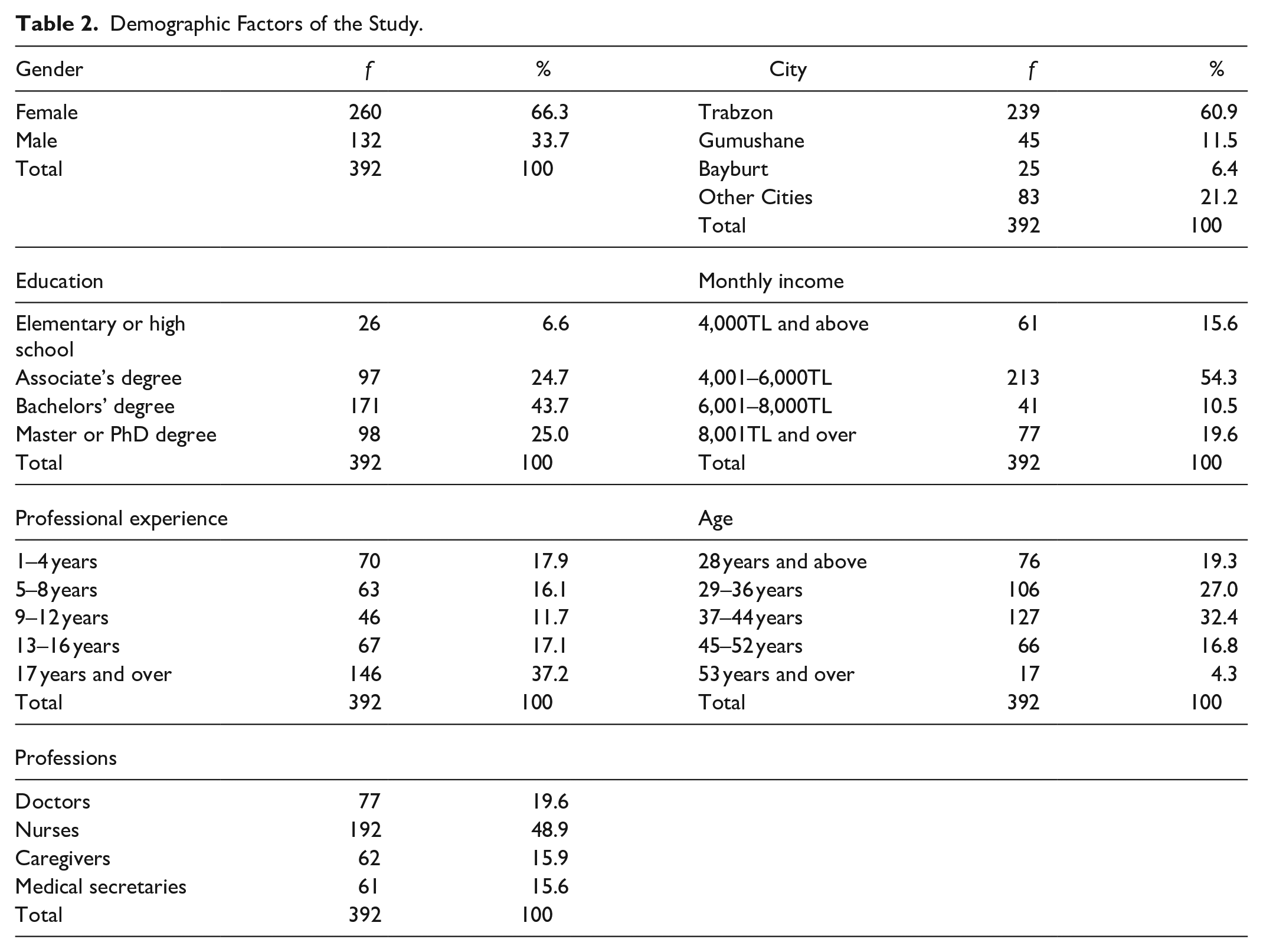
Considering the demographic data expressed in Table 2, it is understood that the majority of the participants (392) are female (260, 66.3%) healthcare professionals. It is seen that the majority of the participants are nurses (192, 48.9%). Nurses are followed by doctors (77, 19.6%), caregivers (62, 15.9%), and medical secretaries (61, 15.6%), respectively. When the participants are evaluated in terms of cities bases, it is understood that they are mainly in Trabzon (239, 60.9%). When evaluated in terms of the educational institutions they graduated from, it is seen that those with bachelors’ degrees (171, 43.7%) constitute the majority. When evaluated in terms of monthly income; It is seen that those with an income of 4,001 to 6,000TL (213, 54.3%) are in the majority, followed by 8,001TL and above (77, 19.6%), 4,000TL and below (61, 15.6%), 6,001 to 8,000TL (41, 10.5%), respectively. When evaluated in terms of their professional experience, employees with 17 years or more (146, 37.2%) experience are in the majority. When evaluated in terms of age, it is observed that those with the age range of 37 to 44 (127, 32.4%) are in the majority.
Demographic Factors of the Study.
Measurement Models and Structural Models
First of all, some of the studies on similar analyses previously carried out in the literature (Bagozzi, 1977, p. 218; Chin et al., 1996, p. 24; Cohen, 1988, p. 412; Errassafi et al., 2019, p. 261; Hair et al., 2012, p. 427, 2019, p. 15; Henseler et al., 2009, p. 305; Tenenhaus et al., 2005, p. 180) were carefully examined. Based on the past studies, PLS-SEM which can test the direct and indirect relationships between the variables with the help of a single model was used in this study. When the advantages and disadvantages are examined, it can be said that PLS-SEM is more useful because it does not have assumptions such as normal distribution. It can also produce results even with small sample sizes, works even when the factor in the model consists of a single expression. Also, the SmartPLS Program, which is a second-generation statistical software based on PLS-SEM, was used to test the measurement models and structural models of the research.
Measurement model assessment
In this stage, the assumptions related to the reliability and validity of the measurement model were evaluated.
Validity and reliability analysis of the measurement model
Within the scope of the analyses regarding the reliability and validity of the measurement model, first of all, indicator loads are evaluated. Before the experimental hypotheses are accepted or rejected, it should be checked whether they are consistent and reliable with the Cronbach Alpha value (Bagozzi, 1977, pp. 218, 219). In studies, it is generally stated that the reliability of the scales (Cronbach Alpha > .7; rho_A > .7), Composite Reliability (CR > .7), and the Average of Variance Extracted (AVE > .5) should be within the desired value ranges (Errassafi et al., 2019, p. 261). To evaluate the convergent validity of a structure, it is essential to calculate the AVE value for all elements in each structure. An AVE value of .50 or above indicates that it is in the acceptable range and explains at least 50% of the variance of the elements of the structure (Hair et al., 2019, p. 9). From the results obtained, it is understood that the research reveals valid and reliable results and that all values are above the value ranges accepted in the literature (Table 3).
Construct Reliability and Validity of Research Model.

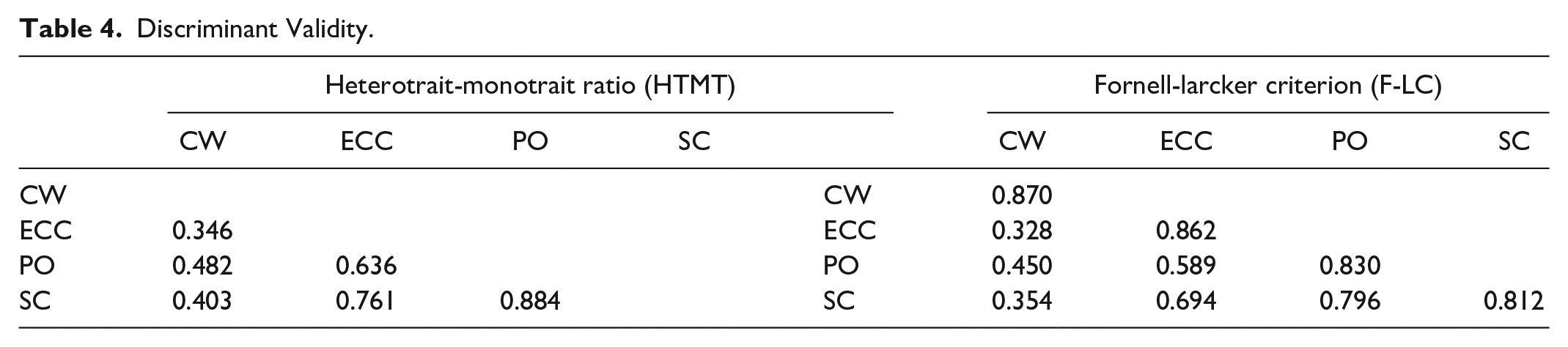
For variance-based structural equation modeling, such as partial least squares, the Fornell-Larcker Criterion (F-LC), and the Heterotrait-Monotrait Ratio (HTMT) of correlations are the dominant approaches for evaluating discriminant validity. It is acceptable for HTMT values to be less than 0.85 for different structures and less than 0.90 for similar structures. On the other hand, confidence intervals should not contain the value of 1 (Hair et al., 2017, p. 455). It is understood that the HTMT values expressed in Table 4 have generally acceptable values according to this situation. Also to provide discriminant validity (F-LC), the diagonal values should be greater than the cross items for the same row and column (Lowry & Gaskin, 2014, p. 136). When the results obtained in Table 4 are examined, it is observed that the research has discriminant validity as a whole (except SC-PS, 0.884).
Discriminant Validity.
Structural model assessment
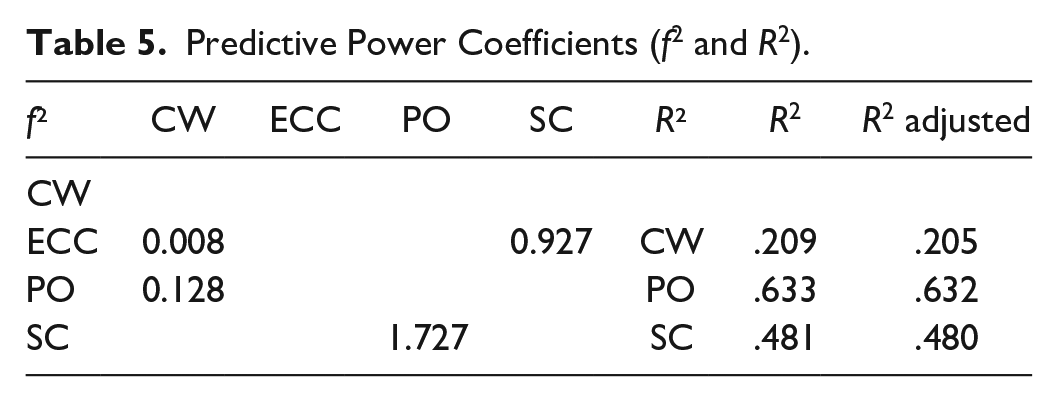
In the research, the consistent PLS algorithm and Bootstrapping for consistent PLS were applied for the structural model assessment. It consisted of evaluating the model’s collinearity, path coefficients, significance value, determination coefficients R2, the prediction value Q2, and the size of the effect f2. The values were calculated using the algorithm for consistent PLS. In studies, it is stated that the f2 value reveals relationships based on the estimations of explanatory variables and the f2 value should be greater than zero for a certain endogenous latent variable (Henseler et al., 2009, p. 305). In applications, the f2 value is also expressed as the effect size. If the f² value is in the range of 0.02 to 0.15 it means there is a small effect size, if it takes a value between 0.15 and 0.35, it is a medium, and finally, if it takes a value of 0.35 and above, this means that it has a large effect size (Cohen, 1988, pp. 412–414). When we look at the results of the research, it is seen that all of the f² values are greater than zero. This situation reveals that there are relations between the variables. In the research results, it is observed that ECC-CW (0.008) and PO-CW (0.128) have minor effects, while ECC-SC (0.927) and SC-PO (1.727) express large effects. In statistical researches, the R² value explains the research model and reveals the strength of the relationship (Shmueli & Koppius, 2011, p. 554). While it is stated that this value should generally be in the range of 0.2 to 0.8 for cross-sectional and individual-level data (Paxton et al., 2001, p. 297), it is seen that the R2 values are generally expressed as .25 (weak), .50 (medium), and .75 (strong) (Hair et al., 2019, p. 15). It is observed that the measured R² values in this study are within acceptable limits in the literature. When the variables are examined, it is understood that PO has a high (0.632), SC has a medium (0.480), and CW has a weak (0.205) level of relationship strength (Table 5).
Predictive Power Coefficients (f2 and R2).
On the other hand, Confirmatory Factor Analysis was used to evaluate the convergent and divergent validities, which are the two main types of validity in a structural model (Kock, 2015, p. 5). To achieve full compliance in the research model, the items of the scale should be gathered under the factor they belong to. The result in Table 6 showed that the factor loads of the scale questions belonging to each variable were grouped under their own factor dimension. In addition, the values obtained show that the model is generally compatible and has factor loads accepted in the literature. Considering the contribution of the variables to the model as a result of the factor analysis, the item that contributed the most to the ECC variable was the item “I think that the changes made in my workplace during the pandemic period serve an important purpose” (0.902). It is seen that the item “I am trying my best to be successful in my work during the pandemic period” makes the most contribution (0.899) to the CW variable. In another variable PO, the item “I feel a very high degree of personal ownership for my workplace” contributes the most (0.894). Finally, when looking at the variable SC, it is understood that the item “I am satisfied with the way things are done in my workplace” contributes the most (0.860). When the factor analysis results are evaluated in general, it is seen that the scale questions have both high values.
Results of Confirmatory Factor Analysis of Variables Related to the Research Model.

Standardized Root Mean Square Residual (SRMR) is a goodness of fit measure for PLS-SEM that can be used to avoid model misspecification. A value less than 0.10 or of 0.08 are considered a good fit (www.smartpls.com/documentation/algorithms-and-techniques/model-fit). Bentler-Bonett Normed Fit Index (NFI) is an incremental measure of goodness of fit for a statistical model, which is not affected by the number of parameters/variables in the model.
In studies, the NFI value is required to have a value between 0 and 1. It is stated that as the NFI value gets closer to 1, the model fit becomes better (Yılmaz & Kinaş, 2020, p. 447). In comparing the validity of the model in terms of PLS-SEM fit, GoF values can be calculated. To calculate the GoF index, the AVE values revealed in terms of latent variables and the average of the R² values should be taken. The GoF value can be determined by the square root of multiplying of these values (Tenenhaus et al., 2005, p. 180). In the study, while the average of R2 values was .532, the average of AVE values was calculated as .7125.

Gof value was calculated as 0.6160 in the study (Table 7). It is stated in the literature that GoF values above 0.36 are applicable for research (Wetzels et al., 2009, p. 187). This result reveals that the research model has a good fit and is applicable.
PLS-SEM Model Fit Analysis Results.

By applying bootstrap in PLS, the path model is estimated for each sample, In PLS-SEM, it is necessary for researchers to determine which indicators measure each variable and how the structures are related to each other, so that the program can make calculations (Ravand & Baghaei, 2016, p. 3).
When the research findings are examined and the direct and indirect effects are taken into account (Figure 4), it has been observed that during the pandemic period, the ECC of healthcare professionals in their organizations increases the effect of SC, and their PO of the current situation increases their CW, and the existence of SC increases the PO of the current situation. On the other side, there are mediating effects of the presence of SC and also PO behaviors on the strong positive relationship between healthcare professionals’ ECC and their CW.

Research path model and results of smart PLS-SEM analysis.
To ensure the consistency of the research results, it is necessary to determine the sample size, effect sizes, power of statistical tests, and significance levels (Chin et al., 1996, p. 24). When the research results (Table 8) were examined, it was observed that only the hypothesis “H2: The increase in ECC during the pandemic period leads to an increase in CW” was rejected. In this hypothesis, it was seen that the effect of ECC of healthcare professionals on their CW is insignificant (p > .05). When the direct effects were examined in the study, it was seen that the ECC of healthcare professionals has a positive and significant (p < .05) effect (H1) on SC. It was understood that the PO of healthcare professionals has positive and significant effects (p < .05) on their CW (H3). It was also observed that the presence of SC has positive and significant (p < .05) effects (H4) on the PO of the healthcare professionals in the current situation.
Path Coefficients and Hypothesis Model Results.

In the mediating effect, if the product of the path coefficients is positive, complementary mediation can be mentioned, and if it is negative, then it can be mentioned as competitive mediation (Zhao et al., 2010, p. 204). Looking at the indirect (intermediary) effects obtained as a result of the research, it was seen that all of the hypotheses consist of positive coefficients. This situation reveals that the mediating variables have complementary effects on the obtained results. In the study, it is observed that SC has a mediating effect (H5) on the relationship between the ECC and PO. Research results also show that PO has a mediating effect (H6) on the relationship between SC and CW. These results reveal that both SC and PO variables have complementary effects in the research model. In addition, the results also show that SC and PO variables both have mediating effects (H7) on the relationship between ECC and CW variables. Additionally, it was seen that all the total effects in the relations between the variables were significant and positive (Table 8).
Discussion and Conclusion
It was observed in this study that the ECC of the healthcare professionals positively affects the SC. Lapum et al. (2021, p. 7) emphasizes in their study that the emotional experiences of nurses during the COVID-19 period include complex emotions such as anxiety, fear, uncertainty, anger, disappointment, sadness, helplessness, and flexibility. This shows that negative variables such as anxiety, fear, and sadness, especially with the effect of the feeling of obligation, can make the individual emotionally dependent on the changes. Also, being able to adapt to the new work environment with flexibility can contribute to SC. In our research results, it is seen that SC indirectly contributes to CW of healthcare professionals. Baba (2020, p. 2) emphasized that the COVID-19 period affects individuals emotionally and that the survivors are the ones who adapt to change the most during this period. The researcher also stated that one of the important points of overcoming this crisis is that leaders show empathy, optimism, and flexibility. The fact that the managers of health institutions empathize with their employees, show optimism, and provide flexibility to their employees during the Pandemic process can be the source of the formation of SC. In our study, it was observed that SC positively affected PO. In the context of PO, Chen et al. (2021, p. 390) emphasizes that empowering perceptions such as friend or family support will contribute to individuals’ difficult situations. Considering the COVID-19 Pandemic process, it may be SC for healthcare professionals to receive support from their organization, friends, or family. This may have also contributed to the PO of the healthcare professionals in the current difficult situation. In our research, it was concluded that PO has a positive effect on CW. Ramos et al. (2014, p. 306) reached a similar result in their research and revealed that employees’ PO with the organization positively and significantly affects their CW. Bernhard and O’Driscoll (2011, p. 349) also stated that there’s a relationship between PO and CW behavior of the employee. Nurtjahjani et al. (2021, p. 9) revealed that the transformative leadership behavior applied by the organization increases the PO of the employee. They also stated that PO behavior of an employee contributes to his/her CW. Mayhew et al. (2007, p. 493) revealed that PO is associated with emotional CW and job satisfaction. In another study, Sperling (2021, p. 18) stated that although nurses perceive the high risk of contracting the virus, they are committed to their work. Also, Johnson et al. (2017, p. 6) revealed that emotionally stable employees do not react to organizational policies. They stated that the employees would be prone to intense supervision with their CW behaviors. Powell and Meyer (2004, p. 164) stated in their research that the existence of SC in the organization can lead to the emotional commitment of the employee to the workplace. In our study, we also found the positive effects of ECC on SC. This result is important in terms of demonstrating that extraordinary situations can change some priorities. Jenaro et al. (2011, p. 872) stated in their research on nurses that personal and organizational variables are effective on nurses’ CW. In their research, they also stated that the main factor that explains both the vigor and dedication of the employees to their works is being satisfied with the work positions. In this respect, the emotional commitment of healthcare professionals to both change and their works may be due to their satisfaction in the organization. Roseline and Konya (2019, p. 21) stated in their research that a dedicated employee would better understand and support the organizational values and can make an extra effort to protect the corporate image of the organization. Also in our study, results showed that healthcare professionals support their workplaces and express their commitment by putting extra effort into their work. In addition, our study showed that organizational support makes significant contributions to ECC. In their research, Rangachari and Woods (2020, p. 9) also emphasize that the support to be given to healthcare professionals by their organizations for their emotional problems during the COVID-19 period can help them to feel psychologically safe and to eliminate their security concerns.
As a result of the research, when the relationships are interpreted in more detail, it is observed that the ECC of healthcare professionals during the pandemic period has both direct and total effects on SC. It was seen in the research that the direct effect of the ECC of healthcare professionals on their CW is insignificant, while the total effect is significant. It has also been demonstrated that SC and PO have significant mediating effects on the positive effect of ECC on CW. This result reveals that SC and PO have positive contributions to the healthcare professionals’ CW in terms of ECC. The emergence of such a relationship reveals how important and valuable is the existence of SC in the work environment of healthcare professionals, and their PO of the situation.
As in any research study, there are certain limitations also in this research. This study focused only on healthcare professionals. The universe of the research is limited to the Eastern Black Sea Region of Turkey, where there is a high number of COVID-19 cases in early 2021. Other variables that may affect the working environment of healthcare professionals should be investigated in future studies. The motivation factors of the employees in the working environment and the opportunities for self-development should be revealed more clearly. Especially the pandemic period has led all employees to gain new experiences. In this context, adding new variables to this model in future studies will contribute to the development of the relevant literature.
Footnotes
Declaration of Conflicting Interests
The author(s) declared no potential conflicts of interest with respect to the research, authorship, and/or publication of this article.
Funding
The author(s) received no financial support for the research, authorship, and/or publication of this article.
Ethical Approval
The ethics committee permission of the research was obtained with the approval form of Gumushane University Scientific Research and Publication Ethics Committee, numbered 2020/12 and dated 06/01/2021.
