




Abstract
This study investigated the associations between teachers’ immediacy behaviors, high school students’ academic achievement, and several demographic variables including gender, school type, class level, and the transition from primary to secondary education examination (TPSE) scores. A mixed methods research design was employed involving surveys and interviews. The survey was administered to 340 high school students attending 11 state schools in the Southeastern Region of Turkey. Interviews were conducted with 60 students attending the same schools. Findings of the research indicated (1) a moderate, positive, and significant relationship between students’ academic achievement and their TPSE scores; (2) a low, positive, and significant relationship between their academic achievement and teachers’ immediacy behaviors; and (3) a low, negative, and significant relationship between the students’ TPSE scores and teachers’ immediacy behaviors. Findings point to the importance of a holistic investigation of the factors associated with achievement at high school and the specific role played by teachers’ immediacy behaviors.
Introduction
Academic achievement is one of the most significant performance outcomes of education (Sakiz et al., 2021). An objective of many educational systems is to increase students’ academic achievement, to enable them to display better performance in national examinations and to reach higher national standards (Sakız & Aftab, 2018). Achievement specifically reflects students’ experiential learning in any field such as science, mathematics, linguistic, and social science (Kanadlı, 2016). Enhancing students’ academic achievement and enabling them to graduate from high school with a high level of achievement is an ultimate objective for many educational systems (Portes, 1999). Parents, educators, and policy makers are concerned with achievement because of its association with future life outcomes such as employment and well-being (Orelus, 2010). Embarking on its importance and wide scope, this research investigates academic achievement and its associations with school and teacher related variables in a single comprehensive model. In the study, academic achievement is measured by grade point average (GPA), which involves students’ evaluation outcomes acquired at the end of an educational year. Indeed, academic achievement is often determined according to the level of students who can perform better in examinations (Sakız & Aftab, 2018).
Student Achievement and Teacher Attitudes and Behaviors
There are significant differences among students with regard to student achievement. A reason for these differences may be the characteristics of teachers. Teachers’ attitudes, behaviors, and teaching methods/techniques may be the leading factors affecting students’ behaviors and achievement (Erden, 2014). In that sense, teachers’ immediacy behaviors and characteristics influence students’ achievement and learning (King & Witt, 2009). Immediacy behaviors refer to verbal and nonverbal clues which increase closeness in communication (Wei & Wang, 2010). Teacher immediacy is a concept developed in the 1970s by Mehrabian (1971). Immediacy was defined as behaviors decreasing the physical and psychological distance among people (Mehrabian, 1971).
A number of studies in the literature have underlined the significant associations between teachers’ immediacy behaviors and student achievement (e.g., Erdoğdu, 2006; Lee & Loeb, 2000; McLeskey & Waldron, 2006, 2007; Şevik, 2014; Şişman, 2014). Immediacy increases one’s self-confidence and can involve immediate, verbal, and nonverbal behaviors (McCluskey et al., 2017). Immediacy behaviors such as calling people with their names, smiling, and keeping eye-contact (Baker, 2004) enrich teacher-student relationships in teaching and learning processes (Gorham, 1988). This proximity may enhance student learning (Comstock et al., 1995). For example, several studies have shown that as students perceive their teachers’ immediacy behaviors more proximate and intimate, their learning outcomes also improve significantly in various areas including mathematics and literacy (Hattie, 2009; McCluskey et al., 2017; Mullane, 2014). Also, in a meta-analysis conducted by Witt et al. (2004), teacher immediacy was found to be significantly related with positive attitudes among educators concerning student learning. According to Şahin (2011), the most important characteristics that teachers should possess were listed as recognizing students in all aspects, caring for them, and making them feel being cared.
Teacher immediacy encourages students to engage in the teaching and learning processes and enables them to participate actively in the pedagogical processes (Rocca, 2008). Hess et al. (2001) found that teacher immediacy behaviors contribute to the emotional change in classroom and are positively correlated with the cohesion between teachers and students. Comstock et al. (1995) revealed that teacher immediacy is effective in enhancing student learning. Also, teachers who encourage their students in the learning process and contribute to their academic achievement call them with their names, provide feedback about their academic performance, and use appropriate communication (Ruiz, 2006). Indeed, the relationship between achievement and perceived instructor behavior is strong throughout educational levels. For example, Sakız et al. (2021) reported that students’ perceptions of their instructors’ behaviors at university predict their academic achievement significantly at the middle and final years of the higher education.
Teachers’ attitudes and behaviors in a learning environment may be perceived by students differently; as being warm, tolerant, worrying, or fearful (Erdoğdu, 2013). This indicates that teachers are an important factor for student achievement (Güner-Yıldız, 2017). As teachers deal with humans and human behaviors, their attitudes and behaviors affect and are affected by their students (Semerci & Semerci, 2004). Also, teachers are a significant component of a classroom environment; therefore their expectations and beliefs influence student motivation and achievement (Midgley et al., 1989; Özdaş, 2018). Especially the feeling of competence which teachers build in their communications with their students enables students to get motivated for learning. In this regard, teachers have a crucial role in supporting their students’ careers, forming their identities, and facilitating successful transitions for learning (Dodd & Hooley, 2018).
Academic achievement is significantly affected by teachers’ attitudes and competencies (Demir, 2009). Therefore, teachers need to consider the factors which affect students’attitudes and include them in the instructional processes. Teachers can help to create positive attitudes toward lessons by planning and implementing instruction to develop positive perceptions and attitudes among students, taking into account students’ needs and interests, organizing several learning activities, exemplifying the vocational applications of lessons, and stressing the role of lessons in developing critical thinking and reasoning skills (Sarıer, 2016). Teachers can influence their students’ achievement levels by playing a role in fulfilling teaching and learning responsibilities and implementing effective classroom management (Şevik, 2014; Şişman, 2011).
The Turkish Education System and Academic Achievement
The Turkish Education System consists of preschool, primary, secondary, and higher education levels. The entire educational activities implemented in public and private schools are under the supervision of the Ministry of National Education (MoNE). Primary and secondary levels are compulsory whereas attending higher education is optional. Students’ placement in the programs in higher education is conducted according to the scores obtained in the Transition to Higher Education Examination (THEE). Secondary education in Turkey includes all institutions in general, vocational, and technical levels with at least 4-year compulsory formal and nonformal education based on primary education (MoNE, 2020).
Turkey introduced the 8-year-uninterrupted-compulsory education in 1997. Twelve-year-gradual-compulsory-education instead of an 8-year-uninterrupted-one was effective as of 2012. According to the new system, the first, second, and third levels include primary education, lower secondary, and upper secondary education, respectively. By regulation, the aims and tasks of secondary education are listed according to the general aims and main principles of MoNE. These include: (a) providing all students at the level of secondary education with a minimum general knowledge to enable them to recognize personal and social problems, to seek solutions for these problems and gain awareness and strength to make contributions to their country’s economic, social, and cultural developments and (b) to prepare these students for higher education, life, or career in line with their interests, aptitudes, and talents (MoNE, 2015, 2020).
Students are placed in secondary education programs following lower-secondary education based on the central examinations and placements conducted by MoNE. This exam is entitled as the Transition from Primary to Secondary Education Examination (TPSE). However, the TPSE was abolished in the educational year 2017/’18. Instead of this examination, the new central examination which allows 10% of the students’ placement in secondary education programs is effective. Other students’ placement is carried out according to schools’ type, vacancies, location, and boarding conditions as well as students’ addresses, preferences, GPA levels, attendance rates, and ages (MoNE, 2018).
This research was conducted in three school types of secondary education. First, Anatolian High Schools provide 4-year education based on lower secondary schools or lower secondary schools. The sole aim of Anatolian High Schools is to equip students with skills required to continue higher education. Students’ placement in these schools was carried out based on the central placement by the educational year 2017 to 2018 when the present research was conducted. However, in the educational year 2018 to 2019, students were placed based on The Guide for The Transition, Preference and Placement for the Programs in Secondary Education. Second, Vocational and Technical High Schools aim at training human resources needed for industrial, service, and health fields in line with the national and international vocational standards. These schools aim to deliver vocational knowledge and skills and equip students with entrepreneurship awareness, vocational work ethics, vocational health, safety culture, and a habit of vocation. Third, Anatolian Imam and Preacher High Schools have two aims. First, they aim to enable those who will work as imams, preachers, and Qur’an teachers to acquire the necessary knowledge and skills. Second, Anatolian Imam and Preacher High Schools equip students with academic skills to continue higher education. In short, students in this school can both enter national examinations to continue higher education and be employed as imams or preachers if they achieve relevant vocational examinations required for these roles (MoNE, 2020). The students who attend the three types of schools can register in the programs they want to study in higher education according to the scores they obtain in the THEE.
Student Achievement and School Type
Several studies in the literature indicate that school type is a significant factor in predicting student outcomes such as students’ perceptions concerning teacher-student relationships and learning outcomes (Den Brok et al., 2004; Heyneman, 2005). In Turkey, similarly, academic achievement can be influenced by school type. High schools of different types differ with regard to their academic achievement. There are several studies indicating the effect of school types on academic achievement. A study conducted by Berberoğlu and Kalender (2005) found that the examination scores of students from vocational high schools in the THEE were significantly lower than other types of high schools. A study found that the most successful students come from Anatolian high schools (Güzeller et al., 2016). Another research found a significant difference between students’ attitudes toward mathematics in different school types (Avcı et al., 2011). It was seen that the attitudes of the students in Anatolian high schools toward mathematics are more positive than students in vocational high schools. The reason why students in Anatolian high school have higher academic achievement compared to the ones in Anatolian imam and preacher high school and vocational and technical high schools may be that they are more exposed to intensive instruction in line with the THEE content, which predominantly focuses on academic fields. Another reason may be that the cognitive input characteristics of Anatolian high schools are higher as a result of the high scores obtained from TPSE compared to the other high school types.
Gender, Academic Achievement, and Teacher Immediacy
Gender is a common variable investigated in social research frequently. However, its associations with academic achievement and perceptions of teacher behavior are not universal across research. Nevertheless, some studies indicate that gender differences exist in terms of academic achievement (Carvalho, 2016; Steinmayr & Spinath, 2008). Although some studies document that females outperform males in academic achievement, it is not possible to generalize this in favor of any gender (Matthews et al., 2009; Voyer & Voyer, 2014). In addition, students’ perceptions for the teacher immediacy behaviors may differ significantly according to gender. For example, some research reported that female students evaluated their teachers more positively (Durmaz, 2007). Also, there was a significant difference in favor of the female students when the students’ gender was compared with teacher immediacy (Kolburan-Geçer, 2002; Uluçay & Güven, 2017).
Significance of Research and Aims
Around the world, academic achievement is considered by many families, students, academics, teachers, school managers, and policy makers as one of the main significant outcomes of education (Sakiz et al., 2021). Understanding how academic achievement can be improved requires an analyses of the student-related and school-related variables that are linked to the learning process and how these variables may impact students’ achievement levels. Indeed, several studies in the related literature report that understanding the numerous and complex associations between academic achievement various variables cannot be achieved easily by means of a simple model (McCluskey et al., 2017). The variables that affect academic achievement are complex, but they can be classified as individual elements (e.g., gender, prior achievement levels, learning tendencies) or contextual elements (e.g., instructional techniques, measurement, and evaluation strategies). Some studies have investigated academic achievement of high school students by simply correlating learning outcomes with individual or contextual elements (Uluçay & Güven, 2017). However, there is a high need for studies that examine the inter-relationships between these variables to design a causal model of academic achievement.
Therefore, this study aims to investigate the associations between key factors at secondary education that may influence students’ experiences in education. To check these associations, an equation model involving the following factors was designed: teachers’ immediacy behaviors, student gender, school type, class level, GPA and the TPSE outcomes. By investigating the associations within the model, the relationships between teachers’ immediacy behaviors and their GPA as well as the relationships between the immediacy behaviors, gender, school type, class level, GPA, and the TPSE are explored. Indeed, various studies investigated teachers’ immediacy behaviors and located relationships with academic achievement (Hattie, 2009; Kızıldağ, 2009; McCluskey et al., 2017, Mullane, 2014; Özmen, 2011; Singletary, 2013), gender (Durmaz, 2007; Kolburan-Geçer, 2002; Uluçay & Güven, 2017), and school type (Aktaş, 2007). However, no research has designed a single model involving the entire factors mentioned above.
Embarking from the significance presented above, the main aim of this research is to identify the elements associated with students’ academic achievement in high schools. To achieve this aim, the answers for the following questions were sought:
Are there significant differences among students’ perceptions of their teachers’ immediacy behaviors in terms of students’ gender, school type, class level, academic grade point average, and the transition from primary to secondary education examination (TPSE) scores?
Does the structural equation model represent significantly the relationships among gender, school type, class level, academic grade point average, and TPSE score and teachers’ immediacy behaviors?
According to students’ perceptions which attitudes and behaviors of teachers are significantly associated with students’ academic achievement?
Method
Research Model
A mixed-methods research design was used in this study. This uses quantitative and qualitative data in a single research or closely related ones (Christensen et al., 2015). Triangulation of the methods and data was conducted through this design. Triangulation is used to answer the same research question by employing several research methods and techniques (Yıldırım & Şimşek, 2018). Those who are in favor of using a mixed methods research design feel loyal to its compliance argument and philosophy. According to this argument, there is an agreement between quantitative and qualitative methods. They can be used in a research together (Balcı, 2018).
Study Group
The sample of this research consisted of students who were registered in the programs in secondary education through the scores they obtained from TPSE. The high school students in the central district of Mardin Province constituted the sample of the research. Different sampling techniques were utilized for the quantitative and qualitative aspects of the study. In the quantitative part of the research, simple random sampling was used. All students from the population in the simple random sampling have equal and independent chance to be selected (Büyüköztürk et al., 2018). In the qualitative part of the research, criterion sampling, which is a purposive sampling strategy, was employed. In the process, the researcher went to schools for a training sessions concerning preservice teachers, met them during the training, and asked to employ them for the research.
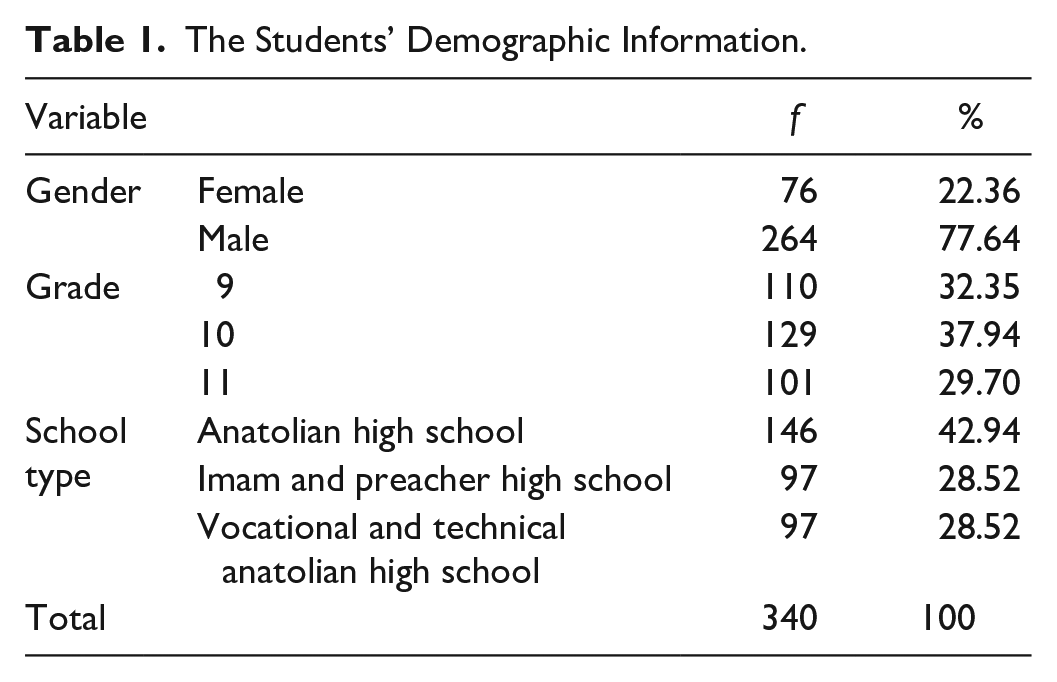
After the necessary legal consent was obtained, data were collected. Three hundred and eighty-seven questionnaires were distributed to the students and 47 of them, including the missing data or wrong information, were not evaluated. The other 340 ones were taken into analysis. The participants’ demographic information is displayed in Table 1. All students who took the surveys were invited for the interviews. Initially, 77 students consented to join the interviews. However, while being invited to conduct the interviews, 60 of them showed up and participated. Of the interviewees, 25 students were from Anatolian high schools, 20 were from Anatolian imam and preacher high schools, and 15 were from vocational and technical Anatolian high schools. The 12th graders were not included in the research because they were supposed to be busy preparing for THEE. Thirty-four females and 26 males took part in the research. Students were in the 9th (n = 19), 10th (n = 19), and 11th (n = 22) grades.
The Students’ Demographic Information.
Data Collection Instruments
Teacher Immediacy Behaviors Scale (TIBS)
In the quantitative part of the research, the Teacher Immediacy Behaviors Scale which was developed by Kolburan-Geçer (2002) was used. The scale consists of one dimension and 44 items. The Likert-point scaling was the following: “never” (1). . .. . . “always” (5). The scores obtained from the scale vary from 44 to 220. Higher scores indicate higher immediacy behaviours. The scale focuses on the affective relationships between students and teachers and includes questions such as “My teacher supports my achievements and praises me” (item no: 6), “My teacher smiles to the classroom while speaking” (item no: 22), “My teacher is tolerant to me” (item no: 36), “My teacher approaches me like a friend” (item no: 30), and “My teacher trusts me and makes me realize this” (item no: 26). To investigate the construct validity of the scale, Kolburan-Geçer (2002) conducted a factor analysis based on the principal component analysis. The load value for each item was above 0.30 and, therefore, the scale was accepted as a single factor scale. The internal consistency coefficient was calculated as 0.94 and the variance ratio was 30.79% (2002). In this research, its Cronbach’s alpha coefficient was .92.
Interview schedule
A semi-structured interview form was used to collect qualitative data. The data collection was conducted via face-to-face interviews with the students in May and June, 2018. Relevant literature (e.g., Creswell, 2008; Merriam, 2009; Patton, 2002; Shenton, 2004; Yin, 2003) supported the interview schedule design process and enhanced the validity and reliability of the interview schedule. Criteria such as participants’ confirmation of the interview transcripts and voluntary participation were taken into account to ensure the validity of the research (Yıldırım & Şimşek, 2018). More specifically, a written consent form was filled by the participant to join the interview while the interview transcripts were emailed to the participants to confirm that they reflect the actual conversation between the participant and the interviewer. Detailed analysis of the collected data and explanation of how to obtain research results are among the significant criteria for the validity of a qualitative study (Yıldırım & Şimşek, 2018). One associate professor and two assistant professors, who are experts in the field of education, were consulted for the validity of the interview form. After the tentative questions were prepared in line with the research scope, they were evaluated by the experts. Next, the final form of the interview schedule with regard to comprehensibility, continuity and content validity was developed. The interview schedule involved seven questions (e.g., “How do you think your relationships with your teachers affect your achievement level?” “How do you think an ideal teacher should behave in a classroom?”) and some prompts (“Why do you think so?”) were added as needed. The interviews were administered in the schools where the participant students were educated. School managers helped in organizing the time and place for the interviews. The mean time for the interviews was 23 minutes.
Data Analysis
Quantitative analysis
The quantitative data were analyzed through the SPSS 22.0 and AMOS software. In the analysis of the data, t-test, ANOVA, correlation and regression analysis techniques were employed. A Structural Equation Model (SEM) was developed to analyze the relationships among gender, school type, GPA and TPSE scores, and teachers’ immediacy behaviors. SEM is an advanced statistical method which is used to identify linear relationships between independent and dependent variables and predict the effects of all variables on each other and test relationships between observed and latent variables (Bayram, 2010; Şimşek, 2007). In the SEM, teachers’ immediacy behaviors, GPA and TPSE were numerical whereas school type and gender were nominal variables. Teachers’ immediacy behaviors were regarded as the latent variable, whereas others were treated as measurement variables. Confirmatory Factor Analysis (CFA) was used to verify how well the questions, which are the latent variable indicators, can represent the model. Considering the factor reliability of the variables, the originally 44-item TIBS was reduced to 10 items with appropriate loadings and error variances. GPA was calculated based on the scores obtained from all courses in the educational years 2015, 2016, and 2017. Students’ TPSE scores were collected via school records.
Qualitative analysis
A content analysis technique was used to analyze qualitative data. Content analysis is defined as a systematic and recurrent technique which summarizes some words of a text with smaller content categories in coding treatment based on particular rules (Büyüköztürk et al., 2018). A total of 60 pages of transcripts were obtained after the interviews. These qualitative data were coded in line with the aims and research questions of the study. Coding is the act of marking data into smaller pieces by focusing on the certain aspects they involve (Creswell, 2008). The associations and similarities between the codes were explored and a main theme involving these codes and the student opinions was created. The main theme included perceptions regarding teachers’ attitudes and behaviors affecting student achievement. Under the main theme, two subthemes were created which included teachers’ immediacy behaviors affecting student achievement (1) positively and (2) negatively. During the qualitative data analysis, conclusions were verified by returning to the original transcripts and through ongoing discussions and reflection between the researcher and two other colleagues working in the education sector. The Kappa values were obtained after a rater reliability analysis. All Kappa values for the teachers’ immediacy behaviors affecting student achievement positively (.842), negatively (.876), and overall (.861) were confirmed to be perfect (Landis & Koch, 1977).
The perceptions derived from the themes were presented in the findings section using a frequency technique. The direct quotations were cited from their perceptions and the sentences were determined for this purpose. The codes represent the perceptions. While presenting these within the findings, the first letter refers to the student, while the second letter refers to gender and the students’ order in terms of number. To illustrate, in the “FS9” refers to the ninth female student.
Findings
In this section, findings concerning the teacher attitudes and behaviors affecting the academic achievement in the secondary education according to the students’ perceptions are presented. The perceptions of the students who were involved in the research were analyzed and presented in Table 2.
ANOVA Test Results Concerning the Students’ Perceptions for the Teacher Immediacy Behaviors Scale According to School Type.

Quantitative Findings
According to the teacher immediacy behavior scale, the mean scores of male students (
When students’ perceptions of teacher immediacy behavior with regard to school type are examined, the highest mean belongs to Vocational and Technical High School students (
ANOVA test results concerning the students’ perceptions for the teacher immediacy behaviors scale according to class level showed that the highest mean belongs to 11th class students (
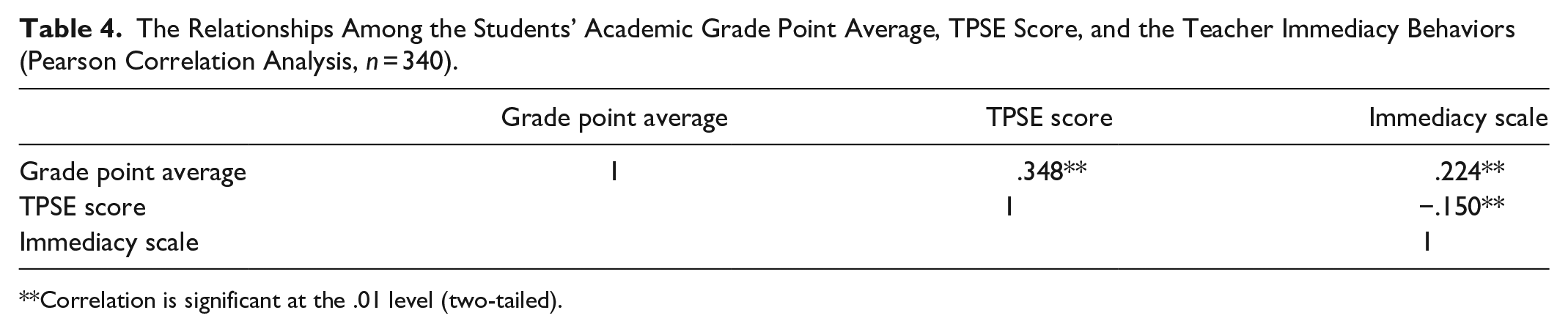
According to the data in Table 3, the mean is 3.39 for the teacher immediacy behavior scale, 66.38 for the GPA, and 315.96 for TPSE scores. Pearson correlation analysis results for the relationships among the students’ GPA levels, TPSE scores, and the teacher immediacy behaviors are displayed in Table 4.
Teacher Immediacy Behavior Scale, Students’ Academic Grade Point Average, and Students’ TPSE Scores.

The Relationships Among the Students’ Academic Grade Point Average, TPSE Score, and the Teacher Immediacy Behaviors (Pearson Correlation Analysis, n = 340).
Correlation is significant at the .01 level (two-tailed).
In Table 4, there is a moderate, positive, and significant relationship between students’ GPA levels and TPSE scores (r = .348; p < .01). According to this result, the higher students’ GPA level is, the higher their TPSE scores are. There is a low, positive, and significant relationship between their GPA levels and teachers’ immediacy behaviors (r = .224; p < .01). Based on this finding, it can be stated that the higher students’ GPA levels are, the higher the scores in the teacher immediacy behavior scale are. Also, there is a low, negative, and significant relationship between their TPSE scores and teachers’ immediacy behaviors scores (r = −.150; p < .01).
Structural equation model results
In this part of the study, the structural equation model findings accounting for the relationships among gender, school, TPSE score, GPA, and teachers’ immediacy behaviors are indicated. A teacher’s immediacy behavior is a latent variable in the model and it is determined with 10 items. Findings indicated that the model dealing with the relationship between GPA and TPSE score and the relationships between these variables and the teacher immediacy behaviors was statistically significant. With regard to the immediacy scale, there is not a significant difference between males (M = 3.34, SD = .58) and females (M = 3.40, SD = .56). When the variables (gender and school type) in the SEM are considered as a whole, the differences among these variables can be calculated through t-test and ANOVA. With regard to the immediacy scale, there are significant differences between the school type scores (F = 14.967, p < .05). The differences are as follows: Vocational and Technical Anatolian High School > Anatolian Imam and Preacher High School > Anatolian High School. The fit index values for the model are X2 = 116.315 (degree of freedom = 71); X2/sd = 1.638; GFI = .951; AGFI = .928; NFI = .913; IFI = .964; TLI = .953; CFI = .964; RMSEA = .043. It is seen that the model is acceptable (Hair et al., 2009).
As seen in Figure 1, students’ GPA affects the teacher immediacy behavior (β = .30). The effect of the teacher immediacy behavior with regard to gender does not differ significantly according to males’ (M = 3.34, SD = 0.58) and females’ (M = 3.40, SD = 0.56) scores. School type influences the teacher immediacy behavior (β = .25). Vocational and Technical Anatolian high school types affected the teacher immediacy behavior. According to the model, the least affected school type is Anatolian High School. TPSE scores influence teacher immediacy behaviors negatively (β = −.11). Also, there is a significant relationship between students’ GPA levels and their TPSE scores (r = .35).
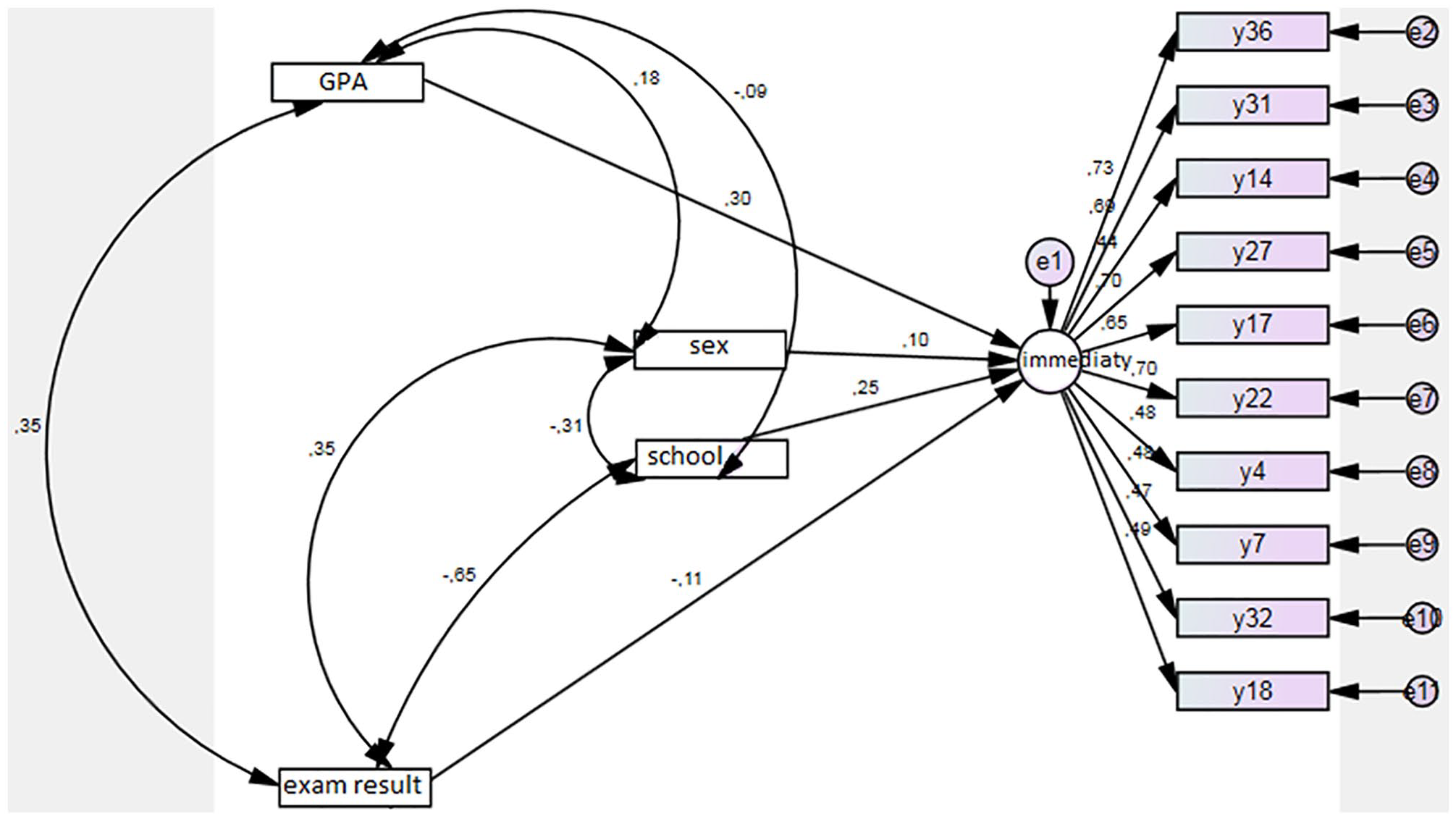
SEM and path coefficients.
Qualitative Findings
In the qualitative part of this study, teachers’ attitudes and behaviors affecting students’ academic achievement are obtained via students’ perceptions. Codes, themes, and frequencies illustrating the findings are presented in Table 5.
The Students’ Perceptions for the Attitudes and Behaviors Affecting Academic Achievement.

In Table 5, teachers’ attitudes and behaviors affecting students’ academic achievement according to the students’ perceptions are presented. The perceptions were gathered under two themes involving “positive perceptions of teacher immediacy” and “negative perceptions of teacher immediacy.” The students expressed a total of 115 opinions.
Positive perceptions of teacher immediacy
Some students indicated that teachers’ attitudes and behaviors impact their academic achievement positively. For instance, FS8 stated that “I think our teachers’ attitudes and behaviors provide benefits to our learning because we mostly see and spend time with them in the process of preparing for exams. Every word and behavior has an effect on us.” Another student (MS21) reported the importance of a teacher who creates a cheerful and enjoyable classroom environment by saying, “When our teacher smiles, joins our games and spends time for setting intimate relationships with us, we feel that the classroom is for having a good experience. This motivates us to love the school and study harder.”
Negative perceptions of teacher immediacy
There were negative student perceptions regarding the teachers’ behaviors. For example, FS31 attracted attention to a negative behavior and its negative outcomes by saying “Discrimination and favoring among students demoralize them. . .they feel bad and lose their interest.” A similar perception was cited by FS34 who said “The way a teacher approaches a student increases or decreases their tendencies for their lessons.” FM40 emphasized the hierarchy set between students by saying “there is a group of teachers who score every word or behavior. A lazy student does not have any value for these teachers. Our teachers say that everything is mathematics.” FS33 stressed that teachers who do not care about their students and lessons are among the reasons for students’ failures, by saying “One of the reasons is that some teachers do not take their students seriously. Another reason is that when students make a minor mistake, they are exposed to a severe criticism.” FM9 exemplified the discrimination among students by saying, “Most teachers are more interested in students who sit at front seats, are more successful and interested in their lessons. However, teachers should show equal care for all students regardless of success and personality traits.”
Discussion
In this research, the associations between teachers’ immediacy behaviors, students’ academic achievement, and demographic variables were examined. Considering the first research question, there was not a significant difference among gender, class level, and teacher immediacy behavior while there was a significant difference between school type and teacher immediacy behaviors.
In this study, a significant difference was not found between genders in terms of the teacher immediacy behaviors. However, findings show that male students’ mean scores were higher than female students’ scores. Looking at the literature, there are not consistent results in terms of gender differences when it comes to immediacy behaviors. First, findings of the current study is in line with a previous study (Kahraman, 2014) which investigated students’ perceptions of their teachers’ motivating behaviors and did not find significant differences between genders. However, there are studies reporting significantly different perceptions between genders, too. To illustrate, Kolburan-Geçer (2002) found that female students found their teachers’ behaviors more intimate compared to male students. Also, in a study by Uluçay and Güven (2017), female students perceived their mathematics teachers’ behaviors more positively. Finally, Durmaz (2007) reported that female students perceived their teachers’ communications skills more positively than male students.
In this study, there was a significant difference in the students’ perceptions for the teacher immediacy behaviors scale according to school type. This difference was located between Vocational and Technical Anatolian high school and Anatolian high school students. In other words, a significant difference existed in favor of the former high school students. This findings is in line with similar research which indicated significant differences between students’ perceptions concerning teacher-student relationships when it comes to school type (Den Brok et al., 2004). Although the purpose of this school is to equip students with the skills necessary for occupation and professions and a significant part of the courses in these schools is based on technical knowledge and skills, still more communication and interaction take place between teachers and students. One reason for this can be the close communication between teachers and students in applied courses in technical schools and the heavy focus on academic units in Anatolian high schools. Indeed, a number of studies (e.g., Comstock et al., 1995; Gorham, 1988) indicated that intimate communication between teachers and students improves learning significantly, especially if students are active learners in the classrooms.
A significant difference did not exist in the students’ perceptions for the teacher immediacy behaviors scale according to class level. Ninth grade students’ mean scores were expected to be different. As these students came from different schools, they were expected to compare the teacher immediacy behaviors with their teachers at their former schools. However, this differentiated result indicates that the teachers approached their students in all class levels with no significant differences in immediacy. The students involved in this research similarly evaluated the teacher immediacy behaviors regardless of class levels.
In this study, the teacher immediacy behaviors scale mean score was 3.39, students’ GPA mean was 66.38 and students’ TPSE score mean was 315.96. According to this finding, there was a moderate, positive, and significant relationship between students’ GPA levels and TPSE scores. Also, there was a similarity between GPA and TPSE scores. TPSE scores are determined as a result of the central placement examination. The central examinations are prepared through multiple-choice question techniques and just serve students to acquire cognitive objectives. Therefore, this result is not surprising in the sense that there was a significant relationship between GPA and TPSE scores. It appears that there was a low, positive and significant relationship between students’ GPA and the teacher immediacy behavior scale. According to this result, an increase in students’ GPA levels means an increase in the scale, too. It is seen that there was a low, negative and significant relationship between the students’ TPSE scores and the scale scores.
The scores obtained on the TPSE are expected to be highly associated with GPA. However, the finding in this study indicated a low significant correlation between the two variables. One reason for this situation could be the differences in the content of the curricula implemented in high schools and the content of the TPSE. The grade point average at high school consists of measurement and evaluation outcomes of 13 courses including academic (e.g., mathematics, language) as well as nonacademic subjects (e.g., visual arts, physical education, and music). However, the TPSE consists of questions from six courses including Turkish language and literature, Mathematics, Science, History, Foreign Language, and Religious Sciences. What is more, the measurement and evaluation procedures may differ between school subjects which involve a variety of techniques and national examinations such as the TPSE which involve totally multiple choice examinations (MoNE, 2014). All in all, the aforementioned factors may lead to differences between academic achievement at school and TPSE scores (MoNE, 2018).
The negative relationship between TPSE and teachers’ immediacy behaviors is noteworthy. In Turkey, there is a competitive, individual and examination and standards-based examination system. This system requires the teachers to focus on students’ outcomes rather than their educational experiences, psychosocial needs, and preferences, which ultimately removes the focus from the student and places it on the system outcomes (Sakız, 2016). In this study, similarly, the higher TPSE scores may show that students are educated in examination and performance based classrooms whereby teachers’ social and emotional investment on the students remains less effective.
It is not surprising to see that GPA and TPSE scores were positively correlated because a student with a high level of achievement in the overall school curriculum is likely to perform well in the TPSE. However, an interesting outcome for the study was the positive correlation between GPA and immediacy in a scenario where TPSE and immediacy were negatively correlated. As shown above, the Turkish education system places the focus on the central examinations including TPSE, whereas school subjects remain secondary. School subjects involve modules that focus on students’ social, emotional, physical needs (e.g., physical education, arts, music, guidance, etc.) and therefore, teachers perform more immediacy behaviors during such procedures, indicating the positive correlation between GPA and immediacy scores. All in all, the subjects that belong to the school curriculum and focus on students’ affective needs explain the fact that GPA and TPSE may possess variations in their relationships with immediacy behaviors. Considering this, the importance that teachers can give to the quality of the relationships with their students and moving the tendency of these relationships toward an affective scope should be noted. As seen, relationships based on solely academic, technical, and competitive manner may not help students’ overall achievements.
In the SEM, the relationships among gender, school type, class level, GPA, TPSE, scores and teachers’ immediacy behaviors were examined. A finding derived from the research is that the model is statistically significant. Overall, the significance level of the relationships may not be particularly strong. Several factors may have accounted for this outcome such as the behavioral nature of the variables, which is often difficult to attribute strong causality and correlation (Cohen, 1988), the previously untested nature of the model and the need for a larger sample to test this model. Therefore, one should be cautious while drawing strongly directional conclusions from the relationships representing low but significant strength. However, the statistically significance of the model and the acceptable model values regarding reliability and validity can still be considered acceptable.
According to the model, the school types and students’ GPA levels were associated with teacher immediacy. A significant relationship was not identified between gender and the teacher immediacy behaviors. While TPSE scores negatively influence teacher immediacy, a significant relationship was found between GPA and TPSE scores. Also, a strong relationship between immediacy and perceived mathematical cognitive learning was identified in research conducted by McCluskey et al. (2017) and Mullane (2014). Another research found that 50% genetic, 30% teacher related factors, and 20% other factors account for students’ achievement. According to the research, of the factors having impact on students’ achievement, the most important factor which can be altered was the teacher. The effect size between positive teacher-student relation and academic achievement was .72 (Hattie, 2009).
The importance of teacher immediacy behavior to become an effective teacher was revealed in the research studying on the preservice teachers (Özmen, 2011). It was identified that students spent more effort for their academic achievement when they thought that they were supported by their teachers affectively (Wentzel, 1994). Another research found that there was a moderate and positive relationship between students’ general motivation level and their mathematics teachers’ immediacy behaviors (Uluçay & Güven, 2017). Similar studies also revealed that there was a positive and significant relationship between teacher immediacy and student learning (Baker, 2004; Çelik et al., 2018; Singletary, 2013; Witt et al., 2004). As teachers’ supportive behaviors increase students’ achievement (Hoyer, 2011), they are required to be careful and consistent to show positive and encouraging gestures and statements (Velez & Cano, 2008). According to these findings, students’ positive perceptions for their teachers’ immediacy behaviors may be related to their academic achievement. However, it is crucial that these behaviors are perceived positively by the students because the actual performance of a behavior and its perception by others may sometimes differ. Therefore, it is of utmost importance for the teachers to reflect such behavior explicitly within the overall scope of the schooling process; in instruction, social communication and guidance.
In the qualitative part of the present research, students’ perceptions of the teacher immediacy, attitudes and behaviors with regard to academic achievement supported the quantitative data. According to the perceptions, the teachers’ positive attitudes and behaviors positively influenced the students’ academic achievement and their negative attitudes and behaviors negatively affect the students’ achievement. Being cheerful, keeping right communication, courtesy, teachers’ using their gestures and facial expressions positively were some of the examples indicating teachers’ positive attitudes and behaviors. These findings highlight the importance and role of performing specific explicit and implicit immediacy behaviors in the achievement of the students.
Regardless of the direction of influence—positive or negative—teachers’ immediacy behaviors affect students. Students who perceive that their teachers are intimate to them and support them appropriately, may experience less stress and anxiety, leading to higher levels of motivation, perseverance, hard work and, therefore, achievement (Chesebro & McCroskey, 2000). Teachers’ supportive immediacy behaviors may influence social-emotional learning positively (Mullane, 2014), and contribute to motivation and cognition (Frymier, 1993). As a result, students react to such behaviors positively. Indeed, the literature includes several studies demonstrating that teacher immediacy and supportive behaviors increase students’ achievement (Çelik et al., 2018; Hoyer 2011; Kolburan-Geçer, 2002). Similarly, a meta-analysis showed that teacher immediacy is significantly related with positive attitudes concerning student learning (Witt et al., 2004).
Limitations, Recommendations, and Conclusion
In the research, the associations between teachers’ immediacy behaviors, students’ academic achievement, and demographic variables were explored. A mixed methods research design was used in this research. When the quantitative and qualitative findings are holistically evaluated, it is understood that teacher immediacy is related to academic achievement. According to this finding, one can argue that enabling teachers to perform positive immediacy behaviors may support students’ academic achievement. Other factors related to academic achievement such as curriculum, examination systems, social and economic conditions can also be examined by further research. Awareness studies can be conducted to enable teachers to have positive attitudes and behaviors toward students. Another result obtained from the research is that academic achievement differences occur among the high school types. Studies could be implemented to explore the reasons of these differences with regard to school types.
It should be kept in mind that the data were collected from only high school students. The data collection based on the students’ perceptions could bring about subjectivity. However, the researcher/s indicated that the data would be used for scientific purposes in this study and the participants’ personal information would not be revealed. It is expected that this information will not completely remove the limitation though it will keep the limitation at a minimum level. Another limitation of the study is that the data were collected in only one province. However, the researcher reached many high schools and high school types to decrease the effect of this limitation. Finally, the SEM model was significant while the relationships among variables were not particularly strong. Therefore, conclusions need to be drawn carefully considering this limitation.
In conclusion, it is seen that teacher immediacy, attitudes and behaviors are associated with students’ academic achievement. Based on the findings derived from the research, several recommendations may be made for teachers. Teachers’ may assume the responsibilities of setting intimate and appropriate communication with students, performing supportive behaviors, assigning manageable and appropriate responsibilities to students, encouraging students to research, and motivating them to actively participate in lessons.
Footnotes
Declaration of Conflicting Interests
The author declared no potential conflicts of interest with respect to the research, authorship, and/or publication of this article.
Funding
The author received no financial support for the research, authorship, and/or publication of this article.
