




Abstract
Just as organizational citizenship behavior reaches conceptual saturation with numerous studies, theoretical studies are needed in conceptualizing Project Citizenship Behavior (PCB). Therefore, in the project-based business world, the number of which is increasing day by day, this concept will be better filled with various studies that establish theoretical connections with the PCB concept. The aim of the research is to make a theoretical contribution to the possible role of gender in the relationship between PCB and Network Capital (NC). In this direction, we first started by examining PCB on the basis of fundamental gender differences. Secondly, with a dialectical approach, the multiplicity of theoretical connections (i.e., increasing effect of social capital on citizenship behaviors) between PCB and interpersonal NC also raises the question of whether employees exhibit PCB for NC development. It is suggested that the more an individual exhibits PCB the more likely he develops his network. Thus, we hypothesized; “displaying PCB can be a precursor for network capital of employees according to their gender.” After the extensive literature review we can theoretically say that exhibiting PCB may affect individuals NC creation capabilities. Although the relationship between PCB and gender is limited to a few studies in the literature, the lack of a study that conceptually examines the effect of PCB on individual NC is an element that increases the importance of the research. It is expected that this conceptual approach would contribute to the organizational behavior literature in understanding of the relationships between these concepts.
Introduction
The term gender (masculine, feminine) was built on perception and socializing from the very first organized human communities to the present day. The observed tendencies of certain logic systems underlying the behaviors of men and women over time has resulted in the terms masculine and feminine (Buckle & Thomas, 2003). These masculine or feminine forms of action may shape the basis of social activity in the entire organizational setting, including Project Citizenship Behavior (PCB) which is conceptualized by a qualitative study (Braun et al., 2012). PCB probably comes out in different levels considering the chemistry of gender (male/female). In this context, a wide differentiation between biological sex (woman/man) and socialized perspective (feminine/masculine) is asserted (Bird & Brush, 2002) in relevant literature and these differences will theoretically be examined on the basis of PCB and NC in this research.
“Project work is seen as an ongoing construction of patterns of femininity and masculinity in society” (Lindgren & Packendorff, 2006, p. 841) and these permanent gender stereotypes also influence the assignment and determination of social roles (Kim et al., 2016; Park et al., 2017). It has been revealed by various studies that the socialization processes of men and women are different (Mohindra & Azhar, 2012) and social role theory provide a conceptual basis for explaining gender differences in social relationships. According to this theory, different social expectations for men and women create social norms in social interactions that emphasize cooperation, friendship, and intimacy for women versus control and competition for men (Abukhait et al., 2019) and ultimately this leads to gender differences in decision-making behavior (Horak, 2016) as well as other behavioral aspects of social life.
Some theories form a basis for Project Citizenship Behavior (PCB; Braun et al., 2012) for example, Organizational Citizenship Behavior (OCB; Levinson, 1963; Rousseau, 1990), and Network Citizenship Behavior (NCB; Provan et al., 2017). These citizenship behaviors are widely observed and empirically validated in work settings. From a theoretical point of view, PCB is based on the concept of OCB (Braun et al., 2012). Beside, Network Capital (NC) is a concept derived from social capital and social capital is the value of the form and content of a network (Burt, 1997). Social capital is a set of linked networks and also include trust and norms that facilitate cooperation for mutual benefits (Putnam, 1993). The organizational form of social capital center on interpersonal coordination thus, interpersonal networks can be placed at the foundation of social capital (Smith, 2006). Specifically, citizenship behaviors contribute to social capital creation (Bolino et al., 2002). On the other side, NC conveys resources, confirms identity, and influences behavior (Wellman & Frank, 2001) but the exact definition of NC is still not clear. As NC has the capability to influence the behavior, it is expected that there may be a relationship with PCB. Considering that most variables related in social sciences, it can be stated that this inference has a rational base.
“Ethical relativism” is the problem of measuring human relations with the same scale (Fiske, 1990) and this reality makes it difficult to reach valid findings from organizations (e.g., projects, temporary, and virtual) that are seen as a repository for empirical research. Thus, a theoretical study of gender on PCB and interpersonal NC may provide a perspective and insight for interested researchers. In line with this theoretical background, we form our hypotheses from the literature on gender and PCB:
PCBs of individuals depends on the quality of their relationship within the networked parties. The question that should be asked at this point is, does the network capital of individuals have a theoretical connection with gender and exhibit PCB and it’s dimensions?
It is surprising that gender studies have not shown much interest in temporary organizations (Sieben et al., 2016) in which PCB behaviors will be exhibited. In this direction, the research seeks to address fundamental gender differentiations in the formation of NC, and also, the question of whether PCB display has a role in this network capital creation beside gender. As a result of this question, which was not asked, this literature review was necessary. The problem that NC will expand as PCB behavior increases and that it will differentiate on the basis of gender has been addressed and a conceptual/literature review study has been presented. The progress of the research is as follows: First the conceptual framework section in which the purpose of the study summarized. Secondly the methodology part that sets out the research design. Third, we employed a semi-systematic literature review to compare our readings sorted and connected the gender characteristics with PCB and NC, and at the end of the study we present our findings and highlighted the limitations of this research.
Methodology
Based on the assumption that the literature on the concept of PCB, which is rooted in OCB studies, and the concept of NC, which is rooted in social capital, will be sufficient to establish a theoretical connection and answer the research hypothesis. Therefore, a literature review method was applied in this research in order to make theoretical connections between PCB and NC on the foundations of gender literature. The study aims to confirm its hypothesis with the findings in the relevant literature. Therewith, the nature of the research is confirmatory. The theoretical model of the research which can be supported by empirical studies later on is shown in Figure 1.
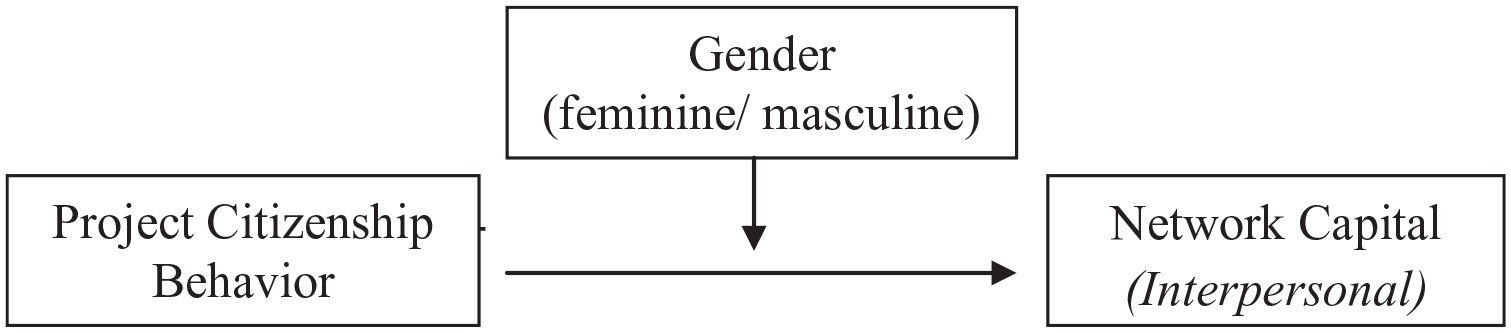
Theoretical research model.
In line with the model we mentioned above, our research hypothesis are:
H1: There is a positive and significant relationship between PCB and NC.
H2: Displaying PCB can be a precursor for network capital of employees according to their gender.
The theoretical construct of this study based on gender (masculine, feminine), Project Citizenship Behavior (PCB), and Network Capital (NC) variables. PCB and NC are not only wide-ranging phenomena that include many sub-dimensions, but they are also under the influence of macro variables (e.g., gender, culture, and organizational structure). Therefore, in this study, the literature review method was chosen to clarify the theoretical connections and create a solid basis for the research model. In addition, semi-systematic literature review methodology interconnected research findings to support the research arguments. Besides, according to exemplary features of these techniques are research papers and can also help provide an overview of areas where research is interdisciplinary (Hannah, 2019). The variables addressed in this research problem also include variables that different disciplines work with (e.g., PCB and gender). Also, according to Hannah (2019) “a number of methods can be used to analyze and synthesize findings from a semi-systematic review. These methods often have similarities to approaches used in qualitative research in general” (p. 334). Thus, the PCB notion which also has been created by a qualitative study is another reason for using this technique. Beyond the effort to support the research hypothesis, this research has also given a theoretical depth to the notions of PCB and individual NC on the basis of gender via established theoretical connections.
Conceptual Framework
Kark and Waismel-Manor (2005) argue that the concept of citizenship behavior has a highly gendered nature and furthermore, although the concept “citizenship” appears at first glance as a gender-neutral concept. Pateman (1988) in a discussion of women and political theory, points out the gendered nature of the concept “citizenship” (p. 895). Sieben et al. (2016) also asserted that, PCBs strongly varies by gender and research to date has rarely taken gender issues into account in the relationship between citizenship behaviors and outcomes such as NC. Gendered dispositions may also act as capital (McAdam et al., 2019) and gender affects social capital accumulation (Palgi & Moore, 2004). Exchange of emotional aid, tangible support, companionship, and information between network members is frequently underlined in the network research. Resource possession and availability, reciprocity, similarity (facilitate each other’s delivery of resources), and social control (facilitating or restricting the provision of resources) are some dimensions of NC (Wellman & Frank, 2001) and these dimensions are in close interaction with gender by nature. Consistent with this theoretical lens, exhibiting PCB may foster reciprocity, and depending on this reciprocity, networks of individuals can also develop. In addition, social capital may promote citizenship behaviors (e.g., Bolino et al., 2002) and it is essential for the success of both genders (Timberlake, 2005). Also considering the differences in “work language” of gender and “the (self-) perceptions of project members differ according to gender stereotypes” (Sieben et al., 2016, p. 55) it can be thought that masculine and feminine behaviors exhibited in the project operation may affect NC.
“Network factors are important in understanding gender differentials” (Whittington, 2018, p. 513). The concepts that underpin to PCB dimensions (e.g., help, reciprocal, and cooperative) are closely related and interacted to the concepts that form the network capital (e.g., mutual understanding, commitment, trust, and knowledge sharing). For example, Kang and Lee (2017) has found that information from external sources will pave the way for innovative behaviors by providing employees with new insights. External information can be obtained from the individual’s network capital and on the other side innovative behavior can be seen as an antecedent variable of proactive behavior dimension of PCB due to its ability to require innovative efforts. In addition, Groysberg (2010) argues that women use their external ties to evaluate future projects because they are much more selective, prudent, and strategic than men. Men and women involved in the project will perceive and evaluate PCB differently due to gender-based expectations and perceptions that coordinate gender relations in the work environment (Sieben et al., 2016). In conclusion, we may say that gender-based differentiation such as social interaction differences, collaboration approaches, and different expectations may differ individuals PCBs. According to this assumption, “does in PCB display effects NC” is the key question this literature review study seeks to answer.
Evolution of the Theory of Project Citizenship Behavior
OCB research investigates noncontractual behaviors such as the social psychology of groups (Thibaut & Harold, 1959), psychological contract (Levinson, 1963; Rousseau, 1990), extrarole behavior (Van Dyne et al., 1994), and OCB (Bateman & Organ, 1983). OCB aims to reveal individual behavior that contributes to organizational effectiveness. However, OCB cannot be easily imported into the project environment due to time differences, task, teams, and operations characteristics (Braun et al., 2012; Shafi et al., 2021).
Within the framework of the classification made by Organ (1988), OCB consists of five dimensions: conscientiousness, courtesy, civic virtue, altruism, and sportsmanship. Conscientiousness is to show some behaviors above the minimum expected behaviors (Barksdale & Werner, 2001; Organ, 1988). Courtesy dimension is the dimension that best represents OCB notion (Bitmis et al., 2014). Courtesy, tendency to act proactively in the point of possible organizational problems and to show behaviors to enlighten employees in matters that will affect them (Organ, 1988); civic virtue is that employees feel responsible and participatory toward the organization (Kidder, 2002; Thompson & Werner, 1997); altruism is employees’ extension of their support to other colleagues and team members (Podsakoff et al., 2000, p. 639); sportsmanship, on the other hand, is to positively meet the workload and the pressures it brings (Organ & Konovsky, 1989; Podsakoff et al., 2000). Over time, studies on the OCB have increased in depth to various fields, including network citizenship behavior (Braun et al., 2012) and inter-organizational citizenship behavior (Skinner et al., 2009). Table 1 below shows the concepts and it’s sub-dimensions related to the PCB.
Concepts Related to PCB.

OCB not only meets the quality, time, and budgetary requirements of project management, but also improves the quality of relationships among project employees (Braun et al., 2013). OCB is not stable (Dalal et al., 2014), but rather a time-bound and unstable, individual process (Bolino et al., 2012), and its contribution to the organization in projects that are the focal point of the temporary organization (Ferreira et al., 2013). It is possible to find dozens of OCB definitions in the literature (Podsakoff et al., 2000) and when we consider it in the context of the project, we can consider PCB as an extension of OCB (Guo et al., 2019), thus, we will consider prominent dimensions of OCB in the context of PCB and gender literature.
Alturizm/Helping behavior in the interorganizational project context; refers to voluntary behavior to assist existing project members who need such help to solve problems (Braun et al., 2013). However, OCB begins at low levels because they do not immediately know how to, or have the opportunity to, engage in OCB (Methot et al., 2017). Therefore, the same can be said for the citizenship behaviors that will be displayed in projects where different specialties come together in limited time span. Gender role theory asserted that, “helping behaviors, which focus on the welfare of others, are stereotypically associated with the female gender role” (Kark & Waismel-Manor, 2005, 898; Kidder, 2002). In addition, differences in collaboration types (i.e., close, trustful) according to gender (Sieben et al., 2016) exists and empirical research shows women are perceived as more altruistic (Seymour & Busherhof, 1991) and “females are more likely to report performing OCB-altruism than males” (Kidder, 2002, p. 632). Additionally, The supportive nature of women due to their gender will likely lead to more OCB involvement (Ng et al., 2016). Social psychologists have also long observed that women display more helping behavior than men (e.g., Eagly & Crowley, 1986; Mesch et al., 2011). In conclusion, meta-analyzes of gender differences in helping behavior (Karau & Williams, 1993) show that masculine and feminine characteristics may have an effect on employees’ showing PCB.
Sportsmanship is “. . .actions that people refrain from doing” (Organ, 1988, p. 11) for example, compensate for work-related inconveniences (Podsakoff et al., 2000). Members of a project are interdependent throughout the project, therefore, they often help each other and work closely. Also, team members can improve project performance by helping (e.g., knowledge sharing) other members who are under time pressure (Guo et al., 2019). A high level of knowledge sharing is also positively associated with social capital (Timberlake, 2005). In conclusion, we can argue that increased social capital with sportsmanship behaviors will also foster PCB. Therefore, we may say sportsmanship behaviors is particularly valuable in projects.
Organizational loyalty “entails promoting the organization to outsiders, protecting and defending it against external threats, and remaining committed to it even under adverse conditions” (Podsakoff et al., 2000, p. 517). Project commitment, on the other hand, is defined as acceptance of project objectives, readiness to spend significant energy on the project, and willingness to remain a part of the project (Hoegl et al., 2004). Compliance and loyalty effort-related behaviors were positively related to project goal achievement (Ferreira et al., 2013). Project deadlines can also increase “a common spirit of comradeship” and a sense of loyalty because sharing the same fate (project outcome) often leads to loyalty (i.e., commitment, strong cohesion, and compliance) behavior. These highly relevant concepts may lead to project loyalty. In addition, women are more likely than men to be loyal to the individual over the company (Melnyk et al., 2009) which can facilitate interpersonal citizenship behavior (ICB).
Organizational compliance is a concept that includes behaviors related to guidelines, rules, and processes (Ferreira et al., 2013). In this context, project compliance is broadening of organizational compliance (Guo et al., 2019). “An employee who religiously obeys all rules and regulations, even when no one is watching, is regarded as an especially ‘good citizen’.” (Podsakoff et al., 2000, p. 524). Therefore, this dimension can especially considered important for PCB because, nowadays many projects run “virtual.” According to Braun et al. (2012) “some objects of compliance are, for instance, communication procedures, information sharing policies, deadlines, and punctuality” (p. 280).
Individual initiative refers to behaviors that involve innovative actions that lead to the improvement of processes, products, and services beyond the minimum expected requirements from employees regarding their duties (Podsakoff et al., 2000). In other words, individual initiative refers to the behaviors that enable the project to achieve its goals (Guo et al., 2019). In this context, it is a fact that innovative approaches are necessary beyond demonstrating PCB in solving the problem of complex projects (Qureshi & Kang, 2015). Thus, uncovering/theorizing the predictors of (or what may foster) employee innovative behaviors remains a related research theme in several areas of social sciences (Abukhait et al., 2019). Organ (1988) states that there are some difficulties in distinguishing between task behavior and citizenship behavior (i.e., taking initiatives). Initiative and assertiveness are related notions. In relation to this discourse, there is strong empirical evidence that men are perceived as more challenging and task-oriented (e.g., Carless, 1998; Eagly et al., 1995). Consequently, it can be said that behaviors such as initiative, compliance, and loyalty exhibited in the organizational environment are mostly related to the male gender role (Kark & Waismel-Manor, 2005; Kidder, 2002).
Civic virtue is the willingness to perform cooperative behaviors. Braun et al. (2013) conceptualized this dimension in the context of the project as “maintaining the relationship” beyond the end of the project. According to Ferreira et al. (2013) “civic virtue/relationship maintenance capture individuals’ inclination to participate in organizational governance processes. People tend to participate in important (inter-) organizational activities, strategic planning, policy debates or behaviors that help maintain relationship even beyond the termination of a project” (p. 3776). In a gender context, men are more likely than women to report displaying OCB-civil virtue behaviors. This indicates that they are more likely to consider expressing their views and being active in organizational life (i.e., civic virtue behaviors) as part of their professional identity. According to these findings, the degree of civic virtue behaviors may differ between genders.
PCB Related Concepts
ICB begins to occur when the employee exhibits interpersonal citizenship behavior toward co-workers. Employees can demonstrate Interpersonal Citizenship Behavior (ICB) not only to their close colleagues, but also to other colleagues (Xiao et al., 2020) or project peers with whom they share the work environment. In addition to increasing the positive impact of the employee (Koopman et al., 2016), ICB also facilitates social cohesion, enabling the individual to establish mutual bonds with his or her colleagues (Halbesleben & Wheeler, 2015) which can eventually expands individual NC. Teammates’ perceptions of ICB are important for effective teamwork (Lam et al., 2021) which is also a fundamental element for project success.
OCB studies have considered the importance of networks of relationships before, in particular with reference to ICB (Provan et al., 2017). Individual relations within the social system may include asymmetrical relations without considering the reciprocity principle (Carley & Krackhardt, 1991). In other words, no need to impress the dependent other so, the relationships demonstrating unbalanced reciprocation (e.g., program director of a company A vs. technican of a company B) between them. Considering this fact, ICB can effect in a roundabout way the social interorganizational functioning. In addition, social dependency was negatively associated with ICB performance, which predicted a negative relationship between social dependency positions and ICB acquisition (Bowler & Brass, 2006). As a result, it can be thought that the variables of hierarchy and social dependence, as well as gender, will have some inevitable effects on the relationship between PCB and NC.
Several studies have shown that women are less trusting and their trust levels are more context sensitive according to men (Croson & Gneeze, 2009). Beside, highly developed feminine behaviors tend to enhance “sensitivity in emotional contexts”(Eagly & Johnson, 1990; Fletcher, 1998; Jordan,1997). Thus, this emotional contexts can affect their ICB especially in project atmospheres that are volatile and under time pressure. Interpersonal citizenship behaviors exhibited in the organizational environment can also provide psychological and behavioral support such as trust and knowledge sharing (Xiao et al., 2020). As a result, individual-oriented citizenship may provide more individual benefits than employees targeting organization-oriented citizenship behaviors (Rubin et al., 2013).
NCB is an extra-role behavior exhibited by employees for creating positive psychological environment in multi-organizational network and NCBs can be targeted at individuals outside of the focal organization, but still within the focal network (Provan et al., 2017). Networks of employees involved in project organizations are also developing as social infrastructures (Manning, 2010). Besides, networks generate commitment and loyalty between employees exchange knowledge and contacts, and back longevity in companies (Manning, 2010; Timberlake, 2005). Thus, these unique features of networks are important predictors of possible PCB demonstration, such as “loyalty” and “compliance.” Besides, the inter-organizational collaboration that offers distinctive resources (Provan et al., 2017) “the nature of network capital affects the quality, quantity, novelty, and availability of resources” (Wellman & Frank, 2001, p. 1) which are also considered important antecedent variables for project workers to facilitate their PCBs.
It is difficult to assess the situational context of citizenship behavior demonstrated during the operation of projects (Sydow et al., 2004). The concept of social network states that individual behaviors are not shaped only by personal tendencies or attitudes. Instead, the nature of the networks of relationships that exist between individuals guide their attitudes and behaviors (Scott, 2000). Thus, decisions and actions will have an impact on other network participants (Provan et al., 2017). Maintaining relationships and loyalty among project members helps to keep relationships healthy for a longer period of time and to reactivate them when new projects start (Braun et al., 2012). Moreover, “PCB measures such as project-specific helping behavior, project loyalty and project compliance directly relate to the temporary organization such as projects” (Shafi et al., 2021, p. 29). According to Henderson (2013), networking strategies and creating opportunities in the business environment provide more career satisfaction for women compared to men. If we look at this finding from the perspective of the project workers, it can be stated that opportunity creation and NC expansion also require PCB display. In conclusion, NCB is the good quality of relationships that take place within projects (Provan et al., 2017), and the maintenance of commitment and good relationships between project members could foster possible future NCB behaviors.
Revision the Dimensions of Project Citizenship Behavior Based on Gender
PCB helps perform tasks and solve problems not covered in contract regulations (Braun et al., 2012). Beside, various factors have been put forward that make projects work better or increase their potential factors such as support, tools, and apps can be applied more generally (Jitpaiboon et al., 2019). However, factors such as spending more money than anticipated, poor performance, going out of scope, timeout, and inability to reach the final goals continue to exist as important problems related to project performance (Project Management Institute, 2020). In order to achieving goals in complex project environment project managers need to be more communicatory (Ekrot et al., 2016; Rezvani et al., 2016). Communication between manager and employee can also increase the quality of relationships and affect motivation and performance (Chromjaková, 2016; Fiľa et al., 2015), and this relationship may eventually leads or accelerate PCB among employees. It is also useful to exhibit PCBs for the harmony of groups in projects (Braun et al., 2013). Thus, it can be said that the concept of cohesiveness created by communication in project peers is a precondition for a quality relationship in project context.
It is argued that temporary organizational structures such as projects have less gender-neutral characteristics compared to permanent organizations (Sieben et al., 2016). However, the study of gender-based motivational differences is based on the idea that there are fundamental differences between men and women, namely the existence of gender stereotypes at their core (Hitka et al., 2018). As an example of these fundamental differences, it can be shown that “extrinsic motivation is higher in men and intrinsic motivation is higher in women” (Pons et al., 2016, p. 119). In this context, expressive ties which women need to access in workplace may enhance their intrinsic motivation to exhibit more PCB. While it is theoretically possible to expect an employee with a low motivation level to exhibit PCBs, in practice it is highly unlikely. Therefore, fundamental motivational differences on the basis of gender are another element that leads us to our research hypothesis. Ultimately, project managers need to understand the inherent differences between masculine and feminine traits and, in this way, evaluate the strengths of both approaches (Buckle & Thomas, 2003) in order to maintain a positive psychosocial network environment.
The theoretical link between PCB and gender is underdeveloped and “PCB is a comprehensive construct, with several dimensions consisting of several specific behaviors” (Guo et al., 2019, p. 4). Braun et al. (2012) reconceptualized OCB as PCB on the basis of project unique characteristics, that is, temporariness, team, task, and context-embeddedness. PCB is a latent multidimensional construct which consists of four different “related behaviors which are prevalent within projects; project-specific helping behavior, project loyalty, project compliance, and project-specific proactive behavior)” (Braun et al., 2012, p. 277). These dimensions are gathered from German chapter of the International Project Management Association (IPMA) the qualitative study of Braun et al. (2012). They also spread the study across a wide range of industries to ensure the generalizability of their findings. Temporary organizations and projects in particular rely on the separate collaborative behavior of individual PCBs. For example, they contribute to the smooth running of the business by voluntarily performing complex or non-repetitive tasks (Sieben et al., 2016) that are outside the scope of an employment contract. These aformentioned behaviors are illustrated in Table 2 and discussed on the basis of gender below.
Abstracted Structure of PCB.

Source. Adapted from Braun et al. (2012, 2013).
This qualitative study by Braun et al. (2012) paid attention to two main issues: first, interpreted the data according to the context of the interview and second, to ensure reliability, the entire coding process was carried out by two encoders.
PCB behaviors depend on temporary organization. In this research, we also consider projects as “temporary” organizations. The dimensions of PCB above are normative expectations about behaviors of workers to be competent in specific and time-limited projects. Today’s project environments offer the opportunity to analyze the importance and nature of gender relations. In this context, several studies showed differences “in variables related with self-esteem, proactive behaviors, initiative, motivation and leadership among men and women” (Pons et al., 2016, p. 120). Thus, the communal nature of women and the agentic nature of men lead us to believe that display of PCB may differ according to gender. PCB is discussed below in the context of gender and NC.
Project-specific helping behavior is vital in temporary organizations (Braun et al., 2013), and “has positive effects on project quality, project time, and relationship sustainability” (Guo et al., 2019, p. 13). This dimesion includes assisting other employees from a different organization but working on the same project (Shafi et al., 2021). Research on the phenomenon of gender distinguishes between helping behavior categories (Kidder, 2002). If projects requirements influences on collaborative relations we might expect to see collaborative profiles between men and women (Whittington, 2018). However, gender inequalities continue to this day in project-based labor markets (Luther, 2015). Gender-focused studies on this issue underline that men predominantly carry out and manage project-based Works (e.g., Henderson et al., 2013; Ojiako et al., 2014). In addition, the culture of project-based industries is already inherently “masculine” oriented. Gale and Cartwright (1995b) and gender bias reducing women potential contribution for networks (McAdam et al., 2019) whereas women care about working relationships and makes concessions to maintain good relations (Hitka et al., 2018).
Projects often have less tolerance for non-compliance with time constraints or human error than in-line organizations (Braun et al., 2012). Time, and especially the smooth completion of projects (Lundin & Söderholm, 1995; Müller-Seitz & Sydow, 2011), forces staff to collaborate closely to complete the project on schedule. Therefore, quick adaptation to changing requirements (Gustavsson, 2016), mutuality (Jordan, 1997; Westkott, 1997), and cooperative behaivors (Van Emmerik, 2006) are essential in projects otherwise, conflict would occur. Also, “challenges in complex projects are primarily associated with managerial, rather than technical issues” (Rezvani et al., 2016, p. 1112). In this context, PCB may help to deal with uncertainties (Braun et al., 2012). On the other hand, responding to women’s need for greater support and empowerment at work increases their self-confidence in terms of work-related outcomes (Pons et al., 2016). In addition, when network managers (or other network members) have a motivating and empowering characteristics, they would exhibit higher levels of NCBs (Provan et al., 2017). These aforementioned behaviors that will contribute to the development of women can also be strengthened by the PCBs that will be shown to them during the project.
Project loyalty includes helpful, cooperative, and altruistic behavior (Braun et al., 2012, 2013). Quite interestingly, women are less inclined to share information in the business environment (Abukhait et al., 2019). However, individuals with high project commitment tend to blur organizational boundaries and collaborate with project members from other organizations (Hoegl et al., 2004) at which point knowledge sharing is also one of the basic building blocks for collaboration. On the other side, there are also findings that will draw attention to the increasing importance of traditional femininities in project management thinking (Lindgren & Packendorff, 2006). “Feminine cognition can be viewed as “field dependent,” focusing on the conceiving of tasks and plans through consideration of the particular idiosyncratic demands of the moment” (Buckle & Thomas, 2003, p. 435). On the other side, the masculine gender role puts a premium on power and individuality (Van Emmerik, 2006) rather than a field-dependent approach. Therefore, it can be said that individuals with strong masculine styles have a value system that focuses on dominating their environment (Eagly & Johnson, 1990; Hughes, 2000) that may prevent the engagement and cooperation of project coworkers within a specific types of projects (i.e., software) where collaborative behavior is not at the forefront. Furthermore, “a cooperative climate, indeed showed significant gender differences” (Van Emmerik, 2006, p. 35). As a result of these theoretical discussions, women are expected to value interpersonal relationships and seek social support (i.e., instrumental, expressive; Greenglass, 2002) more than the masculine gender role for men. (For more detailed information on gender differences in the context of the project, also see the work of Buckle and Thomas, 2003.)
Project compliance “is concerned with the compliance to formal and informal rules and regulations established for the project” (Shafi et al., 2021, p. 9). Compliance behavior is especially important for project-oriented organizations because this notion can be taken as one of an explanatory variable to trust. Trust can shape or expand the organization’s social network, thereby increasing potential future project opportunities (Ferreira et al., 2013; Huemann et al., 2007). “A higher level of project-based compliance leads to team members better obeying the operation procedures and regulations” (Guo et al., 2019, p. 14). Individuals with strong masculine management skills take an approach to have a high level of duty consciousness, to be a pioneer in initiating the structure through the development of roles and procedures, to clarify the roles of the leader and subordinates, and to facilitate the adaptation of team members to structures designed to provide high performance standards (Buckle & Thomas, 2003). Thus, it’s conceivable that this prominent feature of masculinity may stimulate orientation toward the processes, rules, and policies of the temporary organization and direct the attention of project workers via leading (Braun et al., 2012). Beyond the completion-oriented nature of men, they are also natural providers and act in a task-oriented manner (Mohindra & Azhar, 2012). In conclusion, by nature, each project will have its own unique demands, thus, it can be argued that masculine behavior constitutes a special importance for this dimension due to its strong adaptability.
Project-specific proactive behavior can be described as a different kind of “psychological contract” definition because proactivity can be a source of additional motivation for an employee to behave beyond contractual agreements. Besides, men and women differs in terms of motivation (Hitka et al., 2018). Proactive behavior relates to the individual initiatives project team members from different organizations demonstrate and their civic virtue toward the project (Shafi et al., 2021). Individuals with a proactive personality show initiative, make constructive contributions, identify new opportunities, and generate new ideas (Villar, 2005). Abstraction of introducing own experiences and idea means project members may discover potential project opportunities, or propose suggestions proactively based on their own experience, aiming to optimize the implementation of the project (Xia et al., 2017). Therefore, the project worker proactively directed the attention of the project leader toward opportunities for improvement (Braun et al., 2012). On the other side, proactive behavior has a negative effect on relationship sustainability due to cause competition and lead to an unequal status among the team members (Guo et al., 2019). In conclusion, PCB encourages individuals to go the extra mile, be more effective and productive (Basu et al., 2017).
Revision of Gender on Project Citizenship Behavior and Network Capital
“Gender is a common variable examined by researchers as they seek to determine differences in men’s and women’s behavior” (Aziz et al., 2019, p. 413). “Gender differences in risk aversion are particularly important” (Friedl et al., 2020, p. 2). For example, women in Western societies are generally more risk-averse than men when it comes to taking individual risks (Friedl et al., 2020) which is also associated with proactive behavior by it’s nature. If we take the issue of risk taking with an example in the context of the project, one project staff may discover a potential risks and then directly exhibit proactive behavior to reduce it, however these actions may be considered offensive to his colleagues (Guo et al., 2019). In this context, “gender differences in risk perceptions and risk-taking behavior, suggesting that the negative outcomes (including psychological perceptions and behavior intentions) of such perceptions would be stronger for women than for men” (Lin et al., 2017, p. 387). Therefore, in order to improve interpersonal relations, organizations may need to support their female employees, encourage them to adopt a more self-confident attitude or to change their self-management style in order to overcome existing organizational constraints (Gale & Cartwright, 1995b).
“Social roles are the key causes of gender differences in people’s behaviors within an environment” (Lin et al., 2017, p. 385). All individuals tend to vary along two dimensions in project, masculinity and femininity. Although these roles are distributed differently in projects, it should also be taken into account that every man and woman can access views of both femininity and masculinity through constant interaction with other people in the workplace (Holmquist & Lindgren, 2002; Lindgren & Packendorff, 2006) to form individual NC in projects (Provan et al., 2017).
Societies’ expectations for gender conformity may be for women to exhibit social (interpersonal, nurturing, and sensitive) and men to display dominant (ambitious, independent, and vigorous) attitudes and behaviors (Wood & Lindorff, 2001). These major gender based distinctions also supported from Buckle and Thomas (2003) in project work context. Considering the feminine and masculine structures from a holistic perspective, “men hold more instrumental attitudes, whereas women hold more emotional responsive attitudes” (Van Emmerik, 2006, p. 26). Therefore, women employees should engage in masculine strategies (Pons et al., 2016) to access instrumental networks especially in projects. Women tend to display facilitative and friendly behaviors, which can also be called societal, indicating that their behavior tends to focus on social and people-oriented factors. In contrast, men prefer assertive and independent behavior pattern (Lin et al., 2017) which indicates that their behaviors tend to focus on mastery in social interactions. In project context, Xia et al. (2017) also found a significant differences on the dimensions of PCBs individual initiative (proactive behavior), helping behavior, and project commitment according to the gender variable. In the light of these theoretical discussions, we may say NC and PCB in the projects had some specific theoretical connection with gender constructs.
Revision of Network Capital Based on Project Citizenship Behavior and Gender
Social capital leads the formation of network ties (Bolino et al., 2002). Network capital is a relational entity that originates from collaborative networks designed to facilitate the flow of information (Huggins et al., 2012), and projects are based on interdependent clusters of collaborating people (Goodman & Goodman, 1976). “Expand the network capital of engaged organizations, networks are often required to evolve to include new members” (Zhang & Luo, 2020, p. 1). Beside, there is a similar mapping between network characteristics (i.e., provision of social support, tie strength) and gender (Wellman & Frank, 2001). In terms of networks, while men mostly participate in networks of their same sex, women tend to participate in mixed networks as well as their same sex (McKinsey & Company and LeanIn.Org, 2015). In addition, there are strong male-dominated networks that can create various barriers for women in working life (Fiebranz et al., 2011). Thus, in addition to women’s weakness in network resources (Santos et al., 2016), social networks may distribute these resources differently (Haines & Hurlbert, 1992) based on prevailing perceptions of gender differences, as they relate to available resources, workplace hierarchies, and access (Abukhait et al., 2019). Chun (2013) also found differences in men’s and women’s approaches to using social networks, connections, and alliances of colleagues to access information. Thus, these gender differences can also affect individuals NC capability in projects. Consequently, having a comprehensive knowledge of gender structures (masculine and feminine behavioral patterns in the workplace) is also unquestionably valuable for project management (Buckle & Thomas, 2003) on how to develop PCB that facilitates the expansion of individual NC
“Citizenship behaviors tend to reproduce the gendered division of labor and inequality between women and men in temporary organizations such as projects” (Sieben et al., 2016, p. 60). Although various researches including gender and equality issues within project organizations have been conducted (Hodgson & Cicmil, 2008), it cannot be said that the studies on temporary organizations have reached saturation. Compared to men, women have less social capital, but they also face problems in accumulating NC due to reliability problems in networks (McAdam et al., 2019). “The underrepresentation of women is a function of the gendering of the project management discipline, which is such that some men may not find that women fit in” (Gale & Cartwright, 1995a, p. 15). In this aspect, gender studies reveal different reasons why women need more social support (Pons et al., 2016). For example, while men use their personal networks in line with a specific goal to gain various advantages, improve their economic situation and career, women are more interested in meeting their needs by seeking social and emotional support (Sökjer-Petersen & Thorssell, 2008). These goals, which differ on the basis of gender, may raise the question that individuals will exhibit citizenship behaviors such as loyalty or proactive behavior at different levels, as we stated in our research H2 hypothesis.
Structural barriers attached to their lower-status jobs (low access to organizational resources) may make it more difficult for women than for men to engage in citizenship behaviors (Sieben et al., 2016). From a different perspective, managers and subordinates within a project may not have the same PCB display needs. On the other hand, Bolino et al. (2002) suggest that OCB influences social capital in a relational dimension by promoting mutual appreciation, trust, and identification. These behaviors may also differentiate between managers and subordinates and facilitate PCB for expanding network contacts. In adition, if an individual is generally perceived as exhibiting more person-oriented citizenship behaviors toward other members of the team, they are more likely to perceive such empathetic, socially supportive, and adaptive behavior from other teammates (Lam et al., 2021), given the nature of the human being as a social being. This type of perceptionis also beneficial for NC creation. In addition, close relationships and social proximity are highly important predictors for individual NC expansion and these behaviors eventually lead to an increase in networking (Ferreira et al., 2013). By this way, the relational dimension of social capital, which concerns affective relationships may also facilitate PCB and linked to the interpersonal relationships and emotional gestalts of feminine behavior (e.g., affect, care, and consider).
Project managers enhance project citizenship to achieve project success (Shafi et al., 2021). In a gender-based study on project management, Henderson et al. (2013) analyzed the advantages and disadvantages of female project managers and demonstrated the importance of using and developing networks for female employment outcomes in project management roles. However, networking behavior and subsequent resource acquisition can have different outcomes for men and women (Sieben et al., 2016). Ultimately, “gender influences the nature and effectiveness of networking activities” (Coleman & Robb, 2009; Jayawarna et al., 2015, p. 316). In addition, we also highlighted these interrelated differences in the section of OCB and PCB sub-dimensions in our research. On the other side, Women are potentially disadvantaged in projects (Luther, 2015). Women’s gender homophile networks (i.e., identity networks for other women) tend to be negatively associated with positional power, while men’s homophile networks are positively associated with power and authority (e.g., improve their economic situation and career) and are greater in absolute numbers (Ibarra, 1993). Hence, the consistent gender inequality (Calas et al., 2014) repeated in temporary establishments and reproduced in this way (Sieben et al., 2016). If we interpret this reality from PCB perspective, it is more difficult for women to maintain their networks in projects and they have less network capital to exhibit PCB. As a result of these findings, it can be thought that the level of access to “expressive networks” where individuals share their friendship relations and to “instrumental networks” (Ibarra, 1993) where information about work is shared may differ according to their gender. However, gender capital is a capital that is available to men and women (Huppatz & Goodwin, 2013), women must reach out to a variety of different network contacts to create sufficient NC.
Findings and Contribution
The PCB concept which evolved from OCB is also increasing it’s importance day by day due to increasing numbers of outsourcing and joint ventures in projects. Before this study, a lot of information was available about project networks and OCB, but review of the PCB from gender perspective will contribute to the development of knowledge about organizational behavior. The main objective of this study was to expand the understanding of the PCB, interpersonal NC, and gender notion by examining relevant literature and make theoretical connections between these notions. In addition, we also theoretically examined the potential impact of gender based differentiation on employees’ development of their interpersonal network capital through PCB to fill the current research gap.
Citizenship behaviors targeting co-workers will likely lead to the development of a stronger reciprocal interpersonal network (Rubin et al., 2013), therefore, it is possible to talk about a positive relationship between PCB and NC. Although there is a need for empirical studies in the future to confirm or falsify research hypotheses, it can be said that the first hypothesis (H1: There is a positive and significant relationship between PCB and NC) of this research can be supported based on a number of prominent research findings (Bolino et al., 2002; Braun et al., 2012; Ferreira et al., 2013; Henderson, 2013; Henderson et al., 2013) as a result/implication of the literature review.
In essence, felames differ from men by collaboration (Sieben et al., 2016) types and helping (Kidder, 2002) behaviors. Beside, in the context of gender literature reveal that there is a difference between male and female employees about exhibting PCB (Sieben et al., 2016; Xia et al., 2017) especially in some dimensions such as project-specific helping behavior (feminine is more dominant in this dimension via context sensitivity: affect, care, and connect) and project-specific proactive behavior (masculine features are prominent) which can expand individuals NC in future. These fundemental differences in the literature can support our second research hypothesis (H2: Displaying PCB can be a precursor for network capital of employees according to their gender). Our results also in line with corresponding conceptual and empirical analyses of gender based motivational, cooperative, and behavioral differences (Hitka et al., 2018; Kark & Waismel-Manor, 2005; Pons et al., 2016; Van Emmerik, 2006) that make up the building blocks of PCB. These fundamental differences can trigger PCB behaviors that can eventually lead to different levels of NC expansion.
According to the theoretical implications, we may say that “proactive behavior” is related to the masculine type and this behavior may have an effect on NC, while “helping behavior” is more related to feminine type individuals. In the literature, it is prominent that women exhibit more OCB and helping behaviors. In addition, it is a result to be drawn from the literature that women has difficulties in order to access networks due to their inheretent features (e.g., women tend to have female networks) thus, in the context of project they need exhibiting more PCBs to close this gap. Also, “gender disadvantages are reduced for women who build social capital in open networks with higher degrees of diversity and information flow” (Lutter, 2015, p. 329).
Under masculine hierarchical authority, male domination on instrumental networks and less emotional responsive attitudes of masculinity could effect the level of PCBs of employees. Moreover, a large body of literature strongly suggests that women do not have equal access to social capital if they are not supported in the work environment (Adebile & Ujah, 2020; Timberlake, 2005). Therefore, the differentiation between men and women in accessing social capital will also differ between their individual network creation capabilities, but the compositional (i.e., frequency of contact, network size, and network heterogeneity) and structural (i.e., density of links among alters) characteristics of network must be taken into account (Wellman & Gulia, 1999) when making such evaluations.
The relationship between OCB and social capital concepts has been demonstrated by theoretical and conceptual studies (e.g., Amintojjar et al., 2015; Bolino, Bloodgood & Turnley, 2001; Bolino et al., 2002). It also provides a legitimate basis for our research hypothesis as these concepts form the theoretical basis of PCB and NC. Concluded from a comprehensive literature review that a differentiation between theoretical constructs of masculine and feminine behavior may affect individual NC formation, leading to different PCB behavior. In conclusion, employees exhibiting PCBs throughout the project are highly likely to expand their NC at the end of these projects where different people from different organizations come together.
Discussions and Limitations
This theoretical argumentation may present important implications for professionals and researchers of project-based organizing. Project organizations differ substantially from permanent, functionally organized, and traditional organizations (Turner, 1997). Without discriminating between the traditional (i.e., construction; heavy engineering; defence) and non-traditional (i.e., finance; IT; training) industries associated with project management techniques, we have discussed projects on the basis of interpersonal networks in this study. The PCB concept should also be considered “not culture free” (i.e., masculinity vs. feminity, individualism, and long-short-term orientation). Gender role theory also suggests that individuals internalize cultural expectations about their gender (Eagly et al., 1995). However, culture is beyond the analytic scope of this review study. Ultimately, when evaluating individuals network capital, the macro variable culture should always be considered. Because, network functioning is also not culture free (Brodbeck et al., 2002). Thus, culture is an important variable that limits the generalizability of our findings.
Proposals of this study are theoretically significant but would not provide definitive answers to the question of causality due to it’s structural nature. Additional empirical evidence and theoretical development are needed to acquire insights and clarify which masculine and feminine features effects or facilitate the PCB. Only behavioral notions of masculinity and feminity in the literature are discussed as an explanatory variable in this study. Otherwise, it would go beyond the scope of this study. Further studies in different perspectives such as culture or organizational structures will provide deeper understanding of gender differences and fills the research gap in PCB. Finally, patterns of behavior knitted by positions (i.e., project leader) should be considered when evaluating the OCB dimensions through the gender perspective.
Future Research Directions
Most effects of PCB on project performance were positive (Guo et al., 2019), and we may say it has a strategic impact on interpersonal network based working. Therefore, identifying roots for PCB may another future research motivation. The dimensions of PCB should be validated and refined through measurable items and scales to fulfill conceptual clarity and potential differences should be taken into account according to project (e.g., size, complexity, and multinationality of the project), social capital (e.g., structural, relational, and cognitive forms of social capital; see Bolino et al., 2002 for detailed information), and network (e.g., interpersonal and interorganizational) context. Because the co-existence of different organizing principles and working conditions of project partners can affect employee experience and thus, they may have exhibited different types of PCBs which may eventually affect their own NC. A mix of both quantitative and especially qualitative methodologies (i.e., structured questionnaires, in-depth interviews) are appropriate for a comprehensive understanding of the impact of gender on PCBs and under what circumstances do people act PCBs.
Due to the asymmetrical relationships created by social systems, hierarchical positions in the PCB and NC relationship must also be taken into account (see PCB Related Concepts Section). The Project Management Body of Knowledge (PMBOK) also can be used as a prominent source of masculine and feminine logic systems to integrate new concepts into the dimensions of PCB. Future studies may also apply surveys to check the dimensions of PCB and the causality of possible network and gender effects on PCB. Additionally, Researchers can also study which personality trait (e.g., big five personality traits such as extroversion) can potentially perform more PCB in projects within a limited time frame because, “job role congruence reflects a significant positive correlation between PCB” (Sieben et al., 2016, p. 59) and this finding should also be taken into account.
Footnotes
Declaration of Conflicting Interests
The author declared no potential conflicts of interest with respect to the research, authorship, and/or publication of this article.
Funding
The author received no financial support for the research, authorship, and/or publication of this article.
