




Abstract
There is limited research on the mental health impacts of the COVID-19 pandemic on emerging adults from diverse communities, including those with disabilities, international students, and students who identify as part of the LGBTQ2AAI+ community. A purposeful sample of seven undergraduate students, between the ages of 19 and 30, at a university in British Columbia, Canada, participated in this study. In-depth narrative style interviews were conducted via Zoom. Data were analyzed thematically and from a resilience lens framework. This study demonstrates that participants experienced a diversity of challenges, and thus engaged in differing processes of adjustment. Four protective factors were identified: (1) Positive relationships; (2) Perceived efficacy; (3) Purpose and ambition; and (4) Sense of normality. This study contributes towards the limited research base, and thus offers valuable insights, which can inform university policy makers, university administration, and public health policy makers to be better positioned to develop innovative adaptions of services and/or delivery.
Keywords
Introduction
The COVID-19 pandemic (henceforth referred to as pandemic) has affected the mental health of populations to varying extents. Emerging adults have, however, been singled out as being at a higher risk for distress related to the pandemic (Hamza et al., 2020).
Existing research highlights that globally, the negative affects on post-secondary students from the pandemic, is unprecedented; the impact this has on people psychologically has been predicted to outlast the pandemic (Hamza et al., 2020). Best et al., (2020) found that the pandemic related social distancing is directly related to experiencing psychological distress. Although reducing the spread of the virus through social restrictions is a crucial and essential approach, these practices however, place a large toll on the psychosocial aspects of people’s lives (Milman et al., 2020). A study conducted by Moores and Lucas (2020) found that fear towards the virus was expressed in psychological distress and correlated with stressors concerned with finances, them or their loved ones contracting the virus, as well as the state of the government and economy.
One of the main challenges we observe during this pandemic is managing and living with regulations concerning and mandating physical distancing, and the experiences of social isolation. Studies indicate that social isolation increases the risk of developing mental health disorders, such as anxiety and depression (Jackson et al., 2017; Sani et al., 2020). In particular, perceived loneliness, and a lack of positive connections to family and friends are associated with a higher risk of suicidal ideation (Jackson et al., 2017; Sani et al., 2020; Wang et al., 2017). This speaks to the importance of monitoring students’ functional social engagement and positive social networks with university support services. This can, therefore, provide opportunities to assess and potentially prevent an increase in student’s mental health concerns (Hefner & Eisenberg, 2009).
It is important to underscore the life-course perspective of the study population. This study sample comprises of university students, aged 19–23, which from a life-course perspective can be identified as emerging adults (Wood et al., 2018). Typically, emerging adulthood can be abundant with opportunity, choice, and exploration, however also involving increased responsibility and challenges with educational and social progression (Wood et al., 2018). The increase of responsibility and independence, in addition to the multifaceted social interactions and relationships, typically leads to the development of higher-level abilities, particularly executive functioning (Wood et al., 2018). As a result of the current pandemic, this life trajectory for emerging adults has been disrupted, and to an extent immobilized. To this end, the risk and impact of psychological distress among emerging adults, particularly those from diverse communities, cannot be understated in times of a pandemic (Hamza et al., 2020).
Guiding Theoretical Framework
The theoretical underpinning, and in part the aim throughout this study, is the significance of resilience and how resilience can apply to students impacted by a global pandemic. The second phase of analysis in this study thus applied a resilience lens (Masten, 2007; Sapienza & Masten, 2011). As discussed below, resilience theory encompasses a protective/risk factors model; the findings from this study are thus presented in alignment to this model.
Resilience is understood as a process of adjustment that involves the capacity to overcome trauma or tragedy and subsequently achieve a positive developmental outcome (Masten, 2007). Masten et al. (2008) argue that resilience involves a system of positively adapting during the time of or after a significant disturbance; resilience can, therefore, not be described as a trait. Everyone has the ability to achieve resilience as it can be achieved through skill development as well as through adding strength to protective factors and lowering the significance of risk factors (Masten, 2007).
Resilience theory can be applied to understanding risks, such as pandemic behavior on the mental health of students, protective factors, as well as mediating the impact of risks. Existing research reinforces that exploring diverse fields of study with the use of resilience theory is an effective lens (Masten, 2007). For instance, examining major disasters and trauma, the role schools play in student’s recoveries from traumatic events, and the reopening of schools representing normalization and recovery (Masten et al., 2008). By applying a resilience lens as a framework for this study, this facilitated an exploration of trauma and how it can affect students.
Further, our study hopes to understand the impacts of Rapid System Transformations. Specifically, how the pandemic university interventions supported and promoted student’s mental health, and if or how these supports were experienced by the students.
To this end, we believe by better understanding the unique needs of heterogeneous populations, university administration and public health policy makers will be better positioned to develop innovative adaptions of services and/or delivery, and able to match access to services needs. There is limited research that captures university student’s voices in times of a pandemic. This study addresses the research gap of capturing student’s unique voices in times of a pandemic, and contributes to the process of creating mental health safeguards for heterogeneous populations in the future (
Methods
This study was started at a large, public university on the west coast of Canada in May of 2020. The aim of this study was to explore the resilience and mental health experiences of emerging adults during the pandemic. Data was gathered from seven undergraduate students, who are from diverse communities.
This qualitative study was guided by interpretive phenomenology. In this case, interpretive phenomenology facilitated a deeper understanding of student’s mental health and resilience experiences, as well as highlighted environmental contexts in which their experiences are embedded (Polkinghorne, 1989; Van Manen, 1984). This methodological stance, therefore, assumed that subjective experiences are intertwined with the socio-cultural and political location of a person (Lopaz & Willis, 2004). Our overarching research questions were: (1) What are the mental health impacts of COVID-19 and the unique experiences of undergraduate students? (2) What are the implications/responsibility for the university?
Recruitment and Participants
This study was carried out with enrolled students of undergraduate studies at the designated university who are between the ages of 19 and 30. Potential participants were informed about this study and its purpose through recruitment posters circulating through social media and via word of mouth. Posters were further disseminated through faculties and student unions. The poster informed participants of how to contact the researchers to set up an initial phone call and discuss eligibility. There were 26 students who applied to participate. We anticipated making a meaningful selection of 6–10 students to gain an understanding of how specific groups were being affected by the pandemic (rural, non-rural, LGBTQ2SIA+, international students). Seeing as this is a preliminary study we expect to expand in the future there was, therefore, a need for base data to inform further studies. Seven participants were selected and invited to take part in a 1-2 hour virtual Zoom interview. Following the interview, participants were invited back for a follow-up session, during which they had the opportunity to verify the information provided, and thus endorse the themes. This final stage of participant involvement ensured credibility of the data collected. A purposeful sample of seven participants was recruited. There was no compensation offered to participants. The Research Ethics Board reviewed our application according to University policies and the national research ethics policy the Tri-Council Policy statement: Ethical Conduct for Research Involving Humans (TCPS2). Approved 2020.
This sample comprised of students from diverse communities, who have likely faced stigma and social isolation prior to the pandemic. Participants included those who identify as LGBTQ2SIA+, international students, students from rural areas versus urban settings, and students with disabilities. Table 1 provides an overview of the demographics of the participants. These identity categories were sampled as there is limited research that captures the unique voices and insights of students impacted by the pandemic, who are from diverse communities (Campbell et al., 2009; Hamza et al., 2020). It is anticipated that our study can empower and encourage space for further unique and diverse voices to learn from. Recognizing and providing a voice to persisting structural inequalities, as it becomes crucially apparent and impactful during a pandemic cannot be understated (Bowleg, 2020; Lokot & Avakayan, 2020).
Demographics of Participants.

Interviews
Derived from interpretive phenomenology, narrative interviews were conducted via Zoom on Vancouver Island, Canada. This approach to interviewing facilitated a holistic lens and thus captured participant’s experiences that were focused on psychological insights; specifically, how participants organize their understandings of experiences as stories (Kelly, 2010; Polkinghorne, 1989; Van Manen, 1984).
Through the review of literature and gaps within the existing research, we created questions that we believed previous relevant research had not answered. Additionally, we chose questions that we believed would best answer our research questions and capture the voices of a diverse participant pool (See Appendix A for the interview guide). The open-ended interview questions were tentatively posed as follows: “Tell me about your experiences with unique stressors and challenges that could worsen mental health for you as a student with/without disabilities during COVID-19”; “Tell me about a time during the COVID-19 lock down that you felt impacted your mental health?”; “Tell me about a time you experienced loneliness during the COVID-19 pandemic?”; “Tell me about your experience as a student identifying as. . .. during COVID-19?”; “Tell me about your experiences with social isolation during COVID-19?” Important follow-up questions included: “What recommendations do you have for the University?”; “What recommendations do you have for the medical system?”
Analysis
The analysis consisted of two stages. Initially, the findings were analyzed thematically. The generated themes were then analyzed from a resilience lens (Masten, 2007).
Pertaining to the thematic analysis, in order to examine and structure the data, as well as to develop coding categories, this occurred in accordance with Bogdan and Biklen’s (2003) coding approach. The first step involved the research spending time away from the data to address biases and assumptions, which was documented in a field journal. The second step required a thorough examination of the data for specific phrases, words, concepts, patterns, ways of thinking, and specific behaviors or actions expressed. Six coding themes developed by Bogdan and Biklen’s (2003) were used, as well as the researchers defined coding units. Categories were modified and added throughout the analysis process, as well as broken into smaller coding themes and sub-themes. Overall, themes were only considered if they emerged in at least two thirds of the interviews to indicate a trend within the data collection sample. Lastly, to ensure validity, the themes were reviewed and discussed with the principal investigator, and final changes and edits were made on an ongoing basis.
Ethical Considerations
Ethical approval from the University Health Research Authority was obtained. Confidentiality and data protection procedures were applied as standard procedures. These measures ensured that all voice files, as well as transcriptions were renamed and pseudonyms were used. Only the researchers had access to the original data set. All transcriptions and voice files were securely stored on their computers. Informed consent was obtained prior to the initial interviews. Further, reflexivity was upheld in this study. Reflexivity ensured that the researchers reflected on assumptions, personal beliefs, and power relationships, which may influence the manner in which the research was conducted.
Results
Essential Structure of the Experience
Given that participants are from diverse communities, and contending with a sudden and abrupt change in their lives, which demanded the adaptation of a new reality, their experiences of adversity, identity, and marginality were varied. These findings illuminate their mental health and circumstantial specific challenges, how they chose to address those challenges, and the key protective factors that were influential in navigating and persevering during those complex experiences. Four protective factors emerged from the findings: (1) Positive relationships; (2) Perceived efficacy; (3) Purpose and ambition; and (4) Sense of normality.
With students facing unexpected changes, ongoing uncertainty, and social isolation, it was fundamental to maintain and embrace greater attachment with their existing family systems and caring and responsive adults. Having positive relationships with caring adults in the context of both personal and professional relationships, achieved a sense of comfort and security.
Given that the pandemic restrictions stunted participants’ typical execution of self-efficacy, participants found ways to navigate and readjust to their new norm, while remaining to exercise executive functioning and forms of mastery. By way of cognitive flexibility, some participants were able to accept their situations, while others directed their focus on rewarding activities, cultivated an optimistic mindset, or practiced self-compassion. Further, as the pandemic restrictions also diminished a sense of purpose and ambition, rebuilding the foundations for purposeful living, within their new reality, was a priority. Establishing goals and striving to accomplish those goals, in addition to developing consistent structure and routines were all strategies that enhanced participants’ sense of purpose and ambition. Participants found it demanding to comprehend the pandemic, integrate, and make sense of their new experience. They, therefore, searched for a sense of normality by way of reaching out to others, on personal and professional level, in order to achieve a sense of relatedness, control, and acceptance of their new experiences. Finally, given that this study provides a voice to those from diverse communities, who already face stigma and social isolation prior to the pandemic, the unique themes depict participants’ experiences pertaining to their particular circumstances. For some, their experiences involved disclosing their sexual identity with family members, whereas others experienced concerns surrounding safety and security of residency. To this end, these findings seek to empower diverse communities, and thus recognize and provide a voice to persisting structural inequalities, as it becomes crucially evident and poignant during a pandemic (Bowleg, 2020; Lokot & Avakayan, 2020) (Figure 1).
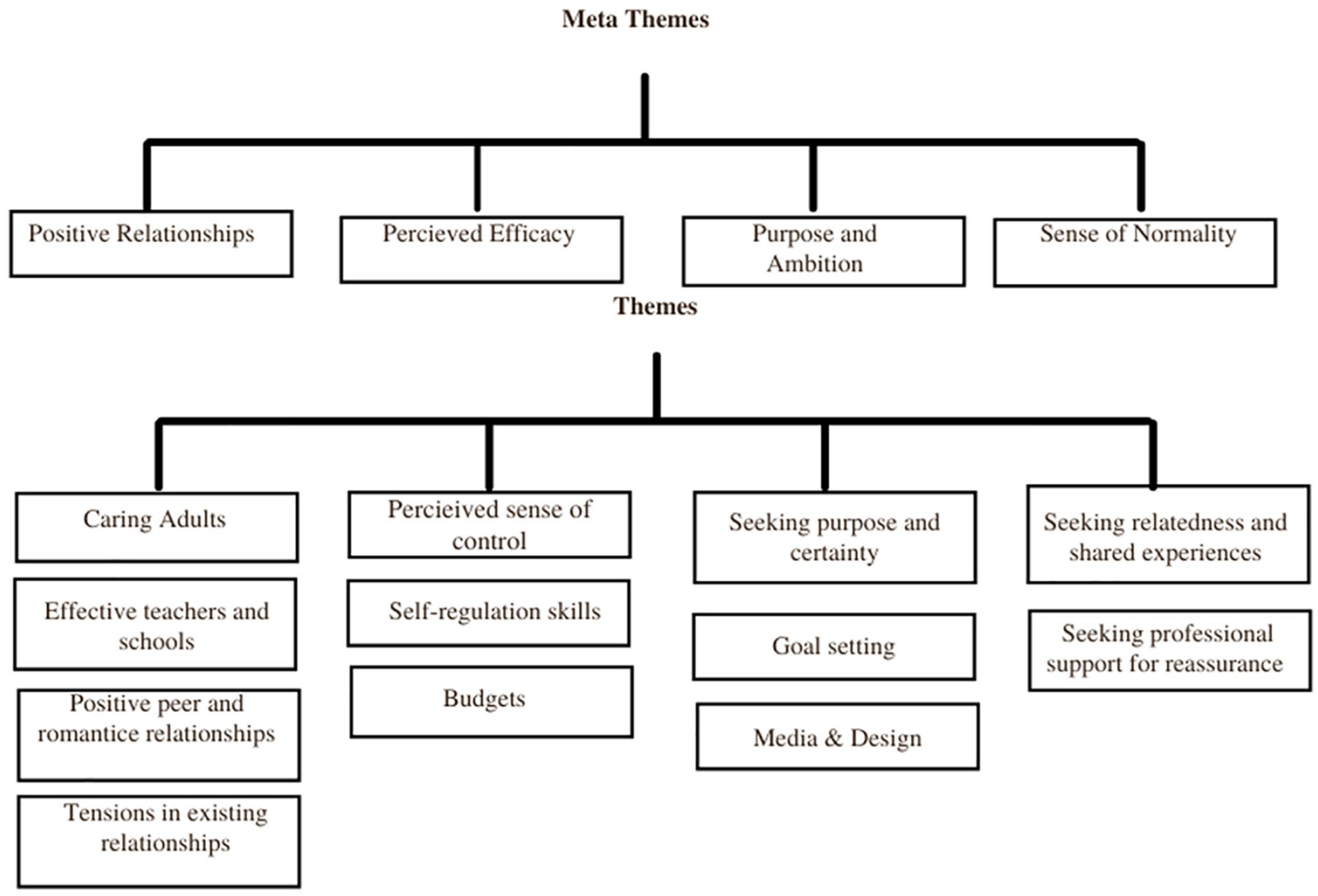
Findings presented by meta themes and themes.
Positive Relationships
Caring adults
All seven participants reported that going home at the start of the pandemic felt like a relief. This experience was described as comforting as well as providing a sense of safety for them. They showed a humble appreciation, and expressed gratitude for having a comfortable place to stay. Often the opportunity in its self to return home, created a perceived sense of loving care, support, stability, and connectedness.
I was really lucky to have a family home that I could escape to, and eat their food and live under their roof, all my necessities were taken care of which I was very thankful for.
The opportunity to connect with family via phone became a priority and an important, regular activity in order to offset the isolating circumstances and feelings of social disconnect. Consistent social interactions with caring adults, albeit on the phone or online, may have also contributed to solidifying a routine and feelings of productivity.
I would call my mom and my dad, and then my friend, I’d like just like FaceTime her and talk to her during the day.
Effective Teachers and Schools
Having supportive, friendly, understanding, flexible, and available professors appeared to have provided students with an appreciation that instilled a sense of relief, confidence, encouragement, and trust. All seven participants acknowledged that their professors were mindful and accommodating toward their needs, fears, and challenges due to the pandemic. However, some participants experienced a lack of communication, guidance, and moral support, which made the shift to online learning exceptionally disappointing and challenging.
As students had varied circumstances, stressors, and work and study settings, having the opportunity to work and study during times that suited to their needs likely decreased potential mental health challenges.
My summer Prof was really good, really accommodating to what people’s concerns are. They allowed students to go through on their own pace. We don’t have constant zoom time.
Prior to full transitioning of online learning, five participants explained that their professors prepared them and openly communicated about the transition to online classes. It seems having the opportunity to for students to gain a snap shot of what the transition to online teaching and learning can look like reassured students, and thus contributed to a smoother adjustment. In the case of some students, experiencing a positive and efficient transition to online learning and working alongside effective teachers likely enacted a protective and strengthening influence on students’ resilience and motivation.
My teachers were good at transitioning online right away. Some of them even mentioned it the week beforehand. This helped a lot because everything was chaotic at the time.
Students were seeking guidance and role modeling in managing pandemic related challenges. A lack of communication, vague communication, or disengaged teachers often created more anxiety and feelings of loneliness.
It was rushed. I was left with a feeling of incompleteness.
One of my prof’s was not helpful. She was a bit hostile, not helpful if I had questions.
Really important to me is having relationships with my professors, attending office hours, building that rapport. For my online classes, we never had any Zoom lectures or anything interactive. Only the online forum with other students is fake, not genuine connection.
A key aspect pertaining to participants’ experiences with their professors was the importance of ongoing and open conversation and sharing of information. Although online learning had been implemented, regular online communication from professors, albeit reminders and updates, guided students progression through their work, and also contributed to students feeling reassured about their new mode of learning.
Once all classes were canceled I did get a lot of emails informing us with the latest updates. That did make me feel better knowing that I was in like the loop.
Positive Peer and Romantic Relationships
While experiencing the pandemic, and particularly lockdown, student’s reported the importance of social connections, feeling supported, and reassurance from positive peer and or romantic relationships. Peers and partners enabled an exchange of experiences and common understandings, in addition to a sense of belonging and connectedness in unprecedented times.
All seven participants acknowledged that at times not being able to visit physically with peers caused unfamiliar feelings of anxiety and isolation in participants. However, when participants had the opportunity to safely engage in socially distant visits with peers, these experiences eased feelings of isolation in participants.
My best friend lives two blocks away. It was pretty hard at the beginning. A couple of months in, we’d hang out, but from a distance, and it got easier.
Right around the end of May, my social isolation experience really changed because I actually found a partner. It cured a lot of the depression because I had somebody else in my life who I not only loved, but could talk about some of things that were bothering me.
Tensions in Existing Relationships
It is important to note that for five of the participants, their existing relationships generated interpersonal difficulties, which worsened pandemic related mental health challenges, such as anxiety or depressive symptomology. Some participants reported that living with people who followed the social isolation protocols differently, and essentially did not recognize the pandemic to be equally as serious, caused tension between peers. This tension subsequently further limited social connection and thus exacerbated existing anxiety and mental health difficulties. I was taking social isolation very seriously and I was living with people that weren’t. That’s when the whole idea of COVID and social isolation took a toll on me.
Some of my friends were taking it very seriously, some were not. It felt like who do I trust?
Having peers and partners who indulged in risky and destructive behaviors due to the lack of routine and options for socializing led to participants normalizing this behavior for themselves. Macy shared experiences whereby she engaged in online socializing, which amounted to excessive consumption of alcohol and topics of conversation that were uncomfortable and offensive for those present. Although these experiences may have been used as coping mechanisms, socially stimulating, and created an escape from the pandemic restrictions, these experiences offered very little in the way of enhancing mental health.
I would have late-night calls, we would drink a lot. Some people were consuming nicotine, and too much weed and falling asleep on the camera. This became a culture of risky self-destructive behavior because everyone was alone.
Perceived Efficacy
Perceived sense of control
For all seven participants, attempting to comprehend and accept that they are not in control of their situation was challenging. Often an adjustment period of 30–60 days was described to settle into the new norm. The sudden change in routine was a difficult and jarring transition for participants to cope with. Harid felt,
Like a straw broke in my mind, I was like, oh, you can’t do anything about this. This is completely out of your control.
There were, however, four participants who were determined to accept the new reality. Brent described the act of accepting their situation and circumstances as an encouraging experience.
Don’t try to play things off is fine when they’re clearly not. Acknowledging the situation that like the minute that happens for me, I almost feel better because it feels real. I feel like I have some degree of control. I have some control over decisions and changes.
All seven participants expressed an urgency to find a sense of control by finding a new routine and structure in their lives. Accepting what was out of their control and embracing aspects within their control proved to be a valuable strategy. Setting goals and reaching them likely generated self-confidence, autonomy, and self-determination. For instance, Cole implemented manageable goals in daily life and created healthy routines.
I’m trying to think mentally, to make sure I get my sleep, consistency in food, diet, and exercise then try to work towards a goal that I can control.
Having the opportunity and resources to safely navigate the new norm, such as starting work again, enabled participants to gain a greater insight of the protocols and restrictions put in place. It seems this opportunity allowed participants to exercise some control over their situation, and thus feel a sense of contribution, productivity, and self-efficacy. Further, returning to work may have also enacted feelings of reassurance and hope for the future.
When I went back to work I was no longer isolated. I think with education and a greater understanding of the parameters of how our new world works, that I was kind of taken out of this hole that I had allowed myself to sit in for a couple months.
Self-regulation skills
In order to shift to a more positive focus and mindset, all seven participants spoke of consistently encouraging themselves to stay occupied throughout the day. Although living with restrictions, Harid and Jimena were able to be cognitively flexible and direct their attention on constructive, rewarding activities in order to keep their minds stimulated.
I was reading a lot of short stories and magazines like the New Yorker and the Atlantic, just avidly keep telling myself you got to keep busy.
I’m always occupied, I’m always doing stuff I’m always studying. I’m also enjoying outside more. I will go to the lake with my partner.
For Macy, Sarah, and Cole, exercising was their activity of choice. Exercising seemed to dramatically contribute to mood enhancement and overall wellbeing. For Sarah, the decision to exercise was found to be so rewarding, she anticipates engaging in exercise on a daily basis.
Immediately after getting a good workout I felt better than being locked up inside. Literally 0 to 10. I realized I really liked that feeling that’s when I decided to do it every day.
Purpose and Ambition
Seeking purpose and certainty
The interviews demonstrated that all seven participants often described a need to find purpose in their new reality. It seems that a sense of purpose for self and the new way of living was required in order to readjust, empower, motivate, and persevere. Brent, for example was fortunate to secure employment. Having the opportunity to work can strengthen self-determination, and thus aid in having a purpose during the pandemic.
I had job lined up at a theatre company in Vancouver. Thankfully it was still able to go through. I got another job at just a grocery store near where I live.
Participants who at the beginning of the pandemic fell into unhealthy habits and lacked routine started to question and scrutinize their own daily practices. Although participants were seeking purpose, motivation, and stability, Harid expressed feeling anxious and lacking purpose.
You start to analyze all of the things that you normally do. You’re trying to do productive stuff, but I had no energy. At school you’re inspired by all these tremendous people who are accomplishing a lot, but when you’re on your own it’s hard to be inspired.
Participants searched for sources and people to guide them to a more confident sense of certainty in the world’s current state as well as future. Harid, however, expressed that the confusion and lack of leadership from governments induced feelings of turmoil, insecurity, and anxiety in students.
I felt like I continued to see evidence of people not trusting in science. So how can you deal with that? How do you even begin to have that conversation with someone and how do you negotiate that with yourself?
Goal Setting
Purposeful living involves seeking well-defined goals and striving to accomplish those goals. For all seven participants, having goals associated with their tasks at university prompted goal setting, ambition, structure, and routine. Kennedy shared,
It was nice to have something to do not just something to fill my time, but something I needed to do. I guess starting at university was reassuring.
Seeking and obtaining employment enabled participants to develop a routine. For Cole, this contributed to feelings of purpose, productivity, and stability. This effectively solidified a healthy routine and improved his mindset.
Place to just work for a couple hours and get back to something productive instead of just being anxious and trying to escape from things whether it was Netflix or video games. So, I felt like I was moving towards a common goal.
Sense of Normality
Seeking Shared Experience with Others
All seven participants reported that at the beginning of lockdown, they felt unsure about most aspects of their new lives. Macy shared that strong feelings of isolation as well as separation from others restricted her from being able to normalize her experiences during lockdown. She felt overwhelmed by this unfamiliar and seemingly inescapable loneliness in the beginning.
I had a rough time with social isolation. Before the pandemic I never really went a day without seeing at least 10 people. The isolation really impacted my mental health.
Jimena described feeling unsafe and concerned that they would catch the virus. This fear was compounded by not having clear time lines for when the pandemic would end.
I was feeling very overwhelmed with the possibility of getting COVID. I was anxious and with the uncertainty because life will not come back to normal until we have the vaccine.
The new and unexpected experiences in which participants found themselves were difficult to adapt to initially. Brent shared that not having previous experience or extensive knowledge of pandemics raised his anxiety and sustained feelings of restlessness.
I’d never had two jobs before, and I’ve never been in a pandemic before. The feeling of sort of constantly being overwhelmed and feeling like there’s something that you need to do that you’re not doing. With time that’s definitely subsided.
Students’ school year ending abruptly left them feeling unfinished in their experience, an experience, which is inherently joyous and celebrated. Dealing with the sudden and unexpected change of the pandemic and restrictions prompted participants to seek a shared experience with others. Kennedy explained that this loss and desire of relatedness added to the unfamiliar feeling of isolation.
The fact that I couldn’t like see my friends and celebrate the end of school, that was difficult because it was a whole year and then it was just done. And then I was at home all day, and then I couldn’t go out and see anyone or do anything else.
Seeking Professional Support for Reassurance
Sarah, Cole, and Macy experienced a substantial decrease in their mental health. Many described feelings of depression and anxiety. Some participants had irrational feelings towards the effects the pandemic would have on their social and romantic relationships and in turn reacted in a way that caused damage in these relationships. These symptoms of negative mental health persisted in some participants causing them to seek professional support. The findings illustrated that participants gained a sense of hopefulness, reassurance, and normality, in circumstances that were trying and turbulent.
I decided to go to our family doctor. That’s when I got diagnosed with a generalized anxiety disorder. This helped explain why I was so anxious about the virus.
I find going to the counselor really valuable. It’s good just to talk to someone on the side and not just with my family or friends.
This study comprises of a diverse sample of students. Therefore, students from these areas of diversity or marginality had unique experiences relating to their particular circumstances. The following findings describe other unique circumstances and experiences that impacted students’ experiences of the pandemic.
Centre for Accessible Learning (CAL) registered students have experienced a different online learning experience and approach during the pandemic. This has involved a disconnected, hands-off approach. The lack of resources and adaptations to an online learning environment has affected the CAL registered participants negatively as they do not have access to resources to perform their best. Macy and Cole anticipated more support with software access, navigating the new online system, as well as having greater consistency in communication from the CAL.
There could have been more for students with disabilities, like offering courses about how to study, the library, how to take tests at home.
It was an email saying your accommodations are mostly online, so we don’t have that dedicated space for you to come test. You don’t have that dedicated space at your house.
Kennedy had a coming out experience. Their family reacted adversely, which resulted in the participant feeling trapped and uncomfortable. The lack of social supports due to lockdown exacerbated these feelings and caused greater distress.
In April I came out to my family. It was difficult because I was stuck in my house all day. I couldn’t leave, or couldn’t see my friends. I didn’t want to be here all the time, but I had to.
Sarah and Brent experienced heightened feelings of anxiety and depression due to learned distractors and learned coping skills not being available to them available during the transition period. This finding illustrates how students with mental health conditions can experience an amplified experience of their symptoms.
Claustrophobic and then panic. I felt so anxious thinking maybe not go to the washroom because what if the virus is in the washroom. It was paranoid and anxious.
Excessive worrying for Jimena, Sarah, and Harid was also expressed. Seeking answers on the current state of the situation was a common reaction. However, the overloading of information, opinions, and statistics induced heightened levels of anxiety, panic, and worrying.
I’d sit down and I could feel my heart beating fast, and then I’d have all these thoughts in my head. Watching the news, especially would really stress me out. I convinced myself that I shouldn’t leave, stay in here to be safe because otherwise I’m going to get the virus.
For Jimena, an international student, existential fears appeared to be more prevalent. For those who lack the safety and security of residency, financial support, and physical distance to family members, their fears associated with isolation and lack of belonging can become amplified.
I am an international student. I’m in the process of changing my visa to postgraduate work permit. I feel overwhelmed with the emotional toll of having so much family back home.
Macy, for instance, reported that due to the lack of coping skills, and the lack of control and structure she resorted to self-medicating. We found that 57% of students reported using an aspect of self-medication.
The dependence I had on these nightly activities, because they were my only source of interaction with people. I use the analogy of being in a hole. Then the substance abuse was really just taking like shovels of gravel and like filling the hole.
Recommendations for Schools
As part of the data collection process, participants were explicitly asked in the interviews if they had any recommendations for schools. Data that reflected consistent themes concerning school processes during the pandemic and the respective recommendations were captured across the interviews. The following list was created by all seven of the participants who reviewed the experiences and insights on supports, or lack thereof, from the university. It is hoped that the findings in this study and recommendations that follow contribute to the process of creating mental health safeguards for emerging adults, in the future.
Create an ongoing and open flow of information between professors and students during online class to keep feeling of engagement for students
Create an ongoing and open flow of information between school and students about the future
Have professors be more accessible in an online environment to compensate for the missed connection in person
Make mental health resources more functional in an online school environment
Promote and normalize the use of online mental health resources for students
Create awareness of the common mental health effects COVID has on students
Adapt CAL to be more online friendly and engaging for registered students
Communicate adaptions and suggestions for students who are studying in non-typical environments
Lectures and content being shared inclusively for different time zoned students (i.e., recorded and posted)
Improved organization of online classroom
Discussion
This study has explored the resilience and mental health experiences of a diverse sample of emerging adults during the pandemic. This study demonstrates that participants experienced a distinctive range of challenges, and thus engaged in differing processes of adjustment to address those challenges. Aligned to resilience theory, the processes of adjustment that participants engaged in can be identified as key protective factors (Masten, 2007). Protective factors enabled participants to navigate and persevere through their complex and challenging experiences. Four protective factors were identified: (1) Positive relationships; (2) Perceived efficacy; (3) Purpose and ambition; and (4) Sense of normality.
For all the participants, feeling helpless and vulnerable was prevalent; therefore, the social, emotional, and resource related support from caring adults contributed to a positive adjustment in the difficult circumstances. Although the pandemic made it difficult in terms of the life course perspective to participate and engage in socially defined roles, the findings conveyed protective outcomes (Wood et al., 2018). These protective outcomes included relatedness, reassurance, a sense of belonging, and a decrease in feelings of loneliness and isolation. These findings thus highlight the importance of exercising interpersonal competence and maintaining existing positive peer and romantic relationships to contribute to emerging adulthood trajectories and to offset social isolation (Wood et al., 2018). From a life course perspective, emerging adulthood is typically an explorative time for exercising agency and developing higher-level abilities, however, the decision for emerging adults to return home during a pandemic emphasizes the vulnerability that participants felt (Wood et al., 2018). The protective factors of caring adults also underscores how these emerging adults chose to deviate from a typical emerging adult life course as a means to alleviate the risk factors of their current situation (Sapienza & Masten, 2011; Wood et al., 2018).
Our study has found that having open communication between schools and students as well as professors and students was highly valuable for participants during the transition to online learning. This eased feelings of worry and angst and thus facilitated a more conducive learning experience for students. Not all participants had effective and efficient transitions to online learning. The lack of reassurance, rapport, and role modeling from some professors added to the complexities of navigating online learning, and hindered self-determination. Aligned to the life course perspective of emerging adulthood, the obstacles to progress educationally, and the resulting decrease in the essential abilities associated with emerging adulthood, further exacerbated participants current reality and challenges to remain on an emerging adult trajectory (Wood et al., 2018).
Previous research speaks to the strengthening and resilience outcomes in which positive and effective schools and teachers can have on students (Masten et al., 2008). In the case of some of the participants in this study, they experienced positive resilience-related outcomes in the context of high risk. For those students, this provided a protective tool, which contributed to strengthening their intrinsic motivation, perseverance, self-efficacy, and indeed develop their resilience (Masten et al., 2008).
In order to exercise a sense of control and self-efficacy over their situations, some participants were able to be cognitively flexible. This created a pathway for participants to accept their new reality, adopt a hopeful mindset, and implement manageable goals. When considering the life course perspective of emerging adulthood, for participants who were able to practice some degree of agency over their situation, this was likely very fulfilling and helped offset the difficulties in maintaining an emerging adult trajectory (Wood et al., 2018). Furthermore, aligned to resilience theory, for participants who exercised self-efficacy and cognitive flexibility, this served as a key protective factor and contributed to strengthening their resilience (Masten et al., 2008).
Participants found that creating healthy habits such as exercise, employment, and daily routines decreased their feelings of anxiety and lacking purpose. Professional support was also sought; this experience provided mentorship, promoted a sense of hopefulness and normality, and consequently mediated the impact of risk (Werner, 1993). Existing research speaks to the importance of self-care, and having connections with others in order to enhance well-being and decrease the effects of social isolation (Moore & Lucas, 2020). Similarly, the actions taken by participants to pursue employment and implement daily routines and healthy habits can also be seen as efforts to maintain and reach their goals in their current life course of emerging adulthood (Wood et al., 2018).
Conclusion
The findings in this study illuminate the key protective factors that enabled participants to navigate and persevere through their complex and challenging experiences, and thus enhance their mental health and resilience during the pandemic. Further, this study distinctively captures the diversity, marginality, and adversity of the participants. This knowledge can be useful to inform university administration and public health policy makers will be better positioned to develop innovative adaptions of services and/or delivery, and able to match access to services needs. It is anticipated that the findings in this study and recommendations to schools can contribute to the development of creating mental health safeguards for emerging adults, from diverse communities, in the future.
Strengths and Limitations
A key strength of this study is that the participant sample was intentionally selected in order to reflect a very diverse population. Further, the data captures the voices of a diverse and vulnerable population in times of a pandemic. To that end, this study contributes to the limited research on the mental health impacts of the COVID-19 pandemic on emerging adults from diverse communities, including those with disabilities, international students, and students who identify as part of the LGBTQ2AAI+ community.
There are limitations for this study, which are also worth highlighting. This study used a small sample size and can therefore not provide results that can be generalized. This study thus does not claim to offer generalizable findings to all students in Canadian universities. Further, this study was conducted virtually, which may have impacted the interview process, the comfort of the participants, and the interpersonal richness of the data collected.
Footnotes
Declaration of Conflicting Interests
The author(s) declared no potential conflicts of interest with respect to the research, authorship, and/or publication of this article.
Funding
The author(s) received no financial support for the research, authorship, and/or publication of this article.
