




Abstract
This global lockdown of educational institutions by COVID-19 has caused overwhelming disruption in students’ learning and assessment, which has substantial effects on their academic emotions. This study applied a mixed methods approach to investigate how COVID-19 influences Gaokao applicants’ academic emotions in the Chinese context. The study found that Gaokao applicants during the COVID-19 pandemic had strong positive activating emotions, positive deactivating emotions, and negative activating emotions. The results showed that there were significant gender differences in academic emotions, and students’ physical exercise was also related. This study found that there was no correlation between the Gaokao applicants’ academic emotions and their parents’ occupations, parents’ academic qualifications, or types of exams. As COVID-19 continues to be a worldwide public challenge, this study has implications on how to alleviate negative academic emotions of students who will take high-risk tests under the pressure of the pandemic.
Introduction
With the outbreak of COVID-19, educational systems have been disrupted at an unprecedented level, causing most schools to be closed. Consequently, this has affected approximately 94% of students around the world, who mainly come from countries with a low or lower-middle level of income (United Nations, 2020). Schooling assessment, teaching, and learning, even of the college entrance examination also have been substantially disturbed. This has led to a considerable impact on their academic emotions, which is shown to be a core driving force for the health, personality development, and academic achievement of students (Pekrun et al., 2012). Studies have demonstrated that adolescents’ learning styles, emotional states, and social interactions have undergone significant changes during the COVID-19 pandemic. Additionally, the academic emotions during the COVID-19 pandemic changed the relationship between student adaptability and academic investment (MOE, 2020b). Specifically, academic emotions completely mediate the relationship between student adaptability and academic engagement (Esteves et al., 2021; Sancho et al., 2021). In addition, the research indicated that academic emotions have influenced the relationship between the students’ adaptability and academic engagement in COVID-19 (Acevedo et al., 2021). That is, academic emotion mediated completely the relationship between students’ adaptability and academic engagement (Zhang et al., 2021). Thus, it is of critical importance to examine academic emotions in the context of the COVID-19 pandemic.
Gaokao is China’s National College Entrance Examination, which is a standardized admission test that targets Chinese graduates in high school and should be held once a year in June. It is highly selective, high-stakes, and considered a significant path for Chinese students (Liu, 2013). Notably, if students have good scores in Gaokao, then they will have a higher possibility of being admitted to a leading university. It also largely influences their future social and economic status, and students with poor results may have to embark on a less promising road. Recently, dozens of universities around the world, including those in Australia and the United States, have incorporated the results of Gaokao into the criteria for undergraduate admission, demonstrating the international relevance of this test (Kai Tak to Study Abroad, 2018). However, the annual Gaokao was postponed by 1 month due to the outbreak of COVID-19 in 2020. According to the Ministry of Education, PRC, there have been 10.71 million Gaokao applications in 2020, an increase of 400,000 from 2019 (MOE, 2020a). Since the timing of the pandemic outbreak in China was close to the dates of the Gaokao, it is worthwhile to explore how the dual pressure of the pandemic and the Gaokao affects the academic emotions of Gaokao applicants.
As being a kind of special emotion, academic emotion can be seen as emotional experience in learning or teaching situations. Pekrun et al. (2002) put forward the concept of academic emotion, that is, emotions are directly linked to academic learning, classroom instruction, and achievement (e.g., enjoyment of learning, pride of success, or test-related anxiety). On this foundation, Yu and Dong (2005) extended the concept of academic emotion to the students who have learned their academic achievements, in the process of daily homework, in the classroom learning, and during the examination. After defining the concept, researchers explored structures of academic emotions: positive activating emotions, positive deactivating emotions, negative activating emotions, and negative deactivating emotions (Yu & Dong, 2005). At present, this concept and structure has been recognized by more and more scholars, and has been applied to a large number of studies on academic emotions (Liu et al., 2014; Ma, 2008; Zhu & Zhang, 2010). By defining academic emotions in this way, the term academic is used as is commonly done with terms such as academic motivation or academic self-concept (Chen & Li, 2012; Dong & Yu, 2010).
Researchers have mainly conducted empirical studies on students’ pre-exam emotions under non-epidemic conditions, and the literature is limited on students’ academic emotions before a large-scale and highly competitive exam during the COVID-19 pandemic. Therefore, this study aims to investigate the current situations of high student graduates’ academic emotions before the Gaokao and explore the associations between students’ gender, parents’ occupations, parents’ academic qualifications, physical exercise, and their academic emotions.
Literature Review
Substantial research has identified the crucial role of emotions in the process of student learning. Since such emotions are associated with specific situations (i.e., learning situations), Pekrun et al. (2002) defined them as emotional experiences (e.g., enjoyment, pride, anxiety, etc.) that are directly related to academic learning, classroom instruction, and achievement. As suggested by Pekrun et al. (2017), academic emotions, like academic motivation and academic self-concept, are closely related to students’ academic performance. They further state that academic performance can be viewed primarily as a student’s grades. However, the learning process involved in academic emotions may be broader, covering the examination process, classroom learning, preparation before class, and review after class. Therefore, taking into account the characteristics of education and learning in China, Dong and Yu (2007) defined academic emotions as the various emotional experiences related to students’ academic performance in the learning process, including anxiety, boredom, disappointment, and anger.
In addition to definitions, researchers have also explored the structure and measurement of academic emotions. Prior researchers have categorized them into positive, negative, and neutral according to the degree of pleasure (Patrick et al., 1993). Later, when developing the Academic Emotions Questionnaire, Pekrun et al. (2002) divided academic emotions into four types: positive activating emotions, positive deactivating emotions, negative activating emotions, and negative deactivating emotions. These four types are based on two major dimensions of arousal and pleasure, which are derived from the basic dimensions of general emotions. Positive activating emotions include enjoyment, pride, and hope; positive deactivating emotions include relaxation; negative activating emotions include anger, anxiety, and shame; and negative deactivating emotions include hopelessness and boredom. Based on Pekrun et al.’s dimensional divisions, Dong and Yu (2007) classified the academic emotion of Chinese adolescents, following this general categorical structure. The localization work of Chinese researchers is mainly to modify the expression of the scale items according to the school situation. The theoretical content and structural dimensions of academic emotion itself have not changed (Yu & Dong, 2005). Therefore, the sub-questionnaire related to the positive activating academic emotion contains emotions such as happiness, joy, pride, jealousy, and hope. The sub-questionnaire about the positive deactivating academic emotion contains emotions such as relief, relaxation after success, contentment. The sub-questionnaire for the negative activating academic emotions may include emotions such as anger, anxiety, and shame. The sub-questionnaire concerning the negative deactivating academic emotion contains emotions such as despair, boredom, depression, and sadness.
Pekrun’s academic emotion theory mainly discusses the concept and structure of academic emotion. Based on this theoretical models, researchers have conducted numerous studies on academic emotions. These studies can be divided into two main categories: the influential factors and the analysis of the outcomes. Studies have found that there are two major types of influential factors on academic emotions: individual and environmental. Individual factors include gender, self-perception, attribution style, self-concept, academic control, achievement goals, and ability level (Abela et al., 2000; Daniels et al., 2008; Goetz et al., 2007; Pekrun et al., 2006; Perry et al., 2001). Environmental factors include teaching quality, classroom learning atmosphere, teachers’ emotions, teacher-student relationships, peer relationships, and parent-child relationships (Assor et al., 2005; Frenzel et al., 2007; Goetz et al., 2010; Lei et al., 2018). In fact, the relationship between the aforementioned influential factors and academic emotions may be bidirectional. In addition, studies have also found that academic emotions can predict online learning, learning motivation, academic achievements, and mental health (Valiente et al., 2012; You et al., 2014).
Researchers have carried out extensive studies on the definition, structure, measurement tools, and influencing factors of academic emotions. In the non-epidemic period, there are significant gender differences in students’ academic emotions. Family factors and physical exercise are essential factors influencing students’ academic emotions (King & Gaerlan, 2014; Mirmillo et al., 2007; Wang et al., 2017; Xu & Gong, 2009; Yu & Dong, 2006). However, these studies have mainly been carried out under normal teaching conditions, and there is a lack of research on academic emotions under specific circumstances (Dallman & Triplett, 2019). It has been noted that high school students are significantly more anxious than middle school students in the face of public health emergencies. In particular, COVID-19 was found to have a significant social and psychological impact (Montemurro, 2020). Due to the implementation of “study at home” for 2 to 4 months in primary and secondary schools nationwide in China, the negative emotions of high school students increased significantly (Zhou et al., 2020). Therefore, it can be hypothesized that positive academic emotions will decrease while negative academic emotions will increase among high school students amid the pandemic. In addition, previous studies have shown that academic emotions are correlated with students’ demographic information (i.e., gender and parents’ personal information) to some extent (Goetz et al., 2008). It is predicted that academic emotions of Gaokao applicants will be correlated with gender and parents’ personal information during the pandemic. Finally, a number of studies have shown a significant association between individual emotions and physical exercise (Maïano et al., 2008; Swartz et al., 2016). During the home-based study period, the government encouraged people to do physical exercise to prevent infection, and students had more time for exercise while they were at home. Therefore, it is hypothesized that physical exercise is related to academic emotions amid the pandemic.
Generally, the reason for exploring the gender factor is to present the gender differences in the academic emotions of college entrance examination students during the epidemic, so as to further test the gender differences in emotional experience. The reason for analyzing parent’s occupation and parent’s academic qualifications is that the impact of the epidemic on students may be closely related to their family economy. In the context of the epidemic, students in different family environments have different academic emotions. Exploring the relationship between physical exercise and academic emotions can provide a theoretical basis for effectively enhancing positive emotions and eliminating negative emotions through physical exercise during the epidemic.
Research Methods
Research Design
Through a mixed-method design that promotes complementarity and triangulation of data from multiple sources, researchers can obtain more coherent and comprehensive insights into the research topic (Creswell et al., 2010). In the present research, an explanatory sequential mixed-method design was selected. Specifically, the quantitative method was used for the investigation of overall academic emotion of high school graduates in the context of COVID-19 before they attended Gaokao, while the qualitative method was adopted to identify the underlying reasons for this overall academic emotions.
Research Subjects
In this study, L High School in Shantou, Guangdong Province was selected as the case by convenience sampling. The economic and educational level and the Gaokao results of Shantou City are above the middle level of Guangdong Province. L School is a public school with nine classes of Gaokao Applicants, 500 senior students, and 37 teachers. The school’s Gaokao scores have been among the top in Shantou for years. It is very difficult to approach Gaokao applicants before Gaokao, but L High School agreed to participate in this survey due to connections through the third author’s close personal network.
There were 372 Gaokao applicants randomly selected to participate in the questionnaires of this study, of which 372 were effective. There were 191 male students (51.34%) and 181 female students (48.66%), 131 in humanities (35.22%), 235 in science (63.17%), 4 art students (1.08%), and 2 sports students (0.54%). The questionnaires in this study were conducted online in June 2020 (the college entrance examination was held from July 6 to 9). The entire process was conducted anonymously. In order to measure academic emotions amid the COVID-19 pandemic, the guidance of the questionnaires emphasized that they should be completed according to the students’ feelings within the past 3 months.
In July 2020, after the Gaokao in 2020 and the epidemic situation in China has been obviously under control, this study conducted a qualitative study to deeply explore the academic emotions of college students and its influencing factors during the epidemic period, so as to compensated the disadvantages of the questionnaire research method (in other words, we are unable to deeply understand the causes of academic emotions among students). Through in-depth interviews with the teachers in the class of Gaokao, every interviewee was asked three questions. First, whether did the epidemic have an impact on the learning process of the Gaokao, especially the academic emotions? Second, how are the academic emotions of students changing in the teaching process during the epidemic period? Third, how did students and teachers deal with academic emotions? The interview for every participant had lasted about thirty minutes.
Then, the interview text contents were sorted out, and the contents related to the topic of this study were analyzed and the general results were extracted. Finally, according to the interview results, the study summarized and presented the relevant contents of the report. To explore the reasons for the overall emotion categories identified in the quantitative analysis, eight teachers were selected to participate in the semi-structured interviews, taking into account factors such as gender, discipline, and work experience. The interviewees were all high school teachers. Among them, there were two Chinese teachers, two English teachers, one math teacher, one chemistry teacher, one physics teacher, and one history teacher. There were five first-level teachers and 3 second-level teachers. There were four men and four women. The teaching experience was 7 to 18 years. Details of the interviewees were shown in Table 1.
The Interviewees’ Demographic Information.

Research Tool
Academic emotions
This study adopts the Chinese version of the Academic Emotions Questionnaire (Dong et al., 2007), which was adapted from Adolescents’ Academic Emotions Questionnaire (AAEQ) by Pekrun et al. (2002). In total, it contains 72 questions about four dimensions of emotions: positive activating emotions (pride, enjoyment, and hope), positive deactivating emotions (relief, relaxation after success, contentment), negative activating emotions (anxiety, shame, and anger), and negative deactivating emotions (boredom, helplessness, frustration, and vexation-fatigue). Higher scores represent stronger academic emotions. This questionnaire has been widely applied in studies of Chinese students and is highly recognized by Chinese scholars, since it is of strong reliability and accuracy (Lei & Chiu, 2020). The Cronbach’s α values of the four dimensions in this study were 0.802, 0.834, 0.865, and 0.903, respectively.
Personal information
In terms of data collection, at the start of the Adolescents’ Academic Emotions Questionnaire, items are designed to collect personal information of research subjects, including gender, father’s occupation, mother’s occupation, parents’ academic qualifications, and frequency of physical exercise per week.
For the qualitative study, participants were asked to share their viewpoints about the reasons for the academic emotions they presented in the quantitative investigation.
Data Analysis
Many Chinese researchers have conducted in-depth investigations into measuring tools of academic emotion (Li et al., 2017; Wang et al., 2019). The results suggest that the academic emotions of Chinese students can also be divided into four categories according to the degree of pleasure and arousal: positive activating emotions, positive deactivating emotions, negative activating emotions, and negative deactivating emotions (Dong & Yu, 2007). This study used SPSS 20.0 to analyze the 13 academic emotions of the four dimensions. First, the status of the Gaokao applicants’ academic emotions was presented through frequency analysis and the single-sample t-test. Then, gender differences were analyzed with an independent-samples t-test, and a nonparametric test was conducted to explore the relationships between academic emotions and parents’ occupations, parents’ academic qualifications, and students’ physical exercise.
As suggested by Cohen et al. (2007), a three-step procedure was followed to thematically and deductively analyze the qualitative data: (1) code generation, (2) categorization of initial codes, and (3) development of common themes. It aimed to evaluate whether the qualitative data fit the academic emotion category of high school graduates identified in the quantitative investigation. Afterward, considering the depth and richness of the qualitative data, inductive analysis was performed for the generation of new themes. In the above two stages of data analysis, the research team adhered to researcher triangulation for discussing interpretations and re-examined the findings when failing to reach a consensus (Cohen et al., 2007). Any point of ambiguity was acknowledged, identified, and discussed within the research team.
Results
Descriptive Statistics
As shown in Figure 1, the dimension of positive activating emotions scored the highest, negative activating emotions scored second, negative deactivating emotions scored third, and positive deactivating emotions scored the lowest. To further examine the status of the four types of academic emotions, a 5-point scale of adolescents’ academic emotions was introduced. Scores of the four emotions were compared with the middle score 3 by running an independent-samples t-test. The results show that the point of positive activating emotions was significantly higher than 3, t(371) = 20.040, p < 0.001; positive deactivating emotions were significantly lower than 3, t(371) = −7.778, p < 0.001; negative activating emotions were significantly higher than 3, t(371) = 7.683, p < 0.001. There was no significant discrepancy between the level of negative deactivating emotions and the middle.

Scores of four dimensions of academic emotions of Gaokao applicants during the COVID-19 pandemic.
Testing Differences Between Means
First, an independent-samples t-test was adopted to explore gender differences in academic emotions of Gaokao applicants during the COVID-19 pandemic. As shown in Table 2, significant gender differences existed in positive deactivating emotions, t(370) = 5.244, p < .001, and the score of male students (2.91 ± 0.59) was significantly higher than that of female students (2.61 ± 0.53). Significant gender differences also existed in negative activating emotions, t(370) = −3.541, p < .001, with the score of female students (3.38 ± 0.64) significantly higher than that of male students (3.14 ± 0.63). For positive activating emotions and negative deactivating emotions, there were no significant gender differences.
Gender Differences in Academic Emotions of Gaokao Applicants during COVID-19 Pandemic (M ± SD).

To further analyse gender differences, independent-samples t tests were run for the 13 specific academic emotions. There were evident differences for contentment, t(370) = 4.208, p < .001, with male students scoring significantly higher; calmness showed gender differences, t(370) = 3.326, p = .001, with male students scoring significantly higher; relaxation was higher in male students, t(370) = 5.071, p < .001; anxiety was lower in male students, t(370) = −3.944, p < 0.001; shame was lower in male students, t(370) = −2.861, p = .004; anger was lower in male students, t(370) = −2.001, p = 0.046; helplessness was lower in male students, t(370) = −2.344, p = .020; frustration was lower in male students, t(370) = −3.902, p < .001; and vexation-fatigue was lower in male students, t(370) = −2.192, p = .029. There were no significant gender differences for pride, enjoyment, hope, and boredom.
Second, a nonparametric test was adopted to study the relationship between academic emotions of Gaokao applicants and physical exercise, due to variations in the numbers of research subjects who had different amounts of exercise per week (Figure 2). Emotions of contentment, calmness, relaxation, anxiety, shame, boredom, frustration, and vexation-fatigue were all significantly related to physical exercise. With the increasing frequency of weekly exercise, positive deactivating emotions scored higher, while negative activating emotions and negative deactivating emotions were lower.
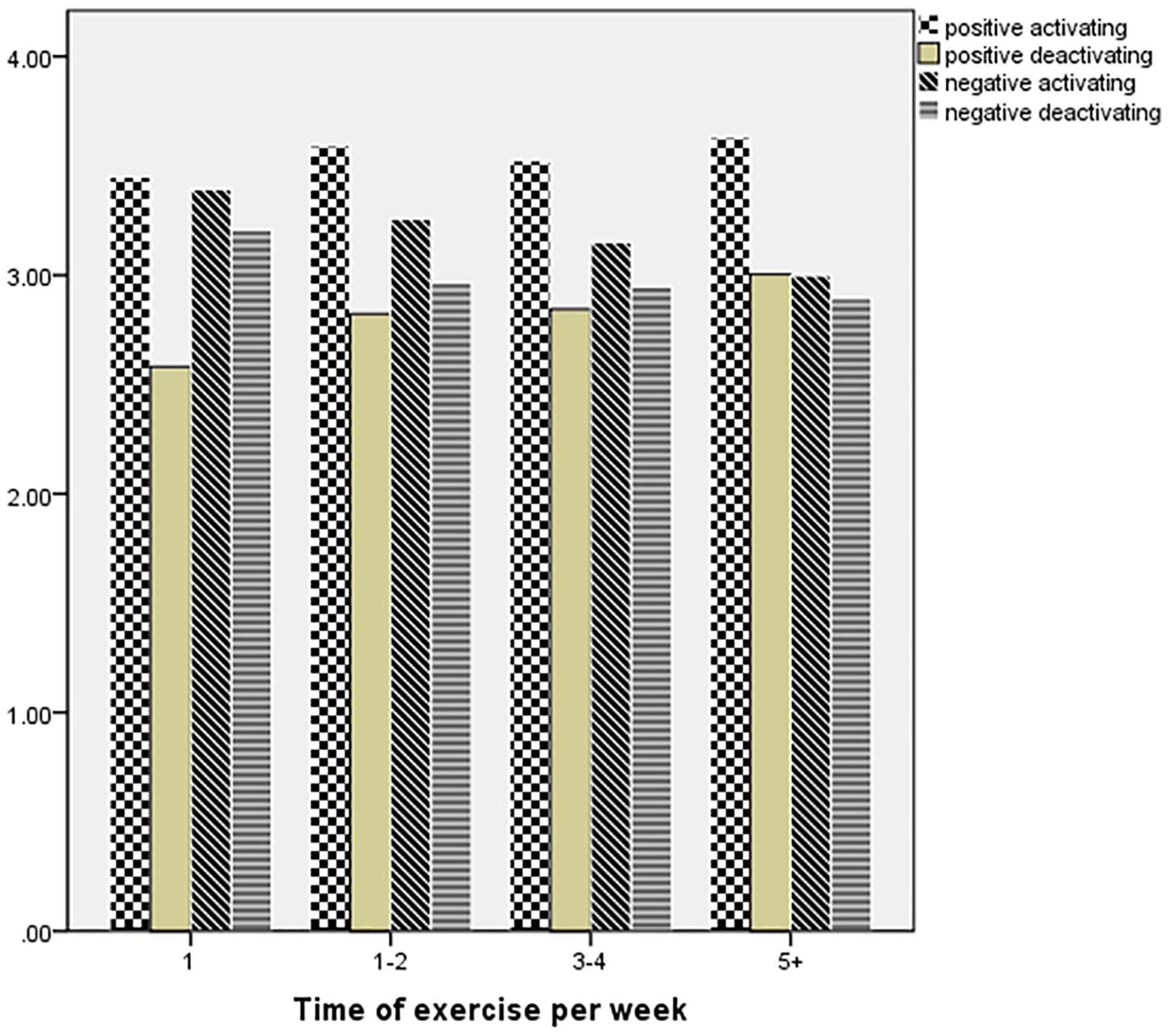
The relation between scores of academic emotions of Gaokao applicants and physical exercises.
Last, a nonparametric test was adopted to study the relationship between academic emotions of Gaokao applicants and parents’ occupations and academic qualifications due to large variations in these variables. The results show that none of the four dimensions or 13 specific ones had any significant connection to parents’ occupations or parents’ academic qualifications.
Discussion and Conclusion
This study revealed that the dimensions of academic emotions during the epidemic period and the non-epidemic period are the same. These results further validated Pakrun’s academic emotion theory. Specifically, the structure and dimensions of academic emotions proposed by Pekrun have been verified in the epidemic environment. This study also demonstrates that the influencing factors of Chinese students’ academic emotions are consistent with Pekrun’s academic emotion theory, and individual factors and family factors are essential for academic emotions. The research results during the epidemic have further confirmed the academic emotion theory and once again emphasized the theoretical importance of academic emotion.
The main contribution of this study lies in presenting for the first time the academic emotion level of the candidates of Chinese college entrance examination under the context of the Covid-19 pandemic. During the pandemic, students’ academic emotions may change drastically. The results of this study can provide guidance for the intervention of students’ academic emotions during the pandemic. In particular, this study explores the relationship between physical exercise and students’ academic emotions after major social events and provides evidence that physical exercise can improve academic emotions during the pandemic. In addition, under the special context of the pandemic, this study explores the internal structural stability of academic emotions, which can verify the validity of the academic emotion theory.
Status of Academic Emotions of Gaokao Applicants During the COVID-19 Pandemic
This study shows that during the COVID-19 pandemic, Gaokao applicants expressed strong positive activating emotions, negative deactivating emotions, and negative activating emotions, and no apparent positive deactivating emotions. In-depth interviews confirmed the results of the questionnaire and further explored the causes of academic emotions of college entrance examination candidates. When the Gaokao is drawing near, society, schools, and families all show more solicitude for applicants, and facing the pandemic, governments and schools provided more humanistic care for students and adopted targeted measures. During the pre-Gaokao period, students have a better evaluation of their academic abilities to set clear goals for the examination (Jiang et al., 2014), which leads to stronger positive emotions. However, during the pandemic, Gaokao applicants attended a short period of online teaching, which might not be favorable for preparation (A2 Interview). Therefore, they might generate a certain amount of negative activating emotions such as anxiety and anger (A5 Interview). During preparation for the examination, applicants set clear targets for the Gaokao and receive sufficient social support, and they no longer have strong negative deactivating emotions (Pekrun et al., 2009).
Compared with negative activating academic emotions (i.e., anxiety, shame, and anger), negative deactivating emotions, such as boredom, helplessness, frustration, and vexation fatigue get more attention from teachers and parents because they may perceive them as more influential on academic achievements and thus help students to adjust to or suppress them (A1&A3 Interview) (Lv et al., 2019). During the pandemic, students experienced a period of quarantine and home-based learning when teachers and parents paid more attention to their emotional reactions and helped them adjust to changes in studying methods and studying environment (De la Fuente et al., 2021) (A1&A3 Interview). Thus, due to teachers’ and parents’ high awareness of these emotions, students revealed no strong experiences of boredom, helplessness, frustration, and vexation fatigue.
This study shows that during the pandemic, positive activating emotions of Gaokao applicants were significant, which may be partly explained by the fact that schools and families put less pressure on them during the home-based learning period and provided more care for their physical and mental health. Home-based learning meant students avoided the direct presence of teachers’ negative emotions and messages, so they received less passive information (A2 Interview). Meanwhile, the pandemic led to increased communication and mutual comfort among peers, which helped alleviate students’ negative emotions. Thus, the Gaokao applicants showed apparent positive activating emotions.
Gender Differences in Gaokao Applicants’ Academic Emotions During the COVID-19 Pandemic
The first hypothesis of this study is underpinned by the finding that Gaokao applicants during COVID-19 experienced positive deactivating emotions and negative activating emotions differently based on their gender. Further, it was found that there were significant gender differences in terms of contentment, calmness, relaxation, anxiety, shame, anger, helplessness, frustration, and vexation-fatigue.
Due to significant differences in emotional sensitivity, Gaokao applicants showed different responses by gender during the pandemic (Yuan et al., 2010). Negative emotions such as anxiety and helplessness were more likely to be produced by girls in that they were more sensitive to the external environment, especially the negative emotions of their family members, and were more willing to alleviate negative emotions by sharing them with their friends (Fischer et al., 2018; Polujanski et al., 2020). As a consequence, girls had stronger negative emotions compared with boys, which influenced how they felt while studying (A4 & A6 Interview). Thus, it was easier for them to confront academic pressure and have stronger positive deactivating emotions.
Second, Asian culture puts emphasis on veiling and containing personal emotional expression. Males have generally been educated and required to not show negative emotions since childhood, to demonstrate their male characteristics, such as masculinity and tenacity (Wang et al., 2019). In traditional Chinese culture, females are taught to suppress their emotional responses, especially the positive ones (Hwang & Matsumoto, 2020). Recent years have witnessed development and economic reform in China and the great changes in the way Chinese females express their emotions as well. In pursuing gender equality, females have begun to demonstrate their feelings in a freer fashion (Wang et al., 2017). Amid the COVID-19 pandemic, roles in daily life varied by gender. Due to home-based learning or home quarantine, females tend to comfort and take care of family members and devote time and energy to housework. As a result, a reduction in study time made them more vulnerable to negative emotions (Liew et al., 2014).
Lastly, companionship played an indispensable role in influencing the adolescent mindset and behavior by gender, in that girls tend to share and communicate with their companions intimately about their emotions, especially the negative ones (Goetz et al., 2007). Although sharing emotional experiences helps to alleviate negative emotions, the global pandemic made it less possible for individuals to communicate with their friends, which engendered more negative emotions for girls.
No evidence of gender differences was found in positive activating emotions or negative deactivating emotions, especially in the scores of pride, enjoyment, hope, and boredom. A possible explanation could be that as the Gaokao was approaching, senior students had already set their study goals, which relieved them of the academic pressure. Besides that, it is likely that a number of students, especially those with lower grades, had already decided not to attend the national examination and given up studying for various reasons. Students who are still struggling for the college entrance examination a month before the exam usually perform well. They are also very hopeful to pass the college entrance examination to be admitted to the university. Thus, Gaokao applicants had stronger positive activating emotions, namely pride, and hope (Hoffmann et al., 2010). Apart from that, long-term preparation for the examination may have mitigated boredom so that students could adjust themselves to studying (Brody, 2010). As the Gaokao was only delayed for one month, the preparation for the examination to some extent would not be affected (A7 Interview). Therefore, there were no gender differences in pride, enjoyment, hope, or boredom among Gaokao Applicants.
The Influence of Physical Exercises on Academic Emotions of Gaokao Applicants During the COVID-19 Pandemic
The second hypothesis of this study is underpinned by the relationship between physical exercise and positive deactivating emotions, negative activating emotions, and negative deactivating emotions. Relief, relaxation after success, contentment, anxiety, shame, boredom, frustration, and vexation-fatigue were all related to physical exercise. An increase in exercise reduced the negative emotions of Gaokao applicants so that they felt more relaxed and calm (Paskova, 2010). In addition, exercise could also enhance students’ immunity to infection and help pacify their emotions and inner conflict so they could prepare for the examination.
In contrast to studying at school, home-based learning provided more freedom for students to set their schedules. Due to the impact of the epidemic, Chinese students need to take classes online for 3–4 months at home. Under the needs of epidemic prevention during this period, students studying at home are generally not allowed to go out at will while parents can go out for purchasing living materials and meeting work needs. With parents working outside the home, students under less supervision and management might exercise more frequently. What’s more, fewer school examinations and tests made it less likely for students to be exposed to negative emotions. Thus, positive emotions were closely related to physical exercise.
With regard to positive emotions, students tended to adjust their mental status and behaviors according to their new study methods and environments, on account of the pandemic (Sun et al., 2020). As home-based learning required more autonomy, students’ self-learning ability played an indispensable role. As they entered their senior year, most senior students had already developed such abilities, and as they came to accept their new studying environment, it is reasonable that positive emotions, especially low-arousal emotions such as relief, relaxation after success, contentment, were related to physical exercise.
However, this study found no evidence of a significant relationship between physical exercise and positive activating emotions, and exercise did not influence students’ pride, enjoyment, or hope. It is likely that these emotions are more related to studying itself, and positive activating emotions mainly depend on the academic achievements of the students (Tse, 2020). The higher their academic achievements, the stronger their pride, enjoyment, and hope (Ganotice et al., 2016).
For Gaokao applicants, pride, enjoyment, and hope are only connected with their examination scores. During the senior year, the goal of students is quite simple and clear, which is to enter their ideal universities by obtaining high scores. Embracing this ambition, no other factors except for studying would influence senior students to feel proud, happy, and hopeful (Pekrun et al., 2009). As a result, even if applicants did more physical exercise to strengthen both their mental and physical health, it would not make any difference to their positive activating emotions.
The Relation of Parents’ Occupations and Academic Qualifications with the Academic Emotions of Gaokao Applicants Under the COVID-19 Pandemic
These results showed that parents’ occupations and academic qualifications did not affect the academic emotions of Gaokao applicants. The COVID-19 pandemic hit all industries that victimized parents from all walks of life (A8 Interview). During the pandemic and the post-pandemic, working parents became emotionally distressed due to the dramatic changes in their jobs, such as reduced income or unemployment, which inevitably affected their family members. (Lawson et al., 2020; Sun et al., 2020) Nonetheless, as the Gaokao approached, most parents chose to conceal and suppress their negative emotions, so parents’ occupations had nothing to do with the academic emotions of Gaokao applicants. Apart from that, during the pandemic, especially in the later stages, most students studied at home alone as their parents had to go out for work or hunt for new jobs. Therefore, to some extent, there would be less communication and contact between them, which lifted the impact of parents on these students (Lawson et al., 2020). Besides this, academic emotions are mainly related to the process and results of studying rather than external factors.
The COVID-19 pandemic has impacted parents in all aspects of their jobs. However, the outcome was not directly related to their academic qualifications, because parents were emotionally distressed due to the pandemic, regardless of their academic qualifications. Under these circumstances, the communication between parents and their children would inevitably encounter problems. As all parents embraced the same expectations for their children as they prepared for the Gaokao, there is no doubt that they would pay attention to their children’s emotions. Being positive or negative, parents would be on alert and alleviate their children’s emotions to ensure that they were in the best possible condition to engage in daily learning (Liew et al., 2014). As a consequence, the academic qualifications of parents did not make any difference to the academic emotions of Gaokao applicants during the COVID-19 pandemic.
Limitations and Implications
This study has some limitations. First, no comparative analysis of the academic emotions of Gaokao applicants in the non-pandemic period was included in this study. Second, this study only investigated the effects of the pandemic on academic emotions and did not explore the effects of academic emotions on variables such as grades. Third, since the sample size of this study was small, future research should include more schools and districts.
Notwithstanding these limitations, this study has the following implications. First, the current situation of the COVID-19 pandemic will remain a public challenge worldwide for the next 1 to 2 years or even longer. Thus, it is necessary for schools of all levels and types to understand how to alleviate the negative academic emotions experienced by students. In order to help students adjust their emotions by themselves, schools should offer psychological guidance classes. Second, amid regular remote education or online education, parents engaging in home-school cooperation are encouraged to focus on the academic emotions of their children and suggest they do more physical exercise. By doing so, Gaokao applicants’ physical and mental health can be improved. Third, in dealing with large-scale competitive examinations like the Gaokao in the future, government departments should actively improve pandemic prevention measures and arrange times and venues reasonably to relieve the mental pressure on Gaokao applicants.
Footnotes
Acknowledgements
We want to express our sincere thanks to Dr. Huang, Yating for her significant contribution to our study.
Author Note
The Gaokao (China’s National College Entrance Examination) is mainly divided into four categories: humanities, sciences, arts, and sports.
Declaration of Conflicting Interests
The author(s) declared no potential conflicts of interest with respect to the research, authorship, and/or publication of this article.
Funding
The author(s) disclosed receipt of the following financial support for the research, authorship, and/or publication of this article: This study was supported by Office of Philosophy and Social Science of Zhejiang Province, China. The grant number is [21YJRC03-1YB].
