




Abstract
This study, using databases from the AsiaBarometer Surveys 2006 and 2007, empirically investigates whether and how English proficiency and happiness are linked in 14 East and Southeast Asian countries or regions. Based on the large-scale dataset of 14,811 respondents, we conducted hierarchical regression analyses and found that: (i) English proficiency is positively associated with happiness; (ii) the focal relationship is partly mediated by income and leisure satisfaction; and (iii) the focal relationship is negatively moderated by the national economy. These findings show the instrumentality of English learning in a globalized world and enrich our understanding about the influence factors of happiness, and contribute to the literature on English proficiency and happiness as well.
Introduction
With the progress of globalization, English is widely regarded and learned as a global language (Bolton & Botha, 2015a, 2015b; Crystal, 2012; Melitz, 2016). Some Asian countries where people do not need to speak English in their daily life (such as China, Japan, and Korea), or where English is just one of their daily language choices (such as Hong Kong, Singapore, and the Philippines), have embraced the learning of English to such an extent that English learning is no longer a marker of privilege because of the implementation of a series of compulsory language policies (Butler, 2015; Huang, 2016). To explain the popularity of and motivations for language learning, prior studies have explored and explicated the importance of language proficiency by analyzing the benefits and advantages embodied in language skills (e.g., Chiswick, 2008; Dávila & Mora, 2000; Dustmann & Fabbri, 2003; Vaillancourt, 1996). Researchers have also tried to explain the benefits of language skills from historical (Kaiwar & Mazumdar, 2003), cultural (Schiffman, 1998), social (Gardner, 2002), and other relevant perspectives. The economics of language, which discusses and examines the economic returns of language proficiency, is particularly enlightening, with studies from the economic perspective using solid theoretical arguments and qualitative cases as well as quantitative evidence. These studies have found that English learning produces premiums and leads to high income satisfaction (Bloom & Grenier, 1996; Breton, 1998; Chiswick, 2008; Chiswick & Miller, 1995, 2003; Dávila & Mora, 2000). The individual utility of English learning has been examined and proved in varied contexts (Angrist et al., 2008; Azam et al., 2013; Casale & Posel, 2011; van Tubergen & Kalmijn, 2009a).
Meanwhile, there has also been increasing interest in reporting happiness or subjective well-being as a measure of individual utility (Dolan & Kahneman, 2008; Dolan et al., 2014), and the relationship between happiness and income satisfaction has attracted much academic attention (Easterlin, 2001; Li, 2016; Ma & Zhang, 2014; Sohn, 2016). Despite the happiness-income satisfaction paradox proposed by Easterlin (1974) and some related debates (Clark et al., 2008; Easterlin, 1995; Easterlin et al., 2010; Hagerty & Veenhoven, 2003), it is widely believed that income satisfaction is one of the most important determinants of happiness (Bartolini et al., 2017; Li, 2016; Ma & Zhang, 2014; Sohn, 2016). At the same time, an increase in income satisfaction resulting from English learning brings people more leisure time, which will also increase their happiness. Given the influence of globalization, which adds to the individual utility of English learning in both English-speaking and non-English speaking contexts (Azam et al., 2013; Itani et al., 2015), we can assume that there is a correlation between English proficiency and happiness, which would help to explain the global English fever (Krashen, 2003) and contribute to our understanding of individual happiness.
However, to our knowledge, while the vast literature on happiness has proposed and proved all kinds of sources of happiness (Veenhoven, 2015), such as national wealth (Easterlin, 1974; Veenhoven & Vergunst, 2014), freedom (Veenhoven, 1999), security (Veenhoven, 2011), modernity (Veenhoven & Berg, 2013), and institution (Rode, 2013) at the macro level, organizational size and autonomy (Veenhoven, 2015) at the meso level, and social status (Veenhoven & Choi, 2012) and social participation (Bartels & Boomsma, 2009) at the micro level, no previous study has ever focused on the “English-happiness” linkage. As to the literature on the economics of language, most of the previous studies have discussed the economic returns of English proficiency (Angrist et al., 2008; Azam et al., 2013; Van Tubergen & Kalmijn, 2005, 2009b), and the influence of such language skills on other important socio-economic factors, such as career success and personal accomplishment, and on happiness is not adequately discussed with sufficient empirical work.
Moreover, most of the previous studies on the “English-income satisfaction” linkage were conducted in the context of developed countries with significant immigration, such as Canada (Breton, 1998; Vaillancourt, 1996;), Australia (Chiswick & Miller, 1995, 2003), the UK (Dustmann & Fabbri, 2003), the United States (Bloom & Grenier, 1996; Dávila & Mora, 2000), the Netherlands (Van Tubergen & Kalmijn, 2009b), Germany (Dustmann, 1994), and Israel (Lang & Siniver, 2009, and the effect of English proficiency in domestic markets and in emerging economies is largely neglected. To fill these gaps, some scholars have examined the economic benefits of learning English in some other countries, such as India (Azam et al., 2013), Puerto Rico (Angrist et al., 2008), and South Africa (Casale & Posel, 2011), but this limited body of research can hardly match the prevalence of research on English learning in developing countries. Moreover, since such countries or areas are historically or politically related to English-speaking countries, the obtained findings may not be applicable to other developing countries. In particular, a significant English learning boom, deeply related to and even rooted in social and economic development, has emerged in Asian countries (Kirkpatrick, 2015) such as China (Bolton & Graddol, 2012), Japan (Le Ha, 2013), and South Korea (Jeon, 2012). Since English is not the official language of these countries, most people there could live without English competence. Some scholars have attributed this phenomenon to the widespread influence of globalization (Bolton & Graddol, 2012; Jeon, 2012; Kirkpatrick, 2015; Le Ha, 2013), but their viewpoints are rarely backed up by extensive empirical evidence.
To fill such lacunae, we set the current research in the context of East and Southeast Asia, and try to examine the association between English proficiency and happiness with large-scale transnational data. We assume that English proficiency is one of the factors that are connected with one’s happiness. Obviously, like many other complex socio-economic linkages, the focal relationship is complicated and highly contextual, depending on a series of factors. Based on the “English-income satisfaction” and “income satisfaction-leisure satisfaction” linkages, to further explore and explain the inherent mechanisms we try to examine the mediating role of income satisfaction and leisure satisfaction and the moderating role of national economy in the focal relationship. Our discussion on the role of leisure satisfaction is partly in response to prior studies on the relationship between English proficiency and income satisfaction and standards of living, and will enrich our understanding of both the direct and indirect benefits of English proficiency. The discussion of the moderating role of the national economy takes the use of English into consideration, and discloses the conditions under which English proficiency is associated with happiness.
Hypothesis Development
While previous studies have seldom explored the linkage between one’s English proficiency and happiness, we can infer from prior work that the former is probably positively associated with the latter in several ways, two of which will be fully discussed and examined in this paper.
First, as repeatedly pointed out and examined by prior studies, language skill in English leads to the improvement of one’s income satisfaction, and thus promotes one’s happiness. Existing studies on the economics of language have investigated how English proficiency influences immigrants’ assimilation into local communities, and confirmed that immigrants with relatively higher English proficiency usually achieve higher income satisfaction than those with relatively lower English proficiency (Carliner, 2000; Chiswick & Miller, 2003; Dustmann & Fabbri, 2003). This linkage has also been examined and confirmed in the United States (Bloom & Grenier, 1996; Dávila & Mora, 2000), Canada (Breton, 1998; Vaillancourt, 1996), Australia (Chiswick & Miller, 1995, 2003), Germany (Dustmann, 1994), and Israel (Lang & Siniver, 2009). Moreover, research in South Africa (Levinsohn, 2007) and some more recent studies in India (Azam et al., 2013; Chakraborty & Bakshi, 2016; Munshi & Rosenzweig, 2006) have confirmed the positive effect of English learning on individual income satisfaction in domestic markets. As globalization progresses, English as a global language has already become an important type of human capital, and is explicitly required by many employers in job recruitment (Bloch, 1995; Warschauer, 2000), which means that candidates with relatively higher English proficiency tend to outcompete the others in the job market. With improved career performance (Botha, 2014; Vandenbroucke, 2016; Wei & Su, 2015), outstanding English learners generally expect relatively high income satisfaction. While Easterlin (1974, 1995, 2001) and some other scholars (Clark et al., 2008; Hagerty & Veenhoven, 2003) have suggested that income satisfaction is not the main source of happiness once one rises above the poverty line, the positive influence of income satisfaction on one’s happiness has been repeatedly supported and confirmed in previous studies (Latif, 2016; Sohn, 2016; Veenhoven, 2015). This positive relationship is quite stable in developing countries (Graham & Pettinato, 2002; Lelkes, 2006), and usually holds in developed economies (Blanchflower & Oswald, 2004; Shields & Price, 2005). In particular, relative income satisfaction, which directly influences one’s overall income satisfaction, is proved to have a significant impact on happiness (Dorn et al., 2007; Ferrer-i-Carbonell, 2005; Luttmer, 2005). Based on this work, we can establish an “English-income satisfaction-happiness” linkage, and propose that English proficiency promotes happiness, partly by increasing income satisfaction.
Obviously, an increase in income satisfaction resulting from English proficiency indicates the improvement of material life, which is an essential source of happiness. In effect, English learning also contributes to happiness by enriching one’s leisure activities, and thus one’s mental health and social life. The global popularity of English has not only made it vital in workplaces, but also in social and cultural life. While in earlier years English was compulsorily learned at school and generally employed in workplaces, now it has become an inextricable part of people’s personal lives (Botha, 2014). Good English learners are able to participate in all kinds of international and “internationalized” leisure activities, giving access to the world (Botha, 2014). In some countries, such as China and Saudi Arabia, English has become a popular cultural element and is widely and creatively used in social life (Botha, 2014) and a wide range of entertainment activities (Fallatah, 2017; Zhou & Moody, 2017). The fever to learn English is accompanied by the penetration of powerful cultural influences; American films, TV series, and news, which are important carriers of American culture, are now enjoying global popularity (Botha, 2014). English learning enables people to enjoy theses leisure products with relatively lower language barriers.
Moreover, social media has been playing an increasingly important role in people’s leisure enjoyment, and multilingualism has become quite common in social media interactions (Sharma, 2012). For instance, in China, Chinese-English mixed-code communication is gaining popularity on the internet (Zhang, 2015). With improved participation in all such activities, good English learners are expected to obtain high leisure satisfaction. Leisure is an indispensable part of human life and contributes to the acquisition of happiness (Lu & Hu, 2005; Sheldon & Lyubomirsky, 2004; Tkach & Lyubomirsky, 2006). The positive influence of leisure on happiness has been discussed and confirmed in previous studies (Bailey & Fernando, 2012; Brajša-žganec et al., 2011; Hills & Argyle, 1998; Tkach & Lyubomirsky, 2006). Newman et al. (2014) employed a bottom-up approach to establish a psychological model linking leisure to happiness. It has been shown theoretically that leisure can promote domain happiness, and thus global happiness, through psychological mechanisms. Based on previous work, we hope to establish an “English-leisure-happiness” linkage, and propose that English proficiency promotes happiness, partly by increasing leisure satisfaction.
In addition, prior studies have shown that the English-income satisfaction linkage is influenced by such factors as gender, occupation, and education (e.g., Azam et al., 2013; Chakraborty & Bakshi, 2016; Munshi & Rosenzweig, 2006). Apart from these individual factors, we would like to look at this relationship at a broader level. Backed up by a dataset from 14 different countries/regions in Asia, we focus on a socioeconomic indicator, national economy. Taking the background of the English learning boom into consideration, we infer that people with a higher level of English proficiency who live in a more developed country or region will be more willing and have more chances to be globalized (Block & Cameron, 2002; Kubota & McKay, 2009; Warschauer, 2000; Yihong et al., 2007), which exposes them to a wide range of international activities, in turn influencing their acquisition of English as a global language (Song, 2011; Warschauer, 2000) and the associated benefits such as income satisfaction and prestige. These benefits will contribute to the happiness level of people living in these countries or regions.
Based on the above-mentioned studies and reasonable inferences, we propose the following hypotheses (see Figure 1):
H1: English proficiency is positively associated with happiness.
H2-1: Income satisfaction partly mediates the relationship between English proficiency and happiness.
H2-2: Leisure satisfaction partly mediates the relationship between English proficiency and happiness.
H3: National economy positively moderates the relationship between English proficiency and happiness.

Theoretical model.
Methodology
Data Collection
To test the aforementioned hypotheses, we conducted correlation analyses and hierarchical regression analyses with large-scale data from the AsiaBarometer Surveys 2006 and 2007 (https://www.asiabarometer.org/). The AsiaBarometer Survey was carried out in six successive years from 2003 to 2008, with joint involvement from the Tokyo Satellite Office in the University of Niigata Prefecture, the Research and Information Center for Asian Studies, and the Institute of Oriental Culture in the University of Tokyo. As the largest comparative survey in Asia, it covers countries and areas in East, Southeast, South, and Central Asia, and focuses on daily life of ordinary people and their relationships to family, neighborhood, workplace, social and political institutions, and market place.
In order to make use of the most recent available data, the current research is based on the 2006 and 2007 surveys. The AsiaBarometer 2006 project was carried out in Japan, China, Hong Kong, Korea, Taiwan, Singapore, and Vietnam, and the 2007 project in the Philippines, Cambodia, Myanmar, Indonesia, Malaysia, Laos, and Thailand. The survey centers around such topics as happiness, globalization, quality of life, mass media, and democratic consolidation. These topics include questions which enables the current study to measure the dependent variable of happiness, the independent variable of English proficiency, the mediator variables of income satisfaction and leisure satisfaction, and control variables as well. The original questionnaires were written in English, and were translated into local languages when carried out in different countries/regions. Respondents were targeted with multi-stage-stratified random sampling and quota sampling, and in each country or area around 1,000 people were sampled. Relevant questions in the original English version of the questionnaires are provided in the Appendix 1. To ensure the reliability and validity of the questionnaire data collection, face-to-face interviews were conducted by professionally-trained investigators. There were 8,070 cases in 2006 and 7,012 in 2007. After removing the cases which had missing values in the selected variables, there remained a total of 14,811 cases in our study.
Data Analysis
We used IBM SPSS 26.0 to conduct the required statistical analyses. First, we created a table to show the socio-demographic characteristics of the sample. Second, we conducted descriptive and correlation analyses for all the relevant variables. Third, in order to illustrate the frequency distribution of English proficiency (ranging from 1 to 4) and happiness (ranging from 1 to 5) in different countries or regions more intuitively, we built a population pyramid histogram. Fourth, we examined the main effect of English proficiency on happiness using linear regression analyses. Finally, the mediating effect of income satisfaction and leisure satisfaction and the moderating effect of the national economy in the relationship between English proficiency and happiness was examined using Process v2.16.3 embedded in IBM SPSS 26.0 (Preacher & Hayes, 2004; Preacher et al., 2007).
Measures
We measured our key variables, including English proficiency, happiness, income satisfaction, and leisure satisfaction, using relevant Likert-scale questions selected from the AsiaBarometer 2006 and 2007 surveys. Likert scales have been widely used to measure language proficiency and other variables in previous studies (Liu, 2018; Marian et al., 2007; Paap et al., 2019; Schafer et al., 2018), and single-item measurement has been shown to be psychometrically valid (Bergkvist & Rossiter, 2007; Gardner et al., 1998; Wanous et al., 1997).
English proficiency
Since English is the most prevailing second language in the world, we used English competence to represent English proficiency. Respondents were asked how well they spoke English, and their self-assessment was used to measure their English competence: 1 = “not at all,” 2 = “very little,” 3 = “enough to get by in daily life,” and 4 = “I can speak English fluently.”
Happiness
Despite the great academic interest in happiness, scholars do not find it easy to achieve agreement in defining this important concept. However, “subjective well-being” is widely accepted as an explanatory synonym term (Diener, 2000), which shows that it is reasonable to measure happiness with subjective self-reported scales. Respondents were asked how happy they were those days, with a 5-point Likert scale used to measure happiness: 1 = “very happy,” 2 = “quite happy,” 3 = “neither happy nor unhappy,” 4 = “not too happy,” and 5 = “very unhappy.” To increase the readability of the regression analyses, the data was reverse coded before entering into the models.
Income satisfaction
Respondents were asked how satisfied or dissatisfied they were with their household income, and a 5-point Likert scale was used to measure their income satisfaction: 1 = “very satisfied,” 2 = “somewhat satisfied,” 3 = “neither satisfied nor dissatisfied,” 4 = “somewhat dissatisfied,” and 5 = “very dissatisfied.” To increase the readability of the regression analyses, the data was reverse coded before entering into the models.
Leisure satisfaction
Respondents were asked how satisfied or dissatisfied they were with the leisure in their life, and a 5-point Likert scale was used to measure their leisure satisfaction: 1 = “very satisfied,” 2 = “somewhat satisfied,” 3 = “neither satisfied nor dissatisfied,” 4 = “somewhat dissatisfied,” and 5 = “very dissatisfied.” To increase the readability of the regression analyses, the data was reverse coded before entering into the models.
National economy
To measure the national economy, we obtained GDP per capita data of the countries or regions from the website of World Bank (https://data.worldbank.org.cn/). Based on the original data, we ranked the 14 countries or regions as follows: Japan, Singapore, Hong Kong, Korea, Malaysia, Thailand, China, and Taiwan (the GDP per capita data of Taiwan has not been listed separately on the World Bank website, thus we ranked and coded it the same as China), Indonesia, the Philippines, Vietnam, Cambodia, Laos, and Myanmar. Further, we coded the national economy of each country or region based on the ranking. Therefore, the “National economy” variable was measured with an ordinal ranking as follows: “Japan” was coded 13, “Singapore” 12, “Hong Kong” 11, “Korea” 10, “Malaysia” 9, “Thailand” 8, “China & Taiwan” 7, “Indonesia” 6, “the Philippines” 5, “Vietnam” 4, “Cambodia” 3, “Laos” 2, and “Myanmar” 1.
Control variables
To highlight the impacts of the independent variable, the mediators, and the moderator on happiness, we controlled for the effects of some socio-demographic variables and some variables that may influence the data results. These were gender, age, marital status, education, number of family members that work and earn an income, and whether English is an official language in the countries or regions.
In our research, gender was measured with a dummy variable, “female” coded as 0, “male” as 1. Age was measured with an ordinal variable, “20 to 29” coded as 1, “30 to 39” as 2, “40 to 49” as 3, “50 to 59” as 4, and “60 to 69” as 5. Marital status was measured with a dummy variable, “unmarried” coded as 0, and “married” as 1.
As education level is closely related to English proficiency and people with higher education usually have higher socioeconomic status (Esina, 2020; Fomby & Kravitz-Wirtz, 2019), it was necessary for us to control for the influence of education. Because level of education was recorded in disparate ways across countries or regions (see Appendix 1), we had to code the results into three unified items: “low” (Primary school or below, No formal education, Primary school/Junior high school, Elementary school, Elementary school, Grade 1–5, Grade 6–9), “middle” (High school/Vocational school, Lower secondary school, Senior secondary school, High school, Technical school, Middle school, Secondary school/GCE O level, Post-secondary (ITE), Junior high school/Middle school, Grade 10 to 12, Professional school/Technical school), and “high” (College school, University, Graduate school or above, Matriculation, College/University or above, College, University/Graduate school, College/University, Studying in College, Graduated college, Studying in university, Graduated university, Post-university, University/Graduate school). Based on this grouping, education level was measured using an ordinal variable, with “low” coded as 1, “middle” 2, and “high” 3.
The number of family members that work and earn an income (Number of Working Family Members) was entered as a continuous variable, with “none” coded 1, “1 person” 2, “2 persons” 3, “3 persons” 4, “4 persons” 5, “5 persons” 6, “6 persons” 7, and “≧7 persons” coded as 8. Whether English is an official language in the particular country or region (English as an Official Language) was measured with a dummy variable. We coded the countries or regions where English is not an official language (China, Taiwan, Indonesia, Cambodia, Laos, Myanmar, Malaysia, Japan, Korea, Thailand, and Vietnam) as 0, and those where English is an official language (Hong Kong, the Philippines, and Singapore) as 1.
Results
Socio-Demographic Characteristics
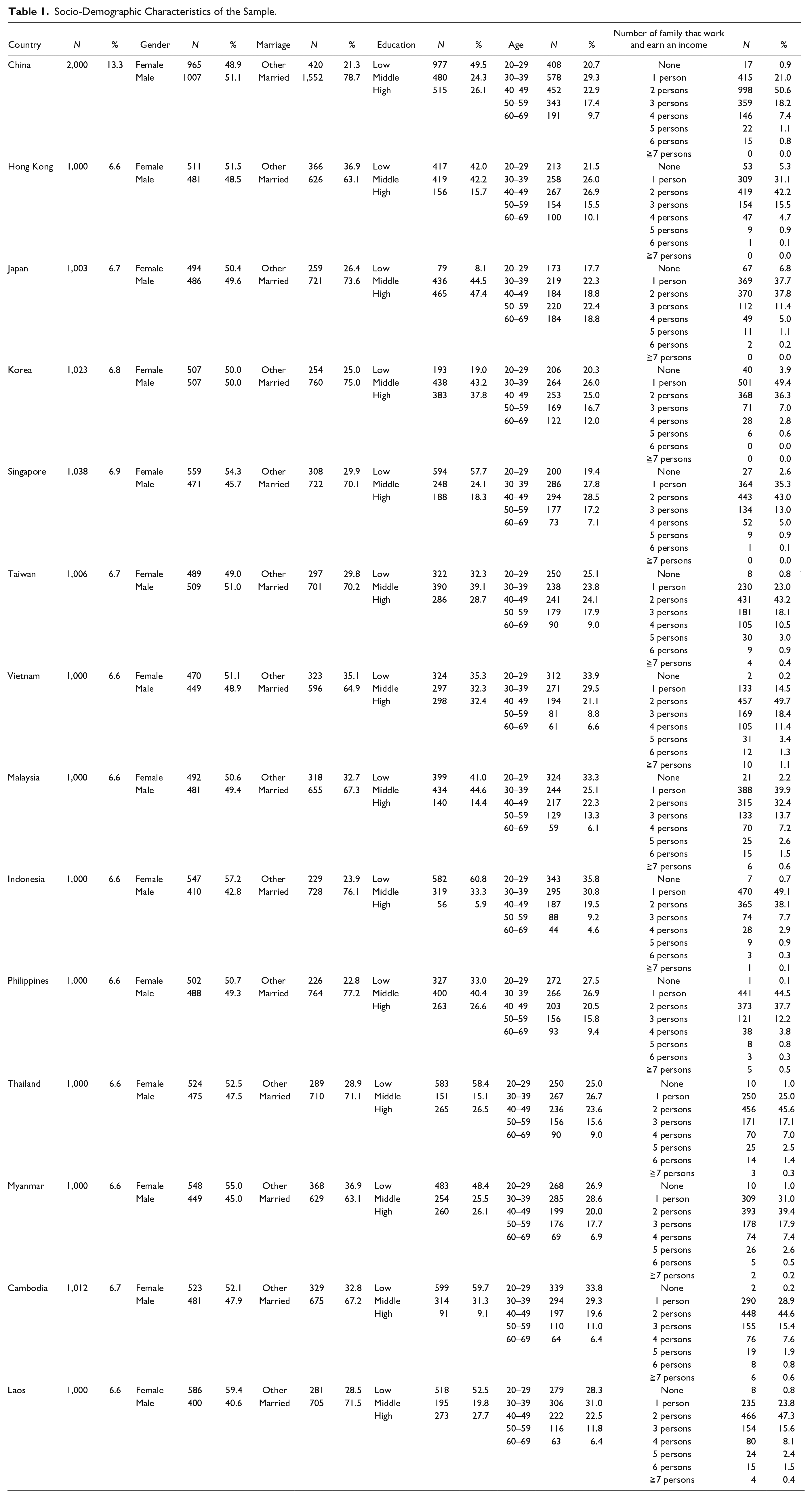
Table 1 presents the socio-demographic characteristics of the final sample. As shown in the table, the results of the socio-demographic analysis demonstrate that the sample distribution well reflects the population distribution of the sampled countries and regions.
Socio-Demographic Characteristics of the Sample.
Descriptive Statistics and Correlation of Variables
Table 2 presents descriptive statistics and correlations between the variables in the current study. Figures 2 and 3 present the distribution of English proficiency and happiness from country/region to country/region. As shown in the table, the dependent variable happiness is highly correlated with the independent variable, the mediators, the moderator, and most of the control variables. We will further examine such linkages with regression analyses. Although most of the variables are correlated with one another, the highest coefficient is .474, lower than .5. This means that multicollinearity will not affect the results in our study. We further conducted a variance inflation factor (VIF) analysis of all the variables, and collinearity statistics show that the highest VIF is only 1.819, much lower than 10, which also confirms that multicollinearity is not a problem here. Before entering into the hierarchical regression models, the independent variable, the mediators, the moderator, and the dependent variable were all standardized.
Descriptive Statistics and Correlation Matrix.

Note. Pearson correlation analysis; significance level: *p < .05 (two-tailed). **p < .01. MaritalS = marital status; NWFM = number of working family member; EnglishP = English proficiency; IncomeS = income satisfaction; LeisureS = leisure satisfaction; NationalE = national economy.
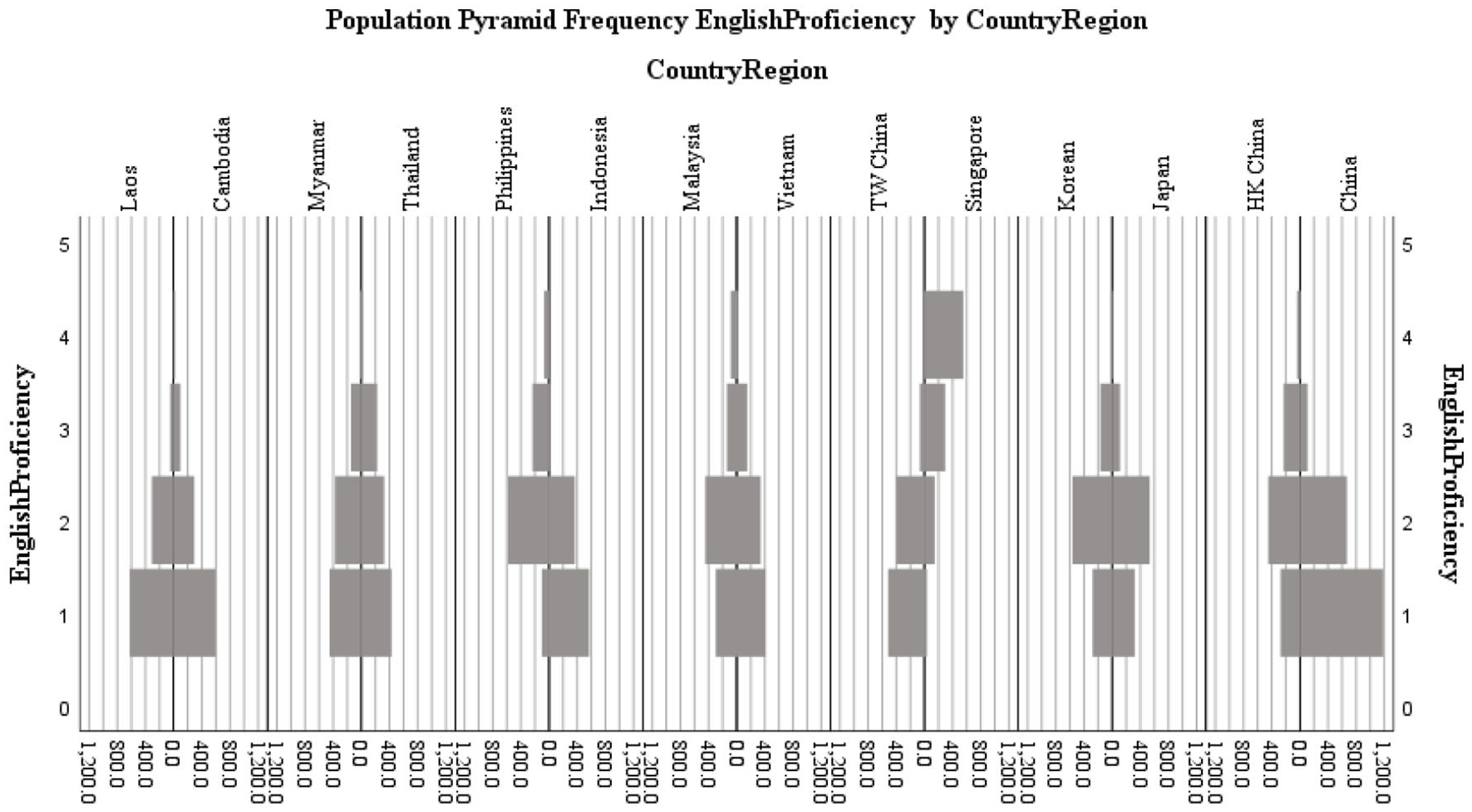
Distribution of English proficiency.

Distribution of happiness.
English Proficiency and Happiness
Figures 2 and 3 present the frequency distribution of English proficiency (ranging from 1 to 4) and happiness (ranging from 1 to 5) from country/region to country/region. As shown in Figure 2, the frequency of a higher self-rated English proficiency among the respondents from Singapore is significantly higher than among respondents from other countries, which may be related to English’s official status there. However, this result was not significant in other English-speaking countries or regions in Asia, such as Hong Kong or the Philippines. Figure 3 presents the frequency distribution of self-rated happiness in the 14 countries or regions. Although we can infer from previous studies that people living in more developed countries/regions may be happier than those in less developed areas, this is obviously not applicable to the 14 countries/regions as presented. For example, even though they were living in the most developed country in Asia, few of the Japanese respondents reported a high self-rated happiness level. In comparison, people who lived in some developing countries, like the Philippines, Malaysia, and Vietnam, rated themselves higher in terms of their happiness level.
Table 3 presents the regression results of English proficiency on happiness. Model 1 estimates the influence of control variables, and Model 2 shows the influence of English proficiency. Both models are statistically significant. As shown in Model 1, the regression coefficients for gender, age, marital status, education, number of working family members, and English as an official language are respectively −.078 (p < .01), −.038 (p < .01), .216 (p < .01), .140 (p < .01), .060 (p < .01), and .244 (p < .01), and all are statistically significant. These results reveal some interesting conclusions that relate to findings from prior studies: (1) compared with males, females generally rate themselves happier; (2) compared with older respondents, younger people generally report a higher level of self-rated happiness; (3) compared with those who are single, divorced, or widowed, married people generally believe they are happier; 94) compared with those with limited education, people with better education generally rate themselves as happier; (5) families with more members that work and earn money generally have a higher level of self-rated happiness; and (6) people who live in a country or region with English as an official language tend to rate themselves higher in terms of their happiness.
Regression Results of English Proficiency on Happiness.

Note. Significance level: **p < .01 (two-tailed). MaritalS = marital status; NWFM = number of working family members; EnglishOL = English as an official language; EnglishP = English proficiency.
Model 2 examines the effect of English proficiency on happiness. As shown in the model, R2 significantly increases by .009 (p < .01), and the coefficient of the independent variable is .127 (p < .01); this is statistically significant. That means that English proficiency is positively associated with happiness. Hence, hypothesis 1 is supported.
Mediation of Income Satisfaction and Leisure Satisfaction
Table 4 presents the regression results of the mediating role of income satisfaction and leisure satisfaction. Model 3 and Model 6 estimate the influence of control variables and English proficiency on income satisfaction and leisure satisfaction; Model 4 and Model 7 estimate the influence of English proficiency on happiness after controlling the effect of income satisfaction and leisure satisfaction; Model 5 and Model 8 estimate the influence of English proficiency on happiness. All the models are statistically significant.
Regression Results of the Mediation of Income Satisfaction and Leisure Satisfaction and Moderation of National Economy.

Note. Significance level: **p < .01. *p < .05 (two-tailed). MaritalS = marital status; NWFM = number of working family member; EnglishOF = English as an official language; EnglishP = English proficiency; IncomeS = income satisfaction; LeisureS = leisure satisfaction; NationalE = national economy.
In Model 3, the regression coefficient of English proficiency is .160 (p < .01) and statistically significant, showing that English proficiency is associated with one’s income satisfaction. In Model 4, the effect of income satisfaction was controlled when re-examining the influence of English proficiency on happiness for comparison. The regression coefficients of English proficiency in Model 5 and Model 4 are respectively .127 (p < .01) and .075 (p < .01), which shows that the positive association is partly mediated by income satisfaction. We also conducted Bootstrap and Sobel Test and the indirect effect of the mediation is .052 (p < .01). Thus, hypothesis 2-1 is supported.
In Model 6, the regression coefficient of English proficiency is .142 (p < .01); this is statistically significant, showing that English proficiency is associated with leisure satisfaction. In Model 7, the effect of leisure satisfaction was controlled when re-examining the influence of English proficiency on happiness for comparison. The regression coefficients of English proficiency in Model 8 and Model 7 are .127 (p < .01) and .087 (p < .01) respectively, which shows that the positive association is partly mediated by leisure satisfaction. We also conducted bootstrapping and Sobel tests, showing that the indirect effect of the mediation is .040 (p < .01). Thus, hypothesis 2-2 is supported.
Moderation of National Economy
Model 9 in Table 4 and Figure 4 present the regression estimates of the moderating role of national economy in the relationship between English proficiency and happiness. In Model 9, the regression coefficient of national economy is −.020 (p < .05). The statistical significance of the coefficient shows that national economy is negatively correlated with self-rated happiness in the 14 Asian countries or regions. The regression coefficient of the interaction term of national economy and English proficiency is −.018 (p < .05) and statistically significant, showing that national economy negatively moderates the influence of English proficiency on happiness. Thus, hypothesis 3 is not supported.

The moderation of national economy.
Robustness Checks
To increase the reliability of this study, a robustness check was conducted with an alternative dataset targeted at a specific country among the 14 countries or regions. Considering that the most recent accessible data we could obtain from AsiaBarometer surveys were from 2006 and 2007, we conducted robustness checks with data from the 2017 Chinese General Social Survey (hereafter CGSS 2017) to verify the standing value of our empirical findings.
The CGSS database is jointly organized and implemented by the Renmin University of China and academic institutions all over the country. It is the first national, comprehensive and continuous large-scale social survey project in China. Its purpose is to observe and analyze the long-term trend of social change by regularly and systematically collecting data from Chinese residents about all aspects of Chinese society. In 2017, CGSS project survey covered 31 provinces, autonomous regions and cities in China, and 12,582 questionnaires were completed. Using this database not only allows us to check the robustness of our findings, but also to examine whether they apply to the current situation in the largest Asian country.
Table 5 presents our robustness checks using this alternative database from China. We selected and coded five control variables (gender, age, marital status, education, and family socioeconomic status), two independent variables (English listening proficiency and English speaking proficiency), a mediator (income satisfaction), and a dependent variable (happiness). The original questionnaires were administered in Chinese; English versions of the relevant questions are provided in Appendix 2. The coding of all the variables was consistent with the coding in AsiaBarometer to the greatest possible extent. The total number of cases entering the regression model after screening the missing and abnormal values of the selected variables was 4,032.
Regression Results of the Robustness Check with Alternative Database from a Specific Country (CGSS 2017).

Note. Significance level: **p < .01. *p < .05 (two-tailed). MaritalS = marital status; FamilyS = family socioeconomic status; EnglishL = English listening proficiency; EnglishS = English speaking proficiency; IncomeS = income satisfaction.
The results in Table 5 replicate those in Model 3 to 5. Models 10 to 12 present the regression results of the mediating role of income satisfaction between English listening proficiency and happiness, and Models 13 to 15 examine the mediating role of income satisfaction between English speaking proficiency and happiness. All the models are statistically significant. In Model 12 and Model 15, the regression coefficients of English listening and speaking proficiency are .083 (p < .01) and .080 (p < .01), showing that English listening and speaking proficiency is associated with income satisfaction. In Models 11 and 14, the effect of income satisfaction was controlled when re-examining the influence of English listening and speaking proficiency on happiness for comparison. The regression coefficients of English listening proficiency in Model 12 and Model 11 are .083 (p < .01) and .063 (p < .01) respectively, and those of English speaking proficiency in Model 15 and Model 14 are .080 (p < .01) and .062 (p < .01) respectively, showing that the positive associations are partly mediated by income satisfaction. We also conducted bootstrapping and Sobel tests, which indicated that the indirect effects of the mediation are .019 (p < .01) and .018 (p < .01). Thus, the previous results are robust when an alternative database from a specific country and alternative measures are used.
Discussion and Conclusion
Using large-scale survey data from 14 East and Southeast Asian countries or regions, we have examined the influence of English proficiency on happiness, and especially explored the roles of income satisfaction, leisure satisfaction, and national economy in the focal relationship. Empirical results show that English proficiency is positively associated with happiness and that the effect is partly mediated by income satisfaction and leisure satisfaction, and negatively moderated by national economy. Such findings not only explain the fever to learn English around the world and enrich our understanding about happiness by confirming the positive association between English proficiency and happiness, but also explore the meaningful mechanisms behind the linkage by examining the roles of income satisfaction, leisure satisfaction, and national economy.
Our research shows that learning English as a foreign language does have something to do with people’s happiness. While there might be different influencing mechanisms for the positive association, this paper has proposed and examined the “English-income satisfaction-happiness” linkage and the “English-leisure satisfaction-happiness” linkage. The former shows the important role of income satisfaction in the focal relationship. Many people may learn English as a foreign language to obtain good jobs and relatively high salaries, and English proficiency does help them to achieve such utilitarian purposes and help to improve their happiness and well-being in terms of their material life. The linkage also further indicates the instrumentality of English learning. The “English-leisure satisfaction-happiness” linkage shows the mediating role of leisure satisfaction in the focal relationship. It demonstrates that by broadening horizons and increasing knowledge, learning English helps the learners to have a positive recognition of and thus positive attitudes toward leisure, which leads to improved leisure satisfaction and life satisfaction. Moreover, good English proficiency may improve self-confidence and self-efficacy, both of which are positively related to leisure satisfaction and happiness (Caprara et al., 2006; Cheng & Furnham, 2002).
While the mediation of income satisfaction and leisure satisfaction helps to explore the black box between English proficiency and happiness, the moderation of national economy helps to explore the factors that influence the positive effect of English proficiency. The negative moderation of national economy shows that, with sound language proficiency and living in a more developed country, good English learners may face more stress and may not be able to achieve more advantages in comparison with their colleagues. Therefore, their self-rated happiness would decrease. At this point the “greener-pasture effect,” which is widely used in economics, come into play. According to the “greener-pasture effect” (Agrawal, 1999; Eskeland & Harrison, 2003), people are less satisfied with their living conditions when they experience more choices and comparisons. Although people who live in more competitive countries or regions enjoy a higher quality of English education and better material conditions, intense internal competition would reduce the benefits of English learning.
With the aforementioned findings, this paper has presented both theoretical and practical implications. From the theoretical perspective, it contributes to the extant literature in three aspects. First, the current research has explored and examined the positive association between English proficiency and happiness, which enriches our understanding of the influence factors of happiness and helps to explain the global fever to learn English. While there are many factors that influence happiness (Veenhoven, 2015), and previous studies have discussed the influence of language skills on some social and economic variables (e.g., Azam et al., 2013; Chiswick & Miller, 1995, 2003; Vandenbroucke, 2016), we are the first to directly propose and prove that learning English has a positive connection with happiness. Second, this paper has proposed and confirmed the “English-income satisfaction-happiness” linkage, which not only enriches our understanding of the relationship between English proficiency and happiness, but also responds to previous studies on the relationship between language skills and income satisfaction, as well as that between income satisfaction and happiness, by examining them with large-scale data from East and Southeast Asia. Previous studies have discussed the relationship between income satisfaction and happiness in different contexts and presented varied findings (Clark et al., 2008; Easterlin, 1974, 2001); in response, this paper confirms the positive linkage, thus demonstrating generalization with empirical support in a new context. While previous studies on the economy of language have seldom focused on domestic markets in developing economies, this paper confirms the positive linkage between language skills and income satisfaction in the Asian context, and, more importantly, integrates it with the “income satisfaction-happiness” linkage. Third, the “English-leisure satisfaction-happiness” linkage not only helps us better understand the relationship between English proficiency, leisure satisfaction and happiness, but also highlights the importance of leisure in life and happiness.
From the practical perspective, this paper finds one more source of happiness and helps to explain the world-wide rush to learn English. The findings give a really good reason for people to learn English as a foreign language. For some people, English learning is interesting, and the learning process is full of fun. For those who are not so interested in English per se, the “English-happiness” linkage may make their studies less stressful. This means that English teachers may take this as a good way to encourage people to have fun in English learning. Moreover, considering the positive connection between English learning and happiness, policymakers may be guided to create relevant policies to promote English learning and ensure that people can improve their happiness by joining the rush to learn English.
Despite all its contributions, there are some limitations in the current research. First, in the AsiaBarometer dataset most of the variables are measured by the respondents’ subjective single-item assessments, especially for English proficiency and happiness. While Likert-type measurement has been proved valid and is frequently used in previous studies (Matell & Jacoby, 1972; Maurer & Pierce, 1998), objective evaluation and systematic measurement of the major variables would certainly improve the reliability of our findings. Second, because of the limited availability and range of the AsiaBarometer database, the current research is based only on data collected in the 2006 and 2007 surveys. Although the focal relationships are quite stable and we conducted a robustness check of some key variable using CGSS 2017, updated data that takes social and economic dynamics into consideration will enhance the reliability of the findings. The current dataset also limits the data collection time points in the mediation test, although this information could be captured in the wording of the questions. Therefore, longitudinal data could be used in future work. Third, there are many other potentially influential factors, such as the respondents’ number of languages spoken and family socioeconomic status, but we were not able to control these variables in this study because of limitations in our current dataset. Further research with improved data collection and analyses will be able to provide additional contributions in this area.
Footnotes
Appendix 1
Appendix 2
Declaration of Conflicting Interests
The author(s) declared no potential conflicts of interest with respect to the research, authorship, and/or publication of this article.
Funding
The author(s) disclosed receipt of the following financial support for the research, authorship, and/or publication of this article: This work was funded by the National Natural Science Foundation of China (Project No. 71872165), the Zhejiang Provincial Natural Science Foundation of China (No. LY19D010013), and the Hangzhou Municipal-Zhejiang University Strategy Platform Collaborative Project (S.Z.20190296). All views expressed are those of the authors and not of the sponsoring organizations.
