




Abstract
Malaysia and Indonesia are well known as prolific producers of batik in Southeast Asia. The history of batik in both countries is deeply intertwined for more than a century. Most available published works related to batik production, challenges, and innovations were discussed within the local batik context of each country. This study aims to identify collectively how far batik, as a creative industry in these countries has progressed since its establishment until the present 21st century. It was notable that batik craftsmanships have been mostly maintained as similar tools and techniques are persistently being used until today in both countries. Significant progress was observed in the design and stylization of the batik design with the use of digital approaches such as fractal geometry. Similar challenging problems faced by both nations were highlighted and clustered into internal and external issues. It was concluded that assimilations of Third Industrial Revolution technology (IR3.0) primarily centered on the use of computer-aided design and computer-aided manufacturing to improve existing batik production. Emerging studies have shown the positive impact of integrating Fourth Industrial Revolution (IR4.0) technology such as augmented reality (AR) in promoting batik knowledge and transmitting batik as an intangible cultural heritage. The transmission of batik skills to the young generation has been a persistent problem. Thus, a brief framework was proposed to exemplify how IR4.0 technology can innovatively be used to transmit the batik skills via education platform.
Introduction
The term batik was believed to have been coined from these Javanese words; ambatik or tritik. The suffix tik in each word translates to “creating little dots.” Currently, the batik industry in Malaysia and Indonesia is dominated by two types of production techniques, that is, hand-drawn batik (batik tjanting) and batik stamp (batik terap/blok). The establishment of batik in Indonesia has a unique history that had spanned 700 years since the rule of Prince Wijaya from the Majapahit Kingdom in 1294 to 1309 (Suciati et al., 2014). Scholars speculated that the hand-drawn batik was initially reserved to be worn by Javanese royalty (Steelyana, 2012). The development of the batik stamp technique in the 1840s was responsible for revolutionizing batik making because it allows for a greater production rate compared to the hand-drawn batik technique (Sekimoto, 2003). In the early 20th century, the use of traditional dyes was gradually replaced with chemical dyes from Britain and Germany. Synthetically produced dyes penetrate better into the fabric, thus decreasing the time for the dyeing process. The combination of batik stamp and synthetic dye quickens the pace of production and has led to the boom in the Indonesian batik industry in the 1920s (Sekimoto, 2003).
The Indonesian batik industry has been acknowledged by the Department of Trading of Indonesia as part of its 14 existing creative industries (Budiono & Vincent, 2010). The contribution of batik as a creative industry in building Indonesia’s economy and socio-culture is undeniable. The Indonesian batik makers are mostly home-based and consist of interconnected small and medium enterprises (SMEs) (Jones, 2018; Yoshanti & Dowaki, 2009) that are geographically located over its entire archipelago. However, well-known batik centers are mainly located in central Java such as in Cirebon, Yogyakarta, Pekalongan, and Surakarta. Data sourced from the Indonesian Ministry of Industry and Trade revealed that there are approximately 50,000 batik firms all over Indonesia (Shamasundari, 2017) which created large job opportunities for the local communities (Hengky, 2014). UNESCO’s affirmation of batik as intangible cultural heritage (ICH) has heightened its popularity in the international market scene and enabled Indonesia to capitalize on economic benefits (Zahidi, 2017). The Indonesian batik industry grew rapidly with an increase in export value from 22 million USD in 2010 to 340 million USD in 2014 (Triwiswara, 2019; Zahidi, 2017). It is anticipated that by 2021, there will be a growth of 300% or equivalently 1.5 billion dollars batik exportation value (Shamasundari, 2017).
The batik industry in Malaysia was initially introduced by Javanese batik makers using the wood batik stamp technique east coast peninsular circa 1920s. The development of the batik stamp in the 1930s was spurred by the demand for traditional costumes known as batik sarong (Yunus, 2011). In comparison to Indonesia, the application of the hand-drawn batik technique into the Malaysian local scene occurred much later in the 1970s. Most batik firms in Malaysia are still pioneered by SMEs (86%) (Akhir et al., 2015). However, in comparison to Indonesia, the population of Malaysian batik entrepreneurs is still very small. Recent data obtained from Kraftangan Malaysia revealed that the total number of registered batik stamp and hand-drawn batik entrepreneurs in 2019 was only 651 and is mainly located in Kelantan and Terengganu.
Malaysian batik as part of the creative industry that contributes toward national revenue and in developing the country’s cultural identity has long been acknowledged. The Malaysia Creative Industry Policy has delineated the importance of talent development, government policies, funding, marketing, technology, as well as research and commercialization to ensure the growth of the batik industry (Eshaq, 2019). In 2017, the textile-based merchandise was reported to be the largest sale contributor (49%) of the overall craft industry which amounts to RM243 million. In this share, 81% or close to 196.83 million worth of sales value was accrued from batik merchandise (Anon, 2017). It is projected that batik exports will increase to RM24bil in 2020 (Nair, 2014).
Recently, batik motifs have been reproduced via alternative means such as ink printing for mass production and distribution. As a consequence, the local batik entrepreneurs suffered from economic loss, as these look-alike batik textiles were sold at a cheaper price. There are various intellectual property rights (IPRs) that apply to protect batik designs. In Malaysia, the domestic IPRs that are applicable to protect local batik designs are the Copyright Act, 1987 (CA 1987) and the Industrial Designs Act, 1996 (IDA 1996) (Nordin & Bakar, 2012). While Indonesia’s effort in protecting the economic and moral rights of creative industry practitioners are governed in Law Number 28 in CA 2014 (Mauli, 2019). Despite the need to adopt IPR among batik artisans in Indonesia and Malaysia to protect their design (Budiono & Vincent, 2010; Nordin & Bakar, 2012), normalizing the copyright practice has been a challenge due to varying perceptions and levels of acceptance. Mauli (2019) performed a study to identify the batik craftsmen’s perception toward copyright in the Laweyan district, Indonesia. The study revealed that there was a low understanding of copyright law in the local community. The concept of protecting one’s creative work by law is derived from western culture. Hence, synchronizing the copyright law within the batik communities presents a problem as it collides with the culture of the local community. Rather than monopolizing copyright individually, the Laweyan batik craftsmen have long accepted that copyright belongs to the local community. Also, the Laweyan batik community sees batik production as a communal and mutual-based activity. Subiyantoro et al.’s (2017) study on batik wood craftsmen in Yogyakarta, Indonesia, also revealed that cultural and communal values have a great influence on the lack of copyright registration on their craft.
In this paper, the discussion on the progress in the batik industry for both nations within the scope of production, challenges, and innovations, is composed as follows: Section “Batik Production” provides a review on the batik production, design, and materials; section “Challenges in the Batik Industry” discusses batik’s sustainable challenges; section “Batik Innovations” highlights batik innovations; section “Batik Innovation” summarizes the role of batik as an ICH; and finally, chapter “Batik as an Intangible Cultural Heritage” concludes the review and further recommendations for the batik industry.
Batik Production
Batik is a process that applies resist materials and dyes repetitively to build up the design on the fabric (Tucker, 1999) using traditional tools. The hand-drawn and batik stamp techniques differ in terms of the tools used, production time, ability to deliver complex design, product price, and volume of output. In the hand-drawn process, tjanting is commonly used to draw wax designs on the fabric. The molten wax continuously flows onto the fabric from a small brass-made or copper-made cup and spout that is attached to a wood-based handle. The cup also acts as a wax reservoir. A cup and spout made from copper thermally perform superior to brass as copper is better at conserving heat (Affanti & Hidayat, 2019). This allows the batik wax to be maintained in its melt form for a longer period.
The batik stamp technique uses a metal block that is dipped into molten wax and then impressed onto the fabric to transfer the batik design motif. In comparison to the batik stamp textile, the price of hand-drawn batik textile is more expensive and is produced in smaller quantities (Rahman, 2005). In this section, the approach in batik production in Indonesia and Malaysia is viewed in the context of design, techniques, and tools, batik wax, and dye used.
Batik Design Motif
Indonesian batik motif often resonates with spiritual/philosophical meaning, social status, religion, regional culture, maritime trading, and colonization past (Jones, 2018; Sidhi et al., 2020). Over the years, batik designs have become the product of culture and religious assimilation as seen in the design of batik from the Cirebon district (Sudardi, 2018). The richness of Indonesia’s culture is attributed to the nearly 630 ethnicities living in more than 3000 islands. For instance, Yogyakarta which was announced as the City of the World Batik by the World Craft Council contributes to more than 400 classical and modern batik motifs (Hengky, 2014). As a result, categorizing the batik motifs can be overwhelming. Saddhono et al. (2014) explain that most experts categorize the batik motifs as either originating from the royal palace referred to as batik keraton or designed by local merchants such as batik pesisir as shown in Figure 1.
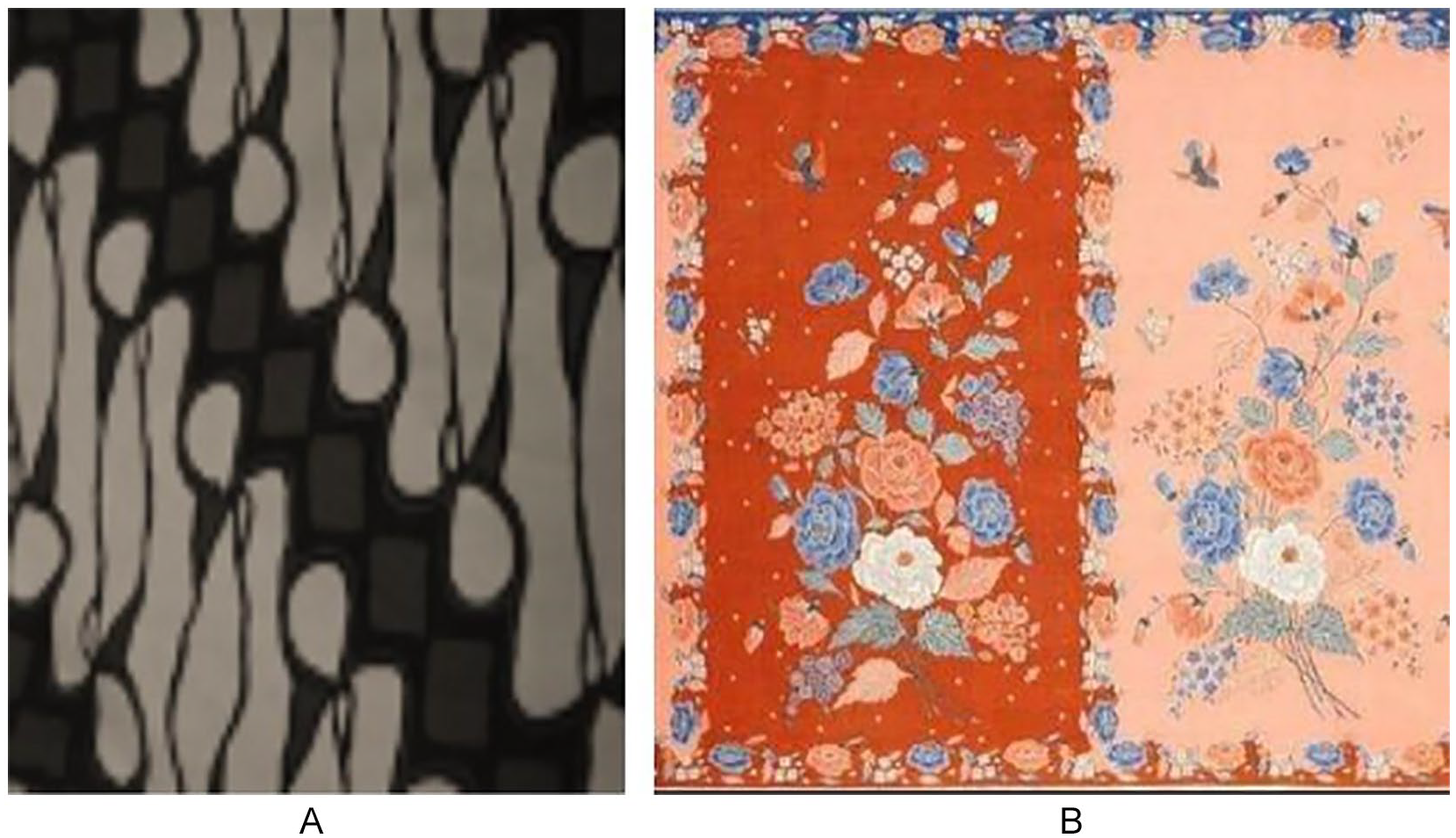
Example of (A) batik keraton with parang motif (source: Setyawan et al., 2015) and (B) batik pesisir with buketan motif (source: Nuraryo, 2020).
Batik keraton is also known as batik pedalaman (inland) or batik Vorstenlanden. Batik keraton is the oldest batik tradition only worn by the royal courts that can be traced back to the Mataram era in Central Java (Steelyana, 2012). The motif used symbolizes power and is often colored in earthy hues of black, brown, and dark yellow (sogan). One of the most prominent batik motifs worn by the royal family is known as parang shown in Figure 1 (A). Hengky (2014) elaborated that the parang motif was traditionally worn by knights to symbolize their efforts in defending their country from enemies. Hence, the locals believed that a bride who wore such a motif during the wedding will live in dispute. The size of the motif reflects the wearer’s social status and its direction differ for men and women. Today, however, these motifs are used by the locals with less regard for their hidden philosophical meaning (Saddhono et al., 2014).
The term “pesisir” in batik pesisir means coastal and therefore represents batik that was originally produced in the coastal area north of Java such as Cirebon, Pekalongan, Bakaran, and Lasem. In comparison to batik keraton, batik pesisir is worn by the common folks. Batik pesisir offers more variety in terms of motifs and is recognized by its vivid color due to external influences from past maritime trading with merchants from China, Dutch–European, and Jambi. For instance, Chinese influence is reflected in megamendung (rain cloud), phoenix, lotus, and dragon motifs. Patria’s (2016) study on the effect of Dutch colonization in the late 1840s mentioned the design integration of floral-based motif known as buketan and European fairytale motifs such as mermaid and the red hood and the wolf. Japanese occupation in the 1940s had inspired new motifs stylized from cherry blossoms, orchids, chrysanthemums, butterflies, and peacocks are known as batik Jawa Hokokai (Amira & Ramadhan, 2018). Islamic influence had also influenced local designs with floral motif and stylization of symbols as Islam prohibits figurative images.
The adoption of batik stamp-based textile production in Malaysia initially embraces similar motifs from the north coast batik centers of Java or batik pesisir (Yunus, 2011). In comparison to Indonesia, batik has never been regarded as the main dressing code in the royal court of Malaysia (Yunus, 2011). Malaysian batik motifs eventually progressed predominantly into floral and geometric stylization as dictated by Islamic doctrine (Salleh, 2019; Yunus, 2011). A prominent batik motif that is continuously used until today is known as pucuk rebung which was inspired by the tapered triangular feature of rebung or bamboo shoot (Arney, 1987; Legino, 2016; Samsuddin et al., 2020) as shown in Figure 2. Legino et al.’s (2015) study on various motifs of Malaysian batik sarong and proposed that there were two delineated shifts in design that were brought upon by the constitutional and policy changes in Malaysia. The first shift toward more localized Malay motifs occurred as Malaysia gained its independence in 1957. The next 14 years witness the evolution of the batik sarong industry in line with the progression of Malay aesthetics in other areas of the creative industries such as visual arts and crafts. By 1971, the introduction of the National Cultural Policy spurred the second phase of changes in the motif design. The new policy encourages the use of motifs that would truly represent Malaysian diverse cultural identity. Malaysian batik motif is larger, stylistically less complex, and rarely employs tjanting to add further detailing to the existing design in batik stamp fabric (Samsuddin et al., 2020).
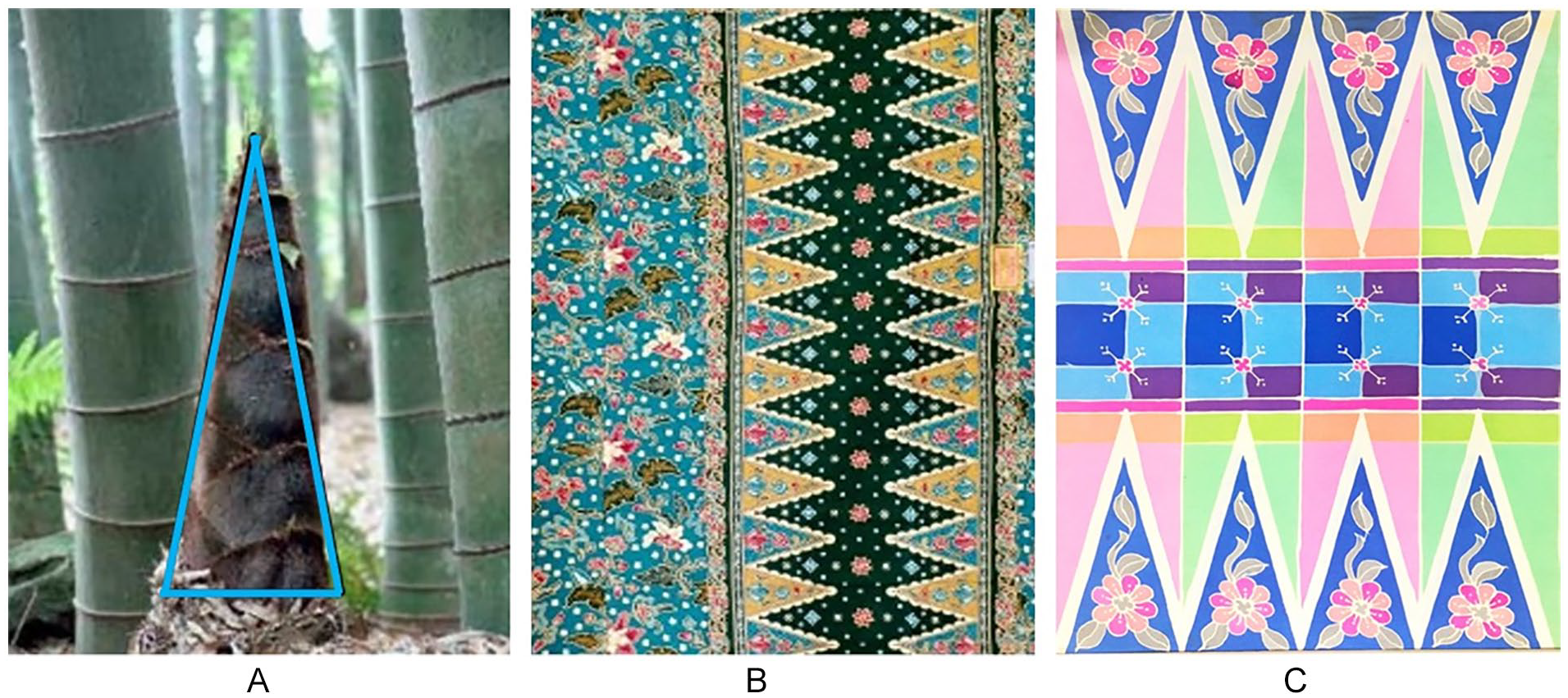
(A) Triangular outline of pucuk rebung or bamboo shoot (source: Legino, 2016). (B) Pucuk rebung stylization in batik stamp sarong (source: Samsuddin et al., 2020). (C) Modern stylization of Pucuk rebung in pastel colors.
The traditional batik motif in both nations has also transformed into contemporary design in the recent decade, owing to the competitiveness in the batik market scene. New batik motifs with a modern twist are developed based on the designer’s interpretation, rather than on traditional philosophical guidelines. Examples of modern batik motifs based on interpretation of binary numbers (Ibrahim, 2020) and indigenous culture (Yusof, 2019) using traditional hand-drawn and batik stamp approaches are shown in Figure 3. In Indonesia, digitally designed batik motifs using fractal geometries and computational techniques have been experimented with by Situngkir (2008). Figure 4 shows the resultant study of batik patterns constructed using L-System Thue–Morse algorithm for the Jambinese melati motif and random tessellation process for Javanese sawat.

Contemporary Malaysian design influenced by (A) technology such as binary numbers (Ibrahim, 2020) (B) indigenous culture (Yusof, 2019).
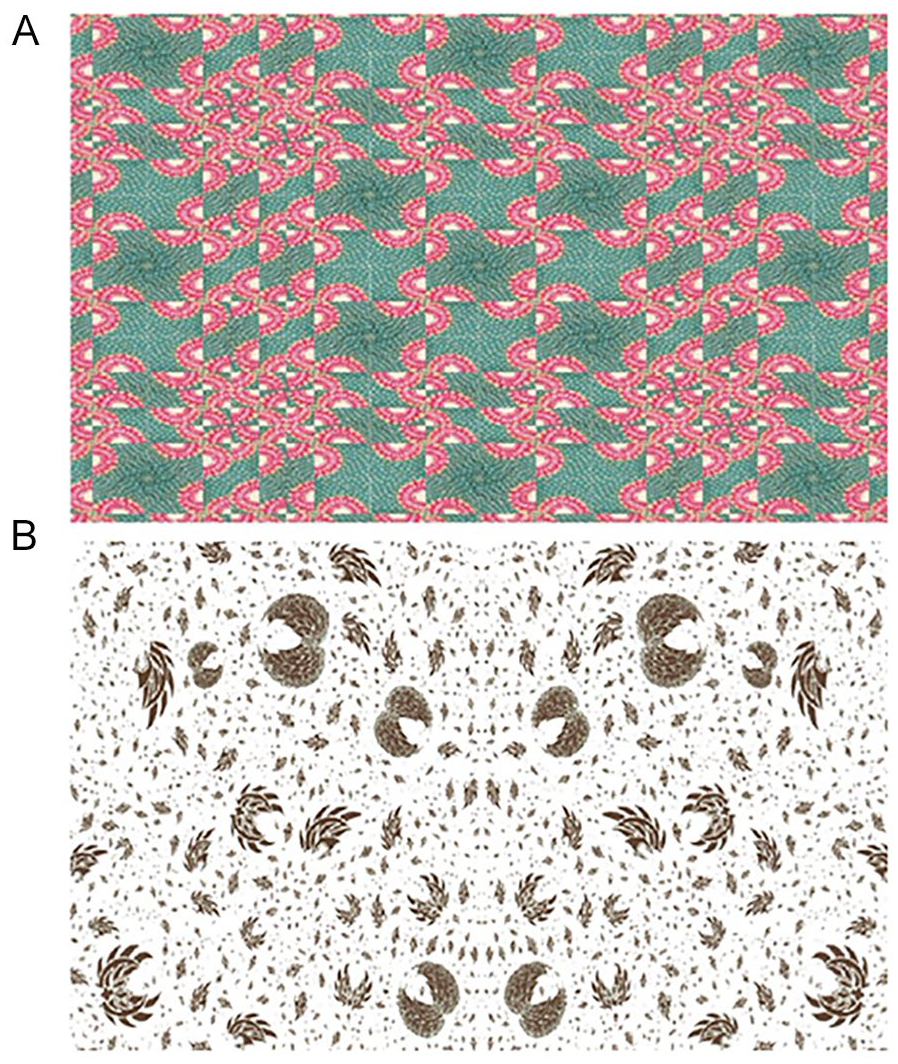
Indonesian batik ornaments and pattern using (A) L-System Thue–Morse algorithm for Jambinese melati motif and (B) random tessellation process for Javanese sawat motif (source: Situngkir, 2008).
Batik Techniques and Tools
The general batik process is shown in Figure 5. There are two main activities in the batik process which are clustered as (a) waxing and dye staining stage and (b) wax removing stage.

The general sequence of the batik process.
It was observed that there is a distinct difference during the waxing process between the batik craftsmen in Indonesia and Malaysia. In Indonesia, it is a traditional common practice that designs made using batik stamp was further refined with detailed motifs using tjanting. The process is done while sitting down, and the cloth is partially supported by their palm while the rest of the cloth is draped over a bamboo cross-bar structure or gawangan (Tucker, 1999) as shown in Figure 6. Meanwhile, Malaysian batik craftsmen apply wax on a cloth that is stretched between wooden frames while standing.
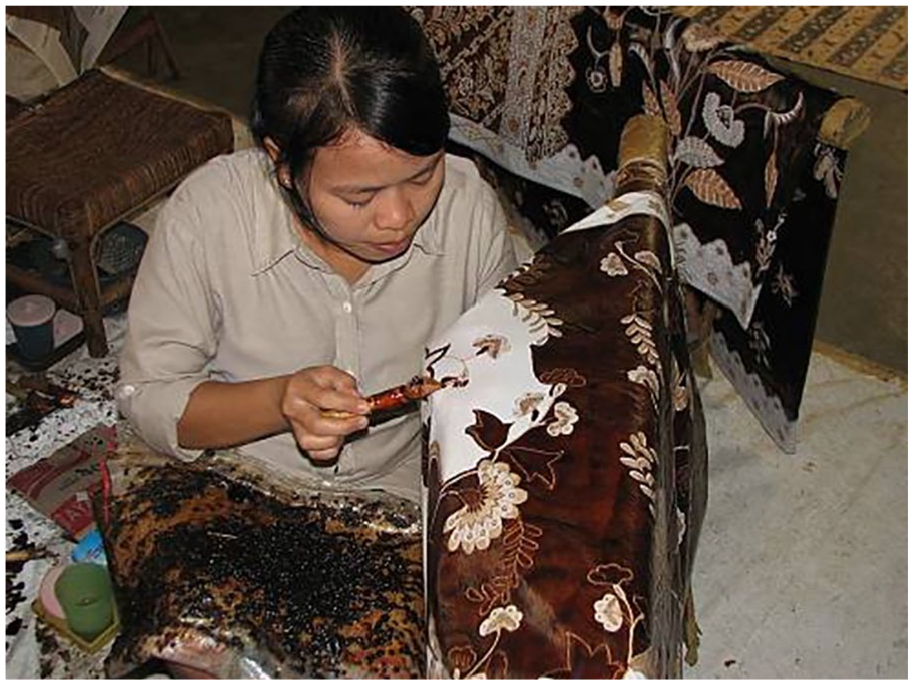
The difference in the batik artisan posture and working setup while using the batik tjanting tool in Indonesia (UNESCO, 2020).
Batik Wax
Batik wax consists of varying combinations of natural and synthetic substances. The quality of batik wax has been defined based on several criteria as follows; latching or adherence power, resistance against cracking, alkaline chemicals and colorant diffusion in the cold and warm dye solution, pliability, ability to render designs with sharp lines, the color wax stain, ease of removal from fabric, ease of solidification, stickiness, ease of melting, ease of use, and cost (Kudiya et al., 2014; Kusumawati et al., 2017). The batik waxes used in Indonesia consist of a mixture of shorea javanica (damar mata kucing), pine gum (gondorukem), beeswax, coconut oil, animal fat, lancing wax, and paraffin (Malik et al., 2018). In comparison, the batik artisans in Malaysia use batik resist materials that are mainly made from varying ratios of beeswax, paraffin, dammar, and vegetable oil.
Beeswax is processed from empty honeycombs (Apis mellifera L., Fam. Apidae) and primarily consists of a large number of fatty acid esters (more than 70%) and to a lesser extent of hydrocarbons, free acids, and long-chain alcohols (Amin et al., 2017; Kuznesof, 2005; Ruguo et al., 2011; Yao & Wang, 2012). Pure beeswax is pliable and adheres well to fabric. The water-resistive or superhydrophobic nature of beeswax is attributed to the presence of a high amount of chain methylene [int-(CH2)] of more than 95% (Reshmi et al., 2017). The aromatic hydrocarbon structure of beeswax is said to be responsible for the hydrophobic spreading of beeswax on fabric (Masae et al., 2014) which allows the batik artist to create smooth, intricate, and well-defined motifs.
Paraffin wax, a byproduct of petroleum distillates consists of a solid crystalline mixture of hydrocarbons molecules or alkanes (Sparks, 1954). In comparison to beeswax, paraffin has less adherence property to the fabric. Paraffin’s brittle nature creates the batik hallmark effect known as “crackle” or “hairline crack” as shown in Figure 7. Paraffin offers a lower melting temperature than beeswax because its structure predominantly consists of simple chain alkanes, while beeswax is composed of complicated structures and mix esters that contribute to its high molecular weight (Ruguo et al., 2011). One of the undesired effects of using pure paraffin is that the wax tends to entirely flake off or crack which affects the design. Thus, the mixture of beeswax/paraffin is often adjusted to achieve the desired crackle effect in the batik design. Recently, soy wax has been given focus as a biodegradable and renewal candidate to paraffin wax (Rezaei et al., 2002). The performance of soy-based wax as batik-resist material, however, has not been empirically studied.

The typical crackle effect obtained from using paraffin wax (A) and mixed paraffin wax (B).
Dammar is a resin produced from dipterocarpaceae tree family which grows in abundance in Malaysia and Indonesia. This triterpenoid-dominated resin contains fractions of volatile, monomeric, and high-molecular-weight components with a very complicated chemical structure (Bonaduce et al., 2016; Vahur et al., 2012). Dammar is expensive thus, only a small amount of dammar is added to the wax composition to improve the wax resistance against alkali treatment (Kudiya et al., 2014) as well as increasing adhesiveness (Bomford & Staniforth, 1981). Addition of vegetable/kerosene oil or animal fat aids in dissolving the waxes and lowers the melting point of the batik wax blend (Kudiya et al., 2018; Malik et al., 2018).
Batik Dyes and Chemicals
Traditionally, natural dyes were obtained by simple extraction method from plants such as indigofera tinctoria to obtain indigo dye, peltophorum pterocarpum backer for sogan-yellowish-brown hue and from the root bark of morinda citrifolia to produce mengkuda-dark red hue. Mixing these colors such as indigo with sogan or mengkuda would produce a green or purple hue, respectively. Deeper shades of hue depend on the length of time the fabric is soaked or the number of times the fabric is immersed in the dye bath. Natural dyes are commonly used in Indonesia before 1856 (Felaza, 2016). The trading between Indonesia and Dutch in the 18th century introduces artificial dyes from India which adds to the existing repertoire of colors (Patria, 2016). With technological advancement, the ensuing years mark the inclusion of synthetic dyes in the traditional batik.
There are several categories of synthetically produced dyes such as cold water fiber reactive dyes, acid dyes, and naphthol dyes. Presently, the batik industries in Indonesia and Malaysia are using both natural and synthetic dyes. Unlike other types of dyes that adhere to the fiber by adsorption, the molecules of reactive dyes can form a covalent bond with the terminal –OH (hydroxyl) group of cellulose-based fibers and the terminal –NH2 (amino) group of polyamide-based or wool-based fibers, thereby increasing the bonding strength between both dye and fabric. As a result, fabrics infused with reactive dyes do not discolor easily with the increasing number of wash. Reactive dyes also have a more stable electron configuration which imparts good lightfastness property against the ultraviolet (UV) degradation effect.
Challenges in the Batik Industry
Over the years, batik production in Malaysia and Indonesia faces various challenges due to the ever-changing landscape in local culture and community, social values, and global economy. An overview of the challenging issues highlighted in various studies (Budiono & Vincent, 2010; Felaza, 2016; Iriani, 2013; Redzuan & Aref, 2011; Syahputra & Soesanti, 2016) in batik industries is mapped in Figure 8. Several sustainable batik production issues related to the environment, economy, use of natural resources, energy utilization, and safety (Indarti et al., 2020) are also incorporated in the framework.

External and internal challenges in the batik industry in Malaysia and Indonesia.
In general, the raw materials used in batik are fabrics, wax, chemicals, and dyes. Unfortunately, except for beeswax and dammar which can be sourced regionally, other batik materials had to be imported (Redzuan & Aref, 2011). For instance, both Malaysia and Indonesia mainly import cotton (locally known as mori fabric) from China, India, and America while chemical dye is sourced from Germany (Akhir et al., 2015; Yoshanti & Dowaki, 2009). The depreciation of local currency or fluctuations of the market price of raw material affects the sustainability of batik products as the entrepreneurs have little control over the cost of their products (Yoshanti & Dowaki, 2009). Another threat to local batik makers also comes from the huge inflows of printed batik textile to the domestic market. These printed batik textiles are cheaper and have caused the demand for the local batik to slowly decline over the years. Budiono and Vincent (2010) have also raised their concern that these printed batiks led to confusion in recognizing genuine and traditionally produced batik. The importation of these batiks was alleged to incur huge losses of about RM3 million per year to almost 200 Malaysian batik entrepreneurs (Nordin & Bakar, 2012). The competition for batik market share in Indonesia was further aggravated with the implementation of the ASEAN-China Free Trade Area (ACFTA) in 2007. A comparative study on the effect of ACFTA revealed that the import value was averaged at 10 million USD per year before the policy was introduced (Kurniawan & Syah, 2017). After its implementation, the import value drastically increased up to 30 million USD in 2013 due to slashed value on import duty.
The development of skilled human capital is pertinent to the batik industry (Manan & Jan) 2010 because the production technology used for batik is still manual and very much labor-intensive (Elamvazuthi & Morris, 1997; Salleh et al., 2008). Unfortunately, as with any craft-based industry that still uses traditional techniques, the number of batik workers is also seen to have dwindled in recent years (Khalili, 2018). Both nations find that it is getting harder to attract youths to participate in the local batik industry (Akhir et al., 2015; Dwinugroho et al., 2019; Khalili, 2018; Vatvani, 2019). The reasons for this scenario are attributed to various local economic factors as follows: low wages, decreasing product demand, unstable income, and the boom of other types of industries (Redzuan & Aref, 2011; Vatvani, 2019). Malaysia is now facing diminishing craftsmen that specialize in the fabrication of batik stamps from metals (Lias et al., 2020).
Ergonomic studies have been conducted to assess the effect of manual batik production on local batik artisans in both countries. Musa et al.’s (2000) study on hand-drawn batik workers in Kelantan, Malaysia, revealed that 60.2% of batik workers suffered from musculoskeletal disorders (MSDs) involving pain at the shoulder, lower back, and ankle. A separate study in the neighboring state, Terengganu by Yusof et al. (2013) elucidated a similar prevalence of MSDs afflicting the shoulders of the batik makers (64.5%). Their study also highlighted that aside from prolonged standing, MSDs are also attributed to repetitive movement and poor workstation design. Siswiyanti et al. (2019) ergonomic study in Kalinyamat Wetan Kota Tegal, Indonesia revealed that the dyeing process which involves stooping and squatting procedures has resulted in musculoskeletal complaints in various parts of the worker’s body. The high tendency for MSDs found by these studies is a socio-economic burden and has a major impact on the health and quality of performance of the batik workers (Siswiyanti et al., 2019). Ergonomic studies have resulted in better working posture proposals and ergonomically designed batik tools to reduce the tendency for MSDs (Anugraha et al., 2015; Sutari et al., 2015) which aids the sustainability of the industry.
The manufacturing of textiles typically involves both chemical and nonchemical treatments at various stages of its production. Batik, a wet textile process uses a large amount of water during the soaking, boiling, and rinsing process. Direct effluent discharge into inland waterways and ground from the wet textile process has consistently been a major source of water pollution and soil contamination (Amutha, 2017; Budiyanto et al., 2018). As most fabrics have a low dye uptake, a large amount of these dyes are still retained in the wastewater. Synthetic dyes may not degrade easily due to their complicated and structurally stable nature (Holkar et al., 2016). The use of chemical-based mordant to bind the natural dye to the fibers of the fabric such as alum (aluminum sulfate) also plays a contributing role to environmental pollution (Rinawati et al., 2017). Thus, the use of naturally sourced dyes only provides a better alternative if the mordant used is also from naturally sourced material. The use of these dyes, chemicals, organic, and inorganic pollutants (waxes) contribute to high pH, chemical oxygen demand (COD), and total suspended solids (TSSs) in the wastewaters (Birgani et al., 2016) and poses a significant threat to both human and marine aquatic life (Amutha, 2017).
Recent studies show relevant sustainable batik waste management systems and environmental awareness in both countries are still lacking (Budiyanto et al., 2018; Yaacob et al., 2016). Most batik industries are located alongside rivers and coastlines which are nondesignated industrial areas; hence, the effluents are commonly collected in vessels or directly discharged into river or drainage systems with insufficient or zero prior treatment (Triwiswara, 2019). The simplest mean of batik wastewater treatments is to skim the wax that floats on top of the wastewater after it has cooled down from the boiling process. However, Rashidi et al. (2013) commented that such an approach may not be sustainable because extra operational time is needed. Hence, local researchers have resorted to the use of activated carbons derived from local agricultural waste such as pineapple (Subki, 2017) and palm shell (Birgani et al., 2016) to adsorb and filter batik effluents as sustainable means to remediate pollution from batik wastewaters. Rashidi et al. (2013, 2016) studies on baffle tank pretreatment have shown positive results in removing wax wastes and reducing pH as well as COD.
Presently, most wastewater treatments to treat dye effluents are proposed based on physical and chemical methods. The use of the biological method is possible but requires a longer retention period and may not be efficient in removing wastewater laden with heavy toxic metal (Aouni et al., 2009). Batik wastewater treatment performed using an anaerobic-aerobic process approach in which the long-chain organic substance will first be degraded (anaerobic) followed by transformation into gas and water (aerobic) has been explored (Kristijanto et al., 2011). A more holistic environmental approach should be advocated to manage the batik process and waste to allow batik to achieve the status of a sustainable industry. A viable option is to complement the wastewater treatment activities with environmental management for cleaner production (CP), a concept that assumes the use of “ineffective” raw materials or products would lead to contamination (Susanty et al., 2013).
Batik Innovations
The Indonesian National Standard (0239:2014) defines batik as a handicraft where batik wax is transferred on the fabric using canting or stamp tool to create meaningful motifs (Affanti & Hidayat, 2019). Complete mechanization of batik production contradicts the Malaysian Handicraft Development Corp Act 1979 (Act 222) in which handicraft is defined as any “artistic product which is graced with cultural or traditional appeal and is the outcome of any process which is dependent solely or partly on the manual skill, and includes any batik product.” Thus, any product cannot be claimed as batik if it is 100% made by a printing machine. In 2009, UNESCO classified batik, a natural heritage into three clusters which are hand-drawn batik (batik tjanting), batik stamp (batik terap/blok), and a combination of both clusters (Nugroho, 2013). The definition of batik has put both Malaysia and Indonesia on a dilemmatic crossroads in setting future directions as these batik definitions contradict the necessity to replace human labor with an automated process. Nevertheless, predominant sustainability issues in Indonesia and Malaysia batik production due to the declining number of skilled labor, low productivity, and laborious nature of work have triggered various studies and development of automated batik process prototypes.
Technologically driven innovations can be seen in various phases of batik production such as tooling, processing, design, product, and marketing. In this article, a review of batik innovations is discussed within the context of tools, processes, and designs. The adoption of computer-based technology such as computer numerical controlled (CNC), computer-aided design (CAD), and computer-aided manufacturing (CAM) systems to automate the batik process seen in both Malaysia and Indonesia has certainly put what used to be a traditional industry in the track of the Third Industrial Revolution (IR3.0).
The batik artisan uses the tjanting to intermittently scoop the melted wax from a nearby heated wax pot and then draws the wax motifs on the fabric. To compensate for the lack of continuous isothermal heating of the tjanting, electric tjanting has been developed with a temperature controller. The electric tjanting has been one of the innovation priorities in batik SME (Rizana et al., 2018). Aditya et al. (2019) analyzed the compatibility of a microcontroller-based system to regulate the temperature and the viscosity of the batik wax. Their study revealed that satisfactory heating response was achieved using the proportional–integral–derivative (PID) controller. Examples of the electric tjanting known as Swanata electric tjanting and Ladoe electric tjanting are shown in Figure 9.

Electric tjanting known as (A) Swanata and (B) Ladoe (Affanti & Hidayat, 2019).
The material used for batik tools such as tjanting and batik stamp has also gone through several transformations. The wax cup/container for the tjanting which was initially made from copper has now been replaced with brass as a cost-cutting measure. The material for the batik stamp has also progressed from cassava tubers to wood, copper, and aluminum. Aluminum batik stamp has been developed using machining process by Suryanto et al. (2016) via CNC milling machines. The hand-made batik image was directly converted into a 2D drawing using Vectric Aspire 4.0 followed by Master Cam and Mach 3 software to create the CNC toolpath. Recently, batik stamp using sustainable material such as naturally sourced bamboo has been investigated by Lias et al. (2020). Various cross-sections of the bamboo trunk were cut to produce circular motifs, dots, and dotted lines of various sizes.
Studies on the automation of batik production are mainly based on the batik tjanting and batik stamp process. In 1995, SIRIM Berhad in Malaysia initiated a prototype design known as Integrated Computer-Aided Tjanting System (ICATS) (Hitchcock & Nuryanti, 2016). The ICATS system uses CAD and CAM software. The CAD/CAM system converts any 2D motifs into sets of G-codes that control the movement of the extruder to create the desired batik motif on the cloth. The differences between the waxing phase in the traditional batik approach (refer to Figure 5) and the automatic batik approach (adapted from Muthi’ah, 2018) using tjanting is translated in the process flow shown in Figure 10. Later in 1997, Elamvazuthi and Morris (1997) proposed an automatic batik coloring machine that consists of coloring software and controller subsystems.

A comparison of the traditional and automatic system based on the batik tjanting approach (the automatic process was adapted from (Muthi’ah, 2018)).
Dwinugroho et al. (2019) had designed and developed an automatic batik stamp machine with grippers, based on the integration of CNC and programmable logic control (PLC). Their study revealed that the design can be stamped with higher consistency and accuracy compared to manual stamping. However, it is slower by 75 seconds compared to manual stamping. Wibisono et al. (2016) had also created an automatic batik stamp system with options in coloring, dyeing, and wax removing. Recently, Mohammed et al. (2019) conceptually derived an automated system for batik screen printing. In their study, the new system was integrated with IoT technology which allows online monitoring and control of the production process.
Batik innovations in the context of production have yet to be adopted at a large scale in both countries. Affanti and Hidayat’s (2019) study on the acceptance of local batik craftsmen in the batik centers in Surakarta, Indonesia revealed that, unless the innovative and new forms of batik tools can provide better comfort and efficiency, the local batik artisans would still prefer the use of traditional batik equipment. The batik artisans in Malaysia have also been less receptive to these radical developments in batik production (Ismail et al., 2019). Initial rejections are anticipated because central to the batik practice, the artisans often develop an attachment to the crafting process due to personal emotions, values, and memory (Niedderer & Townsend, 2014).
However, studies on prototypes have shown that technology indeed has eased up the time-consuming process of batik making. Muthi’ah’s (2018) assessment on the performance of a batik printer machine based on CAM, and CNC system known as batik Klowong machine reported that the machine was able to apply wax on the fabric with high precision and accuracy as per the original computer image. However, the machine could not perform isen-isen (ornamental details) and tembokan (block patterns). The traditional batik tjanting process involves creating sketches of motifs and copying these motifs to the fabric using a pencil (refer to Figure 5). As an alternative to this sketching process, Kusuma et al. (2019) developed an image transfer application using a vertex marker-based augmented reality (AR) approach. The artisan can use the application to display the motifs directly onto the fabric, resulting in a reduction in sketching time by 80%. The last phase in the batik process is de-waxing (refer to Figure 5). At this stage, the wax is removed manually by immersing the cloth in hot water for a certain length of time (10 minutes per cloth). The physical burden, low productivity, and safety issues initiated Hakim et al. (2017) to develop a semiautomatic wax removal machine using an electric motor. The new machine was reported to be capable of shortening the wax removal time by 7 minutes for every four clothes.
The Fourth Industrial Revolution (IR4.0) represents emerging technological breakthroughs such as cloud computing/manufacturing, cyber-physical systems (CPSs), internet of things (IoT), robotics, big data, additive manufacturing (3D printing), and augmented reality (AR) that allows people, industrial processes, and product to interact as a collaborative community (Nagy et al., 2018). The use of IR4.0 tools is mostly reflected in recent batik design innovations. Widiaty et al. (2020) constructed an Android and iOS-based apps, Jahit Batik Asyik which allows users to define their preferred batik pattern and fabric. Pixel Indonesia created jBatik, a software that can generate repetitive patterns by adjusting the variables in fractal mathematical formulas using L-System language (Nurjanah et al., 2020). The application aims to create a synergy between modern elements and traditional design philosophy (Ciptandi, 2019).
Technological inclusions for designing new batik patterns have resulted in a positive impact on the local community. Margried (2015) evaluated the impact of exposure in using jBatik software to digitally create batik fractal patterns among the residents of Kampung Dago Pojok in Indonesia. At the same time, traditional means of making batik design was also exposed to the locals. The study observed that the exposure in designing had triggered ideas and interest in batik making which can potentially nurture entrepreneurial activities. It is anticipated that the integration of digital designing in batik would have a profound impact on the technologically receptive younger generation as evidenced in similar programs conducted in Pekalongan, Cirebon, and Yogyakarta (Margried, 2015). Prahasiwi et al. (2019) developed web-based applications to create insitu 3D batik design using triangular mesh for batik Semarangan motif. Their analysis found that high learnability value was achieved among users using multipage website approach. The use of digitally designed batik motifs encourages creativity, accelerates the design creation process and reproducibility. It is foreseen that there will be new job scope in the batik industries for digital batik designers who are well versed in 2D design and image conversion using open-sourced software.
Batik as an ICH
Despite being in existence for several centuries, there has been little evolution in the craftsmanship in making batik as similar tools and techniques are persistently being used until today. Previously, UNESCO’s scope of cultural heritage defined in the Convention Concerning the Protection of the World Cultural and Natural Heritage in 1972 was primarily limited to tangible heritage. The inclusion of traditional craftsmanship in the ICH was only adopted in the 2003 Convention. UNESCO defines ICH as the practices, representations, expressions, knowledge, skills—as well as the instruments, objects, artifacts and cultural spaces associated therewith—that communities, groups and, in some cases, individuals recognize as part of their cultural heritage. In October 2009, UNESCO finally declared batik as the ICH of Humanity of Indonesia. Batik is a cultural heritage primarily due to the art involved in producing batik (Rangkuti et al., 2015). Nearly a decade later, Jones (2018) conducted an assessment on the impact of ICH policy on Indonesian batik. Their study pointed out that the listing of batik as ICH coincided with the shift of Indonesia’s cultural policy from education affiliated to tourism affiliated. This presented an opportunity to redefine the scale of cultural policy and new engagements with local and international connections. In support of the ICH policy, President Yudhoyono declared Friday as National Batik Day where civil servants are encouraged to wear batik. This has had a profound impact on the revival of the batik community in Indonesia since textile deregulation in the 1970s (Jones, 2018). UNESCO’s declaration on batik has led to increased awareness of ICH practice within the local community.
Today, batik is well adapted in the modern lifestyle not only for daily wear but also for homeware and decorative purposes in Indonesia as well as Malaysia. However, preservation of batik as ICH has been a constant challenge as it requires conscientious and aligned efforts from various parties, that is, national governments, museums, cultural organizations, and local communities. The process of preserving something that is in the intangible form such as batik making has been demanding as it involves documenting craft skills that are mainly formed by tacit knowledge and transmitted over generations via audible and visible medium. Unlike tangible cultural heritage (TCH) such as the Borobudur and Great Wall of China that remain unchanged with time, ICH constantly changes due to cultural and societal interaction within the community (Saddhono et al., 2014; Yim, 2004). Recently, there has been an escalating awareness from the international communities on ICH being endangered due to globalization, industrialization, and urbanization. Though it is technology that initially threatens ICH, harnessing the right technology systematically can also be an invaluable aid for batik survival.
The batik motifs in Indonesia are diverse and distinctively regional and this has led to the proliferation of local research on developing digital techniques for batik image extraction and classification to safeguard batik as a cultural heritage. Various approaches have been proposed for image retrieval and classification such as Scale-Invariant Feature Transform (SIFT) and Support Vector Machine (SVM) classifier (Azhar et al., 2015), fuzzy neural network (Rangkuti et al., 2015), and convolutional neural network (Prasetyo & Akardihas, 2019; Wicaksono et al., 2017). Amin et al. (2011) proposed a digital system to develop a knowledge repository model for archiving ICH. Their study identified six (6) factors to be integrated into the repository model development which are related to human, information communication technology, governance, legal/policy, religion, and geographical factors. Presently, research related to the use of new technologies to support ICH is still lacking (Alivizatou-Barakou et al., 2017).
The transmission of batik skills from experienced batik practitioners to the young generation is still a persistent problem (Rante et al., 2014; UNESCO, 2013). This has led to the implementation of batik education frameworks into various strata of formal/non-formal education from primary school (age 7–12 years old), secondary school (age 13–17 years old) until tertiary institutions. Indonesia’s Act 20 on National Education System in 2003 allows specific local content to be taught as part of the school curriculum (UNESCO, 2013). In 2005, the Pekalongan local educational authorities collaborated with Museum Batik Pekalongan to initiate batik programs for teachers and students that focused on the historical and cultural value as well as traditional skills using tjanting (Wang, 2019). As a result, by 2009, the batik education network had reached 230 schools in Pekalongan, and the program was selected by UNESCO as Register of Good Safeguarding Practices.
As mentioned earlier, batik is defined based on the process of using stamp or tjanting with wax resist-dyeing process to form meaningful design (Affanti & Hidayat, 2019; Situngkir, 2008). Learning batik skills for younger children has been constrained due to the risk of using tjanting with hot wax. As an alternative, Pertiwi and Sutapa (2018) developed a batik learning model for early childhood education which was packaged into a learning video (CD) and guidebook. Their evaluation showed that the batik learning tools were effective and appropriate for early childhood. The safety concern was addressed by replacing hot wax with cold wax.
There have been various efforts by both Malaysian and Indonesian governments to improve batik education using various learning media. Introduction to batik skills was occasionally attained by exposing the schoolchildren to local batik artisans’ workshops before the batik activities in the classroom environment (Anon, 2012; Wardani et al., 2018). The batik module in Malaysian art education is standardized across all primary and secondary levels and is accessible through visual art education classes. In comparison, the batik education framework in Indonesia may vary according to each region. For instance, Amalia and Sunarya (2019) reported that batik was only taught theoretically in primary schools in Yogyakarta due to time limitations. Hence, an innovative learning approach was proposed in which batik local content was delivered as a project-based learning model. The outcomes of the learning model promote autonomous knowledge construction, production of tangible products, and optimal management of learning and teaching materials. A separate case study in Surabaya reported that implementation of batik making for primary school children was nonexistent (Wardani et al., 2018). Thus, a training program was proposed which include direct skill learning from batik artisans. It was noted that the whole process from motif designing, nglowong, or outlining batik motifs with wax using tjanting, colek, or coloring and finally wax removal forms the backbone of the batik education module. Silah et al. (2020) elucidated the differences in the batik learning content for these school systems in both countries. The study also highlighted that both countries commonly emphasized learning contents related to batik materials and production skills/method at the secondary level.
To create a sense of belonging and appreciation of the younger generation toward their ancestral culture it is pertinent that batik as an ICH forms part of the education framework. Transmission of ICH to students in the informal institution, school, and university should be engaging and promotes active learning rather than simply archival with access to information. Thus, the incorporation of technology such as digital gamification and AR can serve as powerful tools to engage experiential learning, motivation, and self-regulated learning of the end-user (Alivizatou-Barakou et al., 2017). These technologies have been theoretically proposed and assessed for batik learning at all levels of educations. For instance, gamification of the batik activities to cater to the children’s age group (4–8 years old and 9–11 years old) has been proposed by Rante et al. (2014). Waxing activity was embedded in the software for the older age group. AR architecture has been developed to aid in the understanding of local batik knowledge and philosophy for elementary (Tosida et al., 2018), vocational (Widiaty et al., 2015), and special need students (Widiaty et al., 2017). Tosida et al.’s (2018) study showed that AR technology can be used to increase student learning interest. Widiaty et al.’s (2017) assessment of AR for batik patterns developed for android mobile resulted in an increase in spatial intelligence and enthusiasm among special needs children.
Except for the AR architecture developed by Kusuma et al. (2019) to aid in speeding up the batik tjanting process, it was noted that AR framework that focuses on batik stamping has been less emphasized. Batik stamping requires a highly skilled artisan to repetitively impress patterns at the precise location on the fabric. A study by Pratiwi et al. (2019) revealed that the task of stamping the fabric using metal block represents the biggest error during production attributed to the exhaustion from standing while stamping, exposure to heat radiated from the wax stove, age, and skills. Any wax spills on the fabric are difficult to be corrected, consume time, and affect the quality of the fabric. Figure 11 shows a proposed theoretical framework that focuses on the transmission of batik stamping skills based on prior studies (Alivizatou-Barakou et al., 2017; Amin et al., 2011; Mancacaritadipura, 2009). The body, hand, and finger posture and movement can be captured using motion capture sensors (marker-based and nonmarker-based) and interphase software. Motion analysis can then be used to allow information to be extracted from the sequence of motion capture. The information can be analyzed to recognize the specific style of holding the batik tools and how wax is applied to the fabric. Today’s advancement of computer graphics allows the intangible waxing skill to be narrated and presented in 3D visualization. The possibility of manipulating technology for batik stamping in education is endless. For instance, a multisensory virtual experience using a haptic feedback system would make the fingertips to be sensitive to pressure as one stamps batik pattern on cloth.

Technological framework for preservation and transmission of batik stamping skills via education.
Conclusion
The history of batik spans over hundreds of years and reached its pinnacle of artistic expression in Java, Indonesia. The local batik industry in Indonesia started with the hand-drawn batik or batik tjanting and later progressed to batik block. While Malaysia’s adoption and progress of batik methods were vice versa. The philosophical meaning and implications of wearing Indonesian batik can be quite complex as these motifs represent spiritual/philosophical meaning, social status, and regional culture. Table 1 summarizes the batik production in Indonesia and Malaysia from various aspects. Modern batik has evolved from being rigidly confined by these traditional guidelines into the designer’s interpretation based on current issues in the 21st century. The possibility of using modern technology such as fractal geometry and computational approach helped to push batik motifs to a new height.
Batik Production in Malaysia and Indonesia.

Prototype development of automatic batik tjanting based on CAD/CAM is a common study in both countries. The larger batik community, the abundance of distinctive regional motifs, and the declaration of Indonesian batik as ICH may have spurred Indonesia to make further commitments in digital identification and preservation of its batik motifs. In recent years, there has been a focus shift in batik studies that integrates IR4.0 tools such as IoT, web-based applications, and AR in the creation of batik design. It is proposed that new skillsets related to IR4.0 are necessary to support the growth of the batik industry. The use of digitally designed batik motifs can be used as a tool to encourage creativity and accelerate the design creation process.
Embracing these new ways of doing batik to maintain the industry’s competitiveness is still a challenge for the batik industry in Indonesia as well as Malaysia. There should be a balanced approach in integrating batik with technology. Further studies should be conducted to identify the obstacles and the gap in knowledge of the batik craftsmen to minimize technology rejection. At the same time, the public should consistently be educated on the traditional way of making batik. The loss of familiarity with authentic batik fabric may lead to diminishing appreciation of batik as an ICH. Hence, it is crucial to identify an effective framework and policies that would allow for the preservation and transmission of batik from one generation to the other. It should be noted that these approaches may differ from the initiatives taken to tackle tangible approach issues. Although it is said that technology threatens the ICH, harnessing the right technology systems can be an invaluable aid for its survival. Finally, a theoretical framework was presented in this article to exemplify how AR can be used to assist the preservation and transmission of batik stamping via education.
Footnotes
Declaration of Conflicting Interests
The author(s) declared no potential conflicts of interest with respect to the research, authorship, and/or publication of this article.
Funding
The author(s) disclosed receipt of the following financial support for the research, authorship, and/or publication of this article: This work was fully supported by International Islamic University Malaysia and funded by the Ministry of Higher Education Malaysia (FRGS/1/2018/TK03/UIAM/02/3). The authors would like to express their deepest gratitude for the information provided by batik entrepreneur, Maryam Samirah Shamsuddin and batik artisan, Mohd. Hafidz Drahman.
