




Abstract
The portrayal of gender in a textbook is able to influence students’ understanding of the concept of gender equality (GE). The unfair portrayal of women in textbooks will have a negative effect on students’ conceptions of gender. Although some previous studies have found that textbooks portray a fair and constructive picture of women by positioning them on a par with men, other studies have shown that gender inequality still exists in the contents of Arabic textbooks, presenting stereotypical and gender bias. To fill this void, this article uses critical discourse analysis to analyze the content of Arabic textbooks for non-Arabic speakers. It aims at portraying women in Arabic textbooks to non-Arabic speakers. The study findings revealed the tendencies to male firstness by positioning the characters of women being more likely portrayed as subordinates in the Arabic textbooks. In addition, there are imbalances in women portrayal in the visibility, order of mention, and male-to-female ratios in the Arabic textbooks. The results also showed that women in some parts of the Arabic textbooks are also portrayed in a constructive portrayal of having equal rights as men in terms of profession and access to education. This study highlights the importance of the concept of GE in Arabic textbooks to increase social awareness.
Keywords
Introduction
Recently, the concept of gender equality (GE) has been widely introduced. However, gender inequality remains to be a dilemma and a problematic issue in developing countries and western societies (European Institute for Gender Equality, 2013; Klasen & Minasyan, 2017; Mencarini & Sironi, 2012). Several gender-based studies reveal that gender stereotyping, gender bias, and negative construction of gender by positioning the social role of women as second class after men are still experienced by women (Ariyanto, 2018; Foroutan, 2012; Hayik, 2016; Ndura, 2004). Gender bias, also called sexism, is a social discrimination based on sexual membership (Subrahmanian, 2005). However, feminist issues, including feminist theories and literary criticism, attempt to promote women equality (Tyson, 2006). Feminists agree to halt sexism by empowering women in instructional artifacts (Lindsey, 2015). In this case, portraying women positively can be included in the textbooks because textbooks play an important role in reconstructing the readers’ conception about gender fairness.
In terms of employment opportunities, women’s roles are often only portrayed in domestic matters, such as managing the household (cooking, washing dishes, and cleaning the house) (Agha et al., 2018; Durrani, 2008; Ullah & Skelton, 2013). Meanwhile, there is a little portrayal of women as professionals, such as managers, business owners, or successful entrepreneurs. In other words, women are always portrayed with a lower social status than men because it has been socially acknowledged that men are the active participants in society (Dyrskog, 2017). This stereotyping may portray women’s inability in doing professional jobs outside the home, leading to negative issues in society. The negative effect may also arise on every gender because it displays traits that are seen as desirable for males and females in a particular culture. Therefore, people who deviate too far from the stereotypical “standards” are seen as gender inappropriate (Vu, 2008, p. 33).
One of the functions of gender studies is to increase public awareness about the importance of the concept of GE. Various analytical methods, including descriptive analytic methods, content analysis methods, and critical discourse analysis (CDA), are used to analyze gender issues in textbooks. In Indonesia, various textbooks were analyzed from a gender perspective to see the representation of both genders in a teaching material (Hafidhoh et al., 2018; Sari, 2011). Overall, the results conclude that there are still portrayals of gender injustice in Indonesian language learning textbooks. Gender research in Arabic textbooks has been conducted by Omar (2018) and Baghdadi and Rezaei (2015) and revealed that women are represented dominantly at home doing domestic work, whereas men do professional work. Omar (2018) mentioned that in terms of male-to-female ratios, the portrayal of males in Arabic textbooks reached 71.43%, whereas that of females was only 28.57%.
The importance of gender sensitivity in textbooks is empirically evidenced by many studies investigating the portrayal of women’s roles (Bag & Bayyurt, 2015; Blumberg, 2007, 2015; Dejene, 2017; Dyrskog, 2017; Karasiak, 2010; Tainio & Karvonen, 2015; Van Craeynest, 2015). Previous literature suggests that the study of GE in textbooks is particularly important, as the textbooks play a pivotal role in shaping the students’ mindsets on the roles of each gender. For instance, the unfair portrayal of women in a textbook used in classroom learning may affect similar perceptions on the students. In addition, they may also view women as not suitable for professional work when they read textbooks that are less appreciative of women. Lestariyana et al. (2020) mentioned that English as a foreign language (EFL) textbooks in Indonesia contained stereotypical depictions and negative portrayal of women. A similar study carried out by Van Craeynest (2015) showed that the portrayal of men was more dominant than women, both in terms of texts and images, indicated by the significant overrepresentation of men in one textbook, whereas in other textbooks, the depiction of men and women is almost balanced.
Furthermore, apart from its function as learning materials, textbooks are also tools for social awareness regarding the importance of GE in many ways. In addition to social factors, the importance of the inclusion of GE will also affect the quality of learning in students because masculine- and feminine-related vocabulary is always portrayed in textbooks. Accordingly, this article focuses on investigating the gender issue in Arabic textbooks for non-Arabic speakers using qualitative content analysis in CDA. The importance of constructing an equivalent picture of the gender concepts of students, teachers, book authors, book publishers, and others can have a positive impact on themselves, specifically, and society in general. In this regard, the positive construct of gender is highly needed to increase social awareness on GE. This article is guided by three research topics: the indirect representation of gender inequality in Arabic textbooks for non-Arabic speakers, constructive portrayal of women in Arabic textbooks for non-Arabic speakers, and the effect of the portrayal of women in textbooks on students’ gender sensitivity.
Literature Review
GE in Indonesia
As the largest Muslim country in the world, the contemporary politics in Indonesia has noticeable specialties in the Muslim world, especially in its capability to harmoniously combine democracy with religious and social diversity. Indonesia is one of the very few democratic countries in the Muslim world, which has been given a special title as the world’s third largest democracy (Mujani, 2003). Democracy recognizes the political right of women to be involved in elections, access public space, and make public policies (Holike, 2011). Indonesia’s unique way to cope with these matters is not only driven solely by political factors, but by collective social awareness that diversity has become the core of social and national foundations. Recognition of women’s rights, roles, and status, for example, is a mandatory norm in a democratic country. Moreover, most of Indonesia’s traditional culture, customs, and rituals recognize GE in which, historically, some women occupy positions with very instrumental roles as leader—queens in the Hindu empire of Majapahit, Buddhism maritime empire of Sriwijaya, and Islamic kingdoms of Demak and Aceh (Ozay, 2011), and as religious authorities (Fathurahman, 2018). The portrayal of the role and status of women has been massively recorded in various cultural heritages through inscriptions, temples, and literature. Till now, in some areas, such as the Minangkabau, matrilineal patterns are highlighted in their social systems (Schwede, 1991).
Until the mid-19th century, women became an important element in the social system in Indonesia. Colonialism has also ruled out the role and social status of women, where domestication was increasingly widespread, and women’s right to education was not recognized. This was further exacerbated by the New Order policy (1966–1998) through the PKK (Pemberdayaan Kesejahteraan Keluarga/Empowerment of Family Welfare) program to make “women as housewives.” Scholars (e.g., Brenner, 1999; O’Shaughnessy, 2009; Wieringa, 2003) have highlighted the contribution of the New Order’s policy to the domestication of women in Indonesia, alienating them from the public sphere and occupying them as guardians of morality in the private sphere. After the reform period (post 1998), democracy was implemented more substantially through the recognition of women’s rights to access public space and participate in politics. This promotes gender-based affirmative policies to increasingly grow in various fields, including education. The issue of GE has received special attention from the Indonesian government by promoting the concept of GE in various aspects, one of which is the aspect of education (Islam & Asadullah, 2018). Feminists and advocates of GE continue to spread awareness of the importance of this concept in learning, and their efforts have succeeded in eliminating some of the discrimination experienced by women, such as domestic violence and forced marriages (Aisyah & Parker, 2014; Munir, 2005). So, for their efforts, women in Indonesia can have equal rights with men in various fields, such as education and politics. In the field of education, women and men have the same rights (regardless of gender, aged 7 years old) to enter primary school (Barakat & Bengtsson, 2018).
Nonetheless, Indonesia has two distinctive authorities in managing education, either formal or informal, in all levels: Islamic education and modern education. The modern education system mostly teaches social and natural science, whereas Islamic education is institutionalized in schools at all levels, which are not governed by the Ministry of Education, but the Ministry of Religious Affairs. This shows two competing authorities to handle education, with the latter increasing the portion of religious education at around 40% of total subjects. In addition, religious-based informal education is also held separately at Islamic boarding schools, where each institution can independently develop its curriculum, solely focusing on Islamic subjects. This makes textbooks in religious education in Indonesia widely vary, with teaching materials compiled by local educators, supported by thousands of imported Islamic textbooks from Saudi Arabia to meet the needs. The problem is that imported literature, including Al-’Arabiyyah li al-Jamī (Arabic for All), contain the discourses taken from a Middle Eastern cultural perspective, where gender inequality is so distinctive in their social values and practices. The Saudi Arabian gender perspective in textbooks can play a degradative role in shaping Indonesian students’ comprehension about gender roles and status.
The Role of Textbooks in the Learning Process
Textbooks are the core component of the instructional process. In addition, they represent the implementation of curriculum or applied curriculum. The inclusion of knowledge, norms, and ideology in textbooks is appropriately applicable for both teachers and students as the agents of curriculum. The inclusion of values in textbooks enables teachers and students to learn and reduplicate in their teaching and learning activities even in the social perspective. For instance, the second-class status portrayal of women in textbooks, such as managing household matters, will always be in the students’ mind-set. It deals with the core of textbook itself as a subjective-specific skill (Kereszty, 2009). For this reason, textbooks have pivotal benefits and roles in shaping the students’ mind-set as members of society, in which stereotyping is formulated (Van Craeynest, 2015). In a broader sense, textbooks, coming from the ideas of writers with certain mindsets and norms, are the reflection of society. Textbooks contribute to learning through the dissemination of knowledge, but they also play a role in children’s upbringing by directly or indirectly transmitting models of social behavior, norms, and values. Textbooks are therefore a tool for both education and social change (Dejene, 2017). Thus, as explained earlier, the description of GE in textbooks becomes important. This is reinforced by Taylor-Mendes (2009) and Van Craeynest (2015) who stated that students are affected by the images in the textbook, whether consciously or unconsciously. They see, understand, and interpret the figures inside the textbooks. Brugeilles and Cromer (2009) pinpointed that textbooks are able to change the mind-set of society because it is a vehicle for socialization.
There are many forms of gender inequality in school textbooks, including gender stereotypes, gender bias, and the placement of women as subordinates. Omar (2018) and Dejene (2017) stated that there are still depictions of gender biases in textbooks, in which women are still described according to stereotypes, and the percentage of the appearance of constructive portrayals for women is still low. Furthermore, Tainio and Karvonen (2015) revealed that gender bias in school textbooks makes students and teachers tend to talk about gender in binary opposition. Namatende-Sakwa (2018) demonstrated that children’s fictional texts in an elementary school in New York City have an implicit discourse that still maintains the binary construction of gender and still spreads gender-biased discourse and discursive practices in the use of textbooks in the classroom. Van Craeynest (2015) stated that textbooks can play an important role in students’ understanding of gender values and norms and the position of men and women in society. Furthermore, Brugeilles and Cromer (2009) also stated that school textbooks can play a role in transmitting models of behavior, values, and social norms to students.
Teaching material based on the value of GE will produce students who are able to have a positive view of women and gender, in general. Conversely, gender-biased teaching material is likely to indirectly reinforce students to have a negative stereotype toward women (Blumberg, 2008; Macgillivray & Jennings, 2008; Zittleman & Sadker, 2002). A good textbook should respect the concept of GE, not discriminate against one gender (Mustapha, 2013). The misconception about women in textbooks may give rise to students’ wrong understanding of gender concept (Brugeilles & Cromer, 2009); for instance, women are always portrayed in household matters, and men are represented as professionals in terms of social status. To date, stereotyping is existent in a public domain. It is a tool used by someone to judge others. It is also effective to discriminate someone because of the concept of stereotyping (Van Craeynest, 2015). UNESCO (2011) defined gender stereotypes as simplistic generalizations about gender attributes and roles of individuals or groups and their differences. Stereotypes can be positive or negative, but they rarely communicate accurate information about others.
Stereotypes are able to construct the public mind-set on gender social function in accordance with what they believe in. There are some general flourishing stereotypes in public, that is, assuming men are much stronger than women, dominant in public, and more capable in doing anything. Conversely, women are closely portrayed in managing the household and have a subordinate status and heavily marginalized. As a basis for GE, Agassi (1989) suggested eliminating all stereotypes of social roles between men and women. However, Brugeilles and Cromer (2009, p. 38) mentioned that “the elimination of stereotypes and the most blatant sexism is insufficient.” They argued that to achieve GE, the need for effort goes beyond simply eliminating gender stereotypes, as the gender stereotypes contained in textbooks can reinforce the mind-set of students in their gender perspective. Gender inequality occurs because of traditional gender roles, putting males as rational, strong, protective, and decisive and women as emotional, irrational, weak, nurturing, and submissive (Tyson, 2006). To date, it has been the catalyst for inequality.
Gender Inequality in Textbooks
Gender-based studies have been investigated especially in terms of gender inequality in textbooks. In the Indonesian context, Setyono (2018) revealed that gender inequality was portrayed in nationally endorsed EFL textbooks. Anchored in the feminist perspective, Biemmi (2015) revealed that in the school environment, women are portrayed as those who deal with household matters and are rarely assigned roles outside of being a housewife, whereas men are always described as working people. There has been much research on gender, especially in terms of gender inequality in textbooks. Critical feminist perspectives found the unfair portrayal of women in EFL textbooks (Islam & Asadullah, 2018; Lestariyana et al., 2020; Lowe, 2020). With this in mind, students may have wrong perceptions on the concept of gender. Furthermore, gender stereotyping was attached to the women throughout the lesson featuring two short pictures of women who were talking. The ignorance of stereotyping in practice will impact on students’ perceptions on gender.
Some studies have investigated gender bias in Indonesian language textbooks for elementary students and revealed that there were injustices in gender portrayal in Indonesian language textbooks (Ariyanto, 2018; Lestariyana et al., 2020). They also divided the types of injustices in gender portrayal into four parts, namely, gender bias in children’s games, occupational division of children’s labor, gender stereotypes about occupation, and attitude. In the investigated Indonesian language textbooks, women are always portrayed with domestic works. To sum up, Darni and Abida (2017) and Namatende-Sakwa (2018) stated that the authors of the textbooks have not used the same gender parameters in the curriculum. Blumberg (2008) noted that gender bias in textbooks contributes to the underachievement of female students in poor countries and suggested government initiatives to develop gender-friendly curricula. Lee (2014), who analyzed gender representation in textbooks in Japanese classrooms, found that there are still gender disparities and stereotypes, albeit many achieved improvements. Textbooks, along with the curriculum in the classroom, can be a means of forming images and representations of gender injustice for students, and increasing gender segregation in the public sphere (Rokhmad & Susilo, 2017). Shahnaz et al. (2020) stated that improvements in gender portrayal in textbooks are necessary because of their hidden, but immense, role in transferring social values and identities.
Tainio and Karvonen (2015), who studied 59 textbooks, including exercise books used by Finnish schools, found gender bias, both in terms of writing (text) and depiction (visual). The overall portrayal of textbooks for male participants was 58.2%, female participants was only 33.5% (Tainio & Karvonen, 2015). Furthermore, using a content analysis of children’s book, Filipović (2018) presented differences in gender representation and portrayal and found a lack of teacher sensitivity about gender awareness. In a study of children’s magazines in Pakistan, Shahnaz et al. (2020) found that stereotypes of women are still printed, both in illustrations and characters, especially in terms of female professions and social roles.
Yonata and Mujiyanto (2017) also analyzed the content of textbooks in Indonesia from a gender perspective and found that there are still depictions of gender biases that are in accordance with the stereotypes that are developing in the community. Textbooks used in learning are a reflection of social phenomena. In the two books reviewed, Yonata and Mujiyanto (2017) highlighted the dominance of the males over females, where male characters are always described as having a high position and education, having activities outside the home, and being seen as more respectable than women. Furthermore, in analyzing English textbooks in Japan, Otlowski (2003) pointed out inaccurate portrayals of women’s roles and cultural insensitivity. Changes in sociolinguistic expressions are also stimulated in this context to describe women in a more balanced way.
Bag and Bayyurt (2015), by exploring the gender representation in EFL textbooks used in Turkey, found that gender bias remained in EFL textbooks, both visually and textually, and only a small proportion of students were sensitive to gender bias issues in these textbooks. Meanwhile, other student interviewees accepted the stereotyping portrayals in the textbooks and did not want to raise gender-related issues in their classroom learning (Bag & Bayyurt, 2015). Blumberg (2015), who investigated gender bias in textbooks from four countries, Chile, Georgia, Pakistan, and Thailand, found that women are much underrepresented and are almost always depicted to have social roles at home. However, Bag and Bayyurt (2015) found that the women in their investigation were more superior to men in terms of being professionals in the work field. Conversely, men were portrayed as subordinates by taking care of the household, such as cooking and cleaning.
Method
To analyze the phenomena of gender bias in Arabic textbooks for non-Arabic speakers, this study used CDA. In general, CDA is an interdisciplinary examination of discourse where the text is considered a representation of social values and practices. Although there are various agendas with their respective models, approaches, and methods, in general, CDA shares an element of interest that semiotic elements have a critical role in power, domination, and injustice (Wodak, 2007). Fairclough (2001, p. 43) stated that “power in language is related to discourse as a place where power relations are actually given and enforced.” This, according to Fairclough (2001), is related to power and discourse in the context of the social and institutional order. More specifically, language is considered to have significance in the production and maintenance of social power, where power and language are two forms of mutually supporting elements. This also makes CDA a practical method for examining social values and practices of discourse used in a particular society (Fairclough, 2005; Wodak & Meyer, 2015).
Due to its role as the main international language, English is one of the CDA’s most extensive objects (Pennycook, 2017) because it is considered as a place of production and distribution of certain dominant ideological discourses (Babaii & Sheikhi, 2018). However, this does not limit the accepted theoretical conception that CDA can be applied in various literatures and linguistics, including Arabic textbooks. Like English, the role of Arabic as the language commonly used in Muslim liturgy has made Arabic literature, including textbooks, fundamentally used in non-Arab Muslim countries, including Indonesian schools. In this study, CDA has a role to analyze the dominance and inequality of the typical Arab power relations, especially related to gender patterns. Apart from some content analysis about Arabic media and popular literature (Elewa, 2019; Tartory, 2020), CDA on Arabic textbooks is very rare.
In this study, CDA is used as a tool to examine the textual and visual gender inequality and portrayal of women in Arabic textbooks for non-Arabic speakers. Therefore, CDA is viewed as an appropriate tool to analyze the broader domains because CDA perceives language as social practice “[by] describing discourse as social practice implies a dialectical relationship between a particular discursive event and the situations, institutions and social structures, which frame it” (Wodak & Meyer, 2009, p. 5). Furthermore, de los Heros (2009) stated that CDA aims to reconstruct a gender-biased ideological system supported by social texts and practices and deconstruct special values in society that favor certain groups.
Owing to the interdisciplinary focus of CDA to study a phenomenon, it is used in this study with the aim of more comprehensive findings based on data,. The focus of this study is to analyze the content of Al-’Arabiyyah li al-Jamī (Arabic for All) textbooks, volumes 1A, 1B, 2A, and 2B, published by Al-’Arabiyyah li al-Jamī. The data analyzed were derived from both visual and textual dialogs among the characters and the total number of dialogs from all textbooks used in this study (Table 1). This book has been used nationally in Indonesia, as shown by the agent, Future Media Gate Jakarta, which has printed and published Al-’Arabiyyah li al-Jamī on a national scale. This agent is the officially licensed sole distributor of the Al-’Arabiyyah li al-Jamī series in Indonesia. All complete information can be seen on the publisher’s official website at http://www.pt-fmg.com/.
Number of Figures in Al-’Arabiyyah li al-Jamī (Arabic for All).

The consideration of the textbooks selection is based on the expertise of authors of Arabic materials. The authors of the textbooks are “Abd al-Rahman ibn Ibrahīm al-Fawzān, Mukhtār al-Ṭahīr Husayn, and Muhammad” Abd al-Khāliq Muhammad Faḍl. In addition, the textbooks have internationally been acknowledged among Arabic teachers and students. They have been recently most accessed and freely downloaded on the internet, while the printed versions of the books are also available. The main objective of Al-’Arabiyyah li al-Jamī textbook is to train students to develop four Arabic language skills, namely, listening, speaking, reading, and writing integratively. Most importantly, till now, critical discussion of gender bias and stereotyping of the textbooks in Arabic is never investigated, although the portrayal of both men and women obviously exists. This textbook was written to facilitate the learning of Arabic for non-Arabs. This book is a program pioneered by the Arabic language institute, Al-ʻArabiyyah li Al-Jamī, whose center is in Riyāḍ, Saudi Arabia. It was designed in 2001 and then began publishing books in 2003. Later, Al-ʻArabiyyah li Al-Jamī became a leader in teaching Arabic for non-Arabs. More than 300,000 students, 3,000 teachers, and hundreds of universities use this book.
Results and Discussion
Women Portrayal in Arabic Language Textbooks for Non-Arabic Speakers
The analysis first investigates the portrayal of women as subordinates and always positioned after men (second class). This study found a visual portrayal of female characters who were placed at number two or always positioned under men in Al-’Arabiyyah li al-Jamī. Here are some pictures shown in Al-’Arabiyyah li al-Jamī Vol. 1A in the same chapter.
The results presented that women are described as subordinates because they are always placed after men (Figure 1; Table 2). The common gender pattern in the finding is male firstness, in which the portrayal of men always takes precedence over women. Various dialogs in the textbook volumes show the existence of rigid gender segregation, where women only have dialogs with women, and men and men. There is no dialog that depicts adult men having dialog with adult women. This reflects the rigid gender segregation that actually prevails in the Saudi Arabian society. The findings confirm that the textbook portrayal of power and dominance reflect Saudi Arabia’s social practices and values regarding gender relations and patterns between men and women. In addition, the depiction of male faces is easier to identify where their faces are more clearly visible, with facial portraits from the front. This is different from women, in which the portrayal of women’s faces are mostly shown from the side and rarely shows the woman’s face from the front. While the hijab is a mandatory practice in Saudi Arabian culture, women’s faces are allowed to be shown in Islamic jurisprudence.

The visual portrayal of males and females in Al-’Arabiyyah li al-Jamī.
Translation of Figure 1.

Moreover, the findings also show an order of mention, where more men are mentioned first in various pictures and dialogs in textbooks than women. The order of mention in textbooks may be the effect of women’s position as subordinates, which is indirectly felt, but rather constructs the students’ thinking (Amini & Birjandi, 2012). Positioning women as subordinates means as assigning them a second-class status, affecting the students’ mind-set and perceptions. This stereotyping of gender will surely nurture students to discriminate and neglect women’s existence in social practice. The portrayal of women in textbooks shapes the students’ mind-set as members of society, discriminating women on the basis of what they have learned. More specifically, the discrimination of gender is easily experienced by children. Bem (1981, p. 354) pointed out that: The distinction between male and female serves as a basic organizing principle for every human culture. Although societies differ in the specific tasks they assign to the two sexes, all societies allocate adult roles on the basis of sex and anticipate this allocation in the socialization of their children.
The practice of placing women as subordinates (second sex or subordination) has occurred for years. De Beauvoir (2011, p. 95) mentioned that: . . . but even in times when they had a privileged status, unique in the ancient world, they (women) were not socially equal to men; taking part in religion and government, they could have the role of regent, but the pharaoh was male; priests and warriors were males; woman’s role in public life was a secondary one . . .
Feminist theorists have criticized many stereotypical representations of women. This happens because of the many depictions of women who are always associated with the main role in domestic domain (Dyrskog, 2017). Karasiak (2010) stated that the phenomenon of gender stereotypes in textbooks is a crucial problem that must be examined and resolved. One of the negative effects arising from gender stereotypes is the placement of women as a lower class (subordinate) because they are only limited to domestic roles.
The results of the study show male domination over women (Table 3). The percentage of dialogs among men are higher than that among women, including that between men and women.
Dialog Distribution in Textbook Volume 1.

Table 3 shows the dominance of males in terms of the quantity of conversation in each chapter of the book. The use of female characters in textbooks does not even reach 25%. This clearly shows gender bias. Females are represented as very low in terms of male-to-female ratios compared with males, with only 22.2% in Volume 1A and 4.1% in Volume 1B. The results revealed that unbalanced visibility was included in Al-’Arabiyyah li al-Jamī Volumes 1A, 1B, 2A, and 2B. One book volume has eight chapters. There are 27 total conversations in Volume 1A and 24 total conversations in Volume 1B (Table 3). Meanwhile, volumes 2A and 2B each have eight conversations (Table 4). Masculine-related vocabulary are dominant in textbook conversations. As in volume 1A chapter 4, there are three main conversations, where the characters presented are all males. This results in the minimal use of feminine vocabulary in conversations. The analysis found that the inclusion of gender bias remains to exist in Al-’Arabiyyah li al-Jamī Volumes 1A, 1B, 2A, and 2B. Gender bias toward females is often shown by describing their social functions as only doing housework, whereas males are always shown as capable of having professional work outside the home (Blumberg, 2008; Drudy, 2008).
Dialog Distribution in Textbook Volume 2.
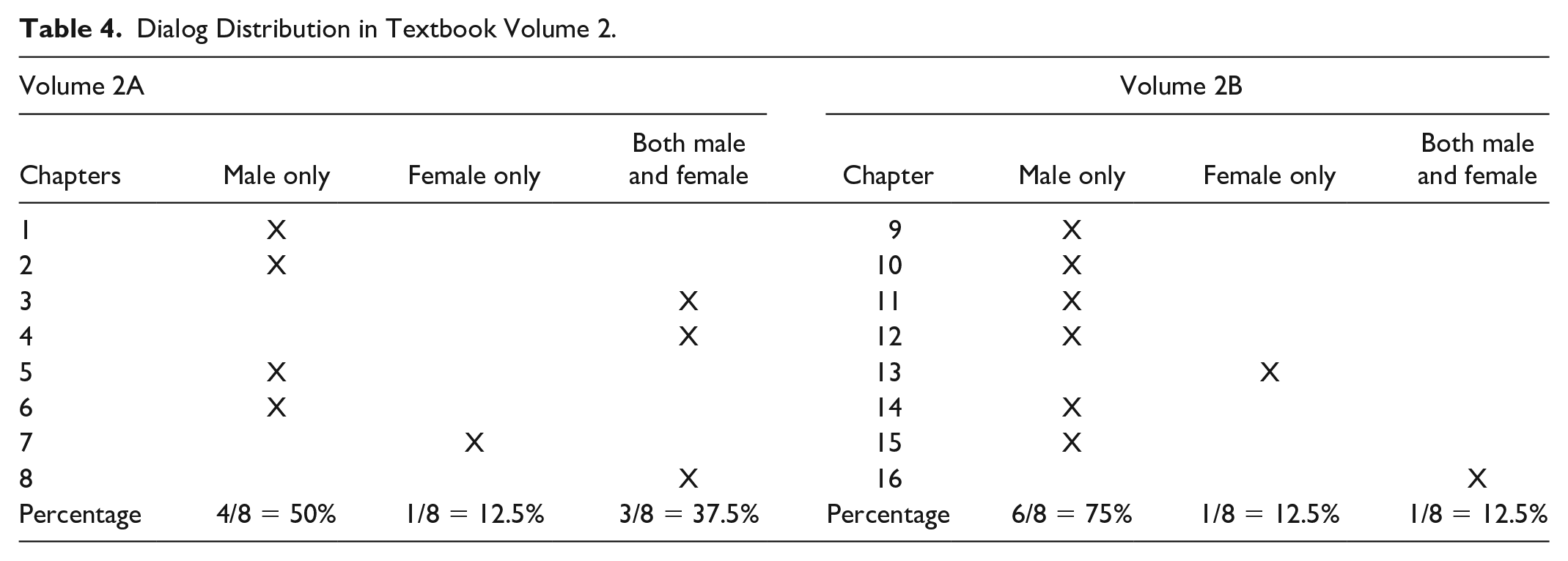
Table 3 shows that male domination is very high. Women only reached 22.2% for the highest percentage. There is also a very low female representation of only 12.5% for volumes 2A and 2B (Table 4). Gender bias and less constructive portrayal was obviously portrayed. The results confirmed that the male-to-female ratios in the textbooks were unbalanced.
The results also showed the use of feminine-related words. The results also revealed the division of the contents of gender-based word types (masculine or feminine). When masculine vocabulary is dominant in many chapters, the feminine vocabulary is less emphasized in textbooks. Therefore, students’ knowledge of feminine vocabulary is very limited because the different gender-based word types will also differ in shape. For instance, the form of the verb for a single masculine (فعل—he did) will be different from the form of the verb for single feminine (فعلت—she did). With the lack of knowledge of feminine gender vocabulary, learning processes become restricted. Blumberg (2007) who analyzed textbooks from three countries revealed that gender bias dominantly used male-centered language such as “mankind” and prominal “he.” This study also found similar patterns in which the words “masculine” and male characters are dominant in conversations of the textbooks.
The findings show that more professional jobs are attributed to men than women. Gender visualization shows men as the only gender able to do heavy works. No women were portrayed as capable of doing men’s works. In this case, there are three types of work-related figures of men, but no women figures are portrayed. The chapter title, “Profession” in the textbook is visualized portraying only the men (Figure 2). It indicates gender bias because there was an unfair portrayal of gender. Women were portrayed not suitable to work as professionals. The editorial practice of gender stereotyping and bias in textbooks gives a negative effect on children growing up. They may have negative perceptions of women and discriminate them unfairly in real life. With this in mind, textbooks should be regarded as accessible media and learning material, which represents the existence of both men and women.

Men’s professional visualization.
Maintaining gender discrimination will stereotype women as incapable of doing men-related work. Such stereotyping has flourished in patriarchal society (Akmaliyah & Ratnasih, 2017). Therefore, the design of school textbooks needs to be revised by inserting GE awareness so that both students and teachers can understand the similar rights possessed by men and women as part of civilized society (Tahan, 2015). This depiction of partiality/inequality will continue to strengthen the stereotypes of women who are underestimated and have developed in the community. This will have a negative effect on students’ concept of gender. Baghdadi and Rezaei (2015) stated that students (especially children) would think that whatever was described in their textbooks was a picture that was appropriate, accepted, and liked by the community. Therefore, in this case, when females are not described in the “professions” chapter, a mind-set that there is no “profession” position for women will be formed among students.
Constructive Portrayal of Women in Arabic Language Textbooks for Non-Arabic Speakers
Although there are several gender inequalities in the portrayal of women in textbooks, the evaluation should be objective. The findings showed that not all figures in textbooks portray a gender bias. The fair and constructive of women portrayal remains. Some examples are presented in Table 5.
The Dialog Between Female Characters in Volume 1A.

Table 5 is a dialog between two women (Nada and Ilham), both female students. They both took different majors at different universities. This is an example of a dialog that builds a positive image of women, which motivates girls and gives an image that inspires them to pursue higher education and become professionals. The characters in the dialog are described as people who have higher education, who are then able to get professional jobs according to their fields. The dialog illustrates that women can play a role outside the domestic realm. Women are described as being able to pursue higher education with the hope of having professional jobs after graduation. This constructive image is needed more in learning textbooks and will affect students’ understanding of the concept of gender (Sunderland, 2000; Tahan, 2015). By juxtaposing between genders in one figure in which men and women do similar roles equally, the constructive portrayal of gender is created in the textbooks.
Figure 3 shows that women and men are portrayed in one equivalent portrait, namely learning. This indicates that women’s rights are recognized in textbooks in obtaining education access. Other gender portrayals can be seen in Figure 3, where both male and female are represented equally. The results provide an understanding that women are able to learn and work the same as men. In general, women are portrayed as weak and emotional, so that in some cases, women are seen as incapable of doing things that can be done by men. This balanced depiction of gender is indispensable in textbooks. It aims to form a positive construct on the students’ mind-set of the concept of gender (Kereszty, 2009).
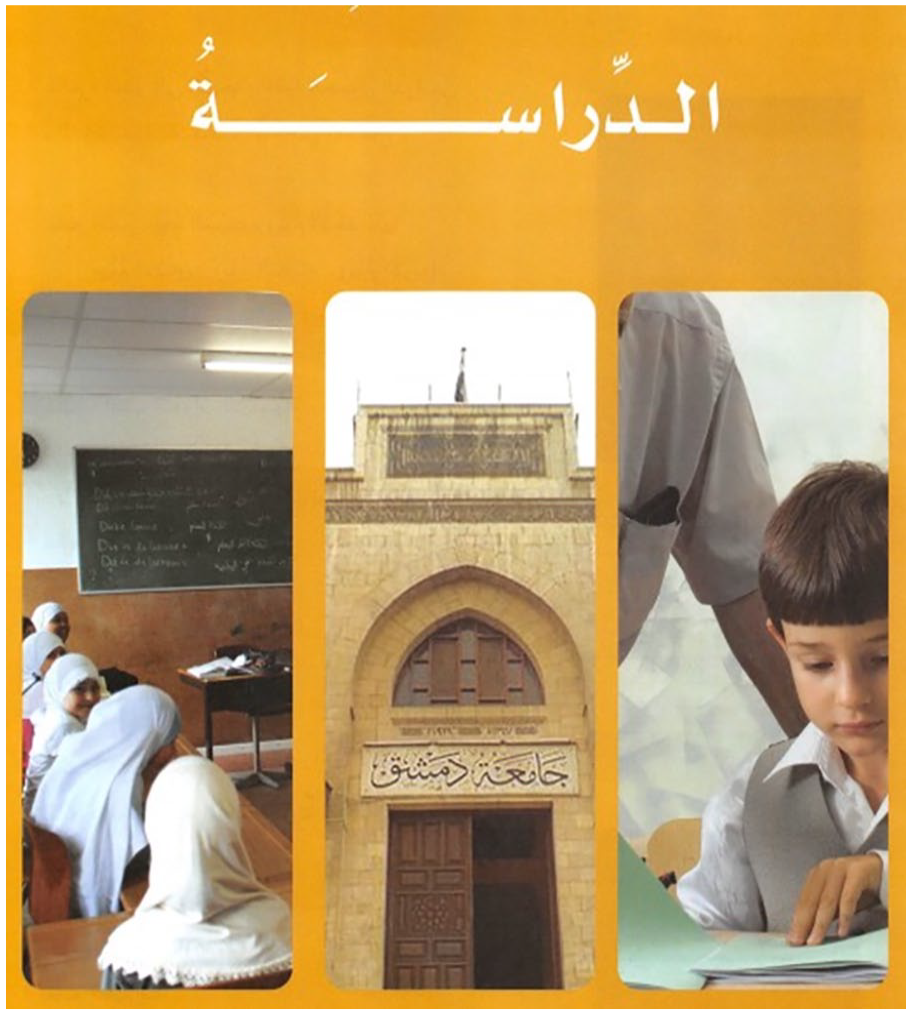
Gender equality in education.
The results showed that women and men were portrayed equally. They are able to work professionally, as portrayed in Figure 4 and Table 6. The equivalent vocabulary for women and men is always taught. In terms of numbers, the portion given to each gender is similar (3:3), and the portion of each gender was not dominant to each other. The balance portrayal of gender should exist in textbooks so that the students’ mind-set can be formulated appropriately, for them to be aware that women are equal in social status as men and those they are also professionals. Blumberg (2015) states that one of the most important part of GE in education is by providing equal opportunities for education and access to schools between boys and girls. In addition, this would imply an obligation for policymakers to provide teaching methods, academic orientation, and curriculum based on GE. This is the main objective of the GE issue to avoid subordination and stereotyping in classroom. This is the main objective of the GE issue to avoid subordination and stereotyping in classroom. In addition, book publishers as the producers of textbooks also need to pay careful attention, especially in the process of production and distribution of gender-friendly textbooks. More importantly, teachers and schools as users should wisely select textbooks for effective teaching and learning (Baghdadi & Rezaei, 2015; Tahan, 2015).
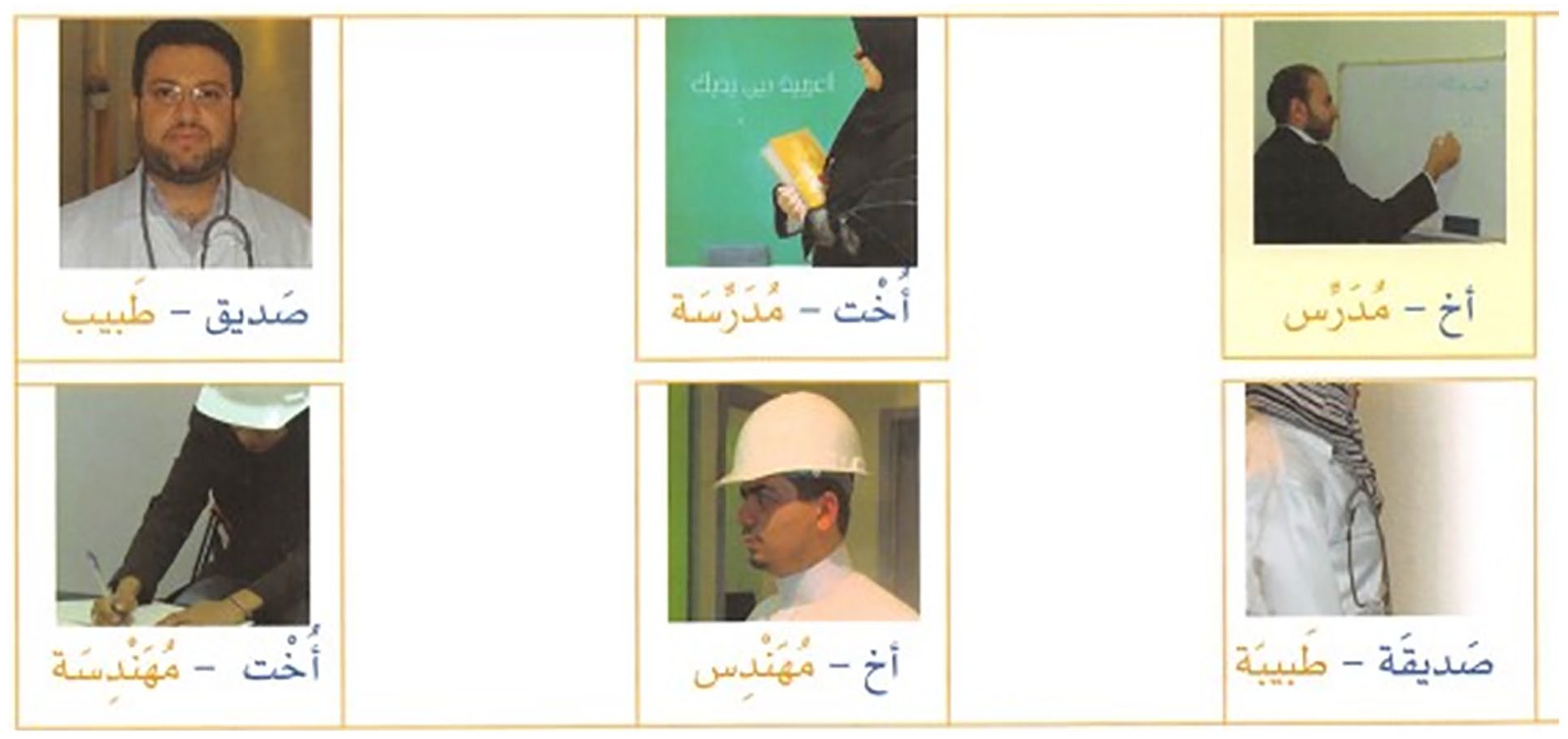
Fair descriptions of genders by presenting both masculine and feminine vocabulary forms.
The Translation of Figure 4.

Concluding Remarks
This study investigated the portrayal of women found in Arabic textbooks for non-Arabic speakers. This study found gender bias in the Al-’Arabiyyah li al-Jamī textbooks, Volumes 1A, 1B, 2A, and 2B, such as the placement of women as subordinates in various private and public domains. The imbalance in the gender portrayal between men and women can be seen from visibility, male firstness, order of mention, and male/female ratios. On the contrary, the positive constructive portrayal of women is also depicted in textbooks by placing them equally with men, such as being portrayed as a doctor, architect, and student.
The analyzed textbooks as the object of this study are internationally used, so that the findings also encourage to keep promoting the concept of GE in the contents of internationally used Arabic textbooks by portraying women equally. The findings underline the importance of gender-sensitive textbooks, which are effective tools in the teaching and learning process. In addition, this study suggested the adoption of alternative methods and perspectives that can be used possibly to portray the issue of GE in textbooks. Apart from improvements in teaching strategies and curriculum, to take a few practical examples, Behnke’s (2018) methodological guide is very useful for designing gender-inclusive textbooks. In detail, Behnke (2018) proposed several editorial practices, which can be carried out, including design improvements, such as layouts, typography, images, and the improvements to cognitive and affective elements, such as emotional design, skills development, and achievements. Technology-enhanced learning methods are also promoted as a supplement to create a gender-sensitive environment in classrooms, where students have a greater chance of getting additional updated material from online sources aside from textbooks (Craig, 2000; Herman & Kirkup, 2017; Mayer, 2005; Ottemo et al., 2020).
As a theoretical implication, by continuing to promote the concept of GE in textbooks, student’s gender awareness and sensitivity will be formed positively by not depicting females based on their stereotypes and the equality between genders to obtain education and professional work outside the home. The findings revealed a practical recommendation to provide special training for educators to develop gender-friendly teaching capacities and underline the need for cultural sensitivity in classrooms, as posed by Hadi Kusuma and Susilo (2020), especially in providing understanding to non-Arab students who learn from Arabic textbooks. The findings also recommend that policymakers and educators reduce gender bias and stereotypes in textbooks for non-Arabic speakers and create gender-inclusive learning programs.
This study only investigated the portrayal of women in Arabic textbooks for non-Arabs. Further research on gender should be able to provide criticism for book authors and textbook publishers who still ignore the importance of the concept of GE in learning to be able to continue to increase social awareness of the importance of the concept of GE.
Footnotes
Acknowledgements
The authors thank the anonymous reviewers and editors of Sage Open for constructive comments and critical suggestions. They thank Muhammad Ibnu Pamungkas for assisting them in the data collection, and Jamaludin Hadi Kusuma for editing the draft.
Author Statement
The authors confirm that the manuscript has no any actual or potential conflict of interest with any parties, including any financial, personal or other relationships with other people or organizations within 3 years of beginning the submitted work that could inappropriately influence or be perceived to influence. They confirm that the article has not been published previously, it is not under consideration for publication elsewhere, and the manuscript is not being simultaneously submitted elsewhere.
Declaration of Conflicting Interests
The author(s) declared no potential conflicts of interest with respect to the research, authorship, and/or publication of this article.
Funding
The author(s) received no financial support for the research and/or authorship of this article.
