




Abstract
The degree of accessibility significantly influences regional tourism flow and the performance of the global tourism industry. However, the tourism industry itself comprises many sectors, and accessibility measurements may not comprehensively incorporate the simultaneous accessibility of corresponding destinations. Moreover, perspectives are still lacking in the analysis of tourism origin countries. Therefore, this study provides a new approach based on network data envelopment analysis and social network analysis to identify potential opportunities among origin countries for accessibility to a given tourism destination. This study focuses on Taiwan as a tourism destination and measures the efficiency of 32 of its acknowledged tourism origin countries. The main finding is that the involvement of tourism intermediaries (such as tour operators and travel agents) is a key factor influencing most tourism origin countries’ performance. However, tourists make the largest contribution to shared output (i.e., tourism expenditures) for most tourism origin countries. Given the expanding knowledge of tourism management, understanding the accessibility of a destination can help destination managers and governments identify tourism opportunities and execute appropriate strategies.
Introduction
Destination accessibility, which refers to how accessible a particular destination is, pertains to the amenities and infrastructure of the destination, as well as the time and effort to travel to the destination (Gehrke et al., 2020; Lee et al., 2016; Reitsamer & Brunner-Sperdin, 2017; Reitsamer et al., 2016; Y. Zhu & Diao, 2020). The accessibility of a destination is typically identified as a major factor driving tourists’ travel decisions (Hooper, 2015; Marrocu & Paci, 2013; Park et al., 2019; Reitsamer & Brunner-Sperdin, 2017). Furthermore, Marrocu and Paci (2011) and Hadad et al. (2012) indicate that the degree of accessibility significantly influences regional tourism flow and the performance of the global tourism industry. Accordingly, destinations and countries face important questions of how accessibility and accessibility performance are regarded and measured. Understanding the accessibility of a destination can help destination managers and governments identify tourism opportunities and execute appropriate strategies.
Some studies have focused on tourist perceptions in evaluating destination accessibility. AlKahtani et al. (2015) define accessibility as the ability of tourists to conveniently reach a destination, and individual differences among them (e.g., gender, income, and education) may affect the perceptions of accessibility among tourists and their subsequent travel decisions. Ceccato et al. (2020) demonstrated that accessibility can be defined in terms of high geographical connectivity among regions as provided by a smooth travel experience and efficient transport modes, and designs indices based on tourist perceptions of travel time accessibility. Vale (2020) takes a similar approach but suggests incorporating travel costs instead of travel time into planning and assessment. Nevertheless, these studies’ accessibility measurements may not comprehensively incorporate the simultaneous accessibility of corresponding destinations. This is significant because the convenience of reaching a given destination involves multiple channels including transportation, accommodation, and travel arrangements; this is especially the case for remote travel such as international destinations. Various organizations across the entire tourism industry must therefore work together like a chain to add value and deliver goods and services to customers (Yilmaz & Bititci, 2006).
As such, this article intends to evaluate the accessibility of a destination from the macro-level perspective of the tourism industry of tourism origin countries. A number of previous studies have focused on tourism destinations. For example, da Silva et al. (2018) analyze the image of Brazil as a tourism destination from the perspective of travel intermediaries, and Cracolici et al. (2008), Lee et al. (2016), Reisinger et al. (2019), and Clara et al. (2019) analyze and discuss competitiveness among destination countries. To against destination competition, Coban and Yildiz (2019) suggest that destination management is an important tool for immediate success and sustainability in tourism countries. Although many issues have thus been investigated from a destination perspective, the literature still lacks applications for using these perspectives to analyze tourism origin countries (Chatziantoniou et al., 2016; Marrocu & Paci, 2013; L. Zhu et al., 2018). That being said, appropriate analysis of tourism origin countries could reveal how tourism flows from the demand side instead of the supply side of a destination (Marrocu & Paci, 2013).
To fill these research gaps, this study introduces a simple and novel method for evaluating the accessibility of a tourism destination amid complex tourism production stages and from the perspectives of the demand side of tourism origin countries. Hadad et al. (2012) indicate that the concept of economic efficiency is used to measure how well origin countries actually process inputs to achieve their outputs compared with the benchmark. This index of efficiency can be measured using data envelopment analysis (DEA), which is a common nonparametric benchmarking tool for assessing the relative performance of decision-making units (DMUs) with multiple inputs and outputs (Assaf & Josiassen, 2016; Hadad et al. 2012; Shieh et al., 2020; Wei et al., 2020). Tourism origin countries are likely to be a potential market for a destination when an efficient tourism accessibility system exists. This study emulates Cracolici et al. (2008) in taking a tourism origin country as a given and assumes that the more developed and efficient a country’s tourism industry, the easier it is for its people to access the channels for traveling abroad. That is, following that Hansen (1959) defines accessibility as “the potential of opportunities for interaction” (Albacete et al., 2017), the study assumes that an origin country using fewer tourism resources to create greater connectivity with other destinations also has higher interaction ability or potential with those destinations. The study then uses DEA to compare the relative abilities of interaction or accessibility among tourism origin countries.
However, the tourism industry comprises many sectors, and its production involves a series of industries. It has a network structure, including primary suppliers, tourism intermediaries, and tourist production activities within the tourism system. Furthermore, primary suppliers (e.g., airlines) and tourism intermediaries (e.g., tour operators and travel agencies), all constitute channels providing opportunities for tourists to interact with destinations and where different channels are associated with their own forms of accessibility (Romero & Tejada, 2011). These observations lead to the question of which production stages are more important in influencing overall accessibility to reach a destination. In addition, when evaluating the level of accessibility using this method, another issue arises regarding the potential differences and similarities among tourism origin countries. Nevertheless, conventional DEA only considers a single process. It views the phenomenon of tourism as a “black box,” neglecting intermediaries that link the activities of the system. Consequently, providing an individual DMU with specific accessibility information within their DMUs is difficult (Lewis & Sexton, 2004). To overcome this limitation, we instead utilize the network DEA (NDEA) approach here. NDEA has already been adopted in many industries, such as banking, education, and transportation (Aviles-Sacoto et al., 2015; K. Chen & Zhu, 2020; A. Huang et al., 2017; Jahanshahloo et al., 2004; lo Storto, 2020; Lozano et al., 2013; Ouyang & Yang, 2020; Wanke et al., 2019; Yu & Lin, 2008), but has been infrequently used in tourism management. The adoption of NDEA instead of the conventional DEA provides more information to compare the efficiency scores, and thus facilitates differentiation with regard to influence on accessibility among production stages. Furthermore, this approach enables the clustering of the evaluated tourism origin countries into several groups based on efficiency scores and thereby aids the establishment of the relationships among their tourism stages.
The main purpose of this study, therefore, is to provide a new tool for a particular tourism destination to evaluate the markets of potential origin countries. This is done through the concept of segmenting, targeting, and positioning (STP), similar to the process of finding potential markets for a new product. This article also applies multi-methods research, first segmenting the market by the number of visitors to a tourism destination and then choosing countries with the most tourists visiting a tourism destination as the target market, and using an NDEA model to assess the performance output of these countries’ tourism systems. Finally, social network analysis (SNA) is applied to position the relationships between each origin country for accessing efficiency.
This article expands knowledge of tourism management using multi-methods research in the complex field of tourism. It may help some destination countries in terms of management and facilitate suitable marketing strategies and planning for appropriate budgeting schemes. The remaining sections of this article are structured as follows: the section “Related Literature” briefly reviews the existing literature, the section “Method” describes the tourism destination accessibility system and constructs-related models using NDEA, the section “Results” presents the empirical results, and the section “Conclusion” presents the conclusions and recommendations for future research.
Related Literature
Some studies analyze issues from the perspective of tourism origin countries rather than destination countries. For example, Marrocu and Paci (2013) discuss how accessibility affects tourism inflows on easy-to-reach destinations using origin-destination spatial interaction models. They consider crucial determinants of tourism flow between pairs consisting of origin areas on the demand side and destination regions on the supply side. Chatziantoniou et al. (2016) examine the importance of the macroeconomic environment of origin countries to understand destinations’ tourist arrivals. Elsewhere, L. Zhu et al. (2018) apply a copula-based approach combined with econometric models to predict tourist arrivals from six major origin countries to Singapore.
Another study focuses on the topic of accessibility to a tourism destination. Marrocu and Paci (2011) observe that the degree of accessibility (value 1 = “very low” and value 5 = “very high”) is based on the road, rail, and air infrastructure and on time necessary to reach the market, which affects the tourism flows as determinants of the total factor productivity of a region. Following this degree of accessibility, several studies use a particular variable to describe accessibility. For example, there are studies that use distance from a tourist’s origin to show how distance affects a destination’s accessibility and international tourism flow (Hooper, 2015; McKercher & Mak, 2019). Meanwhile, Park et al. (2019) explore how tourists who visit multiple attractions at one destination differ depending on travel distance. Matthews et al. (2018) address the issue of spatial correlation in multiple-destination trips, and find that people tend to visit sites that are close together, but different in terms of attributes. After that, Y. Zhu and Diao (2020) develop a dynamic destination choice model to find that travelers are prone to consider both the spatial and temporal dimensions of accessibility when choosing tourism destinations.
In addition to the distance factor, how accessibility is affected by a destination’s transportation infrastructure is usually discussed. Chung and Whang (2011) examine the effect of low-cost carriers on tourism demand to the popular destination of Jeju Island in Korea and find that these carriers have generated new demand but seem to have had little effect on reducing seasonal fluctuations in passenger traffic to the island. Chi (2014) discusses bilateral air travel flow between the United States and its 11 major travel and trading partners. For attracting all types of cyclists to the cities, Gehrke et al. (2020) search for empirical methods to help evaluate what the optimal projects of bike infrastructure will provide the greatest network connectivity benefit under finite financial resources.
To assess and rank efficiency in the tourism industry, DEA has generally been conducted under two scopes. The first focuses on micro-level perspectives by analyzing the efficiency of hotels, tour intermediaries, and air travel industries (Assaf, 2012; Calveras & Orfila, 2014; Chi, 2014; Shieh et al., 2017). The second scope focuses on macro-level perspectives by measuring the efficiency of the entire tourism industry. Yilmaz and Bititci (2006) evaluate the performance of tourism companies according to tourists and internal dimensions through the overall value chain. Lozano and Gutiérrez (2018) examine the global tourism network of several destinations using network analysis. But while these studies deeply capture the full value of tourism structures, they do not explore the relationship between the interactions and individual contributions of each sector.
Another study not only considers the production chains of individual sectors but also elucidates their contributions to the whole system. Romero and Tejada (2011) use the concept of tourism global value chains to link the inter-firm relationships between hotels and travel agencies to the whole value system. C.-W. Huang (2018) develops an integrated index, including a network structure of suppliers, producers, and distributors, to measure the overall efficiency of a tourism supply chain. However, Romero and Tejada (2011) apply a multilevel approach but cannot clarify performance at the same time. C.-W. Huang (2018) simultaneously measures performance in a single geographical area but does not undertake a cross-national comparison.
The limitations of these studies can be resolved by utilizing the NDEA approach. Some researchers use NDEA to evaluate organizational performances that may benefit from tourism, but only take a single sector into account rather than the multiple sectors involved in the tourism industry. Yu and Lin (2008) and Yu and Fan (2009) use the NDEA method to analyze land transportation (e.g., railway systems and bus services). The two studies find that NDEA has two advantages over conventional DEA. First, NDEA incorporates the nonstorable service feature in transportation services, and addresses both production and consumption technologies in a unified framework. Second, the performance indices of organizations from their multi-activities can be evaluated simultaneously. Hsieh and Lin (2010) apply a relational NDEA to measure the performance of international tourist hotels in Taiwan. The multidimensional perspectives of a hotel can be evaluated simultaneously, including its overall effectiveness, the efficiency and effectiveness of individual departments, and the relative contributions of each resource allocation.
Method
We first introduce the analytical framework of the tourism destination accessibility system proposed. The tourism industry is a conglomerate of several industries and must, therefore, be analyzed from an integrated perspective because it is a series of industries that work together like a value chain (Yilmaz & Bititci, 2006; Zhang et al., 2009). This value chain can be defined as a set of activities, passing through production and distribution, with each essential link added value to the product (Romero & Tejada, 2011). As such, we first construct a tourism destination accessibility system to measure how tourism origin countries can access a particular destination. Using the concept of efficiency and our destination accessibility system, we assume—following Cracolici et al. (2008)—that a tourism origin country may be regarded as a firm that tries to attract a maximum share of output through an efficient combination of input resources. Origin countries that can operate more efficiently are most likely a potential market for a destination country.
As shown in Figure 1, our destination accessibility system includes the configuration of three stages: primary suppliers, tourism intermediaries, and tourists. This basic structure is developed with reference to Werthner and Klein (1999). In the first stage, primary suppliers in tourism usually have some common characteristics, such as high fixed costs, low marginal costs, and many perishable products (Romero & Tejada, 2011). There are many suppliers of tourism services, but here, we only examine transportation connectivity as the supplier in the first stage of the system. The main reasons for this decision are as follows. First, the availability of transportation connectivity is fundamental to reaching a destination (Dupeyras & MacCallum, 2013; Marrocu & Paci, 2013). Second, both inbound and outbound travel flows and tourism mobility can be deeply constrained by transportation services (Papatheodorou et al., 2019). Finally, tourism transportation resources are positively associated with the intention of a visitor to travel to a destination country (Assaf & Josiassen, 2012).

Tourism destination accessibility system.
Because the tourism industry is heavily reliant on intermediaries such as tour operators and travel agencies (Joppe & Li, 2016; Zhang et al., 2009), the roles of tourism intermediaries form the second stage of the system. Calveras and Orfila (2014) show that tourism intermediaries enhance and facilitate tight coordination, reduce the costs of broken coordination, and facilitate a direct market exchange between tourists and final sellers. da Silva et al. (2018) also indicate that tourism intermediaries are important stakeholders that enhance the overall image of tourism destinations.
Tourism intermediaries include tour operators and travel agencies. Tour operators are similar to wholesalers and can significantly influence and promote tourism development due to their central distribution role and ability to direct tourists to destinations and suppliers (Sigala, 2008). Moreover, Romero and Tejada (2011) indicate that tour operators can gather basic supplier resources, convert these resources into travel packages, and use their own brand for sales. Meanwhile, travel agencies are the retail branches of tourism products that deal with tourists and tour operators (Zhang et al., 2009). They provide tourists with information on different destinations, services, and suppliers and usually play a “commissioner” role as well (Romero and Tejada 2011).
Tourists themselves are the last link in the accessibility system. Different from other industries, consumption and production of tourism services usually involve tourists and happen in the same place (de la Peña et al., 2019; Joppe & Li, 2016; Leiper, 2008). In general, a tourist has two channels to follow when purchasing tourism products. Tourists can either arrange travel plans with the help of tour operators or travel agencies, or plan each step of their travel by themselves (Yilmaz & Bititci, 2006). For example, free individual travelers who are served by other tourism industries (e.g., travel agencies that book their flights or hotels) may employ their budget to make tourism expenditures in the destination country. However, tourists themselves might play the role of producer and could also be consumers when buying tourism services from other intermediaries.
As revealed in Figure 1, we apply two types of inputs and outputs: dedicated and shared inputs and intermediate and shared outputs. All the variables are related to tourism origin countries and can capture their performance and reflect the potential accessibility of a destination. According to Imanirad et al. (2013), the sharing of resources often takes place in a competitive environment created by the optimization process. Tourism, as noted, is not a singular industry but consists of multiple organizations. In addition, tourism is a coordination-intensive industry in which different products and services are bundled together to form a final product (Zhang et al., 2009). Hence, some of the outputs
Furthermore, each stage might employ dedicated inputs (
The final output
In addition, we use an external environmental variable
Based on the accessibility system shown in Figure 1, we employ the directional distance function to determine the performance and construct our mixed-structure NDEA model. The objective function of the kth (k = 1, . . ., I) DMU is formulated as follows:

where
For solving the objective function, it is needed to set up the production constraints on each production stage, including those of shared inputs and outputs and environmental variables to formulate the DEA technology frontier and the way to evaluate the solutions of all the unknown parameters. For simplicity, we place all the constraints and related notation descriptions in the appendix. According to the frontier constructed,
After the optimal solutions of

We can get DMU k to be efficient if TV = 1 and inefficient if TV < 1. As for the individual efficiencies for the three stages (the primary supplier, tourism intermediaries, and tourists), they are defined as
Results
Data and Variable Specifications
For this study, we choose Taiwan as a tourism destination and try to measure its tourism origin countries’ efficiency under the destination accessibility system to determine which countries offer the potential market for Taiwan. Taiwan is selected for several reasons. First, the tourism industry is listed as one of the six emerging industries in Taiwan. According to the Taiwan Tourism Bureau (2018), a total of 11 million people visited Taiwan, of which approximately 67% came for tourism. The main factors attracting inbound visitors to Taiwan included “gourmet food or delicious snacks,” “scenery,” and “shopping.” By contrast, the major scenic spots drawing inbound visitors included “night markets,” “Taipei 101,” “Ximending,” “Jiufen,” “Chiang Kai-Shek Memorial Hall,” and “National Palace Museum.”
Second, Taiwan is an island and centrally located in the East Asia transportation hub. The major air traffic routes of this region’s airlines are widening, and it has become easy for international tourists to travel to or through Taiwan (C.-A. Chen & Lee, 2012). Finally, there is only limited alternative transportation for international tourists to Taiwan. We can use Taiwan’s experiences with transportation and tourism to analyze similar island countries, such as Japan, Indonesia, or South Korea, and the results might be applicable.
As discussed, we utilize Taiwan as a tourism destination in this study and select 32 of its acknowledged tourism origin countries. These countries are home to at least 1% of all foreign tourists to Taiwan in terms of number of tourist arrivals in 2014 and are located across three major regions: Asia and Oceania (14 countries), North and South America (five countries), and Europe and Africa (13 countries).
As shown in Figure 1, the first stage involves the primary supplier of transportation connectivity, with the majority of this connectivity emphasizing air transportation in Taiwan. This is because the destination of Taiwan is an island. For many isolated regions, traveling by air is the main means by which tourists arrive (Yilmaz & Bititci, 2006). Furthermore, Bieger and Wittmer (2006) point out that air transportation is a key factor affecting international tourists’ choice of travel destination. For some countries, such as Japan and Taiwan, nearly 100% of all international arrivals occur via air transportation. Therefore, Spasojevic et al. (2018) state that air transportation is mutually dependent on tourism and has a significant influence on a destination’s economy.
To capture the degree of accessibility using efficiency, we select some of the inputs, intermediaries, and output variables based on the literature review and secondary data available. The following paragraphs discuss these variables and data sources in detail. The first stage, air transportation, includes the dedicated input
For the second stage of tourism intermediaries, except for a shared input, its dedicated input
Finally, we define “distance from Taiwan”
Table 1 summarizes the descriptive statistics and data resources of all the variables in 2014. There is a wide dispersion among the sample of origin countries, and the average distance of the origin countries from Taiwan is 7,329 km. The farthest one is Brazil (18,723 km), which is 2.55 times the average distance. By contrast, Hong Kong is the closest (approximately 715 km), just one tenth of the average distance. The distance varies considerably in the sample, so it may be included as an environmental variable to help understand the influences of a destination and its tourism origin countries.
Descriptive Statistics of Input and Output Variables (N = 32).

Analysis
Before conducting NDEA, the weights of the objective must be assigned. A uniform weight scheme is adopted because we assume that the three production stages are of equal importance. For the unknown allocation of shared input and output (i.e.,
As presented in Table 2, the average TV is 0.810, which is lower than that yielded by conventional DEA. This is mainly because the number of overall efficient countries in our model is much lower than that in conventional DEA modeling (12 vs. 23 countries), indicating that our NDEA has better discrimination power. Turning to the efficiencies for each stage, there are many countries (24 out of 32) that perform efficiently in the air transportation stage, followed by the tourist stage (15 countries), and then the tourism intermediaries stage (12 countries). Indeed, the air transportation stage has the highest average score (0.867), and the tourism intermediaries stage has the lowest (0.617). This indicates that tourism intermediaries might be a key stage affecting the level of efficiency for most of the countries from which tourism to Taiwan originates.
Estimate of Performance and a Proportion of Shared Input and Output in Each Country.

Note. DEA = data envelopment analysis.
TE_AL, TE_TA, and TE_TS represent individual efficiency of air transport, tourism intermediaries, and tourists; TV indicates overall efficiency. bA ranking of performance is in parentheses.
As for the distribution of shared input, it is estimated that, on average, approximately 34.7% (rc) of the labor is assigned to the stage of air transportation, which is much smaller than that assigned to tourism intermediaries (65.3%). This finding is consistent with that of Joppe and Li (2016), who indicate that tourism intermediaries are heavily reliant on labor input. However, the air transportation and tourism intermediary stages each contribute approximately 22.0% (
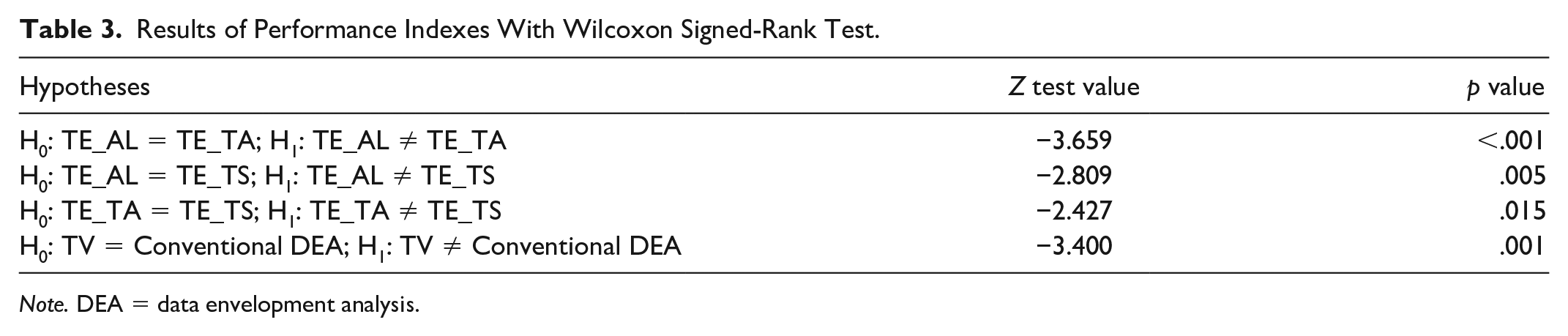
This article also uses the Wilcoxon signed-rank test to compare the pairwise efficiencies among different stages and between the two DEA methods. This is done to determine whether influences on accessibility differ with regard to different production stages, and whether results obtained from the NDEA are different from those obtained from conventional DEA. The null hypotheses are that pairwise efficiencies do not differ among the different stages and the results obtained from the two DEA methods did not differ. As shown in Table 3, all of the null hypotheses are rejected, indicating that the efficiencies for every pair of stages and between the two DEA methods are statistically different from each other. This suggests that utilizing NDEA rather than conventional DEA provides us a greater abundance of and more valuable information on the operation of both the whole industry and the individual production stages.
Results of Performance Indexes With Wilcoxon Signed-Rank Test.
Note. DEA = data envelopment analysis.
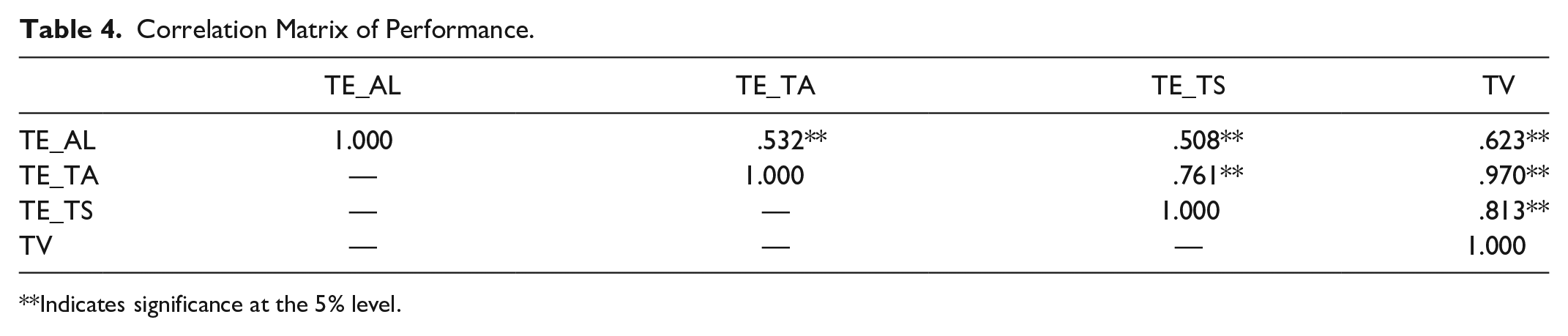
Table 4 presents the correlations among all types of efficiency of our model. The results show that all the pairs of correlation coefficients are significantly positive and exceed 0.5. In particular, the stage efficiency of tourism intermediaries (TE_TA) is highly positively correlated (= .97) with TV, implying that if the efficiency of tourism intermediaries is higher (or lower) in tourism origin countries, then TV is generally higher (or lower).
Correlation Matrix of Performance.
Indicates significance at the 5% level.
In addition to NDEA, we also adopt SNA to cluster the sample into several groups on the basis of the efficiency of tourism origin countries. SNA employs two-mode centrality by three indices: degree, closeness, and betweenness centrality. In the two-mode incidence matrix, there are two types of entities (actors and events), and we connect the actor of countries (i.e., DMU) to the corresponding event of efficiency (TE_AL, TE_TA, TE_TS, and TV). This matrix is then translated into a dichotomized matrix by setting an appropriate cutoff value. The rule for the cutoff value is that the sample performance with full efficiency (= 1) is recoded as “1”; all other values smaller than 1 (inefficiency) are coded as “0.” According to the dichotomized incidence matrices, we calculate the three indices of centrality (see Table 5).
Social Network Analysis of Indexes on Centrality.
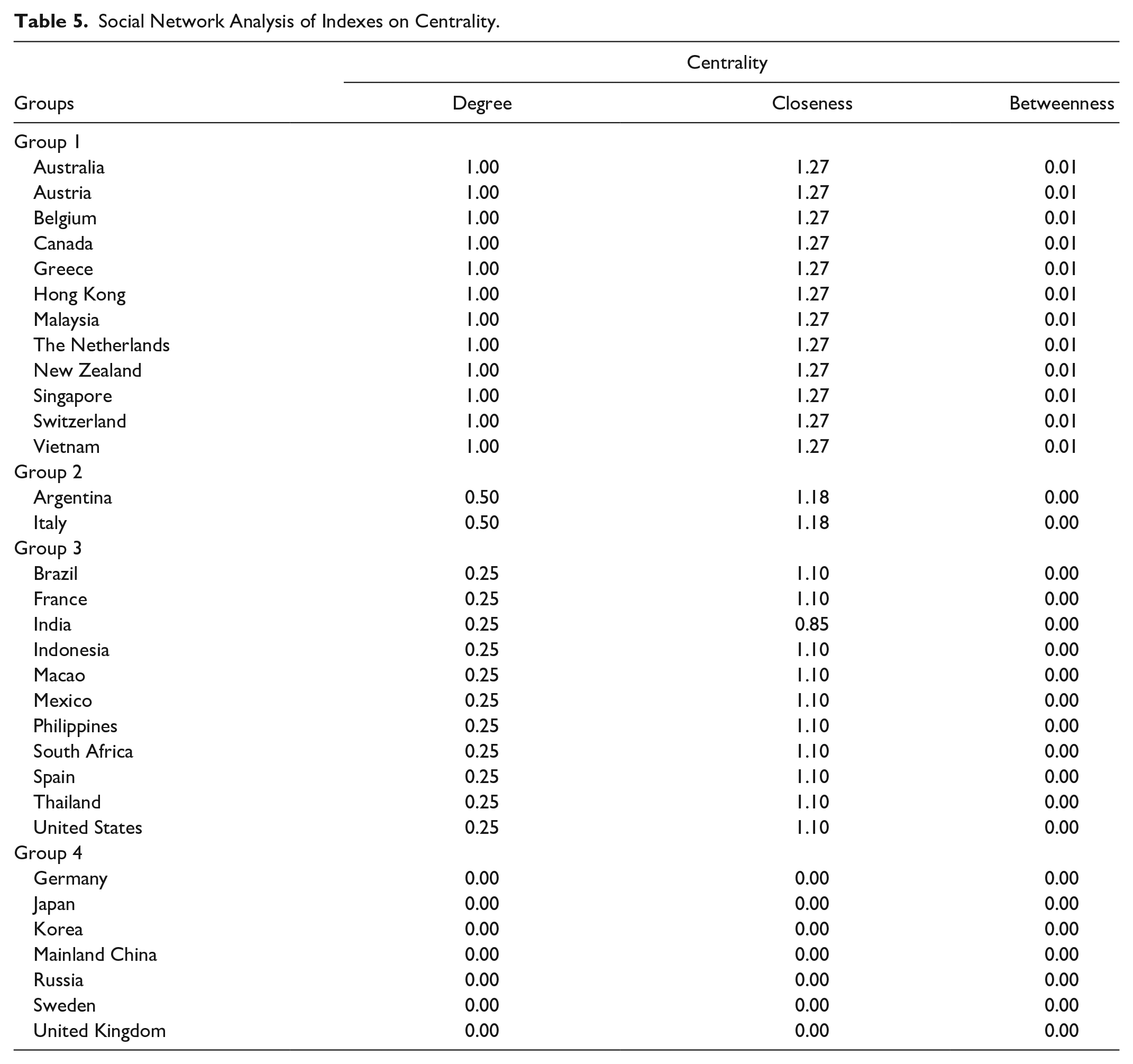
Column 3 of Table 5 shows the degree of centrality in the country view. We divide the degree centrality into four parts. Twelve countries have a degree centrality of 1, indicating that all the indexes (TE_AL, TE_TA, TE_TS, and TV) are equal to 1 and have full efficiency for those countries. Argentina and Italy both have a degree centrality of 0.5 because they only have full efficiency connections at the air transportation and tourist stages. Eleven countries have a value of 0.25, as they are efficient at air transportation or the tourist stages. The remaining seven countries have a degree centrality of 0, indicating that these countries have inefficient connections with regards to TV and all of the individual components.
Next, we consider the proximity of all network members according to closeness centrality. The distribution of closeness centrality (displayed in Column 4 of Table 5) is similar to that of degree centrality. That is, if degree centrality is high (or low), then the relative closeness centrality is also high (or low). However, it is worth noting that the value of closeness centrality in India is lower than that of others in the same group (Group 3), which reveals that India is isolated from the other countries.
Finally, based on betweenness centrality, all countries show 0 values, except for the first 12 countries. These nonzero betweenness centrality countries are similar to bridges, implying that these countries are always used as a reference point to help other countries assess performance.
Consequently, we can divide the sample of Taiwan’s 32 tourism origin countries into four groups by these three centrality indices. As noted, 12 countries in the first group have a nonzero betweenness centrality as well as high degree and closeness centrality. We hence label them the “priority-potential” group. This group of countries has considerable potential for Taiwan’s inbound tourism due to being efficient at all stages, judging from their degree centrality. In particular, this is the only group of countries with an efficient performance at the tourism intermediary stage, and their excellent performance might encourage tourists to travel to Taiwan. However, this group is the only one with nonzero values in betweenness centrality, implying that they might be a benchmark and play an intermediary role for other countries.
The second group only comprises the countries of Argentina and Italy. Their closeness centrality is smaller than that of the first group. Furthermore, these two countries perform efficiently at the air transportation and tourist stages but inefficiently at the tourism intermediary stage. Hence, this group can be viewed as a “secondary-potential” target for Taiwan. The third group includes 11 countries, which perform poorly on degree centrality relative to the other groups. We label them the “continue to maintain” group because it is better to keep the current marketing resources unchanged.
Finally, the remaining seven countries are inefficient at all three stages, and, indeed, overall, and thus do not show any intermediary with the other origin countries based on betweenness centrality. This group may be considered stagnant because their resource inputs may not receive the corresponding rewards. Hence, we label them the “mature” group. Of course, the relatively low level of performance of this group of countries might also be explained by differences in travel behavior. For example, tourists from these countries may prefer to search for travel information through the internet as free individual travelers.
Conclusion
This article introduces a new tool for identifying the potential market of a destination country from the perspective of their tourism origin countries. Using the concept of destination accessibility and NDEA, we apply Taiwan as a tourism destination case, measuring the individual efficiency and TV of their 32 tourism origin countries simultaneously. In addition, combining efficiency with SNA, we cluster these origin countries into four groups to more easily analyze the characteristics of each tourism origin country.
Based on the empirical results, we argue that the tourism intermediary stage has the lowest average efficiency but a high positive correlation with TV. This implies that if tourism origin countries excel in tourism intermediaries, they often have better TV. In other words, tourism intermediaries substantially affect the level of efficiency of the tourism origin countries. This highly concentrated structure might expose tourism destinations to significant risk, and thus it is important to minimize risk through diversification of origin countries. Accordingly, initial observation of tourism intermediaries of these origin countries may constitute a reference index used to find a new potential tourism outbound market for the tourism destination.
However, the tourist stage provides the largest contribution to the shared output for most tourism origin countries. This indicates that tourism expenditures by outbound tourism visitors occur mostly at this stage. These expenditures include what the outbound visitors spend on local accommodation, road transportation, cultural, sports, and recreational services. Therefore, one approach would be to attract new foreign customers to inbound destination tourism; however, this would only represent a short-run quantitative goal. Alternatively, a better-quality goal may be established to increase the average expenditure per tourism in the long run. To improve this goal, the government or enterprises be made to introduce the tourist as a “producer” in the value chain through contemporary social media and Web 2.0 interactions, with tourists creating conversation and promotion.
With regard to these conclusions, we also provide some suggestions as follows: First, the air transportation stage has the highest average efficiency and the highest number of efficient origin countries of the stages. This implies that air transportation plays a major role in Taiwan’s foreign passenger flow and indicates that determining suitable transportation strategies is crucial. For example, we could use advertisements through the air transportation of tourism origin countries and expand some of the markets through cooperation with international organizations. Neighboring areas (e.g., Southeast Asia or South Asia) might employ a low-cost airline, for example, which has the advantages of facilitating frequent flights and low prices. By contrast, full-service airlines could focus on long-distance target markets (e.g., the Americas or Europe). They might apply a strategy of forming alliances with the tourism origin countries’ airlines. Moreover, Taiwan’s international airports should continue improving their hardware and software to improve service quality, transport capacity, and management ability.
Second, the ASEAN members (e.g., Malaysia, Singapore, and Vietnam) are largely in the “priority-potential” group. The tourism industry should expend more effort and resources into promotions attracting visitors from these emerging countries in the future. There are several viable strategies, such as relaxing visa restrictions for ASEAN members, training qualified tour guides, enhancing diversified tourism resources, and establishing a friendly tourism environment with those countries.
Finally, it is worth noting that our model focuses on quantitative factors, whereas there might be other qualitative factors affecting this system. For instance, a market such as New Zealand is very much an end station of flight movement, whereas Singapore and Hong Kong are strong hubs where air movement might have less to do with outgoing tourism potential and more with logistical strength. Moreover, the popularity of the internet has made it unnecessary for travel to be handled through physical travel agencies. Future research should take these qualitative factors and the digitalization of the tourism industry into account.
Footnotes
Appendix
Authors’ Note
Dr. Ho has published more than 20 SSCI papers in areas of financial risk management, corporate finance, and corporate social responsibility (CSR). Some of his writings have appeared in the Journal of Corporate Finance, Journal of Accounting, Auditing and Finance, Journal of Forecasting, Review of Quantitative Finance and Accounting, Journal of Asian Economics, Asia-Pacific Journal of Accounting & Economics, Emerging Market Reviews, and so on. Besides, he participated in dozens of academic conferences, including China Financial Annual Conference, China Financial Engineering Annual Conference, China Management Annual Conference, CICF, American Accounting Association, Asian Finance Association, European Finance Association, European Financial Management Association, Financial Management Association, Taiwan Management Institute, Western Economic Association International, and so on. He also works as reviewer in Asia Pacific Journal of Management, Corporate Governance: An International Review, Economic Modelling, Emerging Markets Finance and Trade, Investment Analysts Journal, International Journal of Emerging Markets, and Quality & Quantity, and so on.
Declaration of Conflicting Interests
The author(s) declared no potential conflicts of interest with respect to the research, authorship, and/or publication of this article.
Funding
The author(s) disclosed receipt of the following financial support for the research, authorship, and/or publication of this article: The authors were funded by NSSFC (Nos. 19ZDA061, 19AJY027), NSFC (Nos. 71801226, 71903199), and Department of Education of Guangdong Province (No. 2020WTSCX024).
Ethical Approval
This article does not contain any studies with human participants or animals performed by any of the authors.
Informed Consent
Informed consent was obtained from all individual participants included in the study.
