




Abstract
This review focuses on papers on Hate Speech, particularly in legal and communication studies indexed in Web of Science. It analyzes output published in English and in Spanish as well as surveys the predominant disciplines in which these studies are written, their trend over time, by country, and type of document. This research is extended to determine the debates, lines of work of greatest interest, and the theories elaborated. The legal literature is intended to define hate speech and hate crime for the purposes of applying criminal sanctions. From the communication standpoint, the analysis of hate speech in the media is key to understanding the type of message used, its emitter, the way in which the message rallies supporters, and how they interpret the message. Spanish studies mostly fall within the legal area, in which they focus on cases of insult directed at the Catholic religion. We discuss the importance of interdisciplinarity and transversality and propose a mapping of hate speech that lends itself to comparisons between countries to assess measures to counteract their effects.
Introduction
The fact that academic interest in hate speech (HS) has seen a steady growth since 2014 is reflected in the volume of Web of Science (WoS)-indexed production, which increased from 42 to 162 between 2013 and 2018. The tendency to prioritize research on HS is a correlate of the increasing media coverage of this phenomenon and its growing presence in social media and the internet in general. This in turn highlights the impact of HS on the societies in which it occurs. Furthermore, scientific output on HS is not limited to a given field; it is found in journals of law, sociology, communication, and psychology, among others. All this justifies its exceptional relevance and the need to undertake a systematic review of its evolution and current status, which is precisely what this paper seeks to do.
HS is a conscious and willful public statement intended to denigrate a group of people (Delgado & Stefancic, 1995). The European Commission’s Recommendation against Racism and Intolerance, No 15 (On combating Hate Speech) of 8 December 2015, also cites hatred toward, humiliation of, or contempt for, a “person” who belongs to a group. Other definitions of HS include identifying characteristics, such as race, color, religion, ethnicity or nationality (Tsesis, 2002, p. 211), and gender, sexual identity, or orientation (Lillian, 2007). The greatest challenge for the legal literature, which has addressed this subject most extensively, is to establish a clear differentiation between HS and hate crime in order to support the application of criminal sanctions. This question, however, does not arise in extreme manifestations of hatred, such as incitement to genocide and terrorism.
The challenge is greater for social studies, since HS takes on many forms in the media and social networks. First, it is manifested verbally, non-verbally and symbolically (Nielsen, 2002). Second, it is deliberately expressed in roundabout, ambiguous (Giglietto & Lee, 2017), and metaphorical terms (Santa Ana, 1999), making it difficult t to identify. HS speech is also articulated as negative stereotyping that is socially accepted and therefore not identified as such. Third, HS presupposes others having malicious or misleading intentions, and often makes use of emotional and negative language to urge the public to feel upset and/or take action (Vargo & Hopp, 2020). Given this complexity, most authors opt for a general definition. Then, depending on the objective of their research, they specify the theoretical framework around the discursive strategies on which they are working, as explained in the results. In any case, the analysis of HS requires an approach both to language and to the rhetorical strategies used.
Moreover, it should be noted that the HS occurs in the sphere that Western societies provide for freedom of expression, although political regimes that do not respect the principle of free speech use HS as a means of intimidation. Public statements put out in the media are analyzed in communication studies (Calvert, 1997). Indeed, one of the most important challenges of present-day society is to understand the means that movements and individuals exploit to spread HS, the rhetoric they employ, the way in which they rally support and the interpretation of these statements. To this end, linguistic analysis is useful, but insufficient, because HS involves emitters, receivers, messages, channels and interactions, not to mention its effects and interpretations, which fuel fear, intimidation, harassment, abuse, and discrimination (Leets, 2002; Matsuda et al., 1993; Whillock & Slayden, 1995). HS also establishes social hierarchies based on inequality and domination. Communication studies therefore must be at the forefront of research into HS.
The purpose of this review was to assess the most relevant academic contributions on HS, both in English and in Spanish, considering the fields that have addressed this topic, the problems studied and the conclusions drawn. The relevance of the literature analyzed is justified in the methodology. It provides a starting point in that sets outs these contributions in their thematic and methodological framework and in their respective fields, with a particular emphasis on studies undertaken in the fields of communication and law.
Objective and Methodology
This paper critically reviews international studies on HS that take stock of the current state of the art, specifically in the fields of communication studies and the legal sciences due to their social importance and the volume of their output in both the English and the Spanish literature. This approach seeks to facilitate the undertaking of new research on this key social phenomenon.
This study was developed using the systematized literature review methodology (Grant & Booth, 2009). The SALSA framework was adapted to this field of social science and specifically to this topic. The search was performed on WoS, a renowned citation indexing service with multiple databases, which in turn include others. The WoS Core Collection consists of “Science Citation Index Expanded” (SCIE), “Social Science Citation Index” (SSCI), “Arts & Humanities Citation Index” (A&HCI), “Book Citation Index” (BKCI), “Conference Proceedings Citation Index” (CPCI), and “Emerging Source Citation Index” (ESCI). While the academic output indexed in WoS’ “Core Collection” does not cover all the bibliography on a subject, it is undoubtedly highly representative. For this reason, it is an essential tool with which to begin a critical literature review of the subject matter at hand.
An initial search of WoS, conducted on March, 30 2019, looked for the following terms corresponding to the identifying characteristics of groups that largely fall within the legal definitions of HS (Council of Europe, 2013):
HATE SPEECH;
ANTISEMITIC DISCOURSE;
ANTIFEMINIST DISCOURSE;
HOMOPHOBIC DISCOURSE;
HATE DISCOURSE;
RACIST DISCOURSE;
XENOPHOBIC DISCOURSE;
ISLAMOPHOBIC DISCOURSE.
Two additional searches were conducted: one on June 16, 2019, in which the ANTI prefix was added; and the other on July 11, 2019, which included the ANTI prefix together with the term SATIRE, implying the strong derisory nuance that some forms of HS take.
After search and retrieval process, the evaluation phase consisted of discarding documents that were not papers or reviews. This was the only exclusion criterion. The result was 1,112 records.
The relevant data were then analyzed for its content, with each document considered a unit of analysis. The metadata were used to determine the characteristics of the papers: those belonging to each field of knowledge that has addressed HS was quantified (according to the thematic labels assigned by WoS). Thus, the following information was determined: the fields with the most publications on this topic, the trend of production by year, by type of document (journal or review article), and by country (those corresponding to the universities indicated by the authors).
Second, the review addressed the 20 most cited publications in WoS, regardless of field. Further works of reference may be claimed to exist, but the importance of the selected 20 is indisputable. These publications were critically analyzed, focusing on the objectives and methodologies (quantitative, qualitative, and mixed) found to be of most interest to academic output on this subject. The content of these papers was then analyzed to quantify their fields, countries and chronology.
The third phase consisted of analyzing English-language output on HS in the field of communication studies. The result was 1,112 records, the content of which was analyzed quantitatively according to country, field and journal in which they were published. A critical analysis was also carried out to identify the aspects that were the focus of the research and those that received less attention, in addition to the most outstanding contributions, the major debates on HS, and the methodologies used.
In fourth place, this study was extended to review Spanish-language papers on HS indexed in WoS, specifically those regarding differences and similarities in the debates raised, the research areas of most interest, and the theories developed. As with the rest of the fields, the countries of origin and the chronological trends of the papers were also quantified by content analysis. Spanish-language studies were chosen because, second only to English-speaking published research, Spain and Latin American countries rank high in academic production, reflecting Spanish-speaking researchers’ interest in HS, and the resulting significance of the subject.
The results of the synthesis phase identified patterns, trends, theories from which recommendations are made headway in future research. There trend of research on HS conducted in different and complementary fields is clearly growing. The analysis of academic output on HS shows both interdisciplinarity and transversality between a number of fields of knowledge, demonstrating a need to consider the entire spectrum of HS (racism, xenophobia, or homophobia) in order to comprehend the manifold expressions of hatred. Empirical research on specific contexts has been shown to be most effective. Important omissions found in the academic output consulted include the diachronic analysis of this type of discourse to establish a trend in its intensity, and research on the application of current ethical codes and legislation by those responsible for the media.
Results of the Content Analysis and Critical Analysis
HS on WoS
Of the 1,112 documents selected, 1,054 were academic journal papers and 58 review papers. HS is a field of research currently being undertaken through specific analyses from fairly diverse knowledge-based fields. It is a topic open to broader and more systematic studies and to multidisciplinary and interdisciplinary studies.
The studies on HS indexed in WoS are overwhelmingly written in English (Figure 1). Three countries (the United States, the United Kingdom, and Australia) account for more than half of the contributions included in this review (651 out of 1,112). Thereafter, the range of figures falls to thirty: Canada, 39; Spain, 35; and Germany, 34. The next range (20) comprises South Africa, the Netherlands and Brazil, followed by a very broad range (10) including, among others, Italy, Poland, and China. WoS has an unquestionable bias toward English-speaking scientific output in general, and in research on HS in particular. As might be expected, the most cited contributions also come from universities in those geographical areas.

Number of papers on HS in WoS in all fields published between 1975 and 2019.
Research on HS first appeared in WoS in 1975 (Rolnick, 1975). In 1989, there was no continuity in the figures (Figure 2), and only 3 years of academic output on HS was referenced in WoS. Annual output did not surpass 20 documents per year until 1992. From 1993 to 2012, production remained between 20 and 40 documents. HS studies indexed in WoS made significant headway in 2014, with 66 publications, compared with 42 in 2012. Since then, except for 2016 (91), output in this field has risen to more than 100. In 2018 (the last year of complete data available in WoS), 162 contributions were already being ascribed to different disciplines and a diversity of approaches.
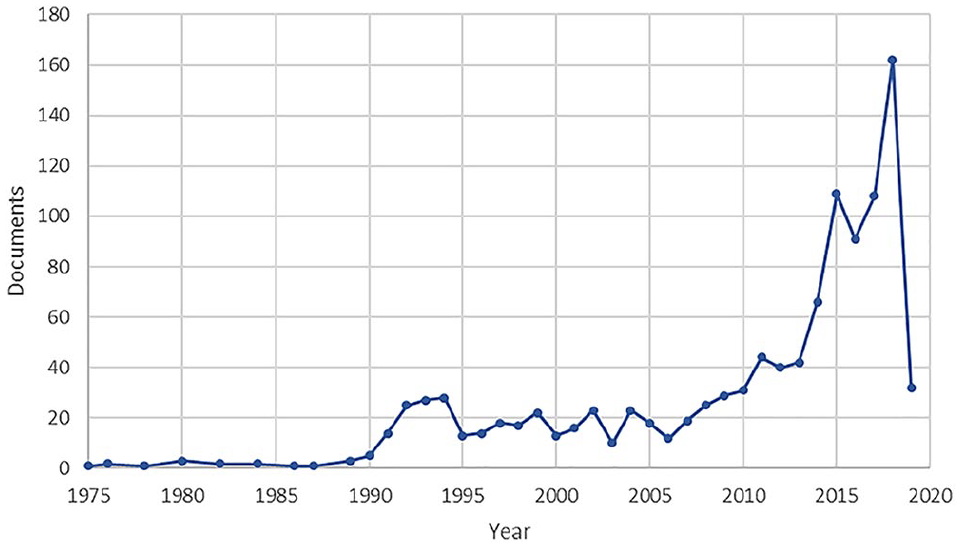
Number of papers on Hate Speech in all fields published by year in WoS.
These studies were initially limited to very specific issues of the day such as the Heidelberger Manifest, which brings together the themes of xenophobia (Elfferding, 1983). The year 1992 produced a flurry of research, mainly on racist and xenophobic discourse and rights and regulations (Handler, 1992), that remained steady until 2003. Studies were gradually added on Islamophobia and the rejection of refugees (Kus, 2016), in the context of rising nationalism, as well as thematic studies on homophobia (Jowett, 2017) and antifeminist discourse. Studies on the mass media, in particular online media and social media, gained traction due to their importance in the public sphere. Besides HS discourse, the analysis of the feelings and emotions they elicit, both in society and in its victims, has gained greater attention (Nielsen, 2002). In this respect, the academic literature appears to be enlightening society in general (McNamee et al., 2010) and educators in particular (Council of Europe, 2013; Sugrue, 2019), regarding their responsibilities arising from such phenomena.
Steady publication of HS-based research since 2003 suggests the consolidation of the topic, which is conclusively confirmed by its spectacular growth from 2013 onwards. By 2018 (the last year with complete data from WoS), there were 162 published contributions linked to more than one field of study (law, 374; and communications, 123) and focused on a diversity of approaches.
This development in academic output shows the consolidation of a highly sharpened focus on a social and cultural problem: the manifestation of hatred in society, as evidenced in public discourse. As regard academic interest in the subject, it is important to note not only its total relevance, but also its dramatic growth, constituting an authentic academic “trending topic.”
The 20 Most Cited Papers
The 20 most cited publications fall within very different fields, bearing in mind that the studies may belong to more than one category: law (8), psychology in the broadest sense (7), communication (3), sociology (3), social affairs (2), political science (1), international relations (1), cultural studies (1), women’s studies (1), information sciences and library science (1), computer science and cybernetics (1), public, environmental and occupational health (1), and pediatrics (1). This diversity already indicates a strong interdisciplinary dimension: less as an approach than as a consolidated result. Moreover, these works are already considered classics that will stand the test of time. More than half of them (12 out of 20) were published in the 1990s (or earlier). Only one study came out after 2010. The strength of these works lies in large part on their essayistic nature and general approach. Eighty-five percent of the authors of these papers are North American.
Several of them focus on the victims’ point of view, through which they seek to define and specify the types of harm inflicted by hate messages, and the behavioral responses adopted by the targeted groups. From a psychological approach, Nielsen (2002) documents, through participant observation and in-depth interviews, the experience of being the victim of racist and sexist discourses in the public sphere. Despite the limited sample, the paper concludes that HS causes harm in itself and sometimes also constitutes a crime (acts of violence, sexual assaults). Some authors consider the victim’s perceptions of HS: Cowan and Hodge (1996) hold that responses to HS are complex and depend on the purpose and publicness of the speech. Leets (2002), however, finds common behavioral patterns in university students—victims of anti-Semitic and homophobic messages—such as lasting effects and passive responses, although the students often sought support. Calvert (1997) advances the repetition factor as a determinant in creating an abusive environment, while Boeckmann and Turpin-Petrosino (2002) observes mostly political implications, and points to the need for governments to introduce measures to discourage or thwart the spread of HS.
Another significant group of studies, mostly published in the 1990s, in this selection of most cited papers, focuses on whether or not legislation should be introduced to ban HS (we will have recourse to this question later). Fish (1997) posits HS as a problem arising from the action of an adversary. He suggests that instead of a prohibitive legal measure, HS calls for an alternative strategy. Altman (1993), adopting a middle ground position between advocates and opponents of punitive preventive measures, considers despite the harm HS inflicts on people, prohibitions are never neutral, not even to safeguard against HS.
The most recent studies in this selection highlight the prominence of HS in online media, which have become the most numerous and diverse outlets by which to disseminate hate (Cammaerts, 2009; Domingo et al., 2008). The threat of online HS discourse is compounded by the fact that it is presented in more moderate guises (apparently rational arguments and reliable sources, but out of context), and thus attracts a wider and younger audience that is less discerning (Meddaugh & Kay, 2009). The perpetrators of HS are not a homogeneous group. Some seek to discredit those they view as adversaries. Others feel more like the watchdogs of society (Erjavec & Kovačič, 2012).
The bibliography of reference works is predominantly legal and primarily focuses on the victims and the damage inflicted on them. It attempts to assess the most effective and lawful response: prohibitive or strategic. The second group takes in classic works that, from the communication standpoint, address the media’s role in spreading HS.
Hate Speech in the English-Language Literature in the Communication Field
There is a pre-eminence of American and British studies on HS and in field of communication sciences, with 71 of the 123 selected studies from the United States (48) and United Kingdom (23) combined. The highest number of European contributions by country are 5 (Germany, Sweden and Turkey), followed by the Netherlands with 4. HS studies in the communication field first appeared in WoS in 1994, but they do not exceed 10 per year until 2015. Compared to research on HS in the legal disciplines, this topic became a subject of communication studies at a later stage, and the total output was mostly lower than the former, although some parity is found from 2007 onwards. As would be expected, most of the papers found are in discourse analysis journals (Discourse Society, 24; Critical Discourse Studies, 5; Discourse Communication, 4; etc.) and to a lesser extent, but also significantly, in new media or social media journals (New Media and Society, 5; Social Media and Society, 4; etc.).
The internet and social media provide the main focus of HS studies in the communication field. There are several reasons for this: concern about the proliferation of online HS messages; the audience can be known; and the important changes in HS brought about by social media. Twitter (Burnap & Williams, 2015; Ott, 2017) and Facebook (Farkas et al., 2018; Kus, 2016) are the platforms are received most attention, followed by YouTube (Murthy & Sharma, 2019). By contrast, analysis of online news outlets (Harlow, 2015) and photographic imagery (Prass & da Rosa, 2018) lags far behind.
Special attention is given to racist (Klein, 2012) and xenophobic discourse (Yamaguchi, 2013), which has proliferated since Donald Trump became president of the United States, in addition to the refugee crisis and the rise of extreme right-wing parties in Europe. In line with the trends indicated in this literature review, studies also address Islamophobia (Awan, 2016) and homophobia (Mršević, 2013).
Several authors suggest that the internet is currently the main source of HS, and that it is set to continue so, suggesting that history studies could provide a more comprehensive explanatory analysis of this problem in modern society (Shepherd et al., 2015; Slagle, 2009). The historical perspective is also included in multidisciplinary approaches, since highly complex issues (populism, racism, anti-Semitism, among others) converge in HS, demanding a consideration of socio-political factors and the political discourses themselves, but also their diachronic evolution (Wodak, 2002).
There is a broad consensus for attributing specific characteristics to HS on social media. In other words, social media has changed the way racism, for example, is portrayed; a change that is attributable to the characteristics of the platforms that host them. For example, unlike HS spread by other media, racist discourse on the internet has few emotional constraints. This can certainly be put down to anonymity, but also, and above all, to the range of new ways in which to express it and to the generalization of new cultural logics such as, for example, through the spread of, and approaches to, post-racist logic (Anagnostopoulos et al., 2013; Cisneros & Nakayama, 2015).
Twitter discourse is usually simple, impulsive and offensive (Ott, 2017). Antagonistic and negative feelings (for example, in Islamophobia) are articulated in terms of complex identities that refer not only to religion but also to ethnicity, politics, and gender (Evolvi, 2019), and exclusionary rhetoric is frequent, as in the case of refugees in Europe. Most importantly, European nationalist and racist groups use Twitter to spread a socially accepted racist discourse (Kreis, 2017). There is also a wealth of research on pages with no political agenda that mobilize against racism (Al Khan, 2016).
The mounting criticism of social media is leveled at the expression of user-generated content (UGC) that is shot through with discrimination, intolerance and prejudice, and at the platforms themselves (Facebook in particular). These social media networks are accused of promoting racism, since they enable and influence various discourse strategies of identification and persuasion within which racist discourses are integrated (Merrill & Åkerlund, 2018). The leaders of Spain’s far-right parties also make use of discrimination in their speeches, which their supporters elaborate on in comment spaces (Ben-David & Matamoros-Fernández, 2016). HS in Spain seems to function in a top-down manner, from the dominant groups to the subordinate ones (Del-Teso-Craviotto, 2009).
Some papers study strategies in which Facebook profiles are set up with fake identities to spread hatred on the internet by imitating and inflating Muslim radicalism. Farkas et al. (2018) identified 11 Danish Facebook pages that, calling themselves radical Islamists, disseminated racist, and Islamophobic propaganda as refugees and immigrants were reaching Denmark from Syria. Comments posted by users to Facebook pages belonging to news media outlets are also analyzed. The comments largely come from people with negative attitudes toward minority groups. For example, comments targeting Syrian refugees stress the host country’s supremacy, security and economy (Kus, 2016). User comments are increasingly becoming more inflammatory. Indeed, U.S. newspapers are weighing the advantages and disadvantages of allowing readers to post anonymous comments on their pages (Harlow, 2015). Some authors view journalists as inadequately prepared to meet the global challenge of HS’s presence in the media (George, 2014). While analyzing reader comments is relevant, it is even more interesting to investigate the ideological construction of HS that sometimes underlies journalistic reporting itself (Teo, 2000).
In spite of YouTube’s considerable relevance to HS, there is scant research on that platform’s comments. Eleven studies, amounting to some 9% of HS papers in the communication field, were identified. Murthy and Sharma (2019) show that HS—specifically racist discourse—generates many interactions that go beyond the video clips to which they refer. Other investigators have observed how YouTube videos are used in anti-racist campaigns. For example, one such video exploits comedy to depict racist attitudes in such an overblown way that they are ridiculed by common sense, although they can function as overlapping modes of assimilation (Archakisa et al., 2018).
The psychological and motivational profile of the producers-emitters of HS is also addressed (Barlow & Awan, 2016; Erjavec & Kovačič, 2012). Two types of motivations tend to influence a basic authoritarian personality. The first involves the pleasure of the thrill sparked by a debate; the second one identified refers to users’ self-identification as “guardians of justice” in society (Hanson-Easey & Augoustinos, 2010). These studies are extended to analyze the impact of HS on victims, in which the socio-cultural identification of this type of discourse appears to be key, since, depending on the identification, the meanings of HS are perceived as more or less offensive (Leets, 2001).
From the methodological point of view, empirical studies predominate in the papers on HS. The starting point is usually shown through specific cases defined as “triggering events.” For example, the jeering of an Australian Super League football star, or the feedback on a Coca-Cola advert aired during the broadcast of the 2014 Super Bowl. These are addressed through a broad corpus in which content analysis is combined with critical discourse analysis (sometimes using tools such as Sketch Engine or DiscoverText). The communication is understood to take place in a particular socio-cultural setting, where both are mutually affected, although not symmetrically. Social processes are not exclusively linguistic, yet this dimension is always present (Fairclough, 2001). The most frequent words, occurrences, key words, and tendencies are analyzed, as are the variables that codify pejorative, derogatory and negative terms (Giglietto & Lee, 2017).
Analysis of the most recurrent arguments of discursive strategies (such as exaggeration and contradiction are common: Chiluwa, 2018). When studying social media networks, images—photos, gifs, memes, and so on—that appear alongside comments are usually taken into account. In these cases, papers using a multidimensional methodology are much more profound and relevant for the study of data retrieved from these networks. Big data-based studies are currently in the minority (Kus, 2016). In some of these studies, Rapidminer Studio software is used for data analysis and mining.
Rhetoric-linked methodologies are used to analyze stereotypes and to establish diverse definitions of “the others” (Meddaugh & Kay, 2009; Sedláková, 2017). The analysis of metaphors (Santa Ana, 1999), whether comical or satirical, is also tackled from this angle. The greatest difficulty in this field is to draw a clear distinction between hatred and antagonism. Content producers are analyzed through in-depth interviews and digital ethnographic methods. Interview-based methodologies are often used to study victims.
From the semiotic point of view, the receivers are regarded as having a “responsibility” to decode the meaning of the text. How they do this, determines the meaning they will decipher and emphasize. Since the messages are inherently polysemic, the receiver may decode an unintended meaning. Hence, the importance of addressing the receivers to pinpoint the intended meaning of the messages.
Research into HS and the means of mobilization can make it easier to neutralize them. The literature shows that hatred is present in politics (Boromisza-Habashi, 2011), sports (O’Donnell, 1994), advertising (Marlow, 2015), and fiction (Draper & Lotz, 2012). In fact, best practices are recommended in some cases to foster communication between different collectives (Chua, 2009). Sometimes, hate messages can be kept in check through alternative discourses (Zerback & Fawzi, 2017). In any case, intervention in this field, albeit guided by research, is an entirely different task. Responsibility for intervention rests with the authorities, journalists, cultural and social agents, and citizens on their own initiative.
Spanish-Language Papers on HS Indexed in WoS
Of the 1,112 papers yielded, 32 are written in Spanish (2.87%), 14 of which are case law studies. The rest fall within the fields of history, politics, and communication. HS constitutes one of the most controversial legal precepts in Western jurisprudence, and some believe it poses a threat to democracy (Alonso et al., 2017). From a doctrinal point of view, the assessment of HS is clearly negative, although the analysis and criminal assessment of specific facts poses difficulties. Research is currently seeking to clarify this point, particularly since Spain created the Public Prosecutor’s Office for hate crimes and discrimination in 2013 (and 2009 in Barcelona). In fact, while studies into HS only began in 1998, they did not acquire a certain presence in WoS until 2015, with 6 publications per year, which gradually increased (2018, 10 articles). These papers were published in Spain (19), Costa Rica (3), Chile (2), Argentina (1), and Colombia (1), among others. There is a lack of comparative studies, such as that of Noorloos (2011) on the Netherlands, and England and Wales.
As with the English-speaking research (Herz & Molnár, 2012; Waldron, 2012), Spanish output competes between the two existing models: the American model, which defends freedom of expression and only censures speech that contributes directly to the committing of a crime; and the European model, which condemns any advocacy of HS on the grounds that statements against the equality and dignity of minority groups constitute crimes, even if there is no direct incitement to violence. Critics of the American model argue that legislation should be in place to control HS as part of a commitment to human dignity and to inclusiveness and respect for members of vulnerable minorities. These studies also highlight the lack of consensus on what constitutes a hate crime.
The European model struggles to identify when what is expressible goes beyond what is permissible (Martín Herrera, 2014). The defense of respect is no longer considered sufficient. From an intercultural perspective, recognition of “the other” is necessary (de Redacción, 2017), and a characterization of HS appropriate to the constitutional framework should be established (Díaz Soto, 2015; Teruel Lozano, 2018). Between these two academic stances there lies a third way that, rather than adopt punitive measures, advocates a policy designed to support affected groups and communities so that they can respond to the manifestation of HS (Gelber, 2002) and seek mechanisms to condemn such discourse when it does not cause sufficient harm to be declared illegal (Teruel Lozano, 2018).
Most of the authors of the studies in Spanish defend the European model. They consider that the perpetrators of HS are not political dissidents (Alcácer Guirao, 2015), but seek to spread an ideology that led to caused millions of deaths. However, some authors, while supporting limitations, consider that some of these may affect meaningful expression (Paúl Díaz, 2011).
The studies analyze the European Commission’s recommendations on hate crimes and the work of the European Court of Human Rights. For example, the Spanish Penal Code, following the 2015 reform, adopted all the recommendations of the Commission against Racism and Intolerance of the Council of Europe (Elósegui, 2017). However, none of the interpretative conundrums has been resolved. For this reason, it is necessary to establish “material rules of ponderation” to seek a solution in the event of conflict between a fundamental right and a specific constitutionally protected interest (Valero Heredia, 2017, p. 309).
In context of Islamic terrorism in Spain, emphasis has been placed on adopting the use of alternative narratives (counter-narratives) or de-radicalization programs as part of an integrated plan to check HS or incitement to violence (Cano Paños, 2016). There are multiple forms of violent expression, especially on the internet, that need to be addressed. Although the internet did not invent HS, it has increased its spread and capillarity. The internet even has the power to lend new social meaning to HS (Rodríguez Ferrández, 2014). Researchers advocate actions against the producers and promoters of HS, and the establishing of regulations aimed at curbing excesses on social media (Boix Palop, 2016).
Several articles discuss offenses of blasphemy and defamation. Unlike HS, there is a greater consensus for the repeal of laws that ban these offenses, because they restrict freedom of expression and beliefs (Sturges, 2015). It is only natural that a mature society would expect “that certain expressions should be put in check without the need to outlaw them” (Campos Zamora, 2018, p. 294). On the other hand, it highlights that freedom of speech in a religious context must avoid offensive expressions (Palomino Lozano, 2009, 2014).
Of special note is the work of Miró Llinares (2016), which makes use of a taxonomy of violent communication and HS on the internet. Based on Jacks and Adler (2015), McDevitt et al. (2002), and Sobkowicz and Sobkowicz (2010), it is a rigorous contribution that is applicable to communication studies. Some 250,000 Spanish-language tweets posted in the wake of the terrorist attacks on the satirical weekly Charlie Hebdo were categorized according to the type of discrimination and type of message they contained. The result determined five typologies: direct incitement to violence/ threat of a physical nature, offending honor and/or dignity, direct incitement to discrimination, and offending collective sensitivity. These were subdivided into 16 subtypologies. This in turn led Tabares Higuita (2018) to analyze the responses of two Facebook groups to the Colombian FARC’s decision to stand in the 2018 parliamentary and presidential elections. After applying Miró’s categories to the 158 comments in the thread of the reactions (links, memes, gifs, videos, etc.), Tabares concludes that the feedback depended more on the initial message than the political stances of the authors of the comments.
In spite of the notable presence and dissemination of HS on the internet, there is scant research on this subject in Spanish. Only two papers were found in WoS, both of which analyze the Spanish online news media for Islamophobic discourse regarding the Charlie Hebdo attack. One paper focuses on El País and La Razón (Piquer Martí, 2015); the other on El País and ABC (Calvo Barbero & Sánchez-García, 2018). Piquer analyzes the thematic selection (frame), photographs, headlines, metaphors and euphemisms to show the portrayal of negative stereotypes of the Islamic population. Calvo and Sánchez, in their analysis of the content and discourse of 217 opinion pieces, also conclude that Islamophobic ideas, based on colonial discourses and the clash of civilizations, featured in both news outlets. The two studies apply a textual analysis methodology, without assessing the nature and forms of expression of the corpus studied.
Similar conclusions are drawn from an analysis of radio commentary (Tortajada et al., 2014) on xenophobia. The corpus of analysis is limited, totalling 2 hr of extracts from magazine shows covering the death of a minor of Moroccan origin while fleeing from the police. The excerpts were aired on three different radio stations over 5 days. The methodology, the only one of its kind, is interesting in that it exposes the use of hate language (including false information, flawed reasoning, divisive language and/or dehumanizing metaphors). More debatable is the application of the concept of modern racism in Spain in the second decade of the 21st century.
Discussion
HS is a topic of growing interest in leading academic research, particularly in the English-speaking world, yet Spain and Spanish-speaking countries are also seeing a steady growth in research on this subject, although the output of studies in Spanish is lower and its thematic variety more limited. Spanish-language papers in the legal field focus on the same and related issues (taxonomies for example) as those in English-language studies. Spanish production in the communication field remains scarce and limited, with few studies on social media, for example.
It is in the jurisprudential areas where more attention (and from the earliest papers) is given to the analysis of HS. Communication studies constitute the second most common field in which this topic is analyzed. This trend is set to increase, since the very nature of communication lends itself to this type of discourse in our societies. In addition, with the legal precepts established, analysis of the inherently communicative aspects—creation, transmission, dissemination, reception, influence, and feedback—of HS is yet to be analyzed.
Academic research on HS brings together several fields of knowledge, particularly the legal sciences, which, as the first to address this topic, have developed a large body of work around this discourse. Indeed, jurists are responsible, among other things, for providing a precise definition of the HS phenomenon and for formulating the fundamental taxonomies that have subsequently been used by researchers in communications, sociology, political science, psychology, and so on. The political, social, and cultural reality perceives HS as a serious threat to cohabitation and a huge barrier to creating non-exclusive identity contexts. As long as this problem persists, academic research must continue to give HS its undivided attention.
Despite the prevalence of legal studies on HS, the diversity of academic fields that have engaged in this topic demonstrates its interdisciplinary nature on the one hand, and the deep concern it implies. Whatever the academic field, the diversity of approaches being brought to this research cannot be ignored; these linkages must be taken into account. The multiplicity of approaches and methodologies is evident, even among the 20 most cited papers. In short, such interdisciplinarity calls not so much for each study to include specialists in various areas (which is certainly not ruled out) as for it to become the starting point for any pioneering investigation. When researching specific aspects of HS in certain countries or regions, it is necessary to draw on the contributions from other academic disciplines.
Interdisciplinarity together with multidisciplinarity is key. The English-speaking world (especially the United States and the United Kingdom) accounts for a very high proportion of research output. These countries were also the first to address the topic of HS. Without denying their national and regional peculiarities, it would be unthinkable to overlook such a vast body of research with the mistaken notion that nothing can be learned from it because of the national and regional idiosyncrasies in which this discourse takes place. Such research helps to identify similarities as well as differences; it allows us to assess which successful methodologies can be applied or modified in each case and, above all, to broaden the discussion and conclusions of our research in a framework that can give them greater international meaning and scope.
Conclusion
Subsequent integration of these studies would be facilitated if at least four factors of this discourse are considered. The first would be to take into account the influence of the medium(s) used to spread HS. To this end, the elements that allow for a scale of protagonism of some media over others and according to what would have to be determined. Other considerations include the type of rhetoric involved in each medium (a newspaper or a website, an episode of a television series, or a chat about historic memory) as well as its focus (generalist or niche), and the turn of phrase/ expressive style (direct expression of hatred or indirect expression of consequences). Finally, attention should be given to whether or not it is based on fact, and whether or not it is expressed through educated or through everyday language.
The second factor concerns the subject matter of the discourse. It is possible to identify different categories of HS: gender, sexual identity, nationality, a stance regarding particular historical events, religious beliefs, and so on with their implications, such as narratives and what they attribute to the topic they denigrate.
The third factor to consider is the environment, sphere, scenario or setting in which the discourse takes place: the combination of more or less homogeneous elements that possibilitates actions. In other words, it is less about the physical space than it is about the set of elements they make up. We can therefore speak of settings as diverse as the events that will take place in them. They can be defined by actions or by their population (sports or youth scenarios, for example), and they can have different scopes according to the actions that mark them (the environment of those involved in the public uses of history or politics). The definition of the setting makes it easier to focus the research that can address, without in any way exhausting the possibilities, the political, sports, religious, cultural (including artistic), educational, television entertainment, environment nature linked to the public uses of history and scenarios of alienation and non-institutional violence. It is important not to confuse this factor with that of discursive themes.
Fourth and finally, the diachronic factor will have to study its roots or novelty in the general panorama and its evolution. Each one of these factors can offer quantification and qualification variables that will demand diverse methodologies and interdisciplinarity.
They will have to be set in specific contexts, as already mentioned, in order to assess the true dimensions of these conducts, and to posit heuristic strategies. Only by adopting this broad focus, and not specific issues, will it be possible to distinguish between the multiple forms of HS and to establish significantly different and comparable patterns.
Finally, the diachronic trajectory should be stressed, as it is important to establish how stereotypes became narratives of aggression, even though the academic literature only began to deal with these issues in the early 1980s. It would be fundamentally erroneous to view HS as a present-day phenomenon. Perhaps a medium-term result could entail the creation of an algorithm to assess the intensity of hatred in its various manifestations in the media and on the internet. Another line of research that is absent, but indispensable, would be to analyze what directors of media companies in each country know about HS crime legislation, the ethical codes to enforce, and how they respond to news or comments from the public that contain messages of hate.
In short, it would prove extremely useful to map HS in each country in order to identify the most important aspects (most persecuted groups, rhetoric, emotions, and intensities) in order to compare them with others to assess measures to counteract their effects.
Footnotes
Declaration of Conflicting Interests
The author(s) declared no potential conflicts of interest with respect to the research, authorship, and/or publication of this article.
Funding
The author(s) disclosed receipt of the following financial support for the research, authorship, and/or publication of this article: This research was made within the framework of the following research projects: CSO2015-66260-C4-1-P Historia de la Programación y de los Programas de Televisión en España (cadenas de ámbito estatal), funded by Ministerio de Economía y Competitividad (Spain); PID2019-105613GB, Cartografia de los Discursos del Odio en España desde la Comunicacion: ámbito deportivo, taurino y político, funded by Ministerio de Economía y Competitividad (Spain).
