




Abstract
This study aimed to describe the quality of interactions between early childhood educators (ECEs) and children, as observed in childcare centers and as reported by early childhood educators (N = 15) working with 5 year-old children. To assess ECEs’ practices related to the quality of these interactions as observed in childcare centers (theories-in-use), the Classroom Assessment Scoring System (CLASS) was used. This tool is structured around three domains: emotional support, group organization, and instructional support. Semi-structured interviews were conducted with ECEs to collect data on their reported practices related to the quality of these interactions (espoused theories). The observational data showed that the quality of emotional support and group organization was average-to-high, and these domains were also most often referred to in the participants’ comments. On the contrary, the quality of instructional support was rated average-to-low. Correspondingly, this domain was not often referred to in the participants’ comments. These results are discussed in light of the tensions and gaps brought out between the ECEs’ theories-in-use and espoused theories and lead to recommendations for professional development aimed at improving the quality of ECE–child interactions in childcare centers and, in particular, the instructional support provided therein.
Introduction
As of 2016, the population of Quebec (Canada) included 439,930 children under the age of five, 57% of whom attended educational childcare services governed by the ministère de la Famille (Ministry of the Family [MF], 2016), such as government-subsidized childcare centers. These childcare centers are nonprofit organizations providing educational childcare services in one or more facilities across Quebec (N = 993) and employing close to 19,000 early childhood educators (ECEs; MF, 2016). The quality of the children’s experience in childcare centers affects their learning and development, with repercussions for their present and future academic success (Burchinal et al., 2010; Cantin et al., 2012).
More specifically, the quality of educational childcare services involves four dimensions (MF, 2019), the first of which is the quality of interactions between ECEs and children. This dimension is particularly important, having been found to be the best predictor of learning among children aged 4.6 years (Sabol et al., 2013). However, despite the recognized importance of these interactions, the Québec Survey on the Quality of Educational Child Care (2003, 2014) revealed that most childcare centers attended by preschool-aged children only minimally met the quality standards (Drouin et al., 2004; Gingras et al., 2015).
In fact, the quality of ECE–child interactions as observed in educational childcare settings was only rated as fair, with an average score of 2.85/4 in 2003 (Drouin et al., 2004), and 2.82/4 in 2014 (Gingras et al., 2015). Moreover, the results of these two surveys indicated that only one third of children were being cared for in childcare centers where the quality of ECE–child interactions was rated as good or very good (Drouin et al., 2004; Gingras et al., 2015). These results show that little has changed in the quality of ECE–child interactions over the last 10 years despite the recognized importance of these interactions when it comes to supporting learning and development among children (Sabol et al., 2013). The results of these surveys thus underscore the relevance of examining the quality of educational services provided in childcare centers and, in particular, the quality of ECE–child interactions in these settings. Recognizing the importance of the educational quality of ECE–child interactions, it appears essential to examine it, qualitatively rather than a quantitatively (as observed from both the outside and inside). Thus, the question that guided this research was, “What is the quality of ECE–child interactions as observed in childcare centers and perceived by early childhood educators?”
Quality of ECE–Child Interactions as Observed in Educational Childcare Settings
High-quality ECE–child interactions play an activating role, promoting learning and development among children (Centre pour la recherche et l’innovation dans l’enseignement, 2007). To assess the quality of these interactions in educational settings, a team of researchers developed an observational tool called the Classroom Assessment Scoring System [CLASS], structured around three main domains associated with developmental gains among children; (a) emotional support, (b) group organization, and (c) instructional support.
In the childcare context, emotional support refers to the ECE’s ability to engage in authentic relationships with the children, be attuned to their emotions and needs and foster their autonomy. This domain also entails showing regard for the child’s perspective in early education settings (Pianta et al., 2008). The second domain, group organization, refers to behavior management within the group (e.g., anticipating behavioral problems, supervising the children, and limiting reactive responses when intervening in problems), the organization of space and time, the quality of the activities proposed and the variety of materials made available (Curby et al., 2009). The third and last domain, instructional support, refers to the quality of the ECE’s engagement in the children’s learning (e.g., providing support, asking questions, encouraging) as well as language modeling, leading the children to fully engage in the learning situations provided and develop reasoning strategies (Curby et al., 2009).
Since its creation, the CLASS has garnered a great deal of interest in the scientific community, both in Quebec (Bouchard et al., 2017) and internationally (Cadima et al., 2013; Leyva et al., 2015; Pakarinen et al., 2010; Von Suchodoletz et al., 2014). Studies using this instrument throughout the world have shown a similar pattern of results, with scores for the emotional support and group organization domains being higher than those for instructional support, the quality of which has been shown to be poor. This pattern of quantitative results, emerging from all studies using the CLASS, draws a portrait of the quality of ECE–child interactions in early education settings around the world, as observed from the outside. However, few studies have attempted to better understand the quality of these interactions as viewed from the inside, by ECEs themselves.
It thus appears relevant to better grasp the complexities of this issue beyond the CLASS scores, shedding light on aspects that these observational data do not reveal. To this end, examining the quality of ECE–child interactions both as observed in childcare settings and as reported by ECEs appears to be a promising avenue. Indeed, the way ECEs report perceiving the quality of their interactions with the children in their groups tends to influence the quality of these interactions as observed (Duval et al., 2016). However, few studies have focused on ECEs’ reported practices related to the quality of these interactions, or how they perceive the three domains of the CLASS beyond the scores assigned for them.
Quality of ECE–Child Interactions as Reported by ECEs
The way ECEs perceive and define their practices could help explain the observational data on the quality of ECE–child interactions in early education settings (LaParo et al., 2009). For example, Hamre et al. (2012) showed that kindergarten teachers who reported believing more strongly in the importance of supporting children’s language development used a greater number of interventions to this end (e.g., favoring back-and-forth exchanges and repeating the children’s words), helping to increase the quality of instructional support observed. This points to a link between the practices associated with the quality of interactions in early education settings and ECEs’ beliefs regarding the best way to support children in their development (Duval et al., 2016; LaParo et al., 2009). It is thus plausible that ECEs’ beliefs regarding the quality of their interactions with the children in their groups could shed light on the quality of these interactions as observed using the CLASS.
However, it can be difficult for practitioners to articulate the reasoning behind the pedagogical practices they use (Maurice, 2005). Moreover, Argyris and Schön (1974) argue that there is an observable incongruence between what individuals say they wish to do and what they actually do, that is, between their theories-in-use (observed practices) and their espoused theories (reported practices). Theories-in-use and espoused theories are both theories of action (Argyris et al., 1985) but are considerably different. Theories-in-use usually develop on an intuitive level, which explains the difficulty of asking someone to explain them in a given situation (Argyris & Schön, 1974). Take, for example, the grammar rules that govern language. People cannot always precisely define these rules or the syntactical structures needed to explain why they word their statements the way they do (Argyris & Schön, 1974).
Espoused theories, for their part, refer to the theories that people claim to adhere to when explaining their choices or justifying their actions. For example, an individual might say it is important to use a broad range of vocabulary with children to support their language development. However, the action this person takes might not actually reflect this, as they may instinctively tend to use a basic level of language that is not, in fact, advanced enough for the children they are interacting with. To sum up, theories-in-use are not easy to identify, and should not be confused with espoused theories (Argyris & Schön, 1974). Indeed, when a person is asked why they act a certain way, their answer usually refers to their espoused theories rather than the theories-in-use that actually guide their behavior, which are intuitive (Argyris & Schön, 1974).
It thus appears relevant to examine the practices of ECEs, as observed, to better understand their theories-in-use regarding the quality of their interactions with the children in their groups, which they may not be able to clearly articulate. At the same time, examining ECEs’ espoused theories could help deepen the analysis of these observational data. Thus, with the end goal of improving the quality of ECE–child interactions in childcare centers, it is important to bring out ECEs’ practices as observed (theories-in-use), but also to examine how ECEs perceive the quality of their interactions (espoused theories), as these practitioners are the main agents of change in their own practices.
Research Goals
This study aimed to examine the quality of ECE–child interactions in childcare centers, known to be a key component of children’s learning and development (Sabol et al., 2013). More specifically, it aimed to (a) examine the quality of ECE–child interactions as observed in childcare centers (theories-in-use), and (b) explore how ECEs perceived the quality of these interactions, as self-reported (espoused theories). These first two goals led to a third goal, namely, to (c) identify the espoused theories acting as obstacles to the implementation of ECEs’ theories-in-use, and bring out the tensions related to the quality of these interactions in childcare centers as perceived by ECEs themselves.
Method
Participants
The sample consisted of 15 ECEs working in six childcare centers in the Greater Quebec City area (Canada). These childcare centers were in the same geographic area, but in different boroughs of the city. More specifically, they were Centers de la petite enfance, that is, private, autonomous, nonprofit childcare centers administered by a majority of parent-users. Their mandate is to offer, in exchange for a small parental contribution, subsidized quality educational childcare services adapted to the needs of families. These childcare centers base their interventions on the educational program proposed by the Ministry of the Family (MF, 2019).
All participating ECEs were Caucasian and their average age was 48 years. They had, on average, 19.2 years of experience in early childhood education (SD = 8.05). Of these ECEs, 2/15 had completed university studies (e.g., certificate in education or undergraduate degree); 42.9% held a technical junior college diploma in early childhood education and primary level classroom assistance, while 57.1% had other training in early childhood education (e.g., attestation of college studies). The average age of the children they worked with was 59.21 months (SD = 4.82) (girls: M = 59.06 months, SD = 5.23; boys: M = 59.36 months, SD = 4.44).
Measures
A mixed methods research design (Creswell, 2011) was used, including (a) observations carried out in childcare centers (quantitative data), and (b) individual interviews conducted with each of the participants (qualitative data).
Quality of ECE–child interactions as observed in childcare centers (theories-in-use)
The quality of ECE–child interactions as observed in childcare centers was rated using the CLASS (Pre-K version), for use with 3 to 5-year-old children (Pianta et al., 2008). As illustrated in Figure 1, the CLASS covers three domains: (a) emotional support, (b) group organization, and (c) instructional support, as well as ten corresponding dimensions, assessed through various indicators and behavioral markers (see Figure 1). The CLASS is thus a precise and well-structured reference framework comprising several components, which is why it was used as the evaluation grid in this study.

Domains, dimensions and indicators of the CLASS tool.
As prescribed by the tool’s designers, the quality of classroom interactions was assessed by duly certified observers (see http://teachstone.com), on the basis of four cycles of observation. More specifically, a cycle of observation involves 20 min of observation followed by a 10-min rating period, with scores being attributed for the quality of each dimension using a 7-point rating scale (1–2 = low; 3–4–5 = average; and 6–7 = high). The score for the negative climate dimension, included in the emotional support domain, must be reversed for rating purposes (Pianta et al., 2008). The internal consistency indices reported by the authors of the CLASS tool (Pianta et al., 2008) ranged from 0.73 to 0.89 for each of the domains. In the present study, the internal consistency was acceptable for all three domains: α = .83 for emotional support, α = .97 for group organization, and α = .82 for instructional support. Internal consistency is a measure of the reliability of the components (dimensions) of a given domain (e.g., emotional support). When the internal consistency is acceptable, it means that the dimensions are indeed linked to the domain.
Quality of ECE–child interactions as reported by ECEs (espoused theories)
Individual semi-structured interviews were conducted with the ECEs to bring out their espoused theories regarding the quality of their interactions with the children in their groups. Following an opening question on the mission of childcare centers, participants were asked open-ended questions regarding the three domains of the CLASS. A sample question was: The quality of ECE–child interactions refers to three domains. The first domain is emotional support. “In your view, what does it mean to support 4 to 5-year-old children emotionally?” Next, the ECEs were asked to describe the interventions they used in their groups related to each domain. A sample question was: “How do you provide emotional support to the children in your group? How do you intervene to support the children in this way?.”
To not influence the ECEs’ responses, the objectives of the study were not presented to them. These interviews aimed to bring out the ECEs’ espoused theories regarding their practices (theories-in-use), according to the three domains of the quality of ECE–child interactions. It should be noted that the negative climate dimension (included in the emotional support domain) was not covered in these interviews, as it does not refer to interactions that are desirable in early education settings.
The participants’ answers were recorded and transcribed in full. All the interviews were analyzed using content analysis to identify common themes (Krippendorff, 2004), according to the three domains of the CLASS. To bring out the ECEs’ comments regarding their practices related to the quality of their interactions with the children, their answers were coded according to the CLASS dimensions to which they referred. As the CLASS uses a clearly defined analytical grid (e.g., domains, dimensions and indicators), the codes related to the items used in this tool. For example, when an ECE mentioned something related to the “smile” indicator in the positive climate dimension of the emotional support domain, a color code corresponding to this domain was inserted into the document. These codes made it possible to identify and count up the number of times any indicator associated with the CLASS domains was mentioned in the ECEs’ comments. This analysis was conducted using TAMS Analyzer software.
In line with Wolcott (1994), the qualitative analysis conducted in this study involved three steps: (a) collecting the ECEs’ comments describing their interactions with the children (verbatims); (b) analyzing the data (using TAMS Analyzer software); and (c) interpreting the data. Data interpretation refers here to establishing links between the qualitative data collected and analyzed and the theoretical concepts used (i.e., domains of the quality of ECE–child interactions), while also bringing out nuances in the data and linking them to what was already known regarding the phenomenon under study (Anadón & Savoie Zajc, 2009).
General Procedure
The ECEs were recruited on a voluntary basis. First, an electronic newsletter was sent to the directors of childcare centers in the Greater Quebec City area. Directors who agreed to participate in the project then transmitted the information to the ECEs in their centers, and those who were interested in participating in the research contacted us.
The data were collected at two different time points. First, a research assistant, a certified Pre-K CLASS observer, visited the childcare centers to observe the quality of ECE–child interactions therein. All observations were carried out in the morning, a time chosen by the ECEs. The latter did not have to change their usual routine. The observations fit into the usual schedule followed by the childcare centers. The observer sat or stood behind the group and did not intervene at any time.
Next, interviews (lasting 20–60 min) were conducted by a single research assistant with the participating ECEs in the childcare centers (without the children being present), exploring how they perceived the quality of their interactions with the children in their groups.
Results
Quality of ECE–Child Interactions as Observed (Theories-in-Use)
To address the first goal of this study, namely to examine the quality of ECE–child interactions in childcare centers, descriptive analyses were performed. The mean scores for the CLASS, presented in Table 1, show an average-to-high level of quality for the emotional support and group organization domains, with mean scores of 5.85 (SD = 0.54) and 5.60 (SD = 0.61) out of 7, respectively. The level of quality for the instructional support domain was lower, with a mean score of 3.06 out of 7 (SD = 0.92).
Mean CLASS Scores.

Note. M = score average; SD = standard deviation.
The bold values correspond to means of the CLASS domains.
With regard to the quality of emotional support, Table 1 shows that positive climate was assigned the highest score (M = 5.95/7; SD = 0.70), whereas ECE sensitivity was assigned the lowest score (M = 5.37/7; SD = 0.87). Regard for the child’s perspective was assigned an average-to-high score (M = 5.65/7; SD = 0.84). There was a great deal of variability in the scores between the groups for these latter two dimensions (ECE sensitivity and regard for the child’s perspective).
With regard to the quality of group organization, Table 1 shows, first of all, that behavior management was rated as average-to-high (5.88/7; SD = 0.57). Productivity was rated as high (6.12/7; SD = 0.71), while instructional learning formats were rated as average (4.80/7; SD = 0.87). A fairly wide range was seen in the scores for this latter dimension (3.75–6.25).
Finally, with regard to the quality of instructional support, Table 1 shows that concept development was assigned the lowest score (2.90/7; SD = 0.86), while quality of feedback was rated as average-to-low (3.08/7; SD = 0.92). Language modeling was assigned the highest score for this domain (3.18/7; SD = 1.14) There was a high degree of variability in the scores for this latter dimension (1.25–5.50).
Quality of ECE–Child Interactions as Reported (Espoused Theories)
First, qualitative analyses, using TAMS Analyzer software, brought out the number of times the indicators associated with the CLASS domains were mentioned in the ECEs’ comments. Next, factors related to the ECEs’ espoused theories that appeared to act as obstacles to the implementation of their theories-in-use as reported by the ECEs were identified, bringing out the tensions perceived by the ECEs related to the quality of their interactions with the children in their groups.
Number of times the indicators associated with the CLASS domains were mentioned
As illustrated in Figure 2, in their comments, the ECEs mentioned the indicators associated with emotional support 144 times and with group organization 116 times. On the contrary, they only mentioned the indicators associated with instructional support 52 times.
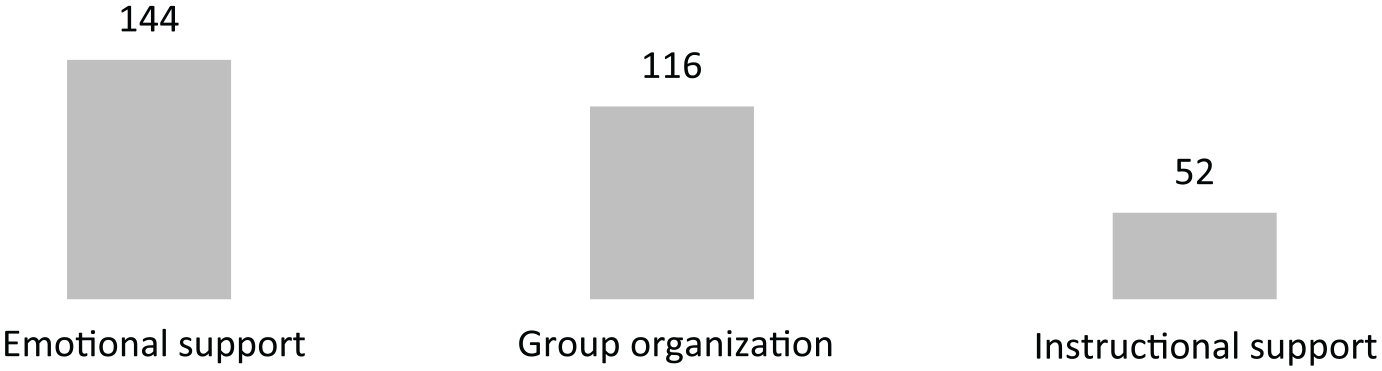
Number of mentions about CLASS indicators.
ECEs’ comments relating to the dimensions of emotional support
The next set of figures provides a more detailed presentation of the ECEs’ espoused theories regarding each domain of the quality of ECE–child interactions. Figure 3 illustrates the number of times the ECEs referred to each of the dimensions of emotional support.
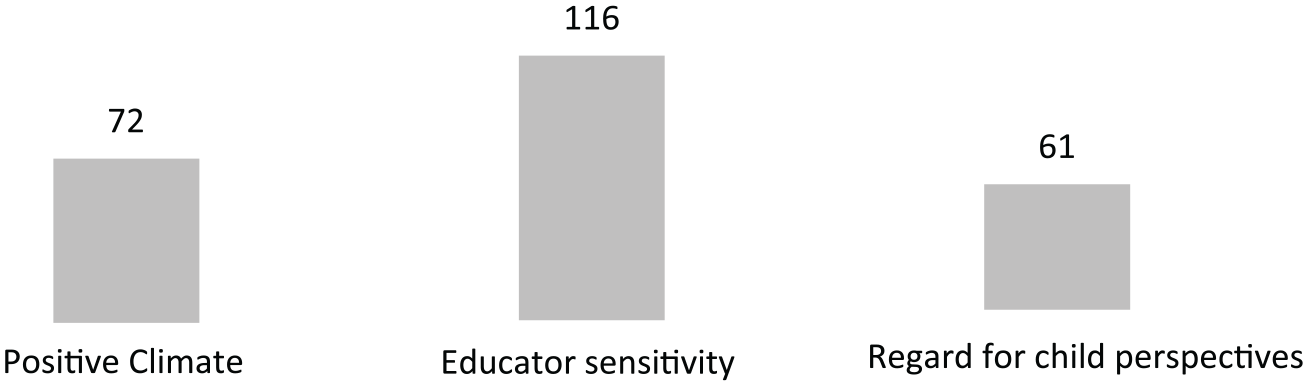
Early Childhood Educators’ comments relating to the dimensions of Emotional support.
As can be seen, the ECEs referred to the positive climate dimension 72 times. References to this dimension were found in the comments of 14 out of 15 participants. The excerpt by Participant CPE5A, presented in Table 2, aptly represents the ECEs’ comments in this regard.
Early Childhood Educators’ Comments Relating to Emotional Support.

As also shown in Figure 3, ECE sensitivity was the dimension most often referred to (n = 116 times). In fact, it was referred to by all the participants, albeit by some more often than others. For example, Participant CPE3A referred to this dimension 14 times, whereas Participants CPE1B and CPE6A each referred to it three times. In most cases, the ECEs’ comments highlighted the importance of showing an interest in each individual child, as illustrated by the excerpt by Participant CPE3A. The participants also expressed a concern with being attentive to the children’s needs (see except by Participant CPE4A in Table 2).
Finally, as shown in Figure 3, regard for the child’s perspective was the dimension referred to the least often in the ECEs’ comments (n = 61 times). The data show that 40% of the participants (n = 6/15) mentioned three indicators or less associated with this dimension. As seen in Table 2, Participant CPE2B stressed the importance of taking the children’s interests into account and being responsive to their initiatives.
ECEs’ comments relating to the dimensions of group organization
As for the ECEs’ espoused theories regarding group organization, Figure 4 illustrates the number of times they referred to the dimensions of this domain of the quality of ECE–child interactions.

Early Childhood Educators’ comments relating to the dimensions of Group Organization.
As can be seen, the ECEs (N = 15) referred to the behavior management dimension 45 times. As presented in Table 3, they reported, among other things, using proactive strategies to facilitate their interactions with the children. Moreover, Participant CPE3A mentioned that she made her expectations clear to the children (see Table 3).
Early Childhood Educators’ Comments Relating to Group Organization.
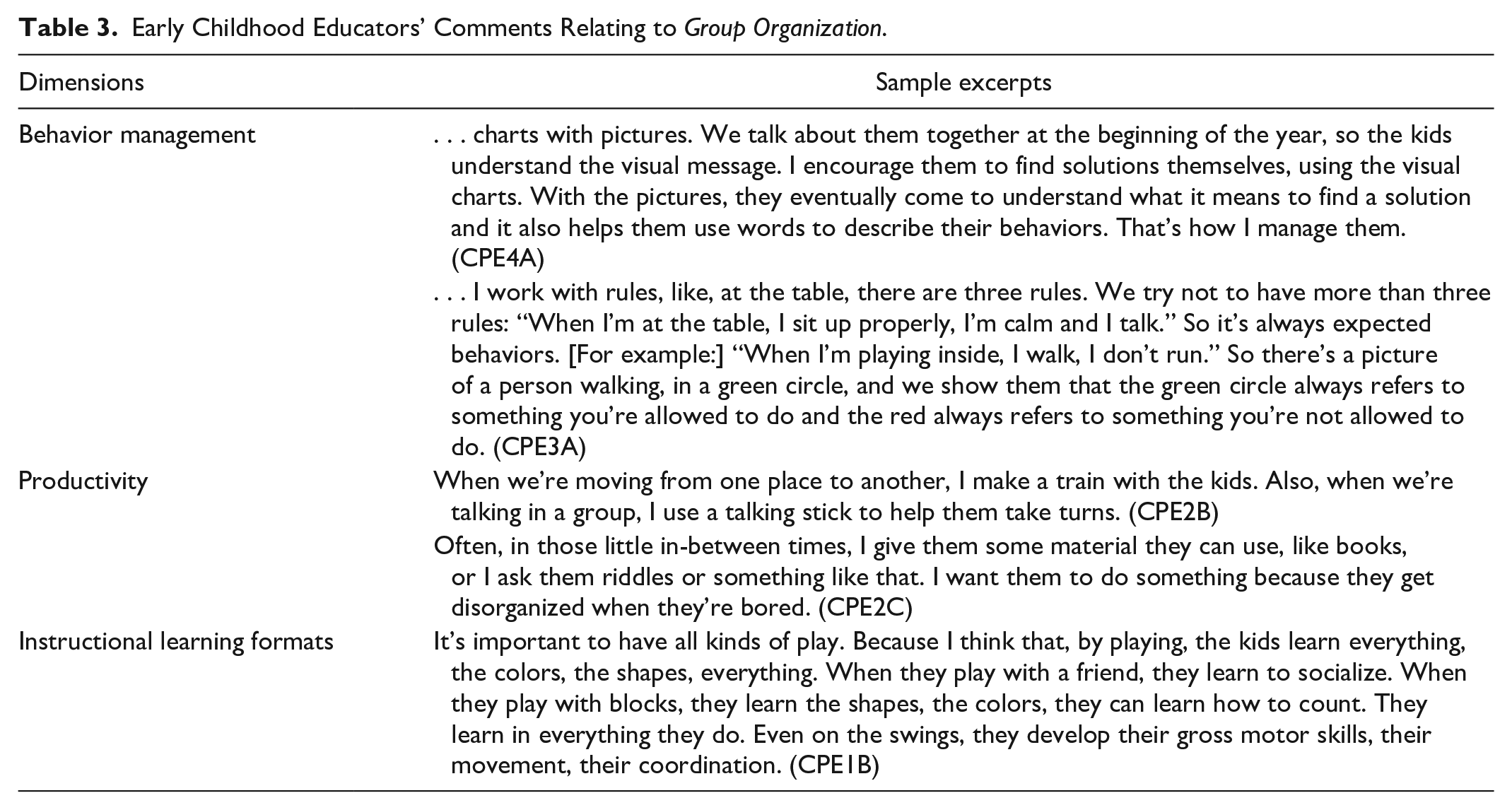
As shown in Figure 4, the productivity dimension was not often referred to in the ECEs’ comments (n = 21 times). Fewer than half of the participants (6/15) mentioned indicators associated with this dimension. When they did refer to it, it was mainly in the context of the daily routine or moments of transition, as illustrated by the excerpts of the participants’ comments (see Table 3).
Finally, Figure 4 shows that instructional learning formats was the dimension most often referred to (n = 50 times), being mentioned by 14 of the 15 participants. Generally speaking, comments referring to this dimension concerned the importance of providing the children with a wide range of learning opportunities, as can be seen in the excerpts presented in Table 3.
ECEs’ comments relating to the dimensions of instructional support
As for the ECEs’ espoused theories regarding instructional support, Figure 5 illustrates the number of times they referred to the dimensions of this domain in their comments.

Early Childhood Educators’ comments relating to the dimensions of Instructional Support.
First, it can be seen that they referred to the concept development dimension 11 times. More than half of the participants (n = 8/15) mentioned indicators associated with this dimension during the interviews. Most of their comments focused on the importance of making links with the children’s life outside of childcare as shown by the excerpt by Participant CPE2B, presented in Table 4.
Early Childhood Educators’ Comments Relating to Instructional Support.

Moreover, Participant CPE4A stressed that she strives to help the children formulate hypotheses and reason more deeply. In addition to addressing the concept development dimension, this comment by Participant CPE4A also related to the quality of feedback dimension, referring to the importance of supporting the children and providing them with information.
In fact, as shown in Figure 5, the quality of feedback dimension was referred to 41 times during the interviews, being mentioned by 14 of the 15 participants. As demonstrated in Table 4, the participants mainly referred to the notion of supporting and accompanying the children in their learning.
Finally, as can be seen in Figure 5, none of the ECEs referred to language modeling at all. None of the indicators associated with this dimension of instructional support were mentioned. Some obstacles to the implementation of the ECEs’ theories-in-use may explain this finding, and shed light on the observational data.
Espoused Theories Reported During the Interviews Acting as Obstacles to the ECEs’ Theories-in-Use
Several obstacles to the implementation of the ECEs’ theories-in-use were brought out in their comments, despite the fact that no questions on this point were asked during the interviews. The tensions perceived and reported by the participants, referring to their espoused theories, could provide some insight into the observational data (theories-in-use) reported in this study.
With regard to emotional support, particularly the ECE sensitivity dimension, tensions of an individual nature were brought out in the comments of five participants. For example, some participants recognized the importance of being attuned to the children’s emotional needs, but admitted that, in some circumstances, they found themselves disengaging from them (see Table 5). On the contrary, Table 5 shows that the participants’ perceptions regarding the organization of time appeared to be a factor related to their espoused theories that clashed with their theories-in-use.
Perceived Tensions Relating to Emotional Support.
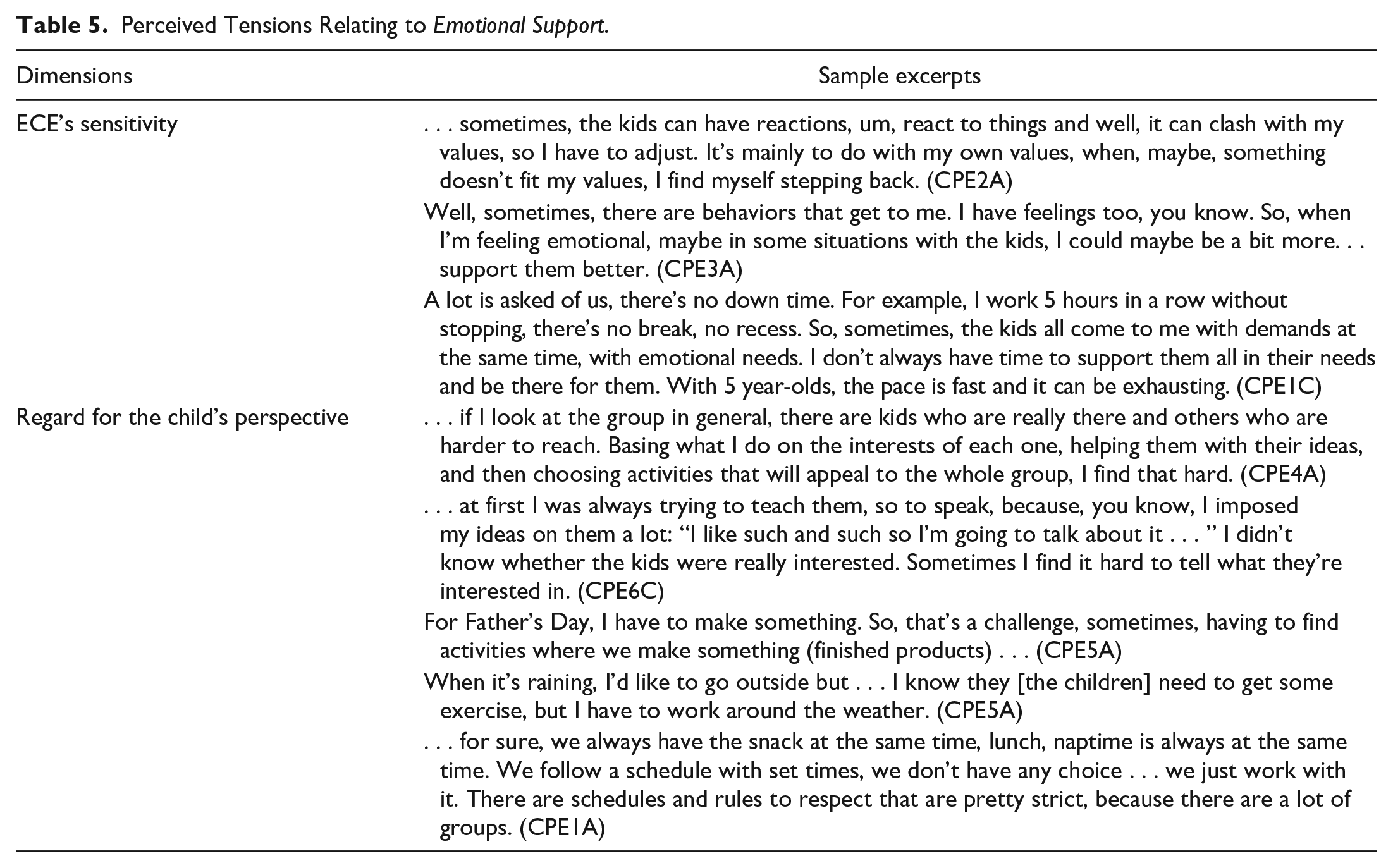
Some participants’ comments (n = 5/15), presented in Table 5, also brought out factors related to their espoused theories that clashed with their theories-in-use pertaining to the regard for the child’s perspective dimension. For example, some participant’s comments addressed the need to structure activities and present finished products to the parents (see Table 5). In addition, some participants mentioned that certain conditions beyond their control (e.g., weather) sometimes presented a contextual constraint, preventing them from taking the children’s needs into account. As mentioned above, the observational data showed a high standard deviation (SD = 0.84) in the scores for this dimension.
Another tension that emerged with respect to showing regard for the child’s perspective appeared to be related to the lack of flexibility in the schedule at childcare centers. In fact, almost half of the participants (7/15) mentioned that they had difficulty deviating from their activity plan and following the children’s initiatives, such as when the children showed the need to run around and burn off some energy (see Table 5).
The ECEs’ espoused theories regarding the schedule also appeared to represent an obstacle to the implementation of their theories-in-use related to group organization. In fact, the tensions cited in Table 6 show that the fixed schedule often caused interruptions in the children’s organized play, which could negatively affect the quality of the productivity dimension.
Perceived Tensions Relating to Group Organization.

Again with respect to group organization, tensions relating to contextual factors (e.g., physical layout of the childcare center) emerged from the comments of four participants out of 15. For example, the use of shared spaces was mentioned as a constraint. In addition to the tensions related to the organization of space and time, other factors acting as obstacles to the implementation the ECEs’ theories-in-use regarding group organization also emerged during the interviews. For example, some participants mentioned that the group dynamics sometimes led them to be less proactive with regard to behavior management (see Table 6).
With regard to instructional support and, in particular, the quality of feedback dimension, tensions related to the size of the group were brought out in the comments of six participants out of 15. Examples of these tensions are presented in Table 7.
Perceived Tensions Relating to Instructional Support.

To conclude, the low scores assigned to instructional support based on observations carried out in childcare centers were backed up by the ECEs’ reported practices, and further highlighted by the tensions these practitioners perceived. To address this difficulty, Participant CPE3C emphasized the importance of seeking assistance when needed: I’m not perfect, I know, I have weaknesses. Sometimes I don’t think of it right away, and then I realize I’ve missed the chance to learn something, but I do like to ask for help.
Discussion
This study aimed to examine the quality of ECE–child interactions as observed in childcare centers (theories-in-use), and bring out ECEs’ reported practices related to the domains of the quality of these interactions (espoused theories). It also set out to identify, in the ECEs’ comments, factors that could help explain the scores assigned to the quality of these domains as observed, and the ECEs’ espoused theories acting as obstacles to the implementation of their theories-in-use. This study thus brought out the tensions and gaps between the quality of ECE–child interactions as observed in childcare centers and reported by ECEs.
Quality of ECE–Child Interactions as Observed in Childcare Centers and Reported by ECEs (Theories-in-Use and Espoused Theories)
Our observational data based on the CLASS were consistent with the trends reported internationally (Hu et al., 2016; Leyva et al., 2015; Pianta et al., 2008), showing average-to-high levels of quality for the emotional support and group organization domains and a low level of quality for the instructional support domain. Our results also revealed a high degree of variability in the scores assigned to these domains, in particular instructional support (1.75–5.00). This finding is in line with several international studies showing a high degree of heterogeneity in the quality of interactions between children and their teachers or ECEs, as observed in early education settings (Leroy et al., 2017; Mashburn et al., 2008).
Although the quality of instructional support has generally been found to be low in studies around the world, a minimum threshold of 3.25 out of 7 has nevertheless been correlated with children’s learning and development in early education settings (Burchinal et al., 2010). However, Burchinal et al. (2010) showed that this minimum threshold was only met in 13% of cases. In our study, the minimum threshold of 3.25/7 was achieved in 33% of the educational childcare settings under study (4 out of 12).
At the same time, the data relating to the quality of ECE–child interactions as reported by ECEs show that the participants’ comments referred more often to emotional support and group organization than to instructional support. The data thus show that the ECEs’ espoused theories regarding instructional support were less well developed than those regarding the other two domains of the quality of ECE–child interactions. To better understand this overall portrait of the ECEs’ practices as observed and reported, the next section discusses the ECEs’ espoused theories that appeared to act as obstacles to the implementation of their theories-in-use regarding the quality of their interactions with the children in their groups.
Identification of ECEs’ Espoused Theories Acting as Obstacles to the Implementation of Their Theories-in-Use
Emotional support: Tension between the needs of the ECE and those of the child
The first tension that emerged was that between the needs of the ECE and those of the child. According to the ECEs’ theories-in-use, regard for the child’s perspective refers to the capacity to consider the interests and needs of each child, adopting a child-centered approach. However, in their comments, the participants tended to talk more about their own experiences as ECEs than about the needs of the children in their groups. One third of the ECEs said they wanted to plan activities based on the children’s interests and needs but mentioned several factors that interfered with the implementation of these practices, such as the way space and time were organized at their childcare center, or the weather. For example, some participants mentioned that it was impossible to play outside when it was raining, which could run counter to the children’s need for exercise.
These comments by the participants are in line with Marshall and Lambert’s (2006)findings showing that some adults base their practices on their own needs (in this case, not wanting the children to get wet) rather than the needs of the children in their care (in this case, the need for exercise). However, when ECEs base their actions on their own needs, this can act as an obstacle to the use of practices related to showing regard for the child’s perspective.
Moreover, this focus by the ECEs on their own needs was compounded by their desire to please the children’s parents. For example, some participants referred to the need to come up with finished products to present to the parents. It could be argued that they were focusing in this instance on their own need (to please the parents) rather than on the needs of the children. In this regard, Cantin and Lemire (2010) pointed out that many ECEs seek to demonstrate their expertise to parents, to gain their recognition. Focusing on the creation of finished products allows ECEs to present these products to the parents (learning that can be seen), which could explain their desire to favor this approach. However, this raises questions with respect to showing regard for the child’s perspective, as efforts to create a finished product usually aim for a preconceived result, guided by the predetermined expectations of the ECE.
These results bring out the pertinence of examining the espoused theories guiding the actions of ECEs related to emotional support, in particular showing regard for the child’s perspective, as some of their perceptions appeared to act as obstacles to the implementation of these theories. Practitioners who report using child-centered practices generally tend to better support the children’s autonomy and engage in positive interactions with the whole group (Pianta et al., 2005). Similarly, when teachers or ECEs hold espoused theories favoring child-centered practices, they are generally more sensitive to the children’s needs, as observed in their theories-in-use (Roberts et al., 2014). It is thus plausible that ECEs who believe in the importance of child-centered practices will be more inclined to consciously engage in their interventions and invest in quality interactions with the children in their groups. The input provided by the ECEs’ espoused theories in examining the CLASS scores thus appears relevant for better understanding these study results.
Group organization: Tension between behavior management and the organization of space and time
Contradictions between the ECEs’ theories-in-use and espoused theories emerged, particularly with regard to behavior management. Although this dimension was assigned an average-to-high score (5.88/7), it appeared to represent a challenge for the participants. A few ECEs said they sometimes had a strong reaction when a conflict arose, a tendency that goes against the aims of the CLASS, which promotes a focus on the prevention of inappropriate behaviors by intervening proactively.
In their comments, some ECEs mentioned the importance of supporting the children’s negative emotions (e.g., anger or sadness), because these emotions could have a negative effect on both the group dynamics and behavior management. Moreover, some participants drew a link between managing behaviors and managing their own emotions. For example, one ECE mentioned that some of the children’s behaviors could disturb her emotionally, leading her to be more reactive in the way she managed the group. It thus appears that the way ECEs intervene with the children with regard to their behaviors can interfere with the management of their own emotions. This obstacle, emerging from the participants’ comments, merits consideration because it points to a possible means of supporting ECEs, that is, by helping them manage their own emotions in relation to their behavior management strategies.
Moreover, while the productivity dimension was assigned the highest score, our analysis of the participants’ comments brought out two types of obstacles likely to hinder the implementation of their theories-in-use. For example, several ECEs referred to the lack of time and space needed to properly support the children in educational childcare settings. These results are in line with those of other studies, including that by Wien (2004) suggesting that the way time is organized in these settings is a central concern of practitioners. Thus, it appears important to consider and act on the tensions relating to group organization emerging from the participants’ comments because an adequate level of emotional support as observed in early education settings has been found to influence the quality of group organization, while both of these dimensions have been found to influence the quality of instructional support (Pianta et al., 2016).
Instructional support: Few theories-in-use and espoused theories
With regard to both the ECEs’ theories-in-use and espoused theories, fewer indicators associated with instructional support emerged compared with the other two domains of the quality of ECE–child interactions. The score for the observed quality of this domain was low, and the ECEs hardly referred to it in their comments. Could this mean that their espoused theories relating to the first two domains of the CLASS interfered with those relating to instructional support? If so, this would help explain ECEs’ observed practices related to this dimension, the quality of which has been rated as low or average in several studies.
In their comments, the ECEs stated they saw the importance of supporting the children’s learning, but did not specifically mention doing so through activities based on the children’s needs or through periods of play, which nevertheless constitute a guiding principle of the Quebec government’s Meeting Early Childhood Needs program (MF, 2019), and are recognized as an ideal context for supporting children’s learning and development (Bodrova & Leong, 2011; Trawick-Smith, 2012). Indeed, it appears to be beneficial to support children’s learning through an approach centered on play, encouraging them to push the limits as they explore. Child-initiated play (stemming from their own needs) helps children develop their spoken and written language (Montie et al., 2006; Roskos & Christie, 2001), structure their narrative discourse (Nicolopoulou, 2007), and develop their creativity and thought processes (Harris, 2007; Montie et al., 2006).
To support children’s learning while taking their needs into account through an approach based on play, Cabell et al. (2013) suggest varying the type of social settings used (e.g., large group, free play, meals, and routines). Similarly, these authors suggest varying the learning activities, providing free choice periods that include free play and times when the children can make selections regarding a variety of elements (e.g., situations and material; Cabell et al., 2013). In the present study, the participants’ comments also brought out the importance of providing the children with a wide range of learning opportunities, including time for play. However, while the ECEs said they provided the children with a variety of learning modalities, in which the children engaged in play, they did not mention supporting their learning during these periods of play.
In fact, Winton and Bussye (2005) reported that even when a range of learning modalities is provided, ECEs rarely take advantage of periods of play to engage in quality interactions with the children. However, times when the children can make choices (e.g., free play) and engage in their own learning and development represent an opportunity for ECEs to guide the children in their discoveries, engaging in rich one-on-one conversations with them (Cabell et al., 2013). In the present study, the ECEs said they lacked time to provide each child with quality support, reporting that it was difficult to devote time to one particular child to the detriment of the whole group. Indeed, Roberts et al. (2014) reported that this is a central concern of many teachers and ECEs.
These results also point to other relevant ways to provide close and individualized support to ECEs, in view of improving the quality of instructional support in childcare centers. In this regard, a systematic review of 52 studies on professional development (PD) in early education settings conducted by Peeters et al. (2014) showed that providing support to ECEs has positive effects, both on the quality of the educational services observed and on the children’s development. Supporting ECEs appears to be particularly effective when such support is based on the ECEs’ needs and involves their participation. To this end, Markussen-Brown et al. (2017) suggest combining different PD modalities, such as training sessions, individualized coaching, and group discussions.
In this respect, Wasik and Hindman (2011), examining the effect of teacher coaching on the quality of teacher–child interactions in 30 preschool classrooms, implemented a PD program involving two components: (a) group training covering conceptual knowledge, and (b) individualized coaching following the modeling of specific instructional strategies that support young children’s development, particularly their language development (Wasik & Hindman, 2011). These researchers noted that the teachers showed a significant improvement in the instructional support domain by the end of the program. More specifically, an improvement of 1.39 points was observed in the language modeling dimension, 1.01 points in the quality of feedback dimension and 0.90 points in the concept development dimension (Wasik & Hindman, 2011).
To sum up, it could be relevant for PD programs to target instructional support in particular, given that the obstacles related to this domain cause interference between ECEs’ espoused theories and theories-in-use. Such a program could combine various PD offerings, as suggested by Markussen-Brown et al. (2017).
Conclusion and Study Limitations
Debates are ongoing regarding the best way to support children’s learning and development in early education settings. Despite the sample size which constitutes a limitation of this study, the results shed light on this issue, confirming the relevance of examining the quality of ECE–child interactions in educational childcare settings. More specifically, the results help compare ECEs’ theories-in-use and espoused theories regarding the quality of ECE–child interactions in these settings, and bring out the constraints perceived by ECEs regarding the implementation of quality educational practices. It should be noted, however, that the terminology associated with the quality of ECE–child interactions (theories-in-use) may have represented an obstacle to the participants’ understanding of this issue, and thus affected their answers (espoused theories). In fact, the interviews focused on the domains of the CLASS, a theoretical construct that may not be meaningful to ECEs.
Nevertheless, the results of this study suggest that implementing a PD program may be a promising way to improve the quality of ECE–child interactions in educational childcare settings. Supporting ECEs through various PD modalities (training sessions, analysis of their practices, and group discussions) could help enrich their espoused theories regarding the quality of their interactions with the children in their groups and, in particular, the instructional support they provide. This would make it possible to address certain issues that appear to act as obstacles to the implementation of ECEs’ theories-in-use according to the CLASS framework, with the end goal of improving the quality of educational practices in childcare settings, through a more child-centered approach and a greater focus on play.
Footnotes
Declaration of Conflicting Interests
The author(s) declared no potential conflicts of interest with respect to the research, authorship, and/or publication of this article.
Funding
The author(s) received no financial support for the research, authorship, and/or publication of this article.
