




Abstract
In Australia, before conducting research with human participants, researchers must have their research plan reviewed by a Human Research Ethics Committee (HREC) to ensure that proposed methods meet ethical requirements and protect the welfare of participants. In addition, it has been proposed that HRECs can contribute to a novice researcher’s ethical mindfulness. To explore this suggestion, the current self-reflective case study examines the dialogue between a PhD candidate and the HREC that reviewed his proposed study of family bereavement in the context of the potential for organ donation. Findings suggest that when a respectful, problem-solving attitude is adopted by both parties, a learning environment evolves where diverse views, differences of opinion, and novel solutions are tolerated. In this context, the research plan is improved and the novice researcher’s ability to apply research ethics is developed. Simultaneously, members of the HREC gain practice in the identification of ethical dilemmas and the application of ethical principles that help resolve those dilemmas.
Keywords
Introduction
Human Research Ethics Committees (HRECs) protect the rights and welfare of research participants and promote ethical studies (Morris & Morris, 2016). HRECs can also identify inadequate projects and facilitate their redesign, while building researcher capacity (Daly et al., 2008). To assist researchers and HRECs with study design and ethical review, respectively, Tolich and Tumilty (2014) established an online open-access repository where examples of research plans (RPs) and HREC feedback can be accessed. These resources can foster understanding of research ethics (Morris & Morris, 2016; Sieber & Tolich, 2013) and contribute to ethical mindfulness, a cluster of abilities that enables one to recognize and respond to ethically important moments in research (Guillemin & Gillam, 2004; Guillemin & Heggen, 2009). In addition, because experiences early in a researcher’s career play an important role in the development of ethical mindfulness (Satalkar & Shaw, 2019), a good relationship with supervisors and a positive experience when negotiating with an HREC have implications beyond the review of a specific project.
Background to the Present Case
To demonstrate reflexivity, the candidate’s reflections are presented with a thin left margin, those of the HREC Secretariat have a single thick margin, and those of the candidate’s supervisors are shown with a double-line margin.
In preparation for my PhD journey, I completed a compulsory Research Integrity Module, presented Introductory and Confirmation Seminars where supervisors and external examiners gave guidance, and I attended a workshop at the university explaining Ethics Review applications. Because participation in bereavement studies can be distressing, I expected that the HREC would be cautious. I therefore incorporated suggestions made by previous researchers such as allowing participants to tell their story in a supportive setting. (Dyregrov, 2004; Sque et al., 2014) We evaluated the candidate’s application before it was submitted without trying to do the ethics review ourselves. We provided input which assisted the candidate to improve the RP and then encouraged him to negotiate with the HREC. We hoped that the review process would play a key role in his journey as a novice researcher. Promotion of ethical conduct in human research is an ongoing conversation. If there is a legitimate reason for a proposed design, the applicant should explain it to the HREC. The committee wants to understand the proposed methods and their implications, and the researcher can contribute to this understanding. I expected an asynchronous conversation spread over a few months and assumed that at times I would adjust my plan in response to feedback received, while at other times I would attempt to demonstrate why I considered questioned aspects to be appropriate. I decided not to take comments or differences personally, but rather see them as ethical puzzles to be solved. I hoped to build a good relationship with the HREC to foster ongoing review and rapid responses to ethical matters. (Kiss et al., 2007) The efficiency of feedback loops between HRECs and researchers is linked to communication being grounded in common lexicon. In Australia, the National Statement on Ethical Conduct in Human Research (National Statement, 2007/2018) serves this purpose, and is accepted by all Australian universities and public institutions involved in human research. The Statement (National Statement, 2007/2018) advises that: “5.2.14 Good ethical review requires open communication between review bodies and researchers, and a shared commitment to the review process. The process should not be adversarial.” (p. 90) After obtaining approval to conduct the study, I thought about sharing my experience of the review process. I later provided a draft of the developing manuscript and invited my supervisors and the Health Directorate HREC to provide input. The Secretariat of the HREC agreed to co-author the current paper, and supervisors provided input too. The candidate showed ethical mindfulness and beneficence by sharing his experience where there was no obligation to do so. This is an example of engaging with the principles of ethical research, rather than seeing the review process as purely administrative. Not all answers (or even all questions) are obvious at the start of a process.
Method
Acknowledging that researchers influence the process and products of their research (Begoray & Banister, 2010), we asked not only “What were the features of the review process?” but also “How did we each contribute to those features?” A key consideration when preparing the report was to present our experiences in such a way that would foster empathy and understanding for research participants, researchers, HREC members, and other stakeholders who contribute to the development and conduct of research.
Aim
We aimed to explore how interaction between the first author and an HREC contributed to improved understanding of research ethics, ongoing development of ethical mindfulness, and approval of the proposed study. The following questions guided our efforts:
What types of feedback did the HREC provide?
What type of responses did the candidate give to this feedback?
How was he prompted to reduce discrepancies by applying ethical principles?
How was the development of ethical mindfulness balanced with the improvement of the RP?
Data Sources
Primary data include the original RP, Participant Information Form (PIF) and Consent Form (CF) that were submitted to the HREC (Supplementary File 1, SF1) as well as the asynchronous dialogue between the PhD candidate and the HREC (conducted via email), and later in-person and email contact with stakeholders (Supplementary File 2, SF2). We have also provided the final RP, PIF, and CF that emerged as a result of the review process (Supplementary File 3, SF3). We view our memories and reflections as important data too, and therefore provide examples of these throughout the article.
Evaluating the Representativeness of the Case
We acknowledge that requirements shaping this review are not directly transferable to countries other than Australia, or even other HRECs in Australia. To evaluate the representativeness of this case, we used Emanuel et al.’s (2000) framework of requirements for ethical research. Another three matters identified by Mondragón et al. (2017) were added, and we included a category for matters that are relevant because of the nature of the study being evaluated. The resultant list is as follows: Value of the study, Researcher’s expertise, Scientific validity, Independent review, Fair participant selection, Risk-benefit ratio, Informed consent, Respect for participants, Professional relationships, Administrative rigor, and Specific ethical matters. Items in the final category are linked to Cho et al.’s (2015) list of ethical concerns.
Preparation for Analysis
The dialogue was arranged as units including HREC feedback and the candidate’s response (see SF2). For example, 1F is the sixth unit from Exchange 1. We used elements from the schemes of Hattie and Timperley (2007) and Hughes et al. (2015) to categorize units according to type: (1) Questions aimed at clarifying a goal; (2) Acknowledgment of progress, with encouragement to complete the next step; (3) Advice regarding the next step; (4) Direct prescriptive instruction regarding the next step; (5) Personal comments such as praise; and (6) Candidate descriptions that consolidated ideas related to multiple feedback units.
Feedback should contribute not only to completion of a given task, but also to understanding and skills applicable to a wider context. We therefore also categorized the focus of feedback units (Hattie & Timperley, 2007; Hughes et al., 2015) as follows: Promoting the completion of specific tasks, Requesting a demonstration of broader understanding or descriptions of processes, or Encouraging self-regulation.
The HREC Review as a Meaning-Making Process
Rather than simply being a collection of feedback-response units, the ethics review dialogue contributed to shared decisions and a relationship between the HREC and the candidate. The concepts of meaning-making (Park, 2010) and sense-making (Sandberg & Tsoukas, 2015) were used to explore these features. Park distinguishes between global meaning which includes preexisting beliefs and goals relevant to the task at hand, and situational meaning which refers to meaning of a particular event. The global meaning of HREC members was shaped by knowledge of the application of ethical principles, personal lived experiences, and experiences as members of an HREC, as well as their goals in relation to the review of research proposals. The novice researcher’s global meaning included some understanding of research ethics with less experience in the application of principles, knowledge and experiences gained in the context in which the research will be conducted, and the goals of obtaining ethics approval and conducting a worthwhile study.
During the dialogue, role players encountered discrepancies between their global meaning and matters raised (situational meanings). To facilitate a fit, they either reappraised the situational meaning to make it fit with global meaning (assimilation) or adjusted global meaning to accommodate the situational meaning. The products of these attempts to reduce discrepancy are termed meanings-made (Park, 2010). Role players would have sought to first comprehend the matter at hand (“What is this about?”), and second to determine the matter’s significance (“What impact will this have?”). Also relevant are studies that have found that expressing thoughts through writing (as was the case during the review dialogue) contributes to further meaning-making, including a sense of having organized one’s thoughts (Park, 2010).
Bateson, in Hui et al. (2008), described another meaning-making tool, Double Description. He proposed that, instead of attempting to reduce discrepancy between different perspectives on the same matter, one could ask, “What new information is obtained when these views are put together?” An example of this would be the way that combining different images from each of our eyes facilitates depth perception.
Development of the Case Report
Initial drafts of the current article were prepared by the candidate and reviewed by his supervisors. The HREC Secretariat had been present at meetings where the proposed study was discussed and was able to represent the voices of HREC members while protecting their anonymity. In addition to exchanging emails while the manuscript was developed, the candidate met with the Secretariat on two occasions to discuss the emerging paper.
We endeavored to present our findings and discussion in a credible way, accurately reflecting the data. By providing our data sources, we enable readers to trace the origins of our arguments, demonstrating dependability. It is hoped that this will also allow readers to judge whether suggestions made are transferable to their own contexts (Shenton, 2004).
Findings
When comparing the HREC review dialogue with the list of ethical requirements described earlier, we found that all matters listed were addressed and no dialogue units could not be coded using the list. Our detailed description of findings is presented in three sections. Section 1 describes steps leading to the approval of the proposed study, Section 2 highlights the application of ethical principles, and Section 3 illuminates the emergence of identity and relationships between the parties.
Section 1: An Overview of the Case
The review process unfolded over four exchanges, where ethical principles were used to address features of the RP such as the aims and purpose, recruitment procedures, protection of vulnerable groups, ancillary care, management of potential dual roles, specifying the interview structure, and discussing the potential for secondary analysis of data.
Exchange 1
In response to the candidate’s submission, the HREC made 16 comments which included acknowledging that the study had merit and that considerable work had gone into the application. The candidate was encouraged to amend 15 areas of concern. Eight issues were easily addressed by clarifying misunderstandings (1E, 1G, 1I, 1O) or adapting documents in response to direct advice (1C, 1H, 1N, 1P). The other seven comments (1B, 1D, 1F, 1J, 1K, 1L, 1M) required further thought and will be discussed in Section 2.
The HREC must evaluate and promote the researcher’s appreciation of ethical principles. Researchers must understand the impacts that their research may have on participants, stakeholders and communities. The purpose of ethics review is not to tell the researcher how to do research but to encourage them to think about how their study reflects research merit and integrity, respect, justice, and beneficence.
One of the misunderstandings arose because families who consented and those who declined organ donation were to be invited to participate (1G). The HREC felt that the reasons for this were not well explained and asked whether the groups would be compared. The candidate explained that this recruitment decision related to inclusivity and respect for diversity and that no comparison was planned.
The HREC considers the application before them without making assumptions about how a protocol might be implemented. The HREC may find the language confusing or require clarification regarding the proposed methodology. The researcher needs to show how the research will be conducted. The initial invitation needed more thought than I had initially expected. I agreed with the HREC that families should have enough information to make an informed decision about participation but felt that the vulnerable and already confusing time at the hospital did not require in-depth discussion about the aims and purpose of the study or the potential for dual roles. I suggested briefly referring to these matters in the invitation and supplying more detail in the PIF. I also proposed that the PIF could include a link to a short video, allowing me to introduce the study and provide the requested detail in a personal way (see 1R).
The candidate addressed each feedback unit and included discussions addressing areas that required a wider perspective. These were 1R: Where he shared his thoughts about recruitment; 1S: Where he adjusted the number of interviews to make data collection less burdensome; and 1T: Where he discussed the potential for risk and benefit. Also included was 1Q: The proposal of a three-step review process.
Exchange 1 contributed to decisions regarding who to recruit and how to collect information which would influence the participant experience. Stakeholders (including families who had previously made decisions about organ donation) had been consulted before the RP was drafted and had made suggestions such as having multiple interviews to enable frequent but brief contact. I agreed with their suggestion and hoped that this structure would also enable me to observe unfolding bereavement experiences rather than hearing about them retrospectively. Nevertheless, acknowledging the HREC’s concerns that the multiple contacts could be burdensome (1M), I proposed fewer meetings (1S). I also proposed a process to enable stakeholders to continue to play an active role.
The proposed three-step process would involve completing the standard HREC review and then taking updated study documents to stakeholders for comments. It was suggested that stakeholder comments could be consolidated and provided to the HREC, together with proposed solutions. Concerns could again be resolved to the satisfaction of the HREC, and taken back to stakeholders, and so on, until all parties agreed that the proposed study was suitable. These additional steps were approved.
While I feel that most of my responses during the dialogue were based on cognitive considerations, I can relate to Sandberg and Tsoukas’ (2015) comments about the role of emotion. I had committed myself to including stakeholder input and felt disappointed when changes explored during the first exchange seemed to reduce stakeholders’ voices. I became driven to rectify this situation (even if it added several months to the review process). I finalised and submitted my responses to the HREC’s initial comments three months after receiving their feedback.
Exchange 2
Three weeks later, the HREC made 17 comments that were more specific than in Exchange 1. The first comment (2A) was again an acknowledgment of work done and encouragement to address remaining issues. There were five comments related to typing errors in the documents that had been made when incorporating Exchange 1 improvements (2B, 2D, 2H, 2K, 2P), and six comments highlighting the need to provide clearer descriptions (2G, 2M, 2N, 2Q) or correct details (e.g., the reference number for the study, 2O; or the period for data retention, 2L). Two comments related to recruitment (2E, 2F) did not initially seem challenging but required discussion over subsequent exchanges to reach agreement. The remaining three comments that were more challenging (2C, 2I, 2J) are discussed in Section 2.
The HREC’s quick and detailed response suggested that there was an interest in progressing the review, and that the documents had been read carefully. The request to correct mistakes in the text implied that the proposed changes themselves were acceptable. I prepared a response to the HREC over the next three days.
Exchange 3
A day after the response was submitted, the HREC wrote back to thank the candidate (3A) and asked him to address two very specific matters (3B, 3C). The candidate responded on the same day, and the next day the project was approved.
Exchange 4
The RP and other study documents were updated and submitted to the HREC of the candidate’s university for consideration where the study was approved with only one amendment (4C), which will be discussed in Section 2. A mutual acceptance agreement between the two HRECs enables both committees to provide input into the review of proposed projects while minimizing duplication of the process (as recommended in Chapter 5.3 of the Statement, National Statement, 2018). In this case, the Health Directorate HREC had primary responsibility for the ethical review and it had been expected that the university HREC review would be a more streamlined process.
Stakeholders (a family who had decided about donation 3 years prior, the manager of the organ donation agency where the study would be conducted, a member of an independent consumer group, a researcher who had conducted research in this field, and the candidate’s supervisors) were then invited to comment on the updated documents. When preparing the consolidation of stakeholder comments, the candidate drafted a description of his interaction with the university’s HREC (4C) and included the letter confirming their approval (4A) of the study. He highlighted stakeholders’ roles (4B) and presented their comments to the first HREC together with his proposed responses (4D–4X).
Addressing 10 of the comments required changes to study documents without impacting on the research design. These included 4D, 4E, 4F, 4G, 4L, 4O, 4P, 4Q, 4S, and 4V. For example, 4D: Using the same CF template for all stages; 4E: Explicitly mentioning families who raised donation before staff did; and 4F: Providing details of demographic data to be collected.
Another two comments addressed contact with participants after completing data collection: 4W: Clarifying whether all participants would be offered an exit interview regardless of when they withdrew; and 4I: Suggesting that participants be notified of practice changes arising from their participation. Three comments related to improving clarity of the aims (4H), objectives (4R) and other matters by making language use more suitable for potential participants (4M).
Stakeholder comments were valuable. It is important that there is a demonstration of respect for participants, over and above the requirement for informed consent. This includes consideration that the participant cohort may be made up of people from diverse cultural and linguistic backgrounds and lived experiences.
In response to three suggestions, the candidate tactfully explained that dialogue with the HREC had already determined how the matter would be dealt with. Care was required here as he felt that his response could influence his relationships with stakeholders, and he did not want them to feel dismissed. These matters included 4T: A suggestion that the best person to provide a family with the invitation could only be determined in the hospital; 4U: Clarification regarding when exactly families would be given the invitation; and 4X: A suggestion that family members less than 18 years old could be invited to participate. For 4J: Could there be information in the family room about the study? the candidate undertook to discuss the matter with the management of the intensive care unit. Figure 1 shows how these stakeholder comments connected with earlier HREC units. Three units requiring careful thought and reflection (4C, 4K, 4N) are discussed in Section 2.
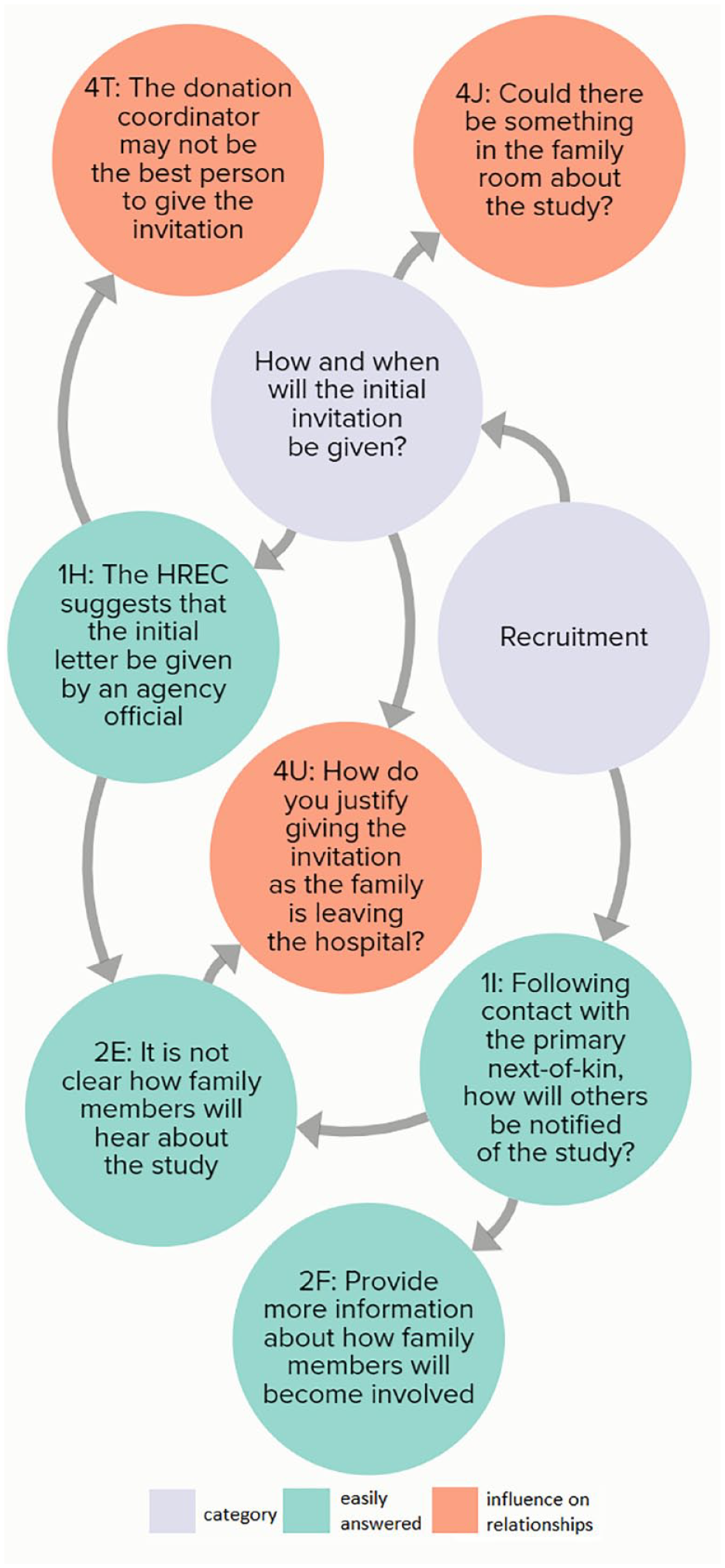
Initial note and recruitment.
In response to stakeholder input, study documents became clearer and less formal. Stakeholders were thanked for their contributions. They thanked the researcher for the opportunity to comment, and several said that they would be interested in hearing about the progress of the study. All changes and suggestions made in response to stakeholder feedback were accepted by both HRECs.
This is an example of the benefits of developing an ethical mindset. It is important that both the researcher and the HREC are informed by the attitudes and expectations of stakeholders, including those sharing characteristics of potential participants. Although the extra steps added six months to the ethics review process, the input received from stakeholders was useful. The candidate used the time while stakeholders were reading and responding to documentation, and later while the HRECs reviewed his presentation, to attend to other matters related to his PhD.
In Table 1, feedback units from the four exchanges are categorized in terms of the type and focus of feedback received. Exploration of the more challenging units during Section 2 will illuminate how links between individual units contributed to improvement of the RP over time.
Summary of Feedback Units.
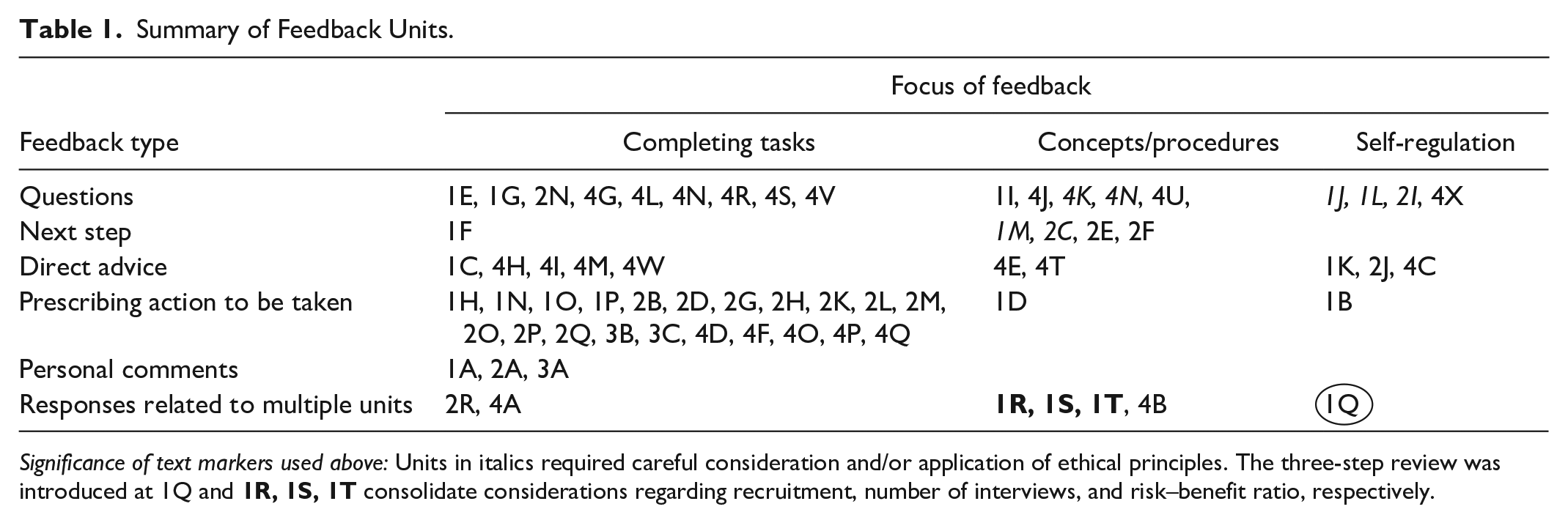
Significance of text markers used above: Units in italics required careful consideration and/or application of ethical principles. The three-step review was introduced at 1Q and
Section 2: Reducing Discrepancies by Applying Ethical Principles
Feedback focussing on task performance, understanding and descriptions of process, or self-regulation generally contributed to responses that were Task oriented, Conceptual and Procedural (Krathwohl, 2002), or Self-reflective, respectively. Some of the task-oriented units took the form of direct instructions. For example, 2G: “Forms must say that each family member needs to sign a consent form.” There were instances where, by stating matters in a clear, unambiguous way, shared meaning could be reached in a single exchange (see Figure 2). These easily addressed units clarified misunderstandings and enhanced the presentation of the study, promoting informed decisions about participation.

Units clarified in one exchange.
Over the course of the three exchanges with the HREC, feedback dealing with ongoing matters became more direct as initial decisions were translated into improvements in the RP and other documentation. Written expressions of meanings-made were exchanged and compared until they clearly reflected shared intentions. This mutual shaping played an important role during the review process and shows how meanings-made were refined over time to reduce ambiguity. These adjustments in the dialogue over time confirmed that meaning-making efforts change as suitable meaning is made (Park, 2010).
Section 2 focuses on the phase during the meaning-making process where responses were not obvious, and the candidate was challenged to apply ethical principles to reduce the discrepancy between his proposals and the HREC’s concerns. For example, 1F: “Please provide details of the interview structure” refers to a search for comprehension, whereas 2J: “Add information about the intrusive, potentially disturbing nature of the study” relates to the need to explain the significance or implications of the interview structure. Some questions were easy to assimilate without making substantial changes (4L: Will group or individual meetings be held?), whereas others required changes to the RP to accommodate the feedback (1L: Can you justify the recruitment of participants who are unable to give consent?).
When addressing comments, I viewed changes to the RP as fitting under the overarching frameworks of research ethics and the goals of my study (understanding family bereavement). Generally, changes did not challenge either of these broader considerations and therefore felt as if they fitted with my plans.
The more challenging units involved ethical dilemmas and more substantial changes to the RP. These included comments previously identified in Section 1 that addressed Dual Roles and other ambiguities (1B, 1D, 1K, 2C, 2I), Inclusion and exclusion criteria (1J, 1L, 4C), Data Collection (1F, 1M, 2J), and Risk and Benefit (4K, 4N). When discussing these categories, the ethical principles that were used to reduce discrepancy will be highlighted.
Dual roles and other ambiguities
The PhD candidate is a family support coordinator at the organ donation agency where recruitment would occur. This raised questions about how risks related to dual roles would be minimized. At 1B, clarification was requested regarding how the potential for a conflict of interests would be managed; at 1C, the candidate was asked to highlight his role as PhD candidate in the invitation; and at 1D, the committee asked that he separate the roles of Family Support Coordinator and researcher in the research design and in contact with potential participants. As demonstrated in Figure 3, there were further requests for clarification at 2Q: The invitation must clearly state your role as PhD candidate, and 3B: The invitation should say that the study is about bereavement experiences.
The development of ethical mindfulness is best achieved through ongoing conversation rather than didactic instruction (Baker et al., 2011). The HREC aims to shape an ethical discussion promoting creative responses that meet realworld challenges in an ethically acceptable manner.
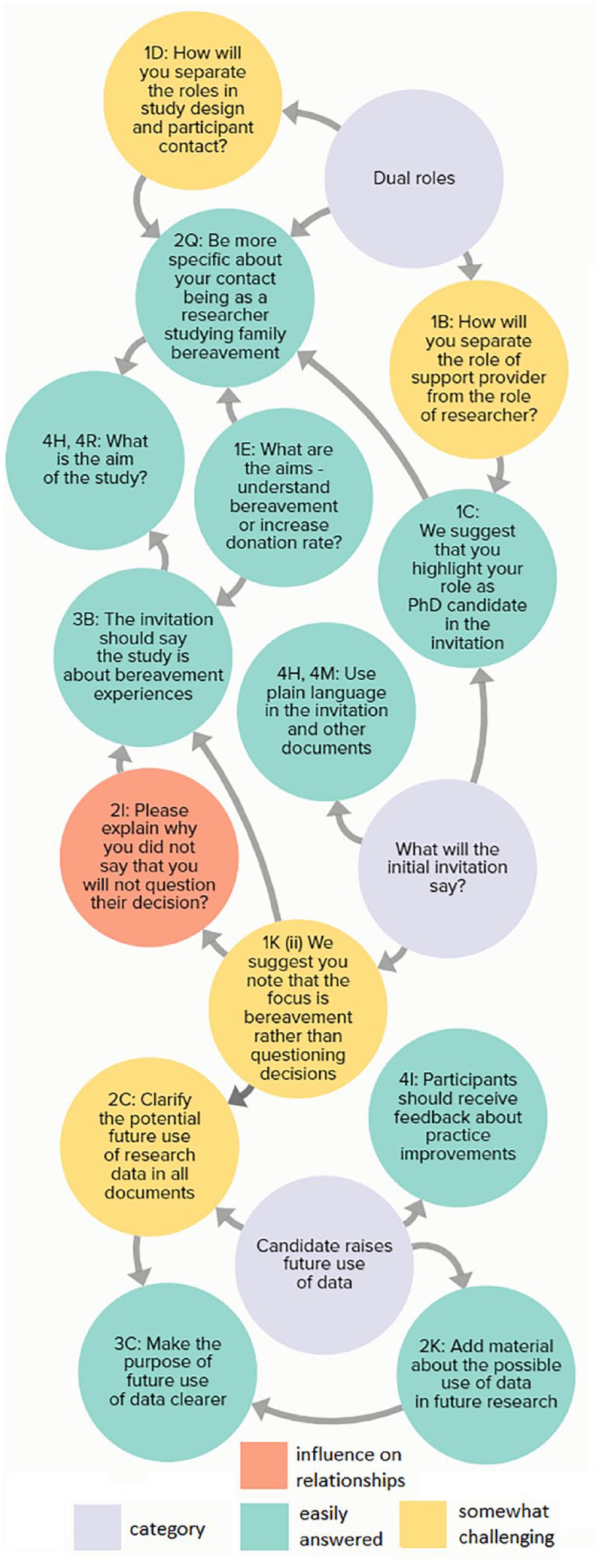
Dual roles and other ambiguities.
The need for informed consent and avoidance of undue influence in the asymmetrical relationship between participants and the candidate/support coordinator required ongoing attention. The candidate understood the concern that boundaries between the roles may become blurred, with participants potentially developing expectations that their involvement in the study would be therapeutic. To protect privacy, the candidate would need to avoid using data available in his support coordinator role that he would not have access to as a researcher, and he needed to consider the possibility that situations may arise during data collection that would be handled differently by a researcher as opposed to a support coordinator.
Having read articles describing practice-close research, where a clinician studies a population as a researcher where they would typically provide assistance (e.g., Graor & Knapik, 2013), I expected that this matter would be raised. Although I had referred to the separation of the roles in the initial application, the HREC felt that my descriptions needed more detail.
Other ambiguities were highlighted in relation to the aims and purpose of the study. For example, 1E: Is this study about bereavement or increasing the consent rate? (Stakeholders later asked similar questions at 4H and 4R, potentially because in the wider organ donation context, raising consent rates is often highlighted by awareness campaigns). The HREC suggested at 1K(ii) that the candidate should note that he would not question families’ decisions and then at 2I asked him to explain why he did not take up their suggestion. In these ways, the HREC and stakeholders requested clarity and transparency which would foster trust when introducing potential participants to the study.
While conducting further reading, I encountered the suggestion that, where recruitment may be difficult, one should make provision for the secondary analysis of data (Frid et al., 2007; Sque & Galasinski, 2013). I raised this matter when responding to 1K, and clearer descriptions were requested at 2C, 2K and 3C. Ethical principles related to this matter include fair participant selection, informed choice, trust, and respect.
Inclusion and exclusion criteria
Issues related to inclusion and exclusion criteria (see Figure 4) required consideration of ethical principles related to informed consent, vulnerability, and privacy. Some units requiring self-reflection (1J, 1L, and 4C) are discussed below.
1J: The candidate had considered enrolling at least two members per family to obtain information about individual experiences and family dynamics (Bellali & Papadatou, 2006) and to create a supportive environment during joint interviews. However, when considering the HREC’s feedback he realized that if one of two participating family members wanted to withdraw, they may feel pressure to stay if their withdrawal meant that the other could not participate. Ethical considerations related to respect, avoidance of undue pressure, and the right to withdraw were relevant here. Another delicate matter was 1L: Is it ethical to enroll adults who cannot give consent themselves? The HREC’s standard application form had asked whether I would recruit adults unable to give consent (such as individuals with a cognitive impairment or mental illness). I reasoned that as they are part of the family, they should be invited to participate, and that this could be supported with reference to justice and respect. However, when replying to 1L, I decided that, in addition to the impact on the vulnerable individuals themselves, their participation may impact on other family members who may not feel comfortable discussing strong feelings in their presence, or who may need to console them after an interview. After considering fair participant selection, impact on the family system, risk-benefit ratio, and vulnerability, I agreed that excluding this vulnerable group as active participants would be the interests of the individuals themselves, the family, and the data collection process.

Inclusion and exclusion criteria.
The HREC of the candidate’s university had one concern: 4C, which suggested the exclusion of families who had been bereaved following a suicide. The candidate understood their desire to protect a vulnerable population just as the first HREC had done (1L), but he felt that families should be allowed to decide for themselves (Nyatanga, 2014; Parkes, 1995).
Before replying, I read several articles describing research with suicide-bereaved populations. I proposed a compromise, explaining my concern that excluding the suicide-bereaved as a rule would deny them the opportunity to choose for themselves, and therefore may conflict with principles of autonomy, justice, and equality. I suggested that the invitation could acknowledge their vulnerability explicitly and allow suicide-bereaved families to decide whether to take the envelope containing the PIF. Both HRECs approved this modification.
Data collection and risk–benefit ratio
Matters related to the proposed interview structure and the data collection tools needed careful consideration. As described below, these are connected to considerations of Risk and Benefit as well as other matters (see Figure 5). One of these units was 1F, where information was requested about the content and structure of interviews themselves while the HREC expressed understanding that details may change as the study progresses.

Consideration of risk and benefit during data collection.
Researchers have suggested that elements of study design may evolve in response to early analysis of data (Daly et al., 2008; Kendall & Halliday, 2014). In addition, it has been found that during research interviews, participants value a supportive, conversational style rather than an overly structured approach (Cleiren & van Zoelen, 2002; de Groot et al., 2015; Frid et al., 2001). Therefore, while an interview guide should be logically structured (Long et al., 2006; Sque et al., 2008), it should be flexible enough to adapt to emerging concepts (Bellali & Papadatou, 2006) rather than adhering strictly to predetermined criteria (Walker et al., 2013). This matter (1F) was considered together with 1M, which had raised the concern that the proposed study involved up to six data collection points and could be burdensome. A discussion on the balancing of risk and benefit was also requested.
In response to 1F and 1M, I proposed reducing the number of potential interviews (1S). I provided details for the first interview, and tentative details for subsequent interviews, explaining my intention to develop the content of later interviews in response to data collected in earlier interviews. I proposed that before the first interview of each stage, I would submit a detailed interview plan to be reviewed. HRECs are a source of ongoing support. Where researchers find that they need to make changes, or where the practical reality of research doesn’t reflect the initial protocol, the HREC can provide guidance.
A Double Description related to these units highlights reaching shared understanding by balancing structure and flexibility, rather than choosing between these qualities. After viewing the proposed interview structure, the HREC requested that the PIF should refer to the “intrusive and potentially disturbing nature of interviews” and clearly state that participants may skip over questions (2J). As far as the discussion of risk and benefit was concerned, the candidate added a separate section (1T) that was found acceptable and later incorporated into the body of the RP.
Stakeholders later suggested that documents focussed too much on risks and should show a better balance regarding descriptions of Risk and Benefit (4K, 4N). Responding to those matters required careful thought in terms of research ethics and relationships with stakeholders and HRECs. I was certain that the HREC would not be satisfied if I overstated potential benefits or failed to highlight risks. I carefully incorporated information about the potential for benefit without creating the expectation that there would be benefit. Participants must be adequately informed of what their involvement will entail. The HREC tries to ensure that benefits are not over inflated and that risks are clear. One of the benefits of the breadth of HREC membership backgrounds was that the committee could have an informed debate about the subjective nature of this matter, creating a useful learning opportunity for members.
Section 3: The Emergence of Identity and Relationship
Based on their feedback, I imagined that members of the HREC were tolerant of new ideas (1F), but at the same time expected to be heard (2I). They were alert, responding quickly with careful attention to detail (2B). They were also helpful, providing guidance and direction (1C). This fostered trust in the HREC as a collaborative as well as a regulative role player. When the candidate disagreed with the HREC/s’ position (2I, 4C), his responses showed greater self-reflection. In addition to the application of ethical principles, these replies showed engagement with ethical dilemmas and tactful handling of tensions between principles and goals.
At 2I, the candidate explained that he was reluctant to specifically say that a family’s decision would not be questioned because he did not want participants to misread this to mean that the decision would not be discussed. In addition, as it is unlikely that the decision to donate would be questioned, such a statement would target families who had declined donation, and the candidate considered this to be contrary to the intention of treating all families equally regardless of their decision. He instead tried to improve descriptions about the purpose of the study to make the matter clear to potential participants.
There were some units that initially seemed to question trust. These included 1E: “Is this research about bereavement or increasing consent rates?”; and 3C: “You need to specify what the potential secondary analysis will be about.” While I understood the need for documents to be clear, when I first read these statements, they seemed to imply that the HREC was unsure whether I intended to do what I had said I would do. However, when I thought about the easier feedback units and the initial words of encouragement, I concluded that this was probably a matter of me misreading the words as harsh given the lack of “non-verbal” cues. There were matters that the candidate would have been unaware of during the review process. For example, the deeply personal nature of this research posed unexpected challenges for the HREC. Some committee members found the research topic confronting, contributing to strong emotions. At times, these members provided written contributions prior to the meetings, and were excused from the meeting itself. The HREC Secretariat and the Chair remained cognisant of the need to maintain quorum and to ensure sufficient expertise and input. Support from the HREC Social Research Sub-Committee was crucial in ensuring that the proposal was considered in a professional manner.
Families and other stakeholders who provided input before the RP was compiled, and the stakeholders who participated during Exchange 4 were enthusiastic about contributing to the research. They asked more questions than the HREC, demonstrating a curious attitude and highlighting their familiarity with the organ donation context. Responding to these questions allowed the candidate to apply ethical principles while been observed by the HRECs and his supervisors.
Considering how role players characterized potential study participants, we found that the HREC focussed on their vulnerability and need to be protected, as well as enhancing their capacity to make an informed decisions; stakeholders focussed on their need to have forms written in a suitable style, their potential desire to share their story, and their right to hear about the practical outcomes of the study (which would provide evidence of the value of their contribution). The candidate accepted participants’ vulnerability and hoped to show respect (Pieper & Thomson, 2014) by tailoring the study so that it empowered them to play a role in the shaping of their research experience.
Given the impact that the review of this proposal had on HREC members, we found that access to stakeholder comments was a useful learning tool. Their input provided a real-world consideration of the potential impacts of the research and a useful context for HREC deliberations. Stakeholder comments and suggestions also allayed many of the fears that were envisaged about the commencement of the project.
Discussion
The goals of the HREC, the researcher, and stakeholders included facilitating ethical research, protecting participants, introducing the candidate to the application of research ethics, demonstrating that the study had merit, making an original contribution to knowledge, advocating for participant needs to be met, and increasing the relevance of the study. From this perspective, the ethics review contributed to a learning environment in addition to having a gatekeeping function (Marlowe & Tolich, 2015).
A system diagram demonstrates how relationships integrate parts of a system into a synergistic whole (Jun et al., 2011). Figure 6, for example, shows links between the needs and goals of the different role players within the respectful environment that they cocreated. These collaborative relationships supported the improvement of the RP, and the development of the candidate’s ethical mindfulness, while providing HRECs and stakeholders with learning opportunities too (Larkin et al., 2008).
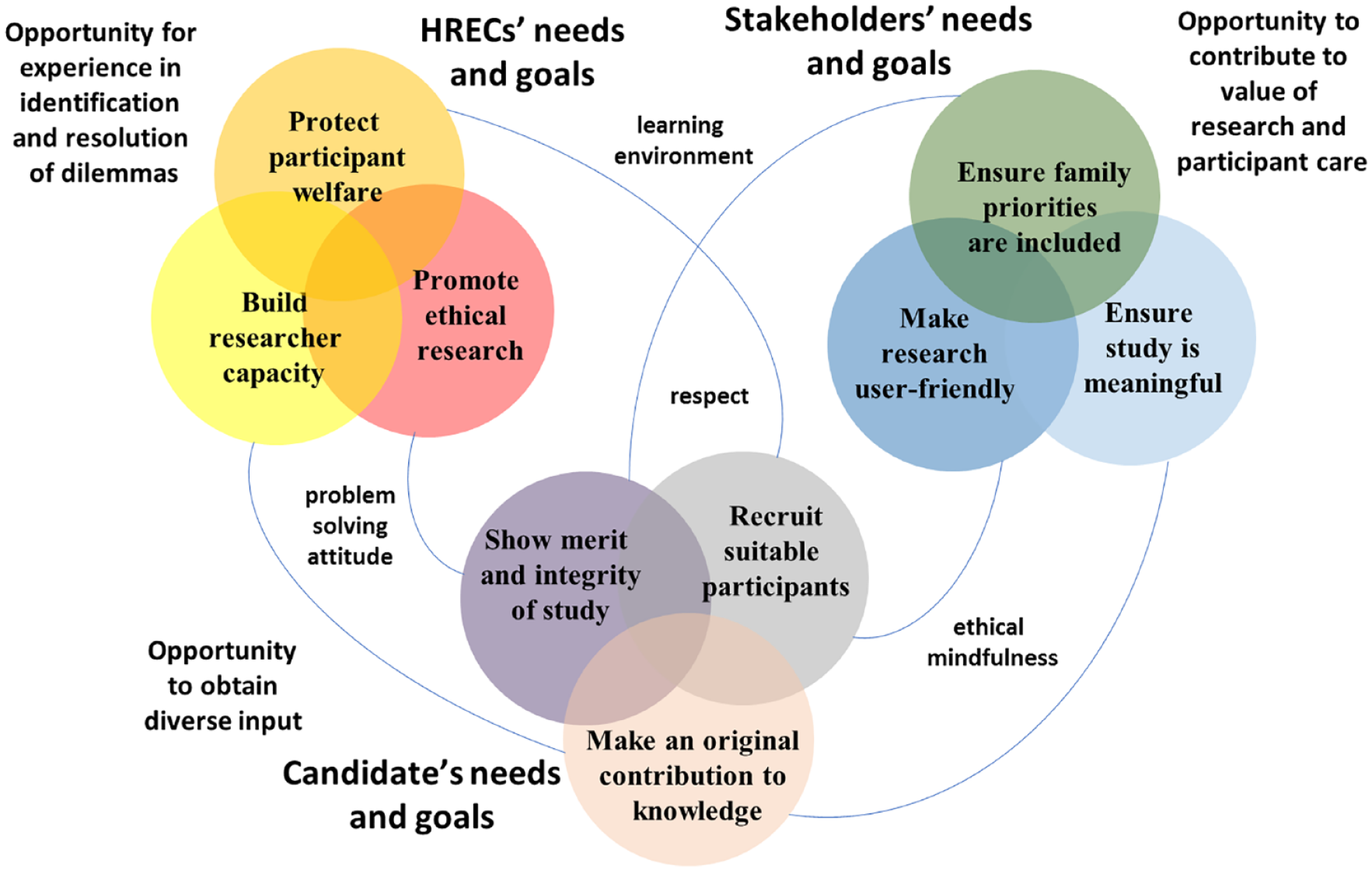
Emergence of relationships, a learning environment, ethical mindfulness, and other opportunities.
Based on insight gained while analyzing the data and developing our article, we would like to suggest that, just as researchers develop a PIF to prepare potential participants, HRECs could supply a similar Researcher Information Form to prepare novice researchers for features of the review process. Figure 7 shows a possible format for this document.

Proposed researcher information form.
Given that the skills and values of the candidate influence responses (Ajjawi & Boud, 2017; Albert & Grzeda, 2015), HRECs could request a cover letter from novice researchers describing their motivations and any challenges experienced with regard to their project (Cho et al., 2015). Our experience suggests that knowing which aspects the researcher has stronger feelings about would assist the HREC to target their questioning in ways that facilitate self-reflection and the development of ethical mindfulness.
There is value in engaging with researchers in the development of their projects to inculcate an ethics by design approach. Moreno (1999) suggests that study design may have more impact on participant well-being than informed consent, and meaningful engagement with the HREC when planning the study can improve the quality of the ethics application and the resultant research. Interaction with the HREC during study design may have assisted me when addressing some of the more challenging areas, and the HREC would have been able to specify the detail required for particular topics. This would have helped me to balance providing enough information with being concise.
Understanding the Emergence of the Three-Step Ethics Review
While most feedback-response units contributed to gradual improvement of the RP, the proposal that stakeholders should review the approved documents was of a different nature and changed the course of the review process itself. We became curious about what could be learned from the emergence and acceptance of this proposal.
It has been argued that a system tolerating deviation from the norm as it explores alternatives fosters creativity (Borghini, 2005). Ballinger and Rockmann (2010) add that a mismatch between desired outcomes and emerging outcomes in relation to an important goal may evoke an emotional response that includes divergent behavior. These ideas fit with our experience in that the candidate attached importance to the goal of involving stakeholders but had noticed that their influence was lessened by the decisions made between the HREC and himself during Exchange 1. Borghini (2005) argues that the greater the preexisting integration of culture and knowledge, the greater the possibility that a proposed innovation will be accepted. The adoption of the proposal may therefore suggest that the candidate and the HREC both believed that diverse input could contribute to the merit of the study.
The metaphor of fault lines also seems relevant. Fault lines split systems into homogeneous subgroups and thereby reduce effectiveness (Zhang et al., 2017). Given the importance that the candidate placed on stakeholder input during the review, we argue that the HREC, candidate, and stakeholders should be seen as one system. We suggest that the three-step review minimized the impact of the fault line that had separated the parties and reduced stakeholders’ influence. As a result, they were able to actively participate in the review.
Human-centered design (HCD; Steen, 2011) and community-engaged research (Cargill et al., 2016; Guta et al., 2012) are methodologies that encourage people similar to the end-users of the research products to be involved in the research process. However, several authors have expressed concerns about HCD’s methodological rigor when compared with health research standards (Bazzano et al., 2017; Maguire, 2001; Steen, 2011; Yonas et al., 2016). We suggest that the procedures followed during this ethics review, and the agreement that interview content could be determined as the study progressed, represent Double Descriptions, demonstrating the value of combining the predetermined structure and rigorous review required to conduct ethical human research with the evolving, jointly determined adaptability of emerging methodologies.
Strengths and Limitations
Park (2010) argues that prospective, longitudinal research is essential for capturing the dynamic processes that constitute meaning-making. The present case offered an opportunity to observe meaning unfold over the course of the ethics review process. This enabled us to highlight social processes of meaning-making, including descriptions of how meaning is made and then gradually refined over time through dialogue. We also identified the potential for creative leaps that are not part of a gradual progression.
However, the discussion was limited to an exploration of one case. Nevertheless, the potential for HREC review dialogue to create a learning environment and foster more than the approval of the RP has been hypothesized by others. Our experience supports their claims, and we have highlighted several tools that will assist other researchers and HRECs to explore the opportunities embedded in the HREC review process. The reflexive approach followed during our analysis and the presentation of this article demonstrates the ways in which role players cocreate dialogue, and we therefore stress the need for researchers to see themselves as playing an active part in the processes that they attempt to study.
Conclusion
Reflecting on the guiding questions described earlier, we feel that our analysis has demonstrated that when feedback focussed on the completion of specific tasks, task-oriented responses were generally received, improving the RP, and when feedback regarding more challenging ethical issues adopted a curious, inquisitive approach, it prompted the researcher to explain concepts or procedures and apply ethical principles. When the candidate had a stronger attachment to the feature being discussed, and especially when he disagreed with an aspect of the HREC’s feedback, he was prompted to reflect on his motives and was more likely to provide a carefully considered argument.
In this way, a balance was found between developing ethical mindfulness and the task of reviewing the proposed study. We believe that we have demonstrated that respectful management of tensions between the ideas of the HREC and those of the researcher (within an environment that is supportive rather than confrontational) can contribute to a mutually beneficial learning environment.
Supplemental Material
SF1_Original_Research_Plan – Supplemental material for Why Did You Not Act on Our Suggestion? Regulatory and Growth-Oriented Opportunities During Ethical Review: A Case Study
Supplemental material, SF1_Original_Research_Plan for Why Did You Not Act on Our Suggestion? Regulatory and Growth-Oriented Opportunities During Ethical Review: A Case Study by Sean G. Dicks, Ian J. Pieper, Holly L. Northam, Frank M. P. van Haren and Douglas P. Boer in SAGE Open
Supplemental Material
SF2_The_dialogue – Supplemental material for Why Did You Not Act on Our Suggestion? Regulatory and Growth-Oriented Opportunities During Ethical Review: A Case Study
Supplemental material, SF2_The_dialogue for Why Did You Not Act on Our Suggestion? Regulatory and Growth-Oriented Opportunities During Ethical Review: A Case Study by Sean G. Dicks, Ian J. Pieper, Holly L. Northam, Frank M. P. van Haren and Douglas P. Boer in SAGE Open
Supplemental Material
SF3_Updated_Research_Plan – Supplemental material for Why Did You Not Act on Our Suggestion? Regulatory and Growth-Oriented Opportunities During Ethical Review: A Case Study
Supplemental material, SF3_Updated_Research_Plan for Why Did You Not Act on Our Suggestion? Regulatory and Growth-Oriented Opportunities During Ethical Review: A Case Study by Sean G. Dicks, Ian J. Pieper, Holly L. Northam, Frank M. P. van Haren and Douglas P. Boer in SAGE Open
Footnotes
Acknowledgements
The authors would like to thank the stakeholders who provided comments before the RP was compiled and during Exchange 4 of the ethics review process, the members of the HRECs who reviewed the project and later agreed to the suggestion of publishing this case study, and the anonymous reviewers for their helpful comments that led to improvements to our article.
Authorship Statement
All authors made significant contributions to the manuscript. S.G.D. prepared an initial draft of the document and shared the idea of a co-authored article with the HREC. I.J.P. agreed to this and actively contributed to the developing paper. PhD supervisors (H.L.N., D.P.B., and F.M.P.v.H.) provided input and guidance throughout the above-mentioned process.
Declaration of Conflicting Interests
The author(s) declared no potential conflicts of interest with respect to the research, authorship, and/or publication of this article.
Funding
The author(s) disclosed receipt of the following financial support for the research, authorship, and/or publication of this article: S.G.D. acknowledges that as a PhD candidate, support was received through an Australian Government Research Training Program Scholarship.

Supplemental Material
Supplemental material for this article is available online.
References
Supplementary Material
Please find the following supplemental material available below.
For Open Access articles published under a Creative Commons License, all supplemental material carries the same license as the article it is associated with.
For non-Open Access articles published, all supplemental material carries a non-exclusive license, and permission requests for re-use of supplemental material or any part of supplemental material shall be sent directly to the copyright owner as specified in the copyright notice associated with the article.
