




Abstract
The entrepreneurship intention research is mainly focused on individual related features, and the aspects of the external environment are not sufficiently considered. The present article aims to present and empirically test the Environment-Readiness Entrepreneurship Intention (EREI) Model, which consists of the perception of the environment (namely, political, economic socio-cultural) and an evaluation of readiness (motivation, attitudes, competencies) to start up a business by potential entrepreneurs. To test the model, the EREI Questionnaire was developed and tested in Estonia on a sample of Estonians and the Russian-speaking minority population. The results of the analysis indicate that the EREI Model shows the following empirical evidence: a higher satisfaction with the external environment and a higher level of readiness lead to higher entrepreneurship intention. There are also significant differences in how the EREI Model manifests for the majority and minority populations. Based on the results, an ethnic minority entrepreneurship obstruction hypotheses is introduced.
Introduction
One of the main research questions in entrepreneurship research is to explain why some people want to become entrepreneurs while others do not. Liñán, Santos, and Fernández (2011) state that a cognitive approach to entrepreneurship offers valuable insight to explore the entrepreneur-related phenomena through perceptions and intentions. In addition to individual level variables, it is also important to understand how the perception of the external environment influences intentions. Research on entrepreneurship points to the mutual role of individual traits and contextual characteristics in fostering the development of entrepreneurial intentions and actions (Geldhof, Weiner, Agans, Mueller, & Lerner, 2014). One task of entrepreneurial research is to investigate entrepreneurial intention, as the cognitive procedure leads to actual entrepreneurial behavior.
A study of entrepreneurial intentions is important for understanding the process of entrepreneurship. However, social scientists have still not agreed on the determinants of the decision to become an entrepreneur (Rokhman & Ahamed, 2015). Jinying and Nina Pelagie (2014) summarize that the research field of entrepreneurship mostly follows three main perspectives: research on individual personal characteristics, research on the influence of the social environment, and the role of institutions in shaping an individual’s intention to start an enterprise. One of the oldest research focus areas in entrepreneurship is the attempt to understand how entrepreneurs differ from the rest of the population in terms of different personality traits and characteristics (Ozaralli & Rivenburgh, 2016). Soon after, study of the social aspect of future entrepreneurs was added to research agendas. However, there are other research directions that need to be investigated—for example, moderators of the translation of intentions into entrepreneurial actions (Shirokova, Osiyevskyy, & Bogatyreva, 2016; Sommer & Haug, 2011), the role of emotions as an influencing factor in starting up (Souitaris, Zerbinati, & Al-Laham, 2007; Yun, 2010), the individual commitment to a new venture creation process (Fayolle & Liñán, 2014), and emerging interest is focusing on the contextual factors of entrepreneurship—the environment (Leung, Lo, Sun, & Wong, 2012; Martinelli, 2005).
The present article also involves the regional dimension, namely, the Russian-speaking minority in Estonia are under investigation. The Russian-speaking minority constitutes almost one third of the Estonian population. Statistics show that the entrepreneurial activity of Russian speakers is four times lower than that of Estonians (according to the 2011 census Statistics Estonia, 2017). The question is, “Why are entrepreneurial activities lower for the minority group, and should this group of the population be considered in a different way compared to the titular population?” The situation of the Russian-speaking minority in Estonia is unique. Migration of the Russian population to Estonia started after World War II, and while Estonia became part of the USSR, Russians considered themselves as a hegemonic population. After Estonia gained independence in 1992, Russians suddenly became the minority group and had to begin the “reverse” process of becoming embedded into Estonian society. In a way, the Russian-speaking minority is a rather exceptional subject for research, because the people remained the same, but the environment changed dramatically.
Estonia should focus on how to stop increasing the gap between the minority and majority populations and should discontinue deepening the opposition between them; instead, innovative ways to integrate the Russian-speaking minority into Estonia should be found. Most often, the integration effort is directed toward education-, language-, and culture-related initiatives, and less effort is given to potential economic integration through increased employment and entrepreneurship activities of the Russian-speaking minority. The fact that entrepreneurship can be not only the source of growth for the country but also the integration tool has been overlooked.
The idea of the current research is multilayered—It adds environment into the intention study and does it using the minority group as the example. The aim of the article is to investigate the perception of the entrepreneurship environment, entrepreneurship readiness, and intention on a sample of the Russian-speaking minority compared with the titular population of Estonians. The article contributes to theory by testing the environment variables in the formation of intention and providing a minorities entrepreneurship obstruction hypotheses to understand the entrepreneurship behavior of minorities. This article consists of the following parts: First, I explain the factors that shape the entrepreneurial environment; then, I describe the notion of entrepreneurial readiness; after that, I unfold the essence of entrepreneurial intention and how it is formed, which is followed by the introduction to the Environment-Readiness Entrepreneurship Intention (EREI) Model. Finally, the results of the empirical study are presented and the EREI model is tested.
Entrepreneurial Environment
The idea of including the context into intention research is not new; for example, in the late 80s, Bird (1988) concluded that along with the individual variables, social, political, and economic variables create the context for entrepreneurship. Davidsson (2008) presents a model of the entrepreneurial process and explains that the process should be matched with the characteristics of the individual, idea/opportunity, and environment. Entrepreneurship cannot be fully understood without making reference to the socio-cultural and institutional context in which it arises and develops (Martinelli, 2005). One of the schools of thought in entrepreneurship studies focuses on the conditions of the environment as the factor that affects one’s aspirations to start a venture due to the view that entrepreneurism is a process involving social, cultural, and economic contexts (Astuti & Martdianty, 2012). The decision to start up the company is shaped by the presence of knowledge, financial, and other additional assets that are available in the region; in other words—geography matters (Audretsch, 2004). Thus, the environment where the potential entrepreneur is situated affects the decision-making process of creating a new venture. Next, the factors of the political/legal, economic, and socio-cultural environment that influence entrepreneurship are described.
Political/Legal Environment
Legal issues are often not given sufficient thought by entrepreneurs, but it is necessary to understand the legal landscape of the industry and the peculiarities of intellectual property, and to have access to legal advice (Carsrud, 2007). The political environment reflects the political climate, governance practices and policies, and legal issues. It involves the general political stability of the country, the level of corruption and bribery, the general transparency of state activities, the quality of policy formulation, and so on. Governance practices involve, for example, procedural requirements for registration and licensing, registration costs, the reporting load for entrepreneurs, and the general effectiveness of bureaucracy. Foreign economic policies, customs regulations, the employment and corporate income tax structure, and entry barriers reflect the policies established by the government. Issues related to employment legislation, laws on the prevention of unfair competition, bankruptcy law, laws to protect proprietary rights, laws regulating business activities, and so on are important in the formation of entrepreneurial decisions.
Economic Environment
Entrepreneurship is increasingly becoming a major component of economic environments, both at national and global levels (BarNir, Watson, & Hutchins, 2011). The economic environment mainly involves the availability of resources and information. It encompasses the availability of capital, including the readiness of financial institutions to give credit, venture capital, and alternative sources of financing, and the availability of not only a skilled labor force but also business information and affordable consultancy and training support. It also reflects the access to and cost of communication and basic utilities. The availability of private incubators and technology parks, accessibility to the physical and technological infrastructure, the level of R&D activities, and transfer to commercial opportunities are important in evaluating the economic environment of the country. This dimension also reflects the general economic stability and growth rate, technological progress and innovation, and growth opportunities.
Socio-Cultural Environment
Entrepreneurship arises from the society and in turn serves the society (Guo-fa & Cui-chun, 2011). Entrepreneurship, like any other socioeconomic phenomenon, is culture-bounded and tailored to the cultural characteristics of that country (Dehghanpour Farashah, 2013). The socio-cultural environment includes not only the general beliefs, assumptions, and values of the society toward entrepreneurship but also practices that support the entrepreneurship role. It involves the general image of entrepreneurs in society, the acceptance of the entrepreneurship career, valuing entrepreneurship as a source of country prosperity, encouragement of entrepreneurship in general, and promoting it by means of the media. On the level of practice, this dimension encompasses the availability of entrepreneurial networks, associations, excessive information sharing about entrepreneurship, social networks, presence of successful role models and successful entrepreneurs, recognition of representative entrepreneurial performance, and accessibility to entrepreneurial education.
It is rather difficult to conclude how the environment is perceived by potential entrepreneurs, because it depends on prior experience, general knowledge, and the beliefs and assumptions about the external environment of the region. In fact, if the perception of the environment is not attractive enough, the potential entrepreneur might realize his or her aspiration in some other country, which has unfavorable consequences for a certain region.
Entrepreneurial Readiness
Cognitive approaches to entrepreneurship have been central to dealing with entrepreneurship (Katz & Shepherd, 2003). Previous research has covered such cognitive aspects as attitudes (e.g., Astuti & Martdianty, 2012; Davidsson, 1995), desirability and feasibility (Ajzen, 1991; Daim, Dabic, & Bayraktaroglu, 2016), locus of control and perceived control (e.g., Dinis, do Paço, Ferreira, Raposo, & Gouveia Rodrigues, 2013; Robinson, Stimpson, Huefner, & Hunt, 1991), need for achievement (e.g., Leung et al., 2012; Robinson et al., 1991), self-efficacy (e.g., Manik & Sidharta, 2016), social valuation (e.g., Liñán et al., 2011), and subjective norms (Ajzen, 1991; Heuer & Kolvereid, 2014). These are already theoretically explained and empirically tested aspects that are believed to influence the intention to start an enterprise.
The cognitive approach stresses that human behavior is a result of mental processes (Krueger, 2003). In the present article, it is suggested that motivation, attitudes, and competencies are the main cognitive aspects that affect intention. This means that an individual is evaluating the strength and direction of stimulus to start an enterprise, the level of skills and knowledge about entrepreneurship activities in the context of beliefs about entrepreneurship, and, based on this evaluation, makes a decision about starting up a business or not.
Motivation is the aspiration of an individual to mobilize his or her own capacities and energy to achieve a goal. Motivation is an indicator of how hard people are willing to try to behave in a specific manner to achieve a goal (Lanero, Vázquez, Gutiérrez, & García, 2011). In the case of entrepreneurial motivation, it shows the degree of ambition and desire to create an enterprise and implement entrepreneurial activities. Self-employment, as the act of launching one’s own business and being self-employed, requires a strong degree of motivation to engage in entrepreneurial activities (Costa, Caetano, & Santos, 2016).
Fayolle, Liñán, and Moriano (2014) summarizes two main theories of entrepreneurial motivation: drive and incentive theories. Drive theories suggest that there is an internal need (e.g., achievement or autonomy) that has the power of motivating the individual to start a new venture to reduce the resulting tension. On the contrary, incentive theories suggest that people are motivated to do things because of external rewards (Fayolle et al., 2014). Atef and Al-Balushi (2015) summarize in the same vein by presenting pull and push drivers of entrepreneurial motivation. Pull factors are the desire for independence and monetary motivations and push factors are work-related motivations, such as unemployment, redundancy, lack of a job or career prospects, and family-related factors, such as combining waged and domestic labor, family policies, family obligations, and a desire for a work–family balance. Thus, entrepreneurs are motivated by various aspects, and eventually, their motivation influences the intention and the probability to start up a business. Intentions capture the motivational factors that influence behavior, indicating the effort the individual plans to exert to put this behavior into practice (Liñán & Santos, 2007). Hence, the higher the intention to undertake the behavior, the higher the probability of its performance will be.
Attitudes are the individuals’ positive or negative assessments about a subject. In the context of entrepreneurship, attitude refers to the degree to which the individual holds a positive or negative personal valuation about being an entrepreneur (Dehghanpour Farashah, 2013). Attitudes toward entrepreneurship are determinant factors in the choice to become an entrepreneur (Guerrero, Rialp, & Urbano, 2008). The attitude toward entrepreneurship is determined by the beliefs of the subjects on this behavior; as such, the attitude toward entrepreneurship will be favorable or unfavorable according to the positive and negative beliefs of the decider toward the creation of his or her own business (Sampedro, Fernández-Laviada, & Herrero Crespo, 2014). Intentions serve as a mediator or catalyst for action. Across a wide variety of target behaviors and related intentions, attitudes explain more than 50% of the variance in intentions, and intentions in turn explain more than 30% of the variance in behavior (von Graevenitz, Harhoff, & Weber, 2010). Attitudes are quite unstable and depend on time, circumstances, and experiences. One significant event can change the sign of an attitude. Therefore, attitudes toward entrepreneurship can be affected and, in fact, formed.
One important aspect that determines the readiness of the individual to create an enterprise and start activities is competencies—which are the knowledge, skills, and experiences that are needed for entrepreneurial activities. Liñán (2008) claims that those individuals who think that they have a high level of certain entrepreneurial skills will be more likely to intend to create a firm. Costa et al. (2016) elaborate that entrepreneurial competencies provide the ability to perform entrepreneurship activities successfully. Fini, Grimaldi, Marzocchi, and Sobrero (2012) relate skills to behavior, asserting that the greater awareness about acquired skills provides a better evaluation of the focal behavior, which indirectly fosters the enactment of intentions. However, there are no elaborations about different types of competencies, and, in fact, it is difficult to conclude which competencies (entrepreneurial- or discipline-specific) affect entrepreneurial intention to a greater or lesser extent. It might be assumed that competencies play a forming role in intention, and that assumption needs to be empirically tested.
Entrepreneurship Intention
The evolution of the literature on entrepreneurial intention is an excellent example of the successful integration of theories from a neighboring field into the study of entrepreneurship (Fayolle & Liñán, 2014). The entrepreneurship intention literature examines a variety of factors influencing intention, such as the demographic profile (e.g., gender, age, education, family background), contextual elements (e.g., perceived support, perceived barriers, and close support), and personality traits (e.g., extraversion and conscientiousness; Zain, Akram, & Ghani, 2010). The entrepreneurial intention research has traditionally been based on models that mainly take into account the personality of the potential entrepreneur and the immediate surroundings.
Several theories and models have been developed over time to understand the personal and contextual factors that influence the decision to create an enterprise. Six main models could be identified in the intention literature (see Table 1). Some models are broader and consider how intention is formed in general (e.g., theory of planned behavior [TPB]), while some models focus particularly on entrepreneurship intention (e.g., Entrepreneurial Event Model [EEM]). Nevertheless, the evolution of intention models is interrelated. The Entrepreneurial Potential Model integrates two antecedent models (EEM and TPB), and the last relevant model (Davidsson’s Model) is based on the previous models (Guerrero et al., 2008). The first three models encompass “personal contexts,” such as the individual’s personal history, personality, abilities, self-efficacy, propensity for action, and so on (Zampetakis & Moustakis, 2006). More recent models focus more on the link between intention and behavior. These entrepreneurial intention models claim that any entrepreneurial behavior is preceded by the intention to develop entrepreneurial behavior, and this intention is influenced by different factors (Guzmán-Alfonso & Guzmán-Cuevas, 2012). The central element of all these models is the individual’s intention to undertake and to put into practice a specific behavior (Franco, Haase, & Lautenschläger, 2010). Table 1 summarizes the main entrepreneurship intention models, and these are strongly individual centric approaches.
Entrepreneurship Intention Models.

Source. Ajzen (1991); Bird (1988); Davidsson (1995); Krueger and Brazeal (1994); Krueger, Reilly, and Carsrud (n.d.); Liñán (2008); Robinson et al. (1991); Shapero (1982).
Note. EI = entrepreneurial intention.
Liñán (2008) states that the measurement of these cognitive constructs is somewhat problematic; at this stage of the entrepreneurship research, there is no standardized or widely accepted instrument to measure entrepreneurial intentions. In most instances, researchers use their own ad hoc instruments. Still, most of the intention models verify their validity in predicting intentions to engage in entrepreneurial activities (Leung et al., 2012). A review of the literature has demonstrated strong empirical support for TPB (Iqbal, Melhem, & Kokash, 2012); TPB is considered to be a very complete theory, both well elaborated and scientifically tested (Sampedro et al., 2014). Other theories have also been empirically tested but to a lesser extent.
The scientific literature on intention has dealt with two major lines of research, as follows: (a) cognitive, regarding personal factors, and (b) contextual or environmental factors (Franco et al., 2010). The first line of research has been rather extensively investigated. In addition to personality traits and psychological characteristics, demographic factors (such as age, gender, marital status, religion, ethnic group, education, family background, socioeconomic status, and professional experience) have been studied in relation to entrepreneurship intention. However, this line of research has been criticized due to methodological and conceptual limitations and for their low explanatory capacity (Liñán et al., 2011). Kautonen, van Gelderen, and Tornikoski (2013) claim that the intention construct is closer to behavior than constructs of traits and demographics, which may broadly predict behavior but not a specific one. That is why the second line of research emerged where other factors have been included into models.
Regional Dimension: Russian-Speaking Minority in Estonia
The major ethnic group in Estonia is Russians (25.5%); in addition, 2.1% of the population are Ukrainians, and 1.2% are Belarussians (Statistics Estonia, 2011). Therefore, the Russian-speaking population in Estonia makes up 28.8% of the total population. The Ukrainians and Belarussians in Estonia are the primary Russian speakers, and they have assimilated into a primarily Russian-speaking identity since the Soviet period; in practice, they have much in common with ethnic Russians (“Estonia - Ukrainians and Belarusians,” 2017), and they still value their heritage in the form of “symbolic ethnicity” (Ehala, 2014). Thus, the Russian-speaking minority represents a rather large part of the Estonian population. They constitute the majority of the noncitizen residents of Estonia (“Estonia - Russians,” 2017). Herein, the term Russian-speaking is used because, since identities are in fact socially constructed and constantly changing, the Russophone population, whether they are from the Ukraine, Belarus, Russia, or some other Commonwealth of Independent States (CIS) republic, are actually developing a diasporic identity of a “Russian-speaking minority” (Linz, 1996).
The historical background of the Russian-speaking population makes this minority group rather vulnerable, and integration of this part of society was and still is challenging. The situation of the large ethnically Russian or Russian-speaking minority in Estonia has evoked dozens of international reports, resolutions, and recommendations over the years (Schneider, 2015). Treatment of ethnic Russian noncitizens continues to be a major issue domestically and bilaterally with the Russian Federation. Russians allege occupational, salary, and housing inequality because of Estonian language requirements. (“Estonia - Russians,” 2017). Today, parts of the Russian community in Estonia remain quite isolated because many ethnic Russians have stronger links to their historic homeland than to their country of permanent residence. The research indicates that approximately 50% of the respondents are not integrated or are under integrated passive populations of Russian speakers. This study shows that loyalty to Estonia and the desire to affiliate with it are not proportionally connected among the local Russian-speaking population. (Koort, 2014).
The labor market is one of the main areas of social bias, repulsion, and disparity for Russian speakers; because the Estonian labor market is competitive, Russian speakers earn less, are often excluded from public offices, and have a significantly higher risk of facing rejection by potential employers. The unemployment rate of Estonians in 2013 was 6.8% and was 12.4% among ethnic non-Estonians (Schneider, 2015). The statistics indicate that entrepreneurial activities among Russian speakers is four times lower than among Estonians (see Table 2).
Entrepreneurial Activity of Estonians and Russian Speakers in Estonia.

Source. Author calculations, data from the 2011 census (Statistics Estonia, 2017).
Percentage of total economically active population.
The entrepreneurship environment is similar for Estonians and minorities. It is possible to be involved in start-up activities, entrepreneurship support programs, and incubators despite the ethnical affiliation. Enhancing entrepreneurship in Estonia has been one of the most important political agendas for many elected governments. However, there is a lack of investigations in terms of the entrepreneurship behavior of minorities in Estonia.
EREI Model
To promote entrepreneurship, it is crucial to investigate the factors that affect an individual’s intentions toward the establishment of a new business (Zampetakis & Moustakis, 2006). In addition to personal level aspects, external factors (contextual and/or environmental factors) tend to have a direct influence on entrepreneurial intention (Leung et al., 2012). Ozaralli and Rivenburgh (2016) admit that studies that regard cultural, social, and economic contexts as factors that nurture early entrepreneurial intentions are rare. The suggested model aims to close this gap (see Figure 1) and include environment factors in the model together with other important and tested individual-level elements that are suggested to have impact on intention. Entrepreneurship intention is defined as the awareness of an individual about opportunity and the willingness to create an enterprise and perform entrepreneurship activities. The model focuses on two main branches of influencers, that is, the external environment and entrepreneurial readiness. The external environment constitutes the political, economic, and socio-cultural aspects that shape the potential intention to start up. From the personal level, the motivation, attitudes toward entrepreneurship, and competencies, such as knowledge, skills, and prior experiences, form a decision to start up. Between intention and actual behavior (in this case, new venture creation), there is a preparation or interim stage that reflects actions that have already been taken. These include thinking about a business idea, composing a business plan, budgeting finances, seeking resources, and so on. The interim stage is a preparation phase where readiness factors manifest in real actions.
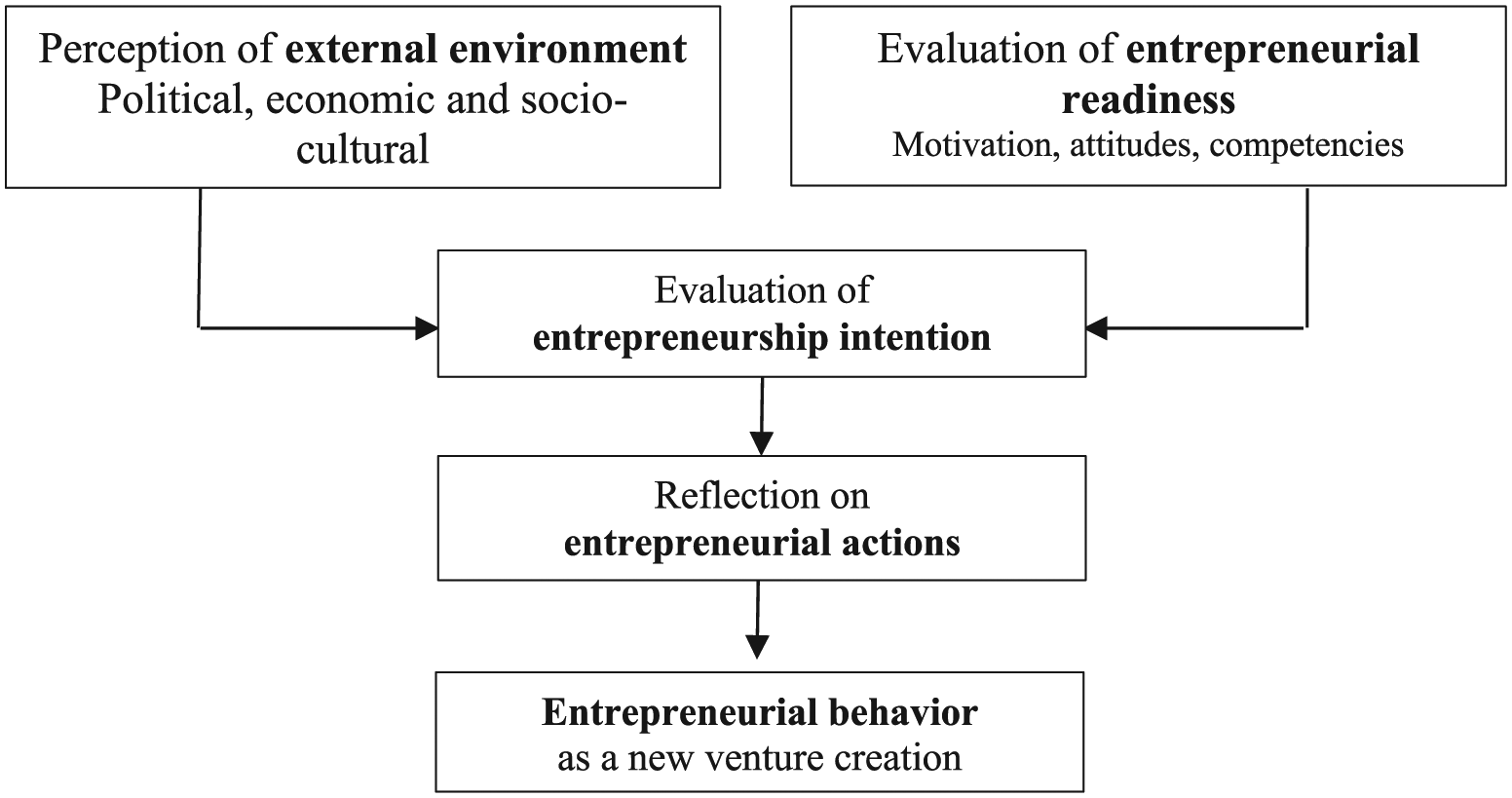
Environment-Readiness Entrepreneurship Intention (EREI) Model.
Despite the global scope of entrepreneurship, a potential entrepreneur is situated in a certain environment, and making a decision to start up a business stems from that environment. If the environment is not perceived as favorable for start-up activities, then it affects the intention in a negative way. However, if the person is ready to start up, then the potential entrepreneur will probably select another geographical region/country for entrepreneurial activities, which is definitely not beneficial for the country of residence. On the contrary, if there is a positive perception of the external environment, but low readiness, it is possible to influence attitudes and develop competencies that eventually increase the motivation to start up. There might also be the combination of a perception of the environment as not being an attractive one and low entrepreneurial readiness—then the intention to start up is also low. The highest intention could be achieved with high readiness and a positive perception of the entrepreneurial environment.
The propositions for the present study were composed taking into account the ethnical dimension; namely, it is proposed that the EREI model could have different manifestations for majority and minority members of the population (in the frame of the present study for Estonians and Russian speakers). For further empirical investigations, the following propositions were suggested for the empirical testing:
This model is an attempt to triangulate aspects of the entrepreneur and perceived elements of the environment, and use a process to tie these together (the thought originates from Jerome et al., 2003). Eventually it enables the determination of what types of environmental obstacles and individual restrictions diminish the intention to start up a business, which will provide valuable information to policy makers to influence entrepreneurial activeness in a positive way.
Method and Sample Description
Based on the theoretical overview and analysis of previously conducted surveys, a questionnaire was developed to measure the perception of the entrepreneurship environment, entrepreneurship intention, and readiness and actions. In the questionnaire, respondents were asked to evaluate their satisfaction with the entrepreneurship environment in Estonia. Entrepreneurship intention was measured by asking about the respondent’s agreement with the statements. Entrepreneurial readiness shows what the motivation of the potential entrepreneur to start up a business is, what attitudes she or he possesses about entrepreneurship, and what competencies support the start-up activities. Entrepreneurial actions show the extent of effort an individual has already done to prepare himself or herself for entrepreneurship.
The survey was implemented in March 2017 by asking the general population in Estonia to fill out an online questionnaire in Qualtrics during a period of 24 days. The survey resulted in 1,127 filled in surveys in the Estonian language, and 365 correctly filled out responses in Russian language.
For analysis purposes, those respondents who indicated that they are entrepreneurs (n = 305, 20.5%) were excluded from further analysis (valid for analysis n = 1,178). Nevertheless, all the respondents’ estimations were included in factor analysis. In all, 30.4% (n = 358) of the respondents were men, and 68.9% (n = 812) were women in the sample (0.7% did not indicate their gender). The average age of the respondents is 44.8 years (SD = 12.04; n = 1,165). Five age groups were formed: under 30 (14.1%), 31-40 years (21.4%), 41-50 years (29.3%), 51-60 years (25.7%), and over 61 years old (8.4%); 1.1% did not indicate their age. In terms of position, 7.6% of the respondents were managers, 46.5% were specialists, 24% were workers, 5.3% were students, 8% were unemployed, and 12.4% did not indicate their position. According to the education level attained, 2.9% of the respondents had a primary education, 23.3% had secondary education, 22.1% had vocational education, 15.6% had professional education, 33.9% had higher education, and 2.3% of respondents did not indicate their education. There are 75.5% (n = 889) Estonians and 24.5% (n = 289) Russian speakers in the sample.
The data were analyzed using SPSS software (IBM, Armonk, New York, USA). To analyze the data factor analysis, dispersion analysis, ANOVA, paired t-test, and correlation analysis were performed.
Results of the Study
An oblique rotation method of principal axis factoring for items with ProMax rotation was performed for the items about the environment with the aim of item reduction and finding the most suitable item solution for the political-legal, economic, and socio-cultural scales. Factor analysis was a suitable method for finding the most representative items for each scale (Bartlett’s test for sphericity p = .000, Kaiser–Meyer–Olkin measure for sampling adequacy 0.97, total variance explained 58.7%). For the environment and other scales, a reliability analysis was implemented to check for reliability sufficiency (see Cronbach alphas in Table 3).
Reliability of the Scales.
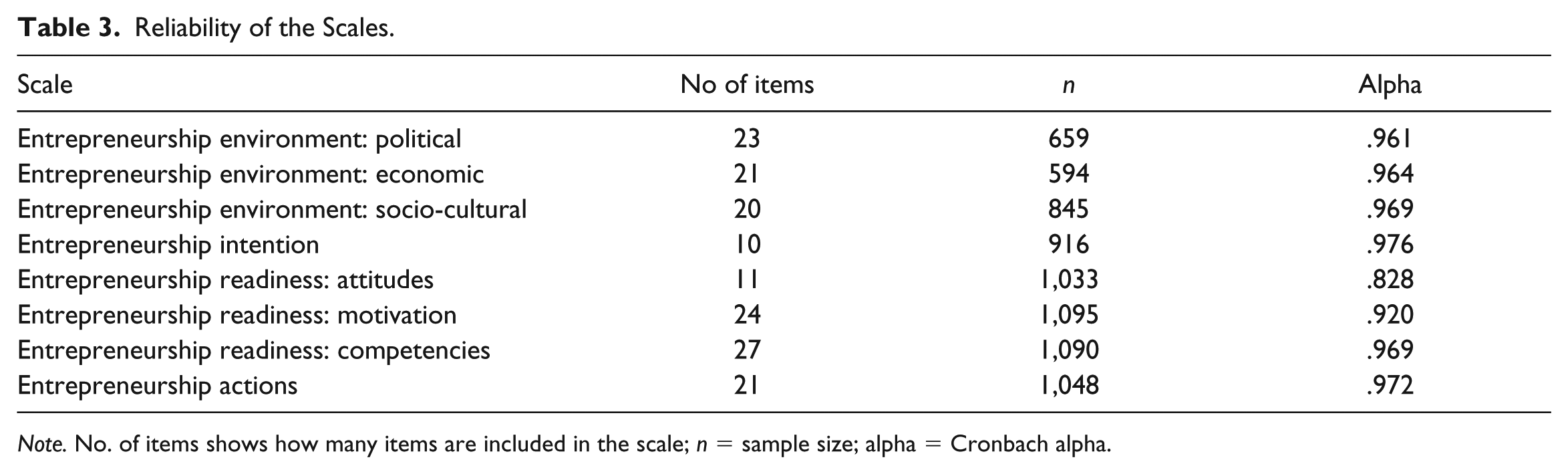
Note. No. of items shows how many items are included in the scale; n = sample size; alpha = Cronbach alpha.
Participants in the survey evaluated their satisfaction with different environments, and descriptive statistics show that political, economic, and socio-cultural scales are evaluated between Estimations 3 (rather dissatisfied) and 4 (rather satisfied; see mean values in Table 4). To understand the level of satisfaction with the environment and the level of entrepreneurship readiness, quartiles for each scale were calculated for the whole sample (see Table 4).
Mean Values and Levels of Scales Based on Quartiles.

Note. Scales: from 1 (absolutely dissatisfied/absolutely disagree/absolutely not important/very low) to 6 (very satisfied/absolutely agree/very important/very high). n = sample size; mean = mean value for the whole sample.
In terms of the environment, Russian speakers and Estonians evaluated the environment scales moderately low, except that Estonians gave moderately high estimations on the economic environment (the mean values and levels for the two groups of respondents are separately listed in Table 5). According to the implemented ANOVA, Estonians and Russian speakers evaluate their satisfaction with the entrepreneurship environment in distinct ways, that is, the economic and socio-cultural scales are evaluated by Russian speakers significantly lower than by Estonians. There are no significant differences between the evaluations on the political environment among the two groups of respondents. An additional t-test revealed that there are also differences in how Estonians and Russian speakers evaluate the satisfaction among the scales. The paired sample test revealed that Estonians (8.7 < |t| < 24.3, p = .000) and Russian speakers (3.0 < |t| < 10.6, p < .003) evaluated all three scales significantly more distinctly, as follows: the lowest satisfaction is evidenced for the political environment, the economic environment was evaluated significantly higher, and highest satisfaction among the three scales was evident for the socio-cultural environment.
Levels and Differences in Mean Estimations for Entrepreneurship Environment, Readiness, Intention, and Actions.

Note. The level is based on the calculated quartiles (see Table 3); the difference is considered as significant on the >.05 level; Scales: from 1 (absolutely dissatisfied/absolutely disagree/absolutely not important/very low) to 6 (very satisfied/absolutely agree/very important/very high). EST = Estonians; RUS = Russian speakers; n = sample size; F = F statistics; p = significance.
As seen from Table 5, Russian speakers have moderately high and Estonians have moderately low levels of entrepreneurship intention, and according to the ANOVA, Russian speakers evaluated their intention significantly higher compared with Estonians. This trend is surprisingly continued for entrepreneurship attitudes, where again, Russian speakers have significantly higher estimations on attitudes compared with Estonians. In terms of entrepreneurship motivation, competencies, and actions, the evaluations by the two groups of respondents are not significantly different. However, it should be noted that according to calculated quartiles, attitudes toward entrepreneurship are moderately low for Estonians and moderately high for Russian speakers; a similar trend is also evidenced for competencies—Estimations are moderately low for Estonians and moderately high for Russian speakers. In terms of entrepreneurship actions, both groups of respondents evaluated their involvement in entrepreneurship actions moderately low.
In terms of relationships between studied scales, the correlation analysis revealed statistically significant correlations for the whole sample. It is seen from Table 6 that all the environment scales are positively, but rather weakly, related to entrepreneurship intention (the correlation coefficient varies from 0.08 to 0.18). This means that higher estimations of environmental factors will lead to a higher evaluation of entrepreneurship intention (and vice versa). The strongest relationship is evident between the political-legal environment and intention. The separate correlation analyses implemented for the Estonian and Russian-speaking groups of respondents show that the trend of the correlations remains the same, just in terms of relationships between the environmental factors and intention, but the correlation coefficients are stronger for the Russian-speaking group (see Table 6).
Correlations Between Estimations for the Entrepreneurship Environment, Readiness, Intention, and Actions Given by Estonians and Russian Speakers.

Note. EST = Estonians; RUS = Russian speakers; All = whole sample.
Correlation is significant at the level p < .05. **Correlation is significant at the level p < .01.
Entrepreneurship intention is strongly and significantly related to attitudes toward entrepreneurship, motivation, and competencies, meaning that more positive attitudes, higher motivation, and higher levels of competencies will lead to higher intentions to start up a business (and vice versa; see Table 6). The results also indicate that higher entrepreneurship intention is positively related to action—higher intention leads to a higher level of involvement in entrepreneurship actions—but this could also be interpreted in a different way—higher involvement in entrepreneurship activities (e.g., preparation steps) will lead to a higher intention to start up a business. The correlation analyses implemented for the Estonian and Russian-speaking groups of respondents show the same trends of correlations, that is, only the relationship between the intention and motivation scales for the Russian-speaking sample is stronger, and for all other scales, the correlations are stronger for Estonians.
Linear regression was implemented to find the predictors of entrepreneurship intention (as dependent variable) in terms of estimations of environment, readiness, and the age, gender, occupation, education, and ethnic affiliation of the respondent. A linear regression was preferred over binominal, multinomial, or logistic regressions, since linear regression gives the most exact estimations of variables because the data are not transformed (e.g., square root or logarithmic transformation of variables). Although, to eliminate the possibility that there is nonlinearity in the variables, the model was composed in such a way that all nonmetric variables were represented in the model as a single base for hypotheses testing. The regression equation was compiled as follows:
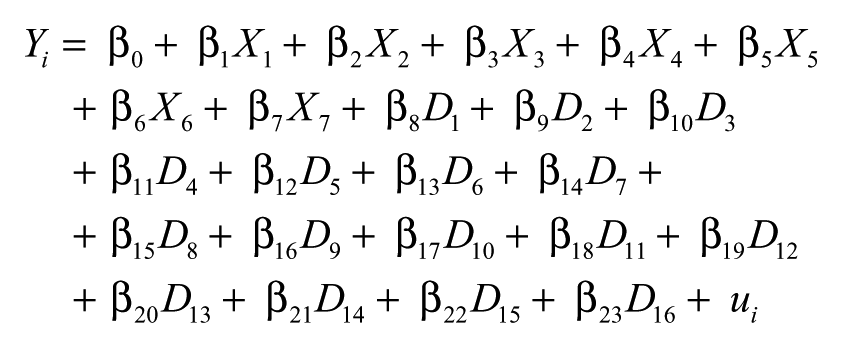
Yi entrepreneurship intention
β0 constant
β1-20 regression coefficient
X1 political-legal environment scale
X2 economic environment scale
X3 socio-cultural environment scale
X4 attitudes toward entrepreneurship
X5 entrepreneurship motivation
X6 entrepreneurship competencies
X7 entrepreneurship actions
D1 ethnical affiliation (0 = Estonian,1 = Russian speaking)
D2 age (0 = all other age groups, 1 = under 30)
D3 age (0 = all other age groups, 1 = 31-40)
D4 age (0 = all other age groups, 1 = 41-50)
D5 age (0 = all other age groups, 1 = 51-60)
D6 age (0 = all other age groups, 1 = over 61)
D7 gender (0 = male, 1 = female)
D8 education (0 = all other education, 1 = primary education)
D9 education (0 = all other education, 1 = secondary education)
D10 education (0 = all other education, 1 = vocational education)
D11 education (0 = all other education, 1 = higher education)
D12 position (0 = all other positions, 1 = manager)
D13 position (0 = all other positions, 1 = specialist)
D14 position (0 = all other positions, 1 = worker)
D15 position (0 = all other positions, 1 = student)
D16 position (0 = all other positions, 1 = unemployed)
ui random variable
The regression model shows what the predictors for the self-reported level of the entrepreneurship intention are. The variation (41.6%) in the entrepreneurship intention scale is explained by the variables included in the model (R2 = 0.416; n = 787). The significance value of the F-statistic (F = 26.08) is .000, which means that the variation explained by the model is not due to chance. The Durbin–Watson test indicates that there is no correlation between the residuals (Durbin–Watson = 2.05). Multicollinearity diagnostics did not indicate multicollinearity in the regression model, which means that the intercorrelation between the independent variables is small (Variance Inflation Factor [VIF] is 1.1 < VIF < 3.4). The variables in the model are presented in Table 7.
Variables in the Regression Model.

Note. Excluded variables: age 41-50; higher education; p = significance level.
Relationship is significant at the .05 level. **Relationship is significant at the .01 level (two-tailed).
The results of the linear regression analysis show that entrepreneurship intention will increase:
by 0.75 points when the respondents’ estimations for attitudes increase by one point on the scale,
by 0.14 points when the respondents’ estimations for importance of motivation increase by one point on the scale,
by 0.30 points when the respondents’ estimations for level of competencies increase by one point on the scale,
by 0.22 points when the respondents’ estimations for level of involvement in entrepreneurship actions increase by one point on the scale,
by 0.27 points if the respondent is 31 to 40 years old,
by 0.18 points if the respondent is a Russian speaker, and
by 0.42 points if the respondent is unemployed.
The results of the linear regression analysis show that entrepreneurship intention will decrease:
by 0.18 points when the respondents’ estimations for the economic environment increase by one point on the scale, and
by 0.39 points if the respondent is more than 61 years old.
The regression analysis gave answers to the causality of relationships between entrepreneurship intention and other notions under the study. Entrepreneurship intention is formed by higher attitudes toward entrepreneurship, higher level of motivation and competencies, and higher level of involvement in entrepreneurship actions. Intention is also dependent on the respondents’ age, ethnicity, and employment situation.
Conclusion and Future Research
Entrepreneurship, as one of the most important activities for enhancing the economic growth of the country or region, needs continuous research and suggestions for how to increase start-up performance. Before entrepreneurial behavior is performed, entrepreneurship intention should exist. There are various factors that influence this intention, and these have mainly been associated with the personality of the potential entrepreneur. Few approaches take into account the external environment as a set of variables for making the decision to create an enterprise. This article introduced the model that is based on the literature overview and takes into account the external environment as a source of the start-up intention decision.
The EREI model suggests that there are two main sets of influencers of entrepreneurial intention, that is, the external environment and entrepreneurial readiness. In terms of the external environment, the perception of the potential entrepreneur of the political, economic, and socio-cultural environments shapes the intention to start up a business. From another side, entrepreneurial readiness, which entails the motivation, attitudes, and competencies of the individual, creates a set of preconditions for start-up behavior. It is proposed that the EREI model has different manifestations for minority groups.
The empirical study aimed to test the proposed EREI model on a sample of Estonians and the Russian-speaking minority. The results of the study show that the perception of the external environment is significantly and positively related to the entrepreneurship intention. Despite the significance of the correlation coefficients, the strength of the correlations is rather weak, but still exists. The correlation analyses, which was implemented for both groups separately, show that the trend of the correlations remains the same, but for the group of Russian speakers, the correlation coefficients are higher, indicating a stronger relationship between their perception of the entrepreneurship environment and intention. However, the regression analysis showed a relationship between intention and the environment only for the economic environment, which was supposed to have the largest impact on the start-up decision. Thus, based on empirical testing, I can conclude that the propositions about positive relationships between the studied notions are partly evidenced and that the EREI model has partial empirical support.
It was also suggested that there are significant differences in the perception of the environment, readiness, and intentions between Russian speakers and Estonians. The results of the study show that both groups of respondents have moderately low to moderately high satisfaction with the political-legal, economic, and socio-cultural environments, but Russian speakers are significantly less satisfied than Estonians with the economic and socio-cultural environments. The proposition about differences of perceptions regarding the entrepreneurship environment by the two groups of respondents has been mostly supported. Based on the results of the study, it could be suggested that policy makers should apply a different approach to ethnic minority entrepreneurship and shape initiatives that target a particular group of minorities.
As for the entrepreneurship intention, it has been evaluated as significantly higher by the ethnic minority group of Russian speakers compared with Estonians. This result does not support the proposition made that majority population of Estonians have higher intention than the minority group. This result is especially puzzling, because satisfaction with the environment was evaluated lower by Russian speakers. This shows that Russian speakers have higher intentions to start up businesses but lower satisfaction with the entrepreneurship environment. Herein, the minorities entrepreneurship obstruction hypotheses could be proposed according to which there are realistic and assumed barriers to starting up a business but high start-up intention. This means that despite the fact that there is a lower satisfaction with the environment and barriers exist coming from context, people still are interested in the entrepreneurship. This could mean that actual entrepreneurship could be performed if barriers are eliminated or explained.
In terms of the entrepreneurship readiness, there are strong and positive relationships between entrepreneurship intention and the motivation, attitudes, and competencies. The regression analysis also showed the causality of the relationship—Entrepreneurship intention is formed by higher readiness. It was assumed that Estonians have higher entrepreneurship readiness compared with Russian speakers, but this proposition was not supported. In fact, Russian speakers have considerably more positive attitudes toward entrepreneurship compared with Estonians, but evaluations regarding the competencies and motivation are similar for both groups of respondents.
With respect to the relationship between entrepreneurship intention and actions, there is a positive strong causation—Higher intention is caused by higher involvement in entrepreneurship actions. The previous research on links between intentions and real behavior also suggested a strong link between them. This study demonstrates that, but nevertheless, the opposite relationship should also not be excluded—higher intention could result in higher involvement in entrepreneurship actions; thus, additional empirical analysis is needed to gain clarity.
It was suggested that Estonians have higher involvement in entrepreneurship actions compared with Russian speakers. The results of the analysis show that for both groups of respondents, the level is moderately low, and no significant differences were found. It means that the differences in actions are not stemming from an ethical affiliation, and despite belonging to the majority or minority population, all respondents have similar opportunities and actual involvement in entrepreneurship activities.
The last proposition suggested that entrepreneurship intention is dependent on the perception of the entrepreneurship environment, readiness, actions, and ethnicity. This proposition is mostly supported—The only disparity form proposed is that intention depends on the perception of only one economic environment out of the three environment scales. The results of the analysis firmly confirmed the differences between Estonians and the Russian-speaking minority—Being a Russian speaker increases the probability of having a higher entrepreneurship intention. In addition, age plays an important role in shaping intention—Being middle aged increases and being more than 61 decreases the intention to start up a business. The results also indicate that being unemployed creates higher chances of start-up intention. All of these can provide insight for policy makers to create suitable support programs for the Estonian population to enhance start-up behavior.
The EREI model has application in positioning different groups of respondents in terms of their level of intention to start up. Two sources of influencers, namely, the perception of the external environment and entrepreneurial readiness, interact (see Figure 2) as follows: if there is favorable perception of the environment, but low entrepreneurial readiness, then there is a possibility of increasing entrepreneurial readiness; if there is high readiness but an unfavorable perception of the environment, then it is probable that the potential entrepreneur will find other environment (country) to do business. In terms of high readiness and a perception of the environment as favorable, there is a high intention to start up. When low readiness and an unfavorable perception of the environment coexist, then there is a low intention, and it is rather difficult to influence an individual to participate in entrepreneurial activities. The result of the study positions Estonians and Russian speakers in slightly different locations, but for both groups, entrepreneurship intention remains on a moderate level; for both groups, there is the potential for higher intention. Applying the model could provide suggestions for policy makers to enhance the environment for entrepreneurship for the country, region, or a specific target group (e.g., minorities). The implications could also be valuable for educational institutions to help individuals increase their readiness for entrepreneurship.

The formation of entrepreneurship intention in the frame of the Environment-Readiness Entrepreneurship Intention Model.
Nevertheless, there are limitations to the study as well. It is necessary to look beyond the data and investigate the reasons behind the results. There are more influencing factors that could be found from social-demographic and other characteristics.
Future research should mainly focus on testing the model preferably using the triangulation method—questionnaire, interviews, and context analysis of the country or region. Replication of the study in a different country with a similar group of minorities could give a clearer understanding about the minorities entrepreneurship obstruction hypotheses. Future research could go deeper into the minority entrepreneurship topic and focus on the peculiarities of minorities and their entrepreneurship behavior.
It is important to pay continuous attention to the entrepreneurial phenomena, to discover scientific induction, and to realize systematic innovation in entrepreneurial theory to effectively direct entrepreneurial activity of all levels (Guo-fa & Cui-chun, 2011). The current model is one tool that can serve as a mapping instrument for evaluating the perceptions of residence about the country environment, finding disadvantages of the governance system, and planning actions for improvement that eventually result in a higher rate of new venture creation, a better entrepreneurship climate, lower unemployment, and higher economic growth.
Footnotes
Acknowledgements
The author acknowledges the Baltic American Freedom-Foundation for the research grant and the Davis Center for Russian and Eurasian Studies at Harvard University for hosting and providing an enriching academic environment.
Declaration of Conflicting Interests
The author(s) declared no potential conflicts of interest with respect to the research, authorship, and/or publication of this article.
Funding
The author(s) received no financial support for the research, authorship, and/or publication of this article.
