




Abstract
This study seeks to describe how the composition of the physical care environment conditions relatives’ involvement in nursing home institutions. It is well known that the physical care environment in institutions has a significant impact on the well-being of residents and the work satisfaction of nursing staff. Less explored is how physical care environmental factors are related to the involvement of relatives in nursing homes. A visual analysis of 52 photographs from three nursing homes in Sweden shows how the physical environment acts to condition the involvement of relatives through the use of design, information displays, and cultural symbols. Although various aspects of the physical environment promoted participation of relatives, that engagement was based on certain limited concepts of involvement. This suggests that other conceptual frameworks of involvement in nursing homes are possible, and that these might encourage other aspects of involvement from the relatives of nursing home residents.
Introduction
The concept of involvement is a central and significant concept within society at large, and more specifically in the provision of care for the elderly (Ros, 2009; Socialstyrelsen, 2014a). A major part of the existing literature and research focuses on involvement from the viewpoint of caretakers, patients, and users in varying health care settings (Socialstyrelsen, 2014b). Less attention has been given to the involvement of relatives in caring for an older family member living in a nursing home or other institutional setting (Socialstyrelsen, 2014c). Although the number of older people living in nursing homes has decreased in recent decades, many relatives are still involved in the nursing home care of their older family members.
Involvement has many aspects. The following review is summary and broadly descriptive rather than comprehensive. In the Nationalencyklopedin (2014), involvement is defined as having influence and having the feeling of being useful. Molin (2004) states that in the context of disability research, involvement is about actively taking part in some kind of activities or social interactions. To be involved also implies having shared responsibility and accessibility. Molin further describes involvement in terms of having influence, self-determination, and power. He also points out that it is important that the individual perceive himself or herself to actually be involved. Tideman, Mallander and Gustavsson (2004) suggest that the definition of involvement includes being part of a context and feeling connected with others.
Blennberg and Johansson (2010) state that from an elder care perspective, interaction and reciprocal influence are crucial dimensions of the concept of involvement, and that care interventions should be conducted in consultation with nursing staff and patients with a goal of achieving consensus. Benzein, Hagberg and Saveman (2008) emphasize that a supportive care environment with a focus on families facilitates involvement. This suggests a reciprocal partnership, where the nursing staff is responsive to the needs of each family member as well as the resident. Andershed (1998) describes how, in a palliative care context, that to be included means for both patients and family to be engaged and have knowledge. Gustavsson (2008) defines involvement from a social pedagogical viewpoint as being the opposite of exclusion, that is, inclusion where integration and active participation are taken into account. Finally, according to Morgan and Yoder (2012), from a holistic and person-centered care approach, which McCormack and McCance (2006) raise, a partnership is crucial in making patients and relatives feel involved. This can be achieved through collaboration and cooperation between the patients, relatives, and the nursing staff (Andershed, 1998).
The concept of involvement, thus, varies with differing academic perspectives. This makes the concept not only dynamic but also difficult to define precisely. Even within this brief overview of the concept of involvement, it is easy to see the multifaceted, contextualized, and sometimes idiosyncratic approaches of various researchers. However, there are some key thematic consistencies worth noting. Involvement is linked to having some kind of influence. It may also involve shared feelings of reciprocity and connectedness. The involvement concept also addresses aspects of inclusion and integration, and includes collaboration and cooperation.
Involvement is an important and significant concept in health care, in both theory and practice. In this article, I have assumed that involvement is conditioned by the makeup of the physical care environment. From a nursing geography perspective, it is not possible to separate people from places and vice versa (Andrews, 2003). This implies that people construct places and are at the same time constructed by them (James, Blomberg, & Kihlgren, 2014; Kim, 2010; Tuan, 1977). This means that the interactions and involvement of people in shared spaces is very much conditioned by the ways in which physical care environments are constructed (Andrews, 2002).
The physical care environment plays a crucial role in the care of people in general, and more specifically in the care of older people living in institutions (Andersson & Malmqvist, 2014; Jonsson, Östlund, Warell, & Dalholm Hornyánszky, 2014; Joseph, Choi, & Quan, 2015; Nordin, 2016; Wijk, 2010). The physical care environment is described as the visible and measurable environment such as the design, lighting, size, decoration, and furnishing of a space (Wijk, 2010). In recent decades, the physical environment of most nursing homes has undergone considerable change. Due to architectural developments and nursing research, there is an awareness of the importance of key design elements including colors, lights, and their significance for the well-being and health of people working, living in, and visiting these institutions (Nordin, 2016; Ulrich, Berry, Quan, & Turner Parish, 2010). In contemporary facilities, the care environment is decorated with furniture, handicrafts, flowers, and art. The colors are bright, and light is adapted to each space with the goal being to create a homelike environment (Andersson, Lindahl, & Malmqvist, 2011) while minimizing the sense of it being “an institution” (van Hoof et al., 2016). Residents, often assisted by relatives, may decorate their personal apartments. Whitaker (2008) notes that relatives in most cases play an important role for the residents, and thus should be involved and welcomed in the nursing homes. Decoration of public areas is generally the responsibility of the nursing staff members, who most often seek to make these areas a functional and practical workplace, which is not always based on evidence-based design (Elf, Frost, Lindahl, & Wijk, 2015). As a consequence, residents and relatives do not have the same impact on these spaces, which can be explained by the fact that they neither live nor work in these areas (Andersson & Malmqvist, 2014; Rijnaard et al., 2016).
It is a challenge to share and design a place and space where nursing staff, residents, and relatives all feel usefully involved. Based on previous research, it is well known that the involvement of residents and relatives is crucial in creating satisfaction with the total living experience at the nursing home. Unanswered to date is the extent to which relatives are involved in decoration and personalization of nursing home space, and how such involvement is conditioned through the makeup of the physical care environment. The aim of this study is to use a visual analysis of sampled nursing home environments, to describe how the involvement of relatives is conditioned by the makeup of the physical care environment.
Method
The Study Context
The data were collected in three nursing homes. The nursing homes were operated by the municipality in a town with about 140,000 inhabitants, situated in the middle of Sweden. All three nursing homes were built during the 1990s and the living spaces were situated on three floors. The architecture and design of all three nursing homes were based on the same floor plan model. The kitchen was placed in the middle of the floor with resident apartments down corridors on either side. Adjacent to the kitchen, there was a dining room and dayroom. The laundry, staff’s room, and a room for the head of unit were located outside of this area. A dressing room for the nursing staff was situated outside the ward. Each floor had either a balcony or a joint terrace in a garden or both. All nursing homes were located in quiet residential areas in close proximity to public transportation, nature, schools, grocery stores, and individual homes.
Data Collection
This study is based on a photographic record and field notes as part of participant observations in the three nursing homes. The dataset consisted of 78 coded color photographs taken with a smartphone camera. The photos were taken to capture physical details such as artifacts, furniture, decorations, spaces, and exteriors. Each time while taking a photo, field notes were written down to capture the specific context connected to the photos. The photoset included 25 photos from each of two nursing homes, and 28 photos from the third. The photos emphasized coverage of shared areas such as meeting rooms, dining rooms, and dayrooms. Following each photo session, the photographs were uploaded to a password-protected computer where the filed notes also were stored.
Data Analysis
The data analysis in this article primarily aims at contributing to the health sciences field, and will have relevance to practitioners and researchers working in this area. Its principal contribution is not, therefore, intended to be a strongly theoretically informed or theory-building one.
Analysis of the photos was guided by Collier and Collier’s (1986) description of a basic visual direct analysis. In a direct analysis, photographs are considered as anthropological evidence of a certain culture in situ. This means that the data record itself represents an independent set of data in association with annotations and field notes related to each visual motif. In a visual analysis, each photo’s contextual background is crucial. A photograph’s value for visual analysis is closely tied to the data available about the context, including time and place and field notes.
The initial analytical step involved the author looking at all the pictures, projected on the computer screen one by one, and then all together to get an overall understanding of the data record. In the review of the photos, some similarities and differences in design elements were noted between the institutional setting and what would be typical of an individual home environment. Other identified themes included how similar the nursing homes were to each other in terms of planning, design, and interiors, and how these factors would influence the involvement of relatives. In a second analytical step, the photos were organized in the computer by date and printed. The photos were separated and marked on the back to identify when and where each was taken, and a chronological number was assigned. This made it easier to track each photo as part of the whole dataset. Studying each photo on paper made it possible to write an annotation and tie the photo to the existing field notes gathered through participant observation. This provided a context for better understanding the elements captured in each photo. The annotation was a detailed description of the physical care environment with regard to the type of space, light, decorations, openness, and other physical aspects manifested in the photo. All photos, annotations, and field notes were put together in A4-sheets, creating a 78-page folder consisting of the annotated photos (one per page) and pertinent field notes. Two specific questions were then posed in pursuit of the study’s aim: What can be seen and identified in the visual record (the photos) and in the field notes that gives the impression of relatives’ involvement in the nursing home? How does this nursing home’s physical environment serve to condition the involvement of relatives?
The photographs were sorted and preliminarily categorized based on their connection to each question. Each category of photographs was jointly displayed by hanging them on the wall. Subsequently, the photos were studied several times and moved around on the wall to obtain the best possible linkage between the photos and questions. For example, all photos taken of kitchen areas were placed with photos from areas such as dayrooms, because both provide visual examples of shared and open spaces. The field notes accompanying each photo described any observed social interaction of involvement when the photos were taken. Through this analytical process, the photos were preliminarily categorized based on their geographical locations, identification as either shared or private spaces, and the symbols they communicated. These preliminary categories of shared/private space, information, and items in outdoor and indoor milieus were deconstructed and condensed into fewer categories. These categories where designated as design (25 photos), information display (15 photos), and cultural symbols (12 photos). Twenty-six photos were excluded as outliers as they were not considered to be in alignment with the aim of the study. Design represents visualized shared space, whether indoors or outdoors. Information display consists of different types of information dissemination located in the nursing homes, and cultural symbols are visible artifacts designated to convey a certain feeling within the nursing home. In the final stage of the basic direct visual analysis, I returned to the whole dataset with an open manner, to see to that every photo with its specific meaning fitted in relation to each other based on the field notes and in relation to the category as a whole. Some photos were replaced and became outliers, and some outliers were included in the categories. In the end, the photos were presented as a new whole responding to the aim of this study.
Ethical Considerations
The study was approved by the Regional Ethical Review Board, in Stockholm, Sweden (No 2010/658-31/5), and the study was conducted in accordance to the ethical standards of Helsinki Declaration (World Medical Association, 2013). Before entering the field, written permission was sought from the director of elder care in the municipality, and informed consent for their participation in the study was obtained from the heads of units and the nursing staff. All staff were informed, orally and in writing, that this study would be in progress during a limited period of time and that information about the study would be made available in the nursing homes for any interested nursing staff, residents, or relatives to read. They had the right to withdraw their participation any time, without further explanation. The photos do not include individuals to protect the integrity of the participants, and efforts have been made to decode displayed photos so that they cannot be identified as being from a specific nursing home.
Results
The results are presented as the categories design, information display, and cultural symbols. Each category is illustrated with typical photos and accompanying field notes, highlighting how conditions for relatives’ involvement in nursing home institutions are conditioned by the makeup of the physical care environment.
Design
The design category encompasses photos of many different spaces, both indoors and outdoors. What unifies and characterizes them is their open and inviting design, as seen in the photos below:
The first photo (Photo 1), depicts a part of a kitchen in one of the nursing homes. This was a place where there was some activity almost all the time. The kitchen was adjacent to the corridors as well as other spaces, such as the staff room and the dayroom. The kitchen was open to everyone spending time in the nursing home. The nursing staff prepared food for the residents, and the relatives often sat around the table helping their older family member eat. Sometimes, the relatives sat down here while waiting to take a resident to the doctor or hairdresser. The nursing staff often invited them to have coffee.
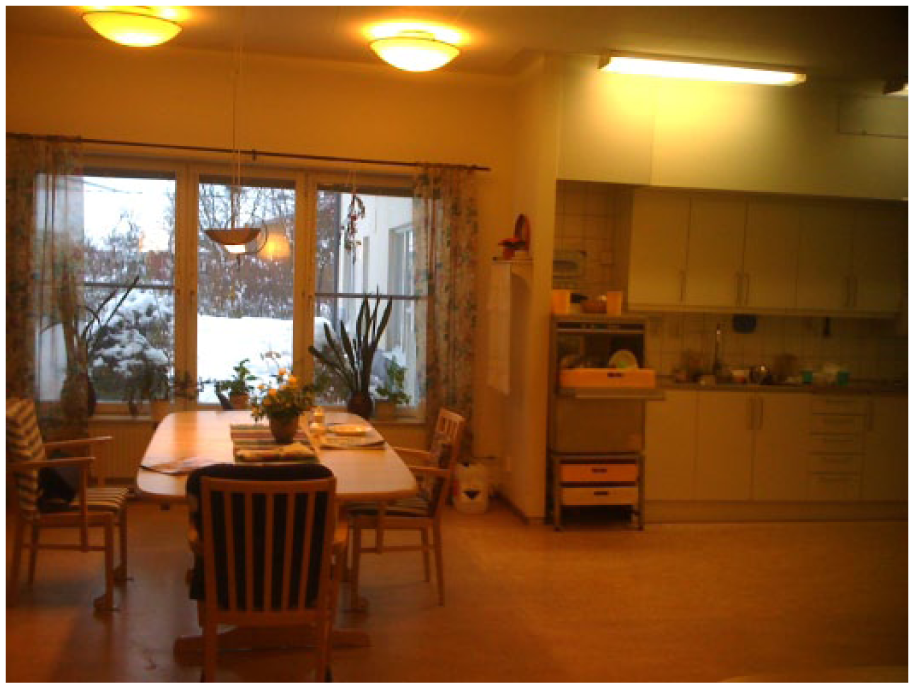
A kitchen.
The second photograph (Photo 2), shows a corridor in one of the other nursing homes. Although this space may be considered a traditionally institutional area, the open doors that are visible gave the area a transparent and inviting impression. When relatives came to visit a resident, it was easy for them to enter the resident’s room. The open approach also made it easy for them to be aware of where the nursing staff was, in case they had questions or needed assistance. The chairs placed in the corridor, as shown in the photo, made it possible for relatives to sit down, rest, and chat with the nursing staff if they wished to do so.

A corridor.
The nextphoto (Photo 3), shows a balcony in the same nursing home. This was a shared place where residents and relatives could be seated and socialize. There was room to sit, and the balcony was decorated with flowers and vegetables that the nursing staff took care of. The photo also shows the closeness to nature, thanks to the location of the nursing home.
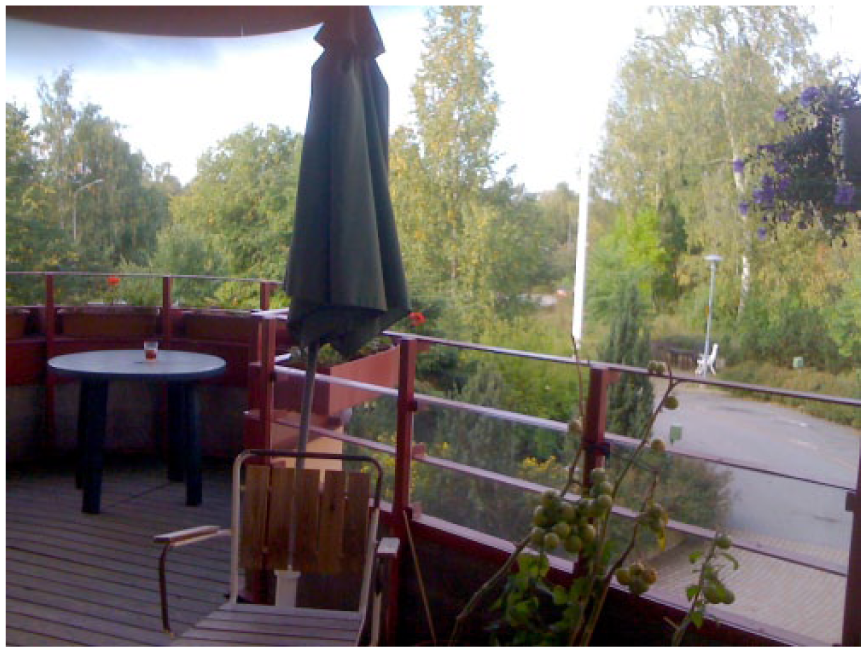
A balcony.
In the nursing homes, there were spaces designated for use primarily by one category of people, such as the nursing staff (laundry and break rooms) or residents (their apartments). The following photographs are examples of these private areas, such as the laundry room and the nursing staff’s coffee room:
The door of the laundry room (Photo 4), as depicted in the photo, was usually open unless the machines were making too much noise. The lamps were always switched on in this room. The relatives could pick up the residents’ clothes or leave dirty laundry, but the room was above all the working areas of the nursing staff. Inside the room, in the baskets and on the bench, there were places for dirty and clean laundry. During participant observation, it was noted that the laundry room was considered by many as an unhealthy and nonsecure area for relatives and residents.
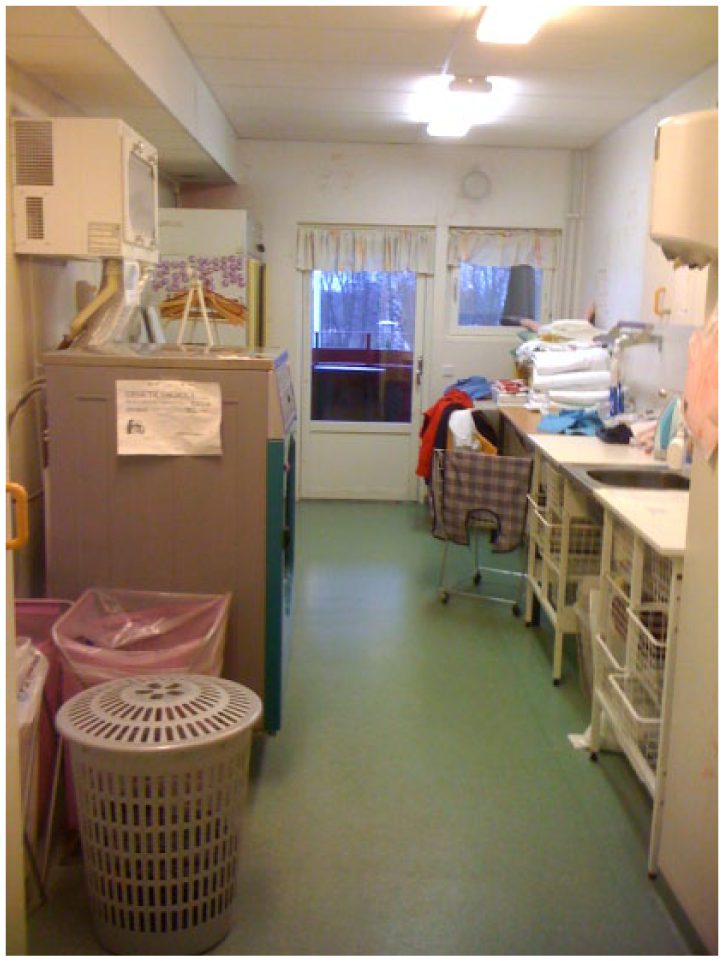
A laundry room.
The next photo (Photo 5), shows the nursing staff’s coffee room. The door to this room was usually closed. This was a place where the nursing staff could rest, read, eat, and relax during their breaks. If a relative sought out someone inside this room, the staff member left the room and talked to the relative in another area. This room was also used for biannual informational meetings with all relatives, held by the head of the unit. It was a spacious room with ample space for everyone to be seated during the meetings, which were well attended.

The nursing staff’s coffee room.
Information Displays
This category focuses on elements in the physical care environment that conveyed specific information. The information displays conveyed varying kinds of messages, some of which are shown in the photos below:
The first three information displays can be seen as part of the physical care environment. They express a welcoming and informative atmosphere. During the Christmas holidays, when the relatives came to one of the nursing homes, the nursing staff displayed handwritten and colorful merry Christmas wishes (Photo 6) on the first floor.

A merry Christmas display.
In another nursing home, the philosophy of care was on display in a green-and-white sign (Photo 7), that said, “Always the best possible encounter.” The content of this message communicated a caring approach that encompassed all practices and activities in the nursing home. This set out how the relatives expected them and their loved ones to be treated.

They philosophy of care.
Anotherphoto shows an information display within a silver frame (Photo 8). The frame was placed on a dinner table in the dining room in another nursing home, and contained information about the planned weekly activities. This signage was intended to invite and encourage both residents and their relatives to be involved. The activities varied and included cooking, baking, reading, and having coffee together. As the schedule and time for each day was posted in a shared space, the relatives could plan to participate when it suited them. Activities were well attended by residents and relatives, and seemed to be appreciated.
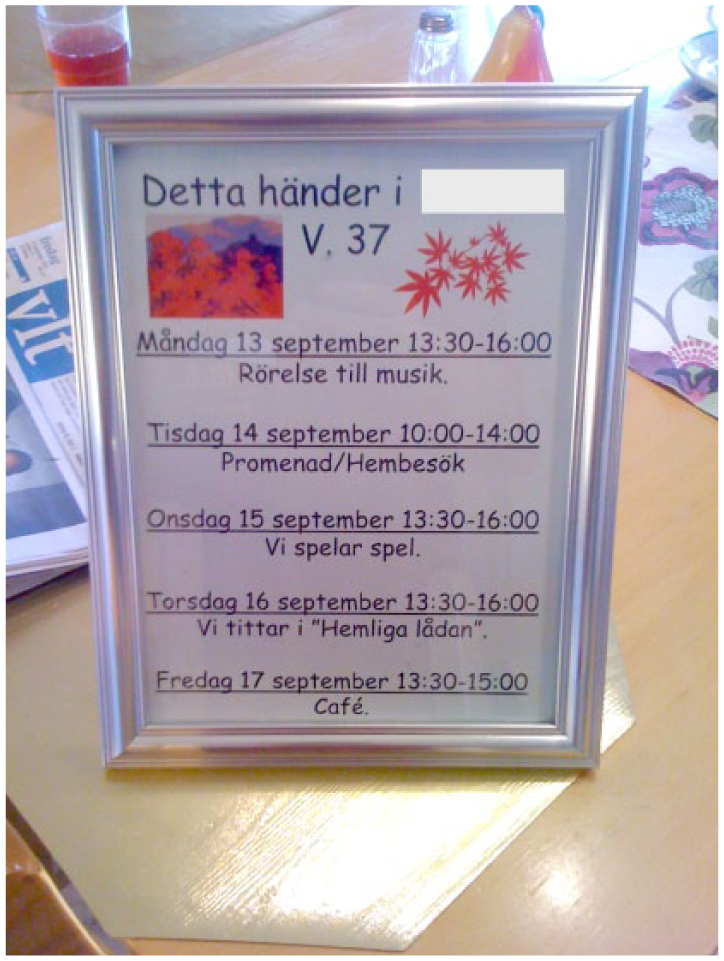
Information about the weekly activities.
Similar to some privileged spaces, certain information displays were intended for only the nursing staff. This information was provided primarily to organize and support the structure of daily care activities in the nursing homes. The folllowing photographs are examples of this kind of professional information display:
Photo 9, represents a matrix of the type of diapers each resident required. This information display was attached to a wall beside a closed, locked diaper storage unit. The matrix contained instructions for the nursing staff so they would use the appropriate material for each resident. In addition to resident-specific care information, the display also included certain professional educational information and knowledge.

A matrix of different types of diapers.
The other photograph (Photo 10), shows a list used by the nursing staff to keep track of the residents’ shower and intimate hygiene schedules, and for logging of the dusting and cleaning of the apartments. A nursing staff member signed this sheet each time an activity was performed. These information displays were not publicly visible, probably because they were considered as professional working routines and contained personal information about individual residents that was not appropriate for dissemination to nonstaff.

A shower and intimate hygiene schedule.
Cultural Symbols
The final category, cultural symbols, is represented by artifacts in the physical care environment that invoke cultural symbols, elicit shared cultural information, or evoke images familiar to most people. Cultural symbols are thus constructed based on what is ascribed to certain environmental items.
Photo 11, is a photo of a tray with coffee crockery provided for the use of relatives. This area is in a corner. The red candle, cans, a lamp, and a colorful cloth were an attempt by the nursing staff to create an inviting and welcoming atmosphere for relatives who were spending time in the nursing home. They were invited for coffee at a small cost. An information display invited them to enjoy a cup of coffee while waiting for a resident or to share a cup of coffee with their older family member.

A tray with coffee crockery.
The next photograph (Photo 12) shows Christmas decorations placed on a white sideboard close to the dayroom and kitchen in the nursing home. This was a way of creating Christmas spirit in general, and more specifically before the annual “porridge evening” arranged for the relatives and the residents. This physical care environment image seemed to be an effort to involve relatives and make them feel their participation in the festivity was welcomed.
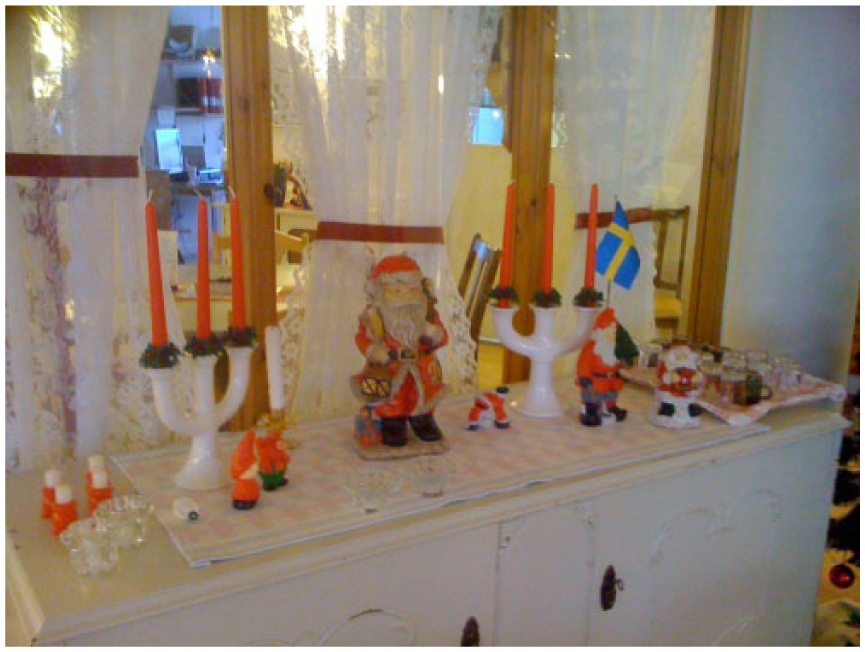
Christmas decorations.
Another way of creating a specific atmosphere is shown in Photo 13, of some furniture in the apartment of a resident. A lamp, some flowers, an oval table, and two padded chairs were some of the personal items this resident and her relatives had brought with her when she moved to the nursing home. Homelike items such as these were intended to make the resident feel “at home,” and contributed to the resident feeling comfortable and safe in the new apartment. The relatives played a significant practical and supportive role in furnishing and decorating their older family member’s apartment, an activity that appeared to be encouraged by the nursing staff.

Some furniture in an apartment.
The last photo, (Photo 14) in this category is of pets that resided in the nursing homes. The blue-green budgerigars in the white cage interacted with the nursing staff while the birds were being fed. The birds depicted in this photo, as well as the other pets such as dogs, were a cultural symbol of a warm and friendly atmosphere. The pets also seemed to be a means of facilitating spontaneous, friendly communication between the nursing staff and relatives.
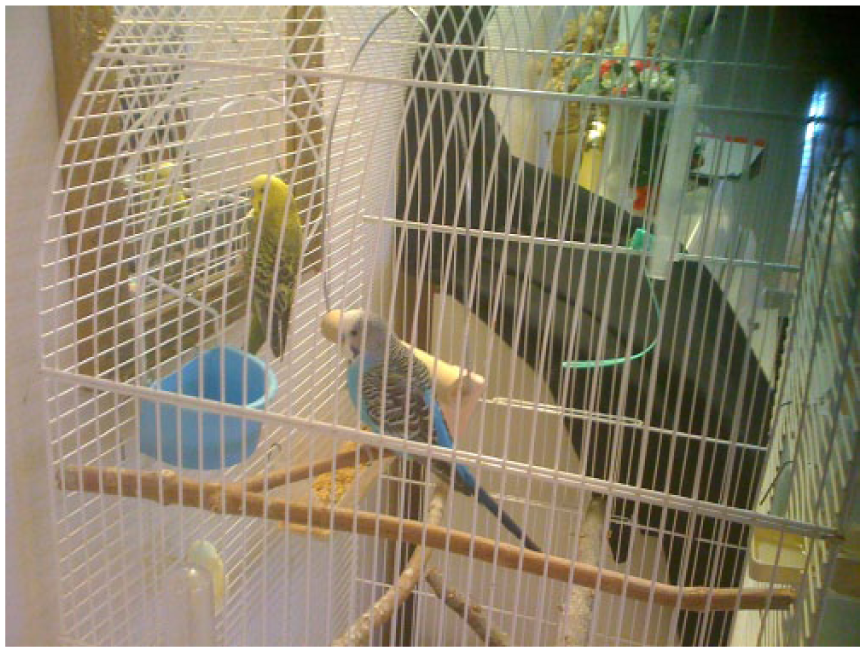
Pets in the nursing homes.
Discussion
In what ways do the photos of the physical care environment and the field notes in this study show how the involvement of relatives is conditioned in nursing homes? It is possible to draw some conclusions about the images accompanied by the field notes in each of the three defined categories, based on the results presented above. Photos of the physical care environment appear to be significant in promoting involvement of relatives. In the design category, this is apparent as designs that encompass open and spacious places, such as the kitchen, hallway, and balcony. In relation to the concept of involvement, defined as interaction (Blennberger & Johansson, 2010) and collaboration (Andershed, 1998), these places promote involvement through their inviting, open, and accessible imagery. This may be interpreted based on a notion of cooperation, which is a central concept of involvement. In this way, the environment supports involvement of relatives.
The second category, information displays, can be seen as facilitating another aspect of the involvement concept—inclusion. Displays that disseminate information can be interpreted as a way the nursing homes signal inclusiveness and serve as an invitation for relatives to become involved in the care of their older family member if they choose to do so. By being informed about activities and the set of values and traditions celebrated in the nursing home, the relatives are continuously updated and invited to take part in the everyday life of their older family members. They also have the power to select the information to which they respond, depending on their circumstances and needs. Gustavsson (2008) points out that these conditions of inclusion are crucial if someone is to experience being involved.
The last category, cultural symbols, reflects another aspect of involvement that aims at constructing more of a feeling. Tideman, Mallander and Gustavsson (2004) state that being connected with others, taking part in social interactions, and being part of a context are valuable aspects of involvement. This is achieved through environmental photos that convey certain cultural symbols. Being invited for coffee or a Christmas festivity, or being useful when decorating the apartment of a resident may foster connectedness, and thus involvement. To gather around a pet and have a chat also reinforces the feeling of connectedness, something that has been demonstrated in studies of other care ecosystems (Nordgren & Engström, 2012; Swall, Ebbeskog, Lundh Hagelin, & Fagerberg, 2014).
Even though the first two categories included spaces that were mainly intended for the nursing staff, there seemed to be security, health, or privacy reasons for that focus. It did not entail absolute exclusion of relatives, in terms of how Gustavsson (2008) defines exclusion. On the contrary, the nursing staff seemed to try to find alternative solutions that involved relatives within those areas. As shown in the results, even though relatives were not included in the private nursing staff areas, the nursing staff members were still available if the relatives wanted to have a chat. The relatives could also leave and pick up laundry without staying in the laundry room. However, based on these data and this reasoning, it is evident that the participation of relatives in nursing homes is built on certain notions of involvement. It is worthwhile considering what other aspects of involvement might currently be excluded in nursing homes. Even though the relatives seem to be involved to a great extent, the notions of involvement I have cited can be considered quite traditional. Being collaborative, included, and connected requires at least two parties to be defined as involvement, as described by Johansson (2010). What has been described in this study can be viewed as being one transmitter (the nursing staff) and one receiver (relatives), forming an essentially one-way communication where the transmitter sets the agenda. What would happen if it were the other way around, with the starting point being the preferences and needs of relatives (of course within the bounds of what is legally and practically possible) and the nursing staff having the goal of involving themselves?
I have seen that there are places designated for the nursing staff, which is in line with what Andersson and Malmqvist (2014) describe, but no specific places for relatives where they may socialize, talk with each other, and recover. It might also be possible to have an open place where the relatives share information with the nursing staff and vice versa, or that relatives could be the conveners of meetings concerning them, taking into consideration the autonomy of their older family members. Andershed and Ternestedt (2001) stress the importance of nursing staff being involved and how this can make a real difference in the involvement of relatives. They highlight that this approach is part of being professional as a nursing staff. With this in mind, a discussion about both the notions of involvement and professionalism may be welcomed if the objective is to further develop and improve the conditions of relatives in nursing home institutions.
Methodological Considerations
“A picture is worth a thousand words” proved true as I reviewed these images. However, I encountered some challenges during the research process that I would like to share. One question is how much a photo can tell as an independent data resource. In this study, the visual record would have been strengthened if it were supplemented by photos of actual social interactions between nursing staff and relatives as well as interviews in conjunction with those situations. The field notes were invaluable in contextualizing the photos, but might have produced more robust and more directly applicable data if interviews were done and notes were taken as an integrated part of the photographic process. It is also important to remember that I as the researcher was the cocreator of the dataset by virtue of my decisions to include or exclude specific visual objects in my analysis. This is of course a source of possible bias and undifferentiated description of the visual physical care environmental photos in the nursing homes. The fact that photos were not been taken of all spaces at different times in the nursing homes may be considered a shortfall, as these photos might have influenced the results both positively and negatively. An option would have been letting some relatives take photographs, reflecting their perspectives on aspects of the physical environment that they felt conditioned their involvement. This option, however, involved ethical and practical barriers that could not be surmounted. To use a smartphone camera seems to me a great opportunity to be mobile and flexible during fieldwork. The quality of the photos was sufficient for my analysis, and using a smartphone rather than bulky and cumbersome conventional photographic equipment helped me not interfere in the daily activities during the documentation phase. To the best of my knowledge, no published study has used visual analysis to understand the involvement of relatives in the nursing area of health care settings. It would be valuable to replicate this study in other settings. The transferability of the results may certainly differ from setting to setting, depending on geographical and organizational circumstances, but in general, the findings of this study should be applicable to similar institutions. To assure the accuracy of the results, I have discussed the credibility with peers and revised the article according to their feedback.
Conclusion
The physical care environment photos and the field notes examined and written down in this study showed that the involvement of relatives is taken into account in nursing home institutions, based on certain specific concepts of involvement. This implies that other concepts of involvement in nursing homes are possible, and that these might encourage other aspects of involvement from the relatives of nursing home residents. Even though there is a great deal of interdisciplinary and nursing research about the impact on care of the immediate living environment, there remains a need for research on the environmental and other factors that condition the involvement of relatives in the care of family members who are nursing home residents.
Footnotes
Acknowledgements
I express my gratitude to the nursing homes included in this study. Without their collaboration and cooperation, it would not have been possible to conduct this study. I also would like to thank professor Henrik Eriksson and associate professor Lars E. Eriksson for critical reading and valuable comments.
Author Contributions
Jessica Holmgren has outlined the study design, conducted the data collection and analysis, and prepared the manuscript.
Declaration of Conflicting Interests
The author(s) declared no potential conflicts of interest with respect to the research, authorship, and/or publication of this article.
Funding
The author(s) disclosed receipt of the following financial support for the research, authorship, and/or publication of this article: My thanks go to AMF Pension, KID-founding, and The Swedish Red Cross University College for financing this study.