




Abstract
The Telecommunications Services of Trinidad and Tobago Limited (TSTT) has demonstrated its approach to modernization via integration of technological systems with international telecommunications providers. With the recognition of TSTT’s need to develop an international telecommunication system capable of 95% nation coverage with rich broadband content, Chinese company Huawei leapfrogged into Trinidad and Tobago’s developing market. Huawei achieved what Western providers did not and gained strategic partnership with TSTT in a short period of time, given the government-to-government support for trade, TSTT’s telecommunication demand, and Huawei’s growth plans. Despite the functional advantages derived from Huawei, the partnership was not without risk given the speed and liability of newness of greenfield investments. If the TSTT and Huawei partnership is to be sustainable, we must model the relationship and then identify weaknesses in a bid to remove them. Huawei’s approach to investment in the Latin American and Caribbean region is grounded in the model presented in this article, which follows: the creation of a leapfrog environment, an internationalization strategy, and risk management. The needs of a technology-deprived partner changes as they meet industry standards and investing firms must seek to understand and anticipate future needs or risk competition from an innovative supplier.
Introduction
Facing complicated network deployment scenarios caused by the country’s unique mountainous and insular condition, the Telecommunications Services of Trinidad and Tobago Limited (TSTT) chose Huawei to deploy its industry-leading end-to-end Worldwide Interoperability for Microwave Access (WiMAX) network solution to enable Internet connectivity to the far flung areas of the country (Madhuri, Divya, Sravani, & Raju, 2014). Disparity among areas in Trinidad and Tobago stemmed from technology and infrastructural limitations, which saw urban areas serviced to a greater extent than rural areas. In this article, the authors will highlight those limitations and demonstrate the steps taken to overcome said drawbacks. Huawei’s leapfrogging strategies has enabled the company to build trust over a short period of time, earning the company the ability to influence the growth of the telecommunication sector within Trinidad and Tobago. With its understanding of antiquated systems and industry change requirements, Huawei was able to bridge integration gaps allowing TSTT to enjoy international standards in regard to systems and technology advances. J. D. Palmer, in Handbook of Systems Engineering and Management, defines the concept of system integration as “Melding existing systems and new technologies to form more capable systems that are intended to take on additional tasks, exhibit improved performance, and/or enhance existing systems” (p. 535). The TSTT used this technique as a vehicle of change to realize its objectives. The following extract was adapted from TSTTs’ website on corporate history:
Telecommunications Services of Trinidad and Tobago Limited is jointly owned by National Enterprises Limited (NEL) which in turn is majority owned by the Government of Trinidad and Tobago, and Cable & Wireless (West Indies) Limited (C&W). NEL owns 51% of TSTT’s issued share capital, while C&W holds 49%. TSTT is the country’s largest provider of communications solutions to the residential and commercial markets and its leading edge products are designed around its IP-based core infrastructure and marketed under its BLINK and Bmobile brands. In addition to fixed line and mobile communications, the company has an innovative line of BlackBerry; Android-based devices and the iPhone; Broadband access including best-in-class Wi-Max and HSPA+ 4G technologies; Metro Ethernet; Telepresence and Video Conferencing. TSTT an industry leader deploying both wireless and fiber optic networks to deliver voice, data and multimedia capabilities making it also one of the most advanced solutions provider in the country.
Talent and skill is localized; therefore, to effect large-scale technological change, the company displays a history of outsourcing via the tendering process. As a result, the company today can boast of technology change and knowledge transfers influenced by United States’s Continental Telephones in 1968 and Japan’s Nippon Electric in 1979, for example. 1 This approach toward development is present even today as TSTT continually seek providers in their bid to stay competitive within the Trinidad and Tobago market. The new challenge, to implement a 4G network with 95% national coverage, has seen Chinese telecommunication giant Huawei as the forerunner. Given Huawei’s track record, the company has been able to build trust and today enjoys strategic partnership with TSTT. This article explores some of the challenges faced by TSTT in its bid to upgrade to a 4G network. To do this, the article attempts to investigate TSTT before Huawei; here, an understanding of the technological infrastructure is examined. Thereafter, the article will provide support as to the factors that lead to the introduction of Huawei as a technology provider. Finally, given the differences in technology platforms, working ethics, and culture, the article concludes by attempting to capture the justification of forming a strategic alliance while presenting a sustainable model for Huawei’s growth.
Disruptive Innovators
The history of internationalization demonstrates that firms typically adopt the OLI, RBV, or the Uppsala model, which for a long time dominated the literature and industry practice (Berning & Holtbrügge, 2012). With today’s firms, we are seeing a vast contrast to the typical model of entering foreign markets. Chinese firms have found a way to internationalize and compete with long-standing brands in shorter periods of time. This concept is referred to as leapfrogging; you may wonder if this has anything to do with the amount of frog legs consumed in Chinese cuisine; well, research does not prove that but looks at the high degree of risk tolerance and learning strategies practiced by Chinese firms. “Leading breakthroughs requires an agile mindset that appreciates ambiguity. Disruptive innovators know that uncertainty contains as much opportunity as it does risk” (Kaplan & Ebrary, 2012, p. 54). Learning and commitment in the first instance is done by establishing sales offices within the target market as that done in Trinidad and Tobago. Such offices are used to build relationships over time as employees seek to understand their competitive landscape (Rosales & Kuwayama, 2012). In the case of Huawei–TSTT relationship, Huawei on-boarded ex-TSTT employees to build trust among their stakeholders, assist in negotiations, and to further understand the technology needs of their client. Huawei demonstrated their intent to trade given a local presence even before securing significant business opportunity, which is unlike western providers who were accustomed to trading with Trinidad and Tobago and did not have a local presence. This initiative proved successful as Huawei moved from being a technology provider in 2006 to a strategic partner by 2012. Huawei understands that the success of its brand within the Latin American and Caribbean region rests upon its ability to deliver high performance reliable technology. To do this, Huawei, whose equipment is of industry standard, must integrate infrastructure platforms in a bid to upgrade TSTT to realize a 4G network (Intel Labs, 2010). As at August 2014, TSTT operated a 3G network, with upgrades done by, guess who, Huawei. The Head of Network Office Centre (NOC), TSTT stated, “Huawei was able to enter the industry because of its ability to satisfy industry requirements and its commitment to the development of Trinidad and Tobago telecommunication services by having a local presence.” It is strategies like this that allow Huawei to leapfrog and form alliances and partnerships much quicker than competing firms within the Latin American and Caribbean regions (Bernal, 2014).
Comparative Analysis of Networks
Telecommunication technology in Trinidad and Tobago has transitioned over the last 47 years given global evolution, competition, and changing consumer requirements. Change in generation (G) standards typically affect features like speed, interoperability, reliability, security, and cost, for example, allowing the transition from analog landlines to Internet protocol (IP) based WiMAX and LTE as is used in today’s market. Table 1 highlights the differences among the four network technologies used by TSTT. Globally, standardization of telecommunication is governed by International Telecommunication Union through expert recommendations that are intended to be all-encompassing. 2 Local enforcement is conducted by the Telecommunications Authority of Trinidad and Tobago (TATT), which ensures providers abide by contemporary standards and quality of service. 3 Among other internal TSTT justification for technological improvements, TATT regulates the industry and sets operating ideals for the growth of the industry. So, for example, TATT sets targets issuing spectrum plans to telecommunication providers to achieve within an agreed time frame, Figure 1 displays the 2008 spectrum plan for broadband wireless access for a 3.5 GHz band, which coincides with the stage of telecommunication development and desired infrastructural goals. In 2008, TSTT would have been developing their 3G network while layering the foundation for their future 4G network to adhere to TATT operating standards.
In the interest of furthering the deployment of telecommunications infrastructure in particular broadband Internet access, and to maximize the coverage of and access to services the Authority and each existing spectrum user shall meet with the Authority to finalize a network rollout plan to achieve coverage of 85% of the populated area of Trinidad and Tobago in three (3) years.
Summary of TSTT’s Telecommunication Growth: Comparison of 1G, 2G, 3G, and 4G Networks Over the Evolution of TSTT.
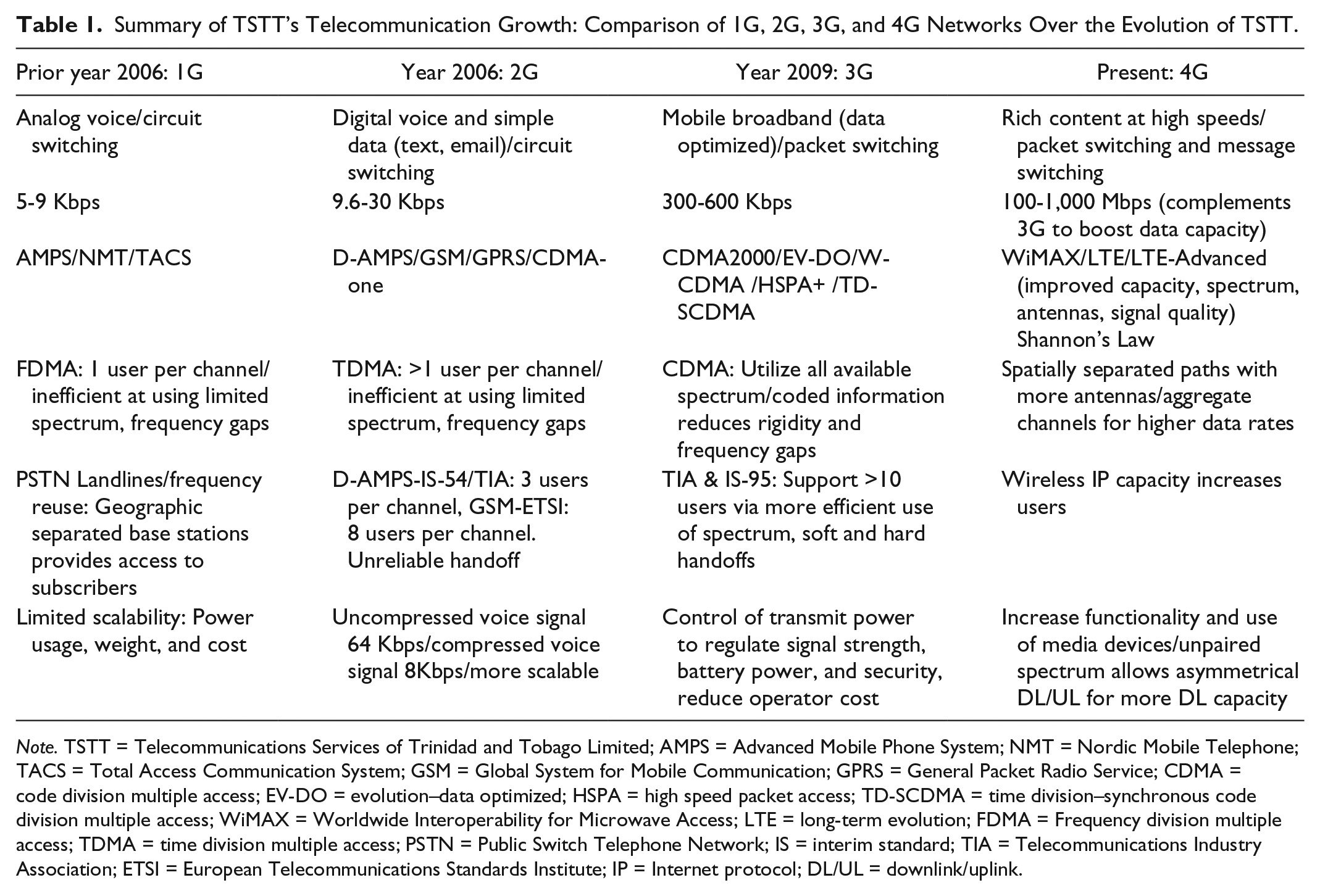
Note. TSTT = Telecommunications Services of Trinidad and Tobago Limited; AMPS = Advanced Mobile Phone System; NMT = Nordic Mobile Telephone; TACS = Total Access Communication System; GSM = Global System for Mobile Communication; GPRS = General Packet Radio Service; CDMA = code division multiple access; EV-DO = evolution–data optimized; HSPA = high speed packet access; TD-SCDMA = time division–synchronous code division multiple access; WiMAX = Worldwide Interoperability for Microwave Access; LTE = long-term evolution; FDMA = Frequency division multiple access; TDMA = time division multiple access; PSTN = Public Switch Telephone Network; IS = interim standard; TIA = Telecommunications Industry Association; ETSI = European Telecommunications Standards Institute; IP = Internet protocol; DL/UL = downlink/uplink.

Frequency assignment plan for radio communication systems in the 3.5 GHz band.
Method
Primary information was obtained in 2014 via high-level interviews with TSTT’s management in the area of system integration and customer service to ascertain the issues derived given cooperation between the companies. Secondary information was captured from online resources as well as documentation on both company affairs shared with the authors toward development of this article. All information was analyzed and compared with ideas found in contemporary research in the fields of internationalization, telecommunication technology, and strategies toward business continuity. In so doing, the objective is to recognize opportunities by the identification and development of models to improve the Sino-Caribbean cooperation. Supporting documentation for analysis was captured from reports developed by a state agency, Telecommunications Authority of Trinidad and Tobago, which monitors and regulates the operations of TSTT and Digicel.
New Market, New Competition
Telecommunications and Broadcasting sectors generated TT$5.63 billion in 2014, mobile voice services accounted for the majority of revenues with TT$2.20 billion (39.2%), followed by Internet services, which contributed TT$1.18 billion or 21.1%. Let us take a step back before data and video were trafficked—a time when TSTT’s prime concern was providing availability to copper wire landlines relayed by earthed poles, ideally creating a voice circuit local loop administered by TSTT’s PSTN (Public Switch Telephone Network). Given the size of the island, government stakeholder involvement, and desire to enlarge the local loop, it made strategic sense to share cost with another public sector entity, Trinidad and Tobago Electrical Commission (T&TEC), whose focus was concerned with the spread of earthed poles for the retail of electricity. This meant that access to TSTTs’ landlines was predetermined by T&TEC’s infrastructural availability, which gravitated in urban profitable areas and slowly as the country developed moved to more rural areas. Unlike the urban clustered areas, rural area users were few and far apart making it difficult for TSTT to access. This market would best be served by the future mobile communication technology company known today as Bmobile. Bmobile is a separate legal identity of TSTT that began with the adoption of 2G technology. Incorporated in 2004, TATT desired a telecommunication market that was not monopolized, where contemporary technology would be implemented for the development of the country’s industry. 4 This created a competitive market and a race to capture mobile market share. Digicel’s ability to enter the market and make fast strategic decisions paid off. Their network strategy was to increase the range of connectivity with a focus on rural areas to the enlightenment of subscribers. Providers sought to increase their number of base stations to intensify their coverage area. Given the difference in approach and type of organization, in 2015, Digicel’s coverage area 5 was 93% 3G reliable and 63% 2G reliable, while Bmobile for the same period lagged with 84% 3G reliability and 60% 2G reliability. 6 For this to happen, Bmobile had to overcome challenges to keep up with Digicel: division from T&TEC infrastructure in some areas and application to Town and Country Planning for the construction of cellular towers, 7 outsource telecommunication providers with the expertise to deploy a 2G network, financing, and upgrade of skill set for operations, which created market entry for Huawei. The introduction of Bmobile technology improvement projects were on a phased basis and targeted the most critical areas, areas of high demand. From the introduction of Huawei to 2015, technology standards continually changed and TATT continually demanded upkeep of those standards as depicted in Figure 2. This resulted in differences in technology deployment across the country. Some areas were 2G, 2.5G, 3G, and later on 4G. Issues among the different technologies existed as identified in Table 1: spectrum differences, frequency gaps, rigidity of handoff that many times resulted in drop calls, and variation in data speed for smart technology devices, for example. To manage competition, Huawei and Bmobile developed a strategic partnership as there continued to be a need for increased technology. 8
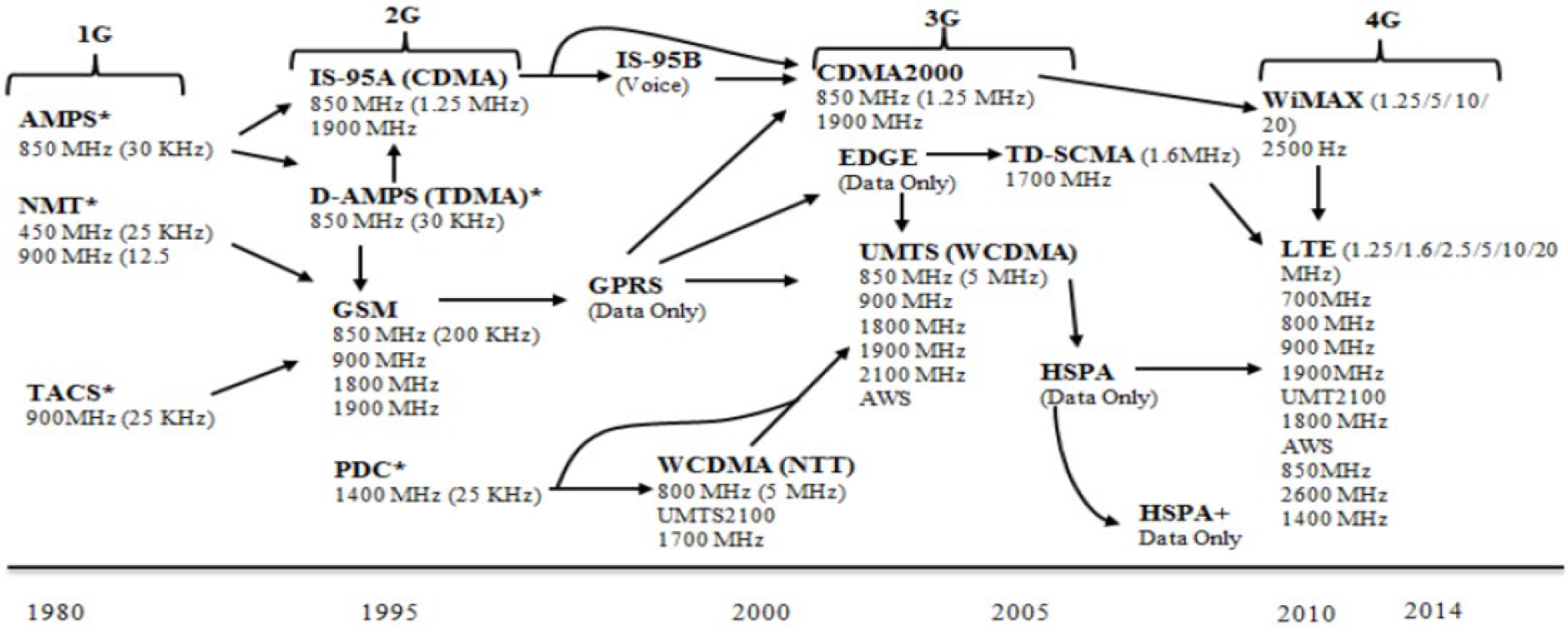
Telecommunication evolution depicting required frequencies and bandwidth.
Changing the Rules; Claiming Land Space
The objective of Chinese firms is to gain global sustainable market share and advantage in a short time (Rui & Yip, 2008). A fact that is promoted by the Chinese government, outward investment increases economic freedom and Chinese firms identify markets guided by political, cultural, and complex aspects (Quer, Claver, & Rienda, 2012) with large private and government supported budgets (Buckley, Clegg, Cross, Liu, & Voss, 2007). With diplomatic relations since 1974, Trinidad and Tobago was an obvious choice for Huawei as the government agreed on deeper cooperation in telecommunication among others. 9 Huawei’s leapfrogging strategies has effectively changed the way businesses compete within the Caribbean and Latin American region as noted by TSTT’s CTO. Prior to the “Asian Invasion” as it is termed in the Western world, American and European telecommunications companies dominated the technology equipment provider landscape. These organizations operated by unwritten rules that typically did not facilitate development in the absence of client purchasing power. This among other reasons has seen the decline of Western telecommunication companies operating in Latin American and Caribbean region. Today, we see Chinese companies doing the inverse, by providing financial support for desirous buyers with repayment terms that are highly favorable. As a result, Latin American and Caribbean–Sino relationship is the obvious outcome (Rosales & Kuwayama, 2012). “Leapfrogging involves putting a flexible stake in the ground around a specific opportunity, and then taking a series of actions to intentionally challenge assumptions and rapidly change direction as many times as necessary” (Kaplan & Ebrary, 2012, p. 110). Huawei therefore would bid for TSTT tenders at competitively low prices with increased product offering and services that could not be ignored by TSTT given their developmental goals. With that in mind, the new business model of Chinese firms within the Latin American and Caribbean region begins with government-to-government trade agreements, which create the environment for China and partnered country to thrive. This is done by creating avenues for financial and technical support within the region. Table 2 seeks to illustrate outward foreign direct investment (OFDI) approaches and its intent in the Latin American and Caribbean region:
Dimensions of the Leap Frog Business Model Within Latin America and the Caribbean.
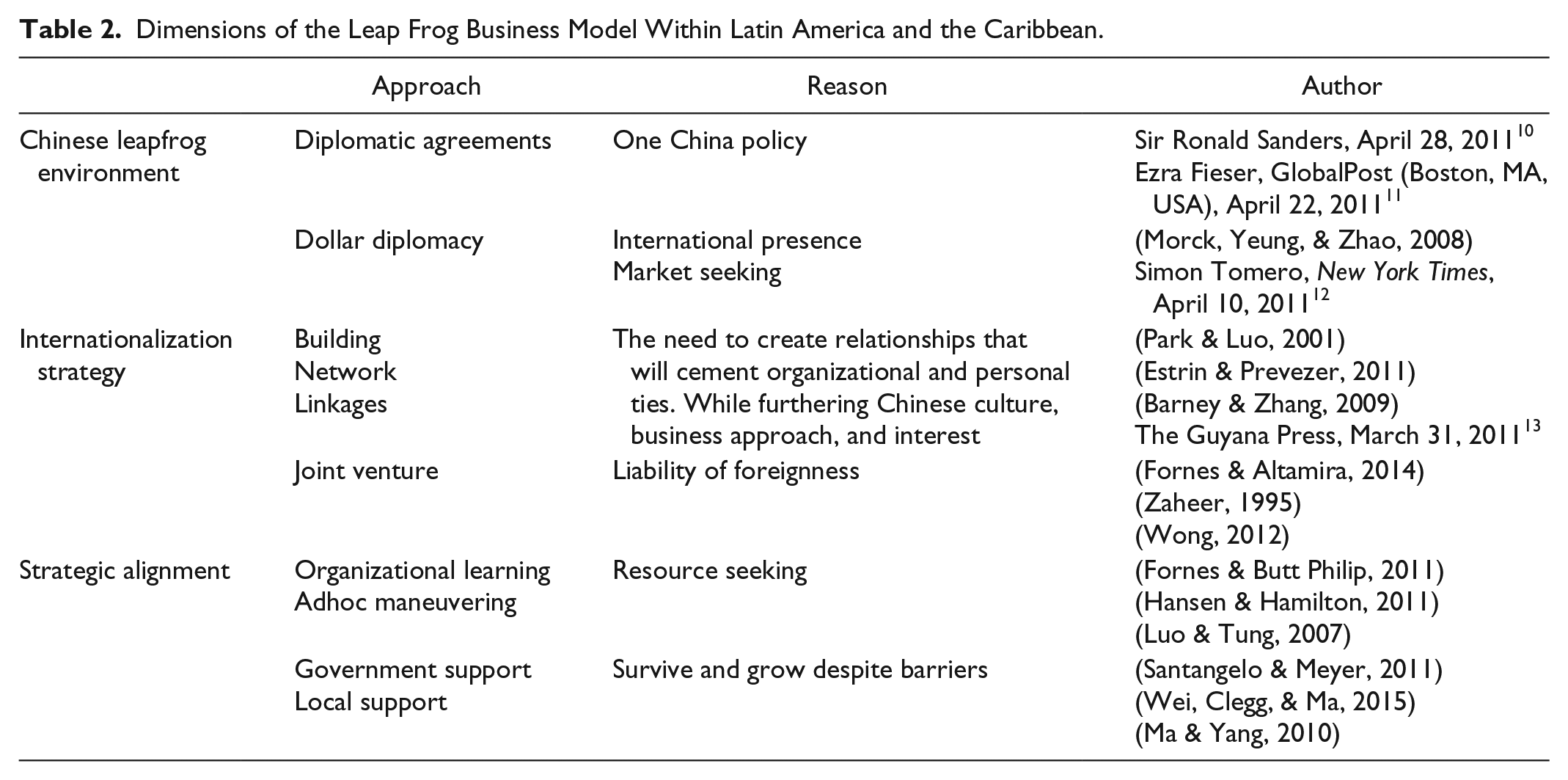
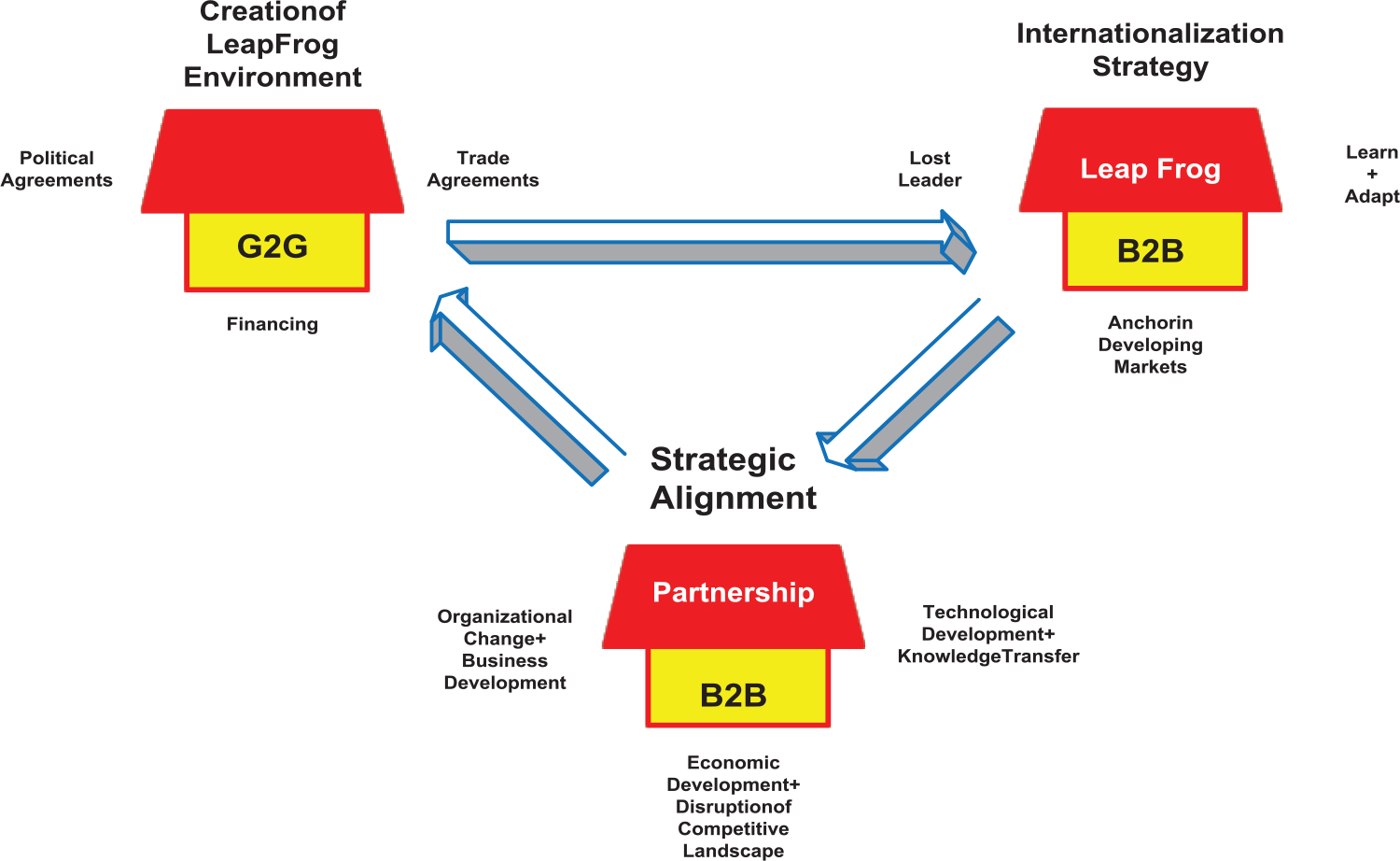
This further allows lesser developed countries the opportunity to invest into infrastructural development projects, projects that would have not been a reality without government-to-government support and large-scale financing. Projects, which to be more specific are facilitated by the relationship of Asian companies like Huawei, would, given a competitive tender bid round, use a lost leader adaptable approach to win contracts, a Dollar Diplomacy tactic. In this case, adaptability refers to the ability to meet the business and technological requirements of a tender bid round where negotiation flexibility is weighted with high importance to secure market share. This said approach is used to continually tighten business-to-business (B2B) relationships and subsequently after-sales support and services becomes highly profitable for Asian firms whose business model is claiming the regional landscape: A view supported by TSTT’s CTO who contends that Huawei–TSTT cooperation will only increase in the future as the companies align. He went on to say that Huawei Latin America and the Caribbean host an annual stakeholder forum that brings to light customer issues with the products and services offered by Huawei within the region. At this said meeting, a top 10-point regional issue list is drawn up as Huawei intends to demonstrate its commitment and ability to satisfy its client’s needs by resolving issues, a process that is iterative and ongoing. Figure 3 exhibits the business model of Sino–Latin America and Caribbean relationships as it pertains to Huawei TSTT cooperation. Step 1: The creation of the Leapfrog Environment predates firms’ interest as it is initiated by government’s intent of economic cooperation. This initiative guided by One China Policy saw a change in diplomatic recognition from Taiwan to China in 2004, for example. Once established, favorable policies are enacted to facilitate firms to collaborate, for example, removal of taxes on imported technology from China and invitation to markets, as can be seen with a 70% OFDI interest in British Virgin Islands (BVI) over the last 5 years, a continued trend for China in the region (see Appendix Figure A1). Chinese firms that are supported by their government and which provide financing for Trinidad and Tobago companies via loans, secure tenders with offers too good to be ignored as expressed by the CTO. This then allows a Chinese company, in this case Huawei, to anchor in a local environment to learn about the market and grow. Growth at this point is concerned with becoming the preferred supplier in a region. In the Caribbean region, Trinidad and Tobago has the largest 2014 GDP, US$28.9 billion, 14 therefore making it ideal to establish local offices to grow outward.
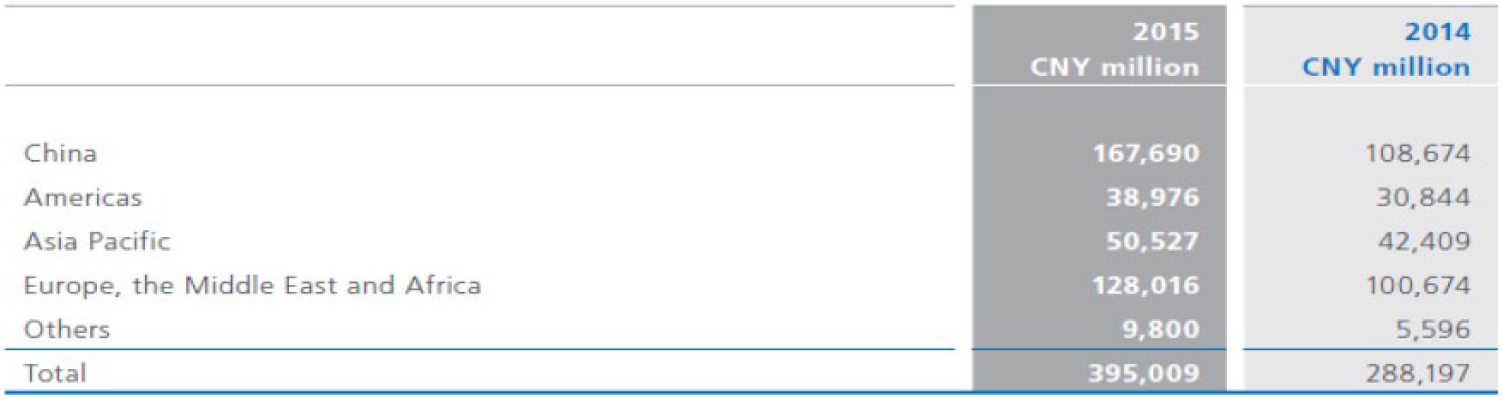
Illustration of the typical leapfrog business model within Latin America and the Caribbean.
Huawei and Internationalization
Extracted from Huawei 2015 Annual Report:
Huawei is a leading global information and communications technology (ICT) solutions provider. Driven by responsible operations, ongoing innovation, and open collaboration . . . ICT solutions, products, and services are used in more than 170 countries and regions. Users are demanding the ultimate experience of ROADS (i.e., Real-time, On-demand, All-online, DIY and Social). Risk factors have been identified in Huawei’s strategic plans, business models, external environment, and financial system.
15
Figure 4 attempts to illustrate Huawei’s global presence to date. Established in 1999, Huawei has over 11 offices in the Latin America and Caribbean region that is grouped in the Americas and, although it represents one of the smallest share of the revenue earning for Huawei at 38,976 million yuan in 2015, it is identified as one of the most important future markets (von Zedtwitz, 2008) for Huawei’s international growth.
Huawei revenue earning per geographic region.
Huawei’s approach based on the Art of War: “We should adjust our strategies and tactics to match different conditions and competitors” (Yong & Lanjian, 2013, p. 72). Huawei’s pattern of surrounding the cities from the countryside offers a successful technology-oriented strategy for Chinese firms going global (Kittilaksanawong, Chen, & Xie, 2014). The less developed areas of the Americas are therefore target markets to build operational strength to then launch into more developed markets in North America. Given the liability of newness and speed at which firms like Huawei utilize, adopting greenfield projects, refer to Table 3 (in the case of Trinidad and Tobago) in less developed geographic spaces and learning by doing, the traditional models of investment are not well suited (Deng, 2013). Hubbard (2013) notes that the most important entry strategy of contemporary companies is speed. Therefore, where speed and risk are high, given the creation of new knowledge creating an adaptive organization, the Leap Frog concept (Kaplan & Ebrary, 2012; Lyles, Li, & Yan, 2014) captures this essence. The question now remains, “How do we mitigate risk given the strategic involvement of TSTT and Huawei?” The following section seeks to identify the critical factors in this regard via the use of the leapfrog model for sustainable growth in developing regions.
Illustration of the characteristics of varying entry models.

Source. Adapted from Johnson, Scholes, and Whittington (2008).
Shenkar (2009) notes,
The real issue is whether these firms are ready to meet the challenge and if leapfrogging the incremental approach to international expansion is wise. From the perspective of Chinese manufacturers, a strategic reason for going abroad is to climb the ladder from Original Equipment Manufacturers to Original Design Manufacturers and eventually Original Brand Manufacturers. This will presumably permit them to increase the razor-thin margins of OEMs and capture the fatter margins available at the upper part of the ladder. (p. 156)
Growth and Business Model
In 2006, TSTT core telecommunication infrastructure operated on an Asynchronous Transfer Mode (ATM). It was designed for a network that handled both traditional high-throughput data traffic and real-time, low-latency content such as voice and video. This infrastructure was an upgrade from landlines and had to have features to allow future scalability. ATM provides functionality that is similar to both circuit switching and packet switching networks a feature of the reference model for ATM that transfer frames (53 octets or bytes) length composed of data cells to reduce jitter and queuing delays. 16 Separate layers were provided by the once giant American telecommunication provider Nortel. TSTT sought to streamline their operations and did what many other telecommunications companies were doing as it soon became industry standard to adopt an IP based platform. Multiprotocol Label Switching (MPLS) was deployed by Huawei and marked the beginning of the TSTT Huawei relationship. This platform can work with both IP networks and non-IP networks therefore acting as the foundation for different topologies and services. With Time Division Multiple Access (TDMA), time is divided into slots and only one mobile terminal transmits during each slot, while Code Division Multiple Access (CDMA) employs the use of orthogonal codes to separate different transmissions, allowing multiple users of different codes at the same time. The number of users per channel was a feature of the greater use of spectrum via compression of digital voice into smaller packets with a range of 30 kHz or three users on the lesser TDMA end to 200 kHz or eight users on the Global System for Mobile Communication (GSM) end. Despite this advantage, as switching occurred, the channels were prone to hard handoffs and large frequency gaps to reduce interference. CDMA-1, however, due to unique coding and use of downtime channels facilitated a more secured network and ability to create add-on services and topologies “We are extremely pleased to have the benefit of Huawei’s global expertise for this deployment which will significantly enhance the competitive position of locally based businesses” said Trevor Deane, the then TSTT’s vice president of technology. The upgrade of TSTT’s core allowed all services to be channeled into one core, which affected the structure and operations of the company. TSTT was able to improve their performance and the quality of service to customer’s delight. TSTT manager, customer service center, stated, “customer queries moved from being just about complaints to being about request for information toward use of additional products and services.” The deployed network saw a change and an increase in the network sites, which facilitated a wider market within Trinidad and Tobago. This technology facilitated a mobile revolution within the country, driven by customer need for greater browsing speeds. On the heels of competition, TSTT network progressed from 2G to 3G as the MPLS infrastructural options were explored (GPRS, EDGE, CDMA2000). Operations, for example, opportunistic scheduling, adaptive modulation, data optimization, and carrier aggregation increase network reliability and brand reputation. Demand in the midst of competition from Digicel pushed TSTT to explore further telecommunication upgrades as TATT insisted on improved quality of service by network providers as planning had to consider next stage technology. Still, TSTT’s network was, to that date, geographically and technologically segmented. The new objective is to deploy a nationwide 4G network, the first of its kind within the Caribbean region due to the increased desire to use rich content. For the period 2010 to 2014, mobile Internet penetration grew 3 times from 10.5% to 43% as an indication of the new Internet habits of subscribers, Figure 5. Given that Huawei deployed the MPLS network in 2006 for TSTT, its intimate knowledge of the internal working of the company at the technological and business frontiers will continue to act in Huawei’s success in Trinidad and Tobago. TSTT CEO (Ag.), George Hill, explained that the launch of the new 4G wireless service is part of a 5-year Internet Plan for Trinidad and Tobago to improve the existing broadband coverage to 95% of Trinidad and Tobago. Long-Term Evolution (LTE) 4G wireless service is designed to deliver very high speeds and will deliver speeds up to 10 Mbps. The CTO TSTT explained that, currently, if a customer is traveling from one location to the next, that customer is in fact utilizing a number of different network sites. Some sites may have 2G connectivity while others may have 3G connectivity; the outcome is dropped calls and browsing delays as switching occurs, Figure 6. He admitted that this issue has reduced but contends that the upgrade to the 4G network will seek to standardize TSTT entire network and allow customers to use handheld devices without interruption.

Penetration rate of subscription 2010 to 2014.

Switching among base stations/interoperability concerns.
Until TSTT 4G LTE network is implemented, the technical test will be to manage interoperability among networks, given differences in transfer rates, release and deployment, mobility, coverage, power efficiency, quality of service, and security (Singal, 2013; Suk & Kai, 2003). National Telecommunications and Information Administration (NTIA), Institute for Telecommunication Sciences, in this case, refers to interoperability as “the ability of systems, units, or forces to provide services to and accept services from other systems, units, or forces and to use the services for exchanged to enable them to operate effectively together.”
Challenges and TSTT Strategy
Notwithstanding the achievements brought about by the partnership of TSTT and Huawei, the management of TSTT also identified challenges, see Table 4 for further. With respect to the technological integration, although Huawei systems met industry requirement, it lacked services needed to assist TSTT to effectively manage its customer base. In addition, due to their low cost approach, equipment fixtures that lacked durability can fail, negatively affecting quality and performance. Given that competition within the telecommunication capital-intensive industry is based on operational performance, for success TSTT required an interface that measured their customer experience using said technology. Customer experience is the internal and subjective response customers have to any direct or indirect contact with a company (Meyer & Schwager, 2007). There was an omission of built on services given Huawei’s limited experience and lack of understanding within the market, arguably a feature of Chinese companies that leapfrog. In such instances, feedback and swift decision making among stakeholders allow quick response to operational demands but Huawei Trinidad and Tobago is not designed in a way to facilitate this act smoothly. For example, if a query is logged with Huawei Trinidad and Tobago, the authority there will escalate the issue to a larger authority in Mexico who can even forward the issue to China and the feedback is communicated in the inverse toward a solution. Bear in mind the time difference that results in adjustments in working practices at TSTT, a company attuned to trading with the Western world. Shenkar (2009) attests to this fact and argues that the sheltered and constrained approach Chinese companies faced limits the development of competitive skills and slow adaptation to local environments. Given this, although the technology is of industry standard, in many ways, there are operational functionalities specific to Huawei for which documentation is limited due to language differences. In the event of technical support for said equipment, the company will source the skills from Huawei engineers not based in Trinidad and Tobago. This process, as explained by the CTO TSTT, has demonstrated itself to be bureaucratic, effectively creating poorly responsive organizations. Therefore, a heads of department meeting within Trinidad and Tobago TSTT’s management can make binding decisions while Huawei Trinidad and Tobago have proven not to but instead escalate issues, for example. TSTT Manager, NOC, said, “Imagine a situation of trying to resolve an issue with a Chinese employee based in Mexico speaking English with a Spanish accent.” Trinidad and Tobago, by and large, is an English-speaking nation with a multiethnic culture known to the Western ways of trade and business. Work ethic and cultural and communication differences have resulted in misinterpretation and misunderstanding that affect negotiations, contract management, and service support. Such adverse effects of Huawei business model, which is responsive to sale but not as responsive to after sale, seems to be the norm within the Latin American and Caribbean region as identified by Huawei’s customers at their annual stakeholder forum. On Huawei’s websites, it identifies three major product groupings areas: operator, enterprise, and consumers. Given that the mobile phone industry has reach maturity in China today, Huawei is keen on growth for their solutions, particularly smart phones outside of China. The Huawei smart phone costs less than, for example, an Apple smart phone but has comparable features. The accelerated growth of Huawei product offering, due to benefits of leapfrogging and executed business model, can pose and is posing issues for the management and support of customers after sale. This trait is no stranger to companies that grow rapidly but in this case the competitive landscape is changing in a way that only the strongest companies who are able to withstand Chinese companies’ lost leader tactics can survive. The United States have demonstrated their disapproval with said tactics but Huawei has targeted developing markets that have less restrictions to trade and mutual development goals. “We’ve been trained to resist the very thing that’s needed to leapfrog to the next level. We need to learn to live with even embrace what most of us view as the enemy” (Kaplan & Ebrary, 2012). This is unlike TSTT’s feat that thus far has been able to effectively manage their Huawei cooperation given the system integration strategy adopted in a bid to evolve. TSTT strategy moved from component base, where a compliant provider would build to specification given limited functional integration prospects, to the present where TSTT strategy follows a system integrated approach where validation is gained given full functional integration based on derived requirements unearthed by shared appreciation for goals. Figure 7 attempts to illustrate this strategy. With access to technology, given the Huawei TSTT partnership, TSTT has increased their competitive edge with the regional player Digicel. A sample study over varying areas of the country by TATT on “Radio frequency and radiation test results,” 17 in 2010, demonstrated that Digicel’s 89 base stations surpassed TSTT’s 59. TSTT’s ability to supply a modern service resulted in their capacity to retain subscribers and increase their number of base stations. Given TATT restrictions on the number of base stations per community, TSTT was able to gain enough support given their growth with the mobile market leader for shared base stations. This meant that wherever Digicel was present so too will Bmobile be present with comparable quality of service. It follows that standardization of technology, 4G LTE across base stations given pole availability, is the current concern to remove the drawbacks of having different generations in disperse geographic areas. The Huawei–TSTT partnership in the authors’ view was mutually beneficial given the infrastructural and technology advantages desired by TSTT to compete with Digicel while meeting market demand. In addition, Huawei benefited due to their desire to enter and grow in foreign markets, satisfying both national and company goals. As the infrastructural needs of TSTT dissipates, Huawei needs to diversify its product and service offering. Continued learning of Trinidad and Tobago’s market allows the introduction of smart phones and business solutions, for example, as the company attempts to diversify its product offering. Notably, Huawei’s annual forum goes a long way in improving operational performance of companies and strengthens relationships but the drawbacks that need to be adjusted are larger than the forum and may not be even identified as an issue for Chinese companies that leapfrog given that they are predominantly nonfunctional risk. The issue has to do with the business ethic and culture that seem to clash with non-Chinese firms and region’s business approach. Where Chinese approaches to business follows: Long courting processes that are hierarchical and collective (Graham & Lam, 2003). Yes, non-Chinese firms and developing regions must adapt to learn how to cooperate effectively with Chinese suppliers but that issue is beyond this article. As a result, it is the recommendation of the authors that, to increase the longevity of the leapfrog business model, Chinese firms ought to implement risk management (Kelly, 2009) techniques given the Western influence the Caribbean region is accustomed to, such as improved after-sales service with flexible pricing as exhibited in the early stages of the leapfrog model discussed above. Hillson and Murray-Webster (2011) forward that cultural awareness has a significant impact on international business and we learn that, to effectively compete, Chinese firms need to develop strategies that consider host country intricacies (Pearce & Robinson, 2011). As developing markets’ demand for telecommunication infrastructure dissipate, a lost leader approach as that practiced by Chinese firms will be vulnerable to innovative business models. With that in mind, Figure 8 includes risk management as a means to protect gained landscape under the leapfrog strategy business model, to add some degree of sustainability to the model. Poststrategic alliance will require Chinese firms to become more sensitive to their partners’ needs that will continue to change over time, requiring indigenous innovation and problem solving (Jiang, Branzei, & Xia, 2016). Lu, Qiu, and Song (2012) sought to classify risk associated with Chinese OFDI and found both national and enterprise level risk can be managed via consolidation of global value chains, a strategy that seems to be in its initial stages in the region given the need for precision and expertise to develop.
Summary of Challenges Captured From Interview of TSTT Employees.

Note. TSTT = Telecommunications Services of Trinidad and Tobago Limited.

Illustration of TSTT integration strategy.

Recommended leapfrog model for sustainable growth in developing regions.
Discussion and Conclusion
The report written from the viewpoint of TSTT illustrates a case of the leapfrog strategy adopted by Chinese firm Huawei in its bid to enter and compete within the Latin American and Caribbean region, specifically Trinidad and Tobago. “Leapfrogging means to jump over obstacles to achieve goals. It means to get ahead of the competition or the present state of the art through innovative, time-and-cost saving means,” a strategy that 50% of Chinese firms seem to implement. In 2006, Huawei engaged TSTT as a vendor with a one-off implementation of an MPLS system upgrade, which created the foundation for the creation of a strategic partnership by the year 2011. This upgrade was influenced by domestic competition and regulative pressure from the Telecommunications Authority of Trinidad and Tobago (TATT), whose mandate it is to achieve the modernization of telecommunication nationwide. Given Trinidad and Tobago’s dated ties with China, location, and viable demand, TSTT shifted from Western telecommunication providers to Eastern providers. For this to be accomplished, the creation of the leapfrog environment was enacted. Prior to TSTT’s invitation to trade via a bid tender round, Huawei implemented their internationalization strategy and entered the market establishing a local office as their intent to trade. Once successful at the bid round, they demonstrated their ability facilitating infrastructural improvement and technology shifts to the delight of subscribers and TSTT alike who now were able to effectively compete with Digicel. TSTT continually modernized their systems with the view of rolling out an LTE network to standardize their infrastructure on one platform to reduce interoperability of disperse systems and to achieve 95% nation coverage. Notwithstanding, Huawei’s business ethic effectively has changed the business landscape within the telecommunication industry. It is believed that Huawei will continue to grow within developing regions given their adaptive approach to liability of newness. However, if Chinese firms intend to remain successful given the business model as explored in Figure 8, they must first identify shortcomings to their business model, which appear to be soft issues: cultural misunderstanding, differences in communication, and work ethic, for example, poor after-sales service and figurehead offices. Huawei should actively seek ways to mitigate risk that in time can leave their internationalization approach vulnerable to new innovators. After infrastructural disparity between Digicel and Bmobile are comparable, Huawei’s functional advantage and expertise with telecommunication technology will minimize in the authors’ view. Therefore, to become sustainable, the authors recommend readers and Chinese companies interested in leapfrogging, or who have already done so within the Latin America and Caribbean region, to pay attention to such details as “Guanxi” or business relationships are important for future opportunities or sustainability.
Footnotes
Appendix
Declaration of Conflicting Interests
The author(s) declared no potential conflicts of interest with respect to the research, authorship, and/or publication of this article.
Funding
The author(s) disclosed receipt of the following financial support for the research, authorship, and/or publication of this article: National Natural Science Foundation, China (No. 71271138); Shanghai First-class Academic Discipline Project (No. S1201YLXK).