




Abstract
In France, as in many other countries, considerable attention has been paid to health and safety at work and more particularly to the psycho-social risks associated with work. A case study carried out among bus drivers in urban environments in five companies belonging to one of the largest French public transport groups reveals that drivers’ health and well-being at work has deteriorated even though the machinery and equipment they use have improved and working time has been reduced. Besides the usual risks to which bus drivers are exposed, new forms of work intensification have emerged, linked to budgetary constraints, urban policies, quality control, geolocation, and verbal and physical assaults. These factors influence working conditions and workloads. This raises the question of the resources deployed by the drivers and/or their representatives. Following Hirschman, various forms of exit are identified, although the new protective rights that have been introduced, which can be likened to a form of voice, do not seem strong enough to reduce the psycho-social risks.
Introduction
In France, as in many other countries, increasing attention has been paid over the past 10 years to stress at work and psycho-social risks. Work-related suicides, sometimes occurring in the workplace itself, have left their mark on several large companies. A group of experts commissioned by the Ministry of Labor has examined these risks and how to define and measure them (Gollac, 2011). Employees have, in principle, been afforded greater protection in legislation and collective agreements. For all that, European surveys have uncovered a number of worrying factors linked to new forms of work intensification. In the service sector, the relationship with the customer is often highlighted as one of these risk factors.
The present article is based on a case study of bus drivers in urban environments. We intend to explore what could be seen as a paradox: a real improvement in the job of bus driver with shorter working times, but an increase in absenteeism due to illness and work-related accidents.
The article is structured around two central issues. The first concerns the new forms of work intensification to which bus drivers are subject. The second concerns the resources that are available to bus drivers and whether or not they make use of them. Following Hirschman (1970), various forms of exit can be identified although they are limited in France by the importance of the lifetime employment model in firms dominated by internal labor markets. The ability of employees and their representatives to use the new protective rights, which can be likened to a form of voice, is also limited and in the cases studied the new rights do not seem to offer any convincing improvement.
After a general presentation of the job of bus driver and a review of the literature on the main risks and health consequences, we present our theoretical framework, which is based on a socio-economic approach. Then, having outlined the French legal framework and our methodology, we will examine our results on the new forms of intensification and arduousness affecting bus drivers’ work. We will then consider the resources that employees and their organizations deploy or fail to deploy.
Bus Drivers’ Working Conditions: A Brief Overview
This category of workers is of interest for several reasons. It is large and includes women doing the same job as men. It faces significant safety issues as it involves the transport of people. The job has an “industrial” dimension as it involves driving a vehicle while complying with a series of norms, particularly with regard to time schedules. Bus drivers can also be said to be shift workers, alternating early morning, mid-day, and evening/night shifts, as in large factories. However, it is also a service activity, with drivers in permanent contact with passengers. Drivers must divide their time and attention between the road and the inside and outside of the bus to ensure that passengers obey the rules (Joseph, 1992).
There has undoubtedly been an improvement in the technical equipment: The driver’s cab is better designed and the buses have air conditioning and modern communications systems. In France, a reduction in working time following the introduction of the 35-hr week has also been applied to bus drivers. Nevertheless, the health indicators are deteriorating and seem to suggest that these workers have suffered a deterioration in their health and well-being at work. Thus, across France as a whole, time off for accidents at work and work-related ill health has increased in the passenger transport sector (20 days for sickness, 5.2 for accidents and work-related ill health in 2013). The same applies, more generally, to absence from work (regardless of cause; 28 days in 2013, 22.3 in 2004). Besides the budgetary pressures that weigh increasingly heavily on the companies that employ them and have repercussions for the drivers themselves, their work is being subjected to ever greater control and monitoring, both internally and externally. And yet drivers are still in sole charge of their vehicles, in non-confined jobs (as defined by Hatchuel, 2002). However, they have to deal with new uncertainties linked to the customer relationship and to their working environment. These new forms of intensification might explain why certain indicators of well-being at work have deteriorated.
The Physical and Mental Risks of Bus Driving: A Literature Review
Bus drivers as an occupational group have long attracted considerable attention. One of the reasons for this attention lies in their responsibility toward the traveling public. Tse, Flin, and Mearns (2006), for example, carried out an extensive literature survey covering a period of 50 years. And in France, since the beginning of the 20th century, the RATP (Régie Autonome des Transports Parisiens; the Paris public transport operator) has been conducting psycho-technical tests to evaluate aspiring drivers’ skills and aptitude.
Recognized and Fairly Well-Documented Physical Risks
There is an extensive literature on the main physical risks (accidents or illnesses) to which bus drivers are prey. A not insignificant share of this literature comes from the world of medicine or ergonomics. Although they are still sometimes contested (cancers linked to pollution; Soll-Johanning, Bach, & Jensen, 2003), the physical risk factors and the subsequent damage to health have been identified, a fairly broad consensus on them has been reached, and preventive measures have been put in place. Tse et al. (2006) list them (see also Thierry, Chouanière, & Aubry, 2008, for a more general survey of professional drivers).
We will make only brief mention of them here. Our analyses and observations have confirmed these main risk factors (notably through analysis of the causes of absences because of workplace accidents and/or occupational disorders).
The factors listed here are those linked to the material working conditions: prolonged periods of sitting, driving gestures and postures, state of the roads, and vehicle suspension and noise, which combine to produce a series of problems, notably musculoskeletal disorders (lower back pain, damage to shoulders and elbows, falls when getting off bus) and heart conditions.
Also listed are pathologies associated mainly with the organization of working time and the organic disorders linked to shift work, including sleep problems, gastro-intestinal complaints, and tiredness.
Stress, Psycho-Social Risks, and Assaults
Here too, the literature is consistent. In their model, Tse et al. identify violence and traffic jams as risk factors attributed to the “physical environment,” in the same way as the previous factors (2006, p. 90). However, they emphasize the importance of risk factors linked to physical assaults (which we put in the same category as stress and other psycho-social risks, as they are different from pathologies directly linked to the vehicles, the physical working conditions, the organization of working time, etc.). Several studies, a high share of them by doctors, measure the psycho-physiological disorders related to stress (adrenaline levels, etc.), particularly in comparisons between men and women (Aronsson & Rissler, 1998). Evans and Carrère (1991) do the same, with positive conclusions regarding the impact of traffic jams and increases in certain biological parameters indicative of stress.
Theoretical Approach
We take a different approach, focusing mainly on the way by which drivers are able to mobilize organizational resources (individual and collective) to cope with the new (or increasing) factors of stress.
Hirschman (1970), with his notions of exit, voice, and loyalty, provides an analytical framework that can be used to address this question. This framework has been mainly built to analyze consumer’s strategies (and/or strategies of the users of organizations such as political parties). However, it has been also used in the socio-economics of labor (Gazier, 1991) to explain quit or voice processes among workers enduring poor wages or bad working conditions, to understand union’s strategies. In this article, the bad working conditions are only related to the stress. The notion of voice must be extended to include all forms of collective action, including the role of bilateral, institutional committees. In these committees, unions are present but not alone. The notion of exit also needs to be somewhat reorganized. In the French context of internal labor markets (typical for bus firms) and high levels of unemployment, quitting is not a resource. And the labor turnover is rather low. However, internal mobility, changing from one route to another or from bus driving to other positions, constitutes a highly codified set of resources and opportunities on which bus drivers can build careers with the company, and avoid some of the risky job places. As emphasized in Hirschman book, as well as in other, more labor-oriented analyses, quit and voice must be combined and not opposed. Moreover, as we will see, some internal “quitting strategies” are regulated and sometimes deriving from the voice power. This is a way of understanding how driver’s rights are (or not) mobilized and of bridging the gap between medical and psychological analyses and more sociological and economic approaches
Coming now to some of these more socio-organizational approaches, the most frequently used model is that developed by Karasek (1979). Quite apart from its academic success, its simplicity means it has been taken up by many management consultants to measure psycho-social risks. This was the case in one of the companies investigated, incidentally. Nevertheless, this model is mainly based on the situation in manufacturing companies and occupations and seems to us less well suited to analyses of service companies and occupations. While some variables are fundamental, such as support (from peers or management, which we encountered in our case studies), drivers engage in more interaction with passengers in the co-production of the service (De Bandt & Gadrey, 1994) and, more broadly, with the external environment (in the case of “non-confined” drivers in Hatchuel’s sense of the term (Hatchuel, 2002) than with their peers or with management. Gimeno, Benavides, Mira, Martinez, and Benach (2004) suggest that bus incidents and regulating actions have an impact on psychological risks; however, the impact of passengers’ behaviors is not significantly correlated. However, other studies, many of them case studies with more of a sociological slant, emphasize the importance of rudeness and violence for drivers’ health (Jones, Haslam, & Haslam, 2013; Loubet-Deveaux, 2003; Sliter, Jex, Wolford, & McInnerney, 2010) and for the various mediators who may or may not enable drivers to withstand the tension. Thus, Gandibleux and Dartois (2006) emphasize the importance of factors such as traffic jams and rudeness for drivers’ stress. Contradictory demands (driving style/commercial considerations, schedules/quality of interaction with passengers, etc.) give rise to tensions linked to occupational identity that may also affect driving style and cause physical and mental problems. In that sense, we are close to the emotional labor approach to service work (Korczynski & Macdonald, 2009; Sliter et al., 2010), which is an often underestimated part of bus drivers’ work and of their pride (and difficulties) in serving passengers in the public space.
However, understanding the change in the public space needs also a broader perspective, including the consequences of the changing economic regulations of the urban transports. Hasle (2007) has investigated how the privatization of urban transport has changed the relationships between commissioning bodies, on one hand, and subcontractors and their employees, on the other. Responsibilities for health and safety issues have become blurred, which is likely to affect drivers’ health. In a long-term investigation of a large transport company, Gallenga (2011) reveals the tensions generated by new public management and the increase in the number of unsafe situations drivers experience.
These are the avenues we intended to pursue in the remainder of this article. Our aims are first to gain a better understanding of the complex causes and forms of work intensification (Askenazy, 2005; Hatchuel, 2002), to see how these general forms apply to a particular case, that of bus drivers in subcontractor companies bound by public procurement contracts (Coppe & Gautier, 2004, Van de Velde, 1999).
We can then develop our own re-interpretation of Hirschman to combine exit and voice strategies, focusing only on the way in which, within the firm, bus drivers cope with the psycho-social risks linked to the relationship with customers and road users in a new economic context.
Protection Against Psycho-Social Risks: The French Legal Framework
It is only fairly recently that the law in France, as in the rest of the European Union, has provided protection against psycho-social risks. As early as 1946, after all, the World Health Organization had declared that “Health is a complete state of physical, mental and social well-being, and not merely the absence of disease or infirmity” (World Health Organization, 1946, p. 100). However, it was not until 2002 and the enactment of legislation rendering bullying at work illegal that workers’ mental health was protected in the same way as their physical health. It is true that the notion itself is difficult to define, encompassing as it does various forms of suffering at work: bullying, violence, stress, depression, burn-out, and so forth. And in fact, with the exception of bullying, there is no legal definition of these risks. This has not prevented French trade unions and employers’ associations, faced with a rise in mental health problems in the workplace and spurred on by the social partners at European level (2004 and 2007 framework agreements), from seizing on the question and negotiating two national intersectoral agreements, one on workplace stress (2008) and the other on bullying and violence (2010). Nevertheless, while these agreements certainly raised awareness and set out a general framework for action, they are not very restrictive. After all, they cannot achieve their full effect unless they are incorporated into company agreements that put in place concrete risk prevention measures. To that end, and following several suicides among workers in a large, formerly state-owned telecommunications company, the Ministry of Labor in 2009 encouraged companies with more than 1,000 employees to start negotiations on workplace stress or risk being included in a blacklist to be published on the Internet.
Under pressure from the “bad boys,” this “blacklist” remained in the public domain for just one day. It was replaced by a list of companies that had signed agreements, or at least put in place action plans. Thus, one of the companies investigated (TramBus) drew up an action plan in consultation with the workforce representative bodies and the trade union delegates. However, it would seem that, in general, the social partners have not really taken up these issues. At the same time, the prevention of psycho-social risks was declared a priority by the government in its Health in the Workplace Plan 2010-2014, while various reports on the question have been produced by researchers (Gollac, 2011; Lachmann, Larose, & Penicaud, 2010; Nasse & Légeron, 2008) and parliamentarians (Dériot, 2010; Lefrand, 2011). What obligations do employers have with regard to these risks? In France, the answer to this question is to be found in case law, where the legislation has been interpreted strictly.
The transposition into French law of Framework Directive 89/231/EC of 12 June 1989 on the implementation of measures intended to promote improvements in workers’ health and safety led the legislature to impose an obligation on employers to put in place prevention policies in the workplace. It was incorporated into French law with the following wording: “Employers shall take all the measures necessary to ensure the safety and to protect the physical and mental health of workers” (Article L. 4121-1, paragraph 1 of the French Labour Code). Furthermore, The obligation to maintain employees’ health . . . requires employees to put in place a company health policy. The company’s responsibility in matters of health and safety shall no longer be confined to limiting absences from work and cases of unfitness. (Moreau, 2002, p. 817)
Thus, the principle underlying the legislation is no longer the reparation of damage caused but rather the prevention of damage. The new principle manifests itself notably in the obligation placed on employers to compile a single risk assessment document that takes psycho-social risks in particular into account. And in the past 10 years, employers’ responsibilities in health and safety matters have been further extended by French case law. The United Kingdom’s Health and Safety at Work Act, which states that “It shall be the duty of every employer to ensure, so far as is reasonably practicable, the health, safety and welfare at work of all his employees,” was judged to be compliant with the 1989 Directive by the European Court of Justice (EJC; June 14, 2007, case C-127/05, Commission v. United Kingdom), while employers in many other countries are obliged to use “best endeavours” in safeguarding health and safety in the workplace (Lerouge, 2014). However, the French courts have turned this obligation on employers to prevent harm into a performance obligation. In other words, while employers in the United Kingdom and many other European countries are obliged to provide the means to safeguard health and safety, French employers are under an obligation to achieve certain results. This performance obligation on employers, which emerged originally out of cases brought under social security legislation by victims of asbestosis and their families (notably SA Everite v. André Gerbaud, Cour de cassation, February 28, 2002, n° 00-13172), was then extended to labor law, particularly in cases of bullying. This process continued with an important decision in Snecma v. The CGT trade union (Cour de cassation, March 5, 2008, n° 06-45888) in which the Court declared “that he [the employer] is forbidden, in exercising his right to manage, to take measures that have the aim or the effect of compromising employees’ health and safety.” Thus, the Cour de Cassation (the final court of appeal in France) took the view that a form of organization an employer decides to introduce can be suspended by the courts on the grounds that it might harm employees’ physical and/or mental health even though no damage has yet been observed. Thus, “the health imperative prevails over the right to manage, which may be set aside if it is used intentionally to compromise an employee’s health or is used in such a way that his or her health is compromised” (Verkindt, 2008, p. 520). While sole responsibility rests with the employer, workforce representative bodies can play an important role in matters of health and safety at work.
In accordance with national and international standards, employees’ health and safety form part of the remit of all employee representatives (Verkindt, 2007). However, it is the committee for health, safety, and working conditions (CHSCT in French), which, as a specialized institution, has a major role to play in the fight against psycho-social risks in France. This role has been growing constantly in recent years, as issues related to health in the workplace have grown in importance. Companies or establishments with at least 50 employees have to establish a CHSCT. In smaller organizations, it is the workforce representatives, where there are any, who carry out some at least of the committee’s duties. The committee is made up of the managing director, who in law is the chair, and a delegation elected by the workforce. Other members include the company doctor and the head of health and safety, acting in an advisory capacity. Finally, the health and safety inspectorate and officials of the social security organizations’ prevention services must be informed of all committee meetings and may attend them. The CHSCT’s brief is “to contribute to the protection of employees’ health and safety” (Articles L. 4612-1 to 18 of the Labour Code). To this end, the committee is charged with analyzing working conditions and occupational hazards and has to be consulted by the employer prior to any significant change to the system of work organization. The CHSCT must meet at least once every 3 months at the request of the managing director, as well as after any serious accident and if at least two of its members request a meeting. The CHSCT may call on experts of its own choosing, particularly in the event of a serious hazard within the company or a proposed reorganization that would significantly modify working conditions or health and safety conditions. The employer is responsible for paying the experts.
Method
This article is based on research (Askenazy, Cartron, & Prunier-Poulmaire, 2014) carried out between 2011 and 2014 in a large French group, one division of which provides urban passenger transport services, primarily bus services. Almost 250 companies employed more than 50,000 people in this division during our survey. The number of employees is growing, mainly through the acquisition of independent companies.
Statistical data for a period of 7 years derived from human resources (HR) reporting provide a series of indicators on size of workforce, HR policy (e.g., intensity of employee training), turnover, and absence rate (and the main causes of absence: illness and workplace accidents). It is well known that these data could sometimes underestimate the situation (no declaration of workplace accident . . .). In our two biggest firms, they are carefully monitored by the CHSCT. Nevertheless, we will see later that there are indices of underestimation. Data reveal a similar increase in illness and accidents for all transport firms, albeit at a slightly lower level. Five companies in the division were analyzed in depth. They are of varying size and operate in large urban areas and medium-sized towns. One of the criteria for selecting them was the variety of absence rates, which is an indicator usually regarded in the literature as reflecting varying levels of ill health, or a certain degree of well-being or malaise at work.
In each of the five companies, we analyzed the main documents relating to their economic situation and their characteristics in terms of HR and policies on health and safety at work.
A total of 23 drivers were subjected to analysis while carrying out all or part of their duties. Positioned behind the driver, the observer(s) systematically compiled a register of the constituent elements of the drivers’ work and their exchanges with users (e.g., counting the number of times they verbally greeted passengers getting on the bus). Incidents with passengers as well as with other road users (congested roads, refusal to give way, etc.) were counted. The results were summarized in an “observation file.” Following these analyses of the drivers at work, interviews were conducted with them (34 in total; 11 were not observed while at work). All the drivers who were followed and interviewed were volunteers, recruited by a poster campaign. The interviews took about an hour each and focused on the interviewees’ career trajectories, the various aspects of the occupation, their work, their health, and their relationships with colleagues and management. They all followed a common semi-structured interview protocol.
Thirty interviews were also carried out in the five firms with managerial and supervisory staff (director, HR managers, service quality managers, and the drivers’ immediate supervisors). These interviews were of variable duration (1 hr minimum, sometimes 2 or 3) and focused on the various facets of HR management and health and safety policy. In the two largest firms, a total of nine interviews were also conducted with employee representatives, including members of the CHSCT.
All the interviews were analyzed through a thematic computer tool, and by cross analyses of our team.
In the following section, we present some of our results on work intensification and the socio-organizational responses.
New Forms of Work Intensification: Bus Drivers and Their Onerous Working Conditions
The main pathological conditions from which bus drivers suffer are well known. We are focusing here rather on the risks—the stressors—arising out of the various forms of work intensification and onerous working conditions associated with the customer relationship and, more broadly, with working in an urban environment. We are, after all, dealing with a paradoxical situation. First, the drivers we interviewed, and particularly the older ones, were eager to point out that the vehicles they drove had improved, particularly the ergonomics of their cabs and the vehicles’ suspension.
That’s improved dramatically in 50 years . . . Before, there were massive steering wheels, no heating . . . It was hard. (Driver)
Second, working time for French bus drivers has been cut following the introduction of the 35-hr week.
However, absence rates are rising. New types of work-related accident are emerging. There are strong indications of malaise despite the active preventive policies implemented by management. This makes it necessary to explore in what respects and in what ways the new forms of work intensification may generate stress, malaise, and new psycho-social risks.
Budgetary Tensions Impact on Working Conditions
There is growing pressure from transport authorities to limit operating costs. This pressure manifests itself through the process of competitive tendering that takes place when contracts come up for renewal. However, it can also manifest itself during the term of a contract when routes are being reorganized (shift from little used to heavily used routes) and the transport authority refuses to take account of any new costs that are incurred while a contract is in force.
This pressure is reflected in particular in the stricter management of manning levels and equipment in a context in which passenger numbers are rising. More specifically, it may lead to
a reduction in front-line supervisory staff, which contributes in part to the emergence of a feeling of isolation and lack of management support
a reduction in the number of relief drivers, which in turn reduces flexibility in case of absence
tighter management of the ratio of the number of buses to services, which ultimately affects work, job content, and working conditions
a tendency to concentrate services on “profitable” routes, that is, high-density routes (high passenger volumes, heavy traffic, etc.), which drivers often see as nerve-racking
When a driver’s got a few kilometers under his belt, they put him on the profitable routes, the high-density ones, where the job is more arduous. (Secretary of CHSCT) The buses on route X are cattle trucks. The articulated buses take 110 to 120 people; on route X, they take 150 to 200! (Driver)
The optimization of vehicle numbers and of journey times reduces the room for maneuver in case of unforeseen problems (breakdowns, diversions, road works, traffic jams, etc.) and increases drivers’ work rates and their workloads. This tends in turn to reduce “breathing” times and to aggravate driver fatigue and stress: . . . You can’t greet passengers in the same way on the busy routes, when there’s always people getting on and you have to sell them tickets straight away and then get moving again, you’re always playing catch-up . . . The atmosphere is a bit tense in the center of town, where there’s a lot of people, a lot of stress and it’s hot . . . whereas as you get further away toward the final destination, the passengers are polite, they say goodbye unprompted from the back of the bus. (Drivers)
Urban Policies Influence Workloads
The pressure in favor of heavily used routes, already alluded to above, cannot be explained solely by a concern with profitability. Traffic congestion in town centers and growing concern about environmental degradation are further factors driving the expansion of public transport. TramBus and SouthBus operate in cities where these are all crucial issues. TramBus has put in place a bus lane system throughout the city center. This has enabled the company to increase service frequency and, in principle, cut down on disputes with car drivers. At peak times, however, service frequency is so high that the bus lanes become choked and the endless lines of buses threaten, paradoxically, to block all other traffic. They also put pedestrians at increased risk. For SouthBus, which operates in a city between sea and mountains, the heavy car traffic on a number of main routes impedes regular bus flows, which is a source of tensions with passengers as well as with motorists.
Quality Control Is Being Tightened, With Paradoxical Effects
The pressure from transport authorities to raise service quality has tended to intensify. The indicators have proliferated, both within companies and without. They may give rise to contradictory demands. Thus, increasingly stringent punctuality requirements, which are more closely monitored thanks to the permanent use of geolocation, sometimes encourage drivers to cut their break times, to drive less smoothly to the detriment of passenger comfort or to carry out tasks concurrently, such as giving change while starting off in order not to fall behind schedule.
Although new electronic payment systems have tended to reduce the use of cash and standard tickets, drivers who, on French one-man buses act as conductors as well and are therefore responsible for handing out tickets and change and checking passengers have tickets, are often also subject to paradoxical demands. Checking passengers is more difficult when the bus is more or less overloaded or when it is late. It can also give rise to disputes with passengers. Nevertheless, part of the operating companies’ revenue depends on their ability to make passengers pay. Teams of inspectors regularly board buses, but this can also be a source of tension, as the following observation demonstrates: Second time inspectors have boarded the bus during the observation period. Five inspectors board the bus, the police stay outside. A couple traveling without tickets start to lay into the inspectors, the man swearing at them (“arsehole”). The female driver watches and the bus remains stationary, until the chief inspector says “Drive on,” before finishing booking the pair despite the fact that they wanted to get off. “You can let them off at the next stop.” Normally, they (the inspectors) should lodge a complaint, it’s a lack of respect. “You (the observers) chose the right bus!”
Nevertheless, drivers retain permanent responsibility for checking passengers. For many of them, particularly the older ones, this is an integral part of their public service mission and of fairness between passengers. Sometimes, however, they have to dispense with it, and on occasions are even implicitly instructed to do so by their supervisors.
Let it go, yes. For me, it’s the inspector’s job. They just have to ask if it’s validated. It’s not worth going any further. (Interviewer: That’s what you tell them. Or is it what the company tells them?) It’s what I say to them, but it’s a personal thing. (Unit manager)
Although compliance with quality criteria is part of a certain “pride in public service,” those criteria can at the same time be a source of heightened tension.
The Increased Use (Currently Ongoing) of Direct Geolocation by Customers Is Causing Anxiety
New technologies adopted to improve service quality and passenger information are also changing passengers’ relationship with drivers. This is the case, for example, with the display of waiting times at bus stops, as well as information received on smartphones. “They leave home at the last minute, just as I’m passing by” (Driver). “They question us more if we’re late” (Driver). These new tools are being received with a certain degree of doubt, not to say fear. Geolocation also facilitates increased monitoring of drivers and their compliance with schedules. In four of our cases, it is combined with a radio link with a control center that enables operators to not only enquire about the reasons for any delays but also to help drivers in the event of an incident (by calling the police, for example). Thus, these new technologies have two contrasting aspects.
Rudeness and Aggression: How Can Drivers Remain in Sole Charge of Their Vehicles?
As in many service activities involving direct contact with the public, the relationship between bus drivers and passengers, or between bus drivers and other road users, can sometimes be strained. These relationships are well-known stressors (Gandibleux & Dartois, 2006) and sometimes give rise to illness and/or accident reports.
The boundary between what clearly constitutes aggression and what constitutes rudeness is often difficult to establish. Andersson and Pearson (1999) suggest that “incivility is low intensity deviant behaviour with ambiguous intent to harm the target, in violation of workplace norms of mutual respect” (p. 457). Analysis of drivers’ statements on this question made during the interviews we conducted clearly reveals the difficulty of defining this notion and the differences in individuals’ perceptions of (and reactions to) incidents.
Three of the five networks tend to be regarded as quiet. Nevertheless, even on these, the overwhelming majority of drivers we met reported that they had been exposed to rude behavior by passengers, ranging from indifference “you don’t even exist” via impoliteness (not saying hallo, asking for a ticket while speaking on a mobile phone) to various forms of damage to the vehicle.
Relations with customers have deteriorated since the complaints system was put in place. The customer’s king now. That reflects society, people are always in a hurry, increasingly self-centered, you sense it in some people. But if it really got too unpleasant, I’d think about quitting, doing something else. For the moment, they’re isolated cases, I don’t lose it with people every day. I called the depot on the voice link and explained the problem. We talk things over and I think it’s good, there’s a psychological trick we can use because we can put the voice link through the loudspeakers and when the drivers call we can use this facility and try to put the frighteners on. It wasn’t planned at all, the guy on the voice link just told me the inspectors were all busy and that he was sending the police . . . The girls got off straightaway. But they threw stones at me when I started off again. People really love throwing stones at buses. They were just pebbles, there was no damage to the bus, I got a move on, I saw them again some time afterwards . . . So there you are, there are a few little things you can do on the radio to help with safety on the bus. (Drivers)
Incidents of verbal and physical aggression (swearing, spitting, and sometimes punches) were reported to us on these quiet networks as well as on routes on the fourth network, which is regarded as more problematic.
Yes, there’ve been some spitting incidents, I’ve been spat on twice. . . . I got a relief driver in and made a formal complaint straightaway. There was no wriggling out of it. After that, there was another incident, more sexual this time . . . One morning I found myself alone with just one man on the bus, but I hadn’t seen him, he was already playing with himself, he came up to me with his trousers round his ankles, penis in his hand, and he tried to touch me. That’s when things really kicked off! I opened the door and told him to get off. I made a formal complaint, spent hours and hours at the police station . . . Well, they caught him . . . We have to deal with that kind of thing as well. (Female bus driver)
However, these situations are difficult to quantify because of the vagueness of the underlying notions.
Careful examination of the work-related accident reports at Trambus shows that a lot of them concern incidents involving “the head,” without it being possible to identify whether the harm caused was the result of a fall, a blow, or serious stress. Another factor (and one that is revealing of this difficulty) is the inadequacy of the information provided by drivers. In three of the five networks, where management has introduced “incident cards,” there has been a steady decrease in the number of cards being filled out, even though all the drivers’ statements confirm the extent of passenger rudeness. Drivers seem to have become accustomed or even resigned to these incidents, particularly because management often file the cards away under the heading “no action.”
Rudeness, Also Outside of the Bus
Although there are frequent references in the literature to the customer relationship, much less is said about the relationship with other road users. However, it is clear from the observations and interviews that this is an important stressor. Traffic jams, which cause delays, are a frequent occurrence and can increase annoyance among passengers. This is particularly the case at TramBus and SouthBus.
Right, now, there’s no doubt, given the increase in cars, if we don’t quickly develop areas where buses can circulate easily, it’s going to get more and more difficult. It’s a worry, because in order to be able to move at all, you’re obliged to force your way through from time to time, so you know you’re going to upset someone at some point. There are people who’ll let you jostle your way through, you just say sorry and it’s OK, but others, you have to give them a toot on your horn to ask them to wait and they fly off the handle straightaway . . . So I think the traffic has an enormous effect on our working conditions. Badly parked cars, even in dedicated bus lanes, force us to maneuver round them. Someone once suggested I should lodge a complaint . . . (Interviewer: Had something serious happened?) I had positioned myself badly at an intersection and as it was choked up I was stopping other people going when they had a green light. This individual was hurling insult after insult, I just closed the window and let him rant. He continued swearing like a trooper, I got going and a little further on a guy said to me: “The maniac who was swearing at you, he set off behind you and he jumped the lights and tomorrow he’ll be summoned to the police station. Do you want to press charges for insulting behavior?” He was a police superintendent, a superintendent in plain clothes who had witnessed the scene . . . (Driver)
Drivers make frequent reference to such acts of rudeness or aggression by road users against them. Accidents can also be traumatizing (a pedestrian was run over by a TramBus vehicle just prior to our visit) and may also give rise to penalties or sanctions (a MediumBus driver who caused an accident was threatened with dismissal but was defended by his colleagues and the trade union).
Taken together, the factors described above are conspiring to change the job, a development often referred to in terms of deterioration, loss of identity, and various forms of work intensification giving rise to psycho-social risks. This may partly explain the diffuse sense of unease and anxiety that is reflected in, among other things, an increase in absence rates, as well as other types of reaction.
Exit and/or Voice: What Resources Do Drivers and Their Organizations Deploy or Fail to Deploy?
Adopting while revisiting Hirschman’s long-established categories, we turn now to an analysis of the various resources and strategies deployed by drivers and their representatives. We begin by examining the various forms of individual exit before turning to the forms of voice, which draw mainly on the resources available to French workers under the terms of collective agreements or labor legislation. 1
Forms of Exit Revisited
In Hirschman’s approach, the principal exit option is the possibility of leaving the firm.
Leaving the firm
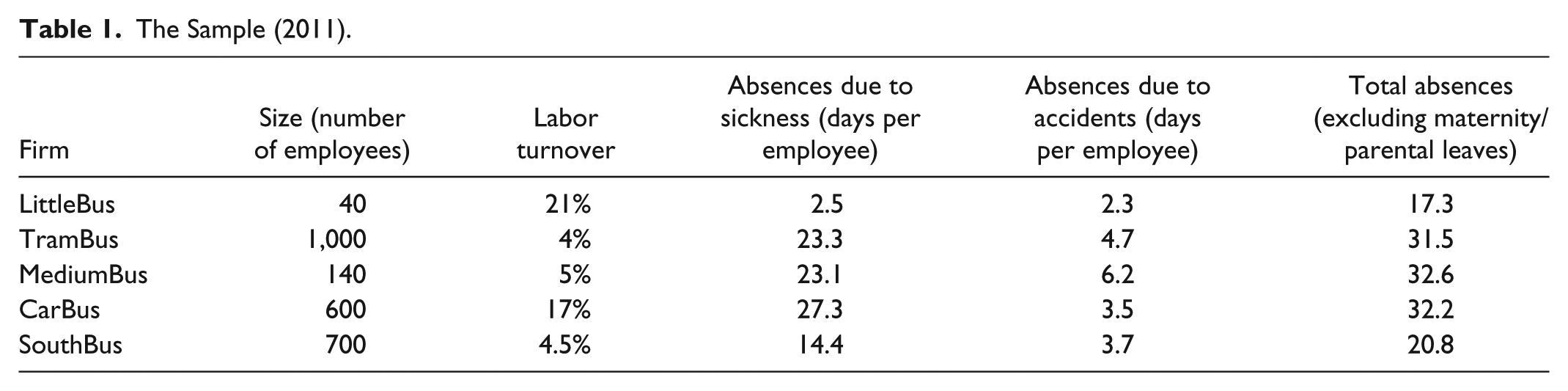
LittleBus and, to a lesser extent, CarBus demonstrate this exit option. In formal terms, LittleBus has the best results for absences, with low levels of illness and work-related accidents. It is also the company whose drivers seem to lodge the fewest complaints. However, the highest share of absences is attributed to “other causes.” Moreover, labor turnover is very high (Table 1). LittleBus operates in a “difficult” suburban area. However, its drivers have numerous alternative employment opportunities because of the proximity of a major airport (a lot of buses operate in and around it) and of a large transport operator serving the whole of the urban area that can offer better employment conditions and pay. Although we were unable to track the drivers who left, the high level of turnover can certainly be interpreted as reflecting a desire on the drivers’ part to improve their working and employment conditions. CarBus differs from the other operators in having a high share of part-time employees (school buses and medium-distance inter-city routes). CarBus is undergoing considerable changes (growth, incorporation of urban routes, and a radical change in its pricing structure, which has led to a very sharp increase in passenger numbers and a change in the passenger populations). The company management referred to the heightened tension this has generated for drivers and the increasing attractiveness for them of the urban routes, which give them full-time employment and better pay.
The Sample (2011).
Changing job through internal mobility
For the other three companies, stability prevails. Against a background of high unemployment and an absence of other employers in the transport sector, opportunities for external mobility are few and far between. These companies have all retained their strong internal labor markets, with open-ended employment contracts and pay rises determined by seniority. To that extent, they have inherited the public sector norms that applied to the sector before the rapid development of privatization.
So what forms does “internal exit” take? We identified three main ones, the products both of company agreements and more informal internal practices.
Changing route
The first is the possibility of changing route within the context of the “annual subsidies” to the routes, which are essentially determined by seniority. In this way, employees can move from being just “drivers” (i.e., not assigned to a particular route) to being assigned to a particular route, after which they can change routes in order, for example, to avoid the most overcrowded ones or those going through areas regarded as potentially troublesome.
No, on route x. I wanted to drive articulated buses . . . But it’s true that the people who use the buses on route x are not great . . . I was beginning to get depressed, to be aggressive, they were aggressive to me so I responded in kind, and I didn’t like working under those conditions and so I asked to change. (Female bus driver)
TramBus is an interesting case. Besides its bus services, this company also operates a tram system. The tram drivers are separated from passengers in their own cab at the front of the tram and have less contact with traffic. Consequently, switching from bus to tram is a form of exit strategy; such a move also provides access to a job regarded as being of higher status or more “dignified,” including by management.
Nevertheless, as noted before, the scope for choice in this area is declining as the allegedly “easier” low-density routes disappear. Moreover, these changes of route are governed by implicit rules, with seniority being the main criterion enabling drivers to make the switch.
Changing occupation
The second form of internal exit involves having recourse to the so-called “incapacity” or “unfitness” mechanism. A driver declared unfit to drive (temporarily or permanently) by the company doctor must be redeployed internally as a matter of priority if a position is available (in the absence of any alternative job, he or she may legally be dismissed). We encountered such situations mainly at TramBus and SouthBus, both large companies with a strong trade union presence. At TramBus, extensive use is made of declarations of unfitness to drive without dismissals; the system is virtually co-managed by the union. At the time of our observations, almost 100 drivers had been declared unfit to drive and were employed in other positions, whether in the workshops or offices or on park maintenance. To increase the scope for internal mobility, the company had brought back in house certain non-core activities that had previously been outsourced. When interviewed, some drivers still in post pointed out the ambiguities of these positions and even criticized what they regarded as nothing but “career strategies.” However, in a company with a chronic budget deficit, this situation was becoming untenable. One year after our investigation, management decided to abandon the lifetime employment policy and initiated procedures for dismissing the drivers declared unfit. At SouthBus, without being quite as problematic, declarations of unfitness to drive gave rise to a dispute with the company doctor. Some overweight employees had been declared unfit to drive; the doctor’s judgments were rejected by both management and the trade unions.
He declared that the buses weren’t designed to take drivers above a certain weight, off the top of my head I think it was 140 kilos or 130 kilos, but you can’t just declare a limit like that. At our place, if he did that, he’d be getting rid of half the workforce. (CHSCT)
Bending the rules
Somewhere between exit and voice, some drivers try to circumvent the contradictory directives stemming from the instructions they receive, some of which they regard as inappropriate. At the risk of being sanctioned, they alter or even disregard these instructions.
This applies, for example, to the rules governing access to the buses: For me, if they get on through the rear door . . . (Interviewer: So, you don’t care about that . . . do you do it?) Yes. I do it, because I don’t want to see them. I open the rear door first, and then the front door. You shouldn’t do it, but well . . . (Driver) There’s a rule about the interior of the buses, we can’t apply it. Baby buggies and pushchairs have to be folded up and babies carried. If we started doing that, we’d never get going . . . (Interviewer: So you don’t do it.) No. You can’t You can’t. And we go through the estate, there are women with double or triple buggies. What’re we supposed to do? Are they going to carry all the babies in their arms? No. (Driver)
It also applies to the way in which drivers react to rudeness and aggression. In our five cases, the instructions to drivers are the same: Do not respond and do not move from the cab. Some drivers obey the instructions. For others, who intend to remain “in sole control of their buses,” that rule has to be bent, particularly to obtain passengers’ respect.
We don’t have any instructions. Well, no, actually, we’re supposed to keep our mouths shut so as not to get into an argument. That’s a bit much, because if we just keep our mouths shut, we look like wimps to the passengers and that lot, they’ll eat us alive. And you won’t be able to get any respect . . . So, I do open my mouth a bit. Particularly on one route, where the passengers are often regulars. If they do that to you once, the next time they’ll spit in your face and the time after they’ll take a pop at you. Things start to get out of control, you have to have respect. We’re not inspectors, but we make our own rules in some situations because they never come out here and we always have the same passengers. That’s my own personal project. I don’t only have friends. Normally we should keep our mouths shuts, avoid arguments and don’t get into any disputes. (Driver)
Over and above these forms of individual resistance, the drivers have various forms of collective recourse at their disposal.
Voice: Use of the Legal Levers by Employees and Their Representatives
Against this background, what courses of action are available in law and collective actions to drivers and their representatives? If as we have seen, external quit is not frequent (except for LittleBus), “internal quits” are used. But what about the voice strategy?
Implementation of the right to leave one’s post
When an employee has reasonable grounds for thinking that a work situation constitutes a clear and present danger to his life or health or he observes that the protection system is defective, he must alert the employer immediately and may leave his post (article L. 4131-1 of the French Labour Code). It is known that this right is regularly invoked by bus drivers in the event of physical attacks on themselves or their colleagues. Such incidents are, incidentally, generally reported in the media. Thus, all SouthBus drivers returned to the depot during a brawl between inspectors and passengers a year before we visited the company. Nevertheless, drivers in the same company report that, if they are attacked, the radio link is now cut and the other drivers are not informed of the incident: “before, when there was an attack, all the buses went back to the depot. Now, since we’re no longer informed of attacks . . . the buses just keep going” (Driver). 2 While the right to leave one’s post is more readily accepted when there is a danger to physical health, its legitimacy in the case of psychological danger is acknowledged in case law. However, the only cases mentioned in our interviews followed physical assaults.
The CHSCTs: Using all legal means of action
The CHSCTs’ remit and the fact that the social partners are equally represented on them make them the locus for social dialogue on working and employment conditions. According to a member of the CHSCT at SouthBus, “It’s not a bargaining body, we’re there to work together and move things on.” CHSCTs seem, after all, to be perceived as a real partner on questions of health and safety at work, on which a certain degree of consensus is apparent. In fact, in both the companies in which we were given access to a certain number of company documents, the CHSCTs function properly and are active. The interviews in the other companies reveal the same degree of commitment. The quarterly meetings are held, annual reports compiled, and surveys carried out. The smooth running of the committees is reflected in the establishment of working groups to examine specific issues or the appointment of a member to carry out a specific task. Thus, the single hazard risk assessment document was launched at TramBus with the participation of CHSCT members and working groups meet to examine the causes of workplace accidents. On some issues, the groundwork can also be laid with the company doctor or nurse (TramBus and SouthBus).
In the view of some managers, this mode of operation is more productive than plenary meetings mainly because the individuals concerned feel more committed. Thus, at SouthBus each of the elected members is allocated an area of responsibility and has to report on progress every quarter to the other members of the CHSCT. This co-construction is particularly significant in this company, which has adopted a fairly informal modus operandi. Thus, we discovered that an agreement on the prevention of workplace hazards and health and safety at work provides for the establishment of a committee for monitoring safety issues within the CHSCT (which is responsible for determining its composition and the frequency of its meetings). Now it emerges from the interviews that, while the CHSCT is regularly informed and “consulted” on working and employment conditions, it is not necessarily this committee that is involved. Similarly, the annual reports record that “only” six extraordinary meetings were held in 3 years, whereas some members of the CHSCT said they met after each incident. The chair and secretary meet very regularly (about once a month, or even more often) to discuss health and safety issues or to make site visits although there is not necessarily any written record of their discussions or visits. In their view, this way of working enables them to connect the information gathered with conditions on the ground. Together, they familiarized themselves with the single hazard risk assessment document, the arduous work forms, and exposure to chemical hazards forms. However, the CHSCT has never implemented the notification procedure or ever asked for expert reports.
The CHSCTs also operate fairly systematically on their own initiative with regard to all health and safety matters, whether it be compliance with safety standards, the cleanliness of company premises, the state of the public highways or, of course, workplace accidents. This approach is usually based on enquiries carried out by CHSCT members (“as soon as something happens in the company, even at the weekend, we’re the first to be alerted . . . we immediately send a standard letter and launch an enquiry . . .”), or even on expert reports. This is notably what the CHSCT at TramBus did when a new form of work organization was introduced that changed the length of the working day. The employer took the view that an expert report was not required and referred the case to the courts. However, the case was dismissed, on the grounds that the proposal was complex and that it altered the duties of many workers and the share of subcontracting and hence the routes allocated to TramBus employees and their shift start times. Finally, the expert report commissioned by the CHSCT was used by the CHSCT and the union to discuss and change some routes.
Besides these actions, the CHSCT at TramBus does not hesitate to resort to law. After all, the co-construction approach comes up against its limits when the company does not fulfill its legal obligations to protect its employees’ health. According to a member of the CHSCT, “first there’s social dialogue, we try to put something together, but if we’re talking to someone who doesn’t want to speak with us or enter into dialogue, . . . then it’s legal action” (Secretary of CHSCT). Thus, co-construction is abandoned in favor of protest, with the CHSCT becoming one of the arenas in which conflict finds expression and the initiator of numerous legal actions pursued with vigor and described as “models” of trade union action by the majority trade union. Several legal cases have been brought alleging obstruction of the CHSCT’s work, notably because of a lack of consultation before the introduction of a number of changes to work organization. Thus, for example, when management hired outside consultants to analyze the circumstances surrounding accidents and other incidents and established a psychological support system for employees who had experienced or were living with work-related stress, without having consulted the CHSCT, the CHSCT referred the case to the courts. Its objective was to have the company ordered to stop acting in this way, in particular because the consultant in charge of providing psychological support was allegedly “of debatable competence.” This question of competence was also a component of a conflict between the management and the occupational doctor (member of the CHSCT) who was obliged later to quit the company. The judge found that the CHSCT and the company medical department had not been informed of these consultations. He ordered the employer to suspend the consultant in charge of providing psychological support, despite the fact that a significant number of workers were availing themselves of his services. In our interviews with nurses, we heard some very contradictory opinions of this consultant and the CHSCT initiative, which was sometimes regarded as purely negative. However, in our 16 interviews of drivers, only one (a woman) quoted this fact, with a clear reference to the lack of qualification of the consultant as said by the CHSCT.
The trade unions: Negotiation on psycho-social risks still inadequate
Besides taking legal action and offering advice to employees, the trade unions obviously have a role to play in terms of voice by negotiating at company level on matters of health and safety at work, and more particularly on psycho-social risks (Lerouge, 2010). Not everyone shares the same vision of the approach to be adopted in preventing such risks (Dedessus-Le-Moustier & Lerouge, 2011). In contrast to other sectors, however, the adoption of a prevention policy is a fairly long-standing issue in urban transport companies because of the risk of physical aggression toward drivers. Thus, such prevention policies have been the object of several agreements in the companies investigated. However, the agreements seldom take into account the psychological aspect of the risks. The policies adopted still largely reflect the standard “tertiary prevention” approach to health in the workplace, in which the focus is more on mitigating the effects through agreements that seek to reduce absence rates (even when including specific measures on health and safety), rather than on a “modern” policy of preventing risks, particularly psycho-social risks. These agreements, which lie somewhere between sanction and incentive, are not intended to improve working conditions and hence health and safety at work but rather to reduce absence rates. Thus, agreements on profit sharing or career development include absences in their methods of calculation. For example, the SouthBus company agreement ties the overall level of profit sharing to the reduction in absence rates (i.e., the fall in the number of days’ sick leave). This criterion, in conjunction with others (number of tickets sold, quality of service), is supposed to reflect the company’s performance. The amount an individual employee actually receives is modified by his or her own level of absence, with a deduction being applied pro rata for each day of absence. Similarly, the TramBus career development agreement states that “obtaining the increments [which give rise to pay increases] is dependent on attendance record.” Interestingly, these agreements could lead to contradictory behaviors, such as choosing not to declare illness or stress, to keep the best premium.
Nevertheless, agreements on the prevention of occupational risks have been concluded. At TramBus, a 2002 agreement includes a clause committing the management to improve safety at work, particularly with regard to dealing with the psychological consequences of attacks. In terms of the chronology of the legal changes, this clause (which was an annex to a wider agreement following a major strike about pay and working time) could be said to be a “pioneering one” (p. 10). However, 10 years afterward, with new interlocutors and in a new context, we were unable to find any evidence of what had been done. Furthermore, in 2010, although it had not been possible to conclude an agreement, an action plan on psycho-social risks was adopted in consultation with workforce representatives and trade union delegates. Similarly, an agreement concluded in 2011 at SouthBus sets out the legal arrangements relating to the CHSCT, while providing for the establishment of a committee for monitoring safety issues, the right to notification, the right to leave one’s post, and employee safety training and announcing the adoption of a policy for preventing psycho-social risk and stress at work. And even though the focus here is more on rectification than prevention, mention should also be made of agreements on physical incapacity.
Conclusion
Thus, despite a reduction in working time in France and an indisputable improvement in the hardware, bus drivers are still exposed to significant risks. Absences due to sickness and accidents at work are on the rise. Corroborating indications of a deterioration in well-being have been recorded, even though the majority of those we met also noted that employment conditions and pay tended to be fairly good. However, it is also known that in certain occupations, mostly male-dominated and with a certain degree of professional pride, there may be forms of denial or resistance in the face of stress and psycho-social risks (Bouffartigue, Pendariès, & Bouteiller, 2010; Loriol, 2005). For example, it is common in the companies we investigated for employees to refuse assistance from a psychologist.
Our results demonstrate how complex forms of work intensification, not all of which are the sole responsibility of the employing company, can be new risk factors. The customer relationship, which in some cases has deteriorated, has altered the nature of the job. Our results also highlight a dimension that has received little attention in the literature, namely, the relationship with other road users. Traffic jams and inconsiderate behavior by other drivers are regarded as all the more stressful as they are the product not of the service relationship with the customer but of a job that entails working in an open environment that is sometimes perceived as becoming more and more difficult. This leads to a feeling of powerlessness as this open environment is only very partially within the employer’s control.
Faced with deteriorating situations, the majority of drivers find the means to adopt within themselves and in the resources provided by their employer. Commitment to and pride in the job remain, particularly because the pay and the organization of working time are still attractive.
However, difficult situations still have to be faced, whether individually or collectively. Some of these, as we have seen, can be resolved by the exit response. This does not usually involve quitting the company; rather, employees seek to construct opportunities to change route or job or to circumvent the rules when the conditions are no longer bearable.
Others can be resolved through recourse to law or to the employee representative bodies, a response more akin to voice. This solution was commonly used in the large companies investigated, but less so in the smaller ones. French law and institutions offer a fairly wide range of resources to support the expression of employee voice. However, attempts to make use of these resources often come up against the vagueness of the notion of psycho-social risk and the lack of debate on this issue.
The obligation placed on employers in France to achieve certain results with regard to safety has led them to put in place prevention policies. Employee representatives should, therefore, concern themselves more with these questions, as they will not thereby diminish the employer’s responsibility. Among these representative bodies, the CHSCTs should focus more on the question of psycho-social risks, notably through the single risk assessment document, which has been little used to date in the companies investigated. This should take the form, in particular, of more training on these issues for CHSCT members. Nevertheless, it be should be noted that at the time the present article was written, French employers and trade unions were engaged in vigorous debates on the employers’ proposal that these bodies should be abolished to make them a committee of the works council. Similarly, the law stipulates that the works council must be consulted on general problems relating to working and employment conditions and can put forward proposals. It should, therefore, also be a key actor in the prevention of psycho-social risks. Finally, employee discussion sessions could be introduced. After all, some drivers bemoaned the lack of opportunities to discuss the difficult situations they have experienced with their colleagues. These free expression sessions could be organized by the CHSCT or the works council. This would also enable the CHSCT to meet more employees as some CHSCT members did mention that one of the difficulties inherent in the job was that they were unable to see drivers as often as possible (in contrast to an activity in which all the workforce is on-site).
Finally, employee training is often put forward as a key issue (Baril-Gingras, Bellemare, & Brun, 2007). Although it is provided and is appreciated in all the companies investigated, it is sometimes perceived as a little artificial (simulation of assaults, for example) and not grounded in the feedback received from drivers and the opinions they voice. This is, more broadly, a key question for many authors, about psychological risks (Detchessahar, 2013) and the way by which they could be discussed, said, and by this way more precisely defined.
As far as future research is concerned, some key questions could certainly be investigated in greater detail. The first, from a comparative perspective, would be the various ways in which different national forms of public procurement affect the relationship between transport firms, the local authority, and workers. The consequences for working conditions will probably be different, depending on whether the subcontracting affects a single route or an entire network. A second focus for further research would be to produce quantitative indicators of the new forms of intensification that we have pinpointed through qualitative case studies. Last but not least, it would be of interest to have more longitudinal data on bus drivers’ careers to understand what they had done previously and what exit or voice solutions they adopted during their working lives.
Footnotes
Declaration of Conflicting Interests
The author(s) declared no potential conflicts of interest with respect to the research, authorship, and/or publication of this article.
Funding
The author(s) disclosed receipt of the following financial support for the research,authorship, and/or publication of this article: This research was sponsored by the Paris School of Economics, through a research agreement with LEST (Laboratoire d’Economie et de Sociologie du Travail), the Institute of Labour Economics and Industrial Sociology.