




Abstract
Urban plazas as public spaces occur in every town and city around the world; however, some plazas are more user-friendly and successful than others. This study examined that “aesthetics” also have a significant impact to determine the extent of success of urban plazas and urban open spaces in combination with other quantitative factors, such as centrality of location, provision of services, and amenities. In addition, this research sought to focus on the relationship between visual characteristics and aesthetic response to urban plazas. Photo elicitation and focus interviews were conducted to identify key visual characteristics as well as to examine aesthetic responses to those characteristics. Eight plazas and designed urban open spaces in Dhaka, Bangladesh, featured in the main study, and research methods included a structured questionnaire to collect data and used semantic differential rating scales as a measuring instrument. Outcomes from this research indicate that a positive aesthetic response was linked to specific visual characteristics of urban plazas, suggesting that this information could be used to more effectively refurbish existing and design new urban plazas as public spaces.
The Design of Urban Plazas: What Is the Role of Aesthetics?
Public space is essential for the well-being of communities and societies. Parks, plazas, squares, and other urban open spaces provide a vital connection with nature and can positively affect quality of life (Marcus & Francis, 1998). In urban environments, public spaces such as plazas can serve as successful social spaces and can function as a focus for different activities. The physical characteristics of plazas, which can vary enormously, generally include an urban space confined in terms of space and size, centrally located, and laid out in such a way as to allow for a multiplicity of uses (Woolley, 2003). Generally, in the academic and design term, plaza means a designed urban open space, and the exclusion of cars makes them ideal as places for a range of activities such as strolling, relaxing, sitting, and socializing (Marcus & Francis, 1998). In terms of the design of urban plazas, an increasing number of scholarly works focus on their physical characteristics and visual qualities, and how these may influence human response and behavior. These characteristics and qualities include architectural elements, landscape design, and morphology, plus features relating to security, management, and other ambient characteristics of the environment (Loukaitou-Sideris & Banerjee, 1993; Loukaitou-Sideris & Ehrenfeucht, 2009; Mehta, 2009). While the literature identifies the visual and aesthetic dimensions of an urban plaza as characteristics that enhance qualities of public space, a gap exists concerning the precise nature of the aesthetic characteristics of the architectural elements that enhance the interface between the environment and human responses. This article explores the architectural and visual characteristics of urban plazas as public spaces specifically in relation to aesthetic responses. Outcomes from this study can be used to further explore the aesthetic attributes of urban plazas and designed urban open spaces.
The interface between urban plazas, human response, and behavior is clearly multidimensional; that is, a range of visual, morphological, and aesthetic qualities are essential to creating a successful public space. The traditional definition of aesthetics often refers to perceptions of beauty in the arts and implies intense feelings that are sublime (Lang, 2005, 2007). Lang (2005) defines the visual aesthetic dimension of the urban environment as one of the essential criteria for the environmental evaluation of urban space. Intuitive capacity for aesthetic appreciation is influenced by four distinct components that transcend time and culture. These are sense of pattern, appreciation of rhythm, recognition of balance, and sensitivity to harmonic relationships. As all visual qualities are not “aesthetic,” in this article, the definition of aesthetic refers solely to visual qualities that can create an appreciation of an urban environment (Carmona, Heath, Oc, & Tiesdell, 2010).
The design of urban plazas can positively or negatively affect the use of public spaces, and therefore, designers have a special responsibility to understand and design in such a way as to serve the public good (Carr, Francis, Rivlin, & Stone, 1992). Over the last few decades, environment–behavior studies have provided an effective way of examining the interrelationship between visual characteristics of the built environment and human responses. Many studies have focused on neighborhoods and public streets (Gehl, 2006; Mehta, 2009). While other research has examined residential streets and community spaces (Sullivan, Kuo, & Depooter, 2004), some studies have concentrated on the physical attributes of the environment by combining behavior mapping and geographic information system (GIS) techniques (Goličnik, 2007; Marusic, 2011). Some authors are concerned about visual preference, permeability, functional aspects, and impressions of enclosed spaces and urbanscapes (Herzog & Flynn-Smith, 2001; Stamps, 2005a, 2005b, 2005c). However, it is likely that positive aesthetic response in relation to urban plazas depends to a certain extent on the visual attributes of architectural characteristics and features, and a logical assumption is that successful urban plazas may also be those that generate positive aesthetic responses. Thus, it is imperative to explore the relationship between the environmental and aesthetic qualities of urban plazas to improve their efficiency given that plazas serve as a form of urban relief for urban dwellers.
Research Framework and Void in Literature to Aesthetic Response
Over the last few decades, using an empirical approach to address environment–behavior studies of urban open spaces has become common. It is considered that there is a strong relationship between the built environment and the aesthetic dimension of urban space. The Austrian architect and city planning theoretician Camillo Sitte (1965) recommended two primary elements, nodes and paths, in addition to artistic elements, that is, fountains and monuments, as the most important features for planning and designing of urban forms. Kevin Lynch (1960, 2007) further developed this recognition of essential characteristics of urban forms and identified paths, edges, nodes, districts, and landmarks as the vital components defining the quality of the city image. In addition to identity, structure, and meaning to evaluate the cityscape, Nasar (1998) argued that the evaluative image also represents some psychological constructs that involve subjective assessments of feelings about the environment. Affective appraisal is one aspect of how someone interprets an environment in terms of psychological arousal. Russell (2003) focused on the emotional appraisal of the physical environment and found different dimensions as the psychological construction of emotion. Kaplan and Kaplan (1982) suggested an environmental preference framework to evaluate the physical environment, and found “coherence” and “complexity” as an immediate appreciation of the environment, and “legibility” and “mystery” as a longer term evaluation.
This research sought to examine the interface between the visual characteristics of urban plazas and the aesthetic response. As a framework, this research has adopted Nasar’s (1994) probabilistic model of aesthetic response to the built environment. Nasar considers that overall aesthetic response is a combination of perception, cognition, affect, and affective appraisal (Figure 1). Furthermore, Nasar’s model acknowledges that affect, cognitive judgments, and affective appraisals of building attributes are highly interrelated and complex, and hence, his model is probabilistic rather than predictive due to the influence of individual characteristics, personality, affective state, and cultural experience of individual observers. By adopting the framework of this model, key visual characteristics of urban plazas for positive aesthetic response has been developed as a future design model.

Probabilistic model of aesthetic response to the built environment.
We observed from the previous studies that some affective variables as well as cognitive judgments are included to measure the aesthetic response (Abu-Obeid, Hassan, & Ali, 2008; O’Connor, 2006, 2011; Taylor, 2009). Several perceptual, cognitive variables can measure the visual properties of a physical environment, and arousal, evaluation, and preference have been used to measure affective variables. Nasar (1998) also argues that the evaluative process, which may involve two kinds of variables, results from a complex process between observers, the cityscape (environment), and an interaction between the two. As such, the evaluation process involves psychological constructs that also reflect subjective assessments of feelings about the environment (Nasar, 1998).
Aesthetic response has been explored in relation to different aspects of landscape, building style, streetscape, city image, façade color, house style, house form, urban environment, urban spaces, and individual urban plazas (Heft & Nasar, 2000; Nasar, 1994).
Some research has also been undertaken in relation to aesthetic experience of landscapes, architectural forms, streetscape, building exteriors, and city images (Nasar, 1994, 1998; Olascoaga, 2003). From the review of related literature, there emerges a growing demand and need to measure environmental aesthetics, and the responses toward the aesthetics of the built environment. Although there are various operational measures and factors of aesthetic response, few attempts have been made to measure aesthetic responses in a mixed-method approach toward the built environment or to the overall evaluation of environmental aesthetics. Therefore, this study chose to focus on specific physical features, visual and architectural characteristics of urban plazas, by using both qualitative and quantitative data analysis to concentrate on the interface between the visual attributes of the built environment of urban plazas, aesthetic response. Model of aesthetic response provides ways to represents and investigates the aesthetics of built environment that can also act as a reference framework for future research works.
Research Design and Method
This research involved two phases, mixed-methods approach with the first phase being a preliminary study that identified as well as explored preferences in terms of the visual characteristics of urban plazas using photo elicitation. The main study or second phase used field survey and sought to identify levels of association between aesthetic response and the visual characteristics of urban plazas. This article concentrates on the main study by using key findings of the preliminary study, through which interrelationships between visual characteristics and urban plazas have been explored. Only a very brief description of the first phase is included in the next section.
First Phase: Preliminary Study
The main objective of the preliminary study was to identify preferences for specific visual and architectural characteristics of a range of famous urban plazas, squares, and pedestrian malls from different urban spaces around the world. Using an iterative mixed-methods approach, the study involved focus interviews (using semistructured questionnaires) as well as Q-sorting tasks in conjunction with multiple digital images of twenty-four plazas, squares, and pedestrian malls. The Q-sort technique is a categorization or sorting technique, which directs participants to group visual stimuli into categories as defined by the researcher (Amin, 2000). To transmit architectural values, elicitation through photographs is a common device in different research domains, and photographs or slides have been used extensively as a substitute for the physical environment (Brown & Gifford, 2001; Stamps, 2000; Stamps & Nasar, 1997). Previous studies that explored the use of photographic images and other elicitation media have generally concluded that the correlation between responses to static color photographs, dynamic virtual reality model, and responses to the physical environment is comparatively very high (Stamps, 2010). Therefore, an appropriately framed picture should be able to tell more than a thousand words (Gaber & Gaber, 2004).
A group of EBS (environment, behavior, and society) experts, from the University of Sydney, finalized 24 photographs to use as visual stimuli from a series of 42 urban plazas from different parts of the world. The selection of 24 plazas was based on two criteria. First, participants were asked to sort the images into three representative types of urban open spaces: urban plazas, urban squares, and pedestrian malls. Second, the slides had to represent the diversity of types of scenes according to the visual qualities.
In the first phase, to understand the users’ subjective experience according to their “likeability” of color images, focus interviews and Q-sorting techniques were applied among conveniently selected 50 respondents. From a total of 240 evaluations, participants identified the following most “liked” visual features of urban plazas, squares, and pedestrian malls that were considered to influence aesthetic response. Different research literatures also mention the importance of these five physical features and corroborate the following outcomes:
a good sense of enclosure (Collins, Collins, & Sitte, 2006; Moughtin, 2003; Stamps, 2005b, 2005c);
the height of the surrounding enclosure (in respect to width; Cullen, 2007; Mehta, 2009; Stamps, 2005c);
a good coverage of vegetation, greenery, and naturalness (Galindo & Rodríguez, 2000; Herzog, Maguire, & Nebel, 2003; Nasar, 1998);
the inclusion of water features and fountains (Moughtin, 2003; Whyte, 2007; Woolley, 2003); and
presence of monuments or sculptures (Lynch, 2007; Mehta, 2009).
However, this research only included the tangible visual characteristics that influence visual qualities of architectural elements and did not include intangible mediating factors that might influence cognitive emotional appraisal, such as order, coherence, complexity, or legibility (Kaplan & Kaplan, 1982; Nasar, 1998; Russell, 2003).
Second Phase: Main Study
The objective of the main study was to identify levels of association between aesthetic response and the visual characteristics of urban plazas as identified in the preliminary study. A semantic differential rating scale was used to measure responses with four bipolar rating scale items: pleasant–unpleasant, beautiful–ugly, like–dislike, and desirable–undesirable. To corroborate the findings of the first phase, the field survey was conducted at eight urban plazas in Dhaka, Bangladesh: Dhanmondi 8, Dhanmondi 32, Sangshad Bhavan, Zia Uddan, Rayer Bazaar, Ramna, Shahid Minar, and the Teacher Student Centre (TSC) at Dhaka University (see Figure 2). Prior to the main study, a pilot study evaluated the survey methods, the appropriateness of interview techniques, and questionnaire details, such as the number and wording of questions as well as the effectiveness of the use of probes, and the sequence of questions.
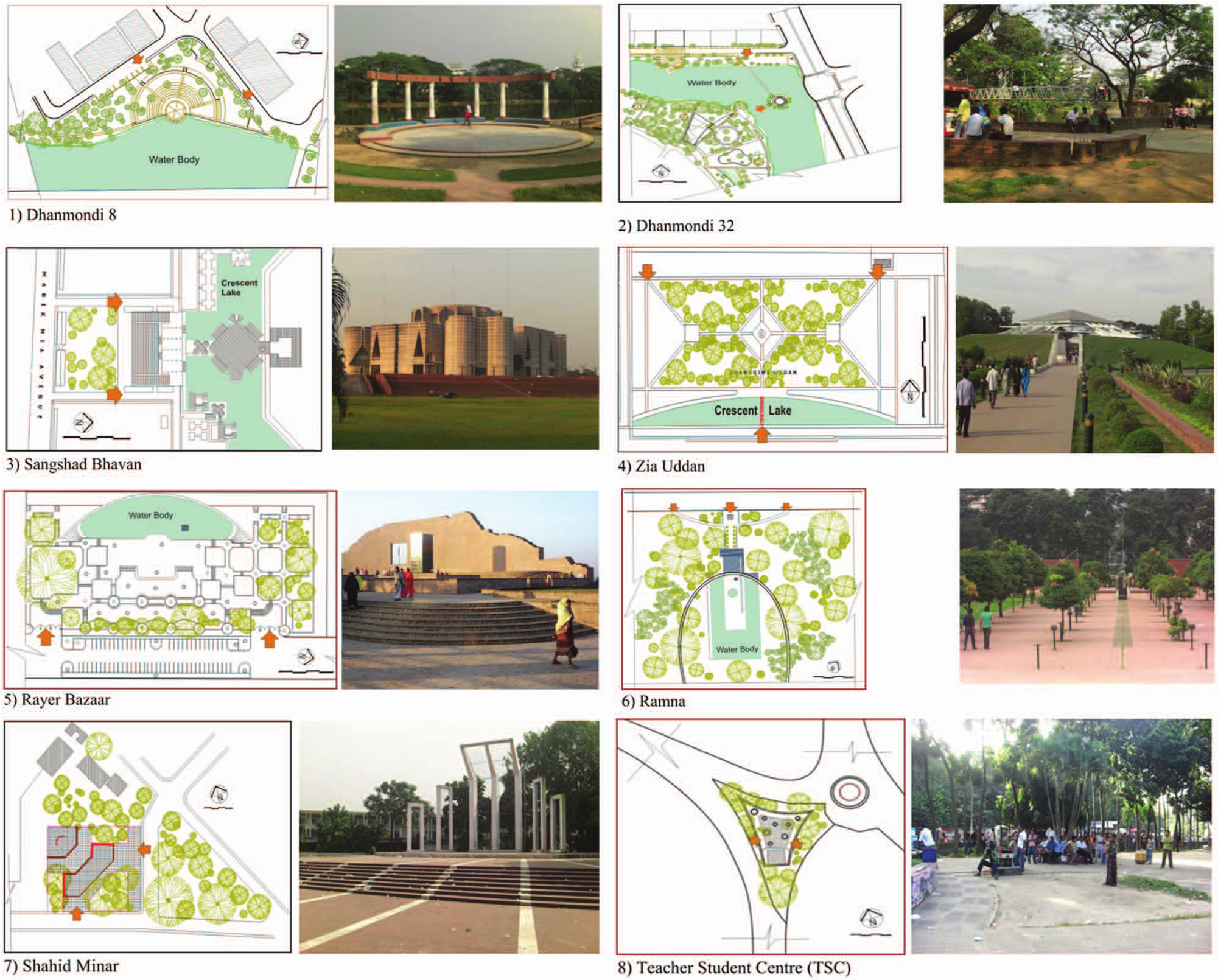
Plan and image of the eight urban plazas in Dhaka, Bangladesh (fieldwork sites).
As there are few designed urban spaces in Dhaka city, this research sought to include all urban open spaces of Dhaka city. However, based on short interviews with 15 architects and 15 nonarchitects, twelve urban plazas were selected. Out of these twelve spaces, a final eight urban plazas (Figure 2) were selected for field survey. The remaining four plazas were excluded due to privatization of ownership, restricted accessibility, overlapping visual characteristics, or lack of vibrancy and less use by the people. Data collection sessions, which occurred between September and November 2009, were conducted during the day on these eight urban plazas and took between 15 to 20 min each. Stratified convenience sampling was used, and participants included people who actively used the plazas at the time of the survey. The participant group for each plaza was 35 resulting in a total sample size of 280. Each participant group was stratified to ensure a balance of age groups and gender. The visual characteristics of each plaza were further identified using a space inventory survey, based on the five most liked visual features of urban plazas as per the preliminary study. Nominal group consensus was used to provide different levels within each of the five categories, and a total of 25 Sydney-based Bangladeshi architects participated. Selection of the participant group was based on the relevance of their educational background, experience, and cultural familiarity, and each participant was provided with a set of visual stimuli and a 5-point Likert-type scale questionnaire for each plaza (Table 1).
Example of 5-Point Likert-Type Scale.

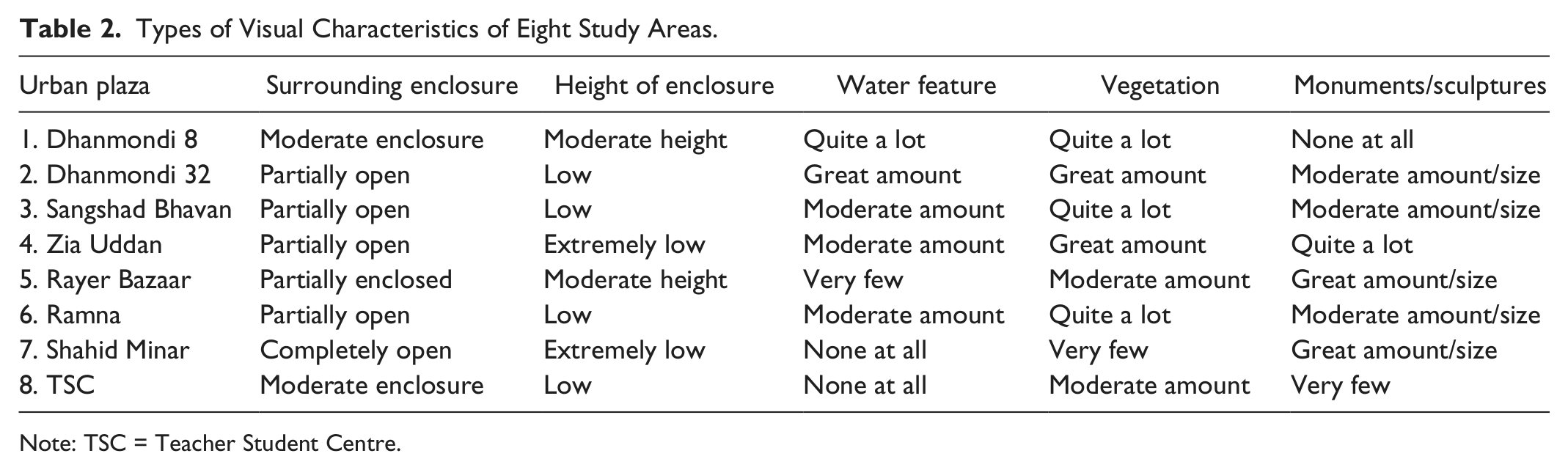
Therefore, for each variable, the visual characteristics that are measured by the Likert-type scale are divided into five levels, and the middle level always represents a “moderate amount.” Here, Likert-type scale 1 represents completely enclosed for “surrounding enclosure,” extremely low for “height of the surrounding enclosure,” none at all for “vegetation,” “water features,” and “monuments/sculptures.” For example, if an urban space is fully enclosed by any visual barrier, then the Likert-type scale measure is 1. However, Likert-type scale 5 represents completely open for “surrounding enclosure,” extremely high for “height of the surrounding enclosure,” great amount for “vegetation,” “water features,” and “monuments/sculptures.” For example, if an urban space is without any visual barrier (completely open), then the Likert-type scale measure is 5. It is acknowledged, however, that the dimensions given in terms of low, moderate, and high are subjective and relative, and this is often how the author refers to the proportion of these physical characteristics according to the previous literature. The 5-point Likert-type scale is one example of those used to measure the physical features (see Table 1). The results of the space inventory observations are detailed in Table 2.
Types of Visual Characteristics of Eight Study Areas.
Note: TSC = Teacher Student Centre.
Data Analysis and Results
Determining the Variables and Internal Reliability of the Measurement Instruments
Factor Analysis
An exploratory data reduction technique factor analysis was used that summarizes data and allows for the determination of key components to establish whether it was statistically appropriate to link the variables used in this study to the construct “aesthetic response” (Pallant, 2007). The number of factors or components extracted from factor analysis may vary depending on the loading of the component, and the results may be considered as “clean” when the variables are strongly related (Pallant, 2007; Tabachnick & Fidell, 2007). Table 3 illustrates the components of aesthetic response from factor analysis.
Extracted Components of Factor Analysis.

Correlation Coefficients
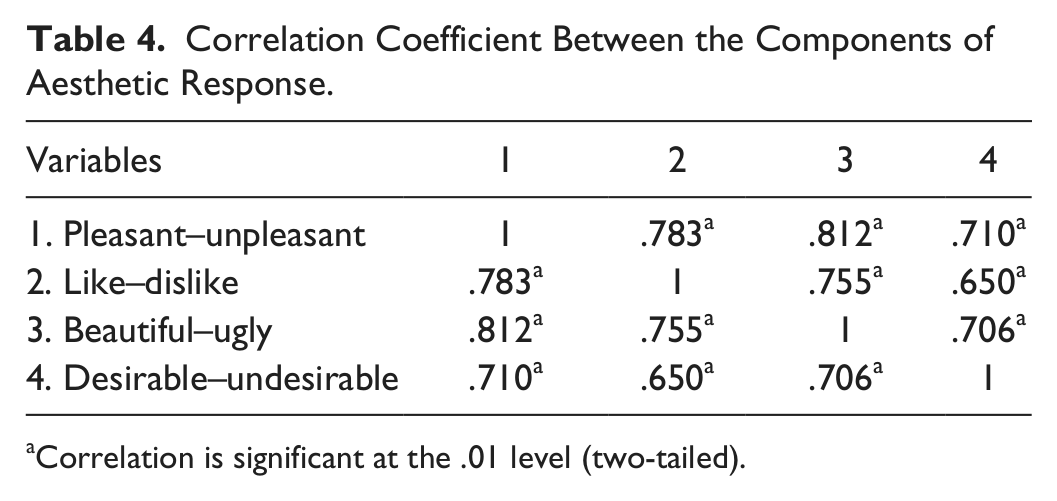
To identify the levels of association between the variables, Pearson product–moment correlation analysis was applied, and the strength of correlation between the variables is quite strong. According to Pallant (2007), correlation coefficients from .10 to .30 indicate a weak correlation, coefficients from .30 to .50 indicate a medium correlation, and coefficients from .50 to 1.0 indicate a strong correlation. Strong correlation occurs among the four variables linked to aesthetic response (pleasant–unpleasant, like–dislike, beautiful–ugly, and desirable–undesirable). Strong correlations (with coefficients ranging from .65 to .81, in Table 4) statistically justify linking these four variables to the construct aesthetic response.
Correlation Coefficient Between the Components of Aesthetic Response.
Correlation is significant at the .01 level (two-tailed).
Cronbach’s Alpha
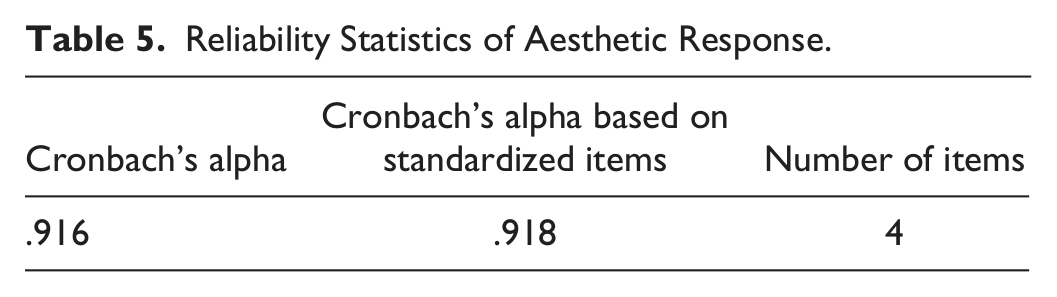
Reliability usually refers to repeated or replicated similar and consistent research findings over a number of occasions (Groat & Wang, 2002; Kinnear & Gray, 2009). Internal reliability measures the internal consistency of the test or measurement instrument, and this was measured using Cronbach’s alpha to ensure that the scale measured the same characteristics, that is, the variance of participant’s scores on each rating scale item (Kinnear & Gray, 2009; Pallant, 2007). It is suggested that an alpha (α) score of .7 or above indicates good reliability of the instrument (Tabachnick & Fidell, 2007). In this research, with the four items of aesthetic response, Cronbach’s alpha is .916 (Table 5), which is well above the .7 recommended.
Reliability Statistics of Aesthetic Response.
The Relationship Between Visual Characteristics and Aesthetic Response
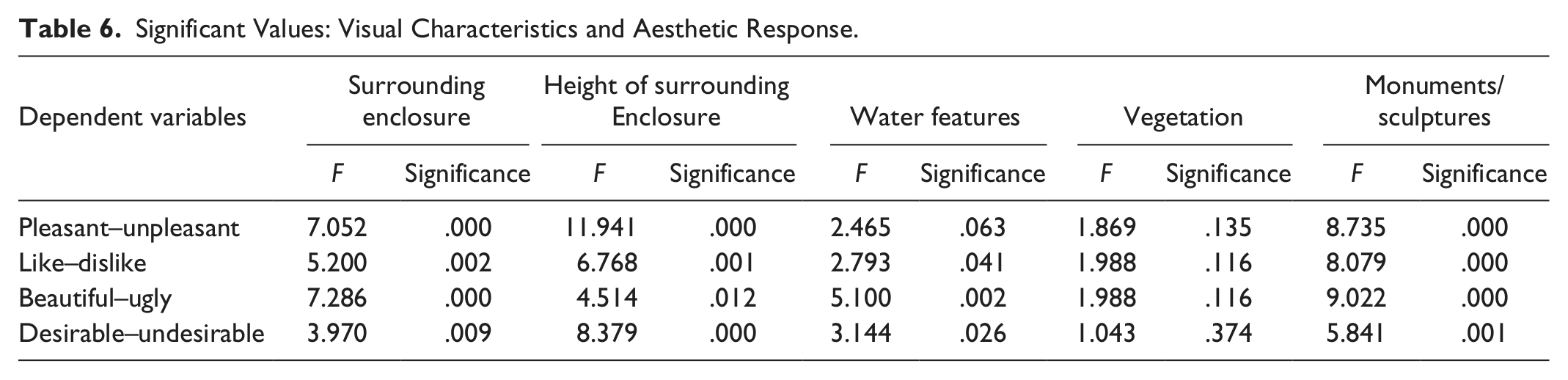
Analysis of variance (ANOVA) compares the mean scores between different groups with the variability within each of the groups (Pallant, 2007). One-way between-groups ANOVA was conducted to explore levels of association between the five visual characteristics (from the first phase) and the aesthetic response. An F ratio represents the variance between and within the groups, which are calculated by dividing the variance between the groups and within the groups. A large F ratio indicates more variability between the groups than within each group, and an F ratio close to 1 indicates no difference between the groups (Hinton, 2004; Pallant, 2007). The results of the one-way ANOVA for the independent variables on four dependent variables of aesthetic response are detailed in Table 6. The F(3, 276) ratio is greater than 1 indicating significant differences at the p < .05 level in aesthetic response in relation to the identified visual characteristics. These results indicate that the variable like–dislike appears to be representative of overall aesthetic response.
Significant Values: Visual Characteristics and Aesthetic Response.
Aesthetic Response and Surrounding Enclosure
Different levels of enclosure appear to be associated with variations in preference based on the variable like–dislike. Variations were strongest for partially enclosed (Likert-type scale 2) and partially open (Likert-type scale 4), as opposed to moderately enclosed (Likert-type scale 3) and completely open (Likert-type scale 5). Figure 3 illustrates response to surrounding enclosure using the variable like–dislike, which, as discussed above, appears representative of overall aesthetic response within the context of this study.
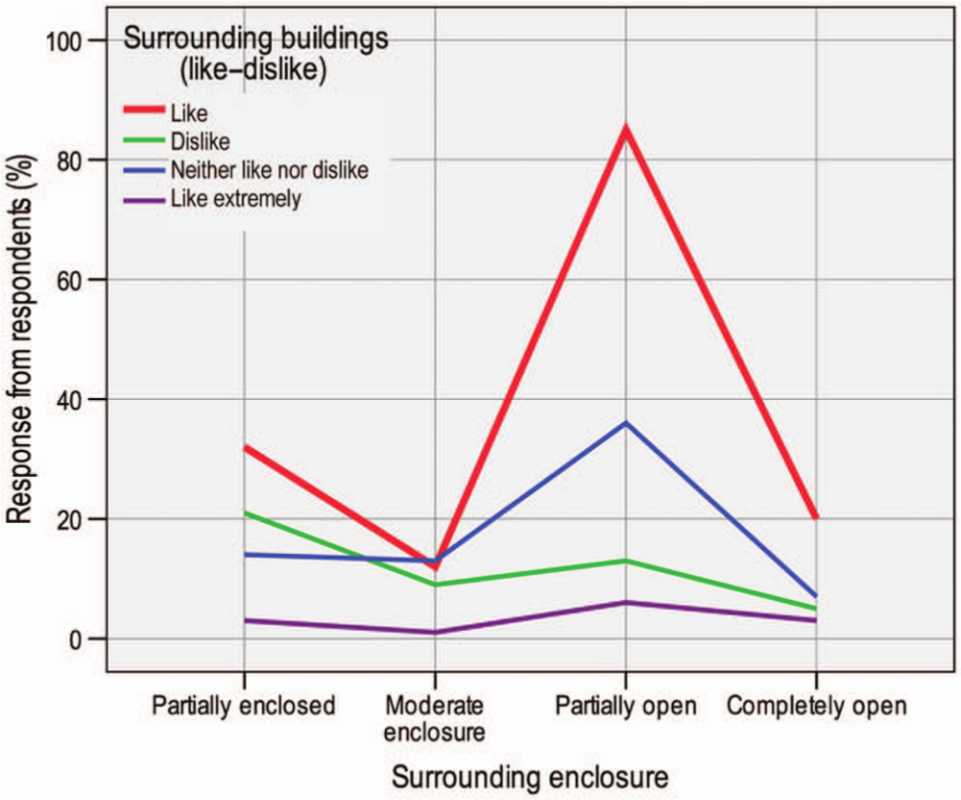
Preferences for surrounding enclosure.
Aesthetic Response and the Height of Surrounding Enclosure
Responses were mixed with respect to the height of the surrounding enclosure, and it is difficult to establish a pattern or trend in responses. Figure 4 illustrates responses in relation to the variable like–dislike; however, changes in height of the surrounding enclosures appear to be much more strongly associated with variation in the variables pleasant–unpleasant, like–dislike, and desirable–undesirable at the p < .001 significance level. However, overall, it appears that a low surrounding enclosure (Likert-type scale 2) appears to be more strongly preferred over extremely low- (Likert-type scale 1) or moderate-height enclosures (Likert-type scale 3).

Preferences and the height of surrounding enclosure.
Aesthetic Response and Water Features
Responses of a “moderate amount” (Likert-type scale 3) of water features are significantly different from other levels of water features. Variation in the number of water features appears to be more highly associated with variation in “beautiful–ugly” than to other preferences. The F(3, 206) ratios detailed in Table 6 are greater than 1, indicating significant differences at the p < .05 level to the availability of water features. For the variable like–dislike, a moderate amount (Likert-type scale 3) of water features is clearly preferred over other levels of water features, as illustrated in Figure 5.
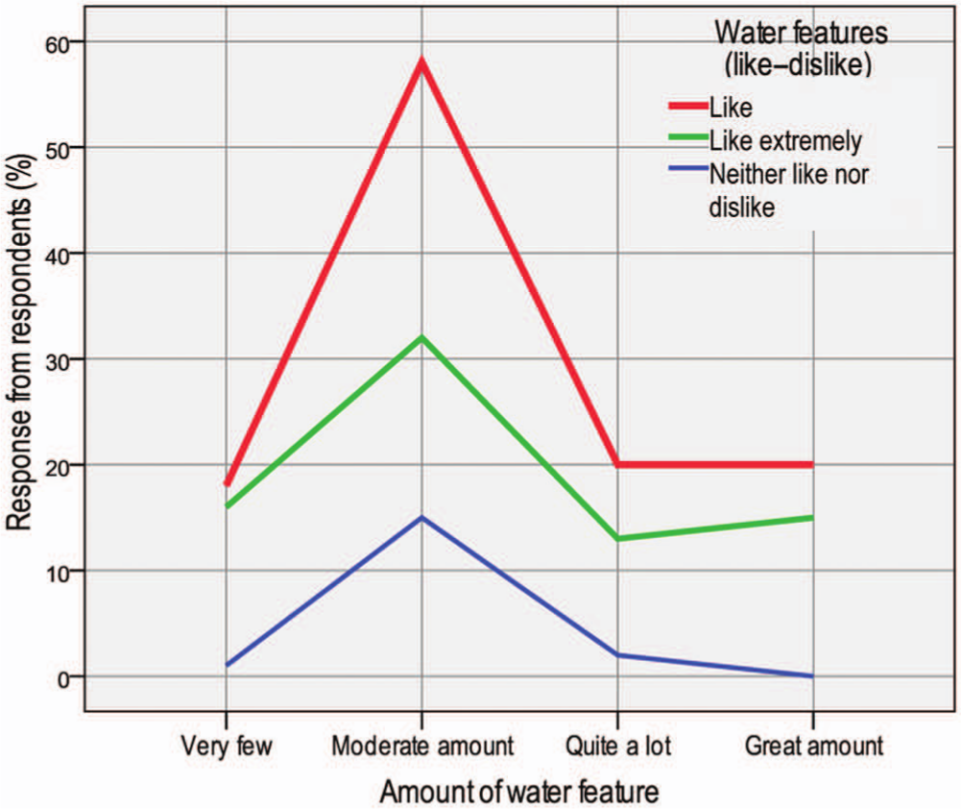
Preferences and water features.
Aesthetic Response and Vegetation
A nonsignificant difference in aesthetic response occurred for different levels of vegetation, and the effect size calculated by using eta squared for all the variables was considered a small effect. The F(3, 276) ratios detailed in Table 6 are very close to 1, indicating nonsignificant differences for aesthetic response at different levels of vegetation. However, from Figure 6, it is noticeable that the mean score for “quite a lot” (Likert-type scale 4) of vegetation is desirable and significantly different for different types of responses. In summary, vegetation rated higher than a “moderate amount” (Likert-type scale 4) is associated with variation in aesthetic response, and “quite a lot” (Likert-type scale 4) of vegetation appears to be the most preferred level of vegetation.

Preferences for vegetation.
Aesthetic Response and Monuments/Sculptures
The presence or absence of monuments and sculptures appear to be more strongly associated with variations: pleasant–unpleasant, like–dislike, and beautiful–ugly, and the mean scores for “great amount/size” (Likert-type scale 5) are significantly different from other levels of monuments/sculptures. Figure 7 illustrates the scores for like–dislike with respect to monuments/sculptures.

Preferences for monuments/sculptures.
Aesthetic Response and Eight Urban Open Spaces
This study indicates that changes in the visual characteristics of urban open spaces appear to be associated with variation in aesthetic response. In relation to the variables pleasant– unpleasant, like–dislike, and beautiful–ugly, Dhanmondi 32 and TSC differed significantly from Dhanmondi 8, Sangshad Bhavan, Ramna, and Shahid Minar. In respect to the variable desirable–undesirable, Sangshad Bhavan differed significantly from Dhanmondi 32, Ramna, and Shahid Minar, while the mean scores for Dhanmondi 32, Sangshad Bhavan, Zia Uddan, and Ramna were significantly higher in terms of overall aesthetic response (Figure 8). From Table 2, it is evident that Urban Plazas 2, 3, 4, and 6 possess similar kinds of visual characteristics according to the respondents. Although the contextual settings of the eight study areas are different for the observed five visual features, these four spaces share similar kinds of architectural settings and visual characteristics. This could be the reason why some spaces scored higher than others. From the ANOVA, the aesthetic response for each of the five variables also highlighted the most preferred types of visual characteristics (Figure 3-7) for the aesthetically preferred urban plazas, such as Dhanmondi 32, Sangshad Bhavan, Zia Uddan, and Ramna. Figure 8 illustrates the variable beautiful-ugly and preferences across eight urban plazas.
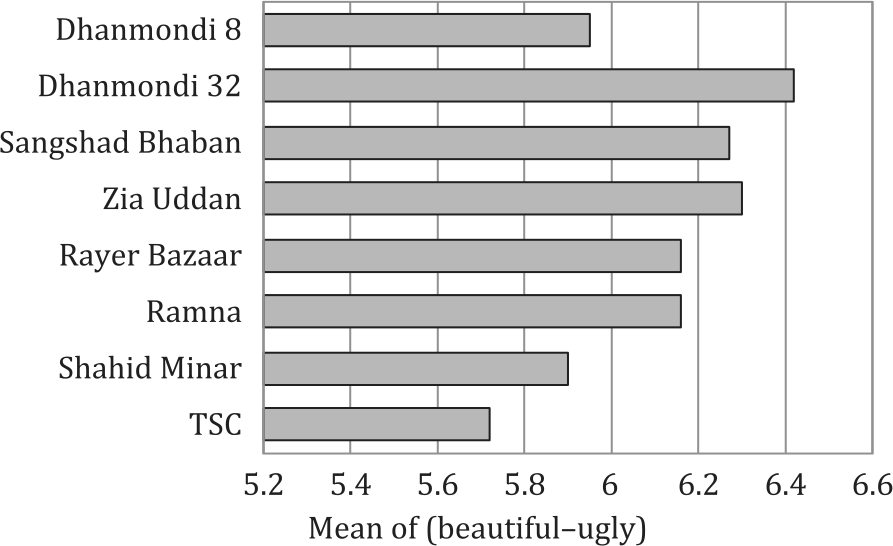
Preferences across eight plazas.
Discussion and Conclusion
In conclusion, aesthetic response varied with respect to the eight featured plazas of Dhaka. While these variations may be due to factors other than those identified herein, the above results indicate that various visual features were rated more highly than others (as per the variables like–dislike, beautiful–ugly, pleasant–unpleasant, and desirable–undesirable). These visual features include openness and the height of the surrounding enclosure, in addition to the occurrence of water features, vegetation, and monuments/sculptures. Therefore, a partially open, low-height enclosure, with a moderate amount of water features, moderate to great amount of monuments and sculptures, and plentiful vegetation, is very strongly associated with the construct aesthetic response. For aesthetically appealing, user-sensitive design solutions for urban plazas, designers need to consider the above design features to generate positive aesthetic response. Based on the above analysis, the following conceptual model is proposed (Figure 9). The model highlights the key visual characteristics of urban plazas found to be highly related to positive aesthetic response within the context of this study.
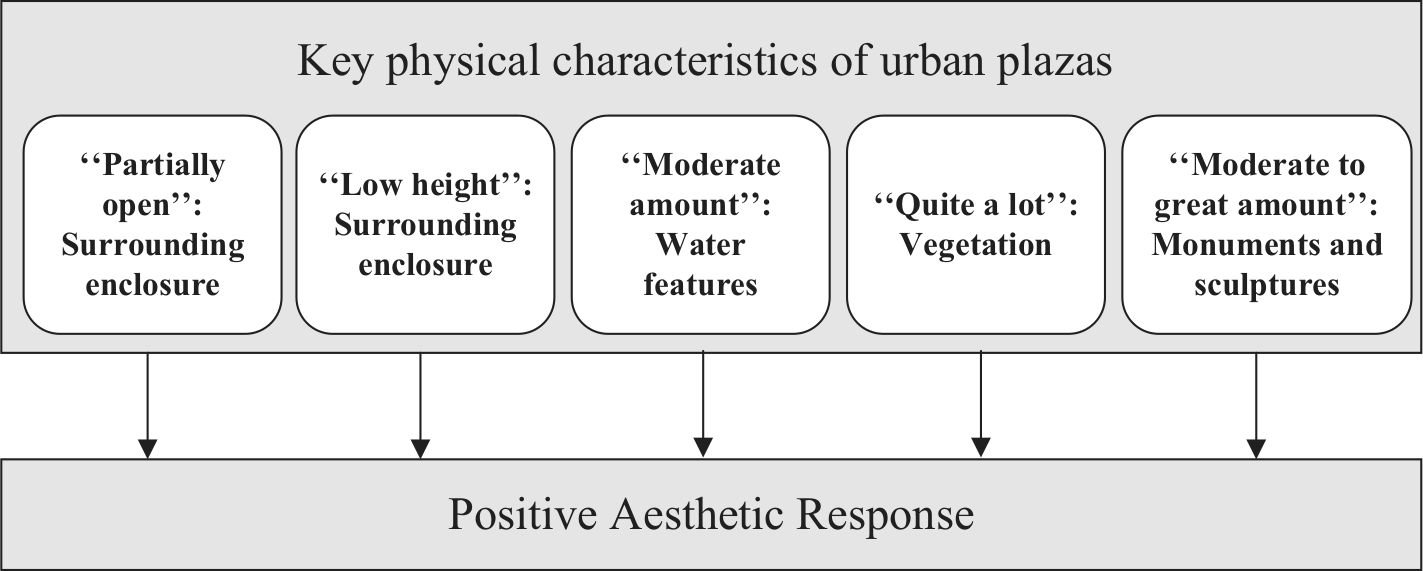
Key visual characteristics of designed urban plazas for positive aesthetic response.
It is fully acknowledged that the measure of complex perceptual subjective experience, aesthetic response, was limited to four variables. This research is not concerned about how people perceive and evaluate different visual characteristics; rather, the pattern of response is limited to a range of variables. However, this opens up possibilities for future research to consider various moderating factors of the environment and different respondents (Ferdous, 2011). Moreover, to test, validate, and generalize the findings, this study could be used to create even more and diversified opportunities for future research. By repeating the steps and approaches of the research method, this research design could be applied to different towns, cities, and other types of urban open spaces within different sociocultural contexts. Hence, future research could include other influential relevant constructs not examined in this study.
This study was conducted in Dhaka, Bangladesh, and it is yet unknown whether the findings will be replicated in other settings and situations. Future studies may indicate whether similar findings occur with respect to urban plazas in other regions and cities. In addition, opportunities for further research include examining the levels and weightings to which each of these key visual characteristics contributes to aesthetic response. This research model could be used as a design protocol for making future decisions on policy as well as being used as a basic model for further academic research or urban design process (Karimi, 2012). By integration of users’ subjective response with the objective measures analyzed through SPSS, urban designers, architects, urban and community planners, social scientists, urban space managers, and other related authorities can make future urban plazas more successful, useful, and aesthetically attractive and appealing. By modifying the contextual settings and adopting the measures and directions indicated in this research, it is possible for urban plazas to be designed in a more informed manner so that they routinely become highly successful and attractive breathing spaces.
Footnotes
Declaration of Conflicting Interests
The author(s) declared no potential conflicts of interest with respect to the research, authorship, and/or publication of this article.
Funding
The author(s) received financial support from Endeavor Postgraduate Award (EPA), an Australian Government Funding for the research.
Author Biography