



Abstract
This paper explores the translation and interpretation of ancient Chinese mathematical texts, with a focus on Liu Hui's commentary on The Nine Chapters on Mathematical Procedures (hereafter The Nine Chapters). Since the mid-19th century, European missionaries and sinologists have gradually introduced Chinese mathematical texts to Europe through various translations, a process that attracted increasing scholarly attention in the 20th century. The Nine Chapters, along with Liu Hui's commentary, has been one of the most translated and studied works, although in-depth research and translations of Liu Hui's work began to increase gradually only after the 1970s. The paper examines the challenges of translating ancient mathematical terms and concepts, highlighting the importance of maintaining terminological consistency to reflect the original mathematical ideas. Various translation strategies are discussed, each revealing differing scholarly approaches and perspectives. Examples of different translations of Liu Hui's terminology and his explanations illustrate how translators made their choice between historical accuracy and modern understanding. Through detailed analysis of specific mathematical problems and their translations, the paper underscores the richness and complexity of the meanings implied in Chinese mathematical text and the challenges of faithfully translating the subtle ideas. Ultimately, the paper argues that translations that try to carefully preserve the terminological features and textual structure can serve as valuable research tools, deepening our understanding of the algorithms and proofs in ancient Chinese mathematical texts.
Keywords
A brief history of Chinese mathematical works being introduced into European countries
In contemporary scholarship, many ancient Chinese mathematical texts have become accessible to historians of science and general readers worldwide through various translations. These translations and related scholarly studies were not accomplished overnight but rather emerged from a long process of gradual accumulation. In the non-Chinese-speaking regions, the understanding of mathematical concepts and practices as attested by Chinese texts has also evolved, having initially been marked by periods of neglect and misunderstanding. Over time, through exchanges and collaborations within the global academic community, these misconceptions have been progressively corrected, leading to a more nuanced and in-depth appreciation.
The translation and interpretation of the works of Liu Hui, one of ancient China's most significant mathematicians, have undergone a similar process of gradual refinement. Professor Karine Chemla made a historiographical sketch of the approach to The Nine Chapters (Chemla, 2010). Before engaging in a detailed analysis of the modern translations of Liu Hui's works, it is essential to first consider the broader historical context in which ancient Chinese mathematical texts were introduced to European countries. This review will help readers understand how Liu Hui's contributions first attracted scholarly attention and how ongoing meticulous translation efforts have refined interpretations of his mathematical ideas and methods. By the middle of the 18th century, brief introductions to mathematics in China had already begun to appear in Europe. The second part of Jean-Étienne Montucla's (1725‒1799 CE) Histoire des mathématiques (History of Mathematics, Figure 1) includes a discussion of China. However, this section provides very little information on what we now recognize as ‘mathematics in China’. In Montucla's (1758: 450) view, ‘of all the branches of mathematics, astronomy is the only one that we may say had some extent among the Chinese; at the time when the Europeans arrived, their geometry consisted of only a few very elementary rules of land surveying' (De toutes les parties des mathématiques, l'astronomie est la seule qu'on puisse dire avoir eu quelque étendue chez les Chinois. À l’arrivée des Européens chez eux, leur géométrie ne consistait qu’en quelques règles très élémentaires d’arpentage). Most of his discussion focuses on astronomy in China, and he even touches upon the system of musical temperament reflected in Chinese texts, given its reliance on mathematical calculations.
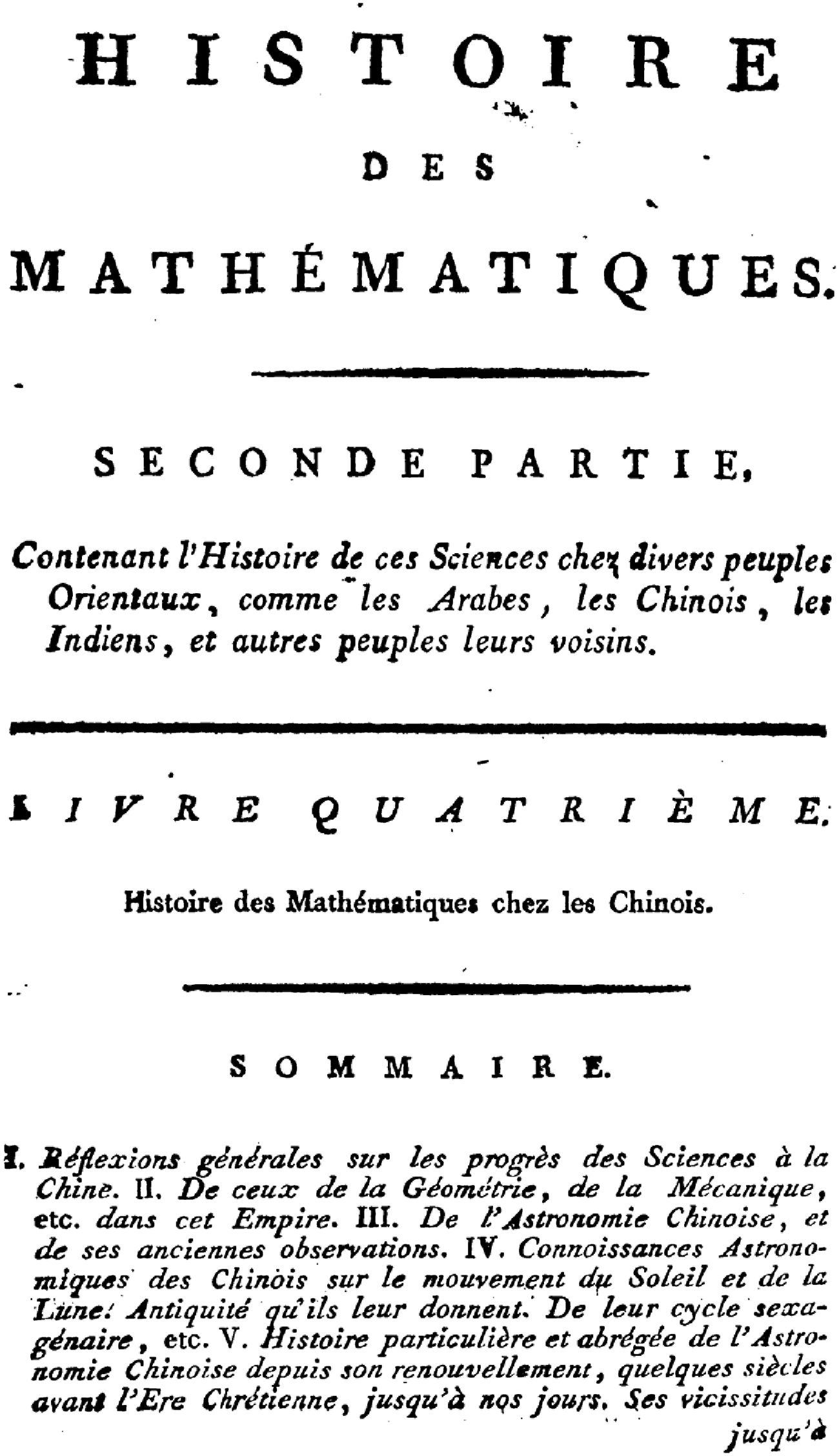
The first page of the section ‘Histoire des Mathématiques chez les Chinois (History of mathematics in China)’ in Montucla's Histoire des mathématiques (History of Mathematics).
Although Jiuzhang Suanshu (九章算术, The Nine Chapters on Mathematical Procedures, hereafter The Nine Chapters; other translations of this title will be given below) is now regarded as a classic representation of ancient mathematics in China, and Liu Hui, a 3rd-century commentator on this work, is recognized as a foundational scholar in mathematical theory. However, Montucla made no mention of The Nine Chapters or Liu Hui's work in his book—a regrettable omission.
It was not until the first half of the 19th century that European scholars began to publish more detailed writings on mathematics in China. In 1835, the French engineer and sinologist Édouard Biot (1774–1862 CE) published a brief note on Suanfa Tongzong (算法统宗), which he rendered as Les Principes de l’Art du Calcul (Principles of the Art of Calculation). Today, it can be translated as Unified Lineage of Mathematical Methods (hereafter Unified Lineage) if each character in the title is embodied in the translation. This is a comprehensive mathematical treatise written in the late 16th century, which includes an introduction to the abacus as a computational tool. It remained influential in China and other East Asian countries for a long period. To a significant extent, this work adopts the structural framework of The Nine Chapters and can be regarded as a popularization of this canonical text. However, Unified Lineage does not include former commentaries on The Nine Chapters. Early European scholars who came to understand mathematics in China through Unified Lineage missed the opportunity to recognize the outstanding mathematical achievements in Liu Hui's works.
Three years later, in 1838, the Italian mathematician Guillaume Libri (1803–1869 CE) published a work in French on the history of mathematical sciences in Italy, Histoire des Sciences Mathématiques en Italie, depuis la Renaissance des Lettres jusqu’à la fin du XVIIe siècle (History of the Mathematical Sciences in Italy, from the Renaissance of Letters to the End of the Seventeenth Century) (Libri, 1838). Within this work, taking examples from the Unified Lineage and other Chinese texts, two notes pertain to mathematics in China, but neither of them discusses The Nine Chapters or Liu Hui's commentary.
One year later, in 1839, Biot (1839) published a full translation of the outline of Unified Lineage in Journal Asiatique. This was the first relatively complete and systematic translation of an ancient Chinese mathematical work available to European readers, providing them with access to an entire text. Biot offered a concise summary of each page of the original work.
The reason why early European histories of mathematics primarily focused on Unified Lineage rather than the more classical Nine Chapters lies in two key factors. First, Unified Lineage was one of the few mathematical texts brought to Europe by missionaries at the time, making it one of the limited sources available to sinologists and historians of science. Second, The Nine Chapters and Liu Hui's commentary had fallen into relative obscurity in China itself from the 15th century until the middle of 18th century. Even leading Chinese scholars of the early Qing dynasty had difficulty accessing a complete edition. For instance, Mei Wending (梅文鼎, 1633–1721 CE) was only able to consult a partial Song-dynasty printed edition of The Nine Chapters. It was not until the mid-18th century that the evidential scholarship movement, led by scholars such as Dai Zhen (戴震, 1724–1777 CE), compiled The Ten Mathematical Classics (算经十书 Suanjing Shishu) from the Yongle Encyclopedia (永乐大典 Yongle dadian), bringing renewed attention to The Nine Chapters and Liu Hui's commentary among elite Confucian scholars. Prior to this revival, Unified Lineage had remained the primary mathematical work in circulation among the general public, which also explains why it was the text that missionaries were able to obtain and later bring back to Europe. Today, three copies of Unified Lineage can be found in the Bibliothèque Nationale de France (National Library of France). Among them, the copy numbered 4853 on the flyleaf is the book that Biot consulted for his research.
The first comprehensive introduction to mathematics in China was provided by the missionary Alexander Wylie (1815–1887 CE) in his treatise ‘Jottings on the sciences of Chinese arithmetic’ (Wylie, 1897). The original text was published in the North China Herald in 1852. The term ‘arithmetic’ in the title is used in a broad sense, encompassing various aspects of mathematics (Chen, 2017). In this work, The Nine Chapters and Liu Hui's contributions were only briefly mentioned, and Wylie even mistakenly placed Liu Hui in the 5th century or the 6th century (Wylie, 1897: 164–165, 183).
This brief treatise had a significant impact in Europe. As Wylie stated in the introduction, he intended for his work to help correct the prejudice held by some European scholars that China lacked mathematical knowledge. In 1856, the treatise was translated into German by KL Biernatzki (1815–1899) and was later cited by the renowned historian of mathematics Moritz Cantor, in his Vorlesungen über Geschichte der Mathematik (Lectures on the History of Mathematics) (Cantor, 1894). The work was further translated into French by O Terquem (1782–1862) and J Bertrand (Martzloff, 2006: 4). As ‘Jottings on the sciences of Chinese arithmetic’ circulated more widely, the omission of Liu Hui in the text contributed to his continued neglect by later scholars, further delaying the recognition of his mathematical contributions (Figure 2).
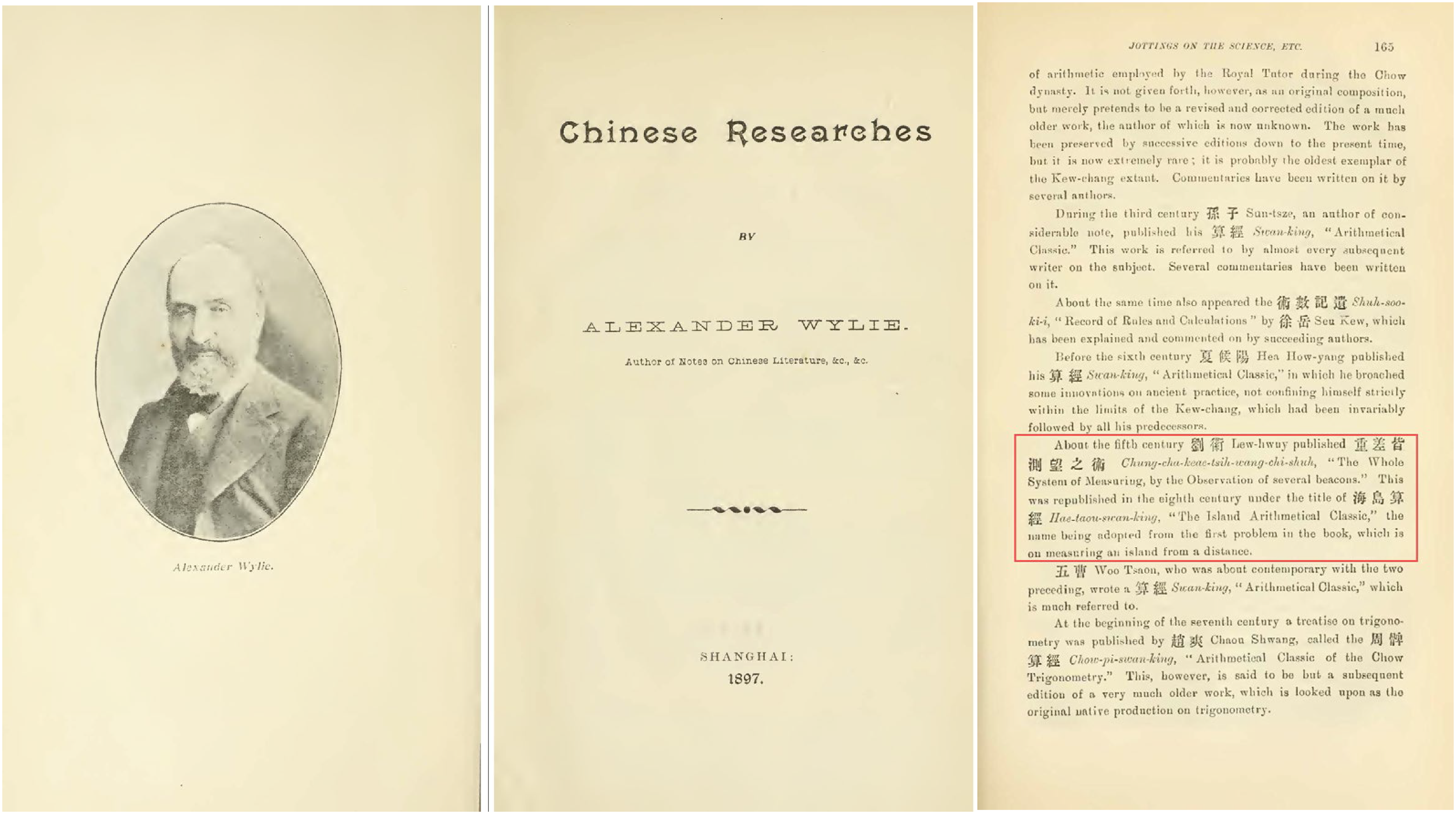
Alexander Wylie and his Chinese Researches in which ‘Jottings on sciences of the Chinese arithmetic’ mentioned Liu Hui briefly.
Another scholar who played a significant role in shaping the English-language historiography of Chinese mathematics was the Japanese scholar Mikami Yoshio. Mikami introduced Liu Hui's work primarily through two chapters in his 1913 publication: ‘Mathematical Canon of the Sea Island’ and ‘The circle-measurement by older Chinese mathematicians’ (Mikami, 1913). However, compared to his more comprehensive research published in Japanese (Mikami, 1932–1934), these chapters do not fully represent the depth of Mikami's learning on Liu Hui. Nevertheless, they remained one of the primary sources through which early Western readers could gain some understanding of Liu Hui's mathematical contributions. Mikami's works also had a profound influence on David Eugene Smith's (1860‒1944 CE) writing of a general global history of mathematics, particularly in his seminal work, History of Mathematics (Smith, 1923, 1925; reprinted in 1958).
Another highly influential 20th-century contribution was the work of Joseph Needham (1900–1995) and his assistant Wang Ling. In the mathematics section of Science and Civilisation in China, volume 3, they provided a highly favourable assessment of Liu Hui, praising him as ‘one of the greatest expounders of this “empirical” solid geometry’ (Needham and Wang, 1959: 99). However, compared to the deeper understanding we have gained today, their knowledge of Liu Hui's work at the time was not entirely comprehensive. In particular, their study includes only limited discussion of Liu Hui's remarkable contributions to proving the correctness of procedures provided by the canonical text of The Nine Chapters.
Against the backdrop of a long-standing tradition of European scholarly interest in mathematics in China, non-Chinese scholars have sought full translations of classical Chinese mathematical texts. In the collaboration between David Eugene Smith and Li Yan (李俨, 1892‒1963 CE), when Li was in his twenties, Smith was particularly eager for Li to provide more precise translations of ancient Chinese mathematical works (Zhang, 1991: 82). At that time, such translation projects were rare and difficult to carry out. Even though Zhu Shijie's (朱世杰, fl. 1279) Siyuan Yujian (四元玉鉴, 1303 CE) was translated and annotated by Ch’en Tsai Hsin in the 1920s under the title Precious Mirror of the Four Elements (or Jade Mirror of the Four Unknowns in the edition of 2006), its official publication was delayed for more than 70 years (Guo, 2005).
Significant translation and research efforts on The Nine Chapters and Liu Hui's commentary began to emerge only in the latter half of the 20th century. The first two translations—by the Russian historian of mathematics ЭИ Березкина (EI Berezkina) and the German scholar Kurt Vogel—did not include Liu Hui's commentary (see Berezkina, 1957; Vogel, 1968). Professor Shen Kangshen has provided an introduction of these two translations (Shen, 1998: 284–302).
Before Liu Hui's commentary was fully translated alongside the canonical text of The Nine Chapters into modern languages, scholars worldwide conducted further research on his commentary and the Mathematical Canon of the Sea Island. During the 1970s and 1980s, scholars published numerous papers and academic biographies of Liu Hui in Chinese and English. In China's mainland, following 1976, there was a surge of research and publications on The Nine Chapters and Liu Hui's commentary among Chinese scholars. For instance, four significant papers were published in 1984 on Liu Hui's concept and practice of lü (率), as well as his mathematical theories concerning limits, volume and fangcheng (simultaneous linear equations), which were included in the paper collection Collected Papers on the History of Science (Kexueshi Jikan 科学史集刊). Summarizing the academic trends of this period, Professor Bai Shangshu (白尚恕, 1921–1995) observed that: ‘Especially in recent years, the study of The Nine Chapters has encompassed nearly all aspects of the text, and the breadth and depth of research have largely surpassed those of previous periods’ (Bai, 1993: 22). Meanwhile, Chinese scholars began actively engaging with and collaborating with scholars from all over the world. For example, Professor Donald Wagner's 1979 paper on Liu Hui's proof of volume (Wagner, 1979) was soon translated into Chinese and published in the Anthology of Translations on the History of Science (Kexueshi Yicong 科学史译丛). Besides, the substantial research findings and detailed interpretations of Liu Hui's commentary published in Chinese were later integrated into subsequent translations of The Nine Chapters with Liu Hui's commentary.
Due to linguistic similarities and active scholarly exchanges, the earliest non-Chinese translation of The Nine Chapters that includes Liu Hui's complete commentary was the Japanese translation published in 1980 (Kawahara, 1980). Prior to this, two earlier Japanese translations had already been produced; however, much like the situation in Western-language translations, these initial Japanese versions did not include Liu Hui's commentary (Li and Guo, 2000). The first complete English translation of this work was published in 1999 (see Shen et al., 1999). This was a pioneering effort, and it also had certain limitations, which will be analysed later in this paper in relation to its intended readership. A French translation by Karine Chemla and Guo Shuchun was published in 2004 (Chemla and Guo, 2004), followed by an English translation in 2013, co-translated by Professor Joseph Dauben, Xu Yibao and Guo Shuchun (Guo et al., 2013).
This paper does not merely aim to introduce the historical context in which these translations emerged and provide a bibliographical overview. Rather, through a close examination of specific passages from Liu Hui's commentary on The Nine Chapters, it seeks to explore how ancient mathematical classics have been translated by different scholars. Additionally, it reflects on the broader questions: How does translation influence the interpretation of Liu Hui's mathematical thought? We often encounter significant variations in the translation of titles, terminology and algorithms across different versions. What accounts for these differences? Do different translation strategies arise from varying scholarly objectives and criteria? Which translation approach best facilitates the comprehension of mathematical content for non-Chinese readers? And which method is most conducive to rigorous research in the history of science?
Translations of the canonical text of The Nine Chapters reflecting the way in which Liu Hui read the problems
The Nine Chapters was compiled no later than the first century CE. In the 3rd century CE, Liu Hui commented on the text, providing explanations for many of its mathematical procedures to verify their correctness. In the 7th century, Li Chunfeng also annotated the work and presented it along with other mathematical treatises to the throne, which were adopted as textbooks for official mathematical education in the Tang dynasty (618–907), establishing The Nine Chapters as an authoritative classic. Although, in the 11th and 13th centuries, scholars produced their own commentary respectively, the work now known as The Nine Chapters generally refers to the version that combines the Han-dynasty text with the commentaries by Liu Hui and Li Chunfeng.
Before analysing how Liu Hui's commentary has been translated, let us first examine how the text of The Nine Chapters itself has been rendered into modern English or French in the works mentioned above. In this process, our primary focus will be on the approaches used to interpret and translate the canonical text in a way that reflects Liu Hui's understanding of it, as well as the ways in which he engaged with and applied it into his mathematical reasoning.
First, let us examine some clearly expressed mathematical problems from the first chapter, Fangtian, to illustrate discrepancies in translation. In problems involving the area of a triangle, the original text provides the base and its corresponding height, asking for the resulting area. Each modern translation adopts its own approach to referring to the given dimensions. At first glance, translating these problems may not seem particularly complex if we focus solely on the mathematical task described in the statements. For example, Shen et al. translate Problems 25 and 26 as follows: Now given a triangular field with base 12 bu and altitude 21 bu. Tell: What is the area? Answer: 126 [square] bu. Given another triangular field with base Tell: What is the area? Answer:
However, translating in this way carries the risk of overlooking important nuances embedded in the original expression of the problem. A comparison between these triangle problems and those at the beginning of the chapter reveals that the terms used for the base and height of a triangle are also employed to describe the dimensions of a rectangular field: guang (廣) and zong (從). Yet, in English translations, these terms are rendered differently. In Shen et al.'s translation, a rectangular field is described as 15 bu ‘broad’ and 16 bu ‘long’, which differ from the terms ‘base’ and ‘altitude’ used for a triangular field.
It is probably true that, if we use the same English terms to refer to these dimensions, it may not fully align with the conventions of modern language. However, Karine Chemla, taking the example of translating these two words, suggests that strictly adhering to the conventions of modern languages could risk losing an understanding of the typology of plane geometry from the perspective of ancient practitioners. She discovered that the names of the fundamental dimensions in ancient geometry have an organizing effect on all plane figures, as they relate each figure either to the rectangle or the circle. The rectangle is associated with geometric shapes for which the statement provides dimensions in terms of guang (width) and zong (length). For instance, the triangle has a guang and a ‘straight zong’, which corresponds to the height of the triangle. In contrast, the circle, the field in the form of a spherical cap (宛田), and those in the form of a ring (环田) are characterized by two types of dimensions: the jing (徑 diameter) and zhou (周 circumference), respectively (Chemla and Guo, 2004: 101).
Thus, the French translation renders the description of a triangular field as follows: ‘Supposons qu’on ait un champ triangulaire de 12 bu de largeur et de 21 bu de hauteur (longueur droite)’ (Suppose we have a triangular field with a width of 12 bu and a height (straight length) of 21 bu).
Although enclosed in parentheses, the expressions ‘largeur’ and ‘longueur droite’ are strictly consistent with the terminology used in the translation of the first problem: ‘Supposons qu’on ait un champ de 15 bu de largeur et de 16 bu de longueur’ (Suppose we have a field with a width of 15 bu and a length of 16 bu). In the translation by Guo et al. (2013), the terms used for a rectangle—‘width’ and ‘length’—are distinct from ‘base’ and ‘height’ in the case of a triangle, but in the footnote, they nuanced the difference and reminded their readers of the fact that the Chinese text refers to the base of the triangle as ‘width’ (廣 guang) and the height as ‘perpendicular length’ (正縱 zheng zong) (Guo et al., 2013: 83). For fields in the form of a spherical cap or a ring, the French translation modifies the term diamètre (diameter) by adding the qualifier ‘transverse’ to refer to a dimension of the figure. This expression more effectively preserves the relationship between the original terms appearing in different sorts of fields related to a circle in the eyes of historical practitioners. In Guo et al.'s English translation, despite the use of different English terms, the translators provide the corresponding Chinese terms and their Romanized pinyin in parenthetical in-text annotations (Guo et al., 2013: 159, 161), thereby offering an alternative way of signalling the relationships between the terms in the source text.
In an academically oriented translation, it is crucial to maintain the terminological consistency present in the original text. Otherwise, non-Chinese readers might interpret The Nine Chapters as merely presenting a series of isolated mathematical problems, whereas, in the historical context of mathematical culture, this was not the case (Chemla, 2009). Liu Hui is the earliest known scholar to have studied and provided commentary on The Nine Chapters. It can be demonstrated that maintaining consistency in translation not only preserves the structure of the canonical text but also reflects the foundational principles underlying Liu Hui's proofs, particularly in his demonstration of the procedure for determining the area of a field. In his commentary on Problem 26 concerning a triangle, Liu Hui states: ‘With what is in excess, we fill what is empty, to make a rectangular field’ (以盈補虛為直田). The principle of ‘with what is in excess, one fills what is empty’ frequently appears in Liu Hui's commentary of the correctness of mathematical procedures. The outcome of this operation is explicitly described as the formation of a rectangular field. The two terms referring to the dimensions of a triangular field are systematically connected to those of a rectangle. Liu Hui recognized this correspondence and employed it in his transformations, thereby grounding his proof on a method that he had already established in earlier commentary. For ancient practitioners, terminology constituted a fundamental tool that made it possible for them not only to discern relationships between mathematical entities, but also to perform the practices through which proofs were constructed. Therefore, it is necessary that modern translations, particularly those aimed at critical studies, carefully preserve and reflect these terminological similarities and patterns.
Translation of technical terms used by Liu Hui
In this section, I will examine the translations of mouhe fanggai (牟合方盖), a representative technical term in Liu Hui's commentary for which I will temporarily use Romanized pinyin to refer to it. This solid plays a crucial role in Liu's approach to determining the volume of a sphere. However, its various translations have often led to confusion among general readers, translators and researchers alike. When organizing an international exhibition on Liu Hui (Huang, 2024), the translation of this term became one of the key points of discussion among organizers, content contributors and translators of the exhibition panels. Debates arose over whether it was necessary to standardize the term and, if so, which English equivalent should be adopted. Examining how different translators have rendered this term sheds light on their distinct translation strategies and the varying target audiences they aimed to address. Thus, in the following paragraphs, I will not present the full process of Liu Hui's proof for the volume of a sphere. Instead, I will focus on the solid to which this complex term refers, as well as the possible literal and implicit meanings embedded within the term itself.
Let me first describe the solid briefly. Suppose there is a cube, along with two congruent cylinders whose length and base diameter are both equal to the side length of the cube. Penetrating the cube horizontally via two distinct sets of opposite faces, the two cylinders form an intersection, which corresponds to what is referred to as the mouhe fanggai in Liu Hui's commentary.
If modern readers are familiar with the terms ‘Steinmetz solid’ (Figure 3) or ‘bicylinder’, then the designation ‘Liu Hui's Steinmetz Solid’, which was officially endorsed by the organizing committee of the exhibition, could serve as a precise modern mathematical reference to the solid described above. However, as historians have pointed out, this translation fails to reflect how Liu Hui himself perceived and expressed this solid. Addressing this latter concern requires translators to interpret the meaning of the Chinese term from a philological perspective, which has led to divergences in scholarly interpretations. For example, some scholars argue that this solid is a specialized form of a ‘box lid’, interpreting gai (盖) in its most general sense, as explained in Li Yan's early works (Li, 1963: 59). This interpretation has also been adopted in several English translations, such as ‘two matching square covers’ or ‘a combined pair of fang (鈁)-covers’ revealed in a translation note of Guo et al. (2013: 461). Professor Martzloff (1987: 270; 2006: 287) has rendered gai as voûte (vault) or couvercle (lid). However, in early texts, this literal meaning is probably not as prevalent as another interpretation—‘canopy’. This is the meaning adopted by Chemla and Guo (2004: 381, 808) in the French translation: ‘Dais carrés qui s’emboîtent exactement’ (Square canopies that fit together exactly), which is further supported by textual evidence found in another classical text—the Kaogong Ji (The Artificers’ Record)—cited by Liu Hui in his commentary. By contrast, Shen et al. (1999: 194) translated the term as ‘joined umbrellas’. According to Professor Wang Xiaoqin's memorial article on Professor Shen Kangshen, the translators deliberated extensively on the rendering of this term and were highly satisfied with their final choice, which was inspired by a daily-life object they came across by accident (Wang, 2009). Given the translation strategies reflected in other instances in their work, as well as their stated emphasis on reader accessibility, we can infer that the 1999 translators prioritized terminology and wording that would be easily understood by general English readers. Their goal was to ensure that even readers without any background in the history of mathematics in China or sinology could intuitively grasp the mathematical objects described in ancient texts. However, for historical textual research, such translation choices have limited relevance for a critical study and a deeper understanding of Liu Hui's mathematical reasoning and the intellectual resources he drew upon.
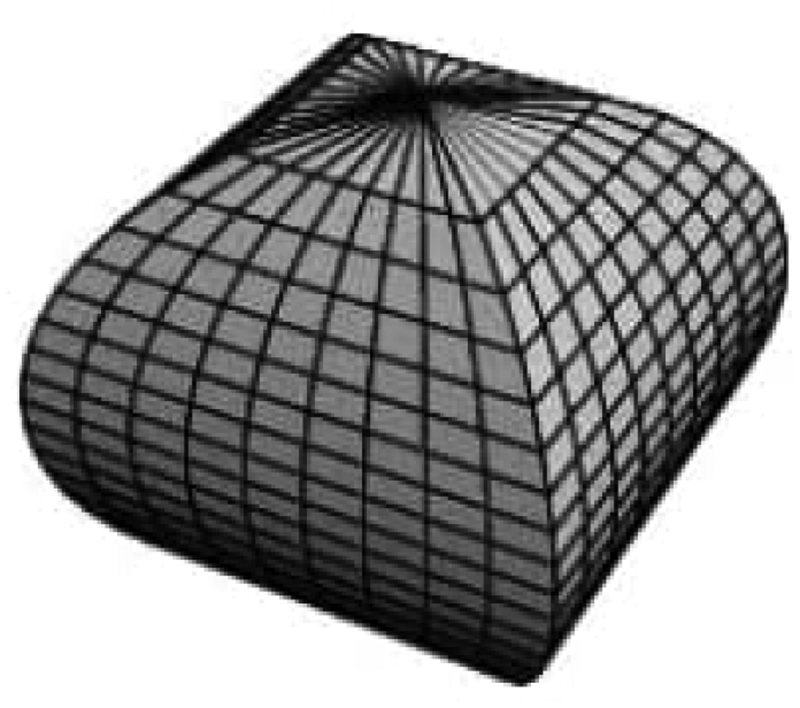
Steinmetz solid, which corresponds to mouhe fanggai in Liu Hui's commentary (see Weisstein, 2003: 2853).
A similar issue arises with the translation of tian (田). In Liu Hui's proof narratives, the term appears in contexts that go beyond its practical meaning of ‘field’. Tian is typically translated as ‘field’, a term closely associated with land measurement and actual land calculations. However, as Chemla and Guo (2004: 992–993) point out in their glossary, at least in two instances in Liu Hui's commentary, tian is assigned a more abstract mathematical meaning because it is used to express the result of a geometric transformation. For example, in Liu Hui's proof of the correctness of the procedure for the area of a circle, a figure (九十六觚之外觚田 polygonal fields exterior to the 96-gon) similar to the circular segment marked in grey in Figure 4 is referred to as tian. This indicates that, in this specific proof context, tian does not denote any actual land surface but instead carries an abstract mathematical significance within the logical framework of the proof. This raises an important question: To what extent should translators strive to recover the literal meaning of terms in their assumed concrete context? If we attempt to adhere too strictly to these meanings, do we risk erasing the practitioner's use of certain terms in a purely mathematical sense? Could such an approach lead readers to focus solely on the concrete and practical aspects conveyed by problem statements and Liu Hui's commentary, rather than recognizing their deeper mathematical meaning? This tension between fidelity to the literal meaning of an expression and the degree of terminalization of this expression by ancient actors in their mathematical practices is central to translation decisions in mathematics in history. Striking the right balance requires both philological sensitivity and an awareness of how terminology is shaped and of the role it played in ancient mathematical reasoning.
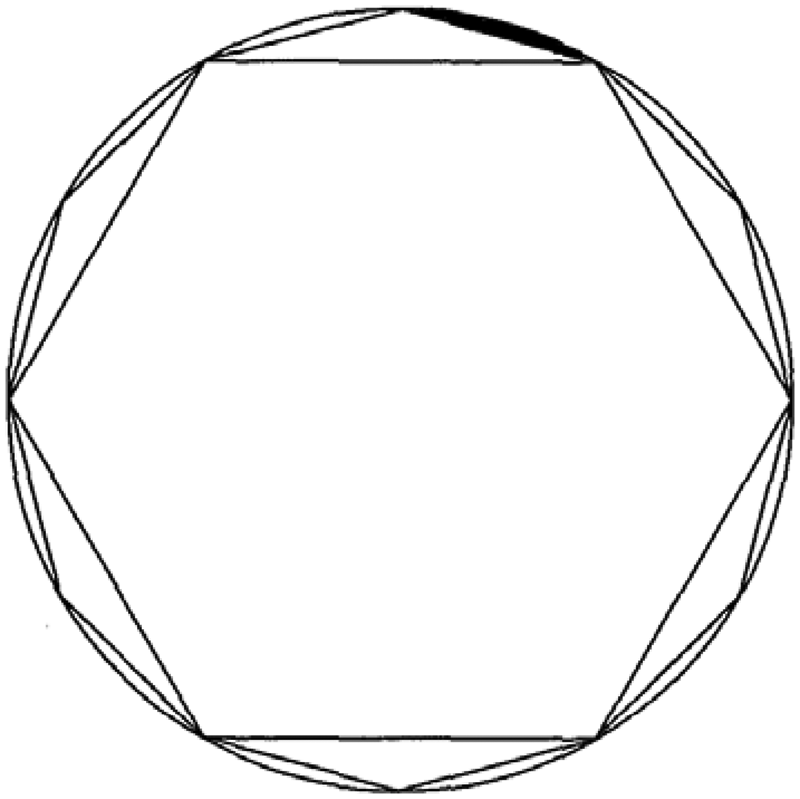
The kind of segment of a circle that appeared in Liu Hui's proof is referred to as tian (see Chemla and Guo, 2004: 992–993).
Finally, I would like to present an example of Liu Hui's proof that, while not as remarkable as many of his other long and complex proofs—such as his derivation of the volume of a quadrilateral pyramid with one edge perpendicular to the square base—nevertheless offers valuable insight into his approach to mathematical reasoning. The example discussed in Chemla (2009) highlights an often-overlooked detail in Liu Hui's proof practice, one that might initially seem self-evident and thus not in need of formal justification from a modern observer's perspective.
Examining how different translators have approached this example will further illustrate the intricate relationship between translation and interpretation. The original text from Liu Hui's commentary, along with its French and English translations, is provided in Table 1.
Different translations of one paragraph of Liu Hui's commentary on the procedure for multiplying fractions.
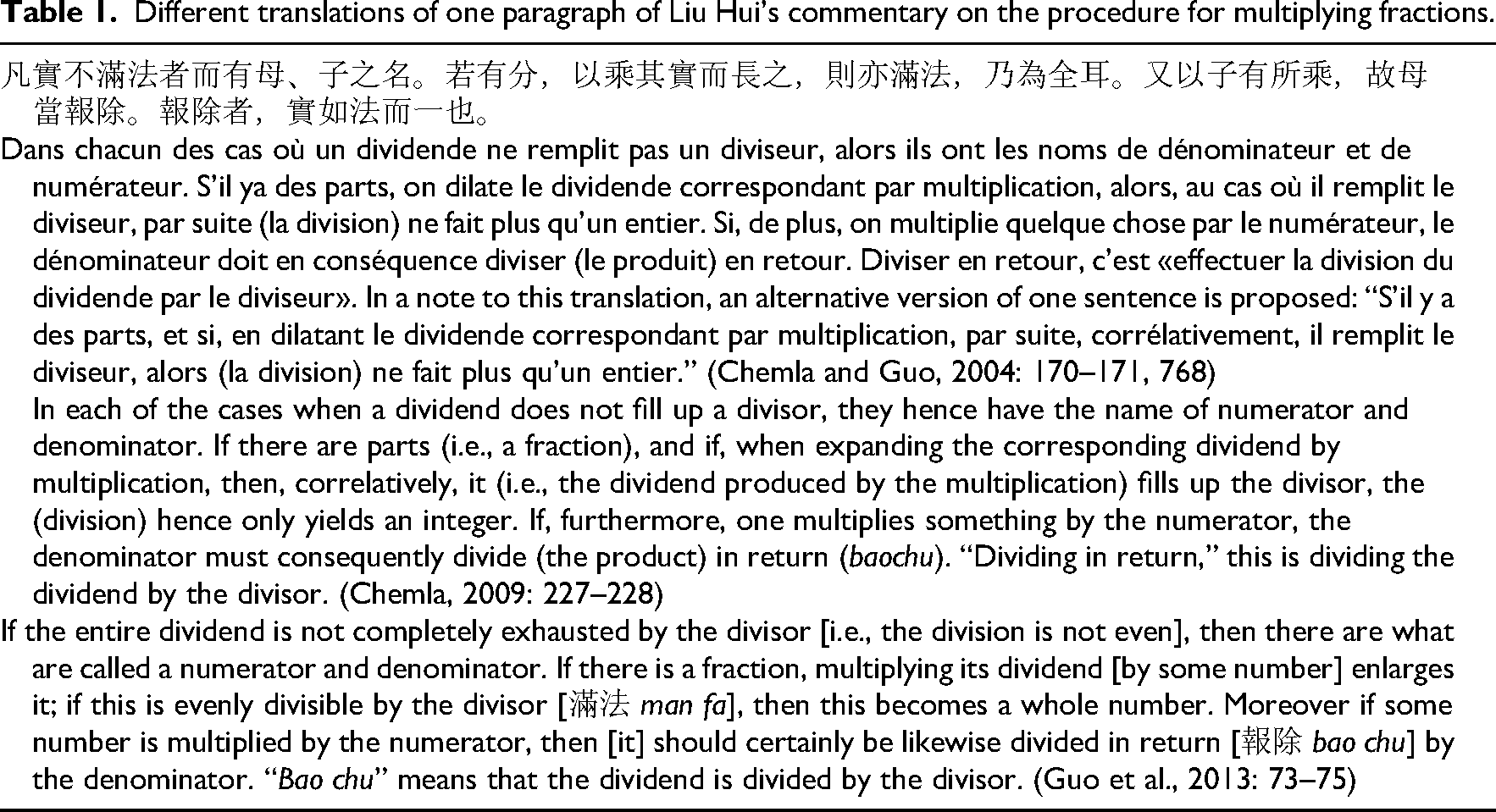
Different translations of one paragraph of Liu Hui's commentary on the procedure for multiplying fractions.
In Chemla's interpretation, the paragraph translated above remains merely one step in the proof of the procedure for multiplying two fractions. It is specifically concerned with demonstrating that the result of multiplying a quantity by a fraction can be obtained by first multiplying it by the numerator and then dividing the result by the denominator. While this operation may seem self-evident and not in need of formal proof for modern observers, Chemla's analysis suggests that Liu Hui provides a sophisticated justification for it. The term baochu (報除), rendered as ‘divide in return’, serves as a crucial hint, revealing Liu Hui's reasoning process for the correctness of the canonical text.
Under this interpretation, ‘以分子有所乘’ (yi fenzi yousuocheng) is understood as follows: rather than multiplying a given quantity directly by the fraction a/b, one first multiplies it only by the numerator a. The determination of the integer numerator a is linked to the interpretation of the previous sentence, which states: ‘If there are parts (i.e., a fraction), and if, when expanding the corresponding dividend by multiplication, then the dividend produced by the multiplication fills up the divisor, the division hence only yields an integer.’ This explanation clarifies that the numerator a is obtained through the product of the fraction a/b and b.
Now, returning to the operation of multiplying a quantity by the fraction a/b: since the quantity has already been multiplied by a, which effectively results in b times the fraction a/b, this excess must be corrected by dividing the product by the factor that was unnecessarily multiplied—namely, the denominator b. This is Liu Hui's reasoning for why multiplication by a fraction a/b can be carried out through first multiplying by the numerator and then dividing the result by the denominator. As pointed out by Chemla (2009: 228), the term baochu in this context, with bao translated as ‘in return’, reflects Liu Hui's explanation of the reason for performing the division. Without this explanation, baochu could simply be replaced by the term ‘division’ itself. In translation, it is essential to capture these subtle clues that reveal Liu Hui's line of thought. Furthermore, the term baochu in this sense appears in several other instances within The Nine Chapters, demonstrating that the canonical text also engages, at least indirectly, with the justification of algorithmic correctness.
Before the English translation by professors Dauben and Xu, the understanding of baochu in their Chinese co-operator Professor Guo's own commentary on The Nine Chapters differed from the interpretation in the French translation mentioned above. The modern Chinese translation (yiwen 译文) does not explain the specific operation referred to by ‘you yi fenzi yousuocheng’. It treats the word ‘以’ as a conjunction indicating a causal relationship, and the result that follows is explained in modern Chinese as ‘therefore, on the denominator, division should be applied in return’ (Guo, 2009: 31–33). The phrase ‘on the denominator’ (在分母上) clearly shows that this understanding is significantly different from that in the French translation. The latter suggests that the product of the previous step should be divided ‘by the denominator in return’, thereby offsetting the effect of multiplying something by the ‘numerator’ earlier.
From this, we can observe that the interpretation of a single word, ‘母’ (denominator), when applied to modern language, leads to considerable differences in understanding. In the modern Chinese translation, the term is understood as an adverbial phrase indicating the position of the operation, whereas in the French translation, the term is understood as an operand that plays a key role in executing the algorithm. However, if we adopt the first interpretation, the reason for performing baochu cannot be linked to Liu Hui's previous explanation of how an integer appears in the earlier part of his commentary.
In the 2013 translation, in which Professor Guo participated, ‘故母當報除’ (gu mu dang baochu) is translated as ‘then [it] should certainly be likewise divided in return by the denominator’. This interpretation already differs from the one in the 2009 Chinese translation and is much closer to the French translation's explanation. It reveals why Liu Hui considered division to eliminate the effect of the previous operation. However, there is still discrepancy in their interpretations. In the footnote to the English translation of this sentence, an example is provided for the multiplication of two fractions, which in fact connects to the next sentence that follows our quotation according to the French translation, which interprets Liu's process of proving as several progressive stages.
Since the mid-19th century, European missionaries and sinologists have begun to explore and understand mathematics in China, leading to the translation of mathematical texts and their introduction to European readers. By the 20th century, ancient Chinese mathematical works gradually attracted increasing attention in the European language-speaking world, with more and more works being translated into these languages. The Nine Chapters with Liu Hui's commentary is among the works that have received the most translations and explanations.
There are various approaches to translating ancient mathematical texts. From the perspective of fostering communication and dissemination, one might expect a simple, unified translation for terms or even the original texts. However, for academic research, the existence of multiple translations reflects differing perspectives and methodologies, highlighting the richness of the meaning of the ancient mathematical texts as well as the complexity of historical research.
In summary, the translation of ancient mathematical works is an exceptionally challenging task, especially in the present day, when readers’ expectations of translations have far surpassed the earlier goal of merely gaining a general understanding of the mathematical content. On one hand, we must retain the terminology and characteristics of the original text; on the other hand, we cannot be overly rigid in adhering to literal meanings. Instead, we should strive to restore the conceptual attributes of the terms as they were understood by the original practitioners—were they purely literal, or did they already carry mathematical significance as terms when they were used? Furthermore, the example of fraction multiplication shows that the analysis of algorithms is particularly challenging. While there may be different interpretations of the texts, we must avoid assuming that what seems ‘obvious’ to us today was equally evident to the ancient scholars, who may have provided careful and deliberate proofs.
Depending on the objective of the translation, different strategies may be employed. However, a translation method that aims to preserve the relevance of the original texts—despite potentially sacrificing the readability of the translated text—can serve as a research tool for uncovering overlooked characteristics of mathematical expressions. This approach can further facilitate interpretations and deepen our understanding of the algorithms and proofs in ancient mathematics.
Footnotes

Funding
The author disclosed receipt of the following financial support for the research, authorship, and/or publication of this article: This work was supported by the ‘Practical Mathematics in Thirteenth-to-Sixteenth-Century China’ project launched by the Youth Innovation Promotion Association, CAS (grant no. E2292G01) and the ‘Western Scholars’ Translations, Interpretations and Understandings of Mathematical Works in Ancient China since the Nineteenth Century’ project launched by the National Social Science Fund of China (grant no. 20CZS081).
Declaration of conflicting interests
The author declared no potential conflicts of interest with respect to the research, authorship, and/or publication of this article.
Author biography
Xiaohan Zhou is an associate research fellow at the Institute for the History of Natural Sciences, Chinese Academy of Sciences. His main research interests are the history of mathematics in China and historiography of mathematics.