



Abstract
To explore the role of science museums in shaping the public sphere and contributing to internal reconstruction, our research conducted a positive discourse analysis of the exhibits at the Time Science Museum as a representative case. The results indicate that the museum provides an open space for public discourse through spatial design and visual symbols, promoting the naturalization of ‘time’ as a technical concept and highlighting the power relations between the state and the scientific community. As a site of the cultural public sphere, the museum partially reconstructs the social fabric of the time-science field. However, its potential for democratic education has not yet been fully realized.
Introduction
Since the mid-twentieth century, scientific endeavours worldwide have witnessed a shift from ‘little science’ to ‘Big Science’, with large-scale facilities such as rockets, high-energy accelerators and high-flux research reactors becoming symbols of contemporary science (Weinberg, 1961). From the perspective of science communication, the rise of Big Science and its infrastructures has attracted significant public attention and increasingly serves as an outward expression of science in public culture. At the same time, the construction and operation of Big Science projects rely on substantial public funding, which in turn necessitates ongoing outreach and popularization efforts to secure public support.
Nevertheless, the popularization of Big Science has consistently faced major challenges. In the era of Big Science, the boundaries between scientific research and other societal domains, such as politics, economics and culture, have become increasingly blurred. This blurring not only complicates science communication but also fuels scepticism, and at times resistance, within the scientific community towards popularization efforts. Drawing on Derek J de Solla Price's (1963: 115) insights on Big Science, it can be argued that addressing these challenges requires mobilizing internal forces within the scientific community to reconstruct the social fabric of science, thereby responding more effectively to the external pressures of Big Science. In contemporary practice, this reconstruction is closely tied to the creation of discourse and space. For example, the CERN Science Gateway provides science education and outreach programmes for visitors worldwide (CERN, 2024), serving as a nexus for public engagement and fostering discursive spaces that bring together diverse stakeholders, including politicians, artists, curators and media professionals (Koek, 2017).
In this context, our research examines museums as public institutions and their role in science popularization, knowledge dissemination and public engagement. We hypothesize that science museums can be constructed as spaces of public discourse between the state and the general public (Barrett, 2011: 81). Within such spaces, scientific institutions and their staff promote the formation and dissemination of public discourse through discursive practices and spatial design, thereby fulfilling the functions of knowledge dissemination and public engagement inherent in Big Science.
To explore this hypothesis, this research focuses on the Time Science Museum at the National Time Service Center (NTSC) of the Chinese Academy of Sciences (CAS) as a case study, guided by three research questions:
The Time Science Museum was selected as a case study for several reasons. First, Chinese science museums have become important sites for science communication, with 1076 institutions operating in 2023 and attracting more than 171 million visitors, including 38,200 offline lectures and 6474 offline exhibitions (Ministry of Science and Technology of China, 2024). Second, the Chinese government has incorporated science popularization into Big Science institutions through legislation and administrative measures, providing strong institutional support. Third, many research institutions, particularly the CAS, have established regular programmes such as public open days and public lectures to engage citizens. Taken together, these factors highlight the Time Science Museum's suitability for examining how museums function as spaces of public discourse and engagement.
To address these questions, this research draws on theoretical frameworks including public sphere studies, spatial imagery and social semiotics, which provide conceptual tools for analysing the interplay between discourse, space and public engagement. Methodologically, we adopted a mixed-methods approach that combines corpus analysis, multimodal analysis and semi-structured interviews, allowing us to systematically examine exhibition content, interpret visual and spatial semiotic elements, and explore the perspectives of visitors and curators. A positive discourse analysis (Martin, 2004) was conducted on the museum's exhibition content, addressing three interrelated levels: text, discourse practice and social practice. In doing so, the research aimed to explore how textual narratives, visual symbolism and spatial arrangements facilitate multimodal communication, support science popularization and foster public engagement with large-scale scientific infrastructures such as the BPL and BPM time service systems developed by the NTSC of CAS.
Literature review
The museum as a cultural public sphere
Since the 1970s, museums have undergone fundamental transformations. The public communication of science and technology emerged as a distinct field of practice, and the interactivity of museum exhibitions was gradually emphasized (Schiele, 2008: 33). Through educational reform, the modern museum has evolved into an innovative place of learning (Schiele, 2008: 33–34). In the context of growing technological risks, it functions as a bridge in the increasingly strained relationship between science and the public, providing a ‘public refuge’ where a sceptical public can raise questions (Schiele, 2008: 35–36).
Current scholarship regards museums as important institutions and spaces within the public sphere, serving simultaneously as platforms for knowledge dissemination, public engagement and discursive communication (Barrett, 2011: 43–44; Schiele, 2008: 33, 35–36). Scientific exhibitions in museums are invariably entangled with cultural, social and political influences, and they necessarily involve national interests and the ‘business of negotiation and value-judgment’ (Macdonald, 2007a). According to the perspective of the ‘new museology’, science museums do not merely display science; they also create particular forms of science for the public. By cultivating their own cultural authority, they confer legitimacy upon specific scientific knowledge and designate particular practices and artefacts as the kinds of science that the public ought to understand, thereby constructing the proper domain of science (Macdonald, 2006, 2007a, 2020: 256–260). For example, Sharon Macdonald (2007b) observes that the Food for Thought exhibition at the Science Museum in London exemplified a ‘supermarket model’, in which knowledge is no longer presented as an accumulative system of truths but is reconfigured as information for visitors to select for themselves. In this way, the exhibition empowered the public and redistributed authority from producers to consumers, exhibiting a tendency towards democratization (Macdonald, 1996, 2020: 253–256).
A growing body of research has examined the role and impact of museums as sites of the public sphere, with notable contributions by Ashley (2007), Cameron et al. (2014), Noy (2017), Larsen (2018), and Shin (2022). In particular, scholars have highlighted the significance of discourse practices, symbol systems and textual analysis (Katz-Kimchi and Atkinson, 2014; Noy, 2016, 2020), often drawing on Jürgen Habermas's theory of the public sphere as a foundational framework (Vårheim and Skare, 2022). According to Habermas (1964, 1991: 28), the public sphere is an intermediary domain between society and the state, where rational citizens engage in critical debate over political authority, thereby shaping public opinion and fulfilling the public's role of critiquing and monitoring the ruling structure, which in turn influences political decisions. Habermas (1991: 29) further argues that the political public sphere was preceded by a non-political form—the literary public sphere of eighteenth-century civil societies in European countries such as England and France. Institutions like museums functioned as physical embodiments of the literary public sphere, offering spaces for public discussion and interpretation of cultural artefacts and ideas.
Jennifer Barrett (2011: 15), however, argues that research on museums often incorrectly assumes a direct link between culture, spatial practices or aesthetics and Habermas's theory of the public sphere. First, although the notion of the public sphere contains spatial metaphors, in Habermas's theory it does not refer to a specific physical space but rather to discourse around public affairs (Barrett, 2011: 18). For Habermas, spatial context itself is not a defining element of the public sphere. Second, the visual character of publicness is not adequately addressed in his theory, and the importance of vision and visuality as modes of discourse has been underexplored in public sphere studies (Barrett, 2011: 38, 41). Third, Habermas tends to favour a non-aesthetic assessment of the public sphere (Barrett, 2011: 30). In his account, aesthetic judgements are subjective, cannot be universalized and are excluded from rational discourse (Barrett, 2011: 40). Consequently, cultural forms and practices beyond literature are generally confined to the private rather than the public sphere.
Barrett therefore reworks Habermas's ‘public sphere’ into the concept of a cultural public sphere. She argues that space and vision are integral to its functioning, and that public discourse is inherently spatial and visual. In this view, institutions such as museums play a pivotal role in public sphere discourse by embodying, through visual symbolism, their significance as sites of the cultural public sphere (Barrett, 2011: 40–41).
Following Barrett's perspective, our research focuses on the spatial and visual dimensions of public discourse, conceptualizing the science museum as a site of the cultural public sphere. Within this open space, Big Science and its large-scale research infrastructures, as elements of public culture, enter public discourse through visual symbols and become subject to public deliberation and discussion, thereby fulfilling the functions of knowledge dissemination and science education. This process is inherently contextual or context-bound (Barrett, 2011: 42; Broks, 2006: 134). Furthermore, drawing on Barrett, we distinguish the role of museums as sites of the public sphere in relation both to the state and to the public. In relation to the state, museums are constrained by national interests, which may limit their capacity as democratic spaces to opinion formation without necessarily leading to broader social change (Barrett, 2011: 20). In relation to the public, however, museums exert significant social influence by facilitating community exchange and shaping public understanding (Barrett, 2011: 20).
Spatial imagery in science popularization
With museums conceptualized as sites of spatial and visual public discourse, it is instructive to explore how spatial design in science museums mediates public engagement and knowledge dissemination. The concept of spatial imagery, developed by Peter Broks, provides a theoretical framework for understanding how the spatial and visual dimensions of public discourse shape the popularization of Big Science (Broks, 2006: 144–145).
According to Broks (2006: 144), the popularization of Big Science should not be conceived as a linear channel of information transmission, but rather as a ‘forum’ or ‘conceptual space’. This suggests that knowledge dissemination in Big Science should move beyond models of one-way indoctrination or two-way dialogue and instead focus on the dynamics of spatial openness and closure. Openness implies accessibility, where scientific authority relaxes its control over the domain of Big Science, allowing the public to actively participate in the dissemination of knowledge and the understanding of its infrastructures (Broks, 2006: 147). Spatial closure, by contrast, restricts intellectual freedom, meaning that scientific authority itself is bound by the epistemological constraints of the knowledge system. While such closure limits intellectual freedom, it also serves to ensure the accuracy of scientific information and regulate its application within the structured boundaries of the knowledge system (Broks, 2006: 147). At the same time, the relationship between the public and the space is mutually constitutive: while space shapes the modes of public action and defines trajectories of engagement, the public may also appropriate and use the space in unintended ways, sometimes leading to misinterpretations or misapplications of scientific concepts (Broks, 2006: 147–148).
Recognizing the importance of spatial imagery requires rethinking the relationship between science and the public in Big Science communication. Previous science communication models have been dominated by the deficit model of knowledge dissemination (Bauer et al., 2007; Simis et al., 2016), which views the public as lacking knowledge and therefore in need of correction or indoctrination by scientists. This model reflects an unequal relationship between scientists and the public, not only in terms of power dynamics but also in epistemological asymmetry (Broks, 2006: 129; Cortassa, 2016).
From the perspective of spatial imagery, the conflict between science and the public lies less in the public's understanding of scientific concepts than in scientists’ control over their meaning. In this process, scientists face a dilemma (Broks, 2006: 148). On the one hand, they seek to promote engagement through spatial openness, thereby enhancing their legitimacy. On the other, they aim to preserve authority by exercising closure over the meanings attributed to science. The central challenge of Big Science popularization, then, is how to enable scientists to reconstruct the field from within by opening its conceptual space to broader public engagement and accepting the public's role in meaning-making. In our research, such openness and engagement are enacted through discourse practices and spatial design strategies, which shape the conditions under which Big Science enters public discourse and becomes subject to negotiation and reinterpretation.
Discourse analysis of symbols
To investigate the formation and dissemination of public discourse in science museums and its broader implications, our research draws on the theory of social semiotics. Strongly influenced by MAK Halliday's systemic functional linguistics, social semiotics studies observable behaviours and objects as semiotic resources in social communication. It seeks to describe their potential for meaning-making (i.e., their semiotic potential) by identifying and analysing how these resources are used in communication (Van Leeuwen, 2005: 3–4). Drawing on Michel Foucault, social semiotics defines discourses as socially constructed knowledge about particular aspects of reality, developed in specific social contexts (Van Leeuwen, 2005: 94). Discourses are plural and can be used as frameworks for making sense of the world (Van Leeuwen, 2005: 95). From this perspective, discourse analysis examines how semiotic resources represent aspects of reality. According to Kress and Van Leeuwen (2020: 12), representation is a motivated and conventional process of sign-making in which the sign-maker is guided by an interest that condenses cultural and social histories together with an awareness of present contingencies. Representation thus involves transformative sign-making based on existing semiotic materials (previously produced signs). Such transformative actions, undertaken by individuals within specific social contexts, reshape resources and make possible the self-making of social subjects (Kress and Van Leeuwen, 2020: 13).
Applying social semiotics, science museums and their exhibits can be understood both as representations of Big Science and its infrastructures by science popularizers, and as semiotic resources enabling visitors’ transformative meaning-making. They are simultaneously cultural–historical products and cognitive tools for interpreting Big Science. In this sense, discourse analysis performs a dual function: it describes the meaning constructions developed by science popularizers and reveals the potential meanings constructed by the visiting public. According to Van Leeuwen, this analysis involves three main components: first, tracing the historical development of the discourse and situating it in its contemporary context (2005: 99); second, examining the relationship between discourse and social practice to uncover how knowledge links to action (2005: 102); and third, analysing the internal structure of discourse, which consists of ideas and attitudes—evaluations, purposes, legitimations—along with content elements such as actions, manners, actors, presentations, resources, times and spaces (2005: 104–109).
Furthermore, social semiotics posits that discourses can be realized in multiple ways (Van Leeuwen, 2005: 98). Discourse analysis is not confined to texts. Other semiotic resources, such as images, can also be analysed, and their semiotic potential can be revealed through visual analysis (Jewitt and Oyama, 2001; Kress and Van Leeuwen, 2020: 14). As semiotic resources, visual images perform representational and interactive functions (Jewitt and Oyama, 2001).
Method
Case selection
The Time Science Museum of the NTSC was chosen as a representative case for our research. Opened in October 2016, it occupies approximately 1000 square metres across two floors and contains more than 180 exhibits. Public visits exceeded 100,000 between 2016 and 2020, declined during the COVID-19 pandemic, and recovered to 32,000 in 2024.
At present, the museum comprises five main exhibition areas and one additional exhibition. The five main areas (Perceiving Time, Evolution of Timing Instruments, Development of Timing Technology, Application of Precision Time and Development of Modern Timing Work in China) were developed through expert symposiums with contributions from several CAS institutions. The lower floor emphasizes time-science research and applications through instruments and models, including a working Foucault pendulum and a 1:5 scale model of the Song Dynasty's Water Transport Observatory. The upper floor showcases the history of NTSC and its infrastructures. Exhibits include self-developed instruments and products, as well as historical documents. In addition, a series of interactive devices enables visitors to engage directly with time science. At the end of the visit, the Time and Timer Stamp Exhibition displays photographs of a private stamp collection donated by a citizen, organized into six themes (Navigation, Railroads, Timekeeping, Clock Culture, Mechanical Clocks and The Feeling of Time), offering a public perspective on the cultural and scientific significance of time and its technologies.
Methodological approach: Positive discourse analysis
Our research adopts the positive discourse analysis (PDA) method, which is a branch or orientation of critical discourse analysis (CDA) within the wider field of critical discourse studies (CDS) (Stibbe, 2017). CDA is a critical approach to social analysis that seeks to reveal social inequality, injustice and power-based oppression by examining the relationship between discourse and social elements such as power, ideology, institutions and social identity (Fairclough, 2012, 2018; Van Leeuwen, 2008). PDA, as a complementary or reconfigurative orientation to CDA, emphasizes the constructive potential of discourse, focusing on how it can be used to build communities and open spaces for action through redistributing power. In this sense, PDA facilitates CDS's dual aims of deconstruction and construction (Hughes, 2018; Martin, 2004; Rogers and Wetzel, 2013).
Guided by this perspective, our research applies Norman Fairclough's three-dimensional discourse analysis framework to the museum exhibits, analysing them at three interrelated levels: text analysis, discourse practice analysis, and social practice analysis. This approach allows us to examine how symbol systems, ideologies and power relations are represented and negotiated within the exhibits (Fairclough, 1992: 72).
At the text level, corpus linguistics methods were used to examine keywords and concordance lines. One of the authors transcribed all exhibition panel texts into a target corpus of 42 files (26,921 words) in Chinese, which was analysed using AntConc 4.3.1. To ensure accuracy and reliability, only word segmentation was applied, with no translation performed. The Fudan Chinese Text Categorization corpus (23 million words across 20 domains) served as the reference corpus. Keywords were identified and analysed based on keyness, normalized frequency and contextual diversity, while concordance lines were examined to capture textual discourse features.
At the discourse practice level, a multimodal analysis was conducted on 180 exhibits across six sections to explore the relationship between exhibit selection, spatial arrangement, visual design and accompanying texts. Exhibits included models, interactive installations, instruments, posters, videos, documents and statues. All materials were collected through on-site photography and repeated visits to the museum's virtual platform, enabling continuous access to exhibit content throughout the research process.
At the social practice level, semi-structured interviews with five staff and managerial personnel examined the museum's construction history, policy frameworks and sources of funding and personnel support, in order to uncover the power relations and ideologies underpinning the discourses. One author conducted the interviews, while the other recorded and took notes. Each session lasted approximately two hours.
Result
‘Time’ as a technical concept
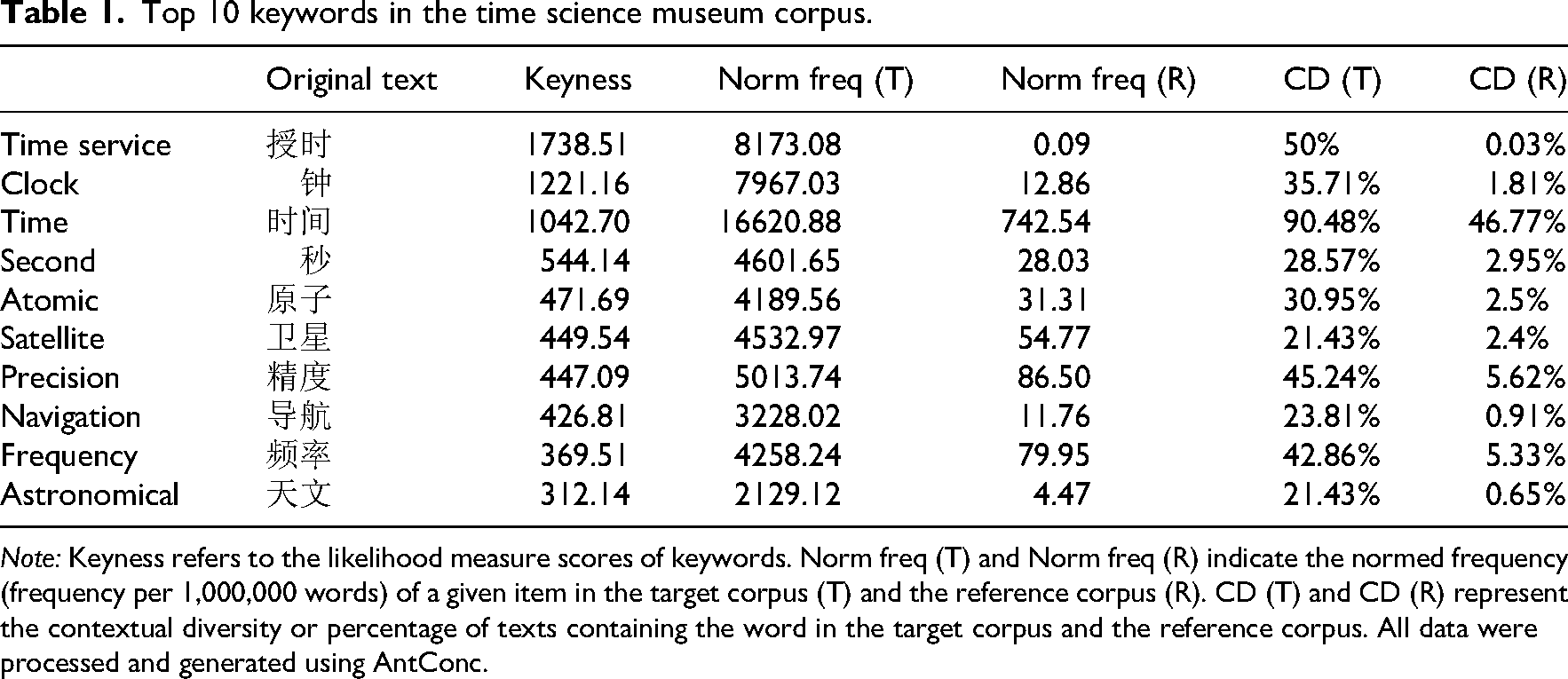
Using AntConc, our research identified multiple keywords. Given the significant size difference between the target and reference corpora, we limited the analysis to words that appeared at least once per million words in the target corpus and in at least 20% of the texts. These words were then ranked by keyness, measured using the likelihood ratio, yielding the top 10 keywords (see Table 1). Among these, the likelihood scores and normalized frequencies of the words ‘timing’, ‘clock’ and ‘time’ are significantly higher than those of the other keywords, indicating that these three words occur much more frequently in the Time Science Museum texts than in common Chinese texts. Moreover, the word ‘time’ exhibited both higher normalized frequency and greater contextual diversity in the target and reference corpora. This suggests that ‘time’ is not only a central theme in the museum's exhibition texts but also an important concept in general Chinese language usage, serving as both the core term for knowledge dissemination and the key topic for public engagement.
Top 10 keywords in the time science museum corpus.
Top 10 keywords in the time science museum corpus.
Note: Keyness refers to the likelihood measure scores of keywords. Norm freq (T) and Norm freq (R) indicate the normed frequency (frequency per 1,000,000 words) of a given item in the target corpus (T) and the reference corpus (R). CD (T) and CD (R) represent the contextual diversity or percentage of texts containing the word in the target corpus and the reference corpus. All data were processed and generated using AntConc.
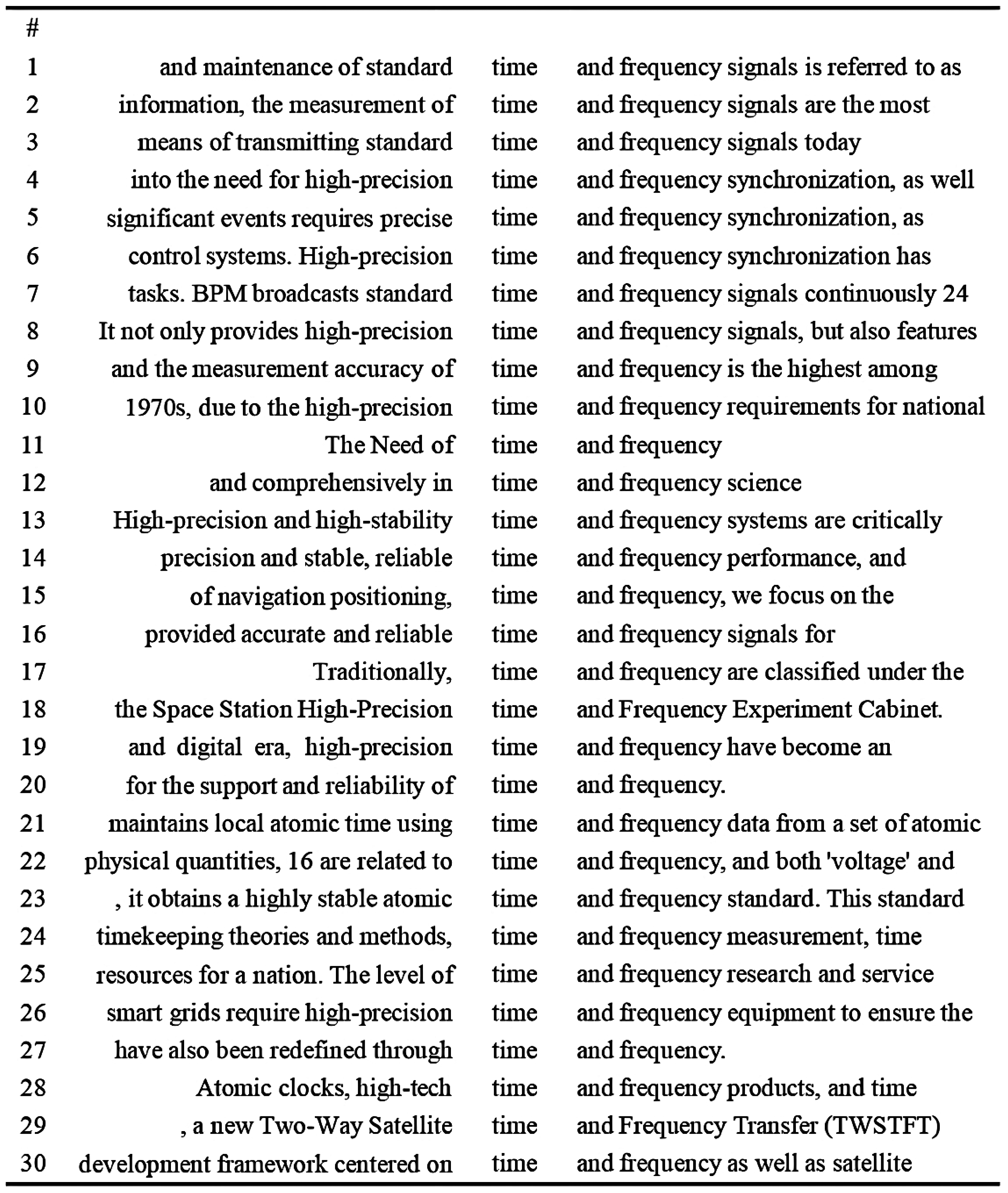
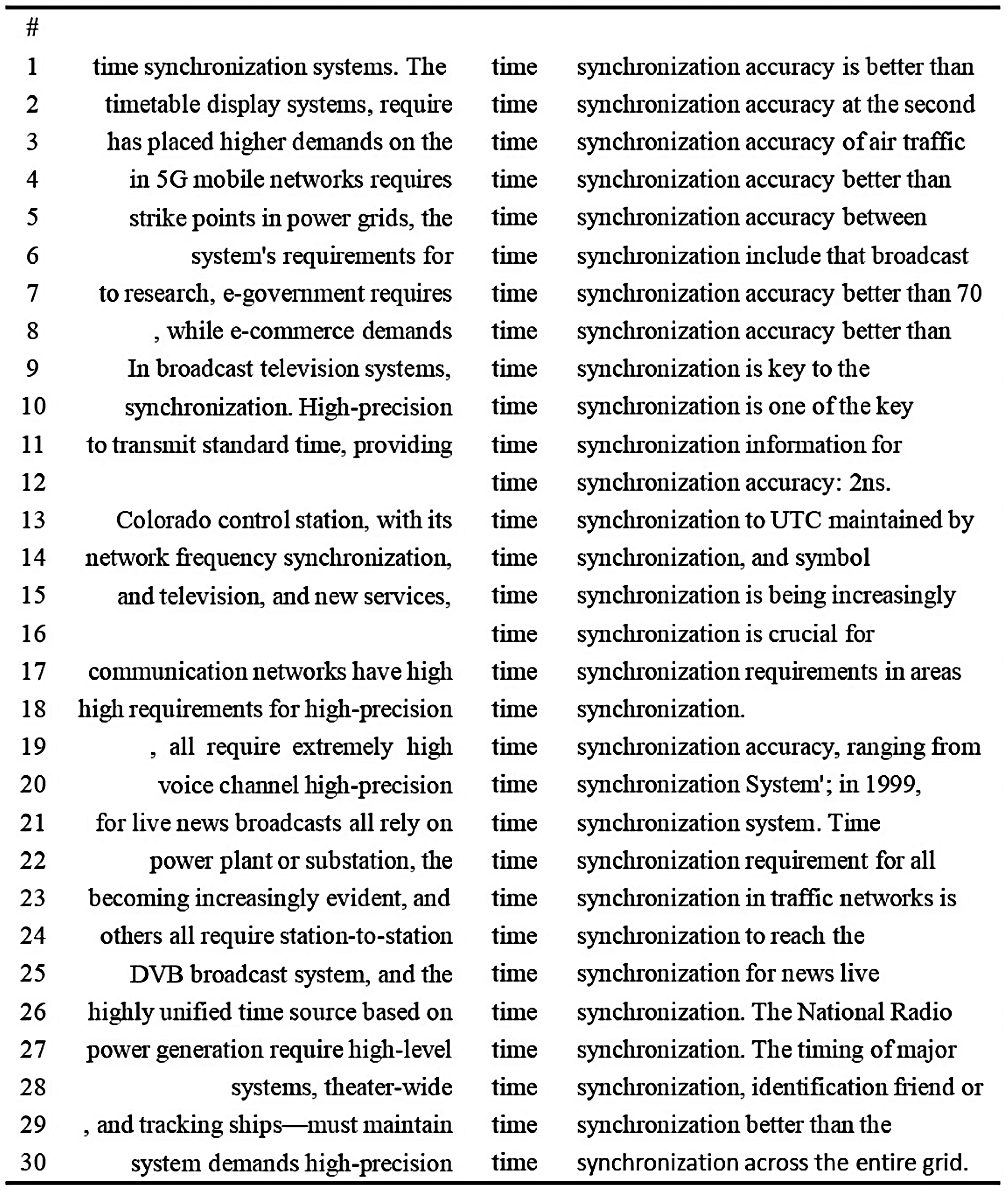
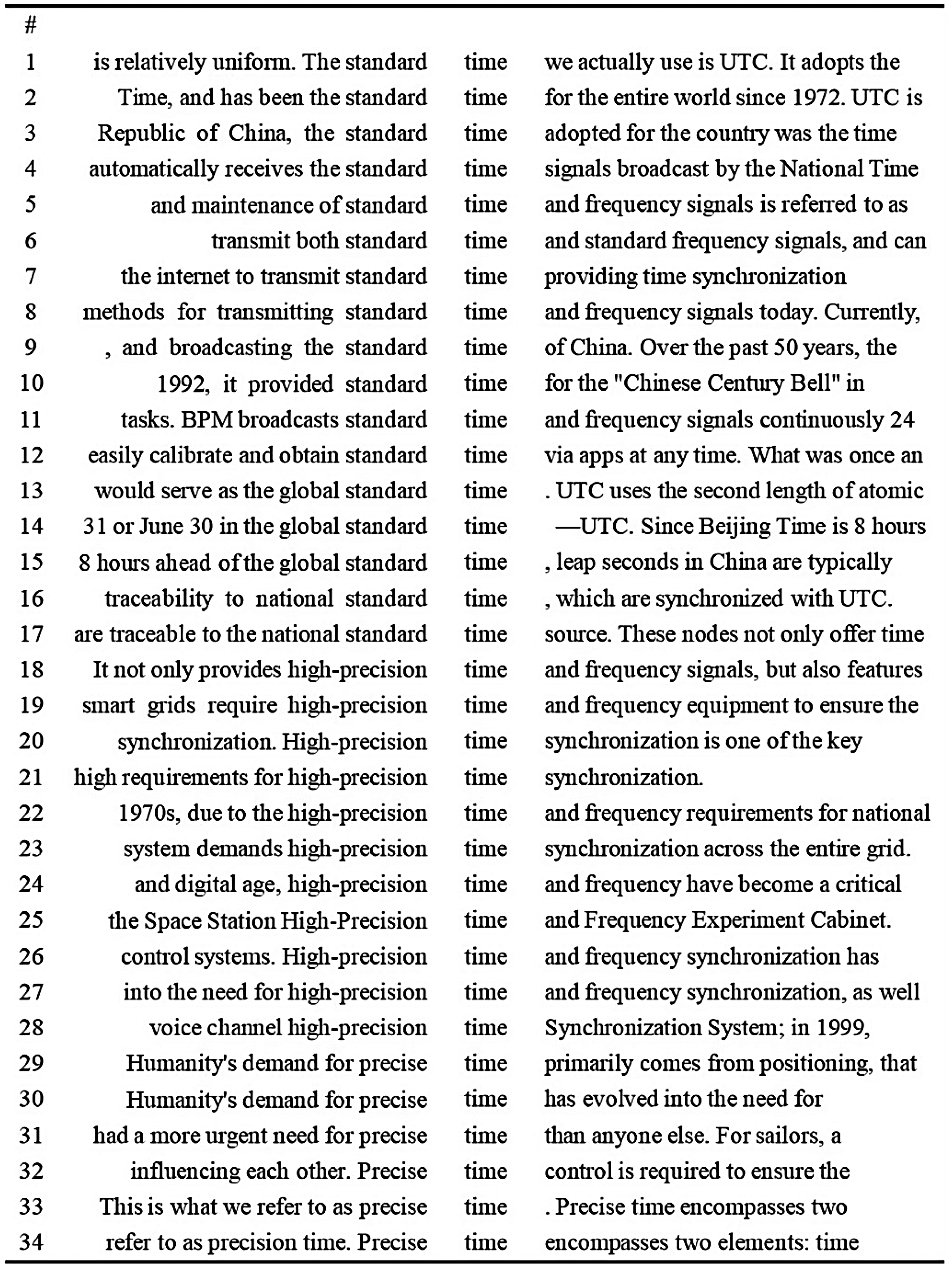
On that basis, our research examined the context of the keyword ‘time’ through concordance line analysis, focusing on its collocations. We searched for collocations within two words to the left and right of ‘time’ and ranked them by frequency to identify the most common collocations. On the right side, two nouns frequently followed ‘time’: ‘frequency’ and ‘synchronization’. On the left side, three adjectives commonly preceded ‘time’: ‘standardized’, ‘high-precision’ and ‘precise’ (see Figures 1 to 3 for concordance lines related to these five collocations).
Concordance lines for ‘time’ in Science Museum corpus (Part 1, sort to right).
Concordance lines for ‘time’ in science museum corpus (part 2, sort to right).
Concordance lines for ‘time’ in science museum corpus (sort to left).
These collocations and their contexts indicate that, within the texts of the Time Science Museum panels, ‘time’ is constructed as an objective, operational and technical concept that functions to measure and coordinate the large research infrastructures. At the semantic level, ‘time’ is assigned an instrumental and institutionalized meaning, defined within the semantic framework as a measurable, transferable and controllable physical quantity in scientific and technological systems, or as a quantifiable and adjustable technical indicator in the governance system. Furthermore, at the pragmatic level, ‘time’ exhibits technical, normative and authoritative features. Its pragmatic function therefore extends beyond the dissemination of scientific knowledge to shaping rationality and authority in the field of time science, thereby providing linguistic support for the legitimacy of Big Science and its instruments.
From the perspective of textual analysis, the science popularization practices of the Time Science Museum thus imply a process of constructing and naturalizing scientific concepts, in which exhibition discourses gradually present technical concepts as taken for granted and objectively authoritative. In this process, science popularizers attempt to conceptually detach ‘time’ as a technical concept from everyday experience and cultural connotations, thereby constructing and disseminating both the professional authority of time science and the technical application value of related Big Science and its infrastructures.
The multimodal analysis reveals how discourse in the Time Science Museum is generated, disseminated and influences the visiting public, thereby contributing to the naturalization of scientific concepts and technological authority. It is worth noting that, throughout this process, the Time Science Museum neither excludes the personal experiences and lay knowledge of the general public nor entirely conceals the cultural and historical background of time science. On the contrary, through visual communication and spatial design, the museum actively incorporates traditional culture and social history as significant resources in its semiotic system, thereby providing a platform and space for the formation and dissemination of public discourse.
First, the Time Science Museum relies on a wealth of visual semiotic resources, such as images and models, to integrate the public's subjective experience into its discourse practices. For example, in the Perceiving Time exhibition, a large model of the Foucault pendulum is prominently placed at the centre of the hall, allowing every visitor to observe the pendulum's slow change in swing direction (see Figure 4). At a carefully chosen moment, both the exhibition narrator and the panel text declare: ‘The Foucault pendulum allows us to see the periodic oscillation and uniform rotation of the Earth, which is time!’ Similarly, in the Time and Timers Stamp exhibition, the museum showcases a stamp collection donated by an ordinary citizen (see Figure 5). Using 11 panels and hundreds of stamp images, the exhibition traces how time and timers have left their mark on human culture, poetically expressing: ‘Have you realized the source of time, and the ever-unfolding course of history that flows beside it—so calm, yet so profound?’
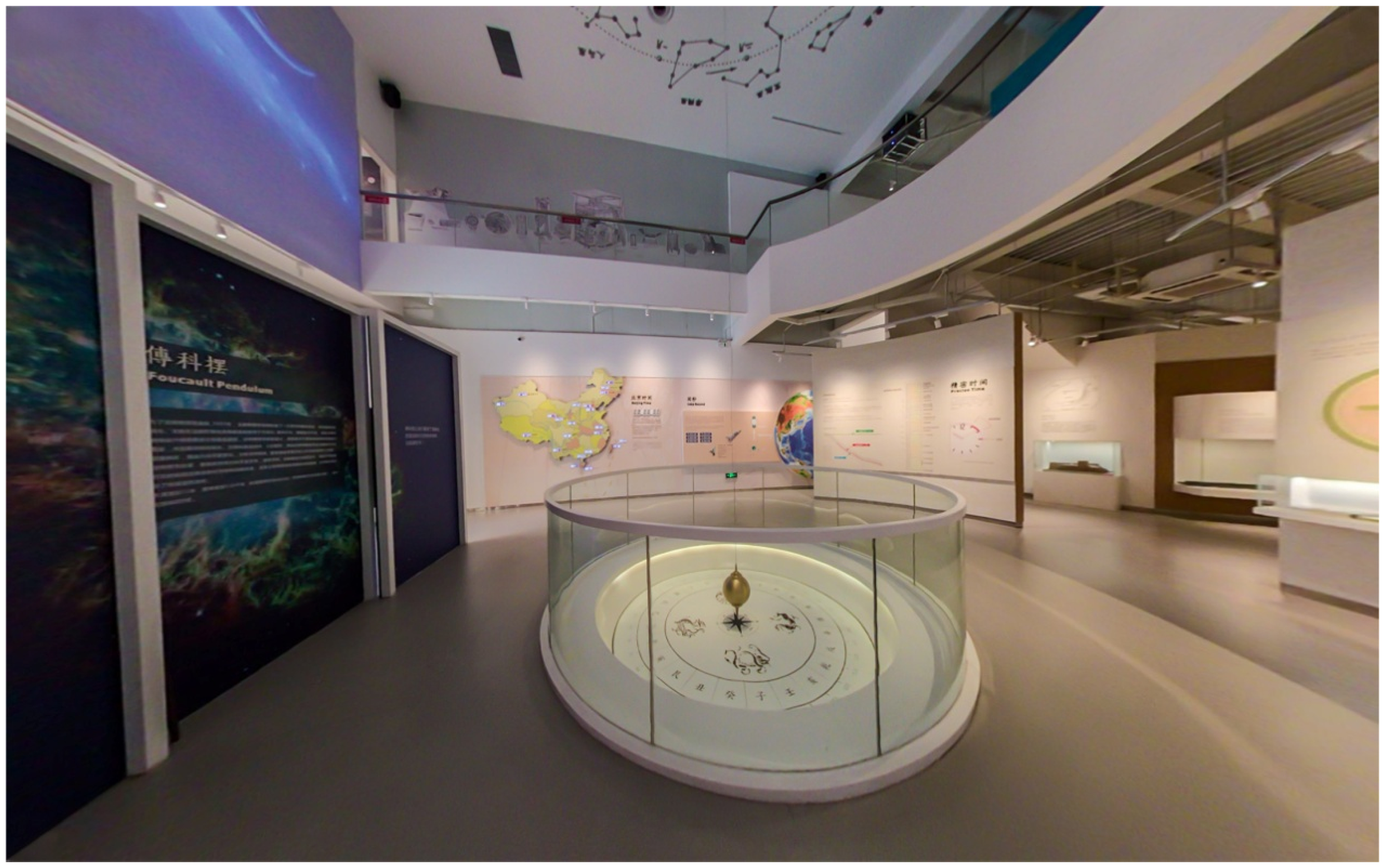
The model of the Foucault pendulum in the Perceiving Time exhibition.
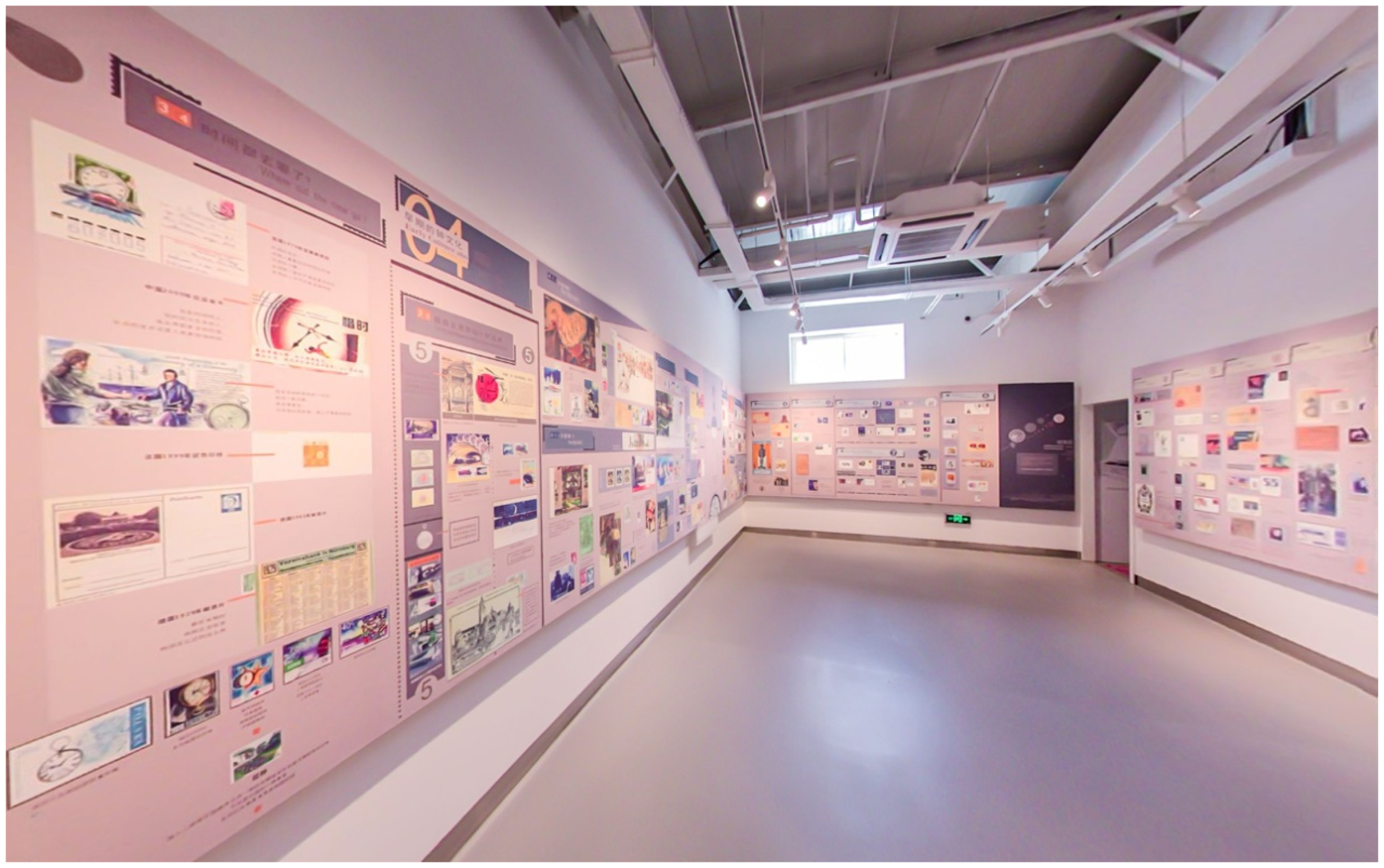
Stamps in the Time and Timers Stamp exhibition.
Second, the Time Science Museum guides discourse practices through spatial design. For instance, the design of the Sensing Time exhibition area resembles an atrium, creating a vertical space with significant openness and height that extends throughout the building. This space conveys a sense of sharing, inclusion and interaction to visitors, encouraging communication and engagement among them. By contrast, the Evolution of Timing Instruments and Development of Timing Technology exhibition areas are long and narrow, resembling passageways. Such a spatial design serves as a tool for popularization by providing visitors with a clearer path and direction, thereby shaping specific cognitive tendencies.
Furthermore, the Time Science Museum draws on cultural contexts to disseminate the technical attributes of ‘time’. In the Evolution of Timekeeping Instruments section, the exhibition displays numerous models of ancient Chinese timekeeping instruments and statues of their creators. A particularly striking example is a model of a Song Dynasty Water Transport Observatory, which combines timekeeping functions with architectural aesthetics, adorned with exquisite bird and dragon decorations. These semiotic resources provide a cultural background for visitors’ cognitive processes and constitute the semiotic materials for their transformation and creation. Together with textual statements such as ‘The timekeeping instruments of each era represent the highest technological level of that era’ and ‘Joseph Needham believed that the Water Transport Observatory may be the ancestor of the astronomical clocks of the late Middle Ages in Europe’, these elements help visitors integrate ancient timekeeping technologies and scientific instruments into their cultural understanding. As a result, they can better appreciate the dissemination of knowledge about time science and develop an interest in the history, functions and achievements of its large research infrastructures.
Finally, the Time Science Museum seeks legitimacy from the public by presenting the history of the construction and operation of large research infrastructures. In the Development of Modern Timing Work in China section, the museum introduces visitors to the background and development of short-wave and long-wave timing stations, among other infrastructures. This part of the exhibition spans 50 years of history and is divided into four stages. In each stage, the exhibition panels frequently use terms such as ‘task’, ‘subject’ or ‘work’, each accompanied by multiple historical photographs of decommissioned instruments or devices. At the end of the exhibition area, a scale model of the large research infrastructures is displayed next to a panel titled ‘Strategic Positioning of the 13th Five-Year Plan for Economic and Social Development of the NTSC’, which illustrates the connection between historical missions and these infrastructures. By incorporating this historical dimension into its exhibition design, the Time Science Museum integrates broader social contexts—such as national strategy, economic development and social progress—into its discourse practices. Moreover, it conveys the national ideological message of ‘focusing on doing big things’. This historical and ideological framing is intended to resonate with visitors, encouraging them to identify with the rationality of time science and to recognize the legitimacy of its large research infrastructures.
The interviews enriched our analysis of social practice by revealing the latent power dynamics and ideological tensions underlying the discourses employed in the Time Science Museum's science popularization. In particular, they exposed the complex relationships between central and local authorities, national ministries and research institutions, as well as the differing ideological orientations of the government and the scientific community. These tensions are embedded in the formation and dissemination of discourse throughout the museum's exhibitions.
In terms of power, the discourse at the Time Science Museum is deeply shaped by the institutional context of science popularization. At the national level, while policies such as the Law of the People's Republic of China on Popularization of Science and Technology and the Measures for the Administration of Major State Scientific and Technological Infrastructures exist, they provide only limited legal and regulatory guidance. These policies do not explicitly address discourse practices; nor are they effectively implemented by local governments. By contrast, at the institutional and operational levels, internal management rules developed by the NTSC and its Science and Technology Division have compensated for the absence of clear macro-level directives. These local rules provide concrete guidance and constraints for how science popularization discourse is generated and circulated. As a result, science popularizers at the Time Science Museum hold a certain degree of autonomous power in shaping discourse. Furthermore, in the absence of strong policy support, front-line science communication staff are also responsible for securing funding and organizing personnel, which further reinforces their practical influence in the institutionalization of science popularization.
In terms of ideology, the popular-science discourse surrounding time science reflects the ideological orientations of both the state and the scientific community. On the one hand, it is embedded in historical and modernization narratives that serve to legitimize the state's pragmatic approach to science and technology. The NTSC and its large scientific infrastructures are primarily funded by government sources (although science popularization itself receives limited support) and are expected to contribute to national economic development and social progress. Accordingly, the discourse of science popularization is shaped to highlight the rationality and legitimacy of time science and its affiliated Big Science projects to the general public. On the other hand, the discourse also reflects the epistemic norms of the scientific community. Most of the popular-science practitioners at the Time Science Museum are themselves researchers in the field of time science. Their discursive practices are thus influenced by the cognitive styles and value systems of the expert community. In this context, popularization not only communicates the objectivity of time science but also reinforces the authority of the large scientific infrastructures underpinning it.
Discussion
The PDA indicates that the Time Science Museum, as a public space, provides a platform for the formation and dissemination of public discourse, as well as for influencing public understanding. Through its spatial design and visual communication strategies, it facilitates dialogue and engagement around time science and its large scientific infrastructures. In this process of knowledge dissemination and science popularization, the public space offered by the Time Science Museum is both material and conceptual. Physically, each section of the exhibition uses openness and interactivity to encourage visitor participation and communication. Conceptually, the museum opens up its interpretive space to a certain extent, allowing visitors to engage with scientific knowledge from their own experiential and lay perspectives, thereby contributing to the publicization of time science. In particular, the museum makes full use of the visual characteristics of the public sphere, shaping the openness of the time-science field through visual semiotic resources such as images and models. Through this visual experience, the public can not only ‘see’ scientific knowledge and large research infrastructures, but also perceive the social relations and historical contexts embedded in them.
Therefore, the Time Science Museum can be regarded as a key institution within the cultural public sphere, exerting potential influence on interactive communication and public self-shaping in the domain of Big Science. From a social semiotics perspective, the influence of time science is realized primarily through the representation and transformation of semiotic resources. In textual discourses, the keyword ‘time’ plays a dual role. On the one hand, it is used by science popularizers to represent the scientific concepts and technological pathways of time science and its associated infrastructures. Through recurring collocations, time is constructed as an objective, operational and service-oriented symbol at both semantic and pragmatic levels. On the other hand, ‘time’ serves as semiotic material that enables visitors to engage in semiotic transformation and creation, simultaneously contributing to self-making. Its statistically significant contextual diversity suggests that the keyword ‘time’ incorporates a wide range of historical, cultural and experiential meanings within the museum's semiotic system. Furthermore, in the domain of discourse practice, science popularizers make extensive use of semiotic resources—such as images, models and statues—to represent the cultural and technological history of time science (e.g., the development of timekeeping technologies). These resources convey the message that time science reflects the scientific and technological achievements of human civilization, and that its accomplishments are integral to Chinese heritage. Within this context, such semiotic materials not only stimulate the public's cognitive curiosity but also activate shared cultural and historical meanings. This, in turn, provides both motivation and an interpretive framework for visitors to generate their own discourses. Drawing upon these existing symbols, members of the public may articulate understandings of time science and its infrastructures grounded in their individual, cultural and historical perspectives.
From the perspective of science and democracy, the NTSC also contributes to the internal reconstruction of the field of Big Science by helping to mediate tensions between scientists and the public in both power and epistemology. Notably, the discourse practices of the NTSC are not solely dominated by the national government. During the museum's construction and operation, scientists from the NTSC exercised a degree of autonomy by formulating internal management protocols, building teams and raising funds independently. The creation of this public space also involved repeated consultations between researchers from different scientific institutions and the museum's managerial staff. The consensus formed among these scientific communities is reflected in the discourses’ implicit tendency towards naturalization. Moreover, the museum's discourse practices exhibit a potential democratization effect. Within the public sphere of time science, the public is positioned not only as the recipient of scientific knowledge dissemination, but also as a source of legitimacy and rational deliberation regarding Big Science and its infrastructures. Visitors are thus able to interpret discourse symbols from multiple perspectives—scientific, political and social. Such engagement fosters the formation of public discourse, which in turn helps to reshape power relations between scientists and the public and reduce epistemological asymmetries. In this sense, the Time Science Museum serves as a platform for negotiating expertise and enhancing democratic participation in the production and dissemination of scientific knowledge.
However, as Flowerdew (2008) and Stibbe (2017) emphasize, PDA is not an uncritical or celebratory research methodology; nor is it a propaganda tool designed to uphold the status quo. In the case of the Time Science Museum, discourse analysis reveals that its discourse practices remain closely aligned with the authority of the national government and the scientific community. The discourse reflects both the state's pragmatic ideological orientation towards science and technology and the epistemological naturalization of the technical concept of ‘time’. This suggests that the democratic significance of the Time Science Museum as a public sphere institution has not yet been fully realized. Positioned between state and society, the museum should ideally serve as a platform where members of the public can engage in deliberation and expression on matters of shared concern. Although efforts have been made to promote the publicization of the space, discourse practices continue to exhibit an elitist orientation—framing knowledge from the perspective of experts and reinforcing top-down authority. This tendency risks constraining the museum's potential role as a site for democratic education.
Future research could further explore the roles and modalities of science museums as sites within the public sphere—particularly by examining how spatial and visual dimensions shape public engagement and meaning-making—and investigate how these practices intersect with the institutional expansion and discursive legitimation of Big Science. Our research demonstrates that discourse analysis offers a valuable methodological lens for understanding the symbol systems of science museums, especially when integrating multiple levels of analysis—from text to discourse practices and social contexts. However, our focus has primarily been on the generation and dissemination of discourse as semiotic resources, with limited attention to how these discourses are received and interpreted by the public. Future research should engage more directly with visitors and local communities, investigating how they interact with museum discourses and what forms of participatory meaning-making or democratization may emerge from these engagements. In doing so, scholars can better assess the semiotic potential of science museums not merely as vehicles for knowledge dissemination, but as dynamic spaces where scientific authority, cultural identity and public agency are continually negotiated.
Conclusion
This research examines the role of science museums in the internal reconstruction of Big Science through a positive discourse analysis of the Time Science Museum, with particular focus on its functions in knowledge dissemination and public engagement. In response to Q1, our analysis shows that the Time Science Museum employs exhibition texts, spatial design and visual semiotic resources to facilitate dialogue, engagement and public understanding of time science and its large research infrastructures. Regarding Q2, the study reveals that latent power relations and ideological orientations, arising from both national government policies and the norms of the scientific community, are embedded in the museum's discourse and spatial practices, shaping how scientific knowledge and authority are presented to visitors. Addressing Q3, our findings indicate that science popularization at the museum partially reconstructs the social fabric of Big Science by integrating public perspectives, cultural and historical contexts and expert knowledge into its discourse practices. In doing so, the museum opens its conceptual space to the public, although the potential for fully realizing democratic engagement remains limited.
As a key site within the cultural public sphere, the Time Science Museum mediates the interactions among scientific authority, social norms and public participation, reflecting the entanglement and reconfiguration of science and culture in the context of science communication and popularization in China. On the one hand, drawing on the spatial and visual dimensions of public discourse, the museum delineates for visitors the forms of scientific knowledge and technological applications deemed worthy of understanding, naturalizing technical concepts and thereby granting them legitimacy and rationality. On the other hand, the exhibition also incorporates specific historical and cultural contexts, transforming the achievements of Big Science into a form of public culture, making them symbolic materials that can be perceived, interpreted and reproduced by the public.
Footnotes
Acknowledgements
We sincerely thank the directors and staff of the NTSC and the Time Science Museum for sharing their insights during the interviews. Our gratitude also goes to Dr Ronglu Li from Fudan University for providing the open-source Chinese text classification corpus, which greatly supported this study.

Funding
The authors disclosed receipt of the following financial support for the research, authorship and/or publication of this article: This research was funded by China Research Institute for Science Popularization (#240101ELR023).
Declaration of conflicting interests
The authors declared no potential conflicts of interest with respect to the research, authorship, and/or publication of this article.
Data availability
Author biographies
Zhicong Shang is a professor at the University of Chinese Academy of Sciences. His research interests are the philosophy of science, social studies of science and science policies.
Yunhao Zhang is a PhD candidate at the University of Chinese Academy of Sciences. His research interest is the philosophy of science.