



Abstract
This article aims to provide an overview of how science museums endorse a science learning culture in Thailand, alongside the question of whether it is possible for Thai science museums to advocate cultural learning and promote people's motivation to learn. The article examines general views on informal science learning culture in Thailand and presents a case study of Thai visitors’ learning behaviours at the Science Museum, one of the five science museums under the National Science Museum in Thailand. The discussion shows that the Thai Science Museum has developed some successful approaches to engage its audiences, yet still faces some challenges, especially in presenting topics that extend beyond the formal school science curriculum, including technologies derived from Thai traditional wisdom and their applications in everyday life.
Introduction
While the roles and definitions of museums have evolved over time, educational purposes have been included in the definition used by the International Council of Museums (ICOM) from its first version in 2007 to the latest update in 2022 (ICOM, 2007, 2022). Both versions emphasise that museums must operate and communicate in an educational manner, offering diverse experiences that combine knowledge sharing with enjoyment. For a long time, educators have argued that touching and interacting with objects greatly enhances visitor learning, making exhibits more engaging than static displays because multisensory and hands-on experiences boost curiosity and educational benefits (De Kluis et al., 2024). While this may be cross-culturally valid, museum education discourse often tends to overlook more local and national dimensions. In this article, we provide both an overview of Thai national science museums and also an insight into the culture of science learning among the Thai youth who use these museums. To do so, we draw on recent visitor research at the National Science Museum (NSM), and we conclude by suggesting some directions for future development.
Science museums in Thailand
In general, there is a widespread negative perception of museums among Thai people, partly because most museums offer only static displays. Nonetheless, among the three common types of museums—art, history and science—science museums are often perceived as the most enjoyable and educational due to their experimental, interactive and hands-on exhibits. As such, science museums have become a significant part of Thai public education, with science museums being popular destinations for school excursions and family visits.
According to the Thai Museum Database maintained by Sirindhorn Anthropology Centre (2022), Thailand has 1601 museums in total. Of these, 176 can be classified as science museums based on their content. To be precise, 30 museums focus on science and technology, 40 focus on health and medicine, and 106 are natural history museums. Of these, the NSM is the most widely recognised. Established in the 1990s, the NSM is a state enterprise under the Ministry of Higher Education, Science, Research and Innovation. It is located within a learning complex called Technopolis in Klong Luang District (a suburb on the northern side of Bangkok that can be reached only by private transport) and comprises five museums: the Science Museum, the Natural History Museum, the Information Technology Museum, the Rama IX Museum 1 and the Futurium, which opened in 2025 and showcases science innovation (NSM, 2025). Science Square, another science learning centre under the auspices of the NSM, is located in the centre of Bangkok.
Statistics from the NSM show that, in 2022, the museums under the NSM welcomed more than 1,000,000 visitors in total, with the Science Museum attracting the highest number of visitors at 300,117 (NSM, 2023a). This highlights the NSM's significant role as an informal learning space, especially for students at both school and higher education levels, as referred to in the NSM's visitor satisfaction research report for 2022 (NSM, 2023b). Moreover, the report further revealed that the second common reason for visiting was to enhance individual scientific development, while the primary reason was to find alternative learning environments outside the classroom.
For more than 30 years, the development of science and technology has been a key priority for Thailand. Science education is reinforced in both formal and informal settings, with the country recognising the importance of science learning and innovation in securing a competitive edge in the regional economy (Office of the National Economic and Social Development Council, 2024).
The NSM and the Science Museum in brief
The NSM was established in 1992 under the vision of Her Majesty Queen Sirikit for integrating science, technology and Thai art and culture to enhance career opportunities and improve the quality of life for the Thai people. A clear example of this vision is reflected in the work of the SUPPORT Foundation of Her Majesty Queen Sirikit, the Queen Mother, which is a non-profit organisation dedicated to preserving and promoting Thailand's traditional arts and crafts while improving the livelihoods of rural communities. Her majesty introduced standardized production techniques, material training and quality control by applying chemistry, biological knowledge and material science to advance Thai traditional craftsmanship production, thereby supporting cultural preservation (SACIT, 2023).
Additionally, the organisation promotes science learning through the concept of ‘edutainment’ (education combined with entertainment) through its lifelong learning resources (NSM, 2025). In the Thai context, this concept is encapsulated by the term ‘plearn’, which is a portmanteau of ‘play’ and learn’ and emphasises the concept of active learning. The word ‘plearn’ in Thai also means enjoyment. This term was first introduced by Dr Chai-Anan Samudavanija, the director and co-founder of the National Discovery Museum Institute (NDMI), and has been widely adopted by other learning institutions, including the NSM. The NSM is also active in science learning outreach and public events. Every year, the NSM visits schools across the country and organises science fairs nationwide to make science learning accessible to all Thais.
The Science Museum itself houses collections covering general science topics such as human evolution, profiles of renowned scientists, and basic concepts in physics, chemistry and mathematics. While these categories reflect common international standards, following Her Majesty Queen Sirikit's vision, particular emphasis is placed on the role of science and technology in Thailand and innovations rooted in traditional Thai knowledge. Exhibits showcase how the Thai people have preserved local wisdom by integrating nature into their daily lives, as reflected in conventional tools, utensils and products.
This museum is housed in a distinctive dice-shaped building (Figure 1), with three floors featuring exhibitions that combine educational content with interactive learning experiences (e.g., sound and video buttons, experimental stations), as well as a science laboratory for group activities. Admission fee is reasonably priced at 300 baht (8 euros) for a bundled ticket that grants access to the Science Museum, the Information Technology Museum and the Rama IX Museum. Entry is free for visitors under 24 and senior citizens over 60. According to the NSM visitor report, visitors generally find this price range to be reasonable and the experience highly satisfying. The Science Museum primarily attracts school groups and families with children aged 13‒18 years (NSM, 2023b).
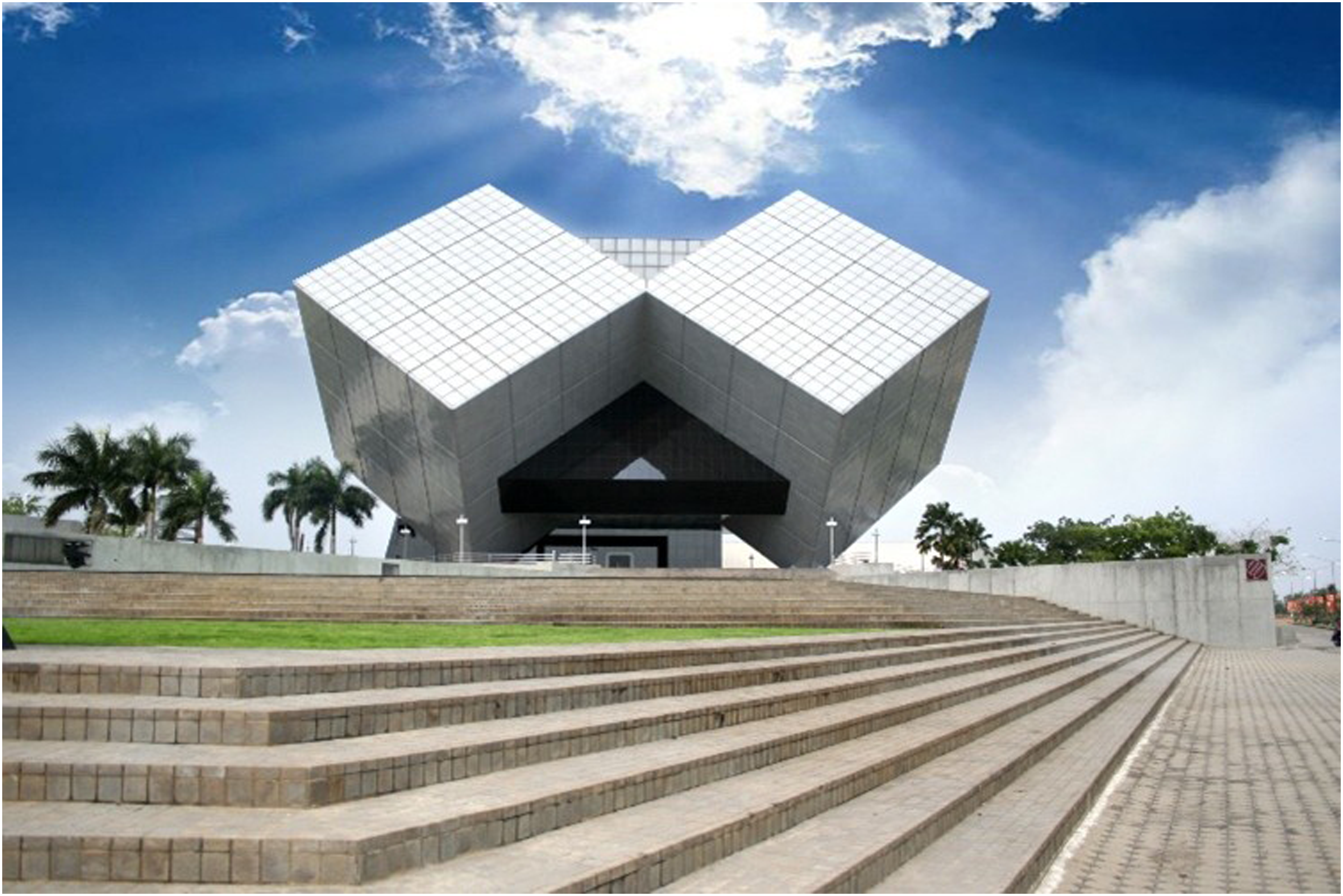
The Science Museum under the NSM.
Thai people generally value STEM (science, technology, engineering and mathematics) education and prioritize good grades in STEM subjects. According to statistics from the Ministry of Higher Education in 2022, medical science and engineering have been consistently popular majors among Thai university applicants (Thailand.go.th., 2022). High-school students often choose the science study track, which requires them to take advanced science courses in physics, chemistry and biology. Thailand's ‘National strategy 2018‒2037’, issued by the National Strategy Secretariat Office (2018), stated that schools in Thailand also play a major role in promoting science education, as many schools train students for science excellence projects and international-level competitions (e.g., Academic Olympics). Chen (2018) found attitudes towards science learning among 3207 youths (15–24 years old) across four regions of Thailand to be positive; 2339 youths (72.9%) believed that having science knowledge is necessary to some degree.
However, the scientific knowledge they referred to was largely limited to experimental science and scientific theory. According to their responses, their understanding of science was limited to laboratory experiments and scientific theories. Only a small number of respondents could cite concrete examples of applied science in daily life, such as telecommunications, medical science, and space science. These findings suggest that most Thai students tend to associate science primarily with scientific experiments in a laboratory setting. This limited notion of science may also indicate a lack of awareness of applied science and the extent to which science is integrated into everyday life beyond formal school lessons.
The findings from Chen's study highlight long-standing limitations of the science learning culture in Thailand that have existed since 2012. Yuenyong and Yuenyong (2012) revealed that, although some Thai students held an understanding of science related to their daily lives and activities, most were unable to articulate verbal concepts of science. Furthermore, science teaching and learning in schools often failed to provide students with the opportunity to link science concepts to events or activities in their communities. This suggests that the prevailing learning culture, especially in science, neither encourages nor supports the practical application of knowledge.
Chen's study also explored students’ engagement with science learning outside the classroom, finding that 51% of students spent 1–4 hours per week on informal science learning. Despite this, students knew very little about science and technological knowledge relevant to current national policies affecting their everyday lives, such as the digital economy, research on vaccines against infectious diseases and nanotechnology. When asked about barriers in informal science learning, the students cited difficult content, language barriers and a mismatch between the available information and their personal interests.
Moreover, some experts in science literacy and lifelong learning have expressed similar concerns regarding Thai people's perceptions of science learning: It seems like fewer people understand science nowadays. A very small number of Thais, if any, have interest in advancing or promoting science education, especially when compared to other countries that invest in a full pipeline approach. Thai people view science learning as a means to becoming a doctor so they can support their family with a good income and have social status. (Chen, 2018: 184) At the university level, students are typically divided into arts and science tracks. Those outside the science track take very few science courses, which in turn excludes them from deeper scientific engagement. Those who do pursue science tend to study a significant amount of science and technology. As a result, universities end up with one group that understands and values science, and another that rejects it, saying, ‘It's not for me.’ In truth, scientific thinking should be a universal skill. Everyone should have at least a basic understanding of natural science—enough to live in harmony with nature and to care for themselves effectively. (Chen, 2018: 184) Thai people see science as a subject, not a way of life. This thinking is deep-rooted in Thai society … Scientific literacy in our country is unevenly distributed. While there are some who are knowledgeable, understanding, and supportive of science, their numbers at the grassroots level remain small. At the community level, there are indeed individuals who apply scientific methods in their work despite a lack of formal scientific education. However, their numbers are still insufficient. Overall, the level of understanding—particularly of the scientific way of thinking—is relatively low. (Chen, 2018: 185)
From these expert interviews, it is evident that there is a shared concern regarding the current perception of science and the challenges in advancing scientific literacy in Thailand. Science should be viewed as more than just a school subject or a means to achieve a better social status. It extends beyond scientific theories and laboratory experiments. For Thailand to progress in science education and scientific literacy, everyone needs to value science and recognise its relevance to their academic major or career path.
A case study of how Thai visitors feel engaged with learning in the Science Museum
A study of Thai family visitors’ engagement behaviour at the NSM, focusing on the Science Museum, revealed several insights for future exhibition design and improvements in science communication (Aroonsri, 2024). The study explored (a) the baseline level of family visitors’ learning interactions with a science exhibition and (b) the factors influencing visitors’ engagement with the science exhibition. The hydroelectric power display in Exhibit Zone 3 ‘Basic Science, Energy Tunnel and Cinergy 4D Theatre’ (Figure 2) was chosen as the focus of this research for two main reasons. First, it offers educational text for one-way interactions, as well as an interactive component that demonstrates how a dam generates hydroelectric power. Second, the exhibition content focuses on science in everyday life, making it relatable to visitors of all ages. Visitors do not need prior science knowledge to understand this exhibition. The researcher's aim was to understand the current level of Thai family visitors’ interaction with a science exhibition that applies to human daily life and to understand engagement-inducing factors from the family visitors’ perspectives.
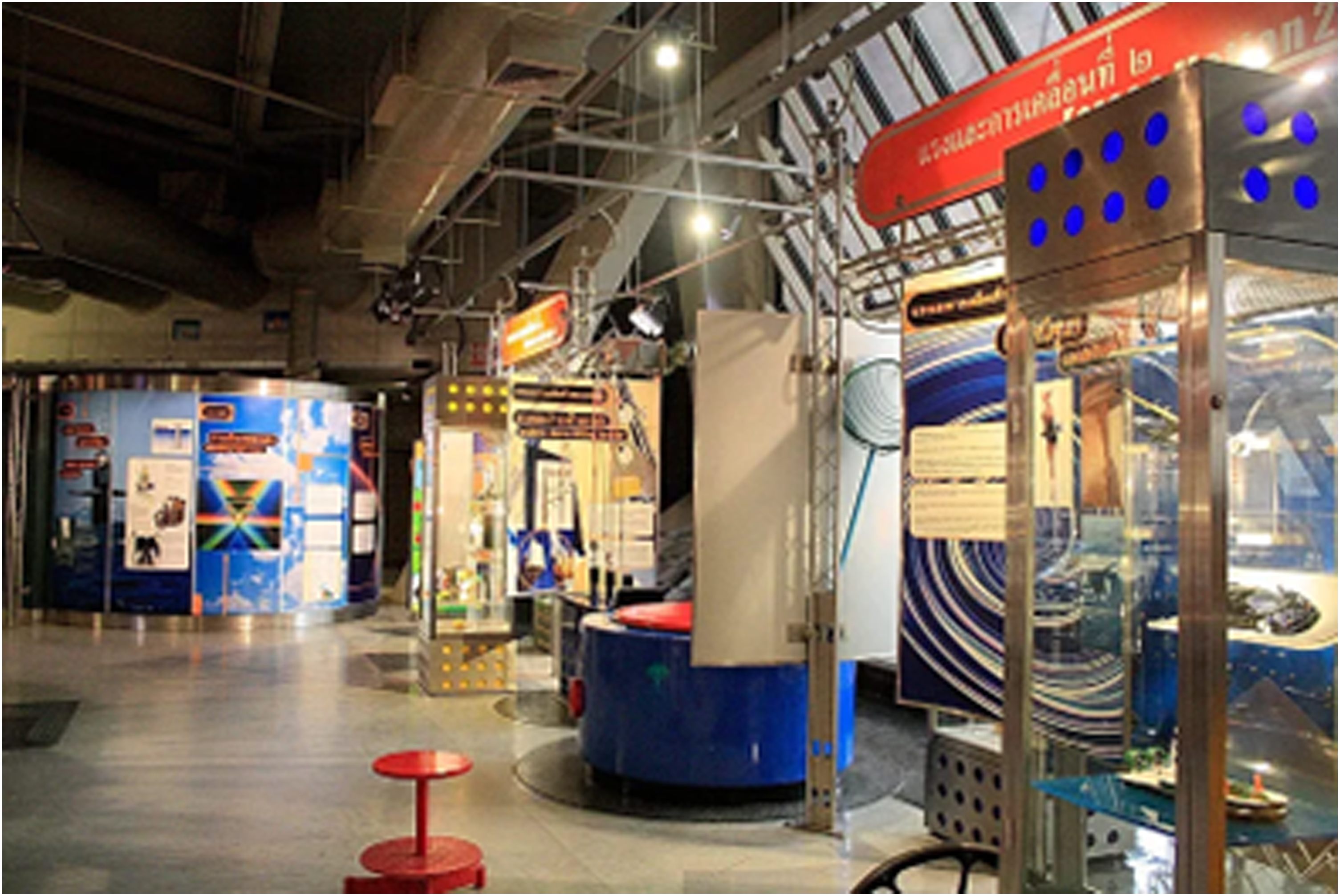
The overall look of Exhibit Zone 3: Basic Science, Energy Tunnel and Cinergy 4D Theatre.
For the first part of the study, the researcher adopted Barriault and Pearson's (2010) visitor-based framework to examine the levels of visitor–exhibition interaction. The first level, known as initiation behaviours, is the least intense interaction. This level of behaviour is indicated by positive emotional responses and some engagement with the exhibition. The second level, transitional behaviours, is characterised by focused attention on the learning engagement, repetition of the experiment (2–3 times) and positive emotions. The last and most profound level features breakthrough behaviours. At this phase of engagement, visitors demonstrate full concentration on learning from the exhibition, take pleasure from experimenting, relate new knowledge to their prior experiences, and actively seek discussions within their group and/or with an explainer.
The hydroelectric power display demonstrates the process of generating electricity from water power (Figure 3). Visitors turn a knob to fill the water tank until the water level triggers a green light signal, showing that the exhibition is experiment-ready. Visitors then push a button next to the knob to release water from the tank and observe what happens. They see the flowing water push the turbine, causing it to spin. After the turbine has been active for a while, a light bulb illuminates, indicating that electricity is successfully generated from hydropower.
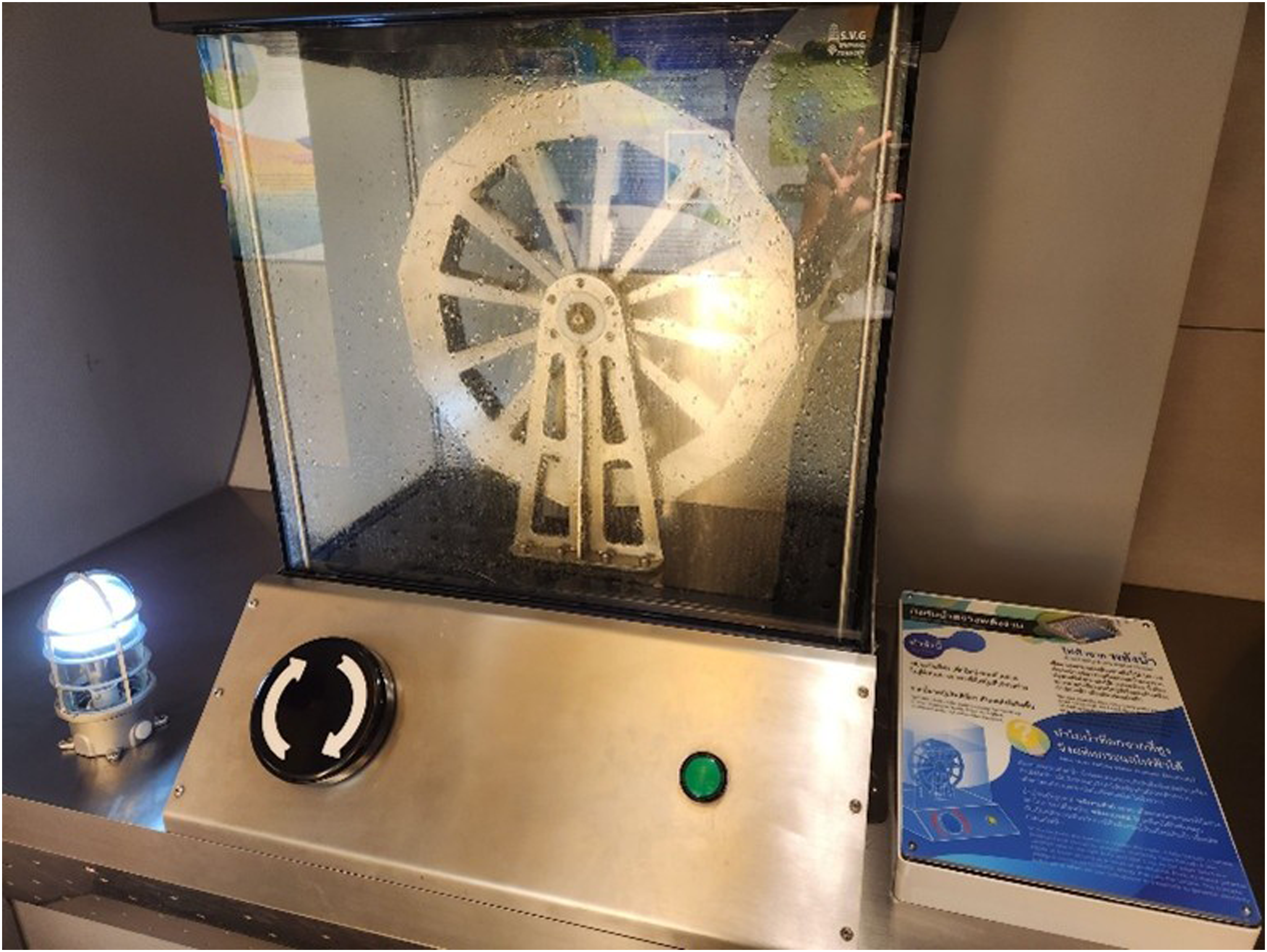
The display of water power generation in the hydroelectric power exhibition.
The exhibit label reads as follows: ‘Why can falling water produce electricity? When we press the button to release the water, it falls through a turbine connected to a generator. As the turbine spins, it drives the generator to produce electricity, which is then supplied to the light bulb, making it glow. Water at a high elevation contains stored potential energy. As it falls under the force of gravity, this energy is converted into kinetic energy, which drives the turbine. This is the same principle used in dams, where stored water is harnessed to generate electricity’ (Aroonsri, 2024).
Out of 50 visitors (25 pairs of adults and children), most exhibited transitional and breakthrough behaviours. When broken down by visitor category, adult visitors exhibited slightly higher breakthrough behaviours (48%) than transitional behaviours (40%), whereas children displayed more transitional behaviours (56%) than breakthrough behaviours (40%). In addition, the research observed that most of the children who were at least in a semi-deep level of learning engagement (transitional and breakthrough behaviours) were accompanied by adults who provided guided learning about science related to the exhibition. These adults were able to lead the exploration of science behind the hydroelectric dam via the exhibition's interactive activity, which resulted in their child's prolonged attention to learning.
Interestingly, half of the adult visitors had an educational background in a science-related major or had an interest in electric power and motors, which helped them explain the hydroelectric power mechanism to their families. This suggests that the educational background and enthusiastic learning engagement of the accompanying adults will influence the level of learning engagement among child visitors. This finding suggested that prior science knowledge may serve as a prerequisite for meaningful visitor engagement with science exhibitions. Given that half of the participants in this study originated from an educated family background and were able to understand the hydroelectric dam exhibition more deeply than others, it would be interesting for the NSM to explore whether the other 50% of family visitors shared similar backgrounds. If not, that raises questions about how effectively these visitors can achieve profound takeaways from the exhibition, given their lack of prior science knowledge. This raises the question of how inclusive science museum exhibitions are for those who are not as privileged in terms of prior science knowledge. How might exhibitions be redesigned and learning aids be introduced to bridge this gap?
Aroonsri (2024) also investigated factors influencing family visitors’ interactions with an exhibition. Child visitors identified the exhibition's interactive components and the anticipated sense of enjoyment that the exhibition would give them. This confirms that young visitors enjoy learning by doing, as they get to see science in action at first hand. To attract family visitors’—especially children's—attention and engagement with exhibitions, adult visitors emphasised that exhibition designers consider the following factors:
providing interactive components; ensuring comprehensibility of the exhibition and linking it to the relevance of science in daily life; using facilitated learning tools, such as explainers and audio guides, to draw and retain visitors’ attention; incorporating visual illustrations to aid comprehension; using decorative lights as visual cues to simplify complex science for better understanding and to make the exhibition more appealing; and ensuring a proper response timing for each interactive component to prevent loss of attention.
Furthermore, more than half of the adult visitors suggested improvements to enhance learning and comprehension. They recommended making the generator visible to visitors to highlight the key energy transformation process from water to electricity. Without the generator, visitors might perceive the process as ‘magic’ and leave the exhibition wondering how and why the light bulb lit up. They proposed placing the generator in a clear box and using audio to guide visitors’ learning and observation through the chronological process of hydroelectricity production. The audio narration should be synchronised with the interactive experiment so that visitors understand hydroelectric power generation through the step-by-step process of hydroelectric production. For example, the audio narration should start when visitors push the button to start the experiment, followed by a narrated voice telling visitors to pay attention to the turbine, the generator, the light bulb, and its response to the turbine's movement.
Adult visitors also stressed the importance of providing quick interactive responses to maintain visitors’ learning attention. They referred to instances where visitors spent more than three minutes filling up the water tank before activating the hydropower exhibition and then waited another three minutes for the session to be renewed. They felt this would be too long to hold young visitors’ attention, especially if they were not accompanied by adults.
This article presents an overview of the Thai science museum context, focusing on how the Science Museum under the NSM supports science learning culture in Thailand. It discusses how the Science Museum fosters a sense of learning engagement among Thai visitors, especially among young people. Given that the Thai educational system tends to frame ‘science’ narrowly—as very much a theory- and laboratory-focused school subject—the informal learning environment of the Science Museum serves as a valuable support for science learning culture in Thailand. However, the research presented here reveals that Thai people still view science as a serious subject primarily for academic purposes, rather than as an integral part of daily life.
Although interactive exhibits hold strong potential for facilitating learning, the research here shows that, in this case, and probably many others, in Thailand and elsewhere, such exhibits could benefit from being redesigned to present information in a more accessible and easy-to-understand manner. This would foster more meaningful experiences and effective learning outcomes. Furthermore, because parents often play an active role in helping their children understand the exhibits—despite some lacking a background in science—there is an opportunity to help children to interact more autonomously.
In conclusion, although the visitor research discussed here indicates that the Thai Science Museum has developed some successful approaches to engage its audiences, various challenges remain. These include expanding exhibition topics beyond the formal school science curriculum, including technologies from Thai traditional wisdom and their applications in daily life. These challenges, and research on visitor experiences, can and should inform improvement strategies so that science museums can play an even greater role in cultivating public cultures of science in the Thai context.
Footnotes

Funding
The authors received no financial support for the research, authorship, and/or publication of this article.
Declaration of conflicting interests
The authors declared no potential conflicts of interest with respect to the research, authorship, and/or publication of this article.
Notes
Author biographies
Nuntamon Kutalad is a lecturer in the MA programme in museum studies and cultural studies at the Research Institute for Languages and Cultures of Asia, Mahidol University, Thailand. Her academic expertise lies in museology and cultural management, with research interests encompassing museum interpretation, museum exhibition design management and the integration of service design within museum contexts. Her previous research has focused on the transformative museum, a contemporary management approach that redefines the museum's role from a static repository of objects to an active platform for social engagement, learning and community empowerment.
Pimsiri Aroonsri is an assistant professor in human resource development and a professionally trained instructional designer. Her research lies in the intersection of these passions, alongside her interest in museums, which she sees as a platform for public pedagogy and a policy advocacy tool for education. She has directed up to 15 interactive, participatory exhibition design projects across a range of development issues and climate action, as she is deeply committed to a mission to stimulate a vibrant citizen-learning community through interactive learning and museum exhibition design.