



Abstract
Chinese scientists have been active in developing a foundation for understanding key aspects of climate change and national policies for decades. In the evolution of the various meteorology and climate change research disciplines, Chinese scientists have gained access to international knowledge through overseas educational institutions and research networks. Chinese scientists have also participated in bilateral cooperation projects with scientists from the United States, the United Kingdom and other countries. Moreover, Chinese scientists have become active participants in international networks of climate research, contributing substantial research results and models to the assessments carried out, for instance, by the Intergovernmental Panel on Climate Change. Using a mix of quantitative and qualitative approaches, this paper presents a historical analysis of these activities and their global and local contexts.
Keywords
Introduction
Chinese scientists have been active in developing a foundation for understanding key aspects of climate change and national policies for more than seven decades. During the evolution of the various disciplines of research on meteorology and climate change, Chinese scientists have gained access to international knowledge through overseas educational institutions and research networks. As the community of scientists and officials engaged in research and policymaking related to climate change grew in China, the issues addressed grew broader and policy advice became institutionalized, with significant impacts on China's climate change policy. Moreover, Chinese scientists have increasingly become active participants in international networks of climate research, gradually contributing substantial research results and models to the assessments carried out by the Intergovernmental Panel on Climate Change (IPCC).
China's scientific knowledge accumulation has exhibited a give-and-take relationship with the global scientific research community for more than a century, but the linkages have deepened substantially during recent decades. These linkages have also gradually changed their features, most notably evolving from a one-way flow into China based on overseas education, training and research collaboration to the provision of more balanced contributions from China to the global scientific community. Because climate science is inherently global in character, it has in many ways been the front runner of Chinese integration into international scientific networks.
There is an intuitive consensus among scientists as well as diplomats that international cooperation in research is beneficial for all parties, and observers have noted the exponential growth of scientific cooperation since the mid-twentieth century, leading to the emergence of global science (Peters, 2006). The patterns and driving forces of such research cooperation have been studied in the light of theoretical frameworks related to science policy or globalization, and they have also been conceptualized as an emerging domain of innovation studies (Chen et al., 2019).
There have been few attempts to develop theoretical propositions specifically for this field of research; in recent years, however, dedicated studies such as Caroline S Wagner's analysis of global science in terms of complexity theory and network analysis have provided a comprehensive framework. Wagner (2018) argues that the rapid rise of international collaborations in science, technology and innovation has been one of the most dramatic social changes of the twenty-first century. Moreover, the evolution towards scientific maturity of many developing countries, especially China, has reshaped the global knowledge system and created the conditions for global networks to emerge. These networks are operating according to their own internal dynamics, mostly beyond the direct control of science policymakers, while still creating vital new opportunities for science as well as economies.
Particular attention has been paid to demonstrating the benefits of scientific cooperation—and especially international research collaboration—using scientometric analysis. A study of this phenomenon demonstrated that international collaboration increases the impact of a country's scientific production, and, in the vast majority of collaborations, benefits accrue for both sides. Moreover, countries tend to obtain greater gains from collaborating with high-impact countries (Guerrero Bote et al., 2013). For China, international cooperation in science has the potential to directly improve the quality and visibility of Chinese science, to the mutual benefit of both China and its research partners, and furthermore to integrate Chinese science directly with global scientific advancements and efforts to tackle unprecedented global challenges (Tyfield et al., 2009).
International scientific cooperation in meteorology has a history of almost two centuries, during which scientists met at international conferences to exchange knowledge on data, methods and technologies. This cooperation was formalized with the establishment of the International Meteorological Organization in 1879 to encourage the spread of weather observation stations and the standardization of measurements. While climatology was promoted as a component of geophysical disciplines, it remained a marginal research field until the World Meteorological Organization (WMO) was created as an agency of the United Nations (UN) in 1951. The WMO was instrumental in setting up the Global Atmospheric Research Program in 1967 to improve weather forecasting and develop research on the global climate, given the emissions of atmospheric CO2 that had accelerated during the postwar period.
Emerging concerns about the environment worldwide mobilized a number of international initiatives, which led to the creation of the UN Environment Programme (UNEP) in 1972. Ultimately, concerns about the accumulating emissions of greenhouse gases led the WMO and UNEP to establish the IPCC in 1988. This organization functioned as a boundary organization, bridging the divide between the world of scientific research and political action, and served to raise public awareness of the dangerous course of climate change (Weart, 2012a).
At the same time, the assessment reports issued by the IPCC became critical background material for treaties on the environment, such as the Kyoto Protocol to the UN Framework Convention on Climate Change adopted in 1997, and the UN Climate Change Conferences held annually since 1995. Chinese participation in international scientific networks for climate research and the climate summits organized by the UN has grown rapidly in the twenty-first century, increasingly shaping China's domestic and foreign policy on climate change and efforts to mitigate and adapt to the effects of global warming (Baark, 2023).
This paper seeks to trace the evolution of Chinese engagement with international climate research based on a wide range of historical and contemporary sources, including data from bibliographic research, illustrative personal accounts and institutional histories from Chinese as well as Western language sources. In addition to an overview of the ways in which Chinese strength in sciences became relevant for research on climate change and gained international reputation through training in disciplines such as meteorology, atmospheric physics, engineering and social sciences, we shall focus on a case study of Chinese participation in the IPCC.
Saving China with meteorology and climate science
From the early twentieth century, Chinese students went to the United States (US) and Europe to pursue postgraduate studies in academic disciplines that had developed a concern with climate, such as geography and meteorology. On their return to China, they became influential in opening up new research fields and training new generations of scientists. The chaotic period that witnessed the fall of the Qing imperial dynasty in 1911 and the emergence of the Republic of China brought substantial changes in education and society, and many young people who pursued advanced education in China or abroad were strongly influenced by the call for ‘saving China through science’ (kexue jiu guo 科学救国). This slogan permeated the political concerns of the early members of the Science Society of China that was established by Chinese students at Cornell University in 1914 and its magazine Science (Wang, 2002).
The nationalist sentiment was particularly fostered by the influence of foreign powers on China, in particular due to the decision at the Treaty of Versailles in 1919 to allow Japan to keep territories in Shandong that were captured from Germany in 1914. The May Fourth Movement that grew out of this incident heightened the patriotism of young Chinese intellectuals, including those who had studied abroad and who returned to China to help build a modern nation on the basis of their scientific expertise. One of the fields of science that offered practical utility in the task of helping China modernize was meteorology and ultimately more advanced climate research.
For the pioneers of modern meteorology in China, such as Zhu Kezhen, who had received advanced training in the US, it became essential to establish a network of observation stations in China and educate a whole new generation of Chinese scientists. Meteorology was considered valuable as applied research because its results were directly relevant to both agricultural and military activities, and its extension into basic research on climate helped to develop a fundamental understanding of the forces that were shaping natural events (Weart, 2012b). Moreover, climate research also served to provide a Chinese national identity. Zhu focused much of his research on phenomena such as the monsoons and the so-called ‘plum rain’ that were seen as particularly unique for the Chinese climate and extracted long-term climatic change data from ancient Chinese historical records. Such efforts to make meteorological and climate research serve China were both a reaction to the humiliation that many Chinese intellectuals felt on account of the ways that foreign powers had encroached upon Chinese sovereignty and a strong urge to establish a national identity—to the extent that they searched for an approach identifying the specific national characteristics of a Chinese climate (Frank, 2023).
Nevertheless, the ambition to use meteorology as a tool of national identity included a link to modern meteorological equipment and scientific theories as they were developed in Western countries, despite the anti-imperialist sentiment that Chinese nationalist intellectuals expressed. In this sense, the international dimension of meteorology in China shifted from dependance on the infrastructure of meteorological weather stations set up by foreign powers to increased reliance on China's own stations, networks and educational institutions. In addition, the basis for climate research addressing special conditions in China, such as the plum rain and the role of the Himalayan plateau for China's climatic environment, was established. The search for a Chinese identity, while simultaneously enhancing what China could contribute to global climate research, is a dilemma that continues to shape Chinese climate science.
Expansion of meteorological infrastructure and training
When the People's Republic of China (PRC) was established in 1949, a national meteorological community had already emerged, and a basic infrastructure for research on climate had been created. Under the new conditions, the state became an even more active sponsor of meteorological activities and research, and, due to the emerging Cold War, the policy tended to favor international contacts with Soviet scientists. Due to the protocol of five-year cooperation with Soviet science and technology signed in 1957 by a Chinese science and technology delegation headed by Guo Moruo, China received assistance from Soviet academicians and technical experts to develop the Chinese Academy of Sciences (CAS) and formulate plans for the development of its science and technology. This included long-term visits by Soviet scientists to the Institute of Geophysics at CAS, which, at the time, comprised meteorology and atmospheric physics (Zhang and Yu, 2018).
Nevertheless, it is important to recall that some of the leading meteorologists in China at the time, such as Ye Duzheng (Tu-Cheng Yeh) and Gu Zhenchao (Chen-Chao Koo), had received their training in the US and Sweden under the eminent scholar Carl-Gustaf Rossby, who was Professor of Meteorology at the University of Chicago and the University of Stockholm (Phillips, 1998). Ye became a leading figure in the internationalization of China's meteorological community after the 1970s and is discussed in more detail below. Gu used the knowledge that he had gained working with Rossby in Stockholm to pioneer the development of numerical weather forecasting in China during the 1950s (Lu, 2021a). Both scholars were working at the CAS Institute of Geophysics and Meteorology, the Director of which, Zhao Jiuzhang (Jeou Jang Jaw), had obtained his PhD from the University of Berlin. These meteorologists naturally kept their international contacts; for Gu Zhenchao, this was made easier because Sweden quickly reestablished its academic cooperation with the PRC after 1950. In fact, a large number of staff at the Institute of Geophysics had obtained their advanced degrees abroad and used their expertise to cultivate new disciplines in China (Zhang and Wang, 2021).
The number of meteorological observation stations in China grew from 101 stations to more than 2000 during the 1950s, and a large number of people were mobilized in urban and rural settings, manning new meteorological posts and Sky Observation Small Groups, which were conceived as a mass-led front line of meteorological service provision (Große-Bley, 2022). However, in the 1970s, a new concern for the environment emerged in China, and Premier Zhou Enlai arranged for a Chinese delegation to attend the UN Conference on the Human Environment in Stockholm in 1972, which increased the scientific community's awareness of climate change (Du and Baark, 2021). This decade also witnessed a rapprochement with the US, Japan and European nations that strengthened international linkages for meteorology and climate research, including more active participation in the WMO.
Strengthening international scientific research cooperation
Although numerical weather prediction had taken off in the 1950s, primarily due to the efforts of Gu Zhenchao mentioned above, the extent of indigenous Chinese development and production of semiconductors and computers was relatively weak at the time and was further undermined during the Cultural Revolution that Mao Zedong initiated in 1966. Thus, before the 1970s, Chinese scientists had little access to the computational resources that were instrumental in the emerging role of atmospheric physics and related work on climate models. In the late 1970s, however, Chinese scientists and engineers developed more powerful computer resources and were able to launch Galaxy I, one of the world's fastest supercomputers at the time. The development of atmospheric physics was thus spearheaded by a generation of climate scientists who emphasized the importance of understanding the global climate system—and who became intensely engaged in the international awakening to the prospects of future climate.
This was led by the influential Chinese atmospheric physicist Ye Duzheng, who developed the scientific foundation for the establishment of Qinghai–Tibet Plateau meteorology, identifying powerful jet streams in the Northern Hemisphere that directly affected the weather and climate of East Asia. In addition, his theoretical work on atmospheric long-wave energy dispersion and the adaptive scale theory of atmospheric motion contributed to the understanding of East Asian atmospheric circulation and weather forecasting (Sun, 2012). The impressive achievements of the research carried out by Ye have been analysed in detail by Lu (2023).
Ye Duzheng became deeply involved in international cooperation. From 1982 to 1988, Ye became a member of the Joint Scientific Committee of the World Climate Research Programme that had been launched in 1979, and he participated in the 1985 Villach Conference on Climate Change. After the conference, he proposed the establishment of China's first National Committee on Climate Research to leading government officials in charge of science and technology, and then became chair of this committee from 1985 to 1999. Ye was rewarded for his contributions to meteorological research with the 48th International Meteorological Organization Award in 2003 (Lu, 2021b).
Another leading personality in China's climate scientific community was atmospheric physicist Ding Yihui, who was selected to represent China in the research of the IPCC. Ding became vice-chairman of the IPCC working group on the scientific basis, which published the IPCC First Climate Change Assessment Report in 1992. He continued to advance in his role at the IPCC as co-chair of the first working group for the Third Climate Change Assessment Report in 2001. His contributions established his reputation as a leading Chinese climate change scientist and as a strong proponent of the view that the human impact on climate had become more significant than the natural factors—a view that was only gradually accepted in China.
China's position in international negotiations had been largely defined by bureaucratic representatives participating in the National Climate Change Coordination Group that was set up in 1990 and re-staffed in 1998 and 2003. However, by 2007, the Chinese government recognized that climate change was likely to seriously affect both the future economic conditions in China and the details of international negotiations, and a National Climate Change Expert Committee was set up with Ding Yihui as a vice-chairman. This committee provided input when developing the Chinese government's first official white paper about climate change, titled China's policies and actions to address climate change and issued in 2008 (Information Office of the State Council of the People's Republic of China, 2008). Chinese scientists’ engagement with the global community of research and policy on climate change has been continually strengthened during the past two decades, with contributions to the IPCC that are further discussed below.
Cooperation in climate science with the US
At the same time, bilateral cooperation with scientific communities in many nations has been undertaken at formal as well as informal levels. For example, cooperation between the US and China for climate research has involved scientific exchange through education and training, along with numerous joint research efforts and co-authored publications since diplomatic relations between the two countries were re-established in the 1970s (Blumen and Washington, 1973). The first major agreement on climate change was the Atmosphere and Science and Technology Protocol between the US National Oceanic and Atmospheric Administration and the Chinese Meteorological Administration adopted in 1979, which supported bilateral climate and oceans data exchange, research and joint projects (National Academies of Sciences, Engineering and Medicine, 2010).
Most of the cooperative research and policy decisions between the US and China concerned ways to reduce greenhouse gas emissions through energy efficiency, clean technologies and renewable energy innovations. A groundbreaking joint agreement was announced in 2014 in connection with a summit in Beijing between Barack Obama and Xi Jinping, and the result became instrumental in preparing for the 2015 Paris Agreement (Echeverría and Gass, 2014). Subsequently, ahead of the 26th UN Climate Change Conference of the Parties in Glasgow, the April 2021 US–China Joint Statement Addressing the Climate Crisis was announced, and, more recently, the Sunnylands Statement on Enhancing Cooperation to Address the Climate Crisis was adopted in November 2023. Scientific cooperation between the US and China has been growing increasingly challenging as geopolitical tensions have increased, however, and it has been argued that it is no longer good enough for the scientific community to merely declare that there are big gains from collaboration (Karplus et al., 2021).
Thus, bilateral cooperation on climate change research and policy between the two countries has experienced many volatile periods on account of deep-seated differences in political outlook and policy goals, including domestic opposition experienced in the US Congress and obstruction by local vested interests in China (Wang, 2015). Occasionally, bilateral cooperation has been influenced by geopolitical issues that have little to do with climate, such as the Chinese decision to cancel bilateral climate cooperation because US politician Nancy Pelosi visited Taiwan in August 2022. On the other hand, cooperation at the subnational level by states in the US and municipalities or provinces in China has often survived the geopolitical conflicts at the national level. For example, California has entered into separate agreements on cooperation with China since 2013 and more recently pledged to cooperate on cutting greenhouse-gas emissions and transitioning away from fossil fuels (Dai, 2023).
The role of scientific research on climate change remains important in US–China bilateral cooperation, but generally within a framework that has concentrated much work on the joint development of clean technologies such as renewable energy and the coordination of climate policies (Lewis, 2023). At a discursive level, China's participation in global climate governance has emphasized the national ambition to be seen as part of a shared leadership in climate policies (Yang, 2022). The US administration under President Trump announced in 2017 that the country would withdraw from the Paris Agreement; the subsequent Biden administration rejoined the Paris Agreement in 2021, but the re-elected Trump ordered the US administration to exit the Paris Agreement again in 2025. The US position on climate was also bolstered by the adoption of the Inflation Reduction Act of 2022, which contained significant support for the development of clean technologies (Lewis, 2020). However, the new Trump administration has canceled funding for climate-related research topics (Milman, 2025), and research cooperation with China is also likely to lose the federal administration's support.
Cooperation in climate science with the European Union
The European Union (EU) and individual European countries have been expanding bilateral cooperation on climate with China. Similarly to the US, much of these cooperation efforts have been aimed at influencing climate policy and the search for low-carbon technologies and energy efficiency (Torney, 2015). At the formal level of diplomacy, the cooperation between the EU and China was accelerated when the two parties signed an agreement on a bilateral Partnership on Climate Change in September 2005. EU–China relations in the field of climate change have further evolved since then, based on changes in the framing of the climate change debate and a convergence of interests, which has been shaped by changes in the domestic decision-making structures of the Chinese climate change network (Gippner, 2014). Furthermore, the convergence of outlook and common interests for the EU and China has been influenced by the volatile political position of the US, where shifts from climate leadership to climate denialism have encouraged the EU and China to cooperate for the maintenance of important decisions on climate policies, such as the Paris Agreement of 2015 (Gurol and Starkmann, 2021).
The relationship between the EU and China has been influenced by global geopolitical tensions since 2018, however, and the European Commission has adopted a strategy in which the competition for technologies, markets, resources and broader geopolitical influence shapes Europe's climate-relevant policy choices (Oertel et al., 2020). At the same time, research cooperation between European countries and China has been influenced by security concerns on both sides and priorities of ‘de-risking’ research partnerships with China in Europe. Although the fields of climate research are generally regarded as less subject to national-security risks, the new European recommendations on enhancing research security still challenge the development of academic engagement with Chinese universities and research institutions (Střelcová, 2024).
Cooperation in climate science with the United Kingdom
Although agreements between the EU and China on cooperation in science and technology, and in climate action, have helped to promote joint climate research in general, it has often been at the level of bilateral agreements between individual European countries and China that scientific cooperation has been most active. For example, one analysis indicates that UK–China research collaborations increased from fewer than 100 co-authored papers before 1990 to 750 per year in 2000, 3324 in 2010, and 16,267 papers (10.9% of UK output) in 2019 (Adams et al., 2022).
In 2014, a major collaboration between UK and Chinese climate scientists was launched as a network titled ‘Climate Science for Service Partnership China’ (CSSP China). During the first six years of cooperation, CSSP China delivered substantial progress in observing, understanding, modeling and predicting the climate in both the UK and China. The project also made important progress in observational climate datasets, which improved the recovery and use of historical data. The focus on climate dynamics and predictability led to the development of skillful climate services for the summer monsoon season and tropical cyclone hazards (Scaife et al., 2021). After a decade of cooperation, the project had delivered world-leading climate science research for services to support climate-resilient economic development and social welfare around the world. Thus, CSSP China had also attracted interest beyond academia, with media coverage highlighting the significance of the work more than 900 times and policymakers worldwide citing scientific reports created from the project in more than 100 policy documents (The Met Press Office, 2023). Notably, the project uncovered new evidence for climate change in China and the changing frequency and intensity of extremes due to climate change. Model development work also documented new climate model capabilities and continues to assess the benefits of increased complexity and model resolution. An important legacy of the partnership is the body of peer-reviewed science it has produced, with over 500 studies published in the scientific peer-reviewed literature, which have attracted more than 10,000 citations by other global academics.
International scientific publications by Chinese climate change scientists
The rapid expansion of China's funding for scientific research since the 2000s has served to raise Chinese quantitative and qualitative output of scientific publications (Schwaag Serger et al., 2021). If Chinese authors with an address outside of the PRC are included (i.e. those working in organizations in the US, Europe and Japan), then the extent of scientific publications attributed to Chinese researchers would be even larger than is usually reported, so that the estimated contribution of Chinese researchers of global scientific output would amount to 36% (Xie and Freeman, 2019).
A report from the Institute for Scientific Information revealed that China now outpaces other major economies in terms of its publication of academic research articles in journals indexed in the Web of Science, including both the US and the EU. Moreover, China is now publishing a proportion of its research with a citation impact above the global average, comparable to those of the US and Germany. China's most highly cited research contributions are strongly represented in the disciplines of chemistry, engineering and materials science. China's leading research fields also include green technologies, such as solar cells and fuel cells, while contributing core papers to research areas relating to microwave absorption and electromagnetic radiation (Adams et al., 2023).
The patterns of international scientific publications regarding climate change on a global scale have been investigated through bibliometric methods, typically based on the Web of Science database (Fu and Waltman, 2022; Lindawati and Meiryani, 2024). However, few international studies have investigated the emerging international contributions of China's scientific publications in the field of climate change, the patterns of research funding, or the role of co-authorship. These aspects are theoretically interesting because they reveal driving forces in the Chinese scientific community and even, to some extent, key events in China's climate policy development.
Scientific databases such as the Web of Science and Scopus serve as primary data sources for bibliometric studies. Comparisons between these databases in previous research have consistently revealed a strong correlation and significant overlap. While differences still exist in their scope, data volume and coverage, no substantial disparities beyond these factors have been identified (Archambault et al., 2009). Therefore, the data used in this study were sourced only from Scopus, covering the time period from 2000 to 2023.
The reference dataset was extracted via a filter for academic articles using the keyword ‘climate change’ (in the fields of title, abstract and keywords) together with additional search criteria such as selecting English language and document type as articles. This process yielded 45,488 publications of Chinese authors affiliated with PRC-based institutions and 297,682 publications from all countries. These publications were examined through bibliometric analysis using Python.
The analysis of China's English-language publications can be seen as an indicator of China's international involvement in the issue of climate change when considered in the context of English-language publications by authors from the rest of the world. During the period from 2000 to 2023, China's research contributions were responsible for 15.3% of articles in English-language journals, coming second after the US with 28.9% of publications. From 2000 to 2009, China had comparatively few publications on this issue; during those years, China was a rapidly developing economy and focused on promoting economic growth. At the time, climate change had not yet become a major focus for China's public policy agenda, in spite of the publication of an official policy strategy document in 2008.
However, the aftermath of the 2009 UN Climate Change Conference probably motivated the Chinese leadership to engage in a more constructive role for international mitigation of carbon emissions during subsequent years. The new focus on climate change and its consequences for China's development also became a key research task when ‘energy and climate change’ became one of the priority areas for funding in the 12th Five-year Plan (2011–2015). Moreover, a major acceleration of climate research in China came with the announcement of the so-called ‘dual carbon policy’ made by President Xi Jinping in September 2020 at the 75th session of the UN General Assembly, where he stated that China would peak its carbon emissions before 2030 and reach carbon neutrality by 2060 (State Council Information Office, 2020).
This announcement led to a further increase in the number of China's international scientific publications in the field, including many studies and modeling of the implications of future climate change for China and the feasibility of various approaches to the mitigation of domestic carbon emissions. Thus, the quantitative gap between numbers of climate change publications by authors affiliated with organizations in the US and China changed significantly during the 2015–2023 period, so that China overtook the US as the leading contributor to international climate change research in 2022, as shown in Figure 1.
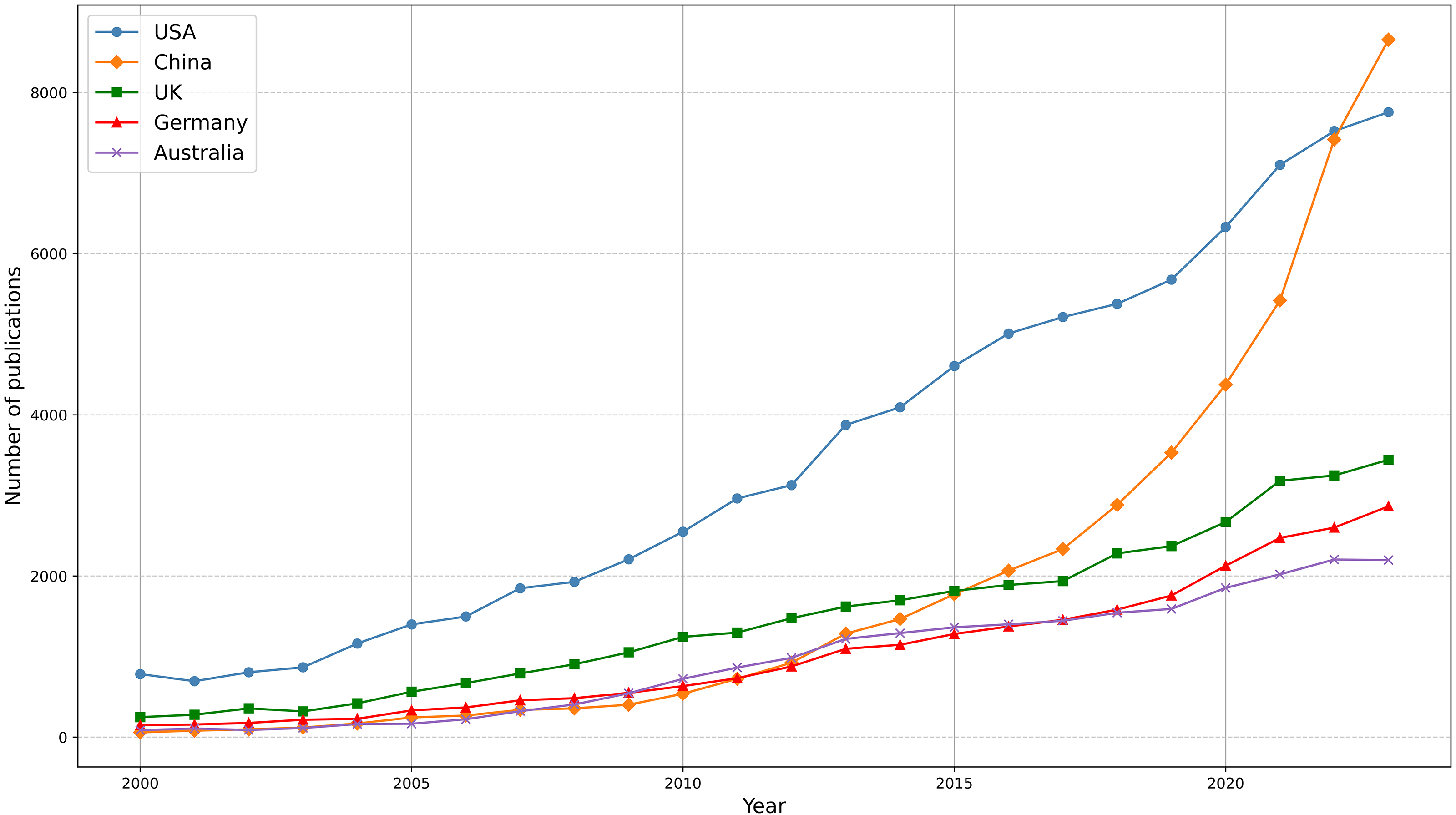
Publications on climate change published in English from the top five countries. Note: Publications by authors from English-speaking countries such as the US, Canada, the UK and Australia are considered international publications by default, while authors from countries such as Japan, Germany, France and China also publish in their native languages. This bias should be considered when assessing the data.
An analysis of funding agencies provides insights into the research commitment of different countries and the extent to which funding institutions have prioritized global climate change. The data analysed below provide a quantitative analysis based on the number of publications but do not reflect the amount of funding provided, because those numbers are seldom reported in the publications.
Figure 2 shows the number of publications that report funding commitments to climate change science and support from major research funding agencies in the world between 2000 and 2023. This visualization shows which institutions are the main providers of funding for climate change research and reveals the global pattern of the distribution of scientific research funding in the field. Interestingly, the National Natural Science Foundation of China (NSFC) comes out on top, having supported 8.3% of the reported scientific research. This is closely followed by the US National Science Foundation, which funds 5.6% of the research, highlighting the important role these organizations play in supporting international climate change research.
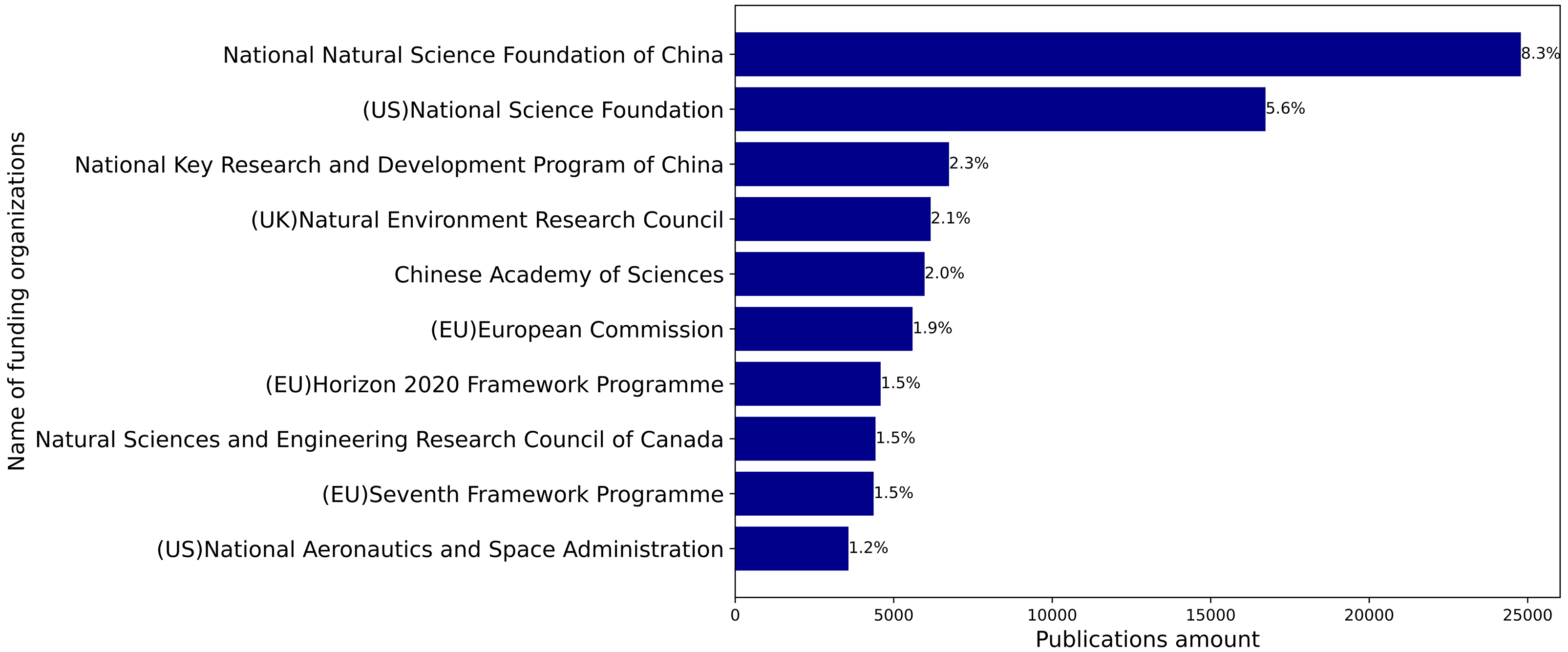
Publications mentioning the top 10 funding sponsors of international climate change research. Note: This figure only lists the number of publications, and do not show the amount of funding that each organization has provided.
The NSFC is also the largest funding organization for basic science in China. Figure 3 shows that, over the past two decades, articles funded by the NSFC have accounted for more than half (54.7%) of the total number of climate change-related articles by Chinese authors (Zhang et al., 2023).
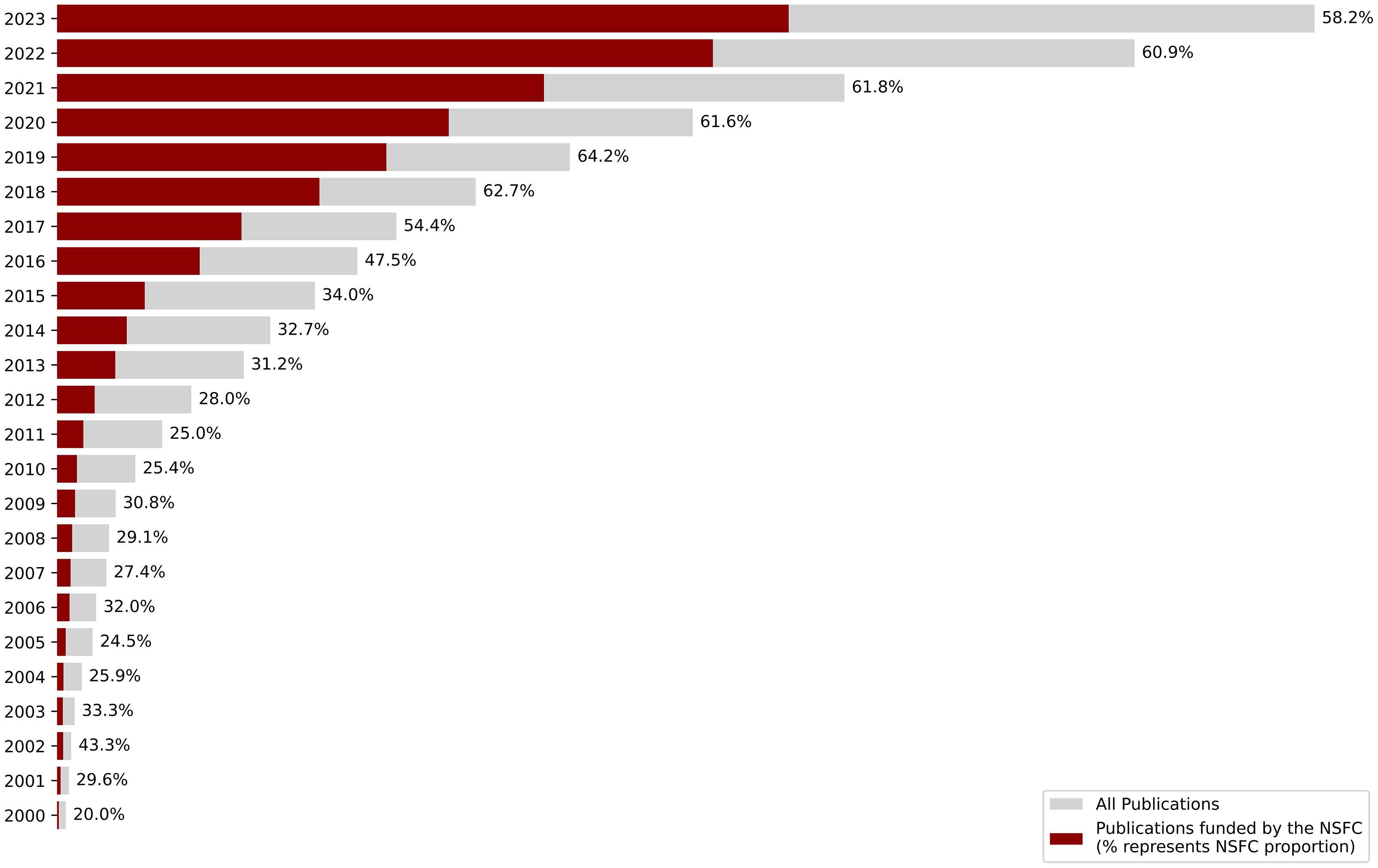
Climate change research projects funded by the NSFC as a proportion of all publications from Chinese institutions.
An analysis by NSFC administrators from the Department of Management Science indicated that China's climate change policy started late, and the number of Chinese applications for projects in this field was very small before 2009, with only one or two projects funded each year. When it became a priority area for funding in the 12th Five-year Plan, however, the number of projects was raised to 30 in 2011 (Gang et al., 2014).
Thus, the growth of Chinese international publications on climate change corresponds with the evolution of the Chinese government's policies on climate change, in particular underscoring China's international and domestic commitments to addressing climate change since the ratification of the Paris Agreement in 2015. Moreover, the Chinese government established a 20 billion RMB project ‘China South–South Cooperation Fund on Climate Change’ and announced the launch of the ‘Ten-Hundred-Thousand’ South–South Climate Cooperation Project in 2016 (Zhang et al., 2022).
The pattern of co-authorship with overseas researchers provides some interesting clues about the influence of geopolitics. A breakdown of the nationality of co-authors over time, as presented in Figure 4, demonstrates that, up until 2015, Chinese scientists’ cooperation with international authors constituted approximately half of the number of publications, while the other half represented cooperation with domestic Chinese co-authors.
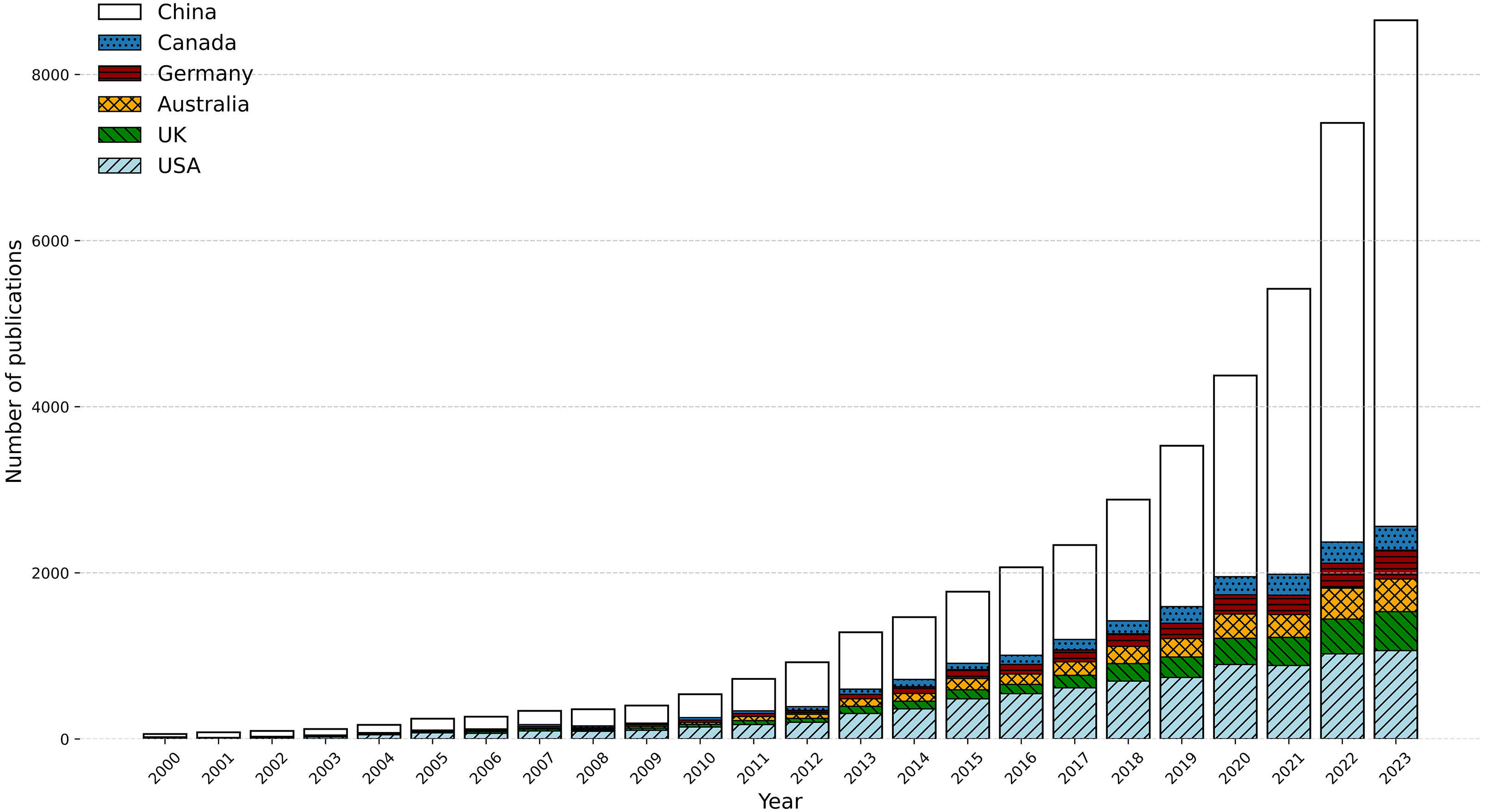
The number of co-authors from China and overseas (top five countries).
However, since 2015, Chinese publications regarding climate change are increasingly the result of cooperation with other domestic Chinese co-authors—several times the number co-authored with international authors. This is likely the effect of a significant upgrading of the domestic talents and capabilities for scientific research related to climate change in China. Although cooperation with the US has traditionally had a dominant position in Chinese authors’ climate change publications, that position has dropped dramatically since 2017, as illustrated in Figure 5.
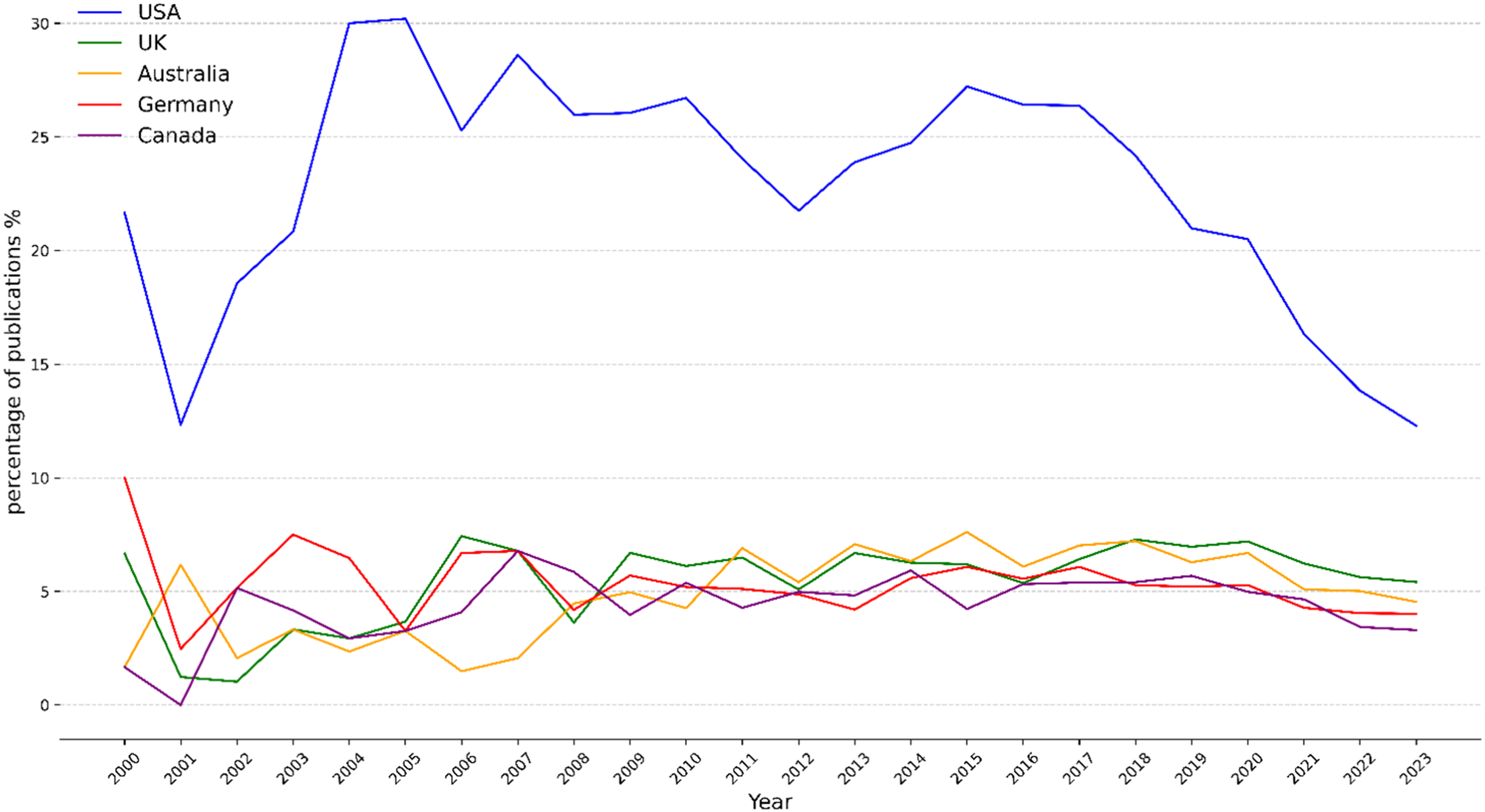
Proportion of publications with Chinese and international authors (top five countries, 2000–2023).
While collaboration with other countries has remained more or less consistent, Figure 5 shows that collaboration with authors in the US declined from around 25% in 2017 to 13% by 2023. Most likely, this is a consequence of policies in the US questioning scientific cooperation with China, which, in turn, are connected to the geopolitical rivalry between the US and China since 2017. This decline was further intensified with the launching of the China Initiative by the Trump Administration in November 2018 where scientists of Chinese ethnicity in the US were considered a security risk if they collaborated with Chinese partners (Zweig, 2024). In 2023, however, US collaborators still constituted more than double the number of collaborators from other countries such as UK, Australia and Germany.
The analysis above indicates that cooperation with overseas authors has been vital for the growth of Chinese contributions to the international literature on climate change. Even if such cooperation can be influenced by geopolitical tensions, it is likely to continue as an essential element of Chinese contributions to global science.
The IPCC has been recognized as a major forum for progress in international climate science and ideas for climate policy on a global level, as well as in individual countries. The IPCC assessment reports are frequently cited in scientific articles. Since the turn of the twenty-first century, the number of English-language articles carrying references to the IPCC has been increasing at a rapid rate, from a few hundred items in 2000 to around 10,000 items per year in 2024.
Many of the authors for these articles were from organizations in the US and UK, but, as Figure 6 shows, China comes in at a strong third place, with as many articles as the UK. This is a testimony to the extent to which IPCC work is influencing climate change science in China. In particular, authors affiliated with the CAS and the University of Chinese Academy of Sciences have contributed many of the articles with references to the IPCC.
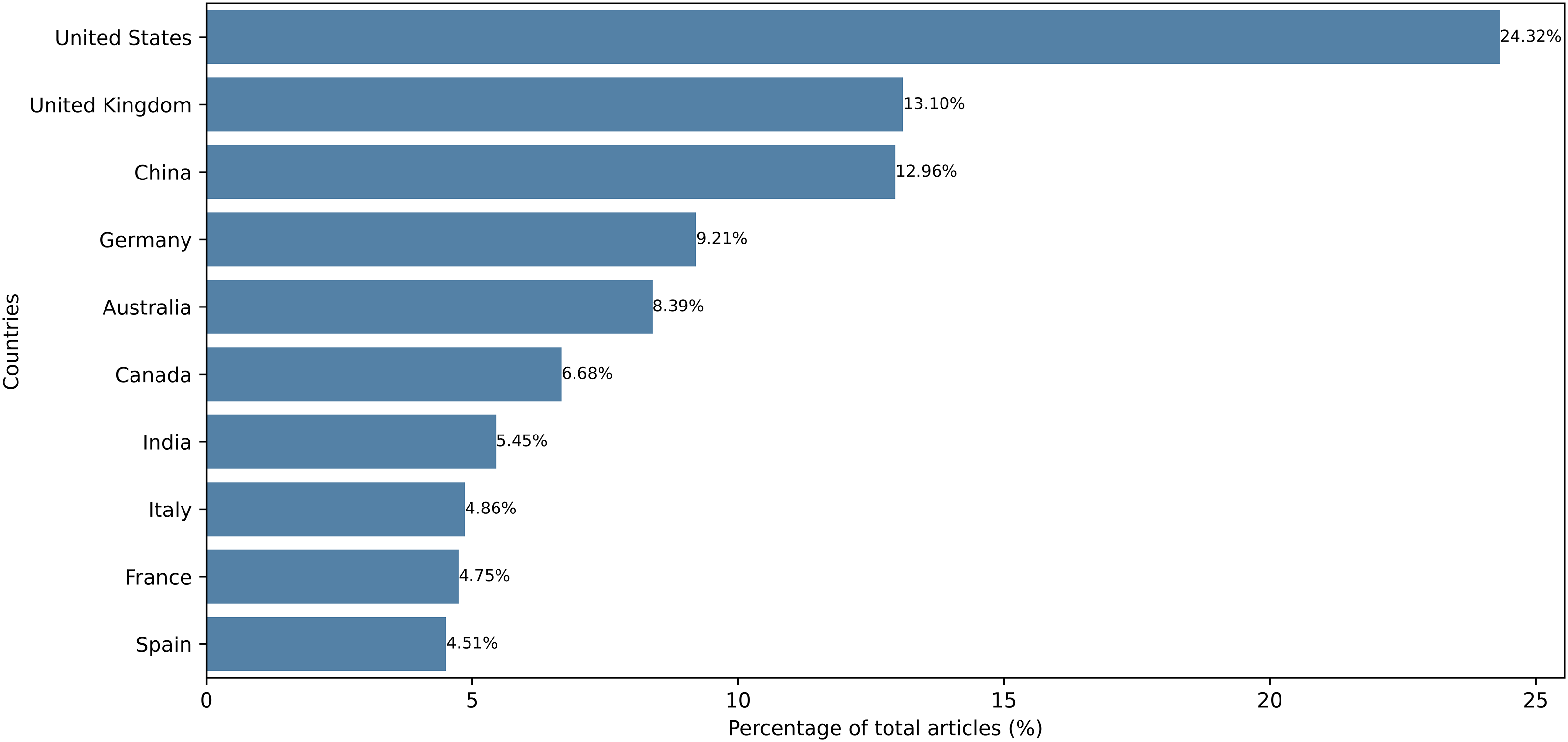
Percentage of articles referencing the IPCC from the top 10 countries (2000–2024).
The impact of the IPCC in countries such as China constitutes only part of the interaction between the IPCC and global climate science. The other—and perhaps most important—part of the interaction is the extent to which scientists from various countries participate in and contribute to the scientific assessments carried out by the IPCC. Studies that have examined the authorship of IPCC reports with a focus on the geographical representation of authors from industrialized countries versus those from developing countries clearly show the dominance of scientists from the Global North (see e.g. Tandon, 2023). Research indicates that the IPCC has historically been dominated by authors from member countries of the Organization for Economic Co-operation and Development (OECD), with studies showing that between 80% and 82% of authors, review editors and expert reviewers hail from these countries (Hulme, 2010). This geographical imbalance raises questions about the representation of scientists from developing countries, including China, in the IPCC's assessment reports.
At the same time, bibliometric analysis of IPCC assessment reports reveals that, although there has been an increase in the number of contributions from non-OECD countries, including China, the overall representation remains limited compared to their contributions to global climate science (Haunschild et al., 2016). Specifically, the authorship patterns in the IPCC Working Group III report have highlighted a growing but still insufficient inclusion of perspectives from Chinese researchers (Corbera et al., 2015). Given China's significant role in global climate change dynamics, both as a major emitter and as a leading country in scientific climate research, it would be natural that the country's scientists should contribute more to IPCC reports (Ho-Lem et al., 2011).
Furthermore, studies have illustrated that the interpretations of the IPCC's probability phrases can differ significantly between Chinese and Western audiences, suggesting a potential disconnect that could affect how Chinese contributions are perceived and integrated into the broader climate discourse (Harris et al., 2013). This highlights the importance of not only including Chinese scientists in authorship but also ensuring that their contributions are understood and valued within the context of the IPCC's assessments. The following sections present an analysis of data that illustrate Chinese participation in the course of the IPCC's six assessment reports.
From the beginning of the preparation of assessment reports by the IPCC, Chinese climate change scientists have been eager to participate in the work and to find ways to help develop policy analysis and goals. However, as mentioned above, the recruitment of coordinating lead authors and lead authors for the IPCC working groups was biased towards the Global North, and in particular the Anglo-Saxon language countries.
The data reported in Figure 7 indicate that the participation of scientists from China as lead authors and contributing authors increased during the period from the First Assessment Report (FAR) in 1990 to the Sixth Assessment Report (AR6) published in 2022. Some Chinese scientists were participating as coordinating lead authors and editors, with responsibility for coordinating the activities of a global network of authors. During preparation of the IPCC Third Assessment Report (TAR) published in 2001, the Chinese contributions for the development of all three working group reports increased, and, in the preparation of subsequent reports, Chinese participants offered a significant proportion of the input. An extensive analysis of the participants in IPCC Assessment Report Working Group I reveals a substantial contribution by Chinese authors and references cited (Chavelli and Connors, 2022). This is likely to continue in the future, as indicated by the leader of the Chinese delegation to the 60th session of the IPCC in Istanbul in January 2024, who promised to increase Chinese contributions to the seventh assessment cycle (Sun, 2024). The participation of Chinese editors, authors and reviewers in the work of IPCC reports reflects the international recognition of the quality of Chinese climate change expertise in the twenty-first century (Xiao, 2016). It is also a result of the support that Chinese scientific research related to climate science has received from domestic policymakers.
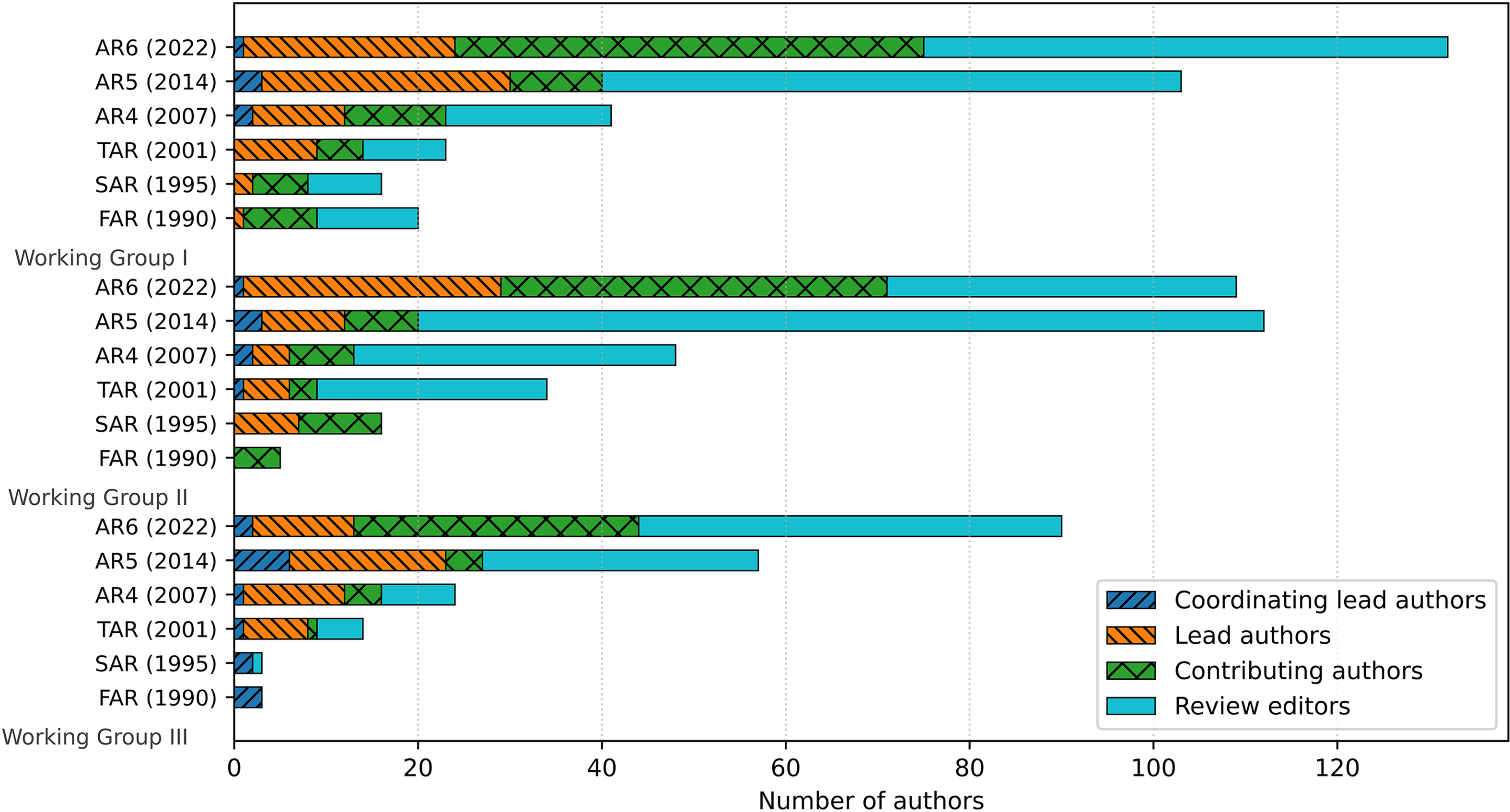
Chinese participation in the IPCC working groups I–III.
Perhaps an even more significant Chinese scientific contribution to the IPCC has been the scientific research literature that has been cited in each assessment report. As Figure 8 indicates, very few scientific papers that included at least one Chinese author with an institutional affiliation in the PRC were cited in the references of IPCC Working Group I reports on the physical science basis in the FAR and SAR cycles, constituting a mere 0.7% and 0.4% of all references, respectively. For the TAR and AR4 reports, the number of references with PRC authors cited increased slightly, constituting 1.2% and 1.4%, respectively, of all scientific references. In the AR5 cycle report for Working Group I, the citations to papers in the scientific literature that included at least one Chinese author with an affiliation in the PRC doubled to 294 references, equivalent to 3.2% of all scientific references. Finally, in the AR6 cycle, the input by Chinese authors amounted to 11.3% of all references.
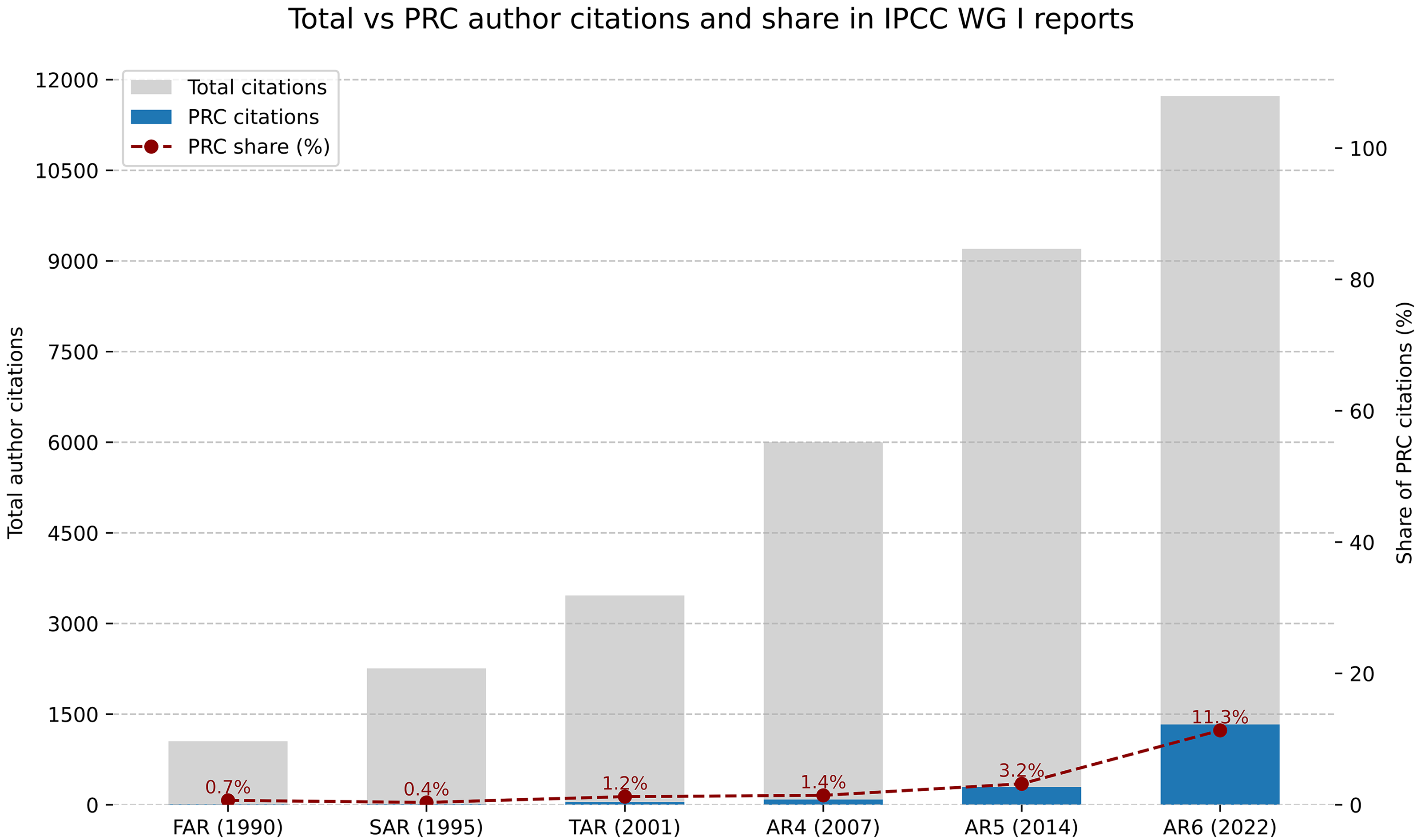
Scientific references with at least one author affiliated with PRC organizations cited in IPCC Working Group I assessment reports.
These data provide a testimony to the increased strength and relevance of the IPCC work of Chinese climate scientists. On the one hand, this is a spillover from the extent to which Chinese policymakers have relied on domestic scientific output for the design of new policies since 2007. On the other hand, it underscores the surge in international cooperation and international publications by Chinese scientists that we showed in Figure 1.
Chinese climate change scientists have developed climate models that have contributed to the IPCC's activities and assessment reports for many decades. Climate model development in China began in the 1980s, nearly at the same time as that in developed countries. With each new model developed in China, research and development teams grew increasingly larger. Chinese models became involved in every IPCC scientific assessment report; starting with the FAR, a Chinese model was included that involved a two-layer atmospheric model coupled with a mixed-layer ocean model developed by the CAS Institute of Atmospheric Physics. Subsequently, with the launch of the Coupled Model Intercomparison Project (CMIP) in 1995, the evolution of research communities for climate model development patterns in China and their interaction with the cycles of IPCC assessments can be observed (Zhou et al., 2020).
Another major effort led by Chinese scientists at the CAS Institute of Atmospheric Physics was the development of the Flexible Global and Ocean–Atmosphere–Land System (FGOALS) climate model that has played a pivotal role in Chinese climate science (Zhou et al., 2014b). The FGOALS model has facilitated a variety of climate simulations and contributed directly to national climate assessments, thereby enriching the evidence base for IPCC reports. Its performance in simulating both past and future climate conditions has underscored its relevance to the global climate modeling community (Zhou et al., 2018). Furthermore, the emphasis on FGOALS aligns with the broader community of climate models represented in IPCC reports. This led to an increasing number of models from the Chinese mainland participating in CMIP, highlighting the enhanced role of models such as FGOALS in addressing global climate challenges, as evidenced in ongoing assessments (Ma et al., 2023).
Thus, climate models developed in China have contributed significantly to IPCC work, particularly through their integration into the iterations of new versions of CMIP, including the most recent iteration, CMIP6. The involvement of these models has enhanced the robustness of climate projections and addressed regional climate phenomena relevant to China as well as the broader global community. Thus, the analysis of the performance of five Chinese climate change models by Zhou et al. (2014a) has outlined the ways in which Chinese climate models contributed to the development of earth system models from CMIP1 to CMIP5. Moreover, the climate system model for CMIP6 developed by the Beijing Climate Center shows many improvements over CMIP5 models regarding the analysis of key factors, including the tropospheric air temperature and circulation at global and regional scales in East Asia, and thus contributing to climate system modeling from CMIP5 to CMIP6 (Wu et al., 2019).
Finally, it is worth mentioning that, in 2018, China set up the EarthLab infrastructure in Beijing, officially known as the Earth System Science Numerical Simulator Facility, which provides advanced facilities for advanced computational and observational capabilities focused on Earth system modeling and data analysis (Chai et al., 2021). Funded by the NSFC and the State Key Laboratory of Tropical Oceanography, this infrastructure has been designed to enhance the capacity to address complex environmental changes and climate feedback mechanisms across various scales. For example, studies on cloud feedback mechanisms highlight the importance of infrastructural support in environmental science, which EarthLab can facilitate through simulation models and remote-sensing data-assimilation technologies (Zhang et al., 2025).
In conclusion, Chinese climate models significantly expand the depth and breadth of IPCC assessments through their integration in major model intercomparison projects, regional climate evaluations and future climate scenario articulation, which are critical for effective policymaking. These models provide vital insights that inform both local and international climate strategies, thus playing a significant role in global climate science.
Concluding remarks
This paper has aimed to provide an analysis of the ways that Chinese climate science has developed both domestic and international capabilities that contribute to the global system of science. Given the extent to which the meteorological research field has traditionally been international by its nature, it is remarkable how pioneers of meteorology and climate research such as Zhu Kezhen received their advanced training overseas but were eager to develop research in China. Therefore, it is possible to argue that the emergent climate science in China also fostered global links from its early beginnings, and that it has been natural for the Chinese scientific community to contribute to international organizations and research efforts.
While China's climate science community was growing stronger, international collaboration also became increasingly crucial, and bilateral cooperation with the US, the EU and individual countries such as the UK prospered. During recent decades, Chinese scientists have increasingly published their research in international scientific journals, often with co-authors from countries that have promoted bilateral research efforts. Funding by the NSFC also promoted research projects relevant to climate change, and government support provided to research infrastructure and research projects since the 12th Five-year Plan (2011–2015) has been substantial.
Nevertheless, international research cooperation and co-authorship are still influenced by geopolitical tensions. This has most clearly manifested itself in the bilateral relationship between scientists in the US and China, which has declined since the US administration under President Trump launched the notorious ‘China Initiative’ in 2018. So far, we have fortunately not seen similar impacts in international co-authorship for other countries, even if some have proposed ‘security’ restrictions in scientific cooperation with China.
A case study of Chinese engagement in the international activities of the IPCC demonstrates that this important forum for understanding climate change and developing policy options has been very important for China. The work of the IPCC is often referenced in articles published by scientists from CAS. Moreover, Chinese scientists have participated in the preparation of IPCC assessment reports from the beginning, and the number of Chinese contributors has grown significantly during the past two decades. China's development of advanced geophysical climate models has also contributed to the accuracy of simulating physical features and the development of future scenarios of key climate changes and their consequences.
Although there is plenty of room to enhance the overall picture of China's climate change science and its global linkages with more detailed studies of the impact of the bilateral relations or policies, we hope that we have shown the importance of such global linkages. Moreover, personal stories of the scientists and their achievements could provide key details of the driving forces and effects of international scientific cooperation, but this task lies beyond the scope of the current paper.
Footnotes

Funding
The authors received no financial support for the research, authorship, and/or publication of this article.
Declaration of conflicting interests
The authors declared no potential conflicts of interest with respect to the research, authorship, and/or publication of this article.
Author biographies
Erik Baark is Professor Emeritus at the Division of Social Science at the Hong Kong University of Science and Technology and a visiting senior research fellow at the Max Planck Institute for the History of Science. His research has focused on Asian development, in particular China, and includes analysis of innovation policies, high technology entrepreneurship, environmental and climate change issues, and the digital economy.
Xinggu Budian is a data analyst at the Max Planck Institute for the History of Science. He graduated in Economics from Peking University and went on to complete his training as an IT specialist for data and process analysis in Germany. He has distinctive experience in data-based regional systems analysis with a focus on science and technology, economics and social politics.