




Abstract
Stigma about substance use disorders (SUDs) is a barrier to treatment and care. Media portrayals of SUDs influence public perceptions of people with SUDs and form the foundation for societal opinions and perspectives. For this reason, it is crucial to evaluate how the media portrays SUDs. This paper examines how the mass media portrays individuals with SUDs and how these portrayals reinforce negative stereotypes. It also evaluates the influence of media portrayals and the intersection of skin colour with these depictions. Additionally, this paper advocates for communication strategies that aim to destigmatize SUDs to enhance public education and encourage treatment-seeking behaviour. We used a scoping review approach, searching PubMed for medical subject heading (MeSH) terms ‘(addiction) and (portrayal)’ (n = 58) and ‘(addiction) and (portrayal) and (media)’ (n = 37). The search yielded 58 unique peer-reviewed articles (duplicates removed; n = 37). Of these, 42 did not meet our topic criteria, leaving 16 articles for analysis. Inductive thematic coding was performed on the 16 articles and uncovered eight portrayal themes: (1) positive endorsement (n = 8, 50.0%), (2) violent or dangerous (n = 7, 43.8%), (3) criminal (n = 6, 37.5%), (4) risky behaviours (n = 6, 37.5%), (5) policy-making (n = 5, 31.3%), (6) unreliable, unstable or uncontrollable (n = 3, 18.8%), (7) interventions or treatments (n = 3, 18.8%), and (8) celebrity (n = 3, 18.8%). These themes were observed in four types of media: entertainment media (n = 9), social media (n = 1), news media (n = 7) and marketing media (n = 5). The findings show that media portrayals of individuals with SUDs continue to reinforce negative stereotypes. Effective campaigns to counter this portrayal with anti-stigmatizing communication of addiction-related topics require collaboration between patients as partners, experts in addiction science and science communicators.
Introduction
Morbidity and mortality from substance use disorders (SUDs) is a public health crisis (Humane et al., 2020; Kariisa et al., 2022). SUDs, commonly known as ‘addiction’, denote persistent or uncontrolled use of a substance despite adverse consequences, resulting in long-term alterations to neural networks and lifelong social and health impacts on individuals (Volkow and Blanco, 2023). Drug overdose deaths in the United States (US), for example, increased by 30% between 2019 and 2020 and by a further 15% in 2021 (Tanz et al., 2022). Thus, there is an urgent and pressing need to address the public health impact of SUDs (Stanojlović and Davidson, 2021; Teeters et al., 2017).
Stigma surrounding addiction manifests through negative labels and biased perceptions of individuals with SUDs, resulting in discriminatory practices, including social exclusion and alienation (Bosworth, 2023; Cheetham et al., 2022; National Academies of Sciences, Engineering and Medicine, 2016; Nieweglowski et al., 2019; Saatcioglu and Ozanne, 2013). The media is one source of negative attitudes and stigma regarding people with SUDs. The media constitutes channels through which information is communicated to the public. Its effects vary depending on the form––television, radio, print or social media, for example (Bateman, 2021; Iosifidis, 2011). Research shows that media portrayals can shape public attitudes and perspectives, and can exacerbate stigma (Dunlop et al., 2008; Mehraj et al., 2014; Srivastava et al., 2018). Given the expanding accessibility and reach of the mass media (Biagi, 2014), it is important to examine how media influences public perceptions if we are to combat stigma. Stigma makes discussion with the public about addiction difficult. People are generally aware of certain addiction topics, such as the opioid epidemic (Kennedy-Hendricks et al., 2019), which has acted as a lens for more people to understand the prevalence of SUDs (De Benedictis-Kessner and Hankinson, 2022).
The objective of this study is to examine the influence of mass media portrayals on reinforcing the negative stereotypes, and subsequent stigmatization, of individuals with SUDs. The study also evaluates the influence of the media on public perception of substance use, the impact of various substance portrayals and the intersection of skin colour with these depictions. Finally, it also analyses portrayals of interventions and treatments while advocating for destigmatizing communication strategies to enhance public understanding of addiction and encourage treatment-seeking behaviour.
Despite the availability of treatment options for SUDs, there is a substantial disparity between those who could benefit from treatment and those who actually receive it (Jackson et al., 2022). Low rates of SUDs treatment utilization, which describes the extent that individuals seek and receive treatment for SUDs, continues to persist (Bouchery, 2021; Hammarlund et al., 2018; Stringer and Baker, 2018; SAMHSA, 2023). Research shows that stigma is a barrier to treatment. This highlights the need to address the stigma surrounding addiction to improve access and use of SUD treatment services. Stigma affects every stage of care for people with substance use issues, influencing their decision to seek treatment, the type of care they choose, their ability to stay engaged and their adherence to prescribed regimens (National Academies of Sciences, Engineering and Medicine, 2016; Nieweglowski et al., 2019; Zwick et al., 2020). This pervasive stigma ultimately leads to poorer health outcomes for both individuals and communities at large (Wogen and Restrepo, 2020; Zwick et al., 2020).
As the prevalence of SUDs continues to rise, the demand for research into the contributors of stigma increases. To our knowledge, there is currently no literature that has used a scoping review approach to evaluate how the media reinforces perceptions of stigma about people with SUDs. Our study reviewed the literature regarding the portrayals of people with SUDs within the media, and how this influences the perpetuation of stigma.
Methods
This study took a scoping review approach, which aims to encompass a limited and non-exhaustive selection of literature pertaining to and examining a specific topic (Green et al., 2006; Sukhera, 2022a, 2022b).
Search strategy
The scoping review search was manually performed using the PubMed search engine by the National Center for Biotechnology Information. 1 This tool was used to identify publicly-available and peer-reviewed publications for MeSH terms ‘(addiction) and (portrayal)’ (n = 58) and ‘(addiction) and (portrayal) and (media)’ (n = 37). We searched English language articles published in the 20 years between 2003 to December 2023. We selected these terms to correspond with a comprehensive assessment of diverse media sources regarding the depiction of individuals with SUDs, who are commonly and historically referred to as ‘addiction’ (Bessette et al., 2022; McGinty et al., 2019). This study did not involve any health or patient information and human subjects, and did not necessitate Institutional Review Board approval.
Article processing
We used the online software Rayyan for three-step article processing (Mak and Thomas, 2022; Ouzzani et al., 2016). The initial search yielded 58 unique peer-reviewed articles. The relevance of the inclusion criteria to each step of the process was evaluated. The three steps were: evaluation of the (1) title, (2) abstract, and (3) full-text articles. We retained articles that evaluated or analysed media content about people with an SUD and that commented on portrayals of those with SUDs or the act of substance use. The exclusion criteria were as follows: articles about behavioural addictions (such as gambling or online gaming), evaluations of the substance itself without portrayal of a person and systematic or scoping reviews. Articles were excluded at each step: 17 at step one, nine at step two and 16 at step three. A total of 42 articles (72.4%) were excluded, and a total of 16 articles (27.6%) were included in the final analysis (Figure 1).
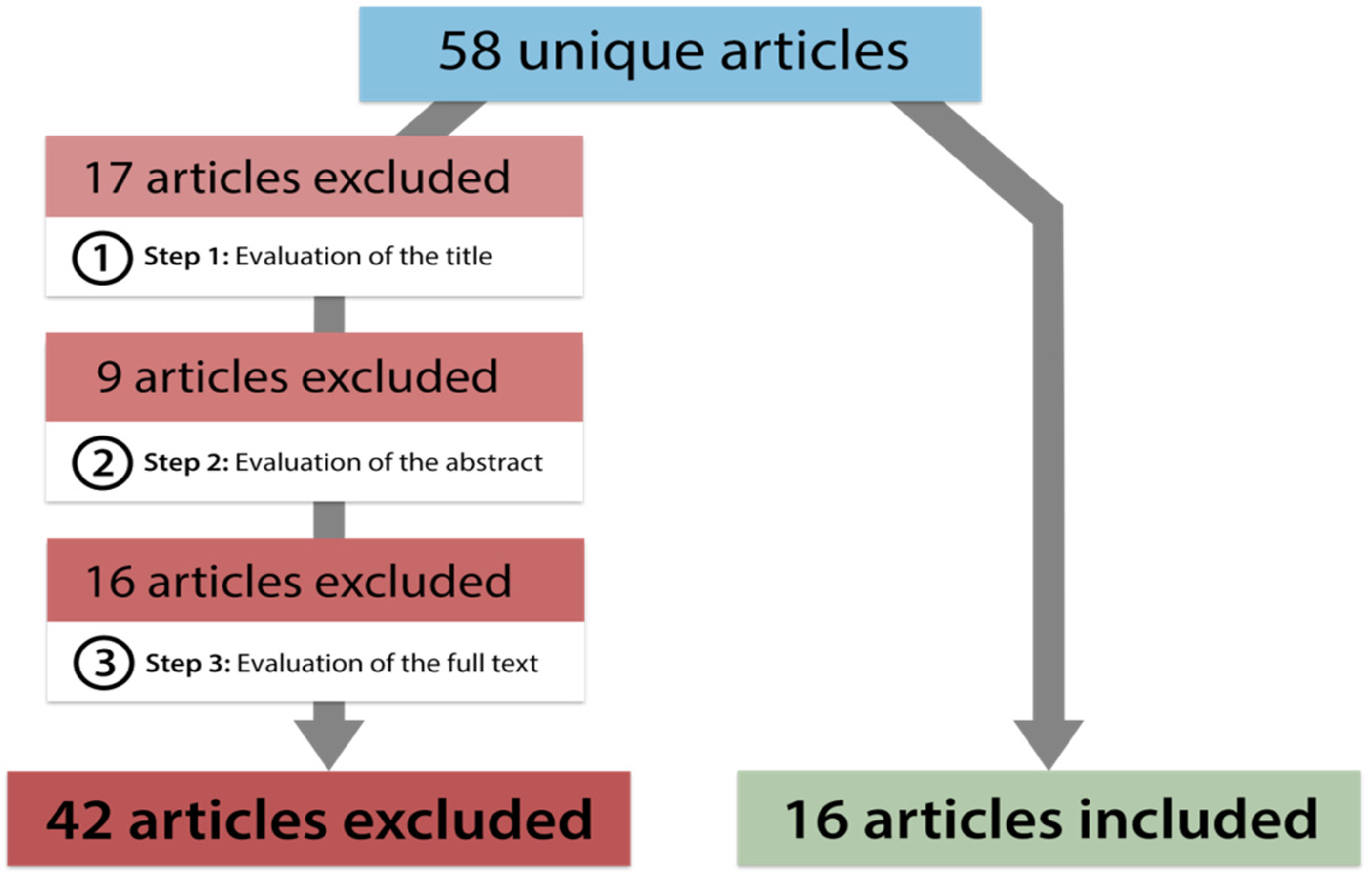
Method of stepped triaging articles from initial search to the total included articles.
We conducted a narrative review using an inductive thematic approach. Thematic research identifies data patterns by applying themes (Kiger and Varpio, 2020; Maguire and Delahunt, 2017). We used inductive coding––making specific observations leading to pattern recognition and general conclusions without a pre-existing codebook (Fereday and Muir-Cochrane, 2006). Initial inductive manual coding (KTB) produced a codebook that outlined the themes from included articles, as identified in step three of our triaging. The resulting themes from the initial coding were verified by two coders (NH, MB), and discrepancies were discussed until a consensus was reached. These themes were then applied to all 16 included articles. Every article was reviewed to ensure focused analysis emphasizing the contextualization of labelled themes. Themes were evaluated for stigma and bias potential.
Results
The included articles were based on a range of study design methodologies and formats. Of the 16 articles, 10 were qualitative using content or thematic analysis; five were general commentary papers, and one had an experimental approach. The designs of these studies are explained in Table 1.
Study designs by included articles.
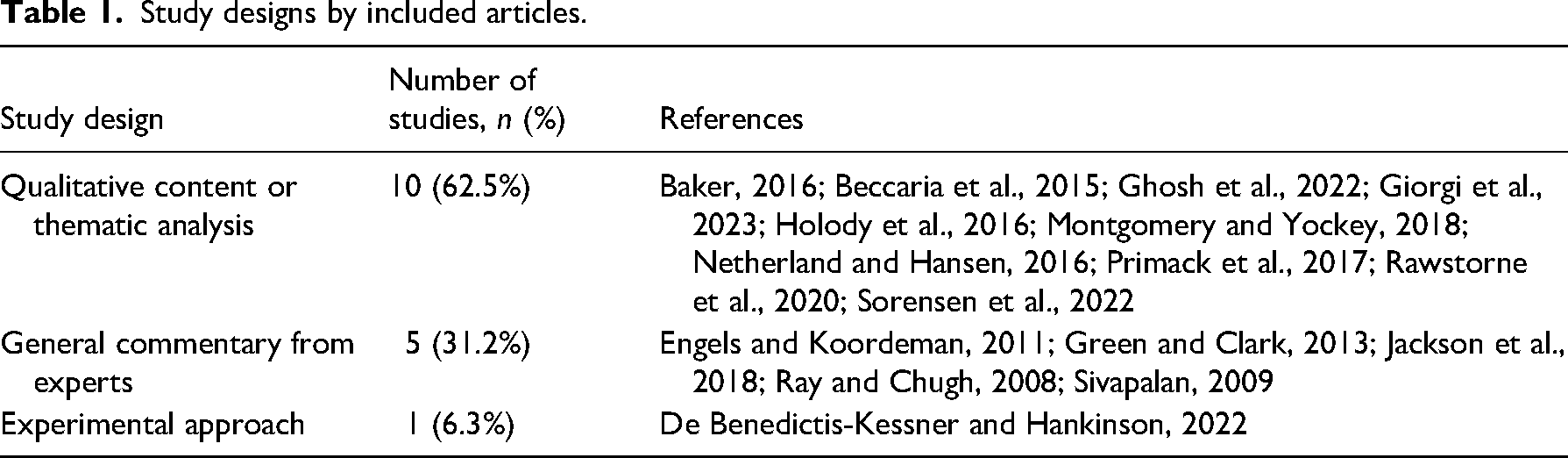
Study designs by included articles.
From literature analysis, eight themes emerged from media portrayals of individuals with addiction (Table 2): (1) positive endorsement, (2) violent or dangerous, (3) criminal, (4) risky behaviours, (5) policy-making, (6) unreliable, unstable or uncontrollable, (7) interventions or treatments, and (8) celebrity. The content of the literature included how substance use was portrayed in the media and the corresponding impact of this portrayal.
Inductive themes identified and coded from the content of the included articles.
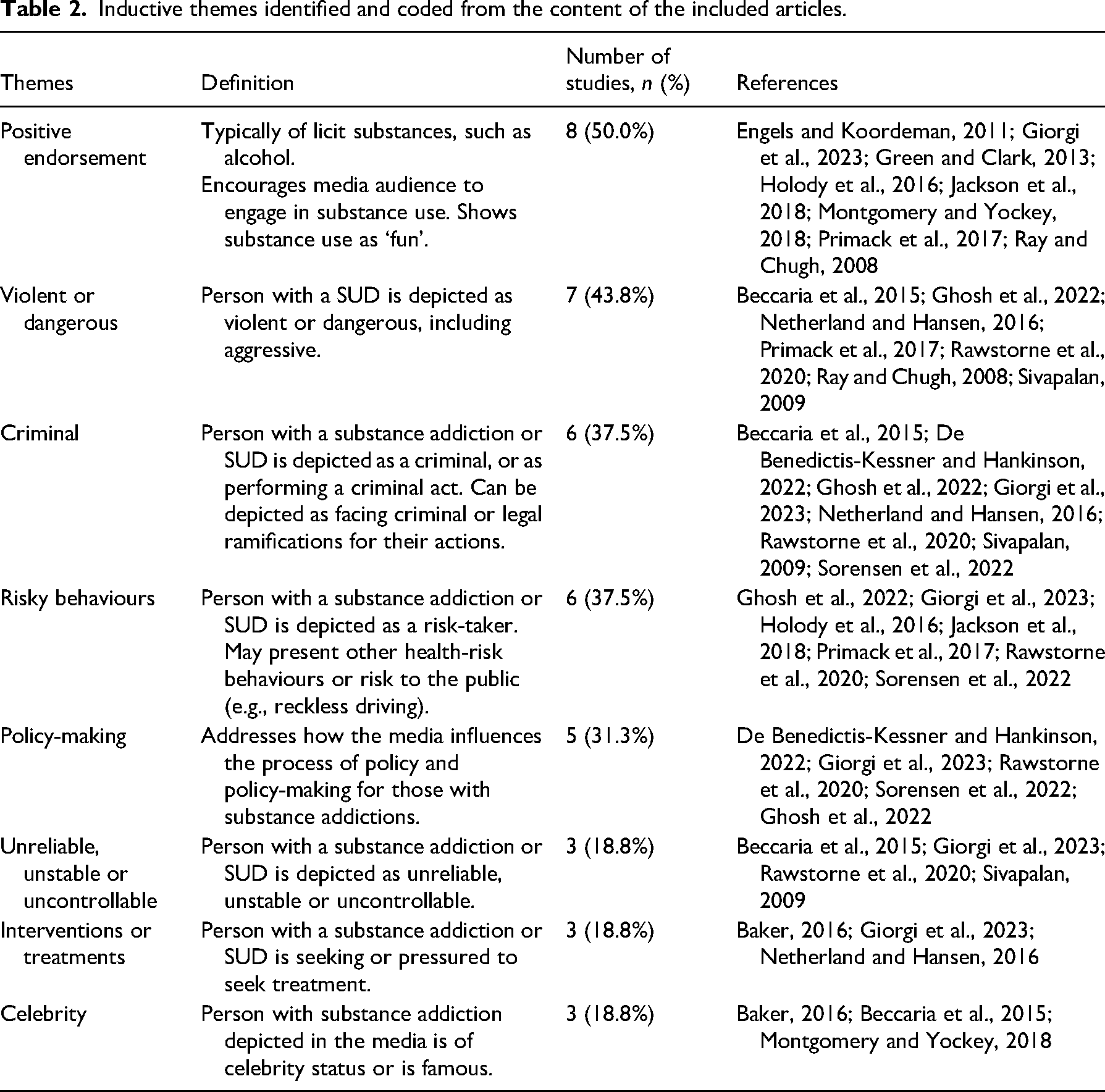
Inductive themes identified and coded from the content of the included articles.
Positive endorsement
Positive endorsement encompassed the encouragement of people to engage in substance use and typically showed substance use as ‘fun’. The most common portrayal of positive endorsement was for licit substances, typically alcohol or cannabis, with eight articles being identified. Alcohol and cannabis use tended to be characterized as ‘fun’, ‘exciting’ or ‘attractive’ (Engels and Koordeman, 2011; Giorgi et al., 2023; Green and Clark, 2013; Holody et al., 2016; Jackson et al., 2018; Montgomery and Yockey, 2018; Primack et al., 2017; Ray and Chugh, 2008). For example, Giorgi et al. (2023) observed a linguistic shift over time, noting an increase in the use of humanizing language for marijuana with positive terms such as ‘enjoyable’, ‘generous’ and ‘happy’.
Violent or dangerous
The next notable portrayal of substance use and people with addiction was violent or dangerous, with seven included articles identifying this theme. This theme described a person with an SUD as someone with actions or behaviours that involved physical force intended, or with the potential, to cause harm, injury or destruction. This often implied aggression. In entertainment media, such as films, Sivapalan (2009) identified portrayals depicting anger and violence attributed to individuals using substances. Beccaria et al. (2015) discovered that a significant portion of Dutch news media attention on SUDs depicted individuals with SUDs as a violent threat, with an apparent overlap with criminality.
Criminal
Criminal was used when a person with an SUD was depicted as a criminal, or as performing a criminal act, sometimes facing legal ramifications for their actions. Six included articles depicted and evaluated people with SUDs as criminals. For example, Beccaria et al. (2015) found that contemporary newspapers frequently characterized individuals as either engaging in petty property theft, pickpocketing or as posing a violent threat—either against real people or in situations of collective aggression. Netherland and Hansen (2016) evaluated the intersectionality of skin colour and substance use or addiction with a focus on the link between racial intersectionality and violence. Sivapalan (2009) elucidated the depictions of individuals using substances in three films directed by Martin Scorsese, using the model for Khantzian's ‘self-medication hypothesis’.
Risky behaviours
Risky behaviours refer to the actions conducted by a person with a substance addiction or SUD who is depicted as a risk-taker. These risky behaviours may also present as other health-risk behaviours or risk to the public (e.g., reckless driving). Six articles noted the intersection of substance use and risky behaviours in the media. Ghosh et al. (2022) conducted a content and thematic analysis of news articles and found that psychosocial and health risk linked to substance use was a notable theme. Similar themes were found in entertainment media, and Ghosh et al. also identified articles that seemed to propagate public stigma.
Holody et al. (2016) analysed the content of music lyrics and identified risky behaviours as a major theme. They noted that, while the impact of the media on public perceptions could not be conclusively determined, certain risky behaviours (such as alcohol and risky sex) were reported as normative within the analysed music lyrics. They also observed that adolescents and young adults comprised the most substantial audience for music, recognizing that exposure to popular music was linked to heightened engagement in risky behaviours.
Also focusing on adolescents and young adults, Primack et al. (2017) used a content analysis approach to investigate the portrayal of alcohol brands on YouTube as a marketing medium. One of the findings of their study revealed themes related to risky behaviours associated with substance use, including portrayals of injuries and risky motor vehicle use (i.e., drunk driving). The insights provided by Jackson et al. (2018) contributed other perspectives on the substantial exposure of adolescents and young adults to advertisements featuring substance use. They found that, due to their extensive exposure, adolescents and young adults faced an increased risk of being influenced by media campaigns promoting substance use. In the context of individuals using methamphetamine and news media, Rawstorne et al. (2020) identified the presence of the theme of risky behaviours. However, the news articles they evaluated framed these behaviours as either information that individuals should be made aware of or as part of harm reduction perspectives. They found that stigmatization of methamphetamine use undermined public health policy responses and strategies.
Policy-making
Policy-making addresses how the media influences the process of policy and policy-making for those with substance addictions. Policy-making regarding substance use was examined in four articles from our literature search. In the study conducted by De Benedictis-Kessner and Hankinson (2022), the researchers created a news article by blending elements of text from actual published articles profiling individuals who used opioids. Each story of the created news article portrayed a substance user with a randomly assigned skin colour, gender and residential location. The study suggested that some “race-based in-group favouritism” existed, which influenced support for opioid treatment funding.
Ghosh et al. (2022) conducted a thematic content analysis of online news media, identifying the legal-criminal aspects of substance use as the predominant theme. Within this theme, various sub-themes were recognized, with those most pertinent to policy-making encompassing legislation pertaining to drugs or individuals using drugs, along with discussions on cannabis legalization. They observed that news articles within the legal-criminal theme frequently used stigmatizing language, potentially contributing to the perpetuation of public stigma.
Unreliable, unstable or uncontrollable
Unreliable, unstable or uncontrollable was used to characterize a person with a substance addiction or SUD. Sivapalan (2009) identified that these portrayals not only involved substance use but also depicted individuals as experiencing co-psychopathologies, which manifested as emotional instability. These portrayals also introduced a non-verbal communication element, significantly shaping public perceptions by influencing emotions and attitudes, and emphasizing an association between substance use and mental health. However, Sivapalan stated that stigmatizing depictions of mental illness as disadvantages was not problematic in the films analysed in their study.
Interventions or treatments
Interventions or treatments were applied in instances where a person with a substance addiction or SUD sought or was pressured to seek treatment. One notable study (Baker, 2016) aimed to characterize ‘addiction entertainment’ through content analysis methodology that examined television programmes such as ‘Celebrity Rehab’. While Baker's research emphasized the impact of these programmes on the depiction of treatment professionals, it also touched on how individuals with SUD seeking treatment were presented and how these portrayals were stigmatizing. Giorgi et al. (2023) used the content analysis approach to examine news articles, focusing on linguistic analysis of dehumanization as a source of stigmatization. Similar to the approach of Giorgi et al. (2023), Netherland and Hansen (2016) used thematic analysis to evaluate press articles from the US. They explored the intersection of skin colour and prescription opioid misuse as discussed in the press articles they reviewed, as well as the potential impact of stigmatization of drug use that could inhibit treatment.
Celebrity
Lastly, celebrity was used to describe a person of celebrity status or who was famous as a person who used substances. We identified three articles that focused on the celebrity theme. Revisiting the study by Baker (2016) highlighted that celebrities were portrayed in entertainment media via ‘reality television’ regarding the person's substance use, which deviated from the ‘usual’ polished persona of celebrities. Celebrities with SUDs appeared in unexpected or less than ideal states, such as in their underwear, pyjamas or loungewear and without special makeup or hair preparation.
Beccaria et al. (2015) conducted an analysis of news media in four European countries, focusing on various themes, including fame. In instances where celebrities were associated with addiction, the narrative often linked that to work-related pressures. These celebrities were predominantly depicted as dealing with emotional issues such as sadness and depression.
Another study by Montgomery and Yockey (2018) investigated the portrayal of celebrity marijuana use in entertainment media, specifically YouTube videos. In these videos, celebrities were shown engaging in activities such as smoking or rolling blunts. The perspective of these videos was typically one of positive endorsement of the use of marijuana. This portrayal of celebrity endorsement could be attributed to the growing social acceptance of marijuana use, influenced by its evolving legalization (Hajizadeh, 2016; Rudski, 2014; Sorensen et al., 2022).
The appearance of the eight portrayal themes varied by specific substance, as shown in Table 3. For example, the portrayal of violent and dangerous was more likely to be depicted with the use of opiates or stimulants, in either news or entertainment media (Beccaria et al., 2015; Ghosh et al., 2022; Netherland and Hansen, 2016; Rawstorne et al., 2020; Sivapalan, 2009). Furthermore, news articles addressing methamphetamine users consistently depicted them with themes of aggression, violence and potential threat to others (Rawstorne et al., 2020). However, with legal substances such as alcohol, positive endorsements occurred more frequently than more negative labelling such as violent and dangerous. Alcohol was mentioned most––accounting for eight articles. Further exploration of the nuances inherent in the various depictions of substances is presented within the context of the overarching themes.
Substances discussed in included articles.
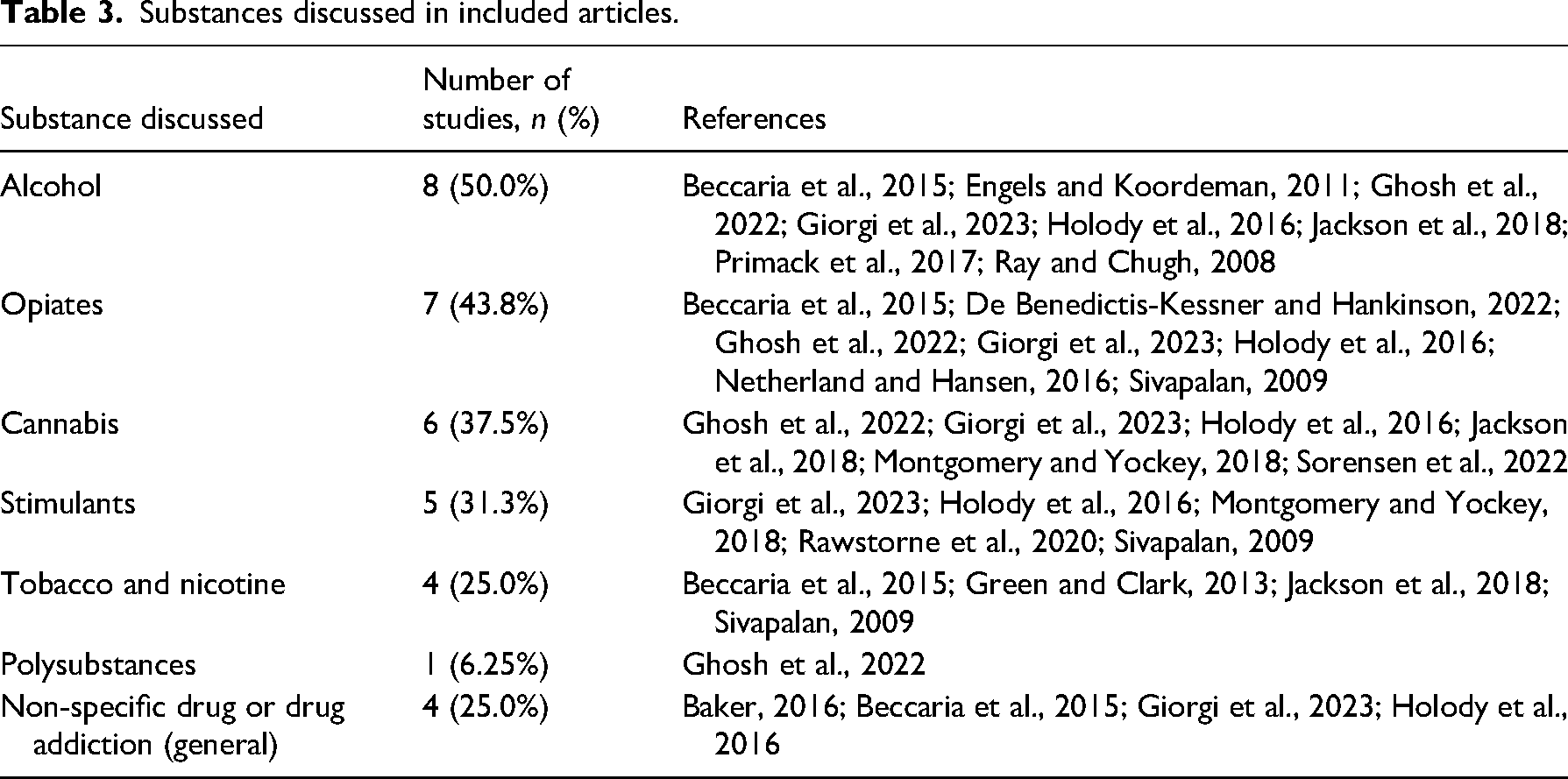
Substances discussed in included articles.
We evaluated themes by media type. For this purpose, four overarching media sources were identified and defined: entertainment media, social media, news media and marketing media. Marketing and entertainment media often portrayed legal substances, such as alcohol and cannabis, in a way that encouraged consumption by presenting them as ‘fun’, ‘exciting’ or ‘attractive’, resulting in a positive endorsement of these substances (Engels and Koordeman, 2011; Giorgi et al., 2023; Green and Clark, 2013; Holody et al., 2016; Jackson et al., 2018; Montgomery and Yockey, 2018; Primack et al., 2017; Ray and Chugh, 2008). Themes such as policy-making were more prevalent in news media. More negative labelling such as violent and dangerous, criminal and unreliable, unstable or uncontrollable were more pervasive in entertainment media. Identified themes were often framed within specific contexts, heavily influenced by the respective media sources. Some articles explored the intersection of one or two media sources. These media types and their related descriptions are presented in Table 4.
Types of media analysed by included articles.
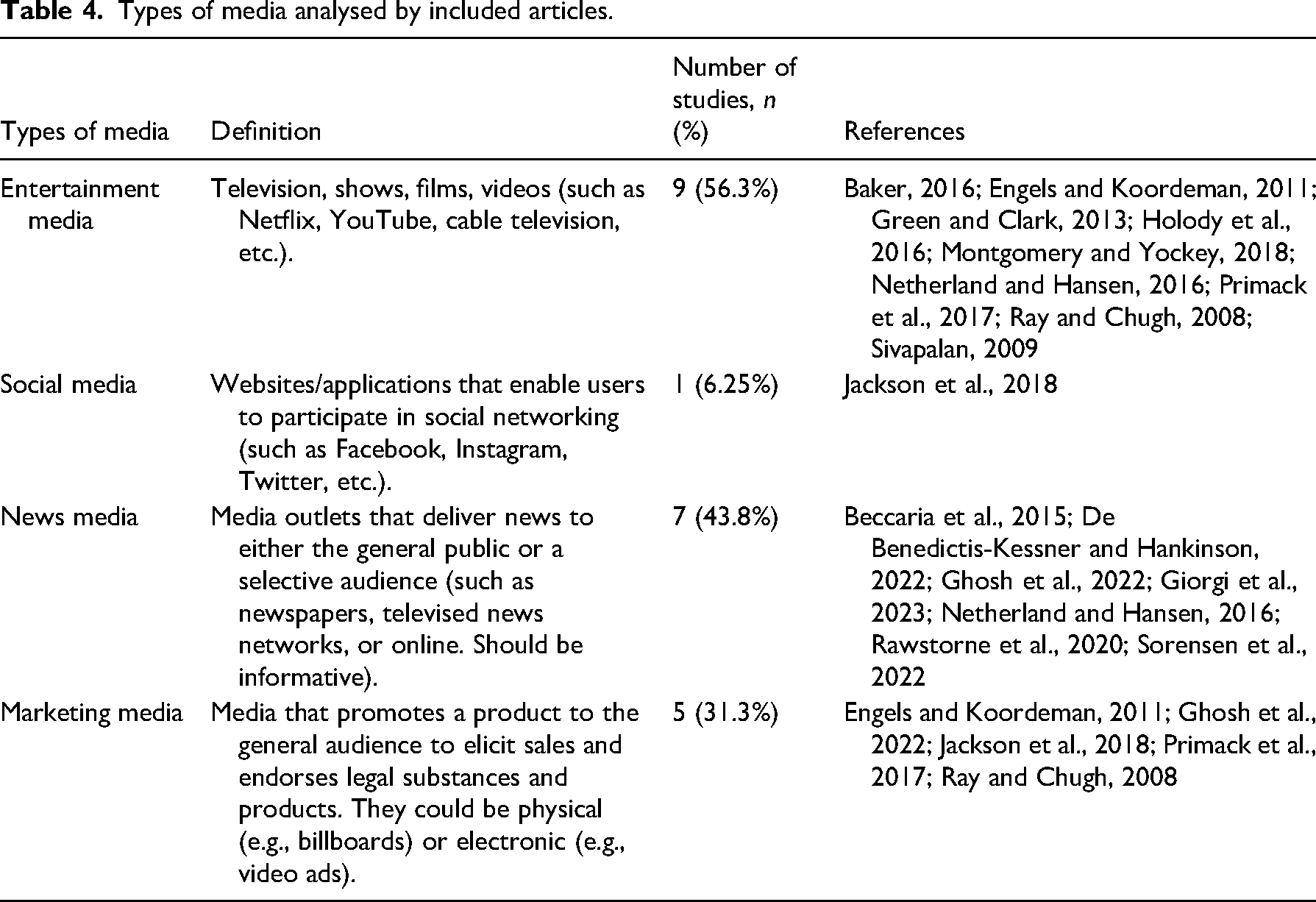
Types of media analysed by included articles.
Our scoping review revealed eight predominant themes emerging from media portrayals of individuals with SUDs. We found that the mass media often reinforced negative stereotypes of individuals with SUDs, emphasizing their perceived danger (National Academies of Sciences, Engineering and Medicine, 2016; Lloyd, 2013; McGinty et al., 2019; Merrill and Monti, 2015). Negative portrayals, including violent and dangerous, criminal, risky behaviours, and unreliable, unstable or uncontrollable, were more common in depictions of illicit substance use compared to legal substances (Beccaria et al., 2015; De Benedictis-Kessner and Hankinson, 2022; Ghosh et al., 2022; Giorgi et al., 2023; Netherland and Hansen, 2016; Primack et al., 2017; Rawstorne et al., 2020; Ray and Chugh, 2008; Sivapalan, 2009; Sorensen et al., 2022). Negative portrayals of people with SUDs can contribute to stigma via three main mechanisms: ignorance, prejudice and discrimination. Ignorance stems from a lack of knowledge, while prejudice reflects biased attitudes, and discrimination manifests through biased actions or behaviours. All three mechanisms have been linked to longer delays in treatment (Thornicroft, 2008).
Understanding the dynamic between substances and various media formats is crucial for a comprehensive understanding of how media portrayals are constructed. Our analysis revealed a prevalent trend in marketing media to portray legal substances, such as alcohol and tobacco, in a favourable manner, often geared towards enhancing sales for the brands and companies (Primack et al., 2017; Weitzman and Lee, 2020). Notably, engaging in activities perceived as positive or enjoyable, such as using marijuana, could inadvertently result in celebrity endorsement of these behaviours (Montgomery and Yockey, 2018). This deliberate positive framing not only serves commercial interests but also plays a crucial role in influencing public perceptions, potentially shaping attitudes and behaviours toward these substances (Adams et al., 2023; Churchill et al., 2016; Gerend and Cullen, 2008; Maheswaran and Meyers-Levy, 1990). The marketing strategies and positive language use contributes to the normalization and acceptance of legal substances, which raises concerns about the potential impact on public health and regulatory measures.
In contrast to positive endorsements in marketing, the media portrayed legal substances, such as alcohol, differently. For example, Ghosh et al. (2022) found that the news media often linked alcohol use to incidents of domestic violence, while aggression in alcohol-related marketing on YouTube was often presented humorously (Primack et al., 2017). This distinction highlights how different substances are depicted in the media, potentially influencing public awareness and discussions regarding the risks of alcohol consumption (Primack et al., 2017; Ray and Chugh, 2008).
Portrayals of violent or dangerous were often associated with opiates and amphetamines in both news and entertainment media (Beccaria et al., 2015; Ghosh et al., 2022; Netherland and Hansen, 2016; Rawstorne et al., 2020; Sivapalan, 2009). Methamphetamine users, for instance, were consistently depicted as aggressive and threatening in news articles (Rawstorne et al., 2020). Dutch news media frequently portrayed individuals with SUDs as violent and criminal, emphasizing instances of abuse and domestic violence (Beccaria et al., 2015). This portrayal persisted in the entertainment media, perpetuating stereotypes and stigmatizing individuals with SUDs as inherently violent (Primack et al., 2017; Sivapalan, 2009). These depictions across various media platforms may reinforce negative stereotypes and stigma (Habib et al., 2023; McGinty et al., 2019; National Academies of Sciences, Engineering and Medicine, 2016).
News media often portrayed individuals with SUDs as engaging in criminal activities such as theft or violence (Beccaria et al., 2015). This framing of substance use as a criminal issue rather than a health concern influences policy decisions towards punitive measures instead of evidence-based treatment (Chandler et al., 2009; De Benedictis-Kessner and Hankinson, 2022). Criminalization exacerbates stigma and creates barriers to accessing healthcare services and treatment for those with addiction (Cheetham et al., 2022; Earnshaw, 2020; Volkow, 2021).
Portrayals of risky behaviours depicted individuals with SUDs as risk-takers who can endanger their own health or the public (through reckless driving, for example). Dehumanizing language in news articles is linked to both the criminalization of individuals with SUDs and in-group/out-group dynamics (Giorgi et al., 2023). Society tends to categorize people with substance addictions as an ‘out-group’, while those without addiction are seen as the ‘in-group’ (Lytle et al., 2020), which contributes to stigma. Portrayals of people with SUDs in the entertainment media (e.g., television) using tactics of ‘out-grouping’ leads to the perpetuation of stereotypes and stigma as echoed throughout the study by Baker (2016).
The public frequently debates the choice-versus-disease argument regarding addiction, reflecting an in-group perception that individuals with addiction have internal character flaws (Henden et al., 2013; Lewis, 2011). Intergroup dynamics exploration is essential for understanding the origin and perpetuation of stigma and bias against those with addiction. In-group/out-group dynamics, combined with the interpersonal identities of media consumers, further shape the interpretation of stigmatized portrayals by the public. Negative portrayals of substance use often heighten the out-group dynamic.
The policy-making theme examines how the media influences policy-making on substance use and SUDs. Rawstorne et al. (2020) observed a parallel with Ghosh et al.'s (2022) legal-criminal theme, focusing on methamphetamine-related stories in the media. These articles consistently emphasized legal and policy dimensions, and focused mostly on criminal justice and policy commentary. Giorgi et al. (2023) found dehumanizing language in news articles, highlighting the importance of language choices in shaping public perceptions (e.g., stigmatization) and policy-making. This underscores the need to advocate for policies addressing false and sensationalized media portrayals (Caplan et al., 2018; Figueira and Oliveira, 2017). Sorensen et al. (2022) found diverse perspectives on cannabis legalization in news articles, while methamphetamine discussions often received negative moral evaluation, leading to an assumed lower level of social acceptability (Rawstorne et al., 2020). This variation in perspectives provides a lens through which to understand the diverse range of social acceptability associated with different substances.
The study conducted by De Benedictis-Kessner and Hankinson (2022) found no significant decrease in support for treatment programme funding after participants were presented a Black policy beneficiary compared to a white one, nor were there notable gender or residential location preferences for policy funding. However, people are sensitive to social cues and group identities, and this affects how information is perceived and understood (De Benedictis-Kessner and Hankinson, 2022; Miller et al., 2010; Oyserman, 2009; Pärnamets and Olsson, 2020). This raises questions about the role of communicator identity in shaping message reception, with relatability enhancing message delivery. When addiction-related topics are addressed by a range of diverse communicators, anti-stigmatizing communication can be improved and policy-making may be influenced. If the communicator shares the same identity as the audience, it can influence message reception (Tukachinsky et al., 2019).
Policy-making plays a crucial role in shaping how individuals with SUDs are perceived and supported within communities. For example, when policies suppress harm reduction strategies such as safe injection sites, media outlets may frame these initiatives negatively, portraying them as dangerous (Levengood et al., 2021; Salvalaggio et al., 2023; Whiteside and Dunn, 2023). This can polarize public opinion against harm reduction, ultimately harming those who would benefit from these life-saving measures. Policymakers have the power to influence both public perceptions and the well-being of people with SUDs in two significant ways: (1) by collaborating with media platforms to establish standards for responsible and accurate portrayals of SUDs, which can promote understanding, reduce stigma and highlight evidence-based treatment approaches, and (2) by allocating funding to public health campaigns that use media to challenge stigma and share recovery success stories, thereby fostering community support. With evidence on the impact of media portrayals, policymakers can integrate targeted communication strategies into public health initiatives to boost treatment engagement and create more supportive environments for individuals with SUDs.
Our included articles recurrently highlight descriptors such as unreliable, unstable or uncontrollable to depict individuals with SUDs. Beccaria et al. (2015) discovered compulsive behaviours described as ‘sick’ in contemporary newspapers, while Rawstorne et al. (2020) noted references to ‘loss of control’ and ‘social problems’ in methamphetamine-related news articles. These descriptions, along with judgmental language emphasizing perceived shortcomings and challenges (Beccaria et al., 2015), contribute to stigmatization and negative stereotypes, shaping public perceptions adversely.
Portrayals of interventions or treatments, including depictions of care and clinical staff, significantly affect communication to individuals with addiction and the public (Baker, 2016; Netherland and Hansen, 2016). Inaccurate depictions contribute to miscommunication about treatment processes and affect informed decision-making (Baker, 2016; Krist et al., 2017), while emphasizing a power imbalance between treatment staff and those seeking care. As a result, there is an underlying tone of reduced personal advocacy and autonomy for individuals with SUDs (Baker, 2016).
Positive portrayals of interventions or treatments provide a unique opportunity to foster trust in medical professionals and institutions, nurturing improved patient-provider relationships (Ventola, 2014). Narratives of recovery can diminish prejudiced attitudes to individuals with mental illness and drug addiction, resonating with audiences and bolstering confidence in treatment effectiveness (Kennedy-Hendricks et al., 2019; McGinty et al., 2019). Although mental health and psychiatric comorbidities are prevalent among individuals with SUDs (Davis et al., 2023; National Institutes on Drug Abuse, 2020), negative and stigmatizing depictions in films can perpetuate stereotypes and foster a less compassionate perspective. These experiences of overcoming challenges in recovery through compelling testimonials underscore the significance of patient-informed science communication.
The portrayal of celebrities who use illicit substances contributes to and reinforces stigmatization, particularly when these celebrities are ill-presented (Baker, 2016). Frequently, individuals with SUDs—including celebrities—are depicted in a dishevelled state (Austin, 2014; Baker, 2016; Hirschman, 1992; Taylor, 2019), aligning with the stereotypical image that the public associates with someone experiencing SUDs. If the media consistently depicts substance use among celebrities as a response to external pressures or emotional struggles, it may contribute to public perceptions that substance use is a coping mechanism or a stress response.
When celebrities participate in activities perceived as positive or enjoyable, such as smoking or rolling blunts, they often inadvertently endorse these behaviours for their audience (Montgomery and Yockey, 2018). This highlights the duality of portraying celebrities who use substances, oscillating between stigmatization and endorsement, with the variation dependent on the specific substance depicted.
Two articles, by De Benedictis-Kessner and Hankinson (2022) and Netherland and Hansen (2016), explored the intersectionality of skin colour and substance use. Netherland and Hansen (2016) specifically highlighted the media's tendency to humanize White drug-users while associating Black and Latino drug-users with criminality and violence. They also noted that drug use within Black and Latino urban communities often received minimal news coverage. When it was covered, however, it focused on trafficking, arrests and violence. Racism in the media, particularly in depictions of criminality and violence among Black people, is damaging and highly stigmatizing (Kulaszewicz, 2015). When combined with portrayals of substance use, people of colour are more frequently labelled as criminal or dangerous, exacerbating disparities and stigma compared to white substance users (Netherland and Hansen, 2016). Confronting bias around ethnicity or skin colour in the media is crucial for nuanced communication, highlighting the need to address these issues in research and communication strategies.
Education alone is not enough to bridge the gap between scientific research and public understanding. The findings of our study emphasize the need for communicators to prioritize portrayals that reduce stigma, particularly by focusing on recovery narratives and using language that humanizes people living with or affected by SUDs. By implementing these approaches, media and public health campaigns can play a crucial role in shifting public attitudes, promoting empathy and supporting evidence-based policies aimed at harm reduction. This strategy not only contributes to destigmatizing SUDs but also informs public health communication strategies that encourage more compassionate community responses and improve access to treatment and support services.
Destigmatized portrayals can help change negative perceptions of addiction, benefiting those with SUDs. Collaborating with patients or community partners can offer insights into destigmatization (Bosworth, 2023). The voices of those who have experienced substance addiction have been historically diminished. Empowering and amplifying these voices may allow the public to relate to these individuals. Destigmatizing addiction through effective science communication encourages individuals with SUDs to seek support, fostering increased access to treatment services and promoting a crucial sense of community (SAMHSA, 2023). This approach improves mental health outcomes and a higher likelihood of successful recovery.
Given the findings of this scoping review, we advocate for communication strategies to counter negative media depictions of substance use and addiction. We recommend partnering with patients and experts in addiction science and communication to lead campaigns aimed at reducing stigma and improving treatment-seeking decisions (Jackson et al., 2018, 2022; McGinty et al., 2019).
Limitations
There are several limitations to our methodology, and the small sample size of unique articles (n = 58) and included articles (n = 16) exemplifies the need for additional research in this area. This small sample may be over-conflated and over-generalized, which affects the generalizability of the findings. The MeSH terms used for searching may have limited the sample pool due to the use of the keyword ‘portray’ as opposed to ‘representation’. Only published studies were included in this review, and this may have led to publication bias.
We recognize that media portrayals may vary significantly across different regions and cultures, but we did not explore the geographical and cultural context of each of the included studies, which also affects the generalizability of the findings. It is also important to recognize that perspectives on the portrayal of SUDs may have evolved over time, especially with the rise of social media. This study did not extensively explore these evolving perspectives using a longitudinal approach, and examine the natural shifts in opinions as social media gained popularity could further provide valuable insights.
Further research is needed in the intersectionality of stigma and bias, media portrayals and substance use or addiction to uncover more robust conclusions. Thus, we suggest deeper content analysis of substance use and addiction portrayals in the context of understanding social influence, stigma and bias. In addition, further research is needed to analyse how the media influences public perspectives on addiction in relation to in-group and out-group dynamics. More research is required to assess the impact of various communication approaches on care-seeking behaviour for SUDs and to develop more effective communication methods.
Conclusion
In this study, we categorized the sample articles into eight inductive themes of portrayal: (1) positive endorsement, (2) violent or dangerous, (3) criminal, (4) risky behaviours, (5) policy-making, (6) unreliable, unstable or uncontrollable, (7) interventions or treatments, and (8) celebrity. Based on our findings, we recommend that addiction-related science communications should focus on a more balanced portrayal of addiction in the entertainment media and a less stigmatized coverage in the news media. Although the media presents a particular image of those with addiction, there is no specific character trait or face that matches individuals with addiction. If this were the case, there would be an established solution based on its predictability. Efforts to improve the narrative surrounding addiction require partnerships and further research. Campaigns informed by people who have experienced substance addiction can be an effective tool to counter stigmatized media portrayals. The involvement of patients as partners can create a more accurate portrayal of substance addiction and serve to minimize media caricatures of those with addiction. Therefore, we propose collaboration as part of the solution, with co-led campaigns of patient partners, experts in addiction science and science communicators working together to accomplish anti-stigmatizing communication of addiction-related topics.
Footnotes
Declaration of conflicting interests
The authors declared no potential conflicts of interest with respect to the research, authorship, and/or publication of this article.
Funding acknowledgement
The authors disclosed receipt of the following financial support for the research, authorship, and/or publication of this article: Zachary B Massey received support for his time, in part, from the Oklahoma Tobacco Settlement Endowment Trust (TSET; STCST00400_FY25) and the OU Health Stephenson Cancer Center through a NCI (National Cancer Institute) Cancer Center Support Grant (P30CA225520). Massey also received support from the National Institute on Drug Abuse (K01DA057395). The content is solely the responsibility of the authors and does not necessarily represent the official views of the National Institutes of Health or the National Institute on Drug Abuse. The funders had no role in study design, data collection and analysis, decisions to publish, or preparation of the manuscript.

Notes
Author biographies
Kristin Taylor Bosworth is a Tom and Anne Smith MD/PhD student at the University of Missouri School of Medicine. Her interests include substance use disorders, end-of-life care and health technologies.
Zachary B Massey, PhD, is an Assistant Professor in the Department of Health Promotion Sciences, Hudson College of Public Health, and faculty at the TSET Health Promotion Research Center at the University of Oklahoma Health Sciences Center and Stephenson Cancer Center. Dr Massey's research explores how communication science can improve public health.
MaCee Boyle is a medical student at the University of Missouri School of Medicine.
Nicole Henry is a medical student at the University of Missouri School of Medicine.
Katherine G McGough is a medical student at the University of Missouri School of Medicine.
Alyssa Ashford is a medical student at the University of Missouri School of Medicine.
Ella B Rains is a medical student at the University of Missouri School of Medicine.
Jessica D Battle is a medical student at the University of Missouri School of Medicine.
Paris Kelly is a medical student at the University of Missouri School of Medicine.
Pias Malaker is a Tom and Anne Smith MD/PhD student at the University of Missouri School of Medicine.
Alyssa Shell Tilhou, MD, PhD, is a family physician, addiction specialist and health services researcher in the Department of Family Medicine at Boston Medical Center, where she also serves as the department's Research Director. Her research focuses on access and utilization of primary care and substance use services in low-income populations.