




Abstract
In 1941, Chiang Kai-shek put forward the proposition that ‘National defence is built upon science and technology, and the strength of a country is secured by national defence’, marking the official start of the National Defence Science Movement (国防科学运动). Attempting to answer the call, a number of journals and newspapers published special issues dedicated to the movement, including many contributions from senior political officials and technological influencers. The papers explored the meaning and role of science, scientific research, science popularization, science-related awards and similar topics. The writers underscored the value of science, publicized the idea of ‘saving the country by means of science’ (科学救国), highlighted the value of basic science and social science, and explained how different disciplines could play their part in national defence. They envisaged postwar reconstruction plans in fields as diverse as telecommunications and forestry and called on young people to study science and take the initiative by devoting themselves to scientific research. The publication of these special issues raised the status of science, especially the basic and social sciences, while playing a positive role in encouraging young people to engage in scientific research.
Keywords
The National Defence Science Movement was a campaign initiated by China’s National Government during the Anti-Japanese War (1937–1945) to propagate and popularize scientific knowledge related to national defence. The movement was promoted mainly through scientific exhibitions, scientific performances, scientific paper competitions, the publication of special issues of magazines and newspapers discussing national defence science, the translation and introduction of new knowledge of national defence from Europe and America, and the establishment of national defence research awards. Compared with the Chinese Scientization Movement in the 1930s, the National Defence Science Movement focused on the dissemination of scientific knowledge as it related to national defence, stressing that science should serve national defence and encouraging young people to engage in scientific research for that purpose.
In academic circles, previous research on science movements during the Republic of China era centred mainly on the Chinese Scientization Movement. Examples include Chen’s doctoral thesis, ‘Research on the Chinese Scientization Movement’ (2007); Li’s master’s thesis, ‘Gu Yuxiu and the Chinese Scientization Movement’ (2012); Liu’s ‘A study on the Chinese Scientization Movement’ (1987); Jia’s ‘Characteristics of “saving the country by means of science” and its modern value: Taking the scientization movement in the 1930s as an example’ (2005) and ‘The scientization movement from the perspective of Ta Kung Pao’ (2003); and Peng’s ‘The establishment, activities and historical status of the Chinese Scientization Movement Association’ (1992). Wang’s master’s thesis, ‘Study on the Movement of Natural Science Popularization in the Shaan-Gan-Ning Border Region during the Anti-Japanese War’ (2019), covered science popularization activities in that region in the same period.
Given the complexity of the National Defence Science Movement, relevant academic research on it is scarce. This paper, taking several special issues published during the movement as research objects, analyses the content and authorship of the published articles in order to elaborate on the characteristics and value of those special issues.
1. The cause of the National Defence Science Movement
In 1936, feeling the pressure of Japan’s incremental aggression, Chinese people in literary circles appealed for ‘the establishment of national defence science’. They called for united efforts by Chinese scientific institutions and scientists and proposed three main tasks for national defence science: first, teaching national defence knowledge to the Chinese people; second, public education both to raise the public’s awareness of national defence science and to cultivate national defence scientists; third, research on national defence science. They held that scientists and engineers must be brought together to study military chemistry, aviation, tanks, ammunition and other military factors, including the manufacture of gas masks, guns and bullets for civilian use during warfare and the improvement and invention of weapons and aircraft (Guang, 1936).
In 1937, the full-scale Anti-Japanese War broke out in China. Fully occupied with self-protection, the Kuomintang (KMT) Government had no time to engage in science and education. However, having suffered a serious defeat in the early stage of the war, China started to reflect on the cause of the defeat and appreciate the importance of science and technology in defence.
After 1939, the Anti-Japanese War entered a stage of strategic stalemate, and the situation in the rear areas gradually stabilized. Chiang Kai-shek (蒋介石) and the KMT Government now had time to contemplate the importance of science and technology in the war. In April 1939, the Outline of Suggestions on the Coordination and Improvement of the Work of the National Spirit Mobilization Committee and the New Life Movement Promotion Council, which was compiled by the New Life Movement Promotion Council, stated that one of the tasks of national spirit mobilization was to promote social science, national defence science and life modernization (Zheng and Huang, 2014). In November 1940, Qiu Guozhen (丘国珍), a KMT general trained in the Huangpu Military Academy and a veteran in the Battle of Songhu (淞沪会战), published an article titled ‘From national defence science to comprehensive air defence’, which stressed the importance of national defence science in modern warfare (Qiu, 1940).
On 7 February 1941, the Central Cultural Movement Committee under the Central Publicity Department of the KMT Government was established, with Zhang Daofan (张道藩) as its director and Hong Lanyou (洪兰友) and Pan Gongzhan (潘公展) as deputy directors (Editorial Department of Guangxi Education Communication, 1941). The purpose of this new institution was to ‘strengthen national strength with cultural strength, promote national construction with cultural construction’ and become the main force of the subsequent National Defence Science Movement.
On 12 March 1941, Chiang Kai-shek said in his radio address on the second anniversary of the National Spirit Mobilization Campaign, ‘[We] need to improve the scientific spirit, popularize science and technology, complete the industrial plan of our founding father, and promote national defence science. All national defence programmes must be guided by the highest scientific spirit and the highest level of science and technology . . . without science, there will be no national defence; without national defence, our country will be no more’ (Chiang, 1941). The broadcast marked the beginning of the National Defence Science Movement.
On 5 May 1941, Cheng Siyuan (程思远), who was the Secretary of Bai Chongxi (白崇禧), Secretary of the Guangxi Branch of the KMT Youth League and Deputy Director of the Organization Department of the KMT Youth League Central Committee, made a speech titled ‘Promoting the National Defence Science Movement’ (Cheng, 1941c) on Guilin Radio, during which the term ‘National Defence Science Movement’ was promoted.
From 9 to 10 July 1941, in his speech to the joint meeting of the Executive Committee and Supervisory Committee of the KMT Youth League Central Committee, Chiang Kai-shek once again stated that the slogan ‘Without science, there will be no national defence; and without national defence, our country will be no more’ was not only the unanimous call of people around the country but also the irrefutable truth of the times (Chiang, 1942). Moreover, he offered a practical plan for the National Defence Science Movement, proposing concrete steps to promote national defence science in three aspects:
Public education: honouring people who had made contributions to national defence, drawing diagrams and making models to introduce the progress of other countries in developing national defence science, and using all available opportunities to explain the subject to the people.
School education: encouraging research on national defence science by college students and focusing all academic efforts on the construction of national defence; informing middle school students about the rapid progress of national defence science in modern countries and encouraging them to follow that example and catch up; requiring all primary school teachers to explain to their students that national defence science was an instrument that could save and build the country, so that the students would be able to appreciate, even during their childhoods, the honour of learning national defence science.
The military: all the regiments must quickly come up with detailed methods and procedures for the science movement and make their best effort to find young people who were ready to serve national defence science, give them the necessary compliments and incentives, and spare no effort to help them make important achievements (Chiang, 1942).
Instructed by Chiang, the National Government officially started to promote the National Defence Science Movement.
We can see clearly that the National Defence Science Movement was a top-down science popularization movement promoted by the KMT Government. Chiang Kai-shek emphasized that ‘it is true that this movement should focus on scientific theories, but it shall also prioritize the popularization of practical technology’ (Chiang, 1942), which also foreshadowed that, during the movement, more importance was to be attached to applied science than to basic science.
2. The publication of special issues on the National Defence Science Movement
Following the mobilization of the government, celebrities, government officials, scientists and members of the public wrote articles to express their understanding of national defence science. To build momentum for the movement, many magazines and newspapers published special issues, included those described in this section.
2.1. Chinese Youth (Chongqing), ‘National Defence Science Movement special edition’ (1941)
Chinese Youth (Chongqing) was founded in July 1939. It was edited by staff of Chinese Youth Monthly, distributed by Youth Bookstore and published in Chongqing during the Anti-Japanese War. As a journal focusing on youth, its main policy was to ‘encourage youth to join the war and inspire youth to build the country’. Its main content included expositions, translations, communications, literature and art, and book introductions and reviews. Chiang Kai-shek and Chen Cheng (陈诚) were amongst the writers for the journal.
In March 1941, Chinese Youth (Chongqing), volume 4, issue 3, which included a special section on the National Defence Science Movement, was published (Figure 1). The articles were written by government officials and scientists. The detailed contents are shown in Table 1.
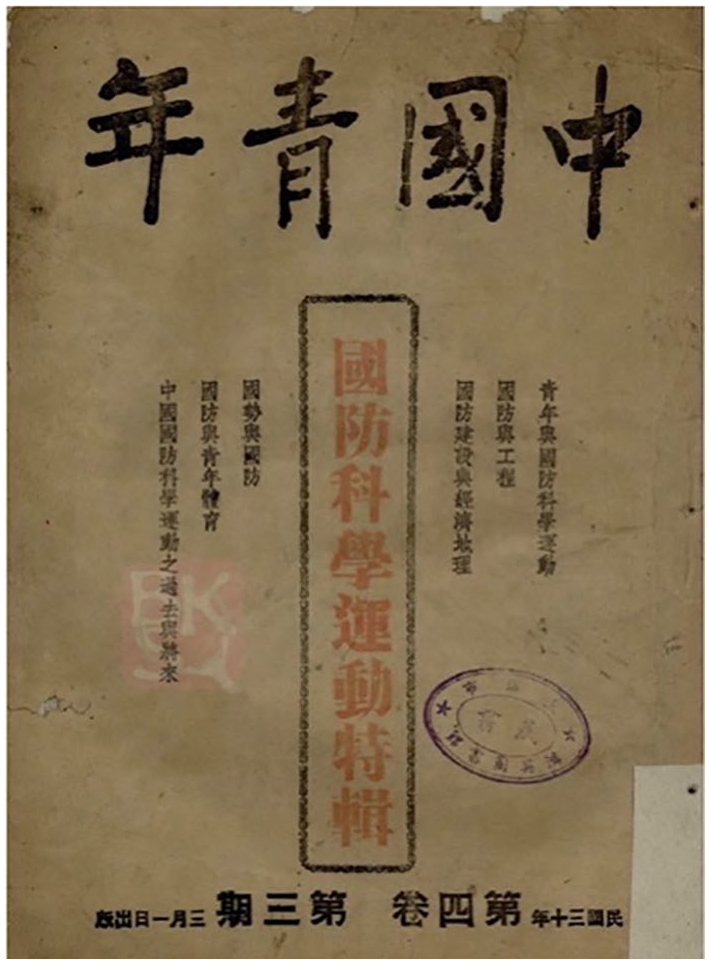
Chinese Youth (Chongqing), volume 4, issue 3, on the National Defence Science Movement.
Articles published in Chinese Youth (Chongqing), volume 4, issue 3, on the National Defence Science Movement.
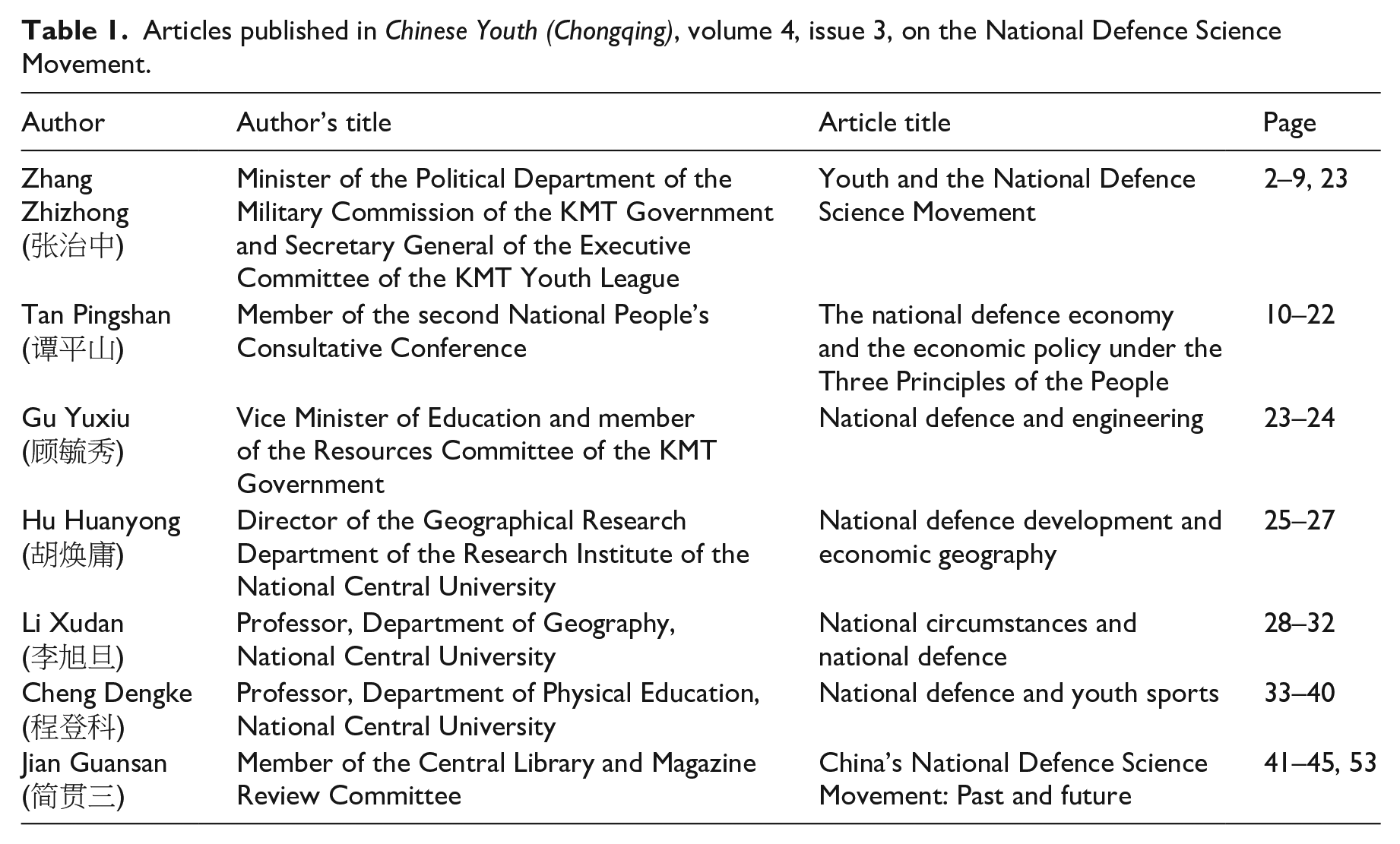
Those who contributed to the special issue were all from Chongqing-based central government agencies or universities. The opening article was written by Zhang Zhizhong, who was the Secretary General of the Youth League of the Three Principles of the People. Taking the Anti-Japanese War in Wusong and Shanghai as an example, he encouraged young people to shoulder responsibilities for national defence. He held that there were two key points in the National Defence Science Movement: the first was to boost general scientific research; the second was to reinforce special scientific research on national defence, so as to underpin national defence. Gu Yuxiu (an electrical guru), Hu Huanyong and Li Xudan (geographers), and Cheng Dengke (a sports educator) discussed the relationship between their professional fields and national defence construction. In addition, Jian Guansan (an economist) reviewed the history of the National Defence Science Movement and set out his view of its prospects. Tan Pingshan probed China’s economic policies from the perspectives of nationalism, civil rights and livelihoods, focusing less on science.
2.2. Jiangxi Youth, ‘National Defence Science Movement special edition’ (1941)
Founded in 1940, Jiangxi Youth was published in Ganxian County, Jiangxi Province, with Jiang Haidong (江海东) as the editor-in-chief. It was a political journal of the KMT supported by the Jiangxi branch of the KMT Youth League. It mainly published comment on current affairs, the economy, the military, politics, culture and the ideology and lives of young people. It reported on the status of young people around the country and included a small number of literary works and introductions to scientific knowledge.
Because the president of the journal was Chiang Ching-kuo (蒋经国), Jiangxi Youth was a leading magazine in the National Defence Science Movement. In June 1941, it issued a call for articles on the movement. On 10 July, volume 3, issue 2 included a special section (Figure 2). Most of the contributors were well known at that time (Table 2).
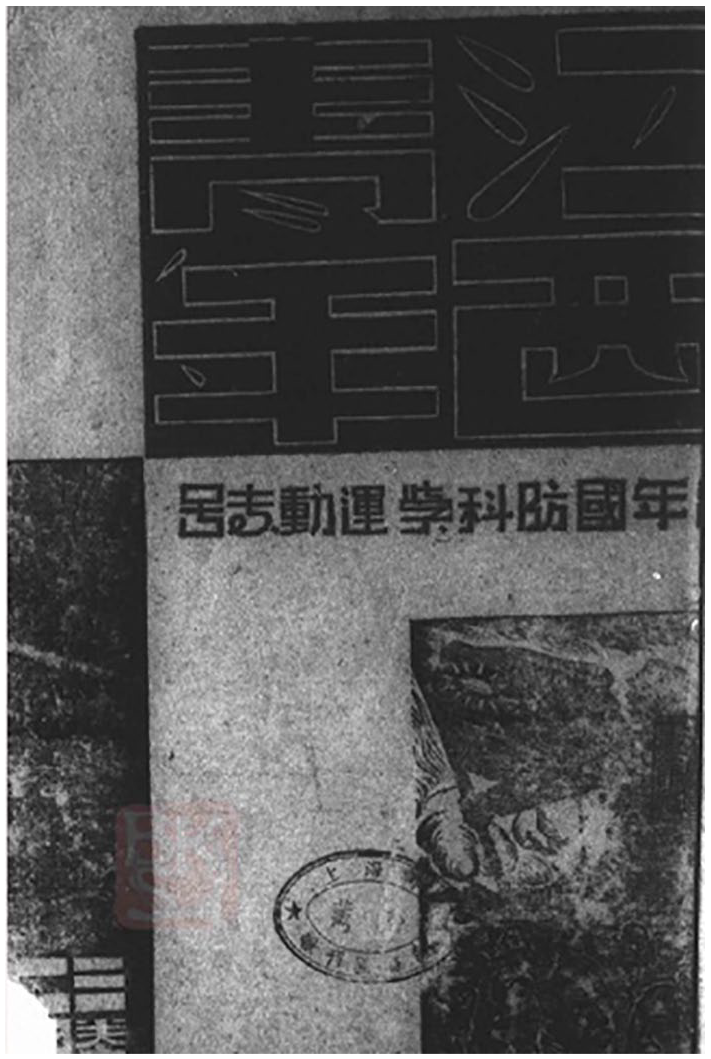
Jiangxi Youth, volume 3, issue 2, on the National Defence Science Movement.
Articles published in Jiangxi Youth, volume 3, issue 2, on the National Defence Science Movement.
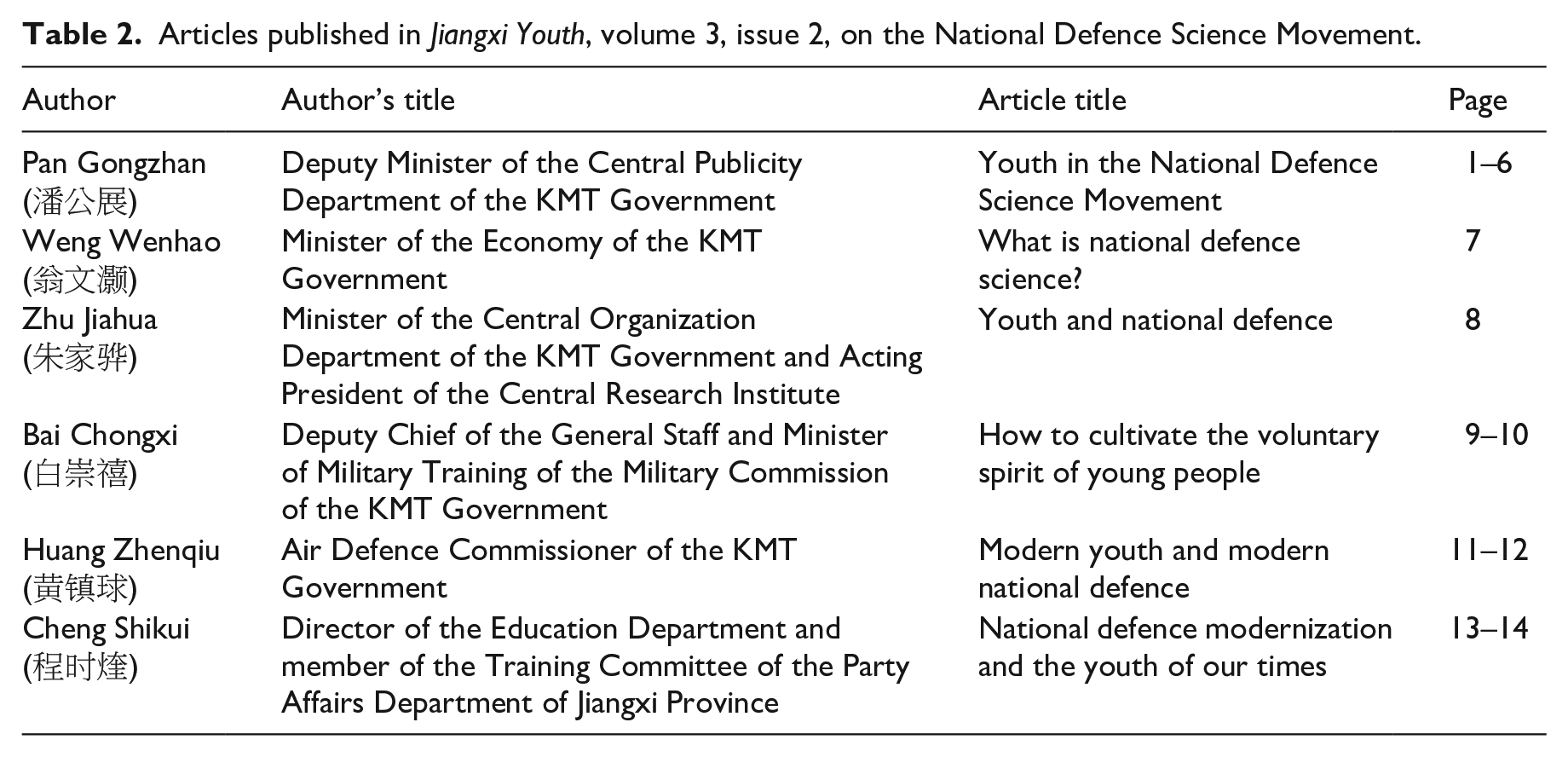
The authors of this special issue were all senior KMT officials. Zhu Jiahua and Weng Wenhao were geologists. In 1948, both of them were elected as academicians of the Academia Sinica (中央研究院). Cheng Shikui studied at the University of Chicago and Columbia University in the United States and obtained a master’s degree. He served as a professor at the National Central University. Since this issue mostly targeted young people—the majority of the readers—these articles were oriented towards the responsibilities that youth should take in national defence and the National Defence Science Movement. For example, Zhu (1941) urged young people to value China’s inherent morality as well as physical fitness. Weng Wenhao was the only contributor who wrote about and shared his unique understanding of national defence science.
2.3. Chinese Youth, ‘National Defence Science Movement special edition’ (1941)
Chinese Youth, issue 3, which was published in 1941, included a special section on the National Defence Science Movement (Table 3).
Articles published in Chinese Youth, issue 3, 1941, on the National Defence Science Movement.
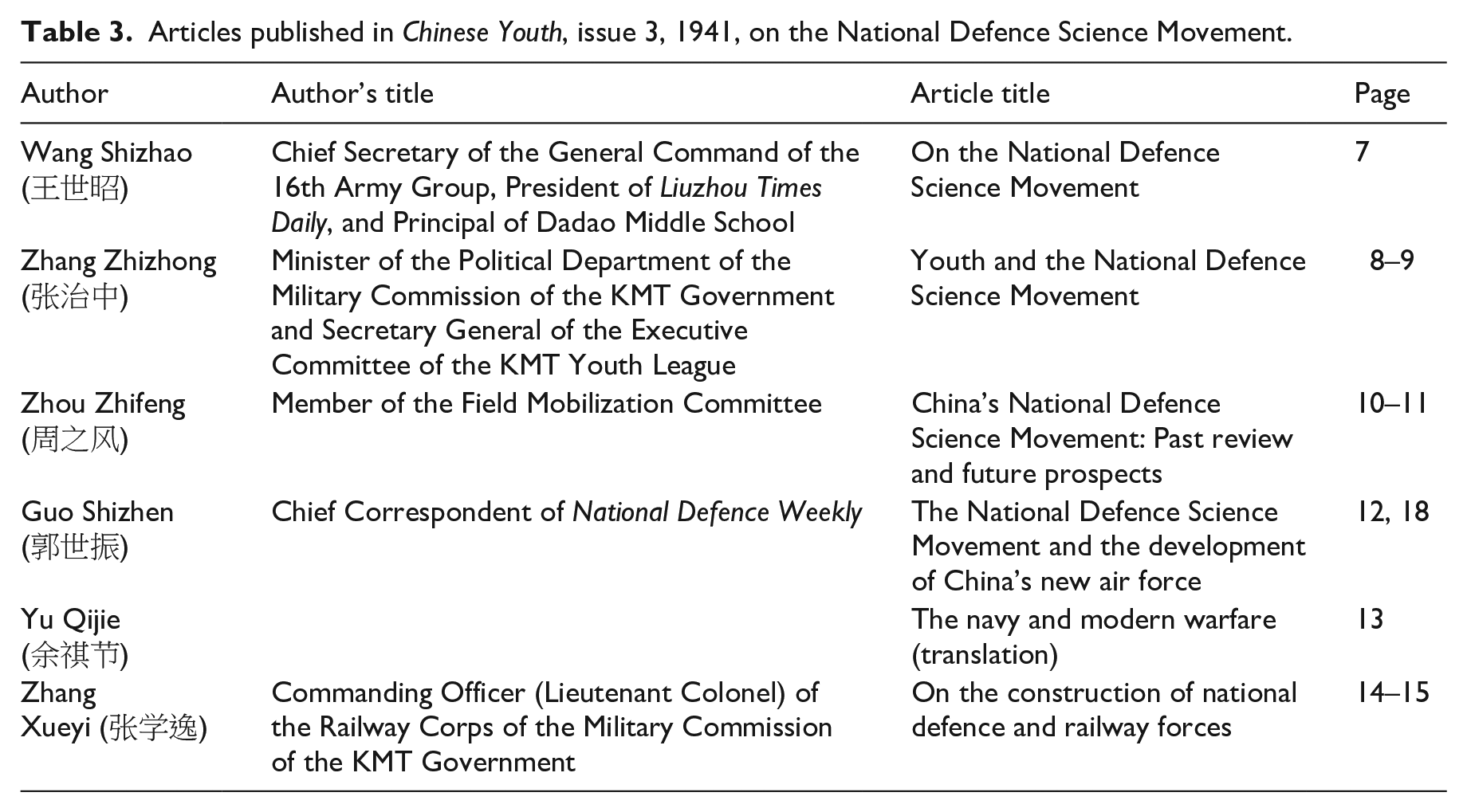
This special issue discussed the National Defence Science Movement from a military perspective. Zhang’s (1941b) article was the same as his article in the ‘National Defence Science Movement special edition’ of Chinese Youth (Chongqing), except that the section in memory of the Battle of Songhu was deleted. Wang Shizhao discussed the establishment of national defence thought, national defence academic research and the creation of national defence science. Zhou Zhifeng reviewed the history of national defence science movements since the late Qing Dynasty. Guo (1941), Yu (1941) and Zhang (1941a) discussed the importance of, respectively, the air force, navy and army in national defence.
2.4. Xianyou Education, ‘Perspectives of nine scientists on the National Defence Science Movement’ (1942)
Founded in October 1941, Xianyou Education was a local education journal published in Xianyou, Fujian Province. The purpose of the journal was to study school education, adult education, children’s education, public education, practical administrative issues, and so on. The main topics included expositions, special issues, education news, the introduction of teaching materials, education communication, teachers’ garden, teaching discussions, teaching methods, education laws and regulations.
In February 1942, issues 4 and 5 of Xianyou Education, which can be seen as a special edition on the National Defence Science Movement, republished an article from the Central Daily, offering the perspectives of nine scientists on the movement (Table 4).
Articles published in Xianyou Education, issues 4 and 5, on the National Defence Science Movement.
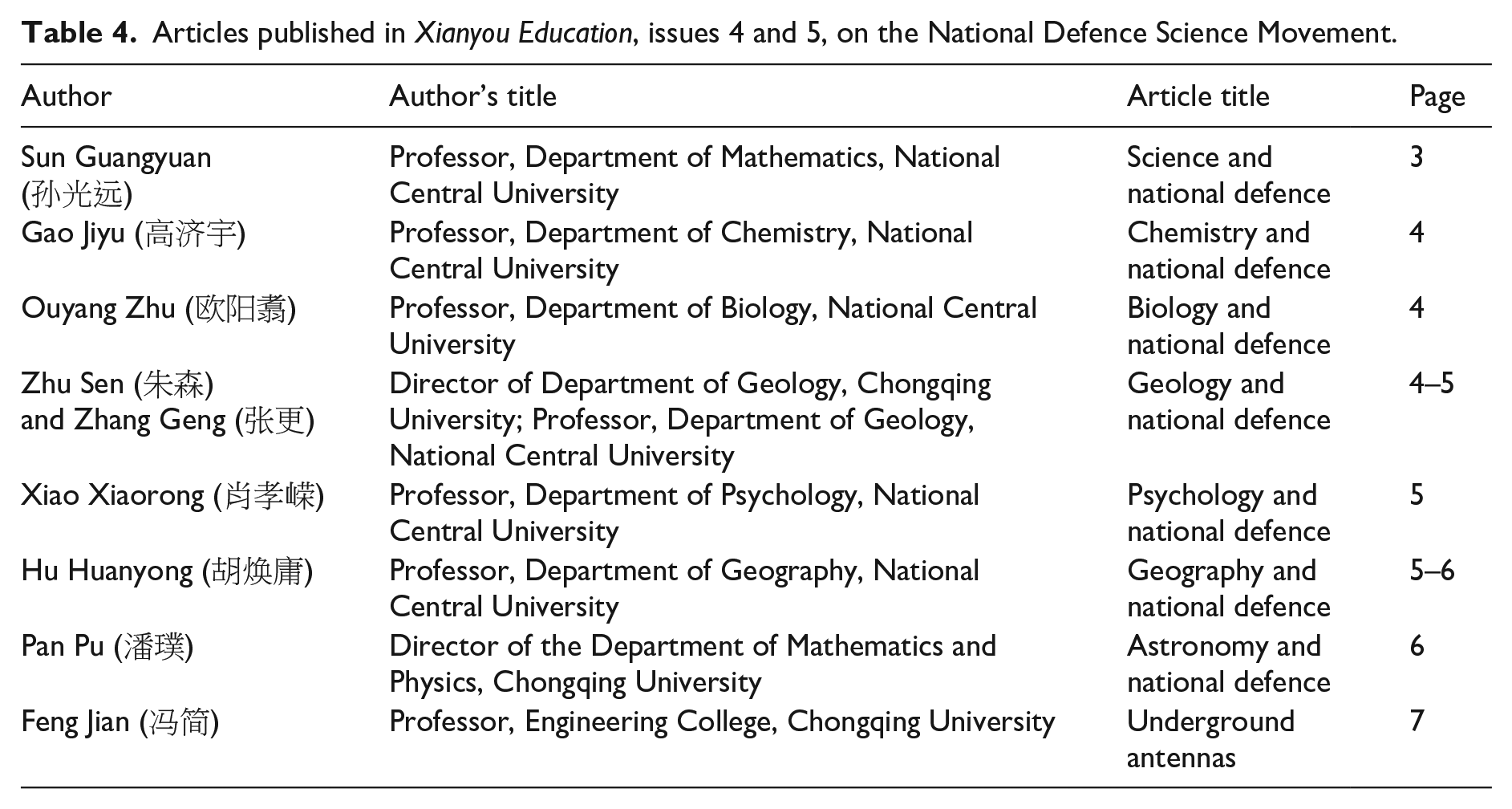
These articles, all of which were written by scientists, discussed the relationship between specific disciplines and national defence and the significant role that those disciplines could play in national defence development.
2.5. ‘National Defence Science Movement special edition’ jointly published by the Central Daily and The Sweep (1942)
The Central Daily was the KMT’s party newspaper. It was founded in Shanghai by the KMT Central Committee on 1 February 1928 and moved to Nanjing in 1929. In 1932, it adopted the presidential system under the auspices of the Publicity Department of the KMT Central Committee. In 1938, the KMT Government moved to Chongqing as a result of the Anti-Japanese War.
The Sweep was a newspaper of the KMT military system. Formerly known as the Sweep Three-Day Journal, it was founded in Nanchang in 1932 and moved to Hankou in 1935. It was published simultaneously in Guilin, Kunming and Chongqing during the Anti-Japanese War.
In 1942, to facilitate the activities of National Defence Science Movement Week, the Central Daily and The Sweep jointly published a special edition on the National Defence Science Movement on 10 October. The issue carried pieces by Bai Chongxi, Chen Shaokuan (陈绍宽), He Guoguang (贺国光), Ma Chaojun (马超俊) and others (Table 5).
Articles published in the Central Daily and The Sweep on the National Defence Science Movement in 1942.
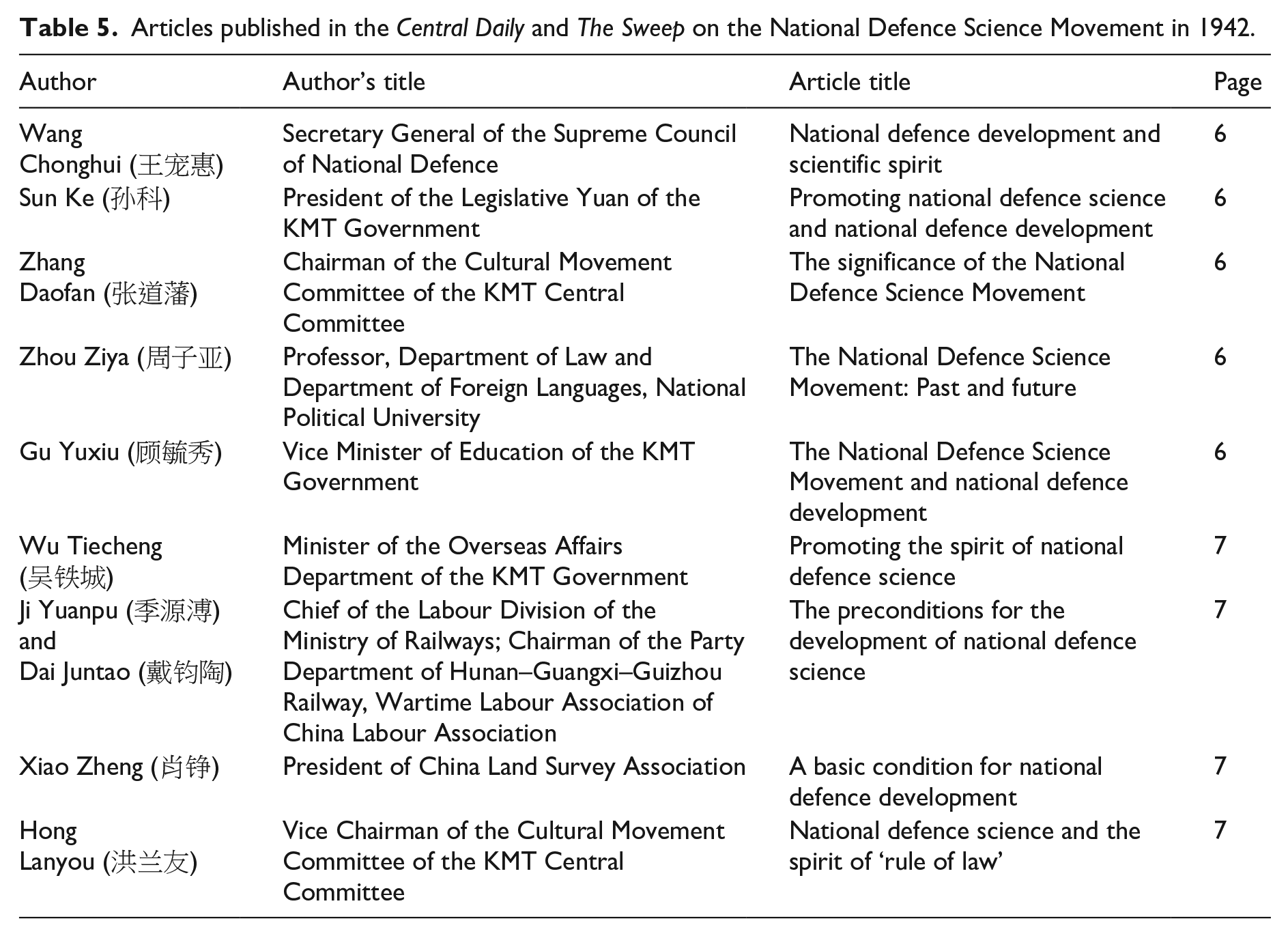
The Central Daily and The Sweep had an important place in the propaganda work of the KMT, so the authors of this special issue were mostly senior officials of the National Government. Wang (1942) called for the popularization of the scientific spirit amongst the public. Sun (1942b) believed that people should seize the opportunity to carry out national defence development, starting with heavy industry, followed by the training of national defence scientists and the popularization of national defence science. Zhang (1942) explained the significance of the National Defence Science Movement from the perspective of scientific functions, suggesting that the National Defence Science Movement should include advanced scientific research and the popularization of scientific knowledge and that science was the only way to strengthen national defence. Gu (1942) put forward two tasks for the National Defence Science Movement: first, to make the youth and the public understand their own national defence responsibilities; second, to strengthen research on national defence science and technology. Wu (1942) called for a ‘thorough’ spirit in national defence science. Ji and Dai (1942) jointly wrote that heavy industry and transport were the foundation for national defence and that transportation was the prerequisite. Xiao (1942b), an expert on land issues, said that people, land, tasks and materials should be paid attention to in national defence development.
2.6. Zhejiang Youth (Jinhua), ‘National Defence Science Movement special edition’ (1943)
Zhejiang Youth (Jinhua) was a youth journal published monthly or bi-weekly. It was founded in January 1940, sponsored by the Zhejiang branch of the KMT Youth League and distributed by Zhejiang Youth Bi-weekly, with Wang Chuanben (王传本) as the editor-in-chief. The task of the journal was to explain the right approach to patriotism, help young people with their study and enhance their patriotic fervour. Its main contents included commentaries on unreasonable social phenomena and articles on literature and science. The columns included brief comments, special issues, expositions, literary extracts, literature and art, science lectures, introductions to books and newspapers, youth news and a readers’ mailbox.
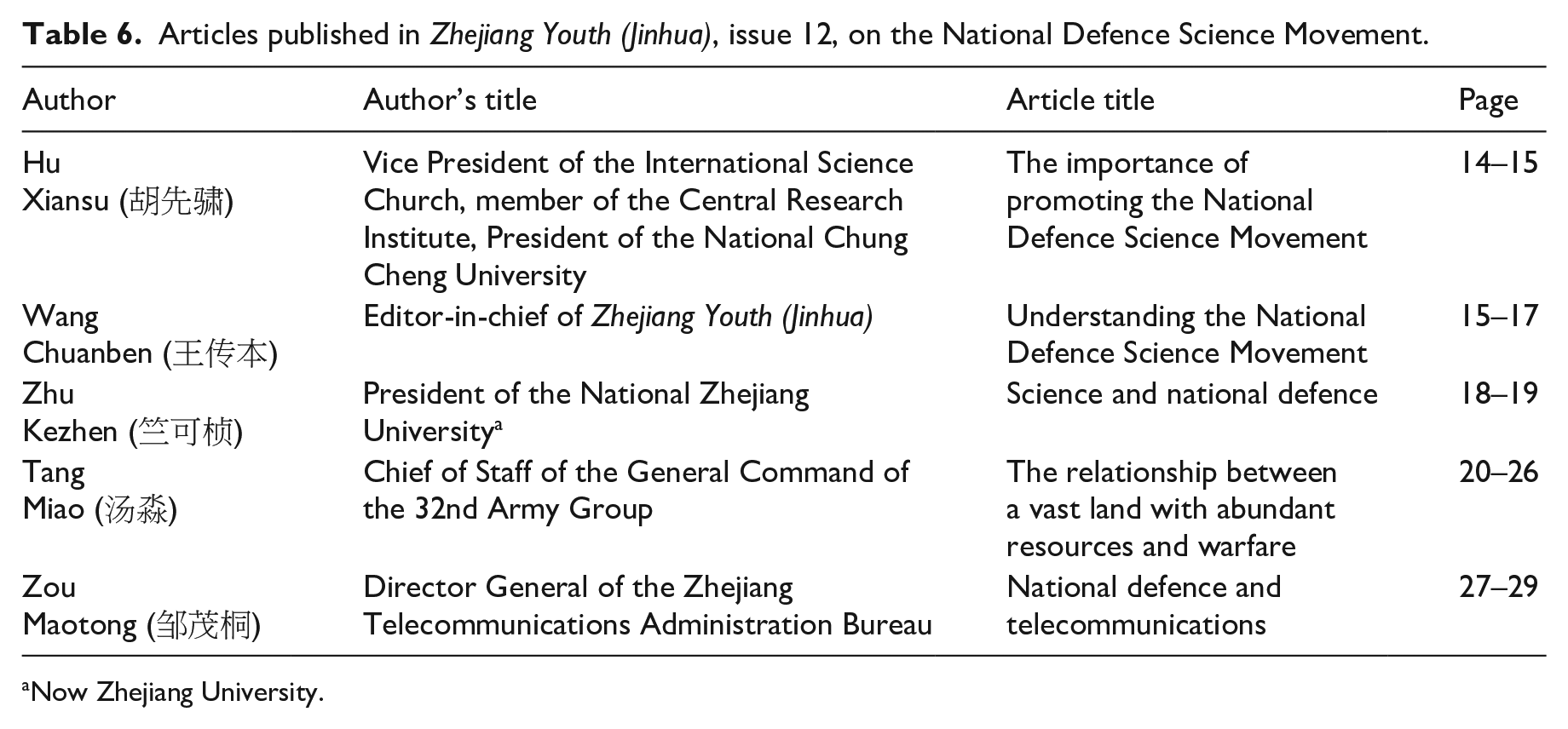
On 4 April 1943, the first National Congress of the KMT Youth League was held in Chongqing. It adopted a ‘resolution on mobilizing the youth to build a new China’ that included five ‘movements’. One of them was the National Defence Science Movement, requiring that the training of KMT Youth League members focus on national defence technology, and that each group should conduct at least one national defence research project, such as national defence chemistry or national defence industrial science, and master one national defence skill, such as in parachuting, gliding, boating, swimming, riding and shooting, detection, measurement, radio, photography, driving or grenade throwing (Chongqing Archives, 1943). Against such a background, Zhejiang Youth (Jinhua), issue 12 (Figure 3), published in Jinhua in 1943, included a special section on the movement (Table 6).
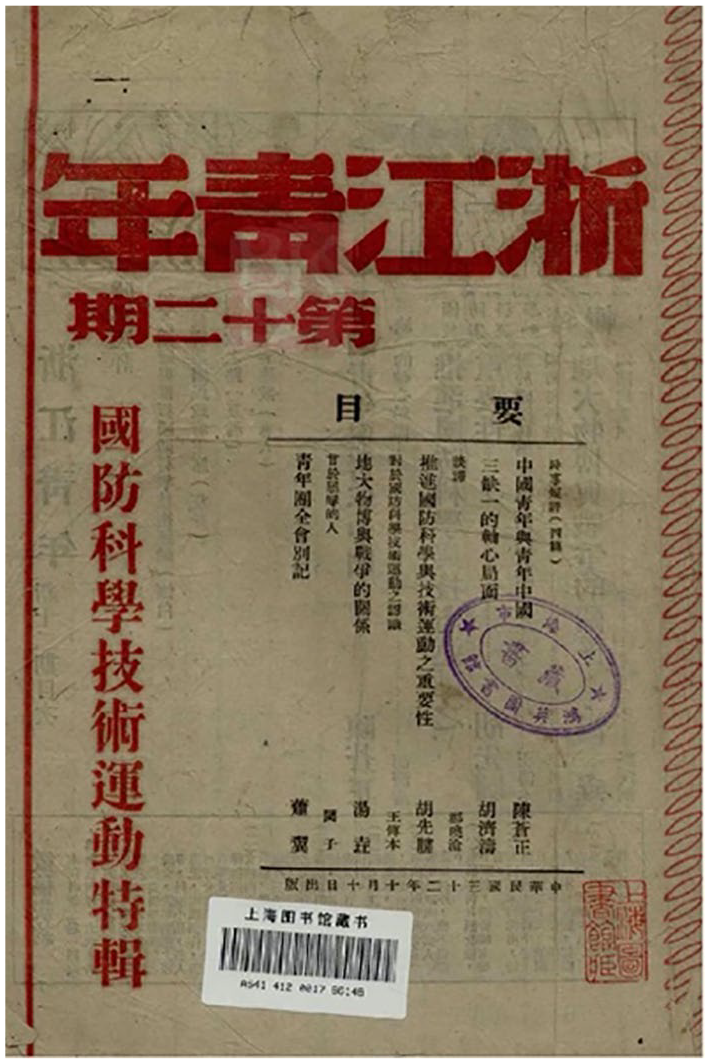
Zhejiang Youth (Jinhua), issue 12, on the National Defence Science Movement.
Articles published in Zhejiang Youth (Jinhua), issue 12, on the National Defence Science Movement.
Now Zhejiang University.
All the authors of this special issue except Hu Xiansu worked in Zhenjiang. Wang Chuanben stressed the importance of science and technology to national defence. He suggested the development of national defence science and encouraged young people to shoulder the responsibility of building the nation. Both Hu Xiansu and Zhu Kezhen emphasized that national defence science should include not only applied sciences but also basic sciences. Tang Miao’s article was a condensed version of his speech at a cadre training meeting for Zhejiang Province in which he discussed the advantages and disadvantages of China’s vast landscape and abundant resources from a military perspective. In his article, Zou Maotong introduced a vision for telecommunications development during postwar reconstruction.
2.7. Culture Pioneer, ‘national defence science special edition’ (1944)
Culture Pioneer was founded in September 1942, with Li Chendong (李辰冬) as the editor-in-chief, and distributed by the Culture Pioneer Society of the Cultural Movement Committee of the KMT Central Committee. As a comprehensive journal, it carried political, economic, legal, cultural, educational and philosophical works and translations, as well as natural science articles, literary works, book reviews and reports on cultural news. It also contained articles that slandered the Communist Party.
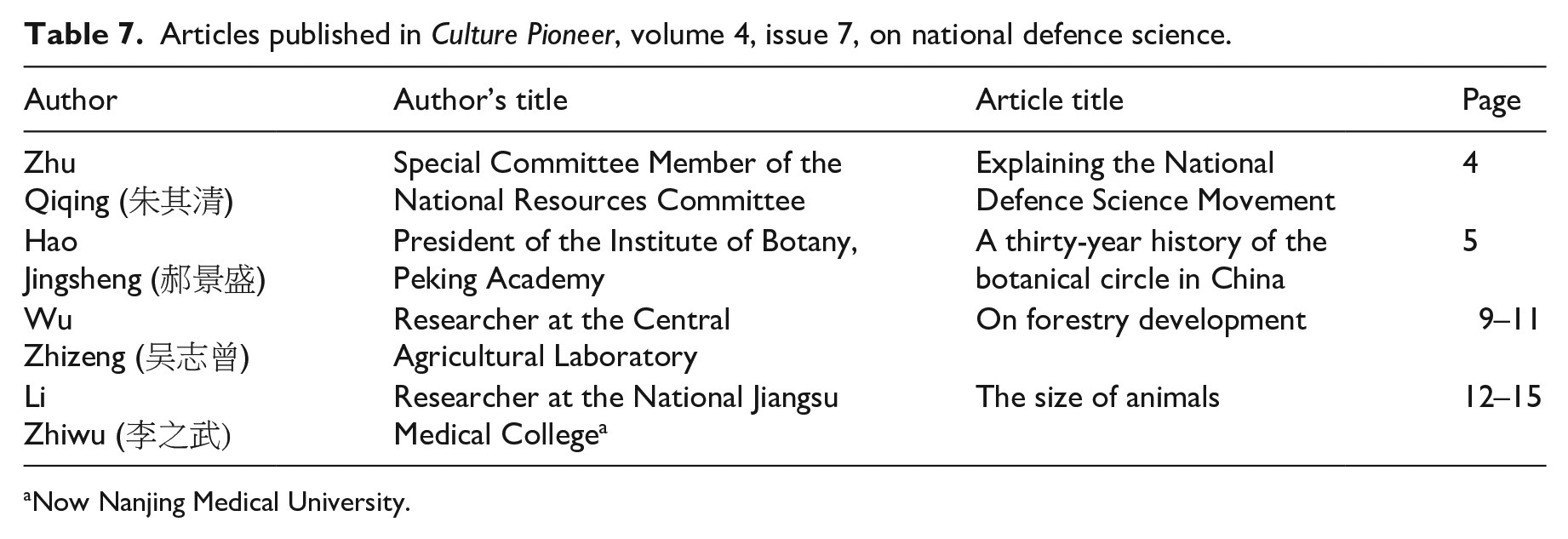
On 10 October 1944, under the auspices of the Cultural Movement Committee of the KMT Central Committee, an activity related to the National Defence Science Movement was held in Chongqing, the second capital of China at that time. To facilitate that activity, a ‘national defence science special edition’ was published in volume 4, issue 7 (issue 82 in total) of Culture Pioneer (Editorial Department of Culture Pioneer, 1944) (Figure 4 and Table 7).
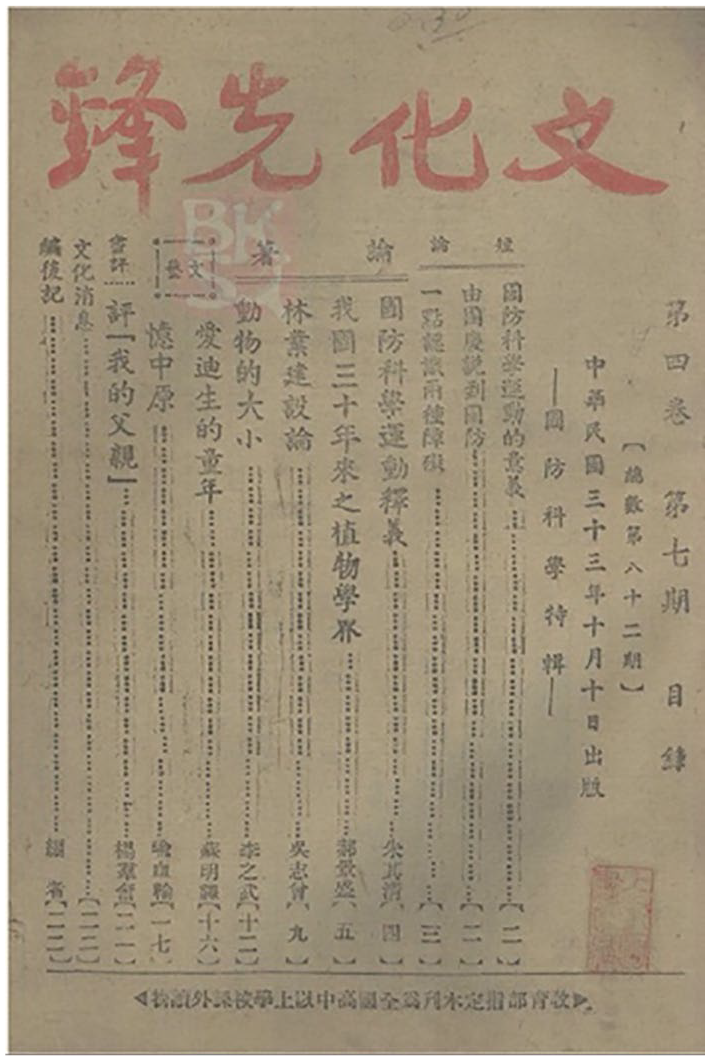
Contents of Culture Pioneer, volume 4, issue 7.
Articles published in Culture Pioneer, volume 4, issue 7, on national defence science.
Now Nanjing Medical University.
At the time of publication of the Culture Pioneer special edition, the National Defence Science Movement had entered its fourth year. The articles in this period no longer appealed to the public to join the movement, but instead focused on special academic reviews and popular science discussions, as well as suggestions for postwar reconstruction.
After China’s victory in the Anti-Japanese War, the National Defence Science Movement gradually lost traction. The National Day national defence science exhibition, national defence science speech and other activities continued, but no more ‘National Defence Science Movement’ special editions were published.
Three of the seven special issues were published in 1941, two in 1942, one in 1943 and one in 1944, indicating a dwindling trend. For the special issues published in 1941 and 1942, most of the authors were high-ranking KMT officials, while some were technological experts; for those published in 1943 and 1944, the authors were mainly scientists, and government officials were in the minority. Judging from the titles of the articles, those written by government officials were more macroscopic, whereas those written by scientists often focused on specific sciences and addressed specific issues in depth. In their content, the early articles generally called on all sectors of society to stress science and on young people to delve into the sciences, while the later articles principally explored specific scientific knowledge and reviewed academic history.
The campaign initiated by the top leaders of the National Government began with vigour and vitality, endorsed by the heads of various government departments, who wrote copious articles. However, with the passage of time, the number of special issues declined; fewer articles were contributed by senior officials, and most of the authors were technological experts. The enthusiasm of the movement also cooled down. We can see that the formal movement failed to take root amongst the people, which made it harder to accomplish the goal of the movement as proposed by Chiang.
3. Scientific topics in the special issues on the National Defence Science Movement
The articles in the special issues on the National Defence Science Movement mainly discussed topics such as the meaning and role of science; scientific research; the popularization of science; and science and technology awards.
3.1. Discussing the meaning and role of science
Giving the definition of science
Pan’s (1941) article pointed out that ‘science is systematic knowledge’ and that ‘science is what’s summarized into principles and becomes systematic knowledge by analysing and proving the causal relationship of all phenomena in the universe based on facts’.
Promoting the role of science
The positive role of science was affirmed. For example, mathematician Sun (1942a) stated in ‘Science and national defence’ that scientific development had a direct impact on modern warfare, such as by increasing traffic and transportation capacity, enhancing military contact capability and increasing the destructive capacity of weapons. Scientific methods could improve productivity and work efficiency and avoid waste when managing manpower and material resources with science and technology. At the same time, science also had some negative effects and was regarded as a double-edged sword. Zhang (1942) mentioned in his article that science was not only an instrument to save people, but also a tool to kill people.
3.2. Advocating scientific research
The value of scientific research in national defence was affirmed. Zhang (1942) believed that there were two key points in developing the National Defence Science Movement. The first was to develop advanced scientific research. To that end, it required experts and scholars to take great pains with in-depth scientific research ‘in order to obtain unique specialties and inventions with outstanding achievements in theory and practice’. Using the vivid example of the Japanese attack on Shanghai on 28 January 1932, Zhang (1941c) warned young people that science, not iron and blood, was what Chinese people should rely on to safeguard their homeland. In order to enhance national defence, the key point was to improve scientific research. Wang (1942) also emphasized that national defence and science were inseparable. In ‘Explaining the National Defence Science Movement’, Zhu (1944) stressed that the purpose of the National Defence Science Movement was not to reveal national defence secrets but to strengthen research on national defence science. In ‘The National Defence Science Movement and national defence development’, Gu (1942) pointed out that an important task of the National Defence Science Movement was to strengthen research on national defence science and technology.
3.3. Emphasizing the popularization of science
Many scholars believed that one way to carry out the National Defence Science Movement was to promote the popularization of science. In 1942, when Li Siguang broadcast ‘On scientific national defence’ on Guilin radio station, he stated that the ‘scientific process of national defence means to make the national society more scientific’ so that people could understand the great power of science (see Li, 1942). Zhang (1942) wrote that there were two points to develop the National Defence Science Movement, one of which was spreading scientific knowledge amongst the people so as to motivate them to learn and apply science. Wang (1942) also stated that the construction of national defence was a comprehensive work; that is, it was necessary to promote the scientific spirit amongst the Chinese people.
3.4. Calling for the establishment of science and technology awards
The importance of establishing science and technology awards was emphasized. For example, the editorial of Guilin Li Bao on 10 October 1942 provided three specific suggestions for promoting the National Defence Science Movement (see Li, 1942). The first one was to respect scientific researchers, which could be achieved by government rewards and funds to support researchers and by setting up research institutes and providing regular funding. Only when scientific researchers had stable lives and experimental tools could their research be facilitated. In ‘Science and national defence’, Zhu (1943) wrote that, in order to consolidate national defence, the government should reward not only research in applied science but also research in natural science. He noted the value of natural science research to national defence and called for establishing awards for scientific research as soon as possible.
In 1943, responding to appeals from the scientific community, the National Defence Science and Technology Promotion Committee offered a reward of 1 million yuan to address the need for national defence and resolve technical difficulties. It looked for answers to 10 major questions: methods for direct nickel plating of steel; the recovery of rubber from used tires; synthetic rubber and rubber substitutes; the manufacturing of steel wheels for railway locomotives; high-temperature cylinder oil; large-scale urea extraction; gasoline concentrates; fireproof coatings; alcohol-resistant coatings; and welding rods (Anonymous, 1943). The 10 special research fields involved the chemical and energy industries, which were both extremely important in wartime. In 1944, the Central Cultural Movement Committee set up the award to honour people making contributions to national defence science. Shan Zongsu (单宗肃), an associate engineer of the No. 2 Factory of the Central Electrical Equipment Factory, who invented the 3Ca3-type electron tube, and Tang Jiazhen (汤家桢), an apprentice from the No. 4 Factory of Kunming, who designed a coiler for square copper wire, won the certificates (Editorial Department of Electrical Communication, 1944).
3.5. Introducing knowledge of science and the history of science
Articles published in the 1943 and 1944 special issues began to spread scientific knowledge. ‘The size of animals’ by Li (1944) was written to popularize science. It mainly discussed the size of animals’ bodies and the impacts of various natural forces on creatures of different sizes. Li concluded that every animal with a certain shape has a most appropriate size, which is determined by physical factors and limited by the animal’s biological cycle and natural environment, and noted that the natural conditions and social systems of a country make an impact on its development.
Some articles also attempted to introduce knowledge of the history of science. In ‘A thirty-year history of the botanical circle in China’, Hao (1944) discussed the history of botanical research in China. He first introduced the practice of botanical research in ancient China, and then divided the history of botanical science during the Republic of China into four stages: the period of translation and assimilation from 1911 to 1918, the period from 1919 to 1929, the period of research and creation from 1930 to June 1937 and the period of suffering from July 1937 to 1944. Hao also listed the leading botanical research institutions, publications and botanists in China.
4. The value of the special issues on the National Defence Science Movement
The publication of the special issues on the National Defence Science Movement had great value in various aspects.
4.1. Emphasizing the value of science and publicizing the idea of ‘saving the country through science’
The disparity in military strength between China and Japan in the early and middle period of the Anti-Japanese War made people aware of the backwardness of China’s military as well as its science and technology. In view of that, many authors emphasized the importance of science with indisputable facts and then called on the government to promote the popularization of science and establish awards for scientific research. They believed that science was the only way to save the nation. Cheng (1941b), who assisted Hu Xiansu in founding Chung Cheng University at that time, published ‘National defence modernization and the youth of our times’. He noted that the National Defence Science Movement was not only an urgent requirement at that time but also the fundamental basis for China to survive and be independent afterwards. He believed that ‘science is the key factor that truly makes the nation self-reliant, independent and free’.
4.2. Encouraging young people to study science and engage in scientific research
Chinese Youth (Chongqing), Jiangxi Youth, Chinese Youth, Xianyou Education and Zhejiang Youth (Jinhua) all regarded young people as their main readers. Those journals’ special issues on the National Defence Science Movement emphasized the role of science in saving the nation in the war against Japanese aggression, encouraged young people to study science and actively engage in scientific research, and pointed out the direction for enthusiastic young people in the Anti-Japanese War.
Bai (1941) believed that young people at that time had two tasks: on the one hand, they should fulfil their duty as Chinese citizens in the Anti-Japanese War; on the other hand, they should study and work hard on national defence science to prepare for shouldering heavy responsibilities in the future.
Huang (1941), known as the founder of air defence in China, wrote in ‘Modern youth and modern national defence’ that ‘what China lacks most at present is science, and young people, as the middle force of the country, should aim to do great things rather than pursue high posts. It is best for them to become scientists and shoulder the responsibility of building a new China.’
Cheng (1941b) required young people to re-understand the world and develop a correct attitude towards science. He encouraged youths to change their traditional view of science and intensify their learning of scientific knowledge and skills. He hoped that young people could promote science amongst the public through propaganda speeches.
In ‘The National Defence Science Movement and national defence development’, Gu (1942) stated that an important task of the National Defence Science Movement was to encourage the youth of the whole country to participate jointly in national defence construction.
In ‘Explaining the National Defence Science Movement’, Zhu (1944) encouraged young people to engage in scientific research and strengthen their technical skills. Jian (1941) pointed out that, in order to make China a country with modern national defence, Chinese youth must study basic science, including mathematics, physics and chemistry. Zhou (1941) also reminded young people of the significance of national defence science. In ‘The importance of promoting the National Defence Science Movement’, Hu (1943) advocated that young students be mobilized to study national defence science in order to train a large number of talented people in the fields of national defence science and technology.
In addition to the special issues on the National Defence Science Movement, ordinary youth publications also encouraged young people to engage in scientific research. For example, Chinese Youth (Chongqing), volume 4, issue 6, 1941, illustrated four life paths that Chinese youth should choose, one of which was to become a person immersed in national defence science (Figure 5).
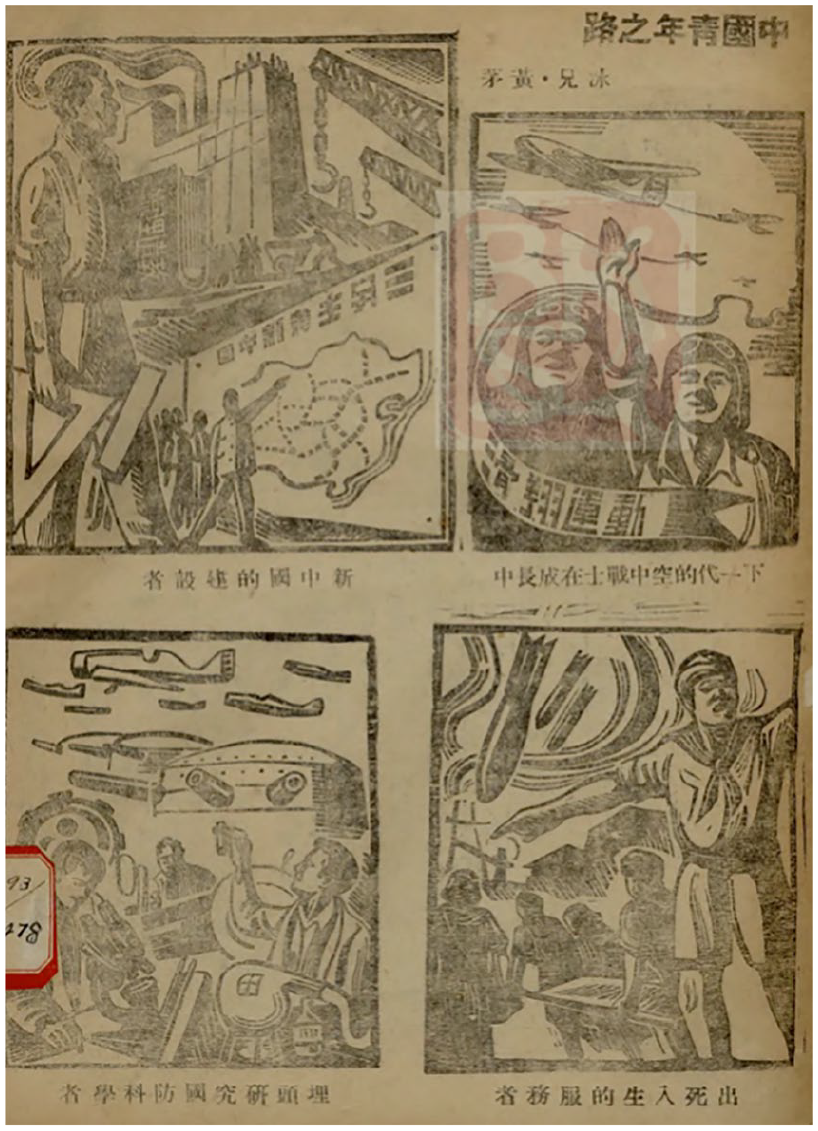
‘Four life paths of Chinese youth’, page 4 of Chinese Youth (Chongqing), volume 4, issue 6, 1941.
4.3. Emphasizing the importance of basic science and social science in national defence construction
In the National Defence Science Movement, many exhibitions of national defence science were held in many provinces and cities across China, with a focus on displaying weapons, military machinery and communication equipment. The exhibitions promoted people’s understanding of the importance of ‘hard’ sciences, such as mechanical engineering, electronics and communications. However, in the special issues on the National Defence Science Movement, a number of scientists wrote articles on the importance of basic science, social science and even art in the war and national defence.
As the backbone of the Chinese Scientization Movement, Gu (1941) pointed out in ‘Youth participating in the National Defence Science Movement’ that researchers in natural sciences could concentrate on inventing new weapons, while those in social science could use their strengths in the areas of organization and efficiency. Natural scientists were responsible for instrumentalization, while social scientists were responsible for application. Those who studied literature and art could also contribute to national defence by using their strengths scientifically.
Geologist Weng (1941) showed his profound understanding of national defence science and emphasized the importance of pure science as basic science in ‘What is national defence science?’. He believed that the science of manufacturing weapons was related to national defence and that administrative institutions, people training, financial policies and financial schemes were indispensable for national construction, along with mechanical engineering, chemical engineering and military manufacturing research. He concluded that all sciences were related to national defence, including basic applied science, pure science and social science.
Wang (1941) held that national defence science should be divided into general national defence science and special national defence science. The research on the former involved multiple topics, such as literature, history, geography, population, economics, industry, transportation, national spirit, international science, politics and propaganda, while studies on the latter involved the national defence characteristics of various regions and countries in the world.
Zhou (1942) wrote that national defence science was the foundation of sound national defence and could be divided into spiritual national defence science, such as philosophy, and material national defence science, which was based mainly on natural science. Spiritual national defence science took national will as its backbone, and the government should carry out spiritual mobilization, promote national education and enhance people’s levels in that regard.
Hong (1942) also stressed that only the development of science could guarantee the survival of the country. China should develop not only natural sciences such as mechanical engineering, electrical engineering and mining science, but also social sciences such as law, politics and economics. Only with sound politics could the country develop national defence.
Hu (1943) advocated that, in order to study national defence science, people should engage in national defence science in a broad sense by learning not only aviation and mechanics but also mathematical physics and chemistry. Young students were encouraged to study national defence science and also learn science indirectly related to national defence science, such as agricultural science, engineering, geology, meteorology, mining, metallurgy, nutrition, national defence geography, economic geography and so on.
Tang (1943) wrote about the characteristics of modern warfare in ‘The relationship between a vast land with abundant resources and warfare’ and emphasized the important role of social science in developing military tactics.
4.4. Explaining the role of various disciplines in the construction of national defence
Against the background of the National Defence Science Movement’s advocacy of applied science, many scientists engaged in basic science wrote articles to emphasize the values of their disciplines and make the public aware of the role of basic science in the construction of national defence.
For example, in ‘Science and national defence’, Zhu (1943) listed the values of various natural science researchers to national defence: mathematicians could use analytical geometry to determine the position of shells in flight; physicists could track German submarines through the vibrations of quartz plates; chemists invented mustard gas and substitutes for rubber used in war; biologists refined the nutrients and medicines needed by people in war; geologists searched for and developed minerals and energy sources needed in war; meteorologists predicted weather; and so on.
The role of geography
Geographer Hu’s ‘National defence development and economic geography’ (1941) listed three important elements in economic geography (rice and food; cotton and clothing; coal and industry), illustrating the importance of economic geography in the construction of national defence. In ‘Geography and national defence’, Hu (1942) pointed out that geographical knowledge, especially knowledge of frontier geography, was needed in the building of national defence facilities, economic construction, industrial and mining development, agriculture, forestry, aquaculture, commercial distribution and population surveys, and that geographical knowledge would also affect international issues and foreign policies.
Geographer Li (1941) indicated in ‘National circumstances and national defence’ that the situation of a country should include two parts: the innate conditions of a country, including its location, area, shape, topography, climate and minerals; and its acquired elements, including its population, nationality and national organizational ability. The enhancement of national strength equalled the strengthening of national defence.
The role of geology
Geologists Zhu and Zhang (1942) jointly wrote ‘Geology and national defence’, which listed the minerals needed in national defence and emphasized the importance of geology. They stressed that a country rich in minerals is bound to be prosperous and strong and suggested opening up mines as early as possible in order to make the best use of China’s minerals and win victory in the Anti-Japanese War.
The role of chemistry
In ‘Chemistry and national defence’, chemist Gao (1942) listed the chemicals used in the war, pointed out that ‘there would be no national defence without chemistry’, and stressed the influence of chemistry on national defence.
The role of biology
In ‘Biology and national defence’, biologist Ouyang (1942) divided science into two parts (theoretical science and applied science) that were equally important to national defence. Biology was a basic science, the importance of which in national defence had long been ignored. Ouyang also outlined the role of science in treating wounded soldiers, improving soldiers’ nutrition and enhancing their combat effectiveness and called on people to recognize the value of biology.
The role of psychology
In ‘Psychology and national defence’, psychologist Xiao (1942a) highlighted the importance of psychology to national defence, mainly in three aspects: choosing military personnel, improving training and increasing publicity.
The role of astronomy
In ‘Astronomy and national defence’, astronomer Pan (1942) argued that, although astronomy is a pure science, its role in the Anti-Japanese War should not be ignored. For example, astronomy could be used in military navigation and positioning, precise timing, predictions of the impacts of solar activity on military radio, the impact of tides on terrain, and the impact of moon phase changes on night marching operations, all of which proved the value of astronomy in national defence.
The role of sport education
In ‘National defence and youth sports’, sports educator Cheng (1941a) introduced the relationship between youth sports training and military training, and between national defence and nationality. He put forward the principles and policies of sports education in the context of national defence, summarized the content of sports teaching materials for national defence purposes with diagrams and charts, and cited the examples of throwing, climbing, crawling, rolling, long jump, high jump, sandbag, swimming, and other sports. Towards the end of the article, he also underscored the importance of sports in the Anti-Japanese War.
4.5. Looking forward to postwar reconstruction and providing reconstruction proposals
In the special issues published in 1943 and 1944, some scholars began to consider postwar reconstruction.
Zou Maotong graduated from Shanghai Jiaotong University and later studied at the Marconi Radio School in the United Kingdom. In 1943, Zou, who was then the Director General of Zhejiang Telecommunications Administration Bureau, introduced the important role of telecommunications in peacetime and wartime (Zou, 1943). He reviewed the 60-year history of China’s telecommunications industry and assessed the serious damage to China’s telecommunications facilities and shortage of telecommunications specialists caused by the Anti-Japanese war. He called on the country to redouble efforts in postwar reconstruction to develop a sound civilian telecommunications industry based on the construction of the military telecommunications network.
In ‘On forestry development’, Wu (1944) discussed the importance of forests to the country’s prosperity and strength, presented data on the situation of China’s forest resources and proposed concrete means to promote forestry development in China. The basic principles included focusing on national defence and people’s livelihoods, putting the economy and rapid development first and pooling research resources and talent. The specific methods included comprehensive afforestation, strict management, technology-based operation and industrialized utilization. The key policies included expanding forestry education, fostering the research spirit and perfecting the administrative system. Wu also reviewed forestry development in the Republic of China period and made some forecasts.
5. Conclusion
The seven special issues of journals and newspapers on the National Defence Scientific Movement took national defence construction as a turning point, set great store on science in modern national defence and national construction, and propagated the idea of ‘saving the country by means of science’. In a context in which applied science was valued but basic science was undervalued, the articles reiterated the significance of ‘soft’ sciences such as basic sciences and social sciences and explained how different disciplines functioned in national defence construction. They also envisaged postwar reconstruction plans in telecommunications, forestry and other industries and encouraged young people to study scientific knowledge, actively engage in scientific research and take action to implement the concept of ‘saving the country by means of science’. The publication of the special issues raised the status of science to some degree, especially the status of basic disciplines and social sciences, and thus played a positive role in encouraging young people to devote themselves to scientific research.
Footnotes
Declaration of conflicting interests
The author declared no potential conflicts of interest with respect to the research, authorship, and/or publication of this article.
Funding
The author received no financial support for the research, authorship, and/or publication of this article.