



Abstract
Yang Chengzong was a famous radiochemist and is considered the founding father of radio-chemistry in China. He was also a pioneer in the field of natural uranium technology and was one of the founders of the University of Science and Technology of China (USTC). Professor Yang planned and participated in the establishment of the university and its relocation to Hefei, Anhui Province, making indispensable contributions to the development of USTC. This article describes his more than 30 years of experience in scientific and educational endeavours at USTC and explores the important roles he played in the development of the university.
Yang Chengzong (1911–2011) was a famous radiochemist and educator who is considered to have been the founding father of radio-chemistry in China. In addition, he was also a pioneer in the field of natural uranium technology. In 1932, he graduated from Utopia University (1912–1952, located in Shanghai), and in 1934 he joined the Institute of Radium at Peiping Academy (established in 1929 and taken over by the Chinese Academy of Sciences in 1949), starting a productive career in radiochemistry. He went to France and studied at the Curie Institute in 1947 with Irène Joliot-Curie, the discoverer of artificial radioactivity, as his adviser. He earned his PhD degree from the College of Science at the University of Paris (now the Paris-Sud University) in 1951. He returned to China in October of that year and became engaged in radiochemistry research, first at the Institute of Modern Physics (later renamed as the Institute of Atomic Energy, and currently known as the China Institute of Atomic Energy) of the Chinese Academy of Sciences (CAS), and later at the Fifth Institute of the Second Ministry of Machine Industry (currently known as the Beijing Research Institute of Chemical Engineering and Metallurgy), greatly contributing to the development of nuclear science in China.
Professor Yang participated in the establishment of USTC in 1958 and founded the Department of Radiochemistry and Radiation Chemistry. During the ‘Cultural Revolution’ (1966–1976), he shared weal and woe with USTC and lived through a hard year after the university was moved south. After China's reform and opening-up, he assumed the position of Vice President of USTC and continued to work hard in developing the university. In his later years, looking back upon his life, Yang once said: ‘I have only done two things of note in my life; namely, refining the uranium required for nuclear weapons and founding the specialty of radiochemistry at USTC.’ 1 These words show how important the university was to him.
Outstanding achievements during early years at USTC
In the beginning of 1955, after the Communist Party of China (CPC) Central Committee decided to create a nuclear industry, the cultivation of nuclear science talent became an urgent national need. In 1955, Liu Jie, the Deputy Director of the Third Office of the State Council (later known as the Second Ministry of Machine Industry) made a report on the nuclear industry. As a reply to his report, the CPC Central Committee stated on 4 July that ‘the development of nuclear physics and professional talent in this field is important’, ‘the Leading Party Group of the Department of Higher Education should make a general plan’, and ‘we must overcome the difficulties and strive to cultivate large quantities of cadres in the next few years.’ The Department of Higher Education subsequently organized physical science research centres at Peking University and Lanzhou University. Relevant specialties were also designed at Peking University and Tsinghua University so as to cultivate scientific researchers and engineers specializing in atomic energy (Zheng, 2003). The specialty of radiochemistry at the Physical Science Research Centre of Peking University began to enrol students in the summer of 1956. In October of that year, Tsinghua University established the Department of Engineering Physics, including four specialties related to nuclear science, such as the technology of radioactive substances. These were the two earliest examples of radiochemistry in China.
Unlike Tsinghua and Peking universities, which added or altered curricula, USTC, set up in September 1958, clung to its original mission of ‘developing state-of-the-art science and technology, filling up vacancies and eliminating weak disciplines’ and organized the Department of Radiochemistry and Radiation Chemistry (originally called the ‘Eighth Department’ of the university) when the university was founded. The urgent need for domestic nuclear fuel chemical talent was thus met to the fullest.
At the founding of USTC, 13 departments were organized. The departments cooperated with corresponding research institutes of CAS, leaders of each institute and famous scientists doubled as deans of the departments, and scientists of the institutes served as teachers at the university, thus forming the ‘department–institute cooperation’ model. The Eighth Department's teaching and logistic work were strongly supported by the Radiochemistry Research Centre of the Institute of Atomic Energy as Professor Yang assumed its directorship.
On 28 July 1958, Yang was appointed as the first director of the Eighth Department at the first meeting of deans held by the preparatory committee of the university. He set out the syllabus and curriculum and organized the teaching team. Three specialties (radiochemistry, radiation chemistry and isotope chemistry) were first designed within the Eighth Department (Figure 1). Students were able to study either theoretical or practical radiochemistry, 2 and the curriculum lasted five and a half years. Unlike other universities, which offered only five-year curricula, USTC mandated an extra half-year for graduation project design. The theoretical and practical radiochemistry courses mandated 4,080 and 4,176 class hours, respectively. According to the teaching plan made by Yang in August 1959 (Figure 2), the first three and a half years of study provided systematic theoretical, technical and professional foundation courses. Specialized courses would be conducted from the second term of the fourth year of study, and more time would be dedicated to scientific research or discussion in the second term of the fifth year. The last half year of university study was dedicated to research at the Institute of Atomic Energy, graduation thesis writing and determining career prospects.
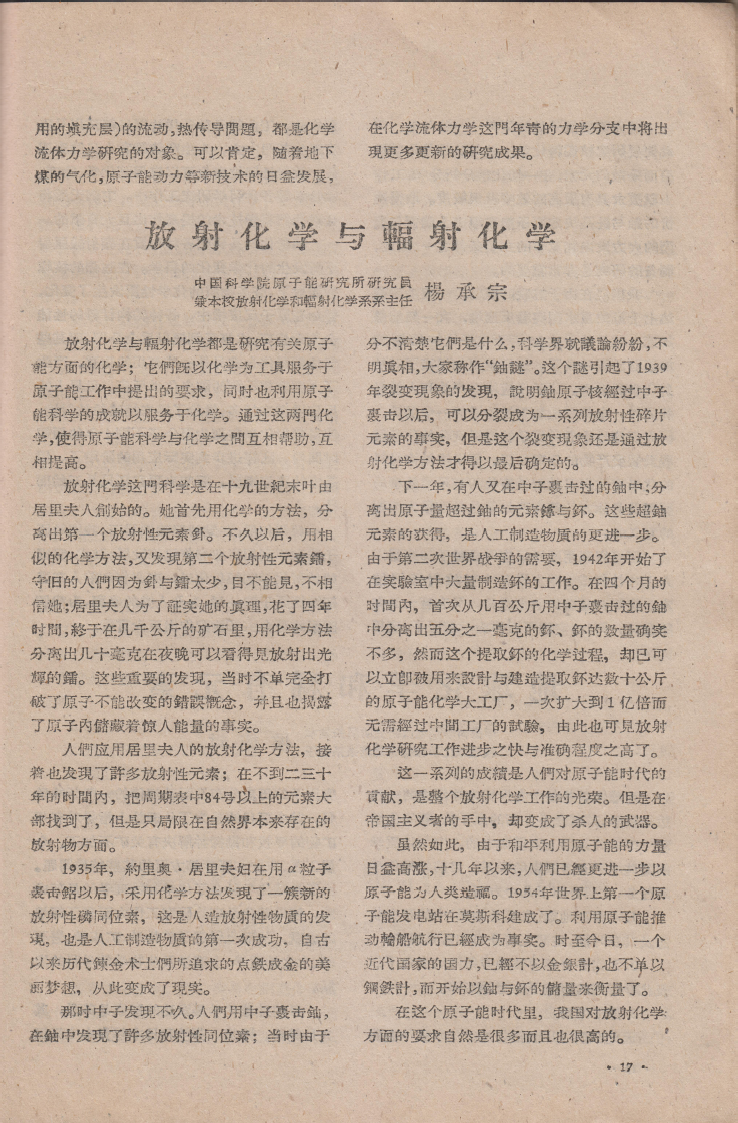
Specialty introduction written by Yang for an admission brochure of USTC in 1958.
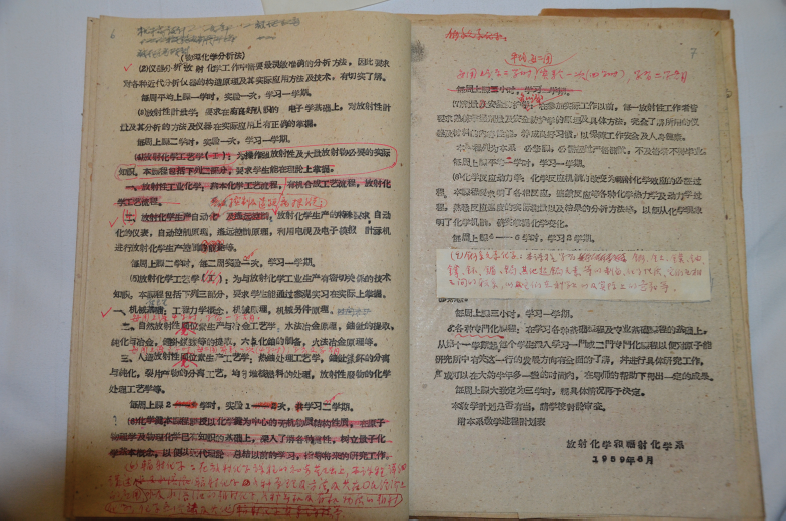
Teaching plan modified by Yang.
When radiochemistry was initially founded as a specialty of study, a lack of experienced instructors was a major difficulty for universities in China. Prior to joining USTC, Yang was engaged first by Peking University and then by Tsinghua University as an adjunct professor in 1957. During this time, he taught specialized courses for radiochemistry students. Upon joining USTC, Yang built a teaching team with many notable professors of the time: Yang mainly taught theoretical radiochemistry; Liu Yunbin mainly taught practical radiochemistry; Xiao Lun taught isotope chemistry; Feng Xizhang taught nuclear chemistry; and Lin Nianyun taught radiation chemistry (Xu, 2000). Most of these teachers were experts in radiochemistry. They not only possessed a comprehensive theoretical knowledge of their field, but were also at the forefront of nuclear fuel research and development and knew the latest discoveries about the application and development of radiochemistry. Such advantages were embodied in the curriculum at the Eighth Department. For example, Liu Yunbin classified practical radiochemistry into four courses: ordinary chemical industry theory and equipment; natural isotopic production and smelting; artificial radioactivity production; and automatic production and control of radiochemistry. Teaching was carried out across two semesters, and two of the four courses were taught in each semester. At the end of one semester, at least one month was set aside for plant internship. Liu was then the director of the Tenth Research Division of the Institute of Atomic Energy and played a leading role in nuclear fuel research conducted by the Second Ministry of Machine Industry. This arrangement of courses was complete and systematic. For example, the course on artificial radioactivity production included various nuclear fuel reprocessing techniques, such as precipitation, ion exchange, extraction and high-temperature fluorination. Uranium recovery, plutonium refining and comprehensive utilization and separation techniques for fission products were covered as well (Figure 3). 3 Much of this content remains relevant even by current standards. Although Liu Yunbin, Xiao Lun and other instructors did not teach lessons to undergraduates due to their heavy research workloads, they proposed content for professional foundation courses for which they were separately responsible. Almost all of their proposals were eventually absorbed into the formal curriculum of the Eighth Department.
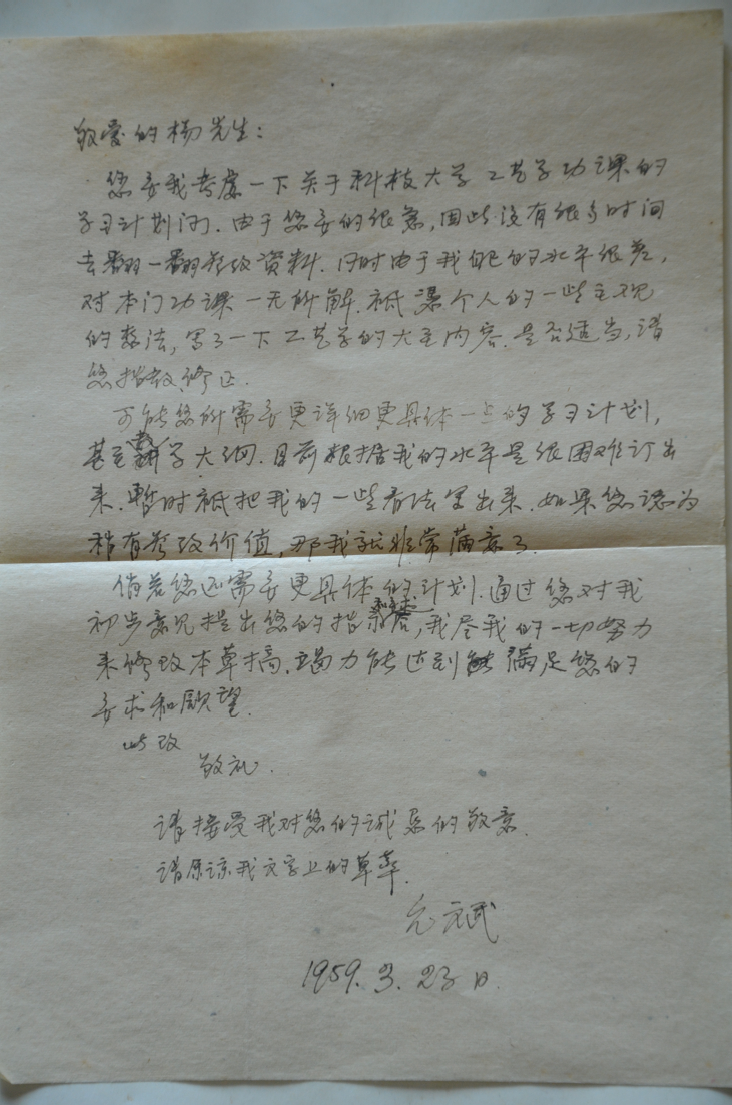
Letter written by Liu Yunbin to Yang Chengzong detailing the curriculum in practical radiochemistry.
To build a teaching team, Yang recruited Zhang Manwei, Sun Pengnian, Lv Weichun, Li Huhou and other early-career core research personnel from the Institute of Atomic Energy, and subsequently recruited Xu Liruan, Zhang Jixiang and Fan Longxiang, who returned to China after study in the Soviet Union. The Radiochemistry Teaching and Research Office was thus founded. The office was classified into three groups (basic radiochemistry, professional radiochemistry and radiation chemistry), which undertook teaching and experimental work on radio-chemistry, nuclear chemistry, practical radiochemistry, isotope chemistry and radiation chemistry.
As the Dean of the Eighth Department, Yang also assumed responsibility for teaching chemistry courses to USTC undergraduates. Foundation courses were considered to be of great importance at USTC. Hence, courses in mathematics, general physics and general chemistry were not organized according to department; instead, all undergraduates were organized into 10 classes. Chemistry courses were taught by 13 teachers, including Yang Chengzong, Wang Baoren, Liang Shuquan and Liu Dafu. Yang taught courses on inorganic chemistry for five class hours each week.
After 1960, the Eighth Department was reorganized numerous times. Its name was initially changed to the Department of Atomic Energy and Chemistry, as adopted by many universities at the time, and was then changed to the Department of Modern Chemistry in 1961. In April 1964, the Leading Party Group of CAS agreed with USTC leadership on academic and administrative reshuffling, combining the original 13 departments into six. The Department of Chemical Physics, the Department of Modern Chemistry, the Department of Geochemistry, the Department of Polymer Chemistry and Polymer Physics as well as the Chemistry Teaching and Research Office were combined into one department bearing the name of the Department of Modern Chemistry. After the rearrangement, the original radiochemistry specialty was brought under the direction of the Radiochemistry Teaching and Research Office (the name of which was later changed to the Radiation Chemistry Teaching and Research Office) (Xin, 2008, p. 8).
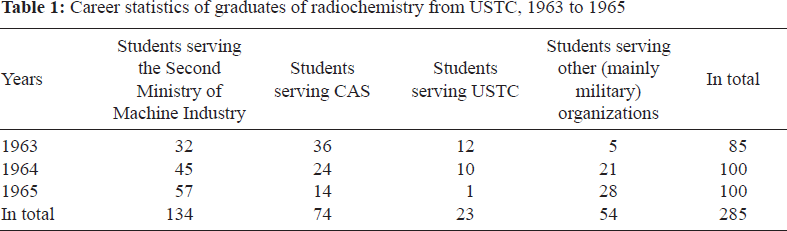
From the above description, we can see that the radiochemistry specialty at USTC was reorganized many times, with course names and teaching settings changing according to the needs of the school's tasks and academic programmes. However, because Yang set up a relatively systematic and integral syllabus and organized an experienced teaching team when the department was established, USTC was able to produce scholarly talent for years during the reorganizations. Before the ‘Cultural Revolution’, students who graduated from the USTC radiochemistry specialty from 1963 to 1965 were capable of serving the needs of national development (Table 1). 4
Career statistics of graduates of radiochemistry from USTC, 1963 to 1965
In March 1961, Zheng Lin, the Secretary of the Party Committee of the Institute of Atomic Energy, asked Yang whether he was willing to join USTC to support its development. 5 Although Professor Yang had previously taught courses at USTC for three years, had been the dean of the Eighth Department for three years and had spent more time on teaching than he did at the Institute of Atomic Energy, those duties had been part time. In order to run the school better and play a greater role in the cultivation of radio-chemistry talent, Yang accepted the transfer without consideration. On 27 March, he was formally transferred to USTC.
In 1970, the CPC Central Committee issued a ‘university evacuation’ order, and USTC was relocated to Hefei, Anhui Province. Yang travelled to Hefei along with the university. After the relocation, all personnel of the school were sent to factories, mines and farms in Huainan, Ma'anshan, Tongling and Hefei for ‘criticism and education’. Yang and the students (enrolled in 1964) of the radiochemistry specialty (Class 6432, Figure 4) were sent to the Nanshan Iron Mine in Ma'anshan to participate in physical labour and be re-educated.
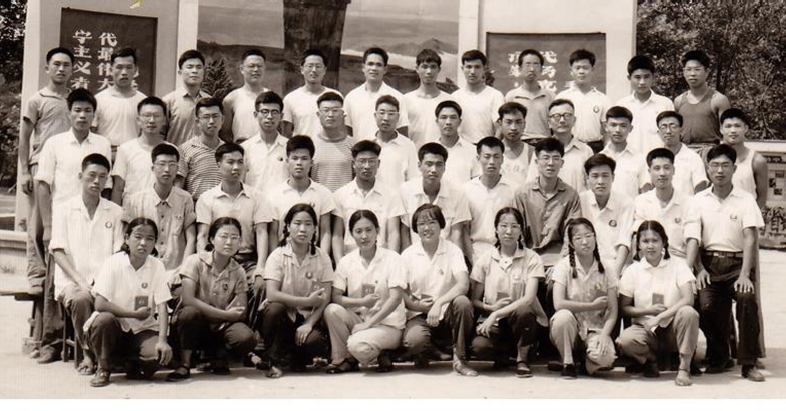
Photo of Class 6432 at Nanshan Iron Mine in Ma'anshan in 1970 (Yang is in the third row, fourth from the right).
On 21 July 1970, the Mao Zedong Thought propaganda teams of workers and of the PLA of Tsinghua University published the article ‘Struggle for founding Socialist University of Science and Technology’ in the magazine Red Flag, promoting the so-called ‘Six Basic Rules’, including ‘the working class must firmly grasp the leadership of the Education Revolution in its struggle.’ This rule was promoted as a guiding thought in running colleges and universities throughout the country during the ‘Education Revolution’. Those rules go against objective laws for running schools and have since been eliminated from Chinese academia. However, under the special conditions at that time, the rule on ‘combining theory with practice, combining factory work with school, and establishing a new unified system of education, scientific research and production’ effectively increased relations between universities, research institutes and factories, and universities benefited somewhat from these measures. As university professors were academically idle during the ‘Cultural Revolution’, they saw a glimmer of hope that they might resume scientific research by running factories.
When all USTC professors were required to learn from Tsinghua University's experience in order to face the ‘Education Revolution’, Yang had just returned to Hefei from the Ma'anshan mining site. Although he was nearly 60 years old, he had no time to rest and did not resent his status as only an ordinary ‘soldier’. All he thought and talked about was how to continue developing radiochemistry at USTC by utilizing prevailing conditions in Anhui. Yang initially selected the ‘front end’ of the nuclear fuel cycle as the main direction for radiochemistry study at USTC. According to his nine-year working experience at the Fifth Institute of the Second Ministry of Machine Industry, the major limiting factors hindering the development of nuclear weapons were difficulties in acquiring uranium, low factory labour productivity and high mining costs. He saw a bright future in cultivating uranium mining talent and worker-students for the Second Ministry of Machine Industry. Moreover, observing other radio-chemistry departments all over the country, Yang found that Tsinghua University focused on reprocessing; Peking University had many directions of radiochemistry study, but did not research uranium mining techniques; and Lanzhou University focused on radioactive waste disposal. It was therefore necessary and feasible to develop the study of uranium mining as a breakthrough subspecialty of radiochemistry at USTC.
In the autumn of 1970, under the leadership of Professor Yang, Li Huhou and Wang Gengchen, who studied radiochemistry, and several other instructors who studied geochemistry made a preliminary survey of mining sites in Anhui Province. Survey results revealed at least five or six potential uranium mining sites. 6
In Yang's opinion, as there was ample uranium in the province, setting up uranium refining sites according to Tsinghua University's model was a viable option. He modified his proposal several times and finally finished the 37-page draft titled ‘Proposal for USTC's Education Revolution’ (Figure 5), which systematically explained the concept of ‘combining factory work with specialty research’.
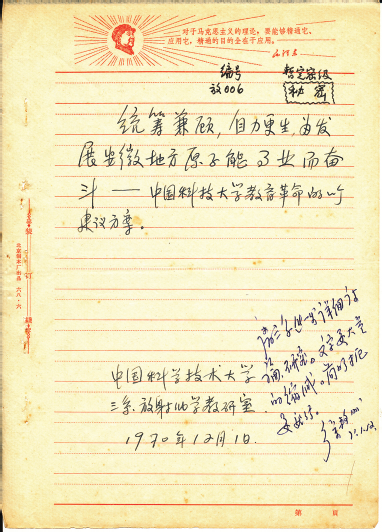
Cover page of the proposal transcribed by personnel invited by Yang (the file number and the confidential level at the top right were added by Yang himself).
Yang noted that uranium was the most basic raw material used by the nuclear industry and that products from the uranium factory run by the school could be used as raw material for the future construction of a reactor or be directly supplied to the Second Ministry of Machine Industry. Yancun village or Dalong Mountain could be potential sites for a uranium processing factory with a capacity of 2–3 tonnes/year. If useful ore content was considered to be 0.1%, 10 tonnes of ore would be processed daily. Procedures such as ore crushing and sieving would be carried out over one daily shift, while chemical extraction (dissolving and filtering) would be carried out over four shifts daily (six hours per shift).
Yang thus analysed how factory work drove progress in the specialty. First, chemical exploration was the most effective method to explore a uranium mine, and the geochemistry courses of USTC's Department of Modern Chemistry (the Third Department) could be partly connected to uranium mine exploration by geological teams in the province. The geological teams could provide classes in ‘isotope geochemistry’. Second, various ion exchange resins and extracting agents were widely used in the uranium extraction and purification process. Professors of the Third Department researching organic synthesis and resins could play a role in the development of a new exchange resin and extracting agent. Third, USTC's Department of Modern Physics should develop radioactive measurement and metro-logical work and effectively ensure safety in uranium mining. Fourth, the development of radioactive measurement equipment as well as portable and automated instruments was to be carried out by USTC's Department of Physics and Department of Radio-electronics.
At that time, there were three types of enrolled students: worker-students of the uranium mining factory of the Second Ministry of Machine Industry; local (province, county and army) workers and PLA soldier-students of existing uranium factories (mines); and worker-peasant-soldier students of minor uranium sites throughout the province. 7
Detailed planning was just a first step. After a suitable amount of uranium was collected by the radiochemistry faculty over the course of two to three years, isotope separation research would be carried out to produce a certain amount of low-enriched uranium. It would then be possible to build one or two reactors, so as to create conditions for a second nuclear science base encompassing both education and nuclear production. After the reactor was built, further research on reprocessing chemical techniques and the production of new radioactive isotopes would be possible. According Yang's expectations, USTC radiochemistry studies would be involved in every aspect of the nuclear fuel cycle. His zeal for radiochemistry was perfectly embodied in his ambition to develop the subject even in the face of great adversity.
At that time, in the Teaching and Research Office of Radiochemistry, some teachers were stationed outside of academia, some wanted to return to Beijing, and others were disappointed at the bleak specialty prospects due to a lack of necessary drainage conditions in Hefei. There were therefore few positive responses to Yang's proposal. Yang proceeded to send a letter to the Fifth Institute under his own name in October 1971, making three preliminary proposals:
USTC could cooperate with the Fifth Institute, taking uranium mining as a main direction for radiochemistry studies.
The Fifth Institute could invest in the construction of infrastructure at USTC as a base for scientific research and coordinated production, and it could be used as a rear base of the institute in emergencies.
The radiochemistry faculty would be responsible for small mines and comprehensive utilization 8 under the direction of the Fifth Institute, both serving the province and increasing national production. 9
After receiving a positive response from the Fifth Institute, Yang reported to the school leader, indicating that, if the school approved his proposal, he would further propose specific courses of action.
Yang made such a proposal because CAS and USTC were not so closely related during the ‘Cultural Revolution’ as in previous years. In October 1967, Mao Zedong approved the ‘Report on the adjustment and reorganization scheme in relation to national defence scientific research system’ proposed by Nie Rongzhen. Thus, the New Technology Committee of CAS and the units under its jurisdiction were all governed by the Commission of Science, Technology and Industry for National Defense of the People's Republic of China. As most of the departments and specialties organized when USTC was established were related to the development of ‘two bombs and one satellite’, many departments that had cooperated with corresponding institutes at CAS had since departed from CAS. Because of the interruption to education and scientific research, CAS and USTC had only relationships between superiors and subordinates, and the combination of institutes with departments existed in name only.
Professor Yang intended to develop the specialty of radiochemistry under the jurisdiction of the Fifth Institute, which was governed by the Second Ministry of Machine Industry. This ensured the long-term development of the specialty. Subsequently, Wu Ruyang, Qian Zhidao and other USTC leaders negotiated with the Second Ministry of Machine Industry many times; however, relevant individuals responsible for the final decision considered USTC to be minimally effective after its relocation and would not support the development of radiochemistry at the university.
On 4 May 1973, the USTC Party Committee finally announced that the radiochemistry specialty was to be cancelled; early-career employees would be rearranged within the university, middle-career teachers meeting relevant requirements would be transferred from USTC, while older professors would retire. 4 The radiochemistry specialty had emerged in Beijing but was closed down after its relocation in Anhui Province. Yang was saddened to see the closure of the specialty and wrote an article titled ‘Annihilation of the radiochemistry specialty’, which contained many indignant words. 10 In his view, radio-chemistry could have been organized effectively had school leaders avoided errors.
Objectively, there was no choice but to close down the radiochemistry specialty of USTC under great adversity. In fact, the entire university was at a breaking point. By the end of 1971, USTC was under the jurisdiction of the Third Ministry of Machine Industry—the leading department responsible for national aviation industrial systems—but the foundational principle of USTC was ‘combining science and engineering, with science as the primary goal’. Among all 37 specialties in the school, 17 were not relevant to the Third Ministry of Machine Industry, especially the radiochemistry specialty and the four specialties of the Department of Modern Physics. Relevant leaders of the ministry declared that specialties not relevant to their bureau would be deprived of funds for scientific research. In order to solve the problem concerning those specialties, the university successively submitted the ‘Request report on early determination of jurisdiction over the atomic energy specialty’ and the ‘Request report on the jurisdiction over and system and specialties of USTC’ in 1972.
After many efforts, USTC was finally reconnected into the CAS system on 7 May 1973. After a great adjustment of study specialties, the vast majority were placed under the jurisdiction of CAS. Thirteen specialties deemed relevant to national ministries and commissions, such as space physics, semiconductor physics and structural aircraft mechanics, remained unaltered (Ding and Ke, 2015).
If the Second Ministry of Machine Industry had provided its backing, radiochemistry could have been continued as a field of study at USTC. However, the specialty was ultimately closed down. As one of the most prestigious experts in radiochemistry in China, Yang departed the front lines of teaching and scientific research. His departure from academia was a great blow not only to the university but also to the discipline of radiochemistry in China.
In November 1978, Yang was appointed as the Vice President of USTC and took charge of scientific research. Therefore, after several years outside academic life, he engaged once again in the development of the university.
Yang's excellent administrative skills had been fully demonstrated as early as during his time as the Deputy Director of the Fifth Institute. After taking the position of Vice President of USTC, he quickly adapted to his new role. The first thing that he focused on was solving a problem that some faculty encountered concerning household registration. After the school was relocated to Hefei, many instructors wanted to return to Beijing and could not properly dedicate themselves to academic activities. In early November 1978, with the help of journalists from Xinhua News Agency, students (enrolled in 1977) of Class 1 at the Department of Modern Physics of USTC sent a letter signed by the whole class to Fang Yi, who was then the Vice Prime Minister of the State Council. In the letter, they expressed their concerns about the problem among faculty. At that time, Yang considered the ‘Five Zis' 11 method, which was proposed by Hu Yaobang to allow researchers to work easily while he acted as leader of CAS in 1975. Yang believed that for USTC faculty who came from Beijing household registration was another important event besides the ‘Five Zis’. In the early spring of 1979, during the National People's Congress, Yang communicated this matter to Gu Zhuoxin, the Deputy Secretary of the Anhui Provincial Party Committee, and expressed his wish for USTC faculty to retain Beijing household registration. Gu was very supportive of this and suggested that Yang pay an official visit to responsible comrades of the Beijing Municipal Committee. Shortly afterwards, the policy of retaining Beijing household registration for USTC faculty was implemented, allowing faculty to settle down satisfactorily in Hefei.
In addition to being in charge of scientific research and the construction of some laboratories, Yang also served as the Director of the Foreign Language Teaching and Research Office. Due to problems caused by the ‘Cultural Revolution’, the office was unstable at that time, and there were many disputes concerning various languages. In addition, the learning of foreign modern science and culture had not been promoted for a long time, and this resulted in a general lack of emphasis on foreign language learning apart from students of foreign language specialties. Yang proposed that foreign language education would give priority to English while considering other languages as well. USTC changed its focus of foreign language education from Russian to English quickly and became a top school with the most effective foreign language education. Throughout the 1980s, studying abroad became a trend among USTC students. Afterwards, at a meeting held by the Ministry of Education to discuss the CUSPEA 12 programme, Huang Xinbai, the Deputy Director of the Ministry of Education, consulted Qian Linzhao, another Vice President of USTC, asking, ‘Why does your university have the largest number of students enrolled in the programme?’ Qian replied, ‘There is nothing special. What is unique to us is that Professor Yang, as Vice President of USTC, engages himself in the work of the Foreign Language Teaching and Research Office.’ 13
Fortunately, although the radiochemistry specialty of USTC was discontinued during the ‘Cultural Revolution’, the specialty of radiation chemistry was able to continue to develop. To carry out teaching and research work in radiation chemistry, cobalt-60 was essential. Considering that USTC was underfunded at that time, Yang proposed to relevant organizations in Anhui Province to borrow cobalt-60. Since accidental deaths had been caused by cobalt during attempts at radiation breeding during the ‘Great Leap Forward’ (1958–1960), many organizations considered cobalt to be a burden and were willing to offer it for free. Unfortunately, the amount of all the cobalt combined was still too small to meet the demands of research in radiation chemistry. Yang's application to acquire cobalt from abroad and to establish a cobalt source laboratory was quickly approved. The laboratory was constructed so as to ensure maximal radiological protection, and safety was repeatedly tested. Yang recommended Zhang Jixiang and Chen Wenming, both from the Radiation Chemistry Teaching and Research Office, to take responsibility of various matters. On the afternoon of 10 April 1984, a lead box containing cobalt-60 imported from the United Kingdom arrived in Hefei; USTC successfully completed the placement of cobalt by the evening of the same day. On 5 May, 60,000 curies of cobalt-60 source was installed and passed inspections. With this advantage, the Radiation Chemistry Teaching and Research Office made many achievements in basic theory and applied research, such as the synthesis of polymer materials, the treatment of ‘three wastes’ (waste gas, waste water and solid wastes from industrial production) by radiation, and radiation processing of industrial and agricultural products. While cultivating a large number of scholars, the office also created considerable economic benefits for USTC.
Yang also did a lot of work on the construction of chemical disciplines at USTC. In 1984, after approval from the Academic Degrees Office of the State Council, USTC became one of three universities to offer a doctoral programme in radiochemistry in China (the other two were Peking University and Beijing Normal University), 14 due in no small part to Professor Yang's extraordinary seniority and prestigious reputation in academic circles. In fact, the doctoral programme in radiochemistry was the first doctoral programme offered in chemistry at USTC and was also one of the two doctoral programmes in chemistry in the university throughout the 1980s (the other was analytical chemistry). For quite a long time, the cultivation of doctoral candidates in other subdisciplines of chemistry at USTC was affiliated with the radiochemistry doctoral programme. For example, excellent graduates with bachelor's or master's degrees in physical chemistry, inorganic chemistry and polymer chemistry/ physics were all willing to apply for the radiochemistry programme at USTC. Yang provided enthusiastic guidance when they required it (Figure 6). A large number of people among them served as USTC teachers after gaining PhD degrees and returned to work in their original disciplines, and most of them later advanced as core researchers at USTC (Yu, 2000, p. 60).
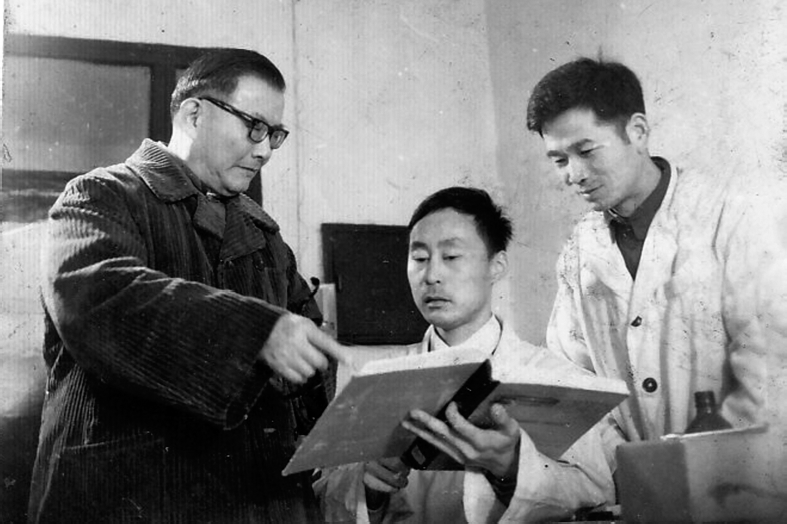
Yang is instructing young teachers (the person sits in the middle is Chen Zuyao, and the person stands on the right is Liu Qingliang, both became professors and advisers for PhD students).
Yang officially retired from USTC in March 1994 at 84 years old and returned to Beijing to spend his remaining years. On 16 September 2010, the ‘Celebration of the 100th birthday of Professor Yang and symposium on his engaging in academic activities for 80 years’ was held. Many notable individuals attended the event. Nearly 400 experts and scholars from various fields of science and education gathered, including He Zehui, Wu Wenjun, Xu Guangxian, Guo Musun, Wang Fangding and other senior academicians. During his address of thanks, the centenarian commented on the indissoluble bond between USTC and him for over half a century, saying with deep affection: ‘From the establishment of USTC in 1958 to the present, I have always been a part of USTC and I am proud of the university.’ (USTC News Center, 2010) Indeed, from the school's founding and relocation to Hefei, Yang actively planned and participated in all aspects of university development. As pointed out by Academician Hou Jianguo, the former President of USTC:
Professor Yang was the founding father of the rebirth of USTC. He stayed with the university through thick and thin and made outstanding contributions to its re-emergence. Professor Yang is forever to be a model person for us to learn from in terms of his loyalty to his country, his dedication to scientific research, his love for education, his indifference to fame and fortune, and, finally, his broad mind and optimism and open-mindedness. (USTC News Center, 2010)
Footnotes
Acknowledgements
We are thankful to Professor Yang Chengzong's relatives for contributing pictures so as to enrich the content and increase readability of this article.
1
This statement was published in Science Times on 20 September 2010, p. A1.
2
In the 1950s, the higher education system in China, after adjustments of departments and specialties, generally followed the Soviet model; different subspecialties, which were similar to research directions, were set out under each specialty.
3
From a letter to Yang Chengzong written by Liu Yunbin on 23 March 1959.
4
From a copy of Yang's ‘Proposal for recovering the radiochemistry specialty at USTC’, 23 August 1978.
5
From a copy of Yang's ‘Report’ (Autobiography), 17 December 1968, p. 15.
6
From a copy of Yang's ‘Suggestion on the preparation of a small-sized uranium factory by the radiochemistry department’, 14 September 1970.
7
From a copy of Yang's ‘Proposal for USTC's education revolution’, 1 December 1970.
8
The task of comprehensive utilization was proposed by the National Development and Reform Commission to the Fifth Institute in 1968, but the institute could not finish the task due to other preoccupations.
9
From a copy of Yang's ‘Proposal in relation to the long-term development of the radiochemistry specialty’, November 1971.
10
See the copy of Yang's article, ‘Annihilation of the radiochemistry specialty’, 20 November, 1973.
11
The so-called ‘Five Zis’ refer to ‘piaozi (money), fangzi (house), qizi (wife), haizi (kid) and luzi (stove)’. Hu Yaobang learned that the general difficulties faced by scientists were worries caused by low wages; crowded housing; long-term separation of husbands and wives; difficulty in getting children into nursery schools; and lack of domestic gas containers, which made cooking difficult. Hu personally consulted leaders of relevant departments and requested support. Eventually, most of the problems were solved. The ‘Five Zis’ method later became an excellent example at CAS.
12
CUSPEA (China–US Physics Examination and Application) was a joint Sino-US programme to cultivate postgraduates in physics. Promoted by Professor Tsung-Dao Lee and established in 1981, this programme aimed to further open the doors to overseas education for Chinese students. The programme was cancelled in 1989. During the years when it ran, nearly a thousand Chinese students passed the examination and thus were able to pursue degrees at public expense in the United States.
13
From an interview with Yang by Zhang Zhihui on 2 September 2007 in Beijing.
14
In the ‘Catalogue of disciplines and specialties with the qualification of awarding Doctor's and Master's degrees and postgraduate cultivation’ issued by the Ministry of Education in 1990, radio-chemistry (specialty code 070306) is a secondary discipline of chemistry, and radiation chemistry is a subdiscipline of radiochemistry.
Author biographies
Pei Liu is an associate research fellow in the Department for the History of Science and Scientific Archaeology at USTC.
Zhihui Zhang, PhD, is a professor in the Department for the History of Science and Scientific Archaeology at USTC. His expertise covers the history of science and technology in modern China, scientific policy and oral history. He has been in charge of many research programmes and has published more than 30 research articles and four books.