



Abstract
Bei Shizhang is known as a biologist in China. After returning from study abroad, he overrode all objections, established the Institute of Biophysics at the Chinese Academy of Sciences in July 1958 and strongly advocated for the establishment of the Department of Biophysics at the University of Science and Technology of China (USTC) in September 1958. He planned and prepared for the establishment of the department from the very beginning. In determining various operational aspects, such as enrolment planning, teacher arrangements, teaching plans and teaching objectives, he endeavoured to change the traditional model of biology education by focusing on the basic knowledge of physics and chemistry and emphasizing the concept that education was in the service of the political and military needs of the country. With these principles, he trained a large number of outstanding talents in the field of biophysics. Using material from the USTC archives and from recorded interviews, this paper describes the process of establishing the Department of Biophysics at USTC and the important role played by Bei Shizhang.
Keywords
Bei Shizhang in his early years: Education and work experience
Bei Shizhang (1903–2009, Figure 1) was born in Zhenhai, Zhejiang Province, China. He was a biologist who played a major role in the foundation and development of biophysics in China.
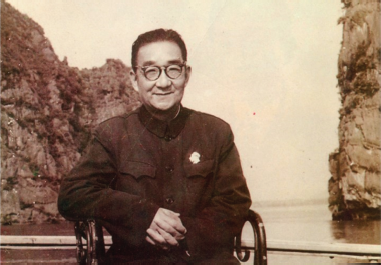
Bei Shizhang.
Bei graduated from the pre-medical programme of Tongji German Medical School (now Tongji University) in 1921 and received his doctorate in natural sciences from the University of Tübingen, Germany, in 1928. He was elected as an academician of Academia Sinica in 1948 and of the Chinese Academy of Sciences (CAS) in 1955. From 1958 to 1983, he served as the first director of the Institute of Biophysics at CAS and as the first dean of the Department of Biophysics at the University of Science and Technology of China (USTC).
In his studies abroad, much of his learning was relevant to classical biology, such as cell observation, embryonic development observation and research in animal and plant physiology, which had relatively weak connections with mathematics, physics and chemistry. Those subjects experienced rapid development in the 1940s and 1950s. Bei deemed it necessary for biology to be combined with mathematics, physics and chemistry to achieve the best results and believed that biologists must be proficient in those subjects in order to keep pace with the times.
Connections between biology and physics go back to the 18th century, when the Italian scientists Luigi Galvani and Alessandro Volta and the German scientists Emil Heinrich Du Bois-Reymond and others observed by experiment that living tissue could produce an electrical current and cause muscle contraction. Subsequently, Hermann von Helmholtz, a German physicist, made a study of the physical mechanisms of muscle contraction and nerve conduction, connecting biology with physics. Ivan Catton, an American scientist, found a weak electrical current in the human brain, proving that organisms may have physics-related reactions. In 1953, the American scientist James Watson and his British colleague Francis Crick proposed the double-helix structure of DNA based on the results of an X-ray diffraction experiment suggested by Maurice Wilkins and performed by Rosalind Franklin, which opened up the new research field of molecular biology. These research achievements brought the study of biology from simple theoretical description to quantitative and qualitative research and promoted the emergence of a new interdisciplinary discipline—biophysics. Performing quantitative analysis and research on biological phenomena with the new physical theories and technologies brought previous studies of organisms to a new stage.
In the 1950s, based on his extensive knowledge and years of thinking, Bei Shizhang's academic thought about promoting the intersection of the disciplines became more mature. With the birth of biophysics as an independent discipline, he realized that it was only by carrying out biophysics and biochemistry research that our understanding of biology could significantly develop and the essence of life be revealed.
In 1956, Bei visited the Soviet Union as a member of a delegation from CAS. During the three-month visit, he investigated radio-biological, biophysical and biochemical research conducted by the USSR Academy of Sciences and several colleges and universities. Subsequently, much thought led him to believe that biophysics would develop in two directions: first, to study the physical and physicochemical processes of organisms; second, to examine the impact of external physical factors on organisms under different conditions, as well as the mechanisms of those factors. At the same time, the development of biophysics should be supported by corresponding developments in technology, and biophysical instruments should be replicated, improved and constantly renewed.
Considering contemporary developments in science and technology at home and abroad, as well as the demands of national defence, Bei was eager to change the mode of developing biology in China. He believed that biology should be developed step by step. In the first step, the programme of study involved a number of subjects, such as the peaceful use of atomic energy (such as to increase plant and animal production and cultivate new varieties); radiation protection; biological problems in aerological measurement (such as the effects of weightlessness, excessive weight and cosmic rays on organisms); and the relationship between the primary substances of organisms (nucleic acid and proteins) and growth and inheritance. The second step included the study of cells and submicrostructures; the structures of molecular groups, biomolecules and macromolecules, and the relationships of those structures to their functions; radiation biology; and the biological effects of temperature, pressure and electromagnetic waves. Subsequently, Bei began to put his ideas into practice.
In the early 1950s, China was suffering a lot in national and international affairs and was eager to strengthen its national defence capabilities and thereby enhance its international status. Consequently, it ranked the development of nuclear weapons as the most pressing strategic objective. To develop nuclear weapons without harming the human body, it was deemed essential to study potential hazards and to prevent them from occurring. It was therefore imperative to set up corresponding disciplines to conduct systematic research on nuclear weapons and to cultivate scientific talent.
At the same time, aerospace engineering was also in full swing. In October 1956, the Fifth Academy of the Ministry of National Defense was officially established. This was China's first rocket research centre and began the continuous development of China's space industry, starting from scratch and moving from small to large. On 16 November 1957, the Second Academy of the Fifth Institute of the Ministry of National Defense, a research centre specializing in missile control systems, was established. This marked the birth of the predecessor of the Second Institute of China Aerospace Science and Industry. Premier Zhou Enlai appointed Lieutenant General Wang Zheng as the president of the academy (Fu and Ma, 2016). With the development of China's space industry, manned space flight was also covered by the scope of the research programme, and studying the impact of zero gravity on organisms had become a top priority.
In 1958, China launched an experimental rocket that paved the way for military missile and space research. It can be said that the development of the sounding rocket in China started in that year. The T-7 liquid sounding rocket and the improved T-7A sounding rocket were later successfully developed. The T-7A was a biological sounding rocket, demonstrating that biophysics had been incorporated into the strategic needs of the national defence service (Luk, 2015). Establishing the Institute of Biophysics was of great significance in the development of nuclear weapons and aerospace exploration.
Considering the national demand, the models of biophysics and radiobiology studies in the Soviet Union, and his ideas about the subject of biophysics, Bei decided to file an application to establish the Institute of Biophysics at CAS.
In July 1958, he suggested renaming the Institute of Experimental Biology as the Institute of Biophysics. On 29 July 1958, that proposal was passed at the ninth executive meeting of CAS. On 26 September, the change was formally approved by the State Council. At the same time, Bei was appointed as the first director of the Institute of Biophysics. It was one of the few professional biophysics research institutions in the world at that time. Its establishment signalled that biophysics was formally established in China as an independent discipline and laid a solid foundation for its subsequent vigorous development.
In the institute, Chen Qirui was the leader of the party committee and Jiang Pei'ao was the office director. Subsequently, Kang Ziwen, who was appointed as deputy director and secretary of the party committee, continued to work with Bei and became the first deputy director of the Department of Biophysics at USTC.
Wang Guyan, who graduated from the Department of Biophysics at USTC in 1965, wrote in Biography of Bei Shizhang:
Bei Shizhang became the founder of China's biophysics for the following reasons: first, he was a respected and well-known biologist; second, he was well prepared for dissent and showed great patience in persuading others; and third, he made a concrete plan for talent cultivation… Bei was one of the foresighted pioneers who promoted the intersection of the disciplines. (Wang, 2010, pp. 162–165)
For Bei, one important idea for managing an institute was ‘multidisciplinary intersectionș. After the Institute of Biophysics was established, biophysics intersected with physics, chemistry, medicine, electronics, computers, engineering technology and other disciplines of scientific research and was made a priority.
In addition to multidisciplinary intersection, another important idea of Bei was that ‘scientific research shall serve national development’. Under unfavourable national and international conditions and in scientific research, how to optimize the use of limited resources to support the work of developing atomic bombs, hydrogen bombs and artificial satellites, and the impact of radiation and microgravity on organisms, became the research focus of the Institute of Biophysics. Guided by that idea, the institute successfully completed ‘research on the radiation effects of China's nuclear experiments on animals’ and provided valuable data for the formulation of China's radiation safety standards and for an in-depth understanding of the biological effects and risks of radiation.
Establishing the Department of Biophysics at USTC
When planning the establishment of USTC, the preparatory committee set up in June 1958 began to think about the principles for setting up departments. Given that USTC was governed by CAS, the founding departments at USTC would refer to CAS institutes. There were many biological research institutes affiliated to CAS, most of which were taken over from the Nationalist government, including the Botany Institute, the Zoology Institute and the Fan Memo rial Institute of Biology taken over in 1949. 1 So what kind of biological majors should be included? Should a traditional Department of Biology be established following the previous model of botany, zoology, microbiology and so on? Should a new Department of Biophysics be established?
The preparatory committee made a systematic plan for 13 founding departments and solicited opinions from the directors of CAS institutes. Bei was already preparing to have the Beijing Institute of Experimental Biology renamed as the Institute of Biophysics, so he suggested a pilot programme that would establish the Department of Biophysics at USTC, which would provide research talent for subsequent study at the Institute of Biophysics. Bei believed that we should keep pace with the times, and that, if we continued to set up departments in accordance with traditional biological methods and establish majors such as botany, zoology and microbiology, that would bring no advantages and could not serve the overall national strategy. Therefore, he suggested biophysics as the only major to be offered in the Department of Biophysics, which was in line with China's scientific research on atomic and hydrogen bombs and artificial satellites.
Soon after, Bei's proposal received a response from the preparatory committee. Due to his persistence and efforts, the Department of Biophysics, as the representative of biology, became one of the 13 founding departments at USTC in September 1958. It could be said that the Department of Biophysics at USTC and the Institute of Biophysics at CAS were established at the same time. Bei's personal influence became an important factor in establishing the department.
Christine Luk from Arizona State University wrote in a 2015 research paper:
During the anti-Japanese war between 1937 and 1945, Bei was already practicing an integrated biology programme by accommodating zoology and botany and becoming a lifelong supporter of genetics even though it was not his academic territory. Riding upon the postwar coattails of promoting science for national rejuvenation, Bei assumed a position of leadership in the preparatory committee in establishing the Academy of Science. His personal charisma and political capital coincided with the pressing development needs of biophysics of its time which gave rise to a department of biophysics at the newly established USTC. As the only biology-related department among the 13 founding departments at USTC, the department of biophysics administered only one program between 1958 and 1961. (2015, p. 231)
In the 10 years after the foundation of the People's Republic of China, the research content of biology had still been closely linked with traditional biology, so zoology, botany, microbiology, genetics and physiology were the major subjects of biological research, and research on the intersection of biology and physics had not been universally accepted. The Institute of Biophysics founded by Bei became the first specialized institution for studying biophysics at CAS and even in China, when there were no departments of biophysics in universities. Because of the efforts of Bei, the Department of Biophysics, which was established in the same year as the Institute of Biophysics, became the first such department in China.
First enrolment and the construction of the faculty for the Department of Biophysics
Once the decision to establish the department was made, the primary issues faced were enrolment and the appointment of faculty.
Enrolment became the top priority once the operational objectives were determined. This was an urgent task, as there were only two months from June 1958, when the decision to establish the department was made, to 1 September 1958, the official opening date. Enrolment became a crucial issue because college enrolment in most provinces had already come to an end, which meant that the department was at a disadvantage, and it was not known whether it would be able to enrol any students, let alone good students.
In June, USTC started an urgent advertising campaign for enrolment and issued a three-page brochure to introduce the purpose of the department, the quota for enrolment, curricula, the duration of study, the enrolment region, registration qualifications and procedures, examination subjects and examination dates (USTC Archives, 1958a).
The enrolment brochure was reported by various mainstream media across the country and was published in People's Daily, Guangming Daily and China Youth Daily. Upon the university's requirement for the deans of each department to write an introduction to their discipline, Bei Shizhang, as the Dean of the Department of Biophysics, wrote (USTC Archives, 1959a):
Biophysics is a subject that uses physical and physiochemical theories and methods to study the phenomenon of life, to clarify the laws of the physical and physicochemical processes of organisms, and to study the influence of external physical factors on organisms under different conditions. Although the issues studied by it are focused particularly on basic theories, the research results are of great significance for agricultural production, health care and national defence.
Biophysics is a new discipline that has recently been established in China with a weak foundation. However, the preliminary success and rapid development of the peaceful use of atomic energy, space rocket launches and human interstellar navigation will certainly raise many important problems for biophysics, and to tackle them all, it is necessary to vigorously promote the development of biophysics.
It can be observed from Bei's description of the elements of biophysics that they differed greatly from those of traditional biology. The programme included radiobiology, energy conversion within organisms, influences of the external environment (such as light energy, thermal energy, electrical energy and physical factors) on organisms, the preparation and application of isotope tracer compounds, and new technologies and instruments for biophysics. The presence of those course components showed that the Department of Biophysics had abandoned traditional biological research streams closely related to botany, zoology, physiology or genetics. It emphasized studying the influence of radioactive substances and ionizing radiation on organisms and seeking methods of protection from it, conducting research into morphology, physiology, biochemistry and genetics. Research on biophysical instruments and technologies was highly valued, reflecting the significant contribution of key technologies and testing methods to biology. Bei and his colleagues hoped to cultivate urgently needed application-oriented scientific and technological talent through such a curriculum.
The first enrolment at USTC was open to nine pilot municipalities and provinces only, including Beijing, Shanghai, Jiangsu, Hebei, Hunan, Hubei, Shandong, Sichuan and Liaoning. The quota for the first enrolment was changed several times. Through the preliminary negotiations between institutes inside the CAS system, the original number was 1,500, but it was reduced to 950 after it was submitted to the Ministry of Education. The CAS institutes were not satisfied with that decision, thinking that the approved quota was far below the numbers that they needed. However, the quota had been confirmed and was difficult to change, so they had no alternative but to ask each province to recommend some students for enrolment so as to meet the enrolment requirements of each department.
By that time, a new problem had emerged. Because the enrolment process for USTC started so late, many provinces had already finished making recommendations for places. The preparatory committee was not optimistic about enrolling any students using this method. The work had to be done, however. The committee began to contact local education authorities and admissions offices to take advantage of all opportunities for publicity. They also visited the principals who came to Beijing to attend meetings and asked them for their assistance. They received positive responses. For example, the principal of Sichuan Provincial Committee promoted the admissions policy of USTC widely after returning to Sichuan, which increased the number of applicants to USTC by seven times in three days. Additionally, the slogan ‘Marching towards science and technology’ in the enrolment advertisement of USTC had motivated a great number of young people who dreamed of becoming scientists. The USTC courses were also to be taught by renowned CAS scientists, which met students’ wishes for face-to-face communication with first-rate scientists. With the assistance of provinces and cities in the enrolment regions, and by means of in-depth propaganda in schools and classes, various symposiums and other meetings, newspapers and on-air publicity, and even by writing letters to secondary schools, the admissions office was trying to make as many candidates as possible aware of the opportunity. As a result, in some enrolment districts, enthusiasm for applying to USTC even surpassed that for applying to Tsinghua University and Peking University. Figure 2 shows the students enrolled in 1958.
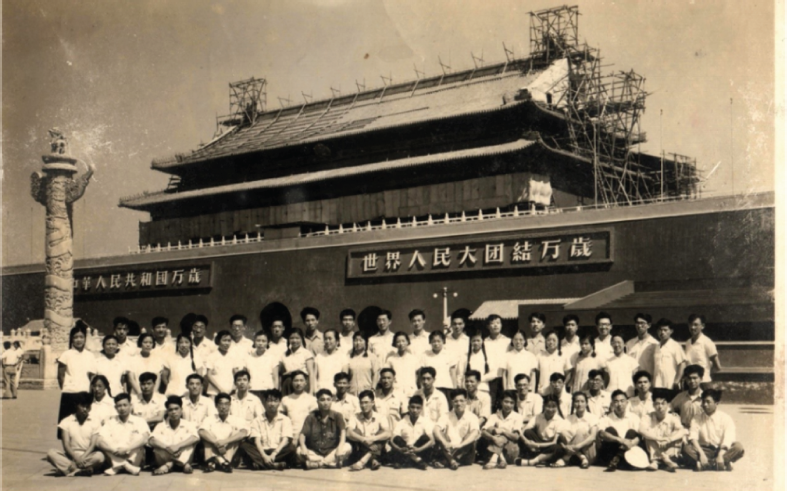
Students enrolled in the Department of Biophysics, 1958.
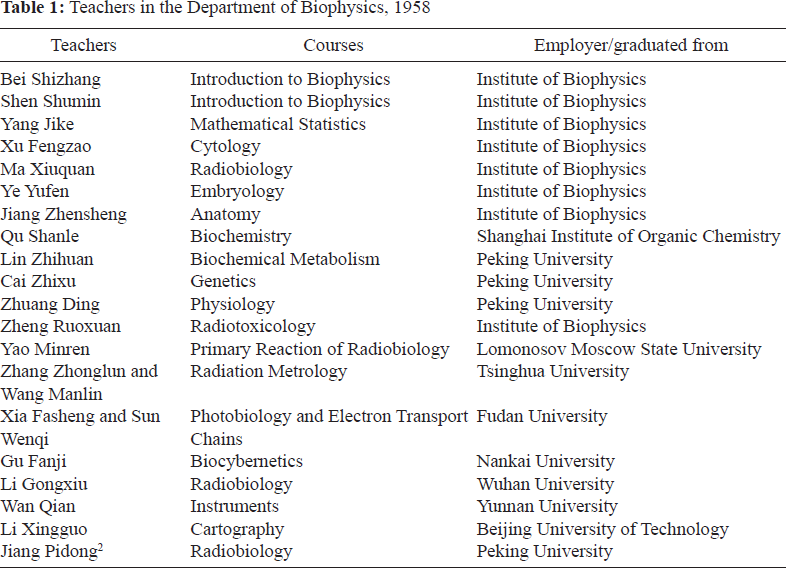
The selection of teaching staff was initiated under the leadership of Bei after the establishment of the department. The vast majority of teachers were researchers from the Institute of Biophysics at CAS, who were joined by a small number of outstanding teachers who had graduated from Peking University, Tsinghua University, Fudan University, Wuhan University and Beijing University of Technology (Table 1). In the early years of the department, Bei personally taught biochemistry, with the aim of enabling the students to be familiar with the content of their major as soon as possible. A few years later, he handed that work over to Vice Dean Shen Shumin, a researcher at the Institute of Biophysics. Later, as the student source expanded, a large number of outstanding teachers joined the team, including Yang Jike, Xu Fengzao, Jiang Zhensheng, Zhuang Ding, Zheng Ruoxuan, Yao Minren and Xu Haijin. Two of Bei's students—Zheng Zhuying and Wang Yunjiu—also began to teach in the Department of Biophysics. Hou Huiling, who enrolled as a student in 1959, wrote in an article titled ‘In memory of respected teachers and helpful friends’ that Zheng and Wang often told stories about Bei and used to show them the biological graphs he had drawn, which had impressed the students profoundly. Professor Shen Shumin played a key transitional role in the early development of the Department of Biophysics. As the vice dean of the department and a close aide to Bei, although with a background in conventional biology, Shen had faithfully implemented Bei's principles. She overrode all objections and adhered to the operational characteristics of the Department of Biophysics at USTC, leaving a deep impression on many graduates.
Teachers in the Department of Biophysics, 1958
The excellence of the teaching staff meant that the students in the Department of Biophysics were receiving the best education in China in the field of biology. The teachers for general courses, such as advanced mathematics, general physics and general chemistry, were famous first-class scientists such as Hua Luogeng, Yan Jici, Wu Youxun, Zhang Wenyu, Lu Yuanjiu and Li Zhengwu. The teachers for specialized courses were those with rich experience, such as Bei Shizhang, Shen Shumin, Xu Fengzao and Ma Xiuquan. It was an exceptional advantage and a great blessing for the students to have a chance to be closely associated with these masters and to communicate and discuss with the best teachers at CAS, while being profoundly influenced by the masters’ rigorous academic attitude and deep academic knowledge.
Among the students in the department, opinions fluctuated after enrolment. The Department of Biophysics had a lower status among the 13 departments of the university at its establishment, which was closely related to the then current international and national environment and national research priorities.
Many students came to the school with great admiration, ambition, responsibility and love for the country and the science. However, due to teaching restrictions and enrolment quotas, it was not possible to enrol every student without limiting course numbers, so conflicts were inevitable. USTC was unable to satisfy every student's application for their intended specialty. Allocations were needed, and many students were assigned to specialties that they did not like. It was inevitable that there would be some negative emotions as a result.
Biology was not a popular subject in the 1950s. Although most students considered it acceptable, some were not interested in it. They were dissatisfied after being assigned to the Department of Biophysics, and a few of them began to study passively. The newly enrolled undergraduates were full of passion and hoped to play their part in the construction of the newly established China with their talents. They believed that only by studying subjects such as nuclear physics could they realize their ambition to serve their country. Indisputably, there was a widely held view in those years that studying biology—a specialty mainly dealing with animals, plants and microscopes—would make it difficult to realize the dream of constructing a rich and powerful country.
In 1959, Professor He Manqiu gave a speech on ‘How to be politically loyal and academically professional’ on behalf of the Department of Biophysics, in which she summarized the problems of the department:
Since the enrolment plan of our department was not satisfied according to the number of students enrolled, we had to transfer some students from other departments for supplements, and quite a few transferred students were unwilling to learn biophysics. They thought that the so-called cutting-edge was merely one step further into the field on the basis of previous achievements. Therefore, after the enrolment, many students, 23 in total, had low professional enthusiasm. Some of them were still unreliable in their professional thinking for a long period of time. (He, 1959)
This figure was staggering, for it was almost half the number of students enrolled in the department. If proper political and ideological guidance were to remain absent, the situation could easily deteriorate, causing serious consequences for both the students and the Department of Biophysics.
The first students in the Department of Biophysics were enrolled in 1958 for a programme lasting five years. Bei said of the initial orientation of the department:
Students graduating from this department shall be equipped with general theoretical knowledge in biophysics and certain experimental techniques and, after a certain period of internship, they may be qualified for biophysical research, college teaching, or information work in scientific research. (USTC Archives, 1959b)
Biophysics was an emerging cutting-edge and interdisciplinary subject that covered many topics. It had four aims:
Master the basic physical structure, performance and movement of the organism.
Understand the energy metabolism of the organism.
Understand biological information and control mechanisms.
Be skilled in using biophysical instruments and technology.
Those four aspects were about professional knowledge training. Since biophysics was an experimental discipline, training in experimental techniques was also necessary. In addition to necessary biological experimental knowledge, the Department of Biophysics also planned to focus on mathematics, physics, electrical engineering, electronics and other subjects so that after graduation the students would be able to work independently in society with a solid foundation in science.
Students majoring in biophysics took specialized courses in radiobiology; the application of isotopes in biology and dosimetrics; biophysics; and biophysical instruments and technologies. The courses were described as follows (USTC Archives, 1959b):
Radiobiology studies the laws of impact of ionizing radiation on the living organism; the damage mechanism of radiation energy to the organism and protective measures; and approaches to the extensive use of radioactive energy in biology, medical science and agricultural science.
The application of isotopes is an important research method in modern scientific research and has been used extensively and effectively in biology. Dosimetrics studies the dosage in radiobiology and isotope applications.
Biophysics consists of the following five aspects. Photobiology: the study of the effect of light on organisms, the transmission and conversion of light energy, and other issues. Electrobiology: the study of the generation and action mechanism of electrical phenomena within organisms; the significance of electricity in vital activities; and the impact of external currents on organisms. Submicrostructure and molecular structure of the organisms: the former uses the electron microscope as the main tool, while the latter uses the diffractometer and suchlike as the main research tool. Cosmobiology: a science that studies the functioning mechanisms and laws of various physical factors and external environments when the organism enters into different layers of the cosmic space. Information control of the organism: the study of the control systems and self-regulating functions of organisms as well as the issue of the unity of organism survival and the environment.
Biophysical instruments and technologies deal with the new technologies and instruments that are closely related to the rapid development of biophysics.
In addition to these specialized courses, students graduating from this department are also required to write a thesis, which gives them training in certain independent work abilities.
The objectives of the Department of Biophysics were embodied clearly in its curriculum, which differed greatly from that of a traditional biology discipline. The classic subdisciplines, such as animal biology, phytobiology, microbiology and genetics, were replaced by courses related to irradiation prevention and control as well as space probing, which resulted from the inextricable link with ongoing research into the ‘atomic bomb, hydrogen bomb and artificial satellite’ in China, and which also reflected the use of science and technology to meet political and military needs.
The length of study in polytechnic universities was set out in the regulations of the Department of Higher Education, which stipulated that the length of study for all disciplines in USTC should be five years, the same as for Tsinghua University. This made them the only two universities in China that had a five-year programme of study. All freshmen would take foundation courses in their first three years in the department, and then two years of specialized courses. The foundation courses in the Department of Biophysics were advanced mathematics, general physics, general chemistry and foreign languages, which were further classified into different grades. The periods of study for such courses varied according to the different disciplines (Table 2).
Grades of foundation courses for undergraduates at USTC
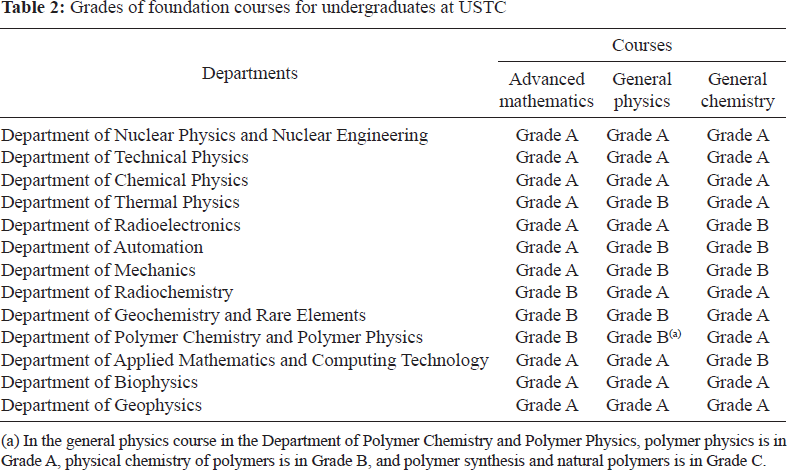
In the general physics course in the Department of Polymer Chemistry and Polymer Physics, polymer physics is in Grade A, physical chemistry of polymers is in Grade B, and polymer synthesis and natural polymers is in Grade C.
The above data shows that foundation courses in the Department of Biophysics were the same Grade A courses as those in the departments of Nuclear Physics and Nuclear Engineering; Technical Physics; Chemical Physics; and Geophysics. Students majoring in physics-related subjects were required to study Grade A general physics, and those majoring in chemistry-related subjects were required to study Grade A general chemistry. Such strict study requirements for foundation courses in these subjects were beneficial for biological research. Students might feel tired and bored at the beginning, but this wide-ranging programme laid a solid foundation for their subsequent development. Such high requirements also coincided with Bei's teaching philosophy, which held that students majoring in biology must cultivate their knowledge of physics and chemistry.
According to Zhuang Ding, who graduated from Peking University and was the teaching secretary in the Department of Biophysics, the study in the department was ‘heavy, tight and in-depth’.
‘Heavy’ meant more course categories and more class hours. ‘Tight’ meant a large number of weekly class hours. ‘In-depth’ meant deep lecture content: that is, the foundation courses were required to link up with the specialized courses as much as possible and specialized courses should include the latest news about the development of the subjects. 3
For example, many schools and departments were considering whether to select Grade A, Grade B or Grade C for foundation courses in mathematics, physics, chemistry and other subjects. Grade A courses were characterized by long class hours, so, if every department selected Grade A courses in mathematics, physics and chemistry, then either the time for specialized courses would need to be reduced or the students would face greater pressure. Therefore, many schools and departments decided to mix Grade A, Grade B and Grade C courses. For example, Grade A higher mathematics, Grade B general physics and Grade C general chemistry might be selected; or Grade B higher mathematics, Grade A general physics and Grade B general chemistry; and so on. But the Department of Biophysics selected Grade A for all of these courses. Although the selection increased the pressure on students, the improvement in their abilities was obvious.
Arrangements in the Department of Biophysics were as follows. A total of 400 class hours for the mathematics course was to be completed in two and a half years. The textbook General Physics, published by the Commercial Press, was adopted for the physics course, which also took 400 class hours over two and a half years to complete. The course emphasized hands-on experiments to enrich perceptual cognition. General Chemistry, published by the Higher Education Press, was adopted for the chemistry course, which took 150 class hours and one year to complete.
A system of teaching assistants to coach students was implemented, and a teaching assistant was assigned for every 30 to 45 students. Part of the faculty consisted of cadres from Peking University and Nankai University (USTC Archives, 1958b). The proportion of specialized courses in the Department of Biophysics was slightly less than that of the foundation courses in mathematics, physics and chemistry. By drawing lessons from teaching reforms in universities such as Peking University and Tsinghua University, while noting that biophysics was an advanced subject, the department eliminated traditional courses in biology and arranged new courses that closely followed international scientific developments. In addition to traditional classroom teaching, interactive methods such as analysing reports, studying documents and having discussions were also used in teaching (USTC Archives, 1958c). In the university's schedule, four and a half days per week were assigned to learning and one and a half days were assigned to labour.
In order to provide students with the best education, the instructors of the specialized courses were all well-known scientists from CAS. Higher mathematics courses were mainly taught by 12 instructors, including Hua Luogeng, Guan Zhaozhi 4 and Wu Wenjun. 5 The main instructors and teaching assistants were based in the institutes of Mathematics, Mechanics and Computing Technology. The teaching tasks in general physics were mainly performed by 13 instructors, including Wu Youxun, 6 Yan Jici (Figure 3), Qian Linzhao, Zhang Wenyu, 7 Lu Yuanjiu, 8 Li Zhengwu 9 and Xiang Rensheng. The main instructors and teaching assistants were based in the Institute of Automation, the Institute of Electronics, the Office of Kinetics, the Institute of Physics and the Institute of Applied Physics and Geophysics. General chemistry was taught by 13 personnel, including Yang Chengzong, 10 Wang Baoren, 11 Liang Shuquan 12 and Liu Dafu. The main instructors and teaching assistants were based in the institutes of Applied Chemistry, Petroleum, Chemistry, Physics and Computing Technology.
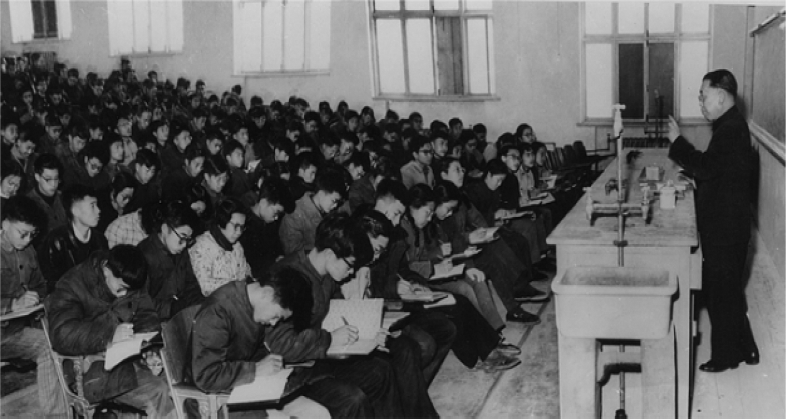
A Lecture by Yan Jici for 500 students.
Inviting first-class masters to teach undergraduates has always been a tradition at USTC. In the teaching of foundation courses, the university has always attached great importance to the role of a handful of scientists with unique expertise. For example, in the early years, in mathematics courses, Hua Luogeng made full use of his expertise in analytic number theory, classical groups and the theory of functions of several complex variables; Wu Wenjun used his expertise in algebraic topology and algebraic geometry; and Guan Zhaozhi used his expertise in the interface between mathematics and physics. Biostatistics in biophysics had a high demand for mathematical knowledge, because only with a strong mathematics background can the experimental data be processed skilfully, which was important in biophysics.
In addition to mathematics, students in the Department of Biophysics were required to study chemistry because new science and new technologies were closely related with new materials. Systematic knowledge of chemical theory was therefore essential to get a thorough understanding of the properties of those materials. Inviting the best professors to teach foundation courses laid a solid mathematical, physical and chemical foundation for the students in the department and paved the way for their further development.
Table 3 shows the hours allocated to parts of the curriculum of the Department of Biophysics in 1961. The number of hours for physics-related courses totalled 1,798, while those for biology-related courses totalled only 744.
Curriculum of the Department of Biophysics in 1961
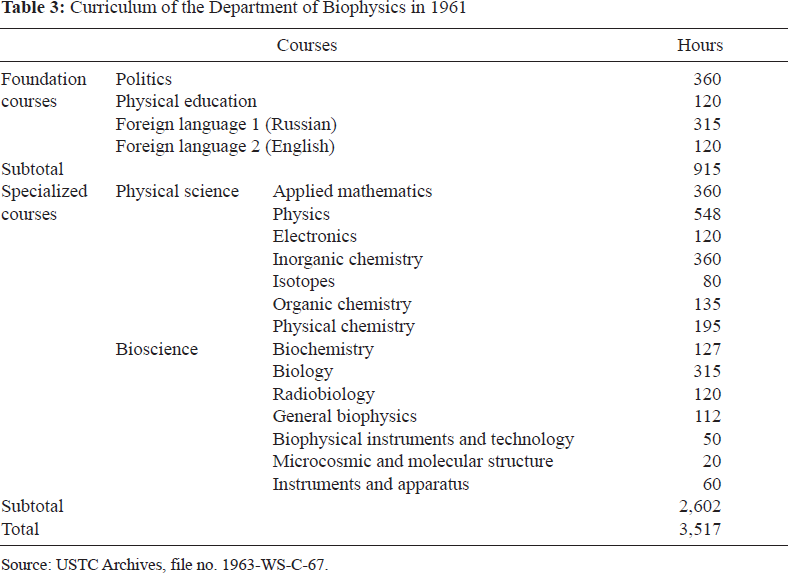
Source: USTC Archives, file no. 1963-WS-C-67.
USTC was established under the consensus that priority should be given to the basic sciences, which included mathematics, physics, chemistry and mechanics, so it is not surprising that physics-related courses were allocated twice as much time as biology-related courses in the Department of Biophysics. Students in the department benefited greatly from this high-intensity training in physics.
Students in the department had a high regard for Bei Shizhang. Shi Yunyu, 13 who graduated from the department in 1965 and was the first president of the School of Life Sciences at USTC, described Bei's idea of teaching as follows:
First, target scientific frontiers. Second, lay a solid foundation in mathematics. Our specialized courses were drastically reduced, while the foundation courses took up a large proportion. Our courses were jokingly referred to as ‘neither fish nor fowl’, but we had to learn these foundation courses. We had to attend courses in mathematics, physics and chemistry with those students in the mathematics, physics and chemistry departments. The courses and tasks were heavy and we were pressed for time. The school days were relatively hard. 14
Biophysics was an emerging discipline, and it was constantly being updated with developments in science. Bei believed that in any case the development of biophysics had to be based on a solid foundation in mathematics, physics and chemistry. If students mastered knowledge of those subjects at university, they would understand them completely and benefit greatly in their future work. Many graduates of the Department of Biophysics were assigned to the Institute of Biophysics and made important achievements in their respective fields. This testified that Bei's point of view was right. For example, Chen Runsheng, 15 who enrolled in 1959, is now an academic pacesetter in the field of bioinformatics; Chen Lin, 16 who enrolled in 1964, is an academic pacesetter in brain and cognitive science. After graduation, they continued to focus on scientific frontiers and opened up new areas for important disciplines in China. More than 200 students graduated from the Department of Biophysics at USTC in the first three years from 1958 to 1960, and then played a key role in the early development of biophysics in China.
To sum up, biophysics courses were characterized by a tight course schedule; detailed and up-to-date content; increasing difficulty; innovative teaching; little spare time; and a heavy academic burden.
Immediately upon the establishment of the Department of Biophysics, leaders of the Institute of Biophysics, such as Bei and Shen, had considered setting up a bioinformatics programme. As an important branch of informatics, bioinformatics was a cross between natural sciences (such as life science), social sciences (such as informatics, library science and archival science) and technical sciences (such as information science and computer science). It focused on how to meet the needs of humans and society for biological data and knowledge processing in the information age. The motivation for establishing a bioinformatics programme was based on the molecular biology established by Watson and Crick's discovery of the DNA double helix in 1953.
Establishing a bioinformatics programme was not easy. According to Shou Tiande, shortly after establishment of the university, CAS merged the University of Scientific Information of China with USTC to form the new Department of Scientific Information. The department recruited few students, and enrolment lasted only for several sessions. It aimed at cultivating talent with the ability to systematically collect scientific and technological information for CAS and producing professionals in scientific and technical information who had knowledge of mathematics, astronomy, geography and biology to serve the libraries in CAS branches. This subject was not at all popular, and the demand for such professionals within the CAS system was not great, so the scale of enrolment in this specialty was limited. The enrolment was, after all, designed to serve a practical end.
Students in the informatics specialty were required to study specialized courses in various disciplines, including mathematics, physics, chemistry and biology. Since only students in the Department of Biophysics studied all the science and engineering courses, informatics was incorporated into the department and became a subordinate specialty, in line with the principle of ‘merging similar items’. Later, because of the policy of institutional simplification and the scarcity in demand for informatics graduates, the enrolment was stopped. Thus, this ‘peculiar’ specialty in the department existed only for a short period.
The existence of bioinformatics has a certain historical significance. Internal and external problems coexisted in the 10 years that followed the foundation of the People's Republic of China. Internationally, China was not recognized by countries in Europe and North America, which continued to implement not only an economic blockade but also strict controls over technology, which prevented China from obtaining the latest scientific information. However, in the development of science and technology, countries need to exchange information with each other in order to understand the latest research trends and directions. Bioinformatics played an important role in collecting various kinds of scientific research information. Graduates in this specialty were assigned to information research institutes and libraries in a number of CAS branches. Given the historical circumstances, searching for various kinds of scientific research information became the primary task of informatics.
Following the establishment of the Department of Biophysics, and with a deeper understanding of the relationships between the specialties, there came a need for adjustments as part of departmental optimization. In order to meet the country's requirements for radio-biology, that subject was added to the Department of Biophysics as a specialized discipline.
A report about issues in the adjustment of departments, specialties and specialization at USTC recorded the following changes in departments (USTC Archives, 1961a):
According to the directives of the Ministry of Education and the Chinese Academy of Sciences, we should set up 30 specialties in our university, and a proposal has been made in December 1960 after soliciting opinions from various institutes… Our opinion on department adjustment is that we shall reduce several departments. The adjustment should be based on the needs of students, considering the common features of different courses, and the combination of institutes and departments.
Before these adjustments, the only specialty in the Department of Biophysics was biophysics; after the adjustments, radiobiology was added.
Radiochemistry is a branch of chemistry that studies radioactive substances and chemical problems associated with nuclear processes. It is associated and intertwined with nuclear physics, and the two subjects are sister disciplines in nuclear science and technology.
In comparison with radiochemistry, radio-biology in the Department of Biophysics focused primarily on the effect of radiochemistry on biological tissues, especially the human body. Its main aim was to examine the body's response and the biological consequences of radiation damage and to develop corresponding mechanisms for regulation. Radiobiology had been developing worldwide for more than 60 years. With the use of radioactive substances, cells undergo a radiation effect that triggers a series of cytological reactions, such as chromosomal mutation and remodelling, DNA impairment and cell death. Therefore, explaining the hazards of radioactive radiation and proposing corresponding counter measures had become the main research aim.
The addition of radiobiology to the Department of Biophysics at USTC was closely related to the international environment. Faced with the complicated relationship between China and the Soviet Union and between China and the rest of the world, China was making intensive preparations for research into atomic and hydrogen bombs in order to develop its own nuclear weapons and compete with the world's nuclear powers. In another sense, research on human protection under the nuclear deterrent had become an urgent priority. As the international community was maintaining a strategic blockade against China, it had been trying to develop its own nuclear strike force. This background provided a well-reasoned argument for setting up the radiobiology specialization.
In addition to informatics and radiobiology, the Department of Biophysics also attempted to add biochemistry to its specialties. On 23 January 1960, a number of planned changes were proposed to the USTC Party Committee, including the department's proposal to add biochemistry. However, those proposals were not approved by CAS.
On 15 March 1960, the Institute of Mechanics at CAS suggested that biomechanics be added to the Department of Biophysics (USTC Archives, 1960). However, a meeting of the University Council on 3 April decided against that suggestion because of the low enrolment ratio and small number of students. The council also rejected a proposal to add biomechanics to the department because that subject was included in biophysics.
A 1962 file mentions some specialties that were planned to be added at USTC, including plasma physics; hydroacoustics and hydroacoustic equipment; hydrodynamics; inorganic polymers; operations research; and biochemistry. Only biochemistry was related to biology.
The biochemistry specialty was described in detail in the file as follows (USTC Archives, 1962):
A biochemistry specialty is to be set up within the Department of Biophysics. Biochemistry studies the chemical composition of the tissues and organs of organisms and the chemical processes of vital activities. With the development of biology and chemistry, especially organic chemistry, the discipline has already achieved a lot. In recent years, because of the establishment and rapid development of biophysics, chemical theories and methods are often essential in the application of physical theories and methods to the study of biological and vital activities and the study of physical problems in the physiological processes of organisms. It requires the application of theories and methods of both biophysics and biochemistry, and only in this way can we have a deep understanding about the processes of vital activities. Therefore, biochemistry, which has complemented biophysics and has already been developed, is a discipline that has gained a new content and life in the present day. After applying the theories and methods of biophysics, biochemistry is still essential for some of the typical objects that biochemistry deals with, such as pharmaceuticals, fermentation and other industrial-related disciplines, as well as radiobiology, radiation medicine and other disciplines developed recently. In conclusion, on the one hand, biochemistry is a discipline that complements biophysics; on the other hand, after being linked up with biophysics, it has a new content and becomes an emerging, cutting-edge discipline that incorporates completely new content in its old form.
Although there was a clear understanding of biochemistry, there were still many doubts about whether it was to be added to the Department of Biophysics, so the specialty was still in a ‘pending approval’ state.
The failure of the attempts to add new subjects to the department reflected the following situation. In general, members of the University Affairs Committee believed that biophysics was a unique and normative discipline, but it was the smallest in the almost vertical management structure. Many who supported the addition of biophysics as a specialty believed that this was an exceptional opportunity to expand the research field.
At that time, the Institute of Mechanics at CAS suggested that USTC should add fluid dynamics and high-speed and high-pressure mechanics to the Department of Mechanics and Mechanical Engineering, and add operational research to the Department of Applied Mathematics and Computer Technology. Those proposals were successful. The institutes’ only failure was the proposal to establish a biomechanics specialty, which was rejected because the Department of Biophysics was regarded as a unified discipline that included biomechanics (Luk, 2015).
Bei supported the idea of adding a biochemistry specialty, but the decision to reject the proposal was made by CAS from a macroscopic perspective and was thus beyond his jurisdiction. Ultimately, even though biochemistry did not become a part of the Department of Biophysics, it was set up as an independent course in the department in 1961.
In 1961, the syllabus for biochemistry was set out. The main learning content was an introduction to biochemistry; protein chemistry; nucleic acid chemistry; vitamins; enzymes; hormones; glucose metabolism; fatty acid metabolism; protein metabolism; nucleic acid metabolism; bio-oxidation; energy metabolism; water and inorganic salt metabolism; respiration and neutralization (USTC Archives, 1961b).
From the beginning of the 20th century, the research content of biochemistry was gradually enriched and improved, and it became an independent discipline with the main aim of studying the chemical composition and structure of the organism and the chemical changes in the life process. The development of biochemistry played an important role in immunology, cell communication, the metabolism of biomacromolecules, and the exploration of genetic information transmission.
Objectively, the failure to add a biochemistry specialty was detrimental to the development of the Department of Biophysics. If a biochemistry specialty had been established, instead of a biochemistry course, that may have created another pattern in the development of the department.
Conclusion
The establishment of the Department of Biophysics at USTC was due partly to the unique social and historical background and partly to the personal influence and persistence of Bei Shizhang. After the establishment of the department, Bei and his assistant Shen Shumin adhered to a unique training scheme, which was different from traditional biology in its content and educational concepts. They attached great importance to the principle of open-door enrolment, consolidating mathematical and physical foundations, and promoting the importance of experimental methods and techniques and the application of physics research methods to biological research. Subsequently, they both achieved creative breakthroughs in a number of fields, including cytobiology, radiobiology, cosmobiology, structural biology and enzymology.
The mode of operation proved to be successful. Among the 200 students who graduated in the first five years from the Department of Biophysics, five were appointed as academicians of CAS, many participated in the development of the ‘atomic bomb, hydrogen bomb and artificial satellite’ and manned space flight programme of China, and nine received recognition for that work, including Jia Kepu from Class 5812; Xu Guolin, Yan Gongdong and Chen Mei 17 from Class 5921; and Yang Tiande, Ma Zhijia, Pei Jingchen, Xue Yueying and Teng Yuying from Class 6012. Their achievements were closely related to the education they had received from the Department of Biophysics, USTC—the first Department of Biophysics in China.
The year 2018 marks the 60th anniversary of the establishment of both USTC and the Department of Biophysics. Although biophysics is now part of the School of Life Sciences at USTC, it is still the most prestigious specialty in the school owing to the academic accumulation and advanced thinking of the scientists of the older generation, and also provides us with a benchmark for setting up future specialties.
Footnotes
1
The Fan Memorial Institute of Biology was established in 1932. The principal founders were the famous Chinese zoologist Bing Zhi and the botanist Hu Xiansu. It was named after the sponsor, Fan Jingsheng, and was one of the early and successful biological research institutes in modern China. It was the precursor of the Institute of Zoology and the Institute of Botany of CAS.
2
Jiang Pidong was born in Jiang Cun, Jingde County, Anhui Province. He is a biophysicist who graduated from the Department of Physics at Peking University in 1958 and served the Institute of Biophysics at CAS as a researcher; concurrently served as deputy chief designer of the Space Life Science system of the Manned Space Flight Project; and is a member of the American Society for Gravitational and Space Biology.
3
The comment is from an unpublished recording of an interview with Zhuang Ding. The material was collated by Liu Rui and Yao Qin.
4
Guan Zhaozhi (1919–1982) was from Nanhai County, Guangdong Province. He was a mathematician, an expert in systems and control, a CAS academician, a pioneer and disseminator of China's modern control theory, and the first director of the Institute of Systems Science at CAS.
5
Wu Wenjun (1919–2017) was born in Shanghai. His family was originally located in Jiaxing, Zhejiang Province. He was a mathematician, a CAS academician, a researcher at the Academy of Mathematics and Systems Science, CAS, and an honorary director of the Institute of Systems Science.
6
Wu Youxun (1897–1977), with the literary name of Zhengzhi, was from Gaoan, Jiangxi Province. He was a world-renowned physicist and the founder of modern physics in China, a scientist and an educator, vice president of the China Association for Science and Technology (CAST), and vice president and a researcher of CAS.
7
Zhang Wenyu (1910–1992) was a physicist and a CAS academician who was dedicated to nuclear science research and teaching throughout his life. He made a number of important inventions and discoveries. His most outstanding achievement in the academic field was the discovery of μ-mediated atoms, which gave rise to an in-depth study of exotic atom physics.
8
Lu Yuanjiu (1920–) is an expert on gyroscopes, inertial navigation and automatic control. He is an academician of CAS, the Chinese Academy of Engineering and the International Academy of Astronautics. He was born in January 1920 in Chu County, Anhui Province. In 1941, he graduated from the Department of Aeronautical Engineering at National Central University (now Nanjing University) with a bachelor's degree. In 1949, he received a doctorate from the Massachusetts Institute of Technology (MIT). He served as an associate researcher and research engineer at MIT, and as a chief engineer at Ford Motor Company. He returned to China in 1956 and worked at the Institute of Automation, CAS. In 1968, he worked in the Ministry of Aerospace Industry and served as a researcher, director, chief engineer, and member of the Standing Committee of the Science and Technology Commission.
9
Li Zhengwu (1916–2013) was born in Dongyang, Zhejiang Province. He was a famous nuclear physicist, one of the founders of magnetic confinement fusion in China, the founder of the Institute of Plasma Fusion and Plasma Science, a member of the Fourth, Fifth, Sixth and Seventh National Committees of the Chinese People's Political Consultative Conference, a CAS academician, and an honorary dean of the Southwestern Institute of Physics.
10
Yang Chengzong (1911–2011) was born in Wujiang County, Jiangsu Province. He was the founder of radiochemistry in the People's Republic of China, a founding father and former vice president of USTC and the first dean of the Department of Radiochemistry at USTC.
11
Wang Baoren (1907–1986) was born in Jiangdu County, Yangzhou City, Jiangsu Province. He was a chemist. In 1935, he received a doctorate from Imperial College London. In 1936, he returned to China and established the School of Science and the Department of Chemistry at Tongji University. From 1951 to 1956, he served as a researcher and deputy director of the Shanghai Institute of Organic Chemistry, CAS. From 1956, he was a researcher and deputy director of the Institute of Chemistry, CAS. In 1958, he established the Department of Polymer Chemistry and Physics at USTC.
12
Liang Shuquan is an analytical chemist and an educator. In 1955, he was elected to CAS as an academician of the Department of Mathematical and Chemical Sciences. He served as an adjunct professor successively in Peking University (1950s), USTC (1958–1965), the CAS Graduate School (1970s), Shanghai University of Technology (1980s), National University of Defense Technology (1980s) and Northwest University (1991–present).
13
Shi Yunyu was born on 21 April 1942 in Chongqing but is a citizen of Nanjing, Jiangsu Province, and is originally from Chongming, Shanghai. She graduated from the Department of Physics at USTC in 1965, majoring in biophysics. At present, she serves as a professor and doctoral adviser at USTC. She was elected as a member of CAS in 1997 and was elected as a member of the World Academy of Sciences in 2009.
14
This description is from an unpublished interview record made by Xiong Weimin and Yao Qin: ‘From the Department of Biophysics to the School of Life Sciences at USTC: Self-reliance in hard times’.
15
Chen Runsheng was born in June 1941 in Tianjin. He graduated from the Department of Biophysics at USTC in 1964 and currently serves as a researcher at the Key Laboratory of Non-Coding Nucleic Acids, Institute of Biophysics, CAS. He is a CAS academician, a doctoral adviser, a member of the Human Genome Organization, a member of the CODATA Bio-macromolecular Panel and a member of the International Union of Pure and Applied Physics Bioinformatics Committee. Chen was one of the earliest researchers in China to engage in theoretical biology and bioinformatics research.
16
Chen Lin was born in Chengdu, Sichuan Province, in 1945 and was originally from Fuzhou, Fujian Province. He graduated from USTC in 1970 and is a CAS academician. He serves as a professor at the Institute of Biophysics, CAS, the director of the Beijing Center for Magnetic Resonance Imaging, a chief scientist for the 973 Project (Basic Units of Cognition), and the chairman of the Chinese Society of Cognitive Science.
17
Chen Mei was held back for one year due to illness, so she was enrolled in 1959 and graduated with Class 6012 in 1965.
Author biographies
Rui Liu is an associate researcher in the Department for the History of Science and Scientific Archaeology, University of Science and Technology of China. His expertise covers the history of biology and the history of modern science and technology.
Qin Yao is a PhD student in the Department for the History of Science and Scientific Archaeology, University of Science and Technology of China.