




Abstract
Highlights
Around the world, nations are grappling with the longstanding inequalities in education and society that were made more visible during the pandemic—along with the increasing educational demands of our fast-changing, knowledge-based world. This article outlines the anatomy of educational inequality and the demands for students to develop “learning ability.” It argues that to address these issues, we must reinvent education systems—often designed around a now antiquated factory model—so that schools can become more student-centered and supportive of whole child development; focused on deeper learning that meets the demands of today's society; culturally and linguistically connected and sustaining; grounded in collaboration among students, staff, families, and communities; and equitable in the opportunities provided and outcomes achieved. It describes policy strategies to accomplish these aims, with a strong emphasis on the changes in educator preparation and in-school supports needed for developing powerful teaching.
There could not be a more important time for the Comparative and International Education Society to address the issue of educational equity. Over the course of the global pandemic, many countries experienced a public health emergency alongside economic, climate, and civil rights crises. These events have highlighted longstanding inequalities in societies and education systems.
The anatomy of inequality
When we think about the anatomy of inequality, we typically begin with the distribution of wealth and the degree of poverty in a society. In many countries, segregation and poverty are closely associated, and typically accompanied by unequal allocation of resources to schools serving students most in need. The maldistribution of funds often leads to an unequal distribution of highly qualified educators, exacerbating unequal access to high-quality curricula and often creating dysfunctional schools (see Figure 1).
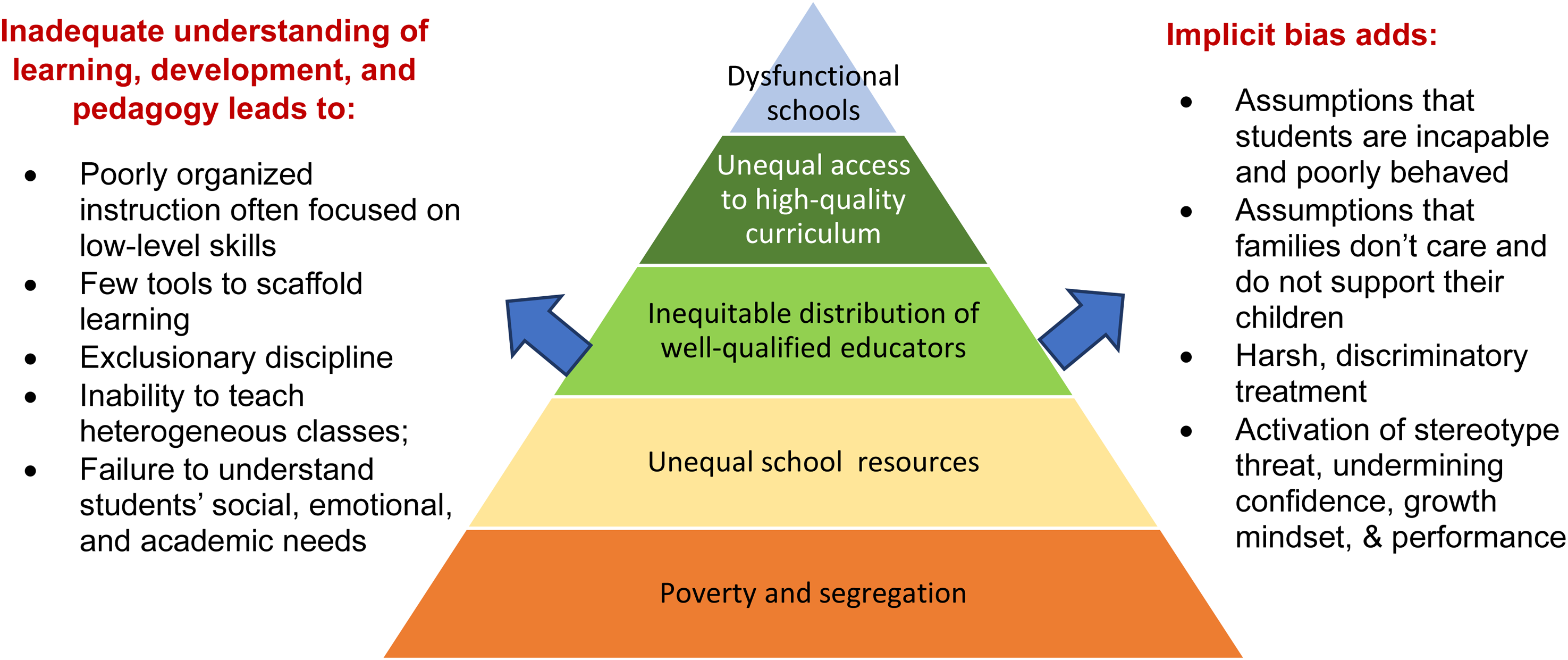
The anatomy of inequality.
In addition to the allocation of resources, we should be especially concerned about the ways in which the unequal distribution of adequately prepared educators influences the lives, education, and prospects of children. Many studies have demonstrated that when people begin teaching without the preparation necessary for such a complex job, they often have an inadequate understanding of the learning and development of pedagogy (Boyd et al., 2006; Clotfelter et al., 2007, 2010; Darling-Hammond et al., 2005). As a field, we know a lot about what enables people to learn, but if teachers have not had access to that knowledge, they tend to offer poorly organized instruction, and to focus on low-level skills. Untrained teachers may not have the tools to scaffold learning to help students successfully address tasks in the classroom.
Underprepared teachers are also more likely to use exclusionary discipline, leading to school suspension and expulsion. In poorly organized classrooms, students who act out are often excluded or expelled rather than supported to engage. Moreover, as teaching heterogeneous classes requires a higher skill level, a cadre of underprepared teachers can also lead to more tracking to reduce the variation in prior learning within a class, despite this approach leading to greater inequality in the long run (Oakes, 2005; Rubin, 2006). Underprepared teachers often fail to understand students’ social and emotional needs, which impacts their academic performance in ways that strongly influence their learning (Darling-Hammond, Flook, et al., 2020).
The implicit biases often embedded in education systems frequently manifest in unexamined assumptions that certain students are incapable, that their families do not care, and that they do not want to learn. These assumptions can exacerbate the harsh and discriminatory treatment of minoritized students and activate stereotype threats that further undermine their performance (Steele, 2011). This kind of threat occurs for anyone who holds identities that are stigmatized in society and the school setting, and can include race, income, immigration status, language, disability status, and gender orientation, among other identities. Unless these assumptions are confronted and students assured that they are valued for all that they are, these social identity threats can produce a kind of chronic anxiety and toxic stress that can manifest in the form of a fight or flight syndrome that undermines students’ confidence, reduces their capacity to think and perform well, and makes it difficult to adopt a growth mindset.
New learning requirements
These and other equity challenges have become more widely recognized amid various crises. Indeed, throughout human history, such moments have led to generational social shifts that provoke major changes that could not be accomplished previously. These challenges are also taking place at a time when the demand for new skills has been increasing faster than the pace at which our education system has been able to respond. There's much greater demand for complex higher-order skills of the sort that we used to allocate to a relatively small number of students who were tracked into special or advanced classes, and much less demand for routine skills taught to the majority of students. The dilemma faced by schools in many countries is that the skills that are easiest to teach and test in traditional ways are also those that are easiest to digitize, automate, and outsource.
We are at a moment in history where knowledge is growing exponentially. Some colleagues at the University of California, Berkeley have been doing studies about the growth of knowledge in the world, and they found that between 1999 and 2003, there was more new knowledge was created between 1999 and 2003 alone than in the entire history of the world preceding. Technology knowledge is doubling every 10 or 11 months. We can no longer think about education as a fixed amount of knowledge to divide across 12 years of schooling and transmit to students in static form so that they can memorize and regurgitate it on tests of their ability to recall. They will need to work with knowledge that has not yet been discovered yet, using technologies that have not yet been invented, to address major problems that we have not been able to solve. So, they need to be prepared to engage in the world and continuously acquire knowledge themselves, to be able to collaborate effectively, and to know how to self-manage their learning.
These expectations are front and center in the high tech companies that populate my neighborhood in Silicon Valley. One of these companies hiring thousands of employees, Google studied the transcripts and test scores of their employees, which they collected as part of the selection process. Their research examined how various indicators such as grades and test scores predicted success for Google employees. Surprisingly, they found that none of the traditional measures used by schools were able to predict success in the organization. In fact, they found that the most important indicator was what they called “learning ability:” the ability to find and use resources, to collaborate with others in pulling information and ideas together to create a product or solution to a problem, and the ability to then test that product or solution and take the initiative to plan and improve their own work. In other words, the ability to self-manage and learn to learn. We need to develop these skills in contemporary schools which, unfortunately, were not originally designed for this kind of teaching and learning.
We now know that this kind of learning ability is very much connected to social, emotional, and cognitive competencies, habits, and mindsets. These include how we understand our emotions and manage our behaviors, our social awareness, how we interact and collaborate with others, our ability to make responsible decisions, our planning and organizational skills, our ability to engage in disciplined problem solving, as well as our perseverance and resilience, which result from a growth mindset (Darling-Hammond, Flook, et al., 2020). More than a dozen meta-analyses of social-emotional learning in countries around the world have demonstrated that the purposeful development of these kinds of skills produces more responsible and connected students, safer schools, and higher achievement (Greenberg, 2023).
The challenges before us, then, include the fact that our complex world demands new knowledge and skills that, in turn, require changes to schools. Our schools need to develop curricula and pedagogies that are designed to build learning abilities. We need assessments that support problem solving and student agency, not just the art of picking one predetermined answer out of five. We need to develop applied skills for this new age, especially the ability to use knowledge in action, and we need to ensure equitable learning opportunities because the world demands that all students be prepared for this kind of higher-order thinking and performance.
The need to reinvent schools
As we think about the future of humankind, we must recognize that if we do not become better able to solve the major problems before us, we may no longer have an inhabitable planet. To create the capacity for all young people to become culturally competent, collaborative problem solvers, we need to reinvent schools so that these goals—and the supports needed to attain them—are at the center of the enterprise.
Reinvention is necessary because schools in most countries emulate those designed in the image of the factory model of the early 1900s. This model created an assembly line to pass students along from one teacher to the next in each grade and, in secondary school, in each subject area to be stamped with standardized lessons. They were not designed for strong, long-term relationships for personalized supports; or for equitable opportunity or achievement (Callahan, 1962; Tyack, 1974). Tracking systems were designed to put students of different “abilities” on separate assembly lines, often largely determined by race and class, leading to very different destinations.
Educators and policymakers in every country are attempting to move the bar toward equitable opportunities. However, there is always a political tug-of-war between those who want to preserve their advantages in the social order and those who want to spread such advantages to more children.
Reinventing schools also means rethinking what schools are for. Factory model schools were purposefully designed to select and sort students along a monodimensional bell curve, allocating access to school opportunities, college and higher education, and societal roles and benefits (Darling-Hammond, 2022). They were not designed to develop every young person's distinctive talents. Yet in the world of today and tomorrow, we need empowering forms of learning that fully develop every person's potential to create the conditions that will enable us to survive and succeed as nations and members of the human family.
What does reinventing school mean?
During the pandemic, educators and policymakers around the world examined how we can design schools to be:
Student-centered in ways that support the whole child's social, emotional, cognitive, moral, and identity development; Focused on deeper learning to meet the demands of contemporary society; Culturally and linguistically connected and sustaining; Grounded in collaboration among students, staff, families, and communities; and Equitable in terms of both opportunities provided and outcomes achieved. Reinventing school means focusing on authentic learning and equity and harnessing the knowledge of human development, learning, and effective teaching accumulated over the last century and needed for the next (Darling-Hammond, Schachner, et al., 2020).
Meanwhile, there has been a global effort to synthesize and understand what the science of learning and development reveals about how people learn and develop from research in neuroscience, developmental and learning sciences, anthropology, sociology, and related fields. These syntheses established a new foundation for building systems that support human learning, motivation, and development (Cantor et al., 2019; Osher et al., 2020). Building on these efforts, a Learning Policy Institute analysis suggested:
What we have learned is vast, but a few major points to consider include the facts that:
The brain is always developing as a result of relationships and experiences. Its shape is not finalized when we are born, and our potential cannot be defined early in life. The quality of these relationships and experiences matters greatly. And the job of schools is to structure these relationships and experiences. Learning is social, emotional, and academic, and these domains are inextricably interlinked with one another. Consequently, we learn more effectively in an environment in which we feel safe and secure, and when we are not experiencing identity or stereotype threats. The brain operates more productively when we experience less anxiety, stress, or trauma. Children actively construct knowledge by connecting what they know with what they are learning. As what we know and experience invariably happens within our cultural contexts, so the teacher's ability to understand students’ cultural contexts is key to making connections that support learning. Students’ perceptions of their abilities influence their learning. Systems that label and sort students and identify them along an artificially constructed bell curve impede learning for those who feel that they have been identified as less capable. Trauma and adversity, which are widespread among children in this era, affect learning. Relationships are the most effective antidotes for trauma and are the key to healing. Therefore, schools need to support strong, trusting, and long-term relationships as they become both trauma-informed and healing-oriented in the way they do their work. A child's best performance occurs under conditions of low threat and high support in settings in which they are accepted, respected, and enabled.
Many of the assumptions undergirding factory model schools have been proven false. We once thought that genes alone shape who we become and what we can do, so children's intelligence and abilities could be categorized early in life and would remain largely unchanged. We now know that only about 10% of our genes are ever expressed, and these are largely a function of the contexts we experience. We also know that talent is not scarce, but plentiful, and that students have many wide-ranging abilities that are not arrayed on a bell curve and can be developed. We now know that potential is visible in environments that are designed to reveal it, and schools play a major role in structuring those environments, rather than selecting and sorting students for different opportunities.
Factory model schools are premised on the understanding that teaching and learning can be standardized and that an optimal approach is to teach to the average, assuming that the average distribution of performance represents most individuals. However, neuroscience has demonstrated that the average almost never represents the individual. Individual brains are wired in very different ways and none of them looks like the average brain (Rose, 2016). Optimal paths to learning differ across students. The factory model assumed that the best way to educate students was to standardize instruction, putting learners in large groups, and moving them along their identified conveyor belt to passively receive the information transmitted to them by the teacher. We now know that every student is on a distinctive developmental trajectory and that agency and engagement support deeper learning, which leads to learning ability.
This means that schools must evolve from methods that place individual students at individual desks to memorize information and fill in worksheets to environments designed for active and collaborative inquiry, the fundamental way that human beings learn. Schools also need to be designed for feedback and revision, which is part of the way we learn more deeply as we take on challenges; develop ideas, products, and solutions; and iterate towards improvement. If schools are going to be effective for most students, they also need to be less stressful places—settings that produce much less cortisol—a hormone that shuts down many functions when it reaches the brain, making it difficult to stay calm, pay attention, and focus. Instead, schools need to become more trust-producing and supportive creating environments that stimulate the production of oxytocin, a positive hormone that produces more neuron connections and constructs a brain architecture that supports greater intelligence as well as learning.
Researchers seeking to transmit these ideas from science to schools have developed a set of five principles to construct environments that are productive for healthy development, learning, and thriving. These include:
Positive developmental relationships that are long-term and educative help children develop academically, socially, emotionally, and psychologically. Environments filled with safety and belonging, including culturally responsive and sustaining practices, enable all students to become members of the school community. Rich learning experiences grounded in inquiry stimulate deeper learning and conceptual understanding. The explicit development of social, emotional, and cognitive skills, habits, and mindsets enables success in both school and life. Integrated support systems that remove obstacles to learning by providing readily available supports for academic work, physical and mental health help children succeed. (see Figure 2).
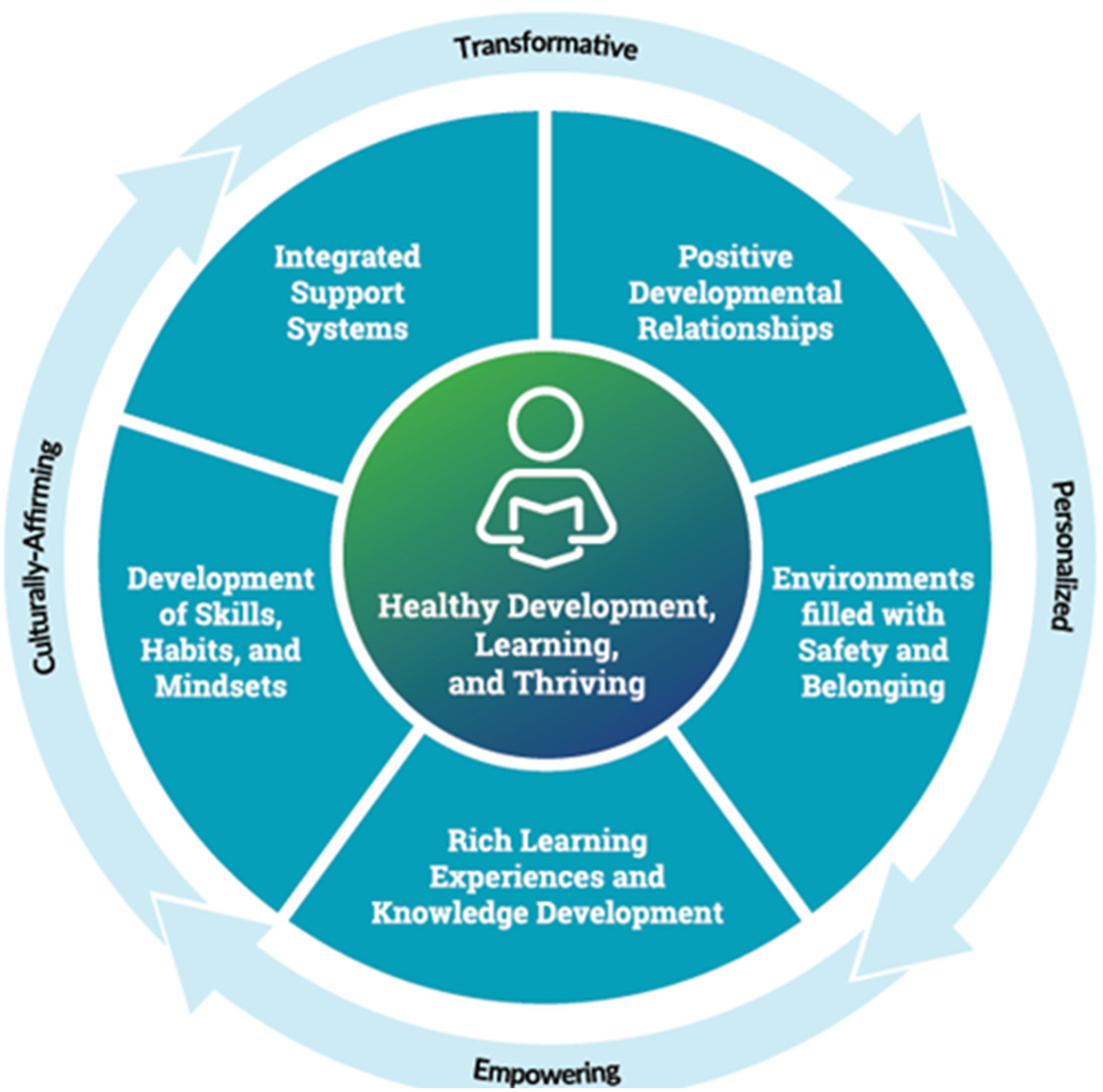
Essential guiding principles for equitable whole-child design.
These features require restructuring schools so that they can be personalized. For example, creating smaller schools and learning communities can facilitate the building of continuous relationships, as can looping systems, whereby teachers stay with the same students for more than a year. Schools can also foster relationships by establishing advisory systems, in which small groups of students meet together with the same teacher over several years for academic, social and emotional support (Darling-Hammond et al., 2007). Such systems mean that there is always someone who knows each child well and is able to make connections with parents and families.
To succeed, educators need opportunities to deeply understand their students as well as their subject matter. As John Dewey noted, we need to “bring the child to the curriculum and the curriculum to the child.” This means that teachers need to develop a two-way pedagogy in which they learn about students while thinking about how to present the content so that the two are connecting, with each child feeling included academically, respected socially, and able to relate to others.
How can we develop more powerful and equitable learning?
Curriculum, instruction, and assessment strategies that support deep learning, as well as motivation and growth mindset, build on students’ prior knowledge; engage students in authentic, relevant, meaningful tasks that offer just the right amount of challenge and support; integrate inquiry with explicit direct instruction, where needed; and explicitly support metacognition and a growth mindset by providing the opportunity for feedback, reflection, and revision, which can dramatically improve achievement. There is a great deal of research on this topic, much of which was synthesized by John Hattie, demonstrating that this approach develops much higher levels of competence. However, it requires a different pedagogy than the more superficial coverage of material characterized by the “give a chapter, give a test, give a grade” routine.
The significance of feedback, reflection, and revision has long been known. In 1984, Benjamin Bloom published his seminal “2 Sigma study,” which synthesized several studies pointing to the importance of personalized mastery learning. Bloom (1984) found that traditional teaching focused on getting through the book—that is, “teach, test, grade”—produces outcomes that mimic a normal curve of student performance with wide differentials among students. However, when teachers used mastery learning—which involves students applying the concepts being taught, receiving feedback, and revising until they reached a level of mastery—the entire curve of student achievement improved, and the band of achievement became more narrow. And when students had an opportunity for one-on-one instruction or tutoring focused on their specific needs, also using a mastery process, the inequalities in outcomes narrowed further and everyone achieved higher levels of success, so that a student who would have been at the 50th percentile in a traditional classroom could develop to what would have been the 98th percentile should we maintain the bell-curve metaphor. More recent studies of high-dose tutoring have similarly demonstrated extraordinary gains in performance when students have the opportunity to learn through a personalized, iterative process (Nickow et al., 2020).
Equally important is an explicit focus on the social, emotional, and cognitive skills and mindsets that enable students to develop personal and social awareness, empathy, and problem-solving abilities, which facilitate their ability to manage themselves, persevere, collaborate with others, resolve conflicts, and make responsible decisions. Studies from around the world have found that programs focused on these skills make schools psychologically and physically safer, foster stronger relationships among students, enable greater attachment to the school community, and improve student achievement and mental health (Greenberg, 2023).
An extension of this work on social-emotional learning is the development of restorative practices within school communities. These practices explicitly build a sense of belonging through community meetings and regular circles in which students share their experiences and concerns, strategies that allow them to come to know one another and develop empathy, shared norms, and shared conflict-resolution strategies. These practices create bonds between students, reducing bullying and microaggressions and strengthening trust and safety in the school environment. Restorative practices also help students who have challenges to be heard and to hear from others through conflict mediation, to learn how what they are doing influences the community, to make amends, and to reattach to the community rather than being pushed out. Studies have found that schools that use restorative practices develop a more positive school climate associated with reduced disciplinary disparities and exclusion, higher and more equitable achievement, and improved mental health for students (Darling-Hammond, 2023; Fronius et al., 2019).
To produce optimum learning for all students, it is important for educators to work purposefully to reduce the threat of social stigma and discrimination that many students experience by virtue of their identities, including those related to race, ethnicity, income, immigration status, language, and disability. Stereotype threat occurs when a student fears being viewed through these discriminatory lenses. It creates constant anxiety that, when activated, can trigger a toxic stress response that impairs learning (Steele, 2011). Identity-safe classrooms reduce this response by providing affirming messages and confirming that each student is a valued member of the classroom, who is competent and supported in their learning (Steele & Cohn-Vargas, 2013).
Finally, multi-tiered systems of support beyond the classroom can provide the additional academic, physical and mental health, and social service supports needed to achieve a much more equitable set of opportunities and outcomes for students.
How can we develop equitable systems?
If we want to achieve systemic progress at scale, we need progressive school funding that focuses dollars, personnel, and expertise on a clear vision for what is needed to support children holistically. We need to be explicit about how to move more assertively toward 21st-century curricula and assessments. We must invest in skilled teachers and leaders, develop wraparound supports, and ensure an on-ramp from early childhood education to support early brain development and learning.
As noted in an Organisation for Economic Co-operation and Development (OECD) study (2014), countries that spend their resources more equitably show higher average achievement on PISA assessments. In Figure 3, the upper-left quadrant, which includes countries with low levels of equity and high levels of achievement, is empty. No countries in the OECD study that spent resources inequitably had high mathematics achievement.
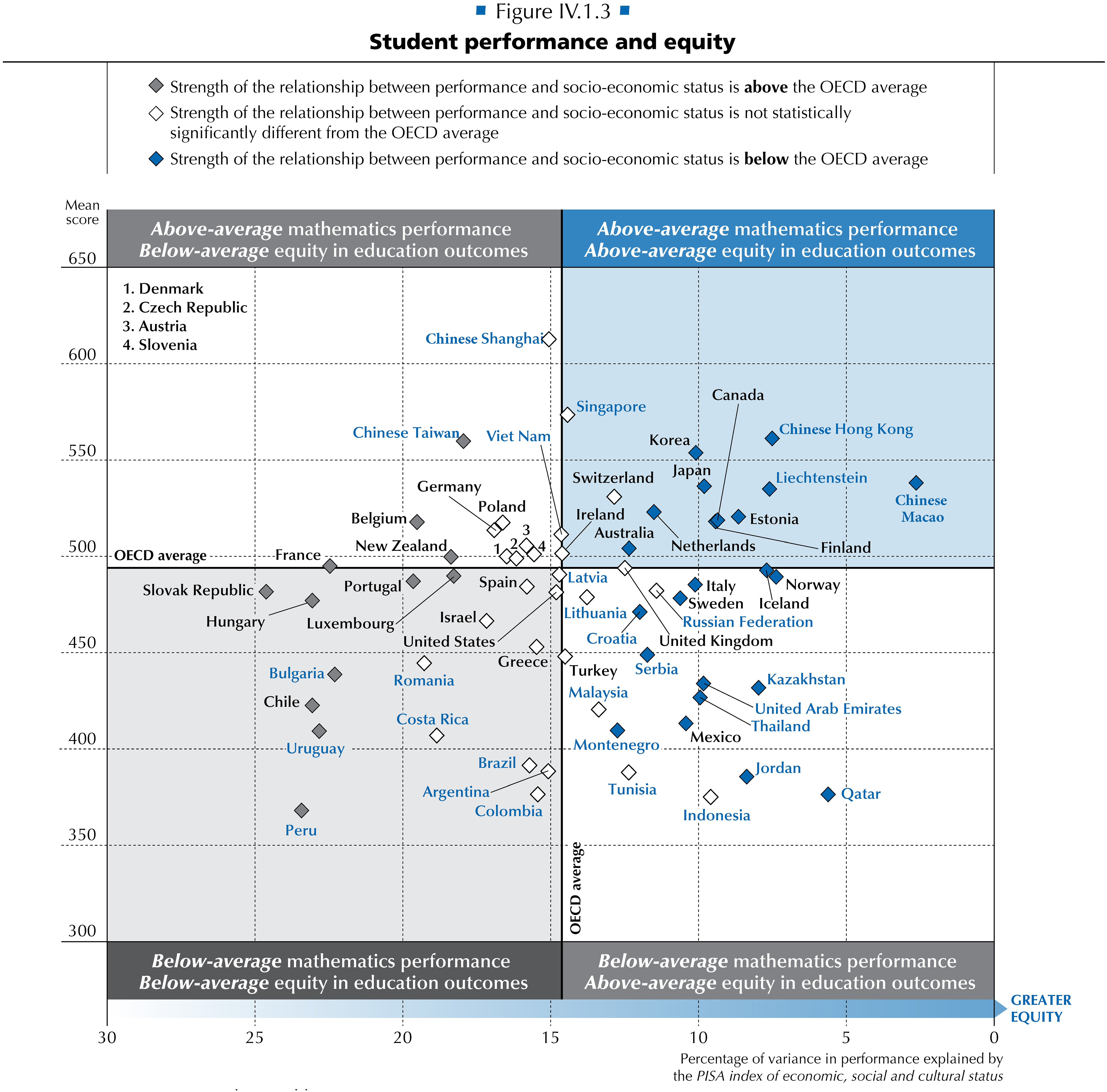
High-performers combine quality with equity.
A key issue in resource allocation is investing in well-trained and supported teachers and leaders and ensuring that they are equitably available, because, at the level of the individual child, great teaching is what matters most. Contrary to factory model assumptions, we now know that we cannot create a teacher-proof curriculum that meets the personalized needs of students. As many studies have found, investments in teachers make the greatest difference in student achievement gains (Clotfelter et al., 2007; Ferguson, 1991).
How can we create systems that support powerful teaching?
A few years ago, I conducted a study with colleagues on policies in high-achieving nations that supported teaching well. Empowered Educators examined five jurisdictions: Canada (with a focus on Alberta and Ontario); China (Shanghai); Singapore; Finland; and Australia (with a focus on New South Wales and Victoria) (Darling-Hammond et al., 2017). We found that these jurisdictions took a holistic and coherent approach to preparation, induction, ongoing professional learning, appraisal, career development, curriculum, and assessment, as well as the way schools were organized and funded, leading to a fairly consistent, high quality of teaching.
In most of these jurisdictions, preparation has placed increasing focus on clinical master's degrees, with common expectations for entrance into the profession. Teachers in most of these jurisdictions are prepared at the government's expense, often with a salary or stipend, while training. All the jurisdictions had adopted professional standards of practice, reflecting on what teachers should know and be able to do. Interestingly, in addition to learning about research on practice, programs also expect candidates to be prepared to become researchers in the classroom, so that they can examine, reflect on, and draw conclusions about the influences on student learning, enabling them to improve their practice. This capacity is grounded in an understanding of learning and development as well as guided practice in substantial student teaching experiences with expert mentors, often in professional teaching school partnerships.
Such partnerships are important for creating a system in which all teachers are well-prepared. Finland's model is perhaps the most well-known. In the 1970s, Finland decided to invest in high-quality preparation for all teachers, which was only offered at Tier 1 research universities. Teachers essentially undergo five years of preparation: three years of undergraduate study and a two-year master's program which focuses on research and practice. Candidates must show that they can read educational research as part of their entrance exam and produce a thesis in which they conduct research about practice before they graduate. The program of studies is focused on supporting the needs of students who struggle to learn, giving teachers the tools necessary to support the learning of all.
Every teacher is trained in a model school attached to the university or in a partner school. All such schools are regular public schools serving a wide diversity of students, which is much greater than most people realize, especially in Helsinki. The common languages in the schools that I visited included Finnish, Swedish, English, and some Russian, as well as Somali and Arabic, with a high proportion of immigrants from the Middle East and North Africa. Schools with high concentrations of immigrants perform comparably with other schools because they have a high-quality teaching force coupled with a strong curriculum that includes language and cultural lessons in the languages and cultures represented in the school. The mentor teachers are clinical professors at the university who are practitioners engaged in research themselves.
Jurisdictions use different means to move teaching toward 21st-century standards of practice aimed at deeper learning. For example, Shanghai hosts several public teaching competitions, in which expert teachers demonstrate how to apply these standards in classrooms where students are being taught higher-order thinking skills. Teaching competitions are a way in which that art form can be communicated and studied to build expertise around these standards of practice.
These jurisdictions also have a very well-structured induction for beginners, regularly guided by senior and mentor teachers who model practice and coach beginners. In Toronto, a four-year induction process is carefully designed to include coaching and a curriculum for beginning teachers that has produced early career teacher retention rates of 98% after four years. In Singapore and Shanghai, career ladders allow senior teachers to become mentors and master teachers, roles that are available in every school and for which they are trained and compensated. This means that there are always expert teachers who have time in their schedules to support beginning teachers, professional learning, and action research processes in which all teachers are engaged. Every teacher's schedule includes time for sharing expertise and for collaborative learning and development.
In addition to explicit career ladders in Singapore and Shanghai, we found career advancement around professional standards of practice under development in Australia and a career lattice in Ontario. These career ladders differ from the concept of merit pay, in which administrators hand out annual bonuses to some teachers if they think they are doing better than other teachers. Career ladders enable teachers to take collective responsibility for their practice and to develop and share their expertise.
In the jurisdictions we studied, we found that attrition rates for both beginning and veteran teachers were generally very low, which means that these countries did not experience the kind of shortages that come from high attrition, which often leads to filling vacancies with underprepared individuals, especially in schools serving the most vulnerable students—posing a huge problem for equity.
The anatomy of equity
In sum, school transformation should be designed to construct a new anatomy of equity (see Figure 4). Equity begins with support for children, including ensuring the provision of adequate food, housing, healthcare, preschool, and academic support. It continues with the equitable allocation of school resources, thereby ensuring well-prepared and supported educators in every school and classroom. The profession should be organized so that educators have a strong foundation in knowledge about learning and development when they enter the profession, so that they can continue to improve the quality of practice in their own classrooms, schools, and society as a whole. Doing so can promote the kind of sophisticated learning needed for all students in innovative and effective schools. As one parent suggested, in reinventing schools, we should: Reprioritize. This is the time to see if something can be different. To reset the system, we have to take a loss, but we can recoup the loss if we actually get kids excited about education and create a more positive space for them to learn. (Darling-Hammond, Schachner, et al., 2020)
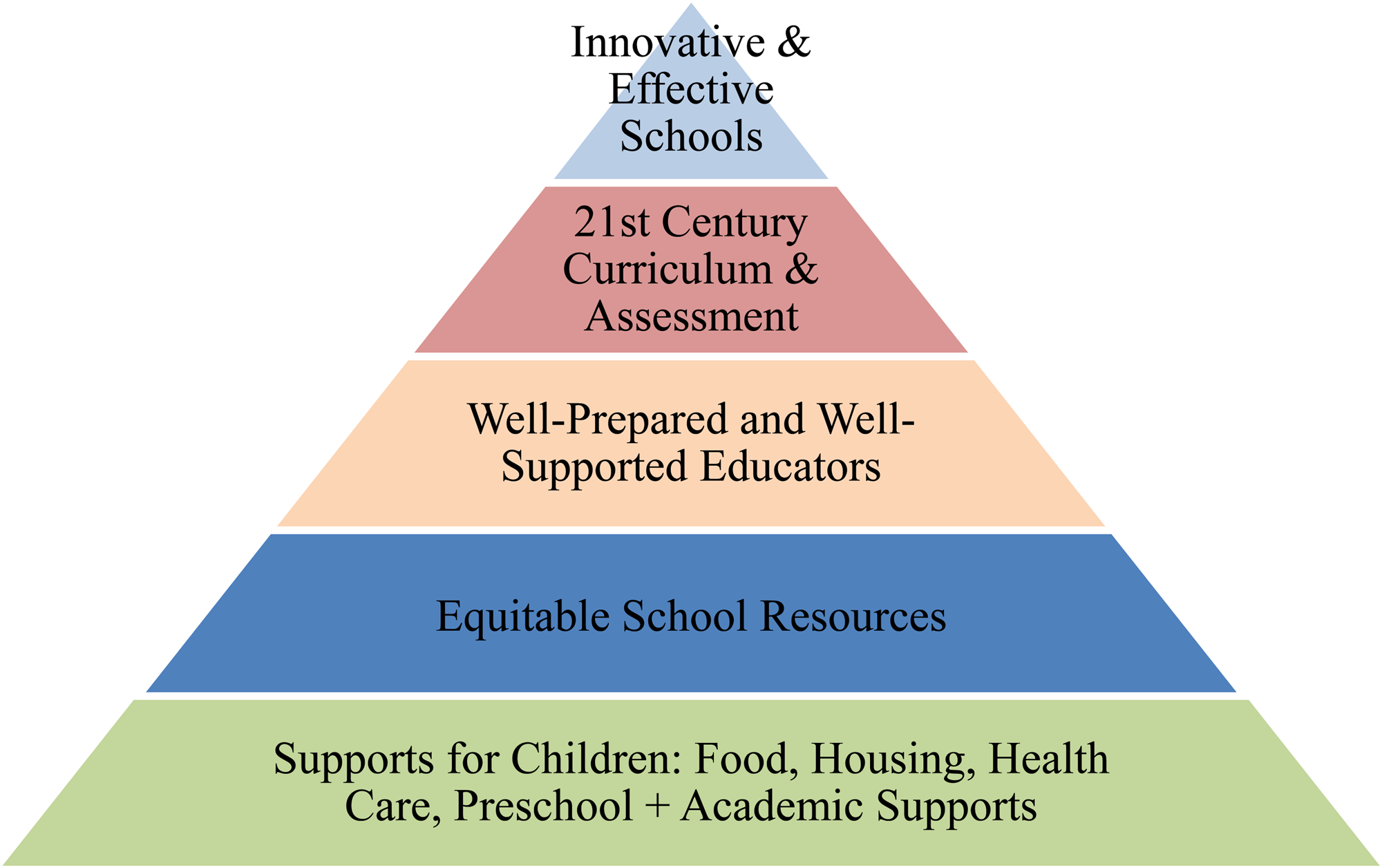
The anatomy of equity.
Footnotes
Declaration of conflicting interests
The author declared no potential conflicts of interest with respect to the research, authorship, and/or publication of this article.
Funding
The author received no financial support for the research, authorship, and/or publication of this article.