




Abstract
Highlights
One of the main shortcomings of the Iranian educational system is its focus on training students to succeed in different testing/assessment practices. In this regard, primary emphasis is still placed on memorization rather than learning dialogue, collaboration, tolerance, and life expectation for today’s globalized communities. Few voices from Iranian teachers have been heard in international publications. This study collected focus group interviews from 84 Iranian primary school teachers in Tehran, Shiraz, and Yazd. Findings show that the interviewed teachers agreed on the urgent curriculum changes, including English, Law, and Entrepreneurship in the primary teaching. Additionally, the educational focus should be broadened from the current emphasis on assessment from the early years of schooling.
Introduction: The Iranian primary education system and its emphasis on KONKOUR success
Public education in Iran comprises a total of twelve years of training (6-3-3). Public education is provided free to all people regardless of gender, religion, ethnicity, language, or disability. Nonetheless, an increasing number of private and semi-private schools at all levels have appeared in the country. In Iran, student access to higher education is granted through participation in a nationwide high-stakes test known as KONKOUR (کنکور), that is, the National University Entrance Exam (NUEE). Some believe that such a process corresponds to the term “conquer,” with students expected to compete in a marathon-like competition to achieve a high rank and win the prize of acceptance to the most prestigious universities in Iran. Adopting Critical Language Testing (CLT) principles and practices to examine the two main exams in the Iranian educational context, namely, the Sampad Entrance Exam (SEE) and NUEE, Safari (2016, p. 267) identified “the oppressive nature of tests, the marginalization of powerless testing parties, the asymmetrical power relationships, and the broader detrimental consequences and impacts of tests.” Significantly, such emphasis on success in the NUEE to enter universities and higher education institutes is shaping Iranian educational practice, with this focus increasingly evident in primary schooling.
An alarming number of educational institutes and organizations have been established outside the formal educational system of Iran to provide students with complementary textbooks and videotaped teaching practices, simultaneously reinforcing the notion that success can only be gained through higher education. According to this view, the key to success lies in access to certain teaching archives and materials (e.g., textbooks, films, and CDs). Indeed, students and parents are the primary consumers and targets of these markets. Finally, all students are pushed to enter universities and higher education institutions on the false assumption that academic success can be achieved by anyone and that future success and prosperity can only be obtained via the campus. Consequently, much of the teaching/learning atmosphere is saturated by concerns regarding students’ future academic success, namely, high achievement in a national test and subsequent entrance to a university or higher education institution. One of the main drawbacks of the centralized systems of policymaking, especially in education, is that the voices, rights, ideologies, values, and needs of the primary stakeholders are taken for granted by the education system policymakers. We need to remind the higher order authorities that teaching and learning do not happen in a vacuum; rather, they are collaborative dialogic-based practices with teachers and students as the main stakeholders in the realm of education. Our extensive review of the relevant literature (e.g., Harrison, 2004; Lunn Brownlee, 2015; Mohamed, 2019; Pomeroy, 1993; Schutz et al., 2018; Tohidian, 2016; Tohidian et al., 2020; Tomlinson & Hodgson, 1992; Towers, 2020) illuminates the urgent need for reform, including the need to create an educational environment in which the voices of primary school teachers are heard and their concerns acknowledged, particularly with respect to the cultivation of student identities and characters. Accordingly, this study seeks to answer the following question: What education changes do Iranian teachers hope to witness in the primary school context?
Collecting teachers’ voices
We conducted a qualitative study in three cities in Iran, namely, Tehran, Shiraz, and Yazd. The Iranian Ministry of Education (MOE) has main branches in each province (as the General Office), which supervises the other branches of cities. To address this study’s research question, we adopted purposeful sampling by identifying potential interviewees in Tehran. They were then asked to form an online group to cordially invite the participation of other teachers in the state from our proposed cities, Shiraz and Yazd. Accordingly, snowball sampling was conducted as teachers were supposed to invite their friends and colleagues in the targeted cities to join our research group. Table 1 presents an overview of participant information.
Overview of participating teachers.
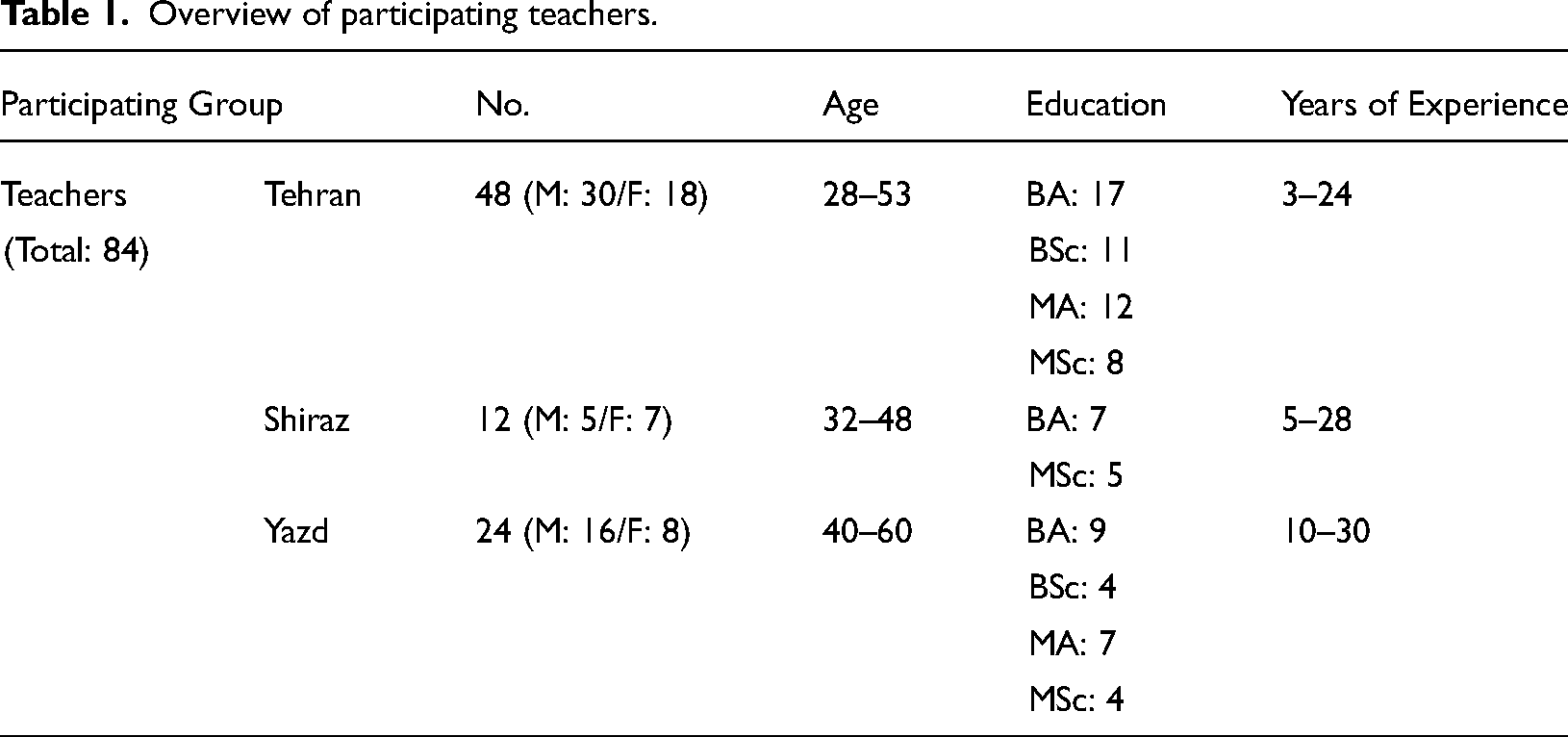
Regarding the use of online focus groups, Stancanelli (2010, p. 761) indicates that “online focus groups are an extension of traditional focus groups, which have been utilized in qualitative research for decades and, for the most part, the principles are consistent with traditional focus groups.” Data were collected through dialogue with participants in online focus group interviews. We introduced ourselves to the group and clarified our intention in conducting such research. In doing so, we noted that no direct research had hitherto been conducted to engage primary school teachers and identify the changes they wished to see in the educational context of Iran.
Data were collected over three months (October–December, 2020). In the first month, participants were invited to express their ideas, voices, feelings, and views concerning the potentials and weaknesses of the present educational system in Iran’s primary schools. Participants cited authorities’ feedback through public news, provided some instances of practice in other contexts abroad or shared their audio-recorded ideas based on their own experience of teaching. The teachers enthusiastically participated in the group discussions and several enriched views emerged over the first month of data collection. We continued to collect data until the end of December 2020, to obtain rich and saturated data and ensure the reliability and validity of the findings.
Data analysis was conducted using Strauss and Corbin’s (1998) Constant Comparative method, which comprises open coding, axial coding, and selective coding. All correspondence was conducted in Persian (Farsi), with the English translation of transcriptions serving as the source of data analysis. Figure 1 presents a few samples of the codes identified in the initial phase of analysis based on the research question. Moreover, to ensure data credibility, we adopted peer review or peer debriefing. According to Ary et al. (2010, p. 499), in peer review or debriefing, “colleagues or peers are provided with the raw data along with the researcher’s interpretation or explanation. Discussions then determine whether the reviewer(s) considers the interpretation to be reasonable, given the evidence.”
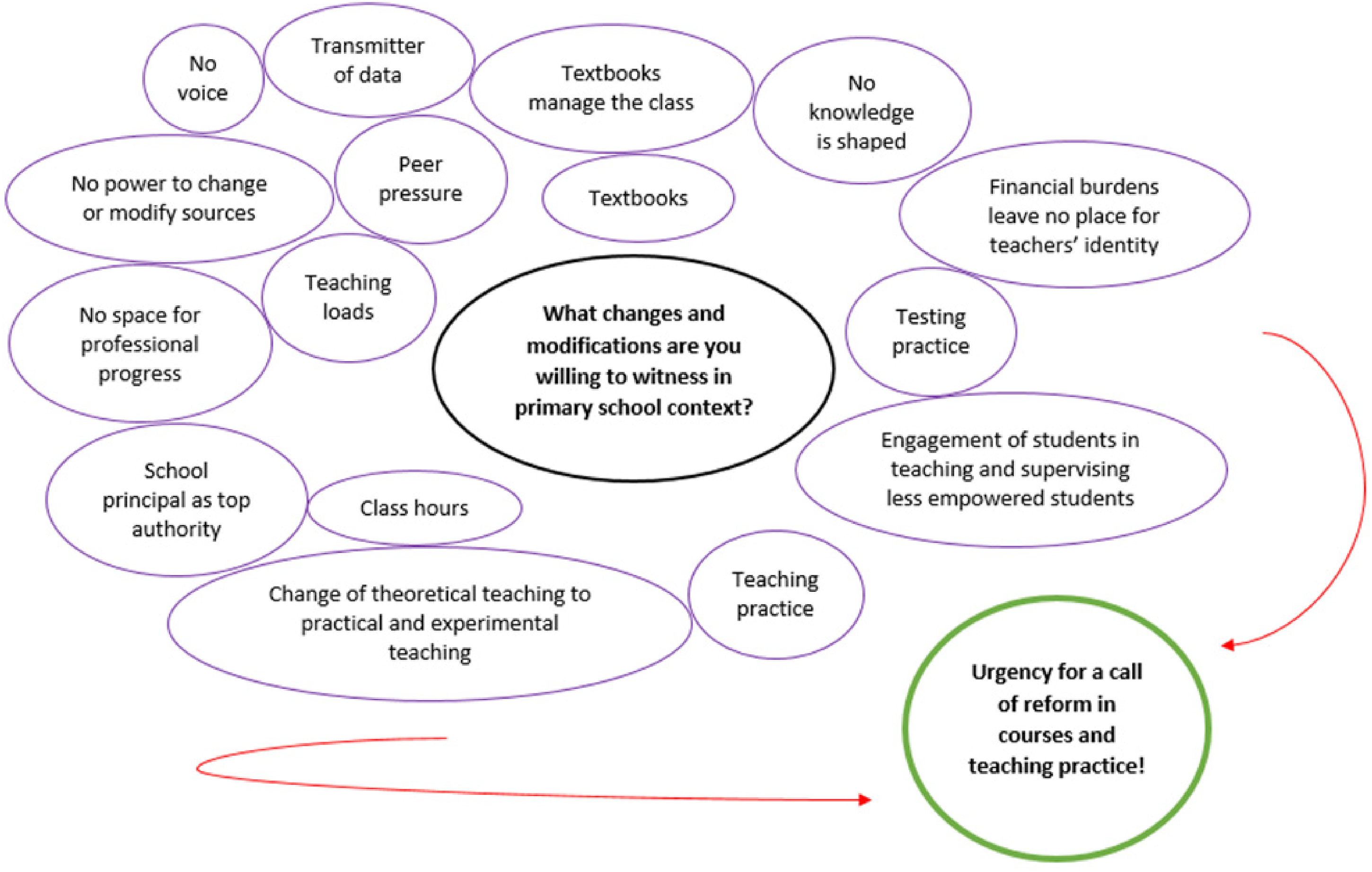
Sample of concepts derived during the initial phase of data analysis coding.
The failure of the centralized system of K-12 educational policies
Participating teachers raised critical concerns, which must be considered if the real training of students is to occur in everyday classroom practice. Teachers are almost all aware of their pivotal role as change makers who can train proficient members of society. However, policies and decisions imposed from outside the school setting change the teaching–learning environment. This occurs through the tough and rigid syllabi and curricula largely developed by educational policymakers with little practical teaching experience in different regions of the state. The failure of the curricula and syllabi to improve schools based on the main mission of the education through K-12 is largely due to the unfamiliarity and divergent needs of educational decision-makers and policymakers with the students throughout the country, as Iran’s schools are still governed through a centralized system of educational policies. Improving schools and improving teaching practice in the everyday classrooms are inextricably linked goals. However, due to current educational policies and government priorities in Iran, teachers are obliged to restrict their role to that of a teacher, rather than a counselor, friend, parent, and educational practitioner or leader. As participants revealed: Students are trained for university. We rarely see student training for improving the future life expectations. Our teaching practice illuminates how students will live in a vacuum where there are no human beings. (Participant #19)
1
Training students to be tolerant is the missing ring of our teaching practice. Teaching loads and excessive pressure on students for assignments make them psychologically ill, and living experience outside the schools will not be that much easier than the early years of schooling. (Participant #4)
Our current educational practice engages parents much more than students. Educational policymakers’ ill-made decisions concerning future life expectations among students and their parents lead our educational practice toward the demise of students’ competencies as everything happens if success is obtained in university. (Participant #73)
As a teacher, I am just supposed to teach based on the rigid timeline of the schools. No time is left to discuss the real use of lesson contents, out of the school, with the students. Contrary to my ideals as a teacher, I am obliged to put much pressure on students to learn the basics of the lessons for coming assessments. (Participant #84)
The class environment also imposes such a feeling that there should be a hierarchy among students and their teacher. The teacher stands in front of the class and is portrayed as an all-knowing character. Dialogue does not happen in our classrooms among students and one way to encourage such a dialogic-based atmosphere is by arranging students in a semi-circle sitting style. (Participant #55)
I believe in cooperation and collaboration among students. I believe teaching is a joint practice. I believe teaching is not a single source practice. I believe teaching must be in alignment with all students’ level of knowledge. I prefer to assign students to different groups with diverse knowledge of the corresponding courses. In this case, proficient students observe less-empowered students’ practice and activities. Students who lead each group are appreciated in class and in the school if they try to help other members of their group to improve their level of knowledge. My general view of real teaching practice is also portrayed in my attached drawing (Figure 2) to highlight that I encourage my students to help each other achieve optimum learning. I believe competent students at the first line must help those in the second line in terms of level of knowledge and both help those students in the third line, and again all help those in the last line to help them increase their competencies and levels of knowledge. I try to adopt such a practice in my classrooms; however, I am confronted with numerous positive/negative feedback from other teachers, school principals, and students’ parents. It is interesting to note that almost all student feedback was positive and promising. (Participant #62)
A thorough review of the ideas and viewpoints prior to and during data analysis revealed that there is total agreement on these concerns—that is, the urgent need to teach English, Law, and Entrepreneurship; as well as the need to shift from testing to training—which must be observed by the authorities in the MOE and educational organizations (i.e., General Offices in provinces and other branches in cities), particularly in respect to the primary school years, when students are in the early stages of their character and personality formation. The three key points identified by this study were also made available to all participants online to provide them with a chance to comment on these issues.
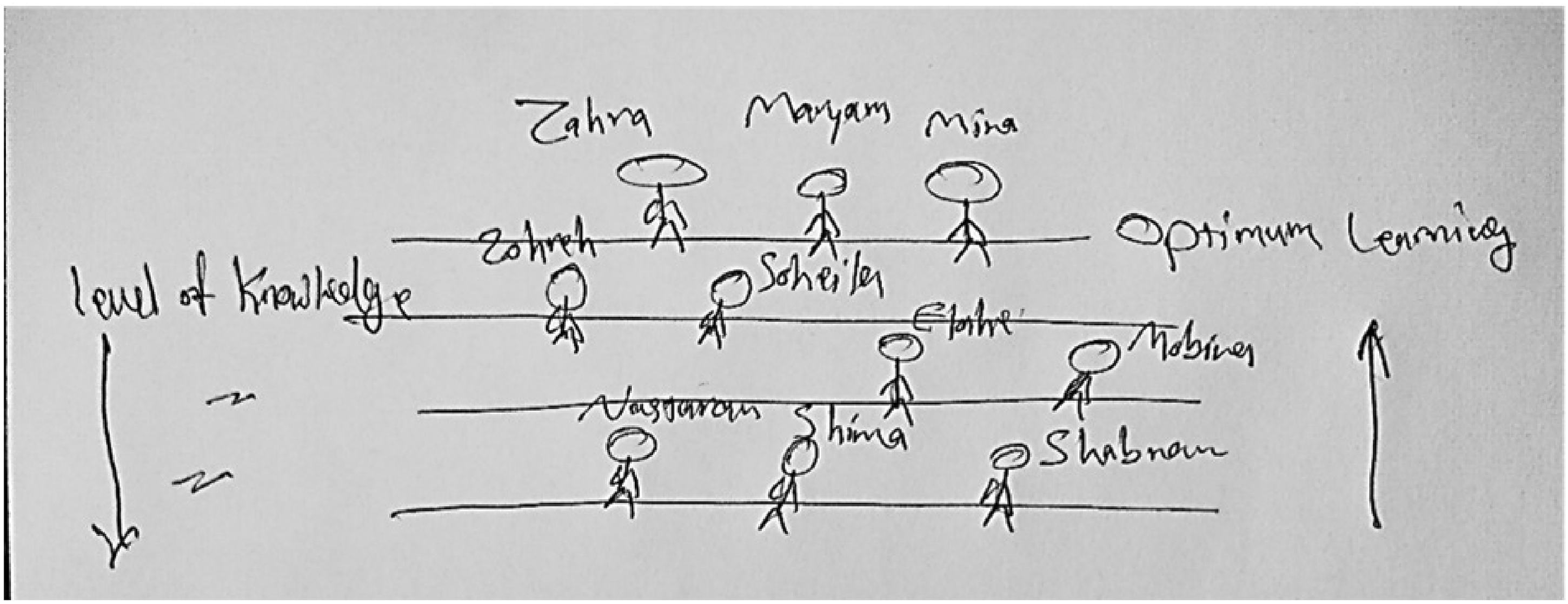
Participant #62’s portrayal of her teaching practice in class.
Urgent need to teach English, Law, and Entrepreneurship
This study found that teachers would like to include English in the primary school curriculum. It is worth noting that English is also taught outside of schools in language institutes, as there is a national interest among parents to motivate their children to learn English as a foreign language. Although students are also provided with English as a course in secondary school, our participants highlighted that due to students’ access to extensive sources of updated knowledge and information via the Internet, English must be taught from primary school. Interestingly, some participants confirmed that global cooperation and collaboration were largely discussed in higher education. However, the main prerequisite to succeed in such cooperation is good command of English, as it is the most commonly used language of communication and instruction worldwide. As such, English as a course is a necessity for Iranian students, particularly in light of the growing dependence on new technological devices and instruments. Indeed, in cases of national crisis—including COVID-19 quarantine or natural disasters like floods and earthquakes—students’ access to technology provides them access to teaching/learning materials. Learning English will bring students into contact with novel ideas and innovative practices, which they can share with their peers and teacher in class and increase the chance of dialogue and cooperation in everyday classroom practice. As Participant #80 recalled, I was observing a student teachers’ practicum course in June 2019. I believe learning English is a must for all people and a matter of urgency for students and teachers. I introduced different concepts such as critical pedagogy and critical literacy, and let them know that each of us has a right (when we are at school) that must be observed and that its violation by others (peers, friends, colleagues, school principals, political authorities, etc.) leads to our suppression. Two of the student teachers also provided some notes, which I chose to share in this online focus group as I think it falls within the scope of your research. In his note, Mehdi [pseudonym] tries to acknowledge my commitment to appreciating students’ voices by comparing such a chance with voting in elections [Figure 3]. Mojtaba [pseudonym] also tried to express his appreciation to me for providing an opportunity for them to talk and comment on my teaching practice in class; however, he apologized for not writing in English as he knew that I encouraged them to learn English if they want to be a successful teacher in primary school [Figure 4]. (Participant #80)
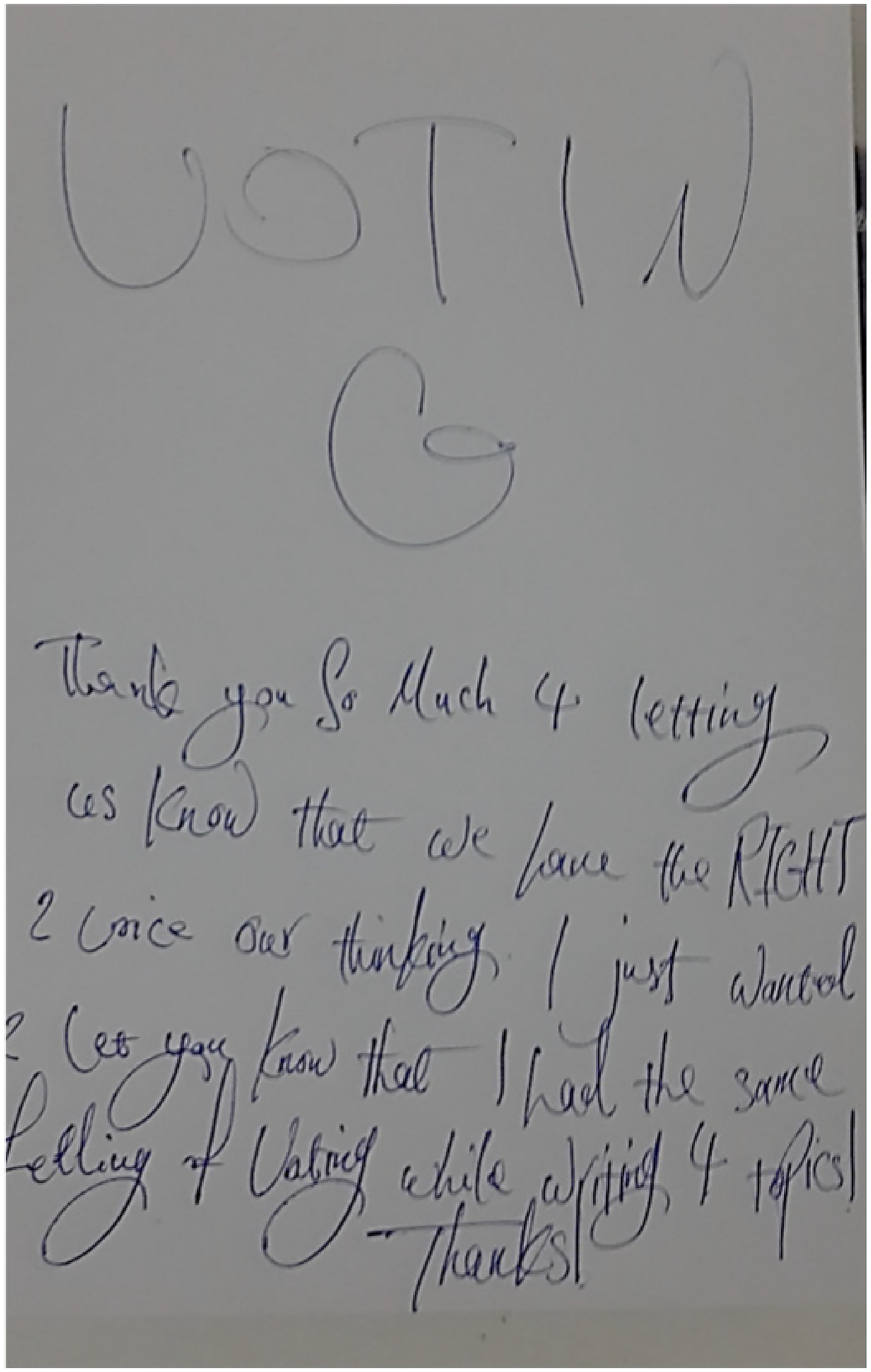
Student teacher's satisfaction with the course taught by participant #80.Note. Text transcription: VOTING: Thank you so much 4 [for] letting us know that we have the RIGHT 2 [to] voice our thinking. I just wanted 2 [to] let you know that I had the same feeling of Voting while writing 4 [for] topics! Thanks!
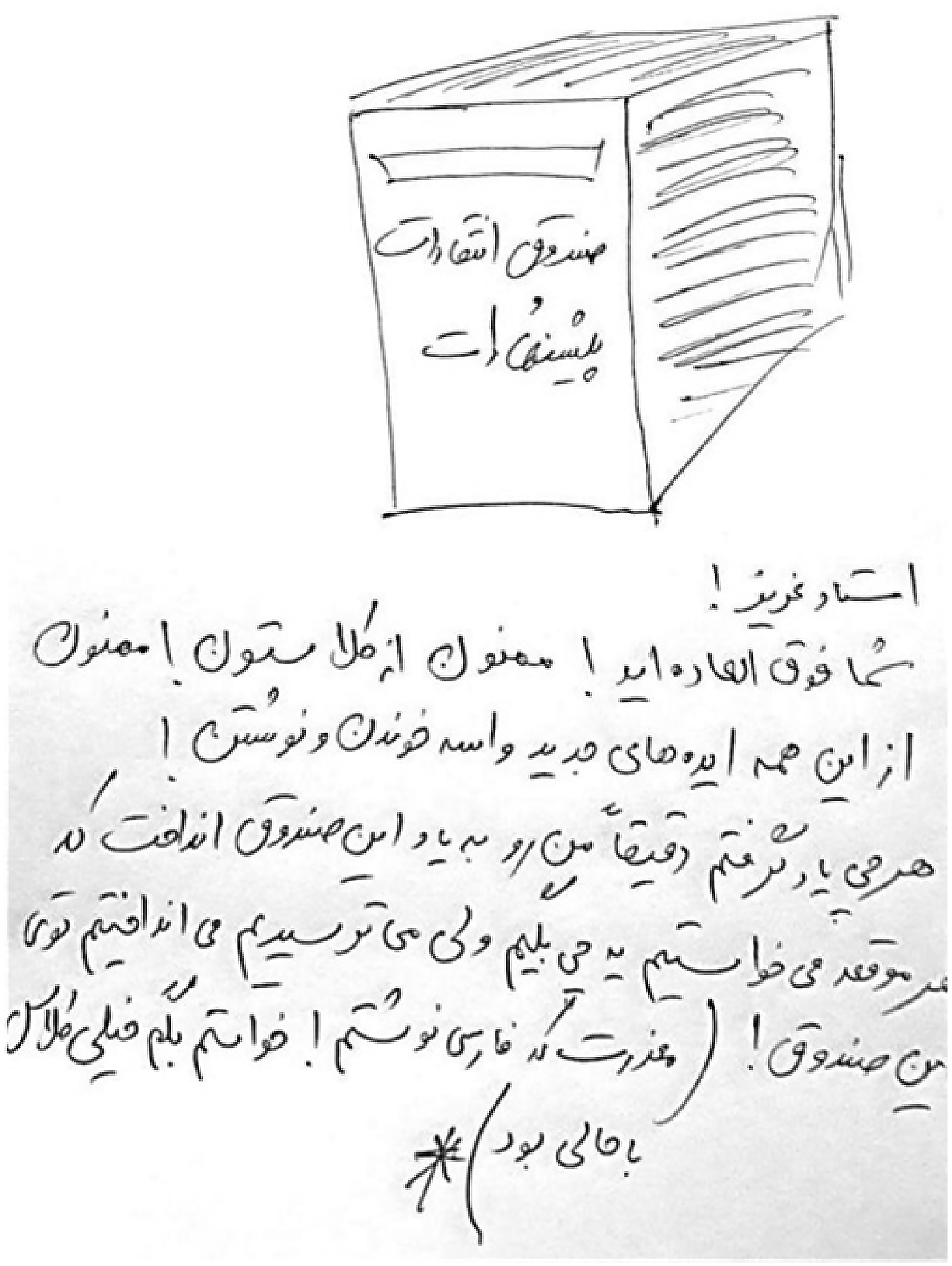
Student teacher's note to participant #80.Note. English Translation of the note: Dear Teacher! You are amazing! Thanks for such a class! Thanks for those novel tips for reading and writing! Participation in your class reminds us to use this box which provides a chance for sharing views, feedback without any fear and anonymously! (Sorry, for writing in Farsi! Your class was amazing.)
In Figure 4, the student teacher presented his feelings concerning the course by comparing it with what is typically seen in offices, universities, schools, banks, and other organizations, as well as institutions where people have the chance to provide their comments, feedback or criticisms of what they have seen or felt in that specific organization as a confidential letter to the higher ranking person of that organization. In Persian, this is referred to as “صندوق انتقادات و پیشنهادات,” that is, a “Criticisms and Suggestions Box.”
Participating teachers repeatedly emphasized the need for students to recognize that future life will be much more challenging than their experience of life in classrooms and schools. In this respect, teachers highlighted that lack of patience and absence of tolerance are the main challenges in families, organizational contexts, and cities. Unavoidable financial and social burdens and crises exacerbate impatience and irrational decision making. Analysis of our participants’ responses to their peers’ comments revealed that Law must be taught from primary school. Unfortunately, one of the main drawbacks of the current curriculum is that most of the challenges we experience in our daily lives originate from our lack of knowledge about our own rights, citizen’s rights, and the rules and regulations that must be observed in all sectors, from families to schools and universities, public and private organizations, and public areas. We rarely have opportunities to learn public/private/general laws after leaving schools and universities. As participants pointed out, As a teacher I prefer to include other courses in my teaching syllabi (e.g., English, Critical Thinking, Civil Rights). We really need to empower our future generation with techniques to live in a world where science faces no boundaries and people live in seconds. (Participant #9)
Teachers also suggest that it is vital to empower students with the basics and main principles of entrepreneurship as soon as they enter primary school. Unfortunately, the K-12 educational system provides no opportunities for the students to learn how to put what they are learning in school into practice. Instead, students are encouraged to work according to the prerequisites for success in nationwide high-stakes tests. In Iran’s higher education system, entrepreneurship is taught as a separate field of study, with some basic courses potentially available within the teaching curricula of some management fields of study at the university level. As Participant #1 noted, Students do not have much opportunity to engage in real life practice outside the schools (during K-12); rather, they simply gain an illusion of life outside the schools and classrooms. In most cases, their empowerment (during K-12) remains at the theoretical level. Most teachers, parents, and students believe that our educational system just issues certificates of graduation and completion of a specific period of study. I believe inclusion of courses related to entrepreneurship in K-12 syllabi and curricula might be a good solution and remedy for students’ inadequacies after school. (Participant #1)
Urgent need to shift from testing to training
Iran’s educational system is entirely test-oriented. Consequently, teaching practice is geared toward future assessment in a midterm or final exam. Our students are confronted with numerous challenges and pressures from the moment they enter their first year of schooling. As soon as students return from their first days of schooling, their parents frequently bombard them with questions like “What was your teaching program for today?”, “What do you have for tomorrow’s class?”, “What are the assignments for today’s class?”, “Are you supposed to be prepared for tomorrow’s session?”, and “What are you doing in class tomorrow?” These are just a few of many clichéd exchanges between parents and students at home.
Iranian parents have been trained and developed in an educational system where the main focus was and still is on testing and assessment as the key to observing how teaching and learning are progressing in schools. Students experience pressure as they are always waiting to be tested. Therefore, their main practice involves memorizing the content of textbooks, with failure to remember such content resulting in students being dismissed as poor students by teachers and parents.
The results of this study also illuminated that teachers have little or no power to maneuver in the classrooms with respect to teaching courses based on student needs and current levels of knowledge and competencies. This also holds true when students leave primary school and progress to other educational levels. At present, everything in the Iranian educational system is geared toward preparing students for a final test, the gateway for admission to universities and higher education institutions. Consequently, students are not prepared for life outside the classroom, but merely for success in academic tests.
Participant #15 provided the following figure (Figure 5), in which his student teacher imagined her ideal class. When she joins the community as a primary school teacher, the student teacher envisions having a semi-circle classroom design where students can see one another and thus better communicate and engage during class hours. She also noted a preference for co-education in early years of primary schooling.
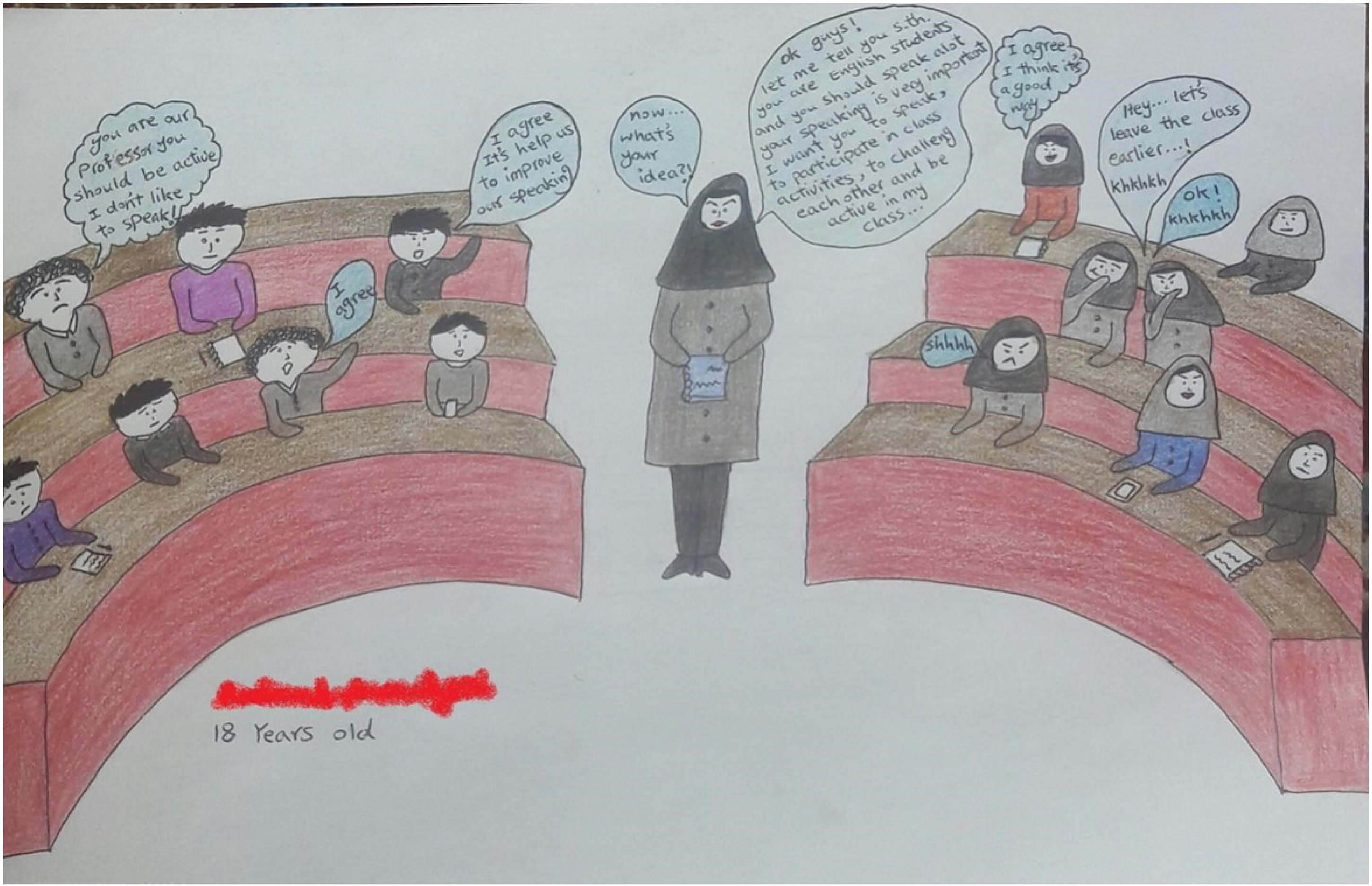
Participant #15’s student teacher’s portrayal of her ideal classroom design.
Conclusion
Students and teachers are the main stakeholders of education. This means that they have the power to voice their ideas concerning teaching materials, teaching loads, assignment loads, testing practices in everyday classrooms, class management practices, cooperation, and collaboration among students and between students and teachers, pairs and group work, and teachers’ joint management of the classroom. Unfortunately, the importance of primary school teachers is frequently dismissed, despite this being a key stage of student development. The denial of the importance of teachers in student development negatively impacts students and education practice in Iran. This study provides illuminating insights regarding proposed educational reforms in terms of both courses and core educational practices. The interviewed teachers highlighted the urgency of including English, Law, and Entrepreneurship in the primary school curriculum. Moreover, focus needs to shift from the current overemphasis on testing and assessment of output to process assessment and testing. In this respect, we must remember that the teaching/learning environment needs to be in constant communication with the outside community if real teaching and real learning are to happen in a dialogically-based teaching atmosphere, where the rights and values of all main educational stakeholders are observed.
Footnotes
Declaration of conflicting interests
The authors declared no potential conflicts of interest with respect to the research, authorship, and/or publication of this article.
Funding
The authors received no financial support for the research, authorship, and/or publication of this article.

Supplemental material
Supplemental material for this article is available online (https://journals.sagepub.com/doi/full/10.1177/20965311221085980).
Notes
Contributorship
Iman Tohidian had the main role to write the main text specifically after receiving comments from the coauthors as well as the reviewers of the ECNU Review of Education. He also administered interviews with the participating parents in the corresponding cities. Ali Khorsandi Taskoh collaborated with the first author specifically in terms of data collection and analysis of interviewees’ responses. Further, he arranged the interviews for ease of access to novel data. Abbas Abbaspour extensively reviewed all the sections of the article. He also revised the introduction, methodology, and results sections, respectively.
References
Supplementary Material
Please find the following supplemental material available below.
For Open Access articles published under a Creative Commons License, all supplemental material carries the same license as the article it is associated with.
For non-Open Access articles published, all supplemental material carries a non-exclusive license, and permission requests for re-use of supplemental material or any part of supplemental material shall be sent directly to the copyright owner as specified in the copyright notice associated with the article.
