




Abstract
Purpose:
This study examines the effect of sibling size on children’s educational attainment in Indonesia.
Design/Approach/Methods:
To establish causality, it exploits the exogenous variation of sibling size caused by twin birth in families.
Findings:
Results of instrumental variable (IV) estimation support a traditional wisdom of quantity–quality trade-off, where sibling size is negatively correlated with the completed years of schooling, educational levels, and likelihood of school attendance. Building on this, the subsample analysis reveals that the negative effect is larger for Muslim children, children with less educated mothers, and children belonging to earlier birth cohorts.
Originality/Value:
These findings provide insights into both population and education policymaking in developing countries.
Introduction
Family characteristics have been widely recognized as essential factors impacting children’s education (Butcher & Case, 1994). Sibling relationships are regarded as one of the most intensive and influential relationships in an individual’s life (Cools & Patacchini, 2017). As such, the possible correlation between sibling factors and children’s educational outcomes has long attracted the interest of economists (e.g., Angrist et al., 2010; Black et al., 2005; Qian, 2009). Of the various sibling characteristics mentioned in such studies, sibling size is recognized as one of the most important predictors of determining a child’s educational attainment and intellectual development (Wu, 2015). Various studies have examined how sibling size affects children’s educational outcomes. Proposed by Becker in 1960 and developed by Becker and Lewis in 1973, one of the prominent findings is the quantity–quality (QQ) trade-off model, which suggests that larger sibling size lowers a child’s educational attainment through the resources dilution mechanism (Backer, 1960; Becker & Lewis, 1973). If the QQ trade-off argument is true, then policies intended to reduce family size should serve to increase human capital, generate higher income, and—more broadly—promote socioeconomic development (Angrist et al., 2005).
The correlation between the number of children in family and children’s education has been examined in the U.S. (e.g., Conley & Glauber, 2005), Europe (e.g., Black et al., 2005), China (e.g., Argys & Averett, 2015), India (e.g., Kugler & Kumar, 2017), and Vietnam (Dang & Rogers, 2016). Conclusions regarding the role of sibling size in children’s education vary from one study to another. While many studies indicate that sibling size has significantly negative impact on children’s education (e.g., Li et al, 2008; Lee, 2008), others show that sibling size has no impact (e.g., Black et al, 2005; De Haan, 2010) or a positive impact (e.g., Qian, 2009). Furthermore, studies using data from developing countries tend to be more supportive of the QQ trade-off model than those using data from developed countries (Liu, 2015). This may be due to the fact that in developed countries, where education is well sponsored by public expenditure, variations in family size characteristics and private investment are less influential on children’s schooling (Liu, 2015).
Estimating the impact of sibling size facilitates our understanding of the causality between parents’ fertility and children’s outcomes. However, the available evidence on the effects of sibling size has been called into question due to the omission of variable bias caused by the endogeneity of sibling size. As the number of children and children’s educational attainment can be determined by parents simultaneously, the coefficient of sibling size can suffer a downward or upward bias depending on the sources of the endogeneity. For example, if parents who place higher value on their children’s education choose to have a smaller family size, then the effect will be overestimated. However, if parents choose to have a second child based on the high quality of their first, the effect of family size may be underestimated (Qian, 2009). For a long time, scholars tended to take children’s number in a family as an exogenous variable, thus failing to establish causality (Li et al., 2008). Even those claiming to be causal, studies faced the limitation of small sample size (Conley & Glauber, 2006).
Indonesia provides a rare context for the study of the effect of sibling size on children’s education. Possessing a large population and an underdeveloped education infrastructure, the Indonesian government has been committed to family planning for decades. The National Family Planning Coordinating Board (BKKBN) was established in 1970 to slow down population growth, resulting in the implementation of nationwide family planning policies. Consequently, the country has witnessed a significant reduction in family size, with the total fertility rate (TFR) declining from four children per woman in the 1970s to 2.6 at the present (Millimet & Wang, 2011). Indonesia has also significantly expanded access to primary and secondary education since the 1970s (Asian Development Bank [ADB], 2013). The net enrollment rate (NER) in primary school and lower secondary school increased to 91% and 77% in 2016, respectively. Meanwhile, the average years of schooling for adults over 25 years old increased from 3.3 in 1990 to 7.9 in 2015. As such, some have argued that nationwide family planning and fertility control policies in Indonesia have contributed to improving the welfare of women and children, including boosting education (Angeles et al., 2005). Therefore, it is critical to establish a rigorous causality, rather than simple correlation, between the number of children in a family and children’s educational attainment, as well as to estimate the extent to which smaller sibling size really contributes to better education opportunities for school-age children in Indonesia.
Using nationally representative census data, this study examines the effect of sibling size on children’s educational attainment in Indonesia. This study contributes to the existing literature in the following ways. First, although the country’s overpopulation, intense family planning, and underdeveloped education system are expected to generate a widespread QQ trade-off, few studies have focused on Indonesia. Limited by a severe lack of evidence, markedly little is known about the correlation between family planning and human capital development in Indonesia. In addition to being one of few to test the QQ trade-off issue in Indonesia, this study pioneers the idea of using Indonesian data on twins to examine the QQ trade-off issue. Second, this study overcomes the data limitations faced by previous studies by using updated, nationally representative census data, which has been underutilized in studies from other developing countries. The large sample size enables this study to conduct subsample analysis and explore the sensitivity of the results, thus revealing the heterogeneous effects of sibling size across different population groups. This is especially important for a multiethnic and multilingual country like Indonesia—the most populous Muslim-majority country in the world.
Investigating how sibling size impacts a child’s educational attainment, this study examines the influence of sibling size on children’s completed years of schooling, educational level, and school attendance among Indonesian children between the ages of 6 and 18. To address the endogeneity in sibling size, this study exploits the exogenous variation of sibling size driven by twin births in families, thereby establishing causality. The rest of this article is organized as follows. The second section introduces the background of this study, followed by a review of the literature in the third section, and a discussion of estimation methods and data in fourth and fifth sections. The sixth section presents the main ordinary least squares (OLS) and two-stage least squares (2SLS) results and discusses possible explanations for these findings. The seventh section concludes this article by suggesting policy implications and directions for future work.
Population trends and education in Indonesia
Population trends in Indonesia
As Southeast Asia’s largest economy and the fourth most populous country in the world, Indonesia has witnessed significant demographic change since the 1970s. The TFR declined from 5.47 in 1970 to 2.36 in 2016 (see Figure 1), and population growth rate decreased from 2.68% to 1.14% in the same period (see Figure 2).
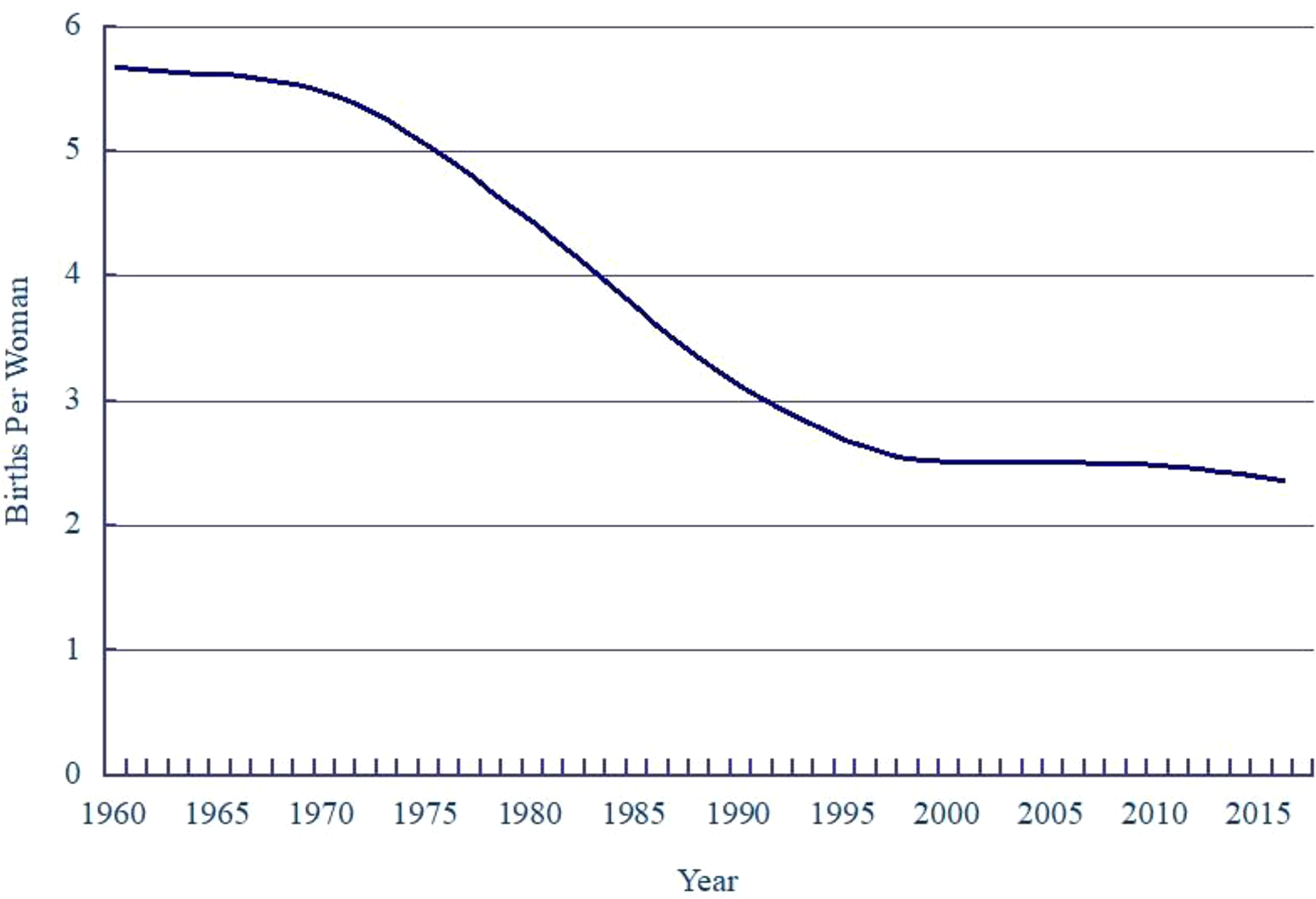
Total fertility rates (births per woman) in Indonesia, 1960–2016. Source. World Development Indicator (2018).
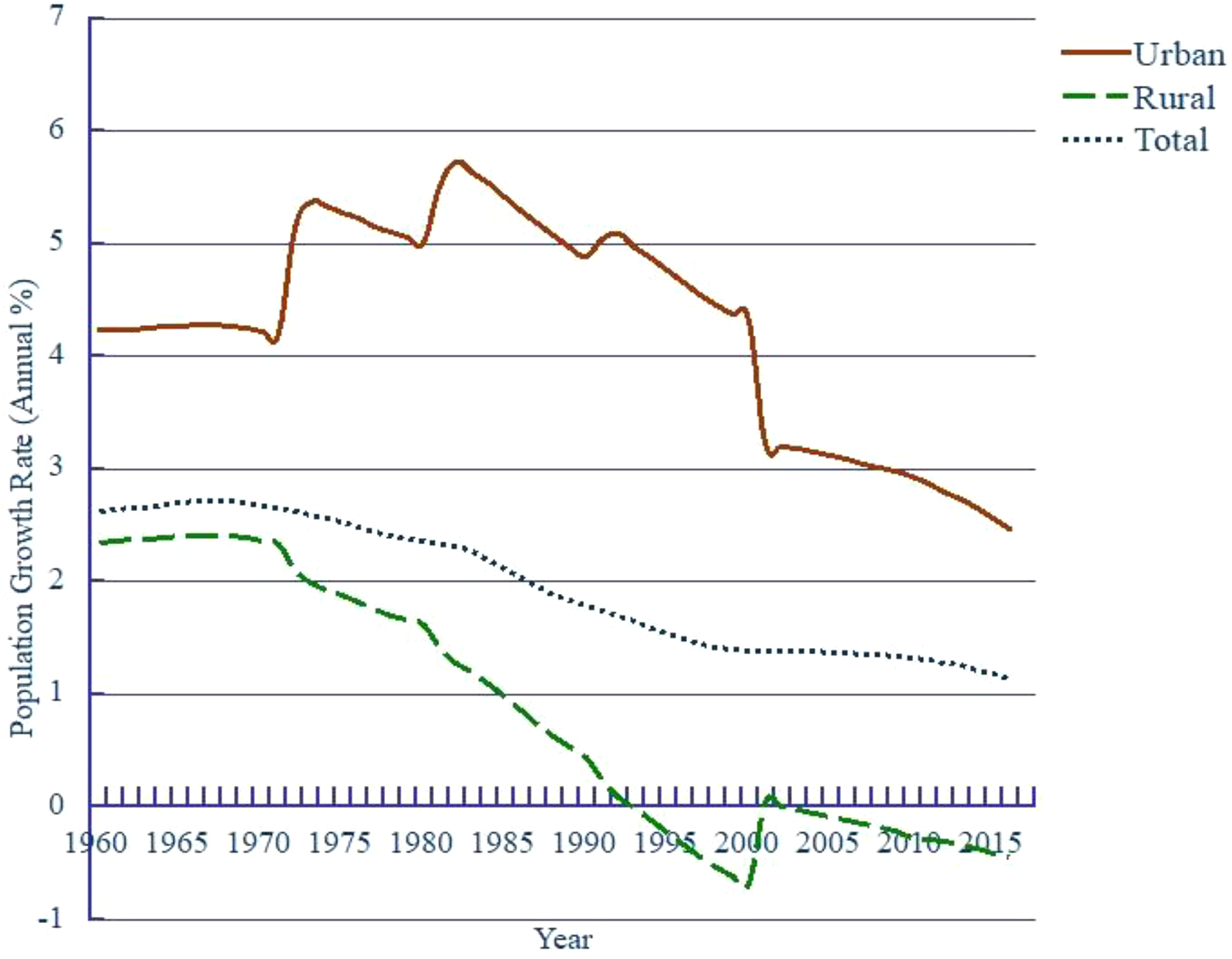
Population growth rate (% per annum) in Indonesia, 1960–2016. Source. World Development Indicator (2018).
Indonesia’s impressive success in fertility reduction is largely due to the government’s strong commitment to family planning (Millimet & Wang, 2011). The BKKBN was established in 1970, as part of the national development strategy to retard population growth. As a result, the TFR dropped from four children per woman in the 1970s to 2.6 in the 1980s and remained steady until the present. This family planning program and associated policies have contributed to reducing the TFR, improving the welfare of women and children, boosting economic growth, and reducing poverty in a country of 260 million people (Angeles et al., 2005). However, the progress has stagnated since the 1990s, largely due to an unsuccessful decentralization process weakening the enforcement of these policies.
Facing burgeoning population increase, the Indonesian government has revitalized its interest in the national family planning program. Between 2006 and 2012, investment in family planning programs increased from USD 65.9 million to USD 263.7 million (Family Planning 2020 [FP 2020], 2012). In 2012, the government updated its commitment to FP 2020 to further reduce the TFR and improve human capital. According to the revised plan, the government promised to allocate USD 1.6 billion to the birth control program between 2015 and 2019. This involved an almost twofold increase in budget allocation, from USD 263.7 million in 2015 to USD 458 million in 2019 (FP 2020, 2012). Additionally, more efforts—including strengthening the program at the provincial and district levels, as well as increasing the availability of family planning services for isolated regions residences—have been made to expand the coverage of family planning.
Educational development in Indonesia
Comprising over 50 million students and 2.6 million teachers in over 250,000 schools, Indonesia possesses the fourth largest education system in the world (World Bank, 2013). Indonesia’s education system is governed by the Ministry of Education and Culture and the Ministry of Religious Affairs. It contains three levels: basic education (nine years), senior secondary education (three years), and tertiary education. Senior secondary education is offered by both Islamic and non-Islamic institutions. After completing senior secondary education, students can attend tertiary education institutions ranging from public, private, and Islamic universities to training institutions (ADB, 2013).
The government’s strong commitment to school construction since has served to expand access to primary and secondary education since the 1970s. Indeed, the net primary school enrollment rate increased from 70% in 1971 to 91% in 2016, while the NER of secondary education grew from 16% in the 1970s to approximately 77% in 2015 (Figure 3 and Figure 4). Indicative of the expansion of education access, the average years of schooling for adults over the age of 25 increased from 3.3 in 1990 to 7.9 in 2015.
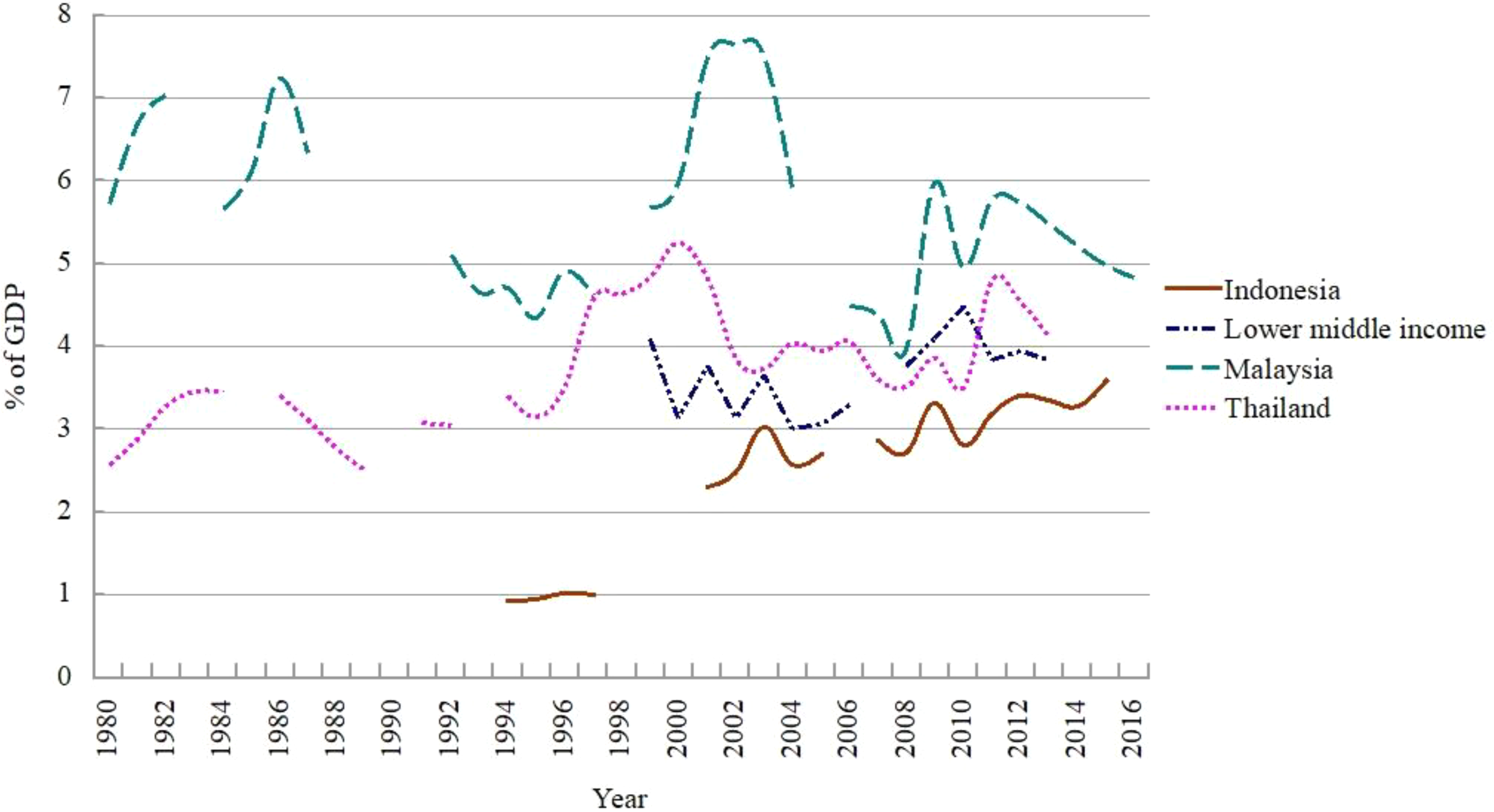
Comparison of government expenditure on education (% of GDP). Source. World Development Indicator (2018).
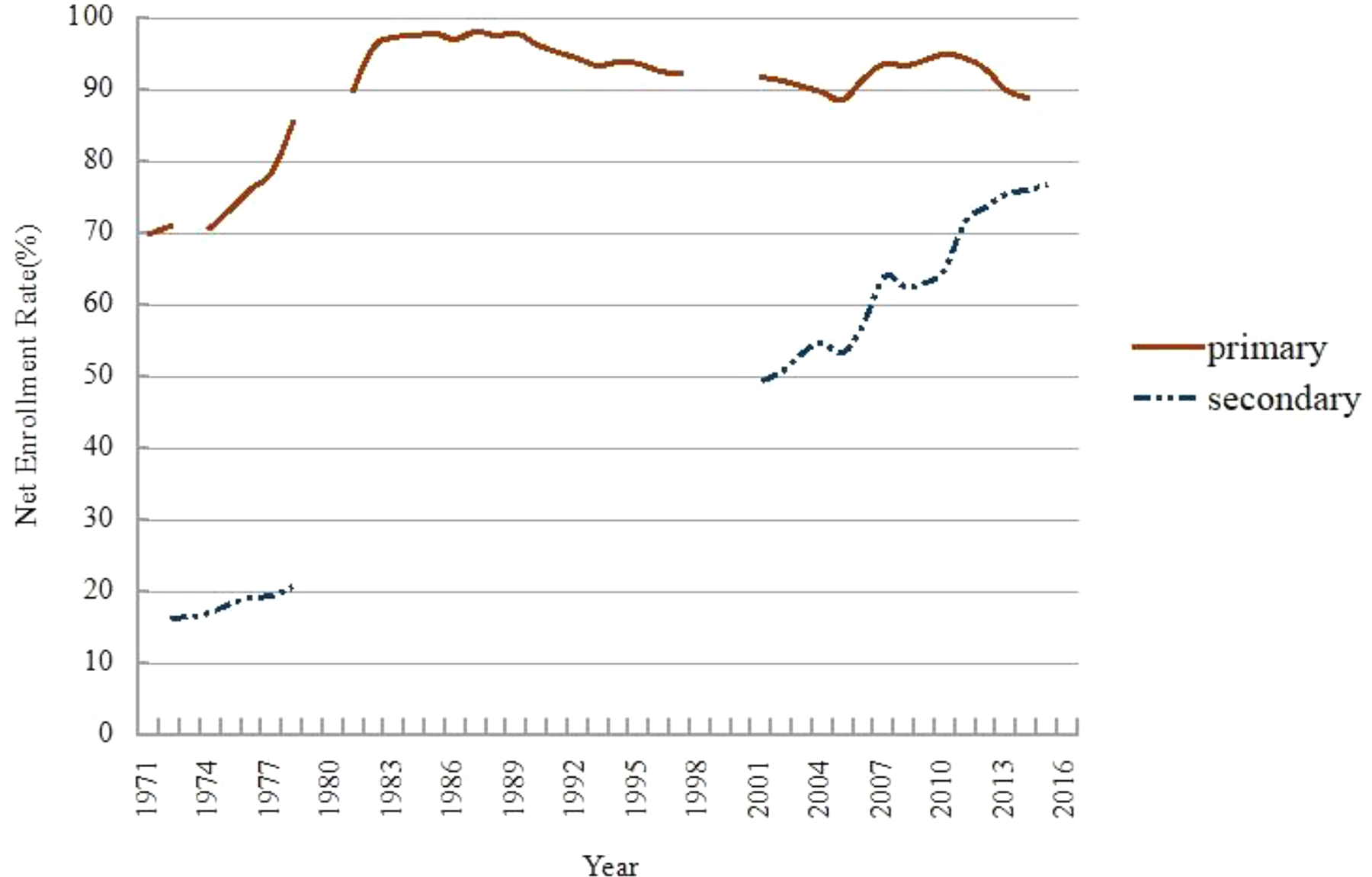
Primary and secondary school NER (%) in Indonesia, 1971–2016. Source. World Development Indicator (2018).
However, despite the progress made in access to basic education, the current gross enrollment rate and NER for senior secondary education are relatively low, and there is a significant gap in enrollment with the variation of family background (ADB, 2013). Restricted by the limited financial capacities of local governments and the lack of priority given to education in some areas, many public schools are financially dependent on family contributions. As a result, a child’s educational outcome owes much to their family background. Accordingly, a variation in private investment is likely to significantly impact children’s educational opportunities in Indonesia.
Indonesia’s large working-age population and educational progress should deliver significant demographic dividends for economic growth. However, the economic boom may not occur without further improvement in the quality of human resources. As noted, family characteristics are widely recognized as essential factors impacting children’s education (Butcher & Case, 1994), and sibling relationships are regarded as one of the most influential relationships in an individual’s life (Cools & Patacchini, 2017). Therefore, it is reasonable to expect that the number of siblings within the family will have a critical impact on children’s educational outcomes.
Literature review
Sibling size is one of the most visible inputs in the production of child outcomes. The relationship between the number of children and their schooling is often explained through economic or psychological channels. From the economic perspective, the effect of family size on children’s educational outcomes was first addressed by the QQ model (Becker, 1960), which was later expanded in Becker and Lewis (1973) and Becker and Tomes (1976). The QQ model suggests a trade-off between quantity (number of children) and quality (child outcomes). Also known as the resource dilution model, the QQ model offers a simple explanation for the inverse relationship between sibling size and education outcomes. Assuming that the total family resources that can be invested into education are finite and that each child’s academic performance is a function of their parental resources (including money, time, personal attention, and involvement), the QQ model (e.g., Blake, 1981; Downey, 1995, 2001) argues that there is sibling competition for parental resources within a family. As a new child in the household will decrease the parents’ ability to invest resources in any particular child, the larger the sibling size, the fewer resources are used for one child’s education, resulting in the lower output of schooling.
The confluence model adopts a more psychological perspective in offering an environmentally based explanation for the effect of sibling size on children’s education. First posited by Zajonc and Markus (1975), the model assumes that a child’s intelligence is a function of the intellectual environment in which they are raised, and average intellectual development is determined based on the total intellectual levels of all members of the child’s family. As children normally cannot compare with adult family members in terms of mental knowledge and skill development, the model notes that adding more children to the household—particularly closely spaced siblings—will negatively affect a child’s intellectual growth by lowering the average level of the intellectual milieu in which they develop. However, Iacovou (2001), a child psychologist, argues that children can benefit from one another through social interaction and learning-by-doing. In this case, more siblings can provide children with greater opportunities to teach and learn from one another.
This study assumes that the QQ model is a theoretically useful tool for understanding the educational attainment of children in large families. As the extant literature yields mixed results on the topic, this section reviews two groups of literature: an expansive literature on the correlation between sibling size and children’s education outcomes and a relatively small number of studies on the heterogeneous results of the effect of sibling size.
In regard to the first group of literature, to address the omitted variable biases caused by the joint decision-making on parents’ fertility and children’s education, studies have utilized various instrumental variables (IVs) to exploit the exogenous variation in family size, including unplanned twin births (Angrist et al., 2010; Black et al., 2005; Li et al., 2008; Rosenzweig & Zhang, 2009), parental preference for a mixed-gender composition (Angrist et al., 2010; Conley & Glauber, 2006) or for sons (Kugler & Kumar, 2017; Lee, 2008), the impact of government fertility control policies (Argys & Averett, 2015; Liu, 2014; Qian, 2009), and the distance to the nearest family planning center (Dang & Rogers, 2016). Of these, the natural occurrence of twin births has proven the most reliable. Motivated by Rosenzweig and Wolpin (1980), who used a twin instrument to test the QQ trade-off model, several later studies focused on family size with the presence of twins to examine the effects of a twin birth on the well-being of non-twin children born earlier. However, these studies yielded mixed results, and conclusions vary across different national contexts.
Black et al. (2005) examine the effects of family size and birth order on children’s educational attainment in Norway using the twin instrument. Although OLS results suggest a negative correlation, the effect of sibling size becomes insignificant when the twin instrument is introduced. In contrast, the study shows a significantly negative effect of birth order, suggesting that in comparison to children born earlier, later-born children face disadvantages in completed years of schooling, adult earnings, and full-time employment. Later-born children also have a higher likelihood of teenage childbearing.
Using population registry and census data from Israel, Angrist et al. (2010) investigate the correlation between sibling size and children’s education outcomes. The study exploits the variation in family size caused by multiple births and parental preferences for a mixed sibling gender composition. The results, however, show no significantly negative impact of sibling size either on children’s educational attainment or on employment in labor market. Similarly, scholars found no causal correlation between child quantity and child quality for the U.S. (Cáceres-Delpiano, 2006), Turkey (Kirdar et al., 2010), Bangladesh (Park & Chung, 2007), the Netherlands (De Haan, 2010), and Mexico (Fitzsimons & Malde, 2014). However, in a more recent work, Black et al. (2010) reexamine the impact of family size on Norwegian male’s IQ based on birth records and a registry data set. Surprisingly, although the IV estimates with the same-sex instrument still suggest no negative effect, the estimates using twin births instrument imply a negative impact of family size on IQs of existing children.
While evidence from developed (or transitioning) countries seems to be less supportive of the QQ trade-off model, the negative effect of sibling size is evidenced by several updated studies that either exploit new sources of exogenous variation in sibling size or provide empirical evidence from developing countries, including Korea (Lee, 2008), China (Argys & Averett, 2015), Vietnam (Dang & Rogers, 2016), India (Kugler & Kumar, 2017), and Australia (Bonner & Sarkar, 2018).
Li et al. (2008) were the first to draw on twin data from a developing country to test the QQ trade-off model. Their study examines the effect of sibling size on children’s educational attainment using the 1990 Chinese Population Census data. Results show that an extra child significantly decreases older children’s educational attainment in China, even after controlling for the birth order effect. However, limited by the data, Li et al. (2008) could not control several important variables like family living standard, which is also important for children’s education outcome. Using family size with twin births as an instrument to examine the effect of sibling size, Rosenzweig and Zhang (2009) were the first to consider the endowment deficit of twins. Their results show that, in China, increased family size is significantly associated with a decrease in school progress, lower college enrollment, and poorer health of all children in the family.
More recently, Ponczek and Souza (2012) have investigated the effect of family size on child labor participation and young adult education outcomes in Brazil using twin instruments. The study finds that larger family size is positively associated with labor force participation and negatively related to human capital formation. Dang and Rogers (2016) have tested the validity of the QQ trade-off model in Vietnam. Using the commune distance to the nearest family planning center as an instrument, Dang and Rogers (2016) provide positive evidence for the QQ trade-off model, demonstrating that children from larger families receive less educational investment from their family. Kugler and Kumar (2017) introduced the first child’s gender as an instrument for sibling size in testing the QQ trade-off model in India. Although the validity of the instrument may suffer from problems of gender selective abortion in India, their findings suggest that children from larger families tend to have lower educational attainment and are less likely to be enrolled in school. Most recently, Bonner and Sarkar (2018) have used both multiple birth and same-sex composition of the first two children as instruments to examine the effect of sibling size on children’s cognitive abilities and health in Australia. Finding a negative correlation between the number of children in a family and their cognitive and health attainment, their study shows that the negative effect is primarily driven by the resource dilution mechanism.
A handful of studies demonstrate positive coefficients for the effects of sibling size on children’s educational outcomes. Using the relaxation of China’s “one-child policy” in the 1980s as an instrument for sibling size, Qian (2005, 2006, 2009) finds that an additional younger sibling will increase older children’s school enrollments by 8% to 17% in rural China. Lordan and Frijters (2013) have examined the QQ trade-off on children’s health using data from Peru. They find, if anything, a planned twin-born sibling increase will introduce health gains to non-twin children in terms of height for age.
Regarding the second group of literature, some scholars have examined how the effect of sibling size is heterogeneous across different groups of people. Black et al. (2005) stratify their study sample by child’s gender, birth cohort, and mother’s education. While their study fails to generate evidence for the heterogeneity of the effect of sibling size, it does show that the effect of birth order is sensitive depending on various stratifications. The effect of birth order is more pronounced among female, earlier-cohort children, and, perhaps surprisingly, children with better educated mothers. Estimating the effects of family size across rural–urban, male–female, and mother’s education level stratifications, Li et al. (2008) conclude that the negative effect is more evident in rural areas where public education is poorer, as well as in households with less educated mothers. However, no clear differences were identified across gender-based stratifications. More recently, Li and Zhang (2016) have investigated the heterogeneous effects of family size between Chinese agricultural and nonagricultural households. In doing so, they demonstrate that the effect of sibling size is greater for agricultural households than for the nonagricultural households, regardless of individual gender. Meanwhile, given India’s caste system, poor public schools in rural areas, gaps in household wealth, and general lack of women’s education, Kugler and Kumar (2017) have captured the heterogeneous effect of sibling size across different caste categories, rural–urban areas, poor and rich families, as well as literate–illiterate mothers. Their findings show that the negative effect of sibling size is more pronounced among children from lower castes, rural areas, poorer families, and less educated mothers.
In the case of Indonesia, Maralani (2008) uses women’s self-report of miscarriage as an instrument to examine how the correlation between family size and children’s educational attainment change over the course of socioeconomic development. The findings suggest that in Indonesia, the QQ trade-off correlation varies across cohort and rural–urban residence and that a larger family size positively impacts specific urban cohorts, but does not significantly impact rural residents. While Maralani’s (2008) findings are suggestive, the focus of the study is limited to individual adults born between the 1940s and the 1970s, and the sample size is small. In another study from Indonesia, Millimet and Wang (2011) use data from the Indonesian Family Life Survey to examine the impact of family size on the distribution of children’s weights (short term) and heights (long term). The authors address the endogeneity of sibling size using the gender composition of the first two children as an instrument. The results show little to no evidence for a trade-off between the number of children and children’s height. It is extremely valid when using long-term results (height) as measurements.
As such, while the literature has been well established in terms of QQ trade-off issues, arguments regarding the effect of sibling size on children’s education outcomes remain inconclusive. Few studies can be interpreted as causal, and the results are mixed. Moreover, evidence from Indonesia is lacking. This study contributes to the existing literature by offering a causality estimation using twin data from Indonesia, thus providing new evidence for the ongoing debate, as well as by exploring the heterogeneity through subsample analysis.
Methodology
This study’s analytical framework is based on two studies from developing countries conducted by Li et al. (2008) and Kugler and Kumar (2017). However, this study adapts their measurements for educational outcomes: While the aforementioned studies measured children’s educational outcomes by school enrollment, educational level, and school attendance, this study also estimates the effect of sibling size on children’s completed years of schooling. This study also expands on these studies by distinguishing the differences in the effect of sibling size by religious groups. On the basis of previous studies, the remaining sections of this article are expounded in line with the analytical framework presented in Figure 5. The independent variable, sibling size, is defined as the total number of children (18 years or younger) in the household at the time of the census. The dependent variable, educational attainment, is measured by three indicators: years of schooling, school attendance, and educational level.
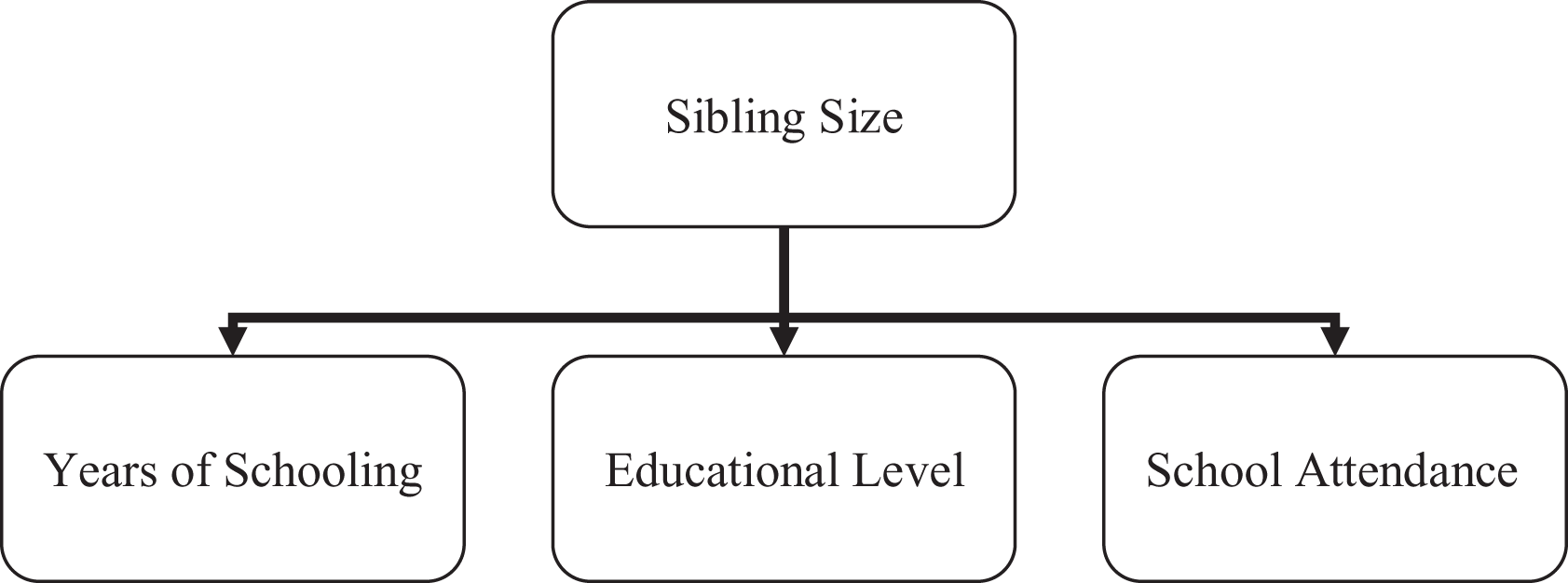
Analytical framework. Source. Created by the author based on the empirical strategy used by Li et al. (2008) and Kugler and Kumar (2017).
In line with the available literature from developing countries, this study hypothesizes that: (1) children with more siblings will have fewer completed years of schooling, lower education level, and less school attendance on average and (2) the negative impact of sibling size is sensitive to different groups of children. The effect of sibling size is more pronounced among rural children from an earlier birth cohort as well as those with less educated mothers.
Based on the extant literature, this study first estimates the effect of sibling size on children’s educational attainment using the OLS model:

where Eijkd is the educational attainment of child i in family j having birth order k and living in district d, measured by three indicators: years of schooling, school attendance, and educational level. Years of schooling indicates the completed years of education. School attendance is a dummy variable that equals 1 if the child ever attended school. Educational level is an ordinal variable comprising three educational levels: less than primary school, primary school, and secondary school. Sibsize is the total number of children no older than 18 residing in the household at the time of census, 1 and the coefficient β1 captures the effect of sibling size on children’s educational attainment. Xi is a vector of child-level characteristics containing age, age squared, gender, birth order, and Jawa ethnicity. Xj is a vector of parent and household-level characteristics, including religion, wealth ownership, language spoken at home, parents’ ages, parents’ education levels, and the rural dummy variable. ε k is the birth order fixed effect that controls for cross-birth order variation, while ω d is the district fixed effect that captures time-invariant characteristics of the residence cities. μ ijkd is the error term.
The coefficient β1 is likely to be biased either downward or upward in equation (1). For example, better-off families that place higher value on their children’s education may choose to have fewer children, resulting in the sibling size effect being overestimated. In contrast, less committed parents may choose to have fewer children and invest less in their children’s education, resulting in the real effect of sibling size being underestimated.
To address the endogeneity in sibling size, this study introduces the presence of natural born twins as an instrument for sibling size (e.g., Angrist et al, 2010; Rosenzweig & Zhang, 2009). A twin birth should be a valid instrument for sibling size because it is strongly correlated with the number of children in a family, which normally occurs randomly, and tends to be unrelated to the error term. The 2SLS estimations are calculated as follows:


In the 2SLS framework, equation (3) is the first-stage regression, where Twin is a dummy variable equal to 1 if one of the deliveries in family j is a multiple delivery, and zero otherwise; other variables are the same as those specified in equation (1). Equation (2) thus becomes the second-stage regression, which identifies children’s educational attainment based on the predicted value of sibling size given by equation (3) and other controlled variables.
Descriptive statistics of the sample of the 2010 Indonesian population census.
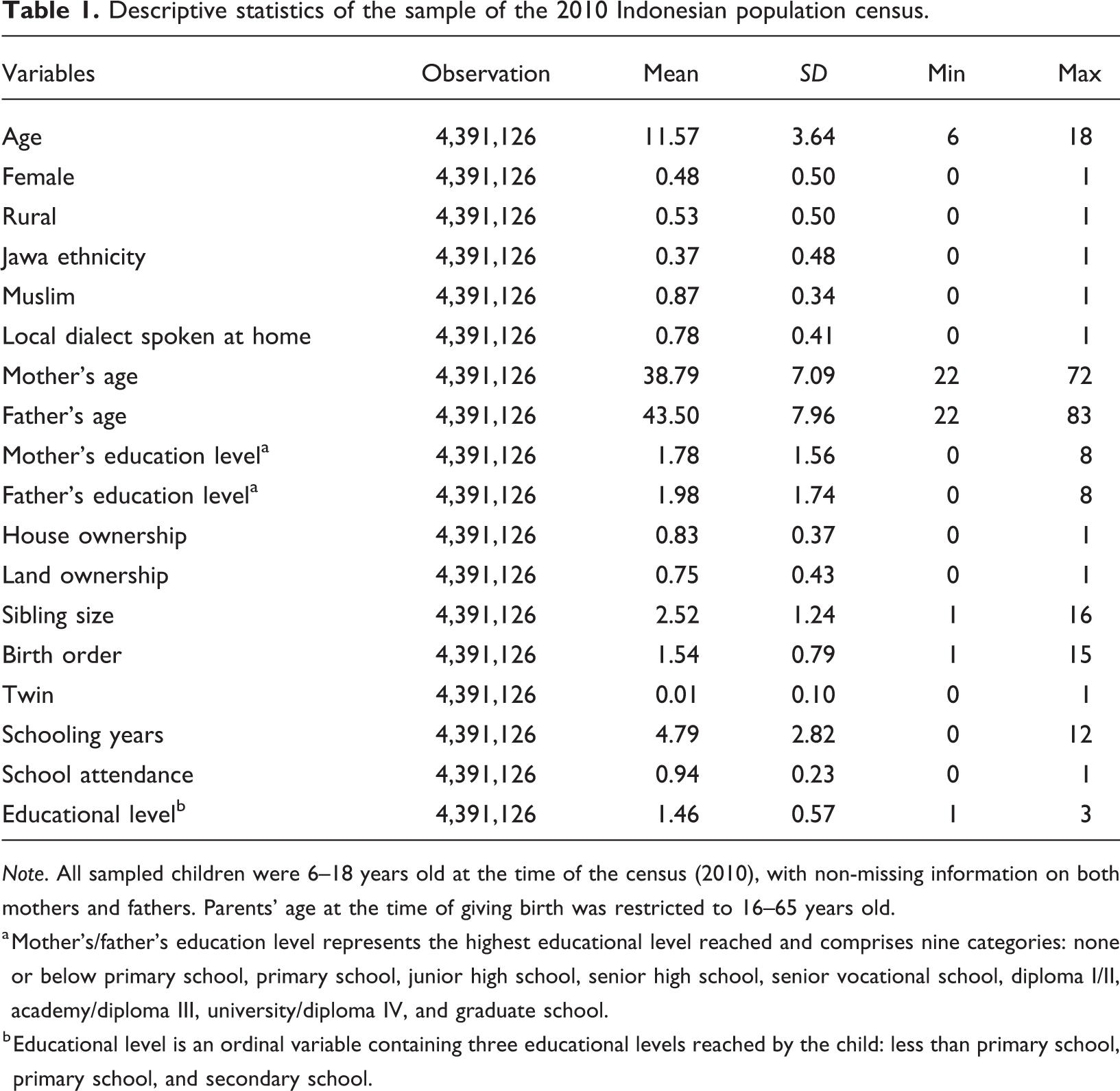
Note. All sampled children were 6–18 years old at the time of the census (2010), with non-missing information on both mothers and fathers. Parents’ age at the time of giving birth was restricted to 16–65 years old.
a Mother’s/father’s education level represents the highest educational level reached and comprises nine categories: none or below primary school, primary school, junior high school, senior high school, senior vocational school, diploma I/II, academy/diploma III, university/diploma IV, and graduate school.
b Educational level is an ordinal variable containing three educational levels reached by the child: less than primary school, primary school, and secondary school.
Descriptive statistics of the sample by region and gender.
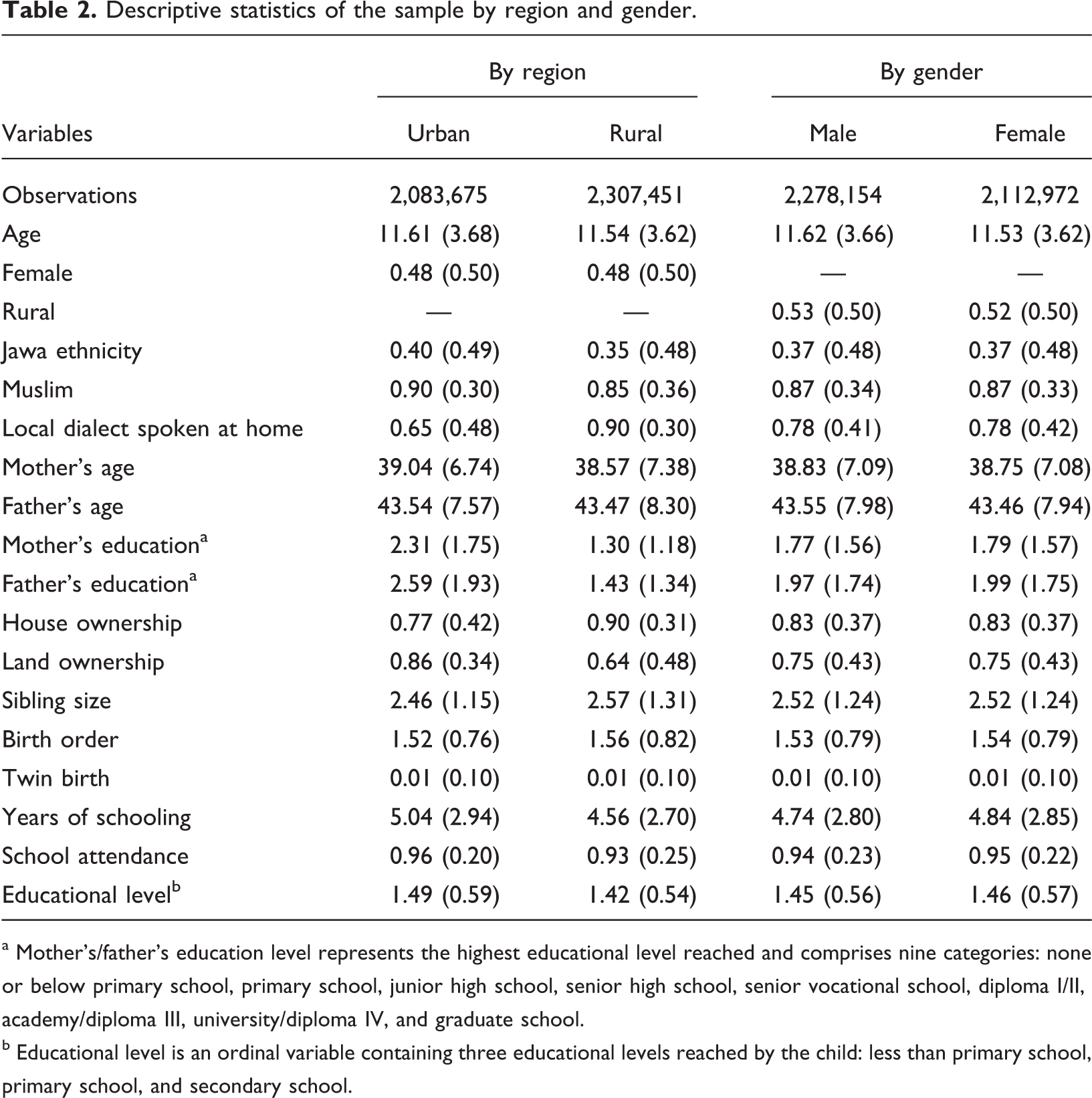
a Mother’s/father’s education level represents the highest educational level reached and comprises nine categories: none or below primary school, primary school, junior high school, senior high school, senior vocational school, diploma I/II, academy/diploma III, university/diploma IV, and graduate school.
b Educational level is an ordinal variable containing three educational levels reached by the child: less than primary school, primary school, and secondary school.
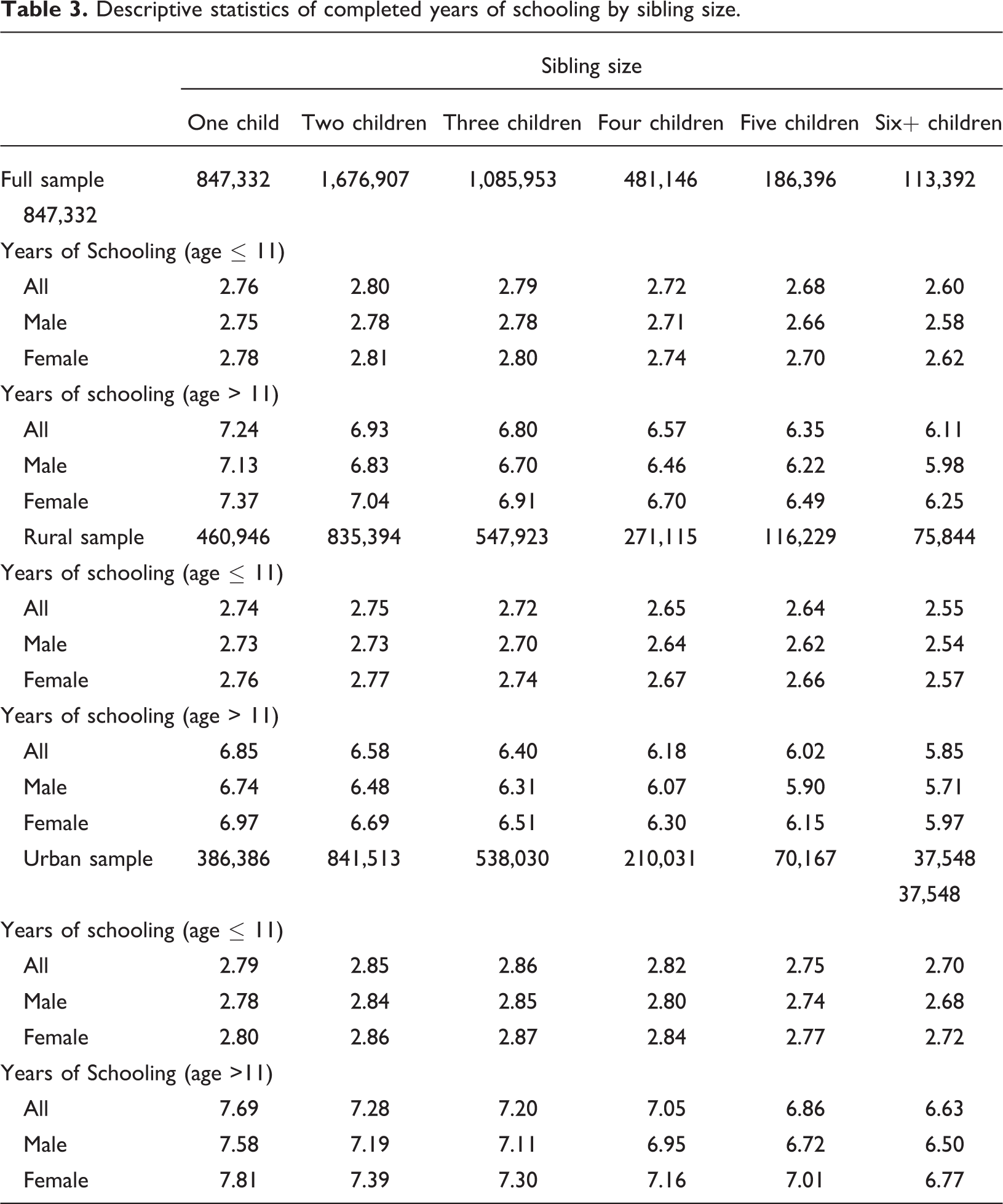
Descriptive statistics of completed years of schooling by sibling size.
The feasibility of the 2SLS strategy depends on the validity of twin births as an IV. A suitable instrument should be highly correlated with the independent variable, but uncorrelated with the error term. In Indonesia, the presence of twin birth is an important source of exogenous variation in fertility that increases one child’s sibling size by over 70%. Meanwhile, according to previous studies (e.g., Black et al., 2005; Li et al., 2008), it is reasonable to believe that a twin birth will not affect children’s educational attainment other than by increasing sibling size. Following Black et al. (2005), to ensure that the family with a twin birth is not significantly different from that without a twin birth, this study also tests whether the presence of twins within a family is associated with certain observed family-level characteristics. The F tests reject the null hypothesis of weak instruments, indicating that there is no correlation between twin births and the educational level of parents in the sample.
Data description
This study uses a 10% sample of the 2010 Indonesia Population Census provided by the IPUMS project. The census contains rich information on 22,928,795 individuals from 6,151,164 households in 33 provinces and 493 districts/municipalities of Indonesia. The census provides the demographic characteristics, educational attainment, ethnicity, religion, employment status, family composition, and household wealth of each individual. Benefitting from the large sample size and detailed information provided, this study takes individuals labeled “child” as its primary observation and matches the children’s information to their parents through a relation identifier. Sibling size was obtained by summing the total number of children aged 0–18 within the household at the time of the census. As the data also provide the fertility records of each mother, the study was able to identify whether the family size is complete. The IV, twin births, which is not included in the census as an explicit indicator, was defined as children who were reported to be born in the same year and month to the same woman. The dummy of twin births equals to 1 if one of the deliveries in family j is a multiple delivery, and zero otherwise.
However, the sample is restricted in the following ways. First, to ensure that all parents’ information can be matched, only children of the household heads are investigated in this study. Second, only the school-aged children between the ages of 6 and 18 are examined. This is because 6 year old is the minimum age of school enrollment in Indonesia and QQ trade-off is likely to be more evident for school-age children. Third, as adult children who have left the household cannot be tracked, this study defines sibling size as the total number of children between the ages of 0 and 18 living together in a household. Finally, this study excludes those observations with missing or unreliable information on critical variables from analysis. The final sample contains 4,391,126 children between the ages of 6 and 18; approximately 1% of these children were identified as twins (Table 1).
This study measures educational attainment in three ways: (1) a dummy variable indicating whether the child ever attended school; (2) a categorical variable indicating the educational level obtained by the child; and (3) a continuous variable, which is the completed years of schooling. The controlled variables comprise (1) child-level characteristics, namely gender, age, birth order, and ethnicity; (2) family- and parental-level characteristics, namely district, a rural indicator, wealth ownership dummy, parents’ age, educational level, religion, and language spoken at home. More specifically, the birth order is calculated by birth date, religion is introduced as a Muslim dummy variable, ethnicity is included as a Jawa dummy, and language spoken at home is a local dialect dummy (Table 2 and Table 3). As the census data do not contain information about family income but do cover abundant questions on asset ownership, the study controls wealth ownership in establishing family living standards. All regressions in the study introduced the fixed effects of districts and birth order.
Results and discussion
Impact of sibling size on children’s education
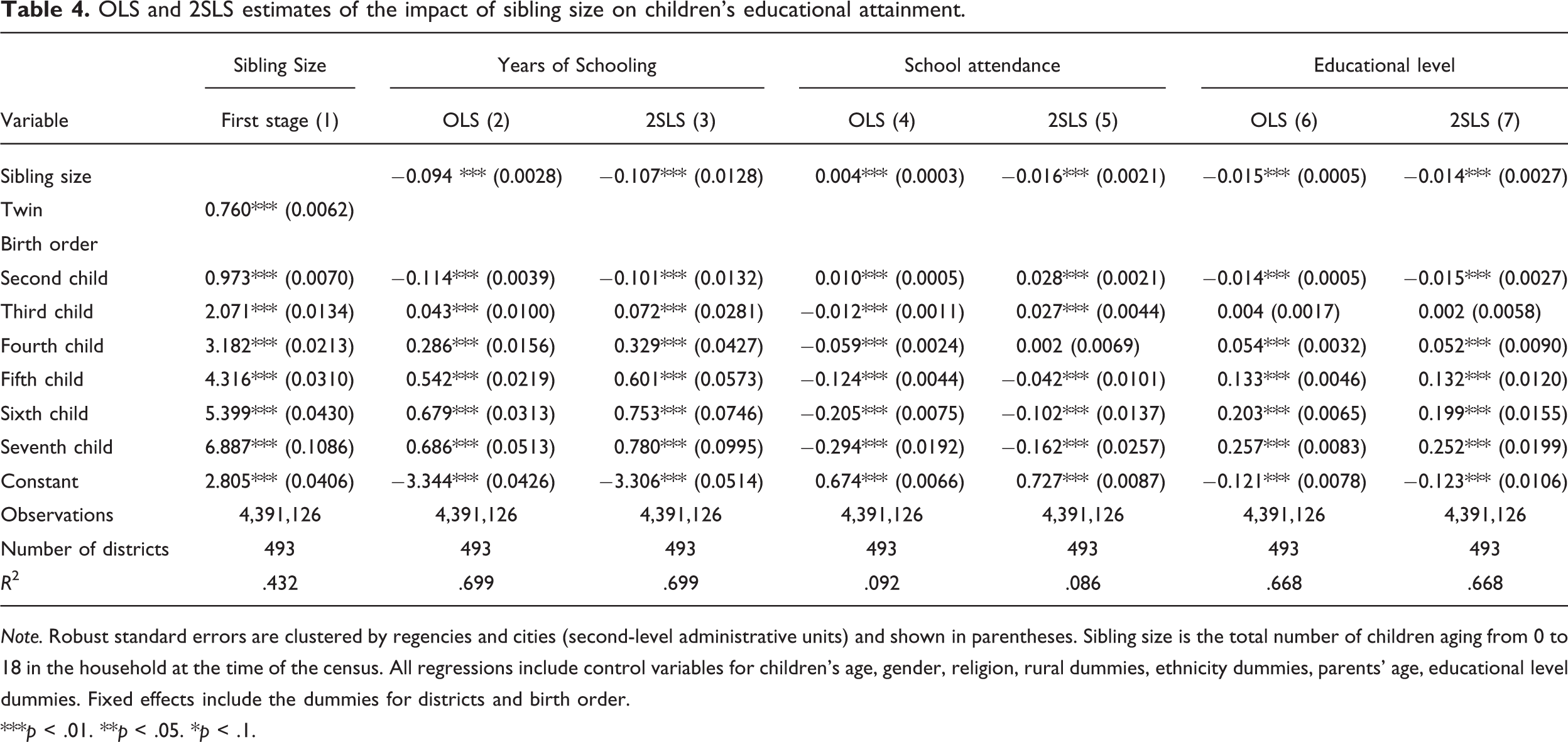
Table 4 reports both the OLS and the 2SLS estimated results of the effect of sibling size on children’s educational outcomes measured by completed years of schooling, educational level obtained, and school attendance, respectively. 2 As shown in columns 2, 4, and 6 of Table 4, the OLS estimates largely support the intuitive wisdom that a larger sibling size in a family leads to lower educational outcomes for each child, where a one-child increase in a family is likely to shorten children’s years of schooling by nearly one-tenth of a year and lower the highest educational level obtained by 1.5%. However, according to the results, the probability of school attendance seems to increase when the family size is larger.
OLS and 2SLS estimates of the impact of sibling size on children’s educational attainment.
Note. Robust standard errors are clustered by regencies and cities (second-level administrative units) and shown in parentheses. Sibling size is the total number of children aging from 0 to 18 in the household at the time of the census. All regressions include control variables for children’s age, gender, religion, rural dummies, ethnicity dummies, parent’s age, educational level dummies. Fixed effects include the dummies for districts and birth order.
***p < .01. **p < .05. *p < .1.
Using the twin births instrument, the 2SLS generates larger coefficients of sibling size in comparison to OLS estimations, indicating the existence of downward biases in the OLS estimates. The first-stage coefficient, statistically significant at the 1% significance level, shows that the presence of a twin birth within a family increases children’s sibling size by about 76%. The second stage coefficient shows that having an additional child in a family shortens other children’s years of schooling by over one-tenth of a year, reduces the likelihood of ever attending school by 1.6%, and lower educational level by 1.4%. These results support the QQ trade-off argument in children’s education and are consistent with the findings of studies using data from other developing countries in Asia, including China (Li et al., 2008), Vietnam (Dang & Rogers, 2016), and India (Kugler & Kumar, 2017). However, these findings contrast with those of Black et al. (2005), who used twin instruments but found no sibling size effect. This discrepancy may be due to the differences in sample selection. Black et al. (2005) used data from Norway, where the public education system is well-run, while the association between family-size variation and children’s outcomes is likely weak.
Recognizing the important role of birth order in determining children’s educational outcomes (e.g., Black et al, 2005; Booth & Kee, 2009), Table 4 provides the estimates for the fixed effect of birth order. Six dummy variables are introduced to capture the impact of being from the second to seventh child in a family. The estimated coefficients demonstrate a positive correlation between birth order and children’s educational outcomes, indicating that later-born Indonesian children enjoy better education opportunities compared to those born earlier. These results are more in line with evidence from developing countries than from developed countries. Contrasting results might be due to the more binding financial constraints faced in developing countries, which are significantly reduced when older children begin contributing to the family income (Parish & Willis, 1993).
The estimates of controlled variables are consistent with expectations: Both parents’ educational levels and family wealth ownership are positively correlated with children’s educational outcomes, urban and ethnic majority (Jawa ethnicity) have advantages over rural or ethnic minority children, and speaking the local dialect at home is negatively correlated with children’s education. Moreover, being Muslim is a positive factor for children’s education in Indonesia, where over 87% of the population is Muslim. Surprisingly, results indicate that female children, rather than male children, have better chances in education in Indonesia.
Heterogeneous results of the effect of sibling size
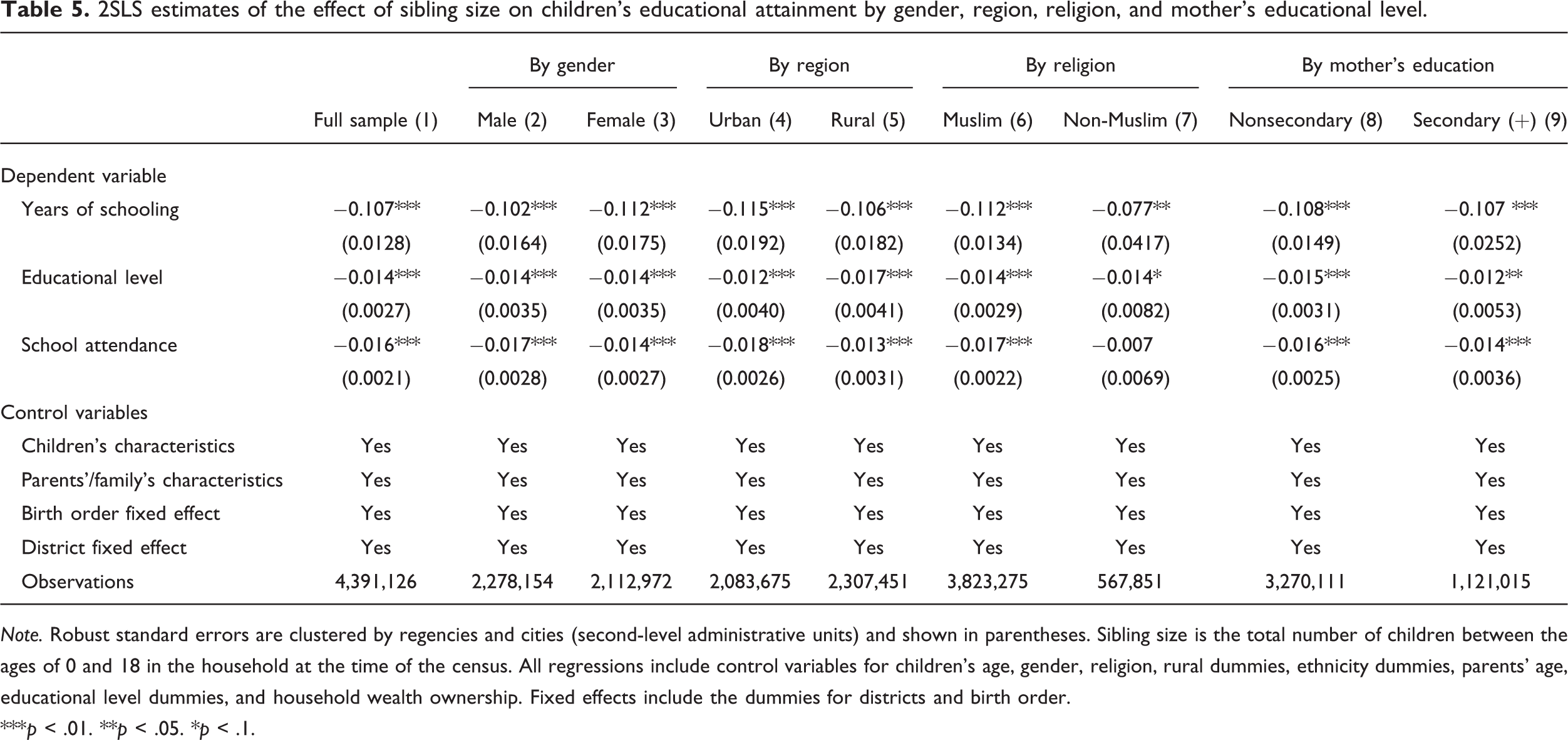
This study also tests the sensitivity of the effect of sibling size in different subsamples and reports the 2SLS estimates of the effect of sibling size in Tables 5 to 7. This study first stratifies the sample by gender. Given the widely observed preference for sons in other Asian countries, the negative effect of sibling size is expected to be larger for females than males. As presented in Table 5, this study finds significantly negative effect of sibling size for both males and females. The effect appears to be more pronounced for girls in terms of completed years of schooling, where an additional sibling decreases years of schooling by 0.102 years for boys and 0.112 years for girls; however, no differences were found in educational level. In contrast, the QQ trade-off seems more influential for males than females in terms of school attendance. These mixed results are most likely due to different concerns in parents’ decision-making regarding school attendance and school attainment. As the decisions regarding whether to send their children to school are likely to be less sensitive to children’s gender compared to those regarding maintaining their school attendance, then the gender inequality is more likely to be captured by completed years of schooling than school attendance.
2SLS estimates of the effect of sibling size on children’s educational attainment by gender, region, religion, and mother’s educational level.
Note. Robust standard errors are clustered by regencies and cities (second-level administrative units) and shown in parentheses. Sibling size is the total number of children between the ages of 0 and 18 in the household at the time of the census. All regressions include control variables for children’s age, gender, religion, rural dummies, ethnicity dummies, parents’ age, educational level dummies, and household wealth ownership. Fixed effects include the dummies for districts and birth order.
***p < .01. **p < .05. *p < .1.
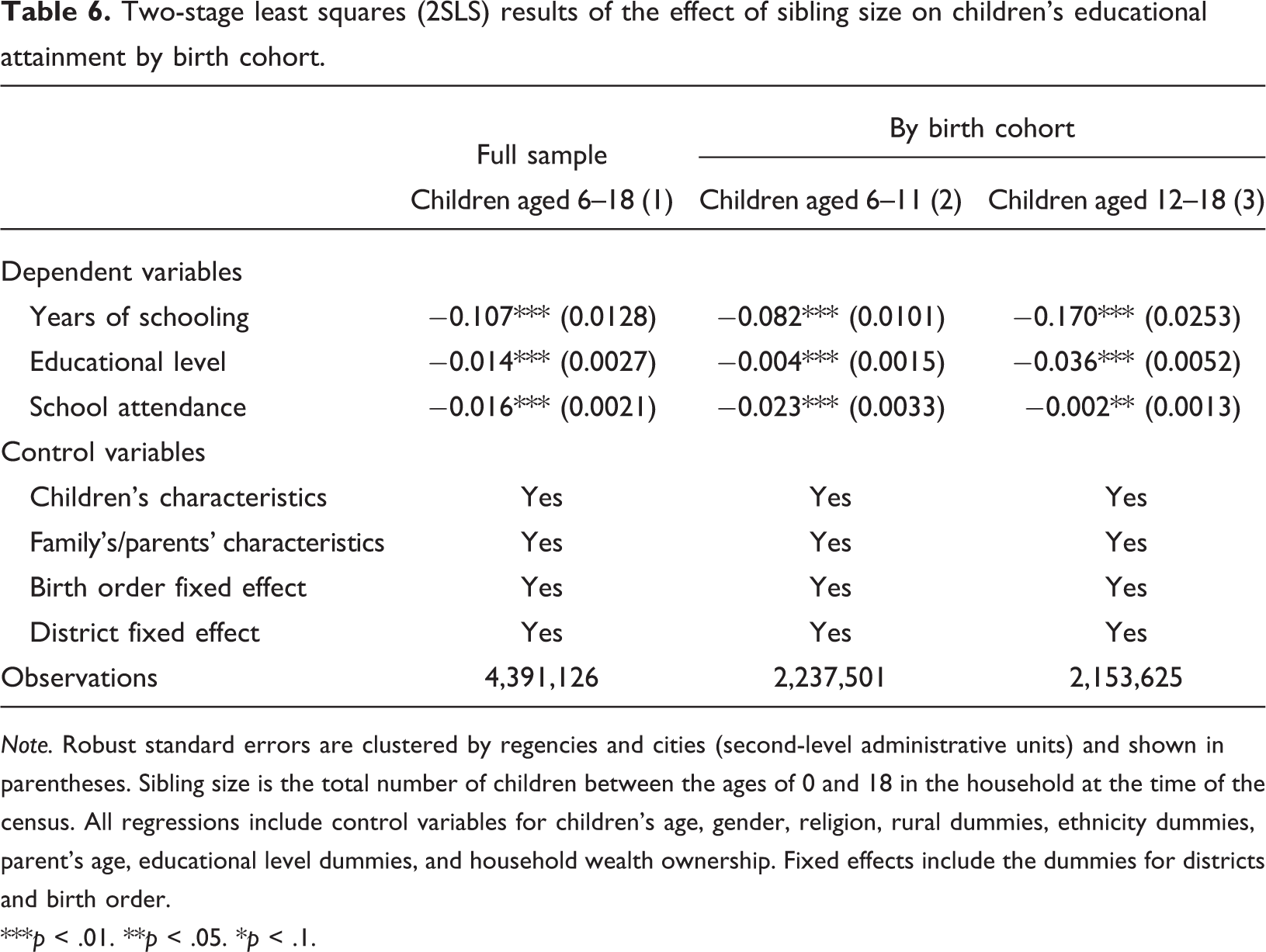
Two-stage least squares (2SLS) results of the effect of sibling size on children’s educational attainment by birth cohort.
Note. Robust standard errors are clustered by regencies and cities (second-level administrative units) and shown in parentheses. Sibling size is the total number of children between the ages of 0 and 18 in the household at the time of the census. All regressions include control variables for children’s age, gender, religion, rural dummies, ethnicity dummies, parent’s age, educational level dummies, and household wealth ownership. Fixed effects include the dummies for districts and birth order.
***p < .01. **p < .05. *p < .1.
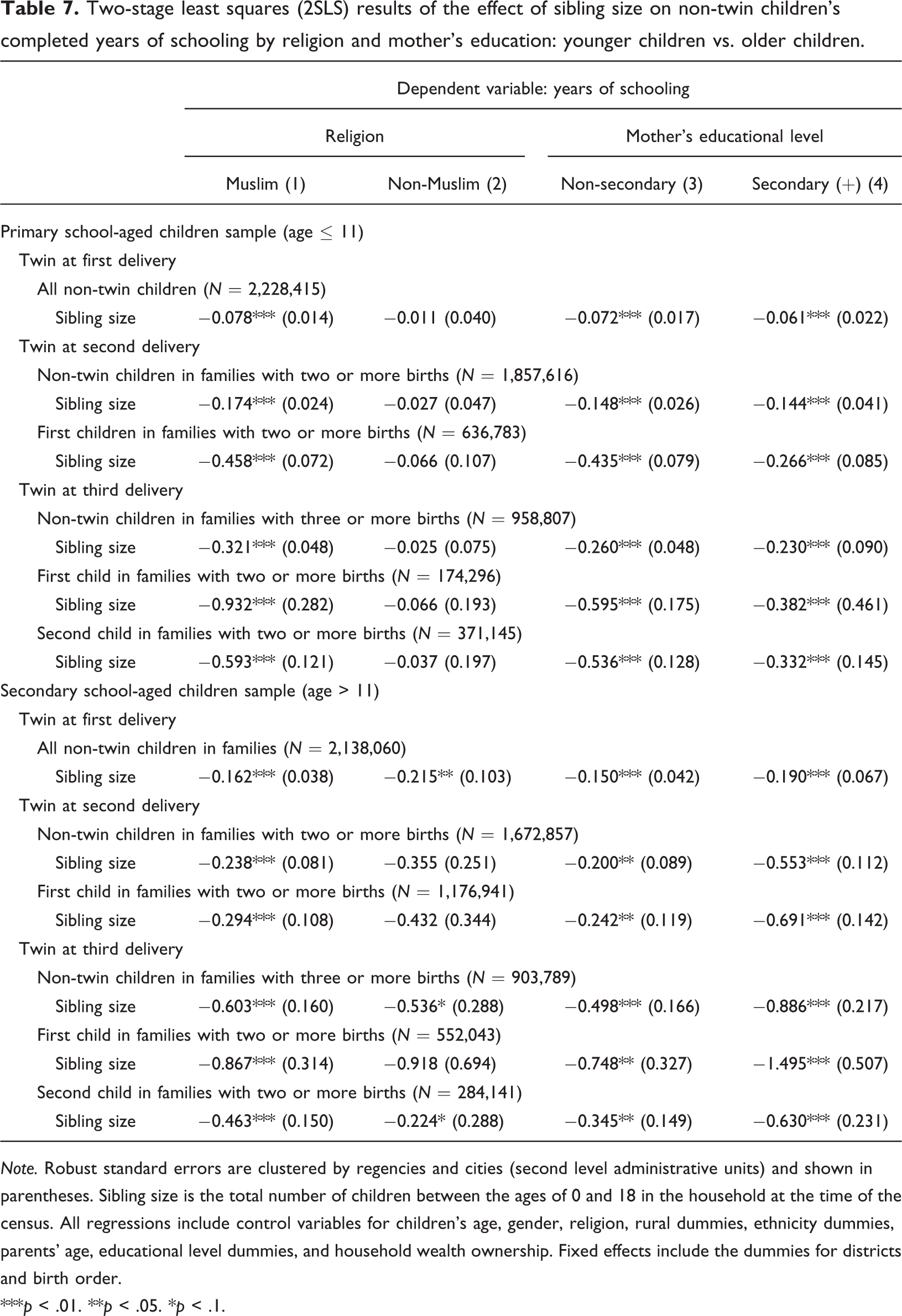
Two-stage least squares (2SLS) results of the effect of sibling size on non-twin children’s completed years of schooling by religion and mother’s education: younger children vs. older children.
Note. Robust standard errors are clustered by regencies and cities (second level administrative units) and shown in parentheses. Sibling size is the total number of children between the ages of 0 and 18 in the household at the time of the census. All regressions include control variables for children’s age, gender, religion, rural dummies, ethnicity dummies, parents’ age, educational level dummies, and household wealth ownership. Fixed effects include the dummies for districts and birth order.
***p < .01. **p < .05. *p < .1.
This study then compares the effect of sibling size based on rural–urban stratifications. Given the poorer educational conditions in rural areas in Indonesia, it is reasonable to expect a larger sibling size effect in rural areas. Columns 4 and 5 in Table 5 report the 2SLS estimates for rural and urban subsamples, respectively. Similar to Li et al. (2008), who found a larger QQ trade-off in rural areas of China, this study observed that sibling size in rural areas has a larger impact on children’s educational levels. However, the impact is larger in urban areas than in rural areas when years of schooling and school attendance are used as measurements.
This study also examines the sibling size effects across Muslim and non-Muslim groups. As Indonesia is the world’s most populous Islamic majority country, it is necessary to explore the differences in the effect of sibling size between Muslim and non-Muslim groups. IV estimate results are shown in columns 6 and 7 of Table 5. Muslim children are significantly negatively impacted by expanded sibling size. For example, the coefficients in column 4 suggest that one additional child reduces Muslim children’s likelihood of school attendance by 1.7% and years of schooling by 0.112 of a year. In comparison, an additional child has an insignificant effect on the school attendance of non-Muslim children and reduces their years of schooling by only 0.077 of a year.
The study then differentiates the effects of sibling size by the mother’s educational level. A popular explanation for QQ trade-off is the resource dilution model, which suggests that the effect of sibling size is primarily driven by the family’s financial constraints. If this explanation is true, then children from less financially restricted families will be less negatively impacted by family size. Although this study’s data limit a more direct examination of the resource dilution mechanism, families with more educated mothers should be associated with better economic status, less budget constraint, and thus less QQ trade-off. Therefore, this study stratified the sample based on mother’s educational level. Columns 8 and 9 in Table 5 report the 2SLS results of sibling size. As the resource dilution model suggests, the negative coefficient of sibling size is larger if the mother has not completed lower secondary education. The same pattern can be found in all cases, regardless of measurement for educational attainment, including years of schooling, educational level, and school attendance.
Next, this study splits the sample by children’s birth cohorts and compares the effect of sibling size for children of earlier cohorts (aged 12–18) with children of later cohorts (aged 6–11). Education decisions regarding secondary school should be much more sensitive to family-size variations than those regarding primary school, and later cohorts may benefit from more effective birth control. Therefore, this study expected that the QQ trade-off effect would be larger for children from earlier cohorts than for children of later cohorts. Consistent with this expectation, the 2SLS estimates show that the effects of sibling size are more pronounced among secondary school-aged children than primary school-aged children. These differences are particularly overt when years of schooling and educational level are used as measurements.
Finally, this study examines the effects of twin births on the completed years of schooling of non-twin children born before the twins by comparing non-twin children in households with first-birth twins (total sibling size ≥ 1), second-birth twins (total sibling size ≥ 2), and third-birth twins (total sibling size ≥ 3). The results for primary school-aged children and secondary school-aged children are reported in Table 6. As expected, the negative coefficients of sibling size increase from top to bottom, suggesting that twin births occurring at a later time may introduce more negative effects of sibling size for non-twin children born earlier. More specifically, for non-twin children born before the twins, having an unexpected younger twin-born sibling can shorten their years of schooling by over 1 year. This may be because later-born twin children are more likely to end up with families exceeding their optimal number of children (Black et al., 2005).
To summarize, the subsample analysis shows that the negative impacts of sibling size are more pronounced among Muslim subgroups, households with less educated mothers, and early cohort children at secondary school age. Meanwhile, twin births occurring later in the family birth order are likely to cause larger negative sibling size effects on the education of non-twin children, compared with the negative consequences resulting from twin births happening in earlier orders. The negative impact is especially a case for non-twin children born before the twin. Some related explanations for this disparity include the likelihood that households with less educated mothers face greater financial constraints, while parents’ schooling decisions at the secondary school stage are much more sensitive than those at the primary school stage. Additionally, later-born twin children are more likely to cause families to exceed their optimal family size. However, offering convincing evidence for the mechanisms driving the religion-based differences lie beyond this study’s scope.
Conclusion
Using nationally representative census data, this study is the first to use twin data to examine the effect of sibling size on children’s educational attainment in Indonesia. The presence of natural-born twins was introduced as an instrument for sibling size to address the endogeneity in sibling size and establish causality (e.g., Angrist et al, 2010; Rosenzweig & Zhang, 2009). Consistent with previous literature, this study finds a significant negative correlation between the number of children in a family and the children’s educational attainment. The 2SLS estimates indicate that increased sibling size reduces children’s completed years of schooling, lowers their educational levels, and makes school attendance less likely. Although the coefficients look modest in terms of magnitude, all coefficients are statistically significant and comparable to other policy interventions, such as school construction (Duflo, 2001).
More specifically, this study finds significantly negative effects of sibling size on educational attainment among Indonesian children between the ages of 6 and 18 years, where having an additional child caused by a twin birth in a household is estimated to shorten other children’s years of schooling by over one-tenth of a year on average, reduce the likelihood of ever attending school by 1.6%, and lower educational level by 1.4%. The empirical results also show a clear difference based on socioeconomic grounds. Moreover, the effect of sibling size is more pronounced among Muslim children, children with less educated mothers, and children born to earlier cohorts. One possible explanation for these gaps is that households with less educated mothers normally face greater financial constraints, and decisions regarding secondary education are much more sensitive to family characteristics than those regarding primary school.
This study has two limitations. First, restricted by the availability of data, this study was unable to examine QQ trade-off through a more direct method of using family educational investments as a dependent variable. Providing empirical and conclusive evidence for the underlying mechanisms of the heterogeneous results also lie beyond this study’s scope. Data limitations also prevent this study from extending the measurements to more interesting aspects, including children’s learning achievements, job enrollment, and labor market earnings. Second, despite twin births proven utility as an instrument variable used widely in related studies, a more detailed investigation about this instrument is still needed. The twin births instrumenting estimation is not without contention. For instance, Rosenzweig and Zhang (2009) found that twins normally have inferior birth endowments and closer birth spacing compared to non-twins. This indicates that twin children’s outcomes may be directly impacted by their being a twin rather than through the mechanism of expanding sibling size. However, considering the fact that both the inferior endowments of twins and the closer spacing between twins are likely to bias the coefficient of sibling size effect downwardly for non-twin children, this study contends that the real negative effect of sibling size should be larger if the bias is addressed, thus better supporting the traditional merit of QQ trade-off.
These limitations notwithstanding, this study contributes to the long-standing debate on the effect of sibling size by providing causal evidence from Indonesia—the world’s most populous Islamic-majority country with strong interests in family planning. This study also sheds important light on the heterogeneity of results in regard to religion and mother’s education, which have hitherto been ignored. The results of this study support the claim that a lower fertility rate helps increase the human capital, which is evidenced by the statistically significant negative correlation between the number of children in a family and the children’s educational attainment. Nevertheless, more caution is required to interpret these findings and generalize them beyond the context of Indonesia.
High fertility has long been regarded an obstacle to economic growth in developing countries, especially those facing the problems of overpopulation and underdeveloped education. Lower fertility appears important to enhancing the quality of human resources and is thus integral to poverty reduction and socioeconomic development. Therefore, many developing countries—such as China, India, and Indonesia—have introduced various fertility control policies favoring smaller sized families to reduce population growth and increase human capital accumulation. The findings of this study not only facilitate a better understanding of the underlying rationale of family planning in developing countries but also aid the design of education policies able to weaken the negative effect of sibling size.
Footnotes
Declaration of conflicting interests
The author declared no potential conflicts of interest with respect to the research, authorship, and/or publication of this article.
Funding
The author received no financial support for the research, authorship, and/or publication of this article.