




Abstract
Purpose:
This article aims to outline an approach to education for sustainability based on play and science activities.
Design/Approach/Methods:
While deviated from traditional academic articles, this article has combined knowledge drawn from various action research projects and personal observations from a number of preschool settings.
Findings:
The article results in the development of an educational method: a scientific playworld to support emergent science and sustainability.
Originality/Value:
The constructed educational approach is value-oriented and challenges children to strike a balance between pessimism and optimism in addressing major societal themes.
Backgrounds about education for sustainable development in Danish early childhood education
During recent decades, the prevalence of education for sustainable development in early childhood education has increased in Denmark and the other Nordic countries. This growth is caused by several factors, such as the publication of a number of critical documents on sustainable development by the United Nations, including the so-called Brundtland Report, Our Shared Future (United Nations [UN], 1987), the 2030 Agenda for Sustainable Development, and sustainable development goals report (UN, 2015, 2016). Moreover, several Organisation Mondiale pour l’Education Préscolaire (OMEP) publications have inspired preschool teachers 1 (Engdahl, 2015; Hägglund & Pramling Samuelsson, 2009; Siraj-Blacthford et al., 2010). In addition, the work completed by the Danish National Network for Education for Sustainable Development and the general political and societal pressure to strengthen climate consciousness among future generations has inspired both researchers and practitioners to prioritize education for sustainable development within early childhood education and care (Lysgaard et al., 2012).
As a result, there have been some small-scale research projects conducted in Danish preschools (Frøkjær & Husted, 2019), as well as a broad array of developmental work, where preschool teachers implement approaches to education for sustainable development, and the research projects have been widely disseminated among early childhood professionals. As an example, the Danish Ministry of Education published what they called an inspiration catalog presenting 70 educational activities focused on themes like reusing and recycling rubbish, water conservation, energy consumption, food waste, and environmental awareness (Kryger & Kardyb, 2015).
In general, teachers understand the concept of sustainability based on the Brundtland Report: Sustainability is seen as a “development that meets the needs of the present without compromising the ability of future generations to meet their own needs” (UN, 1987, p. 37). However, because this definition is rather open, teachers also make use of OMEP’s operationalization of the term (Siraj-Blacthford et al., 2010), which “seeks to balance human and economic well-being with cultural traditions and respect for the environment” (p. 9). This holistic concept of sustainability can be supported and realized through three dimensions: social and cultural, environmental, and economic sustainability (Engdahl, 2015).
Each of these approaches contains certain key overlapping and integrated concepts (R-dimensions as the following) that can inspire preschool teachers in their educational work on sustainability as shown in an OMEP project (Engdahl, 2015).
In recent years, the above approaches focusing on the ecological crisis and various initiatives concerning sustainable development have become more common (Pramling Samuelsson & Park, 2017) and have also been integrated in Nordic preschool legislation and curricula.
A play-oriented Danish curriculum
In Denmark, the Ministry of Children and Education is responsible for early childhood education. However, while education in schools continues to shift toward an ever-greater focus on learning outcomes, the Ministry directs preschools toward a more play-oriented curriculum rooted in a child’s perspective (Børne- og Socialministeriet, 2018a, 2018b).
A national curriculum for Danish preschools was first established in 2004, stipulating an overall objective and six themes that preschool teachers have to follow. In 2018, this curriculum, and the associated legislation, was revised and optimized. A number of interesting and important new dimensions were introduced, namely the German concept of Bildung (English: formation), a child perspective and play (Børne- og Socialministeriet, 2018a, 2018b).
The 2018 curriculum (Børne- og Socialministeriet, 2018a, 2018b) emphasizes the overall objective of early childhood education as (our translation) contributing to children’s well-being, learning, development, and Bildung via safe learning environments where play and a child perspective are cornerstones.
This overall objective is supplemented by six educational themes that teachers have to implement as part of the preschool’s everyday learning activities. These themes include social and personal development, language, movement, and aesthetics, as well as the theme nature, outdoor life, and science, which addresses sustainability issues.
The three parts of the latter theme (nature, outdoor life, and science) are seen as part of a whole: In outdoor life, children can focus on nature science (e.g., the biological nature like animals, plants, fungi, the environment, and the universe), which opens for technology science and topics like magnetism, circuit, water, light, and air seen in a sustainable development perspective—something which is emphasized in the curriculum: “The learning environment supports that all children achieve experiences with nature (…) plus an emergent understanding of the importance for a sustainable development” (Børne- og Socialministeriet, 2018a, p. 57).
Early childhood education for emergent science and sustainability
The theme nature, outdoor life, and science opens for children’s appropriation of scientific skills and knowledge through social experiences (Johnston, 2008) and through experimental, explorative, and discovery-oriented activities. The teachers do not directly transfer knowledge to children. Instead, they guide children in a step-by-step process where the children themselves construct knowledge about science and sustainability. Therefore, the concept of emergent science (Johnston, 2008) could be expanded to emergent science and sustainability.
Working with emergent science and sustainability in early childhood education means incorporating the previously mentioned three dimensions—outdoor life, nature science, and technology science, with the addition of a sustainable development perspective. Thus, education for sustainable development goes hand in hand with a science focus (Borger, 1998; Prince, 2010; Sundberg & Ottander, 2014).
This is in accordance with the report “The Contribution of Early Childhood Education to a Sustainable Society” (Pramling Samuelsson & Kaga, 2008): Early childhood education for sustainability is much more than environmental education. It should be broader than simply taking children outdoors to discover the beauty of nature and speaking about the natural environment. It must include opportunities for children to engage in intellectual dialogue regarding sustainability, and in concrete actions in favour of the environment. (p. 12)
A number of the interviewed teachers and preschool teachers suggest that waste education is about teaching children to clean up after themselves, basing their approach on learning as behavioral change rationale rather than encouraging children’s critical reflection on waste processes. But in the study, the researchers “suggest that there is a much wider educational potential in waste and waste practices than making sure that children know how to make the waste reach the waste bin” (Jørgensen et al., 2017, p. 4). This is an interesting focus on the educational potential of waste as material. Waste education is carried out as part of activities addressing art and creativity at some of the institutions in the study. “The reuse of waste in creative activities offers waste materials the possibility of a new life; an extended period of use before becoming waste again” (Jørgensen et al., 2017, p. 5). Because art, aesthetics, creativity, and nature are all core themes in the Denmark preschool curriculum, waste might be used “to illustrate broader societal issues of waste and sustainability with current and future relevance” (Jørgensen et al., 2017, p. 5).
As an example, children’s work with questions on reuse enables them to integrate recycling, art, and creativity with a cultural device, namely the children’s own “waste treasure chest.” They used this tool during a scientific play-based journey, where they both reused rubbish and fought against littering in nature.
A number of pioneer projects, as well as the broader debate on climate issues, have contributed to preschool teachers’ interest in developing education for sustainable development initiatives that were endorsed by the new Danish preschool curriculum, which underlines the importance of science and sustainability. It also calls for a formulation of educational approaches and methods. In accordance with Sundberg and Ottander (2014), we want to initiate a discussion about how teacher education “can support a broader view of teaching and science to fit the ‘community of practice’ of preschools and hence make a contribution to Education for Sustainability” (p. 1).
Educational principles for a pedagogy focusing on science and sustainability
The Danish curriculum in 2018 stresses the importance of science and sustainability approach. It is emphasized that children’s focus on nature can lead to an understanding of regularities in nature, to an emergent understanding of science, and to work with sustainability and the interaction within humans, society, and nature (Børne- og Socialministeriet, 2018a, p. 44). Thus, the curriculum integrates nature, science, with sustainability. Furthermore, it highlighted that this work “also implements human’s influence and interaction with nature, e.g. according to questions concerning the environment, sustainability and use of natural resources” (p. 44).
The above wording acknowledges the fact that an education for science and sustainability is not a neutral education. It is a value-based practice where parents, teachers, and children focus on a possible future (Biesta, 2010; Carr, 1992; Moss, 2017).
We use the international term “education for sustainable development,” although the terms “education” and “teaching” are not used very much in Danish early childhood education policy. We use the term “learning” defined as a dynamic, meaningful, and creative process where children develop through active participation, social interaction, and communication with others (Broström, 2017).
Realization of such a dynamic learning concept is only possible in a dynamic learning environment supporting children’s well-being, learning, and development. High-quality learning environments comprise interactions between processes and structures (Bjørnestad et al., 2019; Drugli et al., 2016; Sheridan, 2001). Structural quality concerns parameters such as staffing levels and staff qualifications, group sizes (Sheridan et al., 2014), physical conditions, availability of digital devices, and aesthetic framing. Process quality concerns didactic reflections, empathic interactions between teachers and children (Bae, 2012; Tomasello & Carpenter, 2007), co-operation between teachers, and planning of activities of the numerous environments for creative play and interaction (Greve & Hansen, 2017). Furthermore, the educational content is a part of the learning environment, so that the didactical quality is also connected to process quality (Drugli et al., 2016). Staffing levels and empathic relations between teacher and child are important, but it is especially pivotal that children encounter challenging and interesting activities of a formative nature (Broström et al., 2017).
We know from research that high-quality preschool environments influence children’s well-being, learning, and development. Referring to Vygotsky, the learning environment refers to both the material and social context. Therefore, the learning environment must be understood in the light of the relations between the child and its environment (Vygotsky, 1994). Among other things, we argue for a learning environment based on the dimensions outlined in the following.
Dimensions of a learning environment for science and sustainability
As earlier mentioned, the learning environment is crucial. The teachers have to reflect on four dimensions of the learning environment: the physical—the aesthetic, the mental, or psychological—and the didactical learning environments (Broström & Frøkjær, 2018).
With a delimitation to the physical learning environment, Hammer (2012) argues for the establishment of a science corner. Inspired by that, the purpose could be to construct a number of small science centers in order to make space for concentration, attention, sense absorption, and active experimentation. In connection to science and sustainability, from our point of view, especially two science centers could be of interest, namely a water center and a light center. Experiments with water open for both the character of water, for example, floating and sink, and also related to plastic in the sea and pollution of water in general, for example, when children look at the river, it seems quite clear, but a water specimen shows the water was contaminated. Based on such possibilities, a water center and a light center might pave the way for reflections on both science and sustainability (Broström & Frøkjær, 2018). Below are some ideas of the equipment of the two science centers.
The teachers established a water center with cups, glass, tubs, hoses, measuring cups, ice forms, bottles, and so on. In the center, there are different forms of watermills and other equipment. The 2-year-olds enter the center and play with water. They clap their hands in the water and drop different objects in the water in order to examine the characteristic of the water. Inspired by the teacher, they pull water from one container to another, and later they also use a hose mounted on a funnel. The 5-year-olds initiate a goal-directed experiment in water specimens in order to find out which objects will flow and which will sink. They also pull water into the mill wheel and they observe the wheels connection to a set of gears which affects a movement of some objects. With the help of the teacher, they realize how their watermill produces energy. This paves the way to visit a real watermill where it was illustrated how water energy can run different machines.
The teachers also established a light center with mirrors built in the floor, which inspires 1-year-old children. In addition, the teacher also provided the center with kaleidoscopes, periscope, prisms, a variation of glasses, flashlights, and lots of equipment for shadow theater, among other an overhead projector, and also a number of solar cells which produce light. Quickly the 2-year-olds find out to play with the flashlights and the projector and supported by the teacher using colored silk paper they construct a bombardment of a colored world. The 5-year-olds play with a number of prisms and wonder how it is possible to make up their own rainbow, which calls for immersive dialogues with the teachers. The children also play with the solar cells and engage themselves in the teacher’s explanation of how he uses these solar cells at his hike in the mountains. And he also spoke about the Africans’ use of solar cells in small villages without electricity.
Such an indoor science learning environment opens for immediate science and sustainability experiences, which form the basis for subsequent experiments with water and light through which children “learn to recognize and express themselves about cause, effect and connections” as it is stated in the curriculum (Børne- og Socialministeriet, 2018a, p. 45).
As illustrated above, children’s activities on science can lead to and integrate a discussion about sustainability if the teacher inspires and supports the children via questions and implementation of investigations and actions. This is illustrated in an example from our own observations in preschool, where some of the 5-year-olds looked at the younger children play with water, which they commented critically: “Hey this is really waste of water. We are always pushed to close the water tap very quick.” The teacher accommodated the children’s claim and asked them: “Hey, how can we permit the young children to play with water without wasting the water?” Quickly the old children suggested to build a pool by tarpaulin to collect and reuse the water.
A play-based education
An active and challenging learning environment, which can inspire children’s emergent science and sustainability understanding, will contain a focus on children’s attention, interest, curiosity, and wonder, and in addition, children’s experimentation and learning will take place via children’s play.
Attention, interest, curiosity, and wonder
An education for emergent science and sustainability in preschool cannot be transmitted by the teachers via traditional teaching (Dewey, 1997), on the contrary, it must be based on children’s interest and own life. However, the teacher plays an important role in order to inspire the children and also to create a challenging environment. First of all, the teacher has to catch children’s attention. This can lead to establishment of an interest. Based on this, a curiosity can appear and maybe a real wonder will arise. These four concepts—attention, interest, curiosity, and wonder—can form the basis for education for science and sustainability.
Attention is a starting point for an emergent science and sustainability education. At the playground, a 2-year-old boy concentrates at some water drops falling from a hole in the gutter. Gradually the water drops make a depression or a whole. Such a focused attention is defined by concentration, maintenance, and the ability to exclude disturbance (Vygotsky, 1929/1979).
Because the child in his interaction with the observed object is not able to understand or obtain this water drop phenomenon, an interest arises. Interest is expressed when the child gains a desire to examine an object or a phenomenon. Children’s interest has been associated with activities, and children’s choice to be involved in the activity (Hedges & Cooper, 2016). Dewey said that “interest marks the annihilation of the distance between the subject and the object; it is the instrument which affects their organic union” (Dewey, 1913/2009, p. 17). Thus, interest acts as a bridge between the object and the child. Related to the example with the 2-year-old boy one might say, that his focused attention at this science phenomenon leads to the development of a growing interest. Whatever, some researchers do not draw a distinction between curiosity and interest, as they are based on the same cognitive process (Silvia, 2006), and interest seems to arise before curiosity and actually pave the way for the development of children’s curiosity. Hedges (2018) argues that personal interest can provide a source of curiosity and motivation.
The shift from interest to curiosity happens when the subject meets new, surprising, unclear, or conflicting impacts and consequently strives to get knowledge and understand the object. As Loewenstein (1994) states, curiosity is an appetite for knowledge.
Curiosity is seen as a form of cognitively induced deprivation that arises from the perception of a gap in knowledge or understanding (Loewenstein, 1994). With reference to Menning (2018), curiosity has at least four forms. (1) Curiosity as an intrinsic value, which is valuable in itself. (2) Curiosity expressed as something relational; the children are curious about what happens in the group. (3) Curiosity as a character strength relates to critical thinking. (4) Finally, curiosity as a starting point and as a tool for the acquisition of knowledge often related to science and math. In general, curiosity looks for solutions within a given structure and very often involves an active interaction with the surrounding world with a wish to understand and maybe change the world.
Where curiosity focuses on a specific object or some kind of phenomenon in order to get more knowledge, the philosophical term wondering describes an emotion composed of astonishment, joy, and curiosity (Shand, 1920). For a while, our existing knowledge is set by the hinges (Miller, 1992). Wondering is connected to the act of contemplation and aims to look behind the existing structure (Opdal, 2001) and beneath the surface (Piersol, 2014, p. 8). When children express a wondering, they state a feeling aroused about something strange or surprising, as a cause of astonishment. Wondering appears when we meet something we do not expect, and then we are forced to reflect why this situation or phenomenon looks like this.
The development of children’s attention, interest, curiosity, and wonder can be seen as a part of their psychological structure, which opens their eyes and helps them to relate themselves to the surrounding world, to ask questions, and to start critical actions, including actions related to sustainability.
Play
To construct a play-based approach, at least two dimensions are reflected, namely a definition of the concept of play and how play can be organized in practice. In this study, play in general refers to Vygotsky (1978) and the model of organizing play is in accordance with the Scandinavian approach known as playworlds (Baumer et al., 2005; Broström, 1999; Hakkarainen et al., 2013; Lindqvist, 1995). To organize a playworld could mean to construct an imaginary play situation (Elkonin, 1980), where children could initiate a play theme, make up a drama play with different roles and play actions that they could change reality and the meaning of objects and actions.
From a cultural-historical understanding of play, it is assumed that important changes take place in the preschool child’s psyche through play, which pave the way for the child’s transition to a new level of development (Leontjev, 1981, p. 369). A number of dimensions (Lillemyr, 2009) seem to characterize (role) play, which is visible in the following science play episode: During children’s play at the sunny playground, two boys discovered a hole in the wall of the house from which air was pouring out. They wondered and asked themselves: How can this happen? After a research, they realized the air originates from the dryer. Then they started a play with air. They filled air in big thin plastic bags and used them as balls and balloons. They also used them as spaceships and imagined themselves as astronauts. The boys had fun for a while. Then they were challenged by science questions. A filled black bag, which had laid in the sun for a period was lifted up from the ground. The boys found this floating phenomenon very mysterious.
Based on curiosity and wonder, the boys started to discover and play. The play was internally motivated, meaningful, and characterized by phantasy, interaction, and communication, which are typical dimensions of play.
Play is voluntary, spontaneous, and independent (Froebel, 1887). If you try to force play, children will stop playing. The children control what happens, take initiatives, and choose roles; the children can decide what to play and how to play.
Play is intrinsically motivated and involves feelings of enjoyment. The motive of play lies in the process itself, in the contents of the action, not in the result. Children play just in order to play. According to Leontjev (1978), the motive to play is to play, the activity is play, and because the child’s motive is concordant with the object or goal of the action (Leontjev, 1981), the child experiences the play activity as meaningful.
As children imitate and identify people and activities around themselves, play may be regarded as a subjective reflection of reality (Leontjev, 1981), but often the child reproduces observations and experiences in his or her own way. Like this, often play is a creative activity through which the child changes his or her surroundings, leaves out something, and invents something. Thus, play is characterized by fiction, imagination, and phantasy (Singer & Singer, 1990; Vygotsky, 1978).
Play is characterized by interactions and communication. Play is a social activity in which human relations are essential and expressed together with peers (Launer, 1968). In a shared activity and through communication, they create actions and meanings. Especially, Bateson (1972) and Schwartzman (1978) stress the communicative aspect in play. In the play, the children create relations and interactions between each other, among persons, events, and ideas. The children’s message contains various ways of interpretation. The message contains a specific content (text), and it also produces a signal about how to interpret the content (context). To understand the message, the recipient has to take in both text and context. A communication like this takes place on several levels. The children give some play signals to tell each other “this is play” (Bateson, 1972).
When teachers and children organize activities focusing on science and sustainability, their investigations and endeavors have a play character in accordance with the above dimensions and can be implemented and organized in a playworld.
Playworlds
As mentioned, it is possible to organize science and sustainability activities in an imaginary play situation, a playworld. According to Lindqvist (1995), the playworld describes long play sessions where children and teachers based in a shared theme make up a dramatization, an aesthetic play, often with reference to children’s literature, for example, the Moomins, Pippi Longstocking, and Alice in Wonderland. Similarly, Broström (1999) constructs an organized play where teachers and children based in shared experiences build a collective fantasy—a frame play. In both approaches, teachers and children play together. Teachers show respect for children’s ideas and play initiatives but they inspire and support children’s play, and they also take play initiatives themselves. Thus, the term guided play can be used (Hirsh-Pasek et al., 2009).
The imaginary play situation, the context, the frame, or with another name the playworld must be visible for all children. According to Bateson (1972), the establishment of the context functions as a psychological frame to guide the participants to include certain messages and actions and to exclude others. The playworld can be strengthened via physical design and equipment, which supports children’s shared imagination, and through this, the topic or theme is constructed.
According to Hakkarainen (2010), all playworlds integrate some kind of psychological tools to support the transitions from reality (e.g., children’s classroom) to imaginary playworld. In a frame play, children changed the room to an emergency call center and hospital where they play for days (Broström, 1999). In a play project in an American kindergarten class in school, researchers, teachers, and children created a playworld based on C. S. Lewis’s The Lion, the Witch and the Wardrobe (Baumer et al., 2005). Every Friday all participants walked through a wardrobe (the backing of the wardrobe was removed) and entered a fictive world (the neighbor classroom).
Up to now, as far as we know, there are no examples of studies on playworlds including emergent science and sustainability. However, Fleer (2017) describes in detail how to build a scientific playworld, a collective scientific imaginary situation. Based on a story with narrative structure and with use of different psychological tools, they build a scientific playworld focusing on nature phenomena: A plastic bubble pretended to be a drop of water in which children play inside, or they construct a fabric tunnel in which children imagine they were worms, caterpillars, or butterflies.
In this article, we take a first step toward an educational approach focusing on playworlds related to emergent science and sustainability.
Sustainable future via play-based science activities: Playworlds
In order to get more knowledge on how teachers and children are able to handle a pedagogy for science and sustainability in everyday life, Frøkjær and Husted (2019) made up in a 2-year-long open-ended experiment with teachers and children from five preschools in Denmark. The study was conducted as an action research project, which implied local experiments that extended or developed existing nature activities to meet regulated nature and to reach out for sustainability issues (Frøkjær & Husted, 2019).
The purpose of the project was to investigate how educational activities on nature and natural phenomenon with focus on relation among human beings, nature, and sustainability can be expressed in preschools.
These inspiring local experiments combine nature activities with questions about sustainability. The experiments proved to favor eco-friendly innovations (e.g., waste disposal, reuse, and resource awareness), aimed to enhance children’s eco-friendly behavior. The study also produced eco-critical suggestions on how to open the world and encourage children’s critical thinking about resources and our common future, for example, the development of a critical view on the societal regulation of interaction between human beings and nature.
The action study also showed a need for development of a narrow link between children’s focus on sustainability and the development of children’s science knowledge. Therefore, as a next step, Frøkjær and Husted (2019) constructed an outline of educational principles based on the involved teachers’ understanding of preschool emergent science (Siraj-Blatchford, 2001) and the development of a scientific playworld where science and sustainability is a part of play-based settings (Baumer et al., 2005; Fleer, 2017; Sikder & Fleer, 2016).
An example: A playworld about beach treasures and garbage
One of the five preschools, that participated in Frøkjær and Husted’s (2019) action research project “a pedagogy for sustainability in everyday life,” focused on waste and recycling. They particularly pay attention to a nearby beach. The children visited the beach at different times, and they experienced, and found different garbage on the beach, when they went on their trips to collect beautiful stones and seashells. Back in preschool, they started to ask the question: What is waste and what is not waste? They borrowed books from the library on the subject and visited the nearby Blue Planet, which is Northern Europe’s largest marine aquarium. The Blue Planet is situated in the middle of water, which should give visitors a feeling of being below sea level. They visited the aquarium exhibition on pollution of the seas, and the children were both surprised and shocked at how much waste there is in the seas. Especially examples from the Pacific with waste islands the size of France, “Which is much larger than Denmark!” a boy said. In addition, a photo exhibition, with pictures of especially the seabirds sitting in the waste, made a big impression on the children. Some of the children were angry that “the fishermen and the big ships were throwing all the waste in the sea!”
The research on “what is waste and what is not waste” was mainly about the questions: What is natural material? And also: “What is trash on the beach?” After the visit to the Blue Planet, a new question arose: “How does the waste affect the animals?” Based on this question, the teachers got the idea to investigate the theme further by giving all the children a “treasure chest.” During the excursion to the beach, the children collected items and material for their own treasure chest. They talked very intensely with each other and the adults about “is it now waste or is it natural?” But they ended up with “garbage can be treasure too!” Thus, both “cultural things” and “natural things” ended up in the individual treasure chests, and in addition, the children brought the large common treasure chest. The collection of waste was based on the question, which led children’s activities: “What belongs to the beach and what does not belong to the beach.” Later, children visited the Recycling Center, and here an employee told them what can be recycled and what cannot be recycled. In this way, the children were inspired to discuss “what is a healthy beach” and “what is a healthy sea.” During the discussion, the children realized the fact that we all have to take care of our waste. Children expressed their deep concerns about how to dispose of their waste in a proper way and claimed that no more waste discharge into the sea, otherwise “both fish and seabirds die from it.”
During the visit to the waste and beach treasure, the children also experimented with plastic, such as a plastic bag in a jam glass, in order to investigate whether the animals can see plastic in the sea. During the experiments, a number of science questions appear, for example, how long time will it take for plastic to perish? Or with the children’s word “to disappear.” Therefore, plastic was dug down into the ground at the playground, in order to investigate, what happens after some time. And the teachers planned the course where the children from the preschool told the children from the nursery about their beach treasures and showed them their treasure chests. The children were especially busy telling the little kids about how important it is, that we do not throw waste in the wild, and that we look after the animals in the wild, even in the sea, so that they do not die from it. The daily encounters with the parents were also marked by the many children’s experiences and wonders along the way. As a feedback to the teachers, many parents told them that the children’s stories at home were sometimes marked by great excitement and resentment.
This description of a playworld in a Danish preschool is first and foremost characterized by the choice of a cultural device, namely the children’s own treasure chests and their common treasure chest (Fleer, 2017). It is also the description of, how the preschool teachers take the children to scientific journeys: To the beach to investigate, what the sea has washed up, and thus observe the difference between what is real nature and what is waste affected by people. In addition, during the visit to the Blue Planet, children saw images of pollution in the oceans. And also, during the visit to the Recycling Center, children learned about what can be recycled, and they were ready to initiate research and experiments at home and in the preschools. We, therefore, see examples of exploration and building of a scientific narrative, as well as imaginary situations as thoughts, experiments, and modeling.
In addition, besides children’s appropriated science knowledge, for example, learning about the degradation of plastic, and also insight in sustainability, for example, how plastic in the sea harm the animals, they become emotionally attached. First of all, the children became emotionally charged in relation to the visit to the Blue Planet. It resulted in many conversations happened among the children, the children and the adults, especially about the terrible fact that “the ships throw all that waste into the sea.” “The fish and the birds can die from it!” All the scenarios would be a good example for Fleer’s Land of Learning Playworld (Fleer, 2017).
Crucially, the educators’ dynamic planning of the course is underway. The above description is not just an example of a long-term science and sustainability course, planned in advance by the teachers. On the other hand, it is an example of how preschool teachers meet children’s curiosity and wonder along the way and end up with an educational process, similar to “Five Steps to Create a Scientific Playworld” (Fleer, 2019).
Discussion: Next step to develop a pedagogy for science and sustainability
However, the development of an eco-critical pedagogy for science and sustainability proved to be a difficult pedagogical endeavor that touched upon questions of how to open the world and protect children’s minds and hearts at the same time. An education for sustainability acts in the waters between children’s right to a secure childhood and their right to be a societal subject and to be included in question which has consequences for their own life and future (Frøkjær & Husted, 2019; Hägglund & Pramling Samuelsson, 2009).
However, this is a hard struggle. When children adopt knowledge on nature, science, and sustainability, for example, about the huge amount of plastic in the ocean, or the illegal felling of the rain forest, this can lead to pessimism. For that reason, we have to build up optimism and give them hope.
Inspired by Freire’s book Pedagogy of Hope (2014) in everyday life, teachers have to express hope, which hooks repeats: “Educating is always a vocation rooted in hopefulness”; “we live by hope”; and “living in hope says to us, ‘There is a way out,’ even from the most dangerous and desperate situations” (hooks, 2003, pp. xiv, xv).
Yet, simultaneously we must not leave the children in a form of passive optimism. This will remove focus from the overexploitation on both human beings and nature. hooks (2003) points out that hope cannot exist without hopelessness, and there is a dialectical relationship between them. That means we have to combine the positive approach with a worry and desperation. Thus, we can relate to two power sources, namely love and rage. Parents and teachers have to mobilize both children’s love for nature and arouse their anger when they realize nature is destroyed (Vetlesen & Willig, 2017, p. 164).
Nevertheless, this is a difficult balancing act, since the daily life in preschool opens for some possibilities illustrated in below story The Dead Dock with Collar (Broström & Frøkjær, 2018, pp. 30–31): Based in a project titled “animal in the sea” children and teachers had many encouraging and inspiring experiences about the theme, among others from an aquarium visit, crab racing, and a fishing trip, which raised their nature interest, both according to nature science and technology science. On a visit to the beach after a stormy weather, the children were engaged and curious in the trash washed ashore: plastic water bottles, small pieces of rope, and some dead fish, and in addition a dead duck. A child wondered: “Why does the duck have a collar?” Quite correct. The neck was entangled into some plastic strings, and the children discussed eagerly how the string was landed in the sea, and how the duck has wrapped itself into the string and finally was strangled. How could that happen? The dialogue reaches the question about plastic pollution of the sea, which really upset the children and raised their anger.
From our point of view in early childhood education, we have to take a conclusive and indisputable step toward a goal-directed education for a sustainable development. Children belong to the future and we betray them if we do not make it possible for them to achieve consciousness on nature and a sustainable development and to bring them in a situation where they want to act for a better environment. Maybe, this can cause to two counterarguments: Children will create anxiety and do not use the children as cannon fodder for an adult political project, so let children be children and live a happy childhood. In a way, this could be an attractive view. Parents, teachers, and politicians really like children to have a happy and harmonious life without anxiety. However, this is not reality. If we do not act and involve children for a better future, they later will claim us for being passive and hiding the truth.
Further, it can be added, that children do not become anxious, they are anxious for an insecure future. Here the best solution is to face children’s anxiety with knowledge, consciousness, and action. Via social interaction and shared participation, children and teachers create optimistic sustainable actions, which bring them to an understanding that “together we can make up possible solutions.” Thus, they will develop action competence (Schnack, 2003) and future optimism.
Moreover, the development of an education for a sustainability is not only an educational project. It is a necessary societal action, where children and teachers express a shared interest. This is an act for the survival of the man and the globe. Neither more nor less. In that light, it is relevant to refer an Australian Aboriginal educator and activist saying: “If you’ve come to help me, you’re wasting your time. But if you’ve come because your liberation is bound up with mine, then let’s work together” (quoted in Le Grange, 2003, p. 500).
Children and teachers have to face the increasing environmental threat. It is about time. It cannot wait. Though some preschool teachers may hesitate and do not think they are ready to carry through education for sustainability and focusing a critical view on environmental problems. Following principles might be helpful in order to start a new direction in early childhood education:
Grip the prevalent and easy possibilities to talk about and act with sustainability questions, for example, saving the water and electricity, repairing the old toys, sorting of garbage, and composting of green kitchen garbage, which the children use to fertilize their small gardens;
Create a dynamic indoor and outdoor learning environment in which children can experience nature and sustainability themes, for example, experiments with sun and wind energy;
Based on a child’s perspective and children’s curiosity and wonder children and teachers construct active scientific playworlds;
Meaningful, interesting, and deep learning is rooted in children’s questions and arise via social interaction and shared investigative activities.
The above four principles that are not so easy to be understood as a natural part of a pedagogical practice in the preschool (Broström, 2015; Thulin, 2011). However, findings have shown that preschool teachers are willing to create science activities when they are supported and are inspired with science knowledge and educational science methods (Broström, 2015; Gustavsson, Jonsson, Ljung-Djärf, & Thulin, 2016).
During the last decade in early childhood education in Denmark, we have seen a significant movement from challenging and supporting children’s interest about nature toward striving to shape children’s interest in science phenomena and questions about sustainability and a sustainable development in general. Among other things, this positive movement leads the actual accelerating climate debate and the fact that the new Danish preschool Act in 2018 focuses on sustainability can be seen as a positive step.
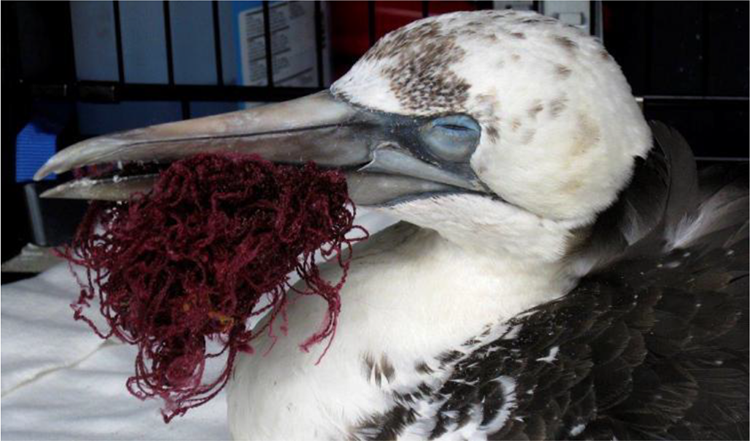
Photo from Dyrenes Beskyttelse.
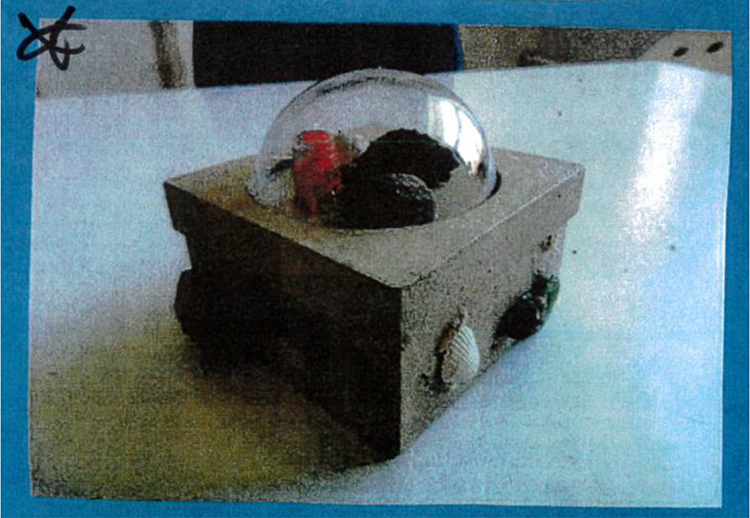
An example of a child’s treasure chest.
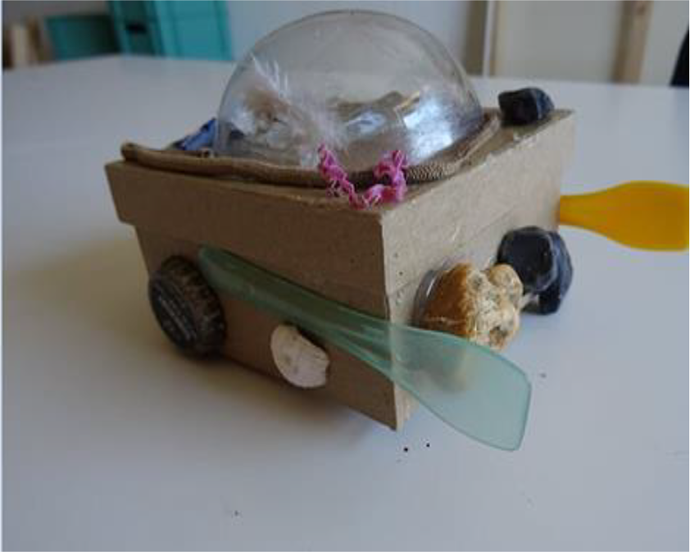
Photo of children’s treasure chest.
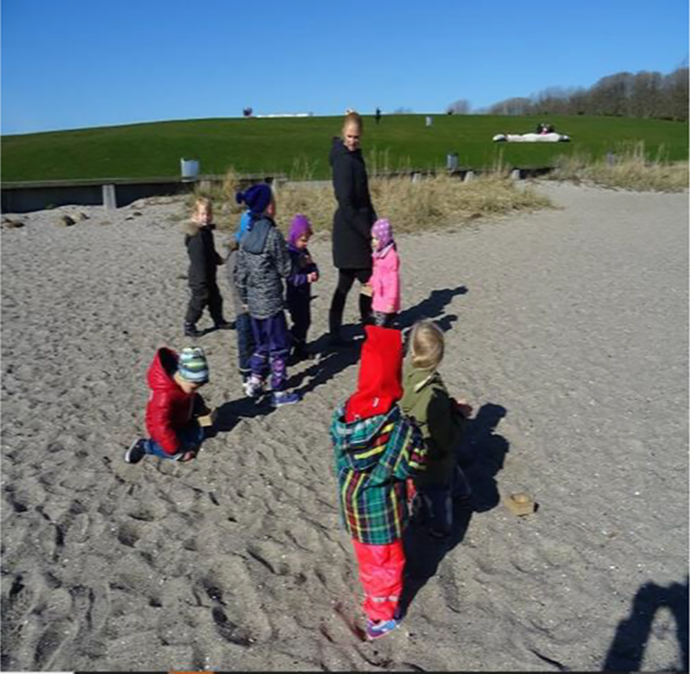
The children collect beach treasures. Note. Parents have provided the authors with consent for photo usage in Figure 4. A parent signs the document with an understanding that the photographers/authors may use the image(s) to promote childcare services only, either in print or on the internet. ECNU Review of Education keeps the copies with parental original signatures.
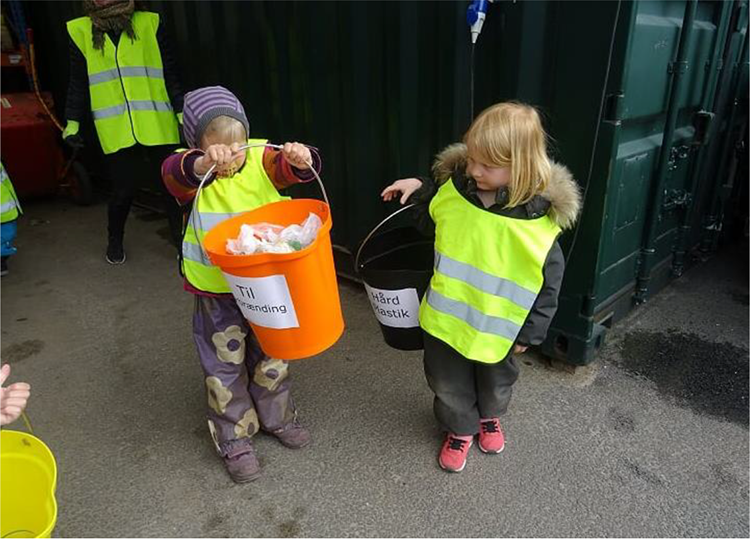
At the Recycling Center—What can be recycled? Note. Parents have provided the authors with consent for photo usage in Figure 5. A parent signs the document with an understanding that the photographers/authors may use the image(s) to promote childcare services only, either in print or on the internet. ECNU Review of Education keeps the copies with parental original signatures.
Footnotes
Acknowledgments
The authors thank “DyrenesBeskyttelse”—Eurogroup for Animals, Denmark, for the use of the bird photo (Figure 1). The authors also thank the parents in the Preschool “BørnehusetNordmarksvej 26,” Tårnby municipality, for the use of photos illustrating the pedagogical practice on reuse and recycling, namely the children’s own “waste treasure chest” (Figures 2
to  ).
).
Declaration of conflicting interests
The author(s) declared no potential conflicts of interest with respect to the research, authorship, and/or publication of this article.
Ethical approval
All procedures performed in studies involving human participants were in accordance with the ethical standards of the institution and/or National Research Committee and with the 1964 Helsinki Declaration and its later amendments or comparable ethical standards. Informed consent was obtained from all individual participants included in the study.
Funding
The author(s) received no financial support for the research, authorship, and/or publication of this article.