



Abstract
The COVID-19 pandemic has been, and still is, a worldwide health crisis. Despite the surge of literature on this phenomenon, little research has been conducted with the Probation Service during this time. The aim of this research was to explore Probation Practitioners’ (PPs’) experiences of the COVID-19 restrictions with a specific focus on those who access the Psychologically Informed Consultation Service (PICS). Further, to explore the experiences of key aspects of the COVID-19 pandemic through the lens of the Community Offender Personality Disorder Service. Semi-structured interviews were conducted with 9 PPs who represented a broad cross-section in terms of age and years of experience in the role. Interpretative Phenomenological Analysis was used to explore the experiences of PPs and revealed 5 main themes: unmet support needs, problematic working environments, an emotionally distressing time, the use of PICS, and a silver lining. These findings are discussed with implications for further research.
Introduction
The COVID-19 pandemic has had a dramatic effect worldwide and probably will continue to do so for the foreseeable future. To limit the number of deaths and hospitalisations due to the Coronavirus, most governments in developed countries decided to suspend many economic activities and restrict people’s freedom of mobility (Author, 2021a). In this context, the ability to work from home became of great importance (Acemoglu et al. 2021) since it allowed employees to continue working and thus receiving wages, employers to keep producing services and revenues, thereby limiting both the infection spread risk and pandemic recessive impacts. Recent estimates for the UK show that remote workers have quadrupled to 50% of the workforce (Bloom et al., 2021). Due to this sudden prominence, research has focussed on the effects of working from home across several sectors such as primary and secondary education (e.g. Purwanto et al., 2020), universities (e.g. Kotera et al., 2020), and the courts (e.g. Legg, 2021). The courts aside, research on the impact of the pandemic on the Criminal Justice System has predominantly focussed on changes in crime rates and organisational changes (e.g. Maskalay et al., 2021) rather than the effects and experiences of the individuals working within the system (Piquero, 2021). More specifically, research is significantly lacking in relation to the Probation Service and the experiences of Probation Practitioners (PPs) during the COVID-19 restrictions.
England and Wales entered a period of lockdown on the 23rd of March 2020, during which the nation was instructed to stay at home. In response, the Probation Service executed the Exceptional Delivery Model (EDM), which reduced the face-to-face contact between people on probation (PoP) and PPs. For those PoP who were seen as high-risk, face-to-face contact continued in the form of doorstep visits and only in exceptional cases undertaken in the office (HMI Probation, 2020). For most PoP, approximately 86%, supervision was conducted remotely either on the phone or in online meetings using the Microsoft Teams platform (Russell, 2020). These changes were significant in terms of probation practices and therefore had an impact on PPs who were already working in a challenging role. A parliamentary inquiry concerning the impact of COVID-19 on prison, probation, and court systems found that workload increased for PPs due to having to cover sickness and the need to conduct additional risk assessments (Lomas, 2020).
Research investigating the Probation Service and the experiences of the PPs during this time is rather sparse and much of the studies have taken place outside the UK. For example, Schwalbe and Koetzle (2021) distributed a survey to Probation and Parole Officers in the USA concerning their experience, personal impacts, and supervision-related values and beliefs both before and during the COVID-19 pandemic. The results highlighted that overall rates of contact did not change, but that face-to-face meetings were replaced with remote communication strategies. Participants felt that access to electronic communication platforms facilitated more frequent contact and a higher reliance on behavioural tactics and treatment-oriented case management approaches in the post-COVID period. Another survey-based study by Sturm et al. (2021) investigated both the views of PPs and PoP regarding online working and supervision in the Netherlands. They found that some PoP were positive about the remote supervision; however, others explained that they missed face-to-face contact due to it being a more personal experience. The PPs felt that remote working is flexible as it saved time and travel costs and particularly suitable for PoP who were at low-to-medium risk. Further, Stempkowski and Grafl (2021) in Austria examined how the differences in everyday work over the COVID-19 restrictions affected PPs, again, via survey distribution. Their results found that PPs generally managed to keep in contact with PoP, although they had worries about the lack of personal contact, they had with them and how that affected their wellbeing. They also found the PPs were concerned about the number of support services for PoP that were suspended during the restrictions and that communicating with them when at home was sometimes stressful, particularly for those PPs with children.
Within the UK, a limited number of studies have been conducted looking at PPs’ experiences during COVID-19. Armstrong et al. (2020) conducted a multiple-methods investigation exploring the impacts the COVID-19 lockdown had on marginalised groups in Scotland, including those involved in the Criminal Justice System and their associated practitioners. Amongst their extensive findings, they highlighted that individuals under supervision had an increased sense of their lives in suspension which stunted the progress they were making towards a life beyond punishment. Statutory services, including the Probation Service, offered significantly less support and narrowed their focus to simply monitoring risks. In addition, PPs had high levels of concern for the individuals they worked with due to the intensification of the challenges they were already struggling with. In Northern Ireland, O’Neill and McGreevy (2020) asked PPs and PoP to keep diaries and answer structured questions. Their results found that many PoP lacked social support and were increasingly abusing alcohol and drugs; however, in contrast, the PPs stated they had been able to adapt their approach and to continue to provide an individualised service to all PoP. Similarly, another study by Norton (2020) conducted in the north-east of Ireland via structured conversations and written feedback from a small sample of PPs found that they adapted to the challenges presented. The PPs stated that new measures had been put in place to protect the health and wellbeing of staff and that they were committed to the development of new and innovative working practices.
In contrast to the positive findings of Norton (2020), Dominey et al. (2021) interviewed PPs’ in the UK regarding their experience of supervising PoP using a telephone rather than in person. They found that PPs preferred face-to-face contact as using the phone limits the sensory dimension of supervision and they found it more difficult to build rapport with the PoP via the phone. In another study, Phillips et al. (2021) interviewed both PPs and Senior Management focussing on staff supervision, reflective practice, and emotional labour. They found that the participants were generally negative about the impact the pandemic had on their work, with much of this negativity centred around having to work from home. Further, the pandemic seemed to have exacerbated the emotional challenges of the job, mainly due to the pressures of working from home and the restricted access to the usual coping methods, for example, socialising with colleagues.
A series of studies conducted by Herzog-Evans and Sturgeon, 2022a, 2022b, 2022c interviewed PPs during the early stages of the COVID-19 lockdown. The first study explored how managers responded to PPs within Scotland. They found that the best managers during a time of crisis such as this were the servant leaders who prioritise the fundamental human needs of their staff and reduce their level of uncertainty (Herzog-Evans and Sturgeon, 2022a). The other two studies (Herzog-Evans and Sturgeon, 2022b, 2022c) explored their personal and organisational experiences in a sample from Scotland and France. They found that in both jurisdictions, the majority of partner agencies were closed which meant that they could not provide the appropriate medical, mental health, or substance-use treatment for PoP as they normally would (Herzog-Evans and Sturgeon, 2022b). In terms of priorities, both groups of PPs made contact with sex offenders and domestic violence offenders first as they were deemed to be most dangerous and whose reoffending would have been particularly catastrophic to the general public. Interestingly, neither jurisdiction hardly ever considered those PoP with psychiatric issues and how lockdown may have affected them (Herzog-Evans and Sturgeon, 2022b). The main difference found between the French and Scottish PPs was in terms of what remained of the Probation Service after the lockdown began. For the French PPs, it was all about communication, mainly over the phone, and maintaining those relationships through offering advice and encouragement. Scottish PPs were engaging in much more creative ways of support such as conducting home visits, delivering parcels and medications, and even driving PoP to emergency appointments. For some, face-to-face contact increased with particular PoP in order for them to provide the help they felt they needed (Herzog-Evans and Sturgeon, 2022b, 2022c). In terms of working from home, it was found that for some Scottish PPs, it enabled more productivity and uninterrupted working. However, for most Scottish and French PPs, there were serious issues in terms of the other members of their family being present at home whilst they worked. They felt this to be significantly intrusive and to the point in which it was impacting on their practice (Herzog-Evans & Sturgeon, 2022c). Finally, in both jurisdictions, PPs missed office interactions but the Scottish PPs were grateful for the increased use of technology during this time. However, in contrast, French PPs were sent back to the office earlier as they were not technologically equipped to work from home and this represented a long-term lack of investment within this service (Herzog-Evans & Sturgeon, 2022c).
A particular study by Sirdfield et al. (2022) conducted surveys and interviews with PPs and PoP during the pandemic to investigate the specific impact it had on those needing health support. Thematic analysis found that face-to face communication was very important, particularly as it was crucial when identifying and responding to the health needs of PoP. However, there were times in which PPs found remote appointments more beneficial where report already existed with the PoP. PPs explained that they had difficulties accessing services required by PoP and this, along with other issues, increased the levels of anxiety, mental health problems, and feelings of loneliness the PoP experienced. This had a significant impact on the PPs as they felt pressure to support the PoP and to maintain risk management despite not being able to conduct the full range of work required for some.
As can be seen from the literature to date, a limited number of studies have investigated PPs’ experiences of working through the COVID-19 restrictions in the UK. Further, no research to date has focused on the experiences of those PPs through the lens of the Offender Personality Disorder (OPD) pathway. The OPD pathway was commissioned in 2011 to provide psychologically informed services for a highly complex and challenging offender group, those likely to have traits of personality disorder and pose a high risk of harm to others, or a high risk of reoffending in a harmful way. The four main aims of the programme are to reduce harmful reoffending, increase psychological wellbeing, develop a competent trained workforce, and deliver services in the most efficient manner (National Offender Management Service, 2015; Skett & Lewis, 2019). The ethos of the OPD pathway is non-diagnostic, formulation driven, and embedded in the biopsychosocial model. It is based on a trauma and attachment theoretical framework, a psychodynamic clinical model, and committed to the partnership between the NHS and HMPPS working via the co-construction, co-delivery, and co-commissioning of services (National Offender Management Service, 2015; Skett & Lewis, 2019).
In 2013, the Offender Personality Disorder pathway commissioned the Psychologically Informed Consultation Service (PICS) for the Merseyside and Cheshire National Probation community services. The PICS provides PPs the option of accessing a consultation and a case formulation to promote a psychological understanding of the offender and his or her risk and, where appropriate, the identification of appropriate pathways, which meet the needs of the PoP. The service seeks to develop a more psychologically informed workforce by providing knowledge and understanding of the biopsychosocial framework in an accessible way, thus improving the quality of the professional relationship with the offender and the management of PoP across services in custody and the community. The PICS formulates personality disorder from a trauma and attachment framework, and the main aims are to facilitate PPs’ identification of the needs and risk of the PoP; to identify appropriate pathways; to up-skill the workforce via teaching and training; and to promote the psychological wellbeing of PPs and PoP. A recent study by Author (2021b) found that PPs particularly valued the emotional support offered by the PICS.
PPs who access the PICS are those who are managing high-risk PoP with traits associated with a Personality Disorder (PD). Historically, people with a PD have had poor service provision, including in the Criminal Justice Service (e.g. Joseph and Benefield, 2012) and practitioners working with this population face a number of challenges, including working with the most complex cases, with the most significant levels of dysfunction, which cause the greatest challenges for staff and services (National Offender Management Service, 2015). As such, it is important to understand their experiences of working through the COVID-19 restrictions. This study therefore focused on a group of PPs who regularly access the PICS and the research attempts to uncover their experiences during this extraordinarily challenging time. In particular, this study attempted to explore the experiences of PPs managing high-risk PoP and accessing the PICS.
Method
Participants
The participants were recruited from the Probation Service in the Northwest of England. At the time, there were 118 PPs actively working within the service and the research was advertised by email. The PPs who wished to take part emailed the researcher from the details provided on the advertisement. The researcher then arranged a suitable time with the PP for the interview to take place. Due to the research only being advertised to PPs, all who volunteered were eligible to take part. A total of 9 PPs were involved (7 females and 2 males). Participants were aged between 24 and 54 (M = 37) years, the number of years they had spent working in the probation service ranged from 2 to 19 (M = 10.22) years, and the number of PoP they were supervising ranged from 15 to 38 individuals (M = 29.66). Each PP regularly worked with high-risk PoP with PD traits and was supervised by the PICS. The interviews took place between July and December 2021 and at that time, the service was operating the ‘Amber Regime’ as part of the Exceptional Delivery Model. In summary, this meant that no prison visits were happening, the main format of supervision was via telephone or video, and there was a slow increase in face-to-face appointments.
Design
A semi-structured interview was conducted with each PP via Microsoft Teams. The semi-structured interview method combines some structured questions with some unstructured exploration, allowing the researcher to ask the core questions on the topic, whilst also giving the participant the opportunity to raise new issues or perspectives. It was expected that PPs would have mixed experiences, both positive and negative, during the COVID-19 restrictions, and that the qualitative methodology would allow for a deeper exploration of these. Each interview lasted approximately 45 minutes. The interviews were recorded and subsequently transcribed in preparation for the analysis. Each transcription was assigned a pseudonym so that it could be identified in the analysis without revealing the identity of the participant being interviewed. These pseudonyms are used when discussing the analysis later in this article.
Analysis
Interpretative Phenomenological Analysis (IPA; Smith et al., 2021) was used to analyse the responses. IPA is designed to capture the richness and diversity of participants’ experiences by uncovering the central themes that emerge. IPA is flexible in both its intent and application whilst also being grounded in a solid theoretical foundation (Brocki and Wearden, 2006). The seven-step protocol recommended by Smith et al. (2021) was used in this research. Step one involved starting with the first case and reading the transcript multiple times in order to immerse oneself in the original data. Step two concerned examining semantic content and language use on an exploratory level noting anything of interest onto the transcript. Step three involved reducing and consolidating the number of notes on the transcript into experiential statements, whilst also retaining complexity. Step four concerned the development of how the experiential statements fit together which then led to step five in which the personal experiential themes were given a name and organised into a table. From here, step six involved repeating the process with the other transcripts to then be able to complete step seven which concerned identifying patterns of similarity and differences across the experiential themes from each case and creating a set of group experiential themes.
Once this process was complete, participant validation was conducted. This involved the researcher meeting with each of the participants on an individual basis and presenting the findings to them. They were then invited to share their views and confirm whether they accurately represented the responses they provided in the interview. Each of the 9 participants was happy with the overall findings and felt that they resonated with their experiences during that time.
Findings
Group experiential themes and subthemes.
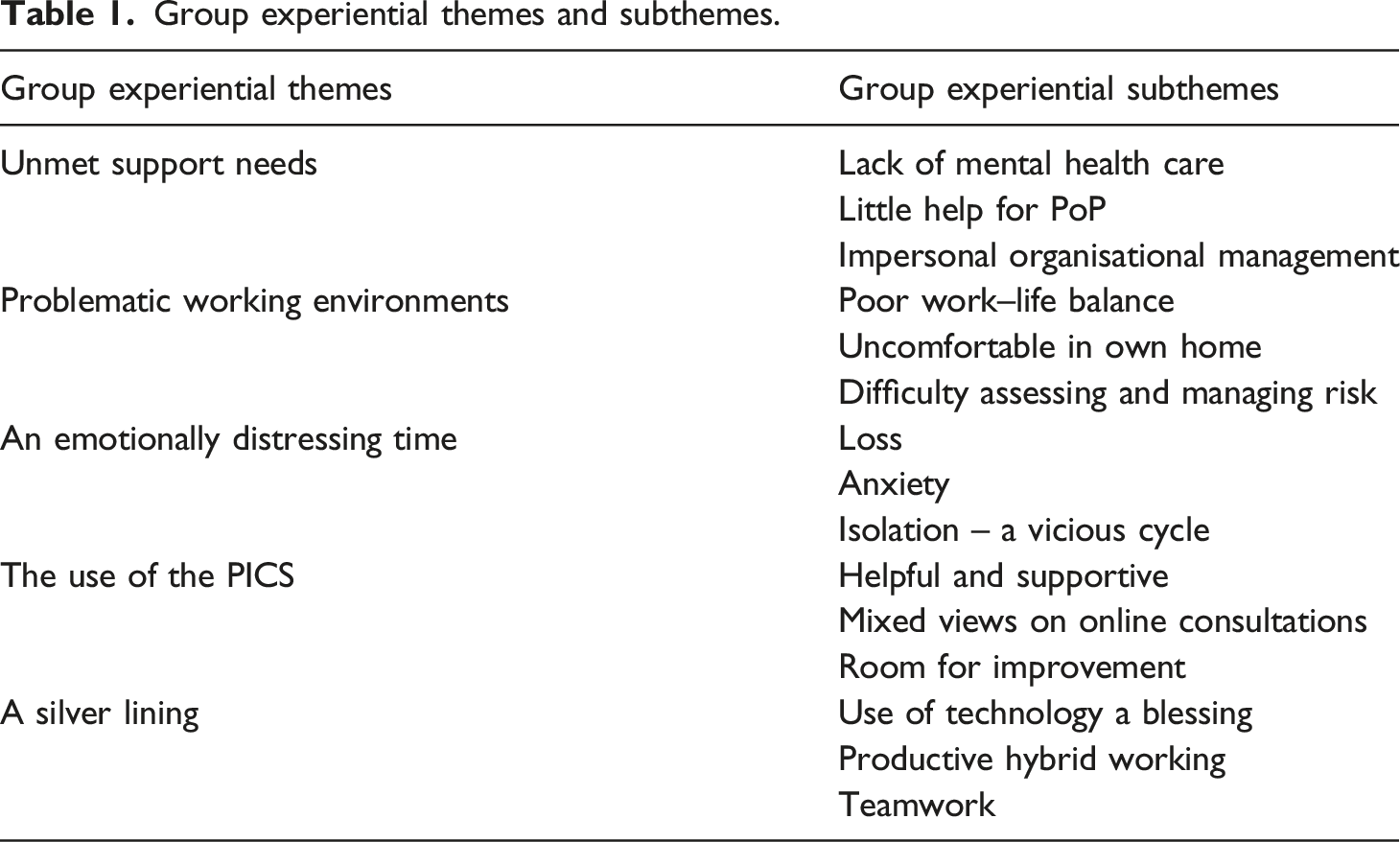
Theme 1: Unmet support needs
Lack of mental health care
Participants discussed how they felt in response to what they perceived as a significant lack of mental health support for both themselves and the PoP. One participant described the lack of support when there were difficult interactions with the PoP: ‘You didn’t have that emotional support for when we deal with horrible cases and get spoken to like garbage’ (Maureen).
Another participant alluded to the lack of mental health support resulting from the lockdowns and other aspects of the pandemic that were affecting the PoP: ‘People who had contact with mental health teams previously were reporting they’d been left for months on end with either no contact or a phone contact every six months’ (Ava).
Little help for PoP
Aside from a lack of mental health support, participants also discussed how numerous other services were failing PoP during the pandemic. For example, one participant explained how accommodation issues were a significant problem, and another spoke about services were failing PoP on a broad scale: ‘You can’t really gloss over the fact that they’re sleeping on a park bench’ (Eve). ‘Everything grounded to a halt. Programmes, interventions, social services, drug testing, drug treatment…everything ground to a halt’ (Steph).
It is clear here that there was a distinct absence of key partner support. This made an already challenging role as a PP working with PD within the OPD Pathway even more difficult, and at times, impossible.
Impersonal organisational management
Participants also reported a perceived lack of support from the organisation as a whole, due to the impersonal ways in which they were managed as a consequence of working mainly from home. One participant explained how it felt: ‘A lot of assumptions have been made about what people would like or not like…we have a job to do but we are humans as well. The ability to be a human at the same time has been lost, being treated as a commodity rather than a person’ (Shirley).
Lynn, another participant, discussed how the impersonal management style also led to a lack of understanding of the individual circumstances in some PPs lives: ‘I think for me, if I’m being honest, it was being at home and having children around me and it not being truly understood. We were told by managers that if your child’s there don’t worry, switch off for a bit and then come back to it. But my child goes to bed at seven so am I supposed to log on and do a full day’s work then? I can’t, I’m exhausted’.
Theme 2: Problematic working environments
Poor work–life balance
Participants explained that due to working mainly from home, they found themselves spending much more time working than usual, and in most cases, they felt over-worked. One participant stated: ‘There’s no kind of separation from work and home, so I work ridiculously long hours’ (Eve).
Another participant discussed how they found it difficult to switch off when work merged with life at home: ‘For me, it’s a problem. Some people can just turn it off, but I can’t. It’s crazy, I usually log on at seven in the morning and work until seven at night. I mean, December, I worked seven-day weeks right the way through’ (Phil).
Uncomfortable in own home
Participants described the challenges that came with bringing their work into their home. For seven of the participants, their safe space in which one should be able to relax was transformed. ‘It felt like everyone was shouting at me in my own home…you were being attacked in your own home’ (Caitlin).
Maureen explained how it was particularly difficult speaking with and managing the PoP over the phone in her home when her children were present: ‘I had an incident where my daughter walked in on a conversation when I was talking to a sex offender. She asked me a question after, and you know, I felt like the worst person in the world. She kept asking me what something meant’.
Difficulty assessing and managing risk
Participants found it difficult to assess and manage the high risks that the PoP were facing, while operating within the provisions and restrictions put in place during the pandemic, such as mobile phone calls, door-stop visits, and online support programmes. One participant stated: ‘I had a guy who needed to do the “building better relationships” course, and because it was all virtual, he was just getting high in his house whilst he was doing it. When you see people face to face, it’s completely different than over the phone. They can be doing whatever they want’ (Steph).
Furthermore, another participant expressed her view of the limited usefulness of door-stop visits: ‘Not being able to see them face to face. You know, door-stop visits…what an absolutely pointless task that was. They could have been in anyone’s house. It was just a pointless task to check they were still in the country’ (Ava).
Theme 3: An emotionally distressing time
Loss
During the pandemic, four participants reported on the emotional impact of experiencing bereavements; some of family members, some of fellow PPs, as well as a number of PoP. As one participant put it: ‘We’ve lost a colleague to COVID and then I lost my own brother last Christmas. So on top of all the work related challenges, there’s been a lot of personal challenges all linked to COVID. To still use the word “challenging,” it’s appropriate on one level but on another level, it doesn’t really sum it all up’ (Shirley).
Another participant spoke about her distress upon hearing about the suicide of a PoP she worked with: ‘Sadly, one of my cases killed themselves and, I mean, that could never have been predicted but there was a referral to mental health for him via the GP that never happened. I got the call about that when I’m sat on my own at home. I had to switch my computer off and stop because I was so distraught’ (Steph).
These findings emphasise the complexities of working with high-risk PoP with PD, especially during these unprecedented conditions.
Anxiety
There was a significant amount of anxiety present among the participants, which they attributed to a number of issues, including the lack of support for PoP and the amount of additional work they were faced with. As one participant explained her sense of overwhelm, she stated: ‘…opening up your emails and seeing 20 emails the next morning was enough. Now you’ve got that plus multiple streaming channels on teams and I don’t even look at half of them and that can create anxiety, but I just don’t have the time’ (Colin).
Another participant shared their worries over the lack of support that the PoP were receiving and how witnessing this was affecting them personally: ‘Managing risks, just become, you know, this is the point where there’s that fear people are going to hurt themselves more, so I’m more worried about them as people…and there’s been some sleepless nights because I’m trying to compensate for the services that don’t exist’ (Ava).
As with the previous subtheme concerning loss, it is clear that PoP with PD were, at least at times, in most need of support. However, the absence of these services appeared to create a significant increase in anxiety within the PP as they were left simply worrying about the PoPs’ wellbeing and in a helpless situation.
Isolation – A vicious cycle
The feeling of being isolated affected both PPs and PoP, often made worse by a perpetuating cycle where the pandemic restrictions were seen to be both the cause of the problem and the reason for why nothing could be done to help this. For example, a participant stated this in relation to a PoP they had recently lost due to suicide: ‘Young lad, all his life ahead of him and it’s so sad. So sad. But he was isolated like me. Funnily enough he was working away as a builder and was on site but literally would have to stay in his accommodation on his own because of COVID, completely isolated from everyone. He was starting to drink more. And yeah, it’s like on Monday night it would have been unheard of but now it’s just like “yeah I’ll have one.” All the days just wormed into one’ (Phil).
Another expressed their feelings of desolation and isolation by stating: ‘I’ve come to like a burnout stage where I’m really sick of being at home. My partner is always at work, never home. So, I’m by myself a lot and I feel isolated’ (Eve).
Theme 4: The use of the PICS
Helpful and supportive
The PICS were operating throughout the pandemic restrictions by adapting their operational model to conduct consultations over Microsoft Teams instead of the traditional face-to-face approach. Participants had a lot to say about the PICS in terms of how helpful and supportive they had found the service during this time. For example: ‘The PICS are amazing! I couldn’t have done it without them over COVID’ (Lynn). ‘I feel a little more reassured and yeah…it’s just been really helpful’ (Caitlin).
These findings demonstrate how important the PICS is in terms of helping those PPs working with high-risk PoP with PD.
Mixed views on online consultations
Regarding the consultations conducted over Microsoft Teams instead of face to face, the opinions of how this worked out were mixed across the participants. Four participants did not feel there were any significant differences: ‘I’ve not found any difference in terms of the quality or anything, you know, doing it face to face or on teams’ (Phil).
However, the other five participants felt that although the PICS still provided the formal support via online consultations, this lacked the emotional support that often came with the face-to-face PICS meetings: ‘When you’re not in the room, it can feel more formal and impersonal’ (Lynn).
Room for improvement
As participants discussed the PICS and how helpful they felt the service was, many felt they wanted more access and at a faster pace. For example, one participant wanted more immediate consultations during the pandemic: ‘More drop-in sessions for emergencies would be great’ (Eve).
An issue that was mentioned by many of the participants was that they had to wait a long time to receive a consultation from the PICS: ‘They have very long waiting lists’ (Colin).
Theme 5: A silver lining
Use of technology a blessing
Participants referred to the use of technology, such as the Microsoft Teams platform that made work easier in parts, mainly due to it allowing individuals to be more available. For example, one participant explained: ‘Aside from occasional Wi-Fi issues, working on Teams has been great. It allows people to be more available and flexible to attend meetings’ (Ava). ‘Meeting with other professionals over teams…I can’t stress highly enough how much of a positive experience that has been, more people are able to attend’ (Shirley).
Productive hybrid working
Five participants discussed how they appreciated the greater degree of freedom and flexibility afforded to them through online work and the advantages of attending the office less, which they felt was beneficial personally, and on a service level. ‘In my opinion, with 21st century probation, the smarter ways of working are essential’ (Lynn). ‘I like working from home in the sense of having my own space, and I’m sort of able to manage my own time. Another thing, I live an hour and a half away from the office so doing that twice a day all week was wasted time’ (Maureen).
It was interesting that for one participant in particular, Maureen, she appreciated working from home at times as explained above. However, she was also very passionate about not bringing certain elements of the role into the home, for example, when having conversations with PoP when her children were around (quoted within the ‘Uncomfortable in own home’ subtheme).
Teamwork
During working through the COVID-19 restrictions, it was evident that PPs had been very supportive of, and available to one another, with much of this support coming from their online collaboration and communication. When asked about coping strategies, most participants talked about their teammates: ‘My teammates are invaluable…we’ve made the difference’ (Caitlin). ‘Just my colleagues I’ve got, this is going to sound cringe, but my team that I work with are great. Really supportive and you know they’re always there if you need to speak with them even though it’s over Teams’ (Eve).
Discussion
The findings from this study demonstrate that working during the pandemic restrictions, as a PP managing high-risk PoP with PD, was both a challenging and emotionally impactful experience for several reasons. The unmet support needs for both PPs and PoP had a significant impact on individuals’ mental health and wellbeing, which was often compounded by a sense of an impersonal approach from management. Working from home brought a number of problems and many PPs, especially those with children, felt unsafe in their own homes due to the nature of the role and communication they needed to have remotely with PoP. During this time, many were working significantly more hours to keep up with the caseload demands whilst struggling to assess and manage risk due to the remote nature of working online. At least half of the PPs interviewed experienced bereavements, either their own family members due to COVID-19 or PoP who had taken their own lives. Understandably, this caused significant emotional distress and made an already challenging role even harder. Many PPs experienced a strong sense of helplessness resulting from the fact that they could not support PoP in the way they usually could before the pandemic began, mainly due to the absence of partner services. Levels of anxiety and isolation were very high for both PPs and PoP, with the pandemic lockdowns creating a vicious cycle as both the main cause of isolation as well as the reason it was much harder for anyone to alleviate it.
The continued offer of the PICS during the restrictions was clearly welcomed, with mixed views on the remote delivery of services. The PPs were positive about the service and felt it had been of great support during a challenging time, and in the context of the lack of support in other areas. However, PPs wanted more availability and accessibility. It is clear that the PICS is a valuable form of support for PPs working with high-risk PoP with PD. Despite a large majority of the findings pointing to negative experiences, there were some positives and examples of good working practices. Around half of the PPs enjoyed the flexibility of hybrid working and felt that some tasks were better completed at home. This approach reduced commuting time for several PPs and thus aided perceived productivity. PPs also embraced the use of technology and felt that Microsoft Teams allowed more individuals to join meetings due to not needing to be physically required at a specific location. Finally, it was evident that PPs had worked extremely well together and supported each other during this time.
These findings compliment those from previous studies based in other countries. For example, Sturm et al. (2021) established that PPs in the Netherlands found remote working flexible and that it saved travel costs, similar to what some of the PPs explained in this study. However, Sturm et al. (2021) also found that PPs stated that this form of working was best suited for PoP who are low-to-medium risk, which of course contrasts with this study where all PPs were managing high-risk PoP with PD which adds a layer of complexity in this case. Further, Stempkowski and Grafl (2021) in Austria found that PPs generally managed to keep in contact with PoP, although they had worries about the lack of personal contact they were having with them. They also found PPs were concerned about the amount of support services for PoP that were suspended during the restrictions and that communicating with them when at home was sometimes stressful, particularly in those PPs with children. These findings mirror some of the themes found in the current study and demonstrate that PPs were dealing with the same challenges during working from home and that internationally, support services suffered during this time.
When comparing the findings of the current study to the previous studies in the UK, there are some notable similarities and differences. Phillips et al. (2021) found that the PPs were generally negative about the impact the pandemic has had on their work and much of this negativity was centred around having to work from home. The pandemic seemed to have exacerbated the emotional challenges of the job, mainly due to the pressures of working from home and the restricted access to the usual coping methods, for example, socialising with colleagues. These findings compliment some of the themes found in the current study and demonstrate that working through this time was extremely challenging and demanding for PPs. This is also echoed in the work by Armstrong et al. (2020) in that PPs were significantly concerned for those they worked with due to the intensification of the challenges they were already faced with. This issue was particularly poignant in this study as the PPs were working with PoP who were high risk with PD which involved numerous challenges even before the COVID-19 restrictions. Further, Herzog-Evans and Sturgeon (2022b, 2022c) and Sirdfield et al. (2022) found that most partner agencies were closed which would normally provide medical, mental health, or and substance misuse treatment for PoP. This was a cause of anxiety and, sometimes, loss for the PPs within the current study as many PoP suffered due to the lack of key partner support which would under normal conditions would be accessible.
Interestingly, the results found in the current study contrast with some previous research. For example, O’Neill and McGreevy (2020) found that PPs had been able to adapt their approach and to continue to provide an individualised service to all PoP during the COVID-19 restrictions. The current findings, to a certain extent, present the opposite as PPs were struggling to support PoP with their individual needs and also assess and manage their risk. Similarly, Norton (2020) found that PPs adapted to the challenges presented and that new measures were put in place to protect the health and wellbeing of staff. Again, the current findings contradict these as PPs discussed a significant lack of mental health support for both themselves and PoP. Further, the current findings do not present the PPs as having adapted to the challenges that arose when working during the restrictions. Rather, they were clearly struggling to cope, overworked, anxious, and isolated. These differences could be due to the PPs in this study being from a group who access the PICS, and as such, only manage high-risk PoP with PD. It is probable that the nature of their roles may have exacerbated the challenges that arose during this time, an impact that is illustrated by the comments of PPs in the current study connected to the ‘difficulty assessing and managing risk’ theme.
As with all research, the current study is not without its limitations. Due to the small sample size, the findings are difficult to generalise to all PPs within the UK. However, this limitation is a necessary compromise within the IPA-based research framework due to the in-depth analysis undertaken and the amount of time required to do so (Smith et al., 2021). Furthermore, a common concern with IPA-based research is the subjectivity of the researcher’s interpretation of the data when generating the themes. However, steps were taken in the current study to enhance the validity of that interpretation through the use of participant validation where the participants were invited to evaluate the themes after they have been generated. This method of validation is known for its methodological, ethical, and empowering effects, giving the participants more of a ‘say’ in the conclusions that the research is drawing (Slettebo, 2021).
In summary, this study is the first of its kind to have investigated the experiences of PPs who used PICS to manage high-risk PoP with PD in the context of the OPD pathway, during the pandemic. The overall findings demonstrate that there were several unmet support needs and associated high levels of emotional distress. In addition, working from home was particularly challenging in terms of assessing and managing risk and was at times experienced as problematic and ineffective. The continued input from the PICS was appreciated during this time, although it was not always sufficient. Finally, the use of technology, hybrid working, and coming together as a team were positives that the PPs appeared to take from this experience. Future research should focus on measuring the impact of the pandemic on probation staff, including teasing apart the contribution of different factors on workforce performance, productivity and wellbeing, and developing services to support the unmet needs of PP and PoP exposed by the pandemic.
Footnotes
Declaration of Conflicting Interests
The author(s) declared no potential conflicts of interest with respect to the research, authorship, and/or publication of this article.
Funding
The author(s) disclosed receipt of the following financial support for the research, authorship, and/or publication of this article: This work was supported by the Offender Personality Disorder Strategy, Recovery and Restoration fund, Merseyside (grant number: GAP50001098).
