



Abstract
This polyvocal article is an anecdotal narrative from the author researchers, supported by a photographic essay, presenting the methodological and contextual experience of image-making and contemplation undertaken in three early childhood education centres (ECEs) in Christchurch, Lyttleton and Timaru. The research was positioned through a key research question: How might we better understand engagement with local conditions for children’s access to water through the application of visual methods – in Aotearoa, New Zealand? The experience for the team was transformative, leading us to reflect upon our time in the centres, our collaborations and interactions with the children and teachers, and, primarily for the purpose of this article, how the act of image-making shaped our encounters while at the ECEs. A critical research method in the project involved photography of the lived experiences of the children in the centres, as lensed through representations of water by children in their daily lives. The shifting gaze of the photograph and the daily narrative afforded to the wai (water) transmitted is not simply about the physical properties of water but about the whakapapa (or origins) of wai as a life force that changes the flow of direction or activity. The researchers took a ‘walking with’ immersive approach to access the world of the children that simultaneously relied on the subjectivity of the photographers as an unfolding method in action. Central to the interests of this article is what we learned from the image-making experience. Lensing our research through visual methods transformed how we encountered our subjects. Invisible moments were rendered visible in the contemplative act of taking and then thinking about the photos. The photographic text, collected and reflected upon (by researchers spanning distinctly different practices), shaped a nascent transdisciplinary methodological approach to build into our future inquiries.
Keywords
Introduction
This polyvocal article is organised as an anecdotal narrative from the author-researchers. The account is supported by a photographic essay about tamariki’s (children’s) engagement with water across three ECEs (Early Childhood Education Centres) in Christchurch, Lyttleton and Timaru in Aotearoa – New Zealand. We present the methodological and contextual experience of image-making and contemplation on sites from various visual lenses. The project was established as ‘transdisciplinary’ (ethnographic, pedagogical, Indigenous practice and art) to develop building blocks for ‘shared learning’ among the researchers. The introduction of photography meant that data collection held a creative and documentation purpose. One of the issues in transdisciplinary projects is developing ‘mutual understanding’ that transcends disciplinary contexts, evolving into a ‘common language’ the team can develop over time (Hadorn et al., 2008). We wanted to learn from each other to test the visual’s potential for crafting creative vectors of discourse across our different ways of making and thinking research. This approach was a means of rendering, disrupting, advancing and politicising voices, particularly young children and their relationships with water. The experience for the team was transformative, leading us to all reflect upon our time in each of the centres, our collaborations, our interactions with the children and teachers, and, primarily for the purpose of this conversation, how the act of image-making shaped our encounters while at the ECEs – which then reverberated for many months after, as we worked through our visual and written notes (Figure 1).
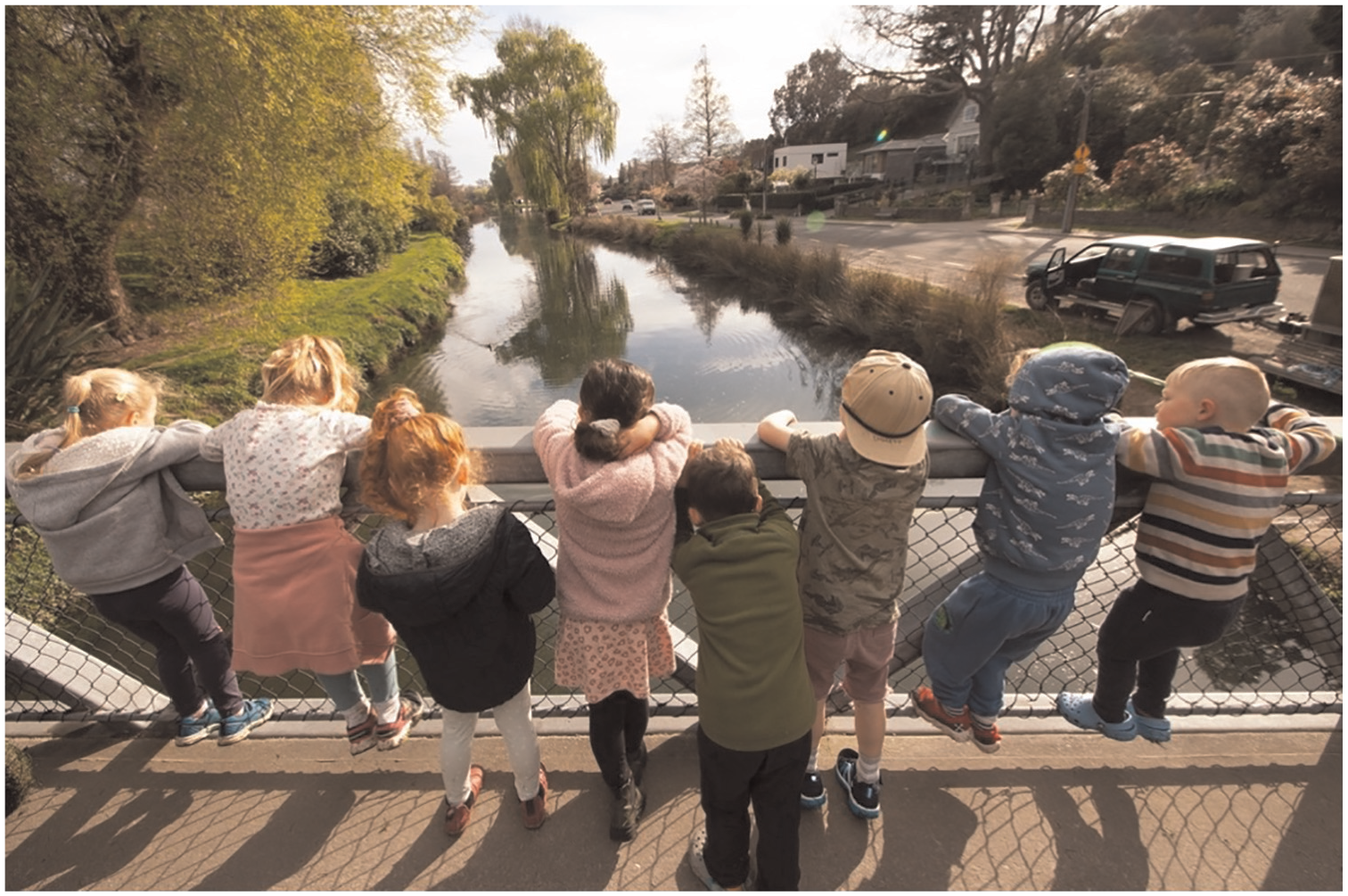
Tributary field trip.
The research emerged as part of the international ‘Wash from the Start’OMEP: World Organization for Early Childhood Education project, which aimed to better understand engagement with local conditions for children’s access to water through the application of visual methods (Denton et al., 2024; White et al., 2024). The fieldwork discussed in this article arose from the researchers’ joint desire to respond to UNESCO’s goals concerning global access to safe and clean water for drinking and sanitation (see Sustainable Development Goals – Resources for educators; unesco.org). A critical research method in the project involved photography of the lived experiences of the children in the centres, as lensed through representations of their interactions with water. In a bicultural context, the shifting gaze of the photograph and the daily narrative afforded to the wai (water) transmitted as not simply about the physical properties of water but about the whakapapa (or origins) of wai as a life force that changes the flow of direction or activity (Figure 2).
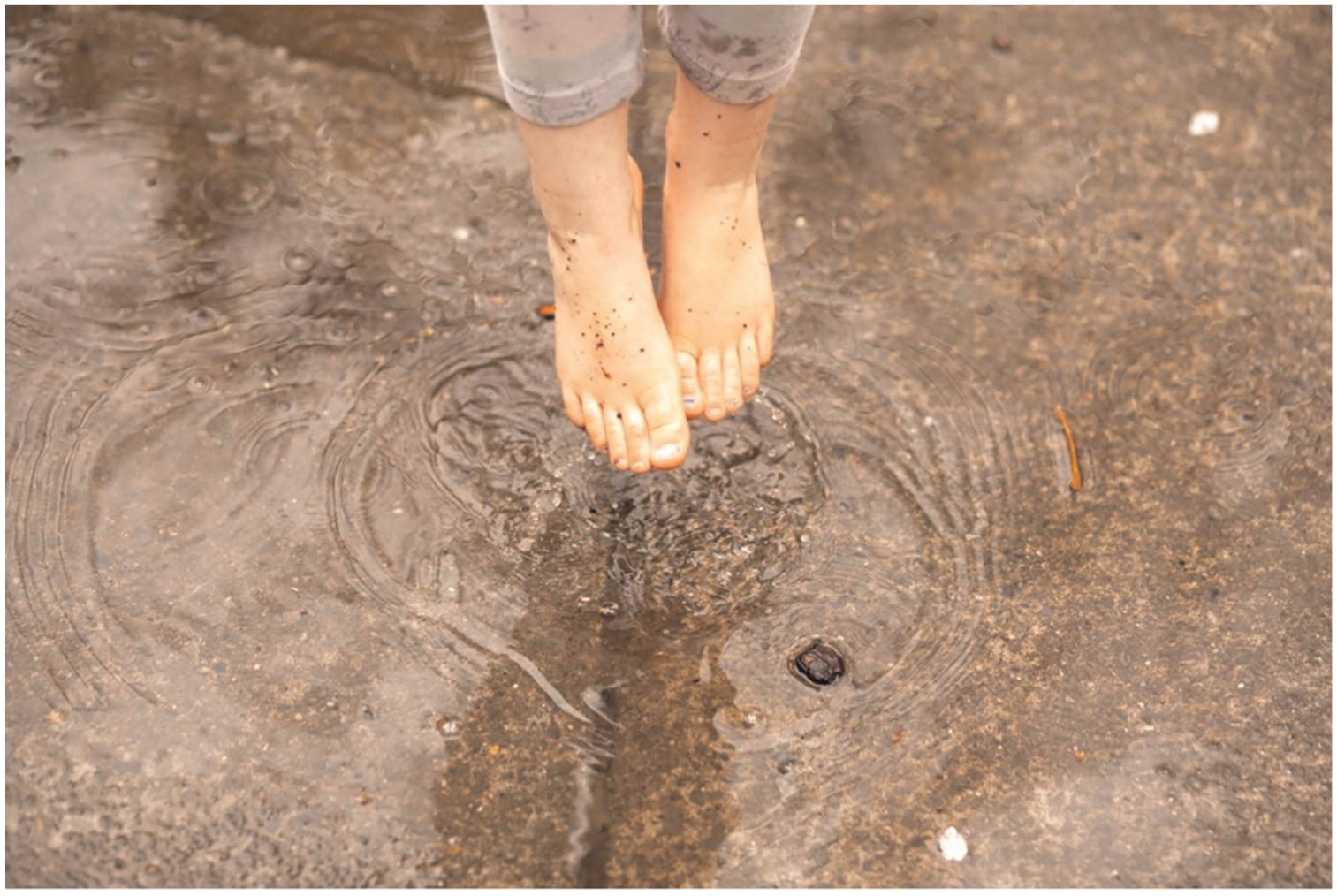
Dancing in the rain.
Children worldwide, who rarely have a say in global sustainability goals, are the most affected group regarding safe access to water (World Health Organization, 2017). Devasting impacts on the waterways they need to thrive dynamically affect their daily and future lives. Our research group shares the view of many – that ecologically minded frameworks are needed to alter this trajectory. Moreover, the authors collectively consider that children have much to offer us in broadening our understanding of water as vital to the survival of our ecosphere. Inviting children’s voices to contribute their experiences and perspectives – as world citizens – lies at the heart of the researchers’ endeavours.
Deep cultural knowledge underpins the kaupapa Māori activities encountered in the Wai project. The challenge was whether it was possible or desirable to visualise these, given water’s spiritual and cultural status within these places. As such, the project was positioned through a key research question: How might we better understand engagement with local conditions for children’s access to water through the application of visual methods – in Aotearoa, New Zealand? This inquiry was scaffolded by a series of sub-questions that helped the researchers be attuned to the different activities happening in the ECEs, asking through image-making: How do tamariki (Children in ECEs) represent water (e.g. artistic expressions)? What do tamariki do with water (e.g. wash, drink, play)? What do tamariki think/say about water (i.e. puzzle, report, discuss)? How is water present in the ECE curriculum and pedagogy (e.g. assessment, plans)? Is it present at all? What gets privileged, and what gets overlooked? By whom? And why? We added a few probing/questioning layers of our own in accordance with local priorities and obligations that establish the kaupapa (agenda) for our localised (Aotearoa) approach, and we narrowed our age group to 3- to 4-year-olds (White et al., 2022). The research team did not photograph the participant’s faces to protect the children’s anonymity – turning instead to creative visual renderings of their engagement with water in and out of the curriculum (Figure 3).
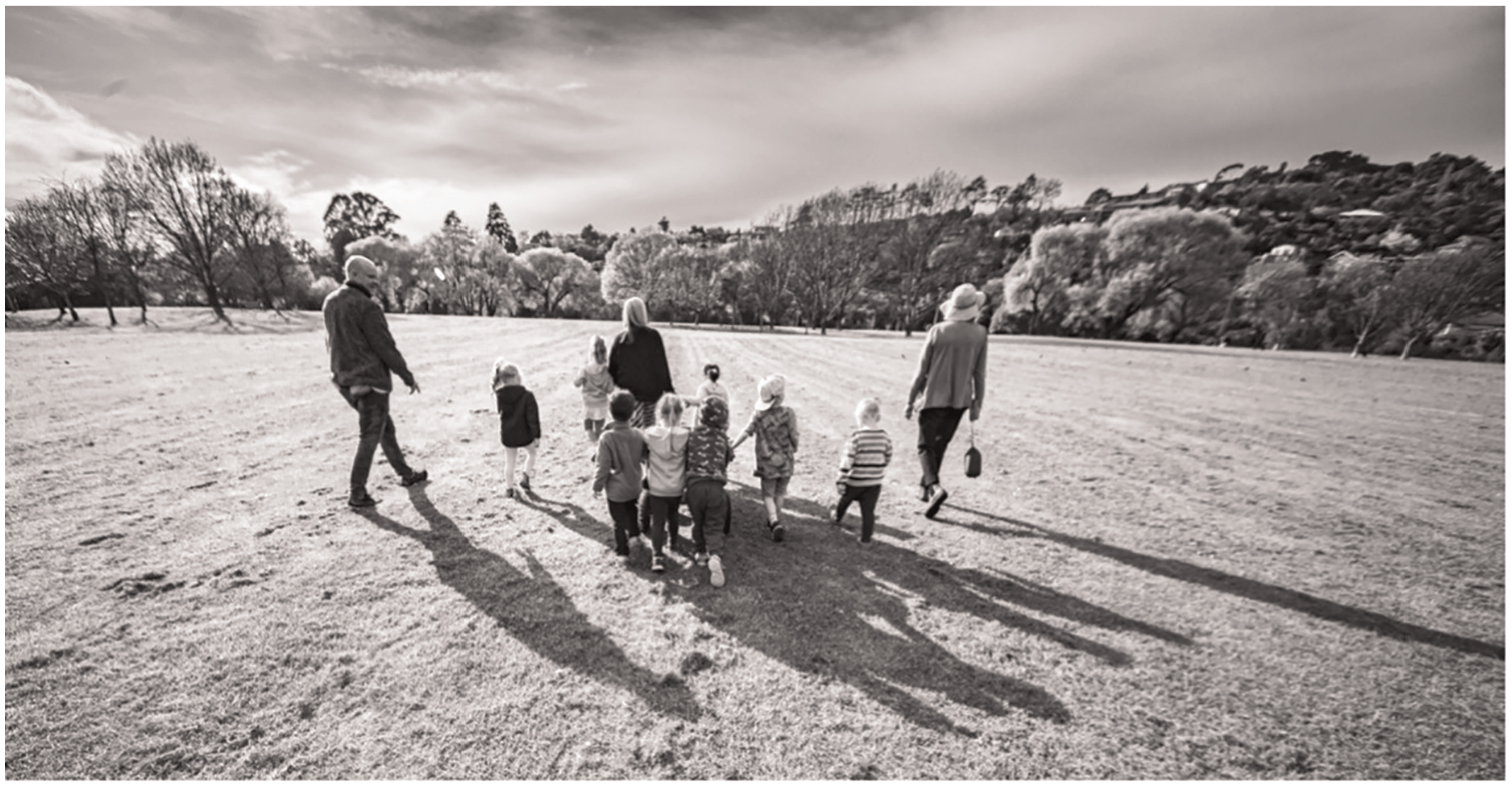
Field trip to the park and river.
The authors
Jayne White is the project lead of the Aotearoa New Zealand arm of the international pilot research project initiated by OMEP. With 30 years of experience as a dialogic ethnographer working with teachers in early childhood education contexts in Aotearoa (having been a teacher herself for many years before this), White has a sustained commitment to promoting children’s perspectives through visual modes of inquiry. Her lingering interest in ‘the work of the I/eye’ (White, 2016) and notions of visual surplus (White, 2024) based on the inspiration of Mikhail Bakhtin have led her to research spaces where a polyphonic chorus of voices shape meanings that are derived (White and Janfada, 2025). These take precedence over those of the loan researcher (White, 2017) and set dialogic movements in motion through ‘two-faced’ approaches to visual interpretation (White, 2022). White was responsible for the project’s research design, ethics and entry into the field. She was the photographer and narrator across two of the three sites – and led the compilation of the final OMEP report.
Ngaroma Williams is an Indigenous scholar belonging to the Te Arawa, Tainui and Mataatua peoples. She is a qualified, registered and practising (ECE, Primary and Māori Education) educator committed to supporting teachers in becoming comfortable and confident ethical bicultural teachers in Aotearoa, NZ. Williams brought wai to our conceptualisations of water – outlining the interconnectedness of the whakapapa (genealogical descent to the iwi (local people), whenua (land), ngā arawai (the waterways) and ngā rauemi (resources) concerning the locations of all three sites across the regions.
Andrew Denton is a film essayist and photographer who works predominantly on the topic of ecological emergency. His role as a visual artist was to initially work with the researchers as a guide towards some visual methods and, for some of the more novice photographers, some technical and strategic means of using the camera. The task was to photographically document the children’s daily interaction in the centre, focussing on their engagement with water across various activities. In his ecological work, Denton focuses on the uncanny, strange and playful in the collection of moving images and photography to render the everyday strangely – such that we might look at it differently and then think of it differently.
Andrew Gibbons’ role in the project, as he saw it, was to play, engage with children in their play, and later support analysing the data, read the images through a subjective understanding of their time and place and relationships with himself, water, the ECE space, other children and teachers. Gibbons is a qualified and registered early childhood teacher and an early childhood teacher educator. His doctoral research explored play as a technological practice in early childhood education, drawing on the philosophy of education and the philosophy of technology.
Methodological explorations
Three research teams were deployed across three ECEs. The researchers spanned a range of disciplines with different methodological approaches, taking on roles that materially influenced the project. The team of six researchers included the authors of this article, Andrew Denton (the artist-photographer), Ngaroma Williams (tangata whenua), Jayne White (the observer-ethnographer) and Andrew Gibbons (the player). The team also included Glynne Mackey (the environmental educator) and Kaitlynn Martin (the scientist). The project continuum drew upon a shared approach to collecting data from different (subjective) disciplinary approaches. To parse out the narrative of this project, this article communicates some of the visual methods deployed through documentation, immersion in the visual landscape of the centres, and the different experiences of the researchers, addressing the questions that ‘visually walking’ elicited.
Reflecting on the ‘Wash from the Start’ OMEP project, we ask how the photographic data collection (central to the evolving methodology) impacted the research, the researchers and the subjects we engaged with. There were no interviews with the children or the ECE teachers, only loads of conversations, as the researchers took a ‘walking with’ immersive approach to access the worlds of the children that simultaneously relied on the subjectivity of the photographers as an unfolding method in action. Walking as a method, which ‘invariably invoke[s] sensory and affective investigations’, was enlisted as an ally to the photo-artistic approach to open ourselves to corporeal frequencies emitted from the site, the participants and the activities of play (O’Neill and Roberts, 2019). Over the days we spent in the centres and during post-fieldwork data analysis, we wondered how taking and thinking about the images we collected during our time in the centres shaped and/or influenced our research practices. Why did we take the images we took? How did the photography serve the project’s aims and negotiate the research questions? What was the purpose of taking the images in the field? And – central to the interests of this article, what did we learn from the image-making experience (while taking the photos and then looking and thinking about them later)?
Williams describes her role in the project as following the flow of wai from upstream, where the project was introduced to the ECE teaching teams at the three sites, and the associated follow-up tasks were coordinated. Her historical, environmental and resource management knowledge across all three sites provided the mainstream flows of wai towards brokering the reams entries and participation to each site and their environs. She contributed and explained the emerging streams of the project that represented views of tangata whenua and bicultural curriculum happenings within the daily programmes of each site.
Williams emphasised the steady flow of the wai (water) that created the different branches for the research team to present and disseminate findings: across knowledge streams a kaupapa Māori methodological approach of He Awa Whiria the braided rivers (Macfarlane and Macfarlane, 2019) which allowed both tangata whenua ways of being, knowing and doing come together with Western approaches and highlighting the mixture of implicit and explicit identifications and articulations of Mātauarnga Māori (Māori knowledge). Williams shared insights towards understanding Mātauranga Māori that gave validity to the project’s applications of ngā mātāpono (kaupapa Māori ethical principles being lived through contextualisation and steeped in Māori worldviews) as she believed that it is through understanding that one can argue the critical alignment(s) to Western scientific rigour (Stevens et al., 2021).
The Wai project composed its lens through contemplative transdisciplinary practices, deploying art-based research practices to open new ways of thinking about education, indigenous knowledge and science in our current environmental challenges. Education ‘initiates a social event of creative co-thinking, where what is unknown is revealed to us only in the presence of others’, moving from a knowledge delivery system towards collectively experienced discovery (Epstein, 2012: 293). Art practice as research has steadily evolved from a contextually driven mode of producing artefacts towards a means of sensing, knowing and being in the world differently in a relationship with other disciplines. As far back as the 1970s, the peer-reviewed Leonardo Journal pioneered this practice, emphasising ‘writings of artists who use science and developing technologies in their work’ (Leonardo).
Interrogating the notion of a photographic essay is also part of our process. As seen in Life Magazine, the genre originates from visual anthropology, ethnography and documentary photography. It is a ‘narrative construction’ that seeks to document its subject (Sutherland, 2016: 2). For our research’s purpose, aims and development, we might align ourselves more with how the essayist film genre works with its subject. Corrigan (2011) offers an insightful definition of the essay film, ‘the essayistic stretches and balances itself between abstracted and exaggerated representation of the self (in language and image) and an experiential world encountered and acquired through the discourse of thinking out loud’ (p. 15). The word essay comes to us via the French verb essayer, which means ‘to attempt’. In this mode, we grapple with, navigate, negotiate and converse with our subject, taking account of our subjectivities in the process. Rascaroli (2009) defines the essay film by drawing from Hans Richter’s seminal ‘Der Film Essay, eine neue form de Dokumentarfilm’.
[In the 1940 text he] announced a new type of intellectual and emotional cinema, able to provide ‘images for mental notions’ and to ‘portray a concept’. In this effort to give body to the invisible world of the imagination, thought and ideas, the essay film can employ an incomparably greater reservoir of expressive means than can the pure documentary film. Freed from recording external phenomena in simple sequence the film essay must collect its material from everywhere; its space and time must be conditioned only by the need to explain and show the idea. (p. 24)
Visually, we attempted to sense rather than harness a narrative in how we walked through the spaces and encountered the children at play and learning. Stories manifest as cultural experiences, surprise moments and arrested assumptions – affects transmitted into emotional responses. In those responses, we can make connections unfolding into subjective understandings. We aspired for this in our encounters and how we worked with image-making and with each other (Figure 4).
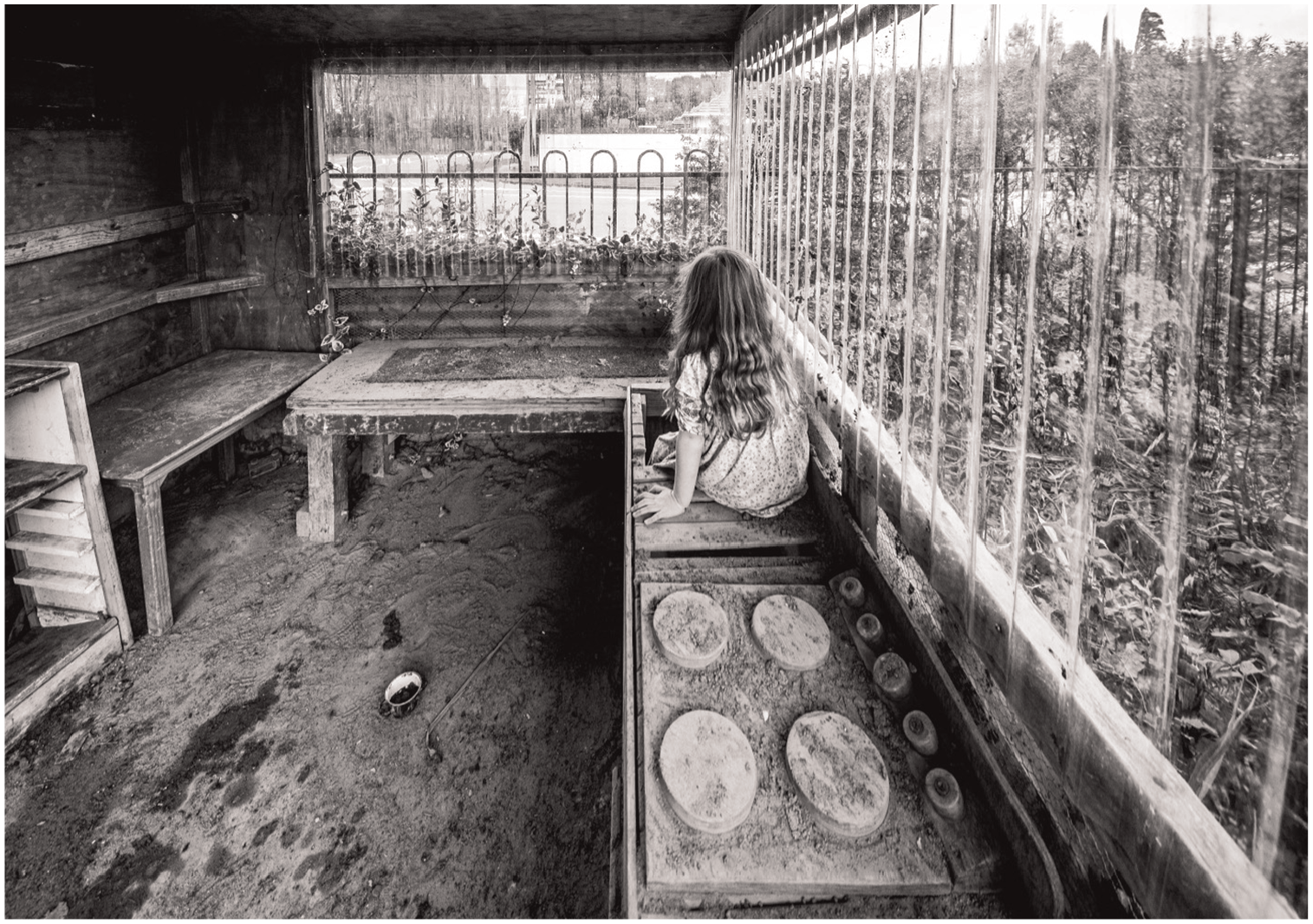
Water and mud play in the kitchen.
Together, the research team developed a transdisciplinary, bicultural methodological process of calibrating themselves to be ambient, contemplative, creative and slow in their dialogic interactions with these subjects and spaces and the permeating force of the wai itself. This way of approaching the field aligned with the authors’ different research areas but was also a means to connect (and sometimes disrupt) their disciplinary practices. The children’s representations were viewed through different forms of visual surplus on the part of the researchers. Walking as a research method (Clark, 2022; O’Neill and Roberts, 2019; Springgay and Truman, 2017) and dialogic visual reflection (Lawrence, 2023; Snyder and Turesky, 2023) was inspirational in this regard here, too. We drifted through thoughtful interactions, informed by the sensations that were invoked ‘in-the-moment’ visual insights as co-constitutive processes of meaning-making ‘with’ children and water. This approach resists ‘capturing’ information for ‘after-the-moment’ renderings through the perspectives of the adults who grant their significance alone. As Lawrence (2023) explains: The capacity to think of things as ‘possibly being so’ can, according to Egan (1992, 42), greatly ‘enrich rational thinking’. Therefore, it is also arguably beneficial to allow for potential more-than-human dialogue. However, the outstanding critical challenge is to move beyond interpretations where the value base is rooted in human agency. (p. 13).
The tensions arose for us – as photographers, players, advocates, indigenous knowledge holders or ethnographers – regarding the extent to which we could ever diminish the ‘I’ or amplify the matter around ourselves in its absence. The project required each of us, in our own ways, to take certain epistemological and ontological leaps as we entered the field. If we don’t believe that a building, street, river or tree and everything it is made of have something to tell us, we can get stuck in the anthropocentric trap that traditional forms of ethnography enable. While staying in that trap allows for a sense of safety and control, stepping aside from it allows strange and somewhat risky compositions of the world, which can emit other ways of encountering. We will invariably notice other things when we release ourselves to the affective possibilities at play when we walk through space, place and time.
We can also calibrate certain senses more powerfully than others. Springgay and Truman (2017) reflect, ‘There is no denying that sensory experiences, haptic feelings, and affective intensities course through walking research. What matters, we contend, is how we tune into sensation, hapticality, and affect’ (p. 48). When taking a photograph, there is a concentration of seeing through the lens, the composition and the subject – our skin feeling the weather or the moisture in the air, and our noses picking up the early blossomings of Spring – each of these sensations will alter our perceptions and understandings of being in the research. Our ears might also be more acutely alert to the sounds and voices of the action around us. This mode of immersion into the site can eschew Eurocentric ways of capturing data as some fact-based representation of our research. What about poetic ways of knowing – or learning from indigenous ways of receiving the things the world can teach us? Filmmaker Barclay (2015) understood that just capturing his community on film would not properly or respectfully tell the stories of his people. He said: I believe we might do well to further explore how to make the camera listener. As a Māori, you are taught to be a listener; you sit at the feet and open your ears. You have no ‘right to know’. The knowledge is gifted to you at appropriate times and in appropriate places. Those who do not have the patience and the humility to undergo this way of learning are unlikely to ever gain much of real depth (p. 17).
Ngaroma Williams reflections: The mauri in action – What are the Mātaurarnga Māori teachings and learnings?
Watershed through the eyes of this Indigenous researcher was the shifting gaze of the photograph and the daily narrative afforded to the wai. For me, the wai is not simply about the physical properties of water but about the whakapapa (or origins) of wai as a life force that changes the flow of direction or activity. Wai is significant to Māori pūrākau (stories) and kōrero tawhito (oral histories) as said by Mike, ‘the whenua (land) is part of the language and wai (water) is central to that’.
For this reason, I sought ways of representing water as wai– embedded in the children’s landscapes, as well as the educational practices themselves.
We are but the seeing eyes and working hands of our ancestors
Water is the foundation for physical life, but for Ngāi Tahu, there are further layers of meaning to these activities that make healthy waterways critical for the sustenance of Ngāi Tahu culture and spirituality as these practices rely on access to the resources freshwater sustains, which can be found from the principle waterways that surrounded the ECE site I entered into as a researcher. The tūpuna (ancestors) Rakaihautū and his son Rakihouia are known for creating and naming the geographical features of the Southern Islands of New Zealand. Eeling is one such mahinga kai (customary practice) that has been passed down from these tūpuna to today’s generations. Ngāi Tahu iwi refer to a whakataukī (proverb) that reminds all generations of their tangata tiaki roles and responsibilities (resource management and sustainable practices) ‘mō tātou ā mō kā uri a muri ake nei– for all of us now and for the generations to follow’.
Mahinga kai – Working the food line
Wai has always been an integral part of the local iwi – Ngāi Tahu –whakapapa (identity) as without wai there is less mahinga kai (working the food chains) for the iwi (people). Mahinga kai practices such as īnaka (Whitebaiting), hī tuna (fishing for eels), rama tuna (torching), toi tuna (bobbing), parua tuna (canalling), access to wātakirihi (watercress), access to wai Māori (safe drinking water; see: https://ngaitahu.iwi.nz/culture/mahinga-kai)
This ECE service has a weekly oudoor programme Waewae Kai Kapua which is about being adventurous, a risk taker, and the tamariki are able to take on these roles when engaging with Te Taiao, the natural environment surrounding their service. This is the estuary where fresh water from Papatūānuku (Mother Earth) meets and mixes with salt water from Tangaroa (guardian of the sea) that these tamariki have weekly access to (Figure 5).
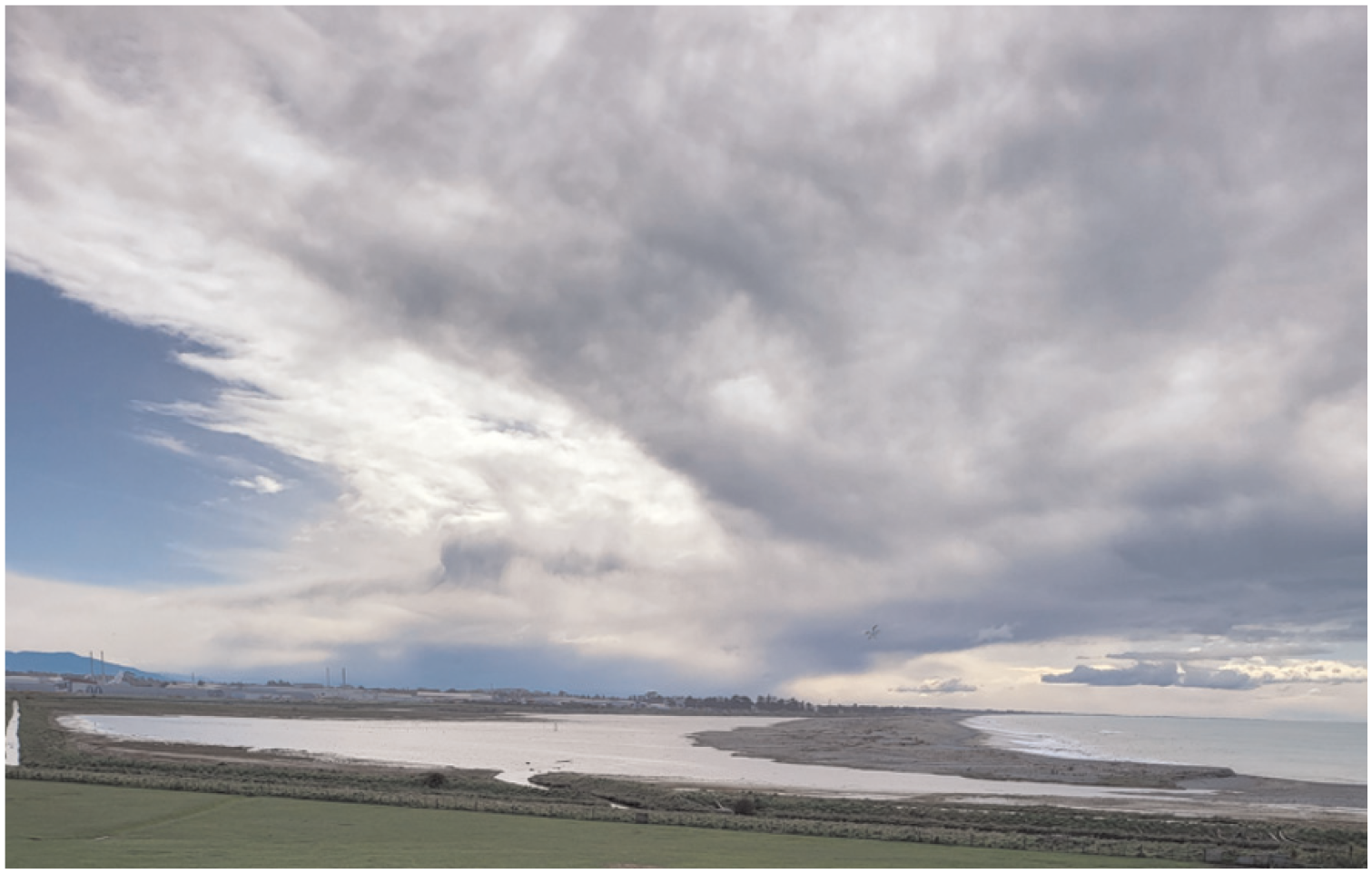
Destination: Waewae Kai Kapua adventure to the Estuary.
The tuna (eel) artwork captures the ECE service’s estuary where the Waewae Kai Kapua programme is progressed through having parents such as Mike come in and provide the tamariki with hands-on experience of the mahinga kai process of catching, cleaning, drying, smoking and eating the tuna (Figure 6).
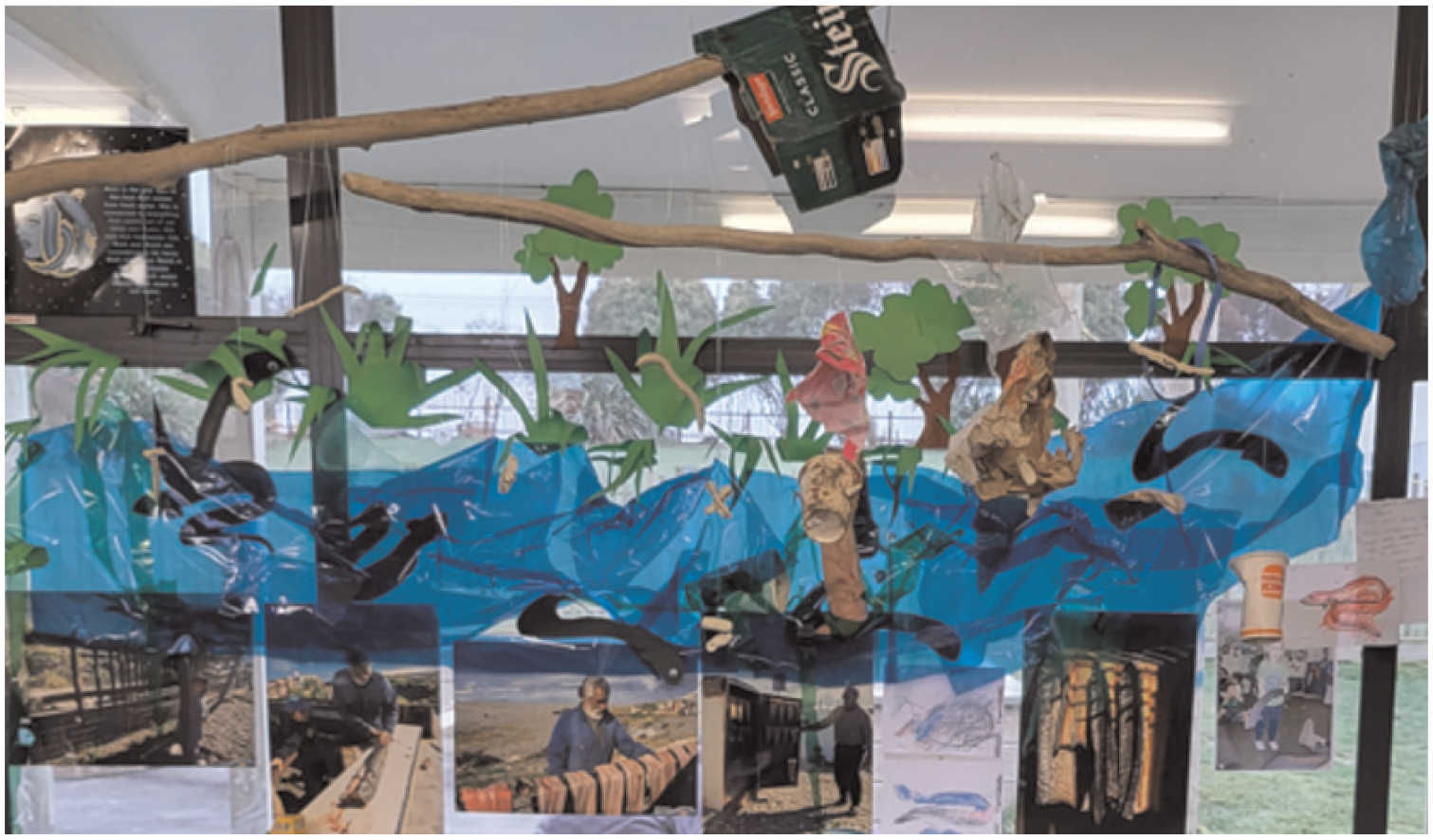
Tuna artwork.
Another important message in the mural is represented by the inclusion of green cellophane paper in the artwork. The estuary has many visitors, and unfortunately, a great deal of rubbish is left behind. On each visit to the estuary, the tamariki are always picking up the para (rubbish). You hear the tamariki calling out, ‘There is some para over here’, and off they go to collect these and bring them back to the kaiako (teachers), who carry bags specifically for the para. Kaiako have been very consistent in their collection of rubbish on these outings, and tamariki are taking on the roles and responsibilities of tangata tiaki (caring for Papatūānuku and Tangaroa). This is also told in a cultural narrative by one of the kaiako of the service.
Tangata whenua ways of being, knowing and doing
I looked for signs of wai throughout the days I spent on site. I anticipated them to be discernible in the everyday rituals that took place. These included karakia (spiritual incantations) and the blessing of food that happens before morning/afternoon and lunch, and supporting waiata (songs) are fundamental Tikanga Māori applications, a custom of Māori that has been passed down since the beginning of time. All Indigenous peoples have similar connections and are responsible for their whenua (land), ngā arawai (waterways), moana (sea) as they maintain their spiritual and cultural identity.
Incantations or prayers are used to invoke wairua (the spiritual connections that have cultural heritage and knowledge associated with the water and water places all similar stories of how water is sacred, water is life and integral to many Indigenous peoples of the world practices such as purification and blessing rituals and used to acknowledge all relationships that connect us all to the primal parents Ranginui – Skyfather) and Papatūānuku – Earthmother (Aboriginal and Torres Strait Islander Social Justice Commissioner, 2009; Te Arawa Climate Change Working Group in partnership with Te Arawa Lakes Trust and Scion, 2021; Williams et al., 2012).
The applications of tikanga Māori was evident within the Waewae Kai Kapua programme excursions to the beach. The kaupapa Māori principle of kotahitanga was seen when all the kaiako and tamariki came together and said the following karakia before going on their adventure:
Ko Ranginui kei runga
Ko Papatūānuku kei raro
E manaaki e tiaki i a tātou katoa.
From Ranginui above and Papatūānuku below Their protection, guidance and generosity are provided to each and everyone of us.
At the beach they sat down and said another karakia mō te kai (the blessing of food) as they shared a snack: pihikete (biscuits) and wai (water) bringing the group together to have snack allowed the tamariki to recount their safe engagements at the beach before returning to the ECE setting (Figures 7 and 8).
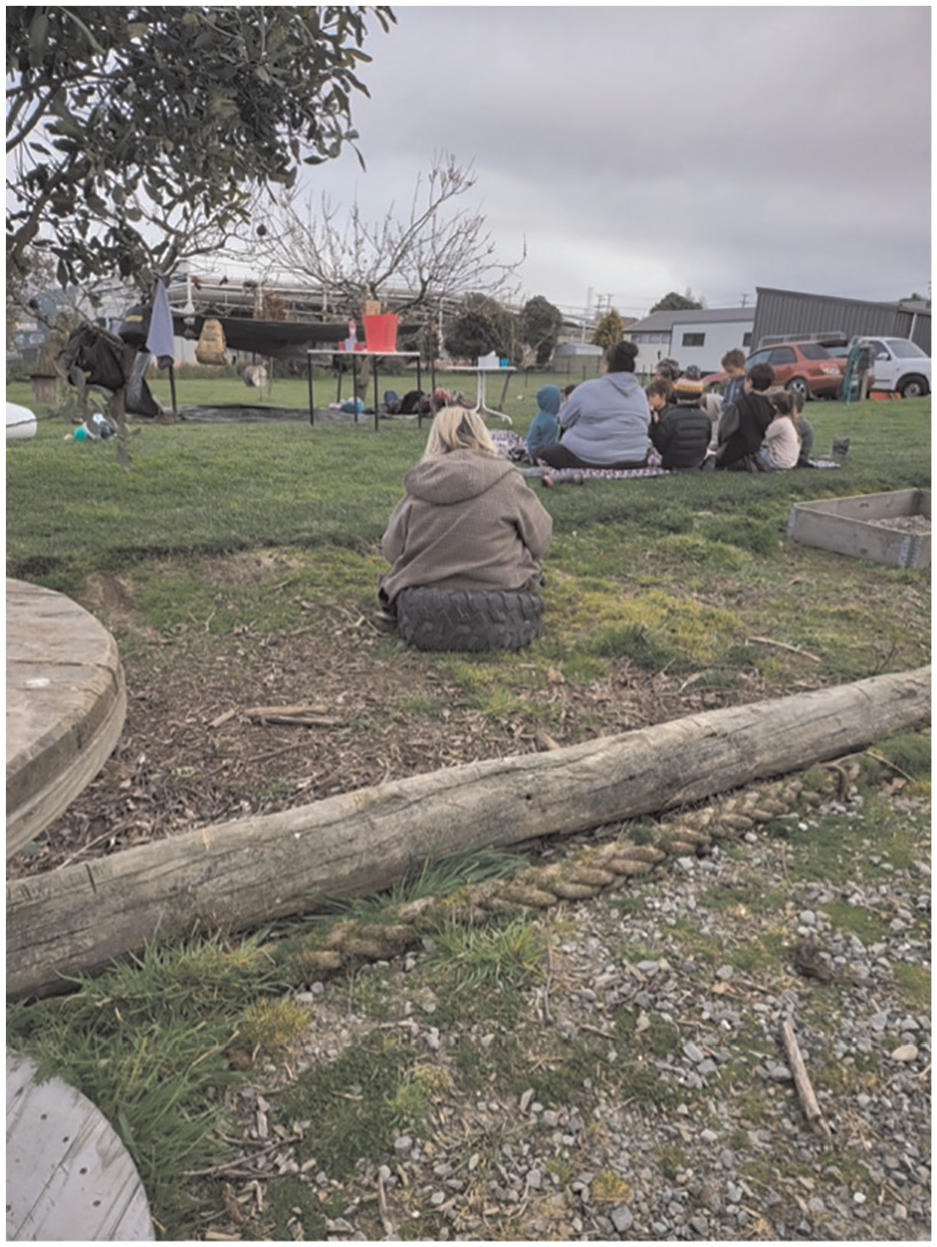
Saying karakia before leaving to Waewae Kai Kapua excursion.
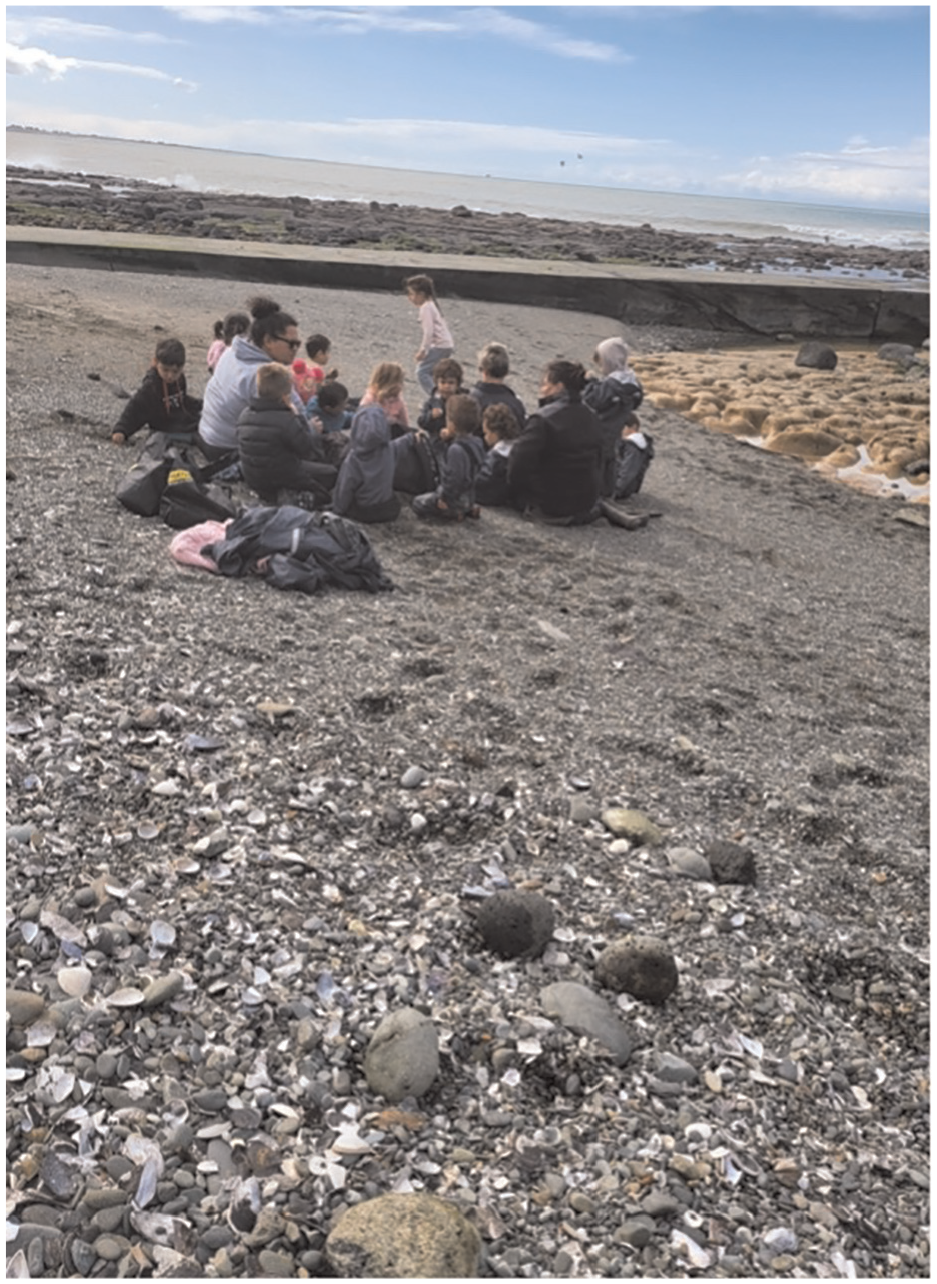
Sharing kai at the beach.
He Maramataka Māori – The Māori calendar dictates when you engage within Te Taiao
The daily programme is planned for and around a Maramataka Māori or the Māori Lunar calendar. Marama means moon, and taka means to rotate, so maramataka Māori marks the Gregorian calendar that follows a solar calendar. The phases of the maramataka commence with the first new moon or Te Rākaunui that follows the appearance of Matariki, known as the Pleiades star cluster; this usually occurs in June or July of the Gregorian calendar. Each night/morning has a name according to the maramataka. For example, Whiro is the first night of the new moon, Tirea is the second night and so on until Mutuwhenua appears to be the last night. Site one follows a maramataka and so many their weekly programmes provide optimal times to engaging in their Taiao, for example, the planting, caring for and harvesting of their māra kai, the food gardens and cooking these as a collective with their families and enjoying the vegetables through having process cooking and preparation as the service and making garden salads, vegetable soups and vegetable purees for ngā pēpi (infants) me ngā pēpi nohinohi (toddlers). Kaiako and children are able to track what is happening in their environments to support the explaining of their applications of the maramataka for example: what birds are present or visiting the area, the weather patterns – recording the sun, rain, warm, cold days, the blooming of the flora and fauna of the area these all assist in explaining the maramataka of the area.
For me, it wasn’t about choosing images that were taken by the Pākehā researcher (White) it was about articulating the significant learning that is unfolding through these images. Knowing the beginning and how this continues to develop at different times, contexts, with different people, places and objects – it is the whakapapa that gives meaning to what is happening, what is being seen or unseen and the articulations are representations of the living mauri (life force) happening. I speak from my tangata whenua lens and therefore return to the genesis stories of each of the photos the research team compiled and used; as for this wahine Māori researcher, it was about telling the unseen stories that are evident from the photos. One needs to know where the story originates from (past) to contextualise what is unfolding before your eyes. A strong advocate of the principles Titiro, whakarongo and kōrero comes into play. These principles direct researchers to observe (titiro) and listen (whakarongo). Only when you can locate yourself in the context of what is happening can you participate or contribute to the discussion (kōrero) (Figure 9).
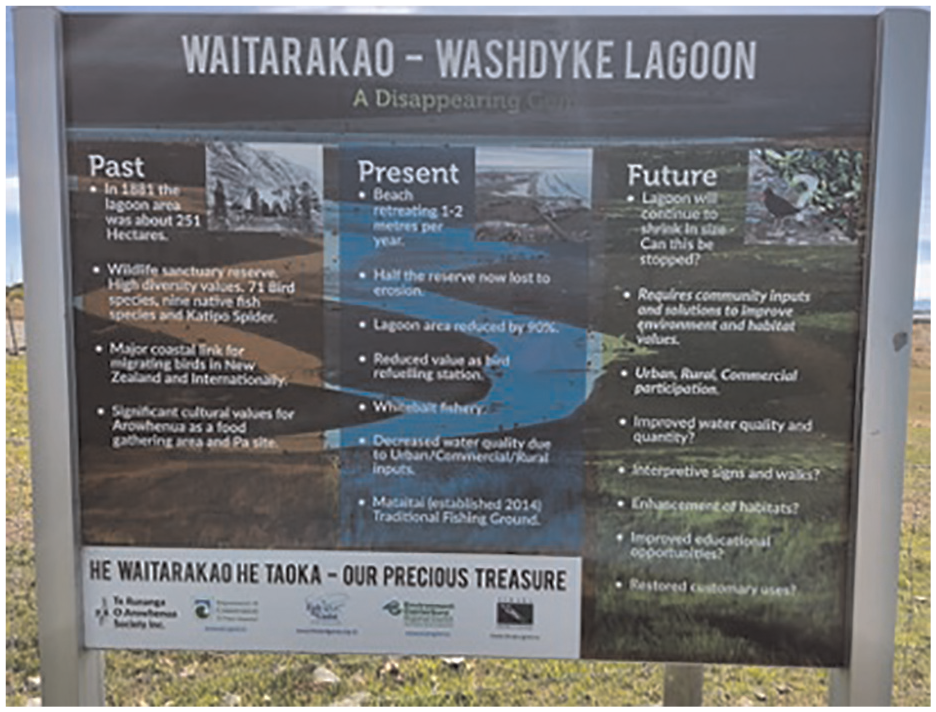
Waitarakao community project: He Taoka – a precious treasure.
Wai embraces a wealth of teaching and learning contexts for example Māori across the country acknowledge water as the source or foundation of life or commonly referred to as Wairua, meaning: two waters or a term for spirit or spirituality the key idea to note is the connection of water to spirit or to an originated essence of life. Think about how man reproduces. From the day humans are born the whole gestation period is a reminder that we are born out of wai.
Wai is the basis for all life; it is a taonga and needs to be treasured and looked after. For Māori, water holds mauri, a spiritual life force, and the mauri of the water needs to be cared for and managed accordingly. Māori apply a range of classifications to wai. For example, the springs, streams, creeks, waterfalls, rivers, lagoons, estuaries and the sea within the regions of the various iwi across Aotearoa – New Zealand, are very important to them because the histories of the people are interconnected with all these waterways. For hundreds of years, these waterways have provided both physical and spiritual sustenance for their local iwi; thus, it needs to be nurtured and treasured for the generations that follow. These waterways have:
Cultural significance – identity, and histories of the iwi
Spiritual significance – a place of cleansing and healing
A network fo trade, travel and communication
Mahinga kai practices and tikanga of the iwi: an abundance of food such as tuna (eels), inanga (Whitebait), kōura (freshwater crayfish), kanae (mullet), waterfowl and wild vegetables.
The challenges that kaiako face is acquiring the knowledge that lies within iwi repositories as the many teachings and learning using te reo me ngā tikanga Māori embeds mātauranga Māori, which can only be shared by the whānau, hapū and iwi of the area. If pedagogies of water in Niu Tīreni are to retain authenticity within the bicultural ECE curriculum such as the implementations of pūrākau (non-fiction stories), pakiwaitara (fiction stories), waiata (songs, haka, lullabies, actions, poi, tītītōrea, tīrākau) and karakia (incantations traditional/Christian) even with best intentions what are the significant teachings being offered?
Jayne White’s reflections: Embedding oneself into their world
As a dialogic ethnographer in the early years, I draw on, test, and rethink with ‘others’ in a rich methodological framework that is attuned to embodied experiences as events of becoming (White and Mahtab, 2025; White, 2020). While traditional ethnography has its roots in anthropology, then captured by sociology, its premise is based on the idea that insider beliefs and experiences can be understood by embedding oneself into their world. Though its origins were based on the idea of so-called ‘exotic cultures’, it is now mostly used to understand certain groups of people through their talk, rituals, symbols, practices and everyday lives through participant observation over time. Taking field notes, conducting interviews and undertaking document for analysis portray what Van Manen describes as realist tales, confessional tales and impressionistic tales – with obvious branches to critical ethnography and realist ethnography.
Seeing ‘with’: No last word
While dialogic forms of ethnography also lean into the telling of such tales, but their intention is not to produce a knowable subject by the outsider (Sherman et al., 2021). Instead, a dialogic ethno-methodology seeks to engage ‘with’ the participants – looking for stylistic engagements through a variety of parodic interplays in the lived event. The premise here is that there is no last word, but neither is there an alibi for the researcher who proffers an authorial gift of seeing and interpreting the dialogues that take place. In the early years such dialogues are discoverable in embodied encounters with others – people, places and things – that call for visual interplays with sensing as well as seeing bodies (White, 2020). Given the embryonic dialogues that take place for very young children, bodies in movement are seriously implicated in such discoveries, and researchers who take this seriously must look for encounters that exceed what seems obvious (White, 2021). I have come to appreciate that the same is true for water – putting the two into dialogue with one another calls for a creative response that is more often discernable through visual approaches to understanding. In such renderings – what is seen can only ever be viewed as partial at best (White, 2020). Here we are looking for the potential, the possibility, the unknowable known and the moments of uncertainty that catapult the answerable researcher into new terrain. In this regard the researcher is fully implicated for their seeings, and importantly, how these are rendered as meaningful in researching the lives and experiences of others.
Shifts in seeing, with nowhere to hide
Watershed, for me in the Wai project, was the artistic feat of image-taking with a stills camera that relied on my artistic renderings of ‘meaningful’ representations by children. This represented a substantial shift from my previous research that drew on moving images (i.e. video), subsequent interpretations by teachers as a form of visual surplus and renderings of consequence ‘after-the-event’; to the ‘becoming-artist’ whose interpretive choices were immediately discernible in the images taken in that moment. Furthermore, as a pakeha researcher, I was located in bilingual early years contexts in landscapes that were unfamiliar and dis-comforting for me. The images I took were not simply a creative moment of mine alone but had serious implications for the lives of others. I was vulnerable yet accountable on all fronts.
In these new methodological, cultural and artistic spaces, there was nowhere to ‘hide’ and no ‘data’ to draw on concerning other people’s interpretations. It was just me – peering into these worlds from behind the lens with a notebook on my hip that I had to negotiate simultaneously in my dual role as narrator. In that space, I walked with children into (and out of) water in all its many forms – camera swinging from my neck since my hands were held by excited children who wanted to show me their watery worlds. This was different from anything I had experienced before – I now had a professional camera, which enabled me to do new ‘giddy’ things with the manipulable image, which the children were highly aware of. I was in bilingual spaces where I had to be extra vigilant about my positioning and attentive to culture and language that cast ME as strange. At the same time, I was given a creative mandate – one that meant I could manipulate the world through certain representations (a mandate I was initially quite uncomfortable with), at once immersed but also speculative – nothing could be taken for granted, but everything was ripe with potential. What I might miss with the lens became as important as what I might prioritise. ‘This is the sacrifice – the endless possibility that is offered up on the altar of form…he who gives of it may withhold nothing of himself’ (Buber, 2013: 16).
A relational encounter
Even in such prioritising, I realised there was always a lurking coloniser to be reflexive about. The burden was immense at times (especially when I was there without my colleagues due to a series of events) and deeply confronting. The hours spent figuring out how to ‘work’ the camera artistically became as important as the time it took to narrate the stories gathered. Positioned alongside the children as we walked together up mountains and into rock pools – children becoming the experts as they held my hand and pointed the lens according to their priorities while also watching where my lens was pointed to legitimise their experiences. It was a transformational experience that moved the context from capturing the images to accompanying, perhaps embellishing, or validating, in some way, the text towards the photographs standing for themselves in ways that can enable richer, alternate and even emotional readings (Figure 10).
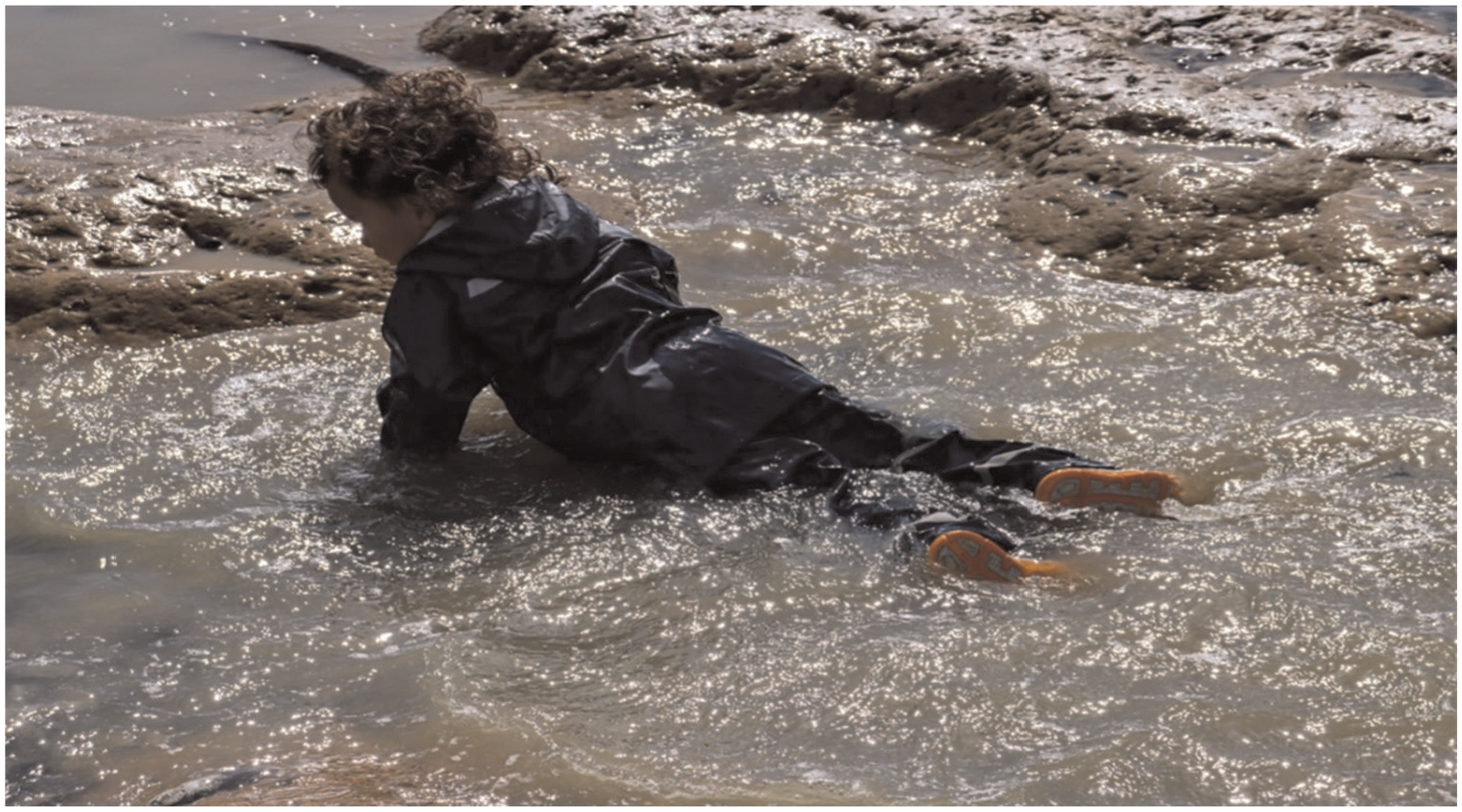
Representation of Wai.
A three year-old boy literally throws himself into the pools – immersing his entire body and moving along the rock pools like a tuna. It seemed as if he was completely captivated by the wai and all its properties – feeling his way along and occasionally stopping for a joyful splash! Although the sun was shining in reality it was a very cold day and the water icy. I shivered as I watched him slide along the slippery rocks with glee. To me this image depicts the embodiment of a de-colonising stance in defiance of the ‘official’ curriculum that orients the educational gaze. His uninterrupted movements, like the tuna who swam through these same waters, epitomised what it means to be fully immersed in the wai – body and soul! There are no words I could write here to adequately describe the levels of engagement witnessed – and the variety of responses to the wai as each child, in their own ways, negotiated various aspects of these waterways, according to their existential pull. (Onsite fieldnotes by White: 13.8.22)
The relationship between photographer and player is found in the shreds of ethnographic integrity here that I felt called to. There were tensions here because we were working with the idea that the photograph did not speak for itself entirely and that we (the researchers) were called to account for our renderings through narrative re-tellings. Yet, I also had a strong awareness that the images could tell more than the stories I could tell. I thought of Van Manen’s idea of ‘tales’– and how they ‘framed’ the photographs I took (as opposed to the photos merely supplementing the narrative). This was a key feature of this approach, but there were also tales that I told which could not (and perhaps should not) be captured through the camera obscura (e.g. the tipping of water down my pants!). Yet, at other times, the photograph acted as an opportunity to reflectively ponder the essence of what I was seeing.
From ethnography to aesthetic
In many respects, the camera held space I could not otherwise access. It allowed a separation between me and the scene before me. When I put it down, I became accessible to play. When I picked it up, something new emerged in terms of the status of the representation, and at times (increasingly over the days), I noticed how children seemed to recognise this – asking me to photograph something of importance to them – thus opening up spaces to think together about its significance. In this contemplation, I saw photographic narrative as a means of moving between spaces of the continuum – at times a reflective photographer, at times a journalistic photographer looking for evidence, and even – and this was new for me – an artistic photographer seeking to capture the light and shade of representations such that the elusive became art, and the obvious became aesthetic. Beauty exceeded the eye of the beholder in this dialogic terrain. Later, in discussion with iwi, we were told of a similar (to the following) photograph, taken many years earlier – capturing ancestors looking out from the same vantage point but with waterways that were considerably healthier than they are today (Figure 11).
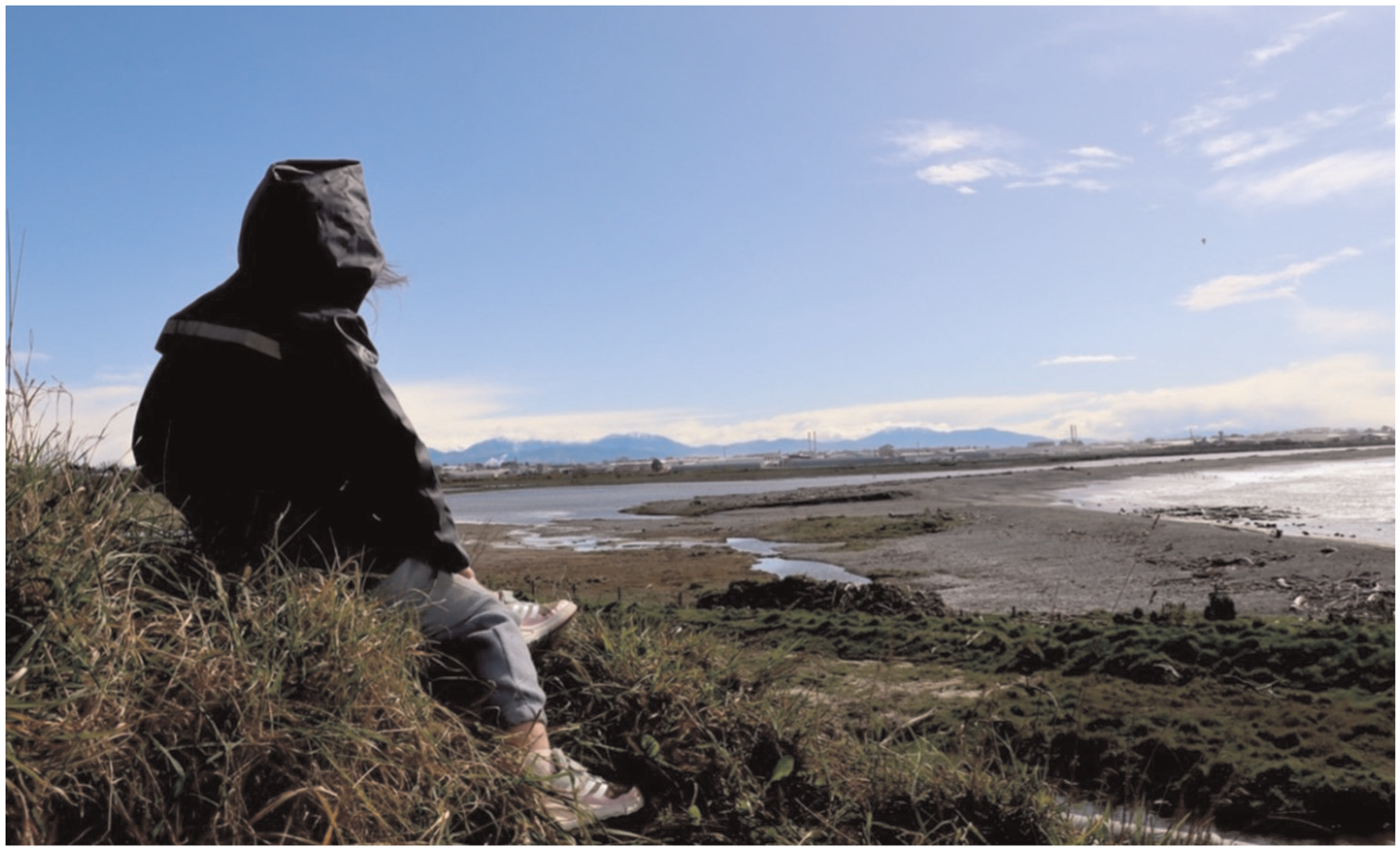
Climbing to the top of the mountain as 4 year-old tells White about the water surrounding us.
Awakening to the rippling effects: A call to advocacy
For this reason, I found myself uniquely situated in the landscapes I photographed in ways my prior research encounters had not permitted. Relationships were forged quickly as children seemed to view my presence and interest as an opportunity for them to have their playful representations taken seriously, thus granting legitimacy to their encounters with water. The ultimate epiphany for me was in realising that, for them at least, water was not merely a property to be played with but an essence of their lives. Ko wai au. Ko wai ahau. This powerful awakening on my part as a researcher has stayed with me since, and the photographic narratives invite such insights from those who share their views.
As a researcher, one can only partially ‘leave’ an ECE site in which one has become immersed. The methodology applied in this project created a permanent and indelible nexus between the image maker, images and the daily contexts of the children in the experiences engendered in the spaces and places they played. There were significant tensions here – as a photographer – as a researcher seeking to find representations of water, and my concerns (in not shedding layers of ethnographic research training telling me not to influence the data). I now think of the children holding onto the rope as they crossed the road on the way to the sea) Even (many months later), I am steeped in the memories of the people and locales I encountered during this time. I continue to seek opportunities to return, explore further, and create activist opportunities for this work (White et al., 2024). It is, frankly, life-changing stuff and so deeply rewarding! Early in the project, the kaumātua at one of the centres had asked me why we were focussing on this younger age group to find out about water –‘Wouldn’t older children be able to tell you more?’ he said. After seeing the photographs taken and hearing these stories, he might now agree that younger children can most certainly tell us a great deal if we are able to re-image their worlds through the photographic lens. Many wayfaring stories are told by the children and teachers on their journeys to, in, from and with the wai (see image below), which continue to produce rippling effects for us all (Figure 12).
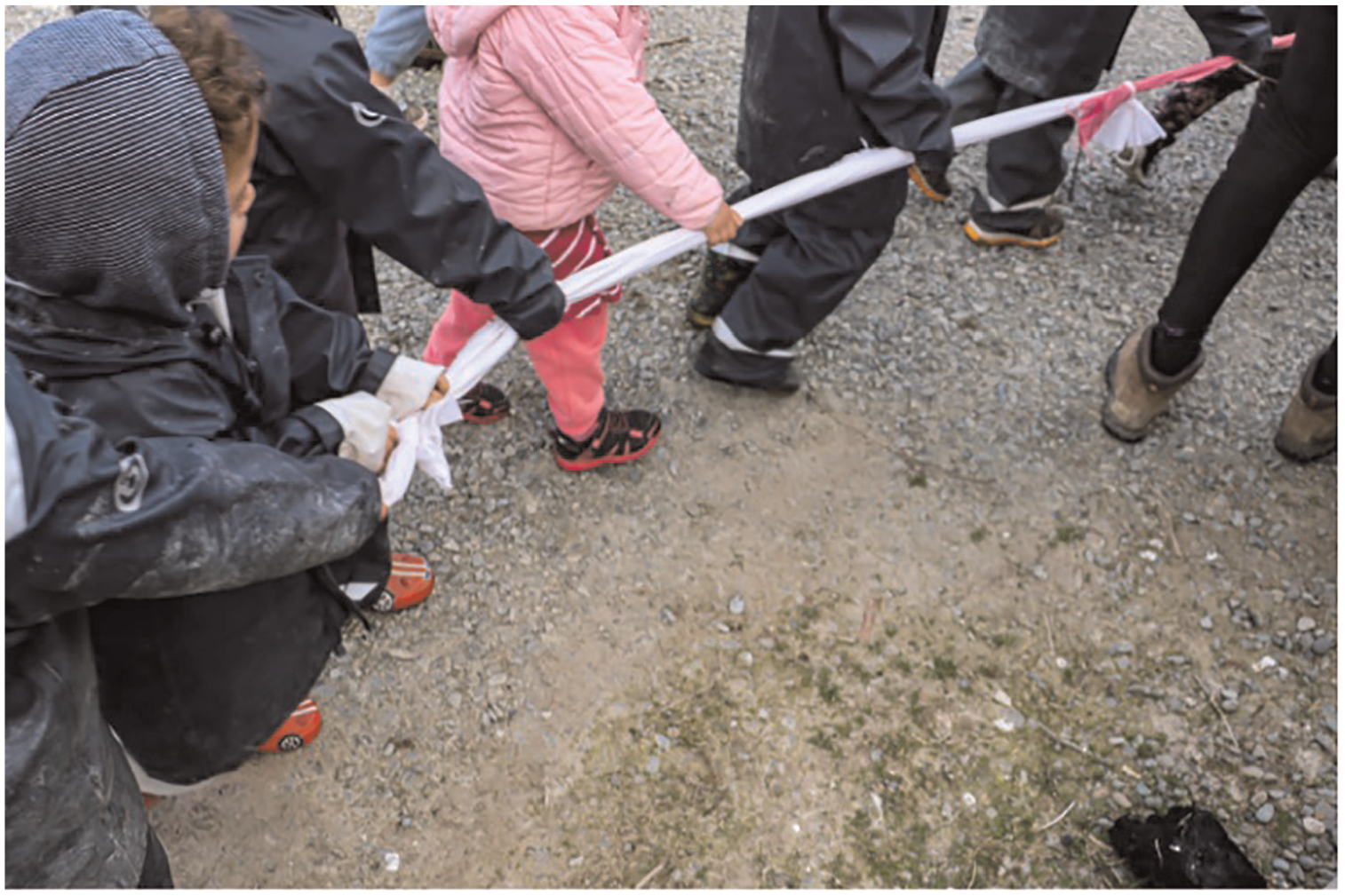
Children hold onto the Rope as they Venture out to the Waterways – Crossing the busy road that acts as a barrier between them and the estuary they visit every week.
Andrew Denton and Andrew Gibbons’s reflections: Composition, sensation, contemplation and immersion in play
Gibbons and Denton have a long history of working collaboratively on research, integrating education with creative practice. For the purpose of this project, they worked together at the same ECE site, reviewed the images, and wrote notes of their daily experiences. The experience was an opportunity to further develop their collaborative methods while working with the larger team to contemplate on how the interaction between the researchers and the children informed the aesthetics of the collected images. This section is framed as a reflective conversation around how their thinking, making and actions in the centre were formulated during their experiences of being in place.
Traces, frequencies, vibrations and immersion
Sometimes, the traces of the human can tell us things that direct contact or documentation with the subject cannot. Encountering the world as it unspools before us can act as an affective engagement, calibrating our senses to the world’s vibrations, sensations and frequencies in ways that allow us to see the quotidian strangely, which in turn helps us think the world differently. The self-selected constraint of ensuring anonymity for the participants established a starting circumference for the preparation for photographing the subjects. Before engaging in fieldwork, we set a series of formal constraints on collecting and distributing the recorded materials. Part of the reason for this approach is to apply a visual and aural continuity structure to encapsulate the disjointed collected imagery. In the centre, many children and contexts were tethered tenuously by the thread of their interactions with water. This rulebook approach is informed by filmmakers such as Lars Von Trier (see The Five Obstructions), Dziga Vertov’s manifesto of Kinopravda (film truth) and Werner Herzog’s notion of poetic truth. For this project, we chose not to photograph faces or blur them significantly so as not to identify the child. We chose to use only very wide or very long lenses to convey, in the first instance, a vaster interaction with space as well as distortion of that space, in the second instance, as a practical means to blur background and foreground selectively – and as an aesthetic choice – compression adds a strange quality to the composition (Figure 13).
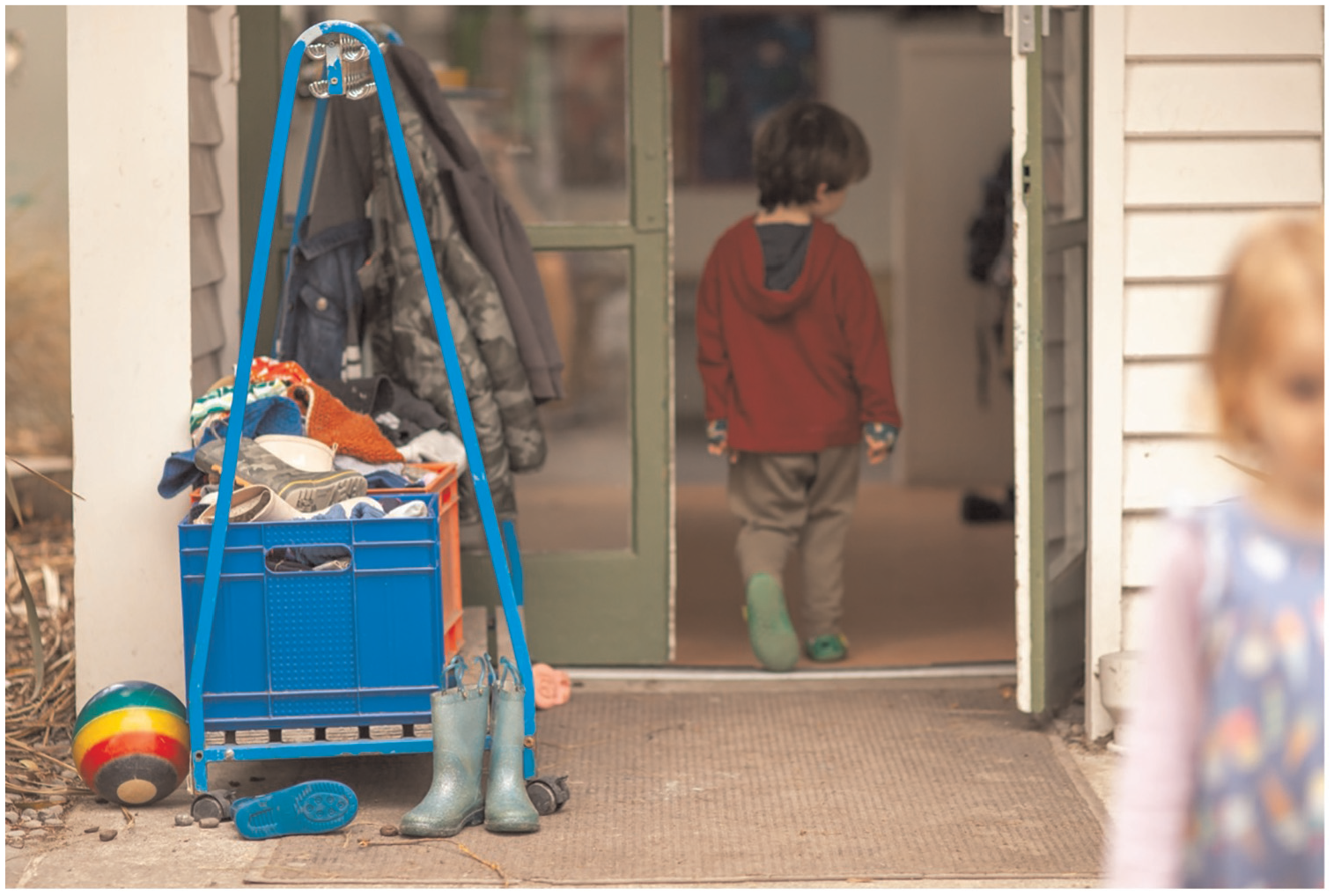
Rain kits and children.
The time in the ECE was an opportunity to reflect on play as a method for engaging with the children’s play with water. Playing with the children opened an approach to being swept along with the tides and eddies of the children’s play, to be immersed in their play. Playing with the children revealed, at the same time, how water led the play of the child – the water and the sandpit and the tools in the sandpit begin to resonate in and through play with the children. Would the situationists, psychogeographers and new materialists amplify their sense of the agency and vibration of matter through play – does the play of the child in the city offer something to the task of sensing the teachings of the city?
Eschewing representation
It is not just about the light and information transmitted through the lens. There is another mode of interest in the affective quality of media devices, recalibrating or tuning other senses of the world to see it and then think about it differently. Rajchman (2000) distils from Gilles Deleuze this thought: ‘To extract sensation from representation, making it a matter of experimentation rather than judgment, is also to free the art of seeing from its subordination to prior concept or discourse’ (p. 129). Spending long periods in the locales and with the people you wish to understand visually is important. The children and their daily interactions led the photography, luring all of us towards the children’s storied lives, allowing us the privilege of this experience. Key to this recalibration was holding on to the conversations we had with Williams – thinking wai in a deeper cultural context as a sprititual concept beyond a resource but as as an integrated woven fabric in the children’s lives. We listened as much as we looked to understand the project’s intentions better, anticipate the action in the play areas, sense the moods and feel the texture of the environment. We were surrounded by Māori ways of being and thinking in the ECE via storytelling on the mat, the use of te reo throughout the days, and in the children’s artwork.
Play and the diminishing of the self
The role of the teacher in an early childhood centre community involves a complex balancing of the teacher’s understanding of play and interactions with children’s play with, in the context of this research, water. Teachers are guided to reflect on how they show that they value the children’s water play and to be sensitive to the tensions between supporting water play and interfering in it (Ministry of Education, 2017). While play might seem to be an intervention or interference in the data-gathering project, we consider this assumption superficial and worth questioning. Play offers a way into the diminishing of self, an element of the walking with research approach. While the impartiality of the objective observer might, in the first instance, seem more diminished than the active player, we approached this research with a sense that the impartial, distant observer of play with water engages in a particular kind of distant but not diminished self. Consequently, and perhaps ironically, Denton did not take images (or many) with Gibbons in them, creating a sense of the distant, impartial, objective researcher, which is not what happened in the moment-to-moment experiences of being in the research. Indeed, Gibbons is framed just to the side of many of the images of the play with water in the sandpit. Exploring the collection of photographs at the end of each day allowed us to reflect on the play and Gibbons’ presence sitting alongside the play.
These reflections are guided by the possibilities of getting immersed in the children’s play and the review of that play through the photography and associated selection of particular images that engaged us in thinking about the research project. To return to the start of this reflection, we feel that there’s something powerful to keep working on in this method that resonates with the work of situationism, psychogeography and new materialism. In other words, back to the centre with Denton and the camera, back to the sandpit and water, and back to the play. White noticed that the children (and more so the teachers) were very aware of the lens and performed for it at times. She also experienced that the lens forced her to focus on the essence of a representation rather than the wider context – such that she had to constantly move between the camera lens, retinal lens and social lens. A wide-angle lens means you are in the thick of the action, mud-splattered and embedded within the play spaces. She found that after some initial curiosity, the children became more interested in the textures and sensations of the world than in this new human clicking away from every possible angle.
Place, space, time and the everyday
Spending extended periods in a location opens the possibility for ‘happy accidents’ to happen – and notice things you might not receive in more fleeting interactions. Taking the time to immerse in, absorb, and contemplate a space or place reveals material affects that reflect the sensations of being there. Part of this approach is a communication between the magic and the pragmatic. Most photographers collect as many images of the same event as possible. This is especially so when using photographs rather than moving images or words to communicate ideas. Photos are slivers of time captured through the harnessing of light, analogous to Henri Bergson’s principle of the interval. Flaxman (2000) reads Bergson’s description of the neuro-network of perception and action as the ‘“sensory-motor schema…” [where] images are recognised (as perception) and, in the interval (or affection), they are transformed (as action)’ (p. 17).
Geoff Dyer summarises the triangulation of luck, coincidence and being aware in The Ongoing Moment. He reads Garry Winogrand’s Untitled (1950) photograph of a man wearing a hat, looking at a man, sitting next to a hat on a rack. It is one of those photographs that are so utterly quotidian in the subject and so affective in the emotions it can evoke. Dyer (2007) asks, was this ‘luck? Yes, but no luckier than the fact that he happened to see it in the first place. Winogrand was looking for things to photograph that would chime assumed a certain kind of compositional rightness’ (p. 114). You have to be in the place you are working for some time before you notice things to see. Dyer (2007) elegantly summarises his central thesis on photography in a way that helped the researchers think about the potency of everyday life in image-making. ‘How long can a coincidence extend before it ceases to be one? Does coincidence have to be momentary? How long is the moment, the ongoing moment?’ (p. 115).
The images of the bridge were particularly reflection-inducing. The bridge play occurred after I had voiced an observation that a bridge could be built over the emerging rivers. One of the children instantly turned around and offered that the aim was not to build bridges over the rivers but to get in the rivers. For the research, the agency of that explanation and the meaning of the relationship between child, play and water were significant and are discussed in forthcoming papers from the research. The methodological reflections are the focus of this paper.
The allure of strange images
Photographic technologies and compositional choices were the nascent building blocks for aesthetic language development for the Wai project. For example, a telephoto image is a compression of space. The longer the lens, the more compact the space appears between distance and closeness. Further distortion occurs through the shallowness of the focus. The camera operator must choose where to align the soft with the sharp and where to find in the image that spot where those elements are most in harmony with the image’s intent. The placement of the camera is also a factor. The further away the camera is from the subject, the wider the focal plane and, therefore, the deeper the focus is around that subject. The light’s quality, amount and direction determine the depth of focus achievable and the atmospheric elements in the image. These lenses force the viewer to look at the subject in the image from a different spatial perspective and make invisible elements such as dust, heat, moisture, colour and texture visible. These all affect how light reaches and shapes the image as it connects with the chip in the camera, presenting an image of the subject that the naked human eye cannot see (Denton, 2016). ‘The photograph tends to be at the same time a sculpture which already makes present what it is about’ (Rancière, 2008: 13).
At times, while photographing the children in the centre, we could see different relationships between them and the spaces they were playing in, who they were playing with, and how they were playing. Soft focus (fore and backgrounds) sharpened concentration on the child at play in the specific moment of play. We could also see relationships between objects (toys, drink bottles, printed curricula, flora, etc.) and spaces (eating and cleaning areas, sandpit, water pump, etc.) in different ways. The practical, tertiary advantage of telephoto lenses is that the photographer can be very far away from their subjects, somewhat invisible. This distance displaces the potential for the child to be aware of the camera and, by default, not perform for the lens, rendering the captured images as authentic moments.
Wide-angle lenses do the opposite of compression, expanding the composition so the camera can capture much more of the world. This was helpful for the project because we could understand through the camera how the children were interacting while playing – learning. An example of this that was most poignant was the participants in the water play and sand pit areas at the ECEs (see Figures 14–17). The photographers were drawn to these locations as much as the children were. Enthusiastic and raucous fun was had in the wet mud, as well as building, making, testing, interacting and negotiating with each other. In this case, the photographers must be very close to the action. For the most part, we photographed from high angles and framed the images from the neck down or behind the subjects. Therefore, the children were very much aware of our presence. However, because the activity was so engrossing, We felt largely ignored, which produced images of ‘authentic’ play represented strangely through the composition of the images.
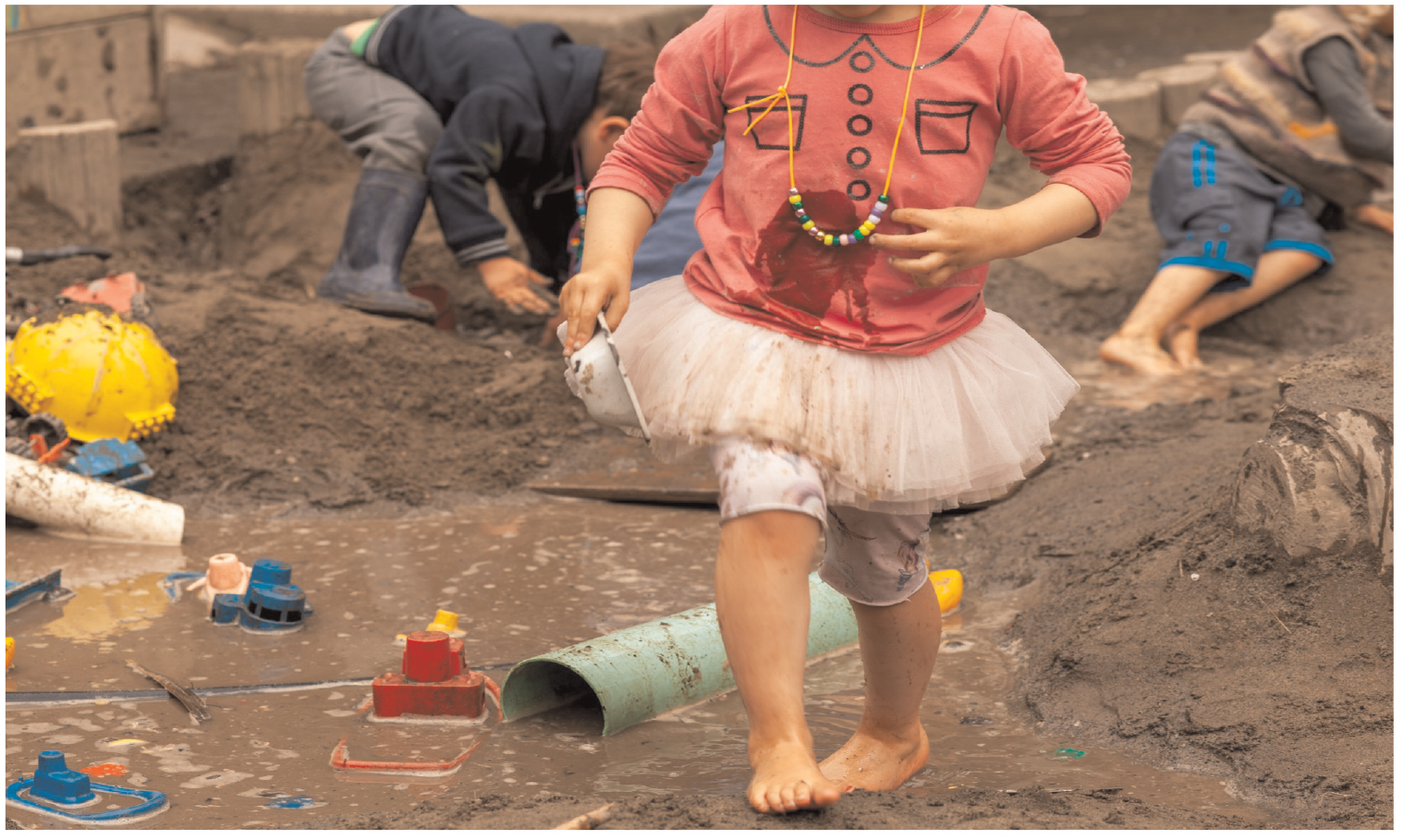
Sandpit play, toys and pipes.
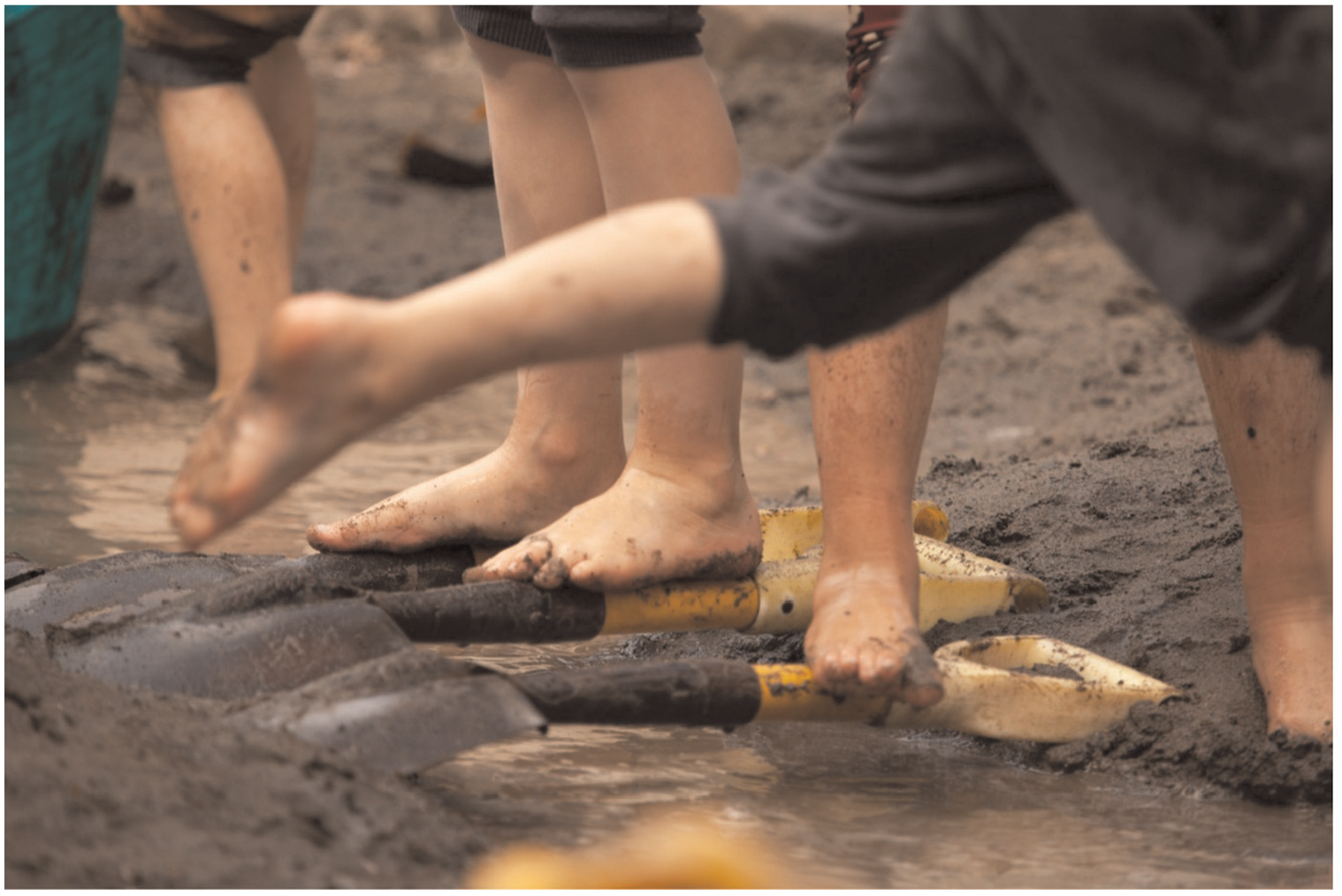
Bridgebuilding, mud and feet.
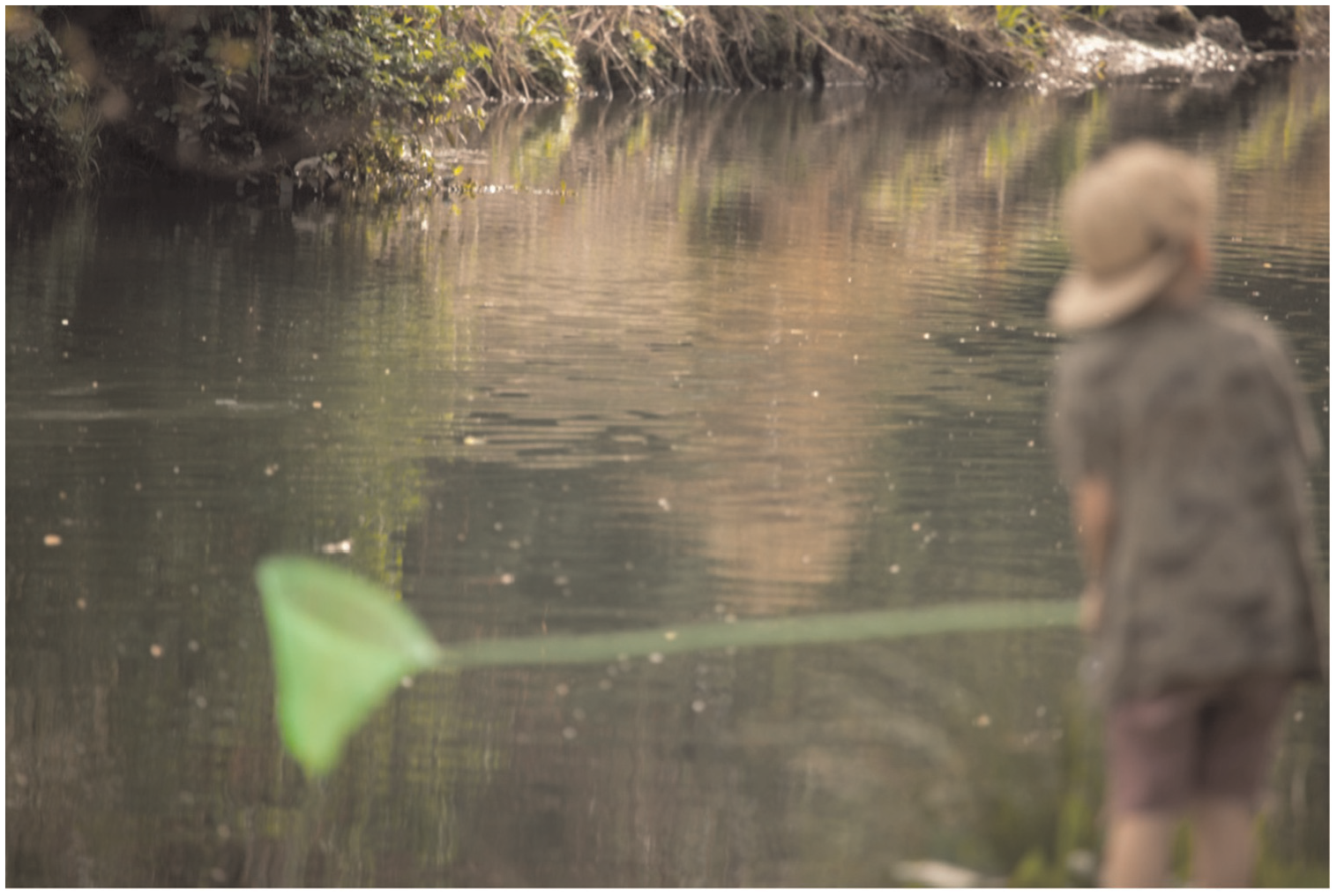
Collecting leaves from the river.
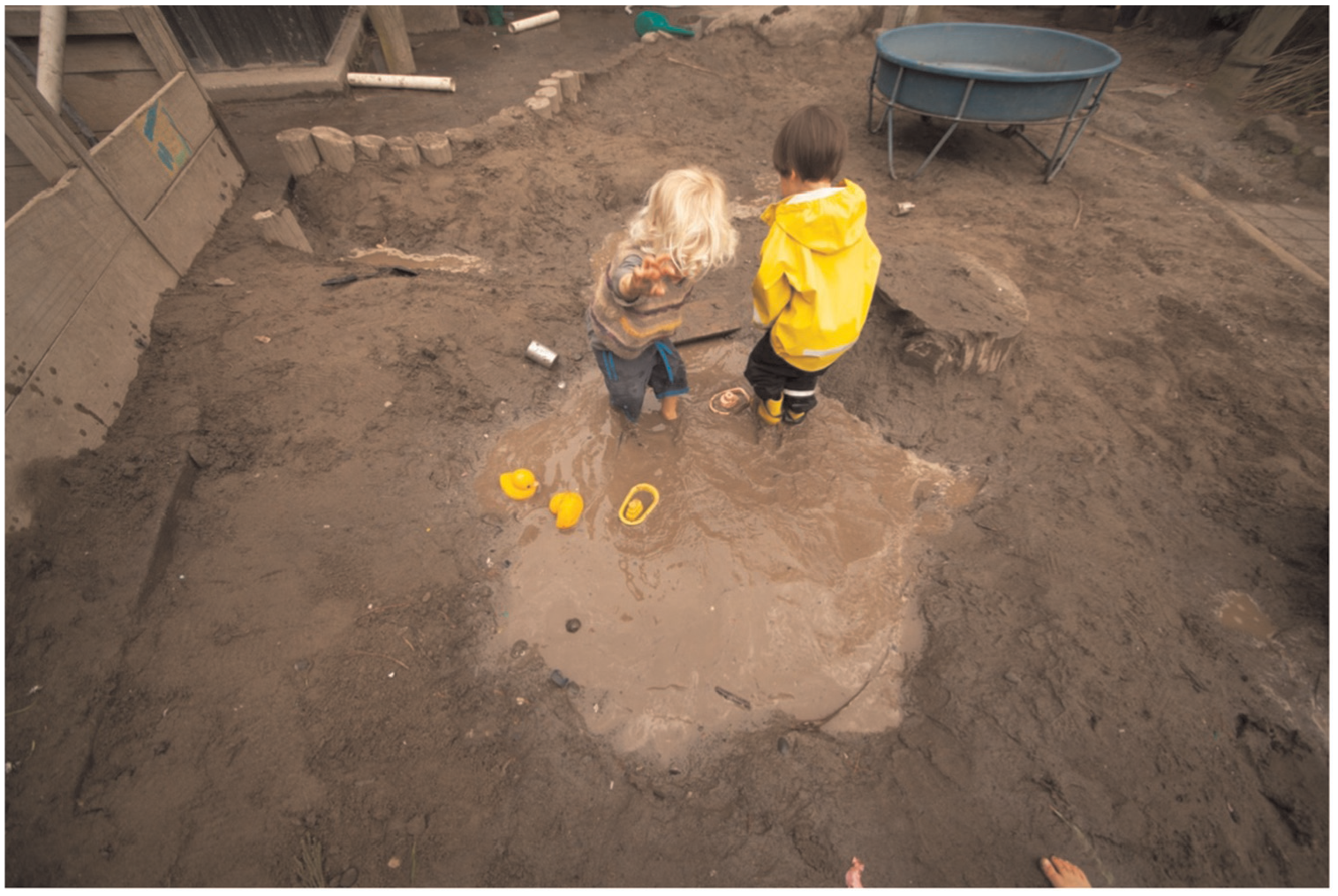
Mud and water play.
Conclusion
It is remiss to frame the closure of this article as conclusive. Rather, we arrive at a milestone point of collective and subjective discovery from the experience of working, learning and reflecting on what we encountered on this journey together – at this moment.
When a group of researchers across disciplines first work together, there is a need to establish a level of trust where experimentation combined with some discomfort is welcomed. Specialists have languages they utilise to communicate their research in action. Time is spent learning new methods, discourses and positions. Then, there is thinking about how to bring these paradigms together – loosely – as a starting point for discovery. The experience on the Wai project was transformative for each of us. The generosity of the centre communities in welcoming us for an extended visit gave us time to immerse in the spaces, places and things the children and their teachers interacted with each day. This privileged access to their social, cultural and learning milieux allowed researchers to notice the shaping, shifting moments of play, pedagogy and interactions with wai– and adjust themselves in the moments, navigating the research question while scribbling out a rough map as a guide for future explorations.
The different approaches expressed by the authors were drawn together by the central brief of the project: How might we better understand engagement with local conditions for children’s access to water through the application of visual methods – in Aotearoa, New Zealand? We responsively immersed ourselves in the project, bringing our distinct practices and ways of being in the world into the mix. While we established a series of aesthetic approaches at the beginning of the fieldwork, the resulting visual data understandably differs across the sites. The image-making, image-noticing (the aesthetics of the centres themselves), and then discussion and reflection, once we brought all of the data together, became factors in a broader nexus of contemplation as we encountered the unfolding days in our assigned centre communities. Later, when we reviewed the images, notes and drawings, another phase of discussion motivated the conversation presented here. The polyphony of different perceptions elicited new understandings, meanings and sensations in the bringing together of our different lenses. The act of researching and then working together reflectively prompted provocative questions for the authors.
There are lingering thoughts for us as we reflect on this transdisciplinary, immersive, experimental and cultural (research and social) passage. What is the value of weaving creative practice into ‘educational’ research? What might we have missed through our respective lenses? Does ‘missing’ matter in the subjective, artistic encounter? Does it matter in terms of the stories we tell on behalf of others? Perhaps the lens is not about the latter but about our own impressions and, with that, accountabilities for what is shared (and what is not), what is permissible (and what is not) and to what ontologies we subscribe in the askings. This article highlights the value of diverse perspectives – multiple lenses and authors – that begin to realise the meaning and intent of transdisciplinarity as a problematisation and decolonisation of the epistemological chauvinisms of disciplinarity and associated traditions in research with children. Deep cultural knowledge underpins the kaupapa Māori activities encountered in this project, which are likely not seen by others. Therein lies the challenge: how to visualise these so that authentic teaching and learning happen. For Māori, there is the unseen that is working: the ongoing flow of the wai has an evolving mauri (life force), and it is the everlasting spiritual flow (wairua) that joins past, present and future together, which allows the currents of mātauranga Māori to be personified through the different forms of wai. The wai is life, and everyone has a role to play across all of our communities.
Ka ora te wai, ka ora te whenua, ka ora ngā tāngata If the water is healthy, the land is healthy and so to the people are healthy.
Footnotes
Acknowledgements
The authors wish to acknowledge the contributions of the late Glynne Mackie whose life-long advocacy for children and sustainable futures influenced our visage during this project. Dr Kaitlyn Martin, our fellow traveller, also offered multiple insights of her own as we walked together on these waterscapes. It goes without saying that none of it would have been possible without the generosity of the tamariki, their families and teachers who allowed us to walk with them in these wai.
Declaration of conflicting interests
The author(s) declared no potential conflicts of interest with respect to the research, authorship and/or publication of this article.
Funding
The author(s) received no financial support for the research, authorship and/or publication of this article.
