




Abstract
Visual representations of prisons and their inmates are common in the news and social media, with stories about riots, squalor, drugs, self-harm and suicide hitting the headlines. Prisoners’ families are left to worry about the implications of such events on their kin, while those incarcerated and less able to understand social cues, norms and rules, are vulnerable to deteriorating mental health at best, to death at worst. As part of the life-story method in my research with offenders who are on the autism spectrum, have mental health problems and/or have learning difficulties, and prisoner’s mothers, I asked participants to take photographs, reflecting upon their experiences. Photographs, in this case, were primarily used to help respondents consider and articulate their feelings in follow-up interviews. Notably, seeing (and imagining) is often how we make a connection to something (object or feeling), or someone (relationships), such that images in fiction, news/social media, drama, art, film and photographs can shape the way people think and behave – indeed feel about things and people. Images and representations ought to be taken seriously in researching social life, as how we interpret photographs, paintings, stories and television shows is based on our own imaginings, biography, culture and history. Therefore, we look at and process an image before words escape, by ‘seeing’ and imagining. How my participants and I ‘collaborate’ in doing visual methods and then how we make meaning of the photographs in storying their feelings, is insightful. As it is, I wanted to enable my participants to make and create their own stories via their photographs and narratives, while connecting to them, along with my own interpretation and subjectivities.
Keywords
Introduction
Social and criminal justice in the context of learning difficulties (LDs) and autism is demanding (Hollomotz and Talbot, 2018; Parsons and Sherwood, 2016; Segrave et al., 2017). As a heterogeneous group, intellectually disabled people are not considered full citizens and at worst, are dehumanised (e.g. see Carlson, 2010; Kittay and Carlson, 2010; Rogers, 2016). Challenges arise, when those in power make decisions based on attributes such as rationality, language and roughly equal physical and mental capacity, as rudiments for participating in citizenship (Nussbaum, 2006). This excludes many people with LD and/or mental health problems from contributing to, and participating in, civil society. Furthermore, in contrast to other disadvantaged people, offenders with LD; attention deficit hyperactivity (ADH); social, emotional and mental health (SEMH) problems; and/or, are on the autism spectrum (AS), and their families/carers, have received less scholarly attention than their risk of criminalisation and experience of the prison system arguably merits (Laming, 2016; Talbot, 2010).
Visual representations of prisons and their inmates are common in the news and social media with stories about riots, squalor, drugs, self-harm and suicide hitting the headlines. What is more, families research has found ‘that punishment extends beyond prison walls and reaches into every facet of these families’ lives, not least because they are ‘subject to a range of exclusionary and stigmatizing practices’ (Condry et al., 2016: 625). While those incarcerated and less able to understand social cues, norms and rules are vulnerable to deteriorating mental health at best to death at worst. Their families are left to worry about the implications of such stories and events on their kin. Therefore, although prison riots and discontent are not simply a 21st-century problem (Bosworth et al., 2016; Carrabine, 2005; Jewkes et al., 2016), the rise in prisoner numbers, combined with 24-hour image-driven news coverage of, for example, prisoner unease and violent conflict, is a growing concern. Helen Codd (2016), notably, said about prisons, ‘they are brutalising places and even if you don’t go in with a mental disorder, you’re quite likely to come out with one’ (p. 22).
The life-story and visual methods research I have carried out with mothers, offenders and education/criminal justice professionals suggests far more work is necessary in supporting (and collaborating with) offenders and prisoners families, and specifically those who have additional challenging biographies and diminishing mental health reserves. Many families 1 experience levels of ‘secondary prisonization’ (Comfort, 2008) or ‘courtesy stigma’ (Goffman, 1963) as a result of kin going through the criminal justice process. It is often the mother/carer who has supported the ‘disabled’ offender through numerous education and health challenges prior to her son’s or daughter’s incarceration. Moreover, offenders who bounce around the criminal justice system (CJS) self-harm, attempt suicide, are marginalised and are commonly left with little emotional or practical support (Lurigio and Harris, 2016; Peay, 2016).
My research moves past risk-based approaches to offending and reoffending by examining ‘criminal careers’ and incarceration that go beyond the crimes committed, or any assumptions about what a ‘career’ might look like. Yet, talking about the crime is evidently necessary, as it plays a part in how for example, maternal experiences pan out and offender pathways progress. It makes a difference to how (m)others respond to her son/daughter being incarcerated for sexual violence, criminal damage, theft or drug use, or how offenders experience stigmas such as being labelled a sex offender, thief, abuser or addict. In exploring narratives around criminal careers, education pathways, mental health, relationships and criminal justice, life-stories (Plummer, 2001), photo-elicitation (Harper, 2002) and photovoice (Fitzgibbon et al., 2017; Fitzgibbon and Stengel, 2017) were utilised to understand how the doing of visual methods can aid a meaningful and potentially collaborative research process in making necessary connections. As part of the research, I, therefore, asked participants (offenders and prisoners mothers) to take photographs between interviews to help them think about and articulate their feelings, and me to understand their emotional responses to a fractured and often traumatic past and present.
Below, I introduce visual methods and feelings photographs, I go on to map the research process, including pen pictures of four participants whose photographs are discussed. I then explore the visual data via the following three themes: no way out, shattered recollections and beyond the crime – positive connections. Finally, I conclude this article, in the hope of making necessary connections and meaningful visual representations of fractured lives that are, in theory and practice, accessible beyond the academy.
Visual methods, necessary connections and feelings photographs
Visual representations, still and moving images, are part of 21st-century life and explored across academic disciplines (Brown and Carrabine, 2017; Hall et al., 2013; Parkin and Coomber, 2009; Pink, 2013; Rose, 2012; Sandell et al., 2010). More often, how we interpret the visual, photographs, paintings, stories and moving images, is based on our own imaginings, biography, culture and history and sparks our sociological and criminological imaginations (Rogers, 2020; Frauley, 2015; Wright Mills,1959). We process an image or a story, often before we communicate. As John Berger (1972) said, ‘although every image embodies a way of seeing, our perception or appreciation of an image depends on our own way of seeing’ (p. 3). When it comes to photographs, arguably, they do not ‘speak’ for themselves, and as Susan Sontag (1979) remarks, they ‘cannot themselves explain anything, [and] are inexhaustible invitations to deduction, speculation, and fantasy’ (p. 23). There are assumptions about photographs that imply we record an image and we accept that image as something or someone we know: a ‘true’ representation.
Susan Sontag (1979) is critical of the photograph and suggests that photography ‘starts from not accepting the world as it looks’ (p. 23, emphasis in original) and that there are limits to photographic knowledge, ‘as while it can goad conscience, it can, finally, never be ethical or political knowledge. The knowledge gained through still photographs will always be some kind of sentimentalism, whether cynical or humanist’ (p. 24). Photographs are perhaps static and not ‘truth’ bearing, in any absolute sense. Images, however, and I would include photographs, are vehicles to a truth. A spectacle, for example, is a presentation of images and is always in relation (see Debord, 1977). In the case of the photograph, the producer of the image and the viewer have a relationship whether they meet or not: subjective and ‘in relation’, debatably not static. Images and representations, therefore, ought to be taken seriously in researching social life, as ‘the social conditions and effects of visual objects need to be considered’ (Allan, 2012: 78) and ‘researchers need to account for their own particular ways of looking at images’ (Allan, 2012: 78).
It is well-documented that photographs are used to explore and understand the social world (e.g. Carrabine, 2012; Fitzgibbon and Stengel, 2017; Pauwels, 2017; Pink, 2013; Rose, 2012). Some scholars utilise photographs to aid the research process and enable collaborations and significantly prompt memories, discussions and feelings about past or present occurrences. For example, regarding photo-elicitation, as a sociologist and photographer, Douglas Harper (2002) suggests that introducing photographs to an interview can enable a deeper understanding of human consciousness than words alone, and Heith Copes et al. (2018), within criminology, suggest, introducing photographs to interview settings can result in powerful interviews that allow participants to both tell and show their stories as the emotions that are brought forth during the interview can aid in producing richer data for analysis. (p. 476)
In a similar vein, sociologists Booth and Booth (2003) and Jo Aldridge (2007) and criminologists Fitzgibbon and Stengel (2017) advocate photovoice and participatory photographic research methods to access and explore the lives of people who have LD/disabilities or are more broadly marginalised/criminalised. Photovoice and, therefore, photography (for those who are not visually impaired) ‘as an activity emphasises action over cognition’ (Booth and Booth, 2003: 432).
Photographic participation and elicitation methods whereby participants take photographs themselves ‘are closer to recognized user-led, or “inclusive”, approaches and are sympathetic to describing and illustrating the experiences of more vulnerable respondents’ (Aldridge, 2007: 7). Not least because the
photographs command viewers’ attention and, as the photographs have been taken by the participants themselves, they are also absorbing in a personal sense in that they provide direct insight into the experiences of those participants who have taken the pictures in the first place. (Aldridge, 2007: 13–14)
My research participants, who have taken photographs prior to a follow-up life-story interview, could be positioned as ‘vulnerable’ (or marginalised) as they are mothers with ‘disabled’ sons who have been through the CJS and ‘offender’ adults who have LD and/or SEMH problems. Access to their feelings has been aided by our discussions around the photographs, as has my viewing of their pictures.
Making necessary connections, our research relationship was strengthened significantly. These connections were not only necessary literally, as the researcher and participant make sense of the data, and in this case, understanding the images and feelings behind photographs taken between interviews, but also, ethically, as the researcher leaves the interview behind, and therefore, the participant and his or her story, life and emotions. It is, therefore, up to the researcher to connect beyond the formal interview and this in turn ought to be factored into the research process. How participants in my research and I make meaning of their photographs taken in storying their feelings is both unique and insightful and we sometimes had different readings. I wanted to facilitate my participants’ feelings to make and create their own stories via these pictures rather than have their lives completely interpreted via me, although evidently, I play that part.
For the purposes of this article, visual criminology brings the possibility of a new rigour and new life not simply to the discipline of criminology but to the key social issues of our past, present and future in its commitment to understanding the power of the image in perpetually mediated worlds of harm, violence, control and resistance in which we exist. (Brown and Carrabine, 2017: 8)
Therefore, as the reader/viewer and the researcher interact with these images below, we imagine, always in context. We then make a judgement or an interpretation. In this work, I add the layer of the participant to that interpretation in every photo, every connection and every story told. Photographs were primarily used to help respondents reflect upon and articulate their feelings. The ‘feelings photographs’ consequentially mediated looking, seeing and imagining how we made a connection to something (object or feeling), or someone (relationships), such that the photographs evoked how they felt about, events, things and people. In turn, that then had an impact upon how we connected to each other.
Research methods
‘Care-less Spaces: Prisoners with learning difficulties and their families’ is research with adults who have been through the CJS, and have one or more of the following: LD, AS, ADH, SEMH problems and borderline personality disorder (BPD), mothers with sons who have been identified with one or more of the above, and professionals who play a key role in LD/SEMH services within education or the forensic setting. The purpose of the research was to
Explore the life-story experiences of people with SEMH and/or LD who have been through the CJS;
Explore the life-story experiences of mothers who have a family member as above;
Examine how offenders and/or their families make sense of and manage prison culture, routines, rules and practices, and how this impacts on all their lives on release.
Funded by The Leverhulme Trust, in 2016–2017, I carried out 43 in-depth life-story interviews. These were with 15 offenders who were diagnosed with LD/ASD/SEMH/BPD, 5 mothers with sons who fit within the LD/AS/SEMH category and 10 professionals who are/or who have worked in LD and/or SEMH forensic/education settings. As part of the life-story method, I asked participants to take photographs between interviews. I chose photographs because for some people, articulating feelings is not easy and the process of doing, seeing and imagining, is often how we make a connection to something, someone, or emotions (Booth and Booth, 2003). Furthermore, due to, for example, a LD, visual and creative methods ‘offer one way of enabling research participants to increase self-confidence in sharing emotions and experiences with others’ (Fitzgibbon et al., 2017: 307). 2
I, therefore, gave all offender and mother participants a disposable camera and encouraged them to use it to record their feelings. I found that this was not unproblematic, which resulted in receiving photographs in a number of different ways (camera phone photographs via WhatsApp and email, photocopies of images through the traditional post, as well as the disposable cameras that were mailed back to me for processing; see also, Rogers, 2018). Eight offenders and four mothers participated in taking photographs and had a second interview, and one mother participated in a third interview. The photographs were an aid to our follow-up interviews and gave an additional account of ‘feelings’. They also facilitated discussion in a more in-depth way (Aldridge, 2007; Fitzgibbon and Stengel, 2017). All interviews were recorded, and consent was agreed for participation, photographs and for maintaining connections. For some participants, connection remains on-going and for others, it was a matter or wanting to support/advocate for this research at a particular time.
Gaining and maintaining access
Participants in my research were gained and maintained not without challenges (McClimens, 2007). Four mothers contacted me because of my posts on social media, and one mother was accessed due to snowballing (from an offender participant). Those participants who had been through the CJS were obtained via a range of charity/supporting gatekeepers who enabled access and vouched for my credibility (Girling, 2017). It was not a straightforward process, as cancelled appointments, communication difficulties and the time spent nurturing relationships were factors that added to the reality and challenges of gaining and maintaining access. Assumptions, therefore, about access for the purposes of research with groups considered ‘hard to reach’ is foolhardy. I thought perhaps my personal links with educators who knew young men and their families who went on to offend was a gate-keeping coup. I also assumed that my previous research would enable access to specific families (Rogers, 2007, 2016). These potential access pathways did not prove fruitful as discussed via my fieldnotes elsewhere (Rogers, 2018).
Optimistic expectations around maintaining access with participants once contact was established were rash. Largely because a small number of offenders and/or their families who heard about my call for participants via prison charity adverts, social media and word of mouth made contact to say they wanted to be a part of the research, but then withdrew before the interview could be carried out. This was despite numerous convincing and upbeat email exchanges and phone calls about their desire to participate. What I discovered from the beginning was the unpredictable and chaotic nature of my research participants’ lives was mirrored in a chaotic and unpredictable research process (Rogers, 2018). Therefore, access (and connection) to and with participants, especially those who have SEMH, and/or LD that impact upon their comprehension, concentration or interaction with others, can be fractured and complicated. Sometimes, these disabling conditions can block access altogether, and therefore, result in a dearth of stories (i.e. missing data), that are crucial for our understanding of social injustice (Rogers, 2020). Ultimately, if we do not hear the biographies from marginalised others how can we implement change?
Reflecting upon access and how making connections with participants is critical, I recall an interview with Kip (a professional who works in the community with offenders who have LD and/or AS) as it highlights this very issue. He told me how police officers wanted to speak to one of his service users about historical sexual abuse. The excerpt below evidences that as a professional, whether for example, a community worker, probation officer, police officer, or indeed a researcher, one cannot simply walk into the life of an autistic (in this case) person and expect them to open up and ‘spill their guts’, to meet a specific agenda because asked. Kip, on this subject said, So, they [the police officers] arrived together and he said [the service user], ‘I didn’t know I was going to talk to lesbians’, and they said, ‘we’re not lesbians’, he retorted, ‘but you said you travelled together’? And I [Kip] said [to the officers], ‘you need to be careful of your choice of language when you’re dealing with someone with autism. This is going to be really difficult for him’. And in the end, they wanted to get this story out of him, and they couldn’t do it. And I tried to say, ‘it’s your first day, and you won’t do it’. I told them ‘you need to have a cup of coffee with him, then you need to come and have a sarnie with him, then you need to come and spend just a little bit of time with him. How can you expect this guy to tell you, unless you are prepared to invest?’ So, in the end, he [the service user] told me what had happened, and he named a person [who sexually assaulted him, and after the police officers had left]. They [the police officers] said, ‘if this name comes up again, we can do something, but if it doesn’t we can’t’. So, people open up people, and then leave them vulnerable, even now, and people don’t seem to get it. They just don’t seem to get that you have to invest just a little bit more sometimes.
This example about walking into the life of a person who is autistic and then potentially opening them up emotionally is clear in how not to make a connection: investment is key.
Making connections is also not just about the actual interview hours presented in the final reporting of research. I spent a minimum of 11 hours with Elaine (see below) over 3 interviews. For example, when I carried out the two follow-up interviews, Elaine’s son had been recalled to prison and it seemed inhumane to leave immediately, given the emotional content of our discussion. Furthermore, she was alone. On both follow-up occasions, therefore, we went out to lunch after the interview. The last time I visited, on my return I received a positive email, saying, Lovely to spend time with you today–even though it can be painful it seems also to be cathartic–which is good. It really helps talking stuff over with someone who can understand the situation and does not judge. [. . .] Thank you. (Elaine, email excerpt, December 2017)
She went on to say that the time after the interview ‘helps me to “normalize”’, which is an important aspect of carrying out such emotive data collection (Rogers, 2018). All this groundwork, all these necessary connections, enables a research foundation that supports feelings photographs: those photographs that are taken as a result of being tasked with reflecting upon emotions and everyday life.
Ethical considerations
In the United Kingdom, social science research generally requires ethical approval when involving human participants (British Sociological Association (BSA), 2017). As I understand, I cannot make ‘truth’ claims about my participants and their lives, as they are not a homogeneous group. It is important, nevertheless, to understand from the very beginning of an investigation into such areas of social injustice, inequalities and social life, that doing, or at least attempting to do ethical and meaningful research, is vital. Along with Geeta Ludhra, I have asked questions regarding ethics before (Rogers and Ludhra, 2012: 43) (although slightly adapted for the purposes here):
Whose voice is narrated throughout the research: the participant or the researcher?
Who consents to the research: the gatekeeper or person with LD/SEMH?
How included in the whole research process (from design to analysis) is the participant?
What role does the researcher play, in the life of the participant and how does a relationship develop?
Is the researcher a friend, a counsellor or an ‘objective’ observer?
There is never one easy answer to these questions, as negotiation and connection are often key. In my research, therefore, I needed to be flexible, empathetic, caring and responsive as I gained access and listened to people’s life-stories. Many ‘disabled’ others are excluded from being heard, or are represented in different and sometimes negative ways, and in my research, these offenders and families are among those most marginalised others (Rogers, 2020). I did gain university ethical approval to carry out the research and all participants had the capacity to consent. No real names are used in any work I present.
Introducing Eddie, Elaine, Eric and Trudy
Eddie is a White, working-class, 46-year-old man who lives in the North East of England, the United Kingdom, and has one older brother. I interviewed Eddie twice in 2017, in his flat where he lives independently. Eddie has a LD and dyslexia and went to school for children with ‘special education needs’ (SEN) and a mainstream college (to learn basic skills). His mother and father divorced. His mother remarried and moved abroad. Subsequently, he lived with his father, but eventually left home. It is when he was living independently, and on benefits, that his behaviour deteriorated. He had little support in the community, despite having a LD. He told me he used to ‘buy’ his friends, and one time he ‘bought the wrong friends’ (with cigarettes and drink). He was often used as the ‘lookout’ for burglary and was arrested for aiding and abetting. He told me he declared his disability but was treated badly within the CJS. He also told me he did not know he was harbouring stolen goods (e.g. electrical equipment), for a ‘friend’. Therefore, he was also charged with handling stolen goods. Eddie told me to ‘fit in’, he also handled and stored class A drugs for his ‘friends’. He has been in and out of trouble within the CJS, but never had a custodial sentence. He was awaiting a court hearing when I went for the follow-up interview and was accused of violence against his ex-girlfriend. Eddie contacted me in early 2018, telling me the result of the latest court hearing was that he did not get a custodial sentence. We remain in sporadic contact and I have met up with Eddie once since our last interview.
Elaine is a single, White, working-class, 55-year-old woman who lives in the North East of England, the United Kingdom. She was abused by her father and experienced domestic violence at the hands of the father of her only child. I interviewed her three times in her own home. She has a 22-year-old son, Harry, who had a statement of SEN from the age of 9 and spent all his education in a school for children considered to have social, emotional and behavioural difficulties. Despite the fact he was at a ‘special’ school, he was excluded for a year and spent time in a behavioural support unit. He was diagnosed with ADH at school and then when in prison, with BPD and post-traumatic stress disorder (PTSD). Harry was periodically violent and aggressive at home. However, he was charged with sexual assault (he had sex with a 15-year-old girl) and arson, in his late teens and subsequently, received two custodial sentences each for 3 years to run concurrently. When I carried out our first follow-up interview with Elaine and she had taken part in taking photographs, at that point, Harry had been recalled to prison. He was then released, but within months was re-arrested. When I returned for the third interview, Harry was on remand awaiting a court hearing for breaking a restraining order, burglary and criminal damage. A few days before Christmas (2017) and days after I had carried out this third interview, I received an email from Elaine telling me Harry (then almost 24 years old) had been sentenced to 6 years in prison. We remain in occasional contact.
Eric is a single, White, working-class, 53-year-old man who lives in the North West of England, the United Kingdom, and was the youngest child of 7. I interviewed Eric twice in 2017 in his home. He lives on his own, but with 24-hour support. His mother and father have passed away. Eric identified as having an LD and dyslexia and went to a school for children with SEN between the age of 7 and 15. He was removed from his parent’s home at the age of 11 when he went to an assessment centre and told me he was abused physically and sexually by his brother. He went back and forth to his family home, but he told me it is due to the abuse he behaved in challenging ways, as he wanted to be removed from his parental home and saw that as a way out. At the age of 13, he was placed in a children’s home, and by the age of 16 was in court for arson. He was sentenced to 6.5 years in a youth offender’s institution. He then went onto a category C prison. He continued to see his mother and father, and at an unknown date went back home, which was often, he told me, a violent environment. He eventually set fire to the bed of someone who he did not like, and this time ended up on a section 37/41 (hospital order). Eric spent years at a time on locked wards at a few assessment and treatment units (ATUs). He self-harmed, was given injections to ‘calm him down’ and told me he felt like a ‘zombie’ some of the time. When out in the community he struggled, and told me, committing crimes was a way of gaining support. We remain in sporadic contact and have met up once since our last interview.
Trudy is a single (widow), White, middle-class, 63-year-old woman who lives in the West Midlands, in England, the United Kingdom. I interviewed Trudy twice. Once in my office, and once in a motorway service station cafe. She has a 36-year-old son who attended mainstream schools. He was a regular truant but did not have a statement. Although he displayed some aggressive behaviour in his teens, he became increasingly violent, withdrawn and paranoid as he entered his 20s. Her son was sectioned in 2009 (for a short period), by which time he was in his late 20s. Trudy suffered numerous violent attacks at the hands of her son. She had been to the GP to log bruises, but never pressed charges. She did not want him to go to prison. However, she was severely attacked in 2013, and her son was arrested and charged. Prior to this, he was awaiting an outcome via the criminal justice process for violence against a neighbour and criminal damage. He spent almost 8 months on remand and then was sentenced under section 37/41 when he went to hospital (secure services/ATU). He is still in ‘hospital’ but was moved to an alternative provision in 2017. Her son has been assessed as having Asperger’s syndrome, psychosis and paranoid schizophrenia. We remain in contact, and Trudy occasionally emails to update me with any ‘work’ she is doing for her son, and the wider community.
Exploring visual data: ‘feelings photographs’
Considering how important it is to make connections, particularly in the context of LD, mental health and with those marginalised and considered ‘vulnerable’, it made sense to have alternative ways of connecting, relating and communicating (Aldridge, 2007; Booth and Booth, 2003; Copes et al., 2018; Fitzgibbon and Stengel, 2017). The photograph we, therefore, referred to as we spoke about the feelings provoked, or the reasons behind the image captured, added a dimension of understanding that otherwise would potentially be lost. Michelle Brown and Eamonn Carrabine (2017: 8) suggest, ‘by broadening the parameters of knowledge about crime and criminality’ visual criminology
provides a point from which to develop a more contemporary set of questions foundational to the field [. . .] What is most noteworthy about the comments and calls of visual criminologists is the manner in which they call for reinvention, for research and for creative interventions in understanding crime and control that can bring together theory, method and image.
Also, it is argued that visual methods can add value to qualitative methods and critically impact policy and community change. Stephen Parkin and Ross Coomber (2009: 33), in their research with injecting drug users, highlight how visual data provided immediate and long-term uses. They advise the visual data have ‘influenced decisions by harm reduction practitioners (in the local setting)’ and photographs ‘have provided documentary material within a number of local, influential reports made available to the relevant Drug and Alcohol Action Team’. Fitzgibbon and Stengel (2017) in their research with women in the CJS, likewise suggest creative methods (photovoice), is an ‘effective and forceful means of enlightening the public, relevant practitioners and policy makers on the complex realities of people involved in rehabilitation supervision and harm reduction’ (p. 427).
As in the research highlighted above, my participants’ photographs are not found images that exist outside of the research project. They form an integral part of the research process and are valuable in understanding social relations and emotions (Pauwels, 2017; Pink, 2013; Rose, 2012). Below, I display and discuss a small collection of the photographs and narratives, to emphasise both the detail of the challenges that occur for these participants in their everyday life, but also the way the photographs facilitate a connection (Copes et al., 2018). Not least because with some of my participants (particularly those with LD), it became clear that alternative (and additional) ways of doing qualitative research was both useful and supportive (Aldridge, 2007; Booth and Booth, 2003).
No way out
Pictures can evoke feelings, some more than others, as the image of a street drain with bars can evoke feelings of being trapped and imagined unpleasant smells. When looking at the photograph ‘Down the Drain’ (Image 1).
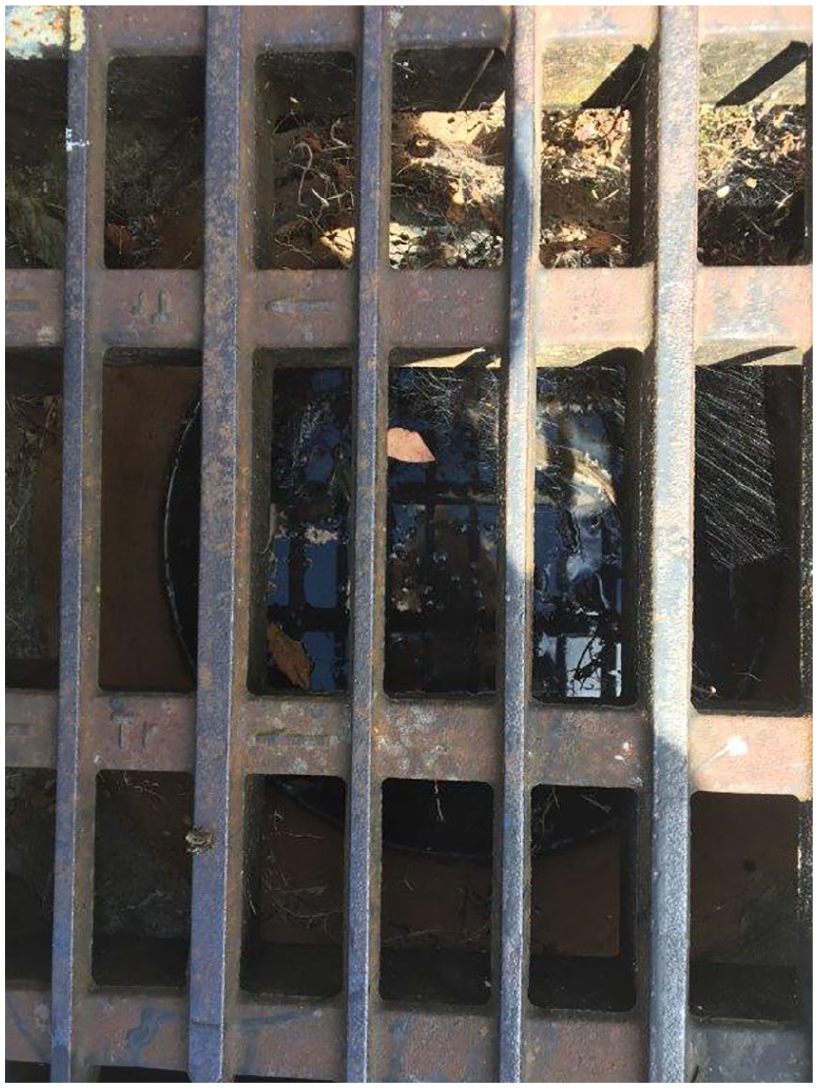
Down the Drain.
Eddie spent some time talking about his latest involvement with the CJS, lack of support, abuse, bullying and desire, yet, he also spoke about his inability to take his own life. Talking to the image, he said, my life is flushed away.
3
I see my life as being flushed down a drain, I saw the water going down, and I’m flushed down, it is my life ending down the drain, like, if I do get locked up, it’s like my life ending, and I have to start a new one.
We spoke a little bit more about the narratives around wanting to end his life, as these seemed particularly worrying. He said, ‘I am still in that dilemma, I, I, mean, I, without alarming you, I mean I don’t want to alarm you’, I then interject and say, ‘you have support around you yes?’
yes, but since I’ve been going to the probation thing again last Tuesday, I can’t self-harm, and I don’t like being in pain, and if I go to prison, and I don’t need any tools, or anything like that, the only, the only other course of action is to go on a hunger strike. I’ll just starve myself. You are the first to hear that, I mean, I don’t want to put blood on your hands! (Eddie exclaimed)
We then talked about his support, and discussing it with someone else, and I asked if he would be happy for me to make contact with his key worker and I was relieved to note he was. Eddie went on to say that the police ‘have not been wearing kid gloves, they have been brutal’. He told me they said, ‘they haven’t seen anyone beat a Section 18 (grievous bodily harm or harm with intent)’. It ought not be underestimated the power of these images, the in-depth life-story interviews, and the connections we make with our participants: arguably the necessary connection I made with Eddie. This was our second interview, and so, discussing these images aided his storytelling, and indeed gave me a window into an even darker side as he reflected upon his feelings via the photographs, but one that perhaps aids his management of emotions? I would not have been able to access this narrative without the photograph to further discuss his feelings. Critically, Eddie might not have had the vehicle (the photograph) to then talk to someone else, in a better position than I, to support him emotionally. Eddie called me a few weeks later to let me know that he did not get a custodial sentence and he told me he was overwhelmingly relieved, signifying our connection and relationship.
Sometimes, pictures can simply be of inanimate spaces, a little like the drain, but perhaps with ‘Down the Drain’ the viewer could envisage life, a drain and make a connection that is at best, melancholic. Trudy, over the first and into our second interview, told me about her horrific story of how her son was physically violent towards her. The culmination of which, ended up with her hospitalised, and her son incarcerated. However, the photograph ‘Between a Rock and a Hard Place’ (Image 2), and her narrative speaks to the fact that she, as his mother, knew there were problems, knew he was struggling with his disabling conditions, and wanted help. Yet, no support and no care were forthcoming. When looking at this photograph, she said, The wall closing in. This is how I was. I was between a rock and a rock and a hard place. I was being squeezed from both sides, it’s between my garage and next doors garage. The cats use it as a get through, as it’s only a little gap. My instincts were telling me that my son was getting worse and that we needed help, and the professionals were telling me he was fine, and I was saying there’s something bubbling away underneath. And they literally turned round and said to me, we’d not noticed anything. Time and time and time again. And so, I was then thinking my instincts must be wrong, they’re the professionals. And then I think, but no, my instincts are never wrong, and so you’d go, you were squashed, in-between, [I respond and say], ‘like in the films where the walls come in’, ‘yeah, yeah that’s it’ Trudy replied.
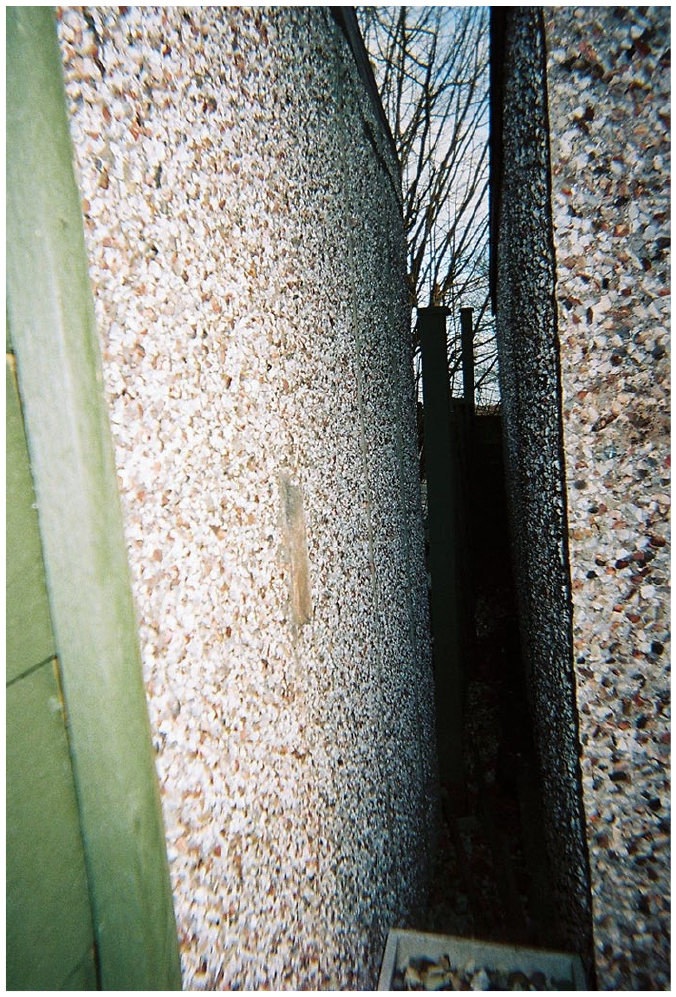
Between a Rock and a Hard Place.
Trudy continued with her story through the photographs, and then picked up the photograph ‘Waste-Ground’ (Image 3), which in many ways is in utter contrast to the previous image. It is open, there are very few lines, and no chance of being hemmed in. Equally, it tells a story of hopelessness. As Trudy told me, Then we get to the shot of the waste-ground. No hope, not even a barrier, nothing there to get to grips with, waste-ground. This is where I’ve got no hope at all, not even a barrier to work against. I got to the point, where there wasn’t any way of me thinking what to do, because there was nothing there to get to grips with. So, if you’ve got no engagement, and no hope, and no treatment going on, you’ve just got a waste-ground. [I say] ‘I guess if you’ve got a barrier, then you can always climb over it, or get through it’ ‘yes, yes, you’ve got something to focus on, but when all that’s gone, what do you focus on? Nothing’s going to grow, nothing’s going to get better’.
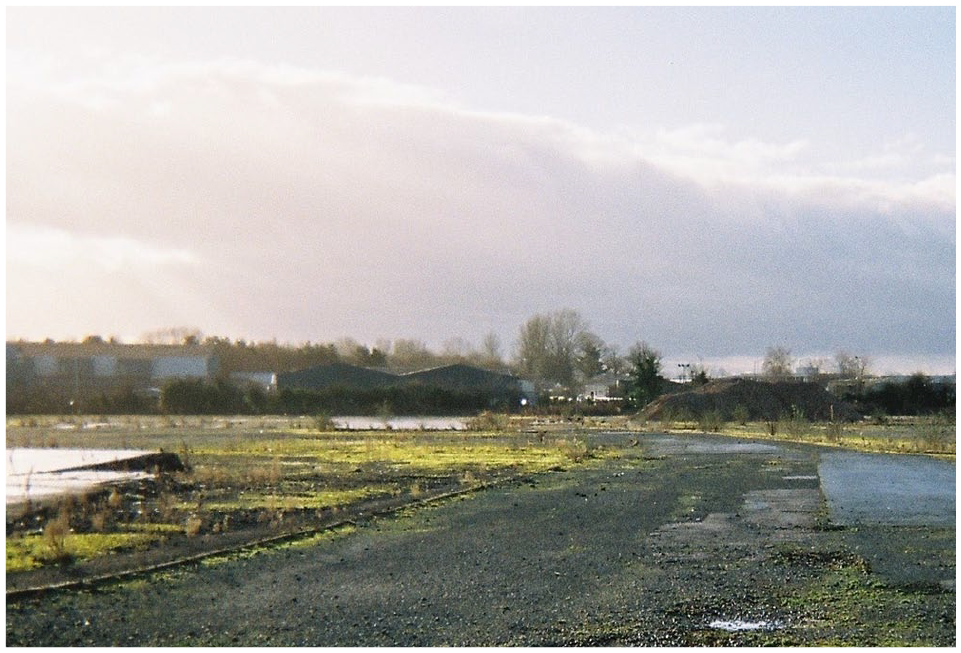
The Waste-ground.
Images of barriers to support, and then no support, simply validate creatively and evocatively Trudy’s difficult journey through the very early stages of a criminal justice process. Both Eddie and Trudy connect with their pictures that get beneath the story they are telling me, to reveal a deeper connection to their feelings. A connection that brings me as the researcher into that space, both emotionally and practically (Copes et al., 2018; Pauwels, 2017).
Shattered recollections
The previous photographs perhaps evoke nothingness (Rogers, 2020). ‘Down the Drain’, where there is no way out, being stuck ‘Between a Rock and a Hard Place’, or simply standing in a Waste-Ground, suggest immobility, even ‘the end’. The following two pictures arguably stimulate feelings of being broken, being shattered. These might not be positive images, but they evoke movement, and perhaps are, therefore, not static. For example, Eddie and I had just had a conversation about how he had been charged with violence against his ex-girlfriend, both parties sustained significant injuries, but in recalling this event, it seems he had a seizure too and could not remember much. He then picked out the photograph ‘Shattered Glass’ (Image 4), and said, ‘that’s broken glass, and that’s how I feel I am, broken. It’s my life. [It] has been shattered’. I ask Eddie to tell me a little bit more about this image and these feelings of being shattered. He revealed, my life has been shattered by erm, by what’s going on, erm, and that, and, erm, what’s going on with these text messages, erm, and shattered with what’s going on with the court, and erm, and feeling shattered with people, erm, calling me names, like paedophile, that stick, erm, and stuff, and I have to go to the police about that’. [I ask] ‘Why a paedophile’ [Eddie responds by telling me about an incident] ‘there was a bloke who looked like me and the name was the same, but different, but they took it out of context and it caught on social media, and it was to do with picking young girls up. I got caught up in that, but I got an alibi’.
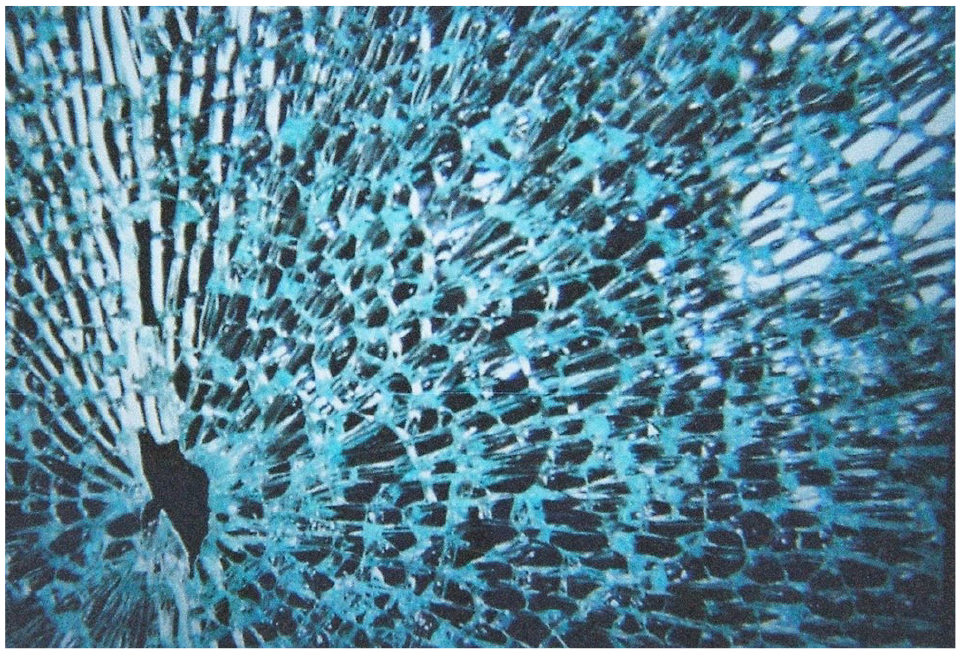
Shattered Glass.
The photograph and our conversation reminded Eddie about several times when he felt down and broken. But he told me that speaking about it with me, was for him, cathartic. What this follow-up interview, and the fact that he had taken photographs to talk about, facilitated our researcher/participant connection, just as with the Elaine below.
Elaine and I were coming to the close of our second life-story interview, having discussed abuse, violence, the sex offending and arson in relation to her son, and then living with it all. We both looked towards the next photograph ‘Shattered Brick’ (Image 5). Similarly, to Eddie’s ‘Shattered Glass’, ‘Shattered Brick’ invokes thinking about movement, as it stimulates feelings of something in process, so perhaps not quite the end. In part, because Elaine begins telling me about historical abuse but ends up looking again at the photograph and recalling how she and Harry discussed together the beauty in this image.
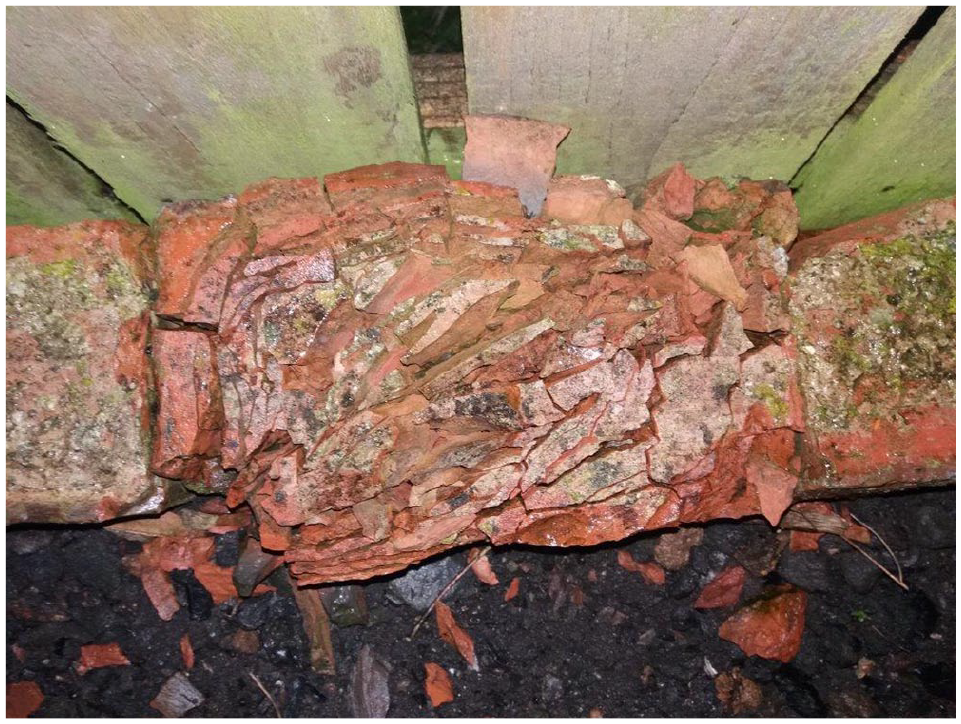
Shattered Brick.
Elaine, therefore, is reminded of her past when viewing this picture, and says, if you get attacked at home, by someone who loves you. That’s a head fuck. His dad, seen him born. How can someone be so supportive and then turn? You can accept a stranger. But that?! I know, it’s unbelievable. A lot of mental fuck, you can get over the bruises, but not head. He used to fuck with me head, the one after Harry’s Dad. I’d go out and everything had been moved a little bit. At least I knew where I was when I had the shit kicked out of me. I knew what was happening, I knew where it was going, but this was incessant. Gaslighting. Yeah, when a bloke fucks with your head.
Elaine also, however, went on to explain the connection made between herself and Harry while looking at the photograph. She explained, ‘it’s bricks and we [Harry and Elaine] both spotted it, and he [Harry] said “how can something be so broken and shattered and be so beautiful?”’ Elaine and Harry looked at and saw the beauty, yet articulated it signified being shattered. It represented the horror of that moment and of that pathway, to that point in time.
Elaine went on to say, arousing this sense of movement and time passed further, It says a lot. Totally broken, and it was okay and then it got shattered more and more, and by this time next year it will be crumbled. I sometimes think that’s me, it feels like it. You don’t feel like you are getting anywhere. Fairy godmothers don’t exist. Sometimes you’ve just got to hang on. I don’t know if it’s just the way things are, but I don’t think I’m gonna live for much longer, I’m, I just feel like I’m standing on the edge of the cliff and I don’t know if I’m going to fall or fall backwards. You do sometimes think what the fuck have I done. If there is a God, why? What the fuck have I done. And if there isn’t how do I get out of this path I’m on, and you keep trying and then you find yourself back on the same old path. Here we go again.
This telling of her journey, of being once okay, but now shattered, and then in the future crumbled, is evocative. But by the time we got to this picture in the follow-up interview, we had been talking for some time, and Elaine seemed exhausted, so I begin to close down the interview. But not our interaction, not our connection. I could not leave her having gone through such storytelling. I suggested we went out for lunch and Elaine positively responded by saying, ‘aye, shall we go to the café just to get some distance between what we’ve been doing?’. She then tellingly said, ‘Do you need to do that sometimes? Y’know, normalise?’ I responded with ‘yes, I do’.
These pictures and connections thus far recall difficult times and can trigger emotions that challenge both the participant and the researcher. But not all photographs taken were driven solely by negative storytelling. The photograph alone, despite being evocative, is only the window into the feelings told, and as it happens, this window is not as transparent as we might like to think it is. That is often because, how we interpret photographs is always based on our own imaginings, cultural norms, and individual and collective experiences (Hall et al., 2013). Below, we can see that what we see as the viewer, is not always the same as the producer of that image.
Beyond the crime – positive connections
Photographs can remind us of memories that are painful but can also be heart-warming and have a positive impact. ‘Remembering Mum’ (Image 6), taken by Eric, and ‘Snowscape’ (Image 7) taken by Elaine, were photographs that provoked discussions about loss and abuse, but also about coming out the other side of difficult times, about moving forward and about freedom. They also highlighted the point that not all is as it seems, for the one viewing the picture. For example, Elaine’s interpretation of ‘Snowscape’, her own image making, and imagining was emphatic, and gave me an additional layer in discussing her feelings, and therefore, out connection. My reading of the photograph was different to hers, confirming the need to revisit participants to discuss their images.
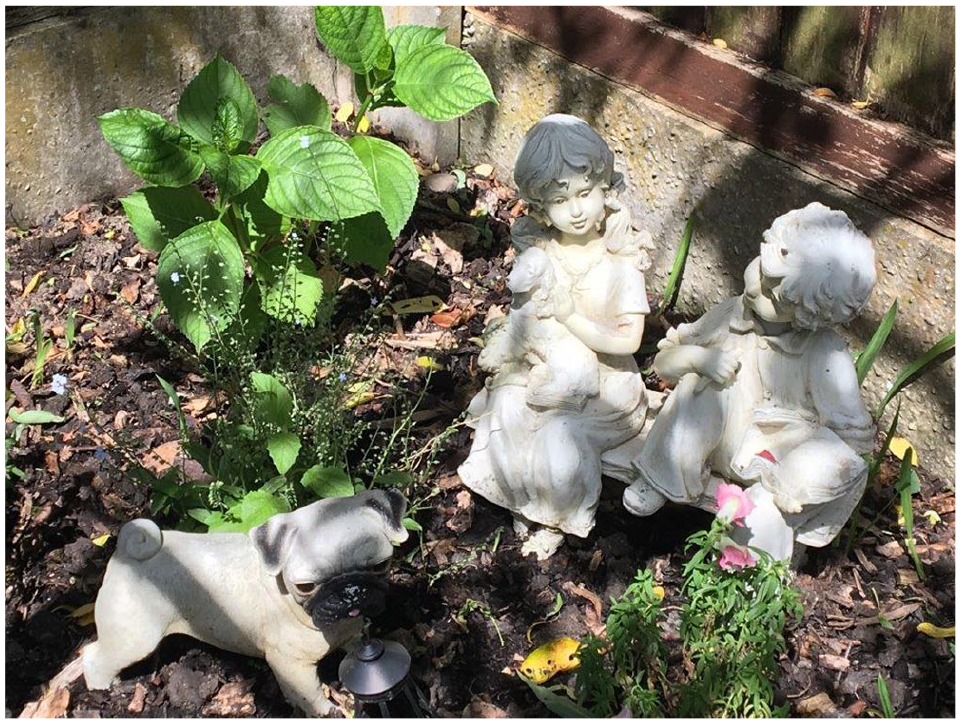
Remembering Mum.
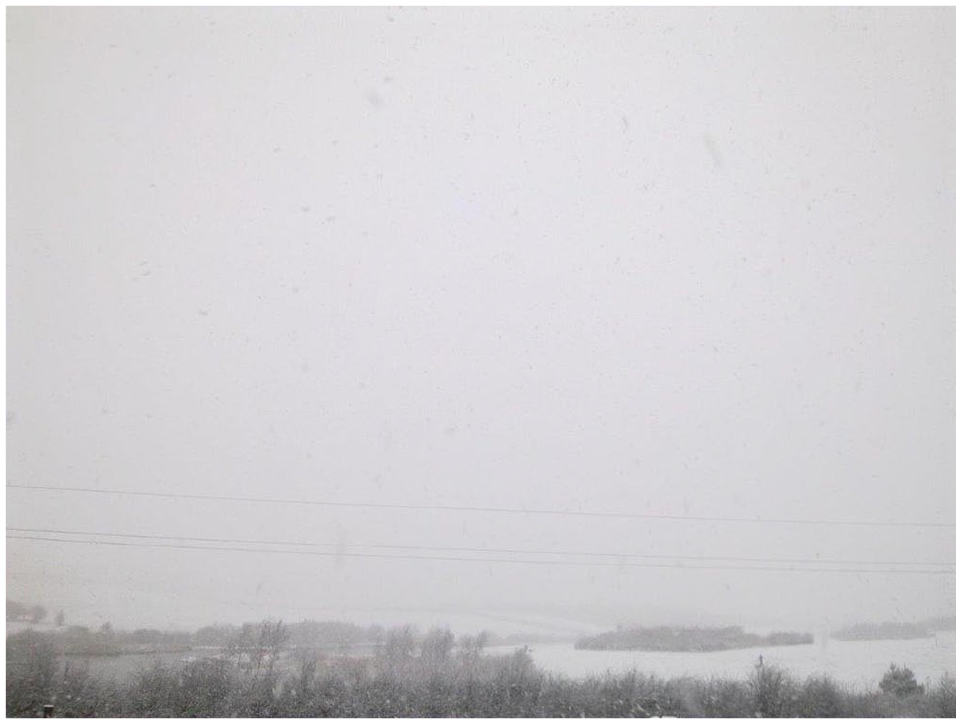
Snowscape.
When talking about ‘Snowscape’, I said to Elaine, ‘it’s bleak, isn’t it?’ That’s what it looked like to me, on first viewing. I imagined her to think ‘bleak’, given the life-story relayed. Especially after her discussion about domestic violence, just before we discussed this photograph. That was an assumption I made, and wrong given her narrative around it when I said, ‘it’s bleak isn’t it?’. Elaine responded, exclaiming, No! It’s not bright, but it’s light! Yes, it is bleak, but it’s wide open space. [She opens her arms wide]. You can breathe on that one [. . .] This is like you wanna [and she takes a deep intake of breath and throws open her arms] like. It’s free and loads a space and airy, I know, it’s, it’s not bright, but it’s light. It’s not quite the blue skies but it’s there, it’s space and being able to breath, and there’s like, you’ve got some foundation. [She pointed to the bottom part of the photo]. The important bit on the bottom bit is important having a firm base I suppose. [A foundation? I say]. Oh, that’s variable. Sometimes I think fuck it all. Then I say to him [Harry] we’ve been through worse, and then other days it’s like oh fuck, what we gonna do kind of thing.
So much more is narrated from the ‘Snowscape’, beyond what a disconnected viewer could imagine. It is about a desire to be free and unrestricted. It is about domestic violence and being at home, where safety is assumed, but for Elaine, it was a place of danger. Furthermore, although Elaine had already told me of her difficult past, she re-told her experiences about past abuse, but this time, how it has impacted her life and how she feels about it now. She made a further connection to me, allowing me ‘in’. When discussing ‘Snowscape’, and in response to those days, Elaine said, I cannae sleep with the curtains closed, and I can go for a walk in the middle of the night, and I’m not scared, and I feel quite at ease. It’s quiet, and if someone was to come upon us I would hear! It’s so quiet.
Visual methods here, and particularly feelings photographs, have added a dimension to exploring and understanding part of Elaine’s story, and our connection as participant and researcher. In a similarly emotionally provocative way, Eric’s photograph, ‘Remembering Mum’, without any narrative is simply some flowers and an ornament in a garden.
For Eric, when looking at his photograph ‘Remembering Mum’, he recounts the fond memory of his mother, on a bench with his sister and a dog. Eric tells me how this picture and the place in his garden is about ‘planting and nurturing flowers’ in his mother’s memory and a shrine in his garden. Eric, on talking to this photograph, told me about his Mum who passed away 2 years ago. He said, I loved her to bits, I did everything for her. I go and talk to her sometimes, at night. And we always had dogs and she loves dogs, and I like pugs, and see that lantern, and me sister got the dog, and I said to her, I’m going to put that on my Mum’s memorial. Me Mums ashes are there. I get upset when it’s me Mums anniversary, but I’ve got support to get through that.
After talking about ‘Remembering Mum’, Eric took me into his garden and showed me the memorial, and was so proud of this place and space. This connection Eric made with the picture, in telling his story, and then sharing with me the actual memorial in his garden, supports our connection and sharing difficult emotions and memories, especially the death of his mother. It also highlights how the process of taking the photograph, talking about the image, and then showing me the place where it was taken, supports a necessary connection. As the researcher, I was brought into the moment and shared a caring space, emotionally and practically (Rogers, 2016). These interactions, in part, underline the light and the shade in these interviews. Not least, as the fond recollections that form part of their rich narratives are an oasis between the horrific storytelling of, for example, suicide thoughts, incarceration, criminal activity, hopelessness and abuse.
Conclusion
John Berger, in the 1970s, argues, image is a sight which has been recreated or reproduced. It is an appearance, or a set of appearances, which has been detached from the place and time in which it first made its appearance [. . .] every image embodies a way of seeing. (Berger, 1972: p. 2)
that is critical for feelings photographs. For Eddie, Elaine, Eric and Trudy, seeing, imagining and feeling, is often how we make an immediate connection to something or someone, and in so many ways. In the case here, by enabling participants an opportunity to talk about photographs that were taken by them, we made a connection, that goes beyond the verbal (Aldridge, 2007; Booth and Booth, 2003; Fitzgibbon et al., 2017). Unlocking feelings via pictures to explore emotive stories assists our connection and understanding of fractured lives, not least because, as Hall et al. (2013) propose, culture embodies shared meanings and suggest, ‘language is the privileged medium in which we “make sense” of things’ (p. xvii). To view these pictures without this interaction is senseless, two-dimensional and without connection.
Iris Marion Young implies, people are often ignorant about others’ lives. She argues that ‘perhaps more often people come to a situation of political discussion with a stock of empty generalisations, false assumptions, or incomplete and biased pictures of the needs, aspirations and histories of others’ (Young, 2011: 74). As such, these assumptions about other people are often dependent on a limited focus or stereotype based on representation, creative narratives and everyday images. Perhaps never more so than with people who have LD and/or ‘challenging behaviours’ and who are positioned at the bottom of a human hierarchy and are often considered to have little worth (Rogers, 2007, 2016). Especially, as it is assumed many are unable to contribute to society economically and politically, due to an intellectual impairment, and/or SEMH problems. In addition, families who have ‘disabled children’ also face these challenges and stigmatisations, even more so if that person or family member has committed acts of violence, sexual assault, arson, drug handling/dealing or theft (Comfort, 2008; Condry, 2007).
A person who has a LD and/or has mental health problems and has committed a crime is considered lacking in human value (Clemson, 2015). Parents (more often mothers) of such ‘children’ experience emotional trauma vicariously, to the point their own mental, and sometimes, physical health suffers. Offenders and their families are, therefore, doubly damned and suffer greatly (Rogers, 2019). Reflections upon visual and creative methods aid a researcher/participant connection and a process of understanding ‘a truth’ about these challenging life-stories. A necessary connection is fluid. It is how all parties involved relate to one another, in an ethical and just manner. It is about investment, trust and time. It is about relationships. It is also about how those connections remain alive in the public arena. I wanted to enable participants to make and create their own stories via photographs taken, rather than have their lives completely interpreted by me, the researcher (although clearly that happens). Besides, individuals and communities interpret meaning as follows: ‘Objects, people, events in the world – do not have in themselves any fixed, final or true meaning. It is us – in society, within human cultures – who make things mean, who signify’ (Hall, 2013: 45).
Carrying out research that is premised on necessary connections is perhaps not always possible, and it can be a complicated and protracted process – ethically and practically. Critically, when it comes to innovative methods, I would ask, how can we know what situation any of us as social scientists will be in during a deeply qualitative research process. That is not to say ethical processes ought not be in place, but, as I suggest elsewhere, perhaps, if due to restrictive ethics procedures we are unable to access what might be considered high risk research, we will never hear the stories of those people, groups and communities who are most oppressed. If we fear reprisal, for over commitment or connection to our research participants (Goffman, 2014; Worley et al., 2016), how will the sociological/criminological imagination even continue to exist? (Rogers, 2020)
In the case of this research, I had few barriers as such, because, due to the variable ability of my participants to consent, my professional and personal experience of carrying out research with learning disabled people in the past and securing research funding (which gave me time to immerse myself in the field). Challenging the boundaries, however, of research practices and protocols is more ethical than remaining silent.
By carrying out creative and innovative research, we can access data that ordinarily are ‘missing’ (Rogers, 2020). This is critical for exploring the lives of marginalised others: disabled people, their families and carers who travel through the CJS. Therefore, as the reader (viewer) and the researcher interact with the images in this study, we imagine, at the very least. We then make a judgement, or an interpretation. As these images move into the public domain, I hope to add a meaningful visual representation of fractured lives that is accessible beyond the academy in making necessary connections via creative research methods.
Footnotes
Acknowledgements
I would like to thank all the participants involved in this project, and not least, Eddie, Elaine, Eric and Trudy. I would also like to thank the anonymous reviewers who gave me their valuable insight, advice and not least of all their time. It also goes without saying I feel privileged to be a part of this special issue edited by Julie Parsons and Gayle Letherby. Finally, this research would not have been possible without the support of The Leverhulme Trust RF-2016-613\8, so to them I am incredibly grateful.
Declaration of conflicting interests
The author(s) declared no potential conflicts of interest with respect to the research, authorship, and/or publication of this article.
Funding
The authors disclosed receipt of the following financial support for the research, authorship, and/or publication of this article: Author has received funding from The Leverhulme Trust RF-2016-613\8
