




Abstract
Engaging with visual methodology literature and the concept of ‘family display’, this article examines how visual methods can generate new ways of understanding the (in)visibility of queer family life. Engaging Chinese lesbians in image-making and photo-elicitation interviews, I illustrate how visual methods give access to different ways of making sense of ‘family’, including the ‘everyday’, the ‘imaginary’, and the ‘void’. By exploring the image-maker’s intentions, the presence or absence of the image-maker, and diverse ways of displaying family, I show how visual methods can facilitate the display of family ties, tensions, and ideals. Adopted in an open format that allows flexibility and creativity, visual methods generate space for participants to communicate the unrealisable and unseeable and for researchers to examine how dominant heteronormative representations and discourses around the ‘family’ restrict possibilities of displaying family. I highlight the importance of maintaining openness and sensitivity to cultural peculiarities when adopting visual methods.
Keywords
Introduction
The proliferation of visual methods in social science research has demonstrated new ways of seeing and thinking about research (Pauwels, 2015; Switzer, 2019). Ranging from photography and drawing to video production, visual methods add value to existing interview methods by capturing richer and more multidimensional data that cannot be fully conveyed through words (Bagnoli, 2009). More importantly, these methods provide participants with a powerful means of expressing their emotions while encouraging them to reflect upon their lived experiences in relation to the social world (McLaughlin and Coleman-Fountain, 2019). These methods can be particularly useful to family and sexuality studies as researchers seek to understand the nature of sexuality and family life in all their complexity and the contexts in which they are lived (Cabalquinto, 2020). Nevertheless, what has been less discussed is the role of visual methods in generating new ways of understanding the (in)visibility of ‘queer’ 1 family life, especially in contexts where representations of queer identities and families remain limited, if not invisible.
This article explores how and under what circumstances visual methods can facilitate the display of family ties, tensions, and ideals in China, particularly those that have often been erased from dominant representations of family life in the country. What can visual methods do for research on queer family life? How can they be employed to represent and address the (in)visibility of queer family life in China? By tackling these questions, the article contributes to the methodological discussion of visual methods in two ways.
Firstly, this article builds a constructive bridge between the literature on visual methodologies and studies of family and sexuality. I engage with the notion of ‘family display’ (Finch, 2007) to discuss the extent to which visual methods can enable the ‘display’ of queer family life. Building on previous discussions about how visual methods offer ‘traces’ of the social world that we can learn from and take further (Coffey, 2021; Pink et al., 2017), the current study extends these discussions to illustrate how visual methods can contribute to family and sexuality research by facilitating deeper levels of reflection upon wider familial and social ties outside the frame of the images provided by the participants and beyond the individual or couple.
Secondly, this article reveals the process of adapting visual methods for the study of queer family life in a restrictive context – one that does not legally or socially recognise same-sex partnerships and thus hinders the visibility of queer families – and discusses the strengths and challenges of visual methods. Although qualitative methodology is widely understood as an ideal approach to studying the everyday practices and sense-making of queer family life within the socio-cultural and political contexts that people inhabit (Gabb, 2013), little attention has been paid to how the implementing of qualitative methods, including creative visual ones, is a culture-laden task (Teti and Van Wyk, 2020). In particular, I highlight the importance of maintaining openness when introducing the instructions for employing visual methods to participants, with the aim of enabling them to talk about not only what is present but also what is absent from their family lives.
This article is organised into four sections. It begins by discussing the roles of visual methods in family and sexuality research. Specifically, by linking the discussion of visual methods with the notion of ‘family display’, this section explores the roles of images in facilitating the display of queer family life. I then delineate the process of developing the current study and ways of engaging with participants – Chinese lesbians, who identify themselves as lalas 2 – through image-making and photo-elicitation interviews, taking the cultural peculiarities of the Chinese context into account. The third part presents the findings. It illustrates how visual methods enable us to access different types of experiences related to queer family life, including the ‘everyday’, the ‘imaginary’, and the ‘void’. The article concludes by highlighting the importance of investigating participants’ intentions of (not) producing certain images in relation to their wider family networks and social environment. I argue that visual methods have the potential to open up new ways of thinking about what ‘family’ means and realising different forms of family display.
Visual methodologies and different forms of family display
The increasing prominence of visual methodologies in sexuality and family studies is associated with the call for more creative methods to examine non-normative sexual identities and practices (Barker et al., 2012) and to locate sexuality in the context of family relationships (Gabb, 2013). This trend accompanies a significant increase in the number of families with a lesbian, gay, bisexual, trans, or queer (LGBTQ) member worldwide (Reczek, 2020). In recent decades, scholars have emphasised the need to broaden the conceptual boundaries of ‘family’ to include wide-ranging relationships, such as blended families and LGBTQ-parent families (Goldberg et al., 2014). Qualitative methodologies are considered well-suited to capturing how different family ties are created and sustained on a daily basis (Gabb, 2013). In particular, it is believed that visual methods are particularly useful tools to capture the complexity of relational experiences (Gabb, 2013). For instance, as one of the most commonly used forms of visual data, photographs can be used to provide a window granting researchers access to participants’ material and social worlds, thereby offering a picture of changing conceptions and practices of family life (Deacon, 2000). The photo-elicitation interview has also been increasingly used as a method. It involves using one or more images in an interview and inviting the participant to discuss these image(s) in relation to personal or sensitive topics, such as those related to sexuality and family (Del Busso and Reavey, 2013; Holland, 2019).
It is important to understand that participants’ image-making (photographs or other visual images) and photo-elicitation interviews go hand in hand in creating a collaborative research process (Glaw et al., 2017). As Coffey (2021: 6) suggests, ‘the research encounter is a process, rather than an objective, knowledge-and-truth-producing exercise’. When researchers give participants the opportunity to produce their own data through image-making, participants are positioned as experts on their own lives (Shankar, 2016). Participants can become ‘creative producers capable of making arguments about life through their aesthetic choices’ (Shankar, 2016: 159). Furthermore, Harper (2002: 23) argues that the photo-elicitation interview can provide an ideal platform for a ‘deep and interesting talk’ due to the capacity of images for evoking feelings, memories, and imaginings. It is believed that visual images tap into deeper regions of human consciousness than words are able to (Harper, 2002). They can, therefore, create a different set of data, which cannot be drawn from traditional verbal methods of interviewing. In this sense, the photo-elicitation interview serves not simply as an interview process but also as a collaborative effort that allows the capturing of deeper emotions and more subtle meanings and leads to fresh perspectives and explanations (Glaw et al., 2017; Harper, 2002).
Despite the potential of visual methods, it is important to flag up the risks of the inflated assumption that images can ‘give voice’ to individuals (Brotman et al., 2020; Shankar, 2016). Scholars have drawn our attention to the fact that, while research participants are ‘free’ to produce images in any way they choose, the image-making processes are still inevitably shaped by ‘the regimes of seeing they are embedded within’ (McLaughlin and Coleman-Fountain, 2019: 378). Therefore, it is important to examine the ways in which participants’ capacity to visualise their personal or family lives are bounded by broader available discourses and the wider socio-cultural and political environment (Brotman et al., 2020; Coffey, 2021).
In fact, we rarely reflect upon why LGBTQ people choose (not) to display certain images of family life and under what circumstances they are able to display their family lives in the ways they prefer, particularly in contexts where same-sex relationships remain stigmatised and even invisible. In engaging with Finch’s notion of ‘family display’ (2007), this article seeks to tackle these questions, with a focus on the familial experiences of lalas (Chinese lesbians). Widely used in family sociology, Finch’s (2007) concept of ‘family display’ is particularly useful in understanding the ways in which social meanings about the ‘family-like’ nature of one’s relationships are presented to and understood by others. Extending Morgan’s (1996, 2011) concept of ‘family practices’, Finch (2007) argues that families need to be not only ‘done’ but also ‘displayed’. In using the term ‘display’, Finch (2007: 67) draws attention to the role of social interactions in the processes through which people do and demonstrate certain ‘family things’ and convey to relevant audiences that their relationships are and should be recognised as ‘family’ relationships. While all families engage in display work, the need for such display tends to be greater for families who fall outside the traditional heterosexual family model and are consequently seen as deviating from the ‘proper’ family form. For instance, by conducting verbal interviews with lesbian parent families in England, Almack (2008: 1188) illustrated how these parents used different ‘display work’, such as the use of narratives and personal objects, to gain recognition of ‘their parental and familial status within (and also beyond) their wider kinship networks’.
In bringing the concept of ‘family display’ into dialogue with the methodological discussion of image-making and photo-elicitation interviews, this article critically reflects upon and advances the use of visual methods in two ways. Firstly, by examining the processes and difficulties faced by participants in producing an image, and the intention of the image-maker (the participant), this article highlights the degree of openness needed when introducing visual methods to participants. It is important to note that qualitative methods require socio-cultural adaptation (Mark and Boulton, 2017; Teti and Van Wyk, 2020). For instance, focussing on lesbian couples’ experiences of becoming parents in the USA, Holland (2019: 6) described how visual methods used in the study departed from the traditional photovoice method, which, in its original design, involves a series of photographic exercises that are supposed to be completed individually and then discussed in small groups (Wang and Redwood-Jones, 2001). Instead of carrying out the study in a group setting, Holland (2019) conducted couple-centred interviews, where participants shared the photos they took, in order to focus on how lesbians, as couples, experienced their transition to parenthood. More importantly, Holland (2019: 2) analysed online photo archives created by lesbian mothers in order to ‘centralise and advocate for’ the visual tools that marginalised people had created for themselves to display alternative representations of motherhood. This serves as a good example of how researchers can and should adapt different methods to match specific research goals and environments. Taking into account the taboo nature of homosexuality and the invisibility of gay/lala families in Chinese society, this article outlines the steps taken and the lessons learnt to enhance the usefulness of visual methods in understanding lived experiences and meanings in different contexts.
Secondly, focussing on Chinese lalas provides a useful lens through which to examine the social dynamics surrounding image production and consumption. It raises important questions about the extent to which visual methods can serve as an alternative way of seeing for marginalised participants to represent themselves within research and in the social world. While previous research, primarily conducted in democratic Western societies, has highlighted the potential of visual methods to generate social changes (Holland, 2019), it remains unknown as to whether and how research using visual methods in more restrictive contexts, such as China, can empower participants and bring about changes at individual, community, and/or societal levels. Also, previous Western research using visual methods to study sexuality and intimacy has found that the ways in which participants choose to create visual materials may still replicate the broader cultural knowledge and existing images already associated with established norms and values. For instance, by inviting lesbian mothers and their children in England to take photos that represented their ‘lesbian families’, Gabb’s (2011) study found that some images shared by participants, such as those of the lesbian couple, still reflect normative ideals of the monogamous two-parent family model. In another study using visual methods, (mainly heterosexual) participants were asked to complete a story about a fictional bisexual, lesbian, or heterosexual character who was going on a date, and then asked to create an online avatar (virtual cartoon) of their character (Hayfield and Wood, 2019). The study showed that the stories and images created by participants were still overwhelming dominated by traditional notions of gender and heterosexuality, despite its methodological innovation. These studies highlight the need to attend to the social realities that continue to shape people’s ways of seeing. Extending this line of enquiry, I ask: In what ways can visual methods facilitate Chinese lalas’ family display and tell us about what can and cannot be displayed?
The current study
Project objectives and epistemology
By inviting participants to share images that best represent their family life and then carrying out photo-elicitation interviews, this study aims to enable an in-depth exploration of what and how lalas think, feel, and act during the processes of forming their families in China. The visual methods are intended to produce rich and multi-layered data about how and why lalas make sense of and display family in certain ways. The qualitative methodology used in this study is theoretically informed by a social constructionist perspective, which since the 1980s has served as one of the major theoretical sociological frameworks for understanding sexuality and relationships (Kong, 2019; Stein and Plummer, 1994). This perspective not only emphasises how realities are constructed in society but also ‘explicitly incorporate[s] context, conditions, and resources into analysis’ (Holstein, 2018: 405). In a similar vein, images are by no means neutral but are produced by individuals situated within their environments; indeed, ‘what you expect to see and what, even if you did not expect it, you can understand and make sense of – your theory – shape the images you finally produce’ (Becker, 1974: 11). As I further explain below, these epistemological views guide the study at every stage, from inception and data collection, to analysis.
Ways and challenges of engaging lala participants in Beijing, China
I conducted the fieldwork in Beijing, China, between 2017 and 2018. As the political and cultural hub of China, Beijing represents a unique site for investigation into the dynamic processes and huge challenges of family-building among lalas. On the one hand, several key LGBTQ organisations have first become established in Beijing, the cultural hub of China, and have then extended their networks nationwide (Bao, 2018). In other words, lalas (and other sexual minority people) in Beijing can generally enjoy more opportunities to explore a vibrant queer community culture than their counterparts in smaller cities (Lo, 2022a). On the other hand, they remain alert to the possibility of political interventions in the city, such as intermittent crackdowns on queer public events (Engebretsen, 2014). In addition, same-sex couples are denied the rights to marriage, adoption, or the use of assisted reproductive technology (ART) in China. As discussed in my previous work (Lo, 2020), lalas are doubly disadvantaged by gender inequality and heterosexual norms in China, where women who are unmarried by their late 20s are stigmatised as ‘leftover women’ (Ji, 2015; Xie, 2021). Many of them may thus hide their sexual orientation, and some even engage in ‘contract marriage’ with a gay man in order to appear heterosexual (Choi and Luo, 2016; Lo, 2020). It is within this context that the existence and needs of lalas and their families remain largely invisible and neglected in urban China (Lo, 2020, 2022b). Using innovative methods to enable an understanding of what ‘family’ means to this group of women is, therefore, an approach that is urgently needed and essential to generating fresh insights into how different forms of family lives are enacted.
The difficulties in recruiting participants, especially during the early stages of the study, highlighted the hidden status of lalas and the taboo subject of homosexuality in China. Interview invitations and indirect requests for referrals to potential participants were ignored or rejected numerous times. To overcome these challenges, it is noteworthy that my recruitment process became inextricably interlinked with my participation in different lala gatherings and community events in Beijing. My position as a Chinese woman gave me an advantage in terms of accessing this hard-to-reach group of sexual minority women and building rapport with them. Without attending these events, it would have been almost impossible for me to gain access to the local lala community, gain the trust of gatekeepers for local organisations, and, more importantly, to achieve an in-depth understanding of lalas’ living conditions within the socio-cultural and political context of China. Notably, these local connections played a key role in my research process because they helped me to gain significant credibility as a researcher whom participants could trust in the first place. Such credibility was crucial to creating a safe and comfortable space to encourage participants to engage in image-making and photo-elicitation interviews. Such interviews could evoke rich layers of experiences, memories, and emotions that could not be easily put into words (Bagnoli, 2009; Glaw et al., 2017) and might thus be considered deeply personal or even sensitive.
I recruited my participants through multiple channels, both online and offline. As demonstrated in previous studies of family life among LGBTQ people, who largely remain a hidden population (Nordqvist, 2014; Weeks et al., 2001), it is common to recruit participants through various gateways in order to increase the diversity of the sample. I recruited the participants for my study through LGBTQ-related and gender-related organisations, lala-targeted online platforms, my personal networks, and participants’ referrals to their networks. This study received ethical approval from the Research Ethics Committee of the Department of Sociology at the University of Oxford. Consent forms signed by participants included the option to withdraw consent to use their data, including their images, at any time. To protect the confidentiality and anonymity of the participants, pseudonyms were used and identifying features (e.g. faces) in the images were blurred.
Participants
A total of 35 participants joined the study. They were aged between 25 and 40. Around two-thirds of the participants were in a same-sex relationship. Nine had entered into ‘contract marriages’ with gay men while cohabiting with their same-sex partners. About one-quarter of the participants were mothers and had become mothers through different means, including the use of ART overseas or previous/current relationships with gay/heterosexual men. The vast majority were employed in different sectors, namely, finances, information technology, and design, while a few were self-employed or freelance, and one was unemployed. Most of them had received a university education.
Such diversity in the sample, particularly in terms of relationship status, was a result of purposive sampling, which aimed to achieve an in-depth analysis of how lalas who chose to engage in different partnership forms and lead their family lives in different ways made sense of what ‘family’ meant to them. Recruiting this heterogeneous subgroup of Chinese lalas enabled me to examine how individual and structural opportunities and constraints might shape lalas’ diverse meaning-making and decision-making experiences related to their family lives.
Nevertheless, given the limitation of the relatively small sample size, it is not my intention to generalise my findings to the whole lala population in different parts of China. Another limitation is that most participants were members of the middle class, with white-collar jobs. While it is important to interpret the findings with caution by taking these aspects into account, this article represents a significant step forward in opening up more methodological discussions about how to produce rich and context-sensitive accounts of the lived experiences of sexual minority people in a non-Western context through the use of visual methods. I now turn to describe these methods in more detail.
Data collection
The visual methods used in this study were applied in two steps. Firstly, in advance of the individual interviews, I invited participants to find one or two images that best represented their conceptions of ‘family’. The instruction read as follows: ‘Please show me one or two images that best reflect your thoughts, opinions, or experiences about “family”’. I kept this instruction as broad as possible with the intention of creating ample space for participants to respond to the image-making task in their own ways. I reassured participants that I did not have any preset definitions of what ‘family’ was and that the intention of the study was to give them room to define the meanings of ‘family’ in their own terms. As shown in the findings, such openness enabled me to discover different patterns in the ways in which participants approached the same task, and therefore to enhance the depth and breadth of data.
The second step consisted of verbal discussions about what the images produced by participants meant to them. These photo-elicitation interviews were carried out in a one-to-one setting with the researcher for two reasons. Firstly, individual interviews enable participants to freely share their views without the fear of having to conceal certain thoughts in the presence of a partner/others (Bryman, 2016; Heaphy and Einarsdottir, 2013). This approach thus allowed flexibility in the exploration of family-related issues that truly concerned each participant and consequently offered deep insights into the boundaries of who and what were included in the ‘family’ as participants actively defined it. Secondly, given the sensitive nature of homosexuality in China, joint/group interviews or focus groups were not used in order to avoid any risks to participants’ privacy or well-being (Ritchie et al., 2014).
Each interview lasted for between 1 and 2 hours and was held at a place convenient to the participant. Interviews were conducted in participants’ native language, which was Mandarin Chinese. 3 I started the interview with questions about personal background and self-identification as a lala, followed by questions about daily interactions with their partners and family members, and other more general questions about participation in wider society. It was often during the second part of the interview, about family life, that participants took the initiative or were asked to share the images they had chosen, including why and how they had come up with those images. The images served as effective visual stimuli for participants to clearly express their visions of family life. More importantly, talking through these images enabled access to participants’ social worlds (McLaughlin and Coleman-Fountain, 2019), including their relationships with wider kin and the ways in which socio-cultural and structural constraints shaped their family display.
Data analysis
All the interviews were audio-recorded and transcribed. Following Braun and Clarke’s (2006) guidelines, I conducted a thematic analysis in order to identify shared meanings and experiences that were significant to participants. I sorted the different codes into potential themes by carefully considering the relationships between the textual and visual data and between different codes. Rather than providing a ‘window’ into ‘authentic’ realities, the images were analysed as ‘cultural artefact[s] constructed in relation to social norms, values, context and processes’ (Taylor, 2013: 45). In other words, the focus of the analysis was on how participants found the process of producing images, and how they contextualised and defined their images in relation to their social worlds. In line with the social constructionist perspective, the analysis attended to participants’ visual representations and verbal accounts of their family lives and, equally importantly, the interplay between their lived experiences and the wider socio-cultural and political circumstances that conditioned their viewpoints and shaped their family display. Tapping into the intentions of the image-maker, the presence or absence of the image-maker (some participants refused to produce an image for reasons discussed in the findings section), and the diverse ways of displaying family, this study sheds light on what visual methods can do to enable the display of queer family life. The images presented in this article were chosen because they best illustrate the meaning-making processes involved in (not) producing an image and the social dynamics which influence whether, how, and what lalas can display about their ‘family’ life.
Findings
The everyday: Capturing the ‘ordinary’ routine in family life and the beauty of the mundane
Visual methods helped bring to light one aspect of the participants’ family lives that was commonly shared – how they treasured the daily ‘mundane’ acts that were enacted within the couple. Moments of cooking and sharing meals were often captured in images and depicted by participants as ‘cozy’, ‘warm’, or ‘at ease’. Taking photos of these moments enables the display of family practices (Finch, 2007). When discussing the photos, participants tended to reflect upon not only what ‘family’ meant to them but also how others, especially their wider family, perceived their family lives with same-sex partners.
For instance, Ying shared a photo of herself taken by her partner while she was cooking (Figure 1). To avoid disappointing her parents with her non-normative sexual orientation, Ying married a gay man a few years ago in order to appear heterosexual. Meanwhile, at the time of the interview, she had already divorced him without her parents knowing about it and had decided to register a marriage with her female partner outside China. She believed that exposing the truth about her relationships would only put her parents under great pressure due not only to their own heterosexual family values but also to the fact that they would need to deal with gossip from their several siblings and other relatives. She described how she felt about the photo: I was cooking. I just feel great at home…She [partner] took a photo of me from the back. Just some little things. The tiny moments in life. Family to me is all about daily living…I hope that my family of origin can see how happy I am, but now there’s no way for me to do so. After we get married, she’s my lover, she’s my family. But there’s no way for my parents to know about all this. Ying shared a photo of herself cooking to represent her idea of ‘family’.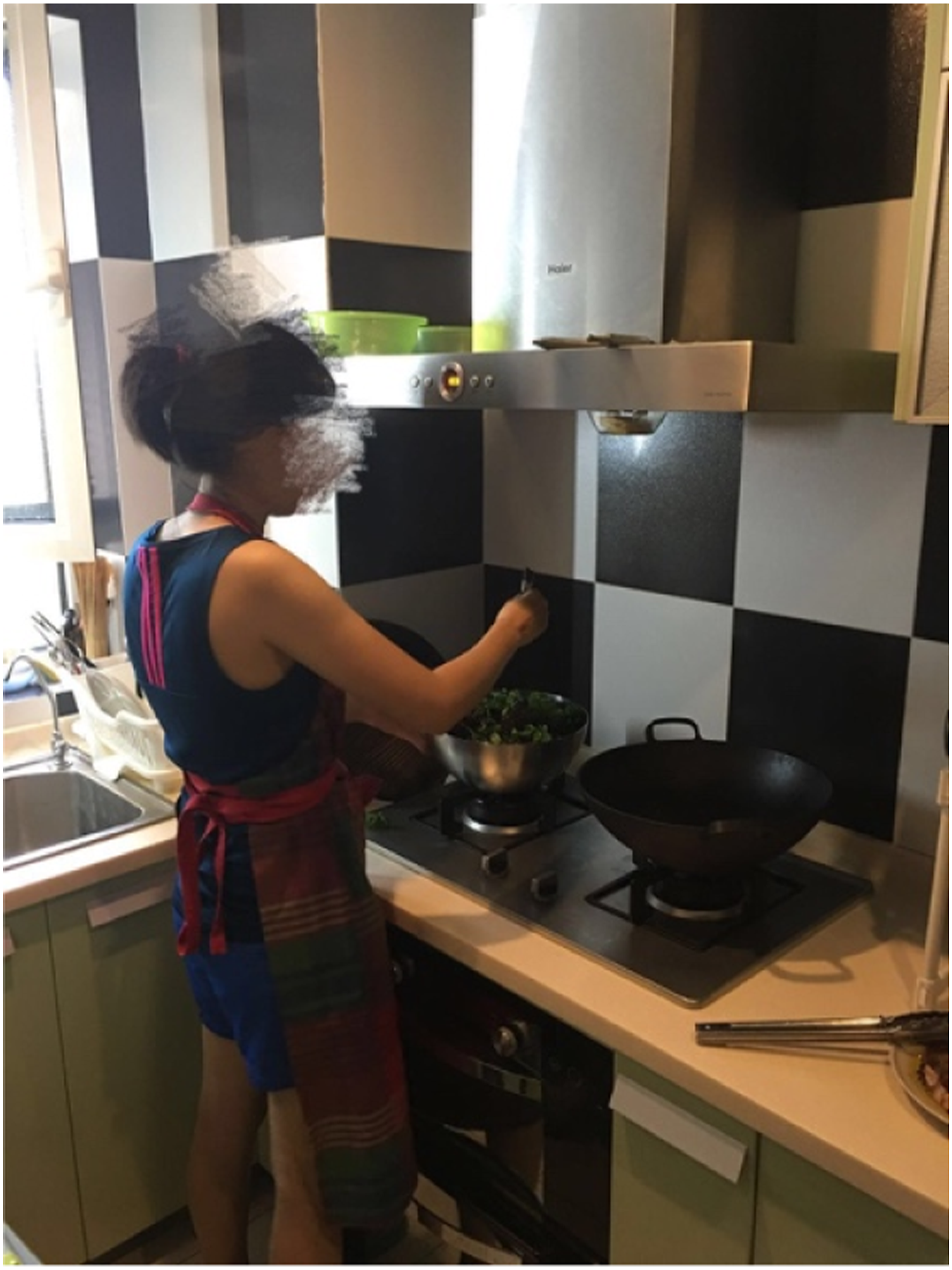
Notably, although Ying had remained in the closet, she was one of the few participants who were willing to share photographs of themselves (while having their faces in the photos blurred). The reason behind her participation was that she wanted to bring hope to others that same-sex couples can live a happy life. She also expressed hope that she could learn from other lalas’ experiences through my study: ‘I hope that if you can publish a book or something in the future, there can be more examples of how others come out, what the process is like step by step’. These hopes were cultivated and expressed within the wider heteronormative context, where the persistence of Confucian patriarchy in China makes it difficult for same-sex relationships to be acknowledged or displayed, either in the family of origin or within the wider society (Kam, 2013; Lo, 2020). The photo Ying shared, by which she wanted to highlight the beauty of the mundane, marked a sharp contrast with the charade she had performed with her gay husband and the reality that nothing captured in the photo could be shared with her wider family. This example shows how visual methods enabled participants to express different layers of deep emotions within and beyond the couple. These methods not only allow the researcher to understand the tensions involved in family life in great depth and detail, but they also provoke in-depth discussions about the wider familial and social dynamics that render non-heterosexual family life largely invisible in Chinese society.
Another important insight generated by visual methods is that the production and meaning-making of images served as a powerful tool to prompt participants to reflect upon the boundary between the public and private spheres, and that between their natal families and the families they had formed with their partners. Some participants carefully crafted their images in a way that could provide an expansive space for them to display family practices and reflect family values while protecting the privacy of other family members. Yao, who was one of the few participants who had come out to her parents, described the process and rationale of choosing a photo of a family meal to represent her conception of ‘family’ (Figure 2): When I thought about ‘family’, the first thing that came to mind was my family photos, but I didn’t want to reveal everyone’s information. So here it is, a photo of the daily life of my big family. There are many people around the table [not shown in the photo], such as my parents and grandparents... This family is not only the small one with my partner, but our family is a very big family… We all live in the same city. My father, my grandparents, and we live very close. The distance between us is ‘a bowl of soup distance’. I definitely won’t choose to hide my life and pretend to be someone else when they come to visit me. That’s not the life I want. Yao shared a photo of a family meal to represent her idea of ‘family’.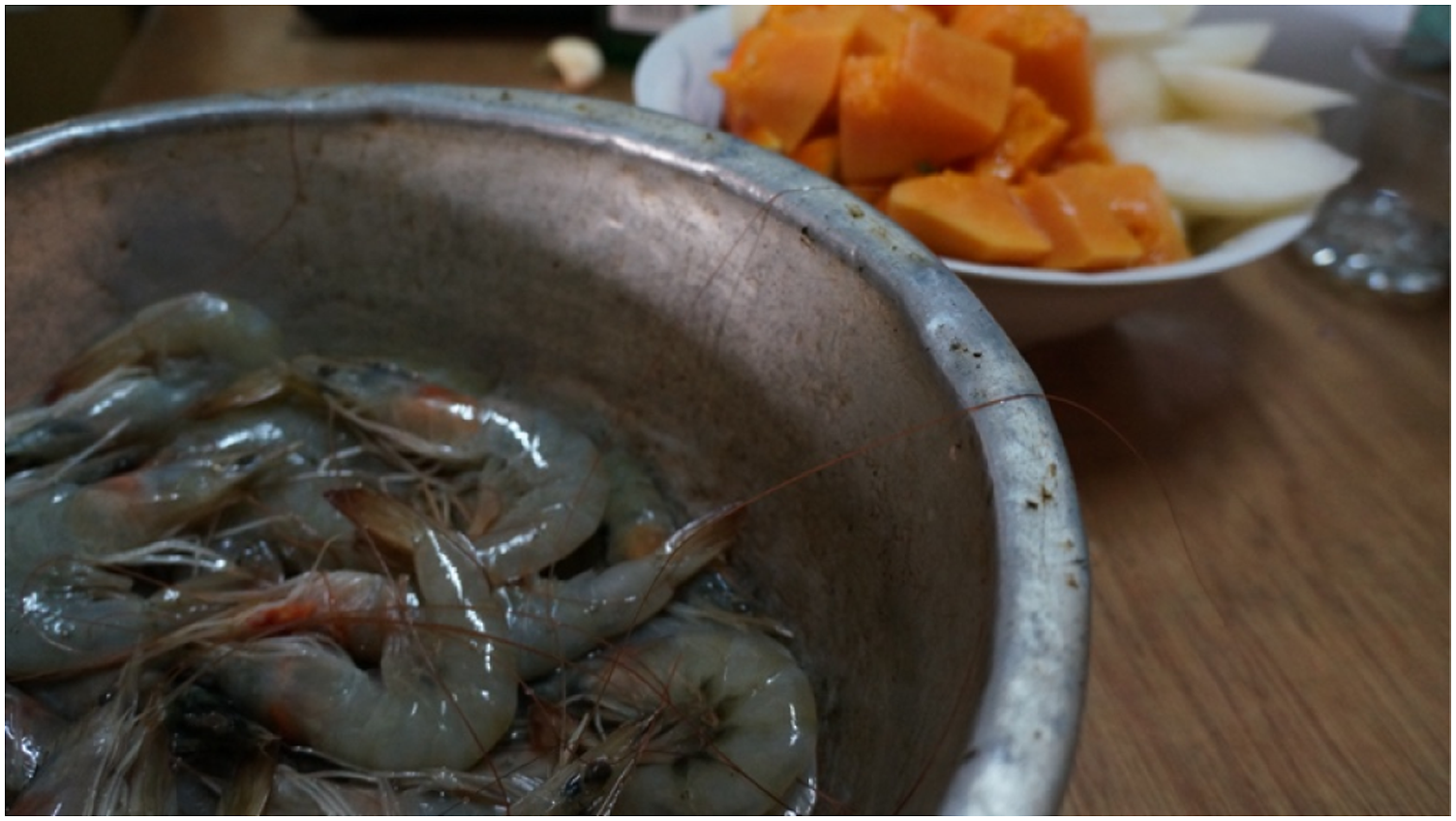
Yao’s remark showed that the photo served not only as a record of everyday family life but also as a symbolic representation of emotional togetherness and distance between her family with her partner (‘small family’) and her family of origin (‘big family’). She used a visual metaphorical approach (‘a bowl of soup distance’) to describe her familial living arrangement – living close enough to each other that a bowl of hot soup would not get cold while being carried between their separate homes. She clearly expressed the hope of maintaining close ties with her natal family while being able to decide her own life and enjoy her family life with her partner.
By creatively capturing moments of everyday family life, participants played an active role in making the ordinary extraordinary, endowed with deep emotions and multi-layered reflections upon traditional familial and cultural values. Meanwhile, the visual methods enabled participants to make the queer familiar by showcasing how different forms of family life among lalas can be lived out amid the beauty of the mundane.
The imaginary: Picturing the ideal ‘family’
While some participants chose to share photos of themselves or those of their recent domestic life, it is noteworthy that over half of the participants shared other, less private, photos taken outside the home, or images found on the Internet. The latter shows that participants approached the visual methods in different ways. More importantly, it indicates that the openness that I maintained when introducing the image-making task to participants did encourage them to think beyond their real-life domestic space and evoke self-reflection and imagination. For instance, Shan recounted how she came up with her photo: Shan: I began by searching for a photo online. I typed ‘family’ on the Internet. And it turns out to be all that kind of ‘big family’ with children and whatnot… Looking at them, I thought, ‘This looks pretty good. Is it that I actually want to have a big family, one with a kid? If not, would I regret it?’ But I came to realise that I don’t. I’d probably confined myself to that concept of the ‘big family’… Interviewer: Did you find a suitable image in the end? Shan: Yes I did. This is a photo I took when we [Shan and her partner] went travelling last year. It feels so warm. And there’s a feeling of company for life. Family, to me, is being with each other, which is what matters most.
The process by which Shan searched for her photo online and reflected upon family composition was a typical example of how participants’ conceptions of family were bound, to a greater or lesser degree, by existing socially constructed representations of, and cultural narratives surrounding, the ‘big family’. Despite the fact that queer family life has been almost absent from the public eye in China, many participants were able to find creative ways to visually represent their own families. As Brushwood Rose and Low (2014: 38) argue, approaching visual methods as ‘crafted as well as empirical, acknowledges that [visuals] emerge, not as direct or transparent reflections of experience, but as products of a creative and often imaginative process’. Image-making encouraged the participants to mentally travel across time and space and, as Shan demonstrated, to project the vision of her family life into the future. Additionally, it is noteworthy that Shan recalled how this image-making exercise opened up an opportunity for her to have a further discussion about family composition with her partner, who expressed the desire to have a child of their own. While the discussion about whether to have a child is beyond the scope of this article (see Lo, 2022b), image-making can be seen as an exercise of agency and emotional reflexivity, through which the participants attempted to imagine and create futures which redefined the acceptable boundaries of the family.
A number of participants sourced images from the Internet, and many of these were drawn from cartoons and animated films. They took the initiative to step beyond the ‘docu-photo’ visual approach (documenting daily life) to employ a more imaginative one. For example, to represent her conception of ‘family’, Bo chose an image of the castle featured in Howl’s Moving Castle (2004), an animated film directed by the internationally acclaimed Japanese animator Hayao Miyazaki. This castle consists of a hotchpotch of houses, appearing from the outside as a giant, off-balance building that can walk on mechanical legs. Bo compared and contrasted the fantasy world of the castle with the complex reality she was facing – entering a contract marriage with a gay man to appear heterosexual to her natal family, cohabiting with her same-sex partner in secret, and raising a child who had a genetic connection with her gay husband. She explained: This is something that I want. There are many rooms of different sizes [in the castle]. This is a place where many different types of lifestyle are possible. If I was in it, my girlfriend and I, my parents, my girlfriend’s parents, or even my contract marital partner and our son could live here together. Simply all kinds of possibilities. I like the one with a balcony, and they may like living there [pointing her finger to a room]… It would be a state of co-existence for us. But there’re no strict rules, like you must live in this room, or you must face each other, that’s not the case… I just want my life and family to be as simple as possible. And I don’t want to bother with questions about what’s right or wrong.
Bo provided a vivid description of her ideal family form by using this image from an animated film. She expressed the desire for a much ‘simpler’ life, in contrast to her everyday performance. In reality, she had to perform as a heterosexual married woman, a wife, and a mother, and hide her same-sex relationship and the origin of her child from her parents, taking into account her parents’ endorsement of deep-rooted heterosexual family beliefs and the wider heteronormative environment (Lo, 2020; Lo et al., 2022). While her current family form was far from the ideal ‘state of co-existence’ depicted in the image, Bo expressed hope for social change through her participation in the study: I think this is a push for change. So this is really valuable. I’ve shared what I’ve been through, so that others can objectively consider whether they want to engage in contract marriage, whether to come out or not. Just to let people see how difficult our lives are, and why we need to bear all this suffering.
These visual methods not only enable participants to capture and develop their imagined ideal family life, but they also urge people to reflect upon why such visions may fail to materialise in reality. This brings to the fore the social and cultural restrictions that shape lalas’ imaginations and catch them in a dilemma between maintaining affective ties with their ‘big family’ and developing new family forms with same-sex partners.
The void: Telling the missing picture
The openness that I tried to maintain when inviting participants to engage in visual methods has generated interesting findings, which might have been missed if I had applied a standardised framework with strict rules (e.g. each participant was given a camera or a photography workshop) for the production of images, or if I had only conducted interviews. As I elaborate below, the fact that some participants expressed difficulties in producing an image or did not share any images warrants methodological discussion in its own right.
Ting was one of the participants who reported struggling to share an image for the study. When asked about her ideal form of ‘family’, she reported that she had ‘never thought about it’. She was reluctant to count her current relationship with her female partner as a form of ‘family’ because she felt very uneasy with the term. ‘Family’, to her, was imbued with deep cultural heritage and associated with heteronormative expectations imposed by her parents. She explained: When it comes to family, I think of my parents and the relationship between us… I feel very stressed… Family is probably just too heavy for me. Responsibility, promises, and staying together and never splitting up…So…I just feel that she [partner], my cat and dog, and I live together and trust and care for each other. That’s good enough.
This remark reveals why some participants might find it uncomfortable or challenging to share an image to represent their own conception of ‘family’ in a context where heteronormative family beliefs prevail and homosexuality remains a taboo. Nevertheless, it is noteworthy that Ting attempted to approach the image-making task in her own way and to visually present what it meant to be connected in a heteronormative environment in China. She shared a stock image of outer space she had found on the Internet (Figure 3): Every person is a planet. Each planet is independent, but there’s a certain relationship between them, not that far, but not very close. They can’t get away from each other. Look, this is how I feel when I treat my family members. You may think they’re close, but they’re very distant indeed. They’re stuck with each other… this is the family you can’t escape from. You’re just in it, in the galaxy. Ting shared a stock Internet image of outer space to represent her idea of ‘family’.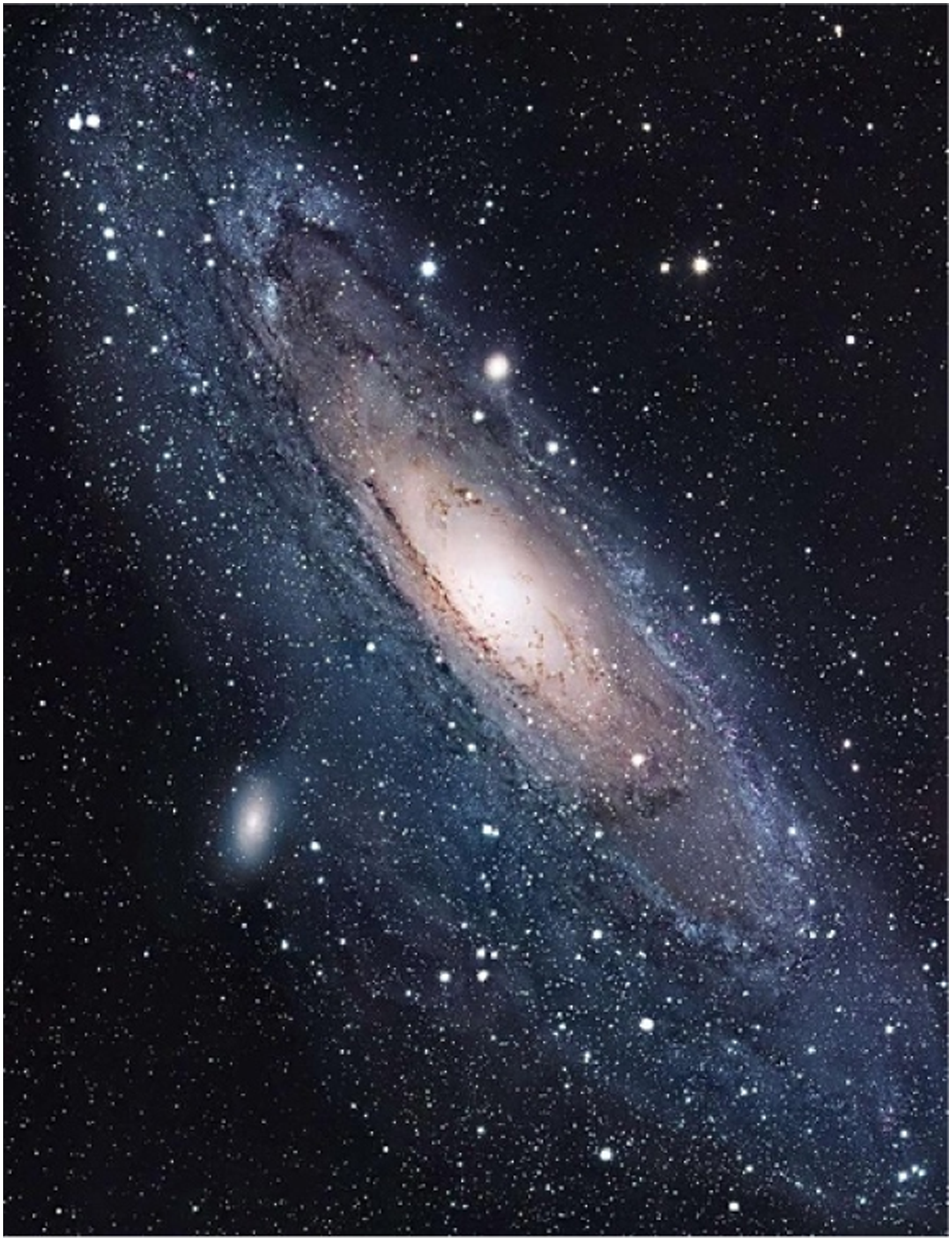
This is an example of how the introduction of visual methods can encourage participants to work with metaphors in order to make sense of and talk about ‘family’ in different ways, even though some may deliberately detach themselves from the shadow of ‘family’. By discussing this image, Ting was able to articulate strong feelings of distance from her parents due to their expectations that she would marry a man, but at the same time, she revealed affective and inseparable ties with her parents. The image added colour to the relational tensions and familial struggles that Ting had experienced, which could have been difficult to relate in words and perhaps not fully grasped through the interview itself.
It is also noteworthy that a few participants chose not to share any images during the interview. Exploring the reasons behind this, however, has provided additional insights into the wider social and cultural conditions that continue to restrict lalas’ imaginings of different possible forms of ‘family’ beyond the traditional heterosexual family model. The discussion with Na, in particular, demonstrates how the introduction of visual methods can help to overcome silence by encouraging participants to talk about not only what is present but also what is absent from their lives. At the time of the interview, Na was raising a child together with her female partner, who had conceived the child through her relationship with her male ex-partner, without their parents knowing about their current family status. Na reported that she did not expect her parents, who had not received a university education as she had, to ever truly understand or accept same-sex relationships. When asked about why she did not bring any images to the interview, Na said, ‘Our family is a family that no one recognises…this idea of family only exists in the minds of the two of us… Are we trying to use this concept too early?’ Her remark highlights the lack of parental and societal recognition of same-sex families, which serves as a common barrier to Chinese lalas’ (and other sexual minorities’) coming-out and family building (Lo, 2020, 2022a).
Echoing Na’s view of the invisibility of same-sex families in society, another participant, Yan, also chose not to share any images and made it clear that she did not consider herself to be ‘a person with a family’. On the one hand, by leaving her hometown and moving to Beijing years ago, she had distanced herself from her parents, who had forced her to marry a man after learning about her sexual orientation. On the other hand, she believed that her current status as a single lala fell outside the heteronormative framework of ‘family’ – which is composed of a heterosexual husband and wife and their biological child(ren). This process of discussing and reflecting upon her decision not to share an image representing her family life is meaningful to both the participant and me as the researcher. It provides a platform to communicate the unrealisable and unseeable in the face of parental rejection and societal disapproval of homosexuality. As Yan put it: ‘I think it’s worth talking about it because I’m aware that you don’t have a fixed idea about what family is and should be… If you do, I’d rather drop out’. It is evident that participants such as Yan appreciated the openness of the study design, which enabled them to freely discuss what ‘family’ meant to them and, equally importantly, to expose the inequalities arising from the heteronormative institution of the family.
Discussion
This article demonstrates that the use of visual methods, including image-making and photo-elicitation interviews, enables participants to critically reflect upon their understanding of what ‘family’ means. These methods help to overcome the silence by encouraging participants to talk about not only what is present but also what is absent from their family lives. While participants approached the image-making task in different ways, the findings reveal that their journeys of (not) coming up with an image prompted them to think about and articulate their familial ties, tensions, and ideals. This article serves as a key starting point to advance the discussion about ways of enabling hidden queer family life to enter the realm of the visible and recognisable through the visual, especially in family-centred and heteronormative contexts.
Capturing hidden queer family life: Image-making in an open format
This article builds a constructive dialogue between methodological discussions and the literature on family and sexuality by revealing the extent to which visual methods can enable the display of queer family life. I argue that asking participants to engage in visual methods in an open format is conducive to in-depth dialogue around the meanings and significance of displaying one’s queer family life. As shown in the findings, no matter whether participants shared an image or not, and what kinds of images (such as real-life photos, animated graphics, or stock images from the Internet) they chose for the study, the introduction of visual methods has opened up a broader discussion about family relationships beyond the individual and the couple, particularly those with the family of origin. It has also served to communicate the unrealisable, raising issues regarding what can and cannot be displayed in relation to social norms. For instance, through images capturing the ‘everyday’ and the ‘imaginary’, some participants were able to work with metaphors and create symbolic representations of their affective ties with their partners as well as the simultaneous tensions with their parents and wider family kin, who tended to reject their sexual identity but were considered indispensable members of the ‘family’. These tensions might not have been captured if a more standardised approach to image-making, such as the introduction of photography workshops, had been adopted.
Additionally, these findings offer a different picture from that which has been widely depicted in the Western literature on lesbian families, which often focuses on the couples themselves and, more recently, on their transition to parenthood and their children (Gabb, 2018; Nordqvist, 2017). The visual data presented here show that the picture of lala family life in China is inseparable from an understanding of lalas’ relationships with their wider family networks and their felt obligation to maintain close ties with them (Lo, 2020, 2022b). As suggested by other researchers using visual methods, images can provide a window into ‘a subject invisible to the researcher but apparent to participants’ (Clark-Ibáñez, 2004: 1516). Therefore, visual methods play a crucial role in producing participant-generated and locally grounded knowledge about the unique needs and challenges of lala families in the Chinese context, where queer family life has long been erased from available representations of the family.
Creating the realm of the possible through the visual: Possibilities and challenges of social change
This study serves as a starting point for further discussions about adapting visual methods to different cultural contexts for family and sexuality studies. Scholars have emphasised the need to consider the cultural aspects of designing and developing research methods (Teti and Van Wyk, 2020). Given the stigma attached to homosexuality in China (Lo, 2020; Lo et al., 2022), one question that I kept returning to when developing this study was: to what extent and how do Chinese lalas want their same-sex families to be seen? Considering the social climate, which remains unfavourable to Chinese sexual minority people, the political approach to photovoice – encouraging participants to reflect upon what they want service providers and policymakers to know about their experience through their photos and bringing participants and other stakeholders together through public photo exhibitions (Switzer, 2019; Wang and Redwood-Jones, 2001) – may not be applicable to the study of queer family life in China. The absence of the image-maker – the fact that some participants did not produce an image at all – warrants attention because it reflects the strong cultural heritage associated with the heteronormative notion of the family and dominant rules governing what constitutes ‘family’, which can put lalas in a difficult position when imagining, defining, and building their own families. This absence highlights the need to attend to social realities that continue to shape display, as well as to family relationships and practices that are ‘troublesome to display’ in different ways (Gabb, 2011: 38).
Nevertheless, being exposed to these challenges did not necessarily mean that participants had no desire to become potential catalysts for change. Throughout the photo-elicitation interviews, it was not uncommon for participants to express the hope that they could enlighten other lalas about what it is like to live a lala family life through their own images and/or stories. This shows that visual methods can enable participants to question established family norms and expand the visual and social realm of family display. As Mitchell (2005: 92) suggests in What Do Pictures Want?, ‘we don’t just evaluate images, but rather images introduce new forms of value into the world, contesting our criteria, forcing us to change our minds’. I argue that exploring what participants want to convey through the image, and why some participants were reluctant or even unable to produce an image, is essential to the display of alternative values and the exposure of inequalities. Chinese lalas’ continuing struggle to display their families reveals an urgent need to address the inequalities experienced by marginalised individuals and families whose family aspirations and practices are considered to deviate from the norm and are consequently devalued or silenced.
Conclusion
This article explores the fresh insights that were brought by image-making and photo-elicitation interviews – specifically, what these visual methods can do and how they can be applied when conducting research on queer family life in the Chinese context. The findings illustrate the ways in which visual methods enable us to access different types of experiences related to family life, including the ‘everyday’, the ‘imaginary’, and the ‘void’. Through visual methods, the participants played an active role in bringing their hidden queer family life into the realm of the visible. The visual data showcase how different forms of family life can be lived out amid the beauty of the mundane, and imagined beyond the confines of the traditional heterosexual family framework. Meanwhile, the difficulties encountered by some participants when seeking to produce an image, or their reluctance to do so, also warrant methodological discussion in its own right. These difficulties reveal the complex social dynamics that continue to restrict people’s ways of seeing the world and displaying families. These findings highlight the strengths of visual methods in capturing emotions, imaginings, and tensions and, equally importantly, the need to develop innovative methods that are sensitive to local socio-cultural and political circumstances and offer open space for participants to express what concerns them most. Future research can build on the current study to explore visual and other creative methods to broaden the realm of the visible and recognisable for diverse families.
Footnotes
Declaration of conflicting interests
The author(s) declared no potential conflicts of interest with respect to the research, authorship, and/or publication of this article.
Funding
The author(s) disclosed receipt of the following financial support for the research, authorship, and/or publication of this article: This study was partly funded by the Writing-Up Grant from the Department of Sociology, the University of Oxford and by the STAR Grant from the Carr and Stahl Fund of St Antony’s College, the University of Oxford.
