




Abstract
A growing body of methodological research literature demonstrates the importance of adapting research design to address the specific needs of participants from minority groups. The aim is to treat participants more respectfully during the research process and to enhance participation, ensuring the findings more closely reflect participants’ views and experience. However, there is an absence of work examining the needs of research participants with Turner syndrome, a chromosome disorder linked with mild cognitive impairment and its potential impact on research interviews. This article draws on a study of reproductive decision-making in women with Turner Syndrome and mothers of girls with Turner syndrome to consider ways to improve research access and to make methodological adaptations for this group of participants. There is little qualitative research on the experience of living with Turner syndrome or its associated experience of infertility. Most of the small number of studies that exist do not describe whether the research method was adapted to accommodate the psychosocial features of Turner syndrome. Yet, these features, which include social cognition issues and anxiety, may have an impact on women’s ability to participate fully in a research interview and consequently on the quality of the data. This article fills a gap in research describing the use of adaptions with women with Turner syndrome, which may be of use to researchers and practitioners working with this group. It describes how a novel approach to research adaptations, universal design, was used to identify and incorporate adaptions into the research design, both through the choice of photo elicitation interviews as a research method and through adjustments made at each stage of the research process. It discusses how adaptions worked to overcome barriers to participation and how effective this was, concluding with suggestions for applying this approach in future research.
Introduction
A growing body of methodological research literature demonstrates the importance of adapting research design to address the specific needs of participants from minority groups (Humphries, 2017). The aim is both to treat participants more respectfully during the research process and to enhance participation, ensuring the findings more closely reflect participants’ views and experience. The literature addresses issues such as the cultural competence of researchers (Brown et al., 2014; Mattocks et al., 2014), adaptions for disabilities (Bailey et al., 2014) and the use of appropriate methods for the type of study (Liamputtong, 2007). However, there is an absence of work which examines the needs of research participants with Turner syndrome (TS), a chromosome disorder linked with mild cognitive impairment, and its potential impact on research interviews.
This article draws on a study of reproductive decision-making in women with Turner syndrome and mothers of girls with TS to consider ways to improve research access and to make methodological adaptations for this group of participants. There is little qualitative research on the experience of living with TS or its associated experience of infertility. Most of the small number of studies that exist (e.g. Clauson et al., 2012; Guntram, 2017; Sutton et al., 2005) do not describe whether the research method was adapted to accommodate the psychosocial features of TS. Yet, these features, which include social cognition issues and anxiety, may have an impact on women’s ability to participate fully in a research interview and consequently on the quality of the data.
This article seeks to address that gap. It begins by discussing the importance of adapting research design to work more effectively with different participant groups. It introduces the study on which the article is based, showing how the sensitive nature of the research, and the characteristics of the participants, made it important to consider their potential access needs. It then describes how a novel approach to research adaptations, universal design (UD), was used to identify and incorporate adaptions into the research design, both through the choice of photo elicitation interviews as a research method and through making adjustments to each stage of the research process. Finally, it discusses how these adaptions worked to overcome barriers to participation and how effective this was. The article concludes by offering suggestions for applying this approach in future research.
The importance of adapting research design
Recent approaches in methodological literature attend to the way the diversity of lived experience affects whether and how participants engage with research and, in response, describe ways in which research design can be adapted to accommodate the needs of marginalised or minority groups (Humphries, 2017). There are several reasons for doing this, among them, treating participants more respectfully, increasing participation in future studies, and shifting the balance of power towards the participant. Ultimately, the intention is to produce research which better reflects the experiences, views, and needs of these groups by improving the quality of the data.
There are a number of examples of adaptions which seek to improve inclusion and which discuss a range of different contexts and participant groups. Brown et al.’s (2014) review of ethnic minority participation in mental health research identified a mismatch between researcher behaviour and the participant groups’ cultural definition of respect, as well as practical barriers such as lack of transport to the clinic; their findings show how researchers could reduce barriers to participation in future studies by adapting their research approach. Others have illustrated that the social setting of sexual and gender minorities renders them vulnerable in specific ways, showing how a better understanding of the health issues they face could encourage this group to engage more with health providers (Mattocks et al., 2014). In studies with disabled participants using sensory communication methods such as British Sign Language, participants’ greater expertise in using BSL could act to reduce the power imbalance with the researcher (Evans, 2017): thoughtful research design can reduce inequality in the research relationship.
Researchers working with disabled participants also use adaptions to make it possible, or easier, for people to take part (e.g. Aldridge, 2007). Yet, these adaptions are not always described explicitly. A recent interview study with people with cerebral palsy (Morgan et al., 2015) did not mention any adaptions that may have been used to accommodate related mobility and communication issues, so the researchers’ approach to this is not clear. In the case of TS, there is little research that describes the use of adaptions to increase their comfort and participation in research interviews, even though, as I describe in the ‘The need for adaptions’ section, this could potentially benefit some women.
This article fills a gap in research describing the use of adaptions with women with TS, which may be of use to researchers and practitioners working with this group. It also addresses the use of photo elicitation interviews as an adaption for other groups of participants who may live with mild cognitive impairment. Finally, it looks at how a UD approach can be used to plan adaptions to the research process.
The study
The qualitative study discussed in this article explores the challenging, sensitive and under-researched topic of how women with TS, and mothers of girls with TS, perceive and navigate their reproductive choices. As 90% of girls with TS are born without ovaries, or their ovaries fail before puberty, most cannot conceive naturally. Some reproductive technologies, such as egg donation, can help women with TS to have a child, but the physical health issues associated with TS, such as coarctation of the aorta and hypertension, mean that pregnancies are usually high risk. Mothers of girls with TS, when there is an early diagnosis, may be faced with the questions of whether and how to preserve their daughter’s reproductive potential in childhood, for example, by deciding to freeze their own eggs for their daughters’ use in later life, or by paying for her to freeze her own eggs or ovaries at puberty.
This research seeks to deliver theoretical and conceptual findings on an under-researched topic. The research question covers personal and sensitive subjects, such as women’s feelings about motherhood in the context of compromised fertility, and their views on needing medical intervention to conceive and carry a pregnancy. A participatory approach is often used with minority, marginalised or disabled participants; it was not used here for feasibility reasons, as being difficult to achieve within the time and financial constraints of a PhD study. TS is a rare disease, and participants are spread across the United Kingdom, making it difficult to meaningfully involve them at a distance. Some of the participants had young families, so it could be hard for them to find the time, while some participants with TS may have time management issues, making on-going participation a potential challenge. For these reasons, the methodology used in this study was constructivist grounded theory (CGT), an approach that is particularly well suited to drawing out the participant’s feelings, reasoning process and experience (Charmaz, 2014), using a number of methodological adaptions, which are the focus of this article.
Participant groups
As both women with TS and mothers of girls with TS are faced with choices that affect reproduction, the sample included both groups; however, women with TS were the primary focus of this research. Most interviews with women with TS were conducted on their own rather than with a partner. As reproductive decisions are often taken within a relationship, it would seem appropriate to include partners, but there are two reasons not to do this. First, women with TS are more likely than average to have difficulty in forming relationships (Bondy, 2007). Fewer than half of women with TS ever marry (Gould et al., 2013; Sutton et al., 2005) compared to 66% (Office for National Statistics (ONS), 2018) of the whole population. Focusing only on couples would have omitted a key part of the sample. In addition, some participants were considering, or had explored, forming a family as a single parent, and it was important to explore the reasons for this choice.
The second group included only mothers of women with TS and not their fathers or other relatives, for a number of reasons. While parents are an important source of information for their child and make decisions on their behalf, mothers tend to take the lead in managing their daughter’s treatment on a day to day basis (Beresford, 2000; Collin, 2013). Mothers have been shown to have a greater influence over their children’s fertility choices in later life than other family members (Allen et al., 2007); this may affect the fertility options that their daughters are willing to consider, such as sibling egg donation. Mothers of daughters with TS tend to be more concerned by their daughter’s infertility than fathers and may feel the need to act to preserve their daughter’s reproductive options (Collin, 2013). One potential way to achieve this is maternal egg freezing, where mothers freeze eggs for their daughter’s use in later life (Gidoni et al., 2008; Oktay et al., 2016). This is widely discussed within the TS community and is a reproductive choice that mothers can be faced with. For these reasons, it was important to explore mothers’ views in themselves.
The need for adaptions
An important consideration for the research design was the nature of TS itself, and the way it may potentially affect some participants. TS is not defined as a disability, but there is a considerable body of literature describing associated neurocognitive impairments. Women with TS have intelligence in the normal range and strengths in verbal IQ (Temple and Shephard, 2012) but may have deficits that affect social cognition (Bondy, 2007; Lakshman et al., 2016; Lawrence et al., 2003), information processing and attention span (Mazzocco, 2006; Rovet, 1993), short-term memory (Temple and Shephard, 2012), and executive functioning (Hong and Reiss, 2012; Ross et al., 2000). The social cognition difficulties experienced by some women with TS have sometimes been compared to autism (Burnett et al., 2010; Wolstencroft et al., 2018). TS is linked with increased social anxiety and shyness (Burnett et al., 2010; Ross et al., 2000), while some women with TS report that they have been the target of bullying and teasing, in part due to typically having short stature or not fitting in with their peers (Collin, 2013). The impact of this is that women with TS may feel anxious in unfamiliar social situations and tend to have an increased rate of depression, in comparison to the wider population (Rickert et al., 1996). For some women, a hearing impairment, also associated with TS, can be a barrier to social interaction.
However, TS is a spectrum disorder, meaning its characteristic features vary from woman to woman and may not appear at all. The degree to which an individual is affected by any single feature may vary considerably (Mazzocco, 2006). Some of the social skills issues associated with TS, and described in the academic literature on children with TS, are thought to be alleviated by oestrogen, prescribed to initiate puberty, and consequently, these features may not affect adult participants to the same extent (Conway, 2002).
Gould et al. (2013) found that, although some clinical studies reported psychosocial problems in women with TS, most women coped well with the challenges of living with TS. Instead, they attribute the psychosocial problems associated with TS to the experience of living with infertility rather than to the impact of cognitive impairment: the rate and type of issues reported by women with TS correlates closely with that of peers who have premature ovarian failure, and who have similar levels of shyness, difficulty in relationship formation, and depression. Gould et al. argue that this means that the cognitive deficits associated with TS are ‘not clinically significant’: they are cognitive differences rather than impairments. Gould’s research confirms that women with TS can be affected by psychosocial issues, and consequently, adjustments may be useful for some participants.
Knowing the variant of TS that a participant has does not reliably predict what might affect them, or the degree to which they may be affected. To arrange appropriate adaptions, individuals would have to disclose that they were affected. TS and infertility are stigmatised conditions, and women may prefer to keep any symptoms private. It is also common for disabled people to disclose their disability selectively, if at all: most people who meet the government criteria for being disabled do not describe themselves as such, particularly, when they can continue with their usual activities (ONS, 2014). These factors meant that the research design had to be flexible enough to include participants who may be affected by issues they did not wish to disclose.
In addition to the potential impact of TS, it was noted that any participant may have access needs, as across the whole UK population, the rate of disability of women in their 30s and 40s is around 18% (DWP, 2014). It was therefore reasonable to assume that some mothers of girls with TS may have access needs, while some women with TS may have an impairment unrelated to TS. Both groups could benefit from adaptions.
Universal design as an approach to planning adaptions
The approach to incorporating adaptions in this study was influenced by UD (Mace et al., 1998). UD is a design practice used to make buildings, products and services usable by as broad an audience as possible, with the aim of reducing inequality by removing or reducing barriers to access. UD accommodates difference in a flexible way by identifying needs first and developing a range of adaptions in response. Due to its origins in architectural and technical practice, its epistemology has not been fully developed, and it is not tied to a specific research approach (D’Souza, 2004; Hamraie, 2013; Imrie, 2012). It can be linked with interpretative research methods through the social model of disability: rather than defining disability around what a body or mind can or cannot do, this approach sees disability as related to inadequacies in the physical and cultural environment which form barriers to disabled people (Barnes, 2011). Thus, disability can be seen partly as a social construction, the impact of which can be affected by altering the physical environment and the way people interact (Lid, 2014). Consequently, it is possible for the researcher to make adjustments to research practice which make it potentially more inclusive.
UD is not always conducted in an inclusive way. Positivist approaches to UD can apply design standards which are based solely on anthropometric conceptions of how the human body works, ignoring the diversity and experiential knowledge of disabled people (Bickenbach, 2014). When used as an inclusive practice, the researcher must attend to the way in which their research practices may be disabling for participants. It is the researcher’s task to proactively identify and facilitate adjustments that enable participation, rather than the participants’ task to adapt to the researcher’s requirements, if they can.
Mace et al.’s (1998) ground-breaking work on UD devised seven guiding principles for its use within architectural design practice. For this study, the principles were distilled into the following steps:
Identifying potential participant needs, and appropriate mitigation, through consultation.
Incorporating a range of flexible adjustments into the research design.
The first step was to get a clearer picture of the potential impact of TS on the research. This information was then used to formulate adaptions. This approach foregrounded the potential needs of participants and de-centred the researcher’s role of ‘expert’ in the way the research was conducted. Through doing this, I hoped that the research would enable participants to more easily ‘give voice’ to their experience (Letherby, 2003: 114–116).
Although there is a body of published research which describes a pattern of impairments related to TS, or which directly investigates the impact of related psychosocial or cognitive issues, it is rare to find literature that describes whether and how adaptions to the research method were made to facilitate participation by accommodating potential impairment (Gould, 2013). It was therefore difficult to ascertain from reading academic research what steps, if any, might need to be taken to accommodate the potential cognitive and social needs of this group of participants.
Accordingly, to contextualise the academic research, I arranged a series of informal discussions with individuals with expertise in TS and who had considerable real-world experience of meeting, living with or treating women with TS, and communicating regularly with women across the whole TS spectrum. This included two consultant gynaecologists who ran large UK TS clinics, the Executive Officer of the United Kingdom’s largest TS charity 1 (herself the mother of a woman with TS), and a woman with TS who has a child through egg donation. These discussions elicited practical advice on potential communication challenges and ways to address them.
As a result of these investigations, the following issues were identified as potentially affecting the conduct of research interviews: working memory impairments; difficulty in decision-making and time management; delayed response times; social anxiety; a reduced ability to interpret facial expressions and body language; hearing impairment; and a tendency to understand speech as the literal meaning of the words, without necessarily understanding irony, implied meaning or jokes. The Disability Advice and Support manager at my host institution gave further advice on mitigation; the adjustments described below took into account all the advice that was given.
Having identified the specific issues that may affect participants, the next step was to consider how the research design could meet those needs, beginning by choosing a method suitable both for participants who may have social cognition issues and for a sensitive subject.
Adaptions
This section describes the way the research design addressed participants’ needs. Adaptions were made, first, through the choice of method, photo elicitation interviews and, second, through a series of adjustments to each stage of the research process. They are discussed in turn in this section.
Using photo elicitation as an adaption
Semi-structured, face-to-face interviews are often used alongside grounded theory, partly because they are a highly effective way to collect qualitative data (Bryman, 2015: Chapter 19). A creative adaption of this standard method is photo elicitation, which incorporates participant-selected photographs and asks the participant to discuss them, as a way to begin the interview. There were three reasons for choosing this method: it aligns with the research methodology for the study, CGT; it supports the discussion of a sensitive topic, such as by enabling the participant to take the lead in the interview (Liamputtong, 2007: 143–144); and it works as part of a range of adaptions that participants may find helpful (Pauwels, 2015).
Photo elicitation enables the researcher to draw out the meaning participants make of their experience and, in doing so, to co-create knowledge with the researcher (Liebenberg et al., 2012). The researcher can actively respond to the conversation around the photos and follow up on emerging lines of enquiry as the interviews progress, as well as exploring topics already on the interview agenda; this can produce data that are more likely to generate theory. As an adaption, photo elicitation can work in several ways. The following examples show how it can support participants with social anxiety, working memory impairments, and other issues linked to the cognitive profile of TS.
Eligible participants were contacted with an interview invitation which included a request to bring three photos (either pre-existing or taken for the project) which would help them to discuss their views on TS, fertility and having a family. Participants were told that the interview would begin with the researcher asking the participant to talk about their photo choices. The selection process required participants to produce visual resources that reflected their experience of the research topic, which aided in the process of verbally articulating their thoughts and feelings (Bryman, 2015: Chapter 19). Photos enable the participant to construct narratives to communicate their perspective (Konecki, 2011), increasing participant engagement with the research process. By comparison with verbal semi-structured interviews, interviews using photos ‘sharpened the informants’ memory and reduced the areas of misunderstanding’ (Harper, 2002: 14), which can enhance the data quality of face to face interviews (Pain, 2012).
Having time to think about the photo selection can also increase participants’ confidence in sharing (Liebenberg, 2009) and so, could act as an adaption. It could potentially help participants to manage anxiety, as they know what some of the interview topics will be about, can prepare what they want to say, and can decide what, and how much, they want to share. The preparation time could also enable participants to be more mentally and emotionally prepared for an interview on the sensitive topic of reproductive choices in the context of impaired fertility.
An example of this is the participant who commented that selecting images had helped her to plan what she wanted to say. This participant was shocked to discover at the age of 12 years that having TS meant she would be infertile. Her parents knew this but had not disclosed it to her. She had wanted to be a mother since she was very young, so it was painful for her to look back at childhood photos, feeling that her parents knew that she could not have children, and did not tell her. This pivotal part of her life history affected her fertility choices as an adult. Selecting interview photographs meant that she looked at childhood photos for the first time in years; she used them to tell an important part of her personal story: That’s why I find looking at the photos sad, because I think, how can you look at that, look into those eyes, and know, and not tell them? [cries] I mean in a way now, as a mum, I can understand it. And I’ve gone on a long journey myself and I can understand it much better now. […] Irrespective of what happens with this research, it’s been a really, really helpful process to go through the photos, and sort of put my story into, to put it in some sort of order that would make sense to somebody else. […] That process really helped me.
Selecting images allows time for the participant to consider whether and how to answer questions on sensitive subjects. If the interview starts to move off topic, or there is a pause where it appears the participant is not sure what to say, the researcher can use the photographs to re-focus the discussion and help to move the conversation on. Also giving the participant a level of control over the way the interview progresses, this can be useful for participants who may need support with managing time, responding spontaneously or communicating confidently (Aldridge, 2007; Section 3.2).
Photo elicitation can enable the participant to share a time, place or experience that would otherwise not be available to the researcher, and in this way, it gives researchers unobtrusive access to private spaces (Frith and Harcourt, 2007). Indeed, this method elicited detailed, thoughtful responses, enhancing the participants’ words and bringing their very personal experiences to life. One participant chose to share a painting of dog heaven, which depicted a rainbow bridge from earth to heaven, several different breeds of dog enjoying a natural environment, and an elderly couple (who she related to her grandparents) walking in the background (Figure 1).

‘All dogs go to heaven 4’, by Jim Warren.
In this extract from a longer discussion, she uses the image to describe complex feelings around how keeping dogs has gone some way towards helping her fill a gap left by not having children: My dog had puppies, so I’ve experienced the cycle of life through that and watched her children grow up. It’s nowhere near having your own children but at least I explored 1% of something about that process. […] I think it’s become such a big part of my life because I’ve wanted to nurture something but it’s not there, so it’s been – well – not focused – maybe into something in that direction. Just to naturally have something to nurture and look after and have this to take for walks and do something with, otherwise I’d have nothing. […] I just know it’s always been, it’s like a void that you can’t fill, and I know consciously that a dog can’t fill that particular void. They are an animal you can train and love and do everything else, but it’s just a totally different – you can separate between the two.
Harper (2002) and other visual researchers argue that photo elicitation enables participants to access different thoughts, feelings and responses from those they would express in verbal interview as it ‘mines deeper shafts into a different part of human consciousness than do words-alone interviews’ (Harper, 2002: 13). Moreover, as this example demonstrates, photo elicitation can enable participants to articulate personal or contextual meanings that may not be obvious to the researcher (Allen, 2009). This participant, who was 37 years of age, used the painting to express a nuanced view of fertility and family. Feeling left behind by her peers, who had married and had children, she thought she had missed her chance to become a mother and was facing growing old on her own. Dogs have a short lifespan compared to humans; she used the photo to express how, through caring for them, she experienced bereavement and loss, as well as fertility and birth.
Another participant brought two companion photographs, one of her as a toddler with her maternal grandmother, and the other with her mother. In the first, she has climbed into bed with her grandmother, who is cuddling her. They are gazing at each other and laughing, an intimate, loving moment which it is unlikely a researcher would be able to capture. The second showed the participant and her mother in a similar embrace, taken at around the same age. She comments, That picture of me and my nan is really special to me because she died some years ago. I think she taught me that grandmothers as well are incredibly influential figures. She was an influential figure in my life anyway, because I could see a lot of her influence in my mum as well, so she, sort of, through the way she mothered my mum, she taught my mum how to be a mum to me. So, she was an amazing lady, she was. (Figure 2)
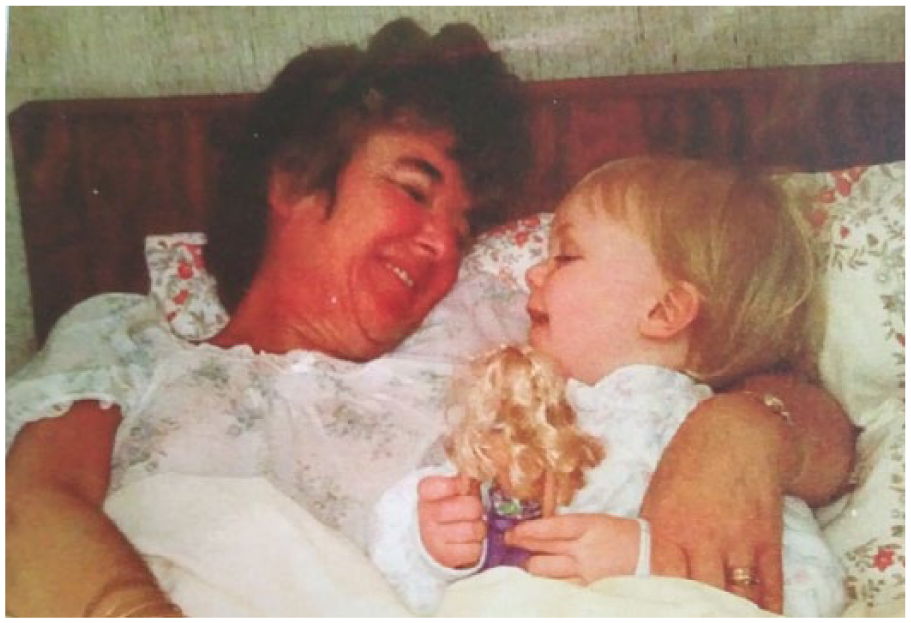
Participant with TS as a toddler, with her maternal grandmother.
This pair of intimate family photos reflected the participant’s desire to continue that practice of mothering down the family line; one of her reasons for wanting to become a mother was to give a child the kind of love and close family upbringing that she had had herself.
Choosing photographs enables participants to decide what they want to discuss, rather than passively answering questions (Clark-Ibanez, 2004). This may make the power relations between the researcher and participant less unequal, as participants can take the lead in the research interview (Luttrell, 2010). The researcher’s attention is deflected away from the participant, meaning the interview moves forward from a discussion of the photos, delaying intimate questions about thoughts and feelings until a later point. This may facilitate rapport-building in a more natural way, over the course of a conversation, which may make it easier for participants to discuss sensitive subjects (Clauson et al., 2012).
Photo elicitation was very successful at engaging participants in the interview process. Almost half brought more than the three photos requested of them; only one participant brought no photographs. Over 170 items were collected, almost twice the number that was expected. In addition, as other researchers have found (e.g. Kara and Vigurs, 2017), some participants spontaneously extended the photo elicitation method by bringing artefacts other than photographs to the interviews. Their choices included a baby book, a letter from the participant to her baby daughter, inspirational quotes, drawings, poems, stories, selfies, and songs. The number and variety of these items suggested that most embraced the method and were able to use it effectively for their own purposes.
In this section, I have discussed how photo elicitation works to encourage participants to engage deeply in research. As an adaption, it enables time for planning, may give a sense of control over the interview, and can act as an interview agenda and prompt. These examples show how photo elicitation was an effective way for participants to share rich and sensitive information. Next, I discuss the other steps taken to make the research more inclusive.
Adjustments into the research design
While photo elicitation interviews proved to be a useful way to elicit thoughtful and evocative responses, the method alone could not ensure that the research was conducted in a way that facilitated participation. Additional requirements were identified through the informal interviews, and, as described below, using a UD approach, a range of adaptions were put in place.
To answer the research question, I needed to talk to participants who had given serious consideration to their own reproductive options, or those of their daughter. Enquirers were sent a screening questionnaire asking for demographic information, whether they or their daughter had mosaic or classic TS, and their progress to date with reproductive decisions. They were also asked whether they had ‘any physical or other disability which might affect the interview’ with the advisory wording: ‘This is so we can make arrangements in advance to work with/around it’. Members of both groups of participants disclosed on the screening form that they had a hearing impairment. However, during the interviews, half of participants with TS mentioned that they were affected by cognitive issues, social cognition issues or anxiety either as children or at present. Discovering that some issues were not disclosed on the screening form reaffirmed the importance of planning adaptions in advance. One participant, who mentioned in the interview that she was receiving counselling to overcome social anxiety, commented that she viewed the prospect of being interviewed by a stranger as a way to challenge herself: I’ve always been very shy and socially – a little anxious. It’s quite a big thing just coming today, to be honest. It’s not like … it’s good for me –it’s good to push yourself!
Another participant disclosed when I arrived for the interview that she had a hearing impairment. She had chosen to be interviewed at home, so she could control the level of background noise and ensure that we were seated facing each other, so she could lip-read. As these options were available to every participant, she had not felt the need to discuss this beforehand.
Aware that participants might have issues they did not wish to disclose to me, I made the following adaptions.
Publicity and recruitment
The publicity material included photos and videos of the researcher talking through key points of information, such as how to choose interview photos. In addition to providing important information in a different (and possibly more accessible) format, this showed participants what I was like in person, so they could then decide whether to trust me with highly personal, private information. YouTube statistics show that people did watch them; the video explaining photo choices received 10 times as many hits as the videos introducing the project and explaining the consent form.
Participant information
When enquirers were invited to interview, they received the consent form and the participant information sheet, and I allowed at least a week before meeting them. This gave participants time to read and absorb information and ask any questions about the research via Skype or phone. I made a short video to explain the purpose of the form, and the options to permit publication. Although the options were also discussed in the introduction to the interview, participants often wanted to bring identifying photographs of themselves, their children or other family members, so it was essential that they considered this in advance.
Interview location
The interviews were held at the participant’s home, or a nearby place of their choice where they felt comfortable to have a private conversation. Face to face interviews were preferred over online synchronous interviews (such as Skype): any issues with interpreting body language and tone may be exacerbated if an interview is not conducted in person (Deakin and Wakefield, 2014). Another reason for this preference was the prevalence of hearing impairments in women with TS (Bondy, 2007). This affected almost half of the participants with TS; it was important that they could control the level of background noise, hear the conversation, and sit with a clear view of the researcher’s mouth, so a hearing aid could be supported by lip-reading if needed. Often participants preferred to meet in a neutral space such as a café, to avoid interruptions, and it may have been more difficult to arrange an online synchronous interview outside the home.
Researcher behaviour
A proportion of women with TS have issues understanding nonverbal communication (Lawrence et al., 2003; Rovet, 1993), so I needed to be conscious of my behaviour in the interview. Body language is often used as a way for the researcher to communicate that they are listening and to encourage a participant to speak. In an online interview, it is harder to be certain that participants will notice gestures of encouragement such as leaning forward, nodding, and holding eye contact, and this could present a barrier to building rapport (O’Connor et al., 2008). Related to this is a tendency for those women with TS who are affected to take language literally and to not initially understand irony. A participant highlighted the importance of making accommodations for the social cognition issues associated with TS: Because we can struggle socially a little bit more, a lot of people can get discouraged and definitely notice thinking differently. I wouldn’t say it’s necessarily an impairment. I’d say if everybody thought the way a person with Turner Syndrome thinks we’d all get on just fine. The only difficulty is that we all live in a world where people don’t. People don’t have chromosome disorders, and they think about things one way and we think about them a different way. Often, they need to take a different approach.
During the interview, I tried to verbalise my thoughts and feelings to ensure clearer communication with participants, avoiding metaphors, avoiding the use of humour to build rapport unless guided by the participant, and asking one question at a time. The demands of focusing on the participant while they were speaking, and following up on interview questions, meant that this did not always happen.
In the small number of interviews where I noticed minor communication issues, it was helpful to understand the possible reason. One participant needed more thinking time to answer questions than would be usual in an everyday conversation. This meant that on several occasions she paused and, thinking she had completed her response, I interrupted her with another question. The participant answered my later question, before returning to complete her thoughts on the earlier question. One of the issues that had been flagged in the conversations with people with expertise in TS was that some women with TS respond more slowly to questions as they take longer to consider what to say; this was confirmation to allow longer response times before asking follow-up questions.
Interview length
The length of the interview was left open to the participant to reduce anxiety, so they did not feel rushed, and also to allow for breaks. The interview covered a potentially upsetting subject; participants often had a lot to say, and I wanted to allow time to pause for a break if they became upset. A third of participants cried during the interview; all chose to continue after a short break. A break may also have helped participants who found it hard to maintain concentration for long periods, so they could take time out to refocus.
Follow up
Working memory issues were addressed through the use of photos, through conversation management during the interview itself, and by sending participants an interview topic agenda in advance; some participants mentioned that this had been helpful. If participants thought of anything they wanted to share after the interview was over, they could email or initiate another conversation. All participants received a follow-up email a week after the interview, both as a welfare check and a reminder that they could add further comments if they wished. One participant subsequently chose to do this.
Discussion
Although methodological literature demonstrates the usefulness of making adaptions to research to address the specific needs of participant groups, little attention has been paid to the potential impact of TS on research design. This article has described UD as an approach to making adaptions, with the aim of ensuring that women could participate as fully as possible in the research.
The principles of UD, as adapted for this study, were a useful framework in which to structure and plan ways to make adaptions. The informal interviews produced helpful guidance on the kinds of issues that participants might face and the way in which they might be mitigated in a research setting. This enabled me to find a number of different ways to address each potential issue, which could be taken up according to the participant’s needs or preferences. In this approach, the research method and other adaptions worked together to encourage and facilitate participation at each step of the research process.
One potential benefit of the informal interviews was that discussing the impact of living with TS, and then planning adaptions, helped me gain a better understanding of the lived experience of TS. This may have improved the level of participant care, which is particularly important when researching such a sensitive topic.
Photo elicitation interviews were generally very successful at engaging this participant group. However, for some participants, the requirement to choose photographs could present a barrier. Although they were asked to provide rather than produce photographs and were given guidance to explain that the photos were a way to start a conversation about their thoughts and feelings, some were still unsure about what to bring. This issue is common to other research that include photos (e.g. Papaloukas et al., 2017); researchers may wish to give as much flexibility as is feasible to participants, but it is possible that providing an open brief is counterproductive in some situations, such as when interviewing people who may find decision-making a challenge.
It is less clear whether photo elicitation interviews worked as an adjustment for potential cognitive impairment. This article shows how photo elicitation with user-sourced photos can work as an adaption, for example, by enabling users to plan what to say in advance, removing some of the time pressure of having to answer questions they may not have prepared for, and engendering confidence. Yet, there are a number of reasons why these benefits cannot be conclusively established.
Through the participants’ choice, most of the images in this study cannot be used in publications. This does not detract from the effectiveness of photo elicitation as a method and indeed suggests that participants may have chosen more intimate photos knowing that they would remain private. However, it means the quality and validity of the data cannot easily be checked by other researchers, a consideration which may be relevant for future projects.
Another reason it is difficult to establish the impact of adjustments is that it is not known how many participants in this research had an impairment. Although a third said that they had a hearing impairment, most did not disclose other issues in advance of the interview. One of the wider findings of this research is that women with TS gave considerable thought to whether and when to disclose that they have TS; most do not tell people they do not know, or in formal situations, unless there is a good reason. This reticence may account for the lack of disclosure in this study.
The use of the word ‘disability’ in the screening questionnaire may also account for this: even where participants had impairments, when asked, they said they did not consider themselves to be disabled. Participants may have had impairments which were alleviated by adaptions, may have had impairments which they had learned to manage (and consequently did not see any need to disclose), or may have been unaffected, so they did not need them. This makes it difficult to know how many participants may have been positively affected by the adaptions, or to what degree.
In addition, the participants were self-selecting, meaning women more affected by communication issues or anxiety may have decided not to take part. The requirement to bring photographs may have deterred some prospective participants. It is also possible that certain kinds of issues may not be obvious to a researcher inexperienced at working with this group: affected women with TS have a lifetime’s experience of adjusting to the behavioural expectations of the neurotypical population, and the work they may have to do to achieve this may be invisible to an outside observer. One participant suggested that some symptoms may simply not arise in a one to one interview, or in a single meeting, but may have an impact at work, or within an ongoing relationship.
Without undertaking a more systematic assessment, it is unclear to what extent the adaptions may have had an impact on participation, or the information that people felt able to share. For the same reason, it is difficult to link the benefits that were achieved specifically to the use of this approach. However, there are good reasons to believe that it benefitted some participants.
When steps are taken to improve access to research, the intended outcome is for participants who need adaptions to be able to engage as fully as any other participant. When adaptions have been effective, and when the data collection process achieves the benefits identified by other visual researchers, the impact may be invisible. The number of visual images brought to interview, the lengthy interviews, the intimate nature of the interview content, and the way that participants adapted the method to set their own agenda, strongly suggest that participants were engaged with the method, and able to use it to express their thoughts and feelings.
When considering the use of adaptions, it was important to plan them in advance, without knowing whether they would be needed. This anticipatory approach is similar to the one taken by university ethics committees for any researcher exploring a sensitive subject, where measures ensuring participant care are expected to be put in place in advance, due to the acknowledged potential for such research to have a negative impact on participants. Moreover, the prevalence of disability in the whole population means it is likely that some participants in a sample may have access needs, even if they are not part of a group known to have impairments. Planning adaptions in advance is a pragmatic response to this. While some researchers question whether the social cognition issues and anxiety associated with TS should be considered a disability, awareness and consideration is important for good participant care, particularly when researching a sensitive subject. A participant’s anxiety may not be severe enough to be disabling, or they may have become adept at managing any communication issues, but they may still appreciate, or be able to use, adaptions that are aimed at supporting them with this. Furthermore, few disabled people are willing to disclose that they have a disability, and many people who have an impairment do not consider it a disability: this emphasises how important it is for the researcher to do the preparatory work of discovering and understanding what participants might need, being mindful that a need may arise later, or may not be disclosed at all.
Conclusion
Little is currently known about the reproductive health and decision-making process of women with TS; the techniques outlined in this article could be used more widely to accommodate the potential requirements of this group in research that is conducted with them. Furthermore, if the conclusions of Gould et al. (2013) are correct, this approach should be taken with research on fertility issues in general, due to the psychosocial impact that compromised fertility is likely to have on participants.
Despite its contested epistemological status, UD proved to be a useful approach to planning and implementing adjustments to the research design. It can be used in a way which aligns with an interpretative methodology, and applied in a way which is open, flexible, and respectful towards individual needs.
Conversations with people with practical experience of TS were of considerable help in determining how to position the literature on cognitive impairment, and in identifying the adaptions that may be required. Further work could be done to establish whether making adaptions could be useful for professionals who work with women with TS, enabling them to communicate more effectively.
As other studies have shown, photo elicitation is a highly effective way of engaging participants and is flexible enough to work well with a group with a range of potential needs. It worked well alongside other adaptions aimed at making the data collection process more accessible. For example, in the case of social anxiety, providing photos and videos of the researcher, giving control over the location of the interview and session length, and giving the option to have another person present were all tactics aimed at alleviating anxiety and supporting participants in feeling more confident and in control.
Moreover, in researching with people who have a spectrum disorder, the sample may include some individuals who are affected mildly or not at all. These participants are as representative of the spectrum as participants with obvious or declared symptoms. Adjustments need not be used, if they are not relevant to the participant’s circumstances.
In research that includes one sample group of participants who potentially have impairments, and another whose impairment status is unknown, it is important to be aware that the second group may have access needs. Mothers of girls with TS disclosed issues, as well as women with TS. The approach of screening for possible needs, and planning adaptions, whether they were known to be required or not, was useful for the whole sample, not only the group known to potentially have cognitive issues.
Given the prevalence of disability in the general population, and that people are often reluctant to share information that could be potentially stigmatising, adaptions could be used much more widely in research with the general population. It would be advisable for researchers to anticipate that some of their participants may have impairments, and routinely ask if they have any particular needs which might affect a research interview. Ensuring that research is more accessible can enable a wider range of people to take part, making the data more robust.
Footnotes
Declaration of conflicting interests
The author(s) declared no potential conflicts of interest with respect to the research, authorship, and/or publication of this article.
Funding
The author(s) received no financial support for the research, authorship, and/or publication of this article.