




Abstract
This article reports on how photo elicitation interviewing (PEI) was experienced by eight participants in a qualitative phenomenological study of suburban lived experiences. Adopting a respondent-controlled approach, participants were required to photograph at least 10 aspects of their suburb that they perceived to be good and problematical and then explain the meaning of their images as part of a follow-up interview. This discussion also involved in-depth reflection on the photography exercise itself, with analysis revealing that taking photographs was perceived to be a purposeful exercise that offered a range of benefits. It gave a new perspective and appreciation for the community, while also helping to ensure their meanings were conveyed to the interviewers. The photography task was not without challenges. While some of these challenges influenced the images captured, the findings of this study highlight the importance for qualitative researchers who use PEI to not only consider the benefits and limitations for the research but also give due consideration to the experiences of the participant photographers.
Background
This article describes how photo elicitation interviewing (PEI) was experienced by participants of a study exploring the residents’ lifeworlds in an outer suburb of Melbourne (Australia’s second largest city). PEI, whereby photographs are embedded within interviews (Harper, 2002), has a history of being used to explore residents’ experiences, with Collier (1957) first applying this technique to better understand how neighborhoods and families’ adapt to environmental stressors. Within research into residents’ experiences of their neighborhoods and/or communities, PEI has also been used to explore living in underprivileged areas (Kasemets, 2014), racial constructions (Leddy-Owen, 2014), and the demolition of a residential area characterized by segregation (Altenberger & Robertson, 2013). Researchers have also used pictures, often in combination with diaries and interviews, to discuss the meaning participants ascribe to particular places (Bennett, 2013; Harper, 2004; Latham, 2003; Moore et al., 2008). For instance, Latham (2003) used photographic and written diaries to explore the ways urban places, including a particular hospitality strip in downtown Auckland, “become” through the interweaving of the lives of the individuals who use them. Likewise, Moore et al. (2008) investigated experiences and views of residents living in three large, established urban cities in the United Kingdom. However, few contemporary studies, to our knowledge, have used PEI to explore residents’ everyday experiences of living in newer green-field developments on the outer fringe of Australian cities.
Within PEI, researchers may present photographs for discussion with participants or alternatively the participants themselves may take their own images (an approach known as respondent-controlled PEI; Padgett, Smith, Derejko, Henwood, & Tiderington, 2013). This flexibility has meant that PEI has been used across a wide range of other disciplines and topics, including research involving children (Clark, 1999; Clark-Ibanez, 2004; Epstein, Stevens, McKeever, & Baruchel, 2006; Jorgenson & Sullivan, 2010; López Cruz, Valdivia Barrios, & Fernández Droguett, 2016), homeless women (Bukowski & Buetow, 2011) and formerly homeless adults (Padgett et al., 2013), sex workers (Smith, 2015), migrants (Ortega-Alcázar & Dyck, 2012), and individuals experiencing chronic illness (Fritz & Lysack, 2014; Wells, Ritchie, & McPherson, 2013) or disability (Gibson et al., 2013; Mayrhofer & Schachner, 2013). Seemingly, therefore, PEI tends to be used with marginalized groups or to explore what could be considered more problematic issues.
Authors have examined the benefits and limitations of PEI from the researcher perspective (e.g., Analí a Inés, 2010; Clark-Ibanez, 2004; Padgett et al., 2013; Pain, 2012). Images, when discussed during interviews, come to life; they offer insights not accessible with verbal-only methods (Bukowski & Buetow, 2011) and have the potential to prompt novel thoughts, feelings, and memories (Collier & Collier, 1986). Photographs may also arouse deeper parts of consciousness compared to word-only exchanges (Harris & Guillemin, 2012), especially as the areas of the brain responsible for processing visual information are evolutionarily older than those parts processing verbal information (Harper, 2002). Furthermore, exchanges where the brain is required to process both images and words use more of the brain’s capacity (Harper, 2002).
In addition to triggering discussions that generate more detail and illuminate subjects that may be important for the participant but invisible to others, PEI can assist researchers by easing rapport between themselves and interviewees. The use of photographs can facilitate the asking of questions (Collier, 1967) by creating a semi-structured interview schedule and reduce awkwardness during interviews by providing a focal point that interviewees are already familiar with (Clark-Ibanez, 2004).
There are also challenges with the use of PEI. For instance, researchers have reported that institutional support or insider connections are prerequisites for conducting photo-elicited interviews (Clark, 1999; Clark-Ibanez, 2004). The insight images provide has the potential to increase the level of intimacy compared to verbal-only interviews, and this may create challenges when it comes to obtaining consent from institutions or recruiting participants (Clark-Ibanez, 2004). Photographs may also elicit emotional responses, and researchers must adhere to ethical protocols and provide referrals to counseling and the option to withdraw from the research (Padgett et al., 2013). While the potential for participants to receive a camera and the novelty of taking photographs for an outsider can help to overcome these barriers, other challenges for researchers may be the financial costs, the coordination of camera delivery and retrieval, and the time required to develop the photographs and conduct interviews (Clark-Ibanez, 2004). Furthermore, there are ethical considerations and potential issues when it comes to publishing results (Miller, 2015).
Notwithstanding, researchers are only beginning to pay closer attention to participants’ perceptions of the value of incorporating photographs into their interviews. For instance, Burles and Thomas (2014, p. 185) recognized that “existing literature is somewhat bereft of discussion of what individuals think about their participation in studies that incorporate participant-employed photography, or researchers’ perspectives of carrying out this type of research.” While these researchers thus set about addressing this gap by exploring the advantages and challenges of incorporating photographs, their participants were young women with serious illnesses, who may have found the experience of taking photographs quite different to outer suburban residents. Furthermore, Burles and Thomas (2014) employed Photovoice. Although this utilizes photography and is often conflated with PEI, the two approaches are different. Photovoice is embedded within a communal participatory or action-oriented agenda (Wang & Burris, 1997), while PEI involves photographs and subsequent interviews individualized for reasons particular to the study (Harper, 2002). This article thus reports on participants’ experiences of engaging in PEI more specifically. In doing so, it draws on research exploring the experiences of residents living in an outer suburb of Melbourne, Australia.
The Study
Australians continue to flock to live at the edges of our cities, despite both advantages and issues with outer suburban living (see, e.g., Andrews, 2010; Johnson, 2006, 2010, 2012). Therefore, the aim of this study was to address the question of how exactly residents of suburbs on the outer fringe make meaningful, satisfying, and successful lives, and what elements of their suburban environments facilitate this process. Given this focus on the experiences of residents living in the outer suburbs, a phenomenological approach was considered appropriate. Phenomenology, a qualitative approach with strong philosophical underpinnings, endeavors to access people’s lived experiences, or subjective lifeworlds, and the meanings they ascribe to them (Lopez & Willis, 2004). This approach posits that lived experiences have essential structures, or essences, that are common among all those who have the experience (Lopez & Willis, 2004). These commonalities, which are believed to represent the true nature of the phenomenon being studied, must be identified in order for a generalized description of the lived experiences to be developed (Lopez & Willis, 2004).
Understanding the lifeworlds of others may be best achieved through ethnographic observation and participation, yet this is not always practical and may not capture participants’ meaning (Bennett, 2014). Other sources of data may, therefore, be better suited to understanding lived experience and its meaning (Bennett, 2013; Plunkett, Leipert, & Ray, 2013). These include photographs, logbooks, and interviews (Lopez & Willis, 2004; Sandelowski, 1995). As noted earlier, photographs can allow participants to convey more meaning than words alone, thus aligning with the focus of phenomenology on lived experiences and meaning. For these reasons, combining photographs with phenomenology was considered an appropriate way to access specific examples of participants’ lived experiences and elicit more detail on life in the outer suburbs. Including the photographs also aligned with the aim of the study, giving participants a greater opportunity to physically show the elements of their suburban environments that enabled them to live successful lives. Using photographs, as noted previously by Bennett (2014), also allowed us as researchers to visit the suburb virtually, without having to organize individual tours with each participant.
Residents were sampled from a relatively affluent suburb within a municipality 30 km from the central business district of Melbourne. The location was chosen because members of the team had previously conducted research in the area to develop principles for the building of better suburbs. Snowball sampling was used for participant recruitment. Personal contacts of the researchers known to reside in the target community were approached. These contacts—primarily service providers—were asked to distribute flyers to their own social networks and, where possible, post messages regarding the project on community Facebook pages. Individuals over the age of 18 were eligible to participate if they were residents of the chosen community and English speaking. Those interested in participating were invited to contact the researchers, when further information about the study was provided via the Plain Language Statement.
Nine participants were recruited for this study via a local community development worker and notices at kindergartens (2) via a Facebook page (4) and then by snowballing from initial contacts (3). One participant withdrew after the initial interview, leaving eight to complete all stages of the research. Seven were women, seven married and one in a de facto partnership, seven had children (five with two children and two with one child), seven were employed (including three self-employed), and there was one stay-at home parent. Residents had lived in the suburb between 3 and 13 years. This group was appropriate for qualitative research (Liamputtong, 2009) and phenomenological studies, where a sample between 6 and 10 is deemed ideal (Morse, 2000). Smaller sample sizes are also used in research involving PEI.
Participants first took part in a preliminary interview/camera training session. The researchers obtained written consent and began recording the conversation. Participants were asked to provide basic demographic details, information regarding their housing histories, and preliminary insight into the positive and not so favorable aspects of living in their suburb. The latter part of this session focused on the digital camera provided to the participant as an incentive, including its operation and strategies to ensure safe and responsible use.
Over a 3-week period, participants were asked to photograph at least 10 aspects of their suburb that they perceived to be good and not so good. Other researchers (e.g., Padgett et al., 2013) have requested a greater number of photographs; however, the target of at least 10 photographs was set in this pilot study in recognition of the likelihood participants would be busy with work and family commitments and, therefore, the need to minimize any potential burden. Those participants who wished to take more photographs were still able to do so, as no upper limit to the number of photographs was set. Participants were encouraged to reflect their overall feeling about living in their community in the images. For instance, if they felt positive about living in their suburb, it was suggested that they might wish to include a greater proportion of “positive” images in their photographic diaries. Instructions were kept to a minimum in order to ensure participants focused on their own lived experiences (Padgett et al., 2013). As is the case with interview questions (and therefore responses given), instructions on what to photograph may have been shaped by researcher presuppositions (Plunkett et al., 2013). Therefore, providing more detailed directions could have potentially presented participants with what they perceived to be an “ideal” photograph; this would have undermined the use of PEI and its aim to capture what is most meaningful for those experiencing the phenomenon. When the photography task was complete, the researchers collected the camera. All participants successfully captured the required number of photographs, with photographic diaries ranging from 10 to 19 images. Photographic diaries were digitally uploaded to a secure server and printed in preparation for the follow-up interview. Hard copies gave participants increased control over their interview and allowed them to present images in their preferred order.
Interviews were undertaken in settings chosen by participants, including their own homes and local cafes. Participants were presented with each photograph and asked to explain what each image represented and why it was included in their collection. They were also asked to provide a caption for each image. Emerging themes from each photograph were further questioned to ensure participants’ lived experiences were explored in depth. For instance, when discussing photographs representing less than favorable aspects, participants were asked to describe why they were less positive and suggest solutions that could potentially alter the situation. During this discussion, participants were encouraged to describe their feelings toward taking the photographs and any challenges they experienced. The interviews naturally concluded with participants being asked to reflect on how they found participation in the project overall, and this lead to discussions about the benefits and any perceived limitations of including photographs alongside interviews. At the conclusion of the interview, participants retained the camera and the hard copy photographs.
Interviews were digitally recorded and transcribed verbatim. Thematic analysis was employed, with each member of the research team reviewing transcripts and images in terms of what these revealed about the positive and less favorable aspects of living in the outer suburbs. Individual transcripts were initially coded based on content, while photographs were analyzed for content and also the meaning ascribed to them. Themes from the preliminary interviews were used to guide this process; however, in most cases, new themes emerged. These were included in the analysis to further contextualize participants’ experiences and ensure nuances were appropriately captured. Themes were then compared across participants in order to explore similarities and differences in greater depth and ultimately arrive at overarching themes common to this group of residents. Although participants’ images were slightly different, they did capture similar general themes (including traffic congestion, lack of suitable infrastructure, the value of natural spaces and heritage sites, and parks/play spaces).
Approval of these protocols was obtained from the ethics committee at the researchers’ university. Data were managed according to university guidelines and numerical codes were assigned to participants to maintain confidentiality (registered here as “P” or Participant 1, 2, 3, and so forth).
Findings
The thematic analysis revealed that participants felt quite positive about living in the outer suburbs. In particular, they spoke positively of the heritage of their area and the unique sense of identity this created as well as the developing community (both physical and online). They enjoyed being in close proximity to the city but also having access to more natural spaces, including coastal parks and farmland. However, these benefits were often counteracted by the lack of appropriate infrastructure, including insufficient community halls and activities for teenagers. Access to adequate secondary schooling facilities and public transport were also regularly mentioned concerns, particularly in the face of an everincreasing population and the traffic congestion caused by reliance on “one road in and out.” Further discussion of these themes will be reported elsewhere. In this article, we focus more specifically on the participants’ experiences of engaging in PEI.
The Researcher Perspective
The preliminary interviews gave participants the chance to briefly highlight the positive and less than favorable aspects of living in their community. However, the photographs and follow-up interviews added something quite different. The following outlines our perceived benefits of PEI.
Conversation starter
From a practical sense, PEI helped to engage participants immediately in conversation, as they were often keen to show us what they had captured in their images. This was particularly useful in cases, where participants had either been slower to “warm up” in their preliminary interviews or hesitant to elaborate on their experiences.
More detailed insights
The visual images also gave us insight into the participants’ personalities, which further added to our understanding of their lives. Several demonstrated creativity in their choice of images to represent the positive and negative aspects of their community. For example, Participant 5 used a photograph of a bird’s nest to show how their home was a “sanctuary,” while Participant 7 included a photograph (Figure 1) of wildlife to demonstrate the prolific use of social media in the community:
… this is kind of to do with social media, even though it’s taken of nature (laughs) we often have on Facebook it’s a bit of a, not a running joke, about the snakes, everyone from [our suburb] always freaks out over snakes cos there’s a lot of snakes in Point Cook, I mean we’re built on a marsh and it’s all still pretty new and there’s lots of animals and stuff in the area so when I saw the ‘Beware of Snakes’ it just, that is just a common theme, that, of things that Point Cook people experience and talk about a lot ….

Snakes and wildlife on Facebook (P7).
The photographs prompted the participants to describe their experiences and the meanings they ascribed to them in more detail than had been achieved in the preliminary interviews. For example, Participant 1 identified the lack of community facilities in her first interview: there’s not enough general community facilities, you need to move out of the suburb to get a lot of sporting clubs and a lot of other things and in that respect, for the amount of people that live here, we should be having more of these things but we don’t have the actual facilities for them, we don’t have the halls and places to put them, it’s not that the clubs wouldn’t like to be here, there’s just nowhere to put them ….

Community (P1).
The need to explain why this image of the community center was included prompted a greater reflection of its positive and negative aspects as well as her personal connection to this place: That’s our oldest and biggest community centre, that was one that was a positive for me, I do love the fact that we do have it, I do wish that we had more but the fact that you know my kids have had dancing there, Scouts there, karate there, there’s markets there on the weekend so it is nice to have that community centre available, there is a kindergarten there as well and all of that available just to everyone…It’s been there for about 10 years now, and again I think it was built, there’s plenty of space around it to have built an extra space, an extra room, an extra hall, but it was built at the time with the projected impact of what [our suburb] was going to be and since then they’ve allowed a lot more development and a lot more people in as well so it’s just not meeting needs. (P1)
A greater appreciation
Including photographs in the interviews also gave us as researchers a greater appreciation of the issues facing the participants, as we could see the community/suburb from their perspective rather than through our eyes as visiting outsiders. For instance, several mentioned the traffic issues in the community as part of their preliminary interviews (refer Figures 3 and 4). While we acknowledged this was a negative aspect, being shown images of “bumper-to-bumper” traffic and told how this had to be negotiated on a daily basis helped us to visualize the situation and draw on our own experiences to understand its significant and ongoing impact.
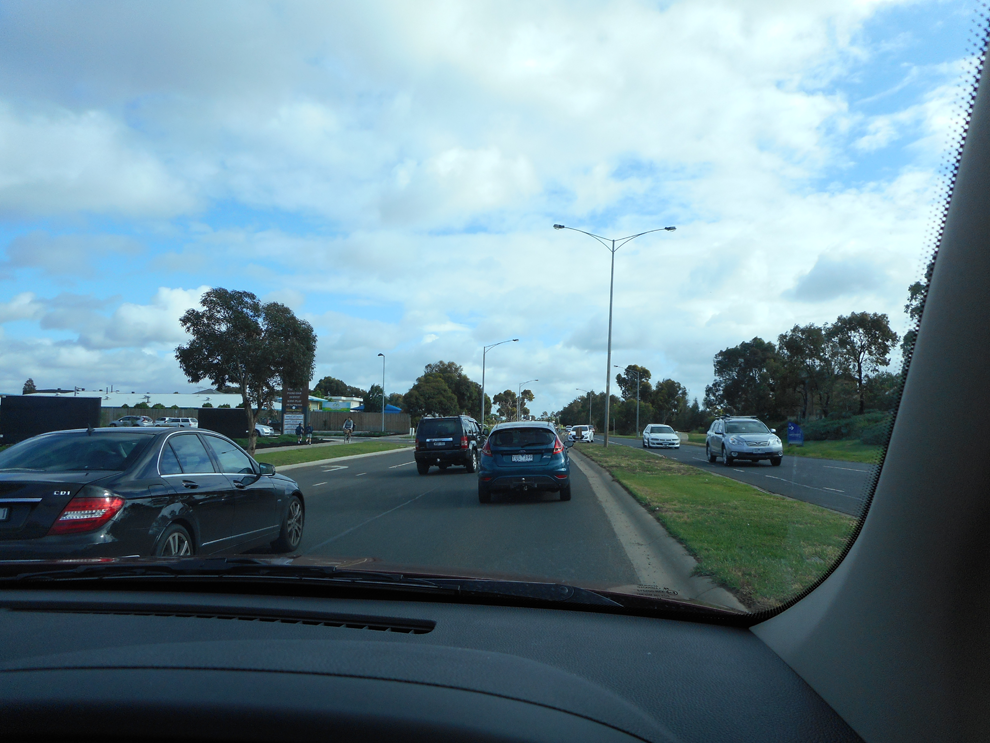
Nightmare traffic (P1).

Gridlock (P6).
The Participant Perspective
While we as researchers could see the value in using PEI, the following demonstrates the participants’ perceptions regarding engagement in the photography exercise. This includes their views on approaching the task and perceptions of the benefits and limitations.
Overall, the participants reflected quite positively on the photography exercise and found it was not difficult to take at least 10 images that captured the positive and less than favorable aspects of their lives. Indeed, Participant 5 felt “… in all honesty the camera, the photograph idea is brilliant, whoever brainstormed that idea deserves a medal cos it’s absolutely a brilliant idea.”
A focused exercise
It was evident that the participants engaged in the photography exercise with particular focus. Most discussed how they did not take “random photos” but instead considered the various aspects of the community they wished to photograph. Indeed, in some cases, participants took to writing lists of the aspects they wanted to capture before going out with their cameras. I have actually really carefully considered what I’m going to photograph so it wasn’t just a random take a photo of that, take a photo of that, tick the box, it was I carefully thought about the photos I was going to take and what they actually meant so looking at the photos in isolation you’d probably go ‘Oh that’s a bit random’ but I’ve thought about ‘This is the issue, is this a potential solution’ …. (P6)
The perceived benefits of PEI: Camera and photographs as tools
It was also evident that the photography exercise allowed participants to elaborate on different aspects of their communities that perhaps would not have been raised in an interview alone. it wasn’t actually until I saw the park that I had the realisation that I love all the parks that we have and we have so many parks so I wouldn’t have ever brought that up in a conversation because I didn’t realise until I was physically there, looking around with the camera that I thought ‘Oh, the parks, I love the parks’ so I think that part of it was beneficial. (P1) I think sometimes to look at a photo it makes you talk more about, you know what it means and your ideas behind it rather than just a thought out of your head, sometimes you know, a picture can say a thousand words, that sort of thing. (P3) I like the fact that it made me have to really think about the area and have a look at things and think about how things would photograph and how they would look in a photograph, I think it’s easier to take a photograph of something that doesn’t really have a lot of meaning so you had to be able to give some meaning to it, yeah, I liked that. (P1) I think the photos, a picture tells a thousand words essentially, and if you looked at these photos in isolation you wouldn’t get the full picture, had I just talked about my issues, you wouldn’t have got the full picture, I think it’s that combination …. I think it’s a very good way of doing it, I think the captions are also a really good way of doing it as well and some of my captions, if you just gave me this and I wrote the captions and you looked and you went, without the dialogue in between, it wouldn’t make sense to you but my comments and the captions probably make a lot more sense …. (P6) It’s probably easier to discuss a photo because it’s visual and I find visual sort of things tend to get your message across than just explaining it, it’s like reading a book, you can put your own impression into it and decide how you want to see it sort of thing but with an actual visual photo you actually see the same thing so you don’t just get your own impression of it, you’re actually seeing what I’m seeing …. (P8)
The perceived benefits of PEI: Greater appreciation
By offering the opportunity for more in-depth exploration, the photography exercise appeared to give participants a new appreciation of the features of their local community. Several mentioned how, somewhat unexpectedly, the images highlighted the many positive aspects that were often overlooked: I think the appreciation it gave me, again, the re-appreciation of my neighbourhood and how many good things are really in it and things that you would look past on an everyday basis … when you’re in the rat-race of everyday it’s easy to forget about some of those smaller things and look past them, having to take the time to sit back and look at them and appreciate them, that was really, very positive for me. (P1) … where I was going with the camera sort of opened my eyes and some things that people moan about a lot are actually not, not deal breakers really, like the graffiti one, sure if someone was tagging my fence every day I would get a bit agro but everywhere there’s going to be graffiti so it’s not being a big deal, it’s just kids that are bored I guess, and yeah I just enjoyed it, I liked thinking a bit about what I was seeing. (P2) I think it just reminds you of what the good things are in your community cos sometimes you can be having a shitty day, like the other day when it took three hours to get home from the city and you got home and you’re in a foul mood, when you’re looking at photos like that it reminds you that the lake is a good place and there are parks and there are people, a bit of a reality check that some days you might be having a bad day, but it’s really not that bad, where you live is a pretty good place. (P3)
The perceived limitations of PEI
While taking photos offered benefits, there were also some perceived limitations with the exercise. Participants described how they often forgot to take the camera with them, meaning they sometimes missed opportunities to take the photographs they wanted. They also mentioned how, although using the digital camera allowed them to keep their personal photographs and the images for the study separate, their preference would have been to use their smartphone to which they were accustomed: The only difference would be with my phone I always have with me, the camera I did in the end, like at first I sort of forgot to take it with me, I was thinking a couple of times ‘Oh, I should’ve taken that photo I was thinking about’ so then I just actually ended up just having the camera in the car so we would just stop and take the photo …. (P4) Well I think I did try to be very cautious, since our first meeting, I didn’t want to really have any people in the photos so maybe looking at them now it maybe looks like I don’t value any people but I didn’t want to, I don’t know, I just didn’t really end up capturing any people …. (P2) I think it was more just how hard it was to get the photos without other people in them (laughs) especially when you go to parks and things like that, cos we wanted to be really careful that we didn’t take photos of other people …. (P3) Oh there was [a few I deleted] but that was more the artistic eye in me, such as the two boys, one was looking one way and one was looking the other way and I was like ‘No, you’ve got to face the camera, I want to show your faces’ and another one was the bird, it was just blurry, cos I’m used to using bigger cameras so I was trying to get my head around the zoom feature but the only two I deleted, they weren’t good enough for public display. (P5) … the swans walking across the road, I was so desperate to get that [photograph] cos it’s, until you see it it’s hard to actually visualise rows of traffic actually stopped waiting for birds to cross the road, it’s just absolutely a magical, magical thing to see and I just couldn’t get those birds to cooperate, I pleaded, I pleaded with them. (P5)
Discussion
This article has highlighted a number of benefits of PEI from the perspective of both the researchers and participants. From our perspective as researchers, the inclusion of photographs in the interviews facilitated conversation, particularly among participants who were hesitant to discuss their personal experiences in the first interview, offered more detailed insight than could be achieved with verbal-only interviews, and allowed us to see the community from the “insider” rather than “outsider” perspective. The use of photographs also allowed new aspects to emerge, as the positive and less than favorable aspects highlighted in the preliminary interviews were not always the same as those photographed.
These benefits are not new, with previous users of PEI demonstrating how this technique of including photographs in interviews can yield new and more detailed information about participants’ lives than may come about from the use of verbal-only methods (Bukowski & Buetow, 2011; Clark-Ibanez, 2004; Padgett et al., 2013). Previous studies have also acknowledged how the use of photographs can facilitate the asking of questions (Collier, 1967) and reduce awkwardness during interviews by providing the material that participants know (Clark-Ibanez, 2004).
Unlike a majority of other publications, the current article includes the participants’ own perspectives. The participants reflected quite positively on the photography exercise, suggesting that they approached it in a focused way and considered the various aspects of the community they wished to photograph before going out with their cameras. In terms of their perspectives of the benefits, these were similar in theme to those identified by both us and other researchers. For instance, taking photographs gave participants a new perspective of their community and also greater appreciation of the positive aspects that were often overlooked when dealing with day-to-day life. The participants also felt that the photographs encouraged them to talk about aspects that may not have come up in a verbal-only interview. The inclusion of photographs also made the overall interview process easier, as the participants suggested that the meaning they were trying to convey was more evident than if they had used words alone.
Nevertheless, participants also identified some challenges to the use of PEI. For example, participants found they often forgot to take the equipment with them and had to adjust to using the digital camera, particularly because they were accustomed to using their smartphones for taking photographs. Some participants were also conscious of the advice provided during the explanation of the photography. We informed participants that our ethics committee required those photographed (and identifiable) to provide written consent. Ethical considerations have been noted by other studies as potentially problematic (see, e.g., Miller, 2015; Padgett et al., 2013); in this study, they appeared to constrain the photography, with many participants deciding against taking photographs with others in them. Their photographs were also influenced, at times, by their quest for the “right” shot. While we had suggested to our participants that we were not expecting them to be professional photographers and they could represent the positive or negative aspect in a metaphorical sense by taking photographs of other aspects, this suggests that researchers using PEI need to be particularly mindful of how the photography task is explained in order to allay any of these concerns. It also suggests the need for researchers to actually ask respondents just how the use of photography impacted on the research task and exploration of the questions under consideration.
The participants also perceived that some aspects, such as interactions on Facebook, were not easily captured and therefore not included in their image collections. Visual tools, in some cases, cannot replace words, thus demonstrating the need for researchers to equally consider the importance of the interview component of PEI.
It is recognized that the use of PEI in this study may differ from applications by other researchers. Some studies may require that participants be provided with more (or fewer) directions in terms of what to photograph. Nevertheless, what this study does suggest is that researchers interested in the use of PEI to elicit greater insight into the lives and experiences of their participants need to also consider how the participants themselves perceive the use of photography. The perceived benefits and limitations of participants shape how they approach the task; this can provide additional context and insight into participants’ lives, thus further complementing the inclusion of images themselves.
Conclusion
PEI offers a range of benefits particularly from the researchers’ perspective. Including photographs in this study of residents’ experiences facilitated conversation and offered greater insight than could be achieved through verbal-only methods. It also provided the “insider” perspective, allowing participants to express the nature and meanings of their lifeworlds in more depth. However, given the advantage of respondent-controlled PEI is its ability to empower participants, greater attention needs to be paid to their own perceptions of the benefits and limitations of this technique. Participants suggested that taking photographs gave them a new appreciation of their community and helped them to convey their meanings to the interviewers. However, they also found the task challenging due to the equipment and their own interpretations of the advice provided. Given these shaped the photographs taken, qualitative researchers contemplating the use of PEI to understand the experiences of their own participants would do well to consider how the photographers themselves perceived the task.
Footnotes
Declaration of Conflicting Interests
The author(s) declared no potential conflicts of interest with respect to the research, authorship, and/or publication of this article.
Funding
The author(s) disclosed receipt of the following financial support for the research, authorship, and/or publication of this article: This work was supported by the City of Wyndham, Victoria, Australia.