



Abstract
Music performance anxiety is a prevalent issue among musicians, including both instrumentalists and singers, impacting their ability to perform. Research suggests music coaches are a preferred source of help in ameliorating music performance anxiety, but vocal coaches largely lack the training to provide this. This paper seeks to explore sung improvisation as a strategy to alleviate music performance anxiety among singers within the vocal coaching studio. Previous research suggests music improvisation can reduce music performance anxiety in instrumentalists. However, its application with singers remains underexplored. Three participants of different ages and gender identities sang in front of an audience and then underwent six 30-min vocal coaching sessions involving sung improvisation over 2 months. Post the intervention they performed again under similar conditions. Self-report measures, including the Kenny Music Performance Anxiety Inventory (K-MPAI) and the Music Performance Anxiety Inventory for Adolescents (MPAI-A), were used to assess levels of music performance anxiety prior to and post the intervention. Participant feedback and observations provided additional insights into the benefits and challenges of using sung improvisation for music performance anxiety management in singers. All participants presented with reduced music performance anxiety symptoms post the intervention of vocal improvisation. Only one participant presented reliable change with a reliable change score of 2.67. However, the data suggested social validity, indicating the potential value of improvisation as a strategy to ameliorate music performance anxiety within the vocal coaching studio. This study provides insights for vocal coaches and singers on the efficacy of sung improvisation for reducing music performance anxiety, contributing to a better understanding of the coach’s role in addressing this issue.
Introduction
For the purposes of this study, the term ‘musician(s)’ will refer to both instrumentalists and singers. Music performance anxiety (MPA) is a condition affecting musicians of all ages and abilities (Juncos & Paiva e Pona, 2022; Kenny, 2006, 2011; Patston, 2013). Research suggests musicians prefer to seek help for MPA from music teachers (Williamon & Thompson, 2006), but effective strategies may require additional training which can be lengthy and costly (Shaw et al., 2020). Strategies to ameliorate MPA which are based on a coach's extant knowledge could therefore benefit both coach and coachee. Music improvisation has been shown by research (Allen, 2011; Kim, 2008) to reduce MPA in musicians. It is grounded in music theory, in which many music coaches may be proficient (Allen, 2011; Kim, 2005). This study seeks to form an exploratory inquiry into whether a coach-administered strategy (CAS) of taught improvisation can ameliorate MPA in singers with a view to reducing symptoms and increasing well-being in and around performance.
Music Performance Anxiety and Current Treatments
Music performance anxiety (MPA) is considered a form of social anxiety disorder in the Diagnostic and Statistical Manual of Mental Disorders (5th ed., 2013) (DSM-5), characterized by negative affect and cognitions during evaluative settings (Allen, 2011; Juncos, 2015; Kenny, 2011). It is a widespread and disruptive condition and the impact on musicians’ well-being and careers can be detrimental, potentially leading to generalized anxiety and depressive disorders (Kenny, 2011; McGrath, 2012). Estimates of the prevalence of MPA amongst musicians range from 15% to 96% (Fishbein et al., 1988; Kenny, 2011). Studies have primarily focused on instrumentalists (Ryan & Andrews, 2009; Kenny et al. 2012); however, 57% of 201 choral singers have reported experiencing MPA (Ryan & Andrews, 2009) and further research found opera singers also exhibit high MPA levels (Kenny et al., 2004).
Sufferers can experience any or all of the following symptoms: physiological, including shaking, sweating, and increased heart rate (Kenny, 2011); cognitive, including focus on negative thoughts and affect (Limb & Braun, 2008); and behavioral, including avoidance of performing, practicing, challenging repertoire, and audience gaze, plus other symptoms such as fidgeting, biting nails, and self-grooming (Hofmann and Hay, 2018; Juncos & Paiva e Pona, 2022; Kenny, 2011).
Performance is such an integral part of a musician's career that the distress of experiencing MPA can cause musicians to end their careers (Kenny, 2011). Mitigation of MPA is therefore of the utmost importance for musicians wishing to develop or maintain a career in music. Vocal coaches are eager to provide help to singers experiencing MPA (Shaw et al., 2020) but are often excluded from conventional treatment strategies due to the need for additional and extensive training. Such conventional treatments include pharmacology, for example beta blockers (Juncos & Paiva e Pona, 2022; Kenny, 2011), and psychotherapeutic approaches, for example Cognitive Behavioral Therapy (Juncos, 2015; Kenny, 2011). However, research (Williamon & Thompson, 2006) indicates that some musicians may be unlikely to pursue traditional interventions for MPA, perhaps due to the associated stigma, long wait times, and related performance issues (Carroll, 2021; Mahony et al., 2022).
Indeed, research suggests music coaches may be a preferred source of additional help for musicians suffering from MPA (Williamon & Thompson, 2006), owing to the supportive relationships often associated with coaching (Mahony et al., 2022; Shaw et al., 2020). Coach-administered interventions for MPA include hypnotherapy (Brooker, 2018), progressive relaxation (Kim, 2008), guided imagery/relaxation therapy (Kim, 2008; Mahony et al., 2022), and Acceptance Commitment Therapy (ACT) (Clarke et al., 2020; Mahony et al., 2022; Shaw et al., 2020). Whilst the above constitute promising MPA treatments, they do require additional training on the part of the coach.
Music improvisation has not only been recommended as an MPA intervention (Kim, 2005; Ladano, 2016) but uses music teachers’ extant knowledge. Embedding improvisation within coaching processes may provide additional benefits discussed below, offering a holistic approach to addressing MPA from a preventive perspective and potentially as complementary to traditional psychotherapeutic and pharmacological treatment, and/or other coach-administered MPA interventions.
Improvisation as a Strategy for Mitigating MPA
Music improvisation has been defined as music composition created and performed in the moment within a musical framework (Biasutti, 2015; Solis, 2016) pertaining to timbre, tonality, pitch, feel, harmonic progression, musical form, rhythm, dynamics, and emotion (Biasutti & Frezza, 2009; Pressing, 2001). During improvisation, the performer is unable to make corrections post-performance or consciously prepare pre-performance (Lewis & Lovatt, 2013).
The evidence relating to the efficacy of music improvisation as a strategy for the mitigation of MPA, although scant, collectively suggests that improvisation holds promise as an intervention for MPA in instrumentalists (Allen, 2011; Ladano, 2016; Montello, 1989, as cited in Kenny, 2011; Montello et al., 1990, as cited in Kenny, 2005; Kim, 2005, 2008). Kim (2008) compared improvisation and progressive muscle relaxation (PMR) in reducing MPA among 30 female pianists, finding no significant differences in efficacy between the two methods (Kim, 2008). However, Kim (2008) noted that the musicians found engaging in PMR easier than learning improvisation due to the difficulty of improvisation itself. Similarly, Allen (2011) explored the impact of improvisation on 36 school-aged pianists, noting lower anxiety levels in high-anxiety improvisers and a significant reduction in anxiety post-improvisation training. Both Kim (2008) and Allen (2011) included 30 or more participants, constituting an efficacious sample size (Juncos & Paiva e Pona, 2022) and thus support the conclusion that improvisation may alleviate symptoms of MPA in pianists. Studies on musicians who play other instruments may provide varying results.
A smaller study by Kim (2005) provides more support for the efficacy of improvisation to ameliorate MPA in musicians. Kim (2005) demonstrated the success of weekly music improvisation sessions in raising awareness that there is no ‘wrong’ or ‘right’ in improvisation which alleviated MPA symptoms (Ladano, 2016). Further, jazz students, who typically improvise as part of the genre (Papageorgi et al., 2011), exhibited lower MPA in solo performances, than those studying Western classical and pop music, in which improvisation plays a smaller role. Montello (1989) and Montello et al. (1990) assessed an intervention for musicians suffering with MPA in which music improvisation, combined with awareness techniques, facilitated performers bonding with other performers, transforming anxiety through creativity. The conclusion of the study, which was “methodologically strong” (Kenny, 2011, p. 195), recommends music improvisation as a viable intervention for performance anxiety (Montello, 1989; Montello et al., 1990).
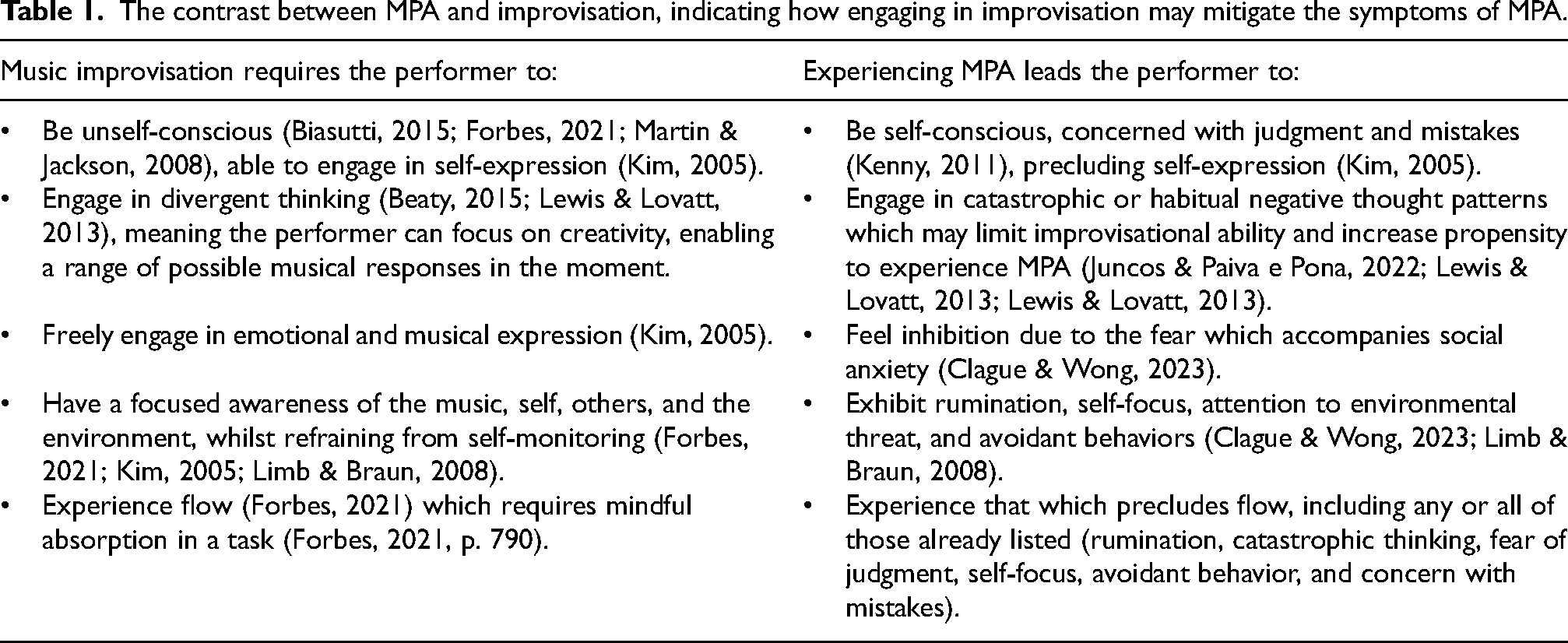
On balance, there is supporting evidence in favor of incorporating improvisation into coach-administered strategies (CAS) for the purpose of ameliorating MPA in musicians. For a closer examination, Table 1 illustrates the contrast between MPA and improvisation, indicating how engaging in improvisation may mitigate the symptoms of MPA.
The contrast between MPA and improvisation, indicating how engaging in improvisation may mitigate the symptoms of MPA.
In summary:
Music improvisation requires the following adaptive processes:
Experiencing MPA necessitates the following maladaptive processes:
Table 1 suggests the inherent processes in the two phenomena are in contradiction with each other. One cannot simultaneously use processes which are adaptive in performance, such as those which lead to the experience of flow, and use processes which are maladaptive in performance, such as focus on negative cognitions and self-denigration. For example, with regard to flow (Csikszentmihalyi, 1992), it occurs when an individual enjoys optimal engagement and experience (Csikszentmihalyi, 1992; Forbes, 2021; Ignjatovic et al., 2023). This increases well-being (Csikszentmihalyi, 1992; Forbes, 2021), unlike MPA, which decreases well-being (Kenny, 2011).
Improvisation and Singers
Research on singers and improvisation is lacking overall in the academic literature (Forbes, 2021), but evidence suggests that sung improvisation exists as part of some singing curricula: including, but not limited to, BMus (Hons) in Jazz at Guildhall School of Music, UK; and BMus (Hons) in Jazz at Trinity Laban Conservatoire of Music and Dance, UK; and as part of singing grade curricula (including, but not limited to, Associated Board of the Royal Schools of Music; and Trinity College, London). Additionally, several books exist on improvisation, such as Stoloff (1998), Stoloff (2012) and Agrell and Ward-Steinman (2014). Furthermore, singers, exemplified by vocal improvisers like Kurt Elling, Veronica Swift, Jazmine Sullivan, Tori Kelly, Ella Fitzgerald, Sarah Vaughan, and Chet Baker, can excel in improvisation. Therefore, it may be reasonable to hypothesize that singers could benefit in the same way as instrumentalists. Both are subject to the same stressors and causes of MPA, including low self-esteem (Burin & Osório, 2017), fear of judgment (Kenny, 2011), perfectionism (Burin & Osório, 2017; Kenny, 2011), and low self-efficacy (Dempsey & Comeau, 2019; Kenny, 2011). Indeed, singers may be more vulnerable to MPA because the voice is “susceptible to the vagaries of environment, health, and personal psychological states” (Forbes, 2021, p. 791), although research on this is generally lacking.
In addition to the potential efficacy of improvisation in ameliorating MPA, improvisation learning could offer multiple benefits to singers, enhancing music skills, knowledge, competency, creativity (Biasutti, 2015), musical freedom (Kratus, 1996), flow (Forbes, 2021), joy, and a sense of community in music making (Ladano, 2016).
Challenges of Improvisation as Part of a CAS to Mitigate MPA in Singers
The use of improvisation as a coach-administered strategy (CAS) to alleviate MPA presents challenges. One of the primary obstacles lies in the acquisition of the requisite music theory and performance abilities for the coachee to be able to improvise. Proficiency in improvisation requires practice; however, the amount of practice in which musicians engage is not directly within the coach's control. The coach can make recommendations to practice but they cannot control how much practice coachees do. Lack of practice could potentially lead to diluted efficacy of improvisation as a CAS which could be disheartening for both coach and coachee.
Research (Hargreaves, 2013) indicates singers may be viewed as improvisational “underachievers” (Forbes, 2021, p. 769) unless brought up in a vocal jazz culture, raising questions about potential hesitancy among singing teachers to incorporate improvisational elements into their coaching strategies. An underdeveloped knowledge of improvisation, coupled with the complexity associated with improvisational learning may be off-putting to vocalists and vocal coaches. Indeed, Kim (2008) observed that two participants struggled with improvisation due to a lack of relevant music theory knowledge. The time and cost implicit in further training have been noted above, whilst some singing coaches may be in possession of the necessary skills and knowledge, others may need to invest in some additional training.
Furthermore, learning and using a new musical skill, such as improvisation, may induce MPA itself. As stated in Table 1, a performer must experience/engage in certain processes in order to improvise, yet MPA inhibits those necessary conditions. This creates a paradoxical situation, wherein the pursuit of improvisational skills may be hindered by the very anxiety it aims to mitigate. Recognizing this is imperative for educators and coaches, as it underscores the need for nuanced strategies that balance the benefits of improvisation with the challenges posed by MPA. It may also suggest that improvisation as a preventive measure for MPA, may be more effective than as a strategy to ameliorate MPA. Once a singer is suffering with MPA, engaging in improvisation may prove challenging.
Teaching Music Improvisation
Several authors have created improvisational exercises for the purposes of improvisation education. Azzara (1999, p. 21) suggests that “both teachers and students have the potential to improvise”. He presents a series of improvisation education techniques which include learning repertoire by ear, and which are based on music theory, including tonality, meter, rhythm, and harmonic function (tonic, dominant, subdominant etc.), plus practice exercises including transcribing extant improvisations by ear, embellishment, and “taking risks” (Azzara, 1999, p. 23) during improvisations.
Similarly, John Kratus (1996) formalized a 7-level sequential teaching model compatible with all ability levels and ages (Biasutti, 2015). It includes “the structural dimensions of music” (Kratus, 1996, p. 33) such as meter, tonality, chord changes, and tempo (Kratus, 1996), but additionally focuses on music behaviors and creativity. The levels appear as a continuum: Simple Exploratory Behaviors at Level 1, including creating random sounds without audiation or musical meaning, for the sake of the act of improvisation itself; Level 2, Process-oriented Improvisation, audiation results in some control and understanding of the music-making process; Level 3, Product-oriented Improvisation, marks the shift from process to product according to music structure, stylistic traits, and meaning; Level 4, Fluid Improvisation, occurs when the musician has technical control of their instrument, is able to audiate, and focus on performance with flow and musicality; Level 5, Structural Improvisation, denotes an ability to use strategies to develop an improvisation, including dynamics, tension/release, and when to “break some syntactic rules of tonality, meter and so on” (Kratus, 1996, p. 35); Level 6, Stylistic Improvisation, pertains to the ability to master improvisation within particular music genres or styles; and Level 7, Personal Improvisation, occurs when the musician pushes the boundaries of their genre, to the point of emergent playing styles.
Whilst both models include music theory learning, Kratus (1996) clearly delineates competency levels which may be useful to coaches creating improvisation teaching strategies for musicians of all capabilities. Additionally, it introduces behaviors which can enhance improvisation learning. However, neither strategy addresses the challenge of how to enable the adaptive processes (see Table 1) which are fundamental if one is to freely improvise.
Biasutti and Frezza (2009) conducted research on 76 instrumentalists with improvisation experience in order “to identify the cognitive processes that occur during improvisation” (Biasutti & Frezza, 2009, p. 233) and to ascertain the requisite skill requirements. In summary, they provided an overview of the dimensions involved in improvisation:
Anticipation: The ability to plan the improvisation. Use of repertoire: Incorporating genre-appropriate licks and motifs stored in long-term memory. Emotive communication: Expressing affective states through music. Feedback: Internal (proprioception, affect) and external (other performers, audience, etc.). Flow: Total absorption in a meaningful and valued task.
Overall, these research findings provide valuable insights into the cognitive processes, music theory, competency levels, and dimensions of improvisation involved in improvisation, providing guidance for those developing effective teaching strategies for musicians of all levels, and thus mitigating some of the challenges.
Music educators seeking to create comprehensive and engaging learning experiences that facilitate improvisation skills development may choose to emphasize the necessary adaptive processes (Biasutti, 2015). This could include exercises which encourage flow, focused concentration, loss of self-consciousness, autonomy, merging of action and awareness, goal setting in meaningful endeavors (Garcia et al., 2019), increased coachee responsibility and awareness (Whitmore, 1992), optimally challenging tasks (Deci & Ryan, 2008), mindfulness techniques (Hill & Oliver, 2019), and positive feedback (Forbes, 2021).
The literature suggests that sung improvisation may be appropriate to ameliorate MPA in singers, either as a preventive measure or as a potential strategy for mitigating current MPA. This is because the necessary psychological conditions for successful music improvisation theoretically conflict with the psychological and physiological conditions which accompany MPA. Improvisation may have the additional benefit of optimizing the music performance of singers.
Method
A mixed methods phenomenological approach (Mayoh & Onwuegbuzie, 2015) was used to investigate whether singers experience reduced symptoms of MPA after engaging in music improvisation lessons (Denscombe, 2008; Mayoh & Onwuegbuzie, 2015). This phenomenologically considerate approach is evident in the study's focus on understanding participants’ lived experiences of experiencing MPA, prior to and post learning to improvise, whilst at the same time using both qualitative and quantitative methods to ensure methodological rigor. Quantitative measures offer clear and objective insights into whether participants experience MPA (Coolican, 1990), whereas qualitative methods enable the researcher to delve into lived experience. Triangulation was employed through the use of the following methods:
Questionnaires Observation Researcher's reflective journal
Social Validity
Assessing the acceptability of an intervention or strategy from the perspective of those it seeks to serve (Carter & Wheeler, 2019) is crucial role. Determining whether participants perceive it as (i) desirable, (ii) feasible to implement, and (iii) satisfying in its outcomes (Owen et al., 2021) allows researchers to assess social validity of an intervention. The lived experiences of participants throughout the intervention provides essential data as to whether these modes are fulfilled. Social validity enables practitioners to design strategies and interventions that are not only socially appropriate but also significant in terms of their goals and impacts (Carter & Wheeler, 2019; Foster & Mash, 1999).
This holistic methodology enhances the depth of insight (Howe, 1988) and allows for a flexible exploration of participant experience (Mayoh & Onwuegbuzie, 2015), all while maintaining a practical focus on supporting vocal coaches in their work.
The Insider Researcher
This research is further enriched by the role of the insider researcher, who is also the vocal coach in this study. This dual role enables the researcher to approach the study with an empathetic understanding of the participants’ experiences, fostering a deeper connection with the data and allowing for more nuanced interpretations. Phenomenological enquiry allows for such interpretations (Maggs-Rapport, 2000), and although subject to researcher bias (Coolican, 1990), interpretation itself requires prior knowledge of the phenomenon in question (Maggs-Rapport, 2000). Therefore, the researcher must be transparent in their attempt to reduce subjectivity despite prior experiences (Holmes, 2020; Mayoh & Onwuegbuzie, 2015)whilst at the same time allowing their prior experience to guide their interpretation of data in a way which is not misleading to the reader.
The insider researcher has over 20 years of experience as a professional singer in commercial contemporary music and has used embellishments regularly to enhance performance. Embellishments are a form of improvisation in which the singer alters the written melody, either replacing or including musical notes or rhythms within a phrase that are different to those within the original composition. With reference to embellishments as improvisation, the researcher is fluent in all five processes contained in Biasutti and Frezza’s (2009) model and the first six levels of Kratus’ model. However, music improvisation often takes place over several bars of music and/or whole sections of a song, rather than within a phrase. The researcher had not engaged in this with regularity prior to engaging in this research which raised challenges discussed below.
Participants
As MPA affects all ages (Kenny, 2011), participants (n = 3) reflecting the developmental stages of childhood, teens, and adulthood were recruited from the researcher's roster of singing clients: P1 (age 10); P2 (age 16); and P3 (age 46). Participants were required to fit the eligibility criteria below:
Eligibility
Have been engaged in vocal coaching for at least 6 months and beyond beginner level in singing and/or music.
Experience MPA most of the time when singing in a setting with perceived judgment from an outside source, for example, an audience, friends, teacher.
Available to have 6 × 30-min coaching sessions within a 2-month period.
Willing to be observed in two performances in front of an audience.
Project Design
This project was modeled on previous research on improvisation and MPA (Allen, 2011; Kim, 2008). The teaching intervention took place over a 6-week period. The project comprised three stages:
Stage 1
Within observations, participants were able to express their cognitions and affect prior to and post their sung performances. This enabled the researcher to assess whether that which they observed accurately represented the experience of the participants. It must be noted that interpretation of behaviors and physiology are fraught with the potential for bias. Future researchers may wish to engage more than one observer to reduce this.
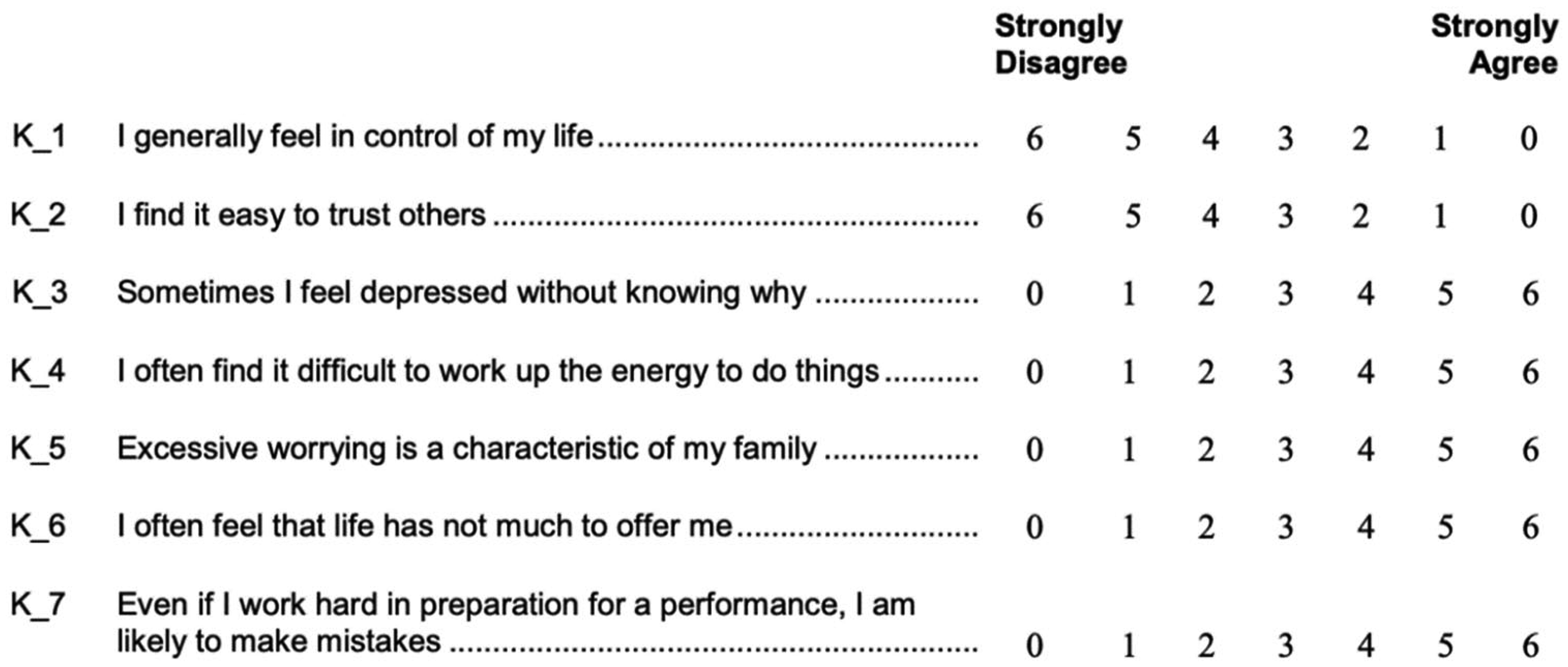
Excerpt from the K-MPAI (Kenny, 2009).
Stage 2
Following Observation 1 and the completed questionnaires, participants were engaged in a 6-week program of taught sung improvisation, administered over a period of 2 months. An evidence-based improvisational teaching plan was created which focused on specific skills (Azzara, 1999; Kratus, 1996; and Biasutti & Frezza, 2009) and relevant processes (Beaty, 2015; Biasutti, 2015; Biasutti & Frezza, 2009; Forbes, 2021; Kim, 2005; Lewis & Lovatt, 2013; Martin & Jackson, 2008; and Limb & Braun, 2008) as laid out in the literature review. Participants progressed through each step demonstrating competency measured by the teaching strategy.
An improvisation teaching plan was created based on the improvisational processes and skill set described above. An abbreviated version of the teaching plan can be seen below:
Improvisation Coaching Plan:
Introduction to relevant musical grammar: major/minor/chromatic scales, broken chords, triads, scale degree, and key. Introduction to improvisation: Using scales/arpeggios to sing over familiar instrumental tracks Use of repertoire: learning to ground improvisation in the melody of the song, e.g., incorporate embellishments and improvisations using scales and arpeggios into the melody. Participants to anticipate and carry out their improvisational intentions. Learning to use internal feedback (aural, physical, proprioception, cognitions, affect) as a guide to improvisation, e.g., pitch, physical ease, emotion, self-expression. Goal setting was engaged in to encourage value-led proactivity, motivation, and flow. Use of repertoire (Biasutti & Frezza, 2009): Participants were engaged in exercises such as listening licks, riffs, embellishments, and improvisation within the music style they had chosen to improvise in. Participant encouraged to display awareness of tonality, timing, intonation, and genre/stylistic appropriate musical references. Anticipation (Biasutti & Frezza, 2009) Trading 4s: In this exercise, participants alternated improvisation with the coach in 4-Bar turns. This facilitated focus on external and internal feedback, flow, musicality, divergent thinking, and overall performance assessment. Participants were required to improvise with closed eyes to encourage flow and focused awareness. Ensure participants can anticipate the improvisation to allow fluidity. Participants engaged in structuring improvisations using dynamics, feel, and emotion to create a narrative arc. Participants were required to improvise over songs from different genres using dynamics, feel, and emotion.
The reflective journal also documented the experience of the insider researcher. For example, the researcher's lack of prior experience in improvisation over several bars of music was reflected upon in the reflective journal after a ‘Trading Fours’ exercise. I played 4 bars on the piano whilst improvising. I actually found this quite hard as I have not improvised whilst playing the piano before. I felt I wasn’t very successful, and I was worried that this hindered his ability to trade with me.
This experience illuminated the difficulty for vocal coaches who are not fluent in improvisation. This lack of fluency may impact the effectiveness of an intervention. However, successful improvisation requires an understanding of both the underlying musical structures and the cognitive processes involved. A coach who is educated in both, even if not a master improviser, can still effectively guide students through the stages of learning to improvise. By emphasizing the cognitive and structural components of improvisation, noted above, coaches can foster an environment where students begin to develop their own improvisational skills (Kenny & Gellrich, 2002). Thus, while fluency in improvisation is beneficial, a solid grasp of its foundational processes should enable coaches to guide coachees in learning music improvisation.
Additionally, the reflective journal illuminated the social validity (Wolf, 1978, as cited in Schwartz & Baer, 1991) of the intervention and its impact upon MPA symptoms, allowing the researcher to ascertain whether participants experienced satisfaction (Owen et al., 2021).
Stage 3
Additional Stage
One-month post-Observation 2, participants underwent the same self-report measures as before. Consistent with previous MPA intervention research by vocal coaches (Mahony et al., 2022; Shaw et al., 2020), changes in MPA were anticipated at the 1-month data point. This approach sought to align with previous findings. Participants received no improvisation coaching nor performing during that interval.
Results
Qualitative data are presented within the context of the themes found from coding and theming. Following this, quantitative data from the inventories are presented. The suitability of improvisation as a CAS for singers is examined in the discussion.
Qualitative Data
An analysis of the qualitative data found two grand themes, each containing micro themes within them. The grand themes provide a wide view of the data, whilst the micro themes provide nuance and clarity, highlighting the most important facets of the data. See Table 2 below:
Table of themes: two grand themes, split into five micro themes.

MPA to Well-being
MPA symptoms are reduced when adaptive processes (see Table 1) replace maladaptive processes (see Table 1). During observations, participants presented with symptoms in all categories of MPA. The observations provided the means for the researcher to:
Witness the manifestation of MPA symptoms in participants, pre- and post-CAS. Witness any increased performance well-being post-CAS.
Tables 3 and 4 below present the symptoms that participants were monitored for during Observation 1 and Observation 2 respectively, and whether they either (i) presented as experiencing them and/or (ii) stated they experienced them.
Table of symptoms observed in participants during Observation 1.

Table of symptoms observed in participants during Observation 2.

MPA is complex and individuals may show improvement in one category of symptoms, but not others. Overall, some improvement in MPA symptoms was noted during Observation 2. This was confirmed by all participants verbally. P2 shared their thoughts with the researcher, recorded in the reflective journal, about how their performance in Observation 2, It went very well. I think so at least, and it went a lot better than my first one. Both times I felt very nervous going on stage, like right before until I was on stage and I still did feel a bit nervous the second time, but I don’t really know what happened to be honest, I somehow managed to push it away.
People can’t judge you and you can do whatever you want with [improvisation], so it feels less like panicky. When you’re doing the actual [song] you panic because you want to get every single note and word right because otherwise if you mess up you mess up, so…when you’re improvising it's different…cos you’re always messing up when you’re improvising cos you’re doing in with different notes.
P2 also included improvisation in Observation 2 which was not prearranged. The excerpt below provides a brief account of a conversation between the researcher and P2 about P2's experience of entering flow state within improvisation. Q) “You added a bit of improvisation into the performance. Was it a different experience doing that compared to singing the song as it's written?” A) “Yes it was a different experience. And I also felt a lot freer when I did improvisation?” Q) “And what about how you felt? Was that a different experience?” A) “Yes I felt a lot less nervous for some reason. Surely when you’re improvising you’d feel a lot more nervous about changing the song, but I didn’t so…!”
Without understanding why, P2 feel freer and less nervous, suggesting some satisfaction (Owen et al., 2021) with the outcome of the CAS. Highly anxious performers can experience relief when engaged in the act of improvisation (Allen, 2011), likely due to the incompatibilities between improvisation and MPA (see Table 1).
I think I sang the first song well, probably a 7 or 8 where a 10 would be the best I’ve done it in practice. Second one not so good, more like a 4 or 5. I was annoyed with myself that I made mistakes that I wasn’t usually making in practice. I was almost surprised because I felt quite relaxed before [the performance] and then definitely tensed up when I started – physical feeling of tension etc, not quite sure what my hands are doing etc. I was meaning to try to make some eye contact and project my voice more but felt like I didn’t really pull that off.
Enhanced Performance
As stated, one of the potential additional benefits of improvisation as a coach-administered strategy is increased competency and enhanced performance (Ladano, 2016). These in turn this may increase self-efficacy, which has been positively linked with lowered MPA (Kenny, 2011), enhanced well-being, and performance competency (Sagonei & De Caroli, 2014). Whilst optimal performance in itself does not mitigate MPA, and very competent performers can experience MPA (Kenny, 2011), it can increase well-being (Deci & Ryan, 2008).
This lesson I taught her to examine artists for their stylistic use of intervals, timing, tonality, modality etc. We chose a genre and a song and then examined how 3 different artists (vocal and instrumental) embellished and improvised over the chord structure in relation to the song…[…]..She was then able to improvise in the style of her chosen artists.
An integral part of skill learning, including sung improvisation, is practice. However, practice habits varied amongst the participants, which may have impacted upon skill acquisition. P2 stated that they practiced sporadically which they attributed to the difficulty in finding practice space, as recorded in the reflective journal, “P2 finds singing practice at her boarding school very unnerving because people can hear her sing.” This is suggestive of MPA. As previously noted, one of the difficulties in using improvisation as part of a CAS to ameliorate MPA is that it can trigger MPA. This may raise questions as to its desirability and feasibility (Carter & Wheeler, 2019) from the perspective of participants. P2 did find improvisation easier in the latter part of the teaching program and also expressed that they felt less nervous when improvising as part of a performance (see above).
P3 confided to the researcher that he did not engage in consistent improvisation practice, citing work and family commitments. He expressed that he was experiencing difficulty learning and practicing improvisation. The researcher noted a conversation with P3 in the reflective journal, “P3 expressed that he has been struggling with improvisation in that he feels that everything he does is crap”. His reluctance to practice may also be an expression of avoidant behavior, signaling MPA (Juncos & Paiva e Pona, 2022). If MPA itself can be a hindrance to the very strategy used to ameliorate it, a question is cast over its feasibility. Further, P3's feelings may also denote a lack of desirability for the CAS.
I suggested they closed their eyes and focus very closely on the music…[….]…This time they were able to improvise in a far more musically intelligent way, using more complex intonation, note choices and also they simply sang better. When asked about whether that experience had been different to the previous one they said, “yes very”. They felt they were part of the song/music rather than singing to it, connected to the music. This is more akin to flow. I am noticing how much more adept P2 is musically and how much more engaged and confident. I think the raise in self-efficacy is affecting how much they enjoy the lessons and music. They seem to practise more than she used to and…is a lot more animated and engaged in lessons too.
The qualitative data suggests that overall, the participants found the intervention to be desirable and it provided that some level of satisfaction, with all participants verbally expressing that their experience of performing improved post-intervention. The researcher found the intervention to be feasible, although there were challenges which will be discussed below.
Quantitative Data

P1's MPAI-A scores: the y-axis shows the MPAI-A score (maximum score = 90). The x-axis shows the data collection point (pre-intervention/post-intervention/1 month post intervention).
To determine if changes were reliable or simply due to measurement error, a reliable change index was calculated (Jacobson & Truaxx, 1991) (see Table 5). P1's post-intervention score of 75 yielded an RCI of 0.94, which does not indicate reliable change. An mylar of 1.96 or higher is required to confirm reliable change, corresponding to a post-intervention score of 68 or below.
P1: MPAI-A RCI.

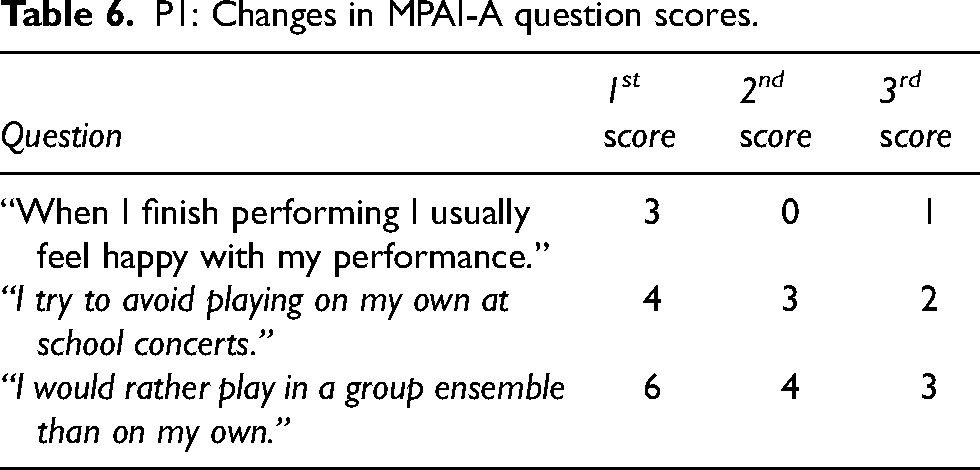
Throughout the testing, P1's responses on the MPAI-A showed minimal change, though her scores improved on three questions from baseline to the one-month follow-up (see Table 6). At this follow-up, she reported slightly lower happiness after performing, as discussed below. While her overall MPA score did not significantly decrease, post-CAS, P1 felt happier after performances and was more willing to perform solo, potentially reducing her tendency to ruminate. Since negative affect and rumination are linked to MPA (Kenny, 2011), increased positive affect may signal reduced MPA.
P1: Changes in MPAI-A question scores.
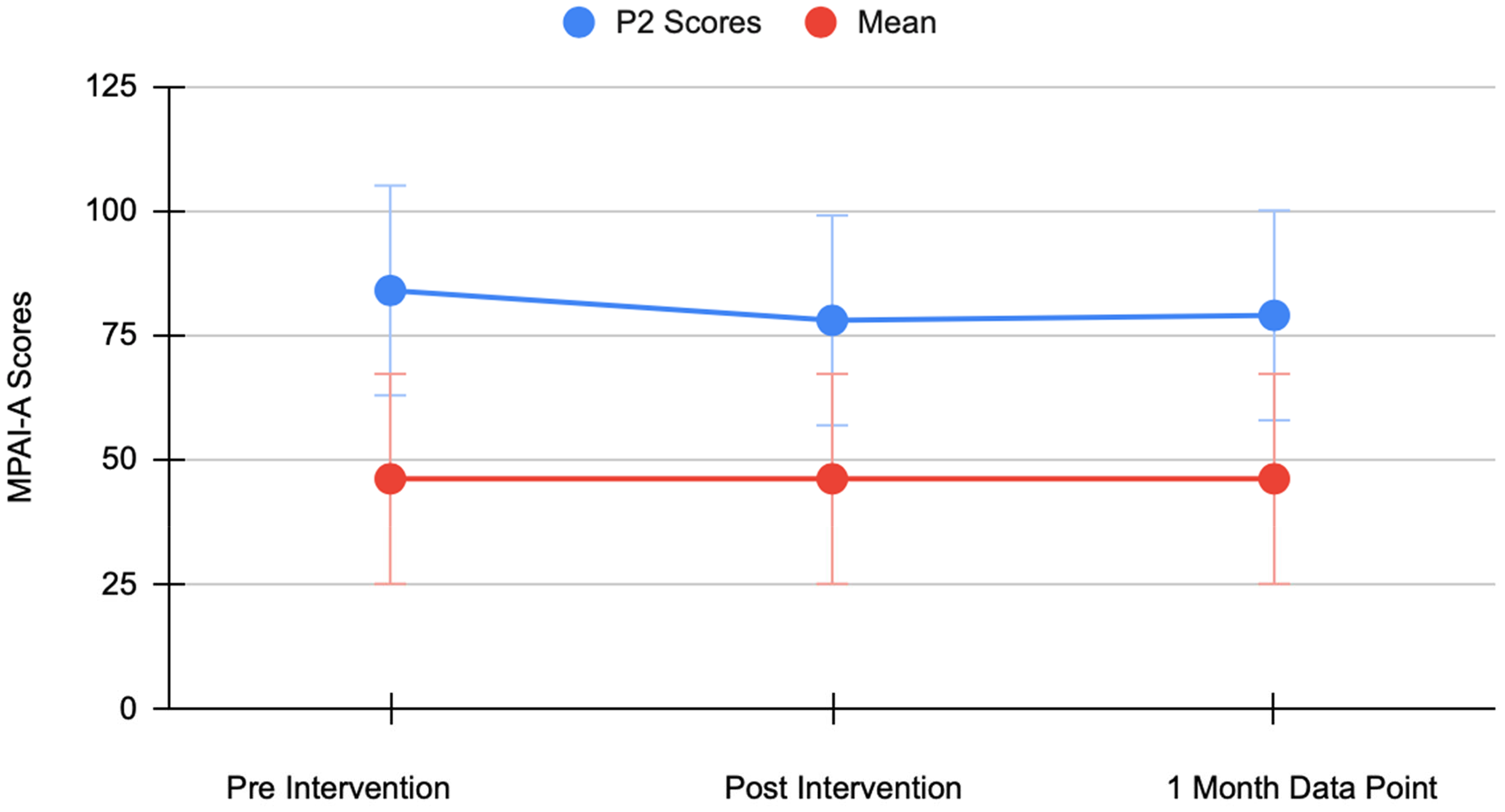
P2's MPAI-A scores: the y-axis shows the MPAI-A score (maximum score = 90). The x-axis shows the data collection point (pre-intervention/post-intervention/1 month post intervention).
Table 7 indicates no reliable change, as a post-intervention score of 66 or lower is needed for a reliable change index of 1.96 or above. However, P2 showed greater willingness to perform publicly (Table 8) and reduced negative self-judgment post-performance, though this effect lessened at the one-month follow-up. Reduced negative thoughts may signal a decrease in MPA (Kenny, 2011).
P2: MPAI-A RCI.

P2 Changes in MPAI-A question scores.


P3: K-MPAI scores: the y-axis shows the K-MPAI (maximum score = 240). The x-axis shows the data collection point (pre-intervention/post-intervention/1 month post intervention).
A reliable change index (Jacobson & Truaxx, 1991) score of 2.67 showed reliable change at the one-week data point (see Table 9) suggesting the change in scores was not due to standard error of measurement. The change in scores was not found to be clinically significant. P3's K-MPAI score rose to 114 at the one-month follow-up but remained a reliable change with a score of 1.96.
P3: K-MPAI RCI.

The RCI was found using P3's scores and standard deviation from a study by Juncos et al. (2022) in which 100 vocalists and instrumentalists were administered with the K-MPAI measure.
The combined data from observations and the researcher's reflective journal indicate that P3 found improvisation as part of a CAS somewhat ameliorated MPA, therefore this was somewhat satisfactory in its outcomes (Owen et al., 2021). Observational data suggest a decrease in P3's MPA symptoms, though negative cognitions persisted during performances. This is further supported by quantitative data from P3's inventories, which showed reliable change.
P1 and P2 presented positive subjective evaluations of the CAS in both observations and the reflective journal, suggesting social validation (Carter & Wheeler, 2019). However, neither showed reliable change, even though their MPAI-A responses indicated increased comfort performing in front of an audience post-CAS compared to pre-CAS.
All participants experienced an increase in MPA one month post-CAS, although their scores remained lower than baseline levels. This rise may stem from focal enhancement of memory, where individuals tend to recall the most negative aspects of their experiences, such as mistakes and anxious thoughts (Kensinger, 2009). Research shows that heightened emotions can strengthen memory retention, with negative memories often being more vivid than positive ones (Kensinger, 2009).
To mitigate this regression, coaching strategies could focus on reinforcing performance well-being. Future research should consider extending the timeframe and adding more performances between data collection points to reduce the impact of focal memory enhancement, allowing participants to rely more on recent experiences rather than lingering negative memories.
Discussion
Suitability of Improvisation as a CAS for Singers
A coaching strategy must be feasible to implement, desirable, and satisfying in its outcomes, for both the coach and coachee. To remind the reader, a strategy which achieves those aims can be considered acceptable and socially valid, and thus significant in their impact (Carter & Wheeler, 2019).
Improvisation requires identifiable skills, making it easy to incorporate into teaching strategies. Vocal coaches can create evidence-based plans focused on these skills (Kratus, 1996) and processes (Biasutti & Frezza, 2009). The step-by-step method used in this study allowed for clear competency measurement, with participants remaining at a step until they were deemed competent by the researcher.
Overall, improvisation as a CAS for mitigating improvisation may be feasible to implement from the perspective of the coach, although the success of such an intervention must surely be dependent on the proficiency of the coach both in improvisation and in teaching it. Further, the willingness of the coachee to engage in improvisation learning and practice is fundamental to the success of such as CAS.
Improvisation is both creative (Ladano, 2016) and enjoyable (Ladano, 2016). Coachees can practice improvisation outside the teaching studio, fostering their autonomy and proactivity in learning, progress, and performance well-being. Autonomy and competency are positively linked to intrinsic motivation (valuing activity for its own sake) and enhanced well-being (Deci & Ryan, 2008). However, a limitation of this autonomous approach to music learning is that practice occurs outside the coach's control. Consequently, much of the effectiveness of incorporating improvisation into a CAS is also beyond the coach's influence. P3, in particular, struggled to practice throughout the study and expressed feelings of inadequacy regarding his improvisation skills. Despite being the most experienced musician, he found improvisation challenging, possibly due to his background as a professional composer. This experience may have led him to identify with a self-narrative in which he sees himself as an accomplished musician (Juncos & Paiva e Pona, 2022), making it difficult to reconcile being a beginner in a new musical skill. Nevertheless, P3 reported an increase in both competency and overall well-being in singing, suggesting social validation supported by the data. This boost in singing competency may have enhanced his self-efficacy, contributing to improved performance well-being.
Neither P1 nor P2 showed reliable change in their MPAI-A responses, even though observational and reflective journal data suggest otherwise. This discrepancy may be linked to self-story attachment (Juncos & Paiva e Pona, 2022), as P1 and P2 likely view themselves as individuals who struggle with MPA based on their participation in this study. This self-perception may create a response bias, leading them to answer in line with their identity despite a reduction in MPA symptoms post-intervention. Additionally, children and youth can be susceptible to assistance completion (Kooijmans et al., 2022) and suggestibility (Kooijmans et al., 2022). Their parents may also perceive P1 and P2 as individuals with MPA due to their involvement in this study and past performances, reinforcing this narrative. Further research is recommended to explore the relationship between self-stories, self-concept as musicians, and the complexities of MPA.
Encouraging pupils to engage in regular practice can be challenging, but this does not invalidate the potential benefits of improvisation being accessible as a coach-administered strategy away from the teaching studio. For those who do engage in practice, learning improvisation can be rewarding, increase performance well-being and enjoyment, reduce MPA, and increase competency (Ladano, 2016).
Project Limitations
Similar to Kim (2005), participants in this project faced learning challenges. Learning to improvise is inherently difficult (Kim, 2008) and can trigger anxiety (Kenny, 2011), which may hinder engagement in improvisation and prevent flow (Forbes, 2021). Rakei et al. (2022) found that prolonged engagement in music improvisation is positively correlated with heightened flow states among musicians. Since participants lacked improvisation proficiency, they likely struggled to achieve flow during the process. P3, being the most proficient musician, was the only participant to show reliable change, suggesting that more skilled musicians may benefit more from such interventions. Further research involving proficient improvisers could yield more significant findings.
As previously mentioned, the coach’s competency may influence the effectiveness of a CAS using improvisation to mitigate MPA. A more proficient improvisation coach could yield more significant results. In this project, participants lacked opportunities to engage in improvisation with other performers, aside from the insider researcher, who was not an expert improvisor. Future research should include collaborative improvisation, as it may help participants explore the communicative aspects of this practice, which can foster a sense of community and enhance well-being (Ladano, 2016) while promoting focus on others (Biasutti & Frezza, 2009).
Participants were selected from a convenience sample, which, while practical and common, may limit the generalizability of findings (Gray, 2018). Future research should consider purposive sampling or a larger convenience sample to enhance generalizability. Subjectivity is also a concern in both sampling methods, highlighting the importance of transparency regarding researcher positionality. Additionally, this study included a wide age range; examining each developmental stage separately could further improve generalizability due to differences in development among children, teens, and adults.
Participants were assessed on their post-intervention performances against a baseline performance which was measured pre-intervention. It is possible that the familiarization with the performance setting during the initial baseline performance may have contributed to a reduction in MPA during the subsequent performances. The reduction in MPA could be attributed to increased exposure to similar performance conditions. Future research could address this limitation by incorporating a control group that undergoes equivalent exposure without the intervention.
MPA is complex, influenced by various aspects of the human psyche. However, the data indicate that improvisation as a CAS can mitigate MPA to some extent. This approach offers several advantages over traditional treatments. First, it is accessible to music coaches without requiring extensive retraining, as teaching improvisation mainly demands a solid understanding of music theory and the ability to improvise. Coachees with a basic grasp of music theory can participate in improvisation, making it widely accessible. Moreover, engaging in music improvisation enhances musical competency while fostering joy, well-being, and connection in the music-making process (Ladano, 2016).
Conclusion
Comprehensively, the data and prior research (Allen, 2011; Kim, 2008) suggests improvisation for the mitigation of MPA in singers may be both socially appropriate and effective (Carter & Wheeler, 2019; Owen et al., 2021). The mixed data results serve to highlight the complexity of creating strategies to mitigate MPA that both works objectively, and which are perceived as effective by the participants (Owen et al., 2021).
Combined data from observations and the reflective journal indicate that P3’s subjective evaluation of improvisation as a CAS for mitigating MPA was somewhat positive, suggesting a partial alleviation of symptoms (Owen et al., 2021). Although observations show a reduction in P3's MPA symptoms, negative cognitions persisted during performances, corroborated by quantitative data reflecting reliable change. In contrast, both P1 and P2 expressed positive evaluations of the CAS and its outcomes, indicating social validation (Carter & Wheeler, 2019), but neither demonstrated reliable change.
One of the difficulties in using improvisation as a strategy to ameliorate MPA was that improvisation generates MPA in musicians who are already susceptible to experiencing MPA. Future research on whether improvisation could serve as a preventive measure may be of interest to music coaches wishing to promote adaptive performance processes in pupils.
Music improvisation engages a specific set of mental and creative skills (Biasutti & Frezza, 2009). Research on how learning and practicing improvisation can enhance musical competency and self-efficacy in performance could be valuable for music coaches. In the broader context of music education and performance coaching, incorporating improvisation could be highly beneficial. Mastering the processes involved in improvisation (Biasutti and Frezza, 2009; Ladano, 2016) may also improve performance in other areas of life (Hayes et al., 2012). Investigating the overall benefits of improvisation could provide valuable insights for coaching practices.
Footnotes
Action Editor
Graham Welch, University College London, UCL Institute of Education.
Peer Review
Melissa Toy, BIMM Institute London.
Gillyanne Kayes, Vocal Process.
Declaration of Conflicting Interests
The authors declared no potential conflicts of interest with respect to the research, authorship, and/or publication of this article.
Ethical Approval
Ethical approval was provided by The University of Wales, Trinity St David (approved on 24/09/22 by Louise Emanuel). Music performance anxiety (MPA) is emotionally sensitive for musicians (Steptoe, 2001) and engaging them in anxiety-inducing situations must be approached with caution due to potential distress. Project duration and intrusion into participants’ lives were considered, acknowledging the potential surfacing of sensitive issues such as family dynamics. Participant well-being remained paramount (Gray, 2018), with clear communication about project stages, opt-out options, and provided helpline resources (Samaritans, SANEline, The Mix). Participants and parents/guardians received project information, purpose details, and consent forms, with permission sought for those under 18. Anonymity and confidentiality were maintained, except during performances where audience awareness was intentional.
Funding
The authors received no financial support for the research, authorship, and/or publication of this article.
Disclaimer
The views expressed in the submitted article are those of her own and not an official position of The Voice Study Centre or The University of Wales, Trinity St. David.

Data Availability Statement
Stata programs, which create the data and do the analysis, along with a ReadMe file describing the program files and their application, are available as a zip file from Open Science Framework at https://osf.io/27g4q/?view_only=0bbde1802267463db19c15dfd869e1ac (Heasman-Cossins et al., 2024).