



Abstract
Augmented Practice Room is an e-learning tool, developed by the project team, that allows music students to practice in different acoustical environments while remaining physically in their classroom or at home. Music teachers and students from violin, ‘cello, piano, clarinet, guitar, and pop-singing classes have collaborated in testing it for a semester and giving the authors continuous feedback. In this exploratory phase, we used methods such as group discussion and semi-structured diary, with the purpose to gather as many different perspectives and reactions from participants as possible. The analysis of the collected data showed that the tool was in general positively perceived and considered useful. In particular, results merged into a four-dimensional model that describes the impact of the tool on practice: musical expressiveness, level of attention or arousal, instrument-specific technical issues, and emotional state.
Introduction
Music students normally practice in a small room, either at home or in classrooms, and then have to perform in a concert hall, where they have a fundamentally different acoustic perception of the instrument’s sound. In our project called Augmented Practice Room (APR), a new learning tool has been developed to allow the students to experience different room acoustics while actually remaining inside their small room for practicing.
The study by Kalkandjiev and Weinzierl (2015) revealed effects of the acoustic properties of the room on the sound of an instrument and on the perception of the musician’s own playing. Tempo, loudness, dynamics, and timbre of a solo music performance were influenced by the acoustic properties of the room. In more detail, professional musicians tend to play at a slower tempo in a room with a longer reverberation time and to adjust the timbre of the sound to try to suit the characteristics of the room. By contrast, they tend to play at a faster tempo in rooms with very short reverberation times.
Augmented acoustic reality can be employed to study the effects of different acoustic environments on playing. In general, augmented reality is defined as an enhancement of reality by use of technology in order to fuse the real and the virtual world. In the field of music education the application of augmented reality has been discussed by Serafin et al. (2017), Keebler et al. (2014) for guitar learning and Orman et al. (2017) for the enhancement of conducting skills. In particular, augmented acoustic reality extends the sound of an instrument by simulating a virtual room with adjustable acoustic properties while the direct sound reaches the ear of the musician unchanged. In more scientific contexts, augmented acoustics are typically implemented with large effort, using motion-capture systems and surrounding microphone arrays in anechoic chambers, considering movements of the musician, and even the time-variant directivity of the instrument (Arend et al., 2019).
In our project, we developed a tool for augmented acoustics that can efficiently run on standard computers and requires less infrastructure. In particular, besides a computer with a standard ASIO-compatible audio interface in a normal practice room, the requirements are a single microphone (two for the grand piano) and acoustically transparent headphones (Meyer-Kahlen et al., 2020a) or loudspeakers for the students. Additional headphones were provided for use by teachers to hear the virtual sound produced by their students. The software is programmed as a stand-alone application and can be freely downloaded on the project website 1 .
The tool enables the musicians to choose from different virtual spaces (ranging from a small room to a cathedral). It is interactive in terms of location (e.g., in the center or in the corner of the virtual space) and orientation of the student and the teacher, and also incorporates the directivity of the played instrument (measurements from Weinzierl et al. (2017) and Brandner et al. (2020)). The processing employs higher-order Ambisonics technology (Zotter & Frank, 2019) to provide maximum flexibility for the choice of playback device (loudspeakers and headphones), scalability of spatial resolution to adjust to available processing power, and easy application of rotations for the incorporation of orientations. The room simulation is divided into a position-dependent early part using an image-source model (Allen & Berkley, 1979) and a position-independent late part using a feedback-delay network (Stautner & Puckette, 1982) with frequency-dependent reverberation times and fade-in control (Meyer-Kahlen et al., 2020b). In the image-source model, the time delay of each reflection is reduced by the delay introduced by AD/DA conversion, processing, and audio buffers to facilitate zero-delay playback of the virtual room that is important for unimpaired musical playing, as found by Marentakis et al. (2012). In the practical application with an overall delay of approx. 10 ms, this is possible for all virtual reflections that travel more than 3 m—that is, for virtual surfaces, for example walls, further than 1.5 m away from the musician. More technical details on the tool are described in Frank et al. (2020).
The project took place at the University of Music and Performing Arts in Graz with the collaboration of the Johann-Joseph-Fux Conservatory in Graz (Austria). The APR tool developed by the project team was installed in six practice rooms at the conservatory and tested by 7 teachers and 31 students during the winter semester 2019/2020. The following instruments were involved in the research: violin, piano, ‘cello, clarinet, guitar, and pop-singing. Data from the experience were gathered by various means of feedback from both students and teachers, using both group discussion and research diaries. The different instruments, the range of ages, and the different expertise levels gave us a rich palette of feedback. Several categories of analysis emerged from the data: raised attention towards one’s own playing, awareness of differences in acoustical environments, consequences for instrument-specific techniques, and impacts on emotional state.
Our exploratory research questions were: Does repeated practice with the new tool have some effects on the instrumental learning process? If so, which kind of effects?
Based on the results from Kalkandjiev and Weinzierl (2015), we developed the following hypothesis: Repeated practice with the APR tool has some influence on aspects such as attention, body posture, instrument-specific technical issues (e.g., bowing, pedal, breathing) and general musical aspects (e.g., dynamics, articulation, phrasing).
In this article we describe our evaluation approach and, in detail, the evaluation methods that we used to collect feedback from the participants. Besides quantitative results about the effect of the tool, a first and a second level of results, as well as some unexpected consequences, emerged from the qualitative, verbal data. In the discussion session we will illustrate a four-dimensional model that describes the impact of the APR tool on instrumental practice.
Evaluation Design
For our design evaluation we leaned on grounded theory methodology, as developed by Glasser and Strauss (1967). This methodological genre can be generally described as “a theory that was derived from data, systematically gathered and analyzed through the research process” (Strauss & Corbin, 1998, p. 12). Based on this research approach, we commenced by gathering data, followed by comparing it with different theoretical approaches and gaining first results before gathering new data.
Table 1 shows the different methods of evaluation from which we extracted the data (Klanjscek et al., 2019). In the preliminary test, the teachers could play around with the APR tool themselves to experience the influence of the acoustic environment on their playing. (Focus) group discussion is a method where the interviewer guides the discussion through questions and mirroring. The goal is to stimulate dialog between the members of the group (Mertens, 2014). Finally, the research diary was used as a reflective journal. This kind of method is used by researchers for representative observation of situations, where the researcher is not able to participate in person. This approach allowed us to “be there,” without actually being there physically, thus avoiding the influence of external observation (Engin, 2011). In our study, the representative observers were the teachers themselves. Their tasks consisted firstly of monitoring, reporting the student’s reactions and evolution by using the tool. Secondly, they reflected on the didactic use of the tool for their teaching. This is why in our project the teachers were considered as members of the research team. For each lesson, the diary provided one page for the student’s self-evaluation and one the teacher’s evaluation. The transcriptions of group discussion and the written material of the diaries served as our data, from which we extracted the results.
Evaluation methods applied in the project.

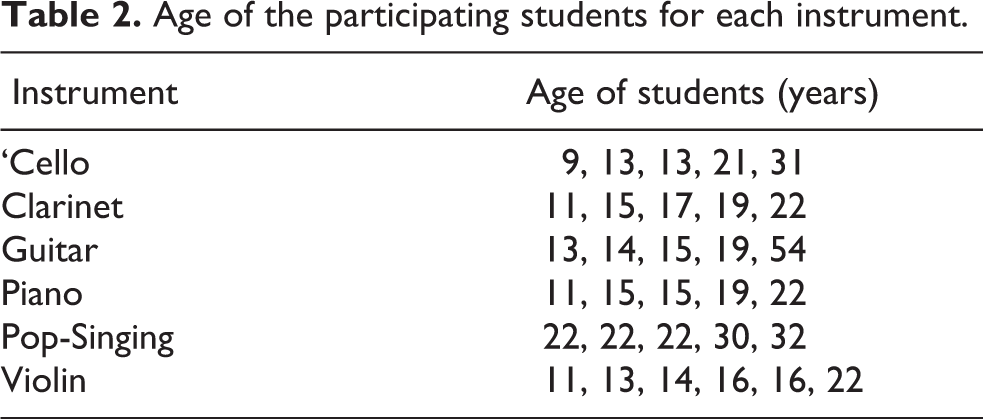
Table 2 shows the age distribution of the participating students for each instrument. The data has been anonymized through the use of codes instead of students’ names. At the beginning of the testing phase the students, or in case of minors their parents, gave informed consent. The study received prior approval by our institution. The next section of the article briefly describes the first contact of teachers with the tool, the two group discussions, and the research diary.
Age of the participating students for each instrument.
Preliminary Testing—First Contact With the Tool by Teachers (August 2019)
The first contact with the APR tool was made individually by the teachers themselves. They visited our institute to take part in a first try-out and to share their impressions on the acoustic effects of the tool. We specifically asked them to report any possible disturbing aspect of playing with acoustically transparent headphones. All teachers played short pieces in five different virtual acoustic environments. All immediately perceived huge differences between the virtual environments. The violin teacher raised the issue that playing with headphones could cause great disturbance, especially for young students, since the weight of the headphones could ruin the delicate balance between the position of head, shoulders, and arms. As a result of this feedback, the violin room was equipped with a loudspeaker system instead of headphones, to reduce additional weight. During the short conversation after the test, we talked as well about the teachers’ expectations and possible effects on the students’ practice. In the teachers’ opinion, some aspects of instrumental playing could be affected in a positive way: attention to one’s own listening, focus on body posture, simulation of a performance situation, attention to dynamics and phrasing, amplification of instrumental-specific technical issues (e.g., intonation, pedal, violin bow movement), raised awareness of public perception, and possible consequences on daily practice at home.
We considered the teachers as very attentive and motivated for the project. After these first encounters, we felt further encouraged to use group discussion and a research diary as evaluation tools that require a high level of participation and engagement of the teachers.
Group Discussion (October 2019)
The first group discussion was with the teachers, to talk about their first impression of the APR tool and their expectation for the following testing phase with the students. Each teacher mentioned specific technical issues that could be trained with the APR tool. For example, they talked about the possible reactions of a student who usually plays in a small room and then suddenly finds themself in a cathedral: would they be able to quickly change the way they play to suit different rooms? We supposed that some small changes would occur, such as different bowing movements for violin and ‘cello or changes in use of pedal for piano.
An important point in the discussion was the role of the teacher. We defined their position as a fundamental part of the research team: they would have the role of observing and noticing any change in the students’ playing when using the APR tool. Furthermore, their opinion on the tool’s didactic use would be most valuable. At the end of the group discussion we thoroughly described the research diaries and handed them out. Finally, we encouraged them to make suggestions regarding the structure of the diary, with the aim of improving it for a possible second session in the summer semester. Our goal was to integrate the teachers as a participative part in the research process. This was meant to create the necessary commitment for this kind of research.
Research Diary (October 2019 to March 2020)
At the beginning of the winter semester, the project team installed the APR tool in six rooms at the conservatory. The teachers were instructed on how to use the hardware and introduced to the software, which was immediately perceived as intuitive and simple. During the semester, the teachers had each practiced with five students and collected feedback from about five individual lessons in the practice rooms. The selection of the students was decided by each teacher individually and varied in age and instrumental progress, see Table 2. Following the methodology of grounded theory, we decided to not structure and control the way teachers chose to work with the tool. The aim was to give the teachers freedom to practice in their preferred way. Similarly, we wanted them to feel free to give us any kind of feedback. The research diary allowed us to collect the reactions and notes for any kind of development in a written form for each lesson: it contained some questions and, most importantly, space for personal notes. The questions were about how much time they spent practicing with the tool, which kind of repertoire was played, which kind of first reactions and level of motivation the students had, and if anything about the hardware was disturbing them. Furthermore, we added some keywords such as attention and concentration, intonation, body posture, dynamics and agogics, phrasing and breathing, to encourage the teachers to write about these topics. For the students we prepared some questions about their first reaction: for example, if they were curious, skeptical, surprised, excited or indifferent. They were then encouraged to write about whether the first experience met their expectations or not. In addition, for each lesson they completed a self-evaluation table covering loudness, tempo, intonation, body-movement, and level of fun while playing. They were asked to complete two sentences, such as “Today working with the tool was…” and “What else has been noticed…”. For the pop-singing class, we added some other items, such as timing, storytelling, and use of the breath. Furthermore, we introduced a recording function, that allowed listening to the recording from arbitrary positions in the room afterwards, and we added a question about this new means of self-reflection to the diary.
Group Discussion (February 2020)
The second group discussion with the teachers took place at the end of the first evaluation phase. The discussion began with a brief report on the first results that we had received from the diaries. Then, some open questions were raised, such as the kind of learning outcomes they observed, as well as developments and “aha” effects. Furthermore, we asked if the tool could be used even more efficiently and, if so, what the teachers would need and suggest.
Feedback about the research diary itself allowed us to modify its structure and to prepare a new version with more space for free annotations. In fact, the first diaries were sometimes filled out with only short notes or key words, making it difficult to always understand the meaning and context. For this reason, in the new diary students and teachers were encouraged to write no less than three whole sentences per lesson. Unfortunately, due to the closure of schools due to the Covid-19 pandemic, the second session could not be completed.
Evaluation Results
Due to the use of a grounded theory-based approach and because of the heterogeneous group of participants, we ended up with a wide range of responses and opinions about the tool. This is why we divided the analysis of the extensive data into four parts: (1) a short quantitative analysis of the data from the diaries, (2) first- and (3) second-level qualitative results, as well as (4) unexpected effects based on the data from both group discussions and the diaries.
Quantitative Results
During the semester, students practiced with the tool 5 times for about 20 minutes: the average time was 17.8 minutes, from a minimum of 10 to a maximum of 30 minutes. During the practice with the tool, they played technical exercises or entire pieces, in fact they were free to choose what to play. Most of the time (86%), the tool was used while playing pieces. The application during technical exercises occurred only in 4% of the time and in 10%, it was employed for both types of playing.
Table 3 shows the effects of the tool represented by the answers of the students and teachers. As both groups were free not to answer every question, the number of answers for each attribute varied between 62 and 107 (mean 83). For all attributes except posture, the answers significantly differ from a random distribution. Even if for most attributes the students predominantly reported no effect, the positive effects still prevailed over the negative ones for loudness, tempo (very slightly), and intonation. However, they reported moving less when using the tool. Nevertheless, they reported an increase in fun nearly half of the time, whereas a decrease in fun was reported less than half as often. Interestingly, the observing teachers reported positive effects most of the time. This is especially obvious for motivation and attention. The positive effects on intonation were reported a bit less often, but still the positive effects outweighed the negative ones by a factor of more than two.
Relative amount of answers given by students and teachers for attributes in the diary. Bold values indicate when the answers significantly differ from a multinomial distribution with 3 categories and a probability of 1/3 each, using a chi-square test for goodness of fit at a 5% level.

First-Level Results
The first-level results, directly gathered from the verbal data, are grouped into four categories.
Raised Attention for Own Playing by Enhanced Listening
In general, during the practice with the APR tool, the students’ attention and concentration were reported to be very high, especially during the first two or three lessons. Almost all the students reported a curiosity about the possibilities. This would explain why the teachers noticed a raised attention. Generally, they had to listen carefully to the sound they produced and the acoustical differences between the rooms. After a short period of adjustment, they were able to pay even more attention to the sound and to adapt their own way of playing to achieve their desired sound effect in the corresponding virtual room.
Awareness of Differences in Acoustical Environments
We noticed that all students, although at different levels and ages, have developed an awareness of differences in acoustical environments.
The ‘cello teacher reported that young ‘cellists were able to study in a more productive way with the APR tool than older students. According to the teacher, the reason could be that older students had already played several times in concert halls and perceived the virtual rooms as too exaggerated: for them, the practice with the tool was not as effective as it was for inexperienced, younger students.
An interesting fact is that during the first contact, all piano students had difficulties in perceiving any acoustical difference between the rooms. The piano teacher reported that for this reason they subsequently practiced in the biggest virtual room, the cathedral, to try to get some reactions. After the second and third lesson, the students had raised their awareness, reporting that the cathedral had even too much reverberation. For example an 11-year-old student played at the beginning of the experience with a clearer phrasing than usual, but at the same time the number of wrong notes had increased in the virtual space. A possible reason is that she consciously listened more than usual to her sound, and this may have confused or distracted her, which led to more mistakes. In this particular case, the student needed more time than others to get used to the tool. Thus, the learning outcomes consisted not only in reacting to different acoustic environments but also to get used to listening more while at the same time playing correctly.
The violin teacher reported that a student played in the biggest virtual room in a very careful way. As a result of the raised attention, the dynamics and intonation turned out to be not as precise as usual. After two lessons the intonation increased in precision again. After a short period of adaptation, the student began to react faster to different acoustics. The perception of the produced sound in the different virtual rooms was significantly enhanced after five lessons.
Pop-singing students have been an important source of data, as they are used to practicing with a microphone and amplification: they were able to give precise feedback, because of their increased level of expertise with acoustic tools. The research team prepared the virtual rooms to meet their needs (e.g., an open-air acoustic). Unlike the other students, they did not start testing the tool until January as the research team needed time to prepare a recording function on the software with which the students could record themselves, with the purpose to analyze their performance. In fact, the teacher reported that this type of practice gave them the opportunity to increase perception on their “on” and “off” the stage voice: they could hear themselves as they were on the stage or in the audience. He noted as well that the possibility of confusing the ears and trying out the effects of positioning the microphone in different rooms provided a great enrichment for the lessons.
Noticing Possibilities of Reaction of Own Instruments in Different Acoustical Environments
The different types of instrumentalists involved in the project allowed us to collect a wide palette of feedback, with regard to the specific technical issues (e.g., bow movement, pedal, breath).
As mentioned before, at the beginning the pianists had difficulties in perceiving the different room acoustics. For this reason, they tried to modify their usual playing, to better perceive the differences between the rooms. In general, the use of the right (sustain) pedal allows pianists to modify the sound. During the APR experience, some students had a tendency to play with less or without pedal. For the same reason, they played also less legato, trying to limit the reverberation of the piano and perceive the effects of the APR tool. After two or three applications they could hear the differences between the rooms very clearly. They had most probably amplified their perception of the sound and naturalized their reactions to the acoustic environments.
For the violinists, the different acoustics had effects on the use of bow and on intonation. One violin teacher wrote in her diary that one student’s intonation improved after the second lesson with APR. She got used to the small room and, as a consequence, the bowing became more relaxed. During the third lesson, the student wrote that she should practice playing in a larger hall with fewer bows, to achieve a “better” sound. For another student, the teacher noted that after three or four applications she had improved in controlling the bow contact. She was able to play “into the strings” and take this “good” sound from the concert hall into the small room.
The ‘cello teacher pointed out that for all five students’ intonation was at the beginning highly uncertain. Speaking of singular cases, she noticed that one student had more intonation problems and worse bow control in the big room than in the small one over all the five lessons. An explanation could be that the reverberation of the big room prevented a clear perception of the sound and therefore of one’s own intonation. Another student improved during the following application of the tool. One explanation could be that students focused more on themselves, they learned to listen to their own playing and therefore improved their intonation.
Singers have to deal not only the correct intonation, but also the use of breath. The pop-singing teacher reported that from the first experience with the tool, a student used her breath more efficiently and get an idea of how to affect the audience.
Impact of Room on Emotional State
In general the students were very curious about the APR tool. This had positive consequences; in fact teachers noted from the first approach with the tool an increased attention on their own sound and the acoustic consequences in different rooms. This was not the case for the guitar and piano students. The guitarists had a technical problem with the microphone and pianists needed more time to get used to the augmented rooms acoustics. For these two groups of students, the technical problems had consequences on their motivation, thus on their emotional state.
Teachers did not notice only positive emotions related to the experience. Adjectives such as “annoyed” and “irritated” were written in some diaries. The question still remains as to whether these types of reactions were directly related to the experience with the tool or not. An interesting point was made by the ‘cello teacher, that when external influences, such as headaches or a general state of strain, were present during the lesson, the experience with the tool was perceived as highly stressful.
Second-Level Results
The second-level results emerged as consequences from the first-level results. They were not classified as derived directly from the first phase of testing, but as additional results, which could be explored in more detail in a future study.
Impacts on Preparation for the Concert Situation
A topic during the group discussion was the possibility of using the tool to simulate the concert situation. Teachers pointed out that practice and concert preparation are very different situations. As the pop-singing teacher noted, students need to practice for a concert in a so-called “performance mindset” that has to be distinguished from “practice mindset”. Broomhead et al. (2018) describes the effects of mindset-oriented instructions, indeed an “expressive performance mindset,” to help singers put into play their expressive skills. Working with APR was considered useful for giving the teachers the opportunity to explain the characteristics of the appropriate mindset, in order to simulate both performance and practice mindsets.
Another example concerned a violin student, who feels very comfortable on stage and who played in the big room as if he was actually in a concert situation. The teacher then explained that it was class time and that they weren’t doing a concert and he should concentrate on what he was actually supposed to be doing. The teacher had taken advantage of the practice with the APR tool to deepen and clarify the different ways the students have to play and perform during practice and performance situations, respectively.
Unexpected Effects
By using a new tool during instrumental lessons and asking students to express their thoughts and feelings, we found that some students took the occasion to speak about their lives and general emotional states. For example, during ‘cello lessons students answered the question “what else has come up or been on your mind” with “I need more time for practice,” “University stress,” or “the Christ child.” In that situation they probably felt free to express their state of mind or their concerns, because of the diary. The possibility to write down their impressions and opinions on a white page may have stimulated them to open up and talk about things that affect their lives in general. This could be an interesting starting point to consider a diary as a practice tool.
Uncollected Data
We obtained too little data from the clarinet and guitar class to investigate developments about the repeated application of the tool. The clarinet teacher reported that the headphone cables prevented the students from moving freely and playing naturally: this made students reluctant to use the tool frequently during the semester. The guitar class had some technical issues with the microphone that sometimes prevented the tool from working properly. Finally, some ‘cellists were disturbed by the presence of the microphone, which, as they reported, altered the sound of the instrument. This made the lesson with the tool uncomfortable, and the notes on these lessons very scarce.
Discussion
After the quantitative analysis of the tool’s effects and the in-depth description of first- and second-level results, we can summarize the outcomes in a model of four dimensions for describing the impact of the tool: musical; attentional; technical; emotional.
The first dimension describes the impact of the tool on musical expressiveness, as, for example, phrasing, dynamics, agogics, and tempo. The APR tool became a fundamental tool to experience this while physically being in a small practice room with a very dry acoustic. With the exception of the clarinet and guitar classes that sometimes had some technical problems, the students were able to take advantage of the practice with the tool and experience the influence of the virtual room on their playing.
The second dimension is closely related to the first dimension. From the very beginning, students and teachers reported a general raising of attention towards their own sound. This can be explained with the phenomenon of arousal, defined as a general state of physiological and psychological activation, probably due to the new experience with APR, in this particular case.
The third dimension describes the effects on instrument-specific technical issues. For example, violinists and ‘cellists normally have to pay huge attention to intonation and bow technique. The amplified acoustic changes in the APR environment gave them the opportunity to manage the sound in different virtual rooms, indeed paying even more attention to intonation and bowing movements. A similar reaction was experienced by pianists that had to change the way they used the right pedal, to adapt the sound to different rooms. Even if only for a very short time, the automatic use of pedal was deconstructed, and this made the student aware of the effects of pedal automatism in relation to different room acoustics.
The last dimension describes the impact of the tool on the emotional state. Curiosity and excitement that almost everyone had reported, had a huge impact on the attention and concentration level showed during the lessons. On the other hand, for a small group of ‘cellists, clarinetists, and guitarists the discomfort of the tool has negatively influenced the perception of the experience: teachers reported that they were annoyed by the situation.
In addition, all these four dimension are closely related and complement each other. A type of emotional reaction has consequences in the way the student perceives different acoustics, and this affects the way he or she changes the way of playing, in turn. The same phenomenon can be thought of in reverse.
Conclusion
The goal of the Augmented Practice Room project was to develop an e-learning tool to give musicians the experience of practicing in different virtual rooms, such as a concert hall or a church, while physically being inside a small practice room. The tool has minimum hardware requirements, runs on standard computers, and is available from the project website for free. Teachers and students from the Conservatory of Graz tested the tool during the winter semester 2019/20. Using grounded theory, we gathered as much feedback as possible. As evaluation methods, we decided to use group discussions and a semi-structured diary. The data analysis showed that the tool has been generally received positively. While, except for increased fun, the students reported no significant effects of the tool, the teachers observed significant effects on their students’ playing. A four-dimensional model emerged from the results: In detail, the new developed e-learning tool had an impact at a musical (changes at level of dynamics and phrasing), attentional, technical (instrument-specific technical issues), and emotional level.
From our results, the use in teaching situations can be derived. As in any teaching and learning processes, the learning outcomes have to be clarified. Raised attention towards one’s own playing could be one possible learning outcome, as well as raising awareness of differences in acoustical environments and the student’s corresponding reactions when playing their instrument. The possibility to differentiate their own playing for rehearsal or concert situations is another possible learning outcome. A very important function of the tool is the option of recording the practice session and listening to the outcome. For didactic use, teachers have to apply good coaching and feedback techniques, such as leading questions. The possibilities for teaching and learning situations are published on the project website.
A further application of the tool with a revised research diary and the recording option for all instruments could not be done in the course of the project because of restricted access to schools due to the pandemic. Long-term effects of the tool could be part of future research. Moreover, the approach of augmented acoustics could also be used to study the impact of room acoustics on musicians’ interaction when playing in an ensemble.
Footnotes
Acknowledgements
The authors thank all students and teachers for their participation in the project.
Contributorship
NK and LD researched literature and conceived the study. NK, LD and MF was involved in study design, gaining ethical approval, participant recruitment and data analysis. NK wrote the first draft of the manuscript. All authors reviewed and edited the manuscript and approved the final version of the manuscript.
Declaration of conflicting interests
The authors declared no potential conflicts of interest with respect to the research, authorship, and/or publication of this article.
Funding
The authors disclosed receipt of the following financial support for the research, authorship, and/or publication of this article: This work is supported by the project Augmented Practice-Room (1023), which is funded by the local government of Styria via Zukunftsfonds Steiermark (future fond of Styria).

Note
Peer review
Stefania Serafin, Aalborg University, Department of Architecture, Design and Media Technology.
Alexander Carôt, Hochschule Anhalt, Informatik und Sprachen.
Action editor
Claudia Fritz, Sorbonne Université, Institut Jean Le Rond d’Alembert.