



Abstract
More than one year since its coup, the Myanmar military has neither established effective control of the territory nor crushed online dissent. What factors have enabled the resistance forces to deny the consolidation of military rule? We address this question by building a novel theoretical framework that incorporates the role of long-standing digitalized pro-democracy activism and by conducting a mixed methods analysis that includes an original, largely representative sample of public Facebook posts in post-coup Myanmar. We find that the development of online and hybrid pro-democracy activism against digital abuse and other illiberal policies under previous quasi-civilian governments enabled anti-coup resistance forces to thwart the military's attempt at authoritarian revival in 2021. Our research findings deepen understanding of Myanmar's post-coup contestation dynamics as well as other cases of unpopular autocratization in the digital age.
Keywords
Introduction
A military coup in February 2021 against Myanmar's popularly elected NLD-led government threatens to reverse years of political liberalization. Along with indiscriminate ground assaults and airstrikes against civilians, General Min Aung Hlaing's State Administration Council (SAC) also attempted to throttle the country's online civic space. Nonetheless, more than one year since the coup, the SAC has neither established effective control of the territory nor crushed online dissent. Various cross-cutting anti-coup resistance efforts have proliferated nationwide, including street protests, a civil disobedience movement (CDM), an opposition parallel government (National Unity Government, NUG), guerilla armed attacks (People's Defense Forces, PDFs), and escalating attacks by existing ethnic armed groups. These dispersed yet tenacious campaigns have resulted in dysfunctions of the SAC's governance, casualties of its security forces and civilian administrators, and rising defections among its ranks (Faiola, 2022; Horsey, 2022; Peter, 2022).
What factors have enabled the resistance forces to deny the SAC's takeover, both online and offline? We scrutinize the Burmese-language digital media environment before and after the coup to demonstrate the role of digitalized resistance in countering efforts to consolidate military rule. In the current digital era, political actors’ competing efforts to shape and take advantage of social media's affordances affect political outcomes on the ground. We argue that pro-democracy activists’ sharpening of digitalized capacity prior to the coup enabled the anti-coup resistance forces to harness social media in order to disrupt democratic backsliding. We substantiate our argument with a secondary analysis of the Myanmar military's and pro-democracy activists’ repertoires before and after the coup, as well as a mixed methods analysis of an original, largely representative dataset of public Myanmar Facebook posts during a three-month period following the coup. We find that the SAC could not strangle the online civic space, nor did its attempt to spread its narratives effectively counter Facebook-based resistance. Indeed, pro-resistance content not only proliferated, but also evolved dynamically to serve mobilization needs on the ground.
Significance to democratic backsliding and digital activism literature
Our article contributes, first, to a more nuanced understanding of the role of the Internet as liberation technology by carefully scrutinizing the conditions under which pro-democracy activists can harness the Internet to facilitate regime-destabilizing resistance. Early research on the Internet and protests argues that “activists can utilize Internet technology to interact with other like-minded people online” in order to “spread information about planned events widely without relying on an existing organizational structure” (Weidmann and Rod, 2019: 22). This research demonstrates that the Internet allowed Arab Spring dissidents to raise greater awareness of shared grievances through emotional images (Fisher, 2011). Most of this research argues that very little prior organization was required for Internet users to mobilize destabilizing resistance (Howard and Hussain, 2013; Ruijgrok, 2017; Tufekci and Wilson, 2012).
Our article refocuses this question in the context of resistance to democratic backsliding in 2021 as opposed to during the Arab Spring movements against closed authoritarian regimes 10 years earlier. Although pro-democracy activists in Myanmar's post-coup context had more space to organize online prior to the military coup than Arab Spring activists, they face autocrats who have learned from the past and updated their capacity to respond to digital resistance. Hence, success depends not only on access to the Internet, but also on the activists’ prior organizational capacity to counter advances in digital repression. This perspective is important in assessing to what extent pro-democracy activists can stave off the ongoing global authoritarian turn.
Second, our study provides further insight into how pro-democracy activism unfolds in the digital age by identifying strategic adaptations by both autocrats and their challengers. Existing studies on contention under authoritarianism have mostly focused on one-sided tactics in taking advantage of social media tools (Bradshaw et al., 2021; King et al., 2017; Little, 2016; Margetts et al., 2016; Steinert-Threlkeld, 2017). As a result, Hussain (2018: 208) encourages further investigation into how both sides continuously compete to “reengineer” the “political affordances” of technologies. We heed such a call in this article by uncovering both pro-democracy activists’ digital innovations and autocrats’ adaptive efforts to counter resistance online.
Finally, our article contributes to a deeper understanding of democratic backsliding and breakdown in the digital age. While democratic backsliding is a process of “incremental within-regime change” with regard to deterioration in democratic governance (Waldner and Lust, 2018: 95), democratic breakdown (Bermeo, 2016; Svolik, 2015) consists of a sudden termination of elected officials’ governing power and an effective suppression of a wide range of political freedoms. We interrogate the degree to which a blatant military takeover can manage to impose dictatorial rule over a digitally connected society. Our findings suggest that it is increasingly difficult for military coups to succeed when digitally savvy resistance forces are determined to maintain their democratic institutions and freedoms.
The scope of our argument extends to cases where governments have a more targeted as opposed to abroad-based repertoire of digital repression. Research on digital authoritarianism differentiates between two broad types of repression: control vs. channeling tactics (Diebert and Rohozinski, 2010; Earl et al., 2022; Roberts, 2018). While most authoritarian governments engage in both types, the scale at which governments do so varies—leading to a more targeted versus broad-based repertoire of digital repression (Table 1).
Targeted versus broad-based digital repression tactics.
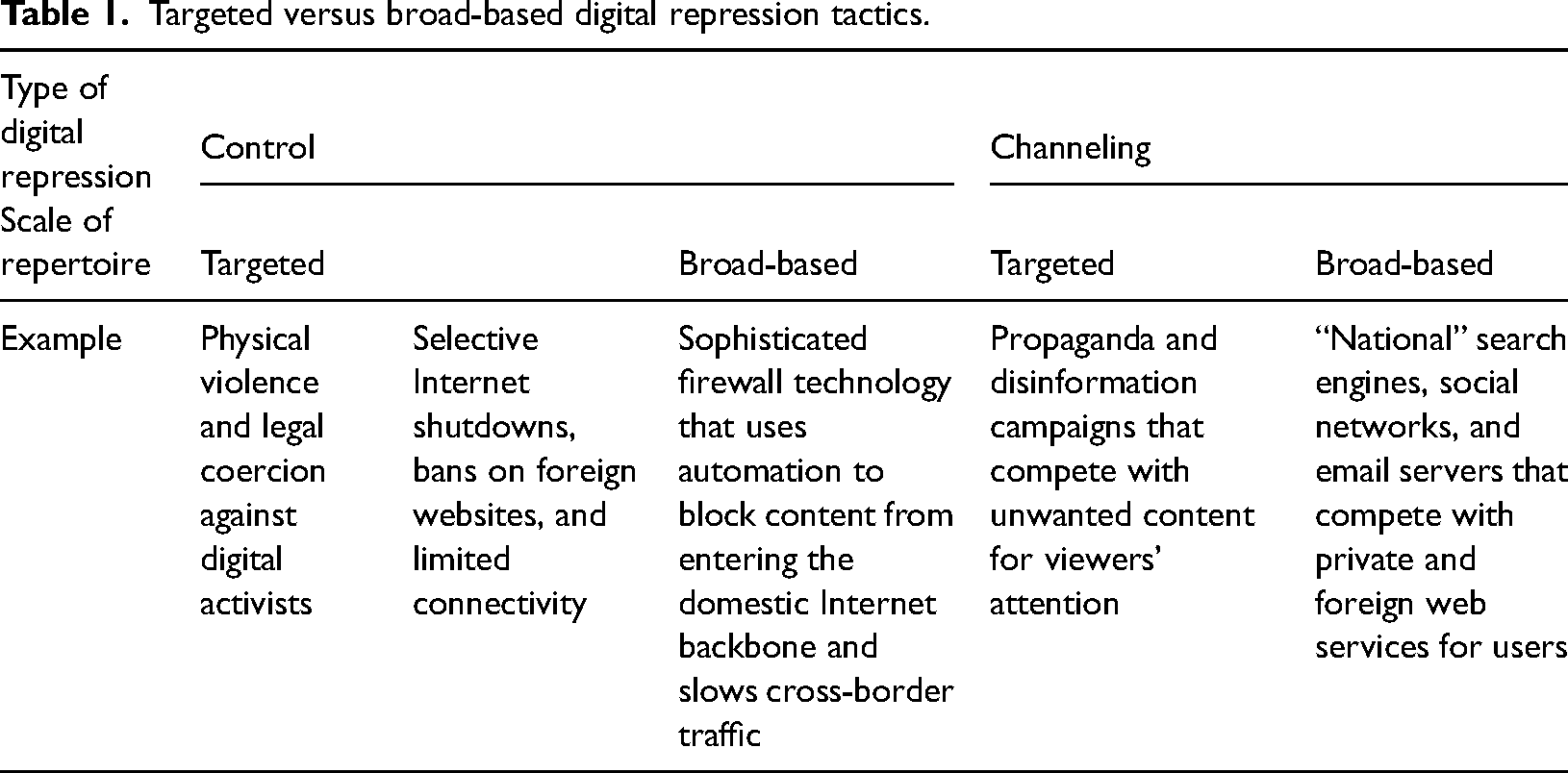
Targeted control tactics are primarily reactive to content that has already entered the country's Internet backbone, including surveilling the web and banning or removing unwanted content, occasionally entire platforms, or temporarily shutting down the Internet. Targeted channeling tactics include flooding the Internet with either disinformation or distracting content to compete with content that threatens regime stability. A broad-based repertoire, on the other hand, uses a more sophisticated system to both control and channel digital information. Regarding control, automated filtration technologies allow governments to identify and prevent large volumes of unwanted Internet content from reaching the majority of netizens, by designating forbidden keywords and URLs at the gateway between foreign and domestic web traffic (Human Rights Watch, 2006). Broad-based channeling tactics compete not only with threatening content but also with foreign websites themselves through the creation of “national” versions, such as China's WeChat and Russia's Yandex.
Consequently, in a country where authorities have the capacity to engage in broad-based digital repression, prior experience in digital activism may lead to some victories, but the scale of the regime's digital repression would make regime-destabilizing contention highly unlikely. In contrast, in contexts like Myanmar where the scale of repression is more targeted, our research demonstrates the possibility of digitalized activism in denying a complete autocratization by traditionally powerful political actors.
In the next section, we present a secondary analysis on the development of digitalized pro-democracy activism in Myanmar. We then introduce our key theoretical propositions. This is followed by a presentation of our dataset and mixed methods empirical strategy. Then, in our data analysis section, we develop more nuanced, empirically informed insights. Finally, we conclude and suggest future research directions.
Authoritarianism and pro-democracy activism in digitally connected Myanmar
Pro-democracy activists sharpening their digital tools against authoritarianism
Due to Myanmar's political and economic liberalization during 2011–2020, the country experienced a digital leapfrog. While most of the population of 50 million did not own a mobile phone before 2010, half of the Myanmar population subscribed to a mobile phone network by 2018 (Oak and Brooten, 2019). Subsequently, the number of monthly active Facebook users jumped from 20 million in September 2018 (NapoleonCat, 2018) to almost 29 million in January 2021 (NapoleonCat, 2021a). Research shows widespread adoption of Facebook across socio-political groups, which use the platform to get news, share opinions and grievances, broadcast political agendas, and engage in social debates (Whitten-Woodring et al., 2020). Dissidents in Myanmar, thus, had access to a large audience of potential supporters on platforms outside the reach of the state's security apparatus and regulatory jurisdiction before the 2021 coup.
Successive Myanmar governments concurrently developed digital tactics and tools to control threatening online content. However, the state had neither the resources nor the political incentives to replicate the draconian model of China's “Great Firewall,” which requires not only restricting access to the global Internet, but also developing an ecosystem of local applications and actively censoring local content (International Crisis Group, 2021). Ahead of the 2020 elections, the authorities prosecuted hundreds of Facebook users under Section 66(d) of the Telecommunications Law, largely charging them for content that mocked or scorned General Min Aung Hlaing (Aung and Htut, 2019; Oak and Brooten, 2019). Moreover, from mid-2019 to early 2021, the Ministry of Transport and Communications ordered mobile phone operators to shut down Internet connections in various conflict-ridden townships in western Myanmar (Kyaw Hsan Hlaing and Fishbein, 2021). In early 2020, the government also sought to silence independent media and contentious voices by ordering telecom companies to block more than 200 websites (Nyan Hlaing Lin, 2020).
The Myanmar military further built up capacity in abusing social media to spread disinformation and harass marginalized ethno-religious communities, anti-government activists, and independent journalists. A few years before its notorious 2017 “clearance operations” in Rakhine state, which led to hundreds of thousands of casualties and displacements among the Muslim Rohingya population, the military formed a task force with the sole purpose of setting up sham Facebook pages as anti-Muslim propaganda channels (Mozur, 2018).
In response, pro-democracy activists and sympathetic tech communities launched multiple training programs and advocacy campaigns targeting social media companies, government authorities, and Internet users to bolster Myanmar's democratic integrity. Many of their digitalized strategies would later become adopted and refined among anti-coup activist groups in 2021. In terms of mobilizing tactics, according to Htaike Htaike Aung and Wai Myo Htut (2019: 369) and Palatino and Cebu (2018), activists formed a Telecommunications Law Research Team in 2016 and later launched an online campaign with a prominent hashtag #SayNOto66d to call for reforms of 66(d). Moreover, to call for an end to Internet shutdowns in western Myanmar, a coalition of activist groups organized a multi-year hybrid campaign, combining offline and social media activism with the hashtags #StopInternetShutdownMM and #KeepItOn (Freedom House, 2020). In another example, Athan, an activist group dedicated to promoting freedom of expression, started publishing periodic online reports on threats to media freedom in 2018 and used social media to livestream their rallies to both domestic and international audiences (Palatino, 2019) (Figure 1).
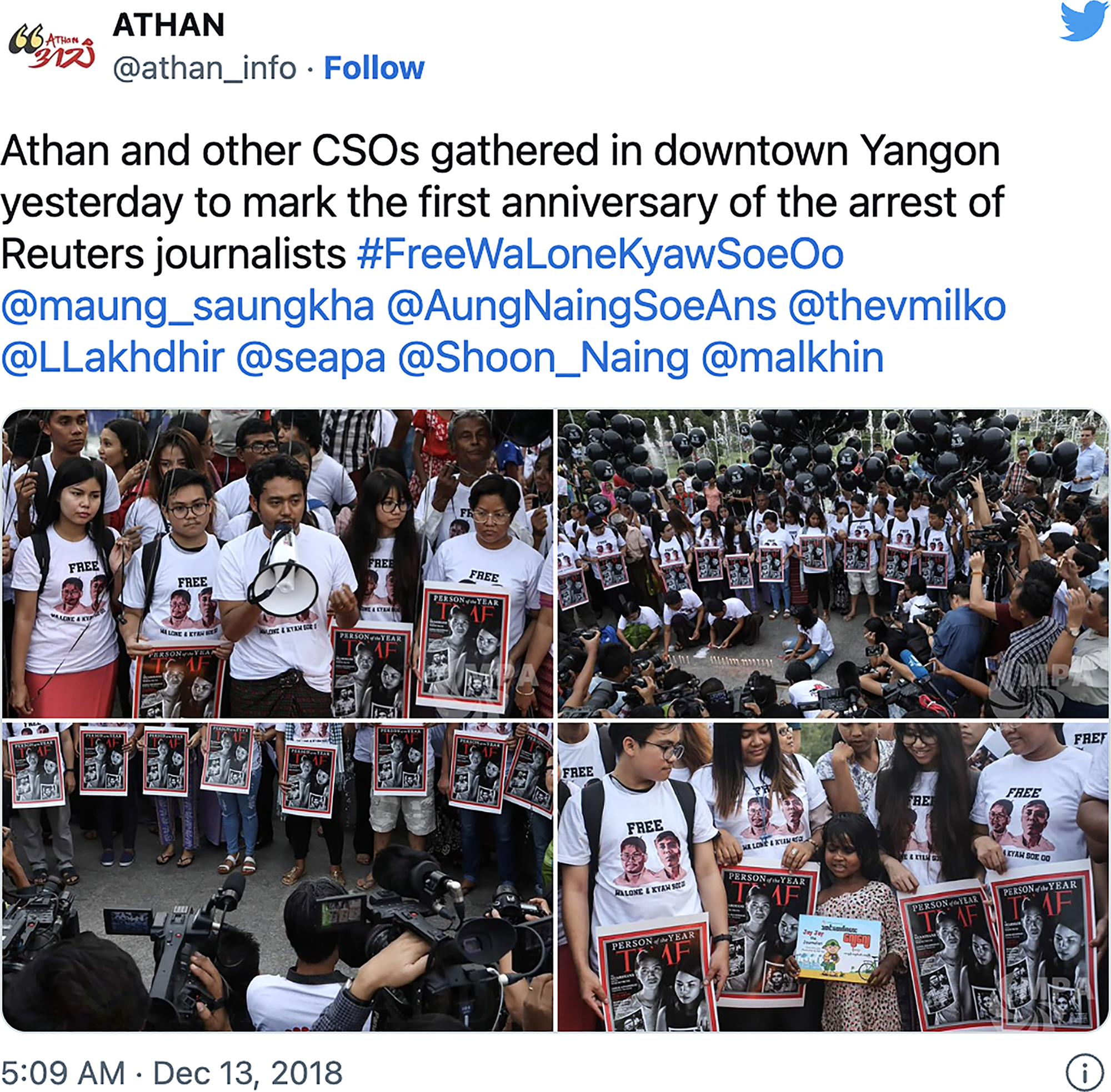
Athan's Twitter account using a hashtag and tags to promote its rally in real time toward international journalists and audiences in 2018.
Moreover, journalists and activists built up their digitalized experience in verifying and debunking political disinformation. During election periods and in the aftermath of the Rohingya crisis, multiple fact-checking campaigns began to establish their official presence on Facebook and open their own websites to widely disseminate verifications of harmful rumors in a timely manner (Figure 2). In addition, to evade military surveillance, digital rights organizations held training sessions for independent journalists on digital security and privacy to enable safe reporting of contentious issues, including state violence against non-Bamar groups such as the Rohingya, Rakhine, Kachin, and Karenni. These journalists and activists then started to experiment with using VPNs and secure messaging apps such as Signal to communicate and coordinate internally.
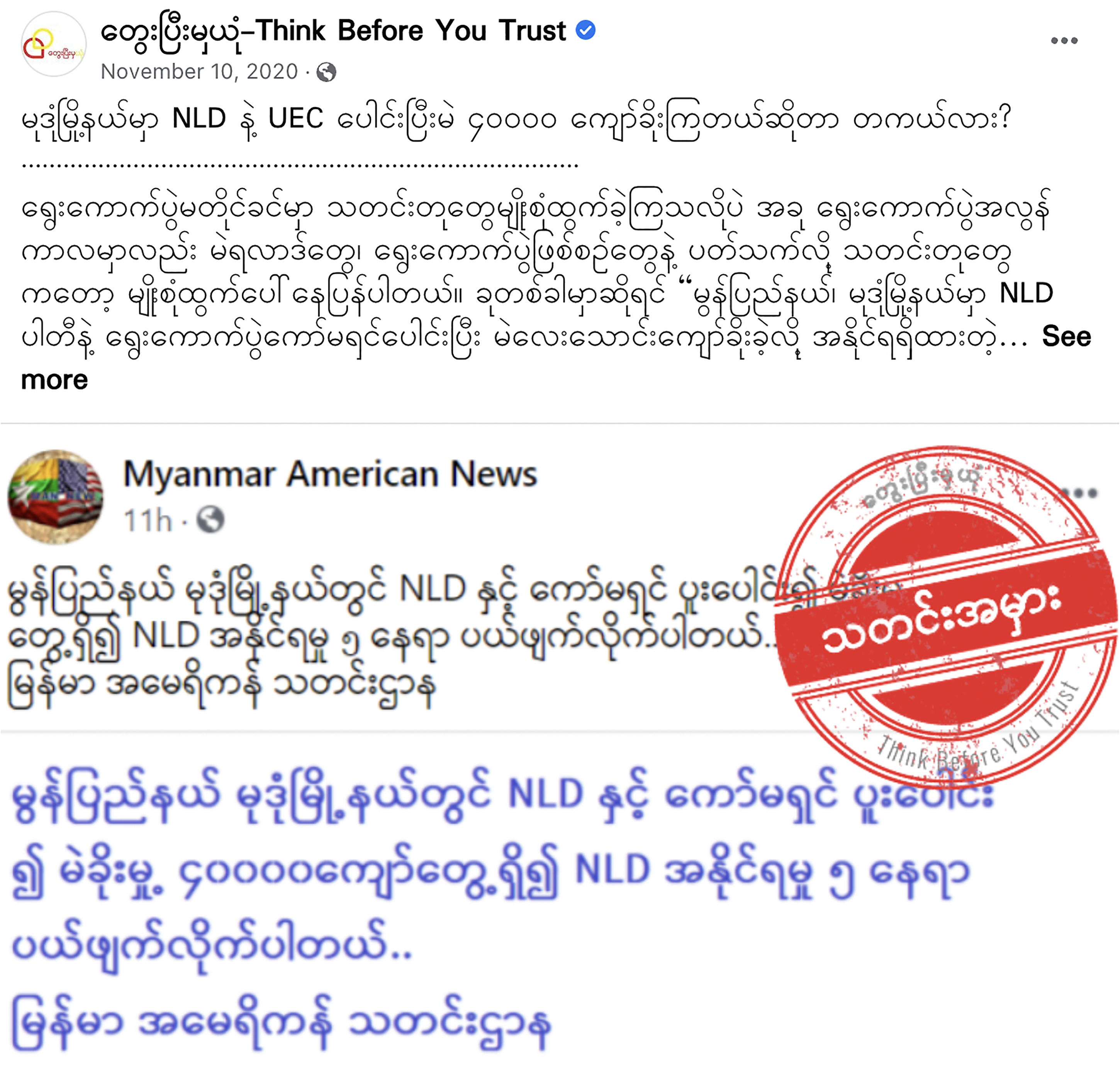
Facebook post by the Think Before You Trust campaign in November 2020 to immediately debunk the military's baseless accusation of electoral fraud by the NLD-led government.
Furthermore, Myanmar's digital rights community accrued extensive experience in advocacy toward social media companies for removal of abusive content. To combat the military's coordinated disinformation campaigns, Myanmar's digital rights activists successfully pressured Facebook to improve its moderation of Burmese-language content. Responding to their open letter in early 2018 and repeated calls for action, Facebook increased its Burmese-speaking staff, set up a dedicated country team, launched its own digital training programs across the country, and adapted its content removal criteria and escalation mechanisms to Myanmar's changing socio-political risks (Htaike Htaike Aung and Wai Myo Htut, 2019; Oak and Brooten, 2019). Despite ongoing issues, the platform's notable improvement and willingness to engage with local stakeholders has made it a safer online environment for marginalized groups and dissidents, compared to Google, Twitter, TikTok, and Telegram (Stecklow, 2018).
As these collective efforts flourished, the digital rights community launched their annual Myanmar Digital Rights Forum (MDRF) starting in 2016 to reflect and innovate upon their practical experiences. With large-scale participation by government agencies, civil society, businesses, tech companies, and international organizations, MDRF was considered “the largest digital rights forum in Southeast Asia” (Pacia, 2020), enabling generative discussions on Internet shutdown in Rakhine and Chin states, hate speech and disinformation, threats to freedom of expression online, and cybersecurity (Myanmar Times, 2020). Overall, learning by doing before the coup was crucial for these pro-democracy activists to sharpen their digital repertoire, which they repurposed later to promote anti-coup resistance.
Social media as digital battlegrounds after the coup
Almost immediately following the military takeover on February 1, people took to Facebook and Twitter to amplify the visibility of protest activities (Jordt et al., 2021; Phyu Phyu Oo, 2021; Radio Free Asia, 2021). Moreover, protesters and independent media used social media to expose military corruption, counter-mobilization strategies, and violent crackdowns against peaceful protesters in order to generate outrage and motivate retaliation both domestically and internationally (Jordt et al., 2021; Prasse-Freeman, 2023). Due to increasing pressure from local civil society, Facebook also took down military-linked pages and accounts on its platform within weeks of the coup (Milko, 2021).
In response, the SAC aggressively ramped up online repression. Yet despite now having the incentive to impose broad-based censorship similar to China's “Great Firewall,” the SAC's limited financial, human, and technological resources required resorting to the “bluntest of censorship instruments to stifle opposition,” ordering night-time Internet outages, banning prominent social media sites, and enacting a draconian cybersecurity law (International Crisis Group, 2021: 14). Accordingly, the number of Facebook users detected from Myanmar plunged from 28 million in February to 10 million in April (NapoleonCat, 2021b, 2021c). Moreover, many users, both well-known figures and ordinary users, who were found to use VPNs or post dissident content were arrested (Freedom House, 2021c). SAC agents began to migrate to less-regulated platforms such as TikTok, VK, and Telegram to coordinate counter-mobilization campaigns and threaten resistance members and supporters (Nachemson, 2021).
Having anticipated the SAC's actions, digital rights activists on the first day of the coup disseminated a “Risk Mitigation and Management Guide” on social media to help Internet users prepare for potential restrictions on access to information and communication, risks of surveillance, and risks of arrest (Mette-Starke, 2021). Despite the military's post-coup ban on Facebook, the availability of free VPNs allowed dissidents to circumvent the ban, and the dependence of the Myanmar population on Facebook as a mode of communication before the coup incentivized broad VPN usage. Three days after the coup and immediately following the Facebook ban, VPN demand in Myanmar increased by 7200% compared to the average of the seven days prior (Migliano, 2022). As a result, the resistance forces were still able to communicate with a relatively broad audience for anti-coup mobilization. Such groups have since continued to actively utilize public social media platforms and secure messaging apps for countering military narratives, sharing information (Jordt et al., 2021), and promoting desertion of junta soldiers (AFP, 2022).
In the next section, we present theoretical propositions to highlight how the repurposing of pro-democracy activists’ pre-coup repertoire plays an important role in impeding post-coup democratic breakdown.
Theoretical propositions
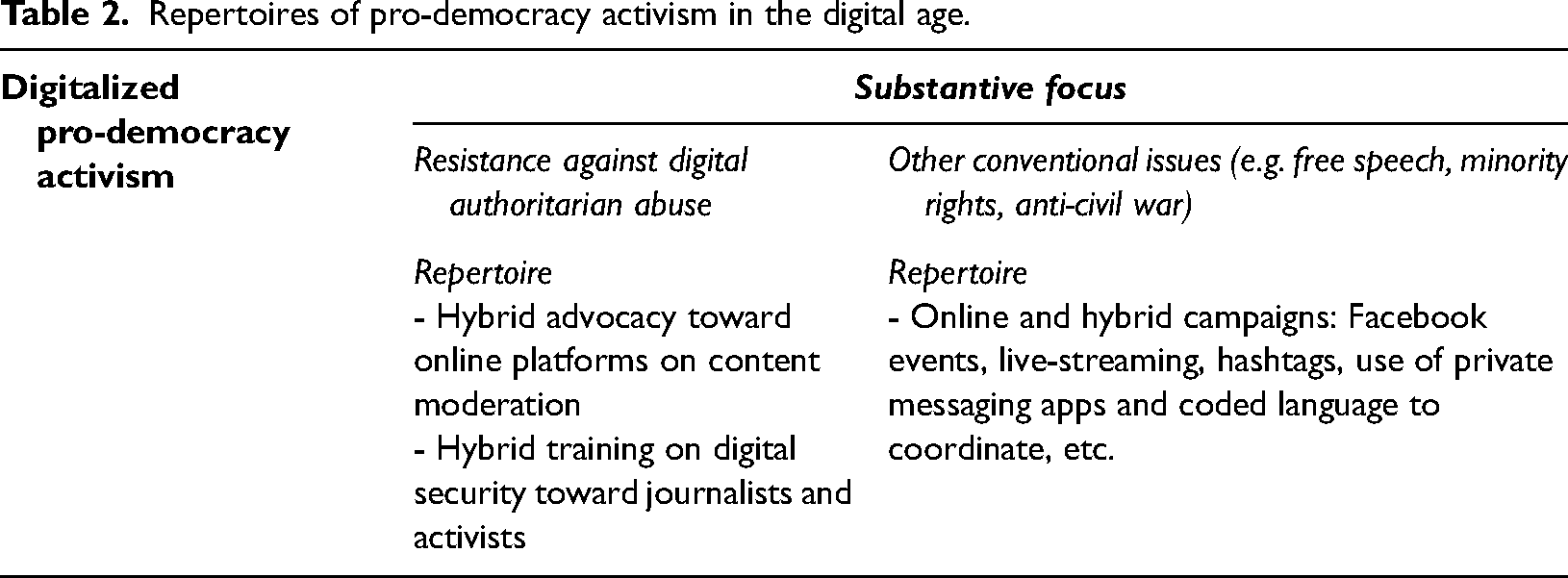
Compared to activism before the digital age, we argue that digitalized pro-democracy activism (a) predominantly adopts digitally secure repertoires (either online or hybrid) and (b) includes a new substantive issue: resisting digital authoritarian abuse (Table 2). This leads to two new strategies: (i) advocacy toward online platforms to actively remove authoritarian propaganda and (ii) training activists and journalists on how to securely access and use online tools despite governments’ digital restrictions and surveillance.
Repertoires of pro-democracy activism in the digital age.
During 2011–2020, Myanmar was one of many states that exhibited some liberal traits, with regular popular elections and a relatively free press, yet still practiced targeted repression toward certain contentious challengers. In these cases, we propose that dissidents’ development of digitalized capacity against such repression allows them to impede major attempts at democratic backsliding or autocratization later on, by refocusing and tailoring their well-tested digitalized repertoires. Particularly, the pre-existing experience enables activists to effectively employ social media tools to mobilize resistance, conduct platform advocacy against authoritarian propaganda, and organize efforts to circumvent digital restrictions and repression through tactical innovations. Figure 3 presents our framework in visual form.
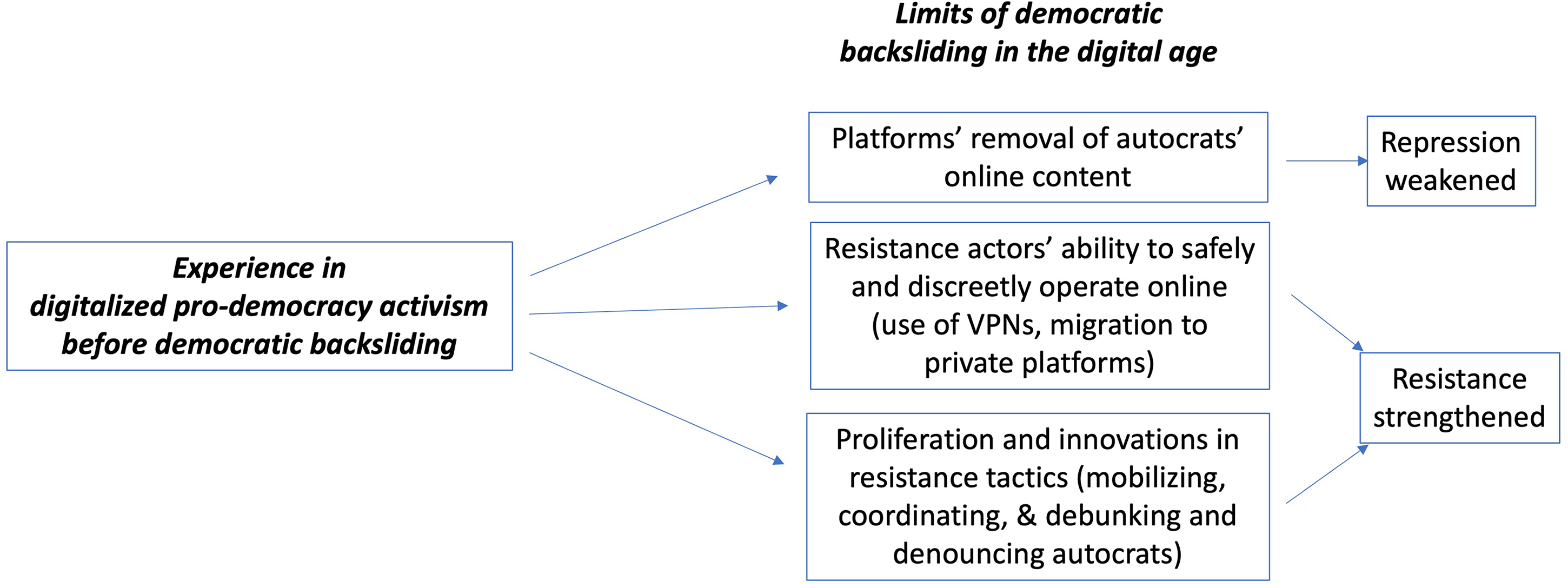
Causal mechanisms linking pro-democracy activists’ pre-existing experience with limits of democratic backsliding in the digital age.
Three interrelated causal mechanisms underlie this relationship and lead to the observable implications of our theory. In the Myanmar case, the first two mechanisms link the existence of a multi-year digital rights movement before the coup with a safe and conducive digital environment for anti-coup resistance. First, pre-coup efforts by the digital rights community to help Facebook better detect violating content allowed Facebook to effectively remove official military pages and a large proportion of pro-military content shortly after the coup. Second, digital rights activists provided training on digital security to other groups of pro-democracy activists and independent journalists prior to the coup. After the coup, these activists and journalists applied similar digital security practices and knowledge to the resistance, such as using VPNs and migrating to safer and more private platforms, to maintain privacy and evade both repression and surveillance (Chandran, 2022; Mette-Starke, 2021).
The third mechanism links the pre-coup expertise in online and hybrid campaigns among different circles of pro-democracy activists with the dispersion and innovations of anti-coup resistance tactics. A wide range of online strategies before the coup includes mobilizing and coordinating using discreet expressions and encrypted tools as well as debunking the military's disinformation and denouncing its atrocities. After the coup, such experience in online activism would spread to other pockets of dissent across the country through either direct learning or indirect mirroring, as theorized in existing literature on protest diffusion (Bunce and Wolchik, 2011). Hence, based on these three mechanisms, the pre-coup development of digitalized pro-democracy activism played a crucial role in enabling a disruptive and resilient grassroots resistance against a revival of military rule.
Data and methods
To examine our propositions, we collected Burmese-language posts from public pages and groups by using CrowdTangle, a social media monitoring platform owned by Meta. On a daily basis, we pulled the top 20,000 of the previous day's posts, ranked by total interactions (including reactions, comments, and shares). Despite its lack of coverage for non-text posts and minority languages in Myanmar, this method comes closest to obtaining a random sample of the country's public Facebook content.
Our analysis is based on a random sample of 5200 Facebook posts during March–May 2021. Almost half of the posts are page posts (45%) and the rest are group posts (55%). Just over half (51.5%) of the content is related to the military coup. Posts each gathered between zero and 2000 interactions (Figure 4).
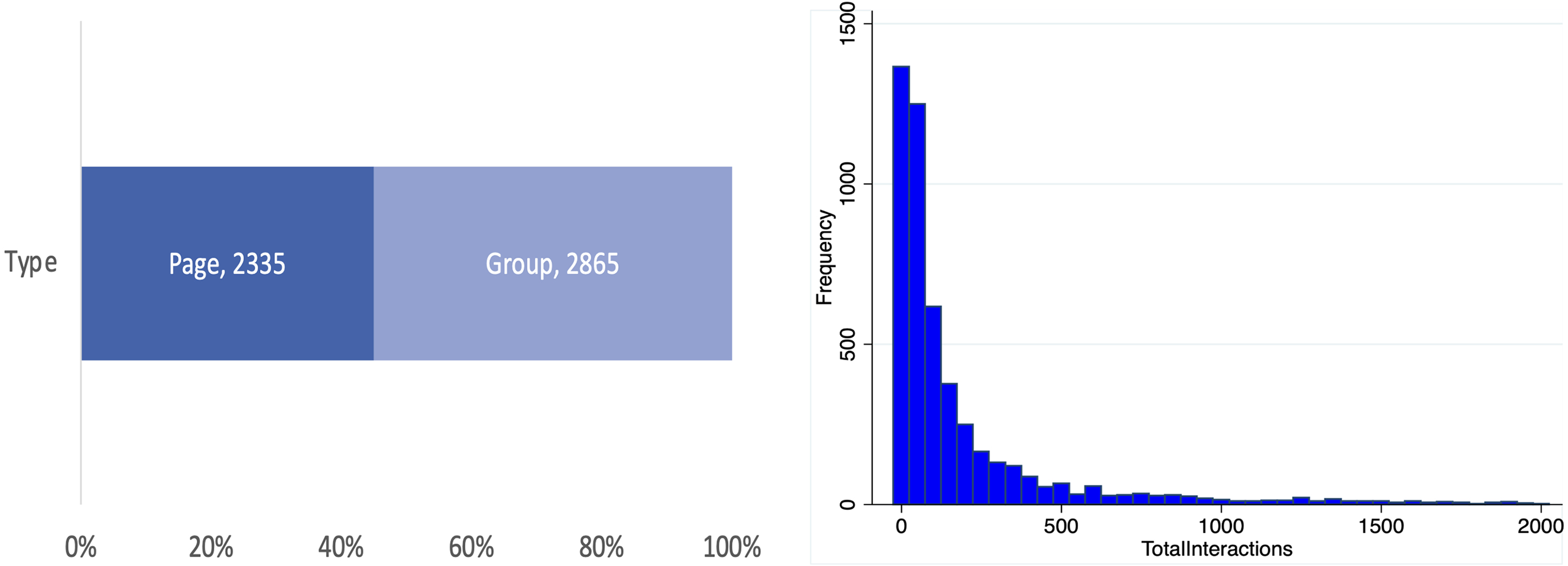
Distribution of Facebook posts’ type and interactions.
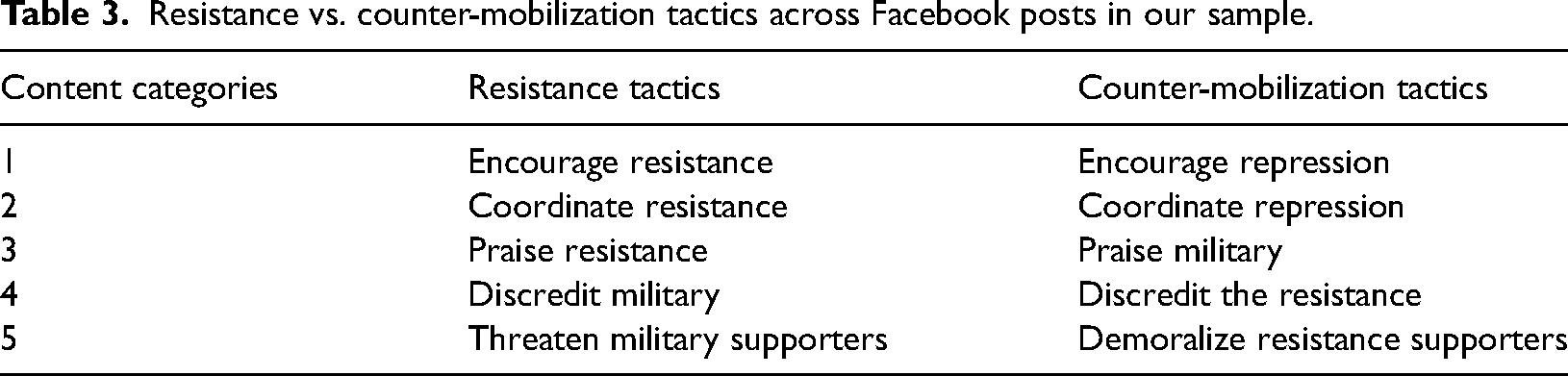
The two authors coded the majority of the data and relied on research assistance by our Myanmar colleagues for some coding due to time or language constraints. We divided the pages and groups into: NUG-affiliated page, SAC-affiliated page, professional media page, citizen news page/group, pro-military page/group, pro-resistance page/group, and others. As for content coding, we first developed coding categories of resistance vs. counter-mobilization tactics based on a small subset of our dataset. To maximize the validity of the categories and intercoder reliability, we then followed an iterative process during which we continued to code more posts and held weekly discussions to assess how well the existing categories captured new posts’ content types and how we should adjust them. Ultimately, our inductive process yielded five main categories for resistance tactics and five for counter-mobilization tactics (Table 3).
Resistance vs. counter-mobilization tactics across Facebook posts in our sample.
To examine strategies to counter the SAC's digital repression, we also account for posts that either advise on digital security best practices (e.g. using VPNs, keeping Facebook content private, and migrating to encrypted platforms) or use coded expressions to mask pro-resistance content (e.g. using pronouns instead of proper nouns, using alternative names and vague hints for political actors or events, and hiding the identity of resistance participants). Finally, to document the removal rate of pro-SAC vs. pro-resistance content, we manually checked whether the URLs were still active during January–February 2022. Overall, these page/group and content categories form the basis for our statistical as well as qualitative content analysis.
Analysis
Resistance vs. pro-military content on social media
As expected, due to the pro-democracy activists’ pre-existing digitalized capacity, pro-resistance (anti-military) content proliferated while pro-military content was limited in the early post-coup period (Figure 5). Among the coup-related posts, 70.1% are pro-resistance and only 2.7% are pro-military. The remaining posts are either neutral (27.1%) or their stance was unable to be determined (<1%).
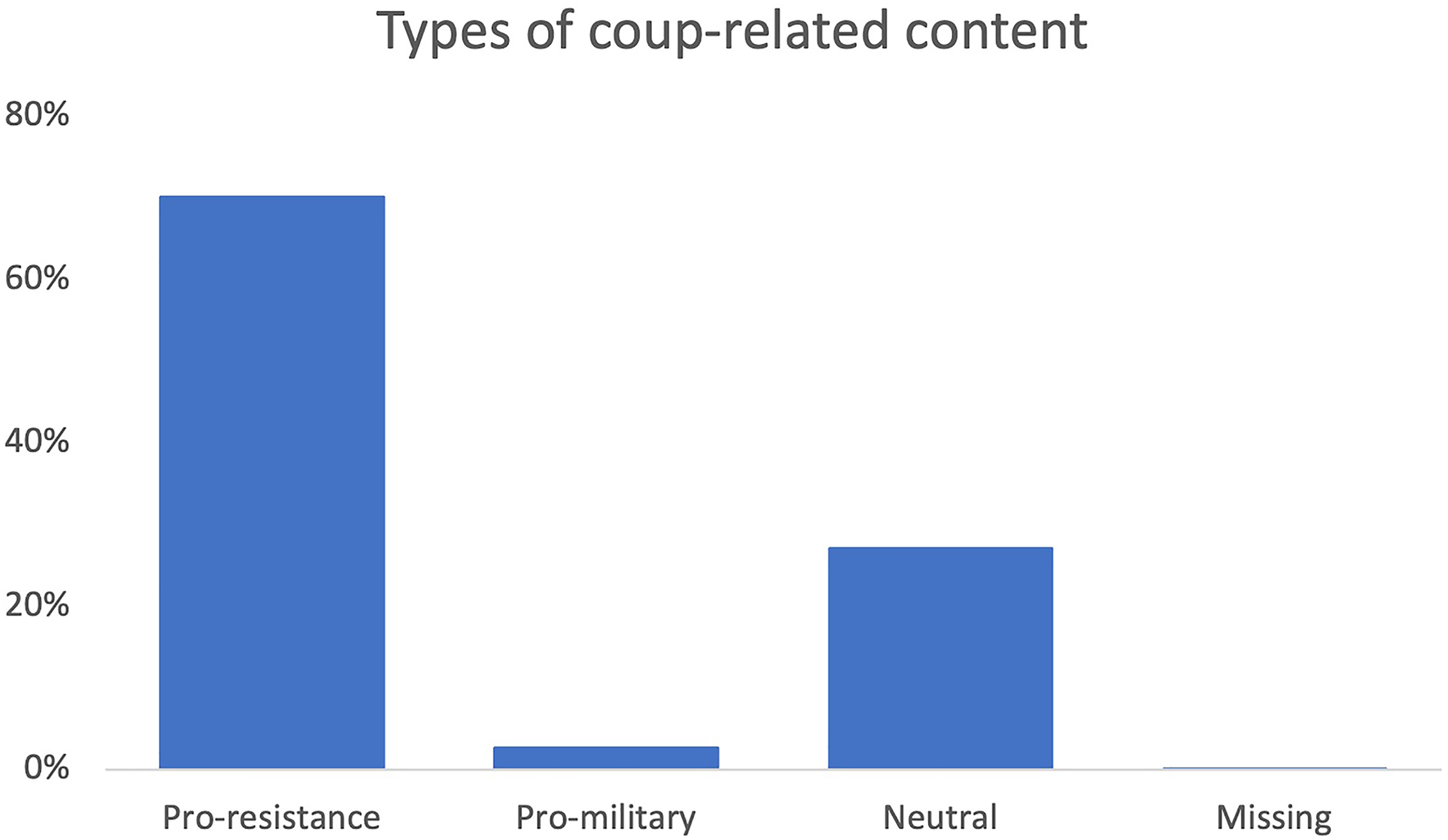
Proportion of pro-military vs. pro-resistance vs. neutral reporting posts.
Coup-related posts had significant reach among the Myanmar population. On average, coup-related posts received over 1000 interactions. The average neutral posts received over 2000 interactions, while pro-resistance posts received over 500 and pro-military under 500 (Figure 6). Together, these results support our proposition that the resistance forces dominate social media narratives in terms of both the volume of content and the number of views or interactions.
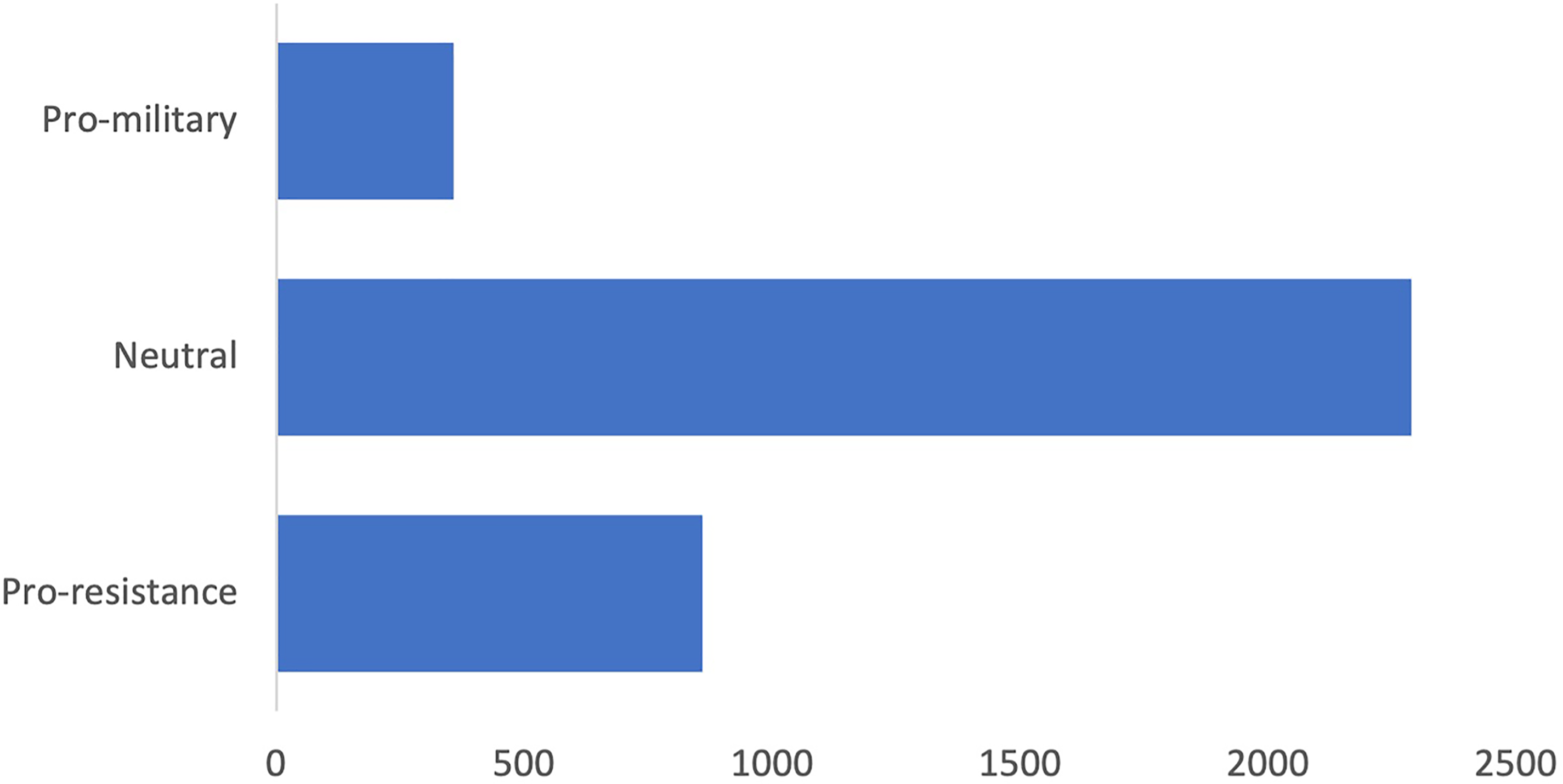
Mean number of interactions by coup-related content type.
Moreover, we find that pro-resistance content (37.9%) is less likely to be removed than pro-military content (62.5%), but similarly as likely as neutral coup-related content (31.3%) to be removed (Figure 7). Likewise, military-affiliated pages (25%) and pro-military groups (30.6%) are more likely to have been taken down than NUG-affiliated pages (6.7%) and pro-resistance groups (13.5%). Had the removal patterns been more reflective of post-coup self-censorship, we should have witnessed a greater proportion of pro-resistance content being removed compared to pro-military content, since the threat of military repression provided greater incentives for the resistance forces to self-censor compared to pro-military forces. However, the opposite evidence corroborates our argument that Facebook was more active at removing pro-military content. Although we cannot precisely assess the timeliness and impact of such removal, the lack of prevalence or sharing of pro-military content on Facebook highlights the platform's marked improvement in content moderation since 2017 and its potential effectiveness.
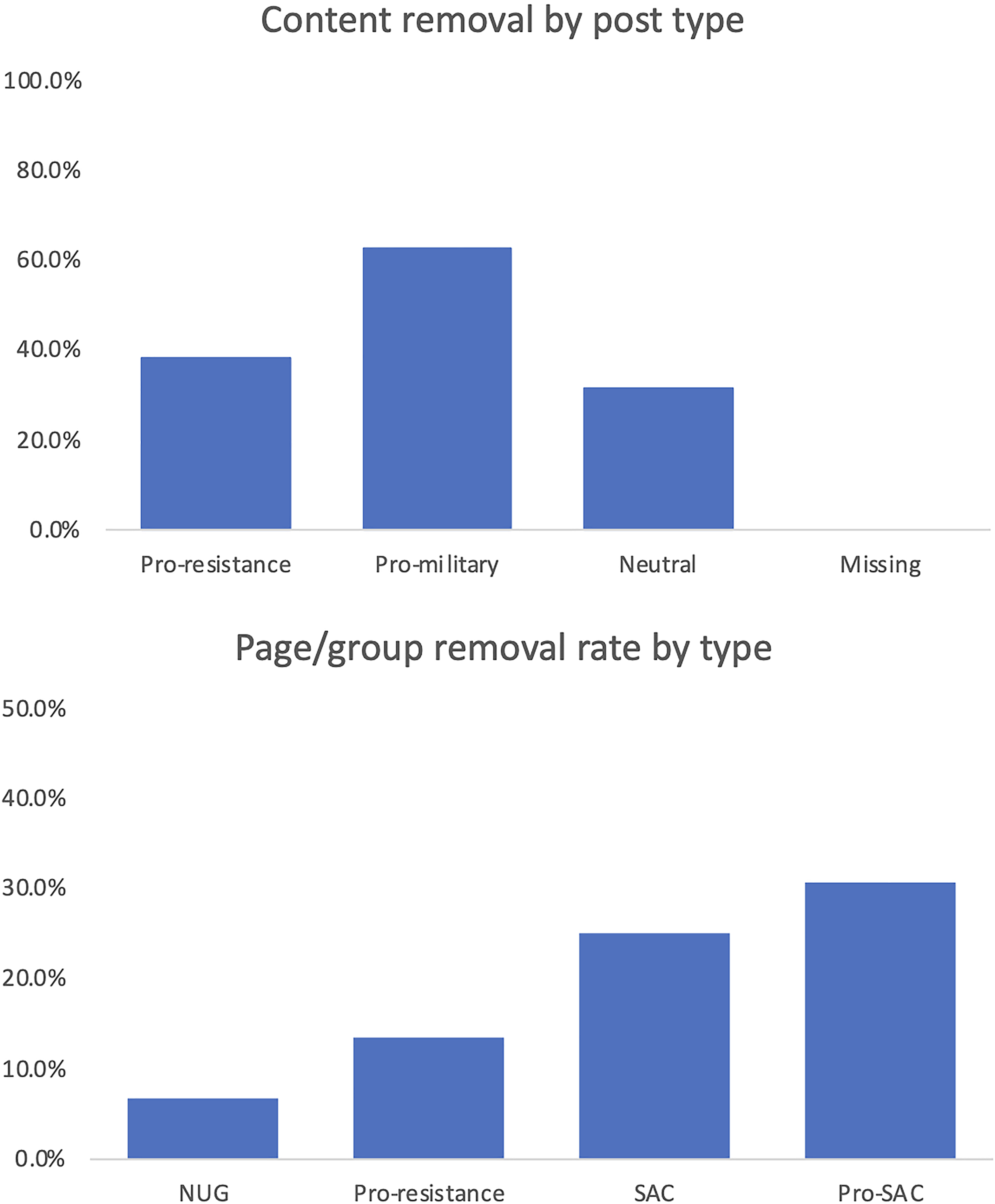
Pro-military vs. pro-resistance content removal rates.
Resistance vs. counter-mobilization tactics on social media
Our next set of findings shows resistance actors’ more proactive use of Facebook to coordinate physical and digital events and strategies compared to SAC supporters (Figure 8).
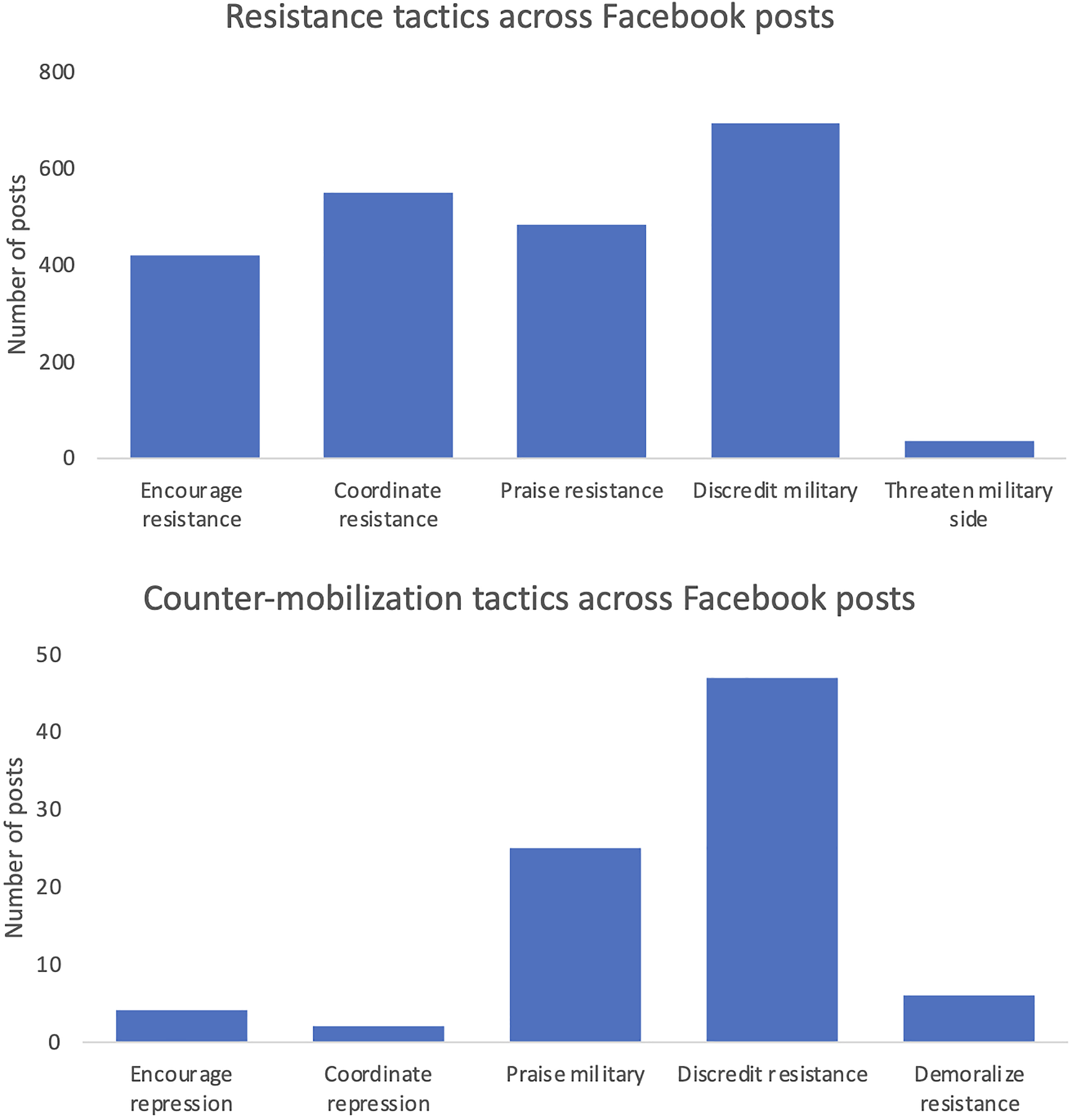
Resistance vs. counter-mobilization tactics.
This is, first, evident in the resistance's wider range of multi-purpose posts. While many pro-resistance posts simultaneously serve three or four different purposes, such as encouraging people to protest while praising protest participants and making fun of the SAC, counter-mobilization posts rarely attempt to achieve more than two goals at once (Figure 9).
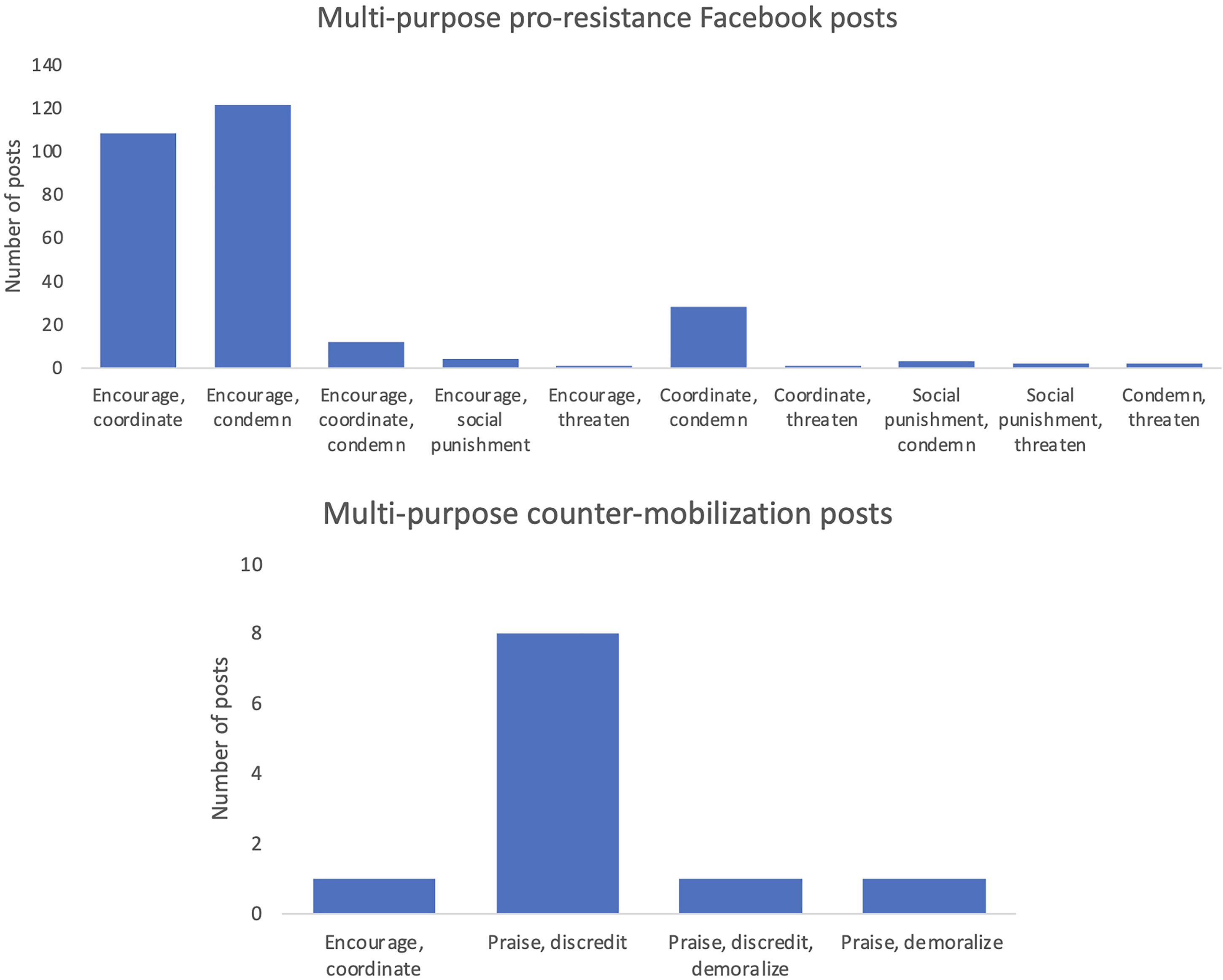
Multi-purpose resistance vs. counter-mobilization posts.
Moreover, our following regression and qualitative content analysis clearly show a greater evolution in resistance tactics on Facebook compared to the military's counter-mobilization tactics.
Stagnation of the SAC's counter-mobilization tactics
As Figures 10 and 11 demonstrate, we do not detect any significant changes in counter-mobilization tactics over time. Such stagnation might reflect military supporters’ decreased level of activity on Facebook due to the platform's stricter content moderation. Indeed, many military supporters have migrated to other platforms—TikTok, Telegram, and VK—where there were more permissive digital environments for authoritarian propaganda and coordination. However, these platforms do not have the same reach and impact among the Myanmar population as Facebook because alternative platforms only gained popularity in 2019 and 2020, years after Myanmar telecommunications operators already offered Facebook's Free Basics service (Guest et al., 2021).
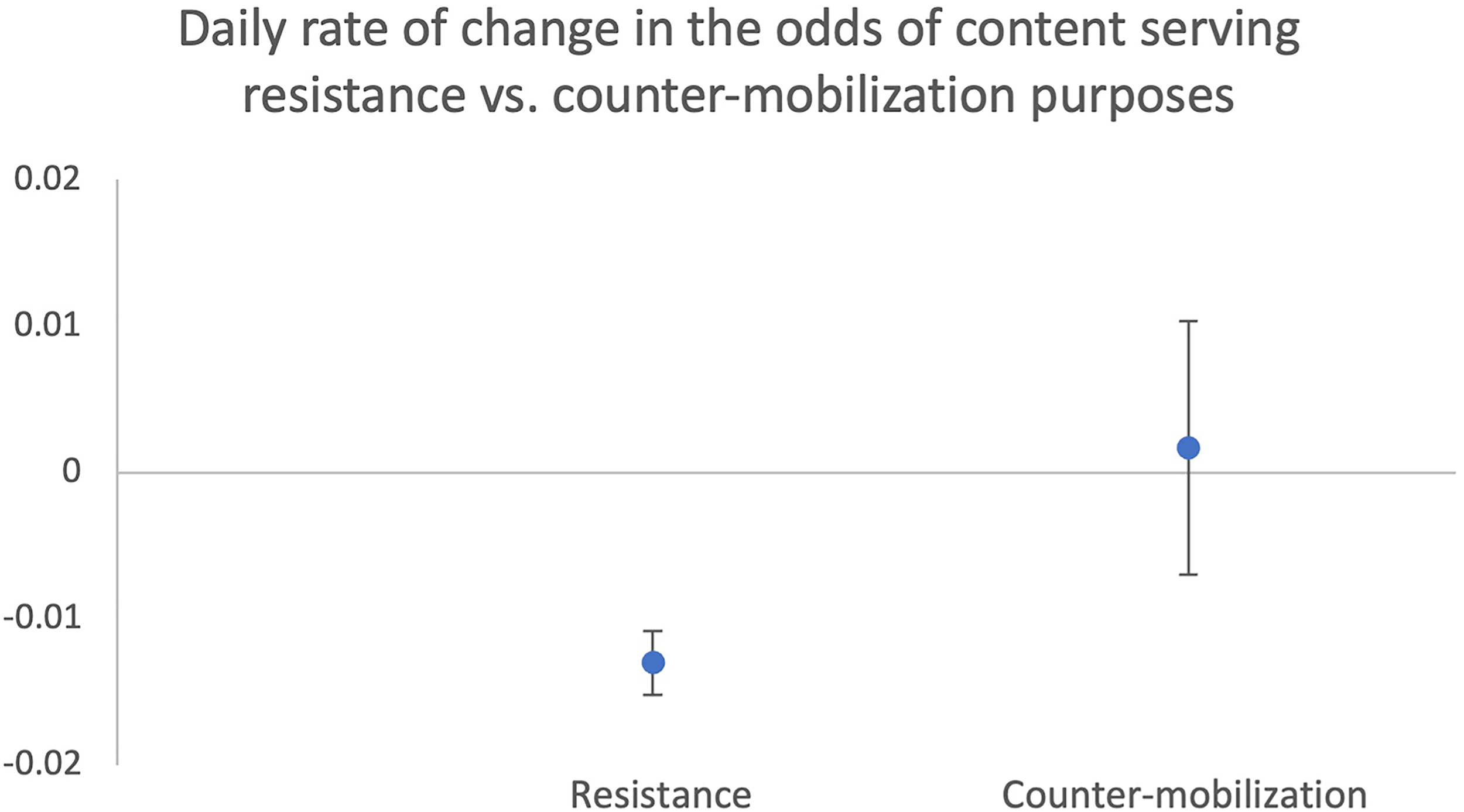
Over-time change in the odds of Facebook content serving resistance vs. counter-mobilization purposes (N = 5200; 95%CI).
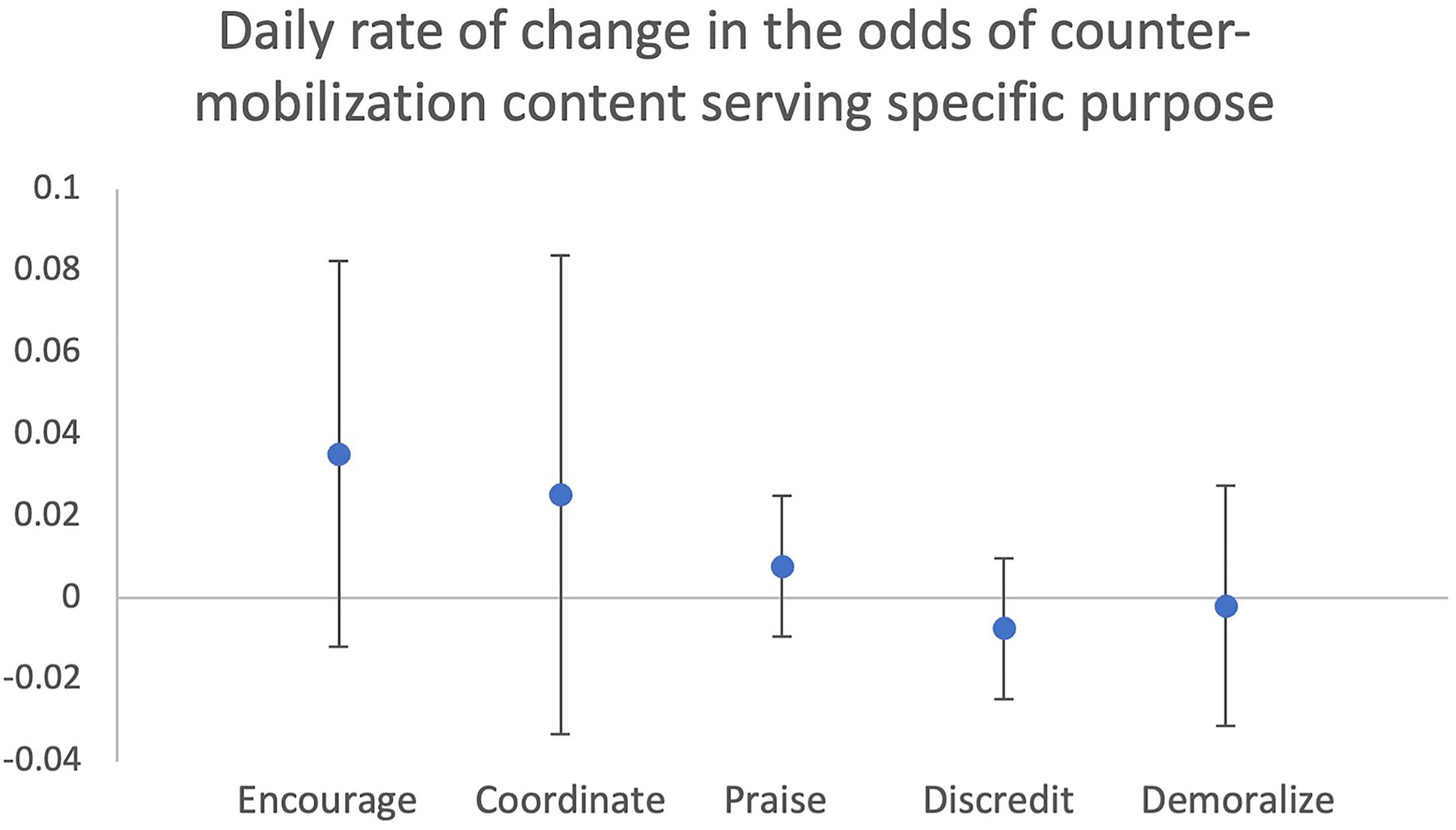
Over-time change in the odds of counter-mobilization content serving a specific purpose (N = 72; 95%CI).
A deeper qualitative analysis of pro-military tactics further highlights the lack of robustness and innovation in the military's digital repertoire on Facebook. The SAC's and its supporters’ strategies converged around two main types: discrediting the resistance and praising the military. Even the narratives the military used to discredit the resistance were tired and static. One common narrative framed the resistance forces as violent and destructive, depicting them as “terrorists” and “rioters,” highlighting their attacks—bus burnings, lootings, and bombings—and focusing on seizures of military-grade weapons from resistance actors (Figure 12).
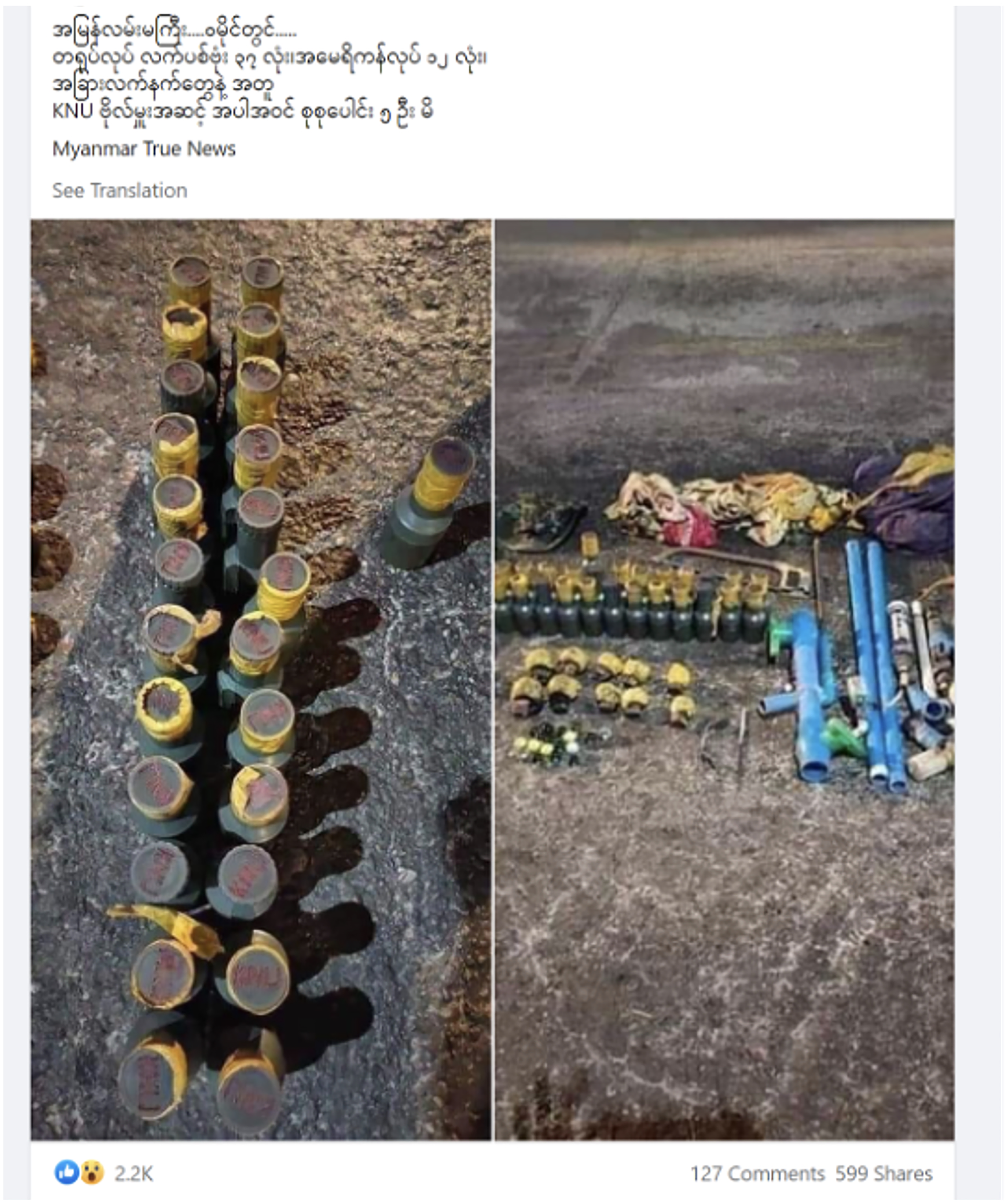
A March post claiming five people, including Karen National Union (KNU) generals, were captured with Chinese and American-made grenades.
Another discrediting narrative framed the NLD and resistance forces as having pro-'Bengali' and pro-Western positions that pose an existential threat to the Bamar Buddhist nation (Figure 13). For instance, one April post implied that the NLD's signing of the UN Global Migration Pact risks Myanmar's national sovereignty because the pact is led by the Organization of Islamic Countries (OIC) with the intention to facilitate Muslim migration. Other posts spread disinformation about the NLD's favoritism of Muslims over Buddhists, claiming the NLD banned Buddhist festivals and closed pagodas during the COVID-19 pandemic while allowing Muslims to gather in mosques.
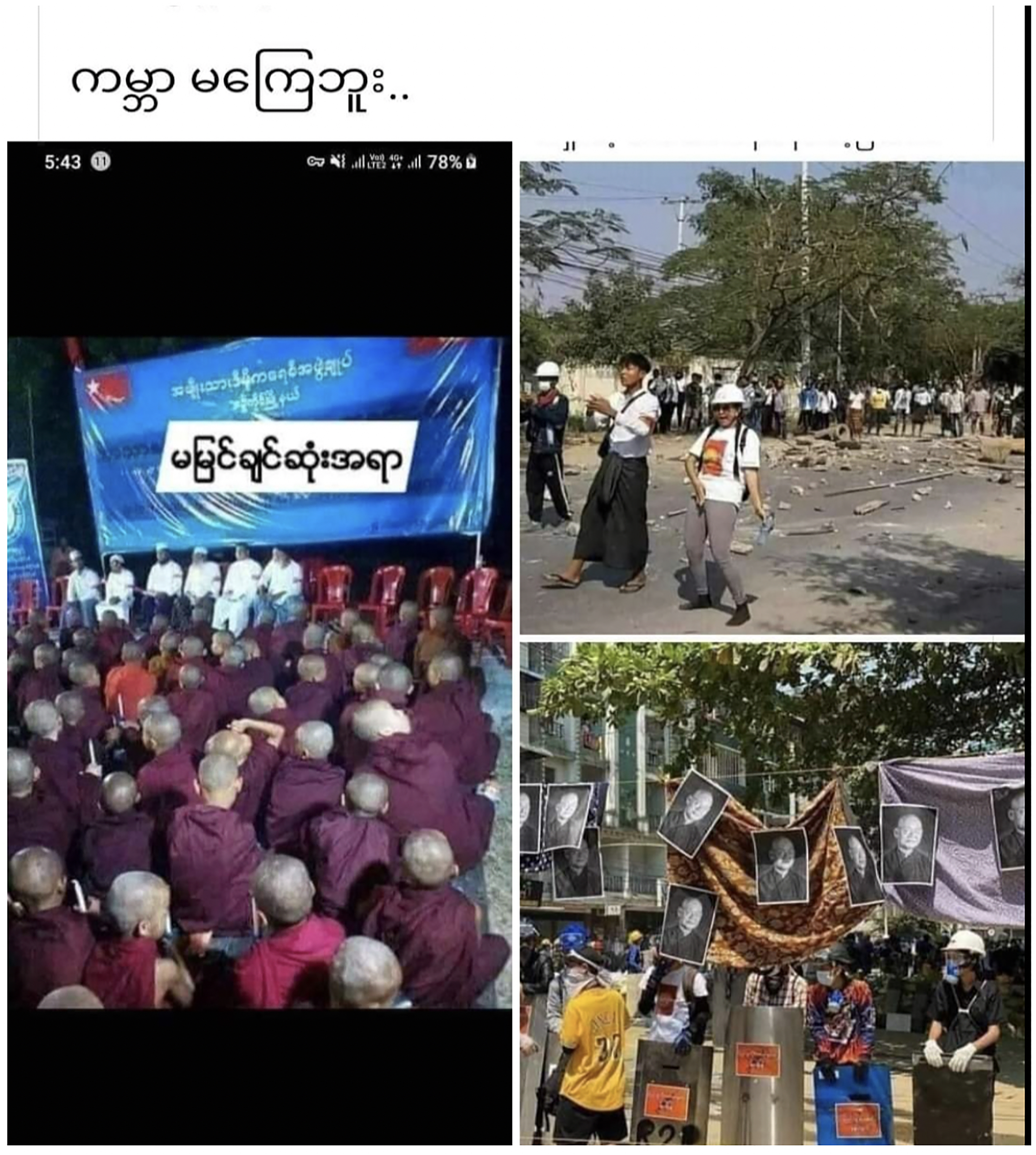
A March post claiming the NLD favors Muslims (see picture on left with Muslim leaders sitting higher than Buddhist monks with the text: “the thing I most do not want to see”) and portraying the resistance as disrespectful toward Buddhism (see picture on bottom right showing protesters hanging pictures of a Buddhist monk on women's sarongs, which is considered a religious insult, and picture on top right with a female protester making lewd gestures, presumably aimed at SAC).
These are regurgitated narratives that the military has used historically in moments of political crisis and contention, such as against waves of pro-democracy protests in 1962–2010 and against the NLD during electoral seasons in 2012–2020. Hence, portraying resistance forces as violent terrorists and questioning their commitment to Buddhism and Myanmar national sovereignty are only likely to resonate with a small group of core military supporters.
Evolution of resistance tactics over time
In contrast to the SAC's stagnant strategies, we find dynamic evolution in both quantities and substantive foci of online resistance tactics over time. While the proportion of Facebook posts serving resistance purposes gradually decreased in order to circumvent the SAC's monitoring (Figure 10), a closer examination among subcategories of online resistance tactics reveals a strategic shift over time to grow the broad-based struggle on the ground. As encouragement and coordination of physical events declined, praise for resistance forces and use of coded language increased (Figure 14).
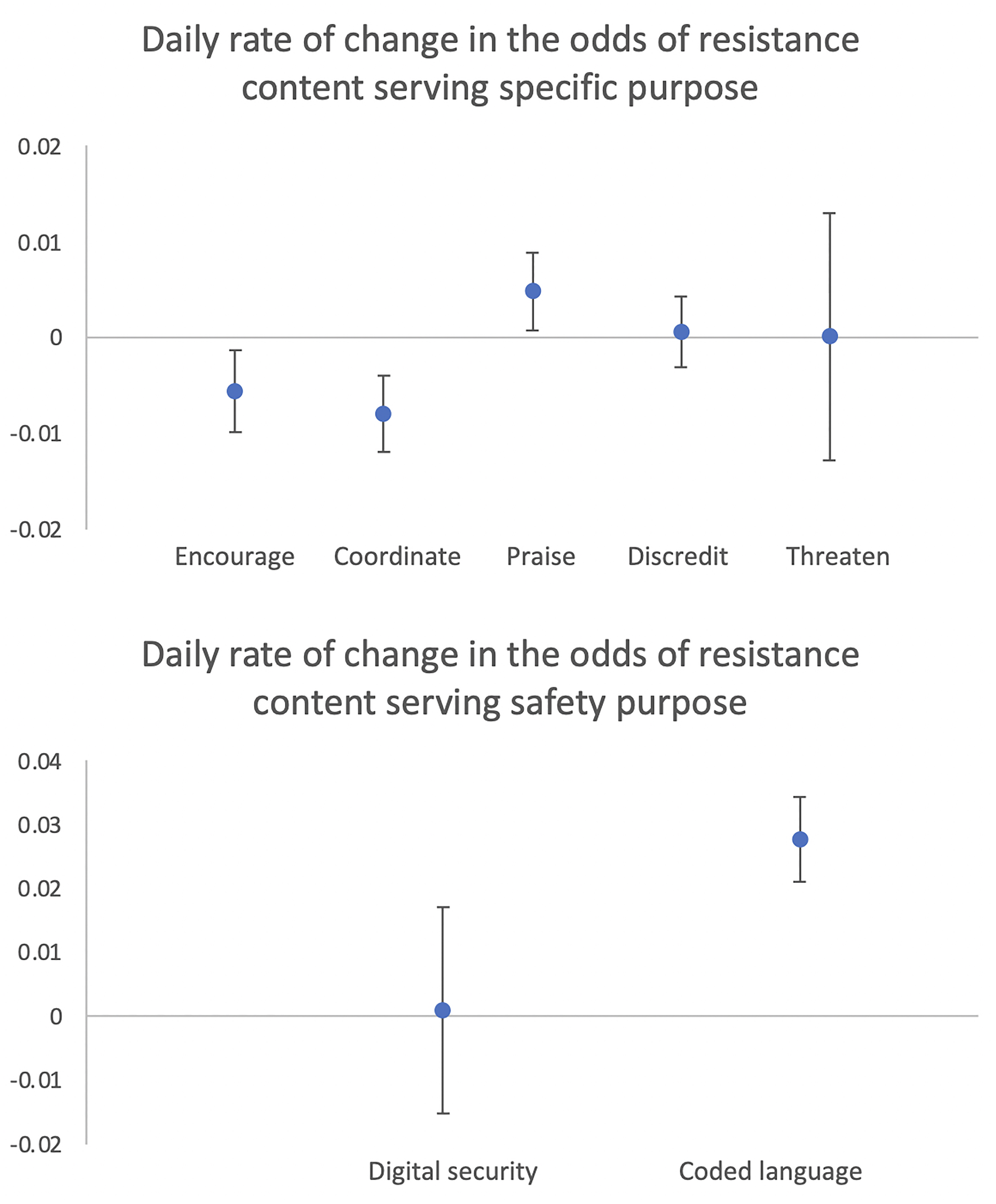
Over-time change in the odds of resistance content serving specific purpose (N = 1701; 95%CI).
Anti-coup activists needed to put much more effort into encouraging and coordinating offline activities in the early days after the coup; however, once resistance initiatives flourished across Myanmar, it became more crucial for movement entrepreneurs to recognize and commend these operations in order to sustain resistance momentum. Moreover, to counter the SAC's surveillance, these Facebook users persistently circulated digital security advice and increasingly masked their pro-resistance content with similar styles of discreet expressions.
In addition, a large number of Facebook groups with anti-military posts, 70 out of 694 groups, became private one year after the coup. This rate of 10% is significantly higher than the rate of groups without any anti-military content going private: 5.2%. Such marked disparity not only substantiates our expectations of resistance forces’ mutual learning on digital security but also affirms the political cause behind their decisions to limit the visibility of their members’ discussions: to either evade the SAC's persecution or ensure the strategic secrecy of their resistance activities.
Furthermore, our qualitative content analysis demonstrates the resistance's substantive adaptations in rhetoric to discredit the SAC as well as to inspire and direct anti-coup campaigns on the ground. First, the most prevalent type of resistance tactic, discrediting and denouncing the military administration, exhibits dynamic evolution over time. Mirroring one another, while most pro-resistance posts in March merely exposed specific cases of killing or arrests against children, teenagers, and unarmed civilians across localities, April posts explicitly sought to turn the rising casualties and losses into motivations for a broad-based anti-coup campaign. These later posts either encouraged people to confidently defy the SAC by characterizing its forces as small in number, or commended examples of protest groups in various places who continued rallying despite ongoing crackdowns (Figure 15). Later on, as the military ramped up its repression, posts in May focused on evoking public sympathy with the arrested or killed by promoting their images as dutiful sons, husbands, or parents (Figure 16).
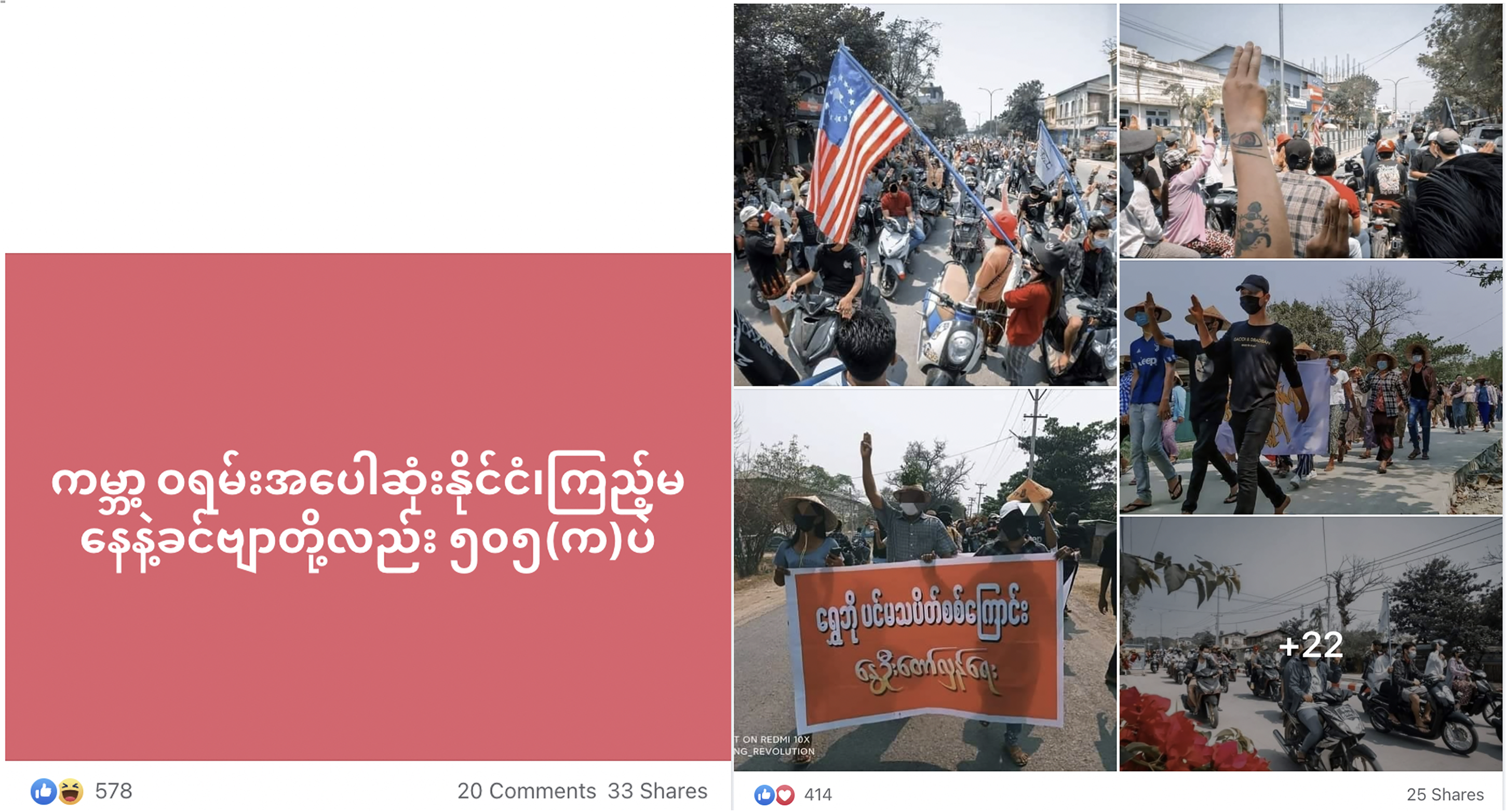
An April post claiming that Myanmar has the highest number of arrest warrants in the world in order to mock the SAC's lack of either public support or de facto control vs. another April post commending protesters in Sagaing for staging a peaceful anti-coup demonstration despite violent crackdowns.

A May post sharing an interview with independent media by the wife of a poet, who died after being arrested by the SAC.
In addition, most posts that encourage participation in resistance are similarly concentrated between March and mid-April, many of which also serve to coordinate resistance activities. Posts in the early days focused on urging people to join CDM and protests and to become self-reliant instead of expecting help from the UN. On the other hand, later posts promoted armed resistance tactics and mobilized at more local levels, e.g. highlighting suffering in Magwe region or Kayin state due to the SAC's violence and asking people to support ethnic armed groups and local-level CDM groups (Figure 17).
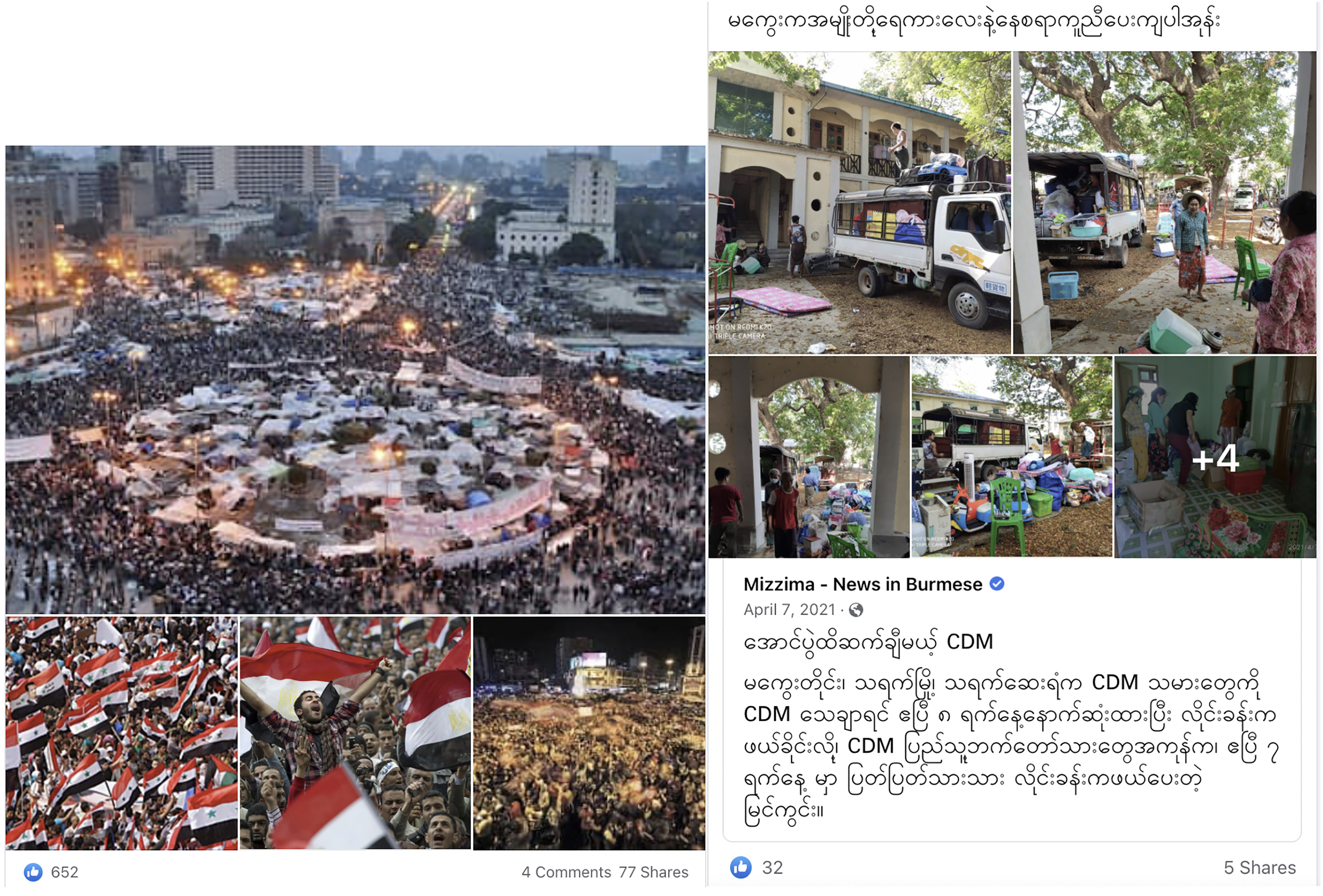
A March post encouraging people to rely on themselves for resistance success based on Egypt’s 2011 experience vs. an April post asking Magway people to support evicted CDM staff in order to reach victory.
In the same vein, posts that mainly seek to coordinate resistance activities tend to be more generic at the beginning and become increasingly specific later on. For instance, while posts in March mirrored one another in their general calls for people to participate in banging of pots and pans at 8 pm or 2008 constitution burning on April 1 (Figure 18), posts in April and May were more likely to discreetly circulate specific details on anti-resistance individuals to target, dangerous locations to avoid, supportive groups to contact, and resistance tactics to adopt in order to remain safe yet effective.
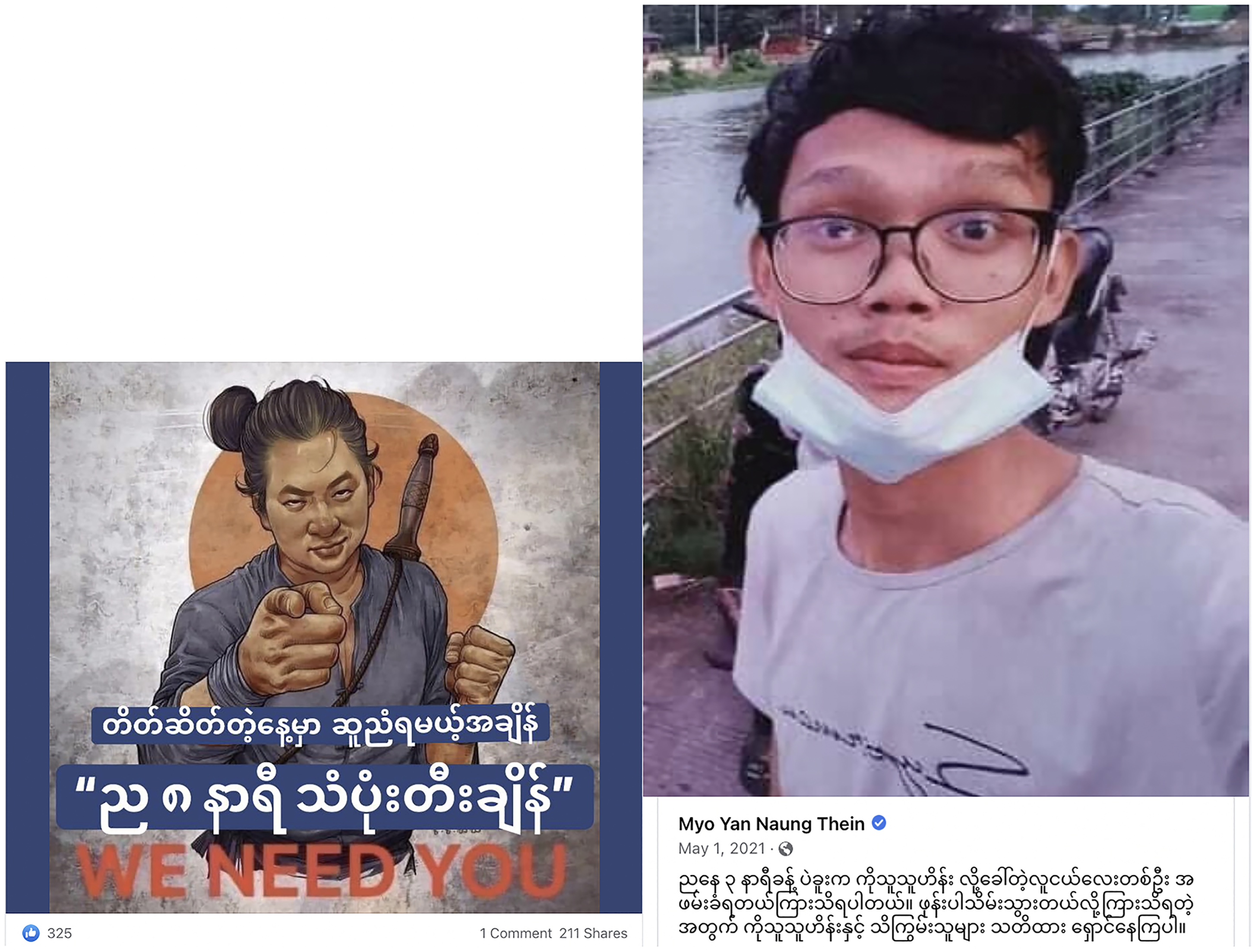
A March post asking people not to give up on banging pots and pans at 8 pm vs. a May post advising people who are in the network of a recently arrested person to take care and go into hiding.
Finally, as resistance campaigns spread from urban to rural and then to border areas, this dynamic is reflected in over-time changes of Facebook content that recognizes and praises resistance forces. While posts in early March tended to show support for urban neighborhoods’ night watch teams and CDM staff, from late March the spotlight turned to Spring Revolution campaigns and farmer protests in rural areas. By May, many more posts simultaneously chose to highlight attacks and victories of ethnic armed groups, such as those of the Karen National Liberation Army (KNLA) and the Kachin Independence Army (KIA), and SAC troops' casualties (Figure 19). A large number of these praises also end with similar motivational hashtags to sustain resistance momentum, e.g. “We must win every battle” and “We must all win together.”
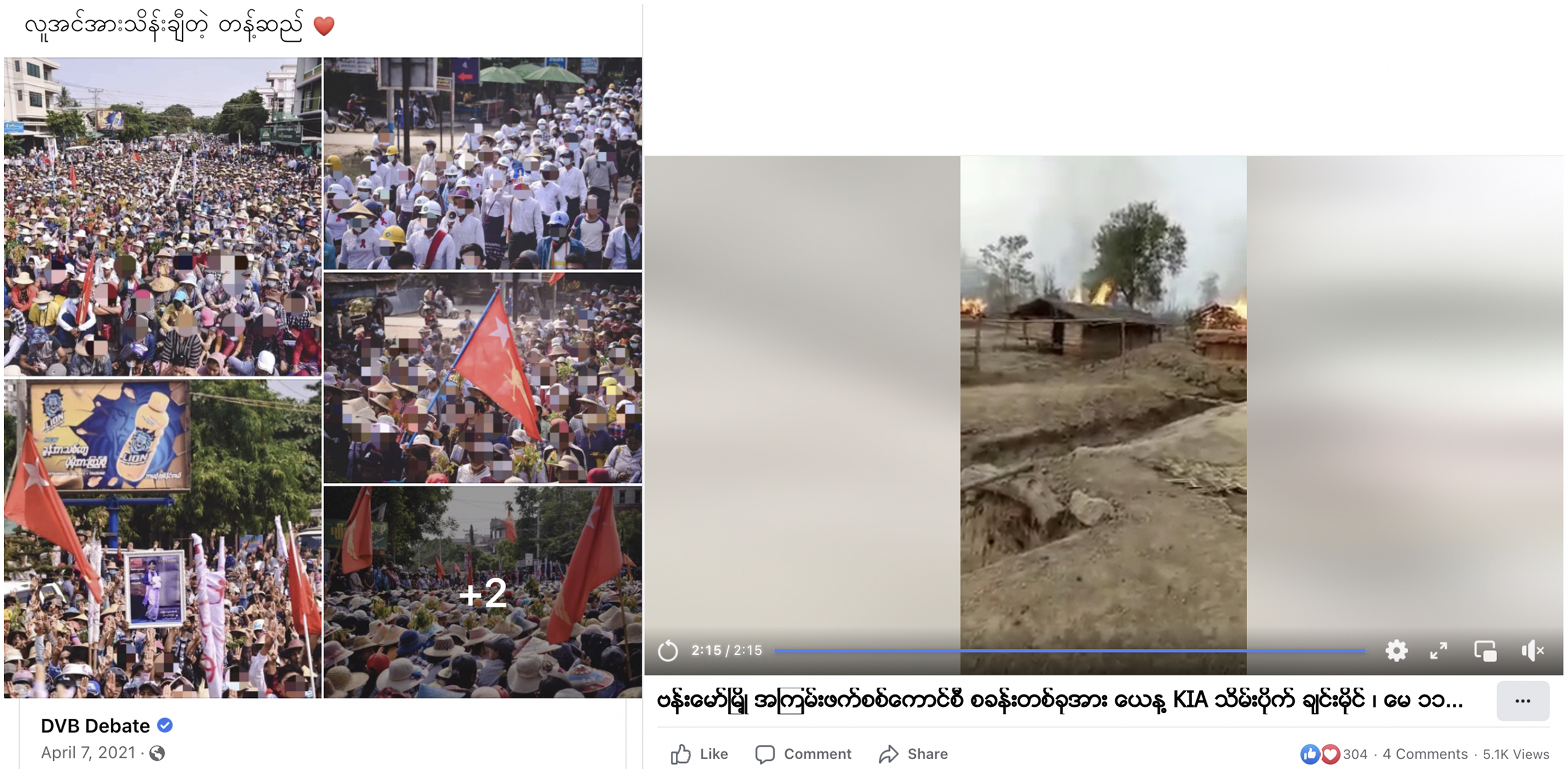
An April post about hundreds of farmers, workers, and CDM staff protesting in Sagaing vs. a May video reporting on KIA's successful capture of the SAC's camp.
Without the proliferation and innovation of digitalized resistance strategies as described above, the anti-coup efforts in the early post-coup period would not have been as widespread and destabilizing. Such resistance facilitated the CDM movements’ denial of essential labor to the SAC, military defections, development of a parallel government in exile, creation of local PDFs, and international support for coordinated sanctions. The very proliferation and wide geographic scope of digital and hybrid resistance initiatives further enabled the scale-up of anti-SAC campaigns across Myanmar, despite increasing military repression.
Nonetheless, while we recognize the critical role that digitalized activism played in disrupting Myanmar's precipitous democratic decline, there are limitations. Indeed, development of digital and hybrid tactics can neither resolve the massive resource disparity between the resistance forces and the SAC nor ease the historical inter-ethnic tensions that threaten unity among the anti-coup forces. However, by facilitating coordination among like-minded groups, broadcasting the military's abuses to an international audience, and enhancing the spread and resilience of anti-coup campaigns at an unprecedented level, digitalized activism has played an essential role in obstructing the SAC's complete autocratization of Myanmar.
Conclusion
This study offers a new framework to comprehend the dynamics of democratic backsliding in the digital age by taking into account the under-analyzed role of pro-democracy activists’ pre-existing digitalized capacity. We employ an innovative research design, combining secondary analysis of authoritative sources with a mixed methods analysis of an original, largely representative sample of public Facebook posts in the context of Myanmar's 2021 military coup. We find that, given autocrats' lack of broad-based digital repression, pro-democracy activists’ experience with online and hybrid activism, platform advocacy, and digital security practices before democratic backsliding promotes a more widespread and resilient resistance that impedes a complete democratic breakdown. On the one hand, autocrats are unable to either completely throttle online civic space or counter-mobilize online. On the other, resistance forces areable to effectively and safely employ social media to mobilize and coordinate activism on a nationwide scale over an extended period of time. Our research findings deepen understanding of Myanmar's post-coup contestation dynamics as well as autocratization patterns in equally contentious cases in the digital era.
We will benefit from future research that seeks to corroborate our theoretical framework by conducting digital ethnography or in-person data collection regarding Myanmar and other similar cases. This could include key informant interviews and participant observations of digital rights activists, social media company teams, and anti-authoritarian resistance forces in low-risk settings, such as among diasporic communities in liberal host countries. Such research design would identify digitalized activism's effects on the outcomes of resistance efforts on the ground.
Moreover, comparative analysis of similar cases of digital resistance would help to demonstrate the broad generalizability of our argument. From Hong Kong to Tunisia to Hungary, as governments seek to centralize power and crack down against dissidents, authoritarianism is gaining ground with imposition of illiberal laws and violations of international human rights standards. In response, mass protest campaigns have broken out across these countries’ urban centers (Al Jazeera, 2021; Dunai, 2021; Human Rights Watch, 2019). As their political elites are among an expanding group of state leaders who employ both online and offline tools to spread disinformation and crush dissent while being unable to impose broad-based Internet control, anti-government protests encounter a similar environment as in Myanmar (Freedom House, 2021a, 2021b; Mozur, 2021). Hence, the pre-existing digitalized experience of pro-democracy activists in these countries should play the same role in impeding more recent attempts of autocratization.
Footnotes
Acknowledgements
The authors are grateful to valuable research assistance and insights by Swan Ye Htut and Ei Shwe Sin. They also benefited from extensive comments and feedback by Yuko Kasuya, Netina Tan, Aim Sinpeng, Meredith Weiss, Gerard McCarthy, Tun Myint, and other participants at V-Dem East Asia Workshop on “Democratic Backsliding in Southeast Asia.”
Declaration of conflicting interests
The author(s) declared no potential conflicts of interest with respect to the research, authorship, and/or publication of this article.
Funding
The author(s) disclosed receipt of the following financial support for the research, authorship, and/or publication of this article: This work was supported by Canada’s International Development Research Centre as part of the Knowledge for Democracy Myanmar Initiative and the Suntory Foundation.
