



Abstract
Insomnia is common among frail older people living in nursing homes. The aim of the study was to explore how frail older people with insomnia experience the use of a weighted blanket. The study was conducted in nine nursing homes in Sweden. A total of 19 people (4 men, 15 women) aged 67 years and older were included. The study had an inductive qualitative design. Consolidated Criteria for Reporting Qualitative Research (COREQ) was utilized as a checklist to ensure transparency and comprehensiveness and enhance reliability by guaranteeing that all relevant aspects of the research process are thoroughly documented. The semi-structured interviews were analyzed with qualitative content analysis. The results formed four categories: Experiencing proximity, which raised older people’s encounters with the weighted blankets; Changes in sleeping patterns, where older people encountered the weighted blanket’s influence in changing sleep patterns; Experiencing conditions for use, where frail older people experienced the right conditions; and Stimulating senses, where frail older people experienced changes in their senses. Frail older people experienced that weighted blankets could provide comfort, positively influence sleep patterns, and reduce anxiety. This intervention can be considered valuable and offers a possible alternative to medication for frail older people with insomnia.
Introduction
As the population ages, an increasing number of individuals live in nursing homes. Frailty is a condition that concerns a weak group of older people. The condition refers to a reduced ability to function through reduced biological reserves across multiple organ systems. As a result, frail older people are more susceptible to external stressors and are also associated with advanced age and female sex.1–3 Although chronological age is not always a sign of impaired physiological and functional status, it tends to be more common among older people with multimorbidity, affecting the quality-of-life functional capacity and increasing the need for care and medication. Multimorbidity refers to the presence of two or more established diseases and is associated with an increased risk of developing frailty. In turn, frailty exacerbates the risk of multimorbidity, a condition that concerns a weak group of older people. This suggests a bidirectional relationship between the two conditions.4–6
In Sweden, the social service provides nursing homes for older people who need support. Approximately 3.7% of people, approximately 88,000 people, aged over 65 years live in nursing homes.7,8 Living in a nursing home can be both a relief and a cause of anxiety. It requires adapting to new routines and reduced independence.9–12 This is challenging for those with communication and cognitive difficulties. Moving to a nursing home can increase feelings of vulnerability, particularly for older people who struggle to orient themselves in unfamiliar environments.13–16 A common problem experienced by frail older people in nursing homes is insomnia, which refers to difficulty falling asleep, staying asleep, or waking up feeling unrested. This problem is more common after resettling in a new environment like a nursing home. 17 As we age, our sleep patterns naturally change.10,18 These changes in sleep patterns lead to older people spending more time in light sleep stages than deep sleep, resulting in more time in bed without sleeping. Total sleep time, sleep efficiency, and percentage of rapid eye movement (REM) time show an age-related decline. Wakefulness after sleep onset (WASO) also increases, the apnea-hypopnea index increases, and oxygen saturation decreases associated with ageing.9,10,19 Changes in sleep patterns peak at the age of 60 years and tend to remain consistent after that age. Therefore, many older people accept sleep problems as a natural part of ageing despite the perceived challenge.18,20,21 Not getting sufficient sleep can raise the risk of falls, be linked to malnutrition, and improve the risk of polypharmacy.17,22,23 It is common for older people with insomnia to have correlating health problems, such as heart disease, lung disease, cancer, and diabetes. Insomnia is also correlated with anxiety, depression, and stress.24,25 Therefore, it is crucial to assess and address the quality of sleep in older people in nursing homes; the problems that arise should be addressed to improve sleep habits.26–28 Sleep is crucial for strengthening health in older people. Conversely, insufficient sleep negatively influences the health of older people.27,29–31
The most typical treatment method for older people with insomnia is drug therapy. Many drug treatments, for example, butabarbital, chloral hydrate, flurazepam, triazolam, zaleplon, and zolpidem, offered to frail older people often have adverse side effects, which include fatigue and sleepiness during the daytime, impaired sleep after withdrawal, impaired cognitive routine, and impaired quality of sleep. In addition, the drugs increase the risk of falls and fractures in frail older people (>65 years).18,32,33 Consequently, there is a need for non-pharmacological treatment methods to promote and maintain better sleep. 34 Some non-pharmacological methods are cognitive behavioral therapy (CBT) 35 and mindfulness-based interventions, 36 all of which provide improvement in insomnia symptoms.34–36 Non-pharmaceutical treatment options are primarily suggested as the initial action for addressing sleep problems. 37
The weighted blanket intervention involves the use of deep pressure therapy, which is rooted in sensory integration theory. This non-pharmacological method is similar to other sensory interventions, such as glowing light, massage, acupuncture, and animal-aided therapy, that affect the brain's sensory communication processing. Sensory stimuli from the deep pressure effect of a weighted blanket can provide conditions for relaxation and create an experience of reduced anxiety and stress, which can improve sleep and increase general well-being.28,38–40 Earlier studies on the influence of the weighted blanket's deep pressure have mostly studied children with attention deficit hyperactivity disorder (ADHD). 41 Studies have shown that weighted blankets have positive influences on individuals with mental health conditions, such as depression, bipolar disorder, generalized anxiety, and ADHD, as well as healthy young and middle-aged individuals.34,42 The results suggest that these weighted blankets have a calming influence, improve sleep quality, and increase daytime activity levels, which can help manage daily life.34,41–43 A feasibility and acceptability study was conducted on utilizing weighted blankets for families living with dementia in the community. The results were promising, although they only focused on its feasibility rather than its influence on older people. 44 Previous studies have shown that using weighted blankets could positively change the sleep and health of older people living in nursing homes. These changes included improved sleep, increased physical activity, calmer psychological behavior, a better quality of life, improved nutrition, and cognition. The use of weighted blankets led to a reduction in the usage of psychoanaleptic medication.45,46 More research is needed regarding the influence of weighted blankets on frail older people, as most studies have been conducted on younger people. By gathering experiences from frail older people who use weighted blankets systematically in nursing homes, we can better understand their perspective on how these blankets can help manage insomnia. Therefore, the aim of the study was to explore how frail older people with insomnia experience the use of a weighted blanket.
Methods
The study has an inductive qualitative design that includes semi-structured interviews with frail older people living in nursing homes.47,48 This study used the Consolidated Criteria for Reporting Qualitative Research (COREQ) checklist to ensure transparent and comprehensive reporting of qualitative research. The checklist has three main domains: research team and reflexivity; study design; and data analysis and reporting. It aims to enhance the reliability of qualitative studies by guaranteeing thorough documentation of all relevant aspects of the research process. The checklist ensures meticulous reporting, improving transparency and reliability in qualitative research. 49
Sample
The study included 13 nursing homes, with data collected from nine nursing homes in five municipalities in southwestern Sweden. Four declined to participate because of the coronavirus disease 2019 (COVID-19) pandemic, and nine nursing homes remained. Nursing homes were selected because they were close to larger cities and rural areas. In total, 19 older individuals (4 men, 15 women; age range 67–101 years) with insomnia were studied (Table 1). Three frail older people discontinued participation in the study; this was due to death (n = 1) and hospitalization (n = 2). Insomnia was defined based on the Swedish version of the International Classification of Diseases ICD-10, G47.0, which refers to difficulty falling asleep, staying asleep at night, or getting enough sleep. 50 Insomnia is defined as difficulty falling asleep or staying asleep. It is considered chronic when it occurs at least three times a week for at least 1 month and causes distress or interferes with daily life. 51 In addition, frail older people should be cognitively able to answer questions independently in an interview, secured with a measured standardized Mini-Mental State Examination (S-MMSE) > 20 points. Frail older people in a palliative state at the end of life and those with severe heart and lung disease were excluded. A purposive sampling strategy was used to select frail older people for the study. The manager of each nursing home was asked and informed about the purpose of the study. The nursing homes’ managers selected frail older people who met the inclusion criteria for insomnia, referring to difficulty falling asleep, staying asleep at night, or getting enough sleep and were considered cognitively qualified. 51 They included frail older people who ranged from mild problems with insomnia to more severe insomnia with almost no sleep.
Sociodemographic data of the informants (n = 19).
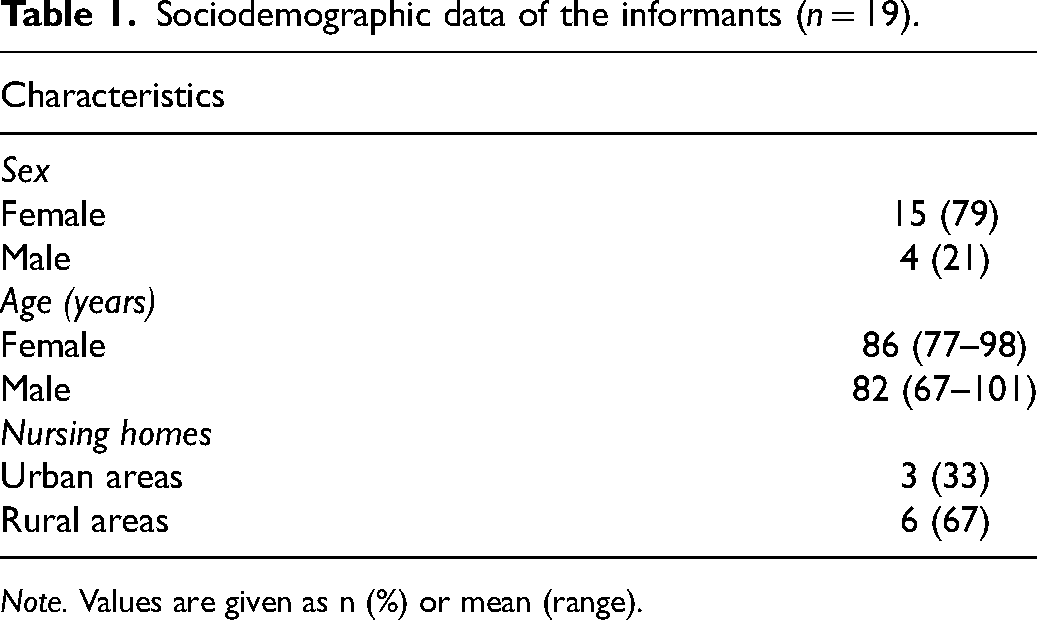
Note. Values are given as n (%) or mean (range).
Intervention
The study utilized a weighted blanket with chains that conform to the body. The fabric in the weighted blankets is fireproof and durable. Sanitary covers were not utilized because they posed a risk of suffocation. The weighted blanket replaced the regular blanket or could be used at the same time as a regular blanket. Weighted blankets weigh between 4, 6, and 8 kg, approximately 10% of the body weight of frail older individuals, as this weight percentage has been shown to have a calming effect. 52 The weighted blanket was used for 28 days, a period based on previous studies where the effect of the weighted blanket was shown after 2–4 weeks. Using the weighted blanket for a slightly extended time of 28 days increased the possibility of making an impact.34,51 The first author presented the introduction and handling of the weighted blanket in all nursing homes. The first part of the introduction was carried out at joint workplace meetings for all assistant nurses. Then, at the start of the study, the first author gave additional verbal and written information and guidance on how the weighted blanket should be used and handled. Assistant nurses were asked to try the weighted blanket first in a regular sleeping position, with the soft side against the body of frail older individuals. Next, the weighted blanket was moved onto the feet of frail older people for approximately 10 minutes and then progressively further up the body. If the frail older people were cold, they were first given a regular blanket, followed by a weighted blanket. When assistant nurses were required to give physical assistance to frail older people, they were also instructed to stay and monitor their reactions. They had to check if the frail older people could remove the weighted blanket independently, as the blanket's chains were not meant to impede their movement. The weighted blanket was raised higher on the body when no adverse effects occurred. The assistant nurses helping the non-independent frail older people were given the exact instructions as the independent frail older people, namely, not to place the weighted blanket twice over the chest or wrap the blanket too tightly around the body. In cases where frail older people needed assistance, the assistant nurses were asked to remove the weighted blanket if the frail older people felt and showed signs of discomfort.
Data collection
Data were collected through interviews held between March 2020 and September 2022. The 2-year delay was due to COVID-19 restrictions, which banned visitors from nursing homes. The first author conducted all interviews in the rooms of the participants, which was decided with the frail older people for safety and privacy. Before the interviews, the first author ensured that the participants received written information and consent from their respective nursing home managers and fully understood the implications of participating in the study. The older people were informed that their participation was voluntary and that they could withdraw from the study without any negative consequences. Before the interview, the frail older people gave written informed consent during the physical meeting with the author. The first author administered and scored the S-MMSE to assess the cognitive ability of frail older people. The S-MMSE consists of 20 questions in 11 domains with a maximum score of 30. A score above 20 indicates normal cognitive function, 53 and only frail older people who scored above 20 on the S-MMSE were included in the study. The authors conducted an interview guide with semi-structured open-ended questions, with questions such as: ‘How do you feel when you go to sleep?’ ‘Can you describe your experience of lying under a weighted blanket?’ ‘What sleep problems do you feel you have?’ ‘How does the weighted blanket affect your sleep problems?’ ‘Can you describe your sleep when using the weighted blanket?’ and ‘How do you like using the weighted blanket?’ Follow-up questions consisted of, among other things, ‘Can you tell me more?’ ‘Do you want to describe that a little bit more?’ ‘What do you mean by that?’ An interview was conducted as a pilot interview. Based on the results of the pilot interview, two questions were minor modified to make them more manageable. The study included the pilot interview, and all interviews lasted an average of 15 min (range 10–30 min). Each interview was digitally recorded and transcribed verbatim.
Data analysis
The interviews were analyzed using qualitative content analysis.47,48 The first author transcribed the interviews. All interviews were read repeatedly by the authors to get an overview. The author group discussed the transcribed interviews, highlighting and summarizing anything interesting to retain the original meaning. The text was then separated into meaning units and shortened to condensed meaning units. The condensed units of meaning were abstracted and labelled with a code. The authors then compared, organized, and grouped these and extracted those 23 codes based on similarities and differences. The analysis was discussed with all authors on several occasions. Returning to citation, checking, and regrouping continued until stability and consensus were met. Then, the codes were modified, reviewed by the authors, and condensed into subcategories and categories47,48 (Table 2).
Example of a meaning unit, condensed meaning unit, code, subcategory, and category.

Ethical considerations
This study was conducted in accordance with the principles of the World Medical Association Declaration of Helsinki. 53 All frail older people received written and verbal information about the study, including the voluntary nature of their participation and their right to withdraw at any time without justification. In addition, the frail older people were assured that the data would be kept confidential. This study was conducted in accordance with an ethics permit obtained from the Swedish Ethical Review Authority (Dnr. 2019–03817).
Results
The results formed four categories: Experiencing proximity; Changing sleeping patterns; Experiencing conditions for use; and Stimulating senses.
Experiencing proximity
The frail older people experienced comfort as the weighted blanket enveloped their bodies. They further described a sense of comfort because the weighted blanket stayed close and did not slide around like a lighter blanket. In addition, the frail older people stated that the proximity of the weighted blanket created conditions for relaxation. They expressed that the weighted blanket was like a friendly hug that provided feelings of protection. A good blanket gives […] a hugging feeling. It's lovely and nice to lie under that blanket. I put it on and it’s so wonderful, this little weight [….] Well, I don’t know what’s happening to me. But that I put on this blanket, and I feel that it is so nice. As a security almost yes exactly […] more pleasant to go to bed, I think. (Woman, 90 years)
In addition, the frail older people experienced the weighted blanket holding their bodies together with a persistent sense of proximity. For other frail older people, the weighted blanket was too heavy, making it difficult for them to move. The proximity of the weighted blanket was also understood to be uncomfortable, as the weight pressed against the body and prevented movement. Some frail older people experienced difficulty turning and getting out of bed when they had a weighted blanket wrapped around their bodies. Others found that the weighted blanket gave them a sense of security and that the closeness of the blanket nearby was desirable; they had no problem turning over and getting out of bed. You lie more still with this weighted blanket because it is heavier wrapping round the body. Otherwise, you lie, tossing and turning […] I have got better with the weight. (Woman, 98 years)
Frail older people in nursing homes often experience disturbances caused by other older people or assistant nurses. These disturbances could lead to discomfort, such as someone entering and leaving their room, turning on lights, or making noise that hinders their ability to relax. However, frail older people experienced that the proximity to a weighted blanket could benefit them, although it takes some time to feel the results. They said the weighted blanket was heavy initially, but they gradually adjusted to its proximity and became comfortable. It could take 3–4 days for the weighted blanket to provide a pleasant experience, provided they were not disturbed. Yes, it hugs me, it's the weight that makes it nice. I can't explain why. Once you get used to it, it goes without saying. So, I want peace and quiet at night. I don’t want a lot of people running around here. The night is for sleeping. (Woman, 96 years)
Change in sleeping pattern
Frail older people experienced improved sleep patterns when using a weighted blanket despite being aware of the connection between ageing and changed sleep patterns. They stated that a good night's sleep was essential to their overall well-being and that the weighted blanket had helped them achieve this. While they experienced insomnia as a common problem, the frail older people said they wanted to rest. The weighted blanket was described by them as an influential aid in achieving and maintaining adequate rest.
Frail older people described that using weighted blankets made going to bed at night a more comfortable experience. They expressed that they looked forward to going to bed, knowing that the weighted blanket was there to help them. The frail older people experienced that their environment played a decisive role, and they described that they generally slept better in a familiar environment. However, they stated that the weighted blanket helped them sleep better even in an unfamiliar environment, such as a nursing home.
They described that the weighted blanket created conditions for good sleep, particularly when combined with being involved in deciding their bedtime and evening routines. Even though the frail older people experienced inner restlessness during the night, which often resulted in inadequate sleep, they found that the weighted blanket improved their sleep quality. However, they found that the weighted blanket made them sleep better overall, making it easier to fall asleep by reducing the previously frequent awakenings at night and dampening inner restlessness and negative thoughts. The sleep has been good for a while now, I think. Yes, it has been good, I sleep well. You feel rested in the morning. That blanket was something I hadn’t had before. Sometimes you don’t sleep well, it also depends on what thoughts you have in your head. But now I have slept well. No major mistakes have been made here [ ….] with stupid thoughts and such. (Woman, 96 years)
The frail older people expressed that the influence of the weighted blanket was that they did not toss and turn as restlessly during the night as before they used the weighted blanket. They stated that before the weighted blanket, they could lie and stare at the ceiling all night. Some frail older people who used the weighted blanket experienced improved sleep quality after the first night. In contrast, others felt that the influences of the blanket took several days to become noticeable. Frequent visits to the toilet were also reduced when using the weighted blanket. Frail older people stated that before the weighted blanket, they went to the toilet without having to. The frail older people also expressed that the weighted blanket helped calm their minds and reduce pre-insomnia anxiety, improving sleep quality. They stated the desire to sleep uninterrupted for at least 8 h, and the weighted blanket has helped support this. The frail older people stated that using weighted blankets improved sleep quality.
However, for some frail older people, even 3 h were valued as sufficient, and they expressed that the sleeping time increased with the weighted blanket. Well, exactly. I sometimes, when I wake up in the night, think I’ll go and look at the door for a while. Or if you get up a bit, you must go to the toilet. It has often been like this before, but it got better when I started with the weighted blanket. (Woman, 77 years)
Experiencing conditions for use
The frail older people stated that the right conditions surrounding and handling the weighted blanket enabled them to use it. They expressed that it was extra cumbersome when the chains tangled and twisted. The frail older people expressed that how the weighted blanket was placed was decisive and a prerequisite for comfort. When the weighted blanket was placed with the soft part against the body, it provided optimal comfort. Furthermore, frail older people stated that the weighted blanket should be flat and not rolled onto the body. They also expressed that the assistant nurses need to be knowledgeable about handling the weighted blanket if they should assist. Yes, I think it’s warm, and it’s nice that it’s important that it comes on the right side. Sometimes it happens that they put it on upside down, or how should I say it, it’s good when it’s on the right side. (Woman 96 years)
The frail older people said that the weighted blanket should be introduced gradually and that a weight of 6 kg felt the most comfortable for some, while others preferred 4 or 8 kg. They also expressed that the comfort level of the weighted blanket depended on several aspects, including the temperature of the frail older people, the room temperature, and the season temperature. They experienced that it was essential to consider these aspects to ensure the weighted blanket was comfortable. At first, the weighted blanket was a bit hard, but I got used to it. I did it, I like it, I do […] at the beginning it felt a bit tight or heavy, now I’ve got used to it […] It’s nice, I think so […], it’s like it’s a little how I should put it, nice. (Woman, 77 years)
Some frail older people with claustrophobia expressed that just holding the weighted blanket is enough to prevent them from trying it. They also have negative childhood memories of heavy blankets, and they hesitate to use them even as adults. They describe how the weighted blanket can evoke negative childhood memories. No, I don’t want… I just want the sheets […] mom and grandma used to knit old heavy blankets thick blankets […]remember my sister she always screamed that dad put them on her anyway […] I had these heavy blankets when I was a teenager, too, and it wasn’t good. I don’t understand why I would have them. (Woman, 94 years)
Experiencing stimulating senses
Frail older people experience stimulation of the senses, like feeling a natural relaxation when using a weighted blanket, which also reduces fatigue and restlessness. They also experience less irritation as their restlessness decreases. These frail older people also expressed a general sense of well-being associated with the weighted blanket, describing it as warm and pleasant without explaining why. Before I was a bit worried, nervous maybe now I feel calmer, I feel calmer in myself […] But now I feel better with the weighted blanket. (Woman, 96 years)
Some frail older people experienced no difference when given the weighted blanket and said it felt like a regular blanket. Others expressed that they did not think about worries as much as before and stated that using the weighted blanket reduced the size of their thoughts and reduced anxiety. Overall, the frail older people claimed that reducing negative thoughts and anxiety contributed to why their day became satisfying and thus increased well-being. With the weighted blanket, they became more rested, which increased their energy, and they expressed that the days were more enjoyable. They expressed that before the weighted blanket, thoughts of the past increased. These thoughts included fear of death and the time remaining in life, which the frail older people experienced as a sense of time shrinking. They described that the thoughts were often about worries associated with negative aspects from extreme events and previous life crises, which created feelings of uncertainty, which they experienced that the weighted blanket counteracted. All that kind of spills over. If you have a troubled mind, it spills over into […] It is more safe with the blanket […] the weight is nice. I hope it is the same for others who use the weighted blanket. A good blanket for older people. (Man, 85 years)
Frail older people found that their stomachs improved when using a weighted blanket, and they experienced this possibly because of a reduction in pain medication. In addition, frail older people expressed that they were tired and old with body aches, which worsened their lives. Frail older people expressed the need for pain relief. The pain was described as exhausting. For some frail older people, the weight of the weighted blanket caused them more discomfort, while others found the weighted blanket helped calm them down and relieve their pain. I had pain in my leg before, so maybe I took a painkiller, because I can take it myself if I want. And then I couldn’t sleep, but I did when I got this blanket. So, it must have been the weighted blanket that helped. (Woman, 91 years)
The frail older people also expressed that the pain problems decreased in magnitude and the pain reduced with the use of the weighted blanket. However, some frail older people reported that the weighted blanket was challenging because they had skin sensitivity, and their body aches and skin pain increased with the weight of the blanket. These frail older people found that when they were in pain, they could not use the weighted blanket, mainly when the chains could be felt through the weighted blanket and were sharp against the skin. My skin is so sensitive, that’s why I have to be careful, prefer to wear only flannel. I am so sensitive that it hurts just to touch me. (Male, 81 years)
Discussion
Frail older people living in nursing homes may experience a sense of comfort and relaxation when using a weighted blanket, if placed correctly. This study showed that the comfort experienced by frail older people from the weighted blanket depended on the weighted blanket being stretched and surrounding the whole body, with the soft side being closest to the skin, which led to feelings of relaxation. Earlier studies suggested that weighted blankets could positively influence well-being when adequately arranged, as the deep pressure influenced by the blanket provides sensory stimulation. That could lead to relaxation and reduced anxiety and stress levels, which increased overall well-being.28,38,40 This study suggests that the weighted blanket may not be appropriate for all frail older people. Several frail older people described finding comfort in the weight of the blanket when it surrounded their bodies in a way that was experienced as uncomfortable by others. According to our research, some frail older people hesitated to use weighted blankets because of adverse childhood associations with heavy blankets. These frail older people expressed that simply holding the weighted blanket triggered old memories, causing them to refuse to use it. Harris and Titler 44 reported in their study that some older people had similar experiences with weighted blankets, some of the participants stated that the weighted blankets provided comfort and that they were too heavy, warm, and clumsy. 44
Weighted blankets can be helpful for enhancing insomnia in frail older people living in nursing homes. Our study showed that using a weighted blanket helped frail older people improve their sleep patterns and increased their desire to go to bed. They found that they fell asleep faster and had fewer interruptions at night. In this study, frail older people struggled to fall asleep and stay asleep, which was consistent with previous research identifying these as the main problems in insomnia in frail older people.10,18,54 A systematic review by Eron et al. 55 showed similar results, namely that a weighted blanket could be helpful therapy for insomnia, as in falling and staying asleep. 56 Few studies regarding frail older people have been performed. However, two studies regarding frail older people in nursing homes have been conducted45,46 and found benefit from using a weighted blanket. The weighted blanket improved the health and sleep of frail older people. Furthermore, weighted blankets increased the quality of life, increased appetite, improved cognitive function, and reduced the need for psychoanaleptics.45,46 Therefore, a weighted blanket can be a valuable aid to alleviating insomnia. However, more research is needed to fully understand its influence on sleep patterns in frail older people in nursing homes.
The weighted blanket can stimulate frail older people expressions and ease their emotions by providing a calming and soothing influence. The frail older people expressed that weighted blanket had several beneficial properties, such as relieving anxiety, improving insomnia, dispelling anxious thoughts, and sometimes even relieving pain. Previous studies have shown that there is a connection between insomnia and sense disturbances.31,33,35 These influences can be suggested to be the result of deep pressure therapy based on the sensory integration theory. This therapy suggests that sensory stimulation affects brain parasympathetic activity, reduces anxiety and stress, increases well-being, and improves sleep.28,38–40 Insomnia is well-known and widespread among the frail older population due to natural ageing with physical and mental decline, loneliness, reduced activity, and pain. Previous research has shown that a notable proportion of frail older people, up to 40%–70%, experienced chronic insomnia, suggesting that further research is needed on how to offer alternative solutions.17,23,31,56–58 Assisting frail older people in nursing homes with deep-pressure interventions, such as a weighted blanket, appears to be a trustworthy approach that improves their sleep quality and anxiety relief.
Method discussion
The trustworthiness of qualitative research can be evaluated based on four concepts: credibility; dependability; confirmability; and transferability. 59 During the interviews, we used semi-structured questions that allowed follow-up questions to acquire more detailed answers. This approach permitted frail older people to provide an in-depth description for an increased experience of the phenomenon. To ensure clarity and prevent misunderstanding in the interview guide, we conducted a pilot interview before the actual interviews. We continued conducting interviews until we obtained all relevant information and reached data saturation, which increased credibility.59–61 Credibility was challenged because frail older people often had cognitive, visual, and hearing impairments and quickly became tired during long conversations. This limitation resulted in shorter interviews, but it accurately reflects the frail older people living in nursing homes, giving credibility to the results. Our study is, therefore, unique because it was conducted in a nursing home and focused on the experiences of frail older people.
The study’s dependability was enhanced because of its thorough and detailed conduct description at every stage. This enables future researchers to replicate the work and allows readers to understand the research design by describing each process step.61,62 A total of 19 interviews from nine nursing homes reinforced the study's dependability. However, the dependability was influenced by the fact that most participants were frail older women. Nevertheless, this sex distribution accurately represents the demographics of nursing residents.59,61,62
To maintain confirmability, the authors strove to be neutral and objective throughout the research process.59,62 In addition, the authors recognized the complexity of nursing home and discussed their pre-understanding at each stage of the research process. To ensure confirmation, findings were supported with relevant quotes that accurately reflected the experiences of frail older people.59–61
Concerning transferability, the study's results may not apply to a broader population due to its focus on a specific small group, namely frail older people in a nursing home. However, we provided a detailed description of the participants, making it possible to evaluate the potential transferability of the results to another group. Therefore, although the study focused on a narrow target group, its approach can still be applied to other target groups, increasing the likelihood of transferability. 59
Conclusion
Frail older people who have insomnia in nursing homes stated that using a weighted blanket sensed comfort and helped improve their sleep patterns. In addition, the use of weighted blankets resulted in a reduction of troublesome emotional expressions, such as anxiety and negative thoughts. These findings suggest that weighted blankets can be an alternative treatment for insomnia in frail older people and promote better overall health. Understanding how weighted blankets can assist in managing insomnia among frail older people may lead to increased awareness and simple measures to improve sleep quality. However, more research is required to fully understand the benefits of using weighted blankets for insomnia in nursing homes.
Due to the confidentiality of the participants’ health information, the data cannot be shared publicly. However, interested parties may request access from the corresponding author.
Supplemental Material
sj-docx-1-njn-10.1177_20571585241279973 - Supplemental material for Frail older adults with insomnia experiences of using weighted blankets: A qualitative study
Supplemental material, sj-docx-1-njn-10.1177_20571585241279973 for Frail older adults with insomnia experiences of using weighted blankets: A qualitative study by Eva Hjort Telhede, Susann Arvidsson and Staffan Karlsson in Nordic Journal of Nursing Research
Footnotes
Acknowledgments
Thank you to the participants for their involvement in the interviews and their contribution to this study. The preliminary results of the study ‘Frail older people’s experiences of sleep and weighted blanket use when living in a nursing home” were presented as posters in connection with the EANS summer conference 2023, Continuity and Quality of Fundamental Nursing Care for Older People in Long Term Care. - Oslo, Norway 2023-05 July.
Author contributions
EHT, SK, and SA conceived the study, designed the methodology, and drafted the manuscript. EHT carried out the data collection and all interviews. EHT, SK, and SA performed all parts of the qualitative analysis together. SK and SA supervised the study and provided critical revisions to the manuscript. All authors read and approved the final manuscript.
Funding
The authors disclosed receipt of the following financial support for the research, authorship, and/or publication of this article: This study was funded by Halmstad University and Mondian AB (based on an agreement).
Declaration of conflicting interests
The authors declared no potential conflicts of interest with respect to the research, authorship, and/or publication of this article.

Supplementary material
Supplementary material for this article is available online.
References
Supplementary Material
Please find the following supplemental material available below.
For Open Access articles published under a Creative Commons License, all supplemental material carries the same license as the article it is associated with.
For non-Open Access articles published, all supplemental material carries a non-exclusive license, and permission requests for re-use of supplemental material or any part of supplemental material shall be sent directly to the copyright owner as specified in the copyright notice associated with the article.
