




Abstract
Diabetes is a growing health problem and risk increases with age. Self-care is an important part of treatment. The aim of this qualitative systematic literature review was to investigate how older patients with diabetes experience self-care. A systematic literature review relating to older patients, diabetes and self-care was conducted. Systematic searches were carried out in the CINAHL, PubMed/MEDLINE and PsycINFO databases. The results show that older patients with diabetes are mainly concerned with the issues of blood glucose testing, dietary requirements, information about diabetes, motivation and support. To support safe self-care for older patients with diabetes, nurses need opportunities to increase their knowledge and reflection about diabetes and safe self-care support. Further research is needed to identify how nurses can promote older patients’ self-care and quality of life in the context of a person-centred approach.
Introduction
Diabetes is a growing health problem. Many countries face increasing numbers of older people needing diabetes care. The likelihood of developing diabetes increases with age and the condition can seriously affect a patient’s life situation. Previous research has found that attitudes and beliefs regarding health and illness become more negative with age; conversely, older patients’ perceived disease severity often becomes less extreme. 1 Kirkman et al. 2 concluded that one should take into account the difficulties older patients face when managing their diabetes care. This systematic literature review aims to explore how older patients with diabetes experience their self-care.
Background
Self-care comprises all activities that a patient must perform in everyday life in order to enhance their health and well-being. Self-care is a general behaviour within the patient’s cultural and social environment. 3 The importance of the nurse’s role in terms of support and assistance increases when the older patient is vulnerable. 4 The nurse’s role is to inform about the disease and provide support to the patient. Fully compensatory nursing takes place when the nurse completely takes over all decisions because of the older patient’s temporary or permanent incapacity. 5 In other situations, the older patient is partially active and healthcare decisions are taken together with the nurse. According to Orem, 5 nursing should strive to achieve partially compensatory nursing, meaning that it should enable the patient to recover their self-care ability.
To create a nurturing relationship between the nurse and older patient it is important to achieve person-centred care. 6 A caring nursing relationship is characterized by nursing interventions that provide learning and support, thus enhancing the patient’s ability to take healthcare decisions. 5 Nurses should be aware that individual self-care needs change throughout a patient’s life and that nurses should support the individual’s development towards self-care. 5 A caring nurse–patient relationship is based on mutual respect and trust. Nurses should be empathetic and good listeners towards the patient’s expressed experiences and perceptions in order to obtain and understand a holistic view of the patient’s life situation.5,7 Research confirms the important role of self-care within diabetes care and the challenges nurses face when attempting to integrate self-care activities into the patient’s life. 8
Reviews have explored the use of patient-centred Web 2.0 technologies for chronic disease self-management, 9 the possible barriers to self-management for older adults with type 2 diabetes, 10 and the factors hampering diabetes management from both the patient’s and clinician’s point of view, 11 but only a handful of articles focus on older patients’ experiences of self-care of diabetes mellitus. This systematic literature review presents a summary of the possible actions nurses can take to strengthen the self-care of older patients with diabetes.
Systematic literature review
Aim and research question
The aim of this qualitative systematic literature review was to investigate how older patients with diabetes mellitus (type 1 and type 2) experience their self-care. The following question was asked: How do older patients with diabetes experience their self-care?
Methods
This study is a systematic literature review based on the four phases of Evans’s 12 analysis model: 1) Collecting data materials, 2) Identifying key findings, 3) Finding similarities and differences between key findings, and 4) Retrospection to ensure that the result is consistent with the original data. The analysis process is structured to provide a holistic and in-depth understanding of the studied phenomenon, and to achieve data synthesis. This model is appropriate for the purposes of compiling, analysing and interpreting already published research results, as has been the case within the framework of this systematic literature review. The method is advocated as being suitable in the contexts of nursing research and clinical practice. 13
Search strategy
Search strategy.
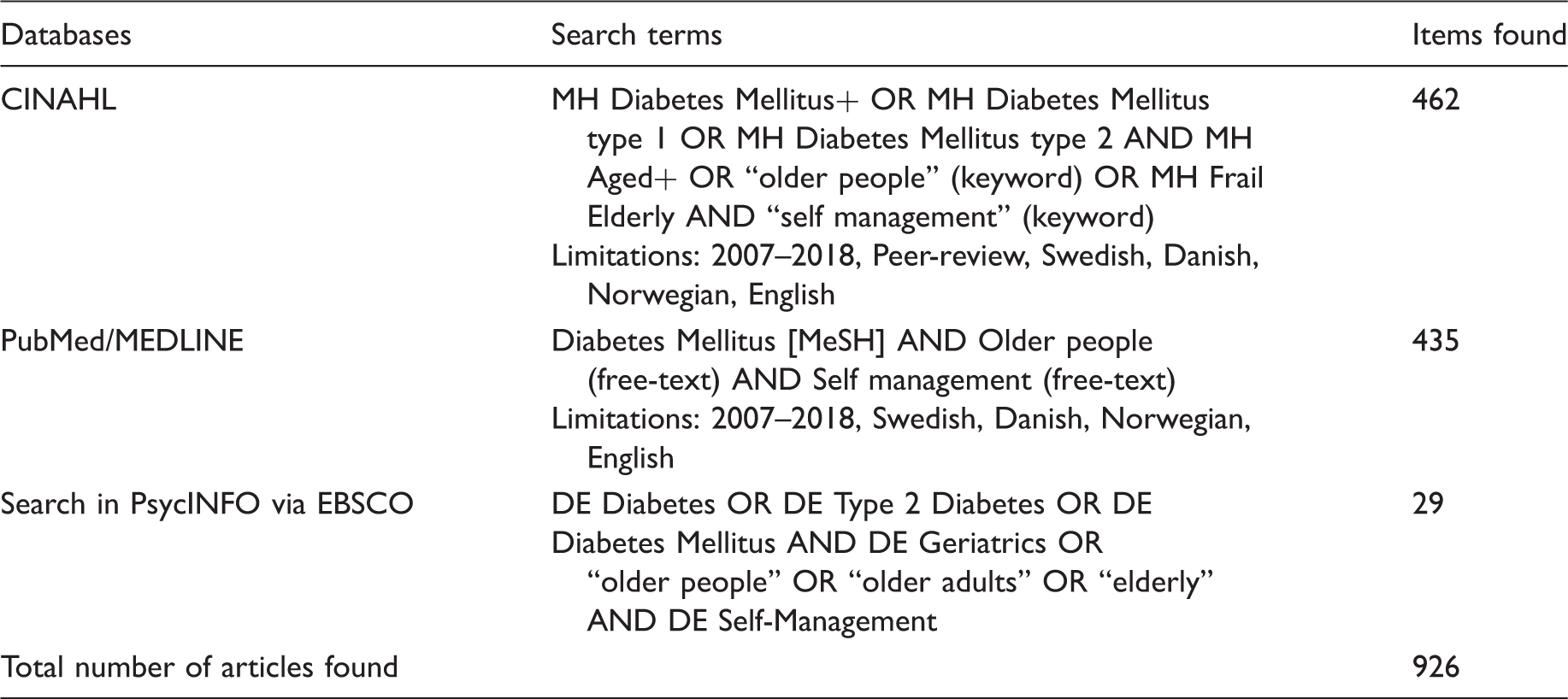
Inclusion and exclusion criteria
The criteria for inclusion in this systematic literature review were: peer-reviewed articles published 2007–2018; older people with diabetes (65 years or older); experiences of diabetes self-care; unimpaired cognitive ability; empirical studies; and articles written in Swedish, Danish, Norwegian or English. Articles focusing on the following issues were excluded: diabetes in people under 65 years; diabetes with dementia; systematic literature reviews; and meta-syntheses. The age inclusion/exclusion criterion accords with the World Health Organization’s 14 definition of older people as being 65 years or older.
Selection process
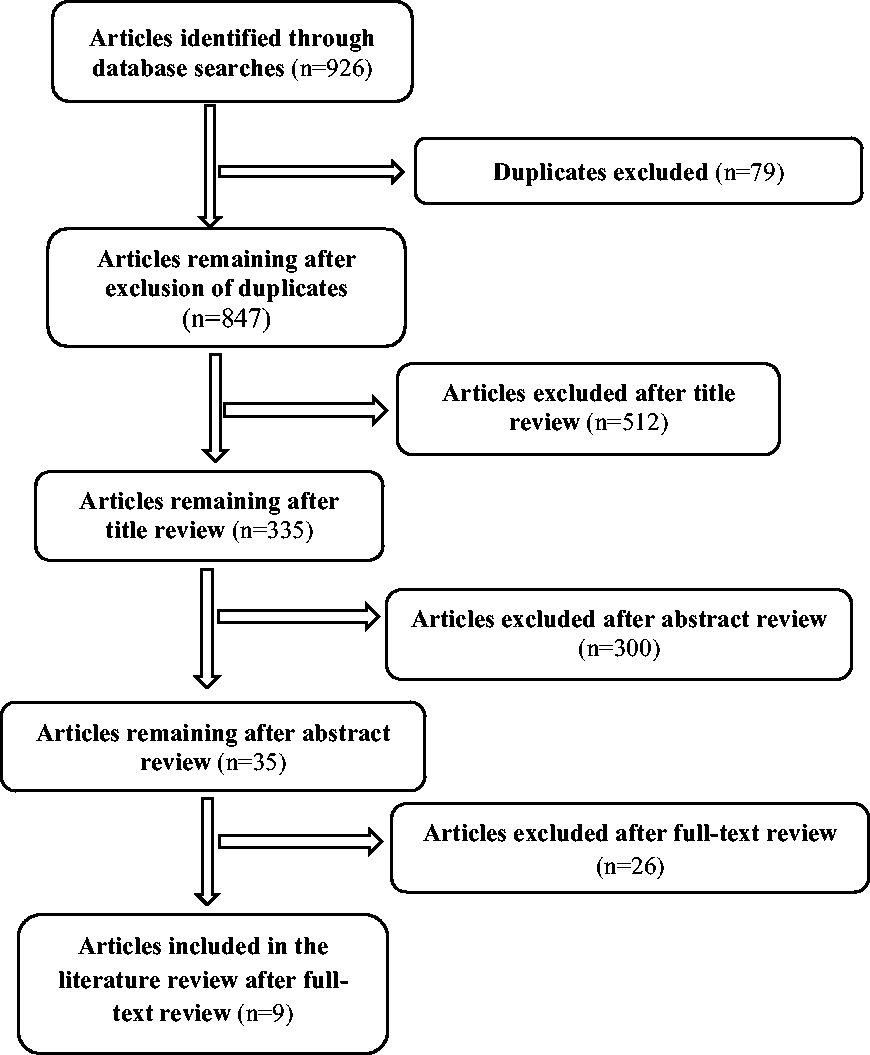
The systematic literature review process was performed by all the researchers in accordance with the preferred reporting items recommended by Moher et al.
15
for systematic reviews and meta-analyses (PRISMA, Figure 1).
Review process of the preferred reporting items for systematic reviews and meta-analyses (PRISMA).
15
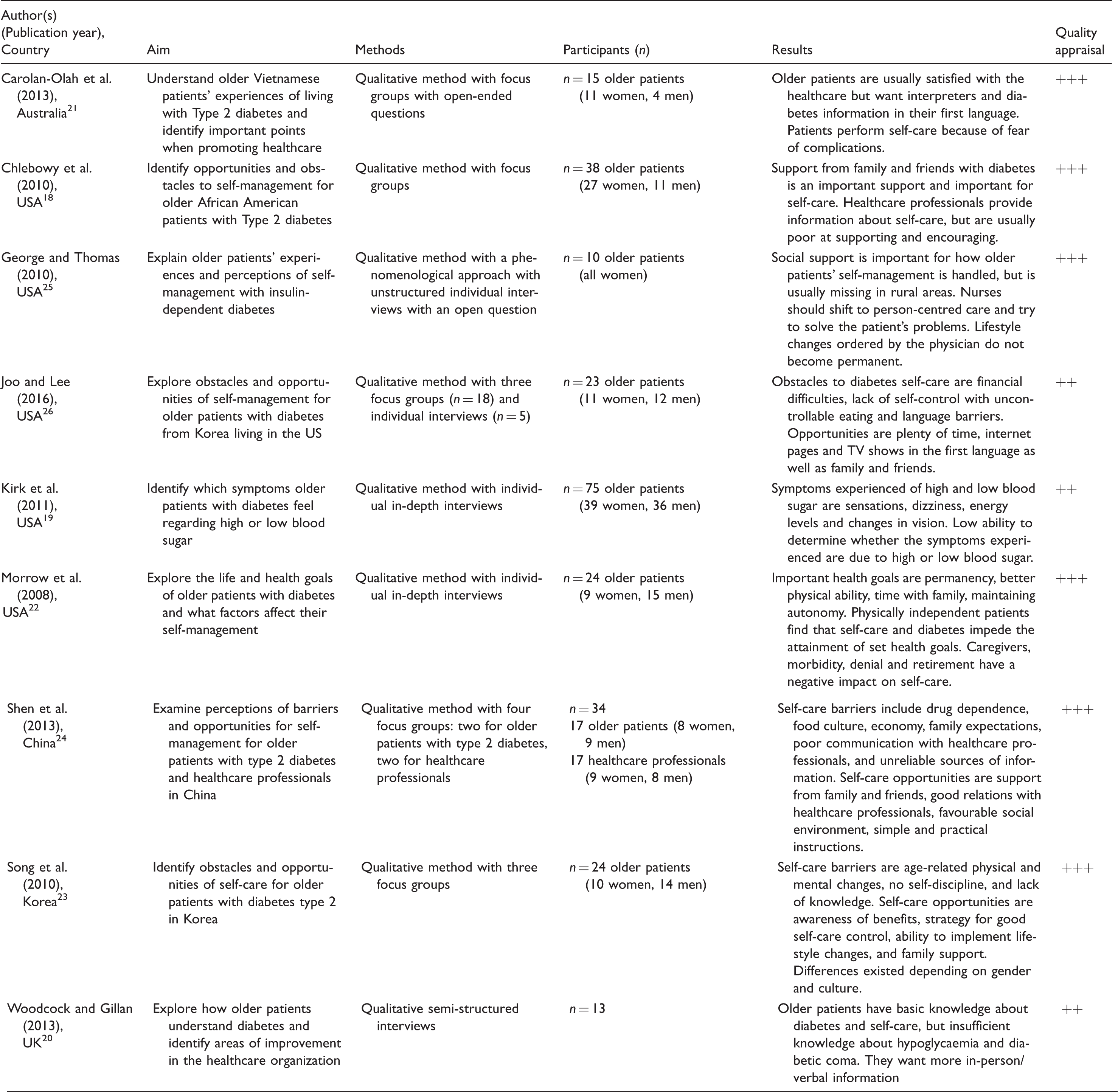
Articles (nine) selected for review using Evans’s (2002) analysis model. 12
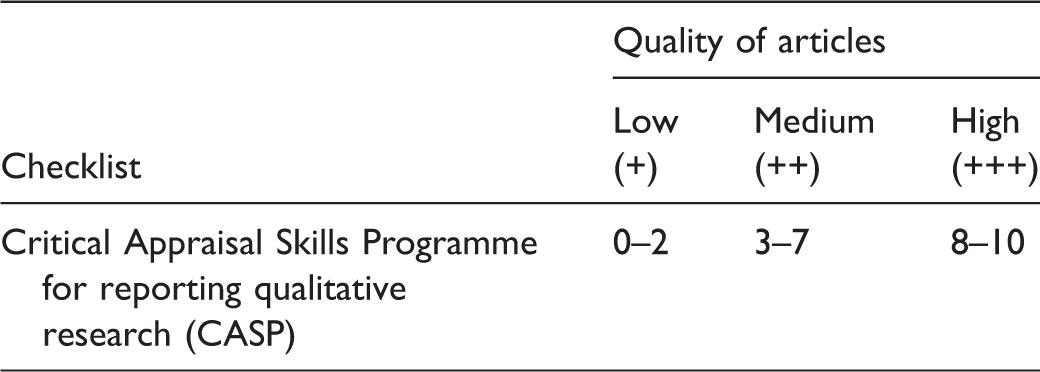
Quality assessment
Quality assessment of the nine reviewed articles.
Data extraction
All the researchers extracted data from the nine articles included in the result. Data were added to a spreadsheet to produce an overview of the articles’ contents. The following categories were used: authors, publication year, country, aim, methods, participants, results, and qualitative appraisal. Table 2 presents a summary of the researchers’ review of the nine articles.
Data analysis
The data analysis was based on Evans’s analysis model. Data analysis aims to describe the data, and to interpret the synthesis of the findings. 12 The articles were read in full by all researchers. The researchers first read the articles individually, then gathered to discuss the articles’ results jointly, and to identify their key findings based on the research question: How do older patients with diabetes experience their self-care? Key findings, in the form of words and/or phrases, were selected and condensed to become more manageable, while preserving the main content. The condensed material was marked and codes were created. Subsequently, all researchers searched for similarities and differences among the codes created during the condensation process, thus forming groups of related codes. This comparative analysis process resulted in the identification of themes and their subthemes. The researchers compared the identified themes and subthemes with the original articles to ensure the relevance of their interpretations. 12 Finally, the result was expressed by describing all themes and subthemes with examples from the original studies in the form of a synthesis. The researchers agreed on a final synthesis after comparing and discussing their individually developed syntheses. To strengthen the credibility and reliability of the results of this literature review, and to promote the reader’s understanding of the matter at hand, the results are presented with quotations from the nine analysed original studies.
Results
Overview of themes and subthemes.
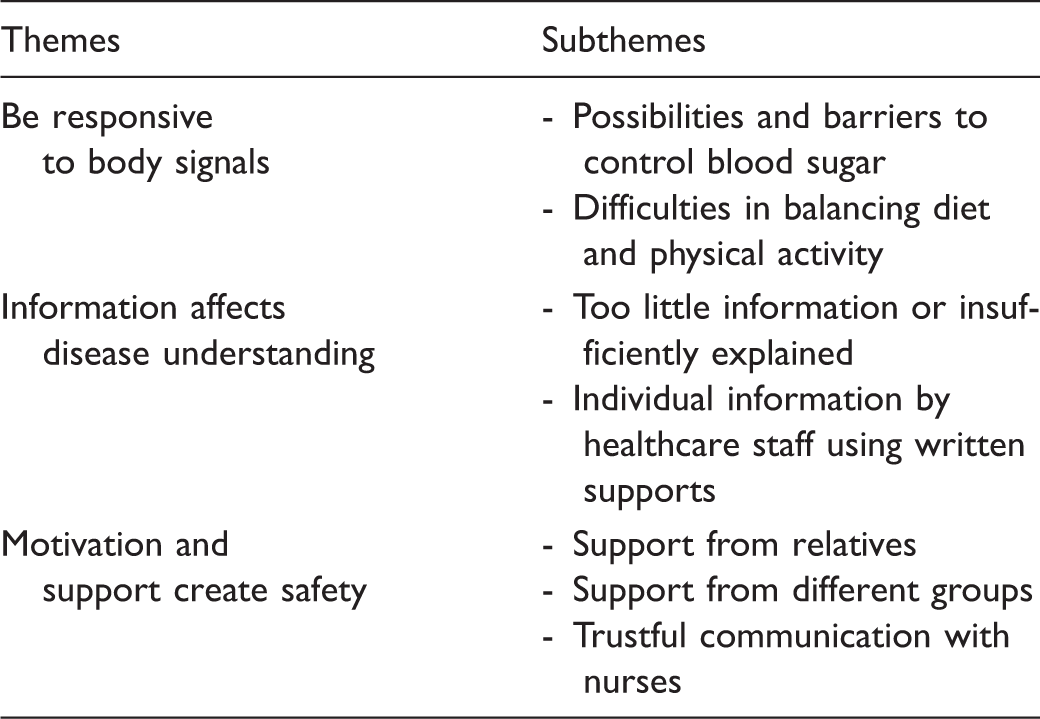
Be responsive to body signals
The theme ‘Be responsive to body signals’ covers how older patients with diabetes experience possibilities and barriers with blood glucose level testing within the context of their self-care. 20 If the patient experiences difficulties in balancing diet and physical activity, especially if dietary recommendations are not followed, the self-care experience will suffer.
Possibilities and barriers to control blood sugar
Blood glucose testing is important for avoiding health complications. Older patients fully accept their diabetes and are motivated to take care of their health. Some are particularly motivated to manage their self-care due to fear of leg amputation. 21 Older patients taking insulin and/or oral anti-diabetes medicines are intimidated by the thought of experiencing high blood glucose and ending up in a coma. They are significantly more concerned about detecting low blood glucose levels than high ones, due to their awareness of the risk of complications due to low blood glucose.19,20
The older patients described that they knew the symptoms of swings in blood glucose: feeling weak and serious walking difficulties. When older patients sense a swing in blood glucose levels, they experience no difficulties in performing a test; instead, they see it as an opportunity to achieve balance in their blood glucose levels.18,19 Despite their awareness of the importance of blood glucose testing, older patients with diabetes have unpleasant experiences of blood glucose testing, such as dizziness and shakiness, due to their fear of needles and the pain, which makes them avoid or fail to perform testing, which negatively impacts their self-care. 18 Older patients, despite being able to perform their blood glucose testing, are often unable to interpret the results and often confuse low and high blood glucose levels.19,20 Consequently, these patients need assistance to understand their results, which can be a source of frustration. 20
Difficulties in balancing diet and physical activity
The subtheme ‘Difficulties in balancing diet and physical activity’ covers how older patients with diabetes experience the dietary restrictions they are expected to respect in the context of their self-care.21–23 Older patients accept that it is important to balance diet and physical activity, for instance walking, in order to promote good blood glucose levels and reduce the risk of complications. Older patients follow all the recommendations received 22 and are mindful to adjust their diet to offset any excessive intake of carbohydrates. 21 Older patients often wish they had been aware of the disease’s seriousness earlier, and regret that they did not change their living habits and take control of the illness earlier. 22 Older patients are aware of their weaknesses and try to compensate using personally devised methods, for example by always carrying their medicines with them in their clothes. 23
Older patients find it difficult and tiresome to always have to control their diet.21,22 They prefer to enjoy life as much as possible, despite the risk of complications or even early death. Eating according to healthcare recommendations is not considered a happy lifestyle; older patients prefer to eat what they like. 24 Older patients despair over the limitations and routines required during diabetes self-care; some perceive it as almost a death sentence. 25 Sometimes the difficulty in balancing diet and physical activity can be uncontrollable due to the older patient’s emotional or physical state, for example problems with their knees, 24 making it difficult to manage self-care.
Older patients find it particularly challenging to follow dietary recommendations and procedures,22,25 especially on special occasions, for instance when entertaining guests at home. At such occasions, they strive to not attract attention to their illness and dietary requirements, and often deviate from them. 24 Older patients live in multigenerational settings in which they are in part responsible for taking care of children and cooking, meaning that they eat the same food at the same times as the rest of the family, making it difficult to maintain a strict diabetes diet. Similarly, requirements in terms of hospitality and good manners can make it difficult to refuse certain drinks and foodstuffs in specific situations. 24 Older patients describe other cultural and life situation barriers to self-care, such as educational level and economic difficulties or lack of relatives. 26
Information affects disease understanding
The theme ‘Information affects disease understanding’ covers how older patients with diabetes experience the information provided to or obtained by them in the context of their self-care.21,24-27
Too little information or insufficiently explained
Older patients often find it difficult to obtain knowledge on their own, due to, for instance, vision and memory difficulties. They can also feel that the information provided during visits to healthcare facilities is often insufficiently explained. Older patients see themselves as being solely responsible for their self-care; they have to take care of it themselves. Consequently, they want to take greater responsibility for their self-care and avoid asking other people for help. 24 Such patients often use TV programmes on diabetes and/or physical exercise as self-care supports. Older patients with other first languages watch medical programmes on channels from their country of origin to gain information and knowledge from medical doctors about diabetes self-care. 26
Language barriers are sometimes experienced by older patients. If the information is not provided in the older patient’s first language, this decreases their knowledge about diabetes and symptoms, which hampers their self-care and increases their feelings of frustration and vulnerability.21,26
Individual information by healthcare staff using written supports
Older patients with diabetes only take diabetes-related healthcare advice from healthcare professionals and they obey their physicians’ instructions without question. These patients have a great deal of respect for their physicians. 21 Older patients prefer individual support from healthcare professionals combined with plain written information. Often they seek easily comprehensible and person-centred information. 25
Motivation and support create safety
The theme ‘Motivation and support create safety’ covers how older patients with diabetes experience sources of motivation and support in the context of their self-care.18,21,24,25
Support from relatives
Older patients feel that their self-care works better when they receive support from relatives. Older patients feel that healthcare personnel are knowledgeable about the illness but poor at providing support. Consequently, these patients reach out to relatives for support for their self-care. 18 Older patients value the encouragement and support, e.g. financial assistance for medications, housecleaning and moral support, provided by relatives in the context of their self-care. 24
Older patients sometimes feel that their relatives do not understand the difficulties involved in self-care. 24 However, they appreciate the presence and support of relatives during encounters with healthcare staff. Relatives often play an important role in monitoring a patient’s diabetes medications. 18
Support from different groups
Older patients are very positive towards support groups and self-helps groups bringing together patients with diabetes. Such groups enable them to exchange experiences and advice, thereby gaining a better understanding of their situation than either relatives or healthcare personnel can provide. The older patients feel that support groups make them feel less alone with their diabetes and that such groups can help them cope with their diabetes, for instance by making them engage in physical activity with their peers.18,24
Trustful communication with nurses
When trust and friendship characterize communication with their nurse, older patients experience more participation, responsibility, and safety in their self-care. When nurses show interest, take time to communicate, offer support and are responsive, older patients dare to talk about their self-care difficulties without hesitation. 24 Trustful communication with nurses makes older patients dare to open up and admit that they have no desire to take responsibility for or be involved in their self-care. Such patients want nurses to tell them how they should live; they feel confused when self-care responsibility is laid on them. 21
Discussion
The aims of this qualitative systematic literature review were to investigate how older patients with diabetes experience self-care and to find out how nurses can support self-care. Older patients understand the relationship between diet, physical activity and blood glucose values. However, older patients with diabetes experience difficulties in carrying out their self-care.22,24 Ağralı and Akyar 1 found that older patients with diabetes do not see the disease as serious and disregard treatment recommendations. This tallies with Shen et al.’s 25 finding that dietary recommendations are difficult to follow, thereby affecting self-care negatively. Older patients find it difficult to interpret the results of blood glucose tests and need help from nurses to understand test results and related necessary actions. Consequently, it is important that nurses set individual learning goals for their older patients with diabetes as regards the importance of blood glucose levels. 29 To this end, nurses should take a person-centred approach when providing older patients with information and support, 6 thus providing these patients with an opportunity to develop understanding of their situation and enhance their self-care ability. 5
Generally, older patients want to receive written information, but often find it difficult to understand without spoken explanations. 25 Nurses should therefore take the older patient’s life situation into account when providing written information and developing individual person-centred teaching. 5 If the situation becomes overwhelming for the older patient, and independent self-care cannot be safely performed, nurses should seek alternative methods and tools for providing safe care. In this context, nurses should be aware of the potential advantage of involving the patient’s relatives as support for the patient’s self-care. 5 To be seen and respected provides a basis to develop a trustful and caring relationship. Hörnsten et al. 28 underline how empathy, understanding and respect can create a trustful relationship between the nurse and the older patient.
The results show both that it can take time for older patients with diabetes to accept the disorder and to understand the importance of self-care, and that their awareness of the disease’s seriousness and consequences often comes too late.22,23 This underlines the crucial importance of nurses’ ability to guide, teach and especially motivate older patients, so that they can increase their self-care ability. 5 Nurses should also be aware of the positive effects, not least in terms of emotional support, that support groups can have on self-care and should encourage older patients to participate in such groups.18,24
Nurses should be mindful of the potential impact of insufficient information and instruction in a patient’s first language,21,26 which often results in such patients relying on medical TV shows in their first language about diabetes and physical activity, 26 and adapt their communication style accordingly. The nurse’s understanding of the older patient’s previous lifestyle and experiences is essential for assessing the patient’s needs in terms of education, support, goal-oriented actions, and personalized care plan, in order to enhance the individual patient’s health and self-care ability.5,31
Relatives need more support, information and education about diabetes so that they can support the older patient’s self-care. 29 A trusting relationship between the nurse and relative is important because relatives are a resource and lifeline for older patients with diabetes. Franks et al. 30 found that when one spouse has diabetes, the spouse without diabetes often adapts to the self-care requirements by, for instance, following the same diet. Spouses without diabetes often experience guilt when the spouse with diabetes fails to adhere to the prescribed self-care diet, thus increasing the risk of depression in both spouses. According to Orem, 5 relatives’ resources are important for the older patient’s self-care. However, Dalton and Matteis 31 have argued that Orem’s 5 theory is not sustainable when it comes to diabetes self-care. Dalton and Matteis 31 also found that criticism from the spouse without diabetes can create negative feelings, such as guilt and depression, in both spouses. This reasoning is consistent with Franks et al.’s 30 study that revealed a mutual influence between spouses. According to Gabre, Wireklint Sundström and Olausson 32 it is important that diabetes nurses can create time for patients to reflect on their new situation and also support relatives to help patients adapt to their new identity.
The results show that older patients with diabetes want nurses to be responsive and attentive to their needs for assistance and support when they cannot cope with their self-care.23,25
Summary of recommendations
Nurses can support older patients’ self-care by taking a person-centred approach. Nurses can use four strategies to support self-care: 1) Provide individualized training on blood glucose testing and dietary requirements; 2) Provide a combination of in-person training and written support materials; 3) Encourage participation in support groups; and 4) Actively involve the patient in healthcare decisions. Nurses can provide a trustful communication to motivate and support older patients to greater levels of participation, responsibility, and safety in their self-care. Nurses need opportunities and training to increase their communication skills and knowledge about diabetes and safe self-care by older patients. Nurses need opportunities to increase their knowledge and reflection about diabetes and safe self-care support, and related ethical and cultural aspects.
Limitations
A qualitative systematic literature review was chosen as the method for gaining an overall perspective of how older patients experience their diabetes self-care. Both type 1 and type 2 diabetes were included in the literature search to achieve a broad perspective, which can be seen as a weakness. However, the researchers do not believe that the inclusion of both diabetes types biased the results.
This study was based on the nine articles available when the literature search was carried out. This limited number indicates that there may be a knowledge gap in this domain and may reduce the value of our practical conclusions. Despite the fact that the literature search in this systematic literature review covered the databases believed to be of relevance, one cannot guarantee that all relevant existing research in the area has been included. No search for so-called ‘grey literature’ was made because such publications are generally not quality reviewed and their method descriptions are generally lacking.33,34 However, the value of a literature review is not determined by its number of included articles; the key question is whether or not all relevant articles are included. 35
This literature review included nine articles from different journals and cultures and from non-English-speaking countries. In this study, no particular attention was paid to possible cultural differences, which can be seen as a limitation. However, the results and conclusions of the articles were similar. This indicates that older patients with diabetes and their experiences of self-care may be shared among cultures.
Another possible limitation is that the databases differ in their search terms for the same phenomenon. To minimize this limitation, the searches were carried out with the assistance of a university librarian.
Throughout the analysis process the researchers discussed the analysed texts to reduce any bias due to prior understanding of the research topic. The analysis of the similarities and differences between themes and subthemes incorporates these discussions, in order to strengthen the study’s credibility and reliability. 17
Conclusion
This qualitative systematic literature review describes older patients’ experiences of self-care with diabetes type 1 and 2. The result shows that there are variations of how self-care is experienced. However, older patients with diabetes generally have negative experiences of their self-care as regards blood glucose testing and dietary requirements and of the related information provided by the healthcare organization; whereas they tend to have positive experiences of support from relatives and support groups.
Footnotes
Funding
This research received no specific grant from any funding agency in the public, commercial, or not-for-profit sectors.
Conflict of interest
The authors declare that there is no conflict of interest.