




Abstract
Nurses are required to apply research-based knowledge in order to perform evidence-based practice. A survey was conducted to identify nurses’ information-retrieval skills, behavior and needs and replies were received from 1301 nurses. The most used electronic resources for retrieval of healthcare information were the local intra-net and Google, while bibliographic databases were used to a lesser extent. Half of the respondents indicated that they were accustomed to search databases and an equal number indicated lack of time and that information retrieval was not requested by their colleagues. The majority assessed their own information-retrieval skills as good while one third lacked knowledge and described information retrieval as difficult. Significant differences in competences and use of bibliographic databases were found between nurses who had graduated before and after an educational reform in 2011. Further measures, including collaborations between librarians and nurse management, must be developed to support information literacy and evidence-based practice among nurses.
Keywords
Background
In order to provide the best possible nursing care, nurses must be able to retrieve and read scientific literature as a part of evidence-based practice (EBP) 1 defined as integrating individual clinical expertise and patient experience with the best available external clinical evidence. 2 Nurses are obtaining information system resources relevant to the information needed in order to perform EBP by information retrieval. However, several studies illustrate a discrepancy between the ideal of EBP and clinical nurseś use of evidence-based literature. A study among 3500 clinical nurses in New Jersey showed challenges both in using bibliographic databases and in access to electronic resources as well as success of using the resources. Half of the involved clinical nurses had never used the hospital library, not knowing where the library was, or they did not know that nurses were allowed in the library. 3 Furthermore, a review from 2018 showed that nurses preferred using information resources such as Google and asking colleagues, while bibliographic databases were secondary choices. The reasons were lack of time, lack of retrieval skills and lack of training in database searching. 4 Similar results were found in a review from 2017 showing that not having enough time to conduct a retrieval, lack of retrieval skills and lack of access requirements were the most significant barriers to using electronic evidence-based literature among nurses. The authors concluded that hospital managers must provide clinical nurses with enough time and access to online information while at work. Furthermore, healthcare librarians together with nursing leaders must provide the required training for clinical nurses in using electronic evidence-based literature. 5 There seems to be a connection between workplace environment and culture and how evidence-based practice is implemented. Thus, a study from Iceland showed how evidence-based practice is more likely among nurses having access to a library providing medical and nursing journals, and opportunities for retrieving healthcare information at the workplace. 6
Nurses at a large Danish University Hospital, until July 2018, had access to an in-house library service including a large number of bibliographic databases, teaching materials and tutorials, as well as personal guidance from librarians and onsite courses in literature retrieval. In addition, some departments at the hospital organize Journal Clubs for nurses, 7 all in order to strengthen competences in information retrieval and promoting reading of scientific literature. The in-house library has subsequent been transferred to the University Library of Southern Denmark, offering the same library services but located six kilometers from the hospital. In relation to this transition, from an in-house library service to a university library, there is a need to qualify future library services that promote nurses’ information literacy levels. Information literacy is understood as the ability to access the needed information effectively and efficiently and to evaluate the information and its sources critically and incorporate the selected information into one’s knowledge base. 8
Danish nursing education (up to 1993) mainly took the form of apprenticeship, with practical training and shorter sessions of theory. After 1993, nurse education changed to a program of study with periods of practical training, and in 2001 to a bachelor-level program (first graduates in 2004), with scope to continue studies at Masters level. 9 This development within the nursing education curriculum has had an impact on nurses’ information-retrieval skills. Thus, we wanted to clarify eventual differences in needed services supporting nurses’ information retrieval.
Objectives
The aim of the study was to identify nurses’ information-retrieval skills and behavior in order to inform and enhance services supporting EBP among nurses at the hospital. Prior to the survey, our hypothesis was that nursing education plays a role in nurses’ information-seeking behavior and competences. The following hypotheses were tested:
Nurses who graduated after 2004 (bachelors) search bibliographic databases more frequently than nurses who graduated before 2004. Nurses mainly retrieve literature in bibliographic databases when taking part in further training. Nurses, in general, do not feel competent when searching bibliographic databases and nurses who graduated before 2004 feel less competent than nurses who graduated after 2004.
Method
Design
A survey was conducted among hospital-based nurses at the turn of the year 2017. Guided by literature10–17 a questionnaire was developed and pilot tested and set up at the online platform SurveyXact. Besides demographic data, the questionnaire included questions and statements on the use of electronic resources including bibliographic databases, participation in courses on literature retrieval and assessment of own literature retrieval skills, as well as future needs for instruction and guidance in retrieving information using bibliographic databases. At the end of the questionnaire, the respondents had the opportunity to add further comments.
Participants and setting
The study was conducted at a large university hospital in Southern Denmark. The invited nurses were employed at the hospital and had, as well as all healthcare professionals at the hospital, until July 2018 access to an in-house library service. The library service included a large number of bibliographic databases, teaching materials and tutorials, as well as personal guidance from librarians and onsite courses in literature retrieval. In addition, some departments at the hospital organized Journal Clubs for nurses, 6 with the aim of both strengthen competences in information retrieval and promoting reading of scientific literature.
Data collection
The questionnaire was distributed by email to 4345 nurses employed at the hospital. With the help of the hospital’s IT services a list of professional email addresses for all nurses employed at the hospital was obtained. A reminder was sent once, if the link had not been activated within 14 days.
Data analysis
Data were analyzed in SPSS24 primarily with descriptive statistics (frequency tables). In order to test the hypotheses, respondents were divided into two groups: respectively graduated before 2004 and in 2004 or later, when nursing education in Denmark had become a professional bachelor’s program. The Wilcoxon-Mann Whitney test was performed to investigate any differences in year of graduation for hypothesis 1 (use) and hypothesis 3 (competence). This test was used as the dependent variables are ordinal, and as the groups can be ranked in relation to each other (from ‘never’ to ‘daily’). Mean rank for the two groups was used to determine which group was highest on the scales used (e.g. a higher mean rank for usage frequency indicates that this group has generally chosen higher values on the scale from never [value = 1] to daily [value = 5]). Final comments made by the respondents were analyzed thematically.
Ethical considerations
As no formal approval was required from the responders according to Danish legislation, an approval was obtained by the nursing director at the hospital. Written information about the study was included in the email stating that participation was voluntary and that the identity of the respondent would not be obtainable but for the administrator of the survey. A link to the questionnaire was provided and to be used if the nurse consented to participate. Data were stored in the online platform SurveyXact where only the administrator of the survey had access.
Findings
The questionnaire was distributed to 4345 nurses employed at the hospital. A total of 1301 (31%) respondents completed the questionnaire and are included in the analysis (Figure 1). Of these, 95% were women and the average age was 43.5 years. Of the respondents, 54% had graduated before 2004 and 46% had graduated between 2004 and 2017. Average age was respectively 51.6 years for nurses who graduated before 2004 and 34.1 years for nurses who graduated in 2004 or later. The respondents had worked in their present job for a mean period of 5 years (range 0–47 years). Distribution of respondents between clinical departments roughly represented the number of nurses employed at the departments.
Flowchart for inclusion of respondents.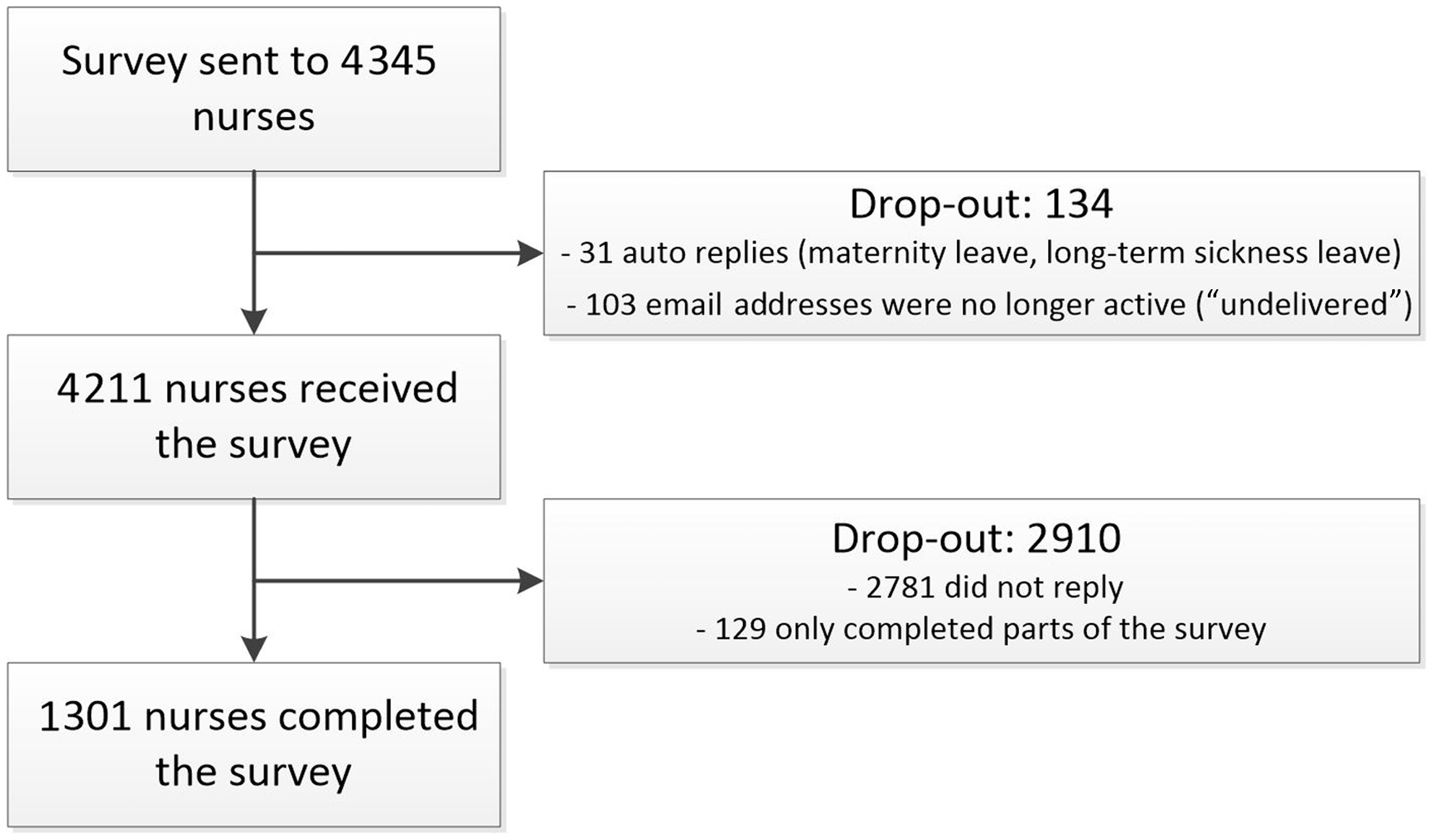
Nurses’ use of information sources
The most used (94%) sources of information were a local intra-net (includes clinical guidelines, patient information, etc.) and other electronic resources (84%), followed by asking colleagues (75%), printed materials (50%), asking a superior (22%), asking at the library (21%) and other sources (6%).
Nurses’ use of electronic resources, n = 1245.
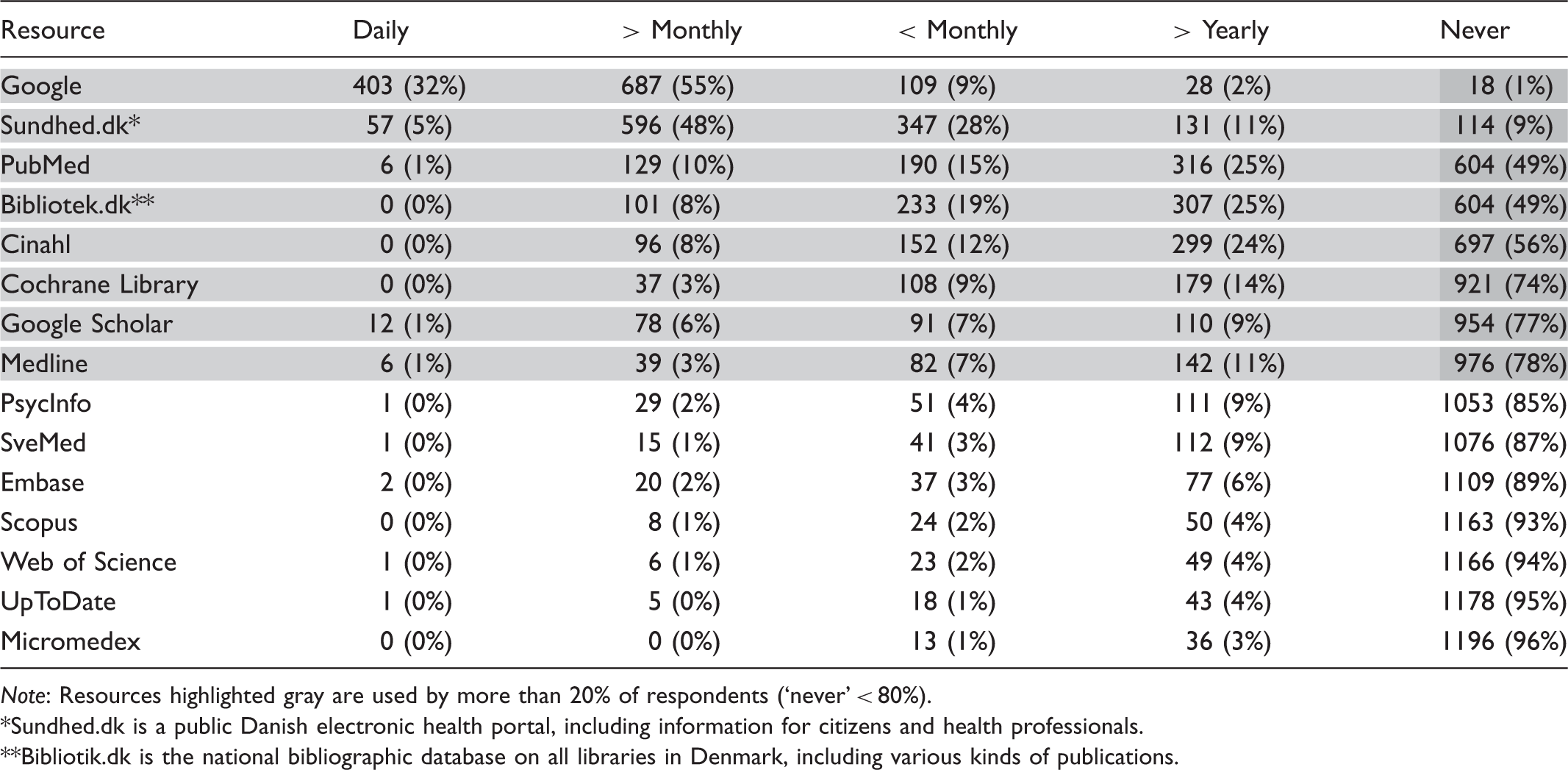
Note: Resources highlighted gray are used by more than 20% of respondents (‘never’ < 80%).
Sundhed.dk is a public Danish electronic health portal, including information for citizens and health professionals.
Bibliotik.dk is the national bibliographic database on all libraries in Denmark, including various kinds of publications.
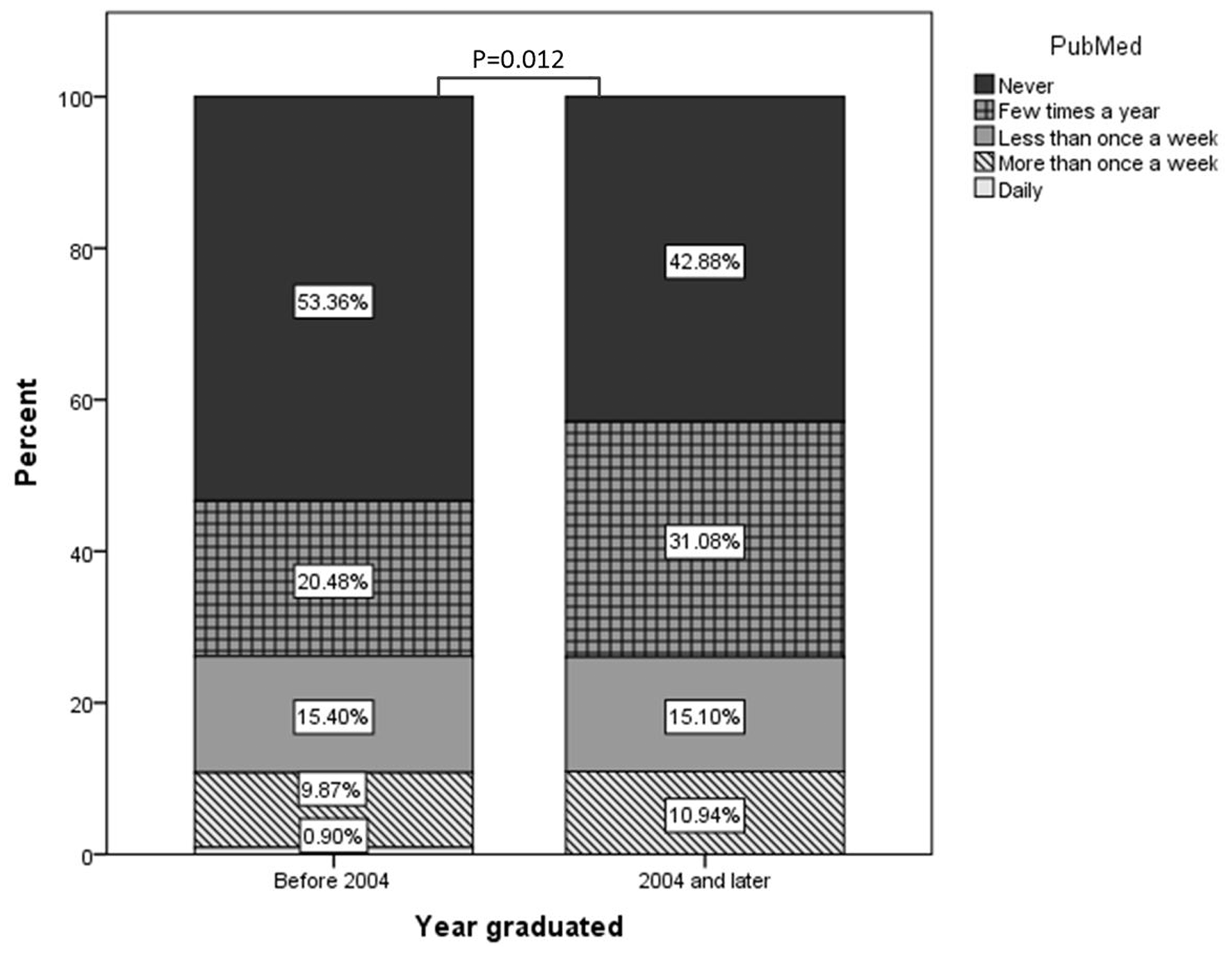
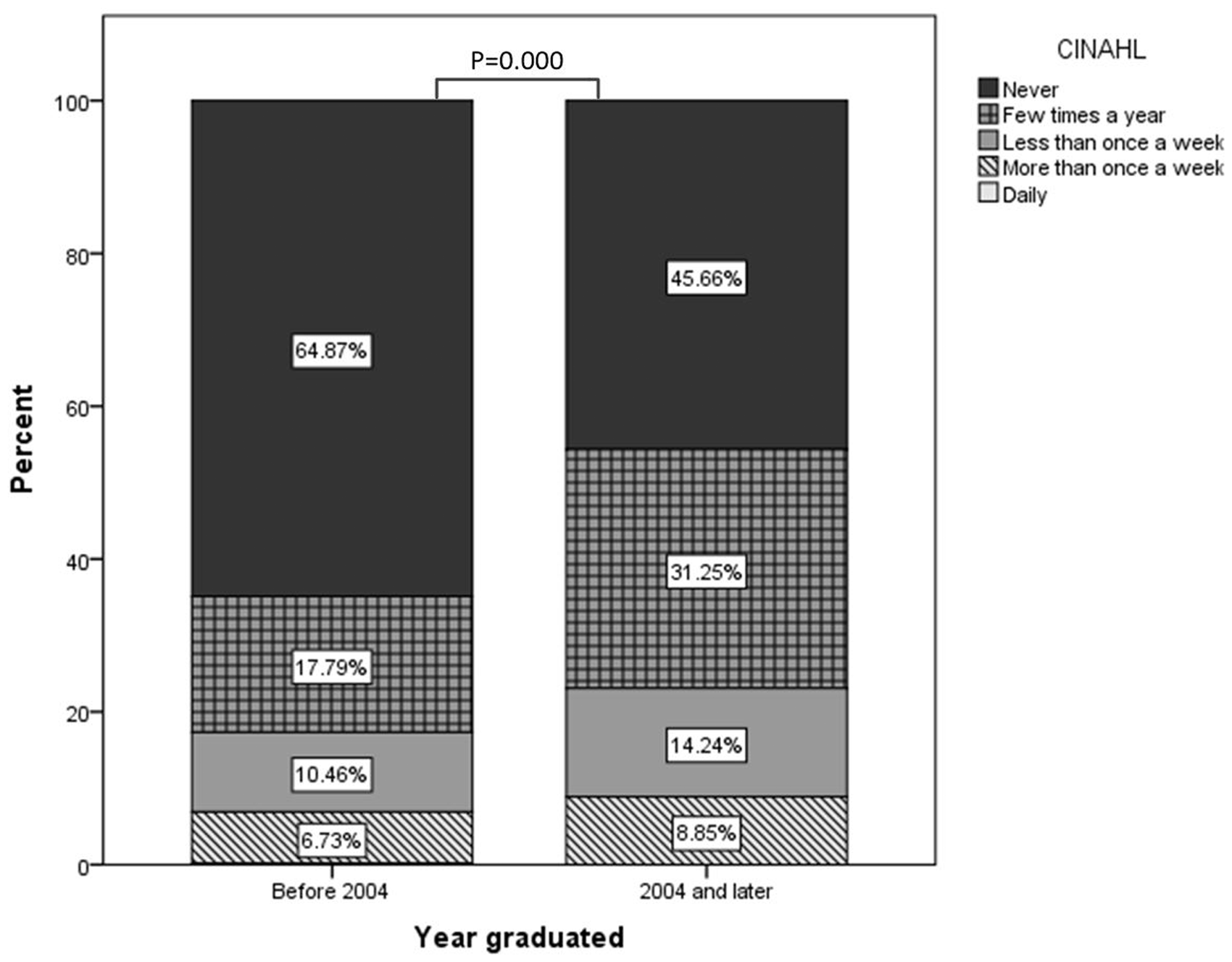
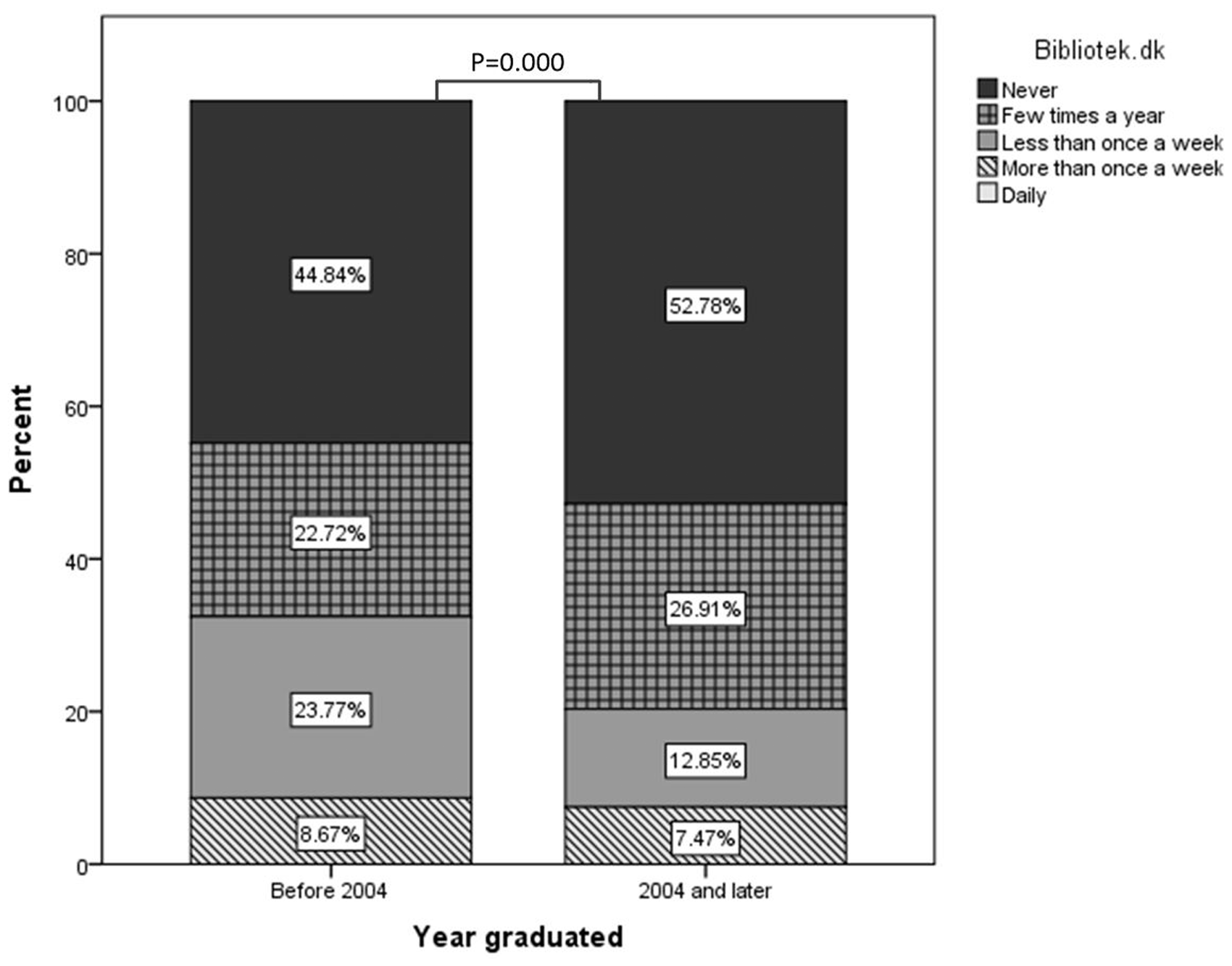
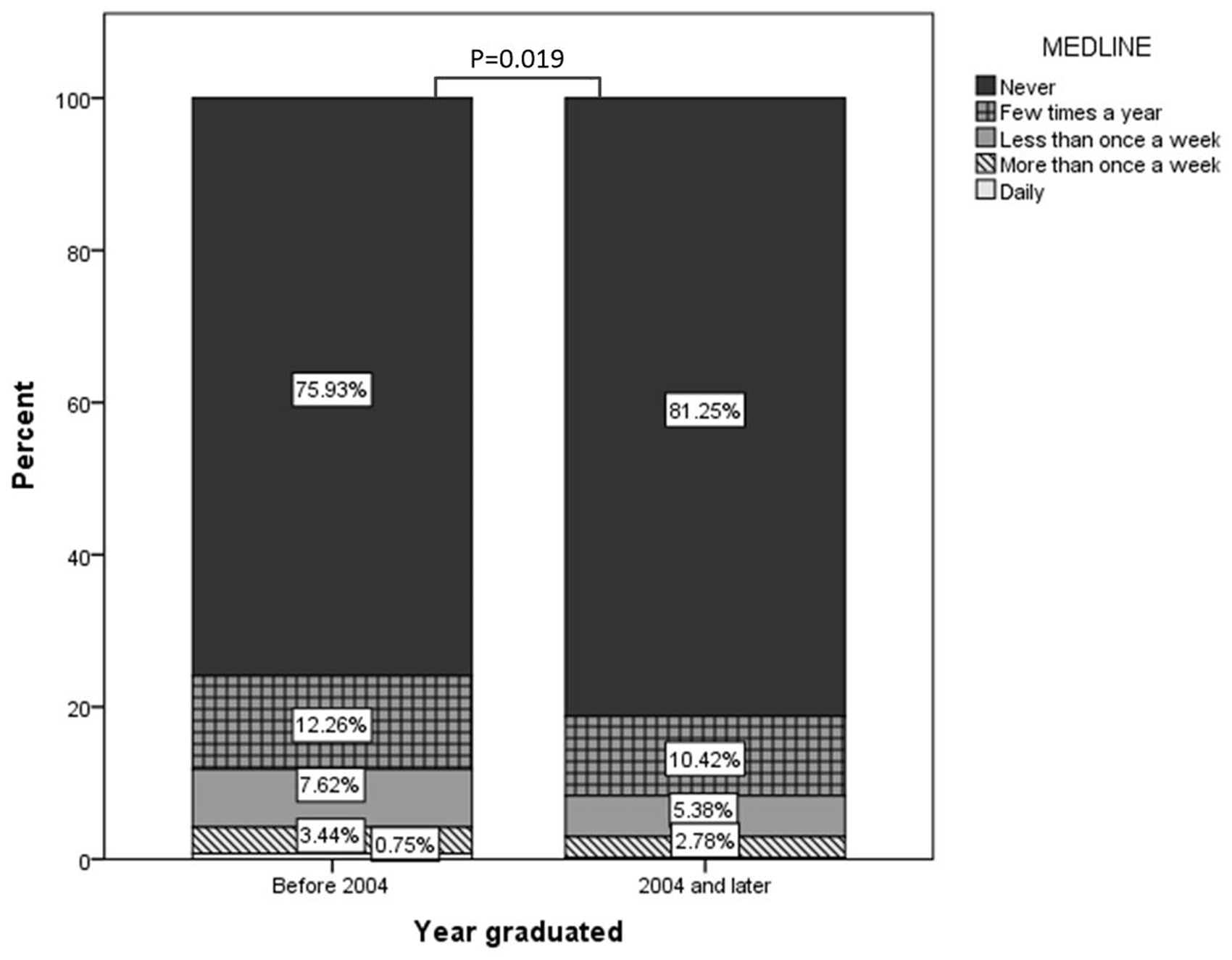
Further analyses of the resources used annually or more frequently by at least 20% of the respondents (the eight resources highlighted gray in Table 1) showed that nurses who graduated in 2004 or later used Sundhed.dk and the two health sciences databases PubMed and Cinahl significantly more frequently than nurses who graduated before 2004 (p = 0.026, p = 0.012 and p = 0.000) (Figures 2–4). On the other hand, nurses who graduated before 2004 used bibliotek.dk and Medline significantly more frequently than nurses who graduated in 2004 or later (p = 0.000 and p = 0.019, respectively) (Figures 5 and 6). There were no significant differences for the remaining three databases (Google, Google Scholar and Cochrane Library).
Use of Sundhed.dk among nurses who graduated before vs. after 2004, n = 1245. Use of PubMed among nurses who graduated before vs. after 2004, n = 1245. Use of Cinahl among nurses who graduated before vs. after 2004, n = 1245. Use of Bibliotek.dk among nurses who graduated before vs. after 2004, n = 1245. Use of Medline among nurses who graduated before vs. after 2004, n = 1245.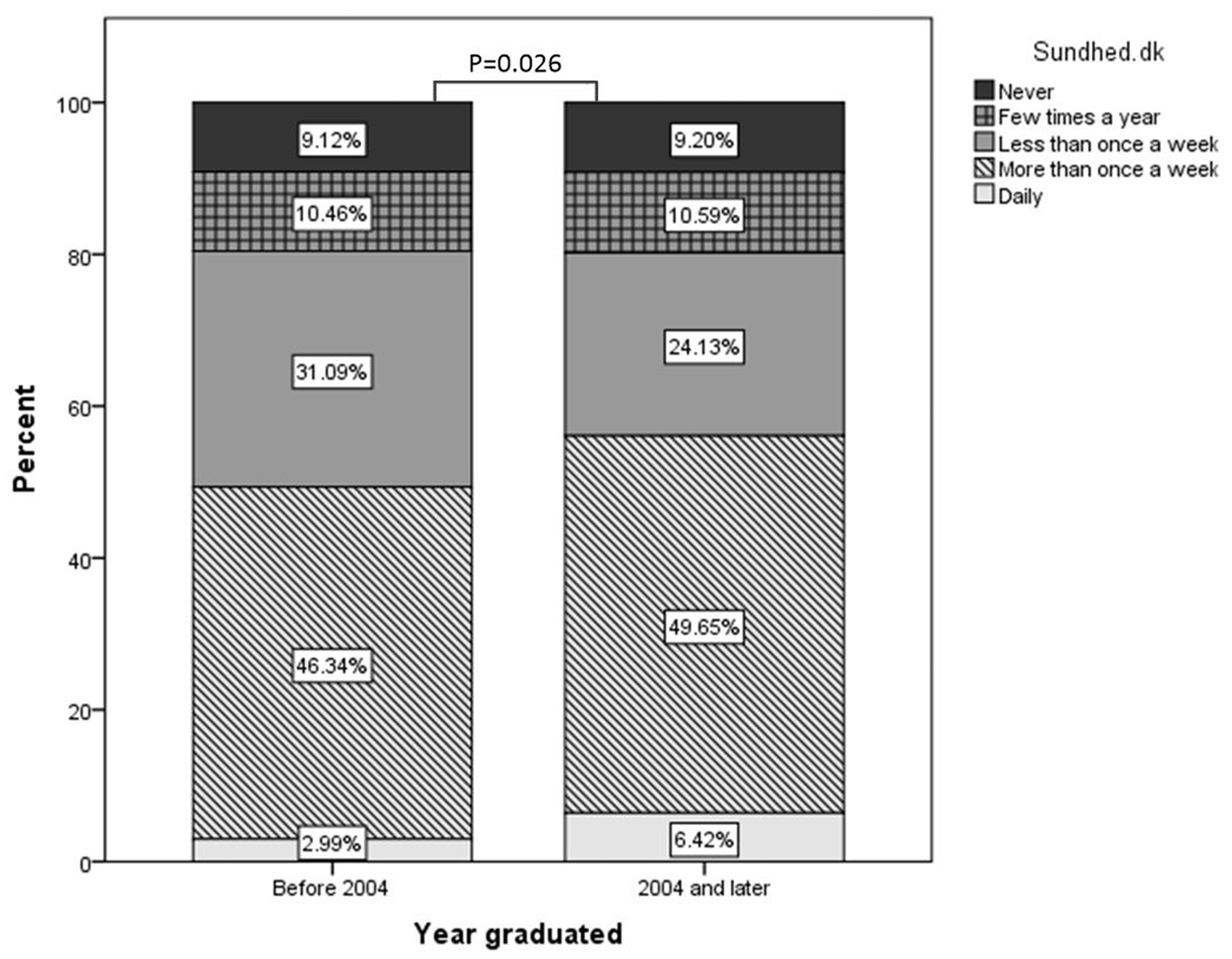
When do nurses retrieve information using electronic resources?
Issues for which electronic resources are used (multiple answer), n = 1301.
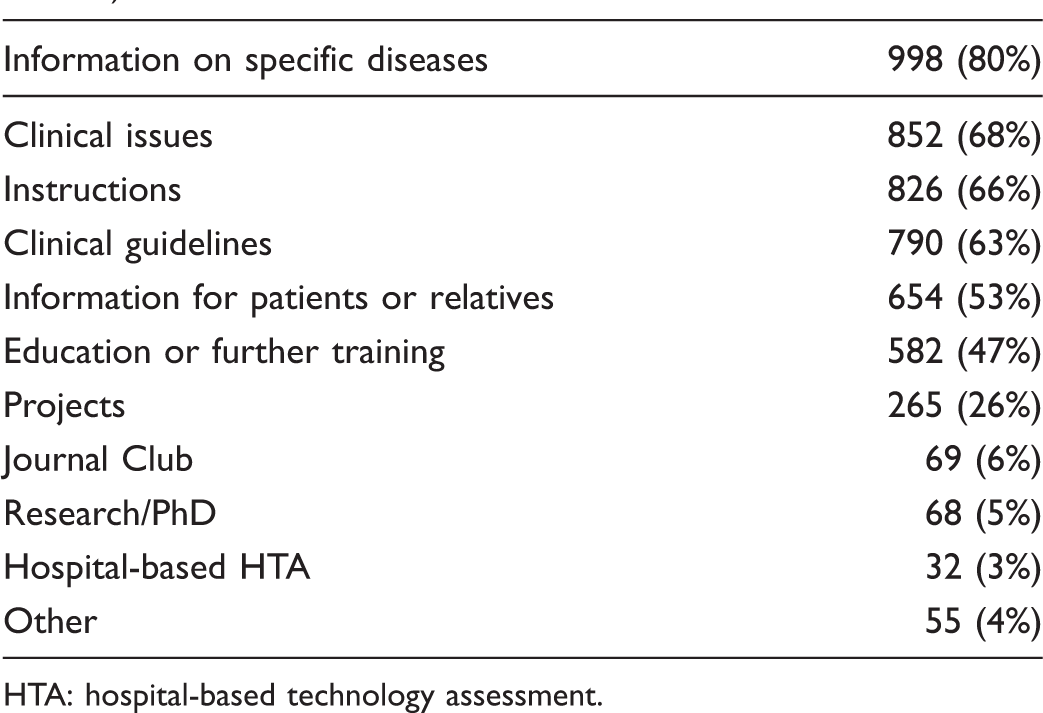
HTA: hospital-based technology assessment.
Information-retrieval skills among nurses
Judging their own abilities for retrieving healthcare information, 14% of the respondents considered themselves as ‘expert’ or ‘very good’, while 28% considered themselves to be ‘good’, 44% to be ‘reasonably good’ and 14% to be ‘poor’. Nurses who graduated in 2004 or later considered themselves better at searching than nurses who graduated before 2004 (p = 0.000) (Figure 7).
Self-assessed ability for retrieval of healthcare information among nurses who graduated before vs. after 2004, n = 1293.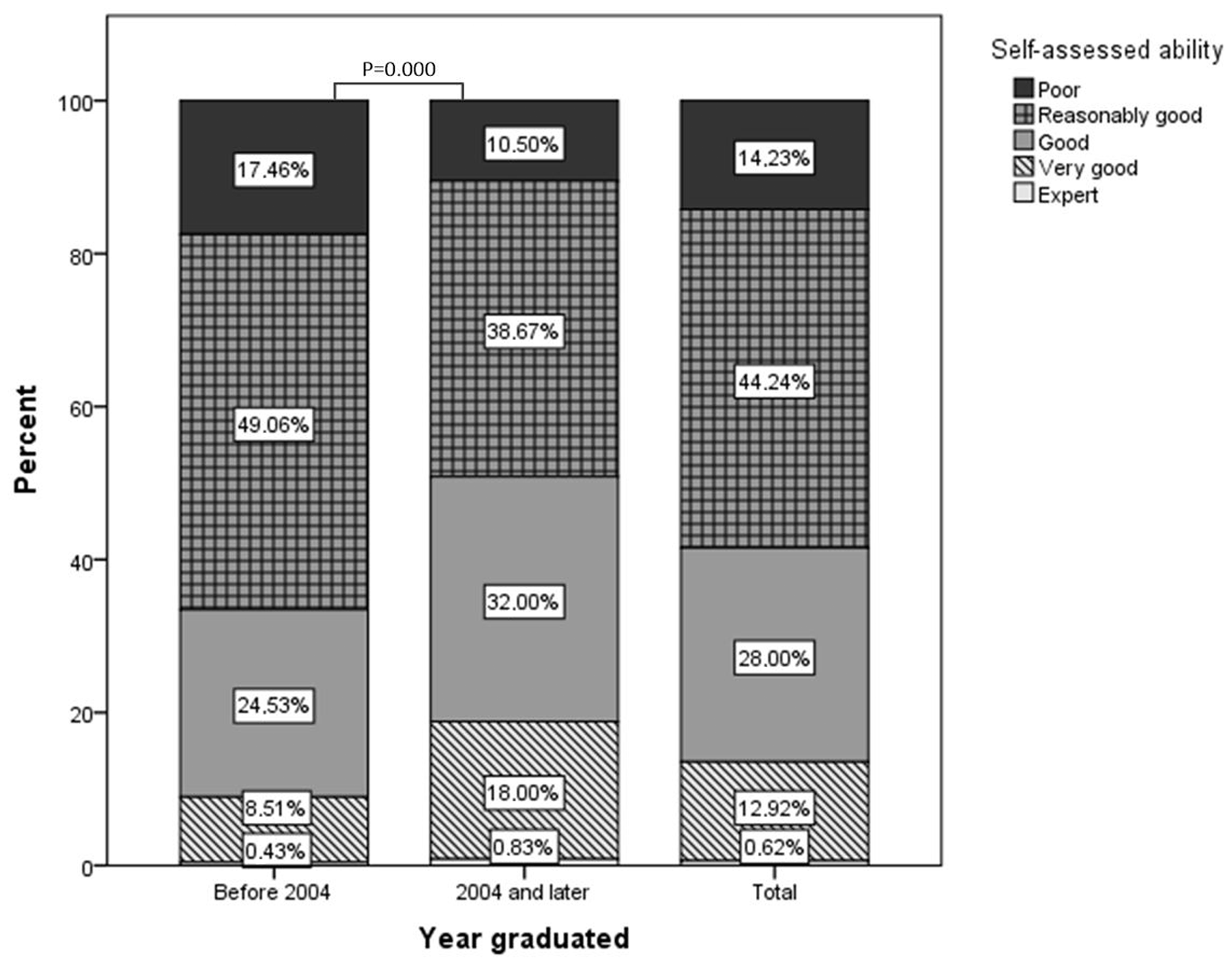
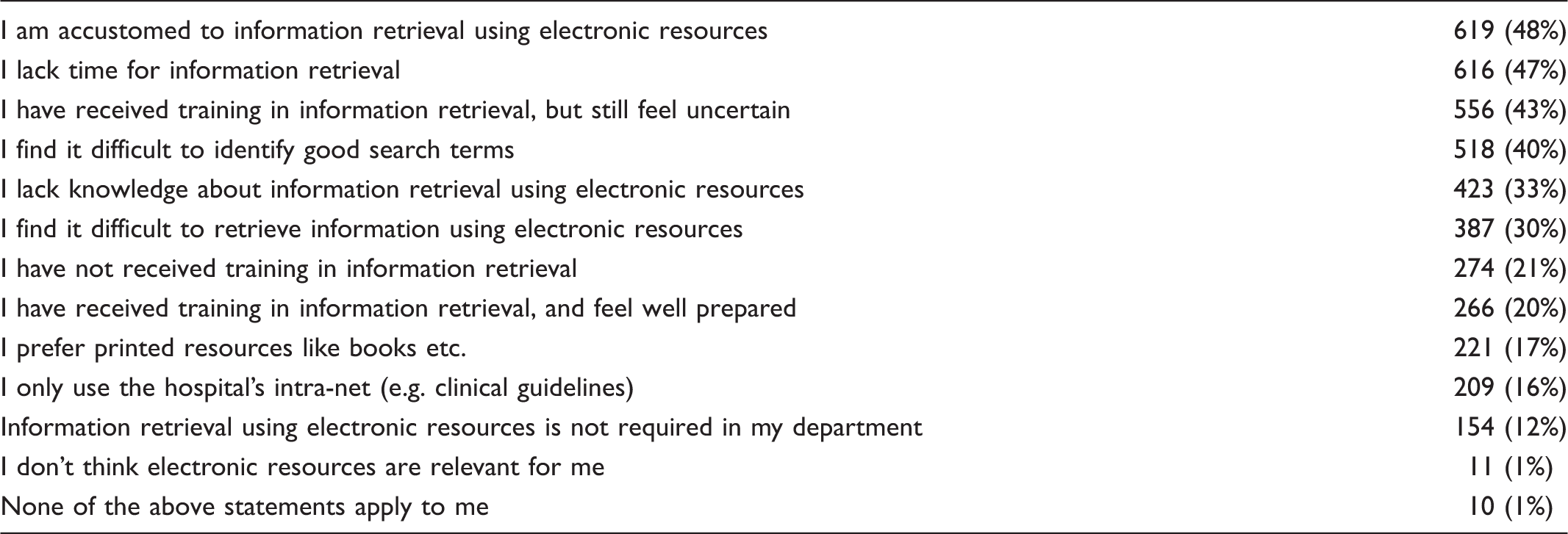
Respondents’ behavior and self-assessed competences in using electronic resources were further investigated through 13 statements (Table 3). Nearly half of respondents (48%) were accustomed to using electronic resources, and almost as many (47%) stated that they lacked time to perform information retrieval, and 12% said information retrieval in electronic resources was not required in their department.
Twenty percent stated that they both had received training in searching for health-related information and felt well-equipped to do so, twice as many (43%) stated that despite having received training, they were still uncertain. Thirty-three percent lacked knowledge about use of electronic resources and slightly fewer (30%) found it difficult to carry out information retrieval while 40% found it difficult to find good search terms. Finally, 21% replied that they had not received any training in retrieval of health information.
Statements about training and skills in using electronic resources (multiple answers) (n = 1301).
Instruction and guidance in retrieving scientific literature
The majority (69%) of the respondents had received some training in information retrieval, for most (76%) it was more than a year ago. The most preferred form of training was individual mini-courses, followed by workshops and instructional videos. The most preferred form of guidance was individual guidance followed by guidelines and instructional videos, chat functions or telephone calls.
Comments made by the respondents
In all, 133 comments provided by the respondents were divided into the five themes; ‘Retrieving information as part of everyday clinical practice’, ‘Intra-net and Google’, ‘Access to health science databases’, ‘Training in retrieving health information’ and finally comments in relation to the survey as such.
Retrieving information as part of everyday clinical practice
Twenty comments were about challenges in relation to learning and immersion in the field of nursing. Business and lack of priority in everyday practice resulted in lack of focus and time for searching and reading health literature. Some respondents commented that they had forgotten how to carry out literature retrieval if they used it infrequently, and then they were encouraged to do a quick search on Google or the intra-net or to ask a colleague. The following comment illustrates some of this: I learned a lot about retrieving research articles during nursing education. But as you do not use it after graduation, you lose it. I want to be good at it again, since I think it’s important.
Intra-net and Google
Nineteen comments were concerning the intra-net, describing a need for better nursing guidelines and improvement of the search function, for instance: There is a need for better nursing guidelines on the intra-net. It is impossible to search for guidelines. When I have time for it, it is in my spare time, but it is impossible to access the intra-net from home. Because everyday practice is busy, it must be VERY simple to retrieve the necessary knowledge. I find the intra-net impossible to use, despite great knowledge of information retrieval. Therefore, I often choose alternatives in order to save time. I find it difficult to find guidelines through the intra-net. I prefer Google or Wikipedia.
Access to health science databases
Twenty-five comments were on experiences with library services including access to these services and proposals for further initiatives such as development of ‘knowledge banks’ with easy access to nursing articles, strengthening the collaboration between library and hospital department through ‘knowledge providers’, and for management to support nurses information retrieval. Additionally, eight comments concerned lack of knowledge of the services provided by the university library. One respondent wrote: Through the nursing education I received good training on how to retrieve information on the web and especially in using healthcare databases. At that time, I also had access to the databases through my school log-in. The problem today is, that I don’t know how to access the databases.
Training in retrieving health information
Twenty-three comments were about having received training, but still experiencing challenges in literature retrieval. The comments pointed out that knowledge not being used is quickly forgotten, literature retrieval is often difficult, and that it is difficult to find good search terms and to build a search strategy. Another challenge commented on was the many databases with different search functions. One respondent wrote: I have been trained [doing literature review] several times, but I can’t remember it all. Nothing is the same in the different databases, and when you do not use it often, you tend to forget it.
The survey
The remaining 38 comments addressed the questionnaire itself; both praising focusing on the subject and uncovering the need for knowledge, and criticism of the set-up of the questionnaire and uncertainty of the provided response options.
Discussion
The purpose of the study was to uncover information-retrieval skills and behavior among hospital nurses in order to inform and enhance services supporting evidence-based practice. The first hypothesis, that nurses who graduated after 2004 more often used bibliographic databases or other electronic resources than nurses who graduated before 2004, could neither be confirmed nor rebutted. As the vast majority of nurses used electronic resources frequently a difference occurred in relation to which databases they used. While nurses who graduated after 2004 most frequently used PubMed and Cinahl, nurses who graduated before 2004 more frequently used Medline and Bibliotek.dk.
The second hypothesis, that bibliographic databases or other electronic resources mainly were used for further training could not be confirmed. The survey showed that nurses to a larger extend used electronic resources such as Google and the hospital’s intra-net, which is in line with their main information need in daily practice on specific diseases, clinical issues, guidelines and instructions and patient information.
Our third hypothesis, that nurses who graduated before 2004 assessed themselves as less information competent than nurses who graduated after 2004, was confirmed. In total, more than half of the nurses considered themselves as ‘poor’ or only ‘reasonably good’ which might not be considered sufficient to work with evidence-based literature. Furthermore, data showed that almost a third of the nurses found it difficult to seek information and that even more found it difficult to find good search terms.
While the vast majority of respondents used electronic resources, they also frequently asked colleagues and used printed information. A similar trend was found in a literature study from 2018 4 showing how Google and colleagues are the most frequently used resources when retrieving health information. Furthermore, a study from 2016 described how recently graduated nurses mainly used colleagues and, to a lesser extent, scientific resources, due to the hospital culture. 18 A study from 2018 showed how nurses’ education facilitated positive attitudes and intentions for using research findings in daily practice. An intension that needs support post-graduation from department managers for creating a culture that facilitates EBP. 19
In this study not only skills but also lack of incentive, time and space for information retrieval are shown to influence the use of electronic resources among nurses. While retrieval of health literature is an essential prerequisite for being able to work in an evidence-based way,1,20 lack of time and opportunities are also evident from other studies.4,5,21 In this context, there is a need for discussing how best to support literature retrieval as part of EBP being a natural part of clinical practice. In this respect removing an in-house library calls for further initiatives creating an awareness and making library resources visible and easily accessible. This could be achieved by including knowledge about the library services when introducing new staff and adding easy digital access from all workstations.
A review shows a crucial responsibility among hospital managements to ensure frameworks and resources for nurses to retrieve and read scientific literature as a part of their daily practice. Among other things, it is concluded that the manager should ideally collaborate with scientific librarians to ensure that nurses have the right skills for retrieving literature. 6 A study of a lengthy (42 hours) post-graduation education program on EBP showed a significant positive change in EBP beliefs and that those participating in EBP networks after finalizing the program performed more EBP activities than those not participating in networks. Thus participants, as sole representatives, faced a challenging task afterwards implementing EBP in practice. 22 These results indicate that enhancing literature retrieval skills needs to go hand in hand with organizational initiatives encouraging and supporting development of daily nursing practice. A model for this has been described, where librarians and hospital managers in partnership provide a program for continuing education including EBP and with the aim of obtaining highly information-literate nurses and student nurses. 23
Methodological considerations
One third of the nurses employed at the university hospital were included in the survey and the distribution between clinical departments was roughly representative of the number of nurses employed in the departments. This indicates that the study is representative of nurses at the hospital.
In the questionnaire we asked about the use of electronic resources, not distinguishing between different kinds of resources which might constitute a limitation for interpreting the results. The statement that electronic resources are mainly used in the context of daily practice must be interpreted with caution, as it is not possible to determine the context in which the different types of databases were used. When Google and Sundhed.dk were used by more than 90% of respondents it might indicate that they are primarily used in daily practice, while bibliographic databases might be used more extensively in further education. The difference in the use of electronic resources might not solely be determined by year of graduation as age, work position and tasks also might influence information retrieval.
Conclusions and recommendations
This survey shows that the majority of nurses are using electronic information resources, especially Google and the hospital’s intra-net, in their daily practice. Significantly more nurses who graduated after 2004, than before 2004 use the two major health science databases PubMed and Cinahl. Although half of the nurses indicated being accustomed to information retrieval in electronic resources, just as many indicated feeling insecure and having a lack of time for information retrieval.
Based on the survey, consideration is needed for more differentiated training and guidance in information retrieval. In relation to the nurses’ experience of lack of time and incentive to retrieve health science literature, there is a need for the hospital management to further support and facilitate evidence-based nursing practice. In line with this a study of the role of nursing management for nurses’ retrieval and reading of scientific literature is warranted, as models for further collaborations between librarians and nurse management ensuring information literacy among nurses at the hospital must be develop and tested.
Footnotes
Acknowledgements
The authors wish to thank the nurses contributing to this study. Also thanks to Lone Bredahl Jensen, Research Librarian, PhD, University Library of Southern Denmark for commenting on the questionnaire and Hanne Munch Kristiansen, Library Manager, Aarhus University Library for pilot testing the questionnaire and commenting on the final reporting of the survey.
Funding
This research received no specific grant from any funding agency in the public, commercial, or not-for-profit sectors.
Conflicts of interest
The authors declare that there is no conflict of interest.