




Abstract
Collaborative digital learning is becoming increasingly popular in higher education. However, the use of collaborative digital learning does risk placing too big a responsibility on the learner and reducing face-to-face interaction with the educator. The aim of this quasi-experimental study was to evaluate the effects of a digital educational intervention on collaborative learning in nursing education. The intervention group (n = 87) studied using a collaborative digital learning environment and the control group (n = 38) studied in the traditional classroom setting. There were no significant differences between the groups in terms of student satisfaction. However, the students' satisfaction of studying decreased in the intervention group after completion of the course. In the intervention group students had higher satisfaction in the area of promoting collaborative group work and received statistically significant higher grades in the final course evaluation. This study emphasizes that collaborative digital learning can be an effective approach in nursing education in terms of learning outcomes. It also shows that more study is needed on the role of the teacher in collaborative digital nursing education.
Introduction
The working life of a nurse nowadays requires collaboration, client orientation, service guidance, quick decision-making and the ability to use digital technology. Nurses are expected to have competence in problem-solving, fluent interaction with patients and social skills to face the challenges of the rapidly changing healthcare system. 1 In recent years, educators have recognized the need to develop teaching practices that help nurses meet the above-mentioned challenges. In addition, these challenges have emphasized the requirement that graduates from nursing programs have the ability to communicate fluently, think critically and creatively, learn independently and function effectively in collaborative multidisciplinary teams. 2
One approach has been to explore learning processes that require active participation, social interaction, and the use of computer-supported collaborative learning (digital collaborative learning).3,4 Collaborative learning can be defined as goal-oriented group work where learners are committed to joint activities, and where they construct new knowledge through social interaction.4,5 Collaborative learning is derived from the constructivist approach, which emphasizes the active participation of students in the learning process, 6 and from the socio-constructivist approach more specifically. Socio-constructivism emphasizes the role of social interaction in individuals' learning and knowledge construction.
Digital collaborative learning research focuses on the possibilities for digital technology to enhance collaboration and interaction between learners, group work and sharing expertise.3,4 Digital collaborative learning in virtual environments, such as Moodle, enhance social interaction since collaboration is a desirable working method in these platforms. 7 However, digital collaborative learning is not a spontaneous process, and pedagogical scripting is needed to enhance interaction and productive knowledge co-construction. 8 Scripts guide learners during their shared learning processes by structuring and directing interaction in order to commit learners to collaboration.3,9 Digital collaborative learning is an innovative teaching strategy and a quickly developing area in education. It is also widely perceived as beneficial by students in offering flexible and self-directed learning regardless of time and place. 10 Several studies have highlighted the relevance of pedagogy in digital collaborative learning. It is important that pedagogical solutions guide students to receive professional competence and to seek common understanding of the subject matter in collaboration with other students.11,12 Collaboration promotes the active participation of students in the whole learning process. 6
This means that the process of learning aims to actively construct knowledge, which interacts with students' existing knowledge, personal experiences, beliefs and perceptions. Accordingly, knowledge is purposefully constructed by students in groups working together in a digital collaborative learning environment, rather than knowledge being passively and individually passed on to students by the teacher. On the contrary, traditional face-to-face teaching is commonly orally presented with an explanation of the subject to all students as a single group in a classroom setting where the students passively listen and take notes. 13 It has been suggested that students using digital collaborative learning environments might acquire more and better educational benefits (e.g. critical thinking, group skills) and improved learning outcomes compared to traditional teaching. 14
In digital collaborative learning, the role of the teacher is a designer, guide, consultant, supporter and facilitator of the learning process. 6 The teacher must create, support and facilitate learning in digital environments in order to achieve desired pedagogical objectives, such as engaging students in collaborative working and encouraging creativity and critical thinking in a digital learning environment. The teacher also needs to maintain the dynamics of group working in order to maximize learning outcomes and successfully implement innovative reform-based study-group teaching methods. 15 Digital collaborative learning can improve students' abilities to develop deep and meaningful learning outcomes, social and collaborative skills in team-based settings, motivation to study, problem-solving, critical thinking and metacognitive skills. It develops students' skills of negotiation and conflict resolution. It can also enhance the ability to become self-directed and a lifelong learner, retention of learning outcomes, attitudes towards the subject matter, and persistence in studying. 16 It has been proposed17,18 that combinations of different forms of collaborative learning enabled by new technologies might reveal characteristics of learning and participants' competences more profoundly.
In response to the perceived advantages of digital collaborative learning, a digital educational intervention was planned in order to implement and experiment with collaborative learning in the context of nursing education. This intervention was based on previously developed and used educational intervention in the context of higher education. 16 According to the results presented in this article, nursing education does lack evidence about the effectiveness of digital collaborative learning compared to traditional lecture-based teaching. Collaborative learning and the use of digital technology is also a pedagogical approach that is consistent with current curriculum reform occurring in nursing education in Finland. The aim of this study was to evaluate the effects of digital educational intervention on collaborative learning in nursing education. The research question was: What are the effects of using digital collaborative learning compared to classroom teaching?
Methods
Design
The study was conducted with a parallel quasi-experimental non-randomized study design. 19
Setting and participants
The participants were nursing and paramedic students (n = 125) following a nursing education curriculum, in the course of Health Promotion (3 ECTS). Eligible students were selected using the following inclusion criteria: 1) studying a nursing or paramedic degree program at a higher education institution in Finland, and 2) available to participate in autumn 2016. The intervention group (n = 87) studied a course forming part of their degree curriculum using the digital collaborative learning environment, while the control group (n = 38) completed the same course in a traditional classroom environment. Students completed the course at a time that was convenient for them, given their respective study plans. Participants could choose to join either the intervention group or the control group. Randomization and blinding was not possible since the course formed part of the students' curriculum and only volunteers could join the intervention group which was exposed to the digital collaborative learning environment. The structure of the study is summarized in Figure 1.
CONSORT 2010 flow diagram of study setting.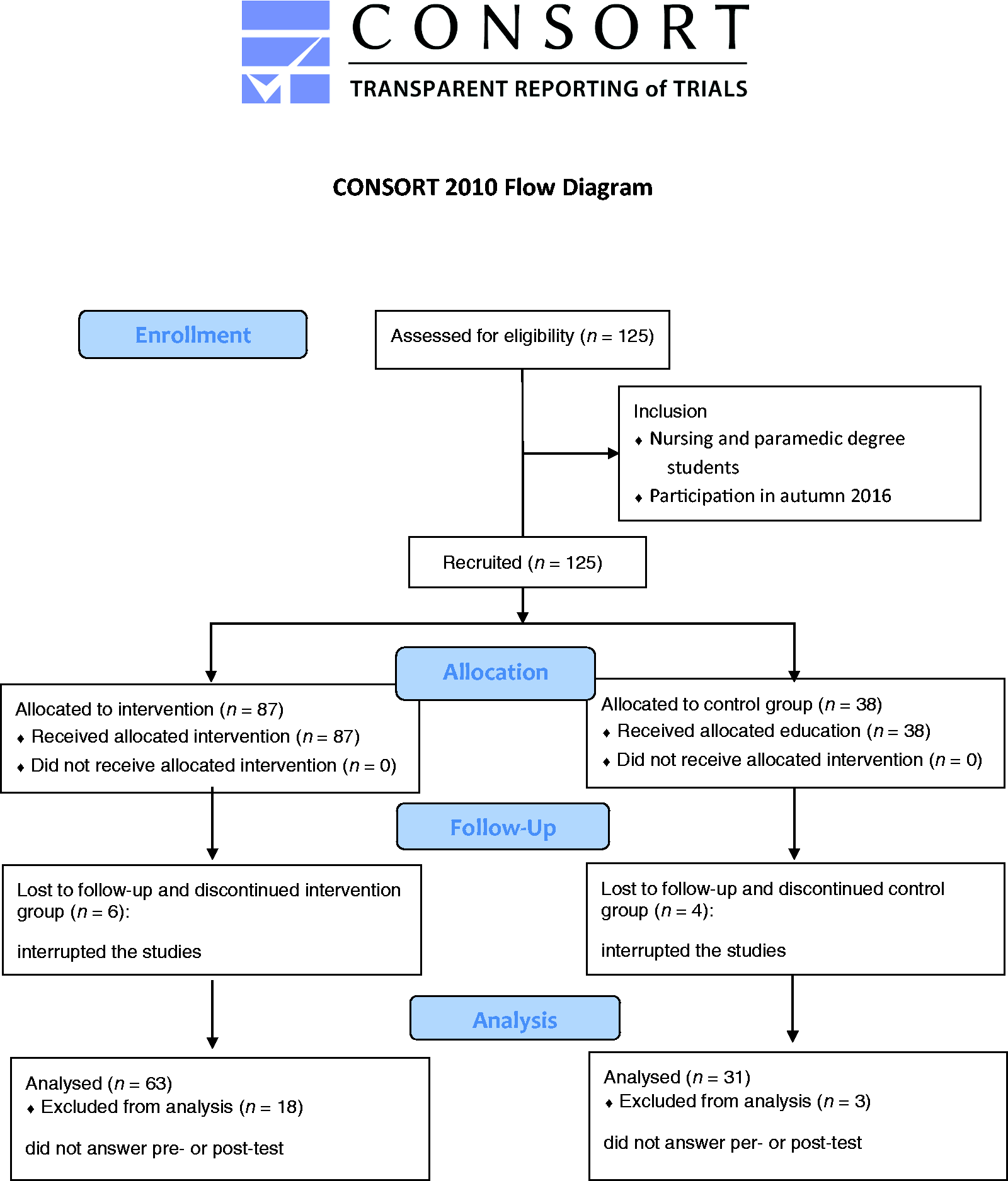
Intervention
The educational intervention provided by the digital learning environment was compared to traditional classroom-based face-to-face teaching for the course in Health Promotion. The content and objectives of the course were identical in both groups and the course was conducted over the same ten weeks. The aim of the course was to learn the multidisciplinary concepts associated with and various methods of health promotion. The teacher of both groups was the same (MM). Both groups received identical learning materials. At the end of the course the students' learning outcomes were measured in the format of a written exam.
In this study, collaborative learning took place within a digital learning environment (Moodle). The educational intervention was developed based on the evidence of systematic review 20 and socio-constructivist learning theory. 21 At the beginning of the course, a start-up session was held, introducing the course objectives, content and implementation, working in study groups, and tasks. During that time, small study groups were formed, which remained the same throughout all collaborative online learning in the course. The students were able to form groups on a voluntary basis. After the start-up session, students continued to use Moodle, where they engaged with weekly assignments, online discussions, commentaries, self- and peer reviews, creation of materials and different kind of tests. During the course students learned by acquiring new knowledge, sharing with others and constructing new knowledge by studying themes of the course. In their study groups they had the benefit of continuous social interaction which helped to develop problem-solving and decision-making skills. The students were guided to strive for a common learning through constructing shared knowledge and continuous social interaction. The teaching methods followed collaborative-based pedagogy with constant support provided by the teacher. 22 The collaborative tools used in the course were multimedia, videos, pictures, texts, writing materials and tests of theoretical knowledge. 23
The traditional classroom face-to-face teaching consisted of 33 hours of lessons where the teacher lectured on the subject matter covered by the course. The lectures were written in the form of PowerPoint presentations. The teacher also made additional material available to students using Moodle. Here, the Moodle environment was used simply as a repository for course materials; no use was made of its collaborative learning features. The lessons also sought to discuss different themes through questions raised by the teacher. No attempt was made in these sessions to dictate which students responded or how they responded. The purpose of these discussions was to stimulate the students to think independently and broaden their understanding of the topic.
Data collection
The data were collected electronically using a Webropol® questionnaire. A link to the questionnaire was provided in Moodle. Pre-test data were collected in the course start-up lecture (n = 125) in September 2016. During the course, six participants dropped out of the intervention group and four left the control group. The post-test data were collected at the end of the course (n = 115) in December 2016. In total 21 participants from the two groups did not respond to the pre- or post-test questionnaires and were excluded from the final data analysis.
In total, the questionnaire consisted of 25 items, including four background questions and 21 items of two instruments. The background questions included questions on the students' age, gender, educational background, and current study field. The students' satisfaction instrument (eight items) measured students' satisfaction with the course and its effect upon their learning. The collaborative learning instrument (13 items) measured students' digital collaborative learning relating to promotion of their learning, the role of a teacher and the role of the students. Students' perceptions were measured using a five-point Likert scale (5 = completely agree, 4 = partially agree, 3 = neither agree nor disagree, 2 = partially disagree, 1 = completely disagree). Additionally, at the end of the educational interventions students were evaluated via a written exam on their learning outcomes.
Instruments
The students' satisfaction instrument
The students' satisfaction instrument consisted of two sub-dimensions: 1) satisfaction of studying (6 items), and 2) satisfaction of studying in a digital learning environment (4 items). The first five items of satisfaction of studying were developed by the higher education institution where the educational intervention was conducted. The satisfaction of studying in a digital learning environment was developed and used in the previous study. 24 The content validity of all items was evaluated by an expert panel of educators. The instrument was pilot tested by eight nursing students in order to ensure the questions could be understood and interpreted correctly. No changes were made after measuring content validity and conducting a pilot study. 25 Since we combined items from two different sources to measure students' satisfaction, the instrument was construct validated.
Exploratory factor analysis a of scale in students' satisfaction (n = 94).
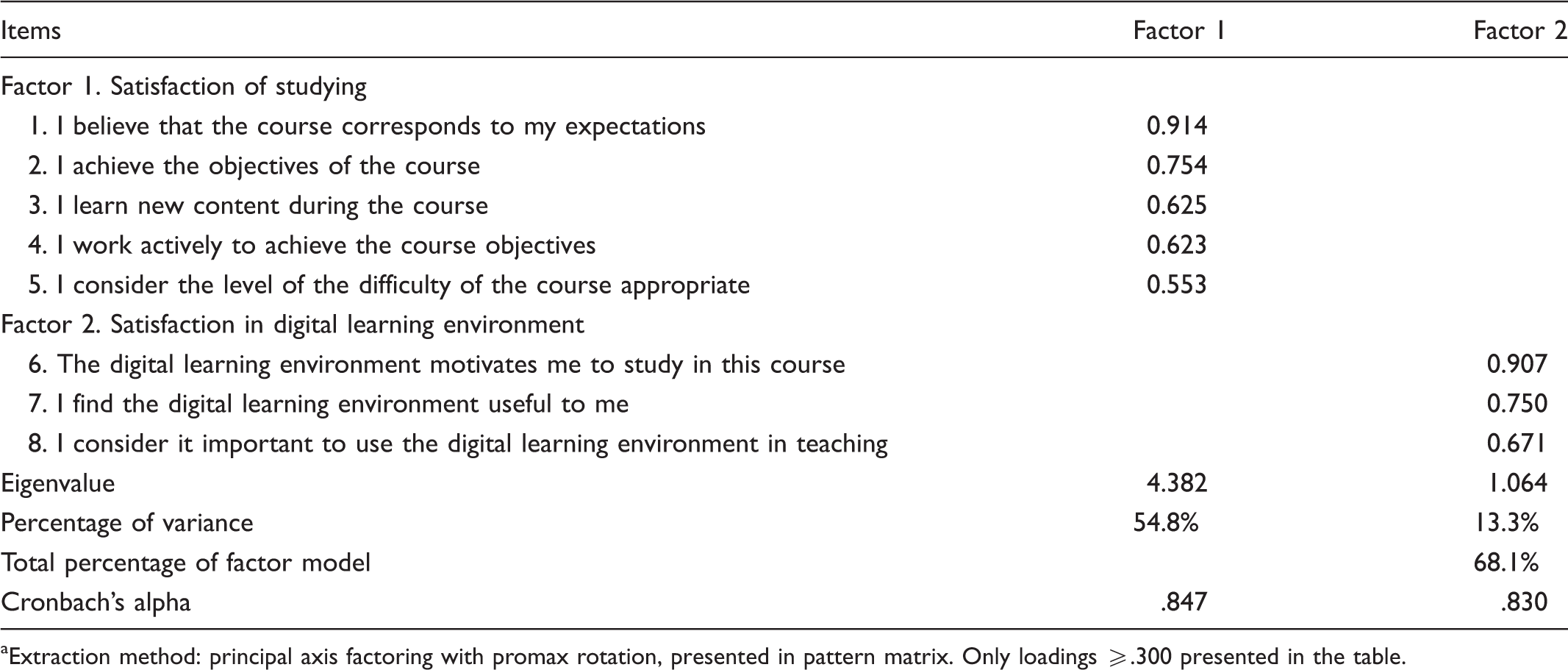
Extraction method: principal axis factoring with promax rotation, presented in pattern matrix. Only loadings ≥.300 presented in the table.
Instrument for collaborative learning
Exploratory factor analysis a of scale in collaborative learning (n = 94).
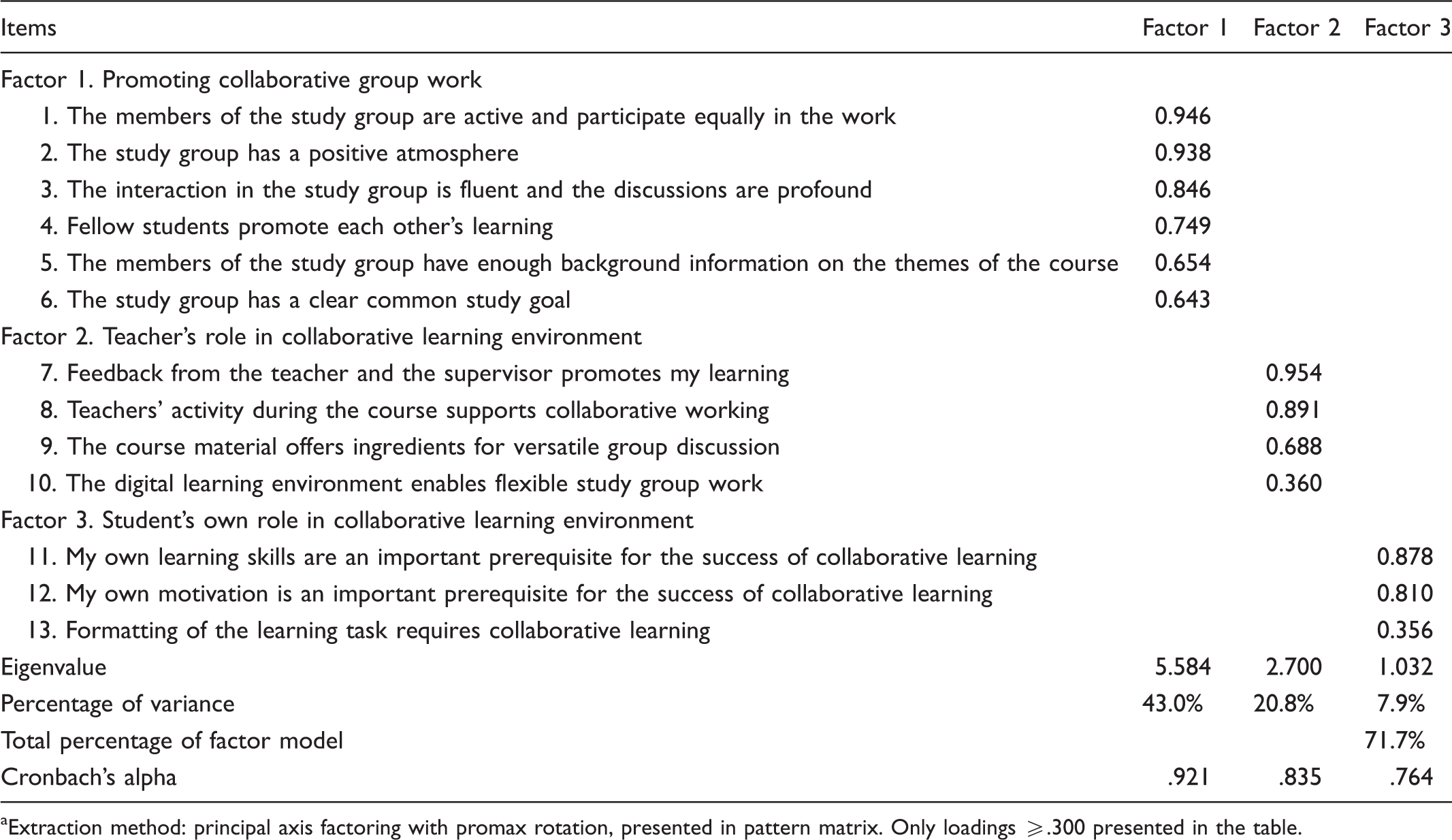
Extraction method: principal axis factoring with promax rotation, presented in pattern matrix. Only loadings ≥.300 presented in the table.
Evaluation of students' learning outcomes
After the completion of the course, both groups were evaluated on the level of their knowledge of health promotion, its content, methods, challenges and effects. The knowledge level was graded from 0, fail, to 5, excellent. The students completed an exam, the intervention group in an online setting and the control group in a classroom setting by answering essay format questions. The evaluation criteria were presented to both groups at the beginning of the course.
Data analysis
The data were analyzed using IBM SPSS 24.0®. The data were described using frequencies and percentages, means and standard deviations. Normal distribution of the data was assessed via histograms using the Shapiro–Wilkin test. Due to fragmentation of the data, nonparametric Mann–Whitney U test was used for statistical testing of intervention and control group outcomes. The Wilcoxon Signed Rank test was used with pre and post measurements with the intervention and control groups. A p-value of less than 0.05 was regarded as being statistically significant. 26 The effect size was counted according to Cohen's d value.31,32
Ethical issues
Permission to conduct the study was requested and received from the higher educational institution, according to the common practice of research conduct in Finland. 33 Written permission to use the instruments in the study was obtained from the instruments' owners. The students were informed in detail about the study including about the course, the purpose and the voluntary nature of participation. The student's autonomy was respected by providing sufficient information on participation in the research. The students were informed and given the right to suspend their participation at any stage of the study, without giving any reason if they did not want. Suspension did not affect the student's teaching nor the student's evaluation at the end of the course. All students in this study provided written informed consent. No physical or psychological harm was caused to the participants. 34 The data resulting from the study are kept in secure files by the university and will be archived for ten years after completion of the research project by the research group.35,36
Results
Socio-demographic data of participants
Socio-demographic data of participants (n = 94).
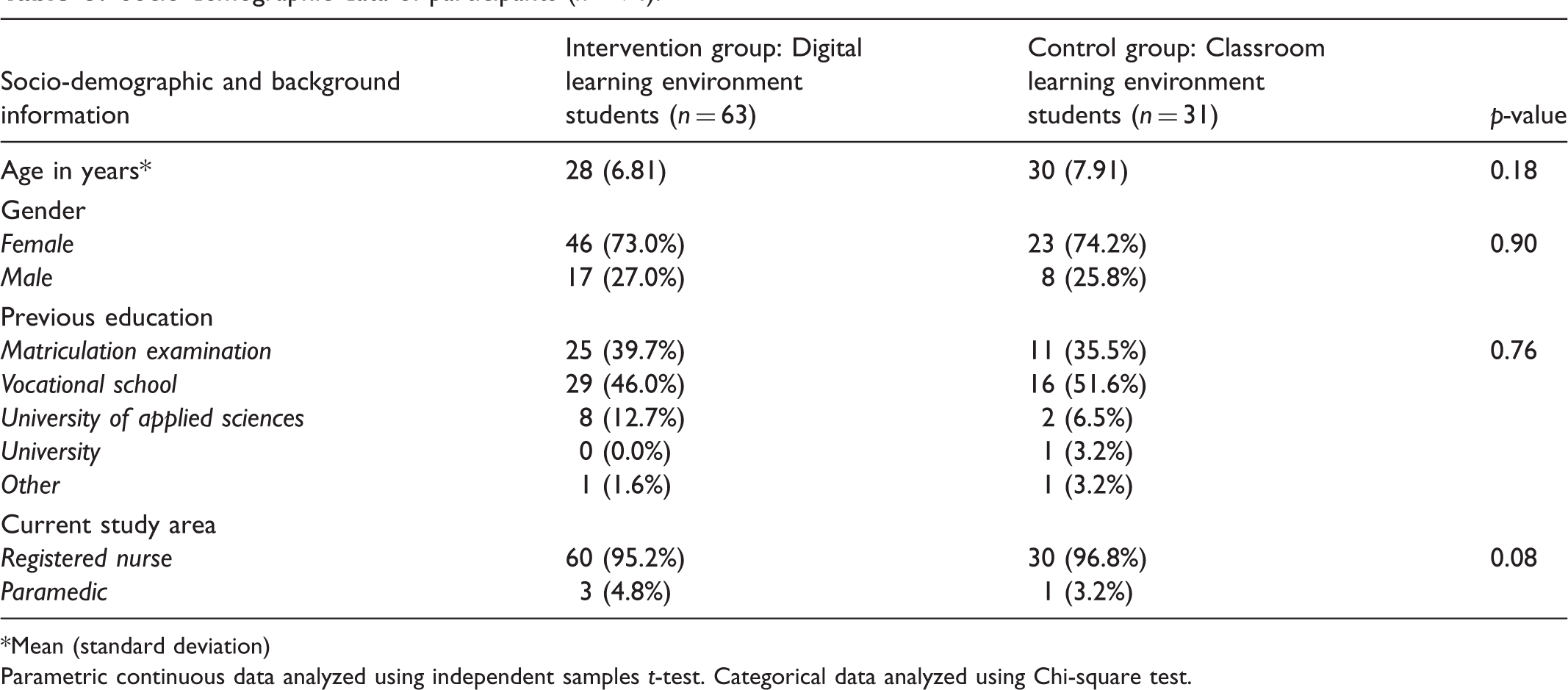
Mean (standard deviation)
Parametric continuous data analyzed using independent samples t-test. Categorical data analyzed using Chi-square test.
Effects of educational intervention in digital collaborative learning
Results of a digital educational intervention in collaborative learning of nursing education (n = 94).
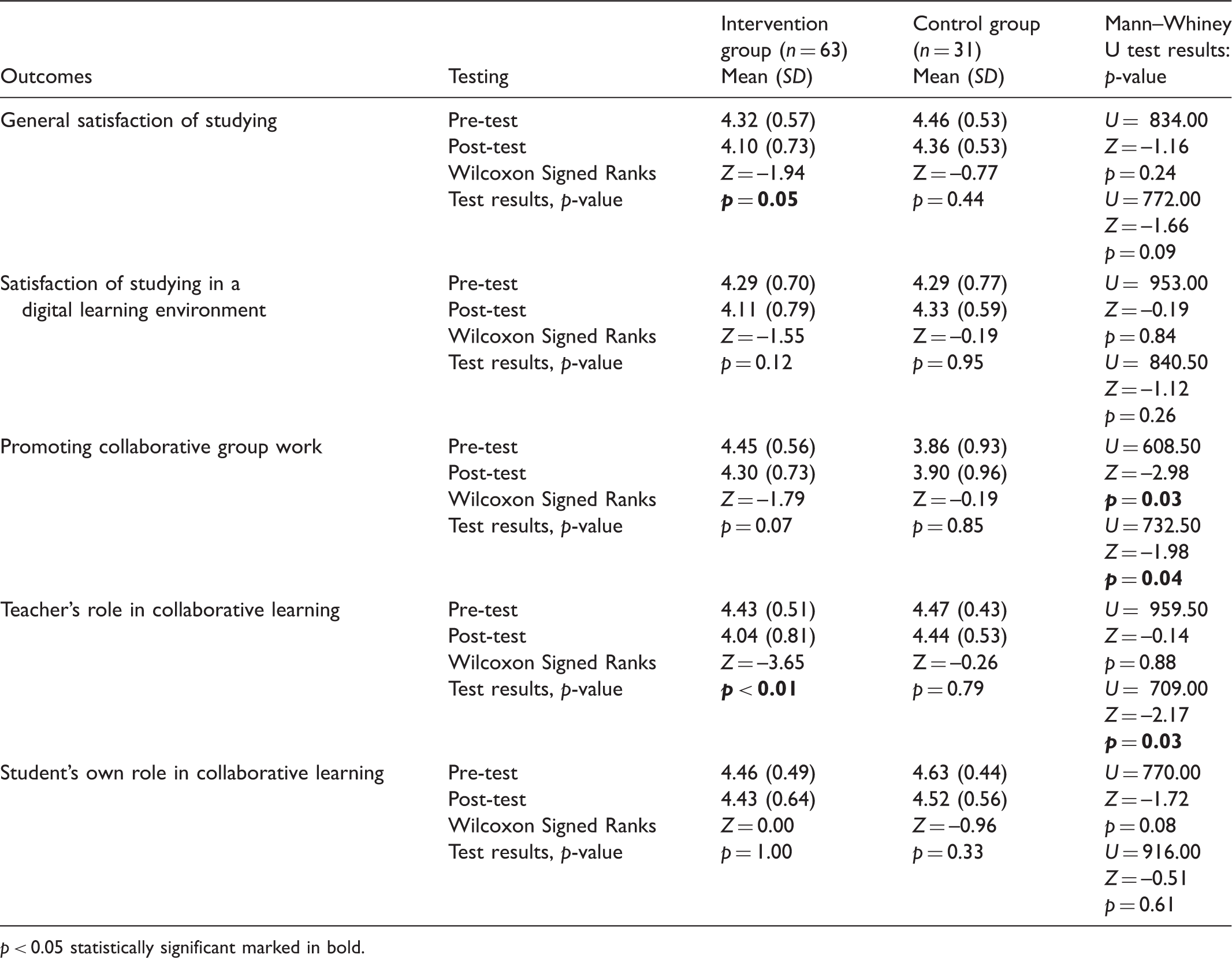
p < 0.05 statistically significant marked in bold.
Promoting collaborative group work was evaluated by two groups at pre- and post-test level. The intervention group recorded higher satisfaction in this area than the control group (IG post-test mean 4.30, SD = 0.73 vs. CG mean 3.90, SD = 0.96; p = 0.04, d = 0.5). The teacher's role in the collaborative learning environment was regarded as less satisfactory by the intervention group when compared with the control group (IG mean 4.04, SD = 0.81 vs. CG mean 4.44, SD = 0.53; p = 0.03, d = 0.5). The intervention group also scored the teacher's role in the collaborative learning as less satisfactory after the course was completed (IG pre-test mean 4.43, SD = 0.51 vs. post-test mean 4.04, SD = 0.81; p < 0.01).
Final evaluation of students' learning outcomes.
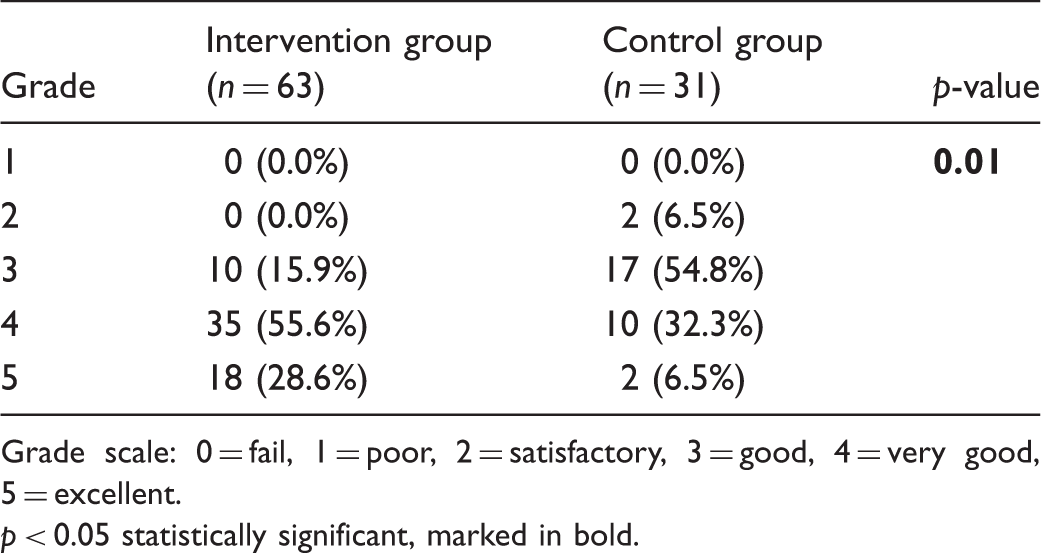
Grade scale: 0 = fail, 1 = poor, 2 = satisfactory, 3 = good, 4 = very good, 5 = excellent. p < 0.05 statistically significant, marked in bold.
Discussion
Digital learning is an innovative teaching strategy and an area that is developing quickly in nursing education. It is also widely perceived by students as being beneficial, in offering flexible and self-directed learning that is independent of time and place. One major aim of higher education is to generate satisfied learners. 37 Digital collaborative learning may be one opportunity to develop that kind of capacity. Although earlier studies38,39 have reported that students are satisfied when studying within a digital collaborative learning environment, our study indicated that the satisfaction of studying in the digital learning environment decreased over time in comparison to traditional classroom teaching. This could be explained by the fact that students in the intervention group had to work harder and be more engaged with the course in order to achieve the learning outcomes. Collaborative learning requires engagement from the student, which has been previously observed to be challenging in real-world learning situations. 40 In collaborative settings, engagement becomes a more complex phenomenon than in individual learning settings. In collaborative learning, engagement is influenced by a variety of social and contextual factors, especially in the interactions between learners. On the other hand, collaborative learning promotes the purpose of the group's activity, the form of group output, the equal participation of students and a common basis for collaboration.5,41 Margaryan et al. 42 reported that students showed a moderate preference for traditional teaching methods over digital learning methods. The digital collaborative learning was seen to be more challenging, especially in the situations when there were challenges with group engagement and equal share of the workload. 38
In this study, better learning outcomes, in terms of grades, were achieved by students in the digital collaborative learning group. Most of the students in this group received excellent to good scores. Earlier studies have found that in collaborative learning situations the process and the outcomes are interrelated, i.e. active participation and high-quality interaction have a positive impact on learning outcomes.43,44 Our study confirms this finding, even though the students in the digital collaborative learning condition were less satisfied than students in the traditional classroom environment. Mackintosh-Franklin 45 reported that indirect connection was found between students' attendance and students receiving a better grade with a higher achievement of learning outcomes. Students' motivation was shown to be the strongest factor in predicting high levels of learning outcomes.
The teacher's role in collaborative learning is more complex than in the traditional classroom setting. 46 In this study, the students rated the teacher's role in the collaborative learning environment as less satisfactory, even though the outcome was rated as satisfactory in both groups. In a traditional classroom setting, the teacher is often an expert responsible for dispensing knowledge.47,48 In a digital learning environment, students have to work more independently, which could explain the difference between the evaluation of the teacher's role between the groups. 49 In collaborative learning, the emphasis of the teacher's work is in the planning phase, including task formulation, the design of a pedagogical script and preparation of learning materials. If students' collaboration is proceeding as planned towards completion of a task, the teacher may be invisible during the actual learning process. 50 This might also explain why the students in the digital collaborative learning group were less satisfied with the teacher's behavior than the students in the traditional classroom group. Furthermore, it has been previously observed that when teachers transfer from traditional classroom teaching towards digital collaborative learning, they can find the new setting challenging, leading to insecurities about their role and teaching competence.51,52
However, the nursing teacher plays an important part in the professional socialization of students, making the teacher a role model for students. 51 The core competencies for teachers are changing as technology plays an increasing role in the classroom, making the teacher more of a guide and mentor than an instructor.52,53 New teaching methods are required to facilitate student-centered learning and develop their affective and cognitive skills in digital collaborative learning environments. It also causes a special didactic challenge, which needs further research in order to study the most effective learning methods and process. 51 Teachers need to have multidimensional competence in education in order to be able to take such role.53,54
Limitations
This study has several limitations. First, randomization of participants would have enhanced the validity of the study but this was not possible due to the curriculum regulations of the higher institution. Second, the effect size of the outcomes when comparing between intervention and control groups was moderate, which is explained by the inadequate sample size used in the study. Power analysis prior to the study would have predicted what sample size would have been required in order to reach effective outcomes. However, there have been no previous studies conducted with similar phenomena in similar settings. Third, one of the researchers (MM) involved in the study was also the teacher of the course studied by the participants. The objectivity of the study would have been strengthened if the teacher had not been one of the researchers. Research ethical conduct55 throughout the education intervention was strictly followed by the researchers, including in the performance of the teacher's role in the intervention. The TREND statement checklist was used in planning and reporting stages of the study.56
Conclusions
New technology offers new possibilities for teaching methods, such as collaborative learning. There is a large amount of digital collaborative learning research in the context of education, but relatively little in the context of nursing education. The pedagogical development of the nursing curriculum in the context of higher education must make use of new digital technology in order to strengthen working life skills. We suggest that when applying digital technology in nursing education the focus has to be on collaborative learning. Nursing education teachers must also be trained to design and enhance collaborative learning processes for their students. We believe the results of this study can be applied when developing such digital collaborative learning practices for nursing education.
Footnotes
Acknowledgement

Funding
This study has been funded by VTR-funding (Oulu University Hospital).
Declaration of conflicting interests
The authors declare that there is no conflict of interest.