



Abstract
Motivation regulation, study engagement, and students' wellbeing are critical components of skillful self-regulated learning. However, few studies have focused on these factors and their relationship in nursing education and as there is an increased usage of blended learning in nursing education, measuring students' learning in this setting is increasingly important. This person-oriented, quantitative study explored first-year nursing students' (N = 90) motivation regulation related to study engagement and study burnout in blended and traditional learning environments in two undergraduate nursing programs. Regardless of the learning environment, the majority of the nursing students (65.6%) had a highly developed motivation regulation profile. They performed highly on motivation regulation, showed strong engagement, and exibhited reduced exposure for study burnout compared to those with less-developed motivation regulation profiles. It is suggested that motivation regulation, study engagement, and experienced burnout influence nursing students' learning. These components should be emphasized in developing nursing education and facilitating nursing students' learning.
Introduction
Self-regulated learning has been associated with study success among nursing students.1–5 However, it has been proposed that the regulation of cognitive activity is not sufficient; the ability to regulate motivation is regarded as a fundamental part of self-regulated learning, commitment to learning, and academic success.6–9 Accordingly, nursing students' ability and willingness to regulate cognition and motivation enable them to create and maintain study engagement.
The learning environment has been identified as one determinant affecting students' motivation regulation and study engagement. 10 For example, in different study conditions, self-regulated learning occurs differently. 11 Despite the increased usage of blended learning (BL), empirical studies investigating motivation regulation and its relation to study engagement and study burnout in nursing education in different learning environments are still lacking.12–14
Background
Motivation regulation is an ingredient of self-regulated learning15,16 referring to the conscious and active level of processing thoughts and actions and in which students intentionally try to influence their motivation concerning certain learning activities. 17 Effective motivational regulation includes the knowledge of motivation (meta-level understanding about motivation), the monitoring of motivation (ability to be aware, observe, and collect feedback on students' level of motivation for academic activities), and the control of motivation, which entails the use and implementation of strategies, including purposeful interventions to control motivation, endeavors, and perseverance. 8 Students can utilize various motivation regulation strategies, such as self-consequating, self-efficacy, task valuing, environmental structuring, interest enhancement, goal-oriented self-talk, attribution control, efficacy management, and emotion regulation. 17 Nursing students have, for instance, been shown to utilize peer support to make coursework more interesting, to increase their effort when the coursework feels difficult, and to arrange a quiet place for studying to minimize distractions. 18 In addition, adjusting intrinsic motivation and enhancing self-efficacy has been shown to promote nursing students' adaption to learning environments and understanding of new concepts.1,19 Students' advanced motivational regulation has also been associated with mastery orientation, 20 valuing study content, 8 the utilization of meta-cognitive learning strategies, success in academic achievement,10,21,22 and engagement with learning and studying.23,24
Study engagement, in turn, is suggested to be a hallmark of optimal study experience characterized by vigor, investing effort in one's studies; dedication, entailing strong work involvement and identification of one's studies; and absorption, referring to intensive concentration and engrossing feelings that time flies and it is hard to detach from one's studies.25,26 Nursing students experiencing study engagement have been shown to perform better in their studies27,28 and to display more effective time management skills than their less engaged counterparts. 29 Frequent course completion, regular lecture attendance, and a student-centered learning environment are associated with increased levels of engagement, whereas excessive amounts of part-time work decreased nursing students' study engagement and academic performance.3,27,30 Experiencing vigor and dedication has been shown to be related to a reduced risk for developing burnout, and particularly for experiencing exhaustion and cynicism. 31 This implies that nursing students who experience high levels of engagement are less likely to experience a lack of energy and to display a cynical attitude toward their studies.
Study burnout is regarded as resulting from extensive and prolonged study-related stress. 32 It is composed of two distinctive symptoms: exhaustion and cynicism.33,34 Exhaustion is characterized by intensive emotional study-related and chronic fatigue and results from overtaxing work. 35 Cynicism entails indifference and underestimating attitudes toward studying and students' loss of interest in and sense of meaning of academic work. 35 Increased levels of cynicism and inadequacy are associated with reduced levels of academic achievement and study engagement. 32 An increase in nursing students' experienced exhaustion and disengagement has predicted less engagement in the learning and mastery of occupational tasks, and more study burnout has been associated with less use of evidence-based research utilization in practice. 36
Engaging learning environment for nursing students
Nursing studies do not always provide an optimal learning environment for students. Nursing students have been shown to suffer from high levels of stress during their studies37–40 and to experience both academic and clinical studies as equally stressful. 41 Multiple demands of personal lives (e.g. employment, family life, finances) and academic expectations (assignments, examination, course workload) have been identified as primary sources of stress for nursing students.37,42–44 In turn, high-quality teaching, support, and relationships with academic staff 38 peer-learning strategies 45 and strategies that enhance nursing students' self-efficacy 46 are shown to contribute to students' engagement and reduce their stress.
Some students face difficulties engaging in learning and achieving their goals. 47 In fact, a significant number of nursing students drop out at the end of the first and second years of study due to low clinical or academic performance.28,48 Without a supportive learning environment and attention to the enhancement of motivational factors, nursing students can feel overloaded and incapable of fulfilling course demands, impeding their engagement in academic progress27,48 and, eventually, leading them to develop study burnout. There are partly contradictory results concerning the ability of traditional versus BL environments to facilitate nursing students' motivation regulation as a part of self-regulated learning.49,50 Blended learning may contribute to nursing students' high academic achievement 13 and, for instance, enhance the use of summarizing and scripts in online discussions. 51 Moreover, teachers' encouragement of students' autonomy to share knowledge and have relevant communication with peers has been shown to motivate and engage students in BL. 49 Conversely, nursing students can also face difficulties in BL environments 14 including feelings of isolation, uncertainty and overloading, concerns of maintaining a sense of community, time-management problems, technological problems, and the invasiveness of BL.49,50,52 Regardless of the learning environment, however, it can be argued that nursing students benefit from well-developed motivation-regulation skills that can support students' learning and engagement.
Aims
The aim of this study was to gain a better understanding of individual variations in first-year nursing students' motivation regulation skills by employing a person-centered approach. Moreover, associations between the motivation regulation profiles and experienced study engagement, study burnout, and performance on students' entrance examinations were explored. We also examined the relationship between motivation regulation profiles versus working during their studies and having children or not under 18 years of age. Students studying in BL and in traditional learning environments were compared.
The purpose of this study was to answer the following research questions: ‘What kinds of motivation regulation profiles can be detected among the first-year nursing students?’ ‘How do these profiles relate to experienced study engagement and study burnout?’ ‘Are there differences in motivation regulation profiles between students studying either in BL or in traditional learning environments?’
Method
Nurse education in Finland is carried out at universities of applied sciences (UAS) and is based on the European Union's training requirements for general care nurses 53 qualifying students as registered nurses (Bachelor of Health Care). The degree program comprises 210 (ECTS) credits (3.5 years, including clinical training, 90 ECTS), and can be completed either in a traditional classroom or in a BL program, which combines face-to-face and online learning. Most BL program studies take place in tutored, technology-enhanced online learning management systems, allowing students to study in a more flexible manner and regardless of the time and place. In BL, students attend a classroom-based lecture one period (4–5 days) per month, whereas in a traditional program students attend class in a classroom weekly and almost every weekday during the semester.
The study was approved by our institution's review board and permission was obtained from the director of education, research, development, and innovation in healthcare and nursing education and from the participants. The participants were informed about the study before data collection. Participation in the study was voluntary, and the participants were informed that their decision concerning participation would not have any effect on their studies.
Participants
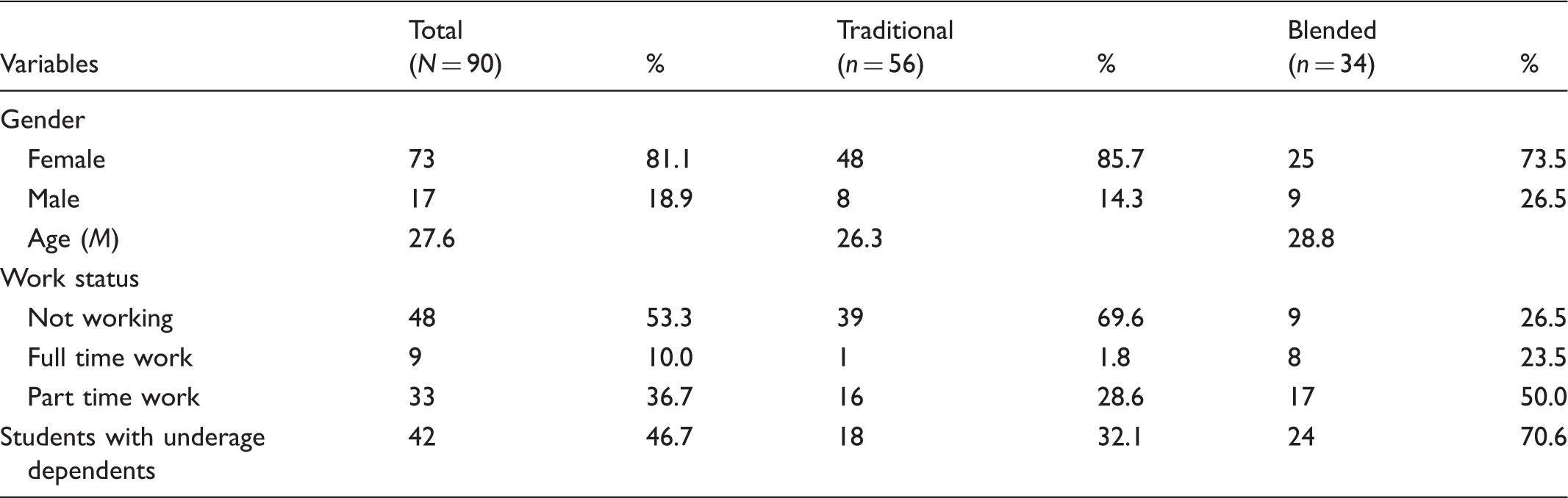
Participants.
Measurement
Motivation regulation scale and items. 8
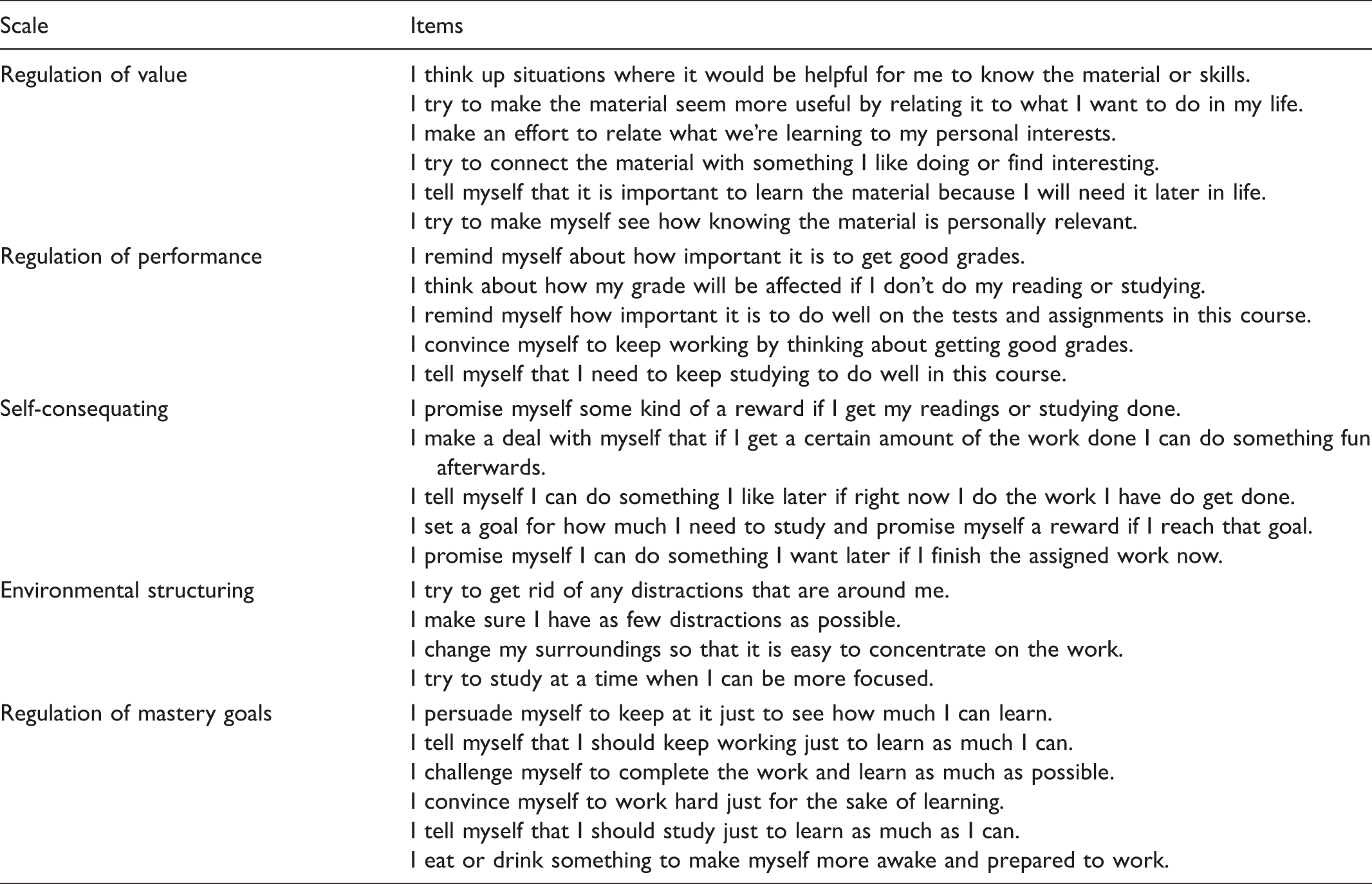
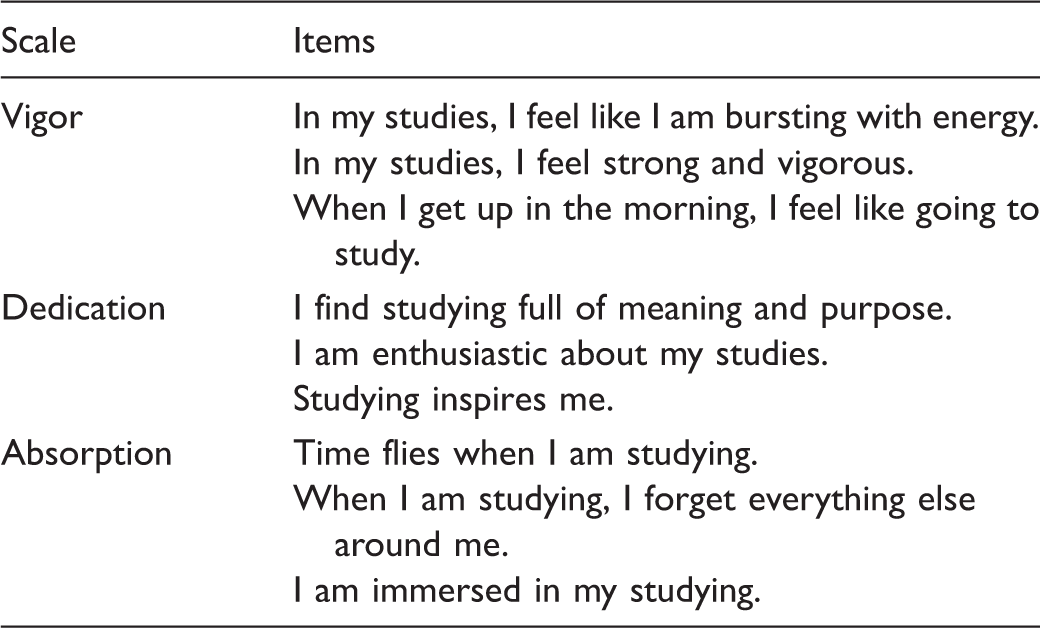
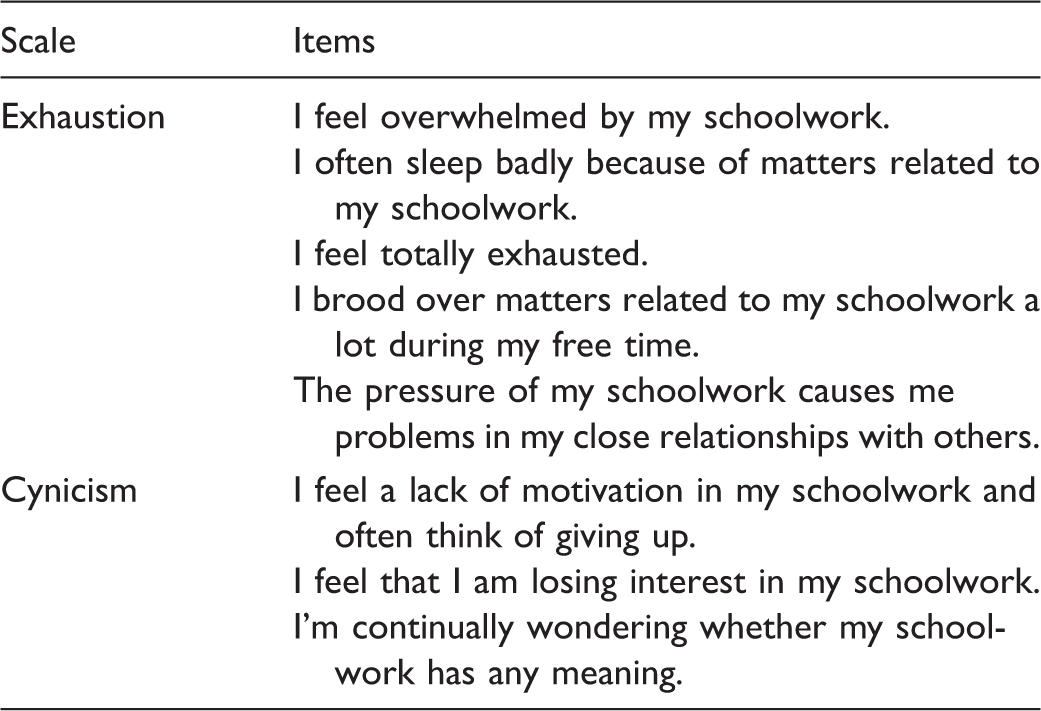
Respondents used a seven-point Likert scale ranging from strongly disagree (1) to strongly agree (7) to rate each item. In addition, four background questions concerning age, gender, whether they have underage dependents, and employment status (full time, part time, unemployed) were included in the survey. The students' entrance examination results were received from the university's administrative register.
Analysis
Data were analyzed using SPSS version 22 (2013). After the normality of the variables was checked, a series of exploratory factor analyses (EFAs) using maximum likelihood extraction and both varimax and direct oblimin rotations were conducted to determine the underlying structure of the variables of motivation regulation, study engagement, and study burnout. The results suggested that the six-factor solution for the motivation regulation scale, including the regulation of performance goals, the regulation of mastery goals, self-consequating, environmental structuring, the regulation of value/meaningfulness, and the regulation of value/utility, should be retained. As for the regulation of value scale, the results of EFAs indicated that two factors, meaningfulness and utility value, should be retained.
A series of EFA models ranging from one to three factors was tested separately for the study engagement and study burnout variables. The results suggested a one-factor solution for the study engagement scale and a two-factor solution of cynicism and exhaustion for the study burnout scale provided a reasonable solution and a good fit to the data.
To examine students' motivation regulation profiles, a series of K-means cluster analyses using the motivation regulation subscale scores as the constituting dimensions were performed. Two- and three-cluster solutions were tested and evaluated based on both statistical criteria and the interpretability of the results. Based on this and on the examination of the external validity of the obtained cluster solutions with respect to all the measured outcome variables, a two-cluster solution was selected. Independent-sample t-tests and corresponding nonparametric tests were performed to investigate the differences between clusters in study engagement and study burnout and whether there was a difference in students' motivation regulation, engagement, and study burnout in different programs.
Results
Descriptions of motivation regulation, study engagement, and study burnout among nursing students.
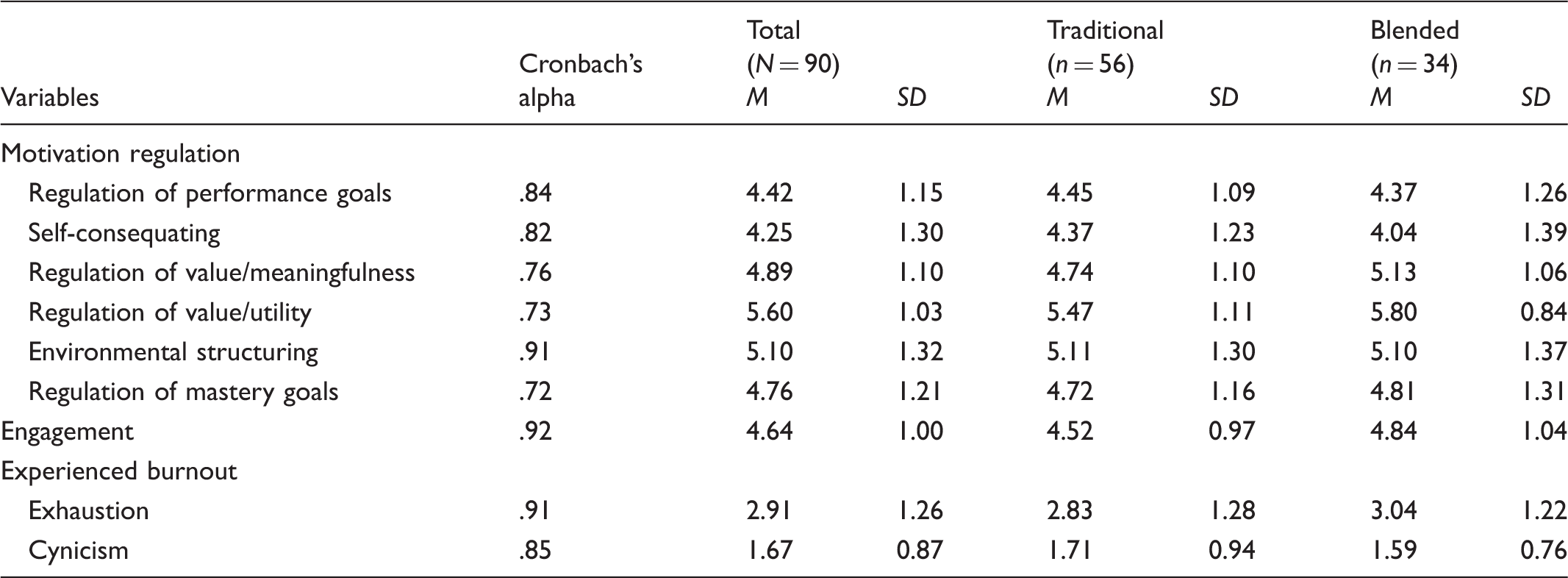
Students were highly engaged in their studies, experiencing vigor, dedication, and absorption (see Table 5). For example, they reported being inspired by their studies, experiencing high energy, being immersed, and finding their studies meaningful. At the same time, they suffered low levels of exhaustion and cynicism, reporting slightly higher levels of exhaustion than cynicism. Accordingly, students rarely experienced their workload as overly high or considered their studies useless. More variation in experienced exhaustion was reported. The results indicated that the first-year nursing students were engaged in their studies and suffered a low risk of burnout. Descriptions of the study variables can be found in Table 5.
Further investigation revealed that there were no significant differences between the students studying in the BL and traditional learning programs. The entrance examination results also indicated no significant differences between the groups. We found no relationship between motivation regulation profiles and working during their studies or having children or not under 18 years old.
Nursing students' motivation regulation profiles
Two distinctive student profiles were detected (see Figure 1). The first motivation regulation profile taken from our analysis was students with a high level of motivation regulation. This was the most common profile among the nursing students, with a 65.6% (n = 59) sample share. These students displayed high levels of the regulation of performance, the regulation of mastery goals, self-consequating, environmental structuring, combined with high levels of reported use of both the regulation of value of meaningfulness and utility. The second profile, less-developed motivation regulation, represented slightly over one-third (34.4%, n = 31) of the nursing students in the sample. The less-developed motivation regulation profile holders showed moderate levels of regulation of performance, regulation of mastery goals, and self-consequating. They also reported lower levels of environmental structuring and the regulation of value, showing slightly lower levels of valuing meaningfulness and utility. There were no differences between students' motivation regulation profiles based on their learning environments.
First-year nursing students' motivation regulation profiles.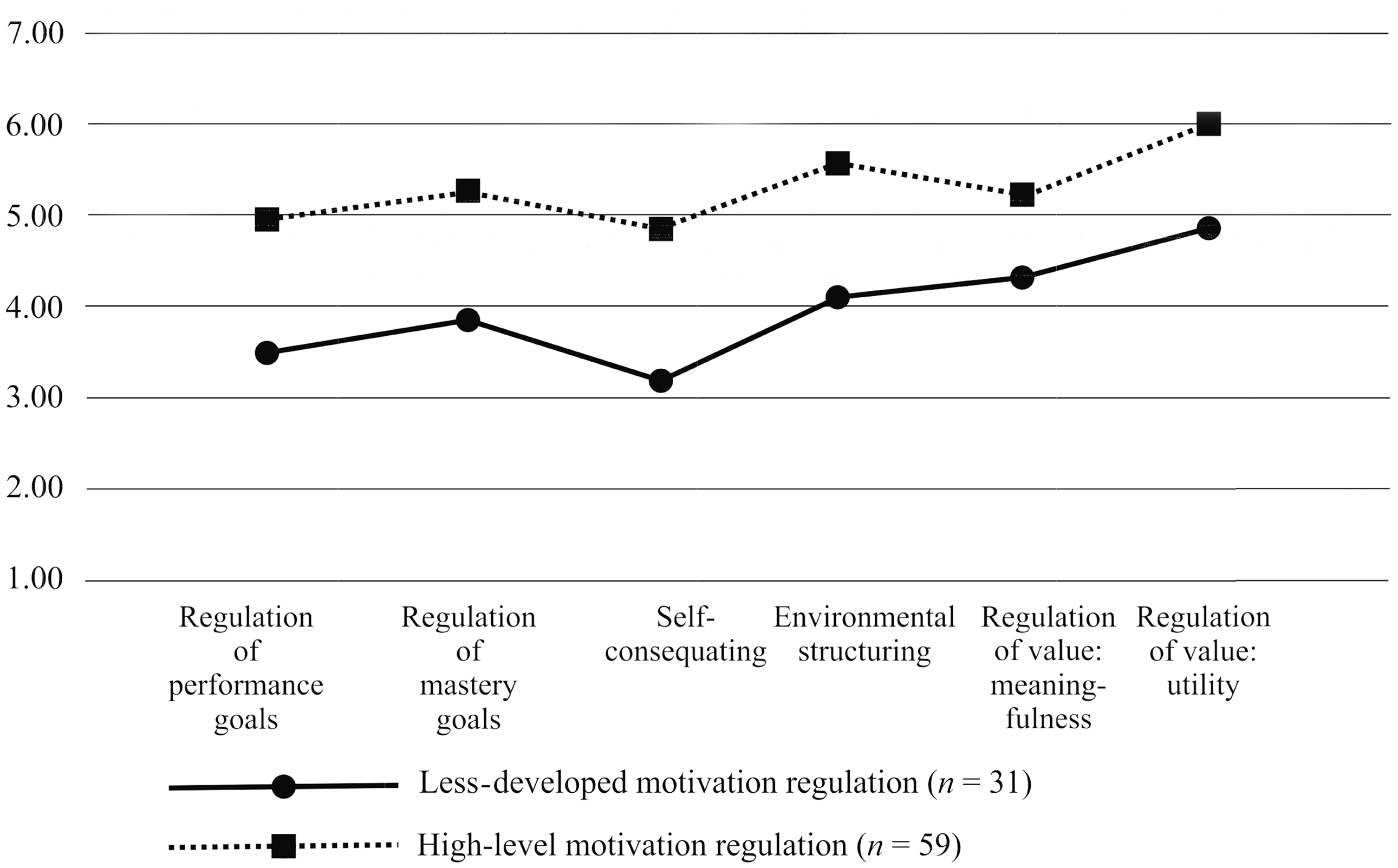
Significant differences between the profiles were detected (see Figure 1). Nursing students entertaining high-level motivation regulation profiles experienced more study engagement (M = 4.93, SD = 0.90) (t (57.19) = –4.03, p < .001) than those with less-developed motivation regulation (M = 4.09, SD = 0.97). Students displaying high-level motivation regulation also suffered less from cynicism (M = –0.17, SD = 0.64) (t (38.82) = 2.13, p = .039) than students with less-developed motivation regulation (M = 0.33, SD = 1.22). No statistically significant differences were detected in experienced exhaustion between the profiles.
Conclusion
Most of the first-year nursing students in the present study displayed high-level motivation regulation profiles. This supports the finding in the previous study that, in addition to being highly motivated at the beginning of their nursing studies, 19 most of the nursing students had good motivation regulation skills. However, many students displayed less-developed motivation regulation profiles, indicating that they may face difficulties in motivation regulation from the very beginning of their studies, especially if they do not receive adequate support in developing motivation regulation skills. The results showed that displaying high motivation regulation was associated with experiencing increased levels of study engagement and reduced exposure for study burnout among nursing students. It has been indicated that the interrelation between motivation regulation and study engagement is likely to be bidirectional.56,57 Based on the present study it can be assumed that higher motivation regulation skills are likely to enhance nursing students' study engagement and reduce their risk of study burnout, both by enhancing learning and by providing a tool for coping with study-related challenges. The increased engagement and reduced risk for developing study burnout is likely to increase students' efforts in studying and further promote their development of higher-order learning skills.
There were no statistically significant differences between the profiles for experienced engagement or study burnout in the two different learning environments, although students' experiences varied slightly more in the blended setting. The results strengthen the understanding that motivation regulation and study engagement can be enhanced in both blended and traditional learning environments.13,49,52 However, a lack of differences may also result from relatively short exposure to the learning environments since the participants were first-year nursing students. Accordingly, further longitudinal studies are needed to explore the profile trajectories, the learning environment effect, and the impact of the profiles on academic performance. Furthermore, the small sample of nursing students was a limitation of the study. Accordingly, in the future, larger and more representative samples are needed to gain more reliability, validity, and statistical power.
Footnotes
Funding
This study was supported by the Research Unit Learning and Learning Processes in the Faculty of Education, University of Oulu, Finland, the Foundation of Ahti Pekkala, Finland and the Academy of Finland (Grant number 297686).
Conflict of interest
The authors declare that there is no conflict of interest.