




Abstract
In the past four decades, sexuality research in China has made considerable advancements. From historical and sociological perspectives, our study reviews the literature and provides a comprehensive overview of sexuality in contemporary China by drawing on recent survey data that we collected. First, we introduce sexuality in ancient and modern China and discuss the social contexts that gave rise to a sexual revolution in China. Second, we briefly review empirical research on sexuality in China. Finally, we present results on recent changes and socioeconomic patterns of sexual attitudes and behaviors based on our survey—the 2020 Chinese Private Life Survey. A cohort analysis reveals that sexual attitudes have become more liberal in China, with an earlier sex debut and more diverse sexual activities. Surprisingly, however, we find that sexuality seems to have diminished in its appeal among young cohorts, who have lower rates of sexual frequency than preceding cohorts. In addition, we find a reversal in educational gradient in relation to sexual activeness and diversity. Among those born before 1980, highly educated Chinese are more sexually active, while among those born after 1980 the lower educated are more sexually active—in terms of their sexual activity with their partners, seeking out sexual partners online, and engaging in commercial sex. Compared with women, men have higher levels of sexual well-being.
Introduction
As a critical symbol of the transition from adolescence to adulthood, sexuality is important to a variety of demographic and social outcomes such as marriage, childbearing, health, and psychological well-being (Christopher and Sprecher, 2000). Research on sexuality in China has flourished since the 1990s as the ways in which intimate relationships are formed have become more diversified. Recent studies have confirmed the widespread practice of premarital cohabitation (Yu, 2021; Yu and Xie, 2021), the emergence of a culture of sexual “hookups”, or casual sex (Zheng and Zheng, 2014; Liu, 2016; Wu and Ward, 2020), and public discussion of the LGBTQ+ community in China (Hung, 2011; Wei, 2020). Although many scholars have conducted extensive research and rich data collection on sexuality in China (Pan, 2017), less is known about the recent changes in sexual attitudes and behaviors, especially from a cohort-comparative perspective. Moreover, most of the existing explorations of sexuality in China have been limited to the disciplinary interests of demography, anthropology, public health, and psychology (Parish et al., 2003, 2007c; Spjut, 2017). In fact, human sexuality is embedded within social structures, affected by social institutions, and evolves with social changes. For example, in traditional Chinese society, the general public was guaranteed access to sexual activity by the practice of universal marriage; nowadays, however, the imbalanced sex ratio and poverty have resulted in limited access to sexual activity among older bachelors (Attané et al., 2013). Therefore, studies intending to further our understanding of sexuality should be more connected to social stratification and inequality. Taken together, our study contributes to the literature by exploring the cohort changes and socioeconomic differentials in sexual attitudes, activity, and well-being in China.
In the second section, we begin by introducing sexuality in ancient and modern China, paying particular attention to the social contexts that gave rise to the sexual revolution in China. We also focus on the purpose of sex, the relationship between sexuality and marriage, and women's role in sexuality. In the third section, we review data collection and empirical findings on sexuality in China in the past three decades. The growth in research on Chinese sexuality presented us with challenges in choosing which areas to cover. For the sake of comparison with our own analysis, this review is limited primarily to quantitative studies. In the fourth and fifth sections, we introduce our newly collected data on sexuality and private lives of contemporary Chinese, and present some new findings. Finally, in the sixth section we discuss and outline the potential research agendas of future studies on sexuality in China.
Sexuality in ancient and modern China
Sexuality in ancient China
Historically, the Chinese view of sexuality was influenced by Taoism and Confucianism (Hong et al., 1993; So and Cheung, 2005; Ruan, 2013). The central concept of Taoism's view of sexuality is the yin and yang duality, with yang being male and active and yin being female and passive. Sexual behavior is considered the interaction of yin and yang, which is crucial for achieving harmony in the universe. Sexuality is also regarded as an integral part of a healthy and happy life (Chiang, 2018; Ruan, 1991). Therefore, Taoism does not advocate abstinence, nor does it view sex as a scourge (Zhang and Beck, 1999).
However, as Confucianism became the dominant culture in China, especially during the Song dynasty when the polity was further consolidated, Chinese society imposed stringent ethics (Hatfield and Rapson, 2006; Wang, 2004). Power-holders viewed individual freedom and sexual desire as a threat to existing social, political, and family orders (Sommer, 2000). They believed that if sexuality and intimacy were overemphasized, the conjugal relationship would replace the parental relationship as the most important bond for the son, leading to a challenge to the family order (Higgins et al., 2002). If the family's authority—the fundamental component of rulership—were weakened, the emperor's authority would also be threatened. Therefore, discussion of sexuality in public was forbidden. Confucianism also educated people to repress human desire, including sexual impulses (Lu, 2013). Moreover, female virginity was highly valued to continue the family lineage and maintain its purity (Hong et al., 1993). Premarital sex was strictly forbidden for women, and extramarital sex (EMS) was deemed a serious crime (Zhou, 1989). The family even had the power to execute women for adultery (Theiss, 2005; Tran, 2009).
Being primarily influenced by Confucianism and its attendant family culture, sex in traditional Chinese society was characterized by the following aspects. First, sexual behavior was often restricted to the marital relationship, except for commercial sex. Since marriages were arranged by parents, whom one would have sex with would be determined by one's family instead of by oneself. Second, to diminish the significance of sex, Confucian social norms separated sex from pleasure by stipulating that the primary purpose of sex was procreation. In this way, Chinese society did not encourage sexual activity among older people who had lost or were losing their ability to reproduce. Third, consistent with the patriarchal culture, women were in a subordinate and passive position in sexual relations, and women who initiated sexual activity were stigmatized. Women were also expected to be committed and faithful, that is, to have only one sexual partner, their husband. Men, on the other hand, were allowed to have concubines and engage in commercial sex.
Finally, traditional Chinese society did not strongly object to, or even tacitly allowed, male homosexuality (Hinsch, 1990; Vitiello, 2011). Many classical Chinese novels contain depictions of male homosexuality (Ruan and Tsai, 1987). In the Ming and Qing dynasties, as officials were forbidden to visit prostitutes, some would patronize young male actors to have sex with them (Lau and Ng, 1989). Such behavior was not subject to strong moral condemnation. For men, homosexuality was tolerated as long as they fulfilled their filial and patriarchal obligations of marriage and procreation (Louie, 2002; Wei, 2017).
Sexuality in Republican China
The Xinhai Revolution overthrew the Qing dynasty in 1911 and began the Republican era (1911–1949). One main target of the revolution was the traditional family system. Many intellectuals introduced Western thoughts on society and the family into China. As a challenge to traditional patriarchy and collectivism, the concept of individualism was brought to China. In the early 1900s, intellectuals such as Liang Qichao and Yang Du proposed that the individual, rather than the family, should be the basic unit of social governance, emphasizing the importance of the individual in social activity and political participation (Gao, 2015). In the New Culture Movement and the May Fourth Movement, individual freedom and emancipation became the central pursuit of intellectuals and young students (Gao, 2015; Xu, 2008). As summarized by Hu Shi and Mao Dun, the main objective of the New Culture Movement and May Fourth Movement was the liberation of the people's mindset and the inculcation of personal freedoms (Qin, 2015). The movements eroded the authority of the family lineage and traditional family culture. As a result, Chinese youths’ attitudes toward love and marriage changed drastically. Educated young people rebelled against their parents’ arranged marriages, believing that intimacy should be based on love. A typical example is that of the most celebrated author of the era, Lu Xun (1881–1936), who refused to have sex with his arranged wife.
Women's status also improved. Influenced by gender egalitarianism, more Chinese women were able to access formal education (Edwards, 2000). Industrialization created a labor shortage, and some women became wage laborers (Honig, 1992). As a result, many Chinese women became economically independent, freeing them from their families’ control over their marriages. Some pioneering women adopted new behaviors such as premarital sex and even announced unmarried cohabitation in newspapers (Wang, 2011). The legislation on marriage also changed. Women were given the right to divorce, and thus were no longer obliged to have only one sexual partner for life (Kuo, 2014). The kinship chapter of the Civil Code enacted in 1930 stipulated monogamy and emphasized freedom of marriage (Ocko, 1991). Unfortunately, the legislation could not be uniformly enforced throughout China due to the nation's political fragmentation during the so-called “warlord period”, and implementation was particularly weak in rural areas. However, it is undeniable that the new thoughts and institutional changes brought about changes in sexuality in China during this period, partially disconnecting sex and marriage and reducing gender inequality in intimate relationships.
Sexuality in the pre-reform era
After the founding of the People's Republic of China (PRC) in 1949, the Communist Party of China (CPC) launched various campaigns against traditional gender ideology and family behaviors. In 1950, the CPC promulgated the first Marriage Law of the PRC, which utterly enforced monogamy for both sexes (Davis, 2014; Diamant, 2000a). The Marriage Law weakened the family's control over the marital behavior of its members by abolishing arranged marriage, granting women the right to initiate divorce, and allowing widows the right to remarry (Diamant, 2000b). The CPC also mobilized local cadres to ensure the realization of these rights. As a result, all Chinese were endowed with the right to choose an intimate partner free of family constraints.
Along with the socialist transformation of the family, the state also implemented strict repression of commercial sex. The CPC abolished prostitution in the 1950s and succeeded in reeducating former sex workers (Jeffreys, 2006), after which commercial sex almost entirely vanished in this era. Discussion of sex was also restricted (Xiao et al., 2011). Women's sexual attractiveness was condemned as capitalist decadence and depravity (Yang, 1999). In the films during this period, women who dressed in revealing clothes, wore makeup, and flirted with men were objects of ridicule (Dai, 2020). Although some handbooks published in the 1950s introduced sexuality from a scientific perspective, such educational interventions were more about the state's regulation of what was “right” sexually (Evans, 1997). According to the state, monogamy, heterosexuality, and marital sex were orthodox; premarital sex, EMS, homosexuality, and commercial sex were deviant and even punishable by law (Li, 2006).
In the pre-reform era, the danwei or work unit replaced the family in terms of enacting the administration of and control over individuals (Xie et al., 2009). Due to limited job mobility, once people joined a danwei, their affiliation with the danwei tended to be life-long. Similar to being a member of a family, one's identity as a danwei employee would be permanent. In this case, collectivism was further reinforced while individualism was suppressed. According to the legal regulations of this era, Chinese people typically needed to obtain approval from their danwei for family behaviors such as marriage, childbirth, and divorce, and intimacy and sex were no exception (Bullough and Ruan, 1994). Although the individual was freed from parental constraints in mate selection, danwei began to have an increasingly strong voice in mate selection (Whyte, 2020). In an era when class struggle and revolution were seen as the ultimate objective, family class background (chushen) became very important (Wang, 2022). When a person of good class origin chose a person of bad class origin (i.e. the “five black antirevolutionaries”—capitalists, landlords, intellectuals, criminals, and former members of the Kuomintang) as a potential marriage partner, the danwei would intervene. To handle such situations, danwei leaders would either persuade the two to separate or refuse to approve their marriage proposals. In other words, the pattern of parent-arranged marriages evolved into one of danwei-arranged marriages. Sexuality was also regulated by the danwei (Tian et al., 2013). Once reported, people who had premarital sex would be labeled as “hooligans” and were subject to punishment by their danwei. They would be criticized by the danwei leader and required to practice self-criticism (Farrer and Sun, 2003). When extramarital sexual behavior was discovered, one would approach his/her spouse's danwei leader, who would remonstrate with and punish the adulterer. If an adulterer wanted to obtain a divorce, they were unlikely to obtain approval from their danwei (Zha and Geng, 1992).
The culture of sexual repression in the PRC culminated during 1966–1976 (Pan, 1994). Novels, movies, and other forms of literary and artistic pieces related to love and sexuality were banned as they were considered products of a degenerate, bourgeois way of life. People were not allowed to openly express love and intimacy, with hugging, caressing, or kissing deemed unethical (Li, 1998). The state tried to eliminate all gender differences (Yang and Yan, 2017). For example, clothing with feminine features was considered capitalist, and the image of the “iron girl” was further reinforced (Jin, 2006). Due to the state's strict control over sexuality, although Chinese women in this era had achieved significant improvements in socioeconomic status (SES), including a decline in illiteracy and a very high labor force participation rate, their sexual lives had not changed substantially. The vast majority of Chinese women still played the passive, reproduction-oriented role in sexuality, as they always had in ancient China.
Sexuality in post-reform China
Sexuality in China has undergone drastic changes since the economic reform that began in 1978; these changes have been referred to as a “sexual revolution” by many scholars (Pan, 1994; Xiao et al., 2011). The reasons for this radical change are multifaceted, including modernization and changes in legislation, culture, population structure, and social policies.
The first shock on sexuality among Chinese people was the introduction of Western cultural products (Higgins et al., 2002). Since the 1980s, Chinese people have been exposed to Western music, novels, magazines, movies, and television series. These products frequently feature explicit expressions of sexuality and intimacy, as well as presenting new family behaviors such as non-marital cohabitation. Influenced by the prevailing developmentalism, many Chinese viewed the sexual and family behaviors of the West to be more modern and hoped to follow them (Yu and Xie, 2015b). Western sexual culture first spread among university students, residents of coastal cities, and other groups who were first exposed to the West, and it gradually expanded to all of China.
In China's economic transition, the collapse of the danwei system, the marketization of housing, and the rise of mass migration created possibilities of private space for people's sexual activities. Before the reform, Chinese people lived in small, low-quality apartments allocated by their danwei, where several families often shared a bathroom, making it difficult to maintain personal privacy (Walder and He, 2014). In addition, only married couples were qualified to be allocated separate apartments, and single young people either lived with their parents or with roommates in dormitories. At that time, hotels also prohibited unmarried men and women from checking in. Therefore, in pre-reform and early-reform China, it was extremely difficult for unmarried youths to find space for engaging in intimate acts. Along with the housing reform, housing quality for Chinese people has improved greatly, with a large number of urban residents moving into commercial housing with more private space. The rental market also emerged, facilitating many young couples’ premarital cohabitation in rental apartments. Large-scale rural-to-urban migration has led to a huge number of rural youths working and living in cities. Being away from parental and familial supervision, young migrants have more freedom in choosing lifestyles, including more liberal sexual behaviors. As shown by recent studies, the premarital cohabitation rate among migrant workers born in the 1980s and 1990s has exceeded that of permanent residents of urban areas (Yu, 2021), and migration also increases the chances of premarital conception among women (Li and Tian, 2017).
The Chinese government played a crucial role in China's changing culture around sexuality. As Pan (2007) has argued, government-led family planning policy unintendedly changed people's perceptions of the purpose of sex. In order to control fertility, the Chinese government launched a massive education campaign on contraception, providing free condoms and other contraceptive products. These state actions mean that the link between sex and fertility has been broken at the national level, justifying sex for pleasure (Zhang, 2011). Legislation revisions also provided an institutional basis for the sexual revolution in China. The 1980 Revised Marriage Law of the PRC explicitly states that couples can initiate divorce due to affective problems, naturally including sexual disharmony (Li and Feng, 1991). As a result, the importance of sexuality in marriage is now highlighted. In 1997, the Criminal Law of the PRC eliminated the crime of hooliganism, which had previously severely punished many sex-related acts, such as sex with multiple people. Legal revisions such as this have ensured that Chinese adults no longer have to worry about violating the law when having consensual sex. The 2001 Revised Marriage Law of the PRC further changed the term for unmarried cohabitation from “illegal cohabitation” to “non-marital cohabitation”. This neutralized wording for unmarried cohabitation has allowed many young people to adopt this practice in recent years.
Chinese women's status has improved since the economic reform as a result of social changes such as educational expansion, ending the passive role of Chinese women in sexuality in the past. Traditional moral norms for women, such as chastity and fidelity, have loosened substantially, and premarital sex is no longer considered a moral corruption for women (Lai and Choi, 2019; Pei et al., 2007). With feminism on the rise in China, the ideas that women can initiate sexual activity and women should enjoy sex rather than serve men have gained more acceptance among women. The easy access to contraceptives also enables women to control their bodies, separating sexuality from procreation.
The rapid development of the internet in China has contributed to a profound change in sexual attitudes and behaviors (Liu et al., 2020). According to the statistical report on internet development by the China Internet Network Information Center, the number of internet users in China increased from 0.62 million in 1997 to 1.023 billion in 2021. Because of the rapid dissemination of internet content, Chinese people have easier access to sex-related materials, including pictures, videos, novels, and so on. The development and popularity of large-scale social platforms has also led to a growth in online sexual activity in China, including both cybersex and seeking real-life partners with whom to have sexual relations (Cooper et al., 2004). The rise of the internet has also created online spaces for gathering and discussion among sexual minorities, such as LGBTQ+ and asexuality-based groups (Zheng and Su, 2018). The anonymity of the internet allows them to more freely express feelings and find recognition of their sexual identity (Kong, 2016; Li et al., 2010; Miles-Johnson and Wang, 2018).
While the aforementioned mechanisms have resulted in more liberal sexual attitudes, less constrained sexual behaviors, and more frequent sexual activities, it is debatable whether China's sexual revolution will follow the same path as the West (Pan, 2007; Wong, 2014, 2016; Xiao et al., 2011; Zhang, 2011). As the concept of “compressed modernity” suggests (Chang, 1999), China's economic growth and industrialization were accomplished in a short period, and ideology and culture may not keep up with the pace of material change due to inertia (Zarafonetis, 2017). As the revolutionary culture has diminished, the traditional family culture has revived due to the persistent influence of patriarchy, especially with the reintroduction of Confucianism in the 21st century. Although the purpose of sex is no longer solely procreation, continuing the family line remains critical to many Chinese, partially resulting in ongoing cultural and moral resistance to homosexuality (Choi and Luo, 2016). Due to family pressure, many male homosexuals choose to marry and have children before revealing their homosexual identity, with tragic results for their wives (Tsang, 2021; Wang et al., 2020) . It is estimated to be millions of such “tongqi”, or women who unwittingly marry closeted gay men in China (Tsang, 2021).
The state has not yet taken a thoroughly liberal approach to sexuality in China (Ho et al., 2018). The official account emphasizes sexual health, the basis for which is the need to control sexually transmitted diseases (STDs). The government is also interested in controlling sex because it is closely linked to reproduction. For example, the Mother and Child Health Law of the PRC, implemented in 1995, encourages that when a man and a woman register their marriage they shall obtain a non-mandatory premarital medical examination or medical identification certificate, which mainly involves identifying possible genetic diseases. In other words, the state still views sexual activities within marriage as being for the purpose of procreation.
Review of sexuality data and research in China
Data collection
Before the economic reform, research on sexuality in China was rare and mainly concentrated in medical fields. Scholars approached sexuality as a health topic, focusing on aspects such as sexual medical knowledge and sexual function. It was not until the 1980s that scholars began to pay attention to the social dimensions of sexuality, using social surveys to understand sexual attitudes, sexual knowledge, sexual behaviors, and other related aspects of sexuality in China.
During 1989–1990, under the direction of Dalin Liu, the Shanghai Sociology of Sexuality Research Center conducted the Sex Civilization Survey (SCS), collecting survey data from a total of 20,712 respondents (Liu and Ng, 1992). The SCS included 15 metropolitan areas in China. About 40% of the respondents were married, 17.2% had a college education, and 10.9% were sexual minorities. From 1988 to 1990, Bo Zha and Wenxiu Geng conducted a sexuality survey of urban residents in Shanghai, Lanzhou, Chongqing, and Chengdu, with about two thousand respondents (Zha and Geng, 1992). From the late 1980s to the 1990s, Suiming Pan launched several independent sexuality surveys in Beijing and other areas, covering social groups such as college students and homosexual people (Pan, 1994). During the same period, some public health researchers investigated sexual safety and sexual behaviors of selected groups, such as college students and sex workers, in order to explore STDs in China (Zhang and Beck, 1999). Taken together, from 1980 to 2000, data collection on Chinese sexuality was relatively fragmented, with most of it being small-scale data collection by individual scholars, often on particular groups of interest.
From 1999 to 2000, American sociologists Edward Laumann and William Parish, in collaboration with Chinese scholars, collected the first national probability survey of adult sexual behavior in China—the Chinese Health and Family Life Survey 2000 (CHFLS 2000) (Parish et al., 2003; Parish et al., 2007b). Participants responded to computer-based interviews in a private hotel room or in a meeting facility to protect their privacy. A total of 3806 respondents completed the survey questionnaire. CHFLS 2000 included questions on sexual knowledge, attitudes, behaviors, and demographic and socioeconomic characteristics. The survey was a major breakthrough in the research on Chinese sexuality and provides a benchmark for follow-up comparisons of Chinese people's sexual attitudes and lives. It was also the first time that both scholars and the public were made clearly aware of what was happening to Chinese people's private lives. Using the same sampling strategy and primary sampling units, the Sex Research Institute at the Renmin University of China, directed by Suiming Pan, launched three waves of the Sexuality Survey of China (SSC) in 2006, 2010, and 2015. Based on these surveys, Pan and his colleagues have carefully documented sexuality changes in China (Pan, 2017).
As research on Chinese sexuality has become more diversified, more scholars have participated in the collection of relevant data, but mostly at small scales and targeting specific groups. For example, scholars interested in sex education have collected data on elementary and middle school students (Gao et al., 2001; Li et al., 2009; Lyu et al., 2020; Zhang et al., 2007); scholars concerned with sexual minorities such as homosexuals and the asexual have chosen to collect data from internet posts and approached subjects online (Wong, 2014). As Chinese people become more open to sexuality, some of the larger social surveys have also incorporated questions related to sexuality. The China General Social Survey asked questions about attitudes toward premarital sexual behavior, extramarital sexual behavior, and homosexuality. In the 2020 wave of the China Family Panel Studies, questions on sexual satisfaction were asked for married respondents.
General empirical findings
In reviewing the extensive research on sexuality in China, it is necessary to make compromises. We primarily focus on empirical studies to understand various aspects of sexuality in China. In addition, we will look more at the study of the sexual revolution in China from a sociological and demographic perspective. Finally, we mainly focus on studies that use nationally representative data to capture general facts about sexuality in China. Limited by the paper length, we will concisely review the findings for and trends in Chinese people's sexuality from three perspectives: sexual attitudes, sexual activities, and sexual well-being.
Sexual ideologies, attitudes, and knowledge
In terms of sexual ideology, past studies have found that Chinese people have become more open overall (Higgins and Sun, 2007; Higgins et al., 2002; Wang et al., 2007; Zhang and Beck, 1999). The perception of the purpose of sex has undergone substantial changes. As summarized by Pan (2007), the perceived purpose of sex among the Chinese has shifted from procreation to recreation. In terms of attitudes toward nontraditional sex, Chinese are most tolerant of premarital sex, followed by EMS, and are least tolerant of same-sex sexual behavior (Hu, 2016; Wu, 2019; Zheng et al., 2011). Young Chinese born in the 1980s and 1990s hold more liberal sexual attitudes than those born in the 1960s and 1970s (Wang, 2012). Higher levels of education, higher family SES, and more frequent internet use are associated with a higher tolerance of nontraditional sexual behaviors (Lu et al., 2022; Song and Liu, 2020; Yu, 2012). On average, people in urban areas have more liberal sexual attitudes than people in rural areas (Higgins and Sun, 2007; Hu, 2016). Scholars also examined the effects of religious beliefs on sexual attitudes, finding that Islamic beliefs negatively influence Chinese people's tolerance toward homosexuality (Xie and Peng, 2018). In addition, regional differences are observed in sexual attitudes. Residents in provinces with a more developed tertiary economy, more foreign trade, and less collectivism are more likely to have more liberal sexual attitudes (Hu, 2016). The vast majority of Chinese people still hold conservative attitudes toward minority sexual preferences and behaviors (Wong, 2014). It is also believed that women should take a more active role in sexual life. According to CHFLS 2000, about two-thirds of women agreed that men should not always lead in sex (Parish et al., 2007d). Young Chinese still fall short in sexual knowledge, however (Gao et al., 2001; Huang et al., 2005; Lou et al., 2006; Lyu et al., 2020; Tu et al., 2004; Wang et al., 2005; Zhang et al., 2007). In a 2017 survey of high school and college students, the pass rate for sexual and reproductive health knowledge was only 53.2% (Zhao et al., 2019). Sexual knowledge is even more scarce among less-educated groups, contributing to the fact that less-educated women in China are more likely to experience premarital pregnancy and abortion (Li and Tian, 2017; Qian and Jin, 2020).
Sexual activities
Sexual debut has become earlier in China (Blair and Scott, 2019; Guo et al., 2012; Parish et al., 2007b). According to CHFLS 2000 and SSC 2006, 2010, and 2015, the age of first sex declined from 22.5 to 19.5 for Chinese men and from 21.7 to 20.4 for women from 2000 to 2015 (Pan, 2017). A study of high school and college students showed that 10.9% of high school students and 26.6% of college students have had sexual intercourse (Zhao et al., 2019). Sexual behaviors are also becoming more diversified in China. According to SSC 2015, nearly 40% of respondents had had oral sex. Chinese have also experimented with a wider variety of sexual positions. In a survey conducted in Guangzhou, 72.9% of men and 54.9% of women expressed that they liked to frequently change positions in sexual intercourse (Tao et al., 2014). Sex-related materials are becoming more accessible in China (Wang and Davidson, 2006). From 2000 to 2015, the proportion of men aged between 18 and 29 who had been exposed to sexual materials remained relatively stable, at around 75%. Over the same time period, the proportion of women of the same age group increased more quickly, from 36.5% in 2000 to 50.7% in 2015 (Pan, 2017). Sexual frequency remained relatively stable between 2000 and 2015 in China. According to SSC 2015, 40.4% of respondents aged between 20 and 59 had sex with their spouse one to two times per week, 24% reported doing so three to six times a week, and 19.4% reported doing so once a day or more (Zhang et al., 2021).
Sexual activities now take place in more diverse relationships than before. In the pre-reform era, the one-night stand was almost nonexistent. According to CHFLS 2000, only 2% of men and 0.1% of women had had a one-night-stand experience. In 2015, the prevalence of respondents with experience of a one-night stand had increased to 13.2% for men and 4.2% for women (Pan, 2017). A recent study showed that the occurrence rate of EMS nearly tripled between 2000 and 2015 in China, increasing from 12.9% to 33.4% for men, and from 4.7% to 11.4% for women (Zhang et al., 2021). EMS is more prevalent among men and women of higher SES and of younger ages (Zhang, 2010; Zhang et al., 2012b; Zhang et al., 2021). Moreover, based on a male sample from the Shanghai Sexual Network Survey, scholars found that men who changed jobs more frequently were more likely to engage in EMS (Tian et al., 2013). Online sexual activities have become more popular in China. For Chinese men aged between 18 and 35, the proportion seeking sexual hookups online was 7.3% (Pan, 2017).
Despite the prohibition of prostitution by the Chinese government, commercial sex has become more prevalent over time (Ho et al., 2018; Parish et al., 2007b; Zhang and Beck, 1999). In 2000, 11% of men aged between 18 and 40 reported ever having had commercial sex, and the proportion increased to 22.3% by 2015 (Pan, 2017). Multivariate analysis shows that men with higher incomes, who engage in frequent traveling, and for whom their first sexual intercourse came at a younger age are more likely to have had commercial sex (Pan et al., 2011). Studies also show a higher prevalence of unprotected sex among male migrant workers who purchase commercial sex (He et al., 2006). In addition, a large health study literature has found that commercial sex is associated with unprotected sex, violence, and STDs (Choi et al., 2008; Hong et al., 2007; Pirkle et al., 2007; Zhang et al., 2012a; Zhang et al., 2013; Zhang et al., 2015; Zhang et al., 2017b).
Sexual well-being
Both Chinese men and women have reported increasing sexual satisfaction over time (Pan, 2017; Parish et al., 2007d; Renaud et al., 2010). In 2000, 32% of men and 22.3% of women aged between 20 and 59 reported that they were satisfied with their sex life (Pan, 2017). This proportion increased to 43.1% for men and 42.4% for women in 2015. Correlation analysis revealed that diversified sexual practices, more interaction with one's partner during sexual activity, better social lives, and more gender-egalitarian housework division were associated with higher sexual satisfaction (Ji and Norling, 2004; Pan, 2017; Renaud et al., 2010).
Achieving orgasm during sex conforms to a gendered pattern (Ford et al., 2022). In China, from 2000 to 2015, the proportion of men aged between 18 and 61 who never/rarely/sometimes had an orgasm during sexual intercourse increased from 27% to 38% (Pan, 2017). Pan (2017) attributed such increase to the numerous advertisements for sexual health products that have increased men's anxiety about their sexual performance. For Chinese women of the same age group, the proportion never/rarely/sometimes having orgasms remained relatively stable at about 20%, while the proportion always having an orgasm during sexual intercourse increased from 5.3% to 14.4% by 2015. Surprisingly, the proportion pretending to have an orgasm has also increased over time, but the magnitude is much larger for men than for women (Pan, 2017). Such varying patterns by gender imply an increasingly positive role for women in sexuality.
Based on SSC 2006, scholars found that among Chinese women aged 20 to 49, 7.2% reported that they had been physically abused by their partners in the past year (Wang et al., 2009). A study that surveyed 1022 female sex workers (FSWs) in Southwest China found that about 58% of FSWs had ever experienced violence from their stable partners, and 45% had been subjected to it by their clients (Hong et al., 2013). Unwanted martial sexual activities are more common for Chinese women (Pan, 2017). According to CHFLS, in 2000, 28.9% of women aged between 20 to 59 ever had unwanted sex with their partners (Parish et al., 2007b), yet the proportion declined to 19.2% by 2015. In contrast, the proportion for men increased from 11.2% to 15.1% from 2000 to 2015. In 2000, 6.3% of Chinese women reported that they had even been forced to have sex through violence; this declined to 3% by 2015. The proportion of men who had had such an experience remained at 4% across the same period.
The CHFLS 2000 showed that 35% of women and 21% of men had at least one chronic sexual dysfunction in urban China (Parish et al., 2007a). The prevalence of sexual dysfunction decreased slightly over time (Pan, 2017). Life-course analysis showed that compared to people aged between 18 and 24, the prevalence of sexual dysfunction doubled for the 25–29 age group. In addition, people with a college degree, higher income, a better spousal relationship, and a more active social life suffered less from sexual dysfunction (Cornwell and Laumann, 2011; Lou et al., 2017; Pan, 2017; Zhang et al., 2017a).
Influenced by feminism and the “Me Too” movement, Chinese women are increasingly aware of sexual harassment (Chen et al., 2022; Lin and Yang, 2019; Mou et al., 2022; Wang et al., 2021). The nationally representative data of CHFLS 2000 and SSC 2006, 2010, and 2015 show that Chinese are experiencing less verbal sexual harassment but more behavioral sexual harassment (Pan, 2017). Sexual harassment is most likely to occur among acquaintances such as work colleagues, classmates, and neighbors and least likely to occur with supervisors or superiors (Pan, 2017; Parish et al., 2006). Further analysis has shown that women with higher educational levels, those in the service industry, and those with more liberal sexual attitudes are more likely to experience sexual harassment (Lui, 2016).
Some scholars have paid specific attention to the sexual deprivation of older bachelors in rural China (Attané et al., 2013; Wei and Zhang, 2015). Empirical evidence shows that unmarried men at relatively older ages have limited access to sex compared with married men. More than one-third of those bachelors have never had sexual intercourse, and their masturbation does not compensate for such a gap (Attané et al., 2013). This lack of a sexual life significantly affects their psychological well-being, life quality, and social networks (Attané and Yang, 2018; Wang et al., 2018; Yang et al., 2017).
The Chinese Private Life Survey: Research design and implementation
Research design
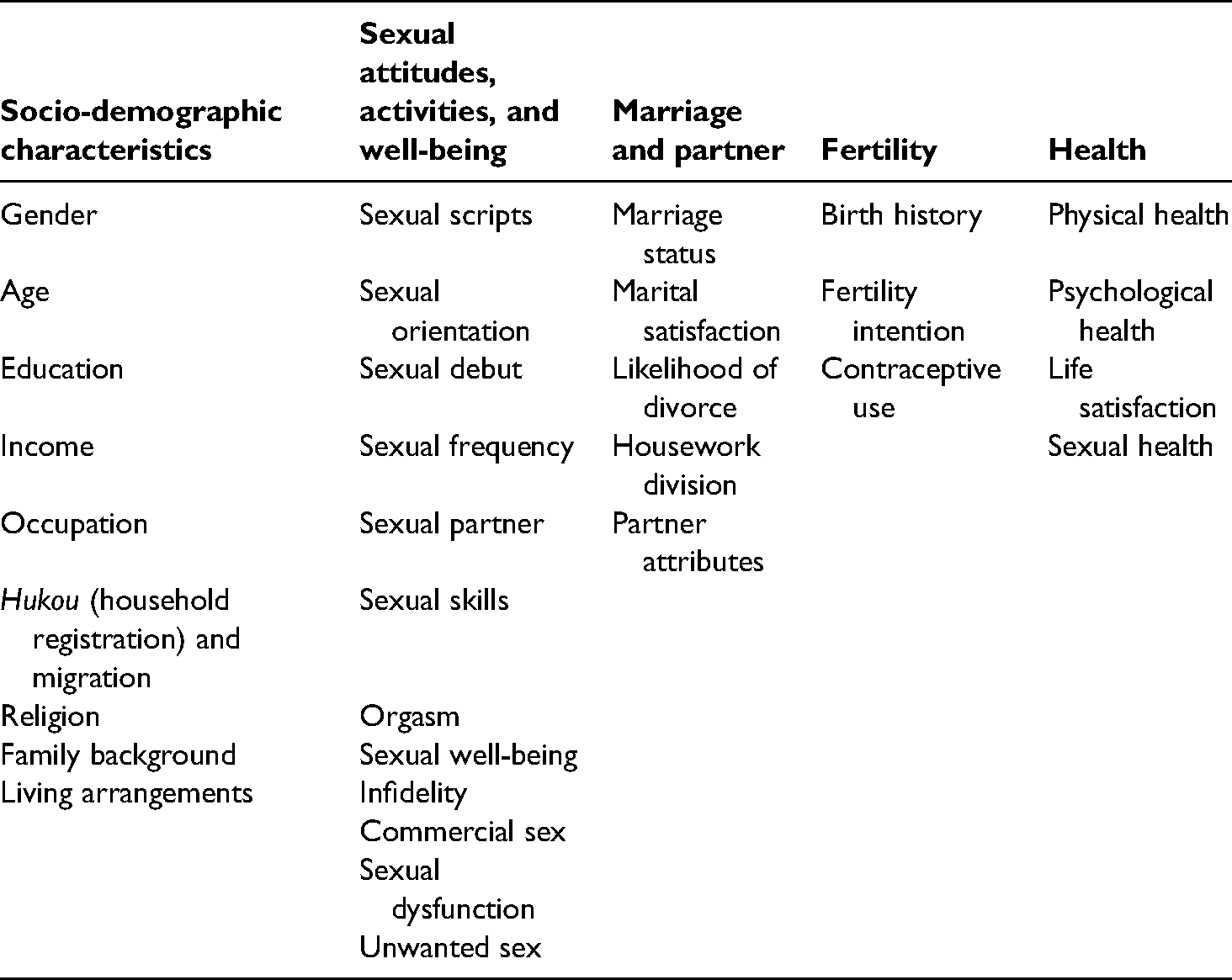
Previous research on sexuality in China has focused more on descriptions from the perspective of sexual diversity than on explorations of the social determinants and consequences of sexual behaviors. In addition, almost all nationally representative findings on sexuality were obtained prior to 2015. To provide a more comprehensive and up-to-date overview of Chinese people's private lives by linking sexuality to social consequences such as marriage, fertility, and health behaviors, scholars from the Department of Sociology at Peking University, the Center for Social Research at Peking University, and the Institute of Population Research at Fudan University designed and implemented the Chinese Private Life Survey (CPLS) in 2020. The survey aimed to collect data on sexuality and family to understand the changing patterns of sexuality in China and explore the relationship between sexuality, family, and health. The questionnaire was divided into five sections: sexual attitudes and behaviors, marital relationships, fertility, health, and socio-demographic characteristics of respondents and their partners (see Table 1).
Contents of Chinese Private Life Survey questionnaire.
To ensure the authenticity of the respondents’ answers and protect their privacy, an online self-administered questionnaire format was chosen to collect the data. Compared with traditional face-to-face and telephone interviews, the self-administered questionnaire did not involve direct interaction between an interviewer and a respondent. We believe that such an interview mode provided more privacy for a respondent, effectively reducing refusal, misrepresentation, or concealment due to the sensitivity of the survey contents.
After the questionnaire was completed, we encrypted the data to protect respondents’ personal information. The questionnaire and the implementation plan were approved by an ethical review committee of Peking University Medical School.
Sampling
The CPLS targeted the population of Chinese adults aged 18 and older, with a particular focus on those at the ages of marriage and childbearing. Since online surveys usually do not have good probability sampling frames, CPLS used non-probability sampling. With the increasing popularity of smartphones, internet users are no longer limited to young or well-educated groups but also include middle-aged and older people and less-educated groups.
The survey began in August 2020, and the sample recruitment process was divided into two rounds. The first round used snowball sampling. We used social media as the dissemination platform. A certain number of initial respondents were recruited and encouraged to share the link on their social networks. Respondents obtained in this round were primarily female, young, and with an undergraduate or graduate education. In the second round, we used quota sampling. To increase diversity, a quota was set based on age, sex, and education during the sampling process.
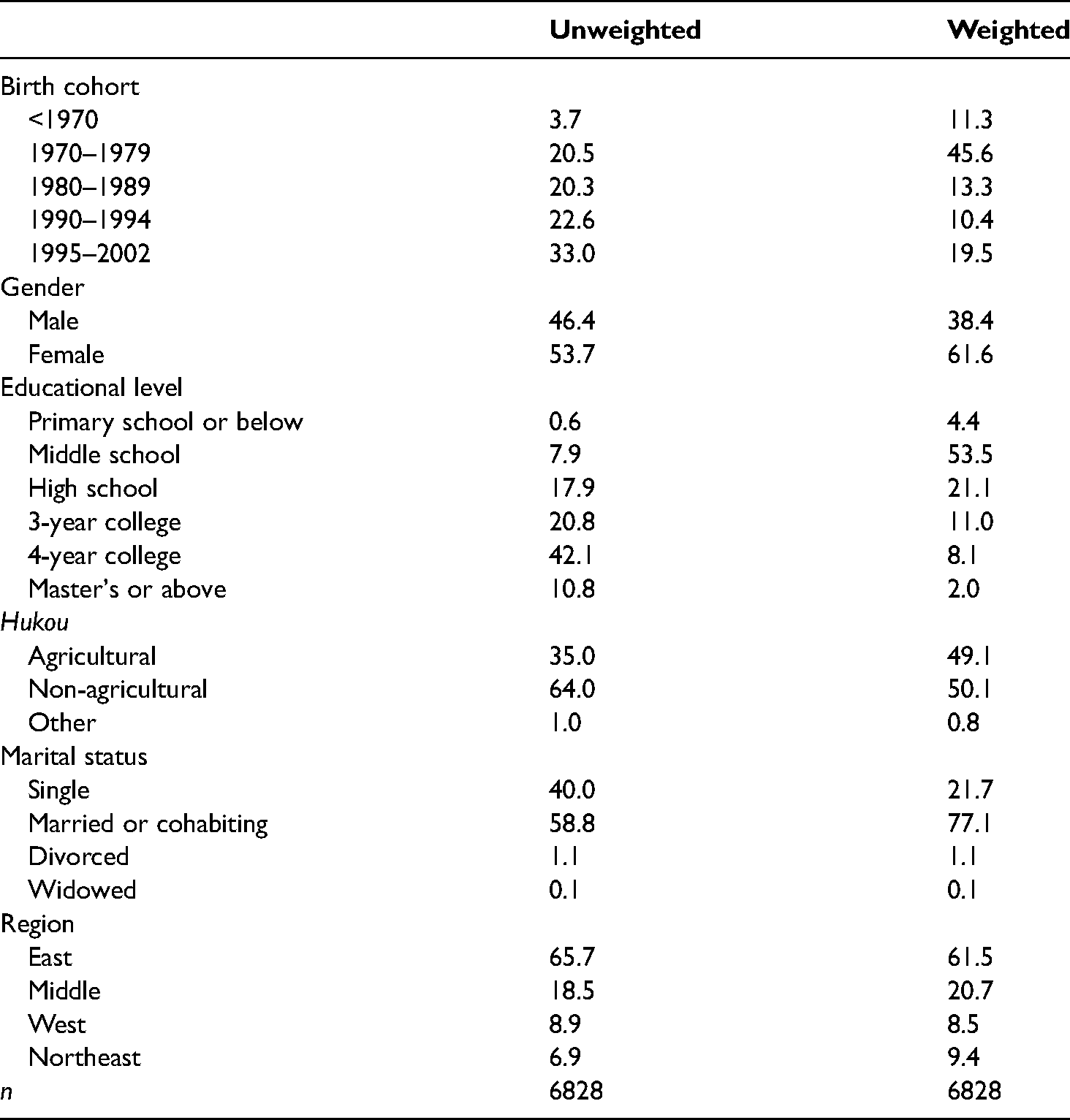
We also adjusted for systematic differences in demographic characteristics between the survey sample and the population by poststratification weights. Since the 2020 China Census data had not been released yet, we constructed the weights based on the joint distribution of gender, age, and education in the 2015 China Mini-Census. By the survey's completion in November 2020, CPLS had successfully interviewed 7733 respondents aged 18 and older. After data cleaning, we finally obtained 6828 valid completed questionnaires. We show the descriptive statistics of key variables before and after weighting in Table 2.
Descriptive statistics of selected demographic variables (%).
Results from CPLS
We carried out an analysis of the CPLS data with a focus on three themes: gender differences, temporal trends, and socioeconomic differentials. First, we analyzed the CPLS sample separately for men and women. To capture changing patterns of sexuality over time, we divided our sample into five successive birth cohorts: born before 1970, between 1970 and 1979, between 1980 and 1989, between 1990 and 1994, and between 1995 and 2002. SES was measured by education, with five categories: below high school, high school, 3-year college, 4-year college, and graduate education.
Sexual attitudes
Figures 1a and 1b show the mean and locally weighted scatterplot smoothing (LOWESS) curves of attitudes toward premarital, extramarital, and homosexual sex among Chinese men and women by birth cohort. The CPLS respondents were more tolerant of premarital sex, followed by homosexual sex, and least tolerant of EMS. Such results are inconsistent with previous studies, which showed that Chinese were least tolerant toward homosexuality (Hu, 2016; Wu, 2019; Zheng et al., 2011). One possible explanation is that as knowledge about sexuality has grown over time, an increasing proportion of Chinese no longer consider homosexuality a deviance. Compared with earlier birth cohorts, younger Chinese born after 1980 held more liberal attitudes toward different types of sexual behaviors, but overall the cohort differences are moderate. In terms of premarital sex, Chinese men and women had similar attitudes. For homosexual sex, Chinese men were more conservative. For men born between 1970 and 1979, 62.8% believed that homosexual sex was always wrong, while for those born in the 1980s and 1990s, 49.9% and 40.4% had such a negative attitude; only 2.1% of those born in the 1980s and 4.9% of those born in the 1990s believed that homosexual sex was completely right. In comparison, for women born in the 1980s and 1990s, 30.3% and 18.1%, respectively, thought homosexual sex was always wrong. Female respondents’ attitudes toward EMS were slightly more tolerant than male respondents’, but both groups remained relatively conservative across cohorts.
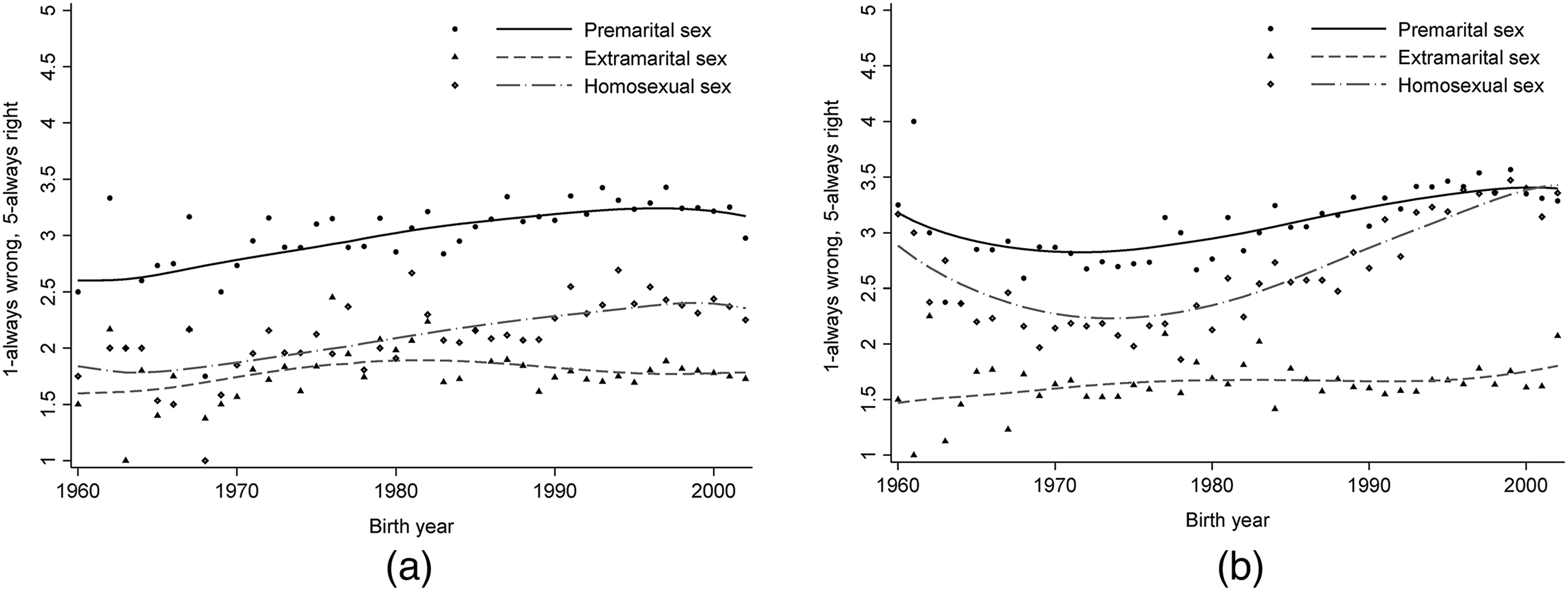
(a) Attitudes toward premarital, extramarital, and homosexual sex among Chinese men by birth cohort; and (b) attitudes toward premarital, extramarital, and homosexual sex among Chinese women by birth cohort.
The CPLS asked respondents about women's role in sex. The mean and LOWESS curves are shown in Figures 2a and 2b. In general, both men and women agreed that women could play a more positive role in sex, contradicting the traditional sex ideology in China. The trend in men's attitudes is not linear. Gender egalitarianism in Chinese men's attitudes toward sex increased across birth cohorts, peaking at those born in the 1980s, followed by a gradual decline for those born after 1990. In contrast, we observe a monotonic increase in gender egalitarianism in women's attitudes toward sex. Further analysis is needed to understand the diverging gender gap regarding women's role in sex among the youngest cohorts in China.
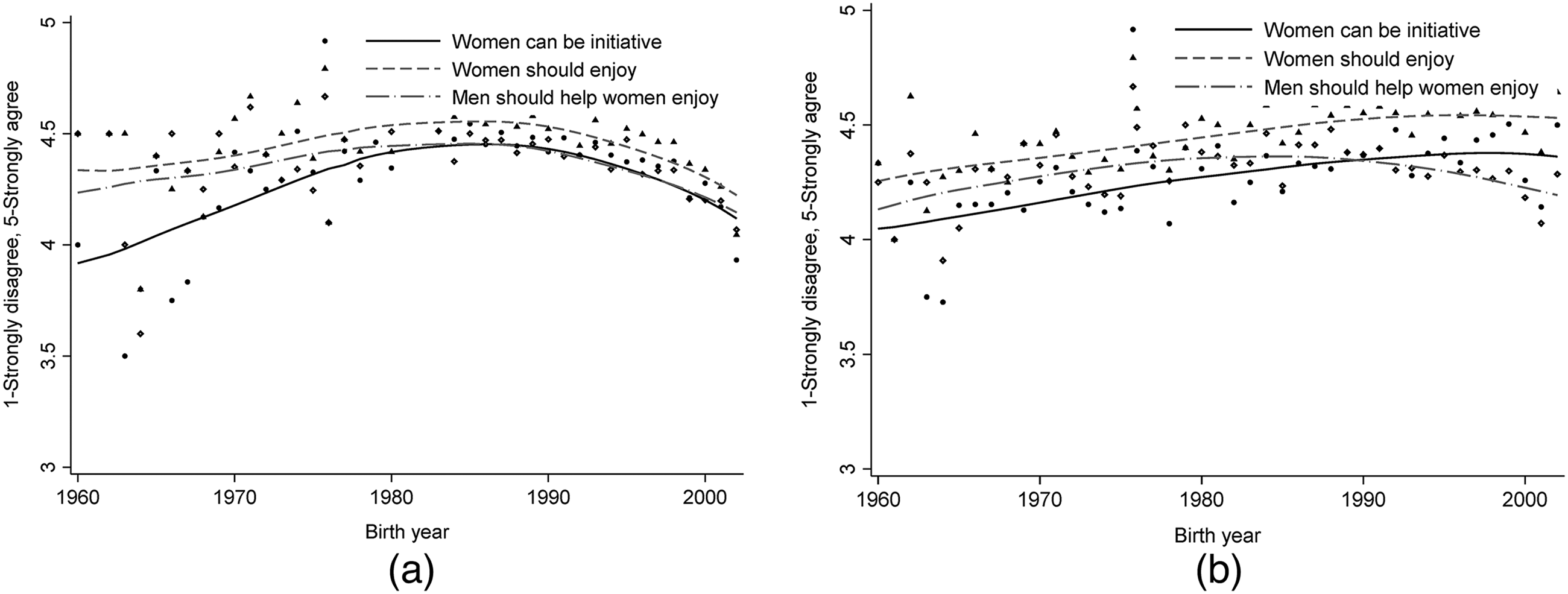
(a) Attitudes toward women's role in sexuality among Chinese men by birth cohort; and (b) attitudes toward women's role in sexuality among Chinese women by birth cohort.
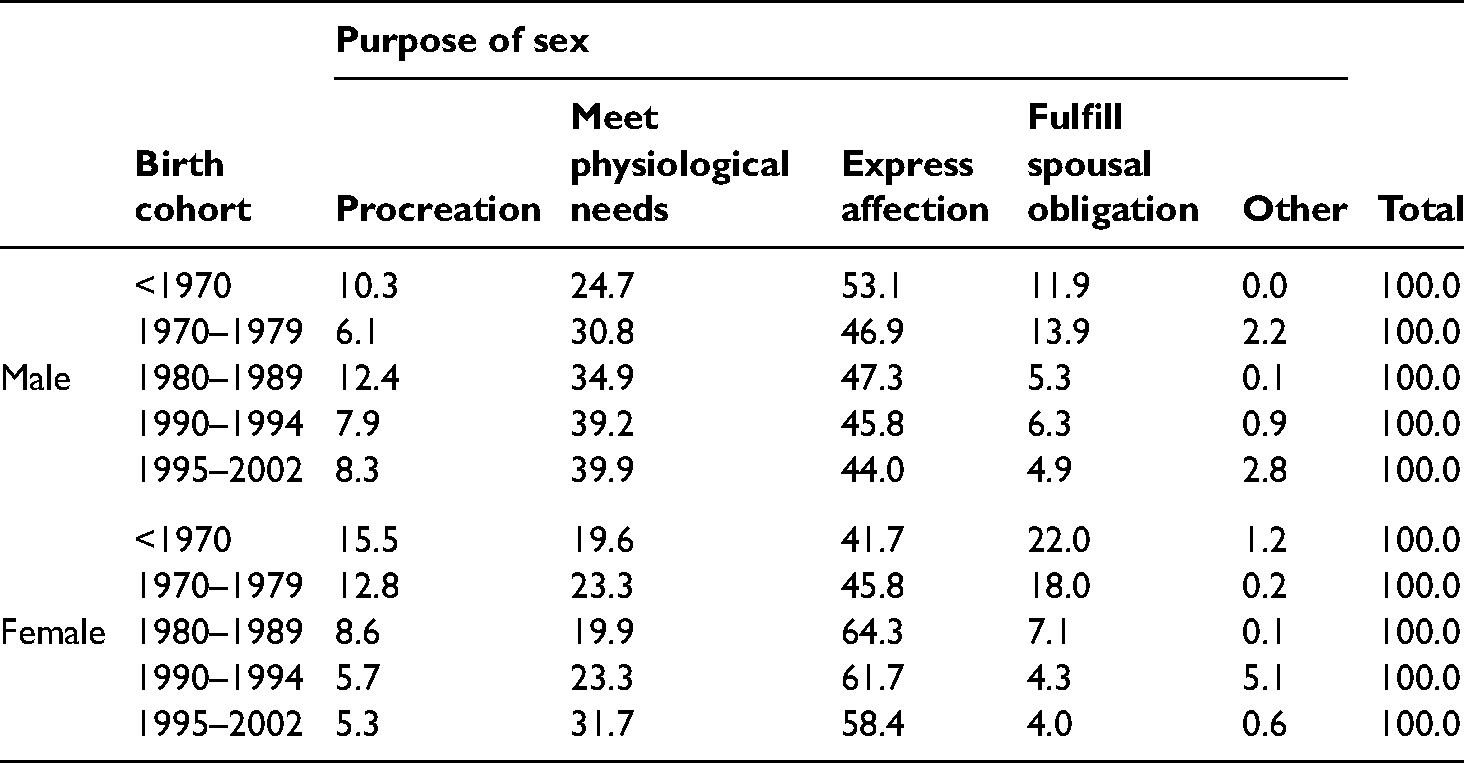
We present the results of the perceived purpose of sex by gender and birth cohort in Table 3. CPLS asked respondents “what is the purpose of sex?” Respondents were asked to choose one from the following possible responses: “for procreation”, “for meeting one's physiological needs”, “for expressing intimacy”, “for fulfilling one's obligation as a spouse”, and “other”. For both men and women, the majority no longer believed that the primary purpose of sex was procreation; such a shift is seen as the ideological foundation of the sexual revolution. The proportion who responded that the purpose of sex was for procreation declined more sharply for women across birth cohorts than for men, with less than 6% of women born after 1990 choosing this response. For women, a sharp decline is also observed in the “fulfilling one's obligations as a spouse” response across birth cohorts. 22% of women born before 1970 believed that the purpose of sex was to fulfill their obligations as a wife. Yet only about 4% of women respondents born after 1990 chose this response. Compared to men, more women agreed that the purpose of sex should be to express affection, especially among those born in the 1980s and early 1990s.
Perceived purpose of sex among Chinese men and women by birth cohort.
Onset of sexual behavior
Masturbation is an important indicator of puberty and sexual maturity. However, in traditional Chinese sexual culture, masturbation was believed to be harmful and a loss of vital energy (Higgins et al., 2002; Wile, 2018). Figures 3a and 3b show the Kaplan–Meier survival curves of age at first masturbation for men and women, respectively. Masturbation has moved earlier for both Chinese men and women across birth cohorts, albeit with the trend being more pronounced for women. For each male cohort, by the age of 20, more than three-quarters of respondents had masturbated. In contrast, the timing of first masturbation was later for women. About half of women born in the 1980s first masturbated before the age of 20. Yet women of the youngest cohort, born between 1995 and 2002, had much earlier timing of first masturbation, with three-quarters of them having masturbated before the age of 20.
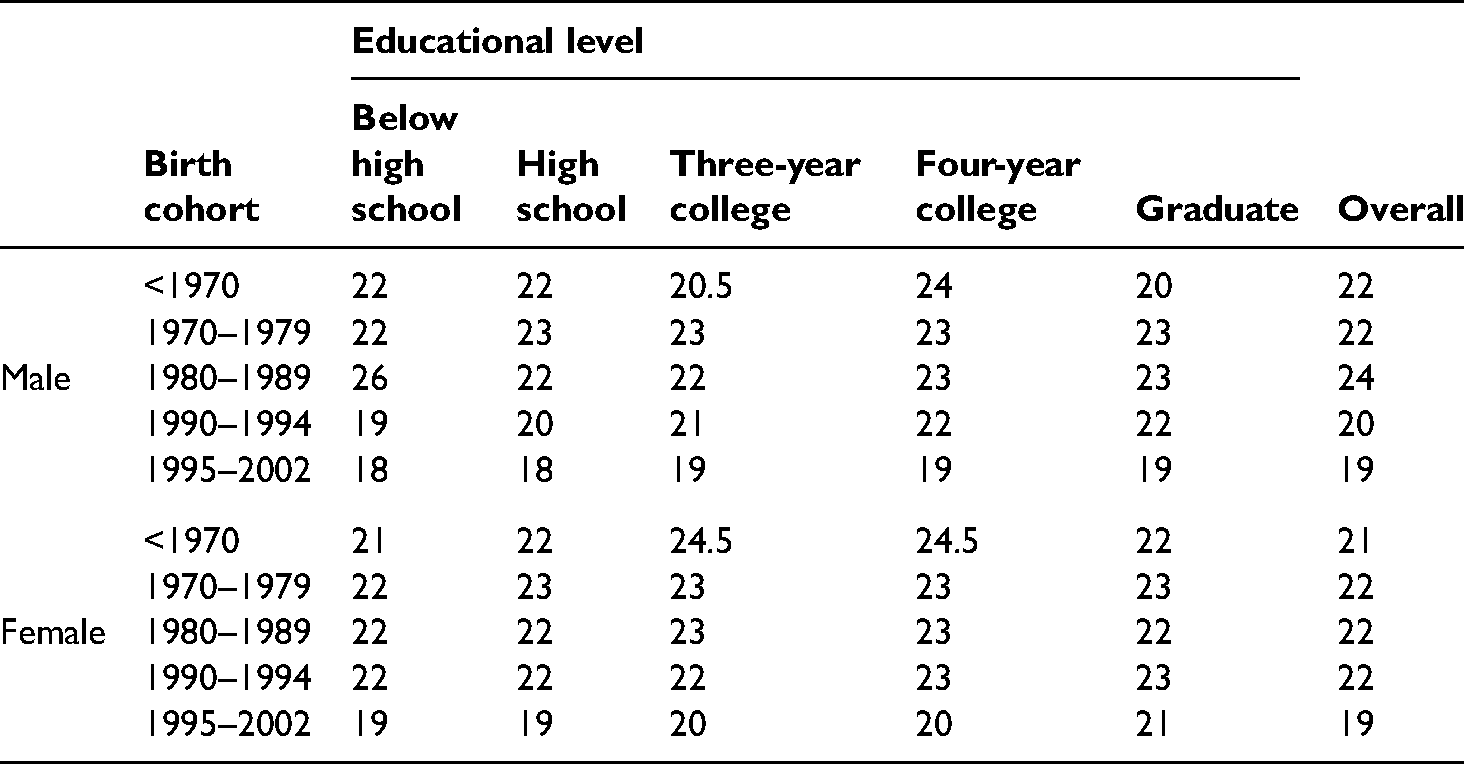
We also show the median age of first masturbation in Table 4 for men and women by birth cohort and educational level. Again, first masturbation has trended earlier for both Chinese men and women across birth cohorts. The median first masturbation age declined from 21 for Chinese men born before 1970 to 17 for those born between 1995 and 2002, and it declined from 28 for women born in the 1970s to 20 for women born between 1990 and 1994. We also observe a negative educational gradient for age of first masturbation for both Chinese men and women. Chinese men and women with a graduate education first masturbated much earlier than those with lower levels of education.
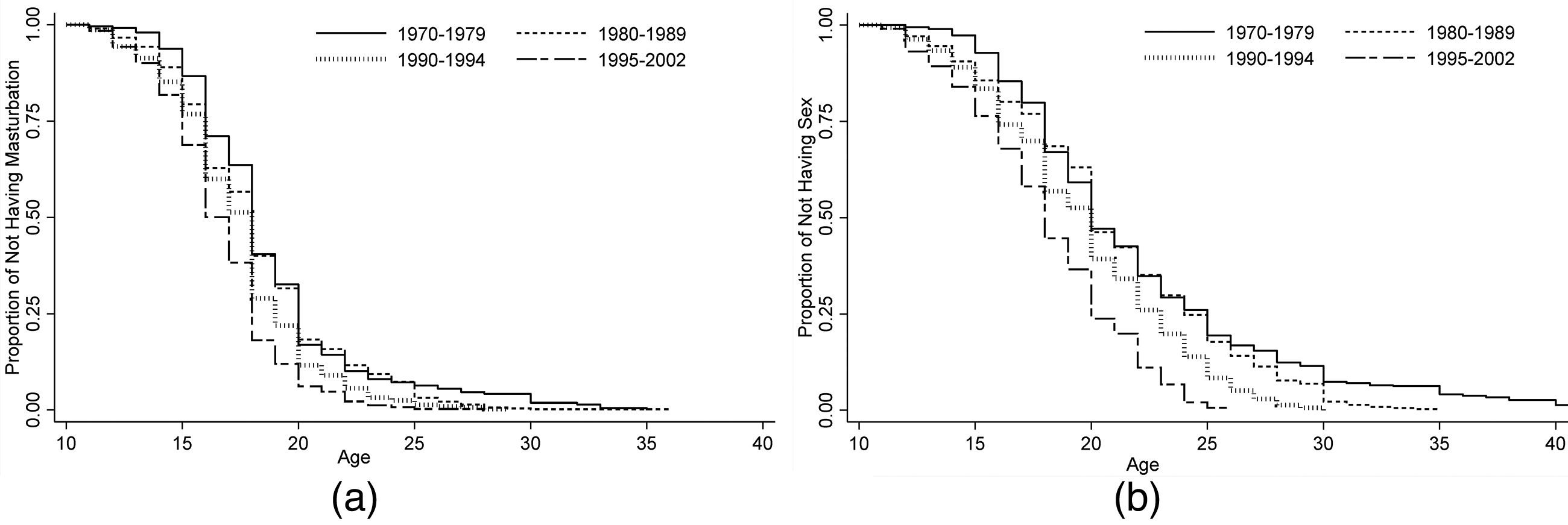
(a) Kaplan–Meier survival curves of age at first masturbation among Chinese men by birth cohort; and (b) Kaplan–Meier survival curves of age at first masturbation among Chinese women by birth cohort.
Median age of first masturbation among Chinese men and women by birth cohort and educational level.
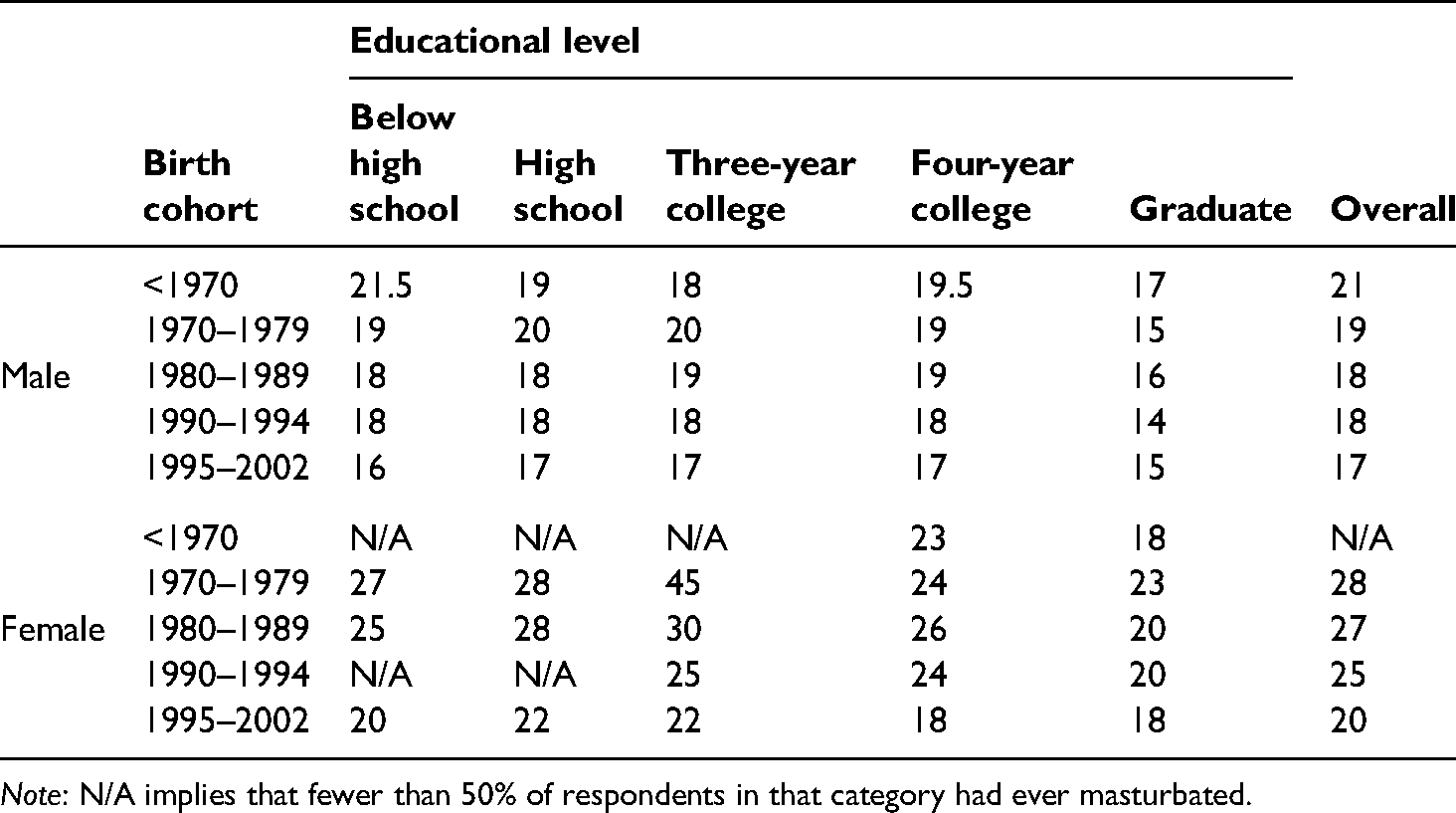
Note: N/A implies that fewer than 50% of respondents in that category had ever masturbated.
Figures 4a and 4b show the Kaplan–Meier survival curves of age at first sexual intercourse for men and women, respectively. While the age of first marriage has been rising in China, this is counterbalanced by increasing tolerance toward premarital sexual behavior, resulting in both men and women starting sex at an earlier age across birth cohorts. The most dramatic changes occurred in the youngest cohort, born between 1995 and 2002. For men of this cohort, three-quarters had had sexual intercourse by the age of 20, a proportion that is much higher than for those born before 1995, of which only about one-third had had sex by the same age. Similarly, for women, the proportion having had sex before 20 years of age increased from about one-quarter among those born before 1995 to two-thirds among those born between 1995 and 2002.
The median age of first sexual intercourse by birth cohort and educational level is presented in Table 5. The median age of first sexual intercourse declined from 22 for men and 21 for women born before 1970 to 19 for both men and women born between 1995 and 2002. We do not observe large educational differences in the age of first sexual intercourse for either men or women, except that those with 4-year college and graduate educations started sexual intercourse slightly later. One notable fact is that the median age of first sexual intercourse for men born in the 1980s with less than a high school education is 26, much higher than that for men with higher educational levels. Such a pattern is consistent with previous literature suggesting that Chinese men with lower SES were being excluded from the marriage marketplace (Yu and Xie, 2015a). However, as Chinese society has become more accepting of premarital sex, men of the youngest cohort with lower SES were no longer disadvantaged in terms of the onset of sex.
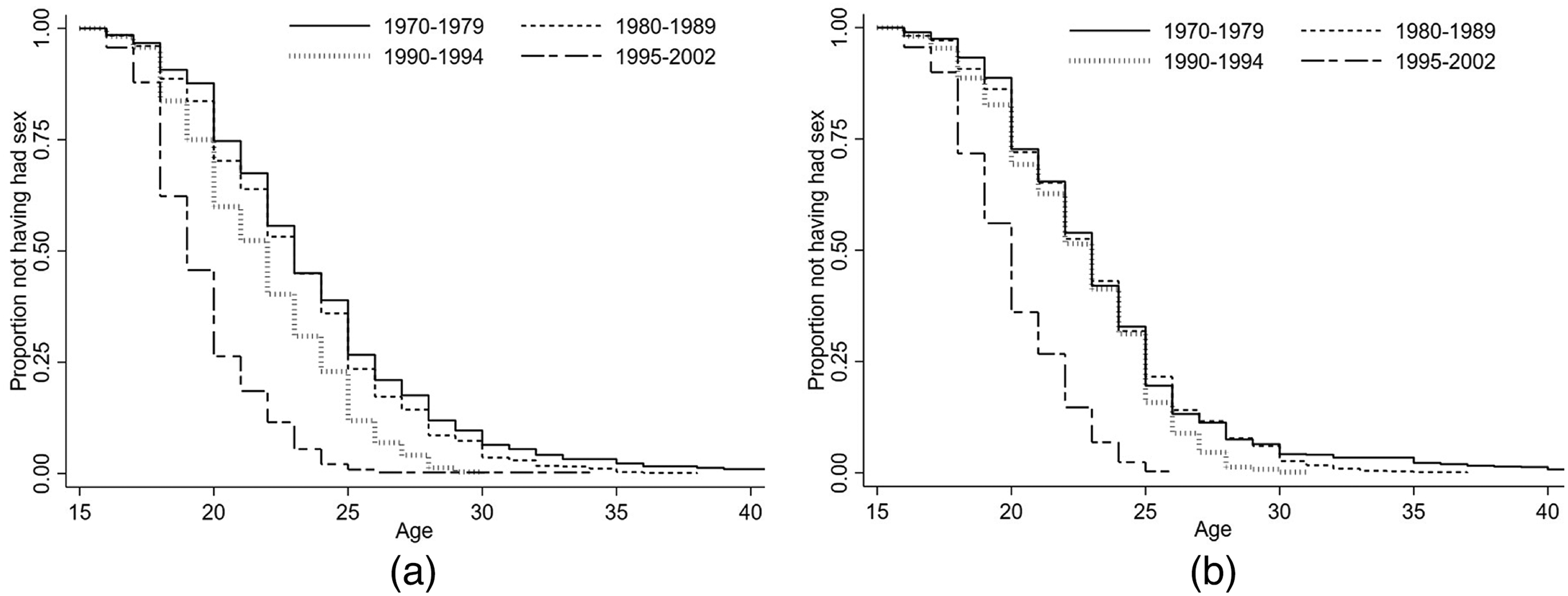
(a) Kaplan–Meier survival curves of age at first sex (intercourse) among Chinese men by birth cohort; and (b) Kaplan–Meier survival curves of age at first sex (intercourse) among Chinese women by birth cohort.
Median age of first sexual intercourse among Chinese men and women by birth cohort and educational level.
Sexual activity
Table 6 shows the sexual frequency by gender, partner status, and birth cohort. For both men and women, those who had a regular partner (i.e. marital or cohabiting partner) were more sexually active than those without a regular partner. Aging is negatively associated with sexual frequency, with men and women born before 1970 being the least active.
Sexual frequency among Chinese men and women by partner status and birth cohort.
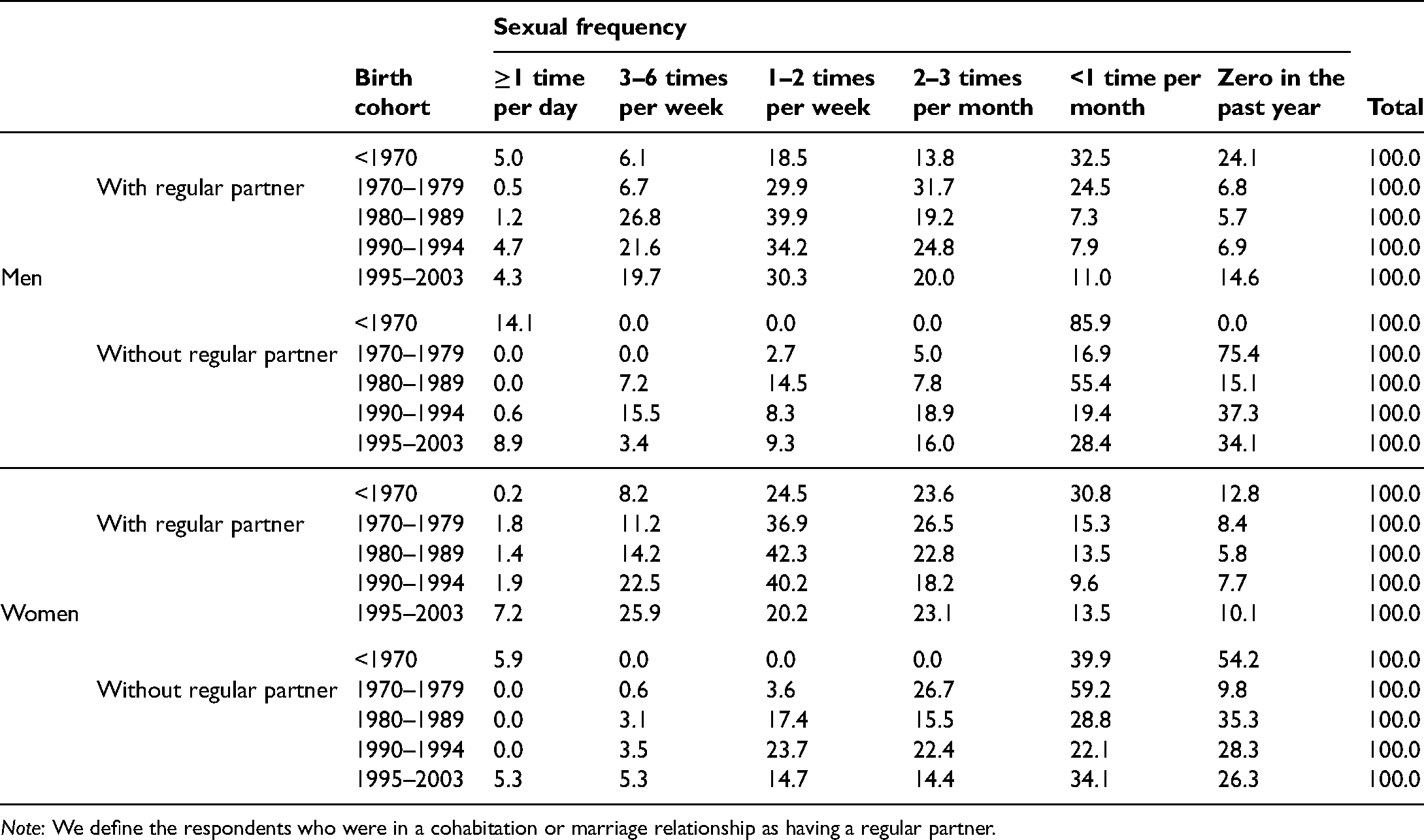
Note: We define the respondents who were in a cohabitation or marriage relationship as having a regular partner.
Among men with a regular partner, those born in the 1980s were most sexually active: 67.9% had sex at least one to two times per week, compared to 37.1%, 60.1%, and 54.3% for men born in the 1970s, between 1990 and 1994, and between 1995 and 2003, respectively. Among women with a regular partner, those born in the early 1990s had sex more frequently than other birth cohorts, with 64.6% having sex at least one to two times per week. Surprisingly, the youngest cohorts were not the most sexually active. Only about half of women born between 1995 and 2002 had sex at least one to two times per week, slightly lower than the frequency of those born in the 1980s. There is an increase in an absence of sexual life for people in relationships. For men and women born before 1970 who had a partner, 24.1% and 12.8%, respectively, did not have any sex in the past year. Strikingly, 14.6% and 10.1% of men and women of the youngest cohort (born between 1995 and 2003) who had a partner reported having had no sex in the past year, rates even higher than among those born in the 1970s, 1980s, and early 1990s. Whether and why sex has lost its appeal for a large fraction of young people needs to be further studied in the future.
As has been argued by Pan (2017) and other scholars, an active sex life is an indicator of a successful life, especially for men. As a result, men of higher SES should be more sexually active than men of lower SES. To test such a hypothesis with CPLS, in Table 7 we show the sexual frequency among Chinese men and women with a regular partner by birth cohort and educational level. For men born before 1980, we observe a positive educational gradient in sexual frequency: 29.6% of men with less than a high school education had sex at least one to two times per week, in contrast to 49.8% of men with a graduate education. However, the relationship between education and sexual frequency reversed for men born in the 1980s and 1990s. For those born in the 1980s, 31.4% of men with less than a high school education had sex three to six times per week, a much higher proportion than among those with higher educational levels. For the same cohort, only 39.4% of men with a graduate education had sex at least one to two times per week, much lower than men with lower education levels (at 58.5%–67.8%). For men born between 1990 and 2002, more than half of those with a graduate education had sex fewer than once per month, and 29.2% had sex at least one to two times per week. In contrast, 43.8% of men with the lowest educational level had sex at least one to two times per week.
Sexual frequency among Chinese men and women by birth cohort and educational level.
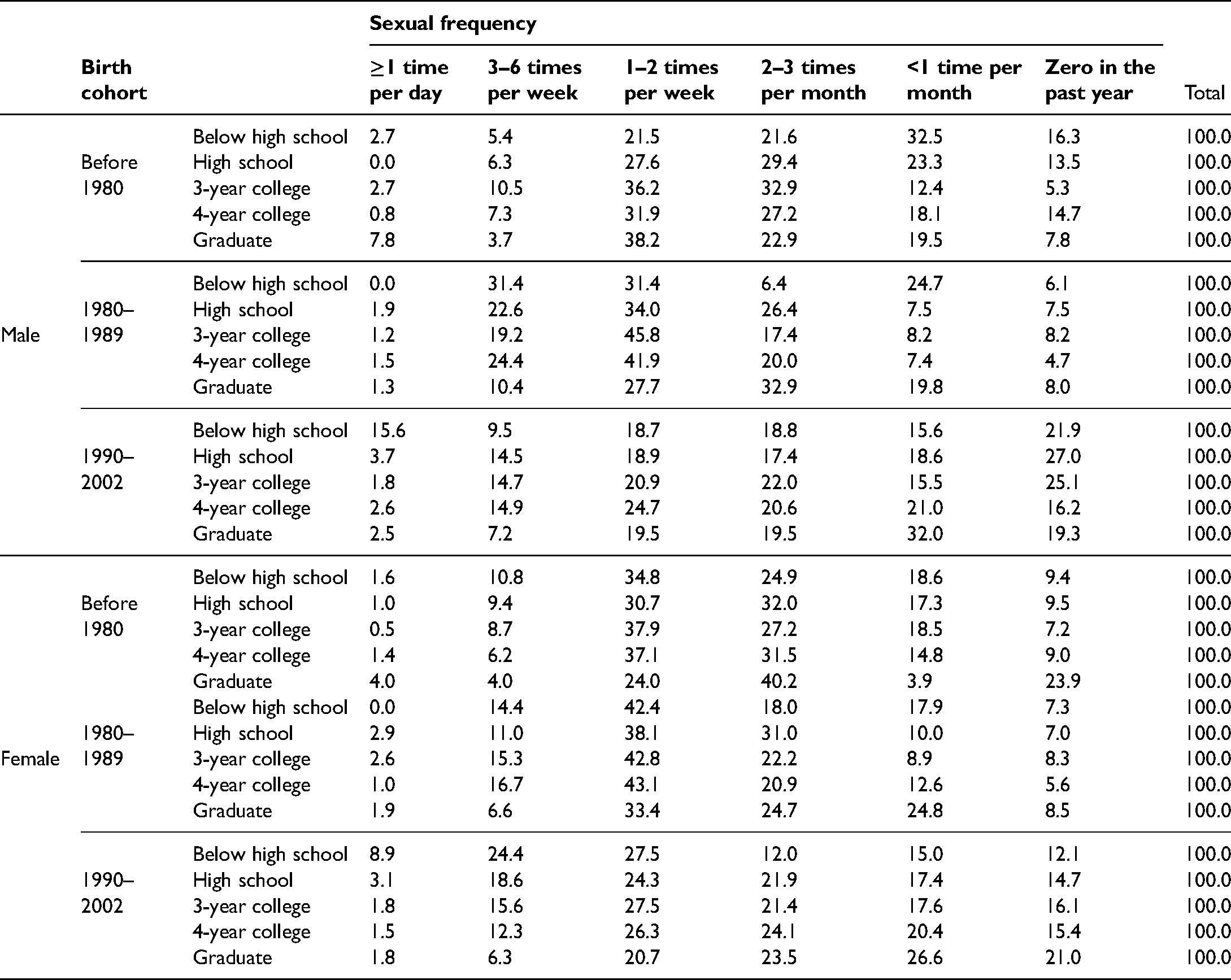
We did not observe a substantial educational pattern in women's sexual frequency, except for those with a graduate education. Of women born before 1980 who had a graduate education, 23.9% reported having had no sex in the past year, much higher than for women with lower educational levels. In comparison, one-third of those born in the 1980s and about half of those born between 1990 and 2002 had sex less than once per month. Taken together, we believe that specific attention should be paid to the emerging young middle class who, despite their higher SES, are comparatively deprived of a sex life.
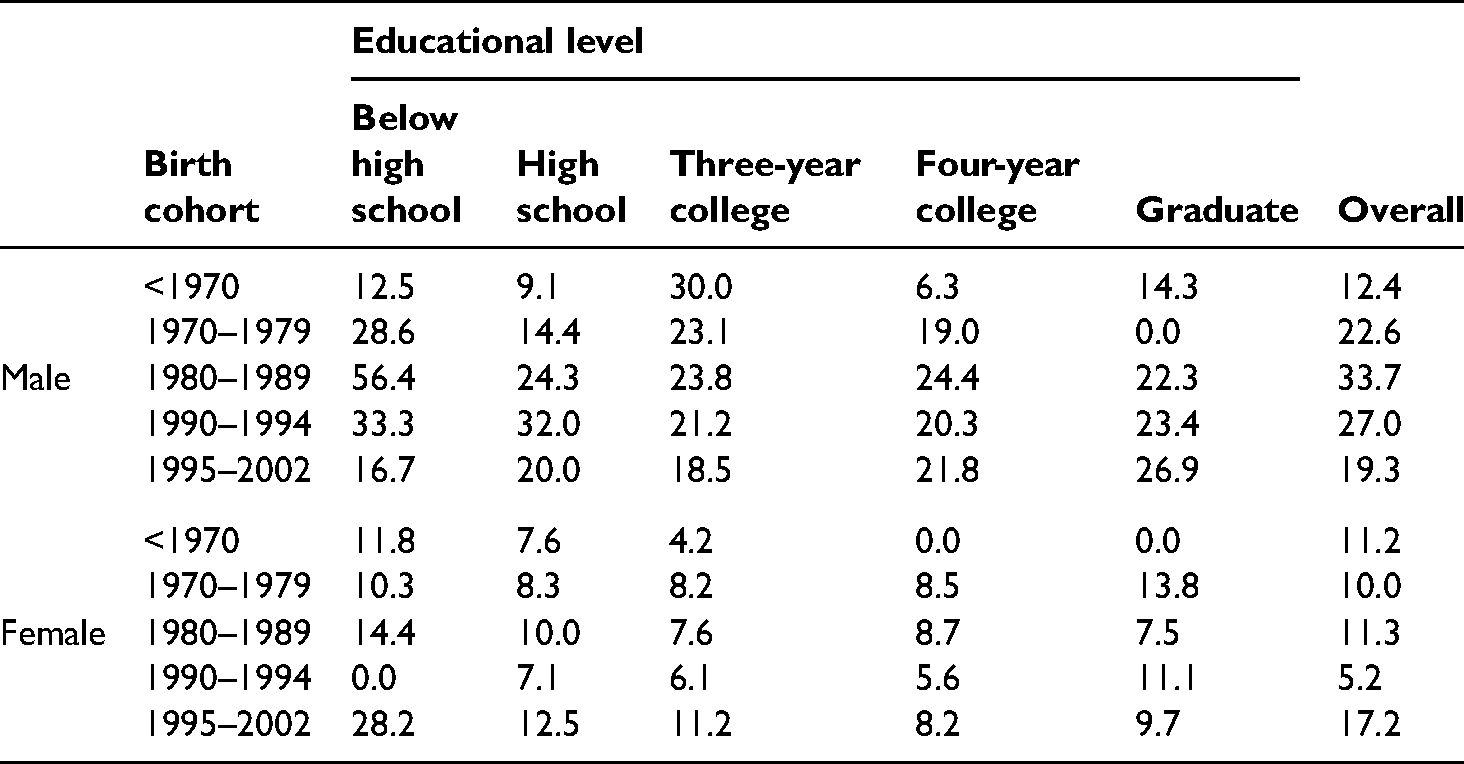
Table 8 shows the proportion of respondents having online hookups among Chinese men and women by birth cohort and educational level. The overall proportion of respondents having sex through online hookups was higher for men than women. Men born in the 1980s had the highest rate of having experienced an online hookup, 33.7%, while among women those born between 1995 and 2002 had the highest rate, 17.2%. For men born between 1970 and 1994, we observe a negative relationship between education and experience of an online hookup. Among male respondents born in the 1980s, 56.4% with less than a high school education had experienced an online hookup, more than double the proportion among those with higher levels of education. The educational pattern in online hookups for women is not as clear as that for men. Women with the lowest and highest educational levels were relatively more likely to have experienced an online hookup: for those born between 1995 and 2002, 28.2% of women with less than a high school education had engaged in online hookups, much higher than the proportion of men in the same age group and with the same level of education (16.7%).
Online hookup experience among Chinese men and women by birth cohort and educational level.
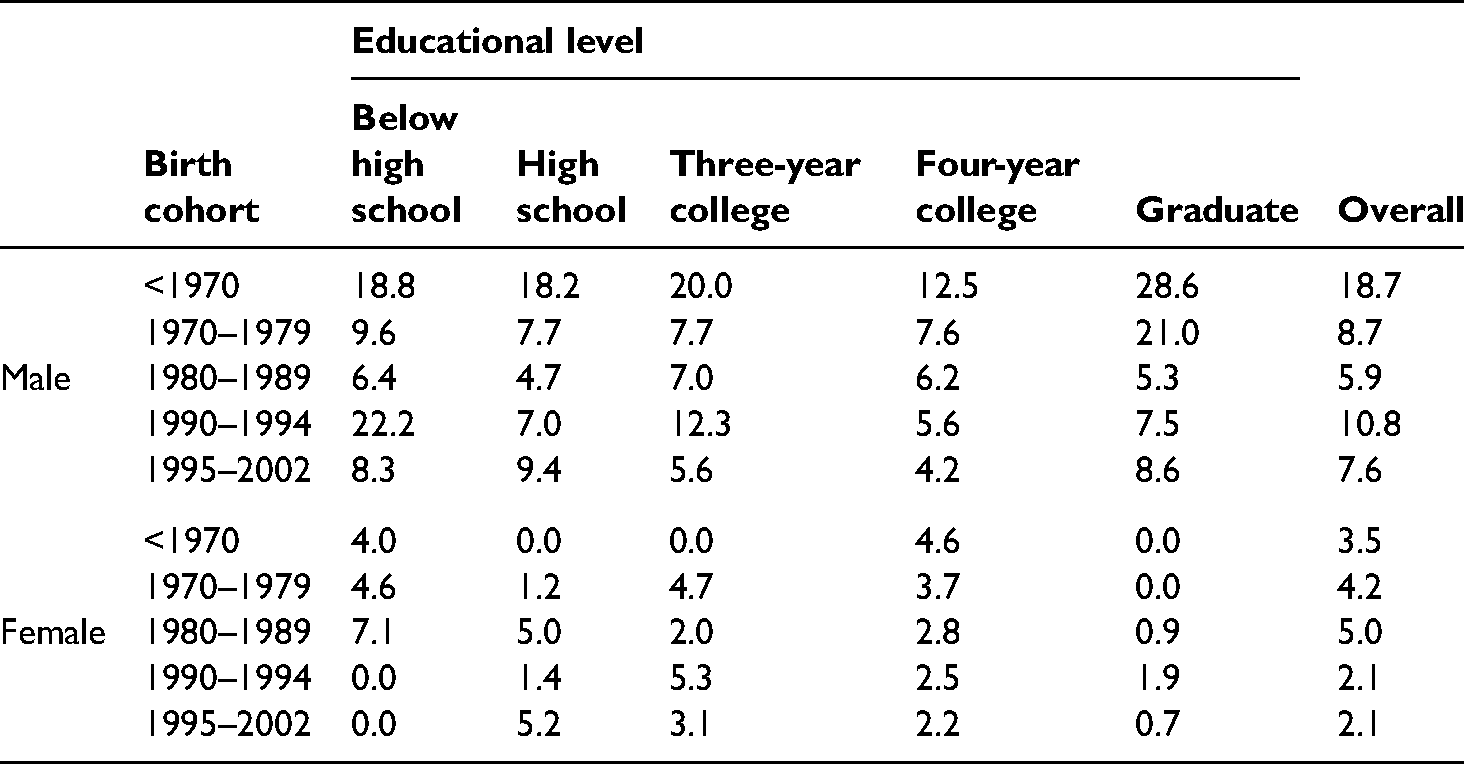
We present the statistics about commercial sex in Tables 9 and 10, which, respectively, show the proportions of paying for and receiving material benefits for sex among men and women by birth cohort and educational level. Past literature has characterized commercial sex in China as usually involving men of higher SES, especially businessmen who travel frequently (Ho et al., 2018; Tsang, 2017). For men born before 1980, we observe a positive educational gradient in paying for sex, consistent with previous studies: 21.0% of men born in the 1970s with a graduate education had paid for sex, more than double the proportion of men with lower levels of education. However, the pattern has reversed for men born in the 1980s and early 1990s. Among men born between 1990 and 1994, 22.2% of those with less than a high school education had paid for sex, a much higher rate than for men with a 4-year college or graduate education. Women had a relatively lower rate of paying for sex compared with men. The proportion of women of all birth cohorts who had paid for sex was no greater than 5%.
Proportion of paying for sex among Chinese men and women by birth cohort and educational level.
Proportion of receiving material benefits for sex among Chinese men and women by birth cohort and educational level.
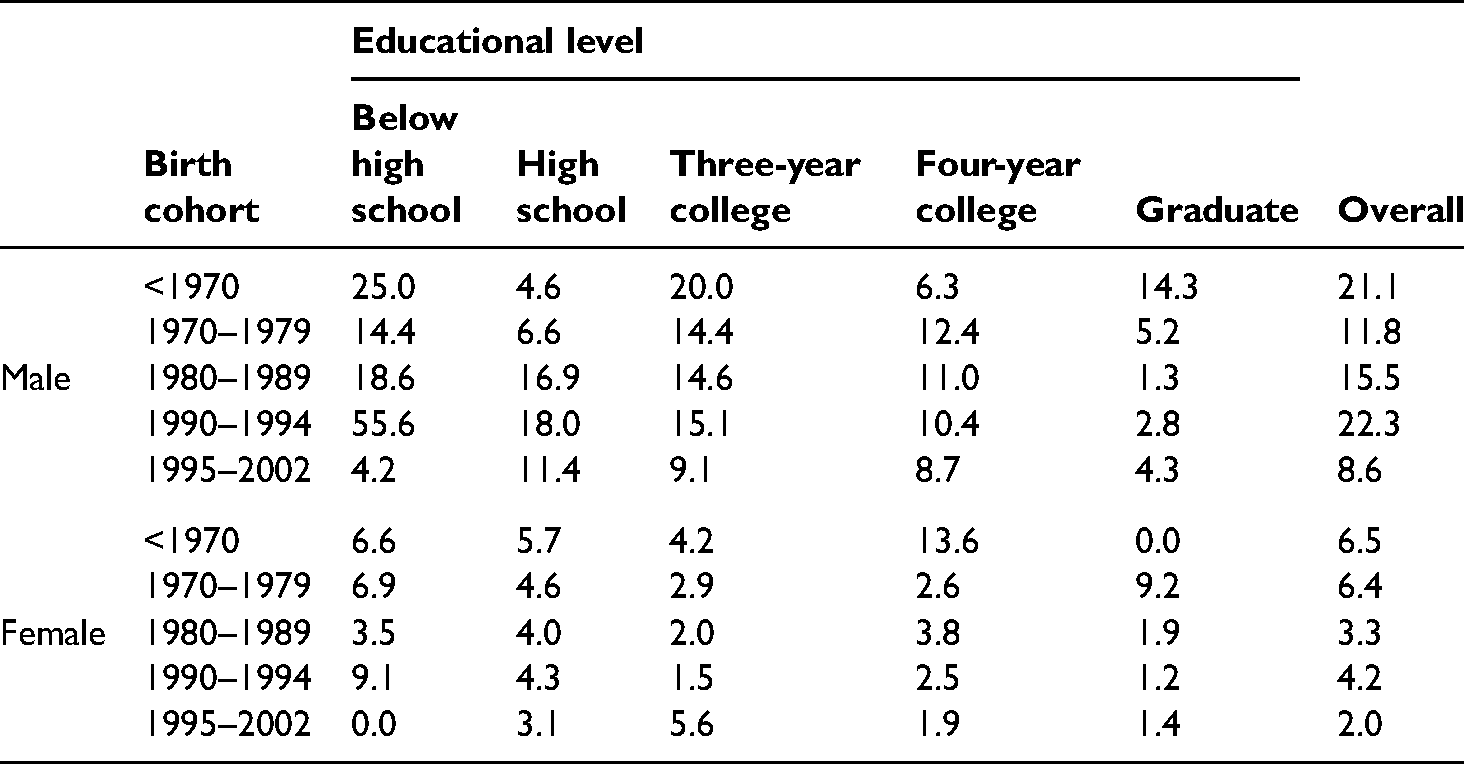
The prevalence of receiving material benefits for sex was higher than paying for sex among men. Except for men born in 1995–2002, we generally observe a negative relationship between educational level and receiving material benefits for sex. Men of lower SES were more likely to receive money or gifts for having sex; in particular, more than half of those born between 1990 and 1994 with less than a high school education had exchanged sex for material benefits. However, as only 9 male respondents of this cohort have not completed high school education, such a high rate is subject to a large sampling error. Influenced by gender stereotypes, Chinese women are often perceived as being more frequently involved with receiving material benefits for sex (Ding and Ho, 2013; Tucker and Ren, 2008). However, our results show that the proportion of women receiving material benefits for sex was much lower than that of men, only about one-third. For women born before 1970 and in the 1970s, 9.3% of those with graduate education had ever exchanged sex for material benefits, higher than women with lower educational levels. Yet for women born in the 1980s and early 1990s, a higher proportion of those with a lower education had received material benefits for sex.
Sexual well-being
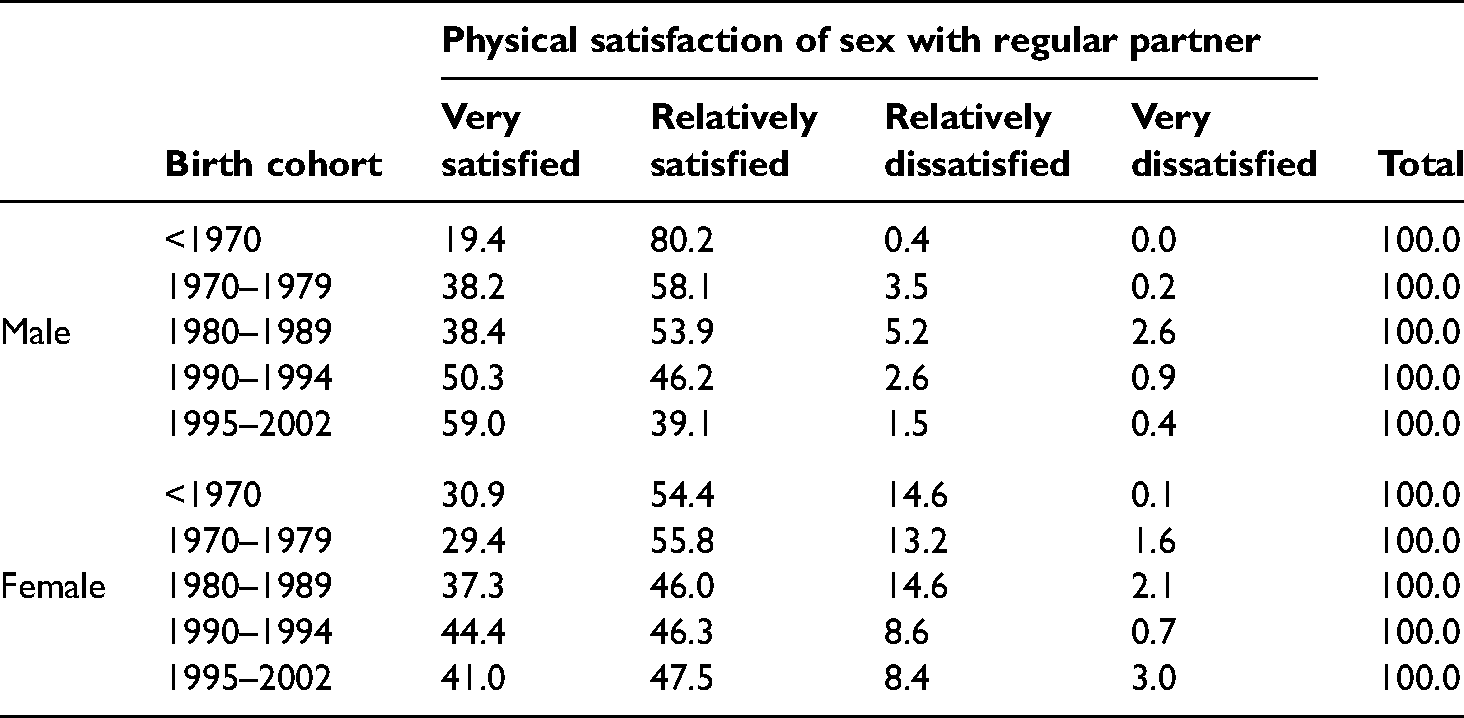
In the CPLS, we only asked about the respondent's sexual well-being with the regular partner (i.e. marital or cohabiting partner). Tables 11 and 12 show physical and psychological satisfaction with sex with one's regular partner by birth cohort for men and women. Overall, men were more physically satisfied with sex with their regular partners than women. Except for those born in the 1980s, fewer than 5% of men of other birth cohorts were physically dissatisfied with sex with their regular partners. For women born before 1990, about 15% were physically dissatisfied with sex with their regular partners, and the proportion declined to about 10% among women born after 1990.
Physical satisfaction of sex with regular partner among Chinese men and women by birth cohort.
Psychological satisfaction of sex with regular partner among Chinese men and women by birth cohort.
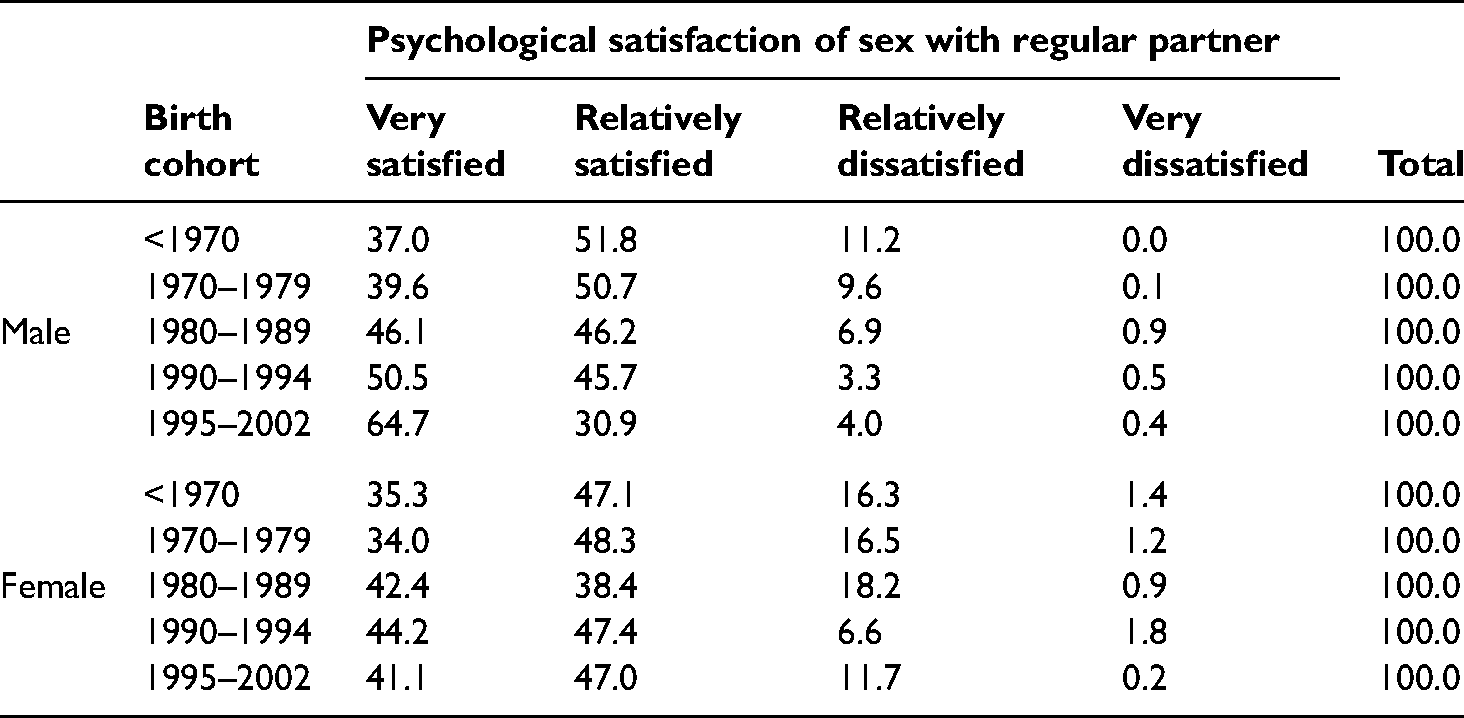
Similarly, men also had a higher level of psychological satisfaction with sex with their regular partners. Fewer than 10% of men born after 1990 were psychologically dissatisfied with sex with their regular partners, and 64.7% of men born between 1995 and 2002 were very psychologically satisfied. About 20% of women born before 1990 were psychologically dissatisfied with sex with their regular partners. The level of psychological sexual satisfaction improved for the younger female cohorts, especially those born in the early 1990s, with only 8.4% being dissatisfied.
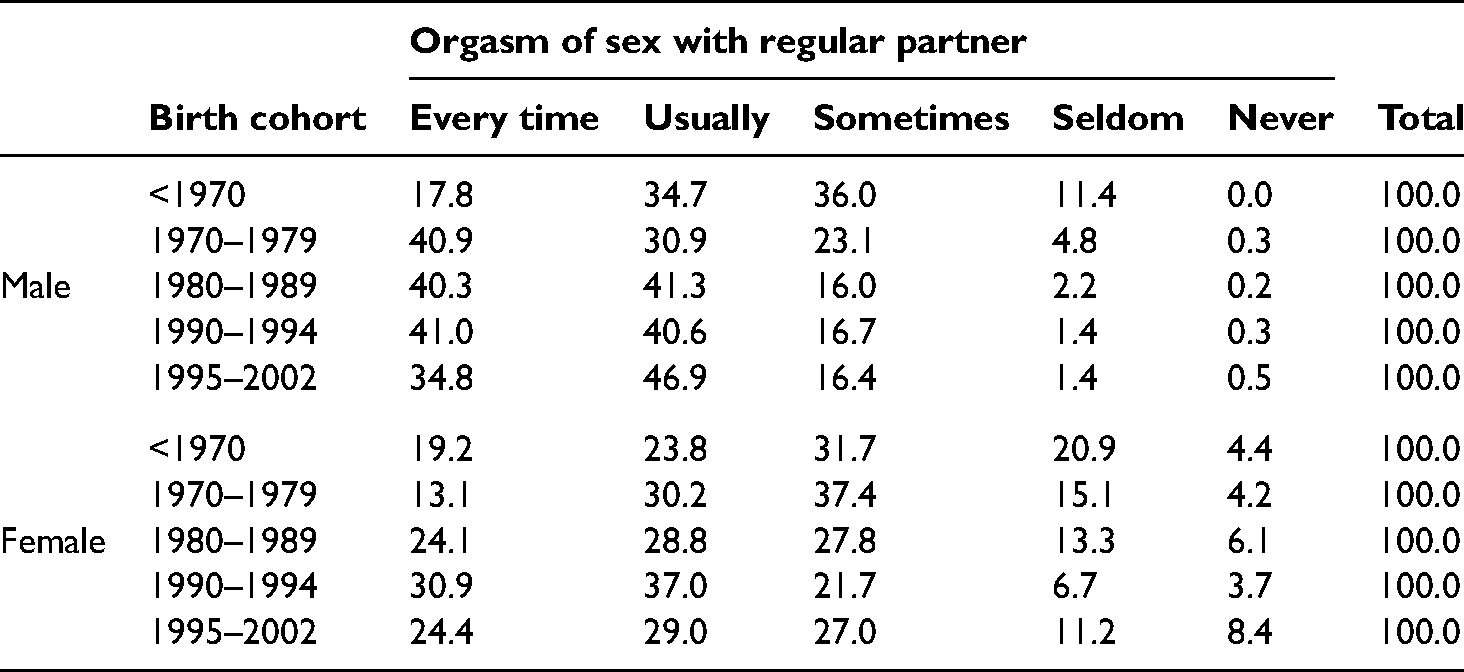
We present the frequency of orgasm during sexual intercourse with one's regular partner in the past year in Table 13. More than one-third of men born between 1970 and 2002 had an orgasm every time they had sex with their regular partner, which is similar to the results of SSC 2015 (Pan, 2017). Fewer than 5% of men seldom or never had an orgasm. In comparison, Chinese women had fewer orgasms during sex with their regular partners than men. About 20% of women born before 1990 and between 1995 and 2002 seldom or never had an orgasm. Women born in 1990–1994 had the most frequent orgasms: 30.9% had an orgasm every time they had sex and less than 10% seldom or never had an orgasm.
Orgasm during sex with regular partner in the past year among Chinese men and women by birth cohort.
Conclusion and discussion
In this article, we introduce sexuality in China from ancient times to the contemporary era, paying specific attention to its role in the family, gender inequality, and the relationship with the state. After concisely reviewing past data and empirical evidence bearing upon the sexual revolution in China, we introduce CPLS, a 2020 online study of sexuality in today's China from broader sociological and demographic perspectives. Based on CPLS data, we present some new findings on the ongoing sexual revolution in China. We summarize the findings as follows.
Chinese people increasingly have more liberal sexual attitudes, especially regarding premarital sex. Sexual ideology has changed more for Chinese women than for men. However, many Chinese people still hold traditional standards of sexual morality, with intolerance of EMS remaining prevalent. The traditionally passive role of women in sex has largely lost relevance, and both Chinese men and women increasingly agree that women should play a more active role in sexuality.
The onset of sexual experience, including both masturbation and sexual intercourse, has trended earlier. Educational level is negatively associated with the timing of first masturbation yet not significantly associated with the timing of first sexual intercourse. Cohort analysis of sexual frequency reveals that among respondents with a regular partner, a greater proportion of those born in 1995–2002 reported absence of sexual activity than among those born in the 1970s, 1980s, and early 1990s, indicating that a sizable proportion of young Chinese are living in sexless marriages/relationships. We observe a changing relationship between SES and sexual frequency among men across birth cohorts. Among those born before 1980, men with higher education are more sexually active, but this pattern is reversed among those born after 1980. For each cohort, a substantial proportion of women with a graduate education are sexually inactive, much higher than for women with lower levels of education. Considering such patterns, it is necessary to pay greater attention to the emerging young middle class who, despite their higher SES, are comparatively deprived of a sex life.
The proportion having engaged in an online hookup is highest among Chinese men born in the 1980s, one-third of whom reported having had such an experience. In contrast, for women, the prevalence of having experienced an online hookup is higher for the youngest cohorts than for older cohorts. Chinese men are more likely to engage in commercial sex than women, including both paying for and receiving material benefits for sex. Among those born before 1980, men with the highest levels of education are more likely to pay for sex. However, the pattern is reversed for younger birth cohorts born after 1980, with paying for sex becoming more common among men with lower levels of education. Our results also challenge the stereotype that women are more likely to receive material benefits for sex, as the proportion exchanging sex for material benefits is larger for men than for women. In terms of sexual well-being, Chinese men have better sexual well-being, physical and psychological satisfaction from sex, and more frequent orgasms than do women. Although women's role in sexuality has been recognized by both men and women, women still lag behind men in terms of sexual well-being.
To summarize, our findings suggest that the sexual revolution in China is ongoing, exhibiting several departures from the past. First, the educational gradient in sexual activities has been reversed, with the watershed being between the pre-1980 and post-1980 cohorts. The sexual revolution in China was believed to begin with men with higher levels of education (Pan, 1994, 2007). However, after decades of development, persons of relatively lower SES are engaging in more nontraditional sexual behaviors. Our findings based on CPLS are consistent with previous studies on premarital cohabitation in China, which observe a higher cohabitation rate among migrant workers and men with lower levels of education (Yu, 2021). Meanwhile, a future study on sexual education and the health of Chinese youth of lower SES is needed, as recent studies have observed a high premarital pregnancy rate among female migrant workers (Li and Tian, 2017), and a high abortion rate among women with lower education levels (Qian and Jin, 2020).
Moreover, the appeal of sex itself seems to be diminishing among young people. Online games, pets, and other forms of entertainment may serve as alternatives to sex. We are not sure if Chinese youth today will follow in the footsteps of youth in Japan, many of whom have chosen to have no romantic relationships, to not get married, and to live a sexless life. More attention should be paid to the sexual lives of the emerging middle class in China. The “996” (9 am to 9 pm, Monday to Saturday) working culture and highly competitive working environment may pressure many high-income professionals and managers into giving up their sex lives. As an important element of personal happiness (Cheng and Smyth, 2015), a fulfilling sex life plays a strong role in maintaining marital stability and improving life satisfaction.
The term “sexual revolution” often mistakenly connotes that, in the wake of such a revolution, sex is readily available for anyone. This may not be true for some disadvantaged groups, such as older bachelors in rural areas. Scholars have found that their sexual and intimacy desires are unmet, leading to a greater sense of isolation and their suffering more discrimination (Attané et al., 2013). Our results also show that men with less than a high school education born in the 1980s had a much-delayed age of first sexual intercourse on average. Sexual deprivation may lead to engaging in unprotected commercial sex that can lead to STDs (He et al., 2006; Yang, 2014). With the increasing economic foundation of marriage and the unbalanced sex ratio in China, the sexual health and psychological well-being of such disadvantaged social groups is a significant issue.
In future studies on sexuality in China, more research from the socio-demographic and stratification approaches will be fruitful. Sexuality is related to broad issues of family and social inequality. Sexuality has significant impacts on other life aspects, such as health, marital stability, parenting style, child development, and so on (Christopher and Sprecher, 2000; Dixon-Mueller, 1993; Olmstead, 2020; Tolman and McClelland, 2011). Early sexual experiences may also have a lasting effect on personal well-being (Fleming et al., 1999). Sociologists and demographers have made great contributions to the study of sexuality in China, focusing on social determinants and consequences (Pei et al., 2007; Wong, 2016). We hope that more scholars will participate in collecting data on sexuality in the future and conduct more quantitative studies to reveal the complexity and heterogeneity of sexual lives in contemporary China.
In terms of the prospects for future research, new forms of intimate relationships such as online dating and hookups should be further studied. In addition to who is involved, other topics include the dynamics and consequences of these relationships, potential to evolve into romantic relationships, and impact on gender inequality. Limited by the questionnaire length and sample size of CPLS, we were unable to include questions on sexual violence and crime, which are of great social relevance. Finally, future research should take advantage of new methods and data to explore sexuality in China. For example, data from commercial dating platforms, including online interactions, could be analyzed to reveal mate preferences and processes of mate selection. Big data from social media platforms can also be collected and analyzed to understand sexual attitudes.
Footnotes
Contributorship
Jia Yu and Weixiang Luo designed the research and performed the data analysis; Jia Yu, Weixiang Luo, and Yu Xie wrote the paper.
Declaration of conflicting interests
The authors declared no potential conflicts of interest with respect to the research, authorship, and/or publication of this article.
Funding
The authors received no financial support for the research, authorship, and/or publication of this article.
