




Abstract
Despite a rapidly growing body of literature on marriage behaviors in China, we know very little about the changes or continuities of marriage values that accompany or underlie these behavioral transformations. Using nationally representative samples from the 2006, 2010, 2012, and 2013 Chinese General Social Surveys (CGSS), we investigate the patterns and determinants of marriage values across birth cohorts of men and women. Analyses reveal an increase in acceptance of premarital sex, same-gender sex and cohabitation across birth cohorts, but little change in attitudes toward singlehood and out-of-wedlock childbearing, and a slight decline in approval of divorce. Educational attainment and exposure to Western values, measured by Internet usage and English proficiency, are positively related to approval of premarital sex, cohabitation, and same-gender sex, but have no effect on acceptance of out-of-wedlock childbearing. Moreover, attitudes toward premarital sex and cohabitation show a widened gender gap across birth cohorts, with men showing a greater increase in acceptance than women. The results suggest that the Chinese marriage institution has had a unique pattern of evolution that is distinct from that of marriage in Western society. Desire for the traditional cultural ideal of forming and continuing a family has been unwavering, leading to early and nearly universal marriage. At the same time, longing for increased personal freedom and individualized property rights has weakened the marriage institution in China as manifested in increasing rates of divorce and marital infidelity. We discuss the paradox seen in marriage values and behavior resulting from the influence of state regulations, traditional ideologies, and Westernization.
Introduction
Drastic ideological and institutional changes since socialist China of the 1950s have overhauled gender relations and the marriage institution in contemporary China. The marriage reform law in the 1950s redefined marriage as a voluntary contract grounded in free choice and individuals' emotional fulfillment. Subsequent reforms in the marriage law in the 1980s and in 2001 in China further privatized marriage as provisions were made for no-fault divorce and the property rights of partners were increasingly individualized (Davis, 2014a). As the economic reforms of the 1980s opened up the nation to the rest of the world, rapid socioeconomic development and urbanization introduced powerful forces of globalization and Westernization that further reshaped Chinese attitudes about sexual behavior and marriage. Young Chinese are now increasingly exposed to ideals, values, and lifestyles that prioritize individual autonomy and self-expression. Given the changes in both these internal dynamics and external forces, questions arise as to whether marriage in China will undergo the process of deinstitutionalization that has been observed in Western societies and to what extent social norms may weaken, defining new parameters for partners' behaviors, such as increasing cohabitating unions and childbearing out of wedlock, rising divorce and remarriage rates, and the emergence of same-sex marriage (Cherlin, 2004).
In Western Europe, cohabitation and childrearing within cohabiting unions have attained almost the same status that marriage used to claim (Lesthaeghe, 2010). In the most developed East Asian societies, i.e. Japanese, Korean, and Taiwanese societies, researchers have documented very late marriage and high singlehood rates, but very low levels of nonmarital childbearing (Jones and Yeung, 2014; Raymo et al., 2015). Chinese are delaying their entry into marriage, as shown by the increase in the mean age at first marriage for women from 20.2 in 1970 to 23.9 in 2010 (Raymo et al., 2015). Marriage rates among the least-educated men and highly educated women have declined and may continue to do so (Fincher, 2014; Ji, 2015; To, 2013; Yeung and Hu, 2013; Yu and Xie, 2015a). Despite these trends, China remains the only country in East Asia where marriage is nearly universal today. We confirm this pattern, documented in previous research, in Figure 1 with data for the most recent birth cohort (1976–83) available in Chinese General Social Surveys 2010, 2012, and 2013. By age 30, almost every woman had been married; and by age 33, over 95% of men had entered their first marriage. The median ages at marriage are 22, 24, 24, and 26 for rural women, rural men, urban women and urban men respectively. To be sure, beneath this universality, there is heterogeneity by gender, residence, and birth cohort (Mu and Xie, 2014; Yeung and Hu, 2013), ethnicity (Mu and Wu, 2015), educational attainment (Yu and Xie, 2015a; Tian, 2013), and region (Ji and Yeung, 2014).
Kaplan-Meier survival curves of transitions to first marriage, birth cohort 1976–83.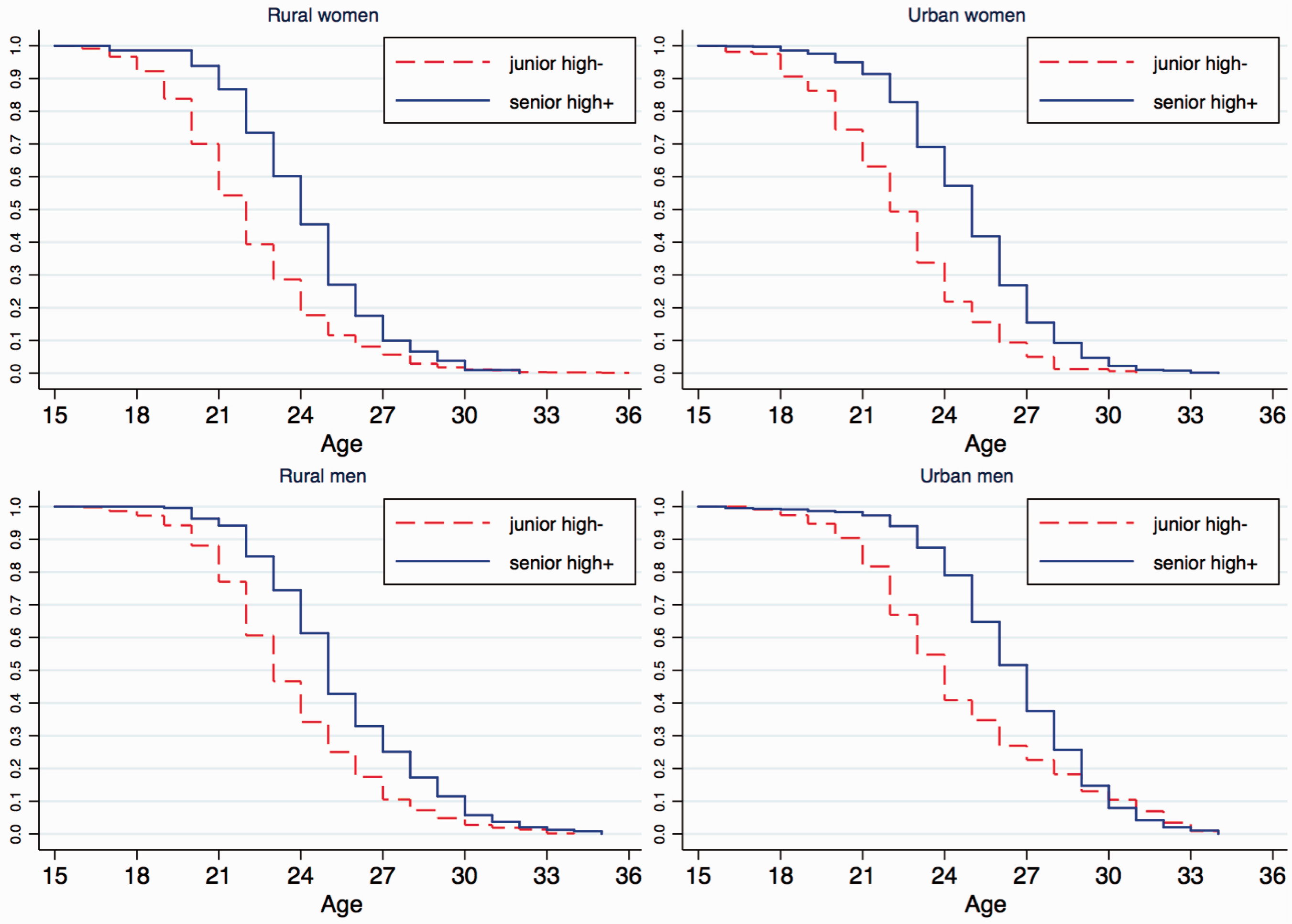
We know very little about the marriage values that often precede, accompany, or underlie behavioral invariabilities and transformations. Examining attitudes will provide us with insights regarding past marriage behavior and enable us to anticipate future trends. In this paper, we investigate attitudes toward different dimensions of marriage and the factors that shape these attitudes, using data from the 2006, 2010, 2012, and 2013 Chinese General Social Surveys (CGSS).
We show that the institution of marriage in contemporary China has undergone an intricate transformation that is distinct from those in Western societies. Despite the seemingly stable marriage institution, contemporary Chinese attitudes about marriage and intimacy outside of legal marriage have changed within a relatively short time. On the one hand, legal and socioeconomic changes have created a social context that fosters more equitable gender relations and more liberal attitudes about sexual behavior and cohabitation before marriage. On the other hand, under the strong hand of government control over childbearing and the tight link between the hukou system and one's social status, long-term cohabiting unions have been rare, and childbearing outside of marriage is nearly nonexistent. We argue that the increasing desire and allowance for individual choice and privacy, juxtaposed with lingering traditional Chinese patriarchy and strict state control over marriage and childbearing, has created great confusion; the old normative regulation between partners (life-long commitment to a single partner) has broken down, but the new rules of the game have not yet been clearly established. Tensions have grown between individuals' aspirations for marriage and societal expectations, such that some may not want to marry but experience intense pressure from families and peers, while others yearn for life-long commitments but face challenges and disappointments in the face of contemporary rapid increases in sexual freedom and easy access to marital dissolution.
Background
Theoretical perspectives
Theoretical perspectives on changes in marriage as an institution help us to better appreciate how China's experience is distinct from that of Western societies. Cherlin (2004) developed the deinstitutionalization of marriage perspective in the American context, arguing that the social norms defining marriage behavior have weakened, as manifested in the increasing prevalence of out-of-wedlock childbearing and the emergence of same-sex marriage. He notes that this process originated from two types of long-term trends during the 20th century: material trends and cultural trends. The material trends included the shift from an agrarian to an industrial economy, the decline in child and adult mortality, a rising standard of living, and increased female labor force participation. The cultural trends included two major transitions concerning the meaning of marriage. During the first cultural transition in the early 20th century, post-war economic prosperity and well-paid wage labor enabled the institutional marriage to transition to the companionate marriage model of male breadwinner and female homemaker (Burgess and Locke, 1953). As more women joined the labor force in the 1960s, however, the gendered marital roles began to lose ground. The companionate marriage then gave way to the individualized marriage, in which people began to evaluate their marriages in terms of self-growth and self-expression.
Similarly, Lesthaeghe's analysis of the Second Demographic Transition (SDT) that has unfolded in North America and Northern and Western Europe since the 1960s presents a cultural shift from emphasizing material needs to endorsing nonmaterial needs such as individual autonomy and self-realization that allowed nonmarital living arrangements to emerge and marriage and procreation to be unlinked (Lesthaeghe, 2010).
The phenomenal socioeconomic transformations that have occurred so intensely within a much shorter time in East Asia than in the West (labeled as “compressed modernity” by Chang (1999)), with many long-held traditions and unique government interventions, have created distinctive contexts for the evolution of the institution of marriage in these societies, including China (Davis and Friedman, 2014; Jones and Gubhaju, 2009; Whyte, 2005). Particularly noteworthy in the Chinese context is the state's social engineering in the laws of marriage, childbearing (Cai and Wang, 2014; Davis, 2014a; Davis, 2014b; Palmer, 2007) and the hukou system.
The Chinese context
Prior to the early 20th century, marriage and sexual behavior were under the tight control of a hierarchical and patrilineal system of inheritance and power in China (Evans, 1995). Marriage was early and universal, especially for women, and the marital relationship existed essentially for the purposes of extending the family line and expanding family wealth. While female premarital virginity and conjugal fidelity were emphasized, men could have more than one wife as well as concubines. Premarital sex and cohabitation were prohibited and stigmatized, although homosexual behavior was tolerated.
Influenced by Western values and ideals, progressive thinkers and political parties began to perceive the traditional Chinese family system as the major hurdle to overcome in the pursuit of progress and modernization. Since the early 20th century, they had advocated marriage and family reform to dismantle the oppressive patriarchal system. In 1950, the first marriage law of the People's Republic of China inscribed consensual marriage between one man and one woman as the only legal form of marriage, and outlawed polygamy, concubinage, arranged marriage, and minor marriage. Both husband and wife were granted the right to divorce.
At the same time, sexual behavior was regulated in terms of subjugating individual autonomy and desires to the official ideology and collective benefit (Yan, 2011). The repression of sexual expression peaked during the Cultural Revolution, with sex differences eliminated in clothing, romantic love despised as bourgeois sentimentalism, premarital sex or cohabitation denigrated, and homosexuality punished (Evans, 1995; Pan, 1994).
The opening-up of China since 1978 has brought an increasing influx of Western mass media, such as newspapers, magazines, radio, music, movies, television programs, and the Internet, which have provided greater exposure to new attitudes, ideals, values, and lifestyles. For example, the number of Internet users has increased exponentially from about 620,000 in 1997 to 688 million in 2015 (China Internet Network Information Center, 1997, 2016). In 2015, Chinese Internet users spent, on average, 26.2 hours per week online engaging in information acquisition, consumption, socializing, and entertainment (China Internet Network Information Center, 2016). Unlike on the more strictly censored television channels, Hollywood films, American and British TV dramas, American variety shows, and American and European music videos are widely available for free on the major video websites, which dominate an online video industry boasting about 504 million users (China Internet Network Information Center, 2016). Booming internal migration has potentially removed youth from the daily supervision of elderly family members and their communities of origin. The widespread accessibility and use of contraceptives since the initiation of the one-child policy have also contributed to greater freedom of sexual behavior among the Chinese.
Since the 1990s, social scientists have begun to describe an emerging sexual revolution in China (Farrer, 2002; Pan, 1994; Zhang, 2011). However, unlike in Western societies, the changes in sexual behaviors and attitudes in China seem to be well within the territory of marriage. Based on the Two-per-Thousand Fertility and Birth Control Survey of 1988, Wang and Yang (1996) found that the prevalence of premarital conception increased from 1.3% in the 1965–69 marriage cohort to 4.4% in the 1985–88 cohort. Using data from the China Health and Family Life Survey, Parish et al. (2007) have found that in urban China, fewer than 15% of either men or women who reached age 20 before 1964 had experienced premarital sex, compared to more than 30% of women and 40% of men who reached age 20 in the late 1990s. The pattern of increasing premarital sex is similar in rural China, but with lower prevalence. More recently, a study using data from the 2010 and 2012 waves of the China Family Panel Studies (CFPS) found that the cohabitation rate before first marriage has increased from around 1% in the marriage cohort before 1980 to over 40% in the marriage cohort 2010–12 (Yu and Xie, 2015b). It should be noted that this calculation underestimates the prevalence of cohabitation in China because the CFPS only asked currently married or cohabiting respondents about cohabitation experiences with spouses.
There is little historical data to actually document the extent to which attitudes have changed. Qualitative interviews in 2009 with men and women aged 18 to 39 in urban and rural areas of Zhejiang, Guizhou, and Yunnan suggest that although these young Chinese describe premarital sex as very common nowadays, many of them still refer to it negatively as “shameful,” “immoral,” or “not good” (Zheng et al., 2011). In contrast, interview data from both male and female Shanghai residents aged 20 to 28 between 2003 and 2007 indicate that a sexual revolution may well be underway in one of the most cosmopolitan cities of China (Farrer, 2014). Young Shanghai residents are experiencing decoupling of relationships from marriage, increasing mobility between relationships, and new sexual possibilities delinking sexuality from marriage or from any type of intimacy or commitment (Farrer, 2002, 2014). These previous studies are limited by the peculiarity of their small or convenience samples.
Changes in attitudes toward homosexuality have been much more gradual. Homosexual acts were only decriminalized in 1997, when the category of “hooliganism” was removed from China's criminal code. In 2001, the Chinese Classification of Mental Disorders formally deleted homosexuality from its list of mental illnesses. One study published in 2002 using survey data on about 500 university students found that a great majority of Chinese college students disapproved of homosexuality (Higgins et al., 2002). This paper did not report when the survey was conducted and how the sample was recruited.
In this research, we use national representative samples to examine how attitudes toward premarital sex, same-gender sex, and cohabitation change across birth cohort. We hypothesize that the approval of these behaviors will increase across birth cohort.
As the state has shifted from a command to a market economy, it has also increasingly retreated from intervening in marital and familial relationships (Davis, 2014a; Palmer, 2007). The revised Marriage Law in 1980 and the revision in 2001 have further relaxed the grounds for divorce; even when an adulterous spouse petitions the court for divorce, it must be granted. In 2011, the Supreme Court went further to rule that in contested cases, if a partner's parents had bought property for him or her after the couple was married, the property would be considered that of the partner alone. In addition, if one partner had bought a home before the couple wed, that person could be awarded sole ownership by a divorce court.
China's crude divorce rate has risen from an extremely low level of 0.18 in 1978 to 2.67 in 2014 (Ministry of Civil Affairs, 2015), well above the rate in most of Europe and approaching that of America, the most divorce-prone Western country. Scholars, however, have pointed out that the increasing divorce rate may be made less dramatic by measurement of the refined divorce rate (Wang and Zhou, 2010). A study on Chinese college students shows that a great majority of men (69%) and women (74%) disagree that divorce results in the loss of status and respect from others, or in feelings of shame and embarrassment (Higgins et al., 2002). With recent national data, we expect to see a growing trend in approval for divorce across birth cohorts in the general population.
However, China has been unwavering in its control of marital fertility and population reproduction (Davis, 2014a; Davis and Friedman, 2014) until the last two years. Upon birth, a child inherits a household registration (hukou) status from one of two parents who are legally married. One's hukou status determines his or her access to public services, including public school, health care, subsidized housing, and so on. Without a hukou status, a child is illegitimate in Chinese society. Strict and comprehensive family planning and hukou policies have effectively prohibited childbearing outside of marriage. On the other hand, the traditional values about continuing the family line and maintaining intergenerational exchanges and support remain strong. With the weak social safety net and the traditional family values, parents remain deeply involved in their children's marriage formation and family lives (Zhang and Sun, 2014). Given the centrality of marriage to Chinese family life and the mandatory connection between marriage and childbearing, we expect conventional attitudes toward singlehood and out-of-wedlock childbearing to remain strong across birth cohorts.
Factors that shape values on marriage and sexual behavior
In addition to cohort change, we expect education, gender, and family background to shape attitudes about marriage and sexual behavior. Previous research has shown that education, permeated with messages that modern society and modern families are desirable and that each helps to bring the other into being, is a forerunner of changing marriage and family values and attitudes (Thornton, 2001). We expect that educational attainment is positively associated with the approval of singlehood, out-of-wedlock childbearing, premarital sex, cohabitation, same-gender sex, and divorce in China. Compared to less-educated Chinese, those who are better educated, through their higher levels of English proficiency and Internet usage, are more likely to be exposed to Western ideas and values regarding marriage and family life, which in turn is likely to instill in them a more liberal attitude toward marriage. We thus further hypothesize that Westernization partially mediates the effect of education on marriage values.
We also expect that men and women hold different attitudes toward premarital sex and cohabitation due to the double standard in sexual behavior (Parish et al., 2007). Even in the 1980s, virginity was still considered a woman's only marketable asset and source of bargaining power in courtship, and women who had premarital sex became stigmatized and disempowered (Zhou, 1989). Analyzing premarital sexual scripts of Chinese college students and graduates in the 2000s, Farrer et al. (2012) have shown that the idea of female chastity continues to create different meanings and experiences for men and women engaging in premarital sex or breaking up after having sex. Given the higher social costs of engaging in premarital sex and relations for women, we hypothesize that women are more conservative or traditional with regard to premarital sex and cohabitation.
Data and methods
We use data from the 2006, 2010, 2012, and 2013 waves of the Chinese General Social Survey (CGSS). The CGSS is a multi-stage stratified survey of China's urban and rural households, conducted annually or biannually to gather longitudinal data on changing social structures and quality of life. All four surveys employed face-to-face interviews to collect information from the respondents. Depending on the availability of each measure we are using, we used either a subsample of one particular survey or pooled multiple surveys in the data analysis. We restricted the analysis to those aged 22 and above at the time of the surveys.
We use 10 variables to measure attitudes toward marriage as an institution. We recoded all the variables with higher values representing more “modern” or less “traditional” attitudes. Our first variable measuring acceptance of singlehood is taken from a subsample of CGSS 2006. The subsample was randomly chosen from the full sample of CGSS 2006 to answer an additional set of questions on family attitudes and values. The respondents (N = 3018) were asked to indicate to what extent they agreed with the following statement: “Even the worst marriage is better than singlehood.” There are three other indicators in this cluster of variables—“Married men are happier than single men;” “Married women are happier than single women;” and “Even the worst marriage is better than divorce”—that are all highly correlated with the tolerance for singlehood measure. The Cronbach's alpha coefficient for these four items is 0.7273. As the indicators are highly correlated, we show only the extent of tolerance for singlehood indicator in descriptive analysis (in Figure 3). We use the composite index for multivariate analysis, however.
We include two measures on the approval of sexual behavior that are available in CGSS 2010, 2012, and 2013: “What do you think about premarital sex?” (1 = always wrong, 2 = mostly wrong, 3 = neutral, 4 = sometimes right, 5 = always right), and “What do you think about same-gender sex? (with the same coding scheme). For those who responded “sometimes right” or “always right,” we code them as they consider the behavior acceptable. In the multivariate analysis, we recode the five categories into three: 1 = not acceptable (always wrong, mostly wrong), 2 = neutral, and 3 = acceptable (sometimes right, always right). The sample sizes for these two measures are 33,403 and 33,180, respectively.
Three other variables are based on items only available for a subsample in CGSS 2012. One is about attitude toward out-of-wedlock childbearing (N = 5693): “Those who want to have a child should marry” (1 = strongly agree, agree, 2 = neutral, 3 = disagree, strongly disagree). One is about acceptance of nonmarital cohabitation (N = 5681): “It is acceptable that a man and a woman cohabit without planning to marry” (1 = strongly disagree, disagree, 2 = neutral, 3 = agree, strongly agree). The third one is about attitude toward divorce (N = 5641): “If marital problems cannot be solved, divorce is the best solution” (1 = strongly disagree, disagree, 2 = neutral, 3 = agree, strongly agree).
These 10 indicators measure different dimensions of marriage attitudes. Premarital sex and cohabitation without marriage are concerned with marriage as an institution legitimizing and controlling individual sexual behavior. Out-of-wedlock childbearing is about whether marriage remains the only legitimate path to parenthood. Same-gender sex hints at the tolerance of different sexual orientations and the freedom to choose an alternative lifestyle to marriage. Singlehood and divorce are about the nature and meaning of marriage as voluntary or obligatory. In addition, we include one indicator to capture the attitude toward parenthood (shown in Figure 4). Respondents in CGSS 2010, 2012, and 2013 were asked how many children they would want to have were there no policy restrictions.
Given the ordinal nature of our outcome variables, we use ologit of Stata 14 to fit the following model:

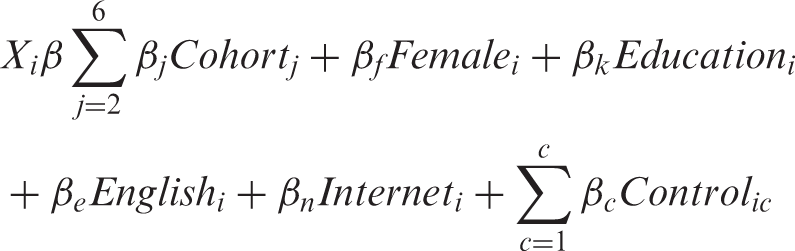
To capture the cohort-based shifts in attitudes toward marriage, we divided the respondents into six birth cohorts: those born in and before 1945, those born between 1946 and 1955, those born between 1956 and 1966, those born between 1966 and 1975, those born between 1976 and 1985, and those born between 1986 and 1991. The first two cohorts were exposed to the 1950 Marriage Law reform, the middle two cohorts were exposed to the 1980 revision, and the final two cohorts were exposed to the 2001 revision during their early adulthood years.
β c are coefficients for other individual- and family-level control variables. For individual characteristics, we controlled for marital status, parenthood status, and employment status. For family background information, we took into consideration respondent's ethnic minority status, respondent's current hukou status, father's educational attainment, and mother's employment status when respondent was age 14, and logged annual family income.
One important assumption underlying ordered logistic regression is the proportional odds assumption that the coefficients that describe the relationship between each pair of outcome categories are the same. We have tested this assumption and found that some of the main independent variables have violated this assumption in models on premarital sex and same-gender sex. We have also conducted generalized ordered logistic analysis using gologit2, but the substantial meanings of the results remain unchanged when compared to the results of ordered logistic regression. For purposes of parsimony, we only present the results of ordered logistic regression models here in this paper.
Results
Figure 2 shows the changes in educational attainment, English proficiency, and Internet usage across cohorts reflecting the rapid modernization and Westernization process transforming contemporary China. While less than 20% of the pre-1945 birth cohort had attained senior high school education, more than 60% of the youngest birth cohort born in the late 1980s and early 1990s had achieved senior high school education or more. On a 1–5 scale, the level of English proficiency has increased from almost 0 among the elder cohorts to about 2.2 among the most recent birth cohort. Given that the Internet only came into existence decades after the birth of the elder cohorts, it is not surprising that almost none of them rely on the Internet as the main source of information. However, about 60% of the youngest cohort (1986–91) depends mainly on the Internet for information in their daily lives.
Cohort-based change in education, English proficiency, and Internet usage (respondents aged 22 and above in survey year).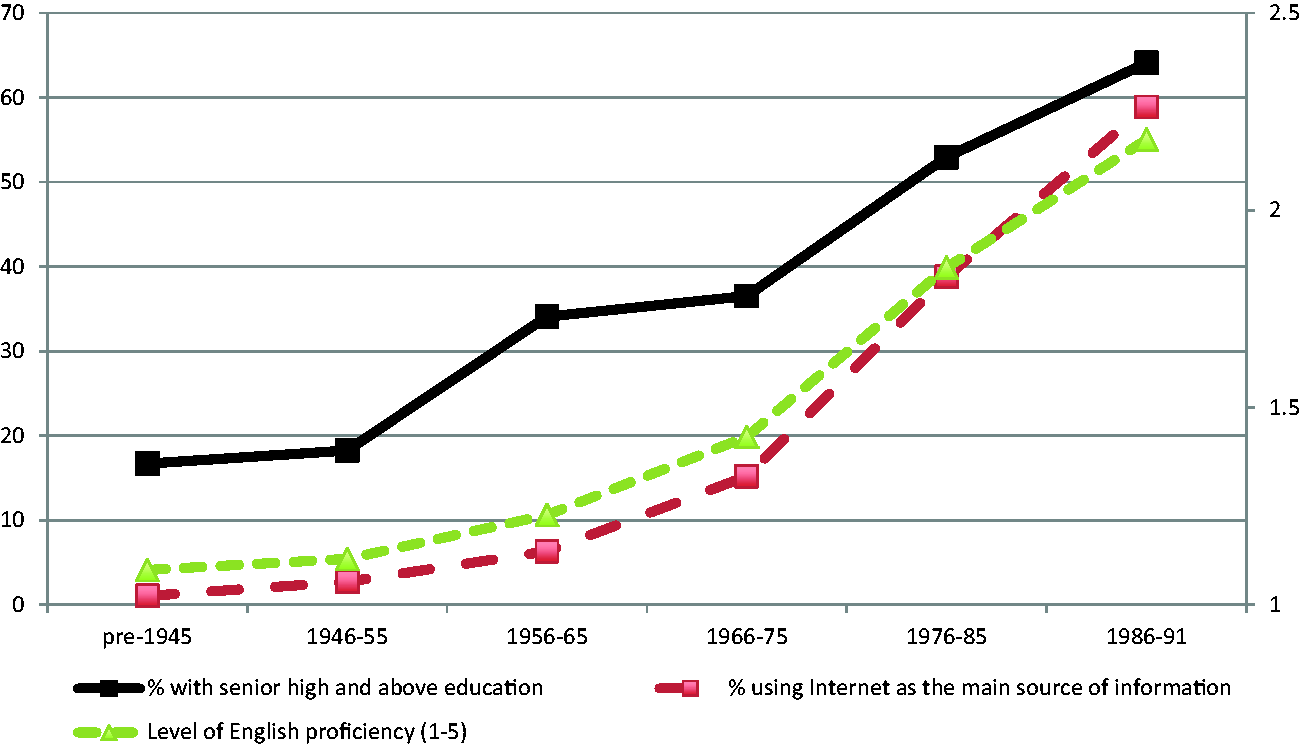
Next, we investigate marriage values by birth cohort and gender and how education and exposure to Western values affects attitudes toward marriage. We first describe variations in attitudes toward singlehood, parenthood, out-of-wedlock childbearing, premarital sex, same-gender sex, nonmarital cohabitation, and divorce. We then estimate a series of nested ordinal logistic regression models to explore whether the cohort-related changes and the gender differences in marriage values can be explained by increasing educational attainment and exposure to Western values.
Descriptive analyses
Figure 3 shows the proportion of respondents agreeing to various degrees that “Even the worst marriage is better than singlehood” by birth cohort, gender, and educational level. We observe no clear cohort-based trend in attitude toward singlehood except among women with senior high school or higher education. Almost half (47%) of women with higher education in the oldest (pre-1945) cohort, as opposed to about one-fourth (24%) of the youngest cohort (1976–85) agreed with this statement. The differences in attitude toward singlehood are also relatively small between the four groups. This pattern is similar in all three other indicators of marriage value that we examined (“Even the worst marriage is better than divorce” and “Married men and women are happier than single” described in the Methods section). Our multivariate analyses (results not shown in the paper) also show that there is no significant effect of birth cohort, gender, or education on attitude toward each individual indicator or the composite index of marriage value that we formed with the four indicators. Hence, the evidence does not support the hypothesis that younger cohorts place a lower value on marriage than elder cohorts.
% agreeing that “Even the worst marriage is better than singlehood” by birth cohort, gender, and education (respondents aged 22 and above in survey year).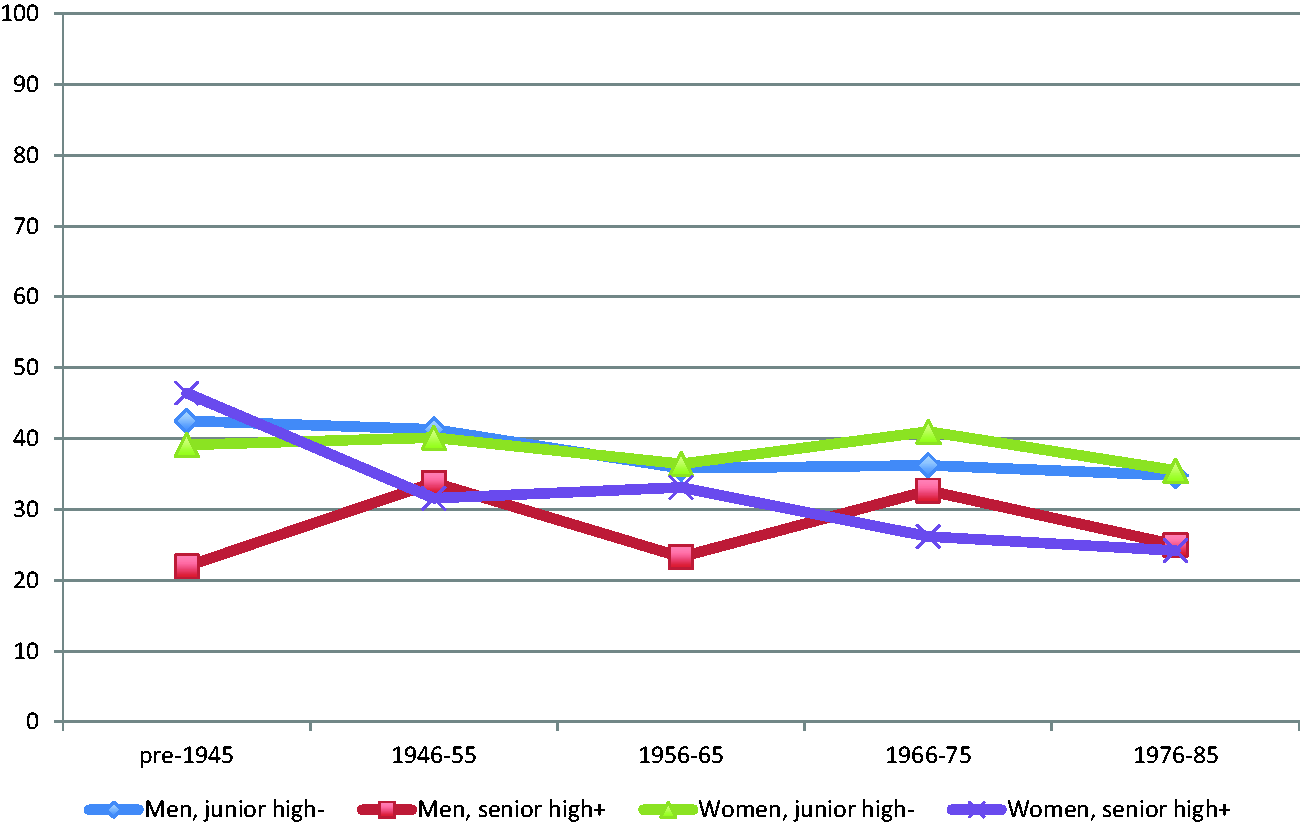
Our data suggest that Chinese remain strongly committed not only to marriage, but also to parenthood. In Figure 4, we observe the proportion of those who did not want to have any children even when there was no policy restriction for four gender-education groups across birth cohorts. Overall, over 95% of Chinese regardless of gender, education, or birth cohort wanted to have at least one child. Even among the youngest cohort who showed a slightly lower desire for parenthood, only 1.2% of less-educated women, 1.5% of less-educated men, 3.5% of better-educated men, and 4.2% of better-educated women did not want to have any children. The fact that this proportion is highest among better educated women may reflect the greater opportunity cost of having a child for them due to their better economic prospects in the labor market.
% not wanting to have any child if there is no policy restriction by birth cohort, gender, and education (respondents aged 22 and above in survey year).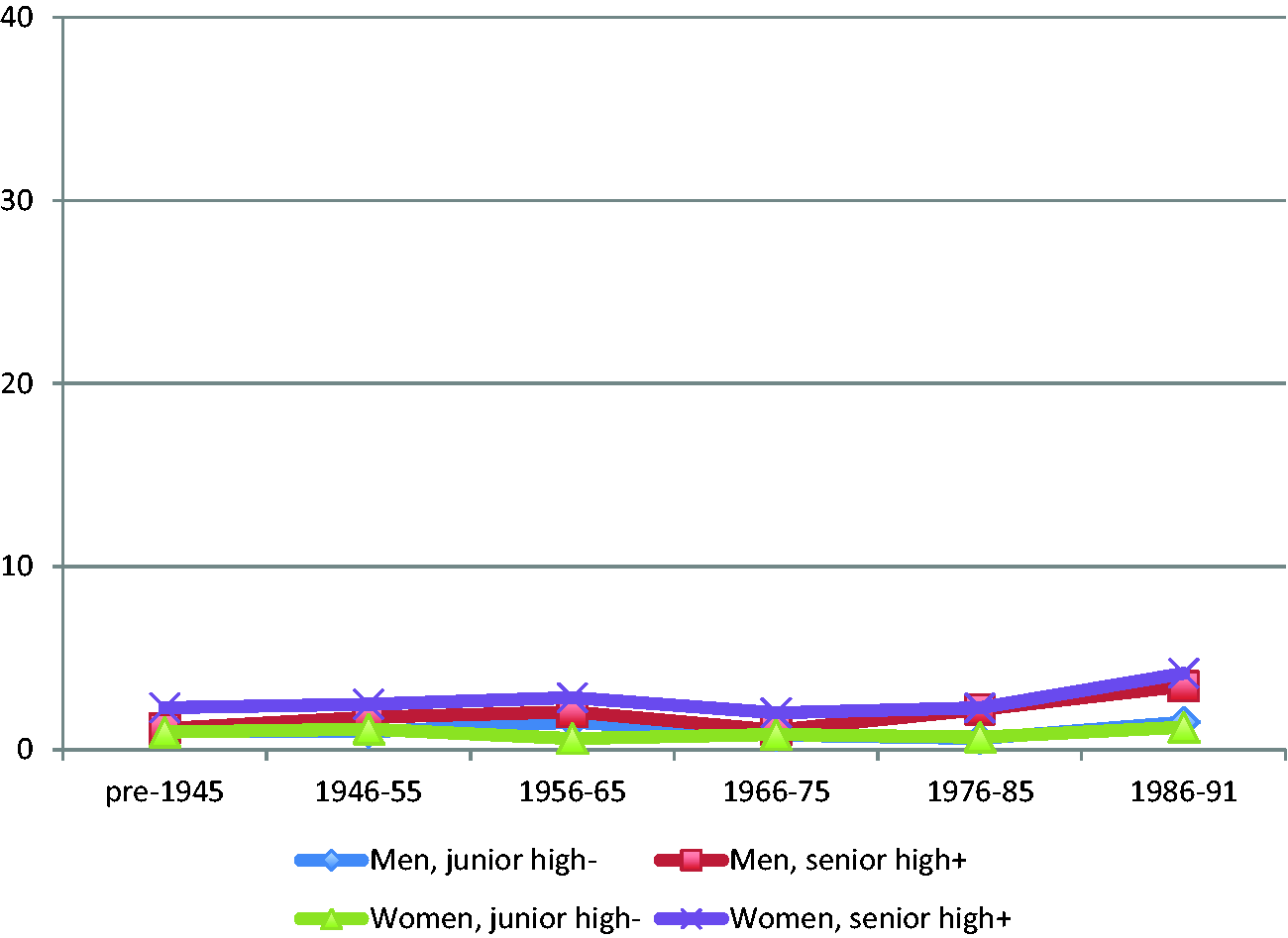
Given the strong values about marriage and parenthood and the state restriction on childbearing, it is not surprising that most Chinese associate parenthood with marriage. Figure 5 shows the proportion of respondents agreeing that “Those who want to have a child should marry” by birth cohort, gender, and educational level. There is a slightly declining trend across birth cohorts in the attitude toward marriage being the only socially acceptable path to parenthood. While about 90% of respondents, regardless of gender or education, in the eldest cohort agreed that childbearing should be within marriage, about 86% of those with junior high or less education and about 72% of those with senior high or more education in the youngest cohort perceived marriage to be a necessary condition for parenthood. The results from multivariate analyses (not shown in this paper) also confirmed this liberalizing trend across birth cohorts with regard to the social acceptability of nonmarital childbearing. However, despite the overall liberalizing trend, a great majority of even the youngest birth cohort (72–88%) agreed that those who want to have a child should marry.
% agreeing that “Those who want to have a child should marry” by birth cohort, gender, and education (respondents aged 22 and above in survey year).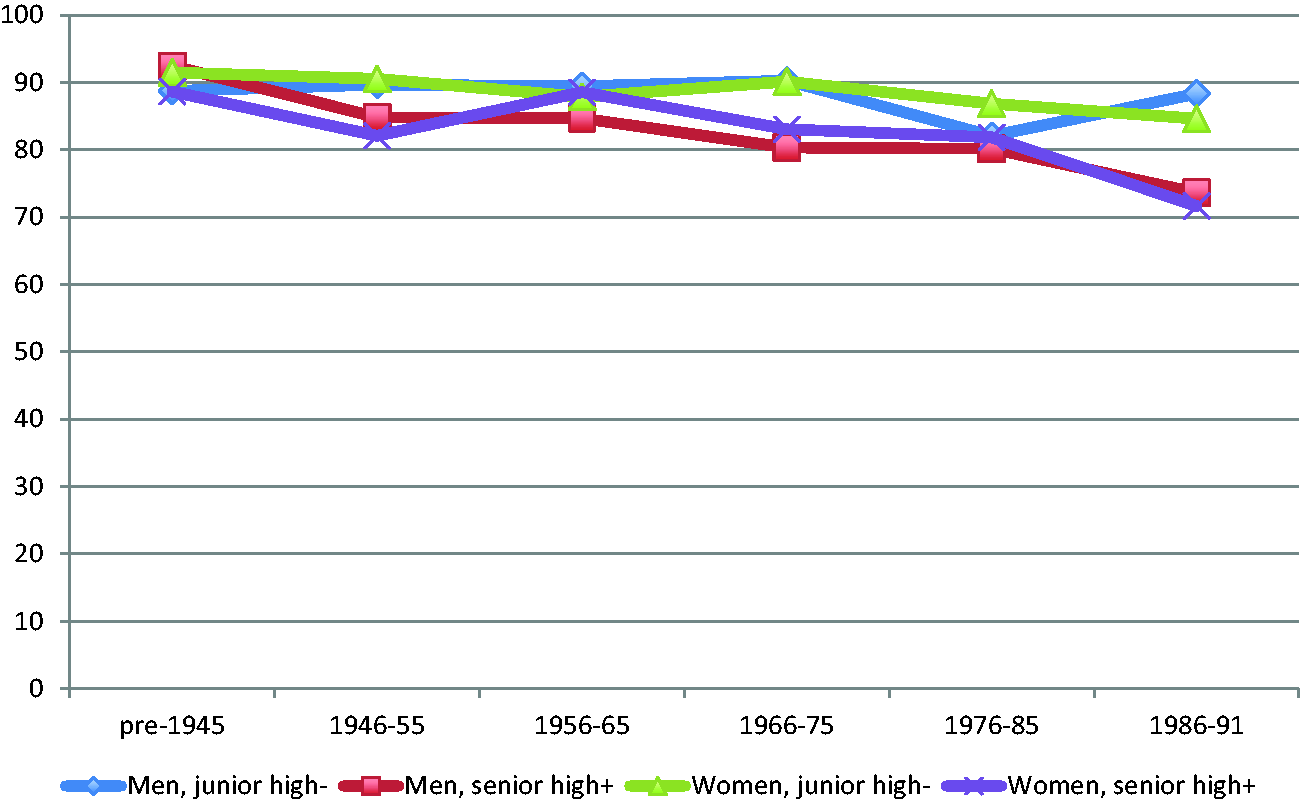
Figure 6 shows a clear liberalizing shift in attitude toward premarital sex. The cohort-related pattern in marriage values, however, differs by gender and education. Across birth cohorts, men were more approving of premarital sex than women. While only about 4% of men and 3% of women in the eldest cohort (pre-1945) believed that premarital sexual relations were acceptable (“always right” or “mostly right”), about 26% of men and about 17% of women in the youngest cohort (1986–91) thought so. Better-educated men and women were more approving of premarital sex than were their less-educated counterparts.
% thinking that premarital sex is acceptable by birth cohort, gender, and education (respondents aged 22 and above in survey year).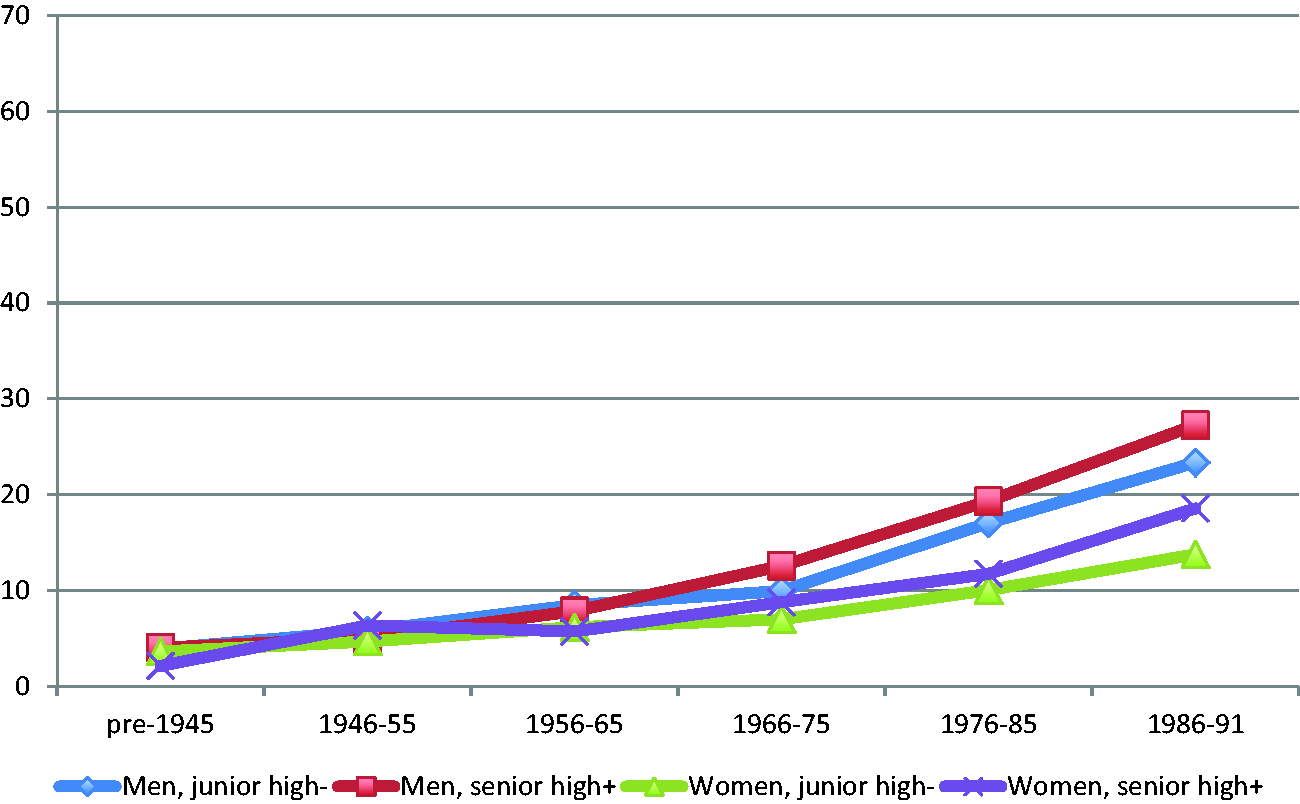
Similarly, the endorsement of nonmarital cohabitation has increased more markedly for men than for women (see Figure 7). In the eldest cohort (pre-1945), about 11% of men and about 7% of women expressed positive views toward cohabitation without marriage, compared to 37% of men and 27% of women in the youngest cohort (1986–91). Educational level increases the approval of nonmarital cohabitation for both men and women.
% agreeing that “It is acceptable that a man and a woman cohabit without planning to marry” by birth cohort, gender, and education (respondents aged 22 and above in survey year).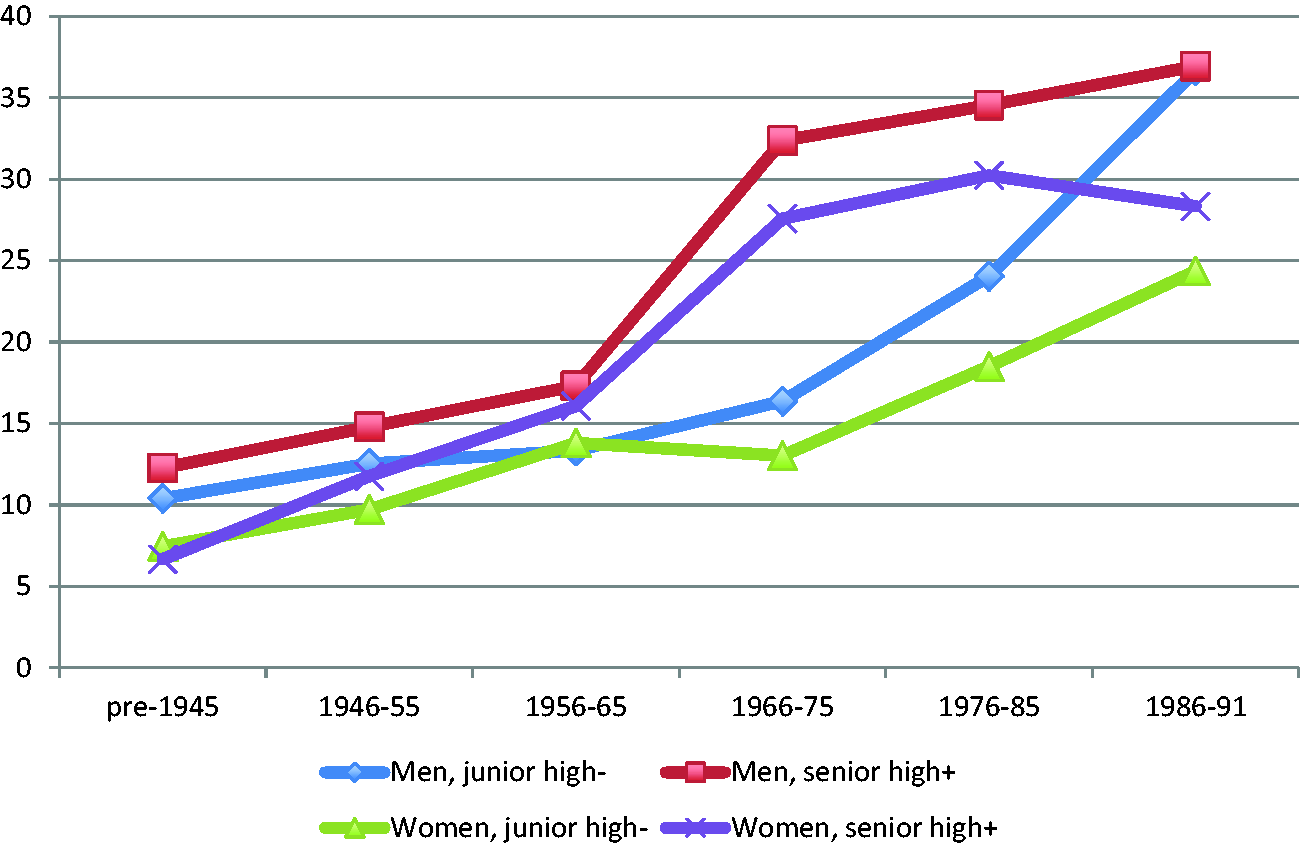
For attitude toward same-gender sex, men and women do not differ among the elder cohorts, but women appear to be more liberal than men among the youngest cohort (see Figure 8). However, even among the youngest birth cohort, only about 8% of women and 6% of men held positive attitudes toward same-gender sexual behavior. Figure 8 also shows that educational level is positively associated with endorsement of same-gender sex, as a greater proportion of men and women with at least senior high school education expressed positive attitudes toward same-gender sex relative to their less-educated counterparts.
% thinking that same-gender sex is acceptable by birth cohort, gender, and education (respondents aged 22 and above in survey year).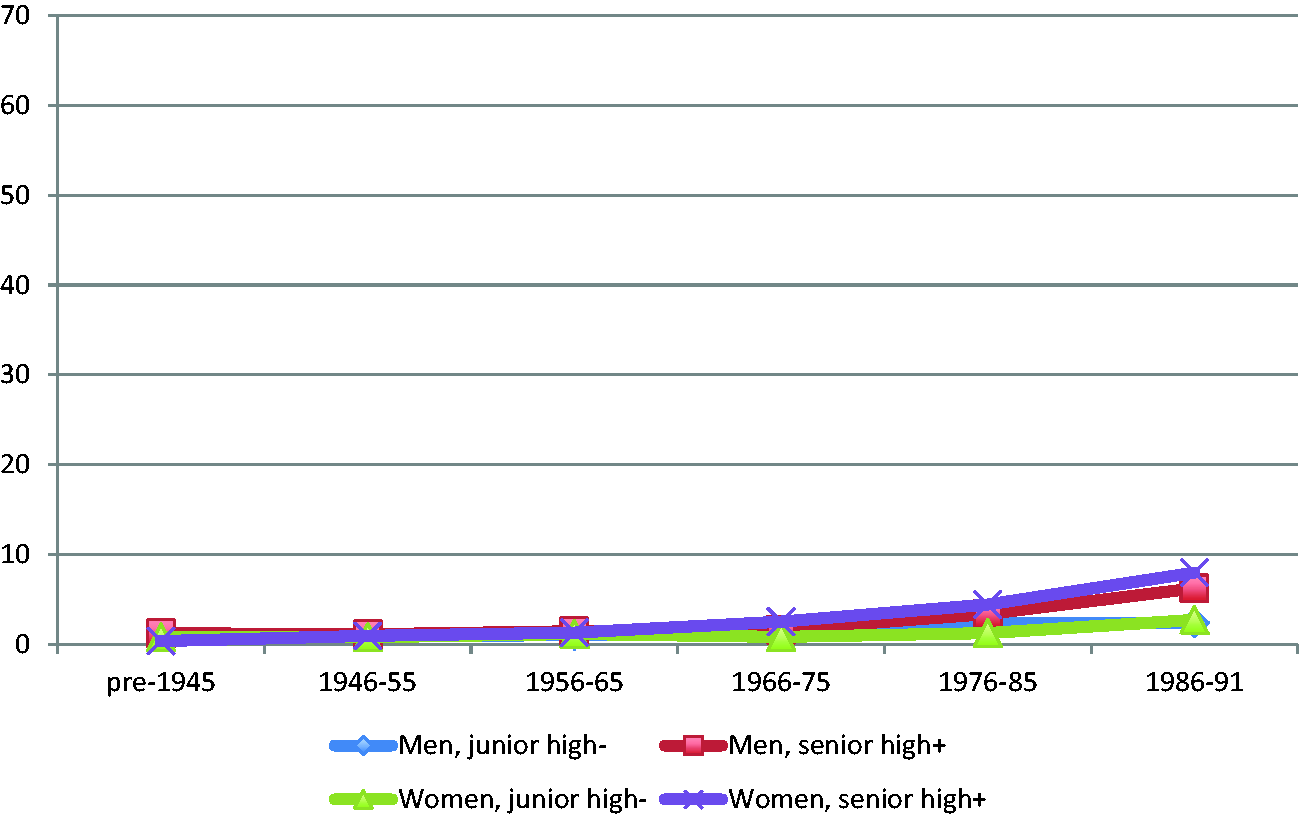
When it comes to the viewpoint on divorce, however, we observe no clear cohort pattern except for those with higher educational attainment (see Figure 9). In contrast to our expectations, men and women with senior high or higher education seem to show declining approval of divorce. It is worth noting that the acceptance of divorce has been higher in China than in other East Asian countries. Our tabulation of data from the 2006 East Asia General Social Survey with the same measure shows that almost five out of 10 Chinese men and women endorsed divorce regardless of their birth cohort or educational level. In contrast, about 20–35% of Japanese men and women and about 35% of Korean men and women approved of divorce.
% agreeing that “If marital problems cannot be solved, divorce is the best solution” by birth cohort, gender, and education (respondents aged 22 and above in survey year).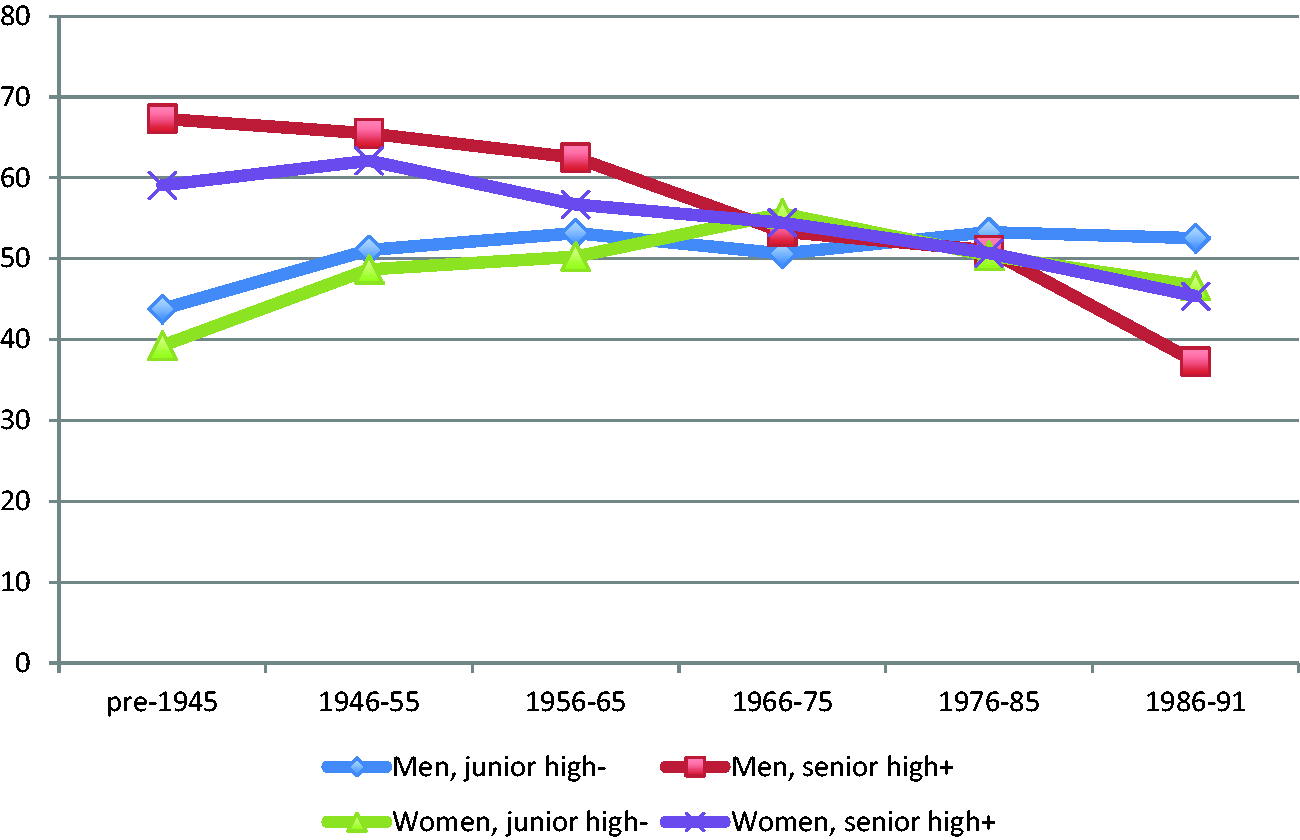
Interestingly, among the eldest cohort, the proportions endorsing divorce were 67%, 59%, 44%, and 39% among better-educated men, better-educated women, less-educated men, and less-educated women, respectively. The pattern reversed among the youngest cohort: better-educated men (37%) and women (45%) were less approving of divorce than their less-educated counterparts (53% and 47% respectively).
Multivariate analyses
Odds ratios of ordinal logistic regression models on attitude toward premarital sex and cohabitation.

Note: Dependent variable premarital sex is coded into three categories (1 = unacceptable, 2 = neutral, 3 = acceptable) based on this question: Do you think premarital sex is acceptable or unacceptable? Dependent variable cohabitation is coded into three categories (1 = disagree, 2 = neutral, 3 = agree) based on this question: It is acceptable for a man and a woman to cohabit without planning to marry? Other control variables include ethnic minority status, employment status, marital status, parenthood status, and survey year when applicable.
Robust standard errors clustered at province level in parentheses.
p < 0.05;
p < 0.01;
p < 0.001
Odds ratios of ordinal logistic regression models on attitude toward same-gender sex and divorce.

Note: Dependent variable same-gender sex is coded into three categories (1 = unacceptable, 2 = neutral, 3 = acceptable) based on this question: Do you think sex between persons of the same gender is acceptable or unacceptable? Dependent variable divorce is coded into three categories (1 = disagree, 2 = neutral, 3 = agree) based on this question: If marital problems cannot be solved, divorce is the best solution. Other control variables include ethnic minority status, employment status, marital status, parenthood status, and survey year when applicable.
Robust standard errors clustered at province level in parentheses.
p < 0.05;
p < 0.01;
p < 0.001
Consistent with the descriptive patterns, we found support for the hypothesis that there is a move toward liberal attitudes across birth cohorts regarding premarital sex, cohabitation (see Table 1), and same-gender sex (see Table 2), particularly for the two most recent cohorts, who were exposed to rapid globalization during their early adult years after China entered the World Trade Organization (WTO) in 2001. For instance, in Model 1 on premarital sex, the odds for the birth cohorts from oldest to youngest of holding a more favorable versus a less favorable view regarding premarital sex are 1.53, 2.02, 2.86, 4.66, and 5.61 times greater than those for the eldest cohort (pre-1945), respectively, when the other variables in the model are held constant. This general cohort-related trend is also true for nonmarital cohabitation and same-gender sex and remains so when the other individual characteristics and family background are controlled for.
Contrary to our expectation, we did not find evidence supporting an increasingly liberal attitude toward divorce across birth cohorts (see Table 2). Based on Model 1 on divorce in Table 2, the odds for the second eldest cohort (1946–55) and the youngest cohort (1986–91) having a more positive opinion versus more negative opinions of divorce are about 1.32 times greater and 33% lower than the eldest cohort (pre-1945), respectively. Surprisingly, the youngest cohort seems to display a more conservative or cautious attitude toward divorce. This may be due to the fact that members of this cohort came of age as divorce rates rapidly increased and Western popular culture depicting divorced family life spread widely in China. The earlier stage of experimentation with divorce may have led to more cautious rethinking about divorce as a solution of an unhappy marriage. The other birth cohorts do not differ significantly from their eldest counterparts in their views on divorce. The negative effect of birth cohort 1986–91, however, becomes statistically insignificant after controlling for education, English proficiency, and Internet usage in Model 3. More analysis is needed in the future to see if there is indeed a reversal of trend in attitudes toward divorce.
Also, we found only partial support for the gender differences in marriage values. With regard to premarital sex and nonmarital cohabitation, the odds of holding more liberal versus less liberal attitudes are 26% and 29% lower for women than for men, respectively, when the other variables in the model are held constant. This may be due to the persistent patriarchal premium placed on female virginity in Chinese society, which imposes heavier social costs and penalties associated with premarital sex or cohabitation without marriage on women than on men. It may also be due to the issue of social desirability in that women are less likely to reveal their approval of premarital sex or cohabitation without marriage than men. However, there is no evidence for significant gender differences in attitude toward same-gender sex and divorce, when education and other variables are controlled for.
The results in Model 2 confirm the relationship between education and attitudes, showing that relative to those with junior high and less education, those with senior high and more education have more positive attitudes towards premarital sex and same-gender sex. This positive effect of education disappears when English proficiency and Internet usage are controlled for in Model 3, suggesting that part of the liberalizing effect of education is transmitted through Westernization forces measured here with increasing English proficiency and Internet usage.
Model 3 in Tables 1 and 2 reveals that English proficiency promotes tolerance of premarital sex and same-gender sex. For a one-unit increase in English proficiency level, the odds of holding more liberal versus less liberal attitudes about premarital sex and same-gender sex are 1.11 and 1.22 times greater, respectively. For respondents who use the Internet as the main source of information, the odds of showing higher versus lower approval of premarital sex, cohabitation, and same-gender sex are 1.47, 1.55, and 1.50 times greater than for those who do not, respectively. Somewhat to our surprise, English proficiency reduces approval of divorce and Internet usage has no effect on opinion about divorce.
Comparing Models 1, 2 and 3 in Tables 1–2, we know that educational attainment, English proficiency, and Internet usage only account for cohort-based changes in marriage values to a very limited extent. When these three variables are entered into the models collectively, the coefficients of the elder cohorts do not change in terms of magnitude and significance level, while the estimates of the two youngest cohorts shrink somewhat. Thus, the cohort effects, interpreted as cohort-specific socialization effects from changes in political, legal, and ideological definitions of marriage and gender relations, are prominent.
With regard to family background, urban hukou status does not seem to matter for one's attitudes about marriage. Although father's education is positively associated with attitude toward premarital sex and same-gender sex in Model 1, this effect is no longer significant when respondents' own education and exposure to Western values are added into Model 3.
Tables 1 and 2 also show that mother's employment status when respondent was age 14 is important in shaping attitudes toward marriage. Compared to respondents whose mothers were farming, those with mothers employed in stable paid jobs have higher odds of holding more favorable versus less favorable attitudes toward premarital sex, same-gender sex, and nonmarital cohabitation. Family income is also positively associated with attitudes toward premarital sex, nonmarital cohabitation, and divorce.
Conclusion
We examined the different dimensions of marriage values for multiple birth cohorts, using cross-sectional samples from the 2006, 2010, 2012, and 2013 Chinese General Social Surveys. Our findings reveal a significant paradox in the changing institution of marriage and family life in contemporary China. On the one hand, we observed marked increasing approval of delinking sex from marriage, as exhibited in the increasing approval of premarital sex (10–30% among the youngest cohort in different groups) and cohabitation without marriage (20–40% among the youngest cohort) across birth cohorts The attitudes toward same-gender sex have also liberalized over time, although the absolute level of support remains lower than 5–10% for different groups among the youngest cohort. These patterns signify greater tolerance of life choices other than legal marriage. Despite a slight decline in the approval of divorce in recent birth cohorts, the overall level of acceptance of divorce remains relatively high (40–55% among the youngest cohort for different groups), especially when compared to other East Asian societies. Better education and greater exposure to Western values are associated with greater approval of premarital sex, cohabitation, same-gender sex, and divorce. Hence, there is a clear growing desire for and consumption of individual freedom in sexual behavior and life choices.
Yet, contrary to what would be expected of a generation seeking greater individual freedom, there is no decline over time in the desire to enter legal marriage: universal marriages occur at a relatively early age, about a third of the sample agreed that a bad marriage was better than being single, almost everyone wanted to have a child, and 80–90% of the sample agreed that if a couple wants to have a child, they should marry. These patterns suggest that Chinese young adults still highly value marriage and wish to fulfill the responsibility of continuing their family lineage, and are thus left with no choice but to marry, given the tight link between childbearing and marriage. The fact that educational attainment and exposure to Western values have little impact on attitude toward marital fertility further suggests that the importance of marriage for childbearing remains uniform across different social groups.
The pursuit of personal sexual freedom is often incompatible with the long-term commitment to a single partner that constitutes a legal marriage. This tension manifests itself in the high marital infidelity reported by some scholars (Davis, 2014a; Zheng et al., 2011). We expect divorce rates to continue to rise as legal barriers are eroded, financial ties between partners are weakened, and stigma is decreased. However, the lower approval rate observed among the youngest cohort suggests that perhaps the Chinese have been rethinking ideas about divorce and will look for more stable relationships and emotional intimacy in the face of the high instability brought about by a high unemployment rate, escalating housing prices, and insufficient public support and social security. The fact that approval of divorce decreases as English proficiency increases suggests that perhaps something about the way young Chinese perceive Western media's depiction of divorced family life leads them to have second thoughts about divorce as a way out of unsatisfactory marriages.
The paradox in marriage values and behavior in China reflects the contradictions in the Chinese government's approach to regulating marriage and family life. On the one hand, the state maintains complete control over childbirth while the formal/legal institution of marriage remains intact over time as the only legitimate institution for Chinese to reproduce and continue a family's linage. On the other hand, China has one of the most progressive laws in the world with regard to individualizing property rights within a marriage and the dissolution of marriage. China is now among the easiest and cheapest places in the world to obtain a divorce. The external forces of Westernization fuel further complexity as to how this internal paradox has affected marriage value and behavior.
What will the future of marriage be in China? As we expect current marriage laws to persist and educational attainment, English proficiency, and Internet usage to continue to rise over the next few decades, an increasing decoupling of sex from marriage and a growing tolerance of alternative life choices can be expected. We may see much freer sexual behavior within and outside of marriage, and even an emergence of increasing acceptance of same-gender sex. We expect that divorce will continue to increase with the increasingly individualized property rights but may start to plateau or even decline in a decade or so, as seen in countries like the US and Britain. Unless the Chinese government delinks childbearing from legal marriage (which we do not expect to see in the near future), marriage rates will remain high and childbearing outside of legal marriage will remain rare because Chinese generally still highly value marriage and parenthood in-wedlock. As divorce and remarriage become more common, we will also see more single-parent families, blended families, and more complex family types.
Our results show a clear gender difference, with men being faster to approve premarital sex and cohabitation without marriage even after controlling for other covariates. This may indicate the heavier costs of premarital sex for women than for men, or that women are less likely to reveal their support of premarital sex and cohabitation than men due to the social pressure on women to preserve their virginity. Either possibility points to the double standard in sexual behavior penalizing only women for premarital or extramarital sexual relations, of which China has had a long history. On the other hand, the youngest women with senior high school or above are less tolerant of a bad marriage, and more likely to opt for being single or divorced, than their counterparts in earlier cohorts. We expect that the gender differences will narrow as the socioeconomic gap between men and women becomes smaller.
There seems to be a divergence in attitudes over time about having a child within a marriage, premarital sex, cohabitation and same-gender sex by socioeconomic status
This study has many limitations. Due to data constraints, the variables on different dimensions of marriage value used in this paper are cross-sectional data that reflect the current attitudes of different birth cohorts. Causal relationship between attitudes and other covariates in the model cannot be firmly established. Nonetheless, this paper adds nuanced literature based on nationally representative data regarding the changing or continuing meaning of marriage, childbearing and sexual behavior as perceived by Chinese across cohorts. Results reveal that previous studies based on selected samples do not adequately portray a national picture. We are also the first to directly test and show the relationship between Westernization forces and marriage values in contemporary China.
We show how the evolution of the marriage institution in China is distinct from that found in Western societies, where economic and cultural changes brought forth an increase in cohabiting long-term unions, births out of the wedlock, and the emergence of same sex-partners. China's unique experience is shaped by the often-contradictory forces of Westernization, lingering Confucian family traditions, and simultaneously strict and slackening state control on family issues. The desire to realize the traditional cultural ideal of forming and continuing a family has been unwavering, leading to early and nearly universal marriage. At the same time, the longing for increased personal freedom, individualized property rights, and Westernization have weakened the marriage institution in China, as manifested in the increasing divorce rate and marital infidelity. The conflicting messages from the old and new systems create confusion that will generate increasing instability in family life in contemporary China in the coming decades. Our analysis underscores the limitations of extant theories of family change in their lack of attention to how political-policy context and forces that cross national boundaries can powerfully shape the institution of family. It is insufficient to consider only changes in economic structure and cultural ideologies as related to the industrialization process within a nation's boundary.